

The role of collagen in cancer: from bench to bedside
Open accessThe DOI matches its Crossref record; 318 of the 318 references it cites were found in a registry or an index.
Abstract
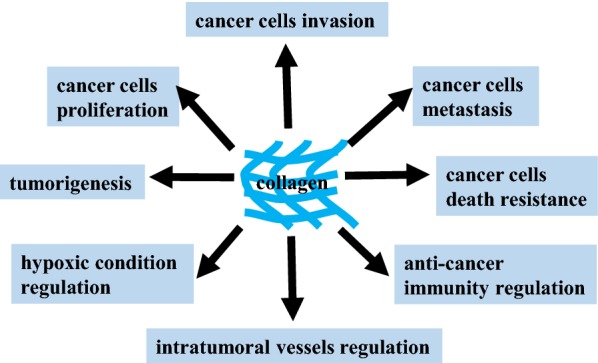
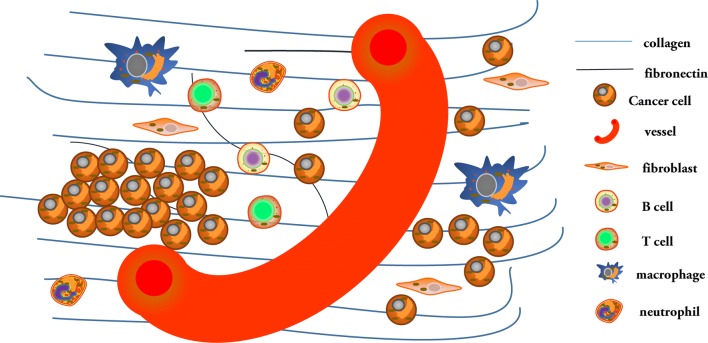
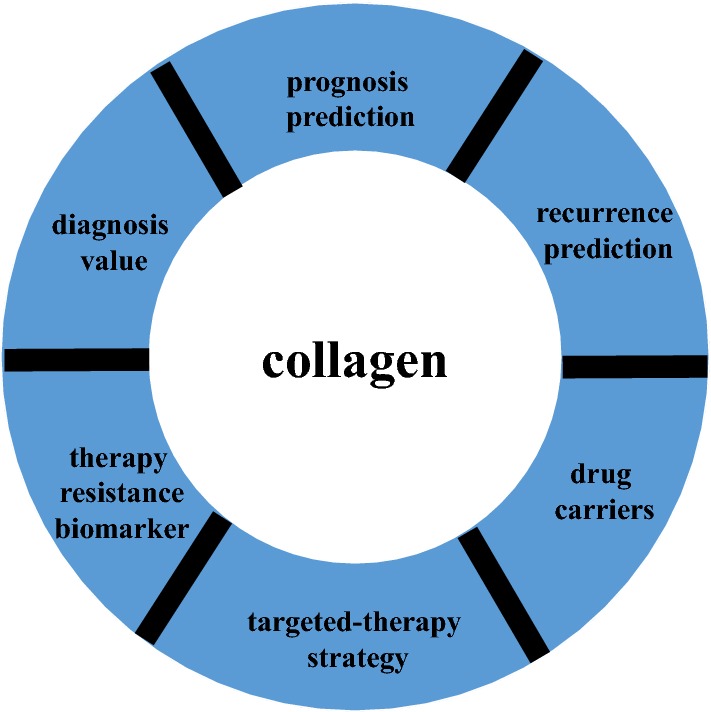
Collagen is the major component of the tumor microenvironment and participates in cancer fibrosis. Collagen biosynthesis can be regulated by cancer cells through mutated genes, transcription factors, signaling pathways and receptors; furthermore, collagen can influence tumor cell behavior through integrins, discoidin domain receptors, tyrosine kinase receptors, and some signaling pathways. Exosomes and microRNAs are closely associated with collagen in cancer. Hypoxia, which is common in collagen-rich conditions, intensifies cancer progression, and other substances in the extracellular matrix, such as fibronectin, hyaluronic acid, laminin, and matrix metalloproteinases, interact with collagen to influence cancer cell activity. Macrophages, lymphocytes, and fibroblasts play a role with collagen in cancer immunity and progression. Microscopic changes in collagen content within cancer cells and matrix cells and in other molecules ultimately contribute to the mutual feedback loop that influences prognosis, recurrence, and resistance in cancer. Nanoparticles, nanoplatforms, and nanoenzymes exhibit the expected gratifying properties. The pathophysiological functions of collagen in diverse cancers illustrate the dual roles of collagen and provide promising therapeutic options that can be readily translated from bench to bedside. The emerging understanding of the structural properties and functions of collagen in cancer will guide the development of new strategies for anticancer therapy.
Overview
The claims and statistics of this paper haven’t been checked yet.
Free: it reads the open-access text and checks the first 5 claims that cite a source we can check. Create a free account to check every claim.
Integrity signals
Registry
Cites
Statistics
Figures
Verification
Claims the paper makes
The claims and statistics of this paper haven’t been checked yet.
Free: it reads the open-access text and checks the first 5 claims that cite a source we can check. Create a free account to check every claim.
Claims other papers make about this one
Each is checked against this paper’s own text: does it say what the citing paper says it does?
The cited source says what the claim attributes to it.
In the citing paper
“Collagen in turn influences tumor cell behavior through integrins, tyrosine kinase receptors, discoidin domain receptors, and some signaling pathways [124].”
From Tumor microenvironment complexity and therapeutic implications at a glance (2020) · cites this paper as [124]
The cited source says what the claim attributes to it.
In the citing paper
“In addition, hypoxia, which is common in collagen-rich tumors, promotes cancer progression [124].”
From Tumor microenvironment complexity and therapeutic implications at a glance (2020) · cites this paper as [124]
Self-check
Percentages, sums and reported differences re-computed from the paper’s own numbers.
The self-check needs the paper’s full text.
Citations
Cites
1 retracted
Guo, Q., Zheng, M., Xu, Y., Wang, N., & Zhao, W. (2018) · Bioscience Reports · doi:10.1042/bsr20181523 · Cited by 51
RetractedBray, F., Ferlay, J., Soerjomataram, I., Siegel, R. L., Torre, L. A., & Jemal, A. (2018) · CA: A Cancer Journal for Clinicians · doi:10.3322/caac.21492 · Cited by 84,109 · cited 1×
“6 million cancer deaths were evaluated in 2018 [1], and there are predicted to be 1,762,450 additional cancer cases and 606,880 cancer deaths in the United States in 2019 [2].”
BackgroundHallmarks of Cancer: The Next Generation
Hanahan, D., & Weinberg, R. A. (2011) · Cell · doi:10.1016/j.cell.2011.02.013 · Cited by 66,590 · cited 1×
“In addition, cancer cells exhibit multiple hallmarks of cancer progression, including the recruitment of various cells to form a tumor microenvironment [3], which consists of varying functional stromal cell subtypes and matrix protein polymers [4].”
BackgroundSiegel, R. L., Miller, K. D., & Jemal, A. (2019) · CA: A Cancer Journal for Clinicians · doi:10.3322/caac.21551 · Cited by 20,160
TGFβ attenuates tumour response to PD-L1 blockade by contributing to exclusion of T cells
Mariathasan, S., Turley, S. J., Nickles, D., Castiglioni, A., Yuen, K., Wang, Y., Kadel III, E. E., Koeppen, H., Astarita, J. L., Cubas, R., et al. (2018) · Nature · doi:10.1038/nature25501 · Cited by 5,400 · cited 1×
“However, others noted that the metastatic urothelial cancer response to programmed death-1 and programmed death-ligand 1 treatment involved the movement of CD8+ T cells from the cancer parenchyma to the collagen-rich peritumoral stroma [127].”
BackgroundThe biology and function of fibroblasts in cancer
Kalluri, R. (2016) · Nature Reviews Cancer · doi:10.1038/nrc.2016.73 · Cited by 4,366
Ricard-Blum, S. (2011) · Cold Spring Harbor Perspectives in Biology · doi:10.1101/cshperspect.a004978 · Cited by 2,305
Turning foes to friends: targeting cancer-associated fibroblasts
Chen, X., & Song, E. (2019) · Nature Reviews Drug Discovery · doi:10.1038/s41573-018-0004-1 · Cited by 1,879
Collagen reorganization at the tumor-stromal interface facilitates local invasion
Provenzano, P. P., Eliceiri, K. W., Campbell, J. M., Inman, D. R., White, J. G., & Keely, P. J. (2006) · BMC Medicine · doi:10.1186/1741-7015-4-38 · Cited by 1,804
Phenotype molding of stromal cells in the lung tumor microenvironment
Lambrechts, D., Wauters, E., Boeckx, B., Aibar, S., Nittner, D., Burton, O., Bassez, A., Decaluwé, H., Pircher, A., Van den Eynde, K., et al. (2018) · Nature Medicine · doi:10.1038/s41591-018-0096-5 · Cited by 1,648
Aligned Collagen Is a Prognostic Signature for Survival in Human Breast Carcinoma
Conklin, M. W., Eickhoff, J. C., Riching, K. M., Pehlke, C. A., Eliceiri, K. W., Provenzano, P. P., Friedl, A., & Keely, P. J. (2011) · The American Journal of Pathology · doi:10.1016/j.ajpath.2010.11.076 · Cited by 1,285
Sherman, M. H., Yu, R. T., Engle, D. D., Ding, N., Atkins, A. R., Tiriac, H., Collisson, E. A., Connor, F., Van Dyke, T., Kozlov, S., et al. (2014) · Cell · doi:10.1016/j.cell.2014.08.007 · Cited by 1,158
Salmon, H., Franciszkiewicz, K., Damotte, D., Dieu-Nosjean, M.-C., Validire, P., Trautmann, A., Mami-Chouaib, F., & Donnadieu, E. (2012) · Journal of Clinical Investigation · doi:10.1172/jci45817 · Cited by 1,138
Acerbi, I., Cassereau, L., Dean, I., Shi, Q., Au, A., Park, C., Chen, Y. Y., Liphardt, J., Hwang, E. S., & Weaver, V. M. (2015) · Integrative Biology · doi:10.1039/c5ib00040h · Cited by 1,059
Targeting TGF-β Signaling in Cancer
Colak, S., & ten Dijke, P. (2017) · Trends in cancer · doi:10.1016/j.trecan.2016.11.008 · Cited by 1,003
Fang, T., Lv, H., Lv, G., Li, T., Wang, C., Han, Q., Yu, L., Su, B., Guo, L., Huang, S., et al. (2018) · Nature Communications · doi:10.1038/s41467-017-02583-0 · Cited by 995
Self-citationWei, S. C., Fattet, L., Tsai, J. H., Guo, Y., Pai, V. H., Majeski, H. E., Chen, A. C., Sah, R. L., Taylor, S. S., Engler, A. J., et al. (2015) · Nature Cell Biology · doi:10.1038/ncb3157 · Cited by 948
Xiong, G., Deng, L., Zhu, J., Rychahou, P. G., & Xu, R. (2014) · BMC Cancer · doi:10.1186/1471-2407-14-1 · Cited by 753
Ediriweera, M. K., Tennekoon, K. H., & Samarakoon, S. R. (2019) · Seminars in Cancer Biology · doi:10.1016/j.semcancer.2019.05.012 · Cited by 740
Provenzano, P. P., Inman, D. R., Eliceiri, K. W., & Keely, P. J. (2009) · Oncogene · doi:10.1038/onc.2009.299 · Cited by 675
Desmoplasia in Primary Tumors and Metastatic Lesions of Pancreatic Cancer
Whatcott, C. J., Diep, C. H., Jiang, P., Watanabe, A., LoBello, J., Sima, C., Hostetter, G., Shepard, H. M., Von Hoff, D. D., & Han, H. (2015) · Clinical Cancer Research · doi:10.1158/1078-0432.ccr-14-1051 · Cited by 645
Carstens, J. L., Correa de Sampaio, P., Yang, D., Barua, S., Wang, H., Rao, A., Allison, J. P., LeBleu, V. S., & Kalluri, R. (2017) · Nature Communications · doi:10.1038/ncomms15095 · Cited by 633
Laklai, H., Miroshnikova, Y. A., Pickup, M. W., Collisson, E. A., Kim, G. E., Barrett, A. S., Hill, R. C., Lakins, J. N., Schlaepfer, D. D., Mouw, J. K., et al. (2016) · Nature Medicine · doi:10.1038/nm.4082 · Cited by 603
Catenacci, D. V. T., Junttila, M. R., Karrison, T., Bahary, N., Horiba, M. N., Nattam, S. R., Marsh, R., Wallace, J., Kozloff, M., Rajdev, L., et al. (2015) · Journal of Clinical Oncology · doi:10.1200/jco.2015.62.8719 · Cited by 561
Samuel, M. S., Lopez, J. I., McGhee, E. J., Croft, D. R., Strachan, D., Timpson, P., Munro, J., Schröder, E., Zhou, J., Brunton, V. G., et al. (2011) · Cancer Cell · doi:10.1016/j.ccr.2011.05.008 · Cited by 541 · cited 1×
“The elevated density and depth of collagen deposition showed high proliferation and invasion of cancer cells [169, 170].”
Matrix metalloproteinase interactions with collagen and elastin
Van Doren, S. R. (2015) · Matrix Biology · doi:10.1016/j.matbio.2015.01.005 · Cited by 460
Hypoxia-inducible factor 1 is a master regulator of breast cancer metastatic niche formation
Wong, C. C.-L., Gilkes, D. M., Zhang, H., Chen, J., Wei, H., Chaturvedi, P., Fraley, S. I., Wong, C.-M., Khoo, U.-S., Ng, I. O.-L., et al. (2011) · Proceedings of the National Academy of Sciences · doi:10.1073/pnas.1113483108 · Cited by 437
Collagen density regulates the activity of tumor-infiltrating T cells
Kuczek, D. E., Larsen, A. M. H., Thorseth, M.-L., Carretta, M., Kalvisa, A., Siersbæk, M. S., Simões, A. M. C., Roslind, A., Engelholm, L. H., Noessner, E., et al. (2019) · Journal for ImmunoTherapy of Cancer · doi:10.1186/s40425-019-0556-6 · Cited by 435
Matrix stiffening promotes a tumor vasculature phenotype
Bordeleau, F., Mason, B. N., Lollis, E. M., Mazzola, M., Zanotelli, M. R., Somasegar, S., Califano, J. P., Montague, C., LaValley, D. J., Huynh, J., et al. (2017) · Proceedings of the National Academy of Sciences · doi:10.1073/pnas.1613855114 · Cited by 416
Olivares, O., Mayers, J. R., Gouirand, V., Torrence, M. E., Gicquel, T., Borge, L., Lac, S., Roques, J., Lavaut, M.-N., Berthezène, P., et al. (2017) · Nature Communications · doi:10.1038/ncomms16031 · Cited by 413
Mechanisms of PTEN loss in cancer: It’s all about diversity
Álvarez-Garcia, V., Tawil, Y., Wise, H. M., & Leslie, N. R. (2019) · Seminars in Cancer Biology · doi:10.1016/j.semcancer.2019.02.001 · Cited by 401
Zhang, K., Corsa, C. A., Ponik, S. M., Prior, J. L., Piwnica-Worms, D., Eliceiri, K. W., Keely, P. J., & Longmore, G. D. (2013) · Nature Cell Biology · doi:10.1038/ncb2743 · Cited by 393
Tumor macrophages are pivotal constructors of tumor collagenous matrix
Afik, R., Zigmond, E., Vugman, M., Klepfish, M., Shimshoni, E., Pasmanik-Chor, M., Shenoy, A., Bassat, E., Halpern, Z., Geiger, T., et al. (2016) · Journal of Experimental Medicine · doi:10.1084/jem.20151193 · Cited by 375
Madsen, D. H., Leonard, D., Masedunskas, A., Moyer, A., Jürgensen, H. J., Peters, D. E., Amornphimoltham, P., Selvaraj, A., Yamada, S. S., Brenner, D. A., et al. (2013) · Journal of Cell Biology · doi:10.1083/jcb.201301081 · Cited by 351
Mechanical forces regulate the interactions of fibronectin and collagen I in extracellular matrix
Kubow, K. E., Vukmirovic, R., Zhe, L., Klotzsch, E., Smith, M. L., Gourdon, D., Luna, S., & Vogel, V. (2015) · Nature Communications · doi:10.1038/ncomms9026 · Cited by 344
Breast cancer cells rely on environmental pyruvate to shape the metastatic niche
Elia, I., Rossi, M., Stegen, S., Broekaert, D., Doglioni, G., van Gorsel, M., Boon, R., Escalona-Noguero, C., Torrekens, S., Verfaillie, C., et al. (2019) · Nature · doi:10.1038/s41586-019-0977-x · Cited by 309
Hakulinen, J., Sankkila, L., Sugiyama, N., Lehti, K., & Keski‐Oja, J. (2008) · Journal of Cellular Biochemistry · doi:10.1002/jcb.21923 · Cited by 307
Novel Biomedical Applications of Crosslinked Collagen
Gu, L., Shan, T., Ma, Y.-X., Tay, F. R., & Niu, L. (2019) · Trends in Biotechnology · doi:10.1016/j.tibtech.2018.10.007 · Cited by 305
Semiconducting Polymer Nanoenzymes with Photothermic Activity for Enhanced Cancer Therapy
Li, J., Xie, C., Huang, J., Jiang, Y., Miao, Q., & Pu, K. (2018) · Angewandte Chemie International Edition · doi:10.1002/anie.201800511 · Cited by 297
Stromal disrupting effects of nab-paclitaxel in pancreatic cancer
Alvarez, R., Musteanu, M., Garcia-Garcia, E., Lopez-Casas, P. P., Megias, D., Guerra, C., Muñoz, M., Quijano, Y., Cubillo, A., Rodriguez-Pascual, J., et al. (2013) · British Journal of Cancer · doi:10.1038/bjc.2013.415 · Cited by 293
Karasic, T. B., O’Hara, M. H., Loaiza-Bonilla, A., Reiss, K. A., Teitelbaum, U. R., Borazanci, E., De Jesus-Acosta, A., Redlinger, C., Burrell, J. A., Laheru, D. A., et al. (2019) · JAMA Oncology · doi:10.1001/jamaoncol.2019.0684 · Cited by 293
O'Brien, J., Lyons, T., Monks, J., Lucia, M. S., Wilson, R. S., Hines, L., Man, Y.-G., Borges, V., & Schedin, P. (2010) · The American Journal of Pathology · doi:10.2353/ajpath.2010.090735 · Cited by 288
Ma, P.-F., Gao, C.-C., Yi, J., Zhao, J.-L., Liang, S.-Q., Zhao, Y., Ye, Y.-C., Bai, J., Zheng, Q.-J., Dou, K.-F., et al. (2017) · Journal of Hepatology · doi:10.1016/j.jhep.2017.05.022 · Cited by 284
MMP-Responsive ‘Smart’ Drug Delivery and Tumor Targeting
Yao, Q., Kou, L., Tu, Y., & Zhu, L. (2018) · Trends in Pharmacological Sciences · doi:10.1016/j.tips.2018.06.003 · Cited by 280
Hypoxia-Dependent Modification of Collagen Networks Promotes Sarcoma Metastasis
Eisinger-Mathason, T. S. K., Zhang, M., Qiu, Q., Skuli, N., Nakazawa, M. S., Karakasheva, T., Mucaj, V., Shay, J. E. S., Stangenberg, L., Sadri, N., et al. (2013) · Cancer Discovery · doi:10.1158/2159-8290.cd-13-0118 · Cited by 277 · cited 1×
“Other substances, such as hepatitis transactivator protein X in liver cancer [108], LKB1 via COLIV and β1 integrin in lung cancer [109], and HIF1α-dependent PLOD2 in primary sarcomas and pulmonary metastasis [110], participate with collagen in the HIF/LOX pathway.”
BackgroundWörmann, S. M., Song, L., Ai, J., Diakopoulos, K. N., Kurkowski, M. U., Görgülü, K., Ruess, D., Campbell, A., Doglioni, C., Jodrell, D., et al. (2016) · Gastroenterology · doi:10.1053/j.gastro.2016.03.010 · Cited by 276 · cited 1×
“Mutated p53 in cancer cells, along with the activation of Janus kinase 2-signal transducers and activators of transcription (STAT) 3 signaling, influences the collagen production response to paracrine stimulation from pancreatic stellate cells [23].”
BackgroundChronopoulos, A., Robinson, B., Sarper, M., Cortes, E., Auernheimer, V., Lachowski, D., Attwood, S., García, R., Ghassemi, S., Fabry, B., et al. (2016) · Nature Communications · doi:10.1038/ncomms12630 · Cited by 274
Collagen prolyl 4-hydroxylase 1 is essential for HIF-1α stabilization and TNBC chemoresistance
Xiong, G., Stewart, R. L., Chen, J., Gao, T., Scott, T. L., Samayoa, L. M., O’Connor, K., Lane, A. N., & Xu, R. (2018) · Nature Communications · doi:10.1038/s41467-018-06893-9 · Cited by 274 · cited 1×
“COLI fibers exhibited covalent crosslinking with prolyl 4-hydroxylase alpha 1 and prolyl 4-hydroxylase alpha 2 in differentiated cell types of triple-negative breast cancer, and the prolyl 4-hydroxylase alpha 1/HIF-1 axis increased chemoresistance [112, 113].”
BackgroundAdvanced glycation end-products: Mechanics of aged collagen from molecule to tissue
Gautieri, A., Passini, F. S., Silván, U., Guizar-Sicairos, M., Carimati, G., Volpi, P., Moretti, M., Schoenhuber, H., Redaelli, A., Berli, M., et al. (2017) · Matrix Biology · doi:10.1016/j.matbio.2016.09.001 · Cited by 272
Yamauchi, M., Barker, T. H., Gibbons, D. L., & Kurie, J. M. (2018) · Journal of Clinical Investigation · doi:10.1172/jci93554 · Cited by 270
Hacking macrophage-associated immunosuppression for regulating glioblastoma angiogenesis
Cui, X., Morales, R.-T. T., Qian, W., Wang, H., Gagner, J.-P., Dolgalev, I., Placantonakis, D., Zagzag, D., Cimmino, L., Snuderl, M., et al. (2018) · Biomaterials · doi:10.1016/j.biomaterials.2018.01.053 · Cited by 267
Vennin, C., Chin, V. T., Warren, S. C., Lucas, M. C., Herrmann, D., Magenau, A., Melenec, P., Walters, S. N., del Monte-Nieto, G., Conway, J. R. W., et al. (2017) · Science Translational Medicine · doi:10.1126/scitranslmed.aai8504 · Cited by 267
Zhao, Y., Cao, J., Melamed, A., Worley, M., Gockley, A., Jones, D., Nia, H. T., Zhang, Y., Stylianopoulos, T., Kumar, A. S., et al. (2019) · Proceedings of the National Academy of Sciences · doi:10.1073/pnas.1818357116 · Cited by 259
Rahbari, N. N., Kedrin, D., Incio, J., Liu, H., Ho, W. W., Nia, H. T., Edrich, C. M., Jung, K., Daubriac, J., Chen, I., et al. (2016) · Science Translational Medicine · doi:10.1126/scitranslmed.aaf5219 · Cited by 258
Dong, X., Liu, H.-J., Feng, H.-Y., Yang, S.-C., Liu, X.-L., Lai, X., Lu, Q., Lovell, J. F., Chen, H.-Z., & Fang, C. (2019) · Nano Letters · doi:10.1021/acs.nanolett.8b04236 · Cited by 223
Frequent mutation of the major cartilage collagen gene COL2A1 in chondrosarcoma
Tarpey, P. S., Behjati, S., Cooke, S. L., Van Loo, P., Wedge, D. C., Pillay, N., Marshall, J., O'Meara, S., Davies, H., Nik-Zainal, S., et al. (2013) · Nature Genetics · doi:10.1038/ng.2668 · Cited by 221
COL11A1 promotes tumor progression and predicts poor clinical outcome in ovarian cancer
Wu, Y.-H., Chang, T.-H., Huang, Y.-F., Huang, H.-D., & Chou, C.-Y. (2014) · Oncogene · doi:10.1038/onc.2013.307 · Cited by 220
Cancer-associated fibroblasts—heroes or villains?
Gieniec, K. A., Butler, L. M., Worthley, D. L., & Woods, S. L. (2019) · British Journal of Cancer · doi:10.1038/s41416-019-0509-3 · Cited by 213
Happold, C., Gorlia, T., Chinot, O., Gilbert, M. R., Nabors, L. B., Wick, W., Pugh, S. L., Hegi, M., Cloughesy, T., Roth, P., et al. (2016) · Journal of Clinical Oncology · doi:10.1200/jco.2015.63.6563 · Cited by 210
Leukocytes in Mammary Development and Cancer
Coussens, L. M., & Pollard, J. W. (2011) · Cold Spring Harbor Perspectives in Biology · doi:10.1101/cshperspect.a003285 · Cited by 208
Roles of microRNA on cancer cell metabolism
Chen, B., Li, H., Zeng, X., Yang, P., Liu, X., Zhao, X., & Liang, S. (2012) · Journal of Translational Medicine · doi:10.1186/1479-5876-10-228 · Cited by 203
Self-citationLet-7g targets collagen type I α2 and inhibits cell migration in hepatocellular carcinoma
Ji, J., Zhao, L., Budhu, A., Forgues, M., Jia, H.-L., Qin, L.-X., Ye, Q.-H., Yu, J., Shi, X., Tang, Z.-Y., et al. (2010) · Journal of Hepatology · doi:10.1016/j.jhep.2009.12.025 · Cited by 196
p53-Mediated Inhibition of Angiogenesis Through Up-Regulation of a Collagen Prolyl Hydroxylase
Teodoro, J. G., Parker, A. E., Zhu, X., & Green, M. R. (2006) · Science · doi:10.1126/science.1126391 · Cited by 195
Diverse matrix metalloproteinase functions regulate cancer amoeboid migration
Orgaz, J. L., Pandya, P., Dalmeida, R., Karagiannis, P., Sanchez-Laorden, B., Viros, A., Albrengues, J., Nestle, F. O., Ridley, A. J., Gaggioli, C., et al. (2014) · Nature Communications · doi:10.1038/ncomms5255 · Cited by 193
Role of Collagen Matrix in Tumor Angiogenesis and Glioblastoma Multiforme Progression
Mammoto, T., Jiang, A., Jiang, E., Panigrahy, D., Kieran, M. W., & Mammoto, A. (2013) · The American Journal of Pathology · doi:10.1016/j.ajpath.2013.06.026 · Cited by 193
Mahajan, U. M., Langhoff, E., Goni, E., Costello, E., Greenhalf, W., Halloran, C., Ormanns, S., Kruger, S., Boeck, S., Ribback, S., et al. (2018) · Gastroenterology · doi:10.1053/j.gastro.2018.08.009 · Cited by 192 · cited 1×
“For example, pancreatic cancer stromal compositions were classified as inert, dormant, fibrogenic, or fibrotic based on α-smooth muscle actin (SMA) and COLI expression; these differing stromal compositions individually influenced the levels of CD4+ T cells, CD8+ T cells, macrophages, and neutrophils [120].”
BackgroundTargeted antibody and cytokine cancer immunotherapies through collagen affinity
Ishihara, J., Ishihara, A., Sasaki, K., Lee, S. S.-Y., Williford, J.-M., Yasui, M., Abe, H., Potin, L., Hosseinchi, P., Fukunaga, K., et al. (2019) · Science Translational Medicine · doi:10.1126/scitranslmed.aau3259 · Cited by 190
LKB1 inhibits lung cancer progression through lysyl oxidase and extracellular matrix remodeling
Gao, Y., Xiao, Q., Ma, H., Li, L., Liu, J., Feng, Y., Fang, Z., Wu, J., Han, X., Zhang, J., et al. (2010) · Proceedings of the National Academy of Sciences · doi:10.1073/pnas.1004952107 · Cited by 187
Nagathihalli, N. S., Castellanos, J. A., Shi, C., Beesetty, Y., Reyzer, M. L., Caprioli, R., Chen, X., Walsh, A. J., Skala, M. C., Moses, H. L., et al. (2015) · Gastroenterology · doi:10.1053/j.gastro.2015.07.058 · Cited by 184 · cited 1×
“Collagen fibers showed less parallel alignment, less skewed distribution, and more direction variation rather than decreased numbers following combination treatment with the Janus kinase/STAT3 inhibitor AZD1480 and gemcitabine for pancreatic cancer [31].”
BackgroundBrauchle, E., Kasper, J., Daum, R., Schierbaum, N., Falch, C., Kirschniak, A., Schäffer, T. E., & Schenke-Layland, K. (2018) · Matrix Biology · doi:10.1016/j.matbio.2018.03.016 · Cited by 182
Involvement of Rac and Rho signaling in cancer cell motility in 3D substrates
Yamazaki, D., Kurisu, S., & Takenawa, T. (2009) · Oncogene · doi:10.1038/onc.2009.2 · Cited by 179
Januchowski, R., Świerczewska, M., Sterzyńska, K., Wojtowicz, K., Nowicki, M., & Zabel, M. (2016) · Journal of Cancer · doi:10.7150/jca.15371 · Cited by 179
Pancreatic stellate cell: Pandora's box for pancreatic disease biology
Bynigeri, R. R., Jakkampudi, A., Jangala, R., Subramanyam, C., Sasikala, M., Rao, G. V., Reddy, D. N., & Talukdar, R. (2017) · World Journal of Gastroenterology · doi:10.3748/wjg.v23.i3.382 · Cited by 178
Zhou, Z.-H., Ji, C.-D., Xiao, H.-L., Zhao, H.-B., Cui, Y.-H., & Bian, X.-W. (2017) · Journal of Cancer · doi:10.7150/jca.18466 · Cited by 174
Yeon, J. H., Jeong, H. E., Seo, H., Cho, S., Kim, K., Na, D., Chung, S., Park, J., Choi, N., & Kang, J. Y. (2018) · Acta Biomaterialia · doi:10.1016/j.actbio.2018.07.001 · Cited by 173
Jolly, L. A., Novitskiy, S. V., Owens, P., Massoll, N. A., Cheng, N., Fang, W. B., Moses, H. L., & Franco, A. T. (2016) · Cancer Research · doi:10.1158/0008-5472.can-15-2351 · Cited by 168
Mahabir, R., Tanino, M., Elmansuri, A., Wang, L., Kimura, T., Itoh, T., Ohba, Y., Nishihara, H., Shirato, H., Tsuda, M., et al. (2014) · Neuro-Oncology · doi:10.1093/neuonc/not239 · Cited by 165
Lysyl oxidases regulate fibrillar collagen remodelling in idiopathic pulmonary fibrosis
Tjin, G., White, E. S., Faiz, A., Sicard, D., Tschumperlin, D. J., Mahar, A., Kable, E. P. W., & Burgess, J. K. (2017) · Disease Models & Mechanisms · doi:10.1242/dmm.030114 · Cited by 163
The procollagen N-proteinases ADAMTS2, 3 and 14 in pathophysiology
Bekhouche, M., & Colige, A. (2015) · Matrix Biology · doi:10.1016/j.matbio.2015.04.001 · Cited by 162
Plasminogen Activator Inhibitor Type‐1 as a Regulator of Fibrosis
Rabieian, R., Boshtam, M., Zareei, M., Kouhpayeh, S., Masoudifar, A., & Mirzaei, H. (2018) · Journal of Cellular Biochemistry · doi:10.1002/jcb.26146 · Cited by 161
Yamamoto, N., Kinoshita, T., Nohata, N., Yoshino, H., Itesako, T., Fujimura, L., Mitsuhashi, A., Usui, H., Enokida, H., Nakagawa, M., et al. (2013) · International Journal of Oncology · doi:10.3892/ijo.2013.2145 · Cited by 156
Madsen, D. H., Jürgensen, H. J., Siersbæk, M. S., Kuczek, D. E., Grey Cloud, L., Liu, S., Behrendt, N., Grøntved, L., Weigert, R., & Bugge, T. H. (2017) · Cell Reports · doi:10.1016/j.celrep.2017.12.011 · Cited by 156
Eriksson, E., Milenova, I. E., Wenthe, J., Ståhle, M., Leja-Jarblad, J., Ullenhag, G. J., Dimberg, A., Moreno, R., Alemany, R., & Loskog, A. (2017) · Clinical Cancer Research · doi:10.1158/1078-0432.ccr-17-0285 · Cited by 154
Circulating microRNAs as diagnostic and therapeutic biomarkers in gastric and esophageal cancers
Jamali, L., Tofigh, R., Tutunchi, S., Panahi, G., Borhani, F., Akhavan, S., Nourmohammadi, P., Ghaderian, S. M. H., Rasouli, M., & Mirzaei, H. (2018) · Journal of Cellular Physiology · doi:10.1002/jcp.26850 · Cited by 154
Öhlund, D., Franklin, O., Lundberg, E., Lundin, C., & Sund, M. (2013) · BMC Cancer · doi:10.1186/1471-2407-13-154 · Cited by 153
Elahi-Gedwillo, K. Y., Carlson, M., Zettervall, J., & Provenzano, P. P. (2019) · Cancer Research · doi:10.1158/0008-5472.can-18-1334 · Cited by 153
Bougherara, H., Mansuet-Lupo, A., Alifano, M., Ngô, C., Damotte, D., Le Frère-Belda, M.-A., Donnadieu, E., & Peranzoni, E. (2015) · Frontiers in Immunology · doi:10.3389/fimmu.2015.00500 · Cited by 147
Kirkland, S. C. (2009) · British Journal of Cancer · doi:10.1038/sj.bjc.6605143 · Cited by 144 · cited 1×
“The mediation of COLI by α2 integrin led to EMT-like changes, such as downregulated E-cadherin and β-catenin expression, decreased differentiation, increased clonogenicity, and increased colorectal cancer stem cells [60].”
BackgroundBudhu, S., Schaer, D. A., Li, Y., Toledo-Crow, R., Panageas, K., Yang, X., Zhong, H., Houghton, A. N., Silverstein, S. C., Merghoub, T., et al. (2017) · Science Signaling · doi:10.1126/scisignal.aak9702 · Cited by 143 · cited 1×
“Nevertheless, contact between infiltrating T cells, Tregs and antitumor T cells with collagen was inhibited by members of the TGF-β pathway to provide antimelanoma-immunity [128, 129].”
BackgroundCompte, M., Harwood, S. L., Muñoz, I. G., Navarro, R., Zonca, M., Perez-Chacon, G., Erce-Llamazares, A., Merino, N., Tapia-Galisteo, A., Cuesta, A. M., et al. (2018) · Nature Communications · doi:10.1038/s41467-018-07195-w · Cited by 142
Grither, W. R., & Longmore, G. D. (2018) · Proceedings of the National Academy of Sciences · doi:10.1073/pnas.1805020115 · Cited by 142
Chaperone Hsp47 Drives Malignant Growth and Invasion by Modulating an ECM Gene Network
Zhu, J., Xiong, G., Fu, H., Evers, B. M., Zhou, B. P., & Xu, R. (2015) · Cancer Research · doi:10.1158/0008-5472.can-14-1027 · Cited by 140
Amelio, I., Mancini, M., Petrova, V., Cairns, R. A., Vikhreva, P., Nicolai, S., Marini, A., Antonov, A. A., Le Quesne, J., Baena Acevedo, J. D., et al. (2018) · Proceedings of the National Academy of Sciences · doi:10.1073/pnas.1808314115 · Cited by 139
Type IV collagen-initiated signals provide survival and growth cues required for liver metastasis
Burnier, J. V., Wang, N., Michel, R. P., Hassanain, M. M., Li, S., Lu, Y., Metrakos, P. P., Antecka, E., Burnier, M. N., Ponton, A., et al. (2011) · Oncogene · doi:10.1038/onc.2011.89 · Cited by 137
Self-citationWang, T., Fu, X., Jin, T., Zhang, L., Liu, B., Wu, Y., Xu, F., Wang, X., Ye, K., Zhang, W., et al. (2019) · EBioMedicine · doi:10.1016/j.ebiom.2019.06.048 · Cited by 137
Self-citationColden, M., Dar, A. A., Saini, S., Dahiya, P. V., Shahryari, V., Yamamura, S., Tanaka, Y., Stein, G. S., Dahiya, R., & Majid, S. (2017) · Cell Death and Disease · doi:10.1038/cddis.2017.15 · Cited by 136
Approaches of targeting Rho GTPases in cancer drug discovery
Lin, Y., & Zheng, Y. (2015) · Expert Opinion on Drug Discovery · doi:10.1517/17460441.2015.1058775 · Cited by 135
Barcus, C. E., O’Leary, K. A., Brockman, J. L., Rugowski, D. E., Liu, Y., Garcia, N., Yu, M., Keely, P. J., Eliceiri, K. W., & Schuler, L. A. (2017) · Breast Cancer Research · doi:10.1186/s13058-017-0801-1 · Cited by 135
Collagen Alignment as a Predictor of Recurrence after Ductal Carcinoma In Situ
Conklin, M. W., Gangnon, R. E., Sprague, B. L., Van Gemert, L., Hampton, J. M., Eliceiri, K. W., Bredfeldt, J. S., Liu, Y., Surachaicharn, N., Newcomb, P. A., et al. (2018) · Cancer Epidemiology, Biomarkers & Prevention · doi:10.1158/1055-9965.epi-17-0720 · Cited by 134
Su, B., Zhao, W., Shi, B., Zhang, Z., Yu, X. Y., Xie, F., Guo, Z., Zhang, X., Liu, J., Shen, Q., et al. (2014) · Molecular Cancer · doi:10.1186/1476-4598-13-206 · Cited by 133
Self-citationMacrophages are exploited from an innate wound healing response to facilitate cancer metastasis
Muliaditan, T., Caron, J., Okesola, M., Opzoomer, J. W., Kosti, P., Georgouli, M., Gordon, P., Lall, S., Kuzeva, D. M., Pedro, L., et al. (2018) · Nature Communications · doi:10.1038/s41467-018-05346-7 · Cited by 133
The Role of Tumor Microenvironment in Chemoresistance: 3D Extracellular Matrices as Accomplices
Senthebane, D., Jonker, T., Rowe, A., Thomford, N., Munro, D., Dandara, C., Wonkam, A., Govender, D., Calder, B., Soares, N., et al. (2018) · International Journal of Molecular Sciences · doi:10.3390/ijms19102861 · Cited by 131
Development of resistance to FAK inhibition in pancreatic cancer is linked to stromal depletion
Jiang, H., Liu, X., Knolhoff, B. L., Hegde, S., Lee, K. B., Jiang, H., Fields, R. C., Pachter, J. A., Lim, K.-H., & DeNardo, D. G. (2020) · Gut · doi:10.1136/gutjnl-2018-317424 · Cited by 130
Lysyl Oxidase Isoforms and Potential Therapeutic Opportunities for Fibrosis and Cancer
Trackman, P. C. (2016) · Expert Opinion on Therapeutic Targets · doi:10.1517/14728222.2016.1151003 · Cited by 129
COX-2 modulates mammary tumor progression in response to collagen density
Esbona, K., Inman, D., Saha, S., Jeffery, J., Schedin, P., Wilke, L., & Keely, P. (2016) · Breast Cancer Research · doi:10.1186/s13058-016-0695-3 · Cited by 127
MiR-129-5p suppresses gastric cancer cell invasion and proliferation by inhibiting COL1A1
Wang, Q., & Yu, J. (2018) · Biochemistry and Cell Biology · doi:10.1139/bcb-2016-0254 · Cited by 127
Rath, N., Morton, J. P., Julian, L., Helbig, L., Kadir, S., McGhee, E. J., Anderson, K. I., Kalna, G., Mullin, M., Pinho, A. V., et al. (2017) · EMBO Molecular Medicine · doi:10.15252/emmm.201606743 · Cited by 127
Molecular imaging of fibrosis: recent advances and future directions
Montesi, S. B., Désogère, P., Fuchs, B. C., & Caravan, P. (2019) · Journal of Clinical Investigation · doi:10.1172/jci122132 · Cited by 127
Dense fibrillar collagen is a potent inducer of invadopodia via a specific signaling network
Artym, V. V., Swatkoski, S., Matsumoto, K., Campbell, C. B., Petrie, R. J., Dimitriadis, E. K., Li, X., Mueller, S. C., Bugge, T. H., Gucek, M., et al. (2015) · Journal of Cell Biology · doi:10.1083/jcb.201405099 · Cited by 126
Collagen abundance controls melanoma phenotypes through lineage-specific microenvironment sensing
Miskolczi, Z., Smith, M. P., Rowling, E. J., Ferguson, J., Barriuso, J., & Wellbrock, C. (2018) · Oncogene · doi:10.1038/s41388-018-0209-0 · Cited by 126
Staser, K. W., Yang, F., & Clapp, D. W. (2011) · Annual Review of Pathology Mechanisms of Disease · doi:10.1146/annurev-pathol-011811-132441 · Cited by 125
Hedgehog signaling inhibitors in solid and hematological cancers
Cortes, J. E., Gutzmer, R., Kieran, M. W., & Solomon, J. A. (2019) · Cancer Treatment Reviews · doi:10.1016/j.ctrv.2019.04.005 · Cited by 125
Type IV collagen is a tumour stroma-derived biomarker for pancreas cancer
Öhlund, D., Lundin, C., Ardnor, B., Öman, M., Naredi, P., & Sund, M. (2009) · British Journal of Cancer · doi:10.1038/sj.bjc.6605107 · Cited by 120
Directing the use of DDR kinase inhibitors in cancer treatment
Brandsma, I., Fleuren, E. D. G., Williamson, C. T., & Lord, C. J. (2017) · Expert Opinion on Investigational Drugs · doi:10.1080/13543784.2017.1389895 · Cited by 119
The Non-phagocytic Route of Collagen Uptake
Madsen, D. H., Ingvarsen, S., Jürgensen, H. J., Melander, M. C., Kjøller, L., Moyer, A., Honoré, C., Madsen, C. A., Garred, P., Burgdorf, S., et al. (2011) · Journal of Biological Chemistry · doi:10.1074/jbc.m110.208033 · Cited by 118
Aguilera, K. Y., Huang, H., Du, W., Hagopian, M. M., Wang, Z., Hinz, S., Hwang, T. H., Wang, H., Fleming, J. B., Castrillon, D. H., et al. (2017) · Molecular Cancer Therapeutics · doi:10.1158/1535-7163.mct-16-0834 · Cited by 118
Batista, M. L., Henriques, F. S., Neves, R. X., Olivan, M. R., Matos-Neto, E. M., Alcântara, P. S. M., Maximiano, L. F., Otoch, J. P., Alves, M. J., & Seelaender, M. (2016) · Journal of Cachexia, Sarcopenia and Muscle · doi:10.1002/jcsm.12037 · Cited by 117 · cited 1×
“Increased infiltration of macrophages and lymphocytes was also observed in subcutaneous adipose collagen in gastrointestinal cancer patients with cachexia [121].”
BackgroundCun, X., Ruan, S., Chen, J., Zhang, L., Li, J., He, Q., & Gao, H. (2015) · Acta Biomaterialia · doi:10.1016/j.actbio.2015.12.002 · Cited by 117
Breast cancer cells alter the dynamics of stromal fibronectin-collagen interactions
Wang, K., Wu, F., Seo, B. R., Fischbach, C., Chen, W., Hsu, L., & Gourdon, D. (2016) · Matrix Biology · doi:10.1016/j.matbio.2016.08.001 · Cited by 116
Vellinga, T. T., den Uil, S., Rinkes, I. H. B., Marvin, D., Ponsioen, B., Alvarez-Varela, A., Fatrai, S., Scheele, C., Zwijnenburg, D. A., Snippert, H., et al. (2016) · Oncogene · doi:10.1038/onc.2016.60 · Cited by 115
Sandri, S., Faião‐Flores, F., Tiago, M., Pennacchi, P. C., Massaro, R. R., Alves-Fernandes, D. K., Berardinelli, G. N., Evangelista, A. F., Vazquez, V. D. L., Reis, R. M., et al. (2016) · Pharmacological Research · doi:10.1016/j.phrs.2016.07.017 · Cited by 115
Rada, M., Nallanthighal, S., Cha, J., Ryan, K. C., Sage, J., Eldred, C., Ullo, M. F., Oršulić, S., & Cheon, D. (2018) · Oncogene · doi:10.1038/s41388-018-0297-x · Cited by 111
Heat shock proteins in fibrosis and wound healing: Good or evil?
Bellaye, P., Burgy, O., Causse, S., Garrido, C., & Bonniaud, P. (2014) · Pharmacology & Therapeutics · doi:10.1016/j.pharmthera.2014.02.009 · Cited by 110
Imamichi, Y., König, A. O., Gress, T. M., & Menke, A. (2006) · Oncogene · doi:10.1038/sj.onc.1210012 · Cited by 109
Zou, X., Feng, B., Dong, T., Yan, G., Tan, B., Shen, H., Huang, A., Zhang, X., Zhang, M. H., Yang, P., et al. (2013) · Journal of Proteomics · doi:10.1016/j.jprot.2013.10.020 · Cited by 109
Kurban, G., Duplan, E., Ramlal, N., Hudon, V., Sado, Y., Ninomiya, Y., & Pause, A. (2007) · Oncogene · doi:10.1038/sj.onc.1210709 · Cited by 108 · cited 1×
“Notably, the von Hippel–Lindau protein directly regulated COL4A2 assembly independent of HIF-α to restrain cancer angiogenic formation [117].”
BackgroundRygiel, T. P., Stolte, E. H., Ruiter, T. E.-D., van de Weijer, M. L., & Meyaard, L. (2011) · Molecular Immunology · doi:10.1016/j.molimm.2011.09.006 · Cited by 106 · cited 1×
“However, COLXVII overexpression in cancer cells by activated leukocyte-associated immunoglobulin-like receptor-1 diminished natural killer cell cytotoxic activity [144].”
BackgroundDischer, D. E., Smith, L., Cho, S., Colasurdo, M., García, A. J., & Safran, S. (2017) · Annual Review of Biophysics · doi:10.1146/annurev-biophys-062215-011206 · Cited by 106
Molecular aspects of diabetes mellitus: Resistin, microRNA, and exosome
Saeedi Borujeni, M. J., Esfandiary, E., Taheripak, G., Codoñer‐Franch, P., Alonso‐Iglesias, E., & Mirzaei, H. (2018) · Journal of Cellular Biochemistry · doi:10.1002/jcb.26271 · Cited by 106
Mechanoresponsive stem cells to target cancer metastases through biophysical cues
Liu, L., Zhang, S. X., Liao, W., Farhoodi, H. P., Wong, C. W., Chen, C. C., Ségaliny, A. I., Chacko, J. V., Nguyen, L. P., Lu, M., et al. (2017) · Science Translational Medicine · doi:10.1126/scitranslmed.aan2966 · Cited by 105
Self-citationGD2‐targeted immunotherapy and potential value of circulating microRNAs in neuroblastoma
Gholamin, S., Mirzaei, H., Razavi, S., Hassanian, S. M., Saadatpour, L., Masoudifar, A., ShahidSales, S., & Avan, A. (2018) · Journal of Cellular Physiology · doi:10.1002/jcp.25793 · Cited by 105
Membrane associated collagen XIII promotes cancer metastasis and enhances anoikis resistance
Zhang, H., Fredericks, T., Xiong, G., Qi, Y., Rychahou, P. G., Li, J.-D., Pihlajaniemi, T., Xu, W., & Xu, R. (2018) · Breast Cancer Research · doi:10.1186/s13058-018-1030-y · Cited by 105
Circulating miR-21 as novel biomarker in gastric cancer: Diagnostic and prognostic biomarker
Simonian, M., Mosallayi, M., & Mirzaei, H. (2018) · Journal of Cancer Research and Therapeutics · doi:10.4103/0973-1482.175428 · Cited by 103
Szvicsek, Z., Oszvald, Á., Szabó, L., Sándor, G. O., Kelemen, A., Soós, A. Á., Pálóczi, K., Harsányi, L., Tölgyes, T., Dede, K., et al. (2019) · Cellular and Molecular Life Sciences · doi:10.1007/s00018-019-03052-1 · Cited by 103
Jung, K. H., Zhang, J., Zhou, C., Shen, H., Gagea, M., Rodriguez‐Aguayo, C., Lopez‐Berestein, G., Sood, A. K., & Beretta, L. (2016) · Hepatology · doi:10.1002/hep.28367 · Cited by 101
Aguilera, K. Y., Rivera, L. B., Hur, H., Carbon, J. G., Toombs, J. E., Goldstein, C. D., Dellinger, M. T., Castrillon, D. H., & Brekken, R. A. (2014) · Cancer Research · doi:10.1158/0008-5472.can-13-2800 · Cited by 100
MicroRNAs‐Based Imaging Techniques in Cancer Diagnosis and Therapy
Keshavarzi, M., Sorayayi, S., Jafar Rezaei, M., Mohammadi, M., Ghaderi, A., Rostamzadeh, A., Masoudifar, A., & Mirzaei, H. (2017) · Journal of Cellular Biochemistry · doi:10.1002/jcb.26012 · Cited by 99
Parallel Accumulation of Tumor Hyaluronan, Collagen, and Other Drivers of Tumor Progression
Li, X., Shepard, H. M., Cowell, J. A., Zhao, C., Osgood, R. J., Rosengren, S., Blouw, B., Garrovillo, S. A., Pagel, M. D., Whatcott, C. J., et al. (2018) · Clinical Cancer Research · doi:10.1158/1078-0432.ccr-17-3284 · Cited by 99
Whatcott, C. J., Han, H., & Von Hoff, D. D. (2015) · The Cancer Journal · doi:10.1097/ppo.0000000000000140 · Cited by 97
c-FOS suppresses ovarian cancer progression by changing adhesion
Oliveira‐Ferrer, L., Rössler, K., Haustein, V., Schröder, C., Wicklein, D., Maltseva, D. V., Khaustova, N. A., Samatov, T. R., Tonevitsky, A., Mahner, S., et al. (2013) · British Journal of Cancer · doi:10.1038/bjc.2013.774 · Cited by 97
Cytokines and MicroRNA in Coronary Artery Disease
Mirzaei, H., Ferns, G. A., Avan, A., & Mobarhan, M. G. (2017) · Advances in clinical chemistry · doi:10.1016/bs.acc.2017.06.004 · Cited by 95
Collagen type V promotes the malignant phenotype of pancreatic ductal adenocarcinoma
Berchtold, S., Grünwald, B. T., Krüger, A., Reithmeier, A., Hähl, T., Cheng, T., Feuchtinger, A., Born, D., Erkan, M., Kleeff, J. H., et al. (2014) · Cancer Letters · doi:10.1016/j.canlet.2014.10.020 · Cited by 94
Blackburn, J. S., Liu, I., Coon, C. I., & Brinckerhoff, C. E. (2009) · Oncogene · doi:10.1038/onc.2009.272 · Cited by 93
Fan, H., Li, H., Chen, D., Gao, Z., & Zheng, J. (2012) · Journal of Experimental & Clinical Cancer Research · doi:10.1186/1756-9966-31-90 · Cited by 93
Self-citationPrakobwong, S., Yongvanit, P., Hiraku, Y., Pairojkul, C., Sithithaworn, P., Pinlaor, P., & Pinlaor, S. (2010) · International Journal of Cancer · doi:10.1002/ijc.25266 · Cited by 92
Matrix stiffness mechanically conditions EMT and migratory behavior of oral squamous cell carcinoma
Matte, B. F., Kumar, A., Placone, J. K., Zanella, V. G., Martins, M. D., Engler, A. J., & Lamers, M. L. (2018) · Journal of Cell Science · doi:10.1242/jcs.224360 · Cited by 92
Cortés, E., Lachowski, D., Robinson, B. K., Sarper, M., Teppo, J., Thorpe, S. D., Lieberthal, T. J., Iwamoto, K., Lee, D. A., Okada, M., et al. (2018) · EMBO Reports · doi:10.15252/embr.201846557 · Cited by 91
Hypoxic Tumor Microenvironments Reduce Collagen I Fiber Density
Kakkad, S. M., Solaiyappan, M., O'Rourke, B. P., Stasinopoulos, I. A., Ackerstaff, E., Raman, V., Bhujwalla, Z. M., & Glunde, K. (2010) · Neoplasia · doi:10.1593/neo.10344 · Cited by 90
Nagaraju, G. P., Park, W., Wen, J., Mahaseth, H., Landry, J. C., Farris, A. B., Willingham, F. F., Sullivan, P. S., Proia, D. A., El‐Hariry, I. A., et al. (2013) · Angiogenesis · doi:10.1007/s10456-013-9364-7 · Cited by 90
Correia, A. L., Mori, H., Chen, E. I., Schmitt, F. C., & Bissell, M. J. (2013) · Genes & Development · doi:10.1101/gad.211383.112 · Cited by 90 · cited 1×
“MMP-3 COLI Regulated to induce mammary epithelial cells invasion and morphogenesis with chaperone heat-shock protein 90 [236]”
BackgroundQiu, S., Deng, L., Liao, X., Nie, L., Qi, F., Jin, K., Tu, X., Zheng, X. S., Li, J., Liu, L., et al. (2019) · Cancer Science · doi:10.1111/cas.14078 · Cited by 89
Self-citationPan, A., Wang, Z., Chen, B., Dai, W., Zhang, H., He, B., Wang, X., Wang, Y., & Zhang, Q. (2018) · Drug Delivery · doi:10.1080/10717544.2018.1474971 · Cited by 88
Humphries, B. A., Buschhaus, J. M., Chen, Y., Haley, H. R., Qyli, T., Chiang, B., Shen, N., Rajendran, S., Cutter, A. C., Cheng, Y.-H., et al. (2019) · Molecular Cancer Research · doi:10.1158/1541-7786.mcr-18-0836 · Cited by 87 · cited 1×
“TACS-3 was shown to be driven by increased plasminogen activator inhibitor 1 via ERK signaling and promoted the migration of triple-negative breast cancer cells [168].”
Backgroundp53 Inhibits Angiogenesis by Inducing the Production of Arresten
Assadian, S., El-Assaad, W., Wang, X. Q. D., Gannon, P. O., Barrès, V., Latour, M., Mes‐Masson, A., Saad, F., Sado, Y., Dostie, J., et al. (2012) · Cancer Research · doi:10.1158/0008-5472.can-11-2348 · Cited by 86
Cattaruzza, M. S., Nicolosi, P. A., Braghetta, P., Pazzaglia, L., Benassi, M. S., Picci, P., Lacrima, K., Zanocco, D., Rizzo, E., Stallcup, W. B., et al. (2013) · Journal of Molecular Cell Biology · doi:10.1093/jmcb/mjt010 · Cited by 86
Nanoparticle-based hyperthermia, a local treatment modulating the tumor extracellular matrix
Kolosnjaj-Tabi, J., Marangon, I., Nicolas-Boluda, A., Silva, A. K. A., & Gazeau, F. (2017) · Pharmacological Research · doi:10.1016/j.phrs.2017.07.010 · Cited by 86
Scarpellini, A., Huang, L., Burhan, I., Schroeder, N., Funck, M., Johnson, T. S., & Verderio, E. A. M. (2013) · Journal of the American Society of Nephrology · doi:10.1681/asn.2013050563 · Cited by 85
Thangavelu, P. U., Krenács, T., Dray, E. V., & Duijf, P. H. G. (2016) · Clinical Epigenetics · doi:10.1186/s13148-016-0290-6 · Cited by 85
Visualizing collagen proteolysis by peptide hybridization: From 3D cell culture to in vivo imaging
Bennink, L. L., Li, Y., Kim, B., Shin, I. J., San, B. H., Zangari, M., Yoon, D., & Yu, S. M. (2018) · Biomaterials · doi:10.1016/j.biomaterials.2018.08.039 · Cited by 84
Sapudom, J., Kalbitzer, L., Wu, X., Martin, S., Kroy, K., & Pompe, T. (2018) · Biomaterials · doi:10.1016/j.biomaterials.2018.12.010 · Cited by 84
The heat shock protein 47 as a potential biomarker and a therapeutic agent in cancer research
Duarte, B. D. P., & Bonatto, D. (2018) · Journal of Cancer Research and Clinical Oncology · doi:10.1007/s00432-018-2739-9 · Cited by 83
Iwai, L. K., Payne, L. S., Luczynski, M. T., Chang, F., Xu, H., Clinton, R. W., Paul, A., Esposito, E. A., Gridley, S., Leitinger, B., et al. (2013) · Biochemical Journal · doi:10.1042/bj20121750 · Cited by 82 · cited 1×
“Nevertheless, DDR2 activated by collagen was not conducive to Src homolog 2 domain phosphorylation [48].”
BackgroundSelf-citationYasunaga, M., Manabe, S., Tarin, D., & Matsumura, Y. (2011) · Bioconjugate Chemistry · doi:10.1021/bc200158j · Cited by 82
Collagen Prolyl 4-Hydroxylase as a Therapeutic Target: Miniperspective
Vasta, J. D., & Raines, R. T. (2018) · Journal of Medicinal Chemistry · doi:10.1021/acs.jmedchem.8b00822 · Cited by 82
SPARC Promotes Cathepsin B-Mediated Melanoma Invasiveness through a Collagen I/α2β1 Integrin Axis
Girotti, M. R., Fernández, M., López, J. A., Camafeita, E., Fernández, E. A., Albar, J. P., Benedetti, L. G., Valacco, P., Brekken, R. A., Podhajcer, O. L., et al. (2011) · Journal of Investigative Dermatology · doi:10.1038/jid.2011.239 · Cited by 81
Clarke, C. J., Berg, T. J., Birch, J. L., Ennis, D. P., Mitchell, L. E., Cloix, C., Campbell, A. D., Sumpton, D. P., Nixon, C., Campbell, K. J., et al. (2016) · Current Biology · doi:10.1016/j.cub.2016.01.045 · Cited by 81
Paidi, S. K., Díaz, P. M., Dadgar, S., Jenkins, S. V., Quick, C. M., Griffin, R. J., Dings, R. P. M., Rajaram, N., & Barman, I. (2019) · Cancer Research · doi:10.1158/0008-5472.can-18-2732 · Cited by 80
Shi, C., Washington, M. K., Chaturvedi, R., Drosos, Y., Revetta, F. L., Weaver, C. J., Buzhardt, E., Yull, F. E., Blackwell, T. S., Sosa-Pineda, B., et al. (2014) · Laboratory Investigation · doi:10.1038/labinvest.2014.10 · Cited by 79 · cited 1×
“Macrophages closely interact with stellate cells to influence the collagen matrix [132].”
BackgroundNeutrophils drive accelerated tumor progression in the collagen-dense mammary tumor microenvironment
García-Mendoza, M. G., Inman, D. R., Ponik, S. M., Jeffery, J. J., Sheerar, D. S., Van Doorn, R. R., & Keely, P. J. (2016) · Breast Cancer Research · doi:10.1186/s13058-016-0703-7 · Cited by 79
Golaraei, A., Mirsanaye, K., Ro, Y., Kruglov, S. I., Akens, M. K., Wilson, B. C., & Barzda, V. (2018) · Journal of Biophotonics · doi:10.1002/jbio.201800241 · Cited by 79
Tevis, K. M., Cecchi, R. J., Colson, Y. L., & Grinstaff, M. W. (2016) · Acta Biomaterialia · doi:10.1016/j.actbio.2016.12.037 · Cited by 79
The STAT3 inhibitor S3I-201 suppresses fibrogenesis and angiogenesis in liver fibrosis
Wang, Z., Li, J., Xiao, W., Long, J., & Zhang, H. (2018) · Laboratory Investigation · doi:10.1038/s41374-018-0127-3 · Cited by 78
Apparent diffusion coefficient correlation with oesophageal tumour stroma and angiogenesis
Aoyagi, T., Shuto, K., Okazumi, S., Hayano, K., Satoh, A., Saitoh, H., Shimada, H., Nabeya, Y., Kazama, T., & Matsubara, H. (2012) · European Radiology · doi:10.1007/s00330-011-2359-0 · Cited by 77
Wu, Y., Huang, Y., Chang, T., & Chou, C. (2017) · International Journal of Cancer · doi:10.1002/ijc.30932 · Cited by 77
Structure and Function of a Prostate Cancer Dissemination–Permissive Extracellular Matrix
Penet, M.-F., Kakkad, S., Pathak, A. P., Krishnamachary, B., Mironchik, Y., Raman, V., Solaiyappan, M., & Bhujwalla, Z. M. (2017) · Clinical Cancer Research · doi:10.1158/1078-0432.ccr-16-1516 · Cited by 76
Molecular architecture of the multifunctional collagen lysyl hydroxylase and glycosyltransferase LH3
Scietti, L., Chiapparino, A., Giorgi, F. D., Fumagalli, M., Khoriauli, L., Nergadze, S. G., Basu, S., Oliéric, V., Cucca, L., Banushi, B., et al. (2018) · Nature Communications · doi:10.1038/s41467-018-05631-5 · Cited by 76
Yang, Y., Sun, C., Wilhelm, M. E., Fox, L. J., Zhu, J., & Kaufman, L. J. (2011) · Biomaterials · doi:10.1016/j.biomaterials.2011.07.018 · Cited by 75 · cited 1×
“The collagen gel storage modulus with glycosaminoglycans chondroitin sulfate and hyaluronic acid was dependent on both the fiber diameter and network mesh size [152].”
BackgroundLiu, X., Cao, M., Palomares, M. R., Wu, X., Li, A., Yan, W., Fong, M., Chan, W.-C., & Wang, S. E. (2018) · Breast Cancer Research · doi:10.1186/s13058-018-1059-y · Cited by 75
Tatti, O., Gucciardo, E., Pekkonen, P., Holopainen, T., Louhimo, R., Repo, P., Maliniemi, P., Lohi, J., Rantanen, V., Hautaniemi, S., et al. (2015) · Cancer Research · doi:10.1158/0008-5472.can-14-1923 · Cited by 74
Ormeloxifene Suppresses Desmoplasia and Enhances Sensitivity of Gemcitabine in Pancreatic Cancer
Khan, S., Ebeling, M. C., Chauhan, N., Thompson, P. A., Gara, R. K., Ganju, A., Yallapu, M. M., Behrman, S. W., Zhao, H., Zafar, N., et al. (2015) · Cancer Research · doi:10.1158/0008-5472.can-14-2397 · Cited by 74
Miroshnikova, Y. A., Rozenberg, G. I., Cassereau, L., Pickup, M., Mouw, J. K., Ou, G., Templeman, K. L., Hannachi, E.-I., Gooch, K. J., Sarang-Sieminski, A. L., et al. (2017) · Molecular Biology of the Cell · doi:10.1091/mbc.e17-02-0126 · Cited by 74 · cited 1×
“When cancer cells encountered stiff collagen fibers at fibronectin-rich invasive fronts, they engaged αvβ1 integrin to recruit vinculin and zyxin to focal adhesions sites in a tension-dependent manner to induce PI3K signaling [153].”
BackgroundBates, A. L., Pickup, M. W., Hallett, M. A., Dozier, E. A., Thomas, S., & Fingleton, B. (2014) · The Journal of Pathology · doi:10.1002/path.4493 · Cited by 73
MT1-MMP protects breast carcinoma cells against type I collagen-induced apoptosis
Maquoi, E., Assent, D., Detilleux, J., Péqueux, C., Foidart, J. M., & Noël, A. (2011) · Oncogene · doi:10.1038/onc.2011.249 · Cited by 73 · cited 1×
“COLI Regulated to prevent apoptosis to promote luminal-like breast cancer progression [245]”
BackgroundKoikawa, K., Ohuchida, K., Ando, Y., Kibe, S., Nakayama, H., Takesue, S., Endo, S., Abe, T., Okumura, T., Iwamoto, C., et al. (2018) · Cancer Letters · doi:10.1016/j.canlet.2018.03.031 · Cited by 72
Li, J., Huang, J., Ao, Y., Li, S., Miao, Y., Yu, Z., Zhu, L., Lan, X., Zhu, Y., Zhang, Y., et al. (2018) · ACS Applied Materials & Interfaces · doi:10.1021/acsami.8b07090 · Cited by 71
Self-citationHoldman, X. B., Welte, T., Rajapakshe, K., Pond, A. C., Coarfa, C., Mo, Q., Huang, S., Hilsenbeck, S. G., Edwards, D. P., Zhang, X., et al. (2015) · Breast Cancer Research · doi:10.1186/s13058-015-0649-1 · Cited by 70
The inhibitory effects of COL1A2 on colorectal cancer cell proliferation, migration, and invasion
Yu, Y., Liu, D., Liu, Z., Li, S., Ge, Y., Sun, W., & Liu, B. (2018) · Journal of Cancer · doi:10.7150/jca.25542 · Cited by 70
Self-citationHayashido, Y., Kitano, H., Sakaue, T., FUJII, T., Suematsu, M., Sakurai, S., & Okamoto, T. (2014) · International Journal of Oncology · doi:10.3892/ijo.2014.2642 · Cited by 68
Regulatory effects of COL1A1 on apoptosis induced by radiation in cervical cancer cells
Liu, S., Liao, G., & Li, G. (2017) · Cancer Cell International · doi:10.1186/s12935-017-0443-5 · Cited by 68
Wang, L., Liu, X., Zhou, Q., Sui, M., Lu, Z., Zhou, Z., Tang, J., Miao, Y., Zheng, M., Wang, W., et al. (2017) · Biomaterials · doi:10.1016/j.biomaterials.2017.08.002 · Cited by 68
Self-citationSnail Cooperates with KrasG12D to Promote Pancreatic Fibrosis
Shields, M. A., Ebine, K., Sahai, V., Kumar, K., Siddiqui, K., Hwang, R. F., Grippo, P. J., & Munshi, H. G. (2013) · Molecular Cancer Research · doi:10.1158/1541-7786.mcr-12-0637 · Cited by 67
Huang, H., Svoboda, R. A., Lazenby, A. J., Saowapa, J., Chaika, N., Ding, K., Wheelock, M. J., & Johnson, K. R. (2016) · Journal of Biological Chemistry · doi:10.1074/jbc.m116.740605 · Cited by 67
D’Aniello, C., Cermola, F., Palamidessi, A., Wanderlingh, L. G., Gagliardi, M., Migliaccio, A., Varrone, F., Casalino, L., Matarazzo, M. R., Cesare, D. D., et al. (2019) · Cancer Research · doi:10.1158/0008-5472.can-18-2070 · Cited by 66
Zhang, Q., Hou, X., Evans, B. J., VanBlaricom, J. L., Weroha, S. J., & Cliby, W. A. (2018) · Cancers · doi:10.3390/cancers10080260 · Cited by 65
Wilkins-Port, C. E., Ye, Q., Mazurkiewicz, J. E., & Higgins, P. J. (2009) · Cancer Research · doi:10.1158/0008-5472.can-09-0043 · Cited by 64 · cited 1×
“MMP-10 COLI Regulated by TGF-β in keratinocytes to promote invasion [242]”
BackgroundRecombinant Human Collagen XV Regulates Cell Adhesion and Migration
Hurskainen, M., Ruggiero, F., Hägg, P. O., Pihlajaniemi, T. A., & Huhtala, P. (2009) · Journal of Biological Chemistry · doi:10.1074/jbc.m109.033787 · Cited by 64
MT1-MMP Cooperates with KrasG12D to Promote Pancreatic Fibrosis through Increased TGF-β Signaling
Krantz, S. B., Shields, M. A., Dangi-Garimella, S., Cheon, E. C., Barron, M. R., Hwang, R. F., Rao, M. S., Grippo, P. J., Bentrem, D. J., & Munshi, H. G. (2011) · Molecular Cancer Research · doi:10.1158/1541-7786.mcr-11-0023 · Cited by 64 · cited 14×
“DDR1b phosphorylated at Tyr513 by COLI, as opposed to DDR1a, interacted with the signaling adaptor Src homolog 1 to affect focal adhesion kinase (FAK)related protein-tyrosine kinase, resulting in N-cadherin upregulation in both primary and metastatic PDAC cells to induce EMT [46].”
BackgroundInfluentialIncreased extracellular matrix density disrupts E-cadherin/β-catenin complex in gastric cancer cells
Jang, M., Koh, I., Lee, J. E., Lim, J. Y., Cheong, J.-H., & Kim, P. (2018) · Biomaterials Science · doi:10.1039/c8bm00843d · Cited by 64 · cited 1×
“Lower COLI and COLIV content is a biomarker of differentiated tumors and proliferation potency of cancer cells [160, 161].”
BackgroundOkumura, T., Ohuchida, K., Kibe, S., Iwamoto, C., Ando, Y., Takesue, S., Nakayama, H., Abe, T., Endo, S., Koikawa, K., et al. (2018) · International Journal of Cancer · doi:10.1002/ijc.31775 · Cited by 64
ROBO2 is a stroma suppressor gene in the pancreas and acts via TGF-β signalling
Pinho, A. V., Van Bulck, M., Chantrill, L., Arshi, M., Sklyarova, T., Herrmann, D., Vennin, C., Gallego-Ortega, D., Mawson, A., Giry-Laterriere, M., et al. (2018) · Nature Communications · doi:10.1038/s41467-018-07497-z · Cited by 64 · cited 1×
“Nevertheless, contact between infiltrating T cells, Tregs and antitumor T cells with collagen was inhibited by members of the TGF-β pathway to provide antimelanoma-immunity [128, 129].”
Background
Cited by
Tumor microenvironment complexity and therapeutic implications at a glance
Baghban, R., Roshangar, L., Jahanban-Esfahlan, R., Seidi, K., Ebrahimi-Kalan, A., Jaymand, M., Kolahian, S., Javaheri, T., & Zare, P. (2020) · Cell Communication and Signaling · doi:10.1186/s12964-020-0530-4 · Cited by 1,784
“In addition, hypoxia, which is common in collagen-rich tumors, promotes cancer progression [124] .”
BackgroundExtracellular matrix and its therapeutic potential for cancer treatment
Huang, J., Zhang, L., Wan, D., Zhou, L., Zheng, S., Lin, S., & Qiao, Y. (2021) · Signal Transduction and Targeted Therapy · doi:10.1038/s41392-021-00544-0 · Cited by 962
Microenvironmental Determinants of Pancreatic Cancer
Hessmann, E., Buchholz, S. M., Demir, I. E., Singh, S. K., Gress, T. M., Ellenrieder, V., & Neesse, A. (2020) · Physiological Reviews · doi:10.1152/physrev.00042.2019 · Cited by 331
Collagen- and hyaluronic acid-based hydrogels and their biomedical applications
Xu, Q., Torres, J. E., Hakim, M., Babiak, P. M., Pal, P., Battistoni, C. M., Nguyen, M., Panitch, A., Solorio, L., & Liu, J. C. (2021) · Materials Science and Engineering: R: Reports · doi:10.1016/j.mser.2021.100641 · Cited by 318
Collagen: quantification, biomechanics and role of minor subtypes in cartilage
Bielajew, B. J., Hu, J. C., & Athanasiou, K. A. (2020) · Nature Reviews Materials · doi:10.1038/s41578-020-0213-1 · Cited by 311
Metadata
- Authors
- Xu, S., Xu, H., Wang, W., Li, S., Li, H., Li, T., Zhang, W., Yu, X., & Liu, L.
- Affiliations
- Shanghai Medical College of Fudan University (CN)
- Corresponding author
- Yu, Xianjun
- Liu, Liang
- Venue
- Journal of Translational Medicine
- Published
- 2019-09-14
- Volume
- 17
- Issue
- 1
- Pages
- 309-309
- ISSN
- 1479-5876 (ISSN-L)
- PMC
- PMC6744664
- OpenAlex
- W2972865130
- Cited by
- 735
- References
- 318
- Citations by year
- 2026: 40 · 2025: 105 · 2024: 139 · 2023: 141 · 2022: 120 · 2021: 130 · 2020: 56 · 2019: 1
- FWCI
- 4.89
- Type
- journal article
- Language
- en
- Open access
- gold
- doi.org
- Licence
- cc-by
- creativecommons.org/licenses/by/4.0/ (tdm)
- creativecommons.org/licenses/by/4.0/ (vor)
- Locations
- Journal of Translational Medicine (publishedVersion, cc-by)
- PubMed Central (publishedVersion, cc-by)
- PubMed (publishedVersion)
- DOAJ (DOAJ: Directory of Open Access Journals) (submittedVersion)
- Funders
- National Science Foundation for Distinguished Young Scholars of China (81625016)
- National Natural Science Foundation of China (81871941, 81872366, 81827807, 81802675, 81702341)
- Outstanding Academic Leader Program of the “Technological Innovation Action Plan” of the Shanghai Science and Technology Commission (18XD1401200)
- Young Talented Specialist Training Program of Shanghai
- Topics
- Physical Sciences › Materials Science › Biomaterials › Collagen: Extraction and Characterization
- Life Sciences › Biochemistry, Genetics and Molecular Biology › Cell Biology › Cellular Mechanics and Interactions
- Life Sciences › Biochemistry, Genetics and Molecular Biology › Molecular Biology › TGF-β signaling in diseases
- Keywords
- collagen, tumor microenvironment, collagen synthesis, integrins, discoidin domain receptors, exosomes, microRNA, tumor hypoxia, extracellular matrix, fibronectin, hyaluronic acid, matrix metalloproteinases, tumor immunology, tumor progression, nanotherapeutics, nanozymes, cancer therapy
- MeSH terms
- Collagen, Humans, Neoplasms, Prognosis, MicroRNAs, Exosomes, Translational Research, Biomedical
About these checks
Registry, retraction, Cites and statistics results are computed, not judged, with one exception: a printed reference that no index lists is read once by a model before it counts as a citation error. Claims are extracted by a model and kept only when their quote appears verbatim in the text; each cited source is then checked, with a model’s help, for whether it says what the claim relies on. Those verdicts can be wrong — read the claim’s quote and the cited source before relying on one.
Statistics and arithmetic are recomputed, not judged.
Confidence bands are shown only for fields calibrated on our annotated test set. None is calibrated yet, so no band is shown.
What counts as a claim ›How we measure confidence ›How we check this ›
Are you an author, or do you see a problem with this page? Request a review
Data sources
Bibliographic data: Semantic Scholar, OpenAlex, Crossref.
Contains information from the Semantic Scholar Academic Graph Datasets, made available under the ODC Attribution License (ODC-BY 1.0).
Semantic Scholar’s data is described in: Kinney, R., et al. (2023). The Semantic Scholar Open Data Platform. arXiv:2301.10140.
