

The DOI matches its Crossref record; 61 of the 61 references it cites were found in a registry or an index.
Review of case definitions for myalgic encephalomyelitis/chronic fatigue syndrome (ME/CFS)
Open accessAbstract
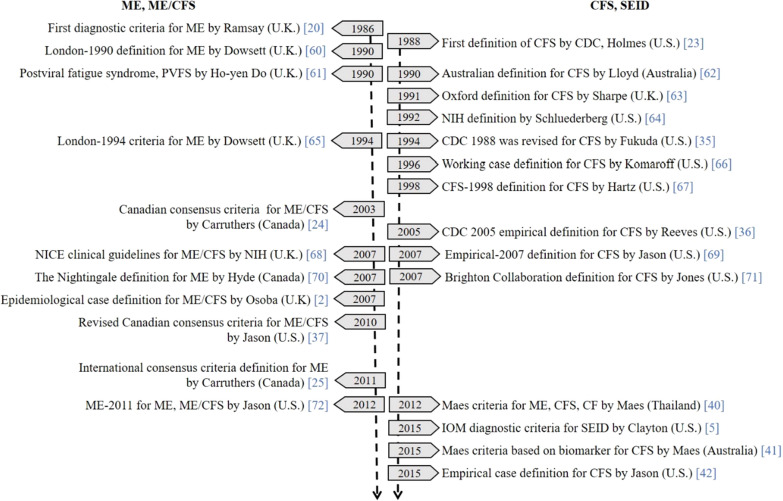
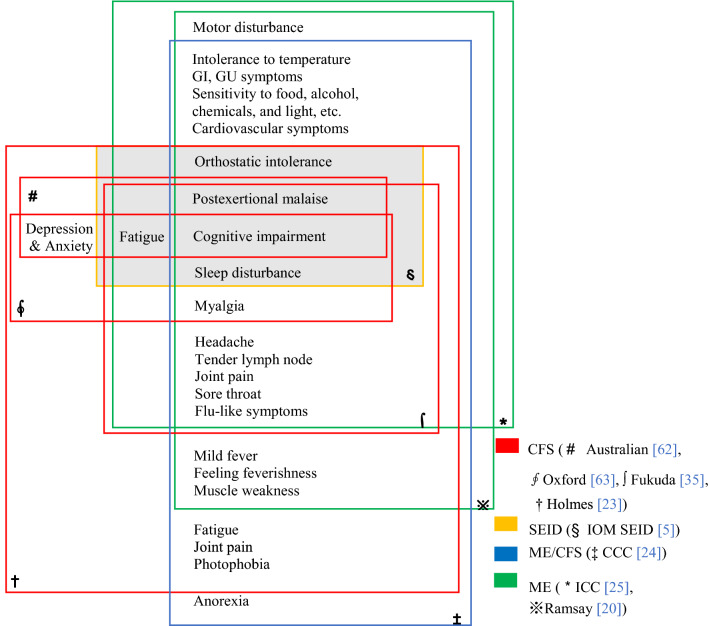
Background: Myalgic encephalomyelitis/chronic fatigue syndrome (ME/CFS) is a debilitating disease with unknown causes. From the perspectives on the etiology and pathophysiology, ME/CFS has been labeled differently, which influenced changes in case definitions and terminologies. This review sought to feature aspects of the history, developments, and differential symptoms in the case definitions. Methods: A search was conducted through PubMed published to February 2020 using the following search keywords: case definition AND chronic fatigue syndrome [MeSH Terms]. All reference lists of the included studies were checked. Of the included studies, the number of citations and the visibility in the literatures of the definitions were considered for comparisons of the criteria. Results: Since the first 'ME' case definition was developed in 1986, 25 case definitions/diagnostic criteria were created based on three conceptual factors (etiology, pathophysiology, and exclusionary disorders). These factors can be categorized into four categories (ME, ME/CFS, CFS, and SEID) and broadly characterized according to primary disorder (ME-viral, CFS-unknown, ME/CFS-inflammatory, SEID-multisystemic), compulsory symptoms (ME and ME/CFS-neuroinflammatory, CFS and SEID-fatigue and/or malaise), and required conditions (ME-infective agent, ME/CFS, CFS, SEID-symptoms associated with fatigue, e.g., duration of illness). ME and ME/CFS widely cover all symptom categories, while CFS mainly covers neurologic and neurocognitive symptoms. Fatigue, cognitive impairment, PEM, sleep disorder, and orthostatic intolerance were the overlapping symptoms of the 4 categories, which were included as SEID criteria. Conclusions: This study comprehensively described the journey of the development of case definitions and compared the symptom criteria. This review provides broader insights and explanations to understand the complexity of ME/CFS for clinicians and researchers.
Overview
The claims and statistics of this paper haven’t been checked yet.
Run the check — free, no account needed. It reads the open-access text and checks the sources it cites.
Integrity signals
Registry
Cites
Statistics
Figures
Verification
Claims the paper makes
The claims and statistics of this paper haven’t been checked yet.
Run the check — free, no account needed. It reads the open-access text and checks the sources it cites.
Claims other papers make about this one
Each is checked against this paper’s own text: does it say what the citing paper says it does?
The source backs part of the claim, not all of it — or backs it for a different population, condition or comparison.
In the citing paper
“Although it was not possible to calculate subgroup analyses based on the different diagnostic criteria used for inclusion of CFS patients, most included studies used well-established criteria [2].”
From Efficacy and Acceptance of Cognitive Behavioral Therapy in Adults with Chronic Fatigue Syndrome: A Meta-analysis. (2024) · cites this paper as [2]
Experimental — accuracy not yet measured
Self-check
Percentages, sums and reported differences re-computed from the paper’s own numbers.
The self-check needs the paper’s full text.
Citations
Cites
The Chronic Fatigue Syndrome: A Comprehensive Approach to Its Definition and Study
Fukuda, K., Straus, S. E., Hickie, I., Sharpe, M. C., Dobbins, J. G., Komaroff, A., & and International Chronic Fatigue Syndrome Study Group. (1994) · Annals of Internal Medicine · doi:10.7326/0003-4819-121-12-199412150-00009 · Cited by 4,969
Chronic Fatigue Syndrome: A Working Case Definition
Holmes, G. P., KAPLAN, J. E., GANTZ, N. M., KOMAROFF, A. L., SCHONBERGER, L. B., STRAUS, S. E., Jones, J. F., DUBOIS, R. E., CUNNINGHAM-RUNDLES, C., Pahwa, S. G., et al. (1988) · Annals of Internal Medicine · doi:10.7326/0003-4819-108-3-387 · Cited by 1,713
Myalgic encephalomyelitis: International Consensus Criteria
Carruthers, B. M., van de Sande, M. I., Meirleir, K. L. D., Klimas, N. G., Broderick, G., Mitchell, T., Staines, D., Powles, A. C. P., Speight, N., Vallings, R., et al. (2011) · Journal of Internal Medicine · doi:10.1111/j.1365-2796.2011.02428.x · Cited by 1,234
A report—Chronic fatigue syndrome: Guidelines for research
Sharpe, M. C. (1991) · Journal of the Royal Society of Medicine · doi:10.1177/014107689108400224 · Cited by 1,026
Hickie, I. B., Davenport, T. A., Wakefield, D., Vollmer-Conna, U. S., Cameron, B., Vernon, S. D., Reeves, W. C., & Lloyd, A. R. (2006) · BMJ · doi:10.1136/bmj.38933.585764.ae · Cited by 824
Dalal, P., Shah, P. M., Sheth, S. C., & Deshpande, C. K. (1965) · The Lancet · doi:10.1016/s0140-6736(65)91651-x · Cited by 592
Lim, E., Ahn, Y., Jang, E.-S., Lee, S., Lee, S., & Son, C. (2020) · Journal of Translational Medicine · doi:10.1186/s12967-020-02269-0 · Cited by 489
Self-citationMetabolic features of chronic fatigue syndrome
Naviaux, R. K., Naviaux, J. C., Li, K., Bright, A. T., Alaynick, W. A., Wang, L., Baxter, A., Nathan, N., Anderson, W. H., & Gordon, E. (2016) · Proceedings of the National Academy of Sciences · doi:10.1073/pnas.1607571113 · Cited by 405
Cytokine signature associated with disease severity in chronic fatigue syndrome patients
Montoya, J. G., Holmes, T. H., Anderson, J. N., Maecker, H. T., Rosenberg‐Hasson, Y., Valencia, I. J., Chu, L., Younger, J., Tato, C. M., & Davis, M. M. (2017) · Proceedings of the National Academy of Sciences · doi:10.1073/pnas.1710519114 · Cited by 397
Prevalence of chronic fatigue syndrome in an Australian population
Lloyd, A. R., Hickie, I. B., Boughton, C. R., Wakefield, D., & Spencer, O. (1990) · The Medical Journal of Australia · doi:10.5694/j.1326-5377.1990.tb126191.x · Cited by 389
Research works printed but not linked: 2
- Bethesda M. Myalgic encephalomyelitis/chronic fatigue syndrome (ME/CFS) research: workshop report. State of the knowledge workshop. National Institutes of Health. 2011. https://www.meassociation.org.uk/wp-content/uploads/2011/08/SoK-Workshop-Report-508-compliant-8-5-11.pdf. Accessed 25 Mar 2019.
- Gilliam AG, National Institutes of Health. Epidemiological study of an epidemic, diagnosed as poliomyelitis, occurring among the personnel of the Los Angeles County General Hospital during the summer of 1934. Washington: US Government Printing Office; 1938.
Cited by
Sorted by citations
Wong, T. L., & Weitzer, D. (2021) · Medicina · doi:10.3390/medicina57050418 · Cited by 473
Goyal, G., Tazi, A., Go, R. S., Rech, K. L., Picarsic, J. L., Vassallo, R., Young, J. R., Cox, C. W., van Laar, J. A. M., Hermiston, M. L., et al. (2022) · Blood · doi:10.1182/blood.2021014343 · Cited by 284
The Neurological Manifestations of Post-Acute Sequelae of SARS-CoV-2 Infection
Moghimi, N., Napoli, M. D., Biller, J., Siegler, J. E., Shekhar, R., McCullough, L. D., Harkins, M. S., Hong, E., Alaouieh, D., Mansueto, G., et al. (2021) · Current Neurology and Neuroscience Reports · doi:10.1007/s11910-021-01130-1 · Cited by 202
COVID-19 and post-infectious myalgic encephalomyelitis/chronic fatigue syndrome: a narrative review
Poenaru, S., Abdallah, S. J., Corrales‐Medina, V., & Cowan, J. (2021) · Therapeutic Advances in Infectious Disease · doi:10.1177/20499361211009385 · Cited by 167
Wormgoor, M. E. A., & Rodenburg, S. C. (2021) · Journal of Translational Medicine · doi:10.1186/s12967-020-02683-4 · Cited by 119
Myalgic Encephalomyelitis/Chronic Fatigue Syndrome: the biology of a neglected disease
Arron, H. E., Marsh, B. D., Khan, M. A., Jaeger, B., Kell, D., & Pretorius, E. (2024) · Frontiers in Immunology · doi:10.3389/fimmu.2024.1386607 · Cited by 127
Fleischer, M., Szepanowski, F., Tovar, M., Herchert, K., Dinse, H., Schweda, A., Mausberg, A. K., Holle, D., Köhrmann, M., Stögbauer, J., et al. (2022) · Neurology and Therapy · doi:10.1007/s40120-022-00395-z · Cited by 75
Myalgic encephalomyelitis/chronic fatigue syndrome (ME/CFS): Where will the drugs come from?
Toogood, P. L., Clauw, D. J., Phadke, S., & Hoffman, D. L. (2021) · Pharmacological Research · doi:10.1016/j.phrs.2021.105465 · Cited by 68
A Comprehensive Update of the Current Understanding of Chronic Fatigue Syndrome
Noor, N., Urits, I., Degueure, A. E., Rando, L. L., Kata, V., Cornett, E. M., Kaye, A. D., Imani, F., Zamanabadi, M. N., Varrassi, G., et al. (2021) · Anesthesiology and Pain Medicine · doi:10.5812/aapm.113629 · Cited by 56
Fatigue as the Chief Complaint
Maisel, P., Baum, E., & Donner‐Banzhoff, N. (2021) · Deutsches Ärzteblatt international · doi:10.3238/arztebl.m2021.0192 · Cited by 73
Germain, A., Giloteaux, L., Moore, G. E., Levine, S. M., Chia, J. K. S., Keller, B. A., Stevens, J., Franconi, C. J., Mao, X., Shungu, D. C., et al. (2022) · JCI Insight · doi:10.1172/jci.insight.157621 · Cited by 57
Meade, E., & Garvey, M. (2022) · International Journal of Molecular Sciences · doi:10.3390/ijms23158574 · Cited by 56
Conroy, K. E., Islam, M. F., & Jason, L. A. (2022) · Disability and Rehabilitation · doi:10.1080/09638288.2022.2043462 · Cited by 51
Tokumasu, K., Honda, H., Sunada, N., Sakurada, Y., Matsuda, Y., Yamamoto, K., Nakano, Y., Hasegawa, T., Yamamoto, Y., Otsuka, Y., et al. (2022) · Medicina · doi:10.3390/medicina58070850 · Cited by 50
O’Neal, A. J., & Hanson, M. R. (2021) · Frontiers in Medicine · doi:10.3389/fmed.2021.688486 · Cited by 44
Arāja, D., Berķis, U., Lunga, A., & Murovska, M. (2021) · Journal of Clinical Medicine · doi:10.3390/jcm10143017 · Cited by 41
Nunes, J. M., Kell, D. B., & Pretorius, E. (2023) · Blood Reviews · doi:10.1016/j.blre.2023.101075 · Cited by 39
Our Evolving Understanding of ME/CFS
Friedman, K. J., Murovska, M., Pheby, D., & Zalewski, P. (2021) · Medicina · doi:10.3390/medicina57030200 · Cited by 41
Seton, K. A., Espejo, J., Giménez-Orenga, K., Haagmans, R., Ramadan, D. J., & Mehlsen, J. (2024) · Journal of Clinical Medicine · doi:10.3390/jcm13020325 · Cited by 41
Mitochondrial Dysfunction in Myalgic Encephalomyelitis/Chronic Fatigue Syndrome
Syed, A. M., Karius, A. K., Ma, J., Wang, P.-Y., & Hwang, P. M. (2025) · Physiology · doi:10.1152/physiol.00056.2024 · Cited by 36
Polli, A., Hendrix, J., Ickmans, K., Bakusic, J., Ghosh, M., Monteyne, D., Velkeniers, B., Bekaert, B., Nijs, J., & Godderis, L. (2022) · Journal of Translational Medicine · doi:10.1186/s12967-022-03662-7 · Cited by 36
Gusev, E., & Sarapultsev, A. (2024) · International Journal of Molecular Sciences · doi:10.3390/ijms25126389 · Cited by 39
Kavyani, B., Lidbury, B. A., Schloeffel, R., Fisher, P. R., Missailidis, D., Annesley, S. J., Dehhaghi, M., Heng, B., & Guillemin, G. J. (2022) · Cellular and Molecular Life Sciences · doi:10.1007/s00018-022-04380-5 · Cited by 32
Evaluation of viral infection as an etiology of ME/CFS: a systematic review and meta-analysis
Hwang, J., Lee, J., Oh, H.-M., Lee, E., Lim, E., & Son, C. (2023) · Journal of Translational Medicine · doi:10.1186/s12967-023-04635-0 · Cited by 30
Self-citationPark, N.-H., Kang, Y.-E., Yoon, J.-H., Ahn, Y., Lee, E., Park, B., & Son, C. (2024) · Scientific Reports · doi:10.1038/s41598-024-74683-z · Cited by 33
Self-citationDiagnostic and Pharmacological Potency of Creatine in Post-Viral Fatigue Syndrome
Ostojić, S. M. (2021) · Nutrients · doi:10.3390/nu13020503 · Cited by 28
Orji, N., Campbell, J. A., Wills, K. E., Hensher, M., Palmer, A. J., Rogerson, M. J., Kelly, R., & de Graaff, B. (2022) · BMC Public Health · doi:10.1186/s12889-022-13929-9 · Cited by 28
Semmler, A., Mundorf, A. K., Kuechler, A. S., Schulze-Bosse, K., Heidecke, H., Schulze‐Forster, K., Schott, M., Uhrberg, M., Weinhold, S., Lackner, K. J., et al. (2023) · Vaccines · doi:10.3390/vaccines11111642 · Cited by 28
Maas genannt Bermpohl, F., Kucharczyk-Bodenburg, A.-C., & Martin, A. (2024) · International Journal of Behavioral Medicine · doi:10.1007/s12529-023-10254-2 · Cited by 29
Hazrati, E., Eftekhar, S. P., Mosaed, R., Dini, S. S., & Namazi, M. (2024) · Molecular Pain · doi:10.1177/17448069241275097 · Cited by 34
Gestational Hypertension, Preeclampsia, and Eclampsia and Future Neurological Disorders
Friis, T., Bergman, L., Hesselman, S., Lindström, L., Junus, K., Cluver, C. A., Escudero, C., & Wikström, A.-K. (2024) · JAMA Neurology · doi:10.1001/jamaneurol.2024.4426 · Cited by 27
Ingman, T., Smakowski, A., Goldsmith, K., & Chalder, T. (2022) · Psychological Medicine · doi:10.1017/s0033291722002471 · Cited by 27
Kuut, T. A., Buffart, L. M., Braamse, A. M. J., Csorba, I., Bleijenberg, G., Nieuwkerk, P., Moss-Morris, R., Müller, F., & Knoop, H. (2024) · Psychological Medicine · doi:10.1017/s0033291723003148 · Cited by 27
Vaes, A. W., Herck, M. V., Deng, Q., Delbressine, J. M., Jason, L. A., & Spruit, M. A. (2023) · Journal of Translational Medicine · doi:10.1186/s12967-023-03946-6 · Cited by 29
Nunes, J. M., Vlok, M., Proal, A. D., Kell, D. B., & Pretorius, E. (2024) · Cardiovascular Diabetology · doi:10.1186/s12933-024-02315-x · Cited by 24
Wang, J., Choi, Y., Lee, J., Hwang, S., Gu, J., & Son, C. (2024) · European journal of medical research · doi:10.1186/s40001-024-01747-1 · Cited by 23
Self-citationDai, L., Liu, Z., Zhou, W., Zhang, L., Miao, M., Wang, L., Hua, H., Wang, B., & Ji, G. (2024) · Phytomedicine · doi:10.1016/j.phymed.2024.155636 · Cited by 23
Nationwide epidemiological characteristics of chronic fatigue syndrome in South Korea
Lim, E., Lee, J., Lee, E., Jeong, S.-J., Park, H., Ahn, Y., & Son, C. (2021) · Journal of Translational Medicine · doi:10.1186/s12967-021-03170-0 · Cited by 23
Self-citationYamamoto, Y., Otsuka, Y., Tokumasu, K., Sunada, N., Nakano, Y., Honda, H., Sakurada, Y., Hasegawa, T., Hagiya, H., & Otsuka, F. (2023) · Journal of Clinical Medicine · doi:10.3390/jcm12144737 · Cited by 26
Campenhout, J. V., Buntinx, Y., Xiong, H.-Y., Wyns, A., Polli, A., Nijs, J., Aerts, J. L., Laeremans, T., & Hendrix, J. (2025) · Biomolecules · doi:10.3390/biom15030357 · Cited by 22
Faghy, M. A., Duncan, R. F., Hume, E., Gough, L. A., Roscoe, C. M. P., Laddu, D., Arena, R. A., Ashton, R. E. M., & Dalton, C. (2024) · Progress in Cardiovascular Diseases · doi:10.1016/j.pcad.2024.03.003 · Cited by 22
Clinical and Diagnostic Features of Post-Acute COVID-19 Vaccination Syndrome (PACVS)
Mundorf, A. K., Semmler, A., Heidecke, H., Schott, M., Steffen, F., Bittner, S., Lackner, K. J., Schulze-Bosse, K., Pawlitzki, M., Meuth, S. G., et al. (2024) · Vaccines · doi:10.3390/vaccines12070790 · Cited by 22
Bakken, A. K., Mengshoel, A. M., Synnes, O., & Strand, E. B. (2023) · International Journal of Qualitative Studies on Health and Well-Being · doi:10.1080/17482631.2023.2223420 · Cited by 21
Weigel, B., Eaton-Fitch, N., Thapaliya, K., & Marshall‐Gradisnik, S. (2024) · Quality of Life Research · doi:10.1007/s11136-024-03710-3 · Cited by 21
Tschopp, R., König, R. S., Rejmer, P., & Paris, D. H. (2023) · Heliyon · doi:10.1016/j.heliyon.2023.e15595 · Cited by 20
Bai, N. A., & Richardson, C. S. (2023) · Chronic Diseases and Translational Medicine · doi:10.1002/cdt3.74 · Cited by 20
Rusin, A., Seymour, C. B., Cocchetto, A. M., & Mothersill, C. E. (2022) · International Journal of Molecular Sciences · doi:10.3390/ijms23020691 · Cited by 18
Hladkykh, F. V., Liadova, T., Matvieienko, M. S., Komorovsky, R., Smiyan, S., & Student, V. (2026) · Journal of Pain Research · doi:10.2147/jpr.s571311 · Cited by 22
Godlewska, B. R., Sylvester, A. L., Emir, U. E., Sharpley, A. L., Clarke, W. T., Williams, S. R., Gonçalves, A. J., Raman, B., Valkovič, L., & Cowen, P. J. (2025) · Molecular Psychiatry · doi:10.1038/s41380-025-03108-8 · Cited by 16
Booven, D. J. V., Gamer, J., Joseph, A., Perez, M., Zarnowski, O., Pandya, M., Collado, F., Klimas, N. G., Oltra, E., & Nathanson, L. (2023) · International Journal of Molecular Sciences · doi:10.3390/ijms24032698 · Cited by 16
Nunes, J. M., Kell, D. B., & Pretorius, E. (2024) · Viruses · doi:10.3390/v16040572 · Cited by 19
Fatigue after COVID‐19 in non‐hospitalized patients according to sex
Mazurkiewicz, I., Chatys-Bogacka, Ż., Słowik, J., Klich‐Rączka, A., Fedyk‐Lukasik, M., Słowik, A., Wnuk, M. A., & Drabik, L. (2023) · Brain and Behavior · doi:10.1002/brb3.2849 · Cited by 15
Andreassen, S., Lindland, E. S., Beyer, M. K., Solheim, A. M., Ljøstad, U., Mygland, Å., Lorentzen, Å. R., Reiso, H., Bjuland, K. J., Pripp, A. H., et al. (2022) · Journal of Neurology · doi:10.1007/s00415-022-11463-7 · Cited by 14
Systematic review of fatigue severity in ME/CFS patients: insights from randomized controlled trials
Park, J., Park, B., Lee, J., Lee, E., Ahn, Y., & Son, C. (2024) · Journal of Translational Medicine · doi:10.1186/s12967-024-05349-7 · Cited by 15
Self-citationMorita, S., Tokumasu, K., Otsuka, Y., Honda, H., Nakano, Y., Sunada, N., Sakurada, Y., Matsuda, Y., Soejima, Y., Ueda, K., et al. (2024) · PLoS ONE · doi:10.1371/journal.pone.0315385 · Cited by 14
Chronic Fatigue Exhibits Heterogeneous Autoimmunity Characteristics Which Reflect Etiology
Даниленко, О. И., Gavrilova, N., & Churilov, L. P. (2022) · Pathophysiology · doi:10.3390/pathophysiology29020016 · Cited by 15
Ser, M. H., Çalıkuşu, F. Z., Tanrıverdi, U., Abbaszade, H., Hakyemez, S., Balkan, İ. İ., Karaali, R., & Gündüz, A. (2022) · Neurological Sciences · doi:10.1007/s10072-022-06350-y · Cited by 14
Core features and inherent diversity of post-acute infection syndromes
Trautmann, A. (2025) · Frontiers in Immunology · doi:10.3389/fimmu.2025.1509131 · Cited by 13
NICE guideline on ME/CFS: robust advice based on a thorough review of the evidence
Barry, P. W., Kelley, K., Tan, T., & Finlay, I. G. (2024) · Journal of Neurology Neurosurgery & Psychiatry · doi:10.1136/jnnp-2023-332731 · Cited by 13
Inderyas, M., Thapaliya, K., Marshall‐Gradisnik, S., Barth, M., & Barnden, L. R. (2024) · Frontiers in Neuroscience · doi:10.3389/fnins.2023.1318094 · Cited by 13
Systematic nursing interventions in gastric cancer: A randomized controlled study
He, F., & He, R. (2022) · World Journal of Clinical Cases · doi:10.12998/wjcc.v10.i6.1843 · Cited by 12
The importance of estimating prevalence of ME/CFS in future epidemiological studies of long COVID
Grabowska, A. D., Westermeier, F., Nacul, L., Lacerda, E., & Sepúlveda, N. (2023) · Frontiers in Public Health · doi:10.3389/fpubh.2023.1275827 · Cited by 13
Koleničová, V., Vňuková, M., Anders, M., Fišerová, M., Raboch, J., & Ptáček, R. (2023) · Medical Science Monitor · doi:10.12659/msm.941079 · Cited by 12
Yang, M., Keller, S., & Lin, J.-M. S. (2022) · Quality of Life Research · doi:10.1007/s11136-022-03199-8 · Cited by 11
Pietrangelo, T., Cagnin, S., Bondi, D., Santangelo, C., Marramiero, L., Purcaro, C., Bonadio, R. S., Filippo, E. S. D., Mancinelli, R., Fulle, S., et al. (2024) · Acta Physiologica · doi:10.1111/apha.14122 · Cited by 12
Autoimmune gene expression profiling of fingerstick whole blood in Chronic Fatigue Syndrome
Wang, Z., Waldman, M. F., Basavanhally, T., Jacobs, A. R., Lopez, G., Perichon, R. Y., Johnny, J., Mackenzie, E., Healy, J. B., Wang, Y., et al. (2022) · Journal of Translational Medicine · doi:10.1186/s12967-022-03682-3 · Cited by 12
Weigel, B., Eaton-Fitch, N., Passmore, R., Cabanas, H., Staines, D., & Marshall‐Gradisnik, S. (2021) · Food & Nutrition Research · doi:10.29219/fnr.v65.5730 · Cited by 11
Chen, C., Yip, H., Leong, K.-H., Yao, W.-C., Hung, C., Su, C.-H., Kuo, C.-F., & Tsai, S. (2023) · Journal of Translational Medicine · doi:10.1186/s12967-023-03886-1 · Cited by 10
“We defined CFS using the CDC-1994 criteria in this study since it is the most common one that may resulted in recruit more cases [4, 19].”
BackgroundMethodAzcue, N., Tijero, B., Acera, M., Pérez-Garay, R., Fernández‐Valle, T., Ayo-Mentxakatorre, N., Ruíz-López, M., Lafuente, J. V., Gómez‐Esteban, J. C., & Pino, R. D. (2024) · Biomedicines · doi:10.3390/biomedicines12071539 · Cited by 9
What Long COVID investigators can learn from four decades of ME/CFS research
Jason, L. A., Natelson, B. H., Bonilla, H. F., Sherif, Z. A., Vernon, S. D., Verduzco‐Gutierrez, M., O’Brien, L., & Taylor, E. C. (2023) · Brain Behavior and Immunity Integrative · doi:10.1016/j.bbii.2023.100022 · Cited by 9
Powers, J., McIntee, T. J., Bhatia, A., Madlock‐Brown, C., Seltzer, J. L., Sekar, A., Jain, N., Hornig, M., Seibert, E., Leese, P., et al. (2025) · Communications Medicine · doi:10.1038/s43856-025-00827-5 · Cited by 9
Babnik, K., Staresinic, C., & Lep, Ž. (2022) · Human Systems Management · doi:10.3233/hsm-220003 · Cited by 10
Applying Lessons From Rheumatology to Better Understand Long COVID
Goldenberg, D. L. (2023) · Arthritis Care & Research · doi:10.1002/acr.25210 · Cited by 8
Zhang, J., Liu, X., Li, X., Ying, Z., & Liu, W. (2022) · Pharmacological Research - Modern Chinese Medicine · doi:10.1016/j.prmcm.2022.100139 · Cited by 7
Seton, K. A., Defernez, M., Telatin, A., Tiwari, S. K., Savva, G. M., Hayhoe, A., Noble, A., de Carvalho-KoK, A. L. S., James, S. A., Bansal, A. S., et al. (2023) · International Journal of Molecular Sciences · doi:10.3390/ijms242015316 · Cited by 11
“Myalgic encephalomyelitis/chronic fatigue syndrome (ME/CFS) is characterised by disabling fatigue and autonomic, muscular, cognitive, neurological and immune symptoms that leave patients unable to undertake their pre-morbid work, education, exercise and social activities [1].”
Gut microbiota and exercise-induced fatigue: unraveling the connections
Li, Q., Wen, X. L., Wang, G., Wang, Z., & Tian, P. (2024) · Food Science of Animal Products · doi:10.26599/fsap.2024.9240061 · Cited by 7
Kang, H., 邵天瑞, Shi, Y., Wang, S., Xiong, H., Jin, X., & Ren, J. (2026) · Frontiers in Neuroscience · doi:10.3389/fnins.2026.1814098 · Cited by 8
Jinushi, R., Masuda, S., Tanisaka, Y., Nishiguchi, S., Shionoya, K., Sato, R., Sugimoto, K., Shin, T., Shiomi, R., Fujita, A., et al. (2023) · Journal of Translational Medicine · doi:10.1186/s12967-023-04226-z · Cited by 6
Serrat, M., Navarrete, J., Ferrés, S., Auer, W., Sentañes, R. S., Nieto, R., Neblett, R., Borràs, X., Luciano, J. V., & Feliu‐Soler, A. (2023) · Health Psychology · doi:10.1037/hea0001346 · Cited by 7
Neuropsychology of chronic fatigue syndrome in civilian population in war conditions
Matiash, M. M., Lunov, V., Прудка, Л., Rudenko, Y., & Prints, V. (2024) · INTERNATIONAL NEUROLOGICAL JOURNAL · doi:10.22141/2224-0713.20.7.2024.1118 · Cited by 6
Impact of Misdiagnosis in Case-Control Studies of Myalgic Encephalomyelitis/Chronic Fatigue Syndrome
Malato, J., Graça, L., & Sepúlveda, N. (2023) · Diagnostics · doi:10.3390/diagnostics13030531 · Cited by 8
Germain, A., Glass, K. A., Eckert, M. A., Giloteaux, L., & Hanson, M. R. (2025) · Molecular & Cellular Proteomics · doi:10.1016/j.mcpro.2025.101467 · Cited by 5
Nikolova, R., Donchev, D., Vaseva, K., & Ivanov, I. N. (2025) · International Journal of Molecular Sciences · doi:10.3390/ijms27010425 · Cited by 6
Hua, C., Schwabe, J., Jason, L. A., Furst, J. D., & Raicu, D. S. (2023) · Psych · doi:10.3390/psych5040073 · Cited by 5
Liu, Z., Lv, Z., Zhou, X., Shi, J., Hong, S., Huang, H., & Lv, L. (2022) · Medicine · doi:10.1097/md.0000000000031450 · Cited by 7
Liles, E. G., Irving, S. A., Koppolu, P., Crane, B., Naleway, A. L., Brooks, N. B., Gee, J. M., Unger, E. R., & Henninger, M. L. (2024) · The Permanente Journal · doi:10.7812/tpp/23.170 · Cited by 5
Assessment of Hearing and Vestibular Functions in a Post-COVID-19 Patient: A Clinical Case Study
Andreeva, I. G., Гвоздева, А. П., Pimenova, V. M., Ryabkova, V. A., Lukashenko, M., Kamaeva, E., Shapkina, V., Soprun, L. A., Gavrilova, N., Fedotkina, T. V., et al. (2022) · Diagnostics · doi:10.3390/diagnostics13010122 · Cited by 5
Xiong, R., Aiken, E. S., Caldwell, R., Vernon, S. D., Kozhaya, L., Gunter, C., Bateman, L., Unutmaz, D., & Oh, J. (2024) · bioRxiv (Cold Spring Harbor Laboratory) · doi:10.1101/2024.06.24.600378 · Cited by 5
Broadbent, S., Coetzee, S., Calder, A. M., & Beavers, R. (2025) · European Journal of Applied Physiology · doi:10.1007/s00421-025-05759-5 · Cited by 5
Ingman, T., Chalder, T., & Lawrence, V. C. (2025) · International Journal of Qualitative Studies on Health and Well-Being · doi:10.1080/17482631.2025.2595829 · Cited by 6
Tomaskovic, A., Weber, V., Ochmann, D. T., Neuberger, E. W. I., Lachtermann, E., Brahmer, A., Haller, N., Hillen, B., Enders, K., Eggert, V., et al. (2025) · JMIR Research Protocols · doi:10.2196/65044 · Cited by 6
Course of fatigue among patients previously hospitalised due to COVID-19
Mazurkiewicz, I., Chatys-Bogacka, Ż., Słowik, J., Zdanecka, M., Siwiec-Koźlik, A., Słowik, A., Drabik, L., & Wnuk, M. A. (2023) · Neurologia i Neurochirurgia Polska · doi:10.5603/pjnns.a2023.0015 · Cited by 7
“Moreover, as shown recently, CFS and post-COVID condition share similarities related to fatigue, exhaustion initiating exercise, post-exertional malaise, muscle and joint pain [27, 28].”
MethodInfluentialGodlewska, B. R., Sylvester, A. L., Emir, U. E., Sharpley, A. L., Clarke, W. T., Martens, M., & Cowen, P. J. (2024) · Nutrients · doi:10.3390/nu16193308 · Cited by 7
Campagne, J., Fornasieri, I., Andréani, B., Eginard, M., & de Korwin, J.-D. (2022) · Diagnostics · doi:10.3390/diagnostics12051095 · Cited by 4
Duda, N., Maguire, R., Gitonga, I., & Corrigan, S. (2023) · doi:10.31234/osf.io/5ct4k · Cited by 4
Pretorius, E., Nunes, J. M., pretorius, J., & Kell, D. B. (2024) · Research Square · doi:10.21203/rs.3.rs-4507472/v1 · Cited by 4
Compton, S., Alkabalan, R., Cadet, J., Mastali, A., & Ramdass, P. V. A. K. (2025) · Diagnostics · doi:10.3390/diagnostics15182332 · Cited by 3
Peripheral Levels of Selected Biomarkers in Patients with Post-Sarcoidosis Chronic Fatigue Syndrome
Małujło-Balcerska, E., Bączek, K., Górski, W., Kumor‐Kisielewska, A., Gwadera, Ł., Białas, A. J., & Piotrowski, W. (2025) · Journal of Inflammation Research · doi:10.2147/jir.s549445 · Cited by 3
Arāja, D., Krūmiņa, A., Nora-Krūkle, Z., Schneider, M. E., Berķis, U., & Murovska, M. (2023) · Frontiers in Neuroscience · doi:10.3389/fnins.2023.1202930 · Cited by 3
Martín-Borràs, C., Serra, G. G., Carrasco-Querol, N., Sansano-Nadal, O., Hernández, N. B., del Pino, P. B., Cazalla, M. P., Angelats, R. C., Montesó‐Curto, P., Blanco, E. C., et al. (2024) · Frontiers in Physiology · doi:10.3389/fphys.2024.1441076 · Cited by 3
Metadata
- Authors
- Lim, E.-J., & Son, C.-G.
- Affiliations
- Daejeon University (KR)
- Corresponding author
- Son, Chang-Gue
- Venue
- Journal of Translational Medicine
- Published
- 2020-07-29
- Volume
- 18
- Issue
- 1
- Pages
- 289-289
- ISSN
- 1479-5876 (ISSN-L)
- PMC
- PMC7391812
- OpenAlex
- W3045864147
- Cited by
- 185
- References
- 61
- Citations by year
- 2026: 21 · 2025: 22 · 2024: 55 · 2023: 37 · 2022: 31 · 2021: 17 · 2020: 2
- FWCI
- 3.60
- Type
- journal article
- Language
- en
- Open access
- gold
- doi.org
- Locations
- Journal of Translational Medicine (publishedVersion, cc-by)
- PubMed Central (publishedVersion, cc-by)
- PubMed (publishedVersion)
- DOAJ (DOAJ: Directory of Open Access Journals) (submittedVersion, cc-by-sa)
- Funders
- National Research Foundation of Korea (NRF-2018R1A6A1A03025221)
- Topics
- Health Sciences › Medicine › Psychiatry and Mental health › Fibromyalgia and Chronic Fatigue Syndrome Research
- Health Sciences › Medicine › Clinical Neurology › Long-Term Effects of COVID-19
- Health Sciences › Medicine › Cardiology and Cardiovascular Medicine › Cardiovascular Syncope and Autonomic Disorders
- Keywords
- chronic fatigue syndrome, case definition, diagnostic criteria, etiology, pathophysiology, post-infectious fatigue, post-viral fatigue, post-infectious encephalomyelitis, fatigue, cognitive impairment, post-exertional malaise, sleep disorder, orthostatic intolerance, symptom criteria
- MeSH terms
- Humans, Sleep Wake Disorders, Fatigue Syndrome, Chronic, Orthostatic Intolerance
About these checks
Registry, retraction, Cites and statistics results are computed, not judged, with one exception: a printed reference that no index lists is read once by a model before it counts as a citation error. Claims are extracted by a model and kept only when their quote appears verbatim in the text; each cited source is then checked, with a model’s help, for whether it says what the claim relies on. Those verdicts can be wrong — read the claim’s quote and the cited source before relying on one.
Statistics and arithmetic are recomputed, not judged.
Confidence bands are shown only for fields calibrated on our annotated test set. None is calibrated yet, so no band is shown.
What counts as a claim ›How we measure confidence ›How we check this ›
Are you an author, or do you see a problem with this page? Request a review
