

Sugar-sweetened beverages increases the risk of hypertension among children and adolescence: a systematic review and dose–response meta-analysis
Open accessThe DOI matches its Crossref record; 69 of the 69 references it cites were found in a registry or an index.
Abstract
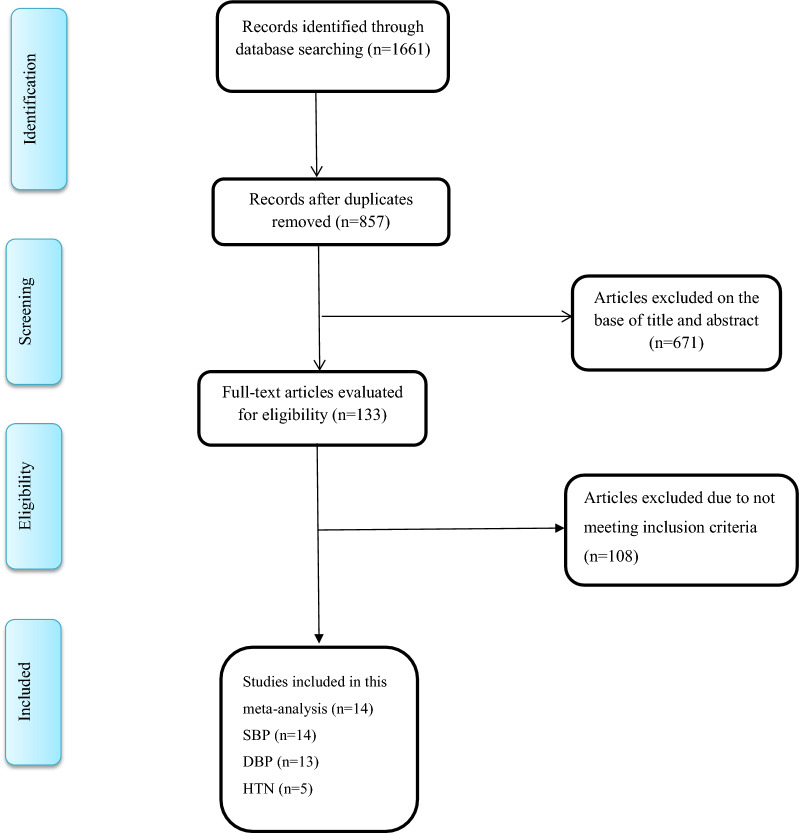
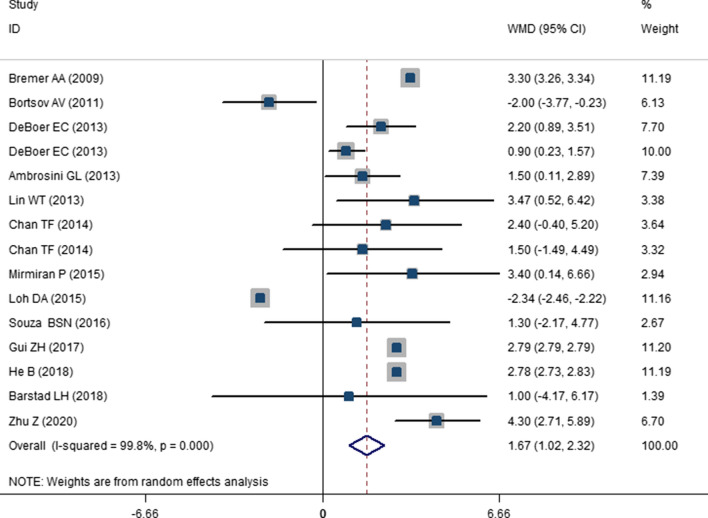
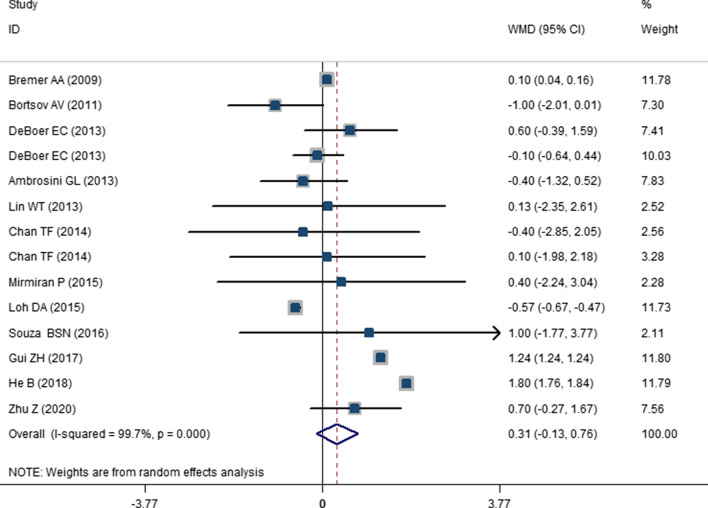
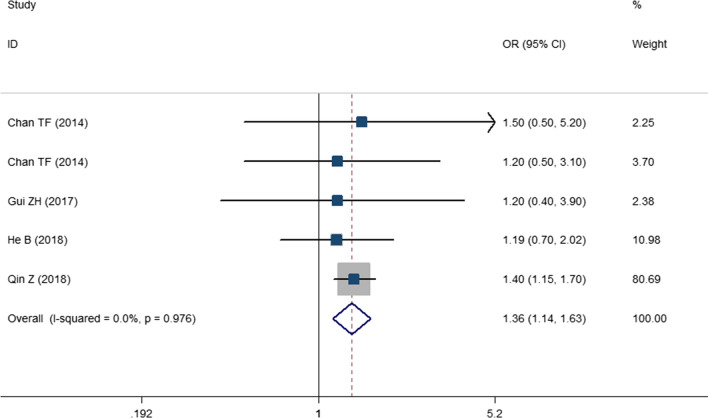
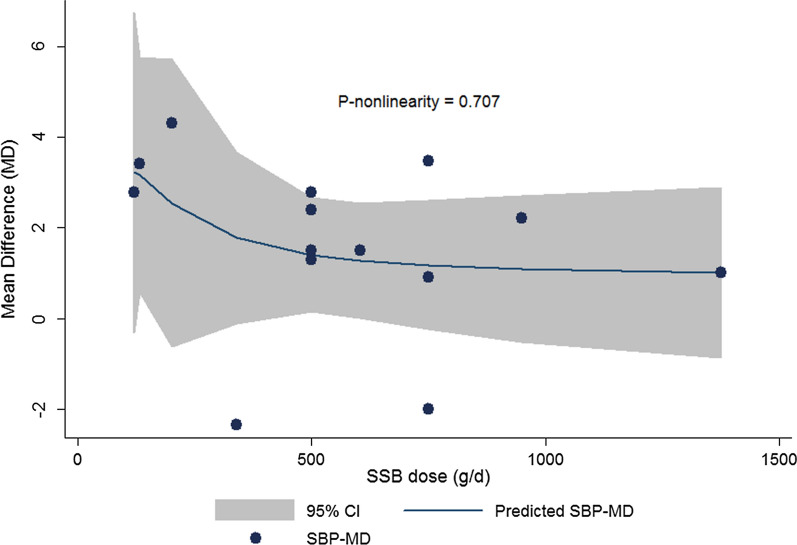
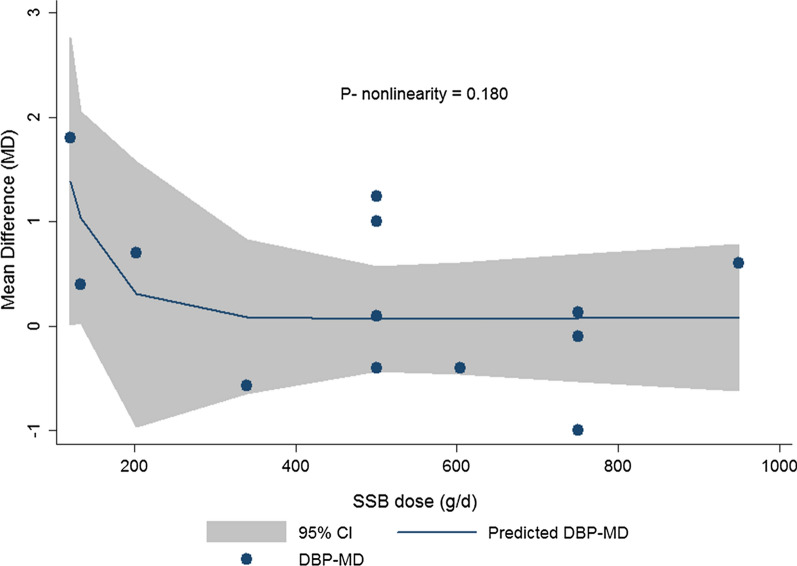
Background: In the current systematic review and meta-analysis, we summarized the studies that evaluated the effects of sugar-sweetened beverages (SSBs) intake on blood pressure among children and adolescents. Methods: In a systematic search from PubMed, Scopus, Embase and Cochrane electronic databases up to 20 April 2020, the observational studies that evaluated the association between sugar-sweetened beverages intake and hypertension, systolic or diastolic blood pressure (SBP, DBP) were retrieved. Results: A total of 14 studies with 93873 participants were included in the current meta-analysis. High SSB consumption was associated with 1.67 mmHg increase in SBP in children and adolescents (WMD: 1.67; CI 1.021–2.321; P < 0.001). The difference in DBP was not significant (WMD: 0.313; CI −0.131– 0.757; P = 0.108). High SSB consumers were 1.36 times more likely to develop hypertension compared with low SSB consumers (OR: 1.365; CI 1.145–1.626; P = 0.001). In dose–response meta-analysis, no departure from linearity was observed between SSB intake and change in SBP (P-nonlinearity = 0.707) or DBP (P-nonlinearity = 0.180). Conclusions: According to our finding, high SSB consumption increases SBP and hypertension in children and adolescents.
Overview
The claims and statistics of this paper haven’t been checked yet.
Free: it reads the open-access text and checks the first 5 claims that cite a source we can check. Create a free account to check every claim.
Integrity signals
Registry
Cites
Statistics
Figures
Verification
Claims the paper makes
The claims and statistics of this paper haven’t been checked yet.
Free: it reads the open-access text and checks the first 5 claims that cite a source we can check. Create a free account to check every claim.
Claims other papers make about this one
Each is checked against this paper’s own text: does it say what the citing paper says it does?
The cited source says what the claim attributes to it.
In the citing paper
“In a separate meta-analysis in children and adolescents,69 the highest versus lowest sugar sweetened beverage consumption was shown to be associated with a 1.67 mm Hg (weighted mean difference 1.67, 1.02 to 2.32) increase in systolic blood pressure and a 36% (odds ratio 1.36, 1.14 to 1.63) higher risk of hypertension.”
From Dietary sugar consumption and health: umbrella review (2023) · cites this paper as [69]
The cited source says what the claim attributes to it.
In the citing paper
“We observed no significant association between sugar sweetened beverage consumption and changes in diastolic blood pressure (children and adolescents)69 or heart failure.10”
From Dietary sugar consumption and health: umbrella review (2023) · cites this paper as [69]
Self-check
Percentages, sums and reported differences re-computed from the paper’s own numbers.
The self-check needs the paper’s full text.
Citations
Cites
Preferred Reporting Items for Systematic Reviews and Meta-Analyses: the PRISMA statement
Moher, D., Liberati, A., Tetzlaff, J., Altman, D. G., & for the PRISMA Group (2009) · BMJ · doi:10.1136/bmj.b2535 · Cited by 83,823
Preferred reporting items for systematic reviews and meta-analyses: The PRISMA statement
Moher, D., Liberati, A., Tetzlaff, J., Altman, D. G., & the PRISMA Group* (2009) · Annals of Internal Medicine · doi:10.7326/0003-4819-151-4-200908180-00135 · Cited by 37,554
Quantifying heterogeneity in a meta‐analysis
Higgins, J. P. T., & Thompson, S. G. (2002) · Statistics in Medicine · doi:10.1002/sim.1186 · Cited by 36,763
Cochrane Handbook for Systematic Reviews of Interventions: Cochrane Book Series
(2008) · doi:10.1002/9780470712184 · Cited by 25,048
Estimating the mean and variance from the median, range, and the size of a sample
Hozo, S. P., Djulbegovic, B., & Hozo, I. (2005) · BMC Medical Research Methodology · doi:10.1186/1471-2288-5-13 · Cited by 9,062
National High Blood Pressure Education Program Working Group on High Blood Pressure in Children and Adolescents (2004) · PEDIATRICS · doi:10.1542/peds.114.2.s2.555 · Cited by 6,938
Local Polynomial Modelling and its Applications
Fan, J., & Gijbels, I. (1994) · Springer eBooks · doi:10.1007/978-1-4899-3150-4 · Cited by 2,849
Dietary assessment methods in epidemiologic studies
Shim, J.-S., Oh, K., & Kim, H. C. (2014) · Epidemiology and Health · doi:10.4178/epih/e2014009 · Cited by 1,545
Chen, X., & Wang, Y. (2008) · Circulation · doi:10.1161/circulationaha.107.730366 · Cited by 1,491
Prenatal and Postnatal Flavor Learning by Human Infants
Mennella, J. A., Jagnow, C. P., & Beauchamp, G. K. (2001) · Pediatrics · doi:10.1542/peds.107.6.e88 · Cited by 1,032
Schwingshackl, L., Hoffmann, G., Lampousi, A.-M., Knüppel, S., Iqbal, K., Schwedhelm, C., Bechthold, A., Schlesinger, S., & Boeing, H. (2017) · European Journal of Epidemiology · doi:10.1007/s10654-017-0246-y · Cited by 799 · cited 1×
“Since the previous studies have shown that SSB intake is positively associated with diabetes and other health outcome [55], these data support the benefits of lower intake of SSBs.”
ResultChanges in beverage intake between 1977 and 2001
Nielsen, S. J., & Popkin, B. M. (2004) · American Journal of Preventive Medicine · doi:10.1016/j.amepre.2004.05.005 · Cited by 792
PRISMA for Abstracts: Reporting Systematic Reviews in Journal and Conference Abstracts
Beller, E. M., Glasziou, P. P., Altman, D. G., Hopewell, S., Bastian, H., Chalmers, I., Gøtzsche, P. C., Lasserson, T., Tovey, D., & for the PRISMA for Abstracts Group (2013) · PLoS Medicine · doi:10.1371/journal.pmed.1001419 · Cited by 706 · cited 1×
“The completed checklist has been provided in the Additional file 1 (Additional file 1: Table S1); moreover, the abstract was written according to the 12-item PRISMA extension checklist [29].”
MethodSingh, G. M., Micha, R., Khatibzadeh, S., Shi, P., Lim, S., Andrews, K. G., Engell, R. E., Ezzati, M., Mozaffarian, D., & Global Burden of Diseases Nutrition and Chronic Diseases Expert Group (NutriCoDE) (2015) · PLOS ONE · doi:10.1371/journal.pone.0124845 · Cited by 625 · cited 1×
“This finding is possibly due to this fact that most of the studies were form Asia and this high number of studies give greater power to Asian studies; also, in the previous report of global, regional, and national consumption of sugar-sweetened beverages in 187 countries, the SSB intake among Asian countries was lower…”
ResultKit, B. K., Fakhouri, T. H., Park, S., Nielsen, S. J., & Ogden, C. L. (2013) · The American Journal of Clinical Nutrition · doi:10.3945/ajcn.112.057943 · Cited by 434
Briefel, R. R., Wilson, A., & Gleason, P. M. (2009) · Journal of the American Dietetic Association · doi:10.1016/j.jada.2008.10.064 · Cited by 399
Sugar-Sweetened Beverages, Serum Uric Acid, and Blood Pressure in Adolescents
Nguyen, S., Choi, H. K., Lustig, R. H., & Hsu, C.-Y. (2009) · The Journal of Pediatrics · doi:10.1016/j.jpeds.2009.01.015 · Cited by 367
Fruit Juice in Infants, Children, and Adolescents: Current Recommendations
Heyman, M. B., Abrams, S. A., SECTION ON GASTROENTEROLOGY, H., COMMITTEE ON NUTRITION, Heitlinger, L. A., Cabana, M. D., Gilger, M. A., Gugig, R., Hill, I. D., Lightdale, J. R., et al. (2017) · Pediatrics · doi:10.1542/peds.2017-0967 · Cited by 367
Hypertension in children and adolescents: epidemiology and natural history
Falkner, B. (2010) · Pediatric Nephrology · doi:10.1007/s00467-009-1200-3 · Cited by 325
Shuster, J. J. (2011) · Research Synthesis Methods · doi:10.1002/jrsm.38 · Cited by 297
Sugar-sweetened beverages and risk of hypertension and CVD: a dose-response meta-analysis
Xi, B., Huang, Y., Reilly, K. H., Li, S., Zheng, R., Barrio-Lopez, M. T., Martinez-Gonzalez, M. A., & Zhou, D. (2015) · British Journal Of Nutrition · doi:10.1017/s0007114514004383 · Cited by 292 · cited 1×
“Also, in different studies outcome of study was adjusted for wide heterogenic confounders that may have affected the accuracy of dose–response estimates [53].”
BackgroundChen, L., Caballero, B., Mitchell, D. C., Loria, C., Lin, P.-H., Champagne, C. M., Elmer, P. J., Ard, J. D., Batch, B. C., Anderson, C. A. M., et al. (2010) · Circulation · doi:10.1161/circulationaha.109.911164 · Cited by 245
Fructose ingestion acutely elevates blood pressure in healthy young humans
Brown, C. M., Dulloo, A. G., Yepuri, G., & Montani, J.-P. (2008) · American Journal of Physiology-Regulatory, Integrative and Comparative Physiology · doi:10.1152/ajpregu.00680.2007 · Cited by 242
Fructose Intake, Serum Uric Acid, and Cardiometabolic Disorders: A Critical Review
Caliceti, C., Calabria, D., Roda, A., & Cicero, A. (2017) · Nutrients · doi:10.3390/nu9040395 · Cited by 236 · cited 1×
“Hyperuricemia which is induced by a higher fructose load from sugar-sweetened beverages may leads to acute endothelial dysfunction and chronic Na retention and consequently predisposes individuals to hypertension [60, 61].”
BackgroundSichieri, R., Paula Trotte, A., de Souza, R. A., & Veiga, G. V. (2009) · Public Health Nutrition · doi:10.1017/s1368980008002644 · Cited by 214
Bell, C. S., Samuel, J. P., & Samuels, J. A. (2019) · Hypertension · doi:10.1161/hypertensionaha.118.11673 · Cited by 207
Ambrosini, G. L., Oddy, W. H., Huang, R. C., Mori, T. A., Beilin, L. J., & Jebb, S. A. (2013) · The American Journal of Clinical Nutrition · doi:10.3945/ajcn.112.051383 · Cited by 184 · cited 5×
“In Australia, the average amount of 217 mL of SSB per day is consumed by youth contributing to 5.5% of their total energy intake [16].”
BackgroundInfluentialGui, Z., Zhu, Y., Cai, L., Sun, F., Ma, Y., Jin, J., & Chen, Y. (2017) · Nutrients · doi:10.3390/nu9121302 · Cited by 167
Aburto, T. C., Pedraza, L. S., Sánchez-Pimienta, T. G., Batis, C., & Rivera, J. Á. (2016) · Journal of Nutrition · doi:10.3945/jn.115.219121 · Cited by 155
Sugar-Sweetened Beverages and Children's Health
Scharf, R. J., & DeBoer, M. D. (2016) · Annual Review of Public Health · doi:10.1146/annurev-publhealth-032315-021528 · Cited by 140
Albala, C., Ebbeling, C. B., Cifuentes, M., Lera, L., Bustos, N., & Ludwig, D. S. (2008) · The American Journal of Clinical Nutrition · doi:10.1093/ajcn/88.3.605 · Cited by 133
Bremer, A. A., Auinger, P., & Byrd, R. S. (2009) · Archives of Pediatrics & Adolescent Medicine · doi:10.1001/archpediatrics.2009.21 · Cited by 132
Chan, T.-F., Lin, W.-T., Huang, H.-L., Lee, C.-Y., Wu, P.-W., Chiu, Y.-W., Huang, C.-C., Tsai, S., Lin, C.-L., & Lee, C.-H. (2014) · Nutrients · doi:10.3390/nu6052088 · Cited by 130
Consumption of added sugar among U.S. children and adolescents, 2005-2008.
Ervin, R. B., Kit, B. K., Carroll, M. D., & Ogden, C. L. (2012) · PubMed · Cited by 127
McGuire, S. (2012) · Advances in Nutrition · doi:10.3945/an.112.002279 · Cited by 121
Eating behavior and body composition across childhood: a prospective cohort study
Derks, I. P. M., Sijbrands, E. J. G., Wake, M. A., Qureshi, F., van der Ende, J., Hillegers, M. H. J., Jaddoe, V. W. V., Tiemeier, H. W., & Jansen, P. W. (2018) · International Journal of Behavioral Nutrition and Physical Activity · doi:10.1186/s12966-018-0725-x · Cited by 114
Advances in Blood Pressure Genomics
Munroe, P. B., Barnes, M. R., & Caulfield, M. J. (2013) · Circulation Research · doi:10.1161/circresaha.112.300387 · Cited by 112
Brand-Miller, J. C., & Barclay, A. W. (2017) · American Journal of Clinical Nutrition · doi:10.3945/ajcn.116.145318 · Cited by 110
Mâsse, L. C., de Niet-Fitzgerald, J., Watts, A. W., Naylor, P.-J., & Saewyc, E. M. (2014) · International Journal of Behavioral Nutrition and Physical Activity · doi:10.1186/1479-5868-11-29 · Cited by 102
Amini, M., Esmaillzadeh, A., Shafaeizadeh, S., Behrooz, J., & Zare, M. (2010) · Nutrition · doi:10.1016/j.nut.2010.03.006 · Cited by 92
Lin, W.-T., Huang, H.-L., Huang, M.-C., Chan, T.-F., Ciou, S.-Y., Lee, C.-Y., Chiu, Y.-W., Duh, T., Lin, P.-L., Wang, T.-N., et al. (2012) · International Journal of Obesity · doi:10.1038/ijo.2012.121 · Cited by 86
Mirmiran, P., Yuzbashian, E., Asghari, G., Hosseinpour-Niazi, S., & Azizi, F. (2015) · Nutrition & Metabolism · doi:10.1186/s12986-015-0021-6 · Cited by 82
Effects of School on the Well-Being of Children and Adolescents
BACETE, F. J. G., Perrin, G. M., Schneider, B. H., & Blanchard, C. M. (2013) · Springer eBooks · doi:10.1007/978-90-481-9063-8_149 · Cited by 75
Pestoni, G., Krieger, J.-P., Sych, J. M., Faeh, D., & Rohrmann, S. (2019) · Nutrients · doi:10.3390/nu11010126 · Cited by 73 · cited 1×
“On the other hand, cultural differences among the lifestyle and sociodemographic factors play an important role in dietary intakes especially sugar; and it has been proposed as an explanation for the disparities in disease risk among ethnically diverse population [57, 58].”
BackgroundCaballero, B. H., Vorkoper, S., Anand, N. P., & Rivera, J. Á. (2017) · Obesity Reviews · doi:10.1111/obr.12573 · Cited by 66
Sugar‐sweetened beverage intake and its associations with cardiometabolic risks among adolescents
Loh, D. A., Moy, F. M., Zaharan, N. L., Jalaludin, M. Y., & Mohamed, Z. (2016) · Pediatric Obesity · doi:10.1111/ijpo.12108 · Cited by 64
Predictors of early adulthood hypertension during adolescence: a population-based cohort study
Kalantari, S., Khalili, D., Asgari, S., Fahimfar, N., Hadaegh, F., Tohidi, M., & Azizi, F. (2017) · BMC Public Health · doi:10.1186/s12889-017-4922-3 · Cited by 59
Barstad, L. H., Júlíusson, P. B., Johnson, L. K., Hertel, J. K., Lekhal, S., & Hjelmesæth, J. (2018) · BMC Pediatrics · doi:10.1186/s12887-018-1057-3 · Cited by 58
Bortsov, A. V., Liese, A. D., Bell, R. A., Dabelea, D., D’Agostino, R. B., Hamman, R. F., Klingensmith, G. J., Lawrence, J. M., Maahs, D. M., McKeown, R., et al. (2011) · Acta Diabetologica · doi:10.1007/s00592-010-0246-9 · Cited by 53
He, B., Long, W., Li, X., Yang, W., Chen, Y., & Zhu, Y. (2018) · Journal of Atherosclerosis and Thrombosis · doi:10.5551/jat.38570 · Cited by 53
Katan, M., de Ruyter, J. C., Kuijper, L. D. J., Chow, C. C., Hall, K. D., & Olthof, M. R. (2016) · PLoS ONE · doi:10.1371/journal.pone.0159771 · Cited by 52
Farhangi, M. A., Nikniaz, L., Nikniaz, Z., & Dehghan, P. (2019) · Public Health Nutrition · doi:10.1017/s1368980019003070 · Cited by 52
Self-citationArsenault, B. J., Lamarche, B., & Després, J. (2017) · Nutrients · doi:10.3390/nu9060600 · Cited by 47
Dehghan, P., & Farhangi, M. A. (2019) · International Journal of Clinical Practice · doi:10.1111/ijcp.13471 · Cited by 41
Self-citationCicero, A. F. G., Fogacci, F., Desideri, G., Grandi, E., Rizzoli, E., D’Addato, S., & Borghi, C. (2019) · Nutrients · doi:10.3390/nu11112674 · Cited by 37
Hypertension in Childhood and Adolescence
Jung, F. F., & Ingelfinger, J. R. (1993) · Pediatrics in Review · doi:10.1542/pir.14-5-169 · Cited by 35
Soft drink consumption, mainly diet ones, is associated with increased blood pressure in adolescents
de Souza, B. D. S. N., Cunha, D. B., Pereira, R. A., & Sichieri, R. (2015) · Journal of Hypertension · doi:10.1097/hjh.0000000000000800 · Cited by 35
Ghafar, M. T. A. (2018) · Clinical and Experimental Hypertension · doi:10.1080/10641963.2018.1557679 · Cited by 31
Sugar-sweetened beverages and school students’ hypertension in urban areas of Nanjing, China
Qin, Z., Xu, F., Ye, Q., Zhou, H., Li, C., He, J., Wang, Z., Hong, X., & Hou, X. (2018) · Journal of Human Hypertension · doi:10.1038/s41371-018-0030-9 · Cited by 29
Andriolo, V., Dietrich, S., Knüppel, S., Bernigau, W., & Boeing, H. (2019) · Scientific Reports · doi:10.1038/s41598-019-38783-5 · Cited by 29
Chiu, S., Siri‐Tarino, P. W., Bergeron, N., Suh, J. H., & Krauss, R. M. (2020) · Nutrients · doi:10.3390/nu12020405 · Cited by 27
Zhu, Z., He, Y., Wang, Z., He, X., Zang, J., Guo, C., Jia, X., Ren, Y., Shan, C., Sun, J., et al. (2020) · Pediatric Obesity · doi:10.1111/ijpo.12634 · Cited by 27
Bremer, A. A., Byrd, R. S., & Auinger, P. (2010) · Clinical Pediatrics · doi:10.1177/0009922810379043 · Cited by 24 · cited 1×
“Background The increasing prevalence of obesity and weight gain in pediatric population, as a major health problem, is associated with insulin resistance, hypertension, atherogenic dyslipidemia, and pro-inflammatory state [1].”
BackgroundGenovesi, S., Orlando, A., Rebora, P., Giussani, M., Antolini, L., Nava, E., Parati, G., & Valsecchi, M. G. (2018) · American Journal of Hypertension · doi:10.1093/ajh/hpy096 · Cited by 24
Perng, W., Tang, L., Song, P. X. ‐., Goran, M. I., Téllez‐Rojo, M. M., Cantoral, A., & Peterson, K. E. (2019) · Metabolites · doi:10.3390/metabo9050100 · Cited by 21
Farhangi, M. A., & Najafi, M. (2018) · PLoS ONE · doi:10.1371/journal.pone.0208806 · Cited by 20
Self-citationFurlan, A. D., Yazdi, F., Tsertsvadze, A., Gross, A., van Tulder, M. W., Santaguida, L., Cherkin, D. C., Gagnier, J. J., Ammendolia, C., Ansari, M., et al. (2010) · Cited by 16
de Boer, E. C., de Rooij, S. R., Olthof, M. R., & Vrijkotte, T. G. M. (2018) · Clinical Nutrition ESPEN · doi:10.1016/j.clnesp.2018.08.020 · Cited by 16
Impact of Environment, Ethnicity, and Culture on Nutrition and Health
Kouba, J. (2005) · Nutrition and Oral Medicine · doi:10.1385/1-59259-831-5:045 · Cited by 4 · cited 2×
“It seems that cultural factors by influencing on food preferences and choices may contribute to diet quality and subsequently health inequalities [57].”
Background
Research works printed but not linked: 2
- World Health Organization (WHO), Guideline: Sugars Intake for Adults and Children; World Health Organization: Geneva, Switzerland. 2015. 25905159
- Wiley Online Library, J.P. Higgins, S. Green, Cochrane handbook for systematic reviews of interventions, vol. 5, 2008.
Cited by
2024 ESC Guidelines for the management of elevated blood pressure and hypertension
McEvoy, J. W., McCarthy, C. P., Bruno, R. M., Brouwers, S., Canavan, M. D., Ceconi, C., Christodorescu, R. M., Daskalopoulou, S. S., Ferro, C. J., Gerdts, E., et al. (2024) · European Heart Journal · doi:10.1093/eurheartj/ehae178 · Cited by 2,298
Dietary sugar consumption and health: umbrella review
Huang, Y., Chen, Z., Chen, B., Li, J., Yuan, X., Li, J., Wang, W., Dai, T., Chen, H., Wang, Y., et al. (2023) · BMJ · doi:10.1136/bmj-2022-071609 · Cited by 348
Calcaterra, V., Cena, H., Magenes, V. C., Vincenti, A., Comola, G., Beretta, A., Napoli, I. D., & Zuccotti, G. (2023) · Nutrients · doi:10.3390/nu15030702 · Cited by 200
Hock, K., Acton, R. B., Jáuregui, A., Vanderlee, L., White, C. M., & Hammond, D. G. (2021) · Preventive Medicine Reports · doi:10.1016/j.pmedr.2021.101577 · Cited by 65
Lane, M. M., Travica, N., Gamage, E., Marshall, S., Trakman, G., Young, C., Teasdale, S. B., Dissanayaka, T. D., Dawson, S. L., Orr, R., et al. (2024) · Annual Review of Nutrition · doi:10.1146/annurev-nutr-062322-020650 · Cited by 69
Metadata
- Authors
- Farhangi, M. A., Nikniaz, L., & Khodarahmi, M.
- Affiliations
- Tabriz University of Medical Sciences (IR)
- Corresponding author
- Farhangi, Mahdieh Abbasalizad
- Venue
- Journal of Translational Medicine
- Published
- 2020-09-05
- Volume
- 18
- Issue
- 1
- Pages
- 344-344
- ISSN
- 1479-5876 (ISSN-L)
- PMC
- PMC7487688
- OpenAlex
- W3083765155
- Cited by
- 75
- References
- 69
- Citations by year
- 2026: 13 · 2025: 11 · 2024: 20 · 2023: 13 · 2022: 11 · 2021: 7
- FWCI
- 1.31
- Type
- journal article
- Language
- en
- Open access
- gold
- doi.org
- Licence
- cc-by
- creativecommons.org/licenses/by/4.0 (tdm)
- creativecommons.org/licenses/by/4.0 (vor)
- Locations
- Journal of Translational Medicine (publishedVersion, cc-by)
- PubMed Central (publishedVersion, cc-by)
- PubMed (publishedVersion)
- DOAJ (DOAJ: Directory of Open Access Journals) (submittedVersion, cc-by-sa)
- Funders
- Tabriz University of Medical Sciences
- University of Tabriz
- Drug Applied Research Center, Tabriz University of Medical Sciences
- Topics
- Health Sciences › Medicine › Cardiology and Cardiovascular Medicine › Blood Pressure and Hypertension Studies
- Health Sciences › Medicine › Endocrinology, Diabetes and Metabolism › Diet, Metabolism, and Disease
- Health Sciences › Medicine › Public Health, Environmental and Occupational Health › Obesity, Physical Activity, Diet
- Keywords
- sugar-sweetened beverages, hypertension, children, adolescents, systolic blood pressure, diastolic blood pressure, dose-response relationship, sugar consumption, cardiovascular risk
- MeSH terms
- Sugar-Sweetened Beverages, Adolescent, Beverages, Child, Humans, Hypertension
About these checks
Registry, retraction, Cites and statistics results are computed, not judged, with one exception: a printed reference that no index lists is read once by a model before it counts as a citation error. Claims are extracted by a model and kept only when their quote appears verbatim in the text; each cited source is then checked, with a model’s help, for whether it says what the claim relies on. Those verdicts can be wrong — read the claim’s quote and the cited source before relying on one.
Statistics and arithmetic are recomputed, not judged.
Confidence bands are shown only for fields calibrated on our annotated test set. None is calibrated yet, so no band is shown.
What counts as a claim ›How we measure confidence ›How we check this ›
Are you an author, or do you see a problem with this page? Request a review
Data sources
Bibliographic data: Semantic Scholar, OpenAlex, Crossref.
Contains information from the Semantic Scholar Academic Graph Datasets, made available under the ODC Attribution License (ODC-BY 1.0).
Semantic Scholar’s data is described in: Kinney, R., et al. (2023). The Semantic Scholar Open Data Platform. arXiv:2301.10140.
