

The effects of probiotic administration on patients with prediabetes: a meta-analysis and systematic review
Open accessThe DOI matches its Crossref record; 88 of the 88 references it cites were found in a registry or an index.
Abstract
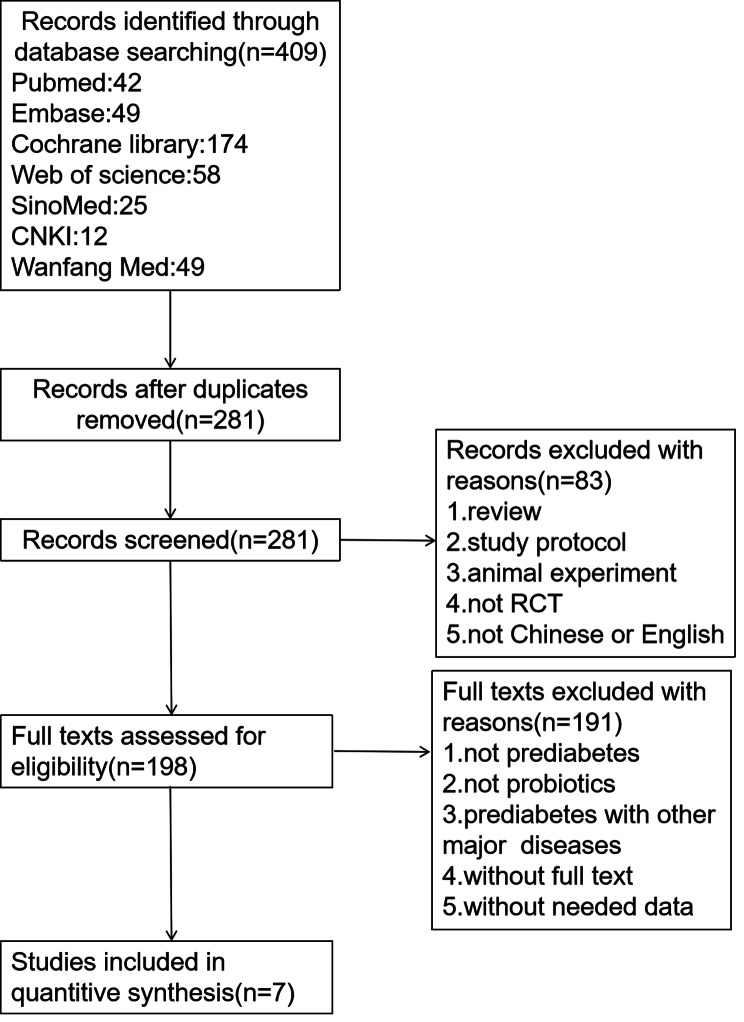
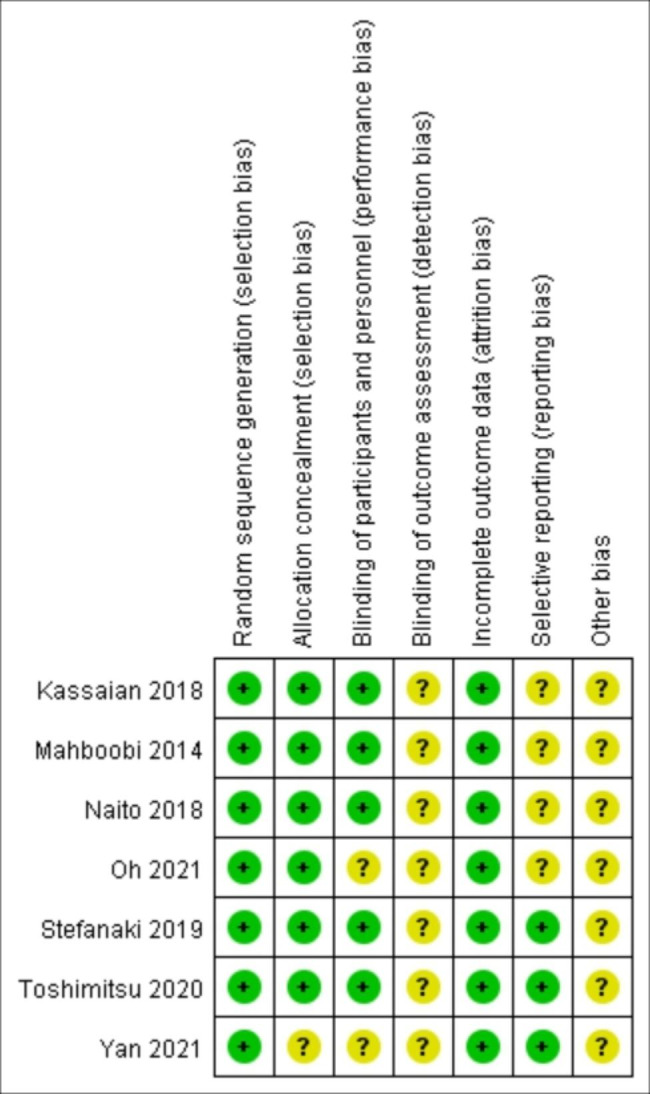
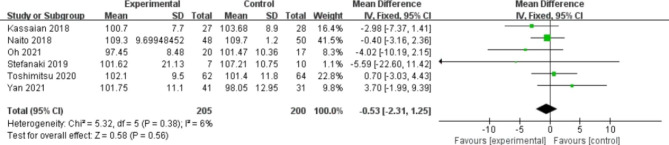
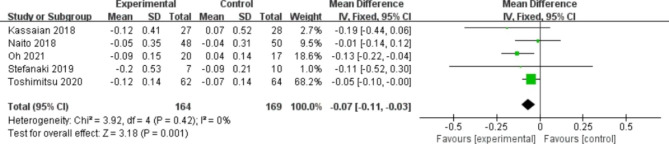
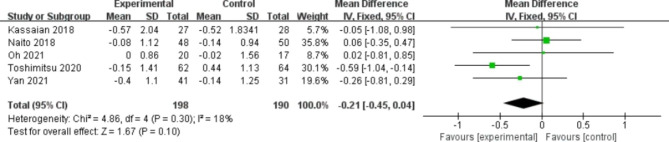
Background: This paper aimed to examine the effects of probiotics on eight factors in the prediabetic population by meta-analysis, namely, fasting blood glucose (FBG), glycated haemoglobin A1c (HbA1c), homeostatic model assessment of insulin resistance (HOMA-IR), quantitative insulin sensitivity check index (QUICKI), total cholesterol (TC), triglyceride (TG), high-density lipoprotein cholesterol (HDL-C) and low-density lipoprotein cholesterol (LDL-C), and the mechanisms of action are summarized from the existing studies. Methods: Seven databases (PubMed, Web of Science, Embase, Cochrane Library, SinoMed, CNKI, and Wanfang Med) were searched until March 2022. Review Manager 5.4 was used for meta-analysis. The data were analysed using weighted mean differences (WMDs) or standardized mean differences (SMDs) under a fixed effect model to observe the efficacy of probiotic supplementation on the included indicators. Results: Seven publications with a total of 460 patients were included. According to the meta-analysis, probiotics were able to significantly decrease the levels of HbA1c (WMD, -0.07; 95% CI -0.11, -0.03; P = 0.001), QUICKI (WMD, 0.01; 95% CI 0.00, 0.02; P = 0.04), TC (SMD, -0.28; 95% CI -0.53, -0.22; P = 0.03), TG (SMD, -0.26; 95% CI -0.52, -0.01; P = 0.04), and LDL-C (WMD, -8.94; 95% CI -14.91, -2.97; P = 0.003) compared to levels in the placebo group. The effects on FBG (WMD, -0.53; 95% CI -2.31, 1.25; P = 0.56), HOMA-IR (WMD, -0.21; 95% CI -0.45, 0.04; P = 0.10), and HDL-C (WMD, 2.05; 95% CI -0.28, 4.38; P = 0.08) were not different from those of the placebo group. Conclusion: The present study clearly indicated that probiotics may fulfil an important role in the regulation of HbA1c, QUICKI, TC, TG and LDL-C in patients with prediabetes. In addition, based on existing studies, we concluded that probiotics may regulate blood glucose homeostasis in a variety of ways. Trial Registration: This meta-analysis has been registered at PROSPERO with ID: CRD42022321995.
Overview
The claims and statistics of this paper haven’t been checked yet.
Free: it reads the open-access text and checks the first 5 claims that cite a source we can check. Create a free account to check every claim.
Integrity signals
Registry
Cites
Statistics
Figures





Verification
Claims the paper makes
The claims and statistics of this paper haven’t been checked yet.
Free: it reads the open-access text and checks the first 5 claims that cite a source we can check. Create a free account to check every claim.
Claims other papers make about this one
Each is checked against this paper’s own text: does it say what the citing paper says it does?
In the citing paper
“Protein intake exerts multiple physiological effects relevant to obesity management, including greater satiety than carbohydrate or fat, enhanced thermogenesis, and preservation of fat-free mass through stimulation of muscle anabolism [259]”
From Nutritional Approaches to Enhance GLP-1 Analogue Therapy in Obesity: A Narrative Review (2025) · cites this paper as [259]
Self-check
Percentages, sums and reported differences re-computed from the paper’s own numbers.
The self-check needs the paper’s full text.
Citations
Cites
Preferred Reporting Items for Systematic Reviews and Meta-Analyses: the PRISMA statement
Moher, D., Liberati, A., Tetzlaff, J., Altman, D. G., & for the PRISMA Group (2009) · BMJ · doi:10.1136/bmj.b2535 · Cited by 83,823
Preferred Reporting Items for Systematic Reviews and Meta-Analyses: The PRISMA Statement
Moher, D., Liberati, A., Tetzlaff, J., Altman, D. G., & The PRISMA Group (2009) · PLoS Medicine · doi:10.1371/journal.pmed.1000097 · Cited by 64,042 · cited 1×
“Search strategy This meta-analysis and systematic review were performed according to the Preferred Reporting Items for Systematic Reviews and Meta-Analyses (PRISMA) statement [19].”
The Cochrane Collaboration's tool for assessing risk of bias in randomised trials
Higgins, J. P. T., Altman, D. G., Gotzsche, P. C., Juni, P., Moher, D., Oxman, A. D., Savovic, J., Schulz, K. F., Weeks, L., Sterne, J. A. C., et al. (2011) · BMJ · doi:10.1136/bmj.d5928 · Cited by 33,817
Dermyshi, E., Wang, Y., Yan, C., Hong, W., Qiu, G., Gong, X., & Zhang, T. (2017) · Neonatology · doi:10.1159/000454668 · Cited by 24,451
Wang, G., Ma, R., Qiao, G., Wada, K., Aizawa, Y., & Satoh, T. (2015) · Integrative Medicine International · doi:10.1159/000368408 · Cited by 18,657
Human gut microbes associated with obesity
Ley, R. E., Turnbaugh, P. J., Klein, S., & Gordon, J. I. (2006) · Nature · doi:10.1038/4441022a · Cited by 8,785 · cited 1×
“There is a reduction in the number of Bacteroidetes in the obese population [32].”
BackgroundIDF Diabetes Atlas: Global estimates for the prevalence of diabetes for 2015 and 2040
Ogurtsova, K., da Rocha Fernandes, J. D., Huang, Y., Linnenkamp, U., Guariguata, L., Cho, N. H., Cavan, D., Shaw, J. E., & Makaroff, L. E. (2017) · Diabetes Research and Clinical Practice · doi:10.1016/j.diabres.2017.03.024 · Cited by 6,966
Metabolic Endotoxemia Initiates Obesity and Insulin Resistance
Cani, P. D., Amar, J., Iglesias, M. A., Poggi, M., Knauf, C., Bastelica, D., Neyrinck, A. M., Fava, F., Tuohy, K. M., Chabo, C., et al. (2007) · Diabetes · doi:10.2337/db06-1491 · Cited by 6,638 · cited 1×
“LPS is a constituent of the outer cell membrane of Gram-negative bacteria and stimulates the secretion of proinflammatory cytokines by binding to the TLR4/CD14 complex [47, 48].”
BackgroundPrediabetes: a high-risk state for diabetes development
Tabák, A. G., Herder, C., Rathmann, W., Brunner, E. J., & Kivimäki, M. (2012) · The Lancet · doi:10.1016/s0140-6736(12)60283-9 · Cited by 2,958 · cited 3×
“In the treatment of prediabetes, lifestyle improvement and drug therapy have limitations and side effects, respectively [3].”
BackgroundInfluentialMucus barrier, mucins and gut microbiota: the expected slimy partners?
Paone, P., & Cani, P. D. (2020) · Gut · doi:10.1136/gutjnl-2020-322260 · Cited by 1,578 · cited 1×
“Certain species of probiotics could reinforce the mucus barrier by increasing the expression of mucin genes and stimulating mucus secretion [53].”
Background
Research works printed but not linked: 5
- Li XX Bian SS Guo Q Research progress in the management model of prediabetes population Chin Gen Med 2021 24 3258 62
- Expert consensus on prediabetes intervention in Chinese adults Chin J Endocrinol Metab 2020 5 371 80
- Chinese Medical Association Diabetes Branch Chinese guidelines for the prevention and treatment of type 2 diabetes 2014 Beijing Peking University Press
- Yan Q Li X Li P Feng B A randomized, double-blind, placebo-controlled clinical study of probiotic intervention in the conversion of abnormal glucose tolerance to type 2 diabetes mellitus Shanghai Med 2021 44 726 32
- Front Pediatr. 2021 Jan 12;8:581461. doi: 10.3389/fped.2020.581461. PMID: 33511092; PMCID: PMC7835259. PMC7835259 33511092 · DOI · Paper page
Cited by
Rasaei, N., Heidari, M., Esmaeili, F., Khosravi, S., Baeeri, M., Tabatabaei‐Malazy, O., & Emamgholipour, S. (2024) · Frontiers in Endocrinology · doi:10.3389/fendo.2024.1277921 · Cited by 55
Memon, H., Abdulla, F., Reljic, T., Alnuaimi, S., Serdarević, F., Velija-Ašimi, Z., Kumar, A., & Semiz, S. (2023) · Diabetes Research and Clinical Practice · doi:10.1016/j.diabres.2023.110806 · Cited by 45
The Influence of Gut Microbial Species on Diabetes Mellitus
AL-Ishaq, R. K., Samuel, S. M., & Büsselberg, D. (2023) · International Journal of Molecular Sciences · doi:10.3390/ijms24098118 · Cited by 33
Li, Y., Liu, T., Qin, L., & Wu, L. (2023) · Journal of Translational Medicine · doi:10.1186/s12967-023-04319-9 · Cited by 30
“SMDs were selected if the units and the measurement methods of the observed indicators differed between studies; vice versa, WMDs were used [30].”
MethodSelf-citationRondanelli, M., Borromeo, S., Cavioni, A., Gasparri, C., Gattone, I., Genovese, E., Lazzarotti, A., Minonne, L., Moroni, A., Patelli, Z., et al. (2025) · Metabolites · doi:10.3390/metabo15020127 · Cited by 29
The impact of novel probiotics isolated from the human gut on the gut microbiota and health
Caesar, R. (2024) · Diabetes Obesity and Metabolism · doi:10.1111/dom.16129 · Cited by 24
Elnar, A. G., Eum, B.-G., & Kim, G. (2025) · Scientific Reports · doi:10.1038/s41598-025-98770-x · Cited by 22
Toshimitsu, T., Gotou, A., Sashihara, T., Hojo, K., Hachimura, S., Shioya, N., Iwama, Y., Irie, J., & Ichihara, Y. (2024) · Diabetes Obesity and Metabolism · doi:10.1111/dom.15534 · Cited by 15
“31 The 8-week post-observation period in the current study considered the time-related characteristics of changes in HbA1c levels and allowed us to assess properly the impact of food interventions on these levels.”
MethodMicrobial network inference for longitudinal microbiome studies with LUPINE
Kodikara, S., & Cao, K. L. (2025) · Microbiome · doi:10.1186/s40168-025-02041-w · Cited by 15
“Bifidobacterium was observed as a bacterium that is indirectly capable of promoting GLP-1 (glucagon-like peptide-1) production [58].”
What We Know About the Actual Role of Traditional Probiotics in Health and Disease
Al‐Akayleh, F., Agha, A. S. A. A., Al-Remawi, M. M., Al-Adham, I. S. I., Daadoue, S., Alsisan, A., Khattab, D., Malath, D., Salameh, H., Al-betar, M., et al. (2024) · Probiotics and Antimicrobial Proteins · doi:10.1007/s12602-024-10275-7 · Cited by 16
Zhou, X., Zheng, W., Kong, W., Zhang, J., Liao, Y., Min, J., & Zeng, T. (2025) · The Journal of Clinical Endocrinology & Metabolism · doi:10.1210/clinem/dgaf340 · Cited by 14
Sun, C., Liu, Q., Ye, X., Li, R., Meng, M., & Han, X.-Z. (2024) · Journal of Diabetes Research · doi:10.1155/2024/5996218 · Cited by 15
Roodi, P. B., Jazayeri, S., Hadi, F., Paghaleh, S. J., Khosravi‐Darani, K., & Malakouti, S. K. (2024) · BMC Psychiatry · doi:10.1186/s12888-024-06061-y · Cited by 11
“In addition Li et al. conducted a systematic review and meta-analysis and reported that probiotics decreased the levels of HbA1c, insulin resistance, TC and TG in patients with prediabetes [36].”
BackgroundRondanelli, M., Barrile, G. C., Cavioni, A., Donati, P., Genovese, E., Mansueto, F., Mazzola, G., Patelli, Z., Pirola, M., Razza, C., et al. (2023) · Nutrients · doi:10.3390/nu15234943 · Cited by 11
Nutritional Approaches to Enhance GLP-1 Analogue Therapy in Obesity: A Narrative Review
Dias, D. D., Vasconcelos, A. R., Souza, A. C. R., Menezes, C. D., Silva, I. S. T. E., & Name, J. J. (2025) · Obesities · doi:10.3390/obesities5040088 · Cited by 8
“Although specific data on L. gasseri BNR17 and GLP-1 are limited, related Lactobacillus strains increased intestinal GLP-1 expression in animal studies [145,147,222,256,258].”
Gut microbiome and prediabetes - a review
Rathi, K. K., Kumari, N., Javaid, M. D., Saleem, U., Mortensen, E. M., Zhou, Y., & Maheshwari, N. (2023) · Frontiers in Bacteriology · doi:10.3389/fbrio.2023.1242297 · Cited by 9
“Additionally, a pioneering meta-analysis was conducted on the impact of probiotics intake by individuals with prediabetes by Li et al. (2022) concludes that probiotics can signi fi cantly reduce the levels of HbA1c, quantitative insulin sensitivity check index (QUICKI), total cholesterol,…”
Setayesh, A., Karimi, M., Valizadeh, F., Asbaghi, O., Pirzad, S., Davoodi, S. H., & Larijani, B. (2025) · Advances in Nutrition · doi:10.1016/j.advnut.2025.100526 · Cited by 9
“Another study reported that supplements containing Lactobacillus plantarum could increase insulin sensitivity by restricting the production of inflammatory markers, especially TNF-α [70].”
Zhao, C., Lu, X., Deng, X., Xia, W., Sun, T., Huo, D., & Shi, L. (2025) · Journal of Diabetes and its Complications · doi:10.1016/j.jdiacomp.2025.109195 · Cited by 5
Motte, L. R. D. L., Carreras, F., & Drago, L. (2026) · Frontiers in Endocrinology · doi:10.3389/fendo.2026.1858420 · Cited by 4
“…probiotic interventions in metabolic disorders reported modest but consistent improvements in glycemic parameters, including fasting glucose and HbA1c, alongside signals of enhanced incretin activity, supporting a mechanistic link between probiotic supplementation and gut hormone regulation (109).”
Research Progress in the Relationship between Intestinal Flora and Diabetes Mellitus
Lai, Y., Huang, X., Sun, H., Hui, Q., & Hu, S. (2024) · Endocrine Metabolic & Immune Disorders - Drug Targets · doi:10.2174/0118715303308965240624054156 · Cited by 4
Abdallah, F., Bazzi, S. I., Akle, C. A., Bahr, G. M., & Echtay, K. S. (2024) · Frontiers in Endocrinology · doi:10.3389/fendo.2024.1427058 · Cited by 2
“Given the global burden of diabetes, several studies have been looking for novel strategies to alleviate or prevent the symptoms and complications of diabetes such as the use of herbal products or probiotics (2, 3).”
Japar, K. V., Hariyanto, T. I., Hamzah, D. V., Prasetya, I. B., & Suastika, K. (2025) · Probiotics and Antimicrobial Proteins · doi:10.1007/s12602-025-10449-x · Cited by 2
“Nevertheless, there exist notable disparities between the prior meta-analysis conducted by Li Y et al. [36] and our present meta-analysis.”
InfluentialSarabi, M., Torshizian, A., Khorasani, Z. M., Firoozi, A., Mehrad‐Majd, H., Khoshhal, N., Saeidi, N., & AkbariRad, M. (2025) · Food Science & Nutrition · doi:10.1002/fsn3.70146 · Cited by 1
Yu, X., Zhao, Y., Wang, Y., Li, L., Lu, W., Wu, W., & Wang, H. (2025) · Food Bioscience · doi:10.1016/j.fbio.2025.107473 · Cited by 1
A pro-, pre- és szinbiotikumok hatása a szénhidrát-, illetve lipidanyagcserére
Tomasics, G., Schandl, L., Polyák, A., & Winkler, G. (2024) · Orvosi Hetilap · doi:10.1556/650.2024.33064 · Cited by 1
Microbiota and the Cardiovascular System
Lorenzo, Ó., Lumpuy‐Castillo, J., Espadas, C., Parascinet, O., & Martínez-Albaladejo, S. (2024) · Springer eBooks · doi:10.1007/978-3-031-65650-7_7 · Cited by 1
Ningrum, M. W., & Kok, T. (2023) · BIOEDUSAINS Jurnal Pendidikan Biologi dan Sains · doi:10.31539/bioedusains.v6i1.5893 · Cited by 1
Liu, R., & Wong, G. (2025) · Frontiers in Nutrition · doi:10.3389/fnut.2025.1616476
“The findings of our investigation align with the meta-analysis mentioned above by Li et al. (20).”
InfluentialChoi, E., Cho, M.-Y., Eom, J.-H., Kim, J.-W., Hwang, J., & Kim, H.-S. (2025) · Journal of dental hygiene science · doi:10.17135/jdhs.2025.25.3.256
Xiang, M., Sa, X., Tuo, Z., Bian, J., Wang, P., & Zhang, X. (2025) · Frontiers in Nutrition · doi:10.3389/fnut.2025.1668470
Bhattacharya, S., van Helvoort, A., Schols, A. M. W. J., & Sambashivaiah, S. (2026) · Contemporary Clinical Trials · doi:10.1016/j.cct.2026.108228
Tao, Y., Wang, W., Zhang, Y., Zhao, M., Xu, Z., Yan, H., & Zhu, F. (2026) · Nutrients · doi:10.3390/nu18152539
A Study On Effect Of Probiotic Fermented Tea On Type II Diabetic Subjects
Zoya Nureen, S. S. S. (2024) · Library Progress (International)
Metadata
- Authors
- Li, Y., Wu, Y., Wu, L., Qin, L., & Liu, T.
- Affiliations
- Beijing University of Chinese Medicine (CN)
- Corresponding author
- Liu, Tonghua
- Venue
- Journal of Translational Medicine
- Published
- 2022-11-02
- Volume
- 20
- Issue
- 1
- Pages
- 498-498
- ISSN
- 1479-5876 (ISSN-L)
- PMC
- PMC9632036
- OpenAlex
- W4307922282
- Semantic Scholar
- 3f45d5532fee219950b21764e45d7f179710427a
- Cited by
- 32
- References
- 88
- Citations by year
- 2026: 3 · 2025: 13 · 2024: 10 · 2023: 6
- FWCI
- 0.66
- Type
- journal article
- Language
- en
- Open access
- gold
- doi.org
- Licence
- cc-by
- creativecommons.org/licenses/by/4.0 (tdm)
- creativecommons.org/licenses/by/4.0 (vor)
- Locations
- Journal of Translational Medicine (publishedVersion, cc-by)
- PubMed Central (publishedVersion, cc-by)
- PubMed (publishedVersion)
- DOAJ (DOAJ: Directory of Open Access Journals) (submittedVersion, cc-by-sa)
- Funders
- Beijing Key Laboratory of Health Preservation of Traditional Chinese Medicine, Beijing International Science and Technology Cooperation Base. (No BZ0259)
- Topics
- Life Sciences › Agricultural and Biological Sciences › Food Science › Probiotics and Fermented Foods
- Life Sciences › Biochemistry, Genetics and Molecular Biology › Molecular Biology › Gut microbiota and health
- Health Sciences › Medicine › Endocrinology, Diabetes and Metabolism › Natural Antidiabetic Agents Studies
- Keywords
- probiotics, prediabetes, fasting blood glucose, HbA1c, insulin resistance, QUICKI, HOMA-IR, lipid profile, LDL cholesterol, triglycerides, HDL cholesterol, total cholesterol, probiotic mechanisms of action, glucose metabolism, lipid metabolism, gut microbiota, intestinal barrier, inflammation, gut-brain axis, gut-liver axis, gut-kidney axis, gut-lung axis, gut-heart axis, gut-thyroid axis, gut-immune axis
- MeSH terms
- Blood Glucose, Glycated Hemoglobin, Humans, Cholesterol, HDL, Cholesterol, LDL, Prediabetic State, Triglycerides, Probiotics
About these checks
Registry, retraction, Cites and statistics results are computed, not judged, with one exception: a printed reference that no index lists is read once by a model before it counts as a citation error. Claims are extracted by a model and kept only when their quote appears verbatim in the text; each cited source is then checked, with a model’s help, for whether it says what the claim relies on. Those verdicts can be wrong — read the claim’s quote and the cited source before relying on one.
Statistics and arithmetic are recomputed, not judged.
Confidence bands are shown only for fields calibrated on our annotated test set. None is calibrated yet, so no band is shown.
What counts as a claim ›How we measure confidence ›How we check this ›
Are you an author, or do you see a problem with this page? Request a review
Data sources
Bibliographic data: Semantic Scholar, OpenAlex, Crossref.
Contains information from the Semantic Scholar Academic Graph Datasets, made available under the ODC Attribution License (ODC-BY 1.0).
Semantic Scholar’s data is described in: Kinney, R., et al. (2023). The Semantic Scholar Open Data Platform. arXiv:2301.10140.
