

The effects of phosphatidic acid supplementation on strength, body composition, muscular endurance, power, agility, and vertical jump in resistance trained men
Open accessThe DOI matches its Crossref record; 40 of the 40 references it cites were found in a registry or an index.
Abstract
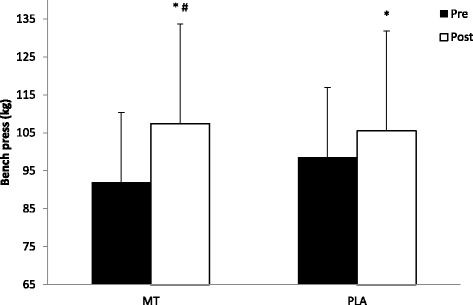
BACKGROUND: Phosphatidic acid (PA) is a lipid messenger that has been shown to increase muscle protein synthesis via signaling stimulation of the mammalian target of rapamycin (mTOR). MaxxTOR® (MT) is a supplement that contains PA as the main active ingredient but also contains other synergistic mTOR signaling substances including L-Leucine, Beta-Hydroxy-Beta-Methylbutyrate (HMB), and Vitamin D3. METHODS: Eighteen healthy strength-trained males were randomly assigned to a group that either consumed MT (n = 8, 22.0 +/- 2.5 years; 175.8 +/- 11.5 cm; 80.3 +/- 15.1 kg) or a placebo (PLA) (n = 10, 25.6 +/- 4.2 years; 174.8 +/- 9.0 cm; 88.6 +/- 16.6 kg) as part of a double-blind, placebo controlled pre/post experimental design. All participants volunteered to complete the three day per week resistance training protocol for the eight week study duration. To determine the effects of MT, participants were tested on one repetition maximum (1RM) leg press strength (LP), 1RM bench press strength (BP), push-ups to failure (PU), vertical jump (VJ), pro-agility shuttle time (AG), peak power output (P), lean body mass (LBM), fat mass (FM), and thigh muscle mass (TMM). Subjects were placed and monitored on an isocaloric diet consisting of 25 protein, 50 carbohydrates, and 25 % fat by a registered dietitian. Separate two-way mixed factorial repeated measures ANOVA's (time [Pre, Post] x group [MT and PLA] were used to investigate strength, body composition, and other performance changes. Post-hoc tests were applied as appropriate. Analysis were performed via SPSS with significance at (p ≤ 0.05). RESULTS: There was a significant main effect (F(1,16) = 33.30, p < 0.001) for LBM where MT significantly increased LBM when compared to the PLA group (p < 0.001). Additionally, there was a significant main effect for LP (F(1,16) = 666.74, p < 0.001) and BP (F(1,16) = 126.36, p < 0.001) where both increased significantly more in MT than PLA group (p < 0.001). No significant differences between MT and PLA were noted for FM, TMM, VJ, AG, P, or PU. CONCLUSION: The results of this eight week trial suggest that the addition of MaxxTOR® to a 3-day per week resistance training program can positively impact LBM and strength beyond the results found with exercise alone.
Overview
The claims and statistics of this paper haven’t been checked yet.
Free: it reads the open-access text and checks the first 5 claims that cite a source we can check. Create a free account to check every claim.
Integrity signals
Registry
Cites
Statistics
Figures
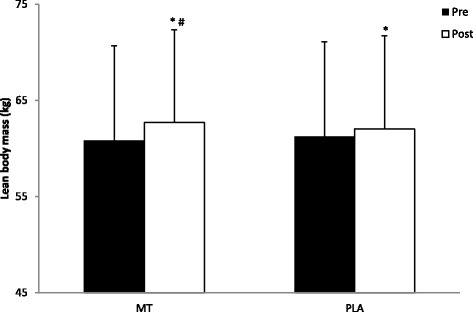
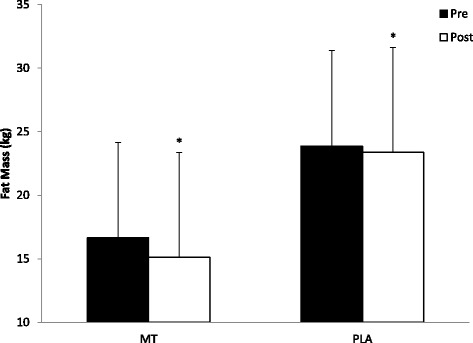
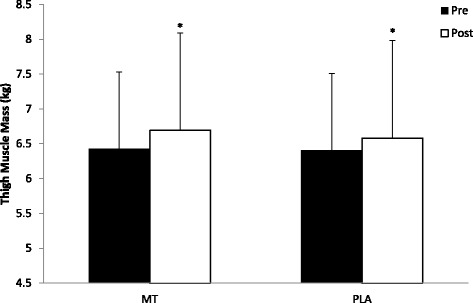
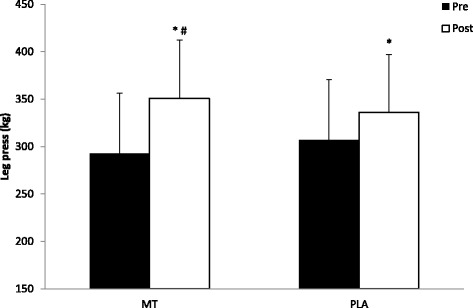
Verification
Claims the paper makes
The claims and statistics of this paper haven’t been checked yet.
Free: it reads the open-access text and checks the first 5 claims that cite a source we can check. Create a free account to check every claim.
Claims other papers make about this one
Each is checked against this paper’s own text: does it say what the citing paper says it does?
The source backs part of the claim, not all of it — or backs it for a different population, condition or comparison.
In the citing paper
“A third study confirmed the beneficial effects of PA on exercise-induced gains in lean body mass [263].”
From ISSN exercise & sports nutrition review update: research & recommendations (2018) · cites this paper as [263]
Experimental — accuracy not yet measured
Self-check
Percentages, sums and reported differences re-computed from the paper’s own numbers.
The self-check needs the paper’s full text.
Citations
Cites
TSC2 Mediates Cellular Energy Response to Control Cell Growth and Survival
Inoki, K., Zhu, T., & Guan, K.-L. (2003) · Cell · doi:10.1016/s0092-8674(03)00929-2 · Cited by 3,914 · cited 2×
“A protein kinase known as the mammalian target of rapamycin (mTOR) has been recognized as a critical regulator of muscle protein synthesis [10–16].”
BackgroundPhosphatidic Acid-Mediated Mitogenic Activation of mTOR Signaling
Fang, Y., Vilella-Bach, M., Bachmann, R., Flanigan, A., & Chen, J. (2001) · Science · doi:10.1126/science.1066015 · Cited by 1,055
Katsanos, C. S., Kobayashi, H., Sheffield-Moore, M., Aarsland, A., & Wolfe, R. R. (2006) · American Journal of Physiology-Endocrinology and Metabolism · doi:10.1152/ajpendo.00488.2005 · Cited by 923 · cited 2×
“L-Leucine has also been suggested to have a sparing effect on muscle glycogen and can lead to decreases in proton production [19–22].”
BackgroundBolster, D. R., Crozier, S. J., Kimball, S. R., & Jefferson, L. S. (2002) · Journal of Biological Chemistry · doi:10.1074/jbc.c200171200 · Cited by 851 · cited 2×
“A protein kinase known as the mammalian target of rapamycin (mTOR) has been recognized as a critical regulator of muscle protein synthesis [10–16].”
BackgroundAMP-Activated Protein Kinase – Development of the Energy Sensor Concept
Hardie, D. G., Hawley, S. A., & Scott, J. W. (2006) · The Journal of Physiology · doi:10.1113/jphysiol.2006.108944 · Cited by 813 · cited 2×
“A protein kinase known as the mammalian target of rapamycin (mTOR) has been recognized as a critical regulator of muscle protein synthesis [10–16].”
BackgroundAnthony, J. C., Yoshizawa, F., Anthony, T. G., Vary, T. C., Jefferson, L. S., & Kimball, S. R. (2000) · The Journal of Nutrition · doi:10.1093/jn/130.10.2413 · Cited by 801
Muscle strength, power and adaptations to resistance training in older people
Macaluso, A., & De Vito, G. (2004) · European Journal of Applied Physiology · doi:10.1007/s00421-003-0991-3 · Cited by 554 · cited 1×
“maintain muscle mass as well as strength for various populations [1].”
BackgroundWilkinson, D. J., Hossain, T., Hill, D. S., Phillips, B. E., Crossland, H., Williams, J., Loughna, P., Churchward‐Venne, T. A., Breen, L., Phillips, S. M., et al. (2013) · The Journal of Physiology · doi:10.1113/jphysiol.2013.253203 · Cited by 484
Muir, S. W., & Montero‐Odasso, M. (2011) · Journal of the American Geriatrics Society · doi:10.1111/j.1532-5415.2011.03733.x · Cited by 470 · cited 1×
“Although systemic review articles have concluded there are conflicting findings on the effect of vitamin D3 on strength [35, 36], it has been suggested that sports dietitians and physicians routinely assess vita-”
BackgroundEffect of vitamin D supplementation on muscle strength: a systematic review and meta-analysis
Stockton, K. A., Mengersen, K., Paratz, J. D., Kandiah, D., & Bennell, K. L. (2010) · Osteoporosis International · doi:10.1007/s00198-010-1407-y · Cited by 418 · cited 1×
“Although systemic review articles have concluded there are conflicting findings on the effect of vitamin D3 on strength [35, 36], it has been suggested that sports dietitians and physicians routinely assess vita-”
Background
Cited by
ISSN exercise & sports nutrition review update: research & recommendations
Kerksick, C. M., Wilborn, C. D., Roberts, M. D., Smith-Ryan, A., Kleiner, S. M., Jäger, R., Collins, R., Cooke, M., Davis, J. N., Galvan, E., et al. (2018) · Journal of the International Society of Sports Nutrition · doi:10.1186/s12970-018-0242-y · Cited by 945
Li, Y., Xiao, Y., & Liu, C. (2017) · Chemical Reviews · doi:10.1021/acs.chemrev.6b00654 · Cited by 598
Antonio, J., Kenyon, M., Ellerbroek, A., Carson, C., Burgess, V., Tyler-Palmer, D., Mike, J., Roberts, J., Angeli, G., & Peacock, C. (2019) · Journal of Functional Morphology and Kinesiology · doi:10.3390/jfmk4020023 · Cited by 106
Alhajj, M. J., Montero, N., Yarce, C. J., & Salamanca, C. H. (2020) · Cosmetics · doi:10.3390/cosmetics7040087 · Cited by 109
Scarpelli, M. C., Nóbrega, S. R., Santanielo, N., Alvarez, I. F., Otoboni, G. B., Ugrinowitsch, C., & Libardi, C. A. (2022) · Journal of Strength & Conditioning Research · doi:10.1519/jsc.0000000000003558 · Cited by 57
“Nutraceuticals” in relation to human skeletal muscle and exercise
Deane, C. S., Wilkinson, D. J., Phillips, B. E., Smith, K., Etheridge, T., & Atherton, P. J. (2017) · American Journal of Physiology-Endocrinology and Metabolism · doi:10.1152/ajpendo.00230.2016 · Cited by 73
Benito, P. J., Cupeiro, R., Ramos-Campo, D. J., Alcaraz, P. E., & Rubio-Arias, J. Á. (2020) · International Journal of Environmental Research and Public Health · doi:10.3390/ijerph17041285 · Cited by 71
Bond, P. (2017) · Nutrition & Metabolism · doi:10.1186/s12986-017-0166-6 · Cited by 38
“[23] showed positive effects when 450 mg PA was taken 30 m before training and 300 mg directly after.”
BackgroundMethodPaoli, A., Cerullo, G., Bianco, A., Neri, M., Gennaro, F., Charrier, D., & Moro, T. (2024) · Journal of Human Kinetics · doi:10.5114/jhk/186660 · Cited by 31
Kohara, A., Machida, M., Setoguchi, Y., Ito, R., Sugitani, M., Maruki‐Uchida, H., Inagaki, H., Ito, T., Omi, N., & Takemasa, T. (2017) · Journal of the International Society of Sports Nutrition · doi:10.1186/s12970-017-0190-y · Cited by 24
Nutritional Supplements for Muscle Hypertrophy: Mechanisms and Morphology—Focused Evidence
Mănescu, A. M., Hangu, S. Ș., & Mănescu, D. C. (2025) · Nutrients · doi:10.3390/nu17223603 · Cited by 18
Gonzalez, A. M., Sell, K. M., Ghigiarelli, J. J., Kelly, C. F., Shone, E. W., Accetta, M. R., Baum, J. B., & Mangine, G. T. (2017) · Applied Physiology, Nutrition, and Metabolism · doi:10.1139/apnm-2016-0564 · Cited by 21
Bradley, R. M., Bloemberg, D., Henao, J. J. A., Hashemi, A., Mitchell, A. S., Fajardo, V. A., Bellissimo, C. A., Mardian, E. B., Bombardier, É., Paré, M., et al. (2018) · Biochimica et Biophysica Acta (BBA) - Molecular and Cell Biology of Lipids · doi:10.1016/j.bbalip.2018.04.001 · Cited by 18
Medvedeva, S., Morozova, K. N., Snytnikova, O. A., Morozova, M. V., Boldyreva, L. V., Владимировна, К. Е., Tsentalovich, Y. P., & Kozhevnikova, E. N. (2023) · International Journal of Molecular Sciences · doi:10.3390/ijms24021788 · Cited by 11
Emerging Nutritional Supplements for Strength and Hypertrophy: An Update of the Current Literature
Gonzalez, A. M., Church, D. D., Townsend, J. R., & Bagheri, R. (2020) · Strength and conditioning journal · doi:10.1519/ssc.0000000000000552 · Cited by 11
“(34) also reported significant improvements in maximal strength and lean body mass (PA: 1.”
BackgroundInfluentialSobotik, E. B., Lee, J. T., Hagerman, S., & Archer, G. S. (2018) · Animals · doi:10.3390/ani8060087 · Cited by 9
Liao, K., Zhang, Q., Qiu, Y., Zhu, Y., Liu, Y., Huang, H., Chen, D., Ma, B., Zhang, L., Ran, Z., et al. (2023) · Aquaculture Research · doi:10.1155/2023/6666946 · Cited by 4
“Researches conducted by Joy et al. [12] and Escalante et al. [30] have demonstrated that there is a trend for PA to decrease body fat in human.”
MethodPhospholipid supplementation inhibits male and female odor discrimination in mice
Morozova, M. V., Andrejeva, J., Snytnikova, O. A., Boldyreva, L. V., Tsentalovich, Y. P., & Kozhevnikova, E. N. (2024) · Frontiers in Behavioral Neuroscience · doi:10.3389/fnbeh.2024.1397284 · Cited by 3
Nutraceuticals Present in Edible Oils
Mukhopadhyay, R., & Kabra, S. (2024) · Wiley eBooks · doi:10.1002/9781394241576.ch14 · Cited by 5
The effects of phosphatidic acid on performance and body composition - a scoping review
Teixeira, F. J., Tavares, N. R., Matias, C. N., & Phillips, S. M. (2021) · Journal of Sports Sciences · doi:10.1080/02640414.2021.1994769 · Cited by 2
“In all three studies increases in strength were observed in the lower body as were the increases in LBM, compared with the placebo group (Damas et al., 2016; Lim et al., 2003; You et al., 2014).”
BackgroundMethodInfluentialNutrition Interventions to Manage Sarcopenia: An Appraisal of the Existing Evidence
(2018) · Research and Reports of Medicine · doi:10.31829/2637-367x/rrm2018-1(1)-105 · Cited by 2
Chen, X., Ji, Q., Wu, Z., Zhang, F., Su, Q., He, T., Zhu, K., Hou, S., & Gui, L. (2025) · Frontiers in Veterinary Science · doi:10.3389/fvets.2025.1634086 · Cited by 1
Patel, R., Gujja, A., Bawaskar, P., & Yadav, A. (2025) · Open Access Journal of Clinical Trials · doi:10.2147/oajct.s546033 · Cited by 1
“In a clinical study conducted by Escalante G et al, 25 8 weeks of phosphatidic acid supplementation, combined with resistance exercise training three days per week, resulted in a significant increase in 1-RM strength for both leg press and bench press exercises compared to a placebo group.”
Nutritional Considerations for Concurrent Training
Etheridge, T., & Atherton, P. J. (2018) · Springer eBooks · doi:10.1007/978-3-319-75547-2_16
Martial arts training, competition and sports nutrition: A future beneficial alliance
Wolkodoff, N. E., Haase, G. M., & Delarosa, T. M. (2022) · World Journal of Advanced Research and Reviews · doi:10.30574/wjarr.2022.16.3.1421
“The drive to use supplements for performance gains received the most significant push from increased reliance on strength and associated training to develop more powerful and faster athletes [18-24].”
ÇINGI, H. İ., Çaldıran, S., Yılmaz, M., & ÇINGI, Ö. (2023) · Sosyolojik Bağlam Dergisi · doi:10.52108/2757-5942.4.2.6
Aspekte der Ernährung bei kombiniertem Ausdauer- und Krafttraining
Etheridge, T., & Atherton, P. J. (2023) · Springer eBooks · doi:10.1007/978-3-031-36310-8_16
Posibles efectos de la suplementación con HMB en la hipertrofia muscular: revisión narrativa
de Cundinamarca, U., Carvajal, E. P. C., Barbosa, L. G., de Cundinamarca, U., Yara, L. F. C., de Cundinamarca, U., Lamprea, V. H., & de Cundinamarca, U. (2024) · Perspectivas en Nutrición Humana · doi:10.17533/udea.penh.v25n1a05 · Cited by 1
Effects of Body Weight Training Program on Strength and Power of Primary School Students
Chen, L., Tongdecharoen, W., & Bangthamai, W. (2024) · International Journal of Sociologies and Anthropologies Science Reviews · doi:10.60027/ijsasr.2024.4724
Strength Gains Across Performance Levels and Sexes: A Meta-Analytical PerspectivePreprint
Held, S., Havers, T., Gavanda, S., Geisler, S., & Isenmann, E. (2025) · Research Square · doi:10.21203/rs.3.rs-6938909/v1
Richen, S., Su, M., Xu, X., Wang, N., Li, Z., Sun, X., Lin, W., & Wang, H. (2026) · Journal of the International Society of Sports Nutrition · doi:10.1080/15502783.2026.2740221
Metadata
- Authors
- Escalante, G., Alencar, M., Haddock, B., & Harvey, P.
- Affiliations
- California State University, San Bernardino (US)
- California State University, Long Beach (US)
- University of Phoenix (US)
- Corresponding author
- Escalante, Guillermo
- Venue
- Journal of the International Society of Sports Nutrition
- Publisher
- Informa UK Limited
- Published
- 2016-01-05
- Volume
- 13
- Issue
- 1
- Pages
- 24-24
- ISSN
- 1550-2783 (ISSN-L)
- PMC
- PMC4891923
- OpenAlex
- W2417564812
- Cited by
- 32
- References
- 39
- Citations by year
- 2026: 1 · 2025: 4 · 2024: 5 · 2023: 4 · 2022: 1 · 2021: 1 · 2020: 4 · 2019: 1 · 2018: 5 · 2017: 5 · 2016: 1
- FWCI
- 2.75
- Type
- journal article
- Language
- en
- Open access
- gold
- doi.org
- Licence
- Locations
- Journal of the International Society of Sports Nutrition (publishedVersion, cc-by)
- PubMed Central (publishedVersion, cc-by)
- PubMed (publishedVersion)
- OSF Preprints (OSF Preprints) (submittedVersion)
- Funders
- Max Muscle Sports Nutrition
- Chemi Nutra
- Topics
- Health Sciences › Nursing › Nutrition and Dietetics › Muscle metabolism and nutrition
- Health Sciences › Medicine › Orthopedics and Sports Medicine › Sports Performance and Training
- Life Sciences › Biochemistry, Genetics and Molecular Biology › Molecular Biology › Muscle Physiology and Disorders
- Keywords
- phosphatidic acid, mTOR signaling, resistance training, dietary supplementation, muscle protein synthesis, lean body mass, muscle strength, muscular endurance, vertical jump, agility, output power, body composition, leucine, beta-hydroxy-beta-methylbutyrate, vitamin D3, isocaloric diet, leg press, bench press, thigh muscle mass, fat mass
- MeSH terms
- Adult, Body Composition, Double-Blind Method, Food, Formulated, Humans, Male, Phosphatidic Acids, Physical Endurance, Weight Lifting, Anaerobic Threshold, Treatment Outcome, Muscle, Skeletal, Dietary Supplements, Muscle Strength, Resistance Training, TOR Serine-Threonine Kinases, Sports Nutritional Physiological Phenomena
About these checks
Registry, retraction, Cites and statistics results are computed, not judged, with one exception: a printed reference that no index lists is read once by a model before it counts as a citation error. Claims are extracted by a model and kept only when their quote appears verbatim in the text; each cited source is then checked, with a model’s help, for whether it says what the claim relies on. Those verdicts can be wrong — read the claim’s quote and the cited source before relying on one.
Statistics and arithmetic are recomputed, not judged.
Confidence bands are shown only for fields calibrated on our annotated test set. None is calibrated yet, so no band is shown.
What counts as a claim ›How we measure confidence ›How we check this ›
Are you an author, or do you see a problem with this page? Request a review
Data sources
Bibliographic data: Semantic Scholar, OpenAlex, Crossref.
Contains information from the Semantic Scholar Academic Graph Datasets, made available under the ODC Attribution License (ODC-BY 1.0).
Semantic Scholar’s data is described in: Kinney, R., et al. (2023). The Semantic Scholar Open Data Platform. arXiv:2301.10140.
