

Prevalence, knowledge and attitudes towards using sports supplements among young athletes
Open accessThe DOI matches its Crossref record; 31 of the 32 references it cites were found in a registry or an index; 2 of the 20 sources its claims cite were checked for support.
Abstract
BACKGROUND: The aim of this international study was to investigate the prevalence of the use of sports supplements among young athletes, as well as their knowledge and attitudes towards sports supplementation. METHODS: Organized survey study testing the level of knowledge, attitudes, beliefs and practices concerning the use of sports supplements was administered to 348 athletes, 15-18 year olds from 4 countries competing in 18 sports at the international level. RESULTS: The prevalence rate of the intake of sports supplements was 82.2%, with the protein supplements being predominant (54.5%). Coaches were identified as the primary source of information regarding supplementation (41.4%). The enhancement of athletic performance (35.4%) was the major motivation for the supplements intake. The majority of athletes (72.1%) were aware of associated health risks. The young athletes possess varying levels of knowledge regarding their own supplementation. The obtained data about the level of knowledge were statistically analyzed using the correspondence analysis. Less than 40% of athletes had the knowledge about the proper and intended use of protein, creatine, amino acids, beta alanine and glutamine, while they had greater understanding about vitamins and minerals, sports drinks and caffeine. The athletes in developed countries had greater access and utilization of professional resources such as dieticians. Young athletes are still unfamiliar with WADA regulations (55.5%), and the misuse of sports supplements represents an ethical dilemma for some. CONCLUSION: These findings indicate the necessity of a comprehensive education of all team members about sports supplements and careful supervision of the athletic development of young athletes.
Overview
CoChat Summary
TL;DR
This international survey of 348 young elite athletes found high sports supplement use (82.2%), especially whey protein (54.5%), with coaches as the main information source (41.4%). Although many athletes were aware of health risks (72.1%), knowledge of proper supplement use was low for several products, and only 55.5% were familiar with WADA regulations.
Key findings
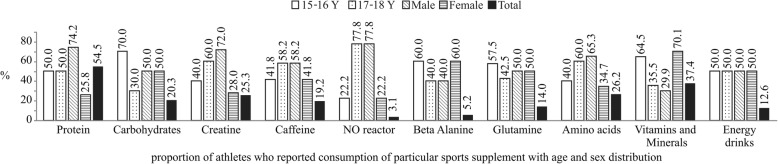
- Supplement use was reported by 82.2% of athletes; 60.6% of users were male, and use was higher in 17–18-year-olds (52.3%) than 15–16-year-olds (47.7%). Whey protein was the most prevalent supplement (54.5%).
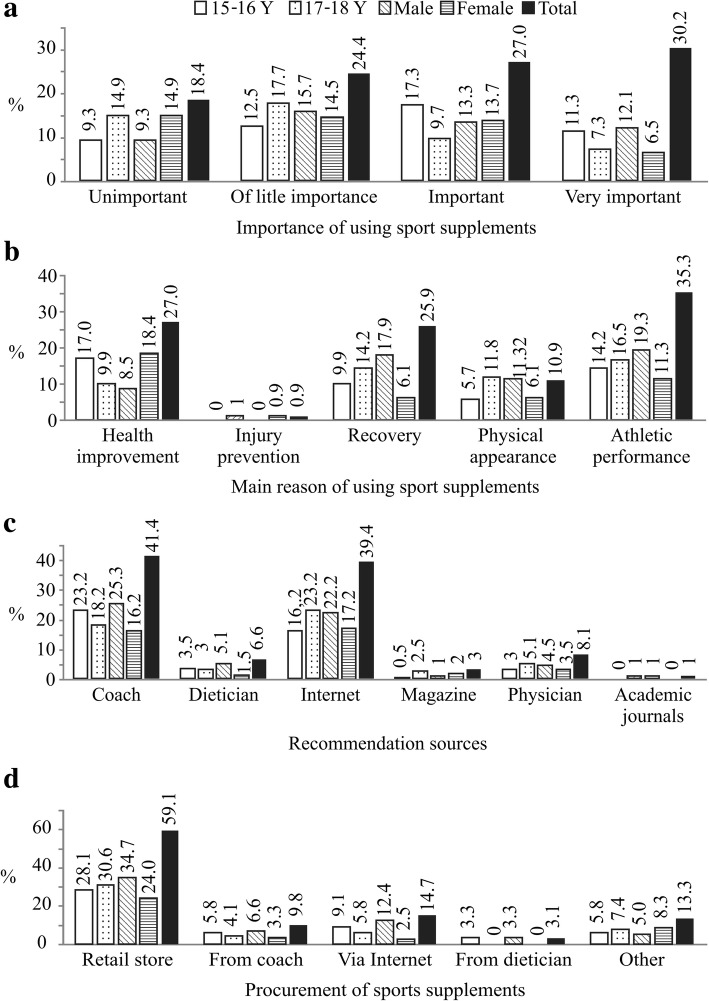
- Coaches were the primary source of supplementation information (41.4%), and enhancement of athletic performance was the main motivation (35.4% in the abstract; 35.3% in the results).
- Knowledge of proper and intended use was low for creatine (11.1% correct), beta alanine (20.0%), amino acids (20.0%), NO reactor (22.2%), glutamine (37.5%), protein (38.5%), and carbohydrates (48.3%), but higher for sports drinks (50%), caffeine (61.8%), and vitamins/minerals (71.0%).
- 72.1% were aware of associated health risks, only 55.5% were familiar with WADA regulations, 11.8% would use a prohibited substance if not tested, and 27.9% had the opportunity to work with dieticians in their clubs.
Methods
- International survey study conducted March–November 2018 with 348 athletes aged 15–18 from 4 countries (Serbia 39.4%, Germany 23.0%, Japan 20.1%, Croatia 17.5%) competing at international level in 18 sports.
- A 20-question survey covered demographics, supplement usage/source/safety/procurement, knowledge of proper use (timing, dosage, reason), and beliefs/attitudes including anti-doping rules.
- Data were analyzed with descriptive frequencies, chi-square tests by sex and age (p < 0.05), and correspondence analysis; reliability/validity were reported with Cronbach’s alpha >0.7, composite reliability >0.9, and AVE >0.5.
Limitations
- The paper states possible limitations in the uneven number of participants from each country and the distribution of athletes between sports; comparisons were made mostly by sex and age, and between-sport comparisons were excluded.
- Evident from the design: this is a cross-sectional, self-reported survey, so supplement use, knowledge, and attitudes may be subject to recall or social-desirability bias, and causal relationships cannot be established.
- Evident from the sample: findings are from 15–18-year-old international-level athletes in four countries and may not generalize to all young athletes or other competitive levels.
Model-written summary. Check it against the paper before relying on it.
Integrity signals
Registry
Cites
Statistics
Figures
Verification
Claims the paper makes
1 Valid · 0 Not valid · 7 Not checked · 64 Own results and interpretations
The cited sources support only part of this claim — read each source’s verdict below.
In the paper
“The prevalence of sports supplements has rapidly increased over the last decade”
§ Prevalence, knowledge and attitudes towards using sports supplements among young athletes > Background
What the sources say
- Partly supportedcites [6] Darvishi L Askari G Hariri M The use of nutritional supplements among male collegiate athletes Int J Prev Med 2013 4 Suppl 1 S68 S72 23717774 PMC3665030Experimental — accuracy not yet measured
The Introduction (p. 1) of our copy states the substance of the claim — 'The use of nutritional supplements by athletes has been widespread in various sports and is growing rapidly' — and the Abstract repeats that consumption 'is high in various sports'. However, no passage establishes the specific 'over the last decade' window: the only quantified trend in our copy is US consumer spending rising from 6.5 billion $ in 1996 to 18 billion $ in 2002 (Introduction, p. 1), a six-year span that the paper itself reports from another work (its reference 18, Burns et al., J Am Diet Assoc 2004), and the Discussion (p. 1) even notes its own 45% prevalence 'was not similar to that observed in previous studies'. So the rapid-increase idea is supported, but the decade-long timeframe attributed here is not stated by this source. (LLM, conf=0.68)
- Could not verifycites [7] Petróczi A Naughton DP Pearce G Bailey R Bloodworth A McNamee M Nutritional supplement use by elite young UK athletes: fallacies of advice regarding efficacy J Int Soc Sports Nutr 2008 5 22 10.1186/1550-2783-5-22 19077317 PMC2654424 sourceExperimental — accuracy not yet measured
Our copy of Petróczi et al. (2008) reports cross-sectional prevalence only — 48.1% of emerging UK elite young athletes using supplements with a mean of 2.96 supplements (Abstract>Results; Results, Fig. 1) versus 62% in the UK Sport adult survey (Discussion) — and the Background cites McDowall's review of seven studies over twelve years giving a 22–71% range, not a rise. The nearest temporal remark, that under WADA regulation 'athletes and researchers have turned to nutritional supplements' and that 'considerable attention has been given' to their use (Discussion), does not state that prevalence rapidly increased over the last decade. Searched for: increased/rising prevalence over the last decade, growing popularity/trend, market/industry growth — no passage in our copy addresses a decade-long trend, so the claim can be neither confirmed nor contradicted. (LLM, conf=0.72)
- Not checked — no full text of the sourcecites [8] Dascombe BJ Karunaratna M Cartoon J Fergie B Goodman C Nutritional supplementation habits and perceptions of elite athletes within a state-based sporting institute J Sci Med Sport 2010 13 2 274 280 10.1016/j.jsams.2009.03.005 19775936 source
plainstates a cause- Asserted: passes — The authors put it forward as true.
- Checkable: passes — It can be checked against evidence.
- Load-bearing: unclear — It is unclear whether the paper’s conclusions depend on it.
- Based: passes — The paper gives a reason why it holds.
- Partly supported
A result the paper reports from its own data — it cites no other source for it, so there is none to check. The quote shows it is in the paper.
In the paper
“35.9% 3–4”
§ Prevalence, knowledge and attitudes towards using sports supplements among young athletes > Results > Prevalence of the use of sports supplements
plain- Asserted: passes — The authors put it forward as true.
- Checkable: passes — It can be checked against evidence.
- Load-bearing: unclear — It is unclear whether the paper’s conclusions depend on it.
- Based: passes — The paper gives a reason why it holds.
A result the paper reports from its own data — it cites no other source for it, so there is none to check. The quote shows it is in the paper.
In the paper
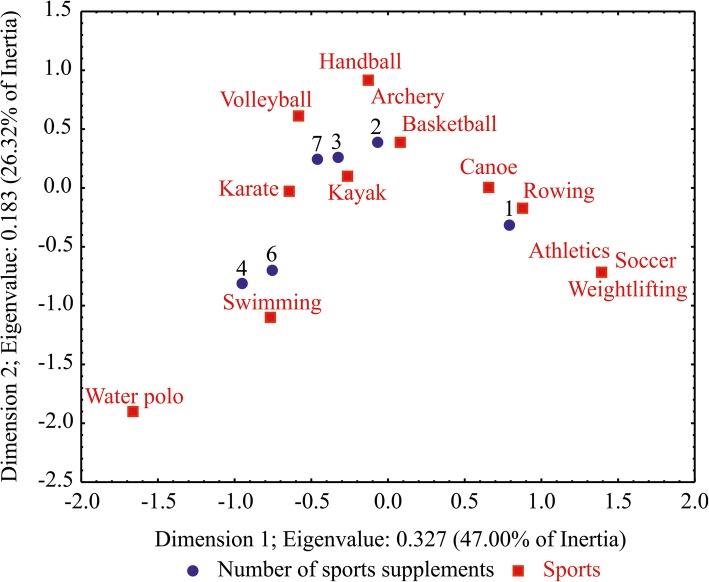
“among which kayak, swimming and karate were identified as the one with the highest number.”
§ Prevalence, knowledge and attitudes towards using sports supplements among young athletes > Results > Prevalence of the use of sports supplements
plainstates an association- Asserted: passes — The authors put it forward as true.
- Checkable: passes — It can be checked against evidence.
- Load-bearing: unclear — It is unclear whether the paper’s conclusions depend on it.
- Based: passes — The paper gives a reason why it holds.
A result the paper reports from its own data — it cites no other source for it, so there is none to check. The quote shows it is in the paper.
In the paper
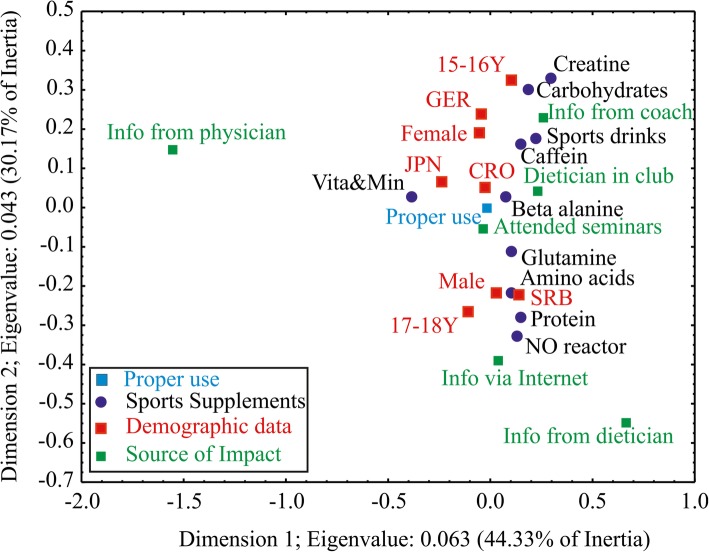
“Athletes 17-18Y showed better knowledge than 15-16Y (r = 0.968; p < 0.001)”
§ Prevalence, knowledge and attitudes towards using sports supplements among young athletes > Results > Knowledge about proper and intended use of the sports supplements
plainstates an association- Asserted: passes — The authors put it forward as true.
- Checkable: passes — It can be checked against evidence.
- Load-bearing: unclear — It is unclear whether the paper’s conclusions depend on it.
- Based: passes — The paper gives a reason why it holds.
A result the paper reports from its own data — it cites no other source for it, so there is none to check. The quote shows it is in the paper.
In the paper
“Athletes in Germany and Japan who answered correctly about the use of supplements attended more seminars (r = 0.927; p = 0.004 and r = 0.923; p = 0.004, respectively) and utilized more advice from dieticians, rather than athletes from other countries (r = 0.824; p = 0.003 and r = 0.882; p = 0.003, respectively).”
§ Prevalence, knowledge and attitudes towards using sports supplements among young athletes > Results > Knowledge about proper and intended use of the sports supplements
plainstates an association- Asserted: passes — The authors put it forward as true.
- Checkable: passes — It can be checked against evidence.
- Load-bearing: unclear — It is unclear whether the paper’s conclusions depend on it.
- Based: passes — The paper gives a reason why it holds.
32 more claims
Create a free account to see all 72 claims and to verify the 13 references still open.
- It may state two separate claims as one. 28
- The quote only partly states this claim. 4
- Probably not a substantial claim. 10
Claims other papers make about this one
Each is checked against this paper’s own text: does it say what the citing paper says it does?
The source backs part of the claim, not all of it — or backs it for a different population, condition or comparison.
In the citing paper
“While creatine appears to be a popular dietary supplement of choice among elite adolescent athletes, creatine is still less frequently used when compared to other dietary supplement categories such as multivitamins, protein powders, and energy products, in which usage rates of these product categories can range anywhere from 60–80% among adolescent athletes [26,27,28,29,30,31,32].”
From Creatine Supplementation in Children and Adolescents (2021) · cites this paper as [28]
Experimental — accuracy not yet measuredThe source backs part of the claim, not all of it — or backs it for a different population, condition or comparison.
In the citing paper
“Additionally, a higher proportion of athletes in the 17–18 year old age group reported creatine use, compared to the 15–16 year old group (60.0% vs. 40.0%).”
From Creatine Supplementation in Children and Adolescents (2021) · cites this paper as [28]
Experimental — accuracy not yet measuredThe source backs part of the claim, not all of it — or backs it for a different population, condition or comparison.
In the citing paper
“It is important to highlight these findings as they are some of the highest creatine use rates reported among a cohort of adolescents, which may be an indication of recent trends for higher creatine use.”
From Creatine Supplementation in Children and Adolescents (2021) · cites this paper as [28]
Experimental — accuracy not yet measuredThe source backs part of the claim, not all of it — or backs it for a different population, condition or comparison.
In the citing paper
“In alignment with previous studies, a significantly higher proportion of male athletes reported using creatine compared to female athletes (72.0% vs. 28.0%).”
From Creatine Supplementation in Children and Adolescents (2021) · cites this paper as [28]
Experimental — accuracy not yet measuredThe source backs part of the claim, not all of it — or backs it for a different population, condition or comparison.
In the citing paper
“More recently in 2019, Jovanov et al. [28] surveyed 348 male and female adolescent athletes across four different countries who were all competing at an international level for their respective countries and reported that 25.3% of all athletes indicated using creatine.”
From Creatine Supplementation in Children and Adolescents (2021) · cites this paper as [28]
Experimental — accuracy not yet measured
8 more claims about this paper
Create a free account to see every claim other papers make about this one.
Self-check
Percentages, sums and reported differences re-computed from the paper’s own numbers.
Each contradiction between two passages listed here was confirmed by an independent check.
Rated major: it would touch a result — a value a result rests on, reported and recomputed p-values on opposite sides of the significance level, two passages that conflict with no sign which is right, or a cited work retracted before this paper was published.
In the paper
§ Prevalence, knowledge and attitudes towards using sports supplements among young athletes > Abstract > Results
“Young athletes are still unfamiliar with WADA regulations (55.5%)”
§ Prevalence, knowledge and attitudes towards using sports supplements among young athletes > Results > Risks of doping and ethical dilemma
“only 55.5% of athletes had the access and are familiar with these regulations.”
Rated minor: it would not touch a result — a value no result rests on, a p-value that stays on the same side of the significance level, or a conflict that is clerical, resolved elsewhere in the paper, or outside its own findings.
In the paper
§ Prevalence, knowledge and attitudes towards using sports supplements among young athletes > Abstract > Results
“The enhancement of athletic performance (35.4%) was the major motivation for the supplements intake.”
§ Prevalence, knowledge and attitudes towards using sports supplements among young athletes > Results > Reasons for the use, attitudes, supplement source and source of information regarding sports supplements
“The main reasons the athletes gave for taking supplements are presented in Fig. 3b with the improvement of their athletic performance (35.3%) being the predominant one.”
Rated minor: it would not touch a result — a value no result rests on, a p-value that stays on the same side of the significance level, or a conflict that is clerical, resolved elsewhere in the paper, or outside its own findings.
In the paper
§ Prevalence, knowledge and attitudes towards using sports supplements among young athletes > Results > Prevalence of the use of sports supplements
“The survey showed that 82.2% of athletes were using sports supplements”
§ Prevalence, knowledge and attitudes towards using sports supplements among young athletes > Results > Prevalence of the use of sports supplements
“The study revealed that 82.2% of athletes used 1–2 different supplements at the same time, 62.1% 2–3, and 35.9% 3–4, while 14.7% of athletes used 4 and more.”
Citations
Cites
Nutrition and Athletic Performance
(2016) · Medicine & Science in Sports & Exercise · doi:10.1249/mss.0000000000000852 · Cited by 1,305
(2009) · Journal of the American Dietetic Association · doi:10.1016/j.jada.2009.01.005 · Cited by 912 · cited 2×
“Dietary supplements are considered nutritional ergogenic aids, and the ones intended for the improvement of an athletic performance and faster recovery are known as sports supplements [1, 2].”
BackgroundDuncombe, P., Lebart, L., Morineau, A., & Warwick, K. M. (1985) · Journal of the Royal Statistical Society. Series A (General) · doi:10.2307/2981514 · Cited by 518
Correspondence Analysis: Graphical Representation of Categorical Data in Marketing Research
Hoffman, D. L., & Franke, G. R. (1986) · Journal of Marketing Research · doi:10.1177/002224378602300302 · Cited by 517
Nutritional supplement use among college athletes and their sources of information
Froiland, K., Koszewski, W., Hingst, J., & Kopecky, L. (2004) · International Journal of Sport Nutrition and Exercise Metabolism · doi:10.1123/ijsnem.14.1.104 · Cited by 386
Torres-McGehee, T. M., Pritchett, K. L., Zippel, D., Minton, D. M., Cellamare, A., & Sibilia, M. (2012) · Journal of Athletic Training · doi:10.4085/1062-6050-47.2.205 · Cited by 290
Dietary Supplement Use among Elite Young German Athletes
Braun, H., Koehler, K., Geyer, H., Kleinert, J., Mester, J., & Schänzer, W. (2009) · International Journal of Sport Nutrition and Exercise Metabolism · doi:10.1123/ijsnem.19.1.97 · Cited by 235
Huang, S.-H. (., Johnson, K., & Pipe, A. L. (2006) · Clinical Journal of Sport Medicine · doi:10.1097/01.jsm.0000194766.35443.9c · Cited by 206
Simple Correspondence Analysis: A Bibliographic Review
Beh, E. J. (2004) · International Statistical Review · doi:10.1111/j.1751-5823.2004.tb00236.x · Cited by 187
Burns, R. D., Schiller, M. R., Merrick, M. A., & Wolf, K. N. (2004) · Journal of the American Dietetic Association · doi:10.1016/j.jada.2003.11.013 · Cited by 185
Cited by
Prevalence of dietary supplement use among athletes worldwide: a scoping review
Daher, J., Mallick, M., & El Khoury, D. (2022) · Nutrients · doi:10.3390/nu14194109 · Cited by 70
“(2019) Serbia, Germany, Japan, Croatia [34] Team and individual sports athletes 15–18 Total: 348 M (n = 174) F (n = 174) Survey (current use) 82% M: 61% F: 39% M: Whey protein, creatine, amino acids, caffeine, and NO reactor.”
BackgroundInfluentialNutrition for Children and Adolescents Who Practice Sport: A Narrative Review
Capra, M. E., Stanyevic, B., Giudice, A., Monopoli, D., Decarolis, N. M., Esposito, S., & Biasucci, G. (2024) · Nutrients · doi:10.3390/nu16162803 · Cited by 66
“%) being male [53].”
BackgroundInfluentialJagim, A. R., Harty, P. S., Erickson, J. L., Tinsley, G. M., Garner, D., & Galpin, A. J. (2023) · Frontiers in Sports and Active Living · doi:10.3389/fspor.2023.1239121 · Cited by 73
“A recent study (15) indicated that approximately 80% of young athletes consumed dietary supplements, with the majority of users (60”
BackgroundWaisundara, V. Y. (2019) · IntechOpen eBooks · doi:10.5772/intechopen.82910 · Cited by 53
Adolescent body image: influencing factors and the clinician's role
Hartman-Munick, S. M., Gordon, A. R., & Guss, C. E. (2020) · Current Opinion in Pediatrics · doi:10.1097/mop.0000000000000910 · Cited by 66
Creatine Supplementation in Children and Adolescents
Jagim, A. R., & Kerksick, C. M. (2021) · Nutrients · doi:10.3390/nu13020664 · Cited by 61
“While creatine appears to be a popular dietary supplement of choice among elite adolescent athletes, creatine is still less frequently used when compared to other dietary supplement categories such as multivitamins, protein powders, and energy products, in which usage rates of these product categories can range anywhe…”
BackgroundNutritional Recommendations for the Young Athlete
Hecht, C., Bank, N., Cook, B., & Mistovich, R. J. (2023) · Journal of the Pediatric Orthopaedic Society of North America · doi:10.55275/jposna-2023-599 · Cited by 48
Dietary Supplements: A Gateway to Doping?
Mallick, M., Camacho, C. B., Daher, J., & Khoury, D. T. D. E. (2023) · Nutrients · doi:10.3390/nu15040881 · Cited by 52
“5% of young athletes both had access to and were aware of DS regulations [45].”
BackgroundInfluentialSustainable Diets for Athletes
Meyer, N. L., Reguant-Closa, A., & Nemecek, T. (2020) · Current Nutrition Reports · doi:10.1007/s13668-020-00318-0 · Cited by 49
Thurecht, R., & Pelly, F. (2020) · Nutrients · doi:10.3390/nu12040924 · Cited by 37
Everett, S. (2025) · Nutrients · doi:10.3390/nu17172792 · Cited by 37
“Among adolescent athletes, the use of dietary supplements is increasingly common, often driven by goals related to strength development, recovery, body composition, and competitive performance [84].”
Backhouse, S. H. (2023) · Sports Medicine · doi:10.1007/s40279-023-01933-x · Cited by 46
“Other studies have noted the challenge of understanding the ingredients lists printed on supplement packaging [78, 79], as well as athletes’ and ASPs unfamiliarity with WADA regulations (e.g., Prohibited List) [2, 52, 69, 74, 80–91].”
BackgroundInfluentialZahra, S., & Muhlisin, M. (2020) · Jurnal Terapan Ilmu Keolahragaan · doi:10.17509/jtikor.v5i1.25097 · Cited by 32
Evolution of the use of sports supplements
Alonso, M. R., & Fernández‐Garcia, B. (2020) · PharmaNutrition · doi:10.1016/j.phanu.2020.100239 · Cited by 43
The Impacts of COVID-19 on Collegiate Student-Athlete Training, Health, and Well-Being
Chandler, A. J., Arent, M. A., Cintineo, H. P., Torres-McGehee, T. M., Winkelmann, Z. K., & Arent, S. M. (2021) · Translational Journal of the American College of Sports Medicine · doi:10.1249/tjx.0000000000000173 · Cited by 42
Calvo, J. L., Xu, H., Mon-López, D., Pareja-Galeano, H., & Jiménez, S. L. (2021) · Journal of the International Society of Sports Nutrition · doi:10.1186/s12970-021-00410-y · Cited by 30
“In addition, one article concluded that the level of athletes’ knowledge about the proper and intended use of sports supplements reveals the necessity of enforcing ongoing education about sports supplementation [24].”
BackgroundDietary practices and supplement use among CrossFit® participants
Brisebois, M. F., Kramer, S., Lindsay, K. G., Wu, C.-T., & Kamla, J. (2022) · Journal of the International Society of Sports Nutrition · doi:10.1080/15502783.2022.2086016 · Cited by 37
“Coaches and trainers are also cited as sources in similar studies [17,18,28].”
BackgroundInfluentialAmawi, A., Khataybeh, B., Al Aqaili, R., Ababneh, N., Alnimer, L., Qoqazeh, A., Oukal, F., Jahrami, H., Mousa Ay, K., Al Saoud, H., et al. (2024) · Frontiers in Nutrition · doi:10.3389/fnut.2024.1390204 · Cited by 26
Montuori, P., Loperto, I., Paolo, C., Castrianni, D., Nubi, R., Rosa, E. D., Palladino, R., & Triassi, M. (2021) · BMC Sports Science Medicine and Rehabilitation · doi:10.1186/s13102-021-00378-x · Cited by 38
Barrack, M. T., Sassone, J., Dizon, F., Wu, A. C., DeLuca, S., Ackerman, K. E., & Tenforde, A. S. (2021) · Journal of the Academy of Nutrition and Dietetics · doi:10.1016/j.jand.2021.07.013 · Cited by 25
RetractedThe Environmental Impact of the Athlete’s Plate Nutrition Education Tool
Reguant-Closa, A., Roesch, A., Lansche, J., Nemecek, T., Lohman, T. G., & Meyer, N. L. (2020) · Nutrients · doi:10.3390/nu12082484 · Cited by 22
Dietary Supplements Use among Athletes in Lebanon: Knowledge, Attitudes, Practices, and Correlates
Sadek, Z., Mohsen, H., Yazbek, S., Nabulsi, Z. A. A., Sarraj, A. R., & Hoteit, M. (2022) · Foods · doi:10.3390/foods11101521 · Cited by 29
“(2019) [56] N = 348 athletes (males: 60.”
ResultBroniecka, A., Sarachman, A., Zagrodna, A., & Książek, A. (2025) · Journal of the International Society of Sports Nutrition · doi:10.1080/15502783.2025.2496450 · Cited by 25
“The available literature provides data on the prevalence of supplement use among athletes in other countries, such as the United Kingdom [9], Serbia, Germany, Japan, and Croatia [10], as well as Iran [11].”
Thapa, M., Neupane, A., Shrestha, S. K. D., Nepal, P., Upadhyaya, A., Niraula, P., Shrestha, R. K., & Sunuwar, D. R. (2023) · BMC Sports Science Medicine and Rehabilitation · doi:10.1186/s13102-023-00691-7 · Cited by 29
“Few research were conducted to assess nutrition knowledge among coaches & athletic trainers and it showed inadequate knowledge among them [37, 39].”
BackgroundGeneral and sport-specific nutrition knowledge and behaviors of adolescent athletes
Gibbs, R. L., & Becker, T. B. (2025) · Journal of the International Society of Sports Nutrition · doi:10.1080/15502783.2025.2477060 · Cited by 17
“Additionally, there may be gender differences regarding sports nutrition best practices knowledge [20,24].”
High School Athletes’ Use and Knowledge of (Safe) Nutritional Supplement Use: An Exploratory Study
Wardenaar, F. C., Lybbert, H., Morton, L. M., Schott, K. D., Shumate, C., Levinson, S. L., Wharton, C. M., Kulinna, P. H., & van der Mars, H. (2024) · Journal of Dietary Supplements · doi:10.1080/19390211.2023.2301361 · Cited by 19
“(Jovanov et al. 2019).”
BackgroundResultInfluentialKnowledge, awareness and practices regarding dietary supplements in Jordan
Basheer, H. A., Elsalem, L., Jaber, D., Ibraheem, S. M., Alhamad, H., & Jum’ah, A. A. (2022) · Tropical Journal of Pharmaceutical Research · doi:10.4314/tjpr.v20i3.30 · Cited by 17
“1 %) who were using DS to enhance body image were aware of health risks associated with body building supplements use, nonetheless this did not stop them of using the supplements [22].”
BackgroundSebastiá-Rico, J., Sanz, J. M. M., Sanchis-Chordà, J., Alonso-Calvar, M., López-Mateu, P., Romero-García, D., & Soriano, J. M. (2024) · Healthcare · doi:10.3390/healthcare12040496 · Cited by 20
“These risks include lack of regulation, possible adverse side effects, and the presence of banned substances [8,11].”
BackgroundMechanism of Action and Beneficial Effects of Probiotics in Amateur and Professional Athletes
Nami, Y., Barghi, A., Shahgolzari, M., Salehian, M., & Haghshenas, B. (2024) · Food Science & Nutrition · doi:10.1002/fsn3.4658 · Cited by 20
“A study on young elite athletes at the national level revealed a high prevalence of supplement use but a variable level of understanding regarding their effects and the ethical considerations involved (Jovanov et al. 2019).”
Contaminants in Dietary Supplements: Toxicity, Doping Risk, and Current Regulation
Zapata-Linares, J., & Gervasini, G. (2024) · International Journal of Sport Nutrition and Exercise Metabolism · doi:10.1123/ijsnem.2023-0263 · Cited by 17
Youn, B.-Y., Ju, S., Joo, S., Kang, H.-S., Jeon, K.-Y., Cheon, C., Go, H.-Y., & Ko, S. (2021) · Evidence-based Complementary and Alternative Medicine · doi:10.1155/2021/5572325 · Cited by 14
“Second, there are not enough educational programs available in every country [25].”
BackgroundSupplement (mis)use in adolescents
Tiwari, K. (2020) · Current Opinion in Pediatrics · doi:10.1097/mop.0000000000000912 · Cited by 16
Nutritional supplements in combat sports: What we know and what we do
Cannataro, R., Straface, N., & Cione, E. (2022) · Human Nutrition & Metabolism · doi:10.1016/j.hnm.2022.200155 · Cited by 19
The Adolescent Athlete and the Team Physician: A Consensus Statement. 2025 Update
Putukian, M., LeClere, L. E., Herring, S., Benjamin, H. J., Bennett, C., Boyajian-O’Neill, L. A., Callender, S. S., Day, M., Finnoff, J. T., Franks, R., et al. (2025) · Medicine & Science in Sports & Exercise · doi:10.1249/mss.0000000000003863 · Cited by 18
Food for thought: Physiological considerations for nutritional ergogenic efficacy
Wickham, K. A., & Spriet, L. L. (2023) · Scandinavian Journal of Medicine and Science in Sports · doi:10.1111/sms.14307 · Cited by 21
“11 Accordingly, due to their extensive use, there is a continual need for strong scientific investigations validating or invalidating the efficacy of novel nutritional ergogenic aids.”
Eating Disorders and Dietary Supplements: A Review of the Science
Hewlings, S. J. (2023) · Nutrients · doi:10.3390/nu15092076 · Cited by 14
“The males used significantly more whey protein, creatine, amino acids, caffeine, and nitrous oxide compared to females, who took more vitamins and mineral complexes, while there was an almost equal use of energy drinks, glutamine, and carbohydrates between sexes [25].”
BackgroundMoradi, F., Yazdani, A., Nematolahi, F., Hosseini-Roknabadi, S. M., & Sharifi, N. (2024) · BMC Sports Science Medicine and Rehabilitation · doi:10.1186/s13102-024-00940-3 · Cited by 24
“In addition to implementing training and sports nutrition strategies, athletes also seek out certain supplements [1, 2].”
BackgroundResultInfluentialForsyth, A. K., & Mantzioris, E. (2023) · British Journal Of Nutrition · doi:10.1017/s0007114523000648 · Cited by 14
“%) of sports supplement use among young elite athletes (27 – 30) .”
BackgroundNewbury, J. W., Cole, M., Kelly, A. L., Chessor, R. J., Sparks, S. A., McNaughton, L. R., & Gough, L. A. (2021) · PLoS ONE · doi:10.1371/journal.pone.0248456 · Cited by 15
“Young athletes are therefore attracted to nutritional ergogenic aids to support their performance, though in practice, these are not always ingested in an evidence-based fashion [33].”
BackgroundPrevalence of Supplement Consumption in Iranian Athletes: A Systematic Review and Meta-Analysis
Halabchi, F., Shab‐Bidar, S., & Selk-Ghaffari, M. (2021) · International Journal of Preventive Medicine · doi:10.4103/ijpvm.ijpvm_189_20 · Cited by 12
“[9,10] Also, they infrequently get information from educated sources such as registered dietitians or team physicians.[11] Furthermore, continuous educational programs on this subject are not accessible in many countries, Access this article online”
BackgroundSports supplements: use, knowledge, and risks for Algerian athletes
Chebaiki, I. J., Bekadi, A., & Bechikh, M. Y. (2020) · The North African Journal of Food and Nutrition Research · doi:10.51745/najfnr.4.7.231-239 · Cited by 12
“Prevalence data differ between studies, and a possible explanation can be found in variable sample size, age, category and different level of competition among athletes [23].”
BackgroundResultInfluentialHigh-School Athletes’ Knowledge, Attitudes, and Perceptions on Doping: The Cyprus Sport-School Study
Tsivitanidou, O., Christodoulides, E., & Petrou, M. (2023) · Youth · doi:10.3390/youth3020040 · Cited by 12
Nutritional Supplement Use in a UK High-Performance Swimming Club
Newbury, J. W., Sparks, S. A., Cole, M., Kelly, A. L., & Gough, L. A. (2023) · Nutrients · doi:10.3390/nu15153306 · Cited by 16
“, caffeine: 19%, creatine monohydrate: 25%, beta-alanine: 5%, nitrates: 3%) [11].”
BackgroundResultInfluentialDo the high‐protein recommendations for athletes set some on a path to kidney injury and dialysis?
Marinaro, M., Alexander, D. S., & de Waal, D. (2021) · Seminars in Dialysis · doi:10.1111/sdi.13046 · Cited by 9
“24 Competitive athletes often report that they prefer to use evidence-based practices 25 yet can become misguided if reports are inaccurate.”
InfluentialDeslippe, A. L., Bergeron, C., Wu, O. Y., Hernandez, K. J., Comtois-Rousseau, E., & Cohen, T. R. (2025) · Current Developments in Nutrition · doi:10.1016/j.cdnut.2024.104525 · Cited by 8
de Oliveira, G. T., de Souza, H. L. R., Meireles, A. A. F. D. M., dos Santos, M. H. P., Leite, L. H. R., Ferreira, R. M. R., & Marocolo, M. (2023) · Frontiers in Sports and Active Living · doi:10.3389/fspor.2023.1257007 · Cited by 9
“…important to consider that beginner athletes may have greater restrictions on accessing information about the use of strategies to optimize performance, due to fi nancial restrictions of the sport, geographic issues, among other reasons, on the contrary athletes of a higher competitive level (28).”
Dietary Supplements Use among Serbian Undergraduate Students of Different Academic Fields
Vidović, B. B., Đuričić, B., Odalović, M., Georgiev, A. M., & Tadić, I. (2022) · International Journal of Environmental Research and Public Health · doi:10.3390/ijerph191711036 · Cited by 11
“There are several reports on the prevalence, knowledge, and attitudes toward DS usage [24] and toward DS types [25,26] in the general Serbian population, young athletes [27], and university undergraduate students [28–30].”
BackgroundSchott, K. D., Seltzer, R. G. N., Zorn, S. P., Frakes, M., Price, M., Valliant, M. W., Ritz, P. P., Gardner, C. D., & Wardenaar, F. C. (2024) · Journal of Athletic Training · doi:10.4085/1062-6050-0098.24 · Cited by 9
The nutrition needs of adolescent athletes: a systematic review
Firmansyah, A., & Prasetya, M. R. A. (2021) · Jurnal SPORTIF : Jurnal Penelitian Pembelajaran · doi:10.29407/js_unpgri.v7i3.16716 · Cited by 6
Assessing the need to use sport supplements: The mediating role of sports supplement beliefs
Murofushi, Y., Kawata, Y., Nakamura, M., Yamaguchi, S., Sunamoto, S., Fukamachi, H., Aono, H., Kamihigashi, E., Takazawa, Y., Naıto, H., et al. (2023) · Performance Enhancement & Health · doi:10.1016/j.peh.2023.100269 · Cited by 9
Dow, E., Schott, K. D., Morton, L. M., Lybbert, H., Nam, K., Shumate, C., Kulinna, P. H., & Wardenaar, F. C. (2024) · Nutrition Bulletin · doi:10.1111/nbu.12724 · Cited by 6
Community-Based Survey Exploring Use of the Dietary Supplement Creatine by Adult Non-Athletes
Benton, M. J., Spicher, J. M., & McCormick, S. J. (2021) · Nutrients · doi:10.3390/nu13082529 · Cited by 8
“Items were based on previous questionnaires regarding use of creatine and other dietary supplements [3,33,34] and on recommendations for future research derived from a meta-analysis of supplement use by athletes [1].”
BackgroundMethodOlder Adults’ Knowledge and Perceptions of Whole Foods as an Exercise Recovery Strategy
Hayes, E. J., Granic, A., Hurst, C., Dismore, L. L., Sayer, A. A., & Stevenson, E. (2021) · Frontiers in Nutrition · doi:10.3389/fnut.2021.748882 · Cited by 7
Hadi, S., Miryan, M., Soleimani, D., Amani, R., Tehrani, M. M., Hadi, V., Zali, M. E., Mosalmanzadeh, N., & Askari, G. (2021) · Food Science & Nutrition · doi:10.1002/fsn3.2297 · Cited by 7
“Military personnel usually use dietary supplements to increase performance rather than to compensate for nutritional deficiencies (Jovanov et al., 2019).”
BackgroundESRI, Kelly, E., Keegan, C., ESRI, Walsh, B., & ESRI (2019) · doi:10.26504/rs99 · Cited by 10
“Among younger athletes, most of those that use supplements consumed at least two types of supplement regularly (Jovanov et al., 2019).”
BackgroundResultSiedler, M. R., Rodriguez, C., White, S. J., Tinoco, E., DeHaven, B., Brojanac, A., LaValle, C., Rasco, J., Taylor, L. W., & Tinsley, G. M. (2023) · Nutrients · doi:10.3390/nu15224806 · Cited by 6
“Recreationally active individuals and athletes commonly supplement with protein and/or thermogenic products such as caffeinated multi-ingredient pre-workout supplements and energy drinks [2,3,57].”
BackgroundMcDaid, B., Wardenaar, F. C., Woodside, J. V., Neville, C. E., Tobin, D., Madigan, S. M., & Nugent, A. P. (2024) · Nutrition Bulletin · doi:10.1111/nbu.12696 · Cited by 6
Knowledge, Prevalence, and Consequences of Dietary Supplements Intake among Iranian Bodybuilders
Bajool, Y., Hemmatinafar, M., Daryanoosh, F., Jahaniboushehri, N., Jahan, Z., & Imanian, B. (2024) · Current Developments in Nutrition · doi:10.1016/j.cdnut.2024.104437 · Cited by 5
“Additionally, Jovanov et al. [10] demonstrated that enhancing athletic performance (19”
BackgroundResultInfluentialGage, M., Phillips, K. C., Noh, B., & Yoon, T. (2021) · International Journal of Environmental Research and Public Health · doi:10.3390/ijerph182111400 · Cited by 5
“2% of young athletes in young athletes from 4 countries in 18 sports at the international level [2].”
BackgroundFuller, A., & Bird, S. P. (2025) · Nutrients · doi:10.3390/nu17020361 · Cited by 7
de Oliveira, V. N., Andrade, M. S., Sinisgalli, R., Vancini, R. L., Costa, G. D. C. T., Weiss, K., Knechtle, B., & de Lira, C. A. B. (2024) · BMC Research Notes · doi:10.1186/s13104-023-06665-9 · Cited by 4
“Jovanov et al. investigated the prevalence of dietary supplement use and the source of information regarding supplementation in young athletes [14].”
BackgroundEnhancing Performance in Young Athletes: A Systematic Review of Acute Supplementation Effects
Gruska, N., Sarmento, H., Martinho, D. V., Field, A., & Massart, A. G. M. (2024) · Nutrients · doi:10.3390/nu16244304 · Cited by 7
Deslippe, A. L., Middleton, G., Wu, O. Y., Bergeron, C., & Cohen, T. R. (2024) · Frontiers in Nutrition · doi:10.3389/fnut.2024.1524135 · Cited by 8
Protein supplement consumption prevalence, habits and complications in adolescents
Millán‐Jiménez, A., Fontán, I. M. F., Toro, M. S., & Torres, B. F. (2023) · Anales de Pediatría (English Edition) · doi:10.1016/j.anpede.2023.08.014 · Cited by 8
Ma, M., Yan, G., & Huang, G. (2026) · Frontiers in Nutrition · doi:10.3389/fnut.2026.1784740 · Cited by 3
“Among young athletes, the usage rate is as high as 82.2% (33).”
InfluentialChristensen, S., Gjelstad, A., Björnsdóttir, I., & Lauritzen, F. (2024) · Nutrients · doi:10.3390/nu16162667 · Cited by 6
Functional Value of Amaranth as Applied to Sports Nutrition
Torregrosa-García, A., & Javier, L.-R. F. (2020) · IntechOpen eBooks · doi:10.5772/intechopen.88842 · Cited by 6
Millán‐Jiménez, A., Fontán, I. M. F., Toro, M. S., & Torres, B. F. (2023) · Anales de Pediatría · doi:10.1016/j.anpedi.2023.08.005 · Cited by 5
Gimbar, M., Samavat, H., Hamilton, K. P., Ziegler, J., Wardenaar, F. C., Esopenko, C., & Byham-Gray, L. D. (2025) · Journal of Dietary Supplements · doi:10.1080/19390211.2024.2449023 · Cited by 3
“Males athletes are more likely to use NS including whey, creatine and amino acids compared to females who may be more likely to use vitamins and minerals (Jovanov et al. 2019).”
InfluentialExploring the role of dietary intake and supplementation on performance in video gaming and esports
Turner, J. (2023) · Queensland University of Technology · doi:10.5204/thesis.eprints.244137 · Cited by 7
Mera-Zouain, L., Carballo, J. L., & Guilabert, M. (2022) · Nutrients · doi:10.3390/nu14214481 · Cited by 5
Skilbred, A., Loland, S., & Strandbu, Å. (2024) · European Journal for Sport and Society · doi:10.1080/16138171.2024.2335578 · Cited by 3
“Half of the athletes considered the coach their primary source of information (Jovanov et al., 2019).”
Calella, P., Dio, M. D., Pelullo, C. P., Giuseppe, G. D., Sansone, V., Liguori, F., Onofrio, V. D., Valerio, G., Liguori, G., & Gallé, F. (2024) · International Journal of Food Sciences and Nutrition · doi:10.1080/09637486.2024.2437468 · Cited by 3
“…coaches are the main source of information, and improving performance is the primary motivation; while most athletes are aware of the health risks, their knowledge about proper supplement use, especially for specific substances like protein and creatine, is limited (Jovanov et al. 2019).”
Theacrine as a novel ergogenic aid: impact on canoe sprint performance
Jovanov, P., Vraneš, M., Barak, O., Rapaić, M., Maravić, N., Marić, A., & Obradović, B. (2025) · Journal of the International Society of Sports Nutrition · doi:10.1080/15502783.2025.2590097 · Cited by 2
“Among pre-workout supplements, caffeine is the preferred choice in canoe sprint because of its effectiveness in enhancing endurance and performance [10,11].”
Self-citationPrevalence and Attitudes Towards Using Protein Supplements Among Female Gym Users: An Online Survey
Alhussain, M. H., Abdulhalim, W. S., Al‐Harbi, L. N., & Binobead, M. A. (2021) · Current Nutrition & Food Science · doi:10.2174/1573401317666211007125615 · Cited by 2
Bürkle, F., Doll, J., Neide, A., Gantz, S., Tsitlakidis, S., & Fischer, C. A. (2022) · Journal of the International Society of Sports Nutrition · doi:10.1080/15502783.2022.2097018 · Cited by 3
KNOWLEDGE AND ATTITUDE OF YOUNG ATHLETES IN BAGHDAD CITY/IRAQ TOWARD THE USE OF SPORTS SUPPLEMENTS
Ghazi, H. F., Abdalqader, M. A., & Hasan, T. N. (2022) · Malaysian Journal of Public Health Medicine · doi:10.37268/mjphm/vol.22/no.3/art.1834 · Cited by 3
Snack and Nutrient Intake Status of Top-Level Female University Athletes: A Cross-Sectional Study
Inaba, H., Hoshino, F., Edama, M., & Omori, G. (2024) · Healthcare · doi:10.3390/healthcare12040468 · Cited by 4
“In a study on adolescent athletes (18 sports) from four countries (Japan, Germany, Serbia, and Croatia), the highest rate of protein intake through dietary supplements was reported at 55.7 [48].”
BackgroundInfluentialSport-Related Injury and Performance Enhancing Substance Use by Young Athletes
McNaughton, M., Hunt, D., Parmeter, B., O’Brien, M., Cook, D. R., Meehan, W. P., III, & Stracciolini, A. (2024) · Sports Health A Multidisciplinary Approach · doi:10.1177/19417381241287199 · Cited by 2
Elite adolescent male soccer players require further education to improve sports nutrition knowledge
Hart, J., Smith, K., & Jackson, K. (2025) · Academia Nutrition and Dietetics · doi:10.20935/acadnutr7656 · Cited by 2
Awareness of Dietary Supplements among the Saudi Population: A Cross-Sectional Study
Qadhi, W. A. A., Azhar, W., Alamoudi, R., Almohmadi, N. H., Alyamani, W. A. R. A., Alkholy, S. O., Alhassani, W. E., Bukhari, H. M., Babteen, A. M., & Ghafouri, K. J. (2023) · Acta Scientifci Nutritional Health · doi:10.31080/asnh.2023.07.1261 · Cited by 1
Nutritional features of weightlifters
Александрович, П. В., & Shabelny, A. P. (2022) · Proceedings of the Voronezh State University of Engineering Technologies · doi:10.20914/2310-1202-2022-2-122-127 · Cited by 2
Graybeal, A. J., Helms, B., Couris, K., Thomas, D., Johnston, T., Dahan, V., Escobedo, N., & Willis, J. L. (2022) · International Journal of Sport Nutrition and Exercise Metabolism · doi:10.1123/ijsnem.2021-0253 · Cited by 2
Nyawose, S., Naidoo, R., Naumovski, N., & McKune, A. J. (2022) · South African Journal of Sports Medicine · doi:10.17159/2078-516x/2022/v34i1a14018 · Cited by 3
“the proper intended use of dietary supplements.[12] However, professional players are relatively better informed about dietary supplements than amateur players.”
BackgroundMethodInfluentialNutritional Knowledge and Ergogenic Aid Using Status of Competitive and Recreational Cyclists
Dilara, S. A. K., Dayı, T., Günay, E., & Öniz, A. (2022) · Pamukkale Journal of Sport Sciences · doi:10.54141/psbd.1143549 · Cited by 3
Mandu, W. A., Kiplamai, F., Mwisukha, A., & Waiganjo, L. B. (2023) · Journal of Advances in Sports and Physical Education · doi:10.36348/jaspe.2023.v06i04.003 · Cited by 1
Maćków, M., Kozioł-Kozakowska, A., Szeląg, M., Pytrus, T., Raczkowska, E., Neubauer, K., Zawiślak, I., Gajda, R., Habánová, M., & Stawarski, A. (2024) · Nutrients · doi:10.3390/nu16162762 · Cited by 3
Hafez, S. H., Mohamed, N. A., El-Maksoud, M. M. A., Algany, M. M. A., Dawood, B. M. A. E., Bahgat, Z. F., Mohammed, I. A. S., Al-Metyazidy, H. A., Ahmed, H. A. A., & Harfoush, M. S. (2024) · Medical Journal Armed Forces India · doi:10.1016/j.mjafi.2024.09.004 · Cited by 1
Deslippe, A. L., Bergeron, C., Wu, O. Y., & Cohen, T. R. (2025) · Nutrients · doi:10.3390/nu17040685 · Cited by 2
“In certain situations, young athletes may receive tailored information from a sports di-etitian, an expert in nutrition, about how to support their physical performance through food [16,17].”
InfluentialMolani‐Gol, R., Rafraf, M., & Alipour, B. (2025) · Central European Journal of Public Health · doi:10.21101/cejph.a8321 · Cited by 1
Nagy, S.-R., Mititelu, M., Popovici, V., Marin, R.-C., Pallag, A., & Jurca, T. (2025) · Journal of Functional Morphology and Kinesiology · doi:10.3390/jfmk10030248 · Cited by 3
“These findings suggest that the participants selected NSs themselves and consumed protein supplements without the recommendation of a qualified practitioner, as previous studies claimed [126,137].”
Creatine Supplementation Practices in Saudi Arabia: Prevalence, Patterns, and Health Implications
Othman, M., Aljehani, A., ALZAHRANI, S. H., Alzahrani, M., Monusar, F., & Alshammari, M. (2025) · Cureus · doi:10.7759/cureus.94947 · Cited by 1
“This finding suggests traditional reliance on face ‐ to ‐ face mentors [12, 13], amid global trends of growing internet and social media influence among teenagers [14, 26].”
InfluentialBurridge, J. D., Boolani, A., Zhang, Z., & Glenn, J. M. (2026) · Journal of the International Society of Sports Nutrition · doi:10.1080/15502783.2026.2702952 · Cited by 2
“Most real-world studies have focused on competitive athletes, bodybuilders, or organised sports supplement users, limiting generalisa-bility to broader populations [26–29].”
Gender-Specific Marketing Strategies Used by Sports Supplements
Cosgrove, A. M., Lorts, C., & Ransdell, L. B. (2022) · International Journal of Physical Activity and Health · doi:10.18122/ijpah1.1.10.boisestate · Cited by 1
SPORCULARDA TAKVİYE ÜRÜNLERİN KULLANIMINA İLİŞKİN MEVCUT TEZLER: DOKÜMAN ANALİZİ
Mete, S. (2024) · Ankara Üniversitesi Beden Eğitimi ve Spor Yüksekokulu SPORMETRE Beden Eğitimi ve Spor Bilimleri Dergisi · doi:10.33689/spormetre.1389718 · Cited by 1
Maggioni, M., Sibgatulin, R., Krämer, M., Güllmar, D., & Reichenbach, J. R. (2024) · Frontiers in Physiology · doi:10.3389/fphys.2024.1408244 · Cited by 3
Acute Effects of Dark Chocolate on Physical Performance in Young Elite Soccer Players: A Pilot Study
Benedetti, L., Nigro, F., Malaguti, M., Michele, R. D., & Angeloni, C. (2025) · Applied Sciences · doi:10.3390/app15020965 · Cited by 3
“However, it is common for athletes to use supplements without a genuine understanding of both their positive and negative effects and without exploring the possibility of achieving the same benefits through diet alone [6–8].”
The Relationship Between Gut Health and Sports Performance
Bhattacharjee, B., Surendran, S., Khaitan, J., Patil, M., & Shathi, M. A. (2025) · IGI Global eBooks · doi:10.4018/979-8-3693-8699-6.ch010 · Cited by 1
Pedrosa, I., Lúcia, C. M. D., da Silva, A. G., Rodrigues, P. H. S., Dias, F. A. M., Barbosa, P. D. F., & Marins, J. C. B. (2022) · Archivos de medicina del deporte: revista de la Federación Española de Medicina del Deporte y de la Confederación Iberoamericana de Medicina del Deporte · doi:10.18176/archmeddeporte.00092 · Cited by 3
Građansko pravno uređenje dodataka prehrani za sportaše
Proso, M. (2021) · Zbornik radova Pravnog fakulteta u Splitu · doi:10.31141/zrpfs.2021.58.139.233
Metadata
- Authors
- Jovanov, P., Đorđić, V., Obradović, B., Barak, O., Pezo, L., Marić, A., & Sakač, M.
- Affiliations
- University of Novi Sad (RS)
- University of Belgrade (RS)
- Corresponding author
- Jovanov, Pavle
- Venue
- Journal of the International Society of Sports Nutrition
- Publisher
- Informa UK Limited
- Published
- 2019-01-15
- Volume
- 16
- Issue
- 1
- Pages
- 27-27
- ISSN
- 1550-2783 (ISSN-L)
- PMC
- PMC6611041
- OpenAlex
- W2953460635
- Semantic Scholar
- 7cf77b6056ac2139625abb12a1ddecea00bc5b73
- Cited by
- 138
- References
- 32
- Citations by year
- 2026: 16 · 2025: 20 · 2024: 30 · 2023: 26 · 2022: 18 · 2021: 17 · 2020: 8 · 2019: 3
- FWCI
- 23.10
- Type
- journal article
- Language
- en
- Open access
- gold
- doi.org
- Licence
- Locations
- Journal of the International Society of Sports Nutrition (publishedVersion, cc-by)
- PubMed Central (publishedVersion, cc-by)
- PubMed (publishedVersion)
- DOAJ (DOAJ: Directory of Open Access Journals) (submittedVersion, cc-by-sa)
- rIOFH - Repository of the Institute of General and Physical Chemistry (submittedVersion, cc-by)
- Funders
- Ministarstvo Prosvete, Nauke i Tehnološkog Razvoja (TR 31029, ON 172012)
- Provincial Secretariat for Higher Education and Scientific Research, Autonomous Province of Vojvodina
- Topics
- Social Sciences › Sociology and Political Science › Doping in Sports
- Health Sciences › Medicine › Public Health, Environmental and Occupational Health › Nutrition and Health Studies
- Life Sciences › Agricultural and Biological Sciences › Animal Science and Zoology › Pharmacological Effects and Assays
- Keywords
- sports supplements, youth athletes, protein supplements, supplement knowledge, supplement use prevalence, athletic performance improvement, nutrition education, creatine, beta-alanine, glutamine, vitamins and minerals, caffeine, sports drinks
- MeSH terms
- Adolescent, Female, Germany, Humans, Japan, Health Knowledge, Attitudes, Practice, Male, Motivation, Surveys and Questionnaires, Prevalence, Croatia, Dietary Supplements, Athletic Performance, Serbia, Athletes, Sports Nutritional Physiological Phenomena
About these checks
Registry, retraction, Cites and statistics results are computed, not judged, with one exception: a printed reference that no index lists is read once by a model before it counts as a citation error. Claims are extracted by a model and kept only when their quote appears verbatim in the text; each cited source is then checked, with a model’s help, for whether it says what the claim relies on. Those verdicts can be wrong — read the claim’s quote and the cited source before relying on one.
The claim verdicts this report counts are experimental: their accuracy is not yet measured.
A language model drew the claims from the paper on 2026-11-14, under version 3 of the claim definition (model deepseek-v4.1-flash, prompt extract-v3).
A second model labelled each claim on 2026-11-14 (model jev-1.13-20260917, definition revision gold-guideline-v0.2).
Cited sources are checked with a language model’s help (qwen3.8-omni-flash).
Statistics and arithmetic are recomputed, not judged.
Confidence bands are shown only for fields calibrated on our annotated test set. None is calibrated yet, so no band is shown.
What counts as a claim ›How we measure confidence ›How we check this ›
Are you an author, or do you see a problem with this page? Request a review
Data sources
Bibliographic data: Semantic Scholar, OpenAlex, Crossref.
Contains information from the Semantic Scholar Academic Graph Datasets, made available under the ODC Attribution License (ODC-BY 1.0).
Semantic Scholar’s data is described in: Kinney, R., et al. (2023). The Semantic Scholar Open Data Platform. arXiv:2301.10140.
