

Performance effects of periodized carbohydrate restriction in endurance trained athletes – a systematic review and meta-analysis
Open accessThe DOI matches its Crossref record; 62 of the 62 references it cites were found in a registry or an index.
Abstract
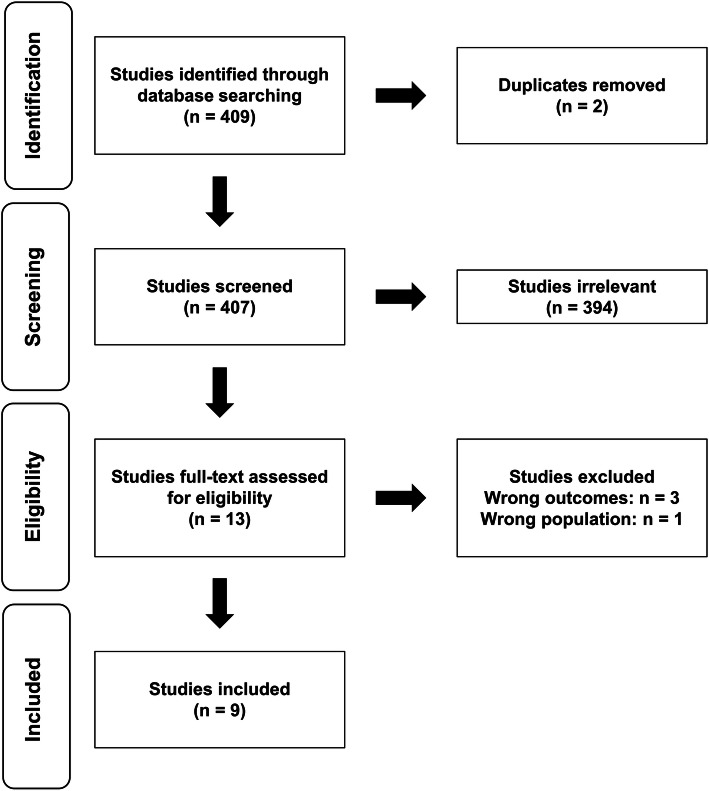
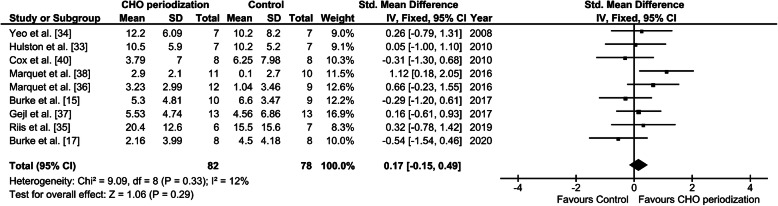
Endurance athletes typically consume carbohydrate-rich diets to allow for optimal performance during competitions and intense training. However, acute exercise studies have revealed that training or recovery with low muscle glycogen stimulates factors of importance for mitochondrial biogenesis in addition to favourable metabolic adaptations in trained athletes. Compromised training quality and particularly lower intensities in peak intervals seem to be a major drawback from dietary interventions with chronic carbohydrate (CHO) restriction. Therefore, the concept of undertaking only selected training sessions with restricted CHO availability (periodized CHO restriction) has been proposed for endurance athletes. However, the overall performance effect of this concept has not been systematically reviewed in highly adapted endurance-trained athletes. We therefore conducted a meta-analysis of training studies that fulfilled the following criteria: a) inclusion of females and males demonstrating a VO2max ≥ 55 and 60 ml · kg− 1 · min− 1, respectively; b) total intervention and training periods ≥ 1 week, c) use of interventions including training and/or recovery with periodized carbohydrate restriction at least three times per week, and d) measurements of endurance performance before and after the training period. The literature search resulted in 407 papers of which nine studies fulfilled the inclusion criteria. The subsequent meta-analysis demonstrated no overall effect of CHO periodization on endurance performance compared to control endurance training with normal (high) CHO availability (standardized mean difference = 0.17 [− 0.15, 0.49]; P = 0.29). Based on the available literature, we therefore conclude that periodized CHO restriction does not per se enhance performance in endurance-trained athletes. The review discusses different approaches to CHO periodization across studies with a focus on identifying potential physiological benefits.
Overview
The claims and statistics of this paper haven’t been checked yet.
Free: it reads the open-access text and checks the first 5 claims that cite a source we can check. Create a free account to check every claim.
Integrity signals
Registry
Cites
Statistics
Figures
Verification
Claims the paper makes
The claims and statistics of this paper haven’t been checked yet.
Free: it reads the open-access text and checks the first 5 claims that cite a source we can check. Create a free account to check every claim.
Claims other papers make about this one
Each is checked against this paper’s own text: does it say what the citing paper says it does?
The cited source says what the claim attributes to it.
In the citing paper
“Despite promising acute molecular responses, training studies have provided limited and inconsistent evidence that carbohydrate periodization translates into measurable improvements in performance [82].”
From Carbohydrate Storage and Supplementation Strategies for Peak Performance in Cross-Country Skiing (2026) · cites this paper as [82]
In the citing paper
“However, a recent meta-analysis of nine studies investigating long-term benefits of carbohydrate periodization on performance outcomes suggests that this approach does not always enhance performance in the long term over training with high carbohydrate availability [142].”
From New Horizons in Carbohydrate Research and Application for Endurance Athletes (2022) · cites this paper as [142]
Self-check
Percentages, sums and reported differences re-computed from the paper’s own numbers.
The self-check needs the paper’s full text.
Citations
Cites
Cochrane Handbook for Systematic Reviews of Interventions
(2019) · doi:10.1002/9781119536604 · Cited by 14,828
Reliability of the PEDro Scale for Rating Quality of Randomized Controlled Trials
Maher, C. G., Sherrington, C., Herbert, R. D., Moseley, A. M., & Elkins, M. (2003) · Physical Therapy · doi:10.1093/ptj/83.8.713 · Cited by 4,808 · cited 1×
“used to assess the quality of the included studies [39] (Table 1).”
MethodDiet, muscle glycogen and physical performance.
Bergström, J., Hermansen, L., Hultman, E., & Saltin, B. (1967) · Acta Physiologica Scandinavica · doi:10.1111/j.1748-1716.1967.tb03720.x · Cited by 1,740 · cited 1×
“Introduction of the muscle biopsy technique in the 1960s by Bergstrøm and colleagues [2] revealed that these findings were linked to muscle glycogen availability and several studies have subsequently confirmed that commencing exercise with low muscle glycogen availability can markedly compromise endurance performance.”
BackgroundClinimetrics: Physiotherapy Evidence Database (PEDro) Scale
Cashin, A. G., & McAuley, J. H. (2020) · Journal of Physiotherapy · doi:10.1016/j.jphys.2019.08.005 · Cited by 975 · cited 1×
“scale has previously been interpreted so that studies scoring lower than four points are considered to be of “poor” quality, four to five points “fair” quality, six to eight points “good” quality, while nine to 10 points indicates excellent methodological quality [48].”
BackgroundPerry, C. G. R., Lally, J., Holloway, G. P., Heigenhauser, G. J. F., Bonen, A., & Spriet, L. L. (2010) · The Journal of Physiology · doi:10.1113/jphysiol.2010.199448 · Cited by 559 · cited 1×
“Performing the same training protocol repeatedly can lead to a gradual reduction in the acute training response emphasizing a general need for varying the training stimulus [38, 54, 55].”
BackgroundAMPK in skeletal muscle function and metabolism
Kjøbsted, R., Hingst, J. R., Fentz, J., Foretz, M., Sanz, M., Pehmøller, C., Shum, M., Marette, A., Mounier, R., Treebak, J. T., et al. (2018) · The FASEB Journal · doi:10.1096/fj.201700442r · Cited by 496
Phinney, S. D., Bistrian, B. R., Evans, W. J., Gervino, E., & Blackburn, G. L. (1983) · Metabolism · doi:10.1016/0026-0495(83)90106-3 · Cited by 422 · cited 1×
“4 weeks [4], and observed a significant shift towards a higher reliance on fat during exercise in the fasted state, without a compromised endurance capacity.”
BackgroundBurke, L. M., Ross, M. L., Garvican‐Lewis, L. A., Welvaert, M., Heikura, I. A., Forbes, S. G., Mirtschin, J. G., Cato, L. E., Strobel, N., Sharma, A. P., et al. (2017) · The Journal of Physiology · doi:10.1113/jp273230 · Cited by 407 · cited 9×
“, twice-a-day training, fasted training, sleep-low) [6, 8], while one study has employed fasted training [42].”
BackgroundMethodInfluentialWojtaszewski, J. F. P., MacDonald, C., Nielsen, J. N., Hellsten, Y., Hardie, D. G., Kemp, B. E., Kiens, B., & Richter, E. A. (2003) · American Journal of Physiology-Endocrinology and Metabolism · doi:10.1152/ajpendo.00436.2002 · Cited by 348 · cited 1×
“ite in order to enhance the acute training response in endurance athletes [28, 29, 31], this could explain the absent superior effects in that study.”
BackgroundEarly signaling responses to divergent exercise stimuli in skeletal muscle from well-trained humans
Coffey, V. G., Zhong, Z., Shield, A., Canny, B. J., Chibalin, A. V., Zierath, J. R., & Hawley, J. A. (2006) · The FASEB Journal · doi:10.1096/fj.05-4809fje · Cited by 336 · cited 1×
“less susceptible to exercise-induced stress when compared to that of untrained individuals [37, 38].”
Background
Cited by
The molecular athlete: exercise physiology from mechanisms to medals
Furrer, R., Hawley, J. A., & Handschin, C. (2023) · Physiological Reviews · doi:10.1152/physrev.00017.2022 · Cited by 217
New Horizons in Carbohydrate Research and Application for Endurance Athletes
Podlogar, T., & Wallis, G. A. (2022) · Sports Medicine · doi:10.1007/s40279-022-01757-1 · Cited by 109
“However, a recent meta-analysis of nine studies investigating long-term benefits of carbohydrate periodization on performance outcomes suggests that this approach does not always enhance performance in the long term over training with high carbohydrate availability [142].”
BackgroundDirect and indirect impact of low energy availability on sports performance
Melin, A. K., Areta, J. L., Heikura, I. A., Stellingwerff, T., Torstveit, M. K., & Hackney, A. C. (2024) · Scandinavian Journal of Medicine & Science in Sports · doi:10.1111/sms.14327 · Cited by 72
“However, whether this translates to enhancing the oxidative capacity and muscle work capacity and thereby sports performance remains to be seen, as reported in the meta-analysis by Gejl and Nybo 46 on periodic low CHO (see Macronutrient issues ).”
BackgroundAnderson, L., Drust, B., Close, G. L., & Morton, J. P. (2022) · Journal of Sports Sciences · doi:10.1080/02640414.2022.2044135 · Cited by 29
Rauch, C., McCubbin, A. J., Gaskell, S. K., & Costa, R. J. S. (2022) · Frontiers in Physiology · doi:10.3389/fphys.2021.773054 · Cited by 37
“A recent systematic literature review, however, suggested that such dietary carbohydrate adjustment, “carbohydrate periodization,” does not translate into improved performance outcomes (Gejl and Nybo, 2021).”
Background
Metadata
- Authors
- Gejl, K. D., & Nybo, L.
- Affiliations
- University of Southern Denmark (DK)
- University of Copenhagen (DK)
- Corresponding author
- Gejl, Kasper Degn
- Venue
- Journal of the International Society of Sports Nutrition
- Publisher
- Informa UK Limited
- Published
- 2021-01-02
- Volume
- 18
- Issue
- 1
- Pages
- 37-37
- ISSN
- 1550-2783 (ISSN-L)
- PMC
- PMC8127206
- OpenAlex
- W3162709511
- Semantic Scholar
- 14689371e67615401ec8ecfb9a766fc626bbb553
- Cited by
- 33
- References
- 62
- Citations by year
- 2026: 7 · 2025: 11 · 2024: 2 · 2023: 8 · 2022: 5
- FWCI
- 0.80
- Type
- journal article
- Language
- en
- Open access
- gold
- doi.org
- Licence
- Locations
- Journal of the International Society of Sports Nutrition (publishedVersion, cc-by)
- PubMed Central (publishedVersion, cc-by)
- PubMed (publishedVersion)
- Research at the University of Copenhagen (University of Copenhagen) (publishedVersion, cc-by)
- University of Southern Denmark Research Portal (University of Southern Denmark) (publishedVersion, cc-by)
- DOAJ (DOAJ: Directory of Open Access Journals) (submittedVersion, cc-by-sa)
- Topics
- Health Sciences › Medicine › Orthopedics and Sports Medicine › Sports Performance and Training
- Health Sciences › Nursing › Nutrition and Dietetics › Muscle metabolism and nutrition
- Health Sciences › Medicine › Physiology (medical) › Cardiovascular and exercise physiology
- Keywords
- endurance athletes, endurance performance, carbohydrate availability, muscle glycogen, mitochondrial biogenesis, metabolic adaptation, training quality, dietary intervention
- MeSH terms
- Endurance Training, Adaptation, Physiological, Organelle Biogenesis, Female, Glycogen, Humans, Male, Physical Endurance, Muscle, Skeletal, Diet, Carbohydrate-Restricted
About these checks
Registry, retraction, Cites and statistics results are computed, not judged, with one exception: a printed reference that no index lists is read once by a model before it counts as a citation error. Claims are extracted by a model and kept only when their quote appears verbatim in the text; each cited source is then checked, with a model’s help, for whether it says what the claim relies on. Those verdicts can be wrong — read the claim’s quote and the cited source before relying on one.
Statistics and arithmetic are recomputed, not judged.
Confidence bands are shown only for fields calibrated on our annotated test set. None is calibrated yet, so no band is shown.
What counts as a claim ›How we measure confidence ›How we check this ›
Are you an author, or do you see a problem with this page? Request a review
Data sources
Bibliographic data: Semantic Scholar, OpenAlex, Crossref.
Contains information from the Semantic Scholar Academic Graph Datasets, made available under the ODC Attribution License (ODC-BY 1.0).
Semantic Scholar’s data is described in: Kinney, R., et al. (2023). The Semantic Scholar Open Data Platform. arXiv:2301.10140.
