

The DOI matches its Crossref record; 48 of the 48 references it cites were found in a registry or an index.
Asiatic acid attenuates methamphetamine-induced neuroinflammation and neurotoxicity through blocking of NF-kB/STAT3/ERK and mitochondria-mediated apoptosis pathway
Open accessAbstract
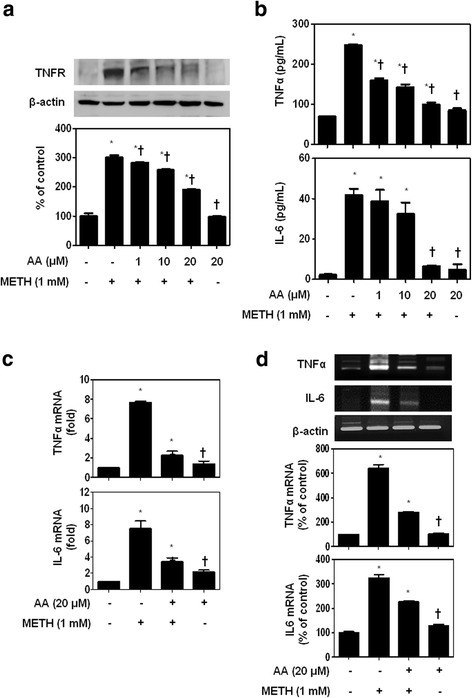
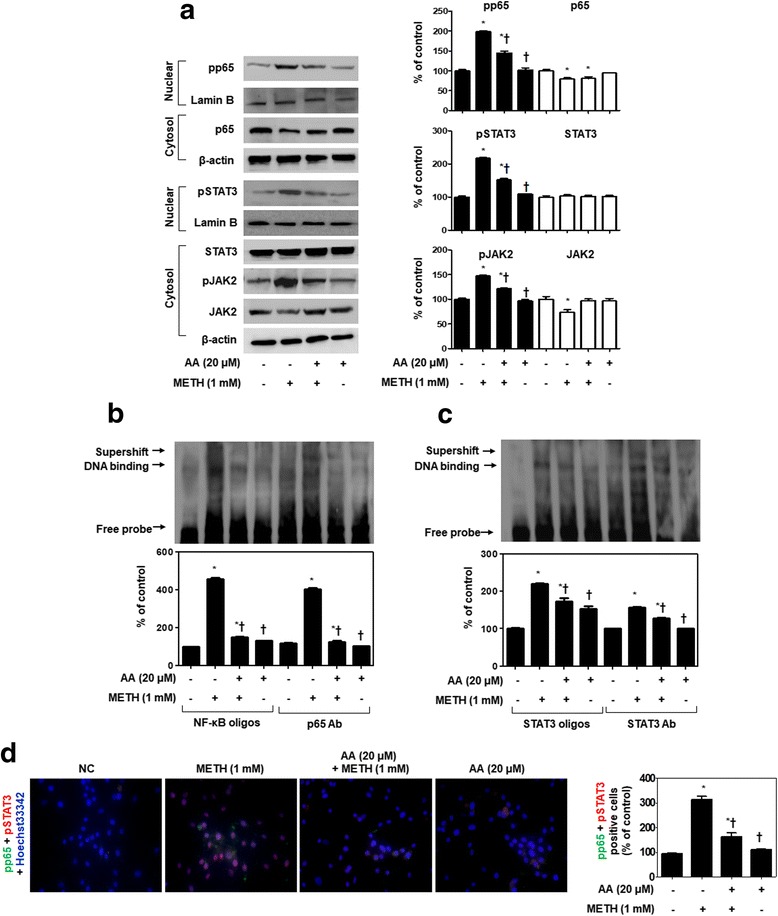
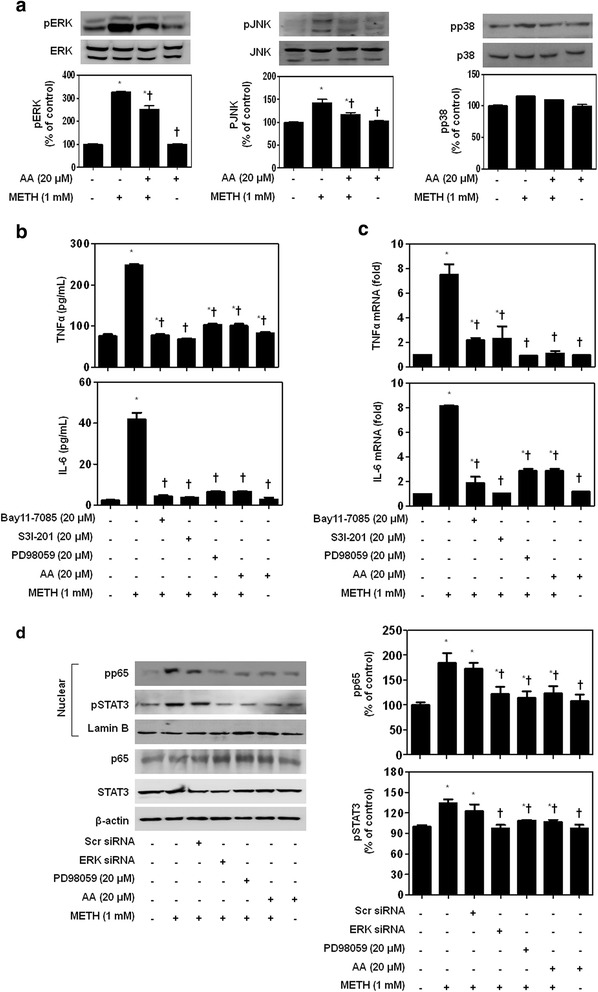
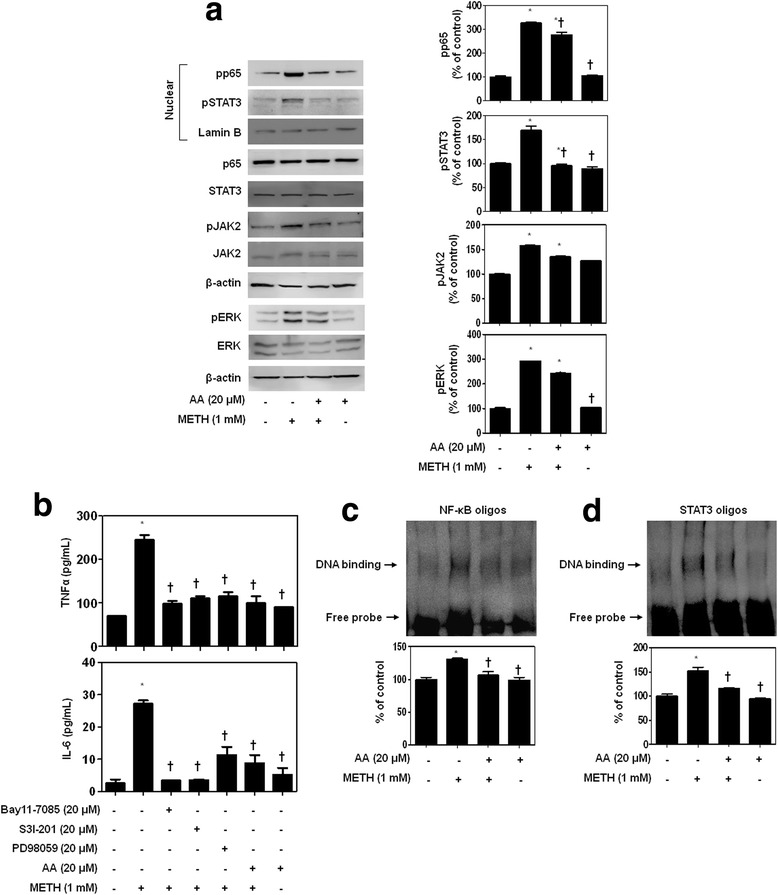
BACKGROUND: Methamphetamine (METH) is a commonly abused drug that may result in neurotoxic effects. Recent studies have suggested that involvement of neuroinflammatory processes in brain dysfunction is induced by misuse of this drug. However, the mechanism underlying METH-induced inflammation and neurotoxicity in neurons is still unclear. In this study, we investigated whether asiatic acid (AA) effected METH-mediated neuroinflammation and neurotoxicity in dopaminergic neuronal cells. And we further determined whether the effect involved in the nuclear factor kappa-light-chain-enhancer of activated B cells (NF-κB) and signal transducer and activator of transcription (STAT)3 and extracellular signal-regulated kinase (ERK) pathway. METHODS: We used the human dopaminergic neuroblastoma SH-SY5Y cell line, murine microglial BV2 cell line, and primary culture of rat embryo mesencephalic neurons. Pro-inflammatory cytokine production was monitored by ELISA and RT/real-time PCR. The cell cycle distribution and mitochondrial membrane integrity was analyzed by flow cytometry. We used immunoblotting, DNA-binding activity, and immunofluorescence staining to analyze the effect of AA on activation of the NF-κB, STAT3, MAPK-ERK, and apoptosis signaling pathways. RESULTS: METH induced TNF receptor (TNFR) expression and led to morphological changes of cells. Additionally, this drug increased pro-inflammatory cytokine (TNFα and IL-6) expression. AA significantly suppressed METH-induced TNFR expression in concentration dependent. Increased secretion of TNFα and IL-6 was inhibited in METH-stimulated neuronal cells by AA administration. AA showed significant protection against METH-induced translocation of NF-κB/STAT3 and ERK phosphorylation. AA inhibited METH-induced proteolytic fragmentation of caspase-3 and PARP. The pro-apoptotic protein Bax was significantly decreased, while the anti-apoptotic protein Bcl-xL was increased by AA treatment in METH-stimulated cells. A similar protective effect of AA on mitochondrial membrane integrity was also confirmed by flow cytometry and immunofluorescence staining. CONCLUSIONS: Based on the literatures and our findings, AA is a promising candidate for an anti-neurotoxic agent, and it can potentially be used for the prevention and treatment of various neurological disorders.
Overview
The claims and statistics of this paper haven’t been checked yet.
Run the check — free, no account needed. It reads the open-access text and checks the sources it cites.
Integrity signals
Registry
Cites
Statistics
Figures
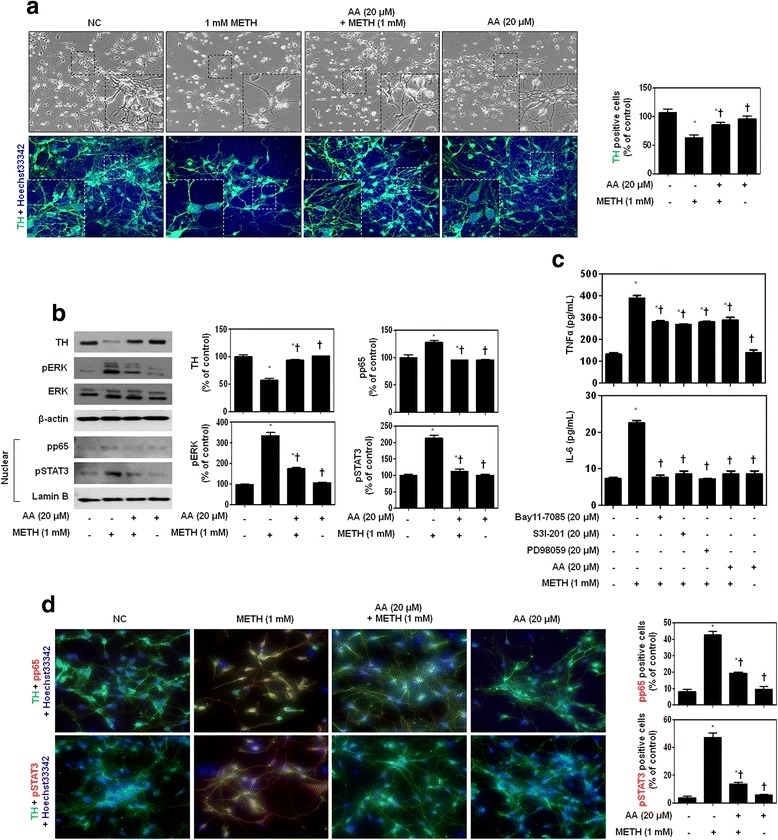
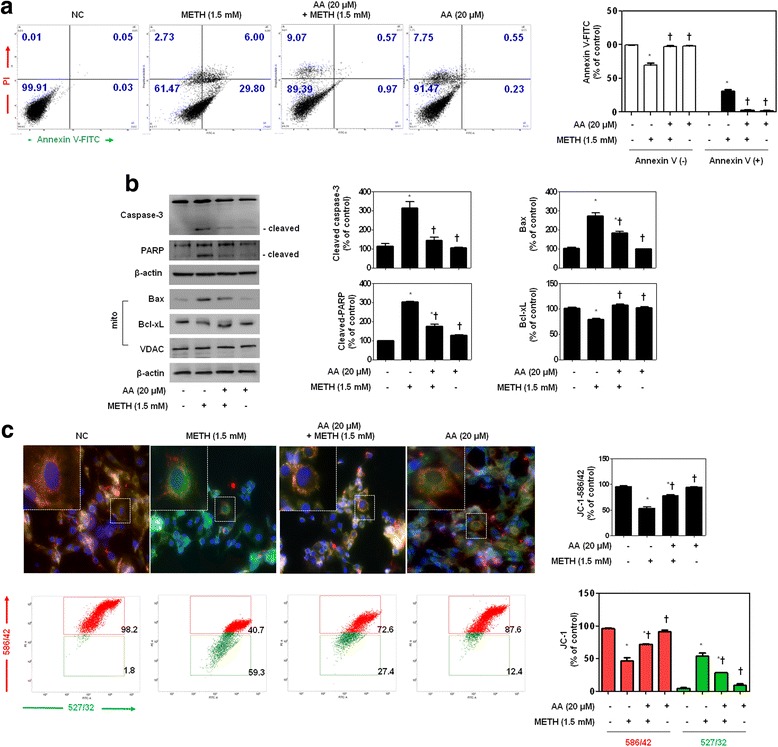
Verification
Claims the paper makes
The claims and statistics of this paper haven’t been checked yet.
Run the check — free, no account needed. It reads the open-access text and checks the sources it cites.
Claims other papers make about this one
Each is checked against this paper’s own text: does it say what the citing paper says it does?
In the citing paper
“Previously, in vitro studies have shown that both CAW whole extract and isolated compounds (detailed in a review [32]) facilitate neurite outgrowth [6,28,106], and elicit neuroprotection [107,108,109,110,111].”
From Centella Asiatica Improves Memory and Promotes Antioxidative Signaling in 5XFAD Mice (2019) · cites this paper as [108]
Self-check
Percentages, sums and reported differences re-computed from the paper’s own numbers.
The self-check needs the paper’s full text.
Citations
Cites
1 retracted
Tsao, S., & Yin, M.-C. (2015) · Journal of Agricultural and Food Chemistry · doi:10.1021/acs.jafc.5b00102 · Cited by 56
RetractedThe pro- and anti-inflammatory properties of the cytokine interleukin-6
Scheller, J., Chalaris, A., Schmidt-Arras, D., & Rose-John, S. (2011) · Biochimica et Biophysica Acta (BBA) - Molecular Cell Research · doi:10.1016/j.bbamcr.2011.01.034 · Cited by 3,212
Molecular basis of long-term plasticity underlying addiction
Nestler, E. J. (2001) · Nature reviews. Neuroscience · doi:10.1038/35053570 · Cited by 1,893
TNF and MAP kinase signalling pathways
Sabio, G., & Davis, R. J. (2014) · Seminars in Immunology · doi:10.1016/j.smim.2014.02.009 · Cited by 738
Neuropeptides and Microglial Activation in Inflammation, Pain, and Neurodegenerative Diseases
Carniglia, L., Ramírez, D., Durand, D., Saba, J., Turati, J., Caruso, C. M., Scimonelli, T. N., & Lasaga, M. (2017) · Mediators of Inflammation · doi:10.1155/2017/5048616 · Cited by 239
Annexin A1: A Central Player in the Anti-Inflammatory and Neuroprotective Role of Microglia
McArthur, S., Cristante, E., Paterno, M., Christian, H., Roncaroli, F., Gillies, G. E., & Solito, E. (2010) · The Journal of Immunology · doi:10.4049/jimmunol.1001095 · Cited by 213
Venkatesan, R., Ji, E., & Kim, S. Y. (2015) · BioMed Research International · doi:10.1155/2015/814068 · Cited by 212
Xu, M.-F., Xiong, Y.-Y., Liu, J.-K., Qian, J.-J., Zhu, L., & Gao, J. (2012) · Acta Pharmacologica Sinica · doi:10.1038/aps.2012.3 · Cited by 156
Krishnamurthy, R. G., Senut, M., Zemke, D., Min, J., Frenkel, M. B., Greenberg, E. J., Yu, S., Ahn, N., Goudreau, J., Kassab, M., et al. (2009) · Journal of Neuroscience Research · doi:10.1002/jnr.22071 · Cited by 155
Gonçalves, J., Baptista, S., Martins, T., Milhazes, N., Borges, F., Ribeiro, C. F., Malva, J. O., & Silva, A. P. (2010) · European Journal of Neuroscience · doi:10.1111/j.1460-9568.2009.07059.x · Cited by 152
Cited by
Sorted by citations
Neurotoxicity of methamphetamine: Main effects and mechanisms
Jayanthi, S., Daiwile, A. P., & Cadet, J. L. (2021) · Experimental Neurology · doi:10.1016/j.expneurol.2021.113795 · Cited by 238
Tian, Z., Ji, X., & Liu, J. (2022) · International Journal of Molecular Sciences · doi:10.3390/ijms23116224 · Cited by 223
Meeran, M. F. N., Goyal, S. N., Suchal, K., Sharma, C., Patil, C. R., & Ojha, S. K. (2018) · Frontiers in Pharmacology · doi:10.3389/fphar.2018.00892 · Cited by 201
Tian, Y., Liu, B., Li, Y., Zhang, Y., Shao, J., Wu, P., Xu, C., Chen, G., & Shi, H. (2022) · Frontiers in Immunology · doi:10.3389/fimmu.2022.839796 · Cited by 143
Paeoniflorin: A neuroprotective monoterpenoid glycoside with promising anti-depressive properties
Wang, X., Feng, S., Wang, Y., Chen, N., Wang, Z., & Zhang, Y. (2021) · Phytomedicine · doi:10.1016/j.phymed.2021.153669 · Cited by 120
Metadata
- Authors
- Park, J.-H., Seo, Y. H., Jang, J.-H., Jeong, C.-H., Lee, S., & Park, B.
- Affiliations
- Keimyung University (KR)
- Corresponding author
- Park, Byoungduck
- Venue
- Journal of Neuroinflammation
- Published
- 2017-12
- Volume
- 14
- Issue
- 1
- Pages
- 240-240
- ISSN
- 1742-2094 (ISSN-L)
- PMC
- PMC5725763
- OpenAlex
- W2771852048
- Cited by
- 175
- References
- 48
- Citations by year
- 2026: 20 · 2025: 30 · 2024: 25 · 2023: 17 · 2022: 23 · 2021: 19 · 2020: 22 · 2019: 9 · 2018: 10
- FWCI
- 5.59
- Type
- journal article
- Language
- en
- Open access
- gold
- doi.org
- Licence
- cc-by
- Locations
- Journal of Neuroinflammation (publishedVersion, cc-by)
- Europe PMC (PubMed Central) (publishedVersion, cc-by)
- PubMed Central (publishedVersion, cc-by)
- PubMed (publishedVersion)
- DOAJ (DOAJ: Directory of Open Access Journals) (submittedVersion, cc-by-sa)
- Funders
- Korea Brain Research Institute
- National Research Foundation (NRF-2016R1A6A1A03011325)
- Korea University
- National Research Foundation of Korea (NRF‐2016R1A6A1A03011325, - 2016R1A6A1A03011325)
- Topics
- Life Sciences › Neuroscience › Neurology › Neuroinflammation and Neurodegeneration Mechanisms
- Life Sciences › Biochemistry, Genetics and Molecular Biology › Cancer Research › NF-κB Signaling Pathways
- Life Sciences › Neuroscience › Biological Psychiatry › Tryptophan and brain disorders
- Keywords
- asiatic acid, methamphetamine, neuroinflammation, neurotoxicity, dopaminergic neurons, NF-κB, STAT3, MAPK/ERK pathway, apoptosis, mitochondrial membrane integrity, TNF receptor, inflammatory cytokines, caspase-3, neuroprotection
- MeSH terms
- Central Nervous System Stimulants, Animals, Cell Line, Humans, Inflammation, Methamphetamine, Mitochondria, Neurons, Signal Transduction, NF-kappa B, Apoptosis, Neuroprotective Agents, Extracellular Signal-Regulated MAP Kinases, STAT3 Transcription Factor, Mice, Rats, Pentacyclic Triterpenes
About these checks
Registry, retraction, Cites and statistics results are computed, not judged, with one exception: a printed reference that no index lists is read once by a model before it counts as a citation error. Claims are extracted by a model and kept only when their quote appears verbatim in the text; each cited source is then checked, with a model’s help, for whether it says what the claim relies on. Those verdicts can be wrong — read the claim’s quote and the cited source before relying on one.
Statistics and arithmetic are recomputed, not judged.
Confidence bands are shown only for fields calibrated on our annotated test set. None is calibrated yet, so no band is shown.
What counts as a claim ›How we measure confidence ›How we check this ›
Are you an author, or do you see a problem with this page? Request a review
