

The DOI matches its Crossref record; 50 of the 50 references it cites were found in a registry or an index.
Elevated circulating TGFβ1 during acute liver failure activates TGFβR2 on cortical neurons and exacerbates neuroinflammation and hepatic encephalopathy in mice
Abstract
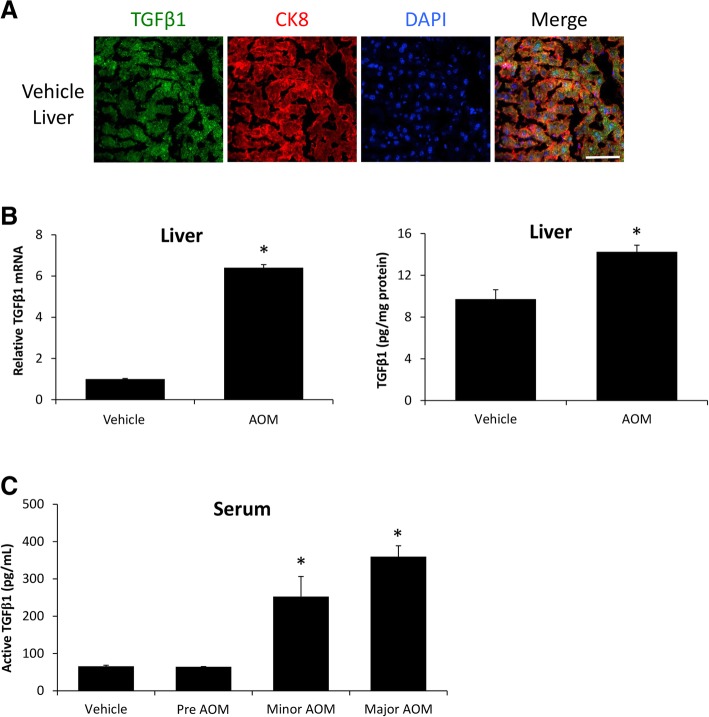
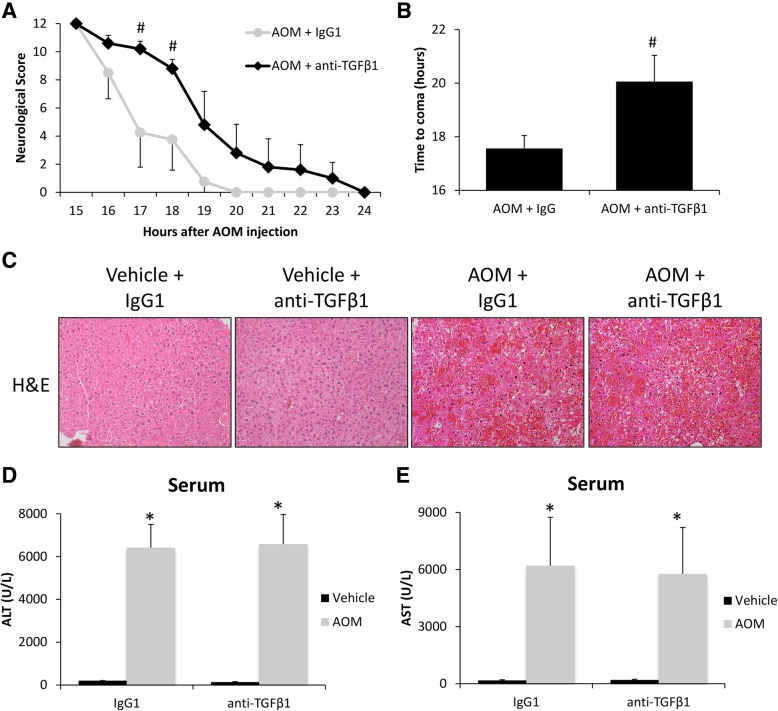
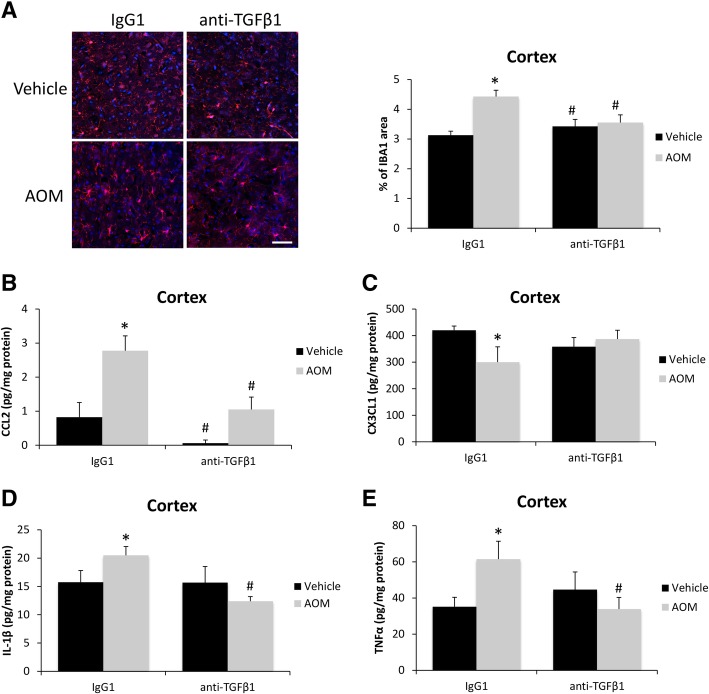
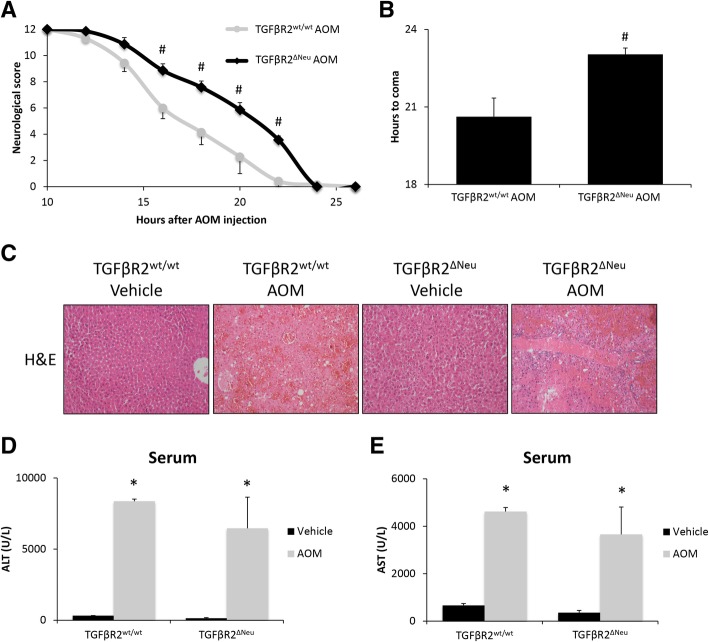
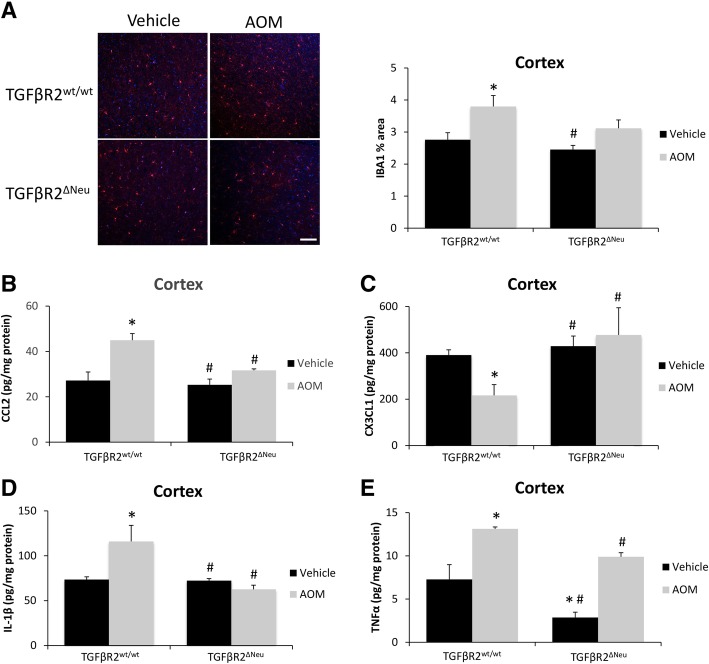
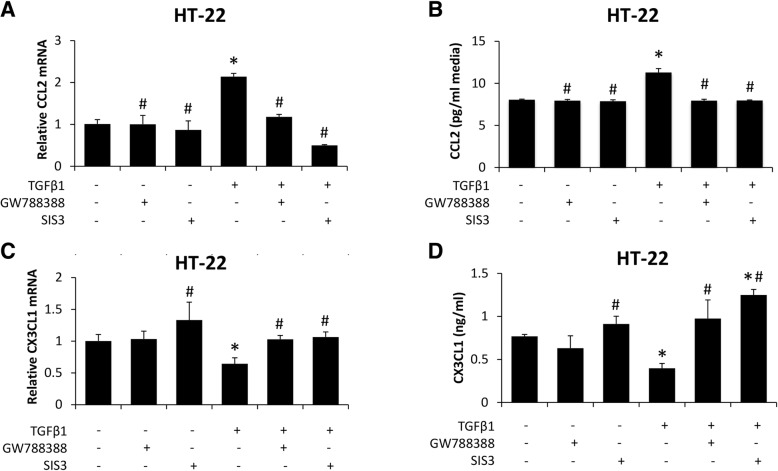
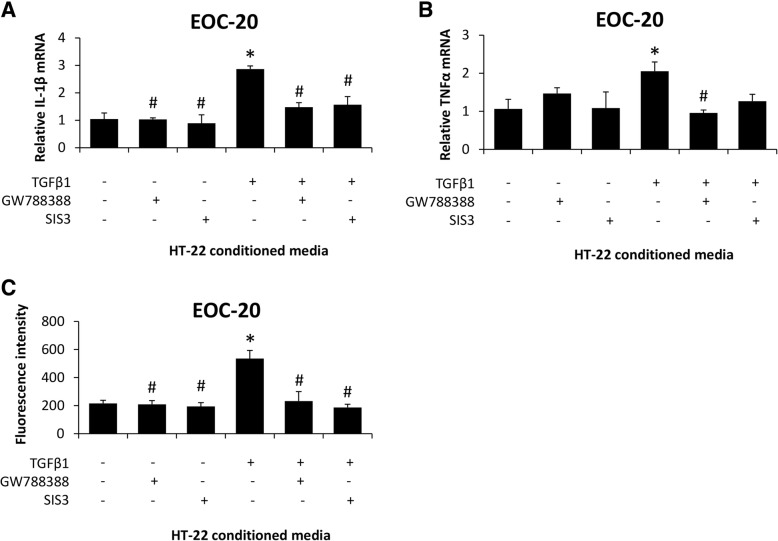
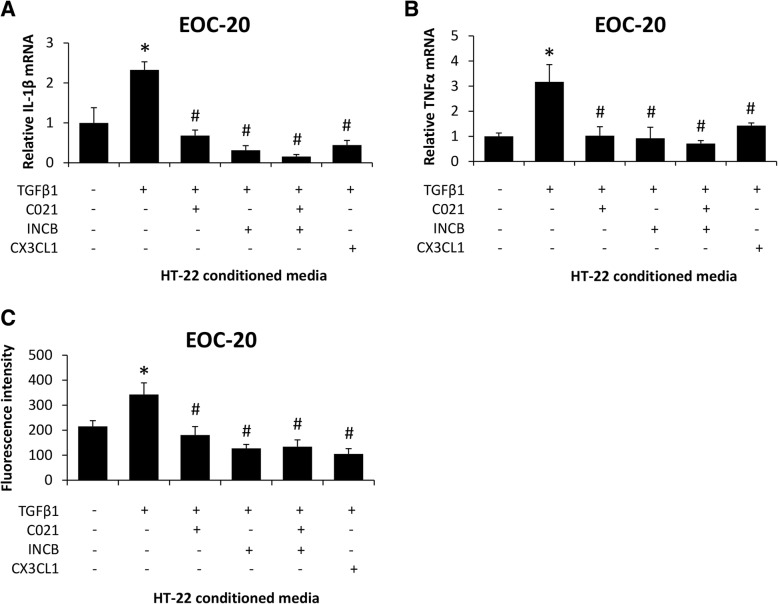
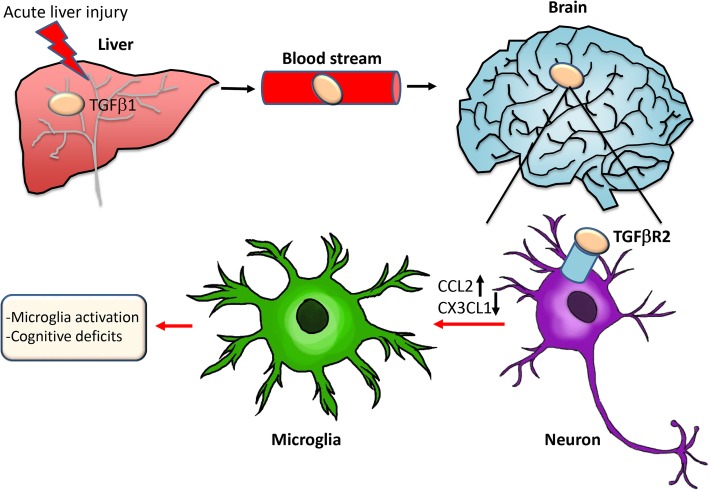
Acute liver failure resulting from drug-induced liver injury can lead to the development of neurological complications called hepatic encephalopathy (HE). Hepatic transforming growth factor beta 1 (TGFβ1) is upregulated due to liver failure in mice and inhibiting circulating TGFβ reduced HE progression. However, the specific contributions of TGFβ1 on brain cell populations and neuroinflammation during HE are not known. Therefore, the aim of this study was to characterize hepatic and brain TGFβ1 signaling during acute liver failure and its contribution to HE progression using a combination of pharmacological and genetic approaches. C57Bl/6 or neuron-specific transforming growth factor beta receptor 2 (TGFβR2) null mice (TGFβR2 ΔNeu ) were treated with azoxymethane (AOM) to induce acute liver failure and HE. The activity of circulating TGFβ1 was inhibited in C57Bl/6 mice via injection of a neutralizing antibody against TGFβ1 (anti-TGFβ1) prior to AOM injection. In all mouse treatment groups, liver damage, neuroinflammation, and neurological deficits were assessed. Inflammatory signaling between neurons and microglia were investigated in in vitro studies through the use of pharmacological inhibitors of TGFβ1 signaling in HT-22 and EOC-20 cells. TGFβ1 was expressed and upregulated in the liver following AOM injection. Pharmacological inhibition of TGFβ1 after AOM injection attenuated neurological decline, microglia activation, and neuroinflammation with no significant changes in liver damage. TGFβR2 ΔNeu mice administered AOM showed no effect on liver pathology but significantly reduced neurological decline compared to control mice. Microglia activation and neuroinflammation were attenuated in mice with pharmacological inhibition of TGFβ1 or in TGFβR2 ΔNeu mice. TGFβ1 increased chemokine ligand 2 (CCL2) and decreased C-X3-C motif ligand 1 (CX3CL1) expression in HT-22 cells and reduced interleukin-1 beta (IL-1ß) expression, tumor necrosis factor alpha (TNFα) expression, and phagocytosis activity in EOC-20 cells. Increased circulating TGFβ1 following acute liver failure results in activation of neuronal TGFβR2 signaling, driving neuroinflammation and neurological decline during AOM-induced HE.
Overview
The claims and statistics of this paper haven’t been checked yet.
Run the check — free, no account needed. It reads the open-access text and checks the sources it cites.
Integrity signals
Registry
Cites
Statistics
Figures
Verification
Claims the paper makes
The claims and statistics of this paper haven’t been checked yet.
Run the check — free, no account needed. It reads the open-access text and checks the sources it cites.
Claims other papers make about this one
Each is checked against this paper’s own text: does it say what the citing paper says it does?
The source backs part of the claim, not all of it — or backs it for a different population, condition or comparison.
In the citing paper
“and this conjugation kept microglia “quiescent” [53, 54].”
From CX3CL1/CX3CR1 axis attenuates early brain injury via promoting the delivery of exosomal microRNA-124 from neuron to microglia after subarachnoid hemorrhage (2020) · cites this paper as [54]
Experimental — accuracy not yet measured
Self-check
Percentages, sums and reported differences re-computed from the paper’s own numbers.
The self-check needs the paper’s full text.
Citations
Cites
Analysis of Relative Gene Expression Data Using Real-Time Quantitative PCR and the 2−ΔΔCT Method
Livak, K. J., & Schmittgen, T. D. (2001) · Methods · doi:10.1006/meth.2001.1262 · Cited by 180,860
Mutation of the mouse klotho gene leads to a syndrome resembling ageing
Kuro-o, M., Matsumura, Y., Aizawa, H., Kawaguchi, H., Suga, T., Utsugi, T., Ohyama, Y., Kurabayashi, M., Kaname, T., Kume, E., et al. (1997) · Nature · doi:10.1038/36285 · Cited by 3,837
Harrison, J. K., Jiang, Y., Chen, S., Xia, Y., Maciejewski, D., McNamara, R. K., Streit, W. J., Salafranca, M. N., Adhikari, S., Thompson, D. A., et al. (1998) · Proceedings of the National Academy of Sciences · doi:10.1073/pnas.95.18.10896 · Cited by 1,176
Bernal, W., Auzinger, G., Dhawan, A., & Wendon, J. (2010) · The Lancet · doi:10.1016/s0140-6736(10)60274-7 · Cited by 996
A Role for 12-lipoxygenase in Nerve Cell Death Caused by Glutathione Depletion
Li, Y., Maher, P., & Schubert, D. (1997) · Neuron · doi:10.1016/s0896-6273(00)80953-8 · Cited by 514
Human Astrocytes: Secretome Profiles of Cytokines and Chemokines
Choi, S. S., Lee, H. J., Lim, I., Satoh, J.-I., & Kim, S. U. (2014) · PLoS ONE · doi:10.1371/journal.pone.0092325 · Cited by 408
Rodrigo, R., Cauli, O., Gomez–Pinedo, U., Agusti, A., Hernandez–Rabaza, V., Garcia–Verdugo, J., & Felipo, V. (2010) · Gastroenterology · doi:10.1053/j.gastro.2010.03.040 · Cited by 338
Cerebral Ammonia Metabolism in Patients with Severe Liver Disease and Minimal Hepatic Encephalopathy
Lockwood, A. H., Yap, E. W. H., & Wong, W.-H. (1991) · Journal of Cerebral Blood Flow & Metabolism · doi:10.1038/jcbfm.1991.67 · Cited by 330
Hepatic Encephalopathy: An Update of Pathophysiologic Mechanisms
Hazell, A. S., & Butterworth, R. F. (1999) · Proceedings of the Society for Experimental Biology and Medicine · doi:10.1046/j.1525-1373.1999.d01-120.x · Cited by 300
TGF-β1 modulates microglial phenotype and promotes recovery after intracerebral hemorrhage
Taylor, R. A., Chang, C.-F., Goods, B. A., Hammond, M. D., Grory, B. M., Ai, Y., Steinschneider, A. F., Renfroe, S. C., Askenase, M. H., McCullough, L. D., et al. (2016) · Journal of Clinical Investigation · doi:10.1172/jci88647 · Cited by 274
Drug-Induced Liver Disorders: Implications for Drug Development and Regulation
Kaplowitz, N. (2001) · Drug Safety · doi:10.2165/00002018-200124070-00001 · Cited by 260
Hepatic encephalopathy: A central neuroinflammatory disorder?
Butterworth, R. F. (2011) · Hepatology · doi:10.1002/hep.24228 · Cited by 223
Li, J. J., Wang, B., Kodali, M. C., Chen, C., Kim, E., Patters, B. J., Lan, L.-B., Kumar, S., Wang, X., Yue, J., et al. (2018) · Journal of Neuroinflammation · doi:10.1186/s12974-017-1038-8 · Cited by 215
Wan, M., Li, C., Zhen, G., Jiao, K., He, W., Jia, X., Wang, W., Shi, C., Xing, Q., Chen, Y.-F., et al. (2012) · Stem Cells · doi:10.1002/stem.1208 · Cited by 143
Balzano, T., Dadsetan, S., Forteza, J., Cabrera‐Pastor, A., Taoro‐González, L., Malaguarnera, M., Gil‐Perotín, S., Cubas-Núñez, L., Casanova, B., Castro-Quintas, Á., et al. (2019) · Journal of Hepatology · doi:10.1016/j.jhep.2019.01.008 · Cited by 134
TGR 5 signaling reduces neuroinflammation during hepatic encephalopathy
McMillin, M., Frampton, G. A., Tobin, R. P., Dusio, G. F., Smith, J., Shin, H. D., Newell‐Rogers, K., Grant, S. M., & DeMorrow, S. (2015) · Journal of Neurochemistry · doi:10.1111/jnc.13243 · Cited by 132
Self-citationLeu, J. I.-J., Crissey, M. A. S., & Taub, R. A. (2003) · Journal of Clinical Investigation · doi:10.1172/jci16712 · Cited by 129
McMillin, M., Frampton, G. A., Seiwell, A. P., Patel, N. S., Jacobs, A., & DeMorrow, S. (2015) · Laboratory Investigation · doi:10.1038/labinvest.2015.70 · Cited by 117
Self-citationMcMillin, M., Frampton, G. A., Grant, S. M., Khan, S. H., Diocares, J., Petrescu, A. D., Wyatt, A., Kain, J., Jefferson, B., & DeMorrow, S. (2017) · Frontiers in Cellular Neuroscience · doi:10.3389/fncel.2017.00191 · Cited by 112
Self-citationFrampton, G. A., Invernizzi, P., Bernuzzi, F., Pae, H. Y., Quinn, M. A., Horvat, D., Galindo, C., Huang, L., McMillin, M., Cooper, B., et al. (2011) · Gut · doi:10.1136/gutjnl-2011-300643 · Cited by 110
Self-citationBile Acid Signaling Is Involved in the Neurological Decline in a Murine Model of Acute Liver Failure
McMillin, M., Frampton, G. A., Quinn, M. A., Ashfaq, S., Santos, M. D. L., Grant, S. M., & DeMorrow, S. (2015) · American Journal Of Pathology · doi:10.1016/j.ajpath.2015.10.005 · Cited by 110
Self-citationMatkowskyj, K. A., Marrero, J. A., Carroll, R. E., Danilkovich, A. V., Green, R. M., & Benya, R. V. (1999) · American Journal of Physiology-Gastrointestinal and Liver Physiology · doi:10.1152/ajpgi.1999.277.2.g455 · Cited by 102
Diverse activation of microglia by chemokine (C-C motif) ligand 2 overexpression in brain
Selenica, M. B., Alvarez, J. A., Nash, K. R., Lee, D. C., Cao, C., Lin, X., Reid, P., Mouton, P. R., Morgan, D., & Gordon, M. N. (2013) · Journal of Neuroinflammation · doi:10.1186/1742-2094-10-86 · Cited by 99
Patel, R. K., Prasad, N., Kuwar, R., Haldar, D., & Muneer, P. M. A. (2017) · Brain Behavior and Immunity · doi:10.1016/j.bbi.2017.04.012 · Cited by 98
Schäfer, M., Goodenough, S., Moosmann, B., & Behl, C. (2004) · Brain Research · doi:10.1016/j.brainres.2004.01.037 · Cited by 92
McMillin, M., Frampton, G. A., Thompson, M., Galindo, C., Standeford, H. A., Whittington, E., Alpini, G. D., & DeMorrow, S. (2014) · Journal of Neuroinflammation · doi:10.1186/1742-2094-11-121 · Cited by 84
Self-citationNeurological consequences of systemic inflammation in the premature neonate
Patra, A. P., Huang, H., Bauer, J. A., & Giannone, P. J. (2017) · Neural Regeneration Research · doi:10.4103/1673-5374.208547 · Cited by 76
Exosomal TGF-β1 is correlated with lymphatic metastasis of gastric cancers.
Yen, E.-Y., Miaw, S., Yu, J.-S., & Lai, I. (2017) · Europe PMC (PubMed Central) · Cited by 73
DeMorrow, S., Francis, H., Gaudio, E., Venter, J. K., Franchitto, A., Kopriva, S. E., Onori, P., Mancinelli, R., Frampton, G. A., Coufal, M., et al. (2008) · American Journal of Physiology-Gastrointestinal and Liver Physiology · doi:10.1152/ajpgi.90455.2008 · Cited by 72
Self-citationNeurobiological characterization of an azoxymethane mouse model of acute liver failure
Bélanger, M., Côté, J., & Butterworth, R. F. (2006) · Neurochemistry International · doi:10.1016/j.neuint.2005.11.022 · Cited by 66
Huang, W.-C., Yen, F.-C., Shie, F., Pan, C., Shiao, Y.-J., Yang, C.-N., Huang, F.-L., Sung, Y. J., & Tsay, H. J. (2010) · Journal of Neuroinflammation · doi:10.1186/1742-2094-7-28 · Cited by 65
Chastre, A., Bélanger, M., Nguyen, B., & Butterworth, R. F. (2013) · Liver International · doi:10.1111/liv.12252 · Cited by 62
Cobb, D. A., Kim, O., Golden‐Mason, L., Rosen, H. R., & Hahn, Y. S. (2017) · Hepatology · doi:10.1002/hep.29409 · Cited by 61
Zhang, L., Tan, J., Jiang, X., Qian, W., Yang, T., Sun, X., Chen, Z., & Zhu, Q. (2017) · Biological Research · doi:10.1186/s40659-017-0130-y · Cited by 57
Miwa, Y., Harrison, P., Farzaneh, F., Langley, P. G., Williams, R. L., & Hughes, R. D. (1997) · Journal of Hepatology · doi:10.1016/s0168-8278(97)80313-3 · Cited by 46
Grant, S. M., McMillin, M., Frampton, G. A., Petrescu, A. D., Williams, E., Jaeger, V., Kain, J., & DeMorrow, S. (2018) · Gene Expression · doi:10.3727/105221618x15287315176503 · Cited by 42
Self-citationBrain Transforming Growth Factor-β Resists Hypertension Via Regulating Microglial Activation
Li, Y., Shen, X. Z., Li, L., Zhao, T. V., Bernstein, K. E., Johnson, A. K., Lyden, P. D., Fang, J., & Shi, P. D. (2017) · Stroke · doi:10.1161/strokeaha.117.017370 · Cited by 41
Falck, M., Osredkar, D., Wood, T. R., Maes, E., Flatebø, T., Sabir, H., & Thoresen, M. (2017) · Neonatology · doi:10.1159/000481980 · Cited by 37
Fractalkine suppression during hepatic encephalopathy promotes neuroinflammation in mice
McMillin, M., Grant, S. M., Frampton, G. A., Andry, S., Brown, A., & DeMorrow, S. (2016) · Journal of Neuroinflammation · doi:10.1186/s12974-016-0674-8 · Cited by 36
Self-citationMcMillin, M., Galindo, C., Pae, H. Y., Frampton, G. A., Patre, P. L. D., Quinn, M. A., Whittington, E., & DeMorrow, S. (2014) · Journal of Hepatology · doi:10.1016/j.jhep.2014.07.015 · Cited by 30
Self-citationLively, S. S., Lam, D., Wong, R., & Schlichter, L. C. (2018) · Frontiers in Cellular Neuroscience · doi:10.3389/fncel.2018.00115 · Cited by 29
Mutoh, H., Sashikawa, M., Hayakawa, H., & Sugano, K. (2010) · Cancer Science · doi:10.1111/j.1349-7006.2010.01609.x · Cited by 22
Animal models of neuroinflammation secondary to acute insults originated outside the brain
Hamasaki, M. Y., Machado, M. C. C., & da Silva, F. P. (2017) · Journal of Neuroscience Research · doi:10.1002/jnr.24184 · Cited by 21
Hyperammonaemia and associated factors in unprovoked convulsive seizures: A cross-sectional study
Sato, K., Arai, N., Omori, A., Hida, A., Kimura, A., & Takeuchi, S. (2016) · Seizure · doi:10.1016/j.seizure.2016.09.015 · Cited by 19
Popek, M. P., Bobula, B., Sowa, J. E., Hess, G., Polowy, R., Filipkowski, R. K., Frontczak‐Baniewicz, M., Zabłocka, B., Albrecht, J., & Zielińska, M. (2017) · Molecular Neurobiology · doi:10.1007/s12035-016-0367-4 · Cited by 13
Nozato, E., Shiraishi, M., & Nishimaki, T. (2003) · Journal of Surgical Research · doi:10.1016/s0022-4804(03)00316-0 · Cited by 10
Acute liver failure is associated with altered cerebral expression profiles of long non-coding RNAs
Silva, V. R., Secolin, R., Vemuganti, R., Lopes‐Cendes, Í., & Hazell, A. S. (2017) · Neuroscience Letters · doi:10.1016/j.neulet.2017.06.038 · Cited by 10
Fang, D., He, Y., & Luan, Z. (2017) · Experimental and Therapeutic Medicine · doi:10.3892/etm.2017.5156 · Cited by 9
Nozato, E., Shiraishi, M., Takushi, Y., Toyoda, A., & Nishimaki, T. (2003) · Gastroenterology · doi:10.1016/s0016-5085(03)83821-0 · Cited by 3
Research works printed but not linked: 1
- McMillin M, Galindo C, Pae HY, Frampton G, Di Patre P, Quinn M, et al. Gli1 activation and protection against hepatic encephalopathy is suppressed by circulating transforming growth factor β1 in mice. J Hepatol. 2014;61(6):1260–6. · DOI
Cited by
Chen, X., Jiang, M., Li, H., Wang, Y., Shen, H., Li, X., Zhang, Y., Wu, J., Yu, Z., & Chen, G. (2020) · Journal of Neuroinflammation · doi:10.1186/s12974-020-01882-6 · Cited by 85
Metadata
- Authors
- McMillin, M., Grant, S., Frampton, G., Petrescu, A. D., Williams, E., Jefferson, B., Thomas, A., Brahmaroutu, A., & DeMorrow, S.
- ORCID
- DeMorrow, Sharon
- Venue
- Journal of Neuroinflammation
- Published
- 2019-04-02
- Volume
- 16
- Issue
- 1
- ISSN
- 1742-2094
- PMC
- PMC6446280
- Cited by
- 29
- References
- 50
- Language
- en
- Licence
- creativecommons.org/licenses/by/4.0/ (tdm)
- creativecommons.org/licenses/by/4.0/ (vor)
- Funders
- National Institute of Diabetes and Digestive and Kidney Diseases (DK082435, DK112803)
- U.S. Department of Veterans Affairs (BX002638, BX003486)
About these checks
Registry, retraction, Cites and statistics results are computed, not judged, with one exception: a printed reference that no index lists is read once by a model before it counts as a citation error. Claims are extracted by a model and kept only when their quote appears verbatim in the text; each cited source is then checked, with a model’s help, for whether it says what the claim relies on. Those verdicts can be wrong — read the claim’s quote and the cited source before relying on one.
Statistics and arithmetic are recomputed, not judged.
Confidence bands are shown only for fields calibrated on our annotated test set. None is calibrated yet, so no band is shown.
What counts as a claim ›How we measure confidence ›How we check this ›
Are you an author, or do you see a problem with this page? Request a review
Data sources
Bibliographic data: Semantic Scholar, OpenAlex, Crossref.
Contains information from the Semantic Scholar Academic Graph Datasets, made available under the ODC Attribution License (ODC-BY 1.0).
Semantic Scholar’s data is described in: Kinney, R., et al. (2023). The Semantic Scholar Open Data Platform. arXiv:2301.10140.
