

RETRACTED ARTICLE: Neuroinflammation is associated with infiltration of T cells in Lewy body disease and α-synuclein transgenic models
Open accessPublished version of a preprint
The DOI matches its Crossref record; 94 of the 94 references it cites were found in a registry or an index.
Abstract
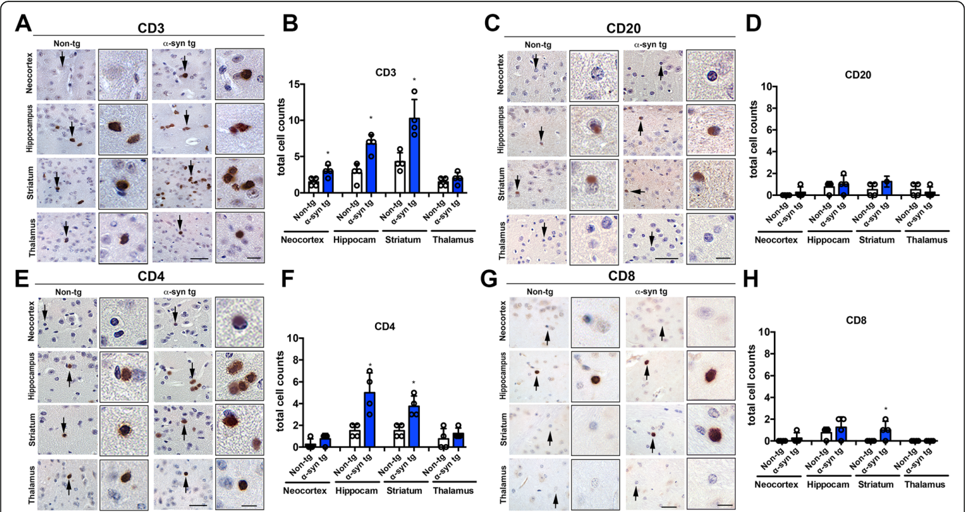
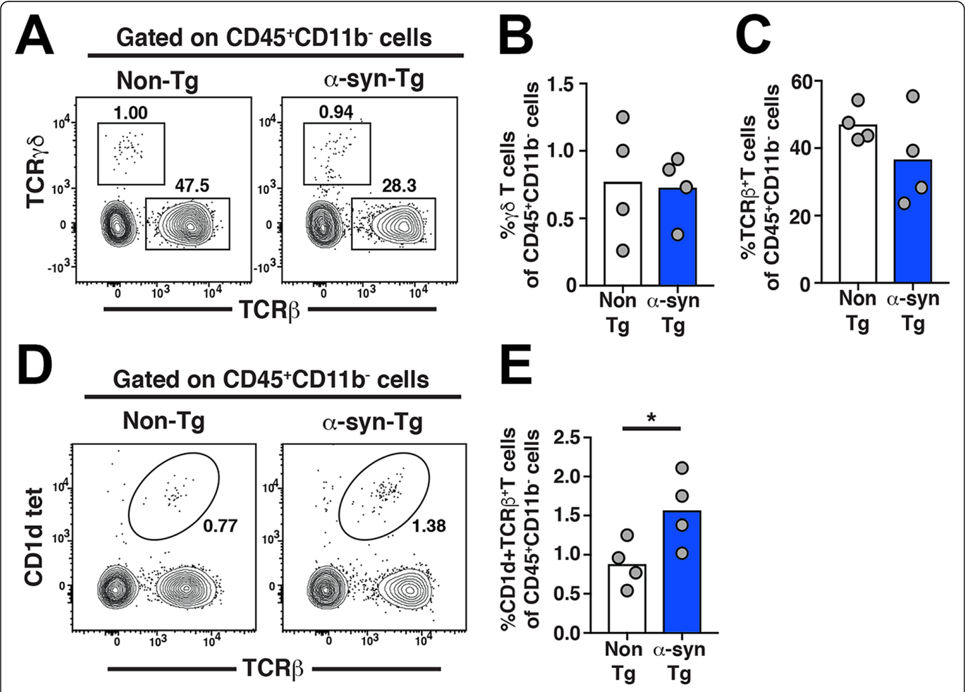
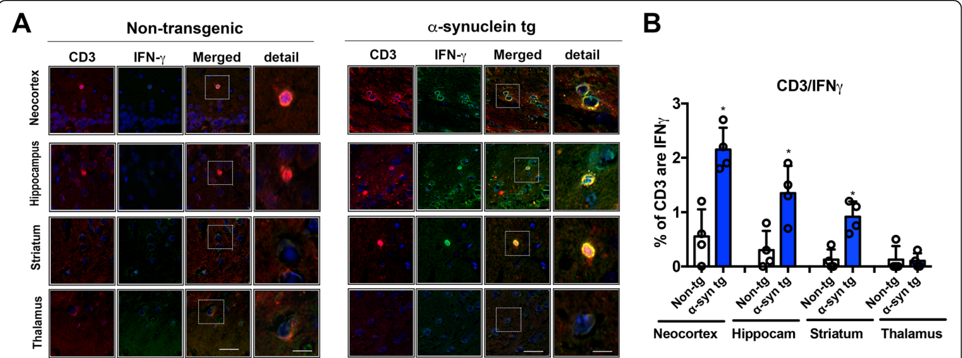
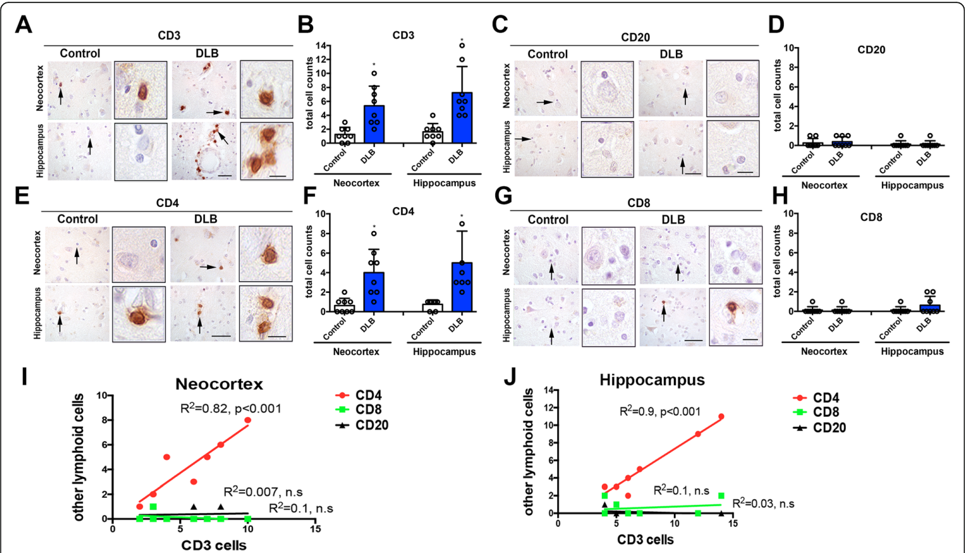
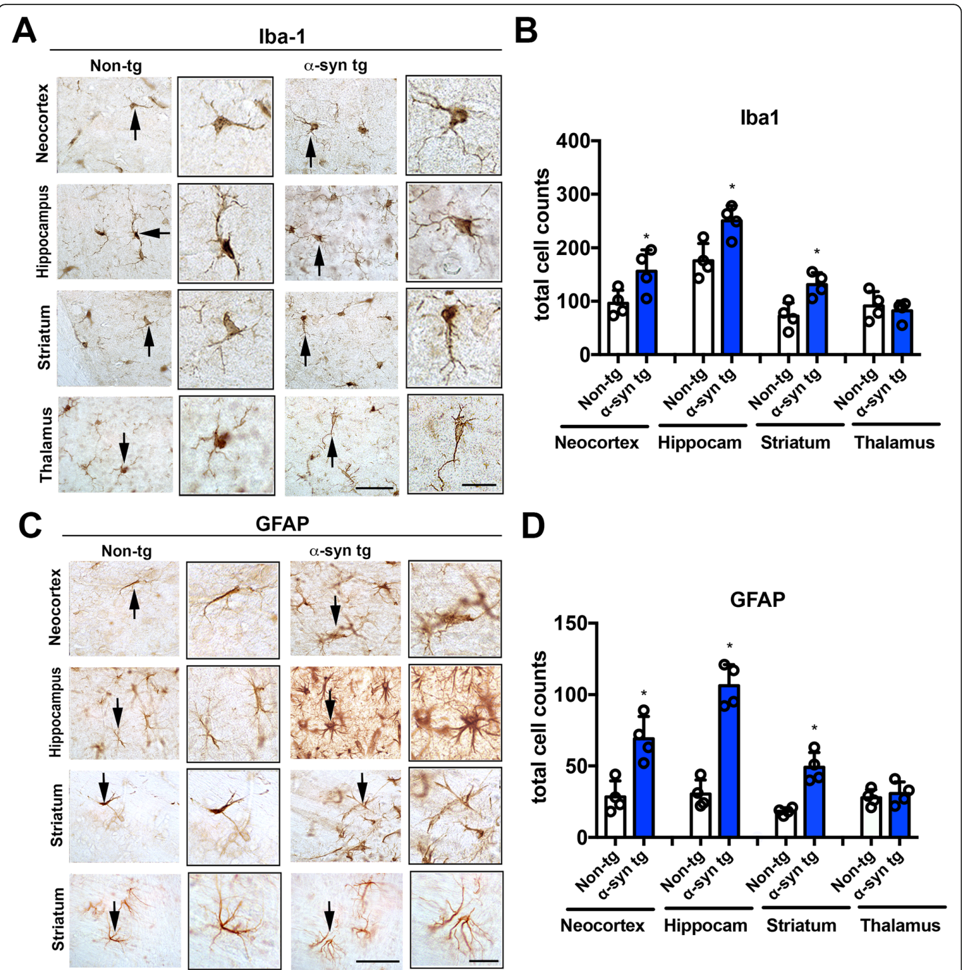
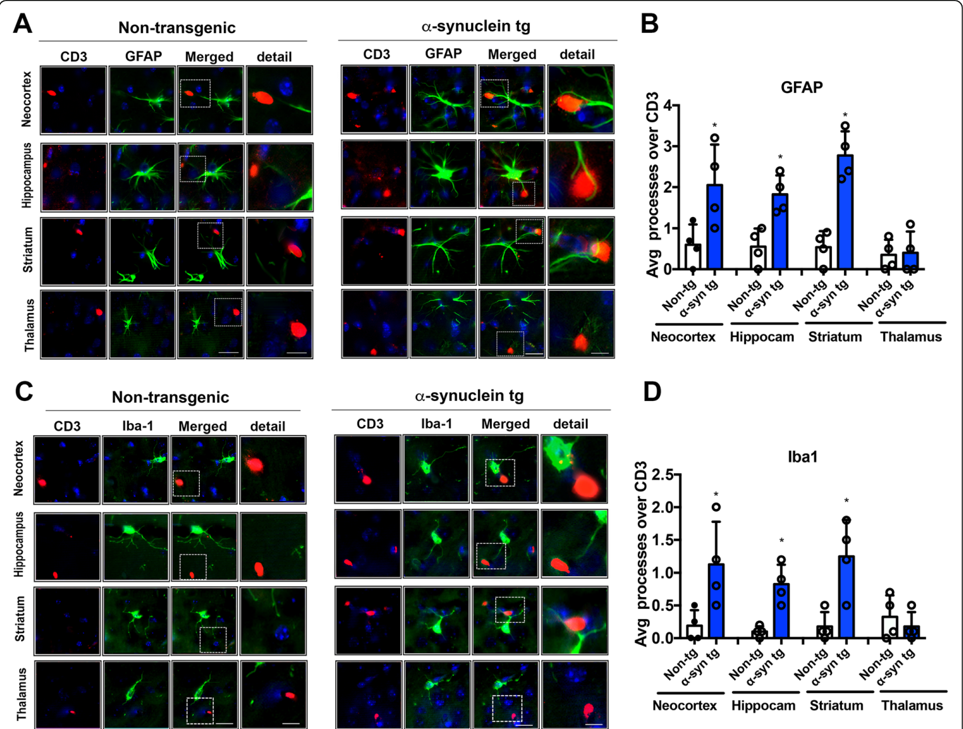
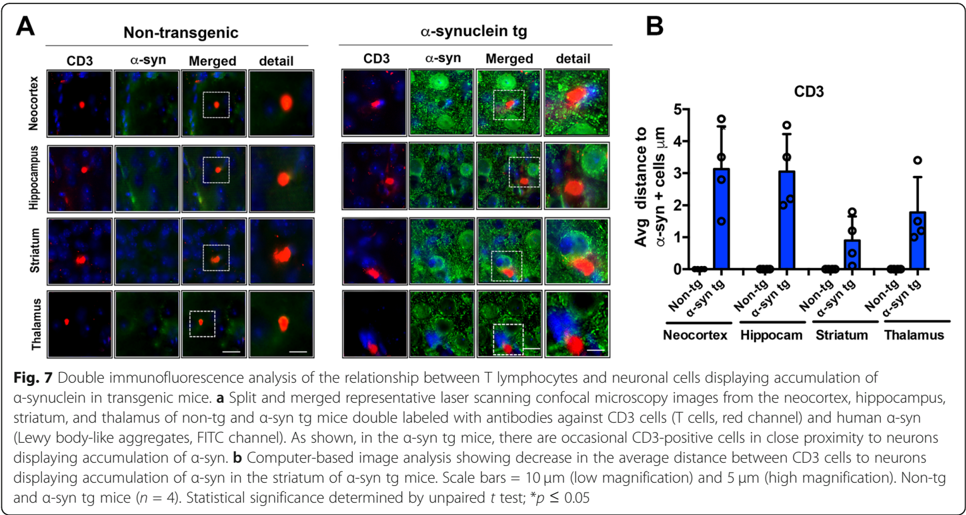
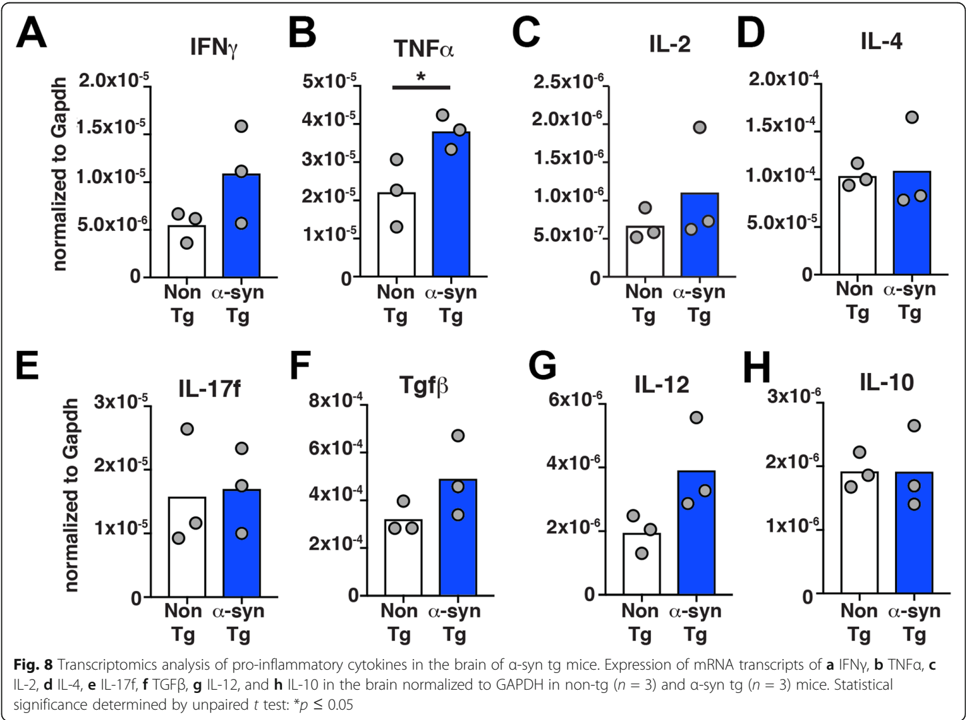
Background: α-Synuclein (α-syn) is a pre-synaptic protein which progressively accumulates in neuronal and non-neuronal cells in neurodegenerative diseases such as Parkinson’s disease (PD), dementia with Lewy bodies (DLB), and multiple system atrophy. Recent evidence suggests that aberrant immune activation may be involved in neurodegeneration in PD/DLB. While previous studies have often focused on the microglial responses, less is known about the role of the peripheral immune system in these disorders. Methods: To understand the involvement of the peripheral immune system in PD/DLB, we evaluated T cell populations in the brains of α-syn transgenic (tg) mice (e.g., Thy1 promoter line 61) and DLB patients. Results: Immunohistochemical analysis showed perivascular and parenchymal infiltration by CD3+/CD4+ helper T cells, but not cytotoxic T cells (CD3+/CD8+) or B cells (CD20+), in the neocortex, hippocampus, and striatum of α-syn tg mice. CD3+ cells were found in close proximity to the processes of activated astroglia, particularly in areas of the brain with significant astrogliosis, microgliosis, and expression of pro-inflammatory cytokines. In addition, a subset of CD3+ cells co-expressed interferon γ. Flow cytometric analysis of immune cells in the brains of α-syn tg mice revealed that CD1d-tet+ T cells were also increased in the brains of α-syn tg mice suggestive of natural killer T cells. In post-mortem DLB brains, we similarly detected increased numbers of infiltrating CD3+/CD4+ T cells in close proximity with blood vessels. Conclusion: These results suggest that infiltrating adaptive immune cells play an important role in neuroinflammation and neurodegeneration in synucleinopathies and that modulating peripheral T cells may be a viable therapeutic strategy for PD/DLB.
Overview
The claims and statistics of this paper haven’t been checked yet.
Free: it reads the open-access text and checks the first 5 claims that cite a source we can check. Create a free account to check every claim.
Integrity signals
Registry
Cites
Statistics
Figures
Verification
Claims the paper makes
The claims and statistics of this paper haven’t been checked yet.
Free: it reads the open-access text and checks the first 5 claims that cite a source we can check. Create a free account to check every claim.
Claims other papers make about this one
Each is checked against this paper’s own text: does it say what the citing paper says it does?
The cited source says what the claim attributes to it.
In the citing paper
“In an a-synuclein transgenic mouse model, infiltration of CD3 + /CD4 + helper T (Th) cells was increased in the brain (in close proximity to astrocytes and microglia) and this was accompanied by glial activation and enhanced expression of tumour necrosis factor (TNF) genes.88”
From The role of gut dysbiosis in Parkinson’s disease: mechanistic insights and therapeutic options (2021) · cites this paper as [88]
The cited source says what the claim attributes to it.
In the citing paper
“This suggests that infiltrating peripheral adaptive immune cells are involved in activating resident immune cells in the brain, thus enhancing neuroinflammation.88”
From The role of gut dysbiosis in Parkinson’s disease: mechanistic insights and therapeutic options (2021) · cites this paper as [88]
Self-check
Percentages, sums and reported differences re-computed from the paper’s own numbers.
The self-check needs the paper’s full text.
Citations
Cites
Diagnosis and management of dementia with Lewy bodies: Fourth consensus report of the DLB Consortium
McKeith, I. G., Boeve, B. F., Dickson, D. W., Halliday, G., Taylor, J.-P., Weintraub, D., Aarsland, D., Galvin, J., Attems, J., Ballard, C. G., et al. (2017) · Neurology · doi:10.1212/wnl.0000000000004058 · Cited by 4,476 · cited 2×
“This heterogeneous group of disorders includes Parkinson ’ s disease (PD), dementia with Lewy bodies (DLB), and multiple system atrophy (MSA) [6, 7].”
Self-citationBendelac, A., Savage, P. B., & Teyton, L. (2007) · Annual Review of Immunology · doi:10.1146/annurev.immunol.25.022106.141711 · Cited by 2,155 · cited 1×
“As with the mouse”
The many faces of α-synuclein: from structure and toxicity to therapeutic target
Lashuel, H. A., Overk, C. R., Oueslati, A., & Masliah, E. (2013) · Nature Reviews Neuroscience · doi:10.1038/nrn3406 · Cited by 1,622
Self-citationInclusion formation and neuronal cell death through neuron-to-neuron transmission of α-synuclein
Desplats, P., Lee, H.-J., Bae, E.-J., Patrick, C., Rockenstein, E., Crews, L., Spencer, B., Masliah, E., & Lee, S.-J. (2009) · Proceedings of the National Academy of Sciences · doi:10.1073/pnas.0903691106 · Cited by 1,485 · cited 1×
“shown that under pathological conditions, α -syn aggregates are released into the extracellular space [21, 86 – 88], where they can potentially activate T cells.”
Self-citationIwai, A., Masliah, E., Yoshimoto, M., Ge, N., Flanagan, L., Rohan de Silva, H. A., Kittel, A., & Saitoh, T. (1995) · Neuron · doi:10.1016/0896-6273(95)90302-x · Cited by 1,316 · cited 1×
“α-syn is primarily a pre-synaptic protein [30] and involved in endosomal formation and vesicle release at the synapse [31–33].”
Self-citationBrochard, V., Combadière, B., Prigent, A., Laouar, Y., Perrin, A., Beray-Berthat, V., Bonduelle, O., Alvarez-Fischer, D., Callebert, J., Launay, J.-M., et al. (2008) · Journal of Clinical Investigation · doi:10.1172/jci36470 · Cited by 1,172 · cited 1×
“PD patients have also been shown to have increased T cells infiltration [63, 64].”
Luk, K. C., Kehm, V. M., Zhang, B., O’Brien, P., Trojanowski, J. Q., & Lee, V. M. Y. (2012) · Journal of Experimental Medicine · doi:10.1084/jem.20112457 · Cited by 1,100
α-synuclein toxicity in neurodegeneration: mechanism and therapeutic strategies
Wong, Y. C., & Krainc, D. (2017) · Nature Medicine · doi:10.1038/nm.4269 · Cited by 897
T cells from patients with Parkinson’s disease recognize α-synuclein peptides
Sulzer, D., Alcalay, R. N., Garretti, F., Cote, L., Kanter, E., Agin-Liebes, J., Liong, C., McMurtrey, C., Hildebrand, W. H., Mao, X., et al. (2017) · Nature · doi:10.1038/nature22815 · Cited by 866
Kim, C., Ho, D.-H., Suk, J.-E., You, S., Michael, S., Kang, J., Joong Lee, S., Masliah, E., Hwang, D., Lee, H.-J., et al. (2013) · Nature Communications · doi:10.1038/ncomms2534 · Cited by 856 · cited 3×
“…also been shown to activate microglia and astrocytes via toll-like receptors (TLRs) to produce pro-inflammatory cytokines such as IL-1 β , IL-6, and TNF α [26 – 29]. α -syn is primarily a pre-synaptic protein [30] and involved in endosomal formation and vesicle release at the synapse [31 – 33].”
Self-citation
Research works printed but not linked: 1
- 90. Chesselet MF, Richter F, Zhu C, Magen I, Watson MB, Subramaniam SR. A progressive mouse model of Parkinson's disease: the Thy1-aSyn ("Line 61") mice. Neurotherapeutics. 2012;9:297-314. · DOI · Paper page
Cited by
Items 101–126 of 126
Bérard, M., Martínez-Drudis, L., Sheta, R., El‐Agnaf, O. M. A., & Oueslati, A. (2024) · Figshare · doi:10.6084/m9.figshare.26645830
Bérard, M., Martínez-Drudis, L., Sheta, R., El‐Agnaf, O. M. A., & Oueslati, A. (2024) · Figshare · doi:10.6084/m9.figshare.26645824
Additional file 2 of Neuroinflammation and protein pathology in Parkinson’s disease dementia
Kouli, A., Camacho, M., Allinson, K. S. J., & Williams‐Gray, C. H. (2020) · Figshare · doi:10.6084/m9.figshare.13331727
Iba, M., McDevitt, R. A., Kim, C., Roy, R., Sarantopoulou, D., Tommer, E., Siegars, B., Sallin, M. A., Kwon, S., Sen, J. M., et al. (2022) · Figshare · doi:10.6084/m9.figshare.20967836
Self-citationBérard, M., Martínez-Drudis, L., Sheta, R., El‐Agnaf, O. M. A., & Oueslati, A. (2024) · Figshare · doi:10.6084/m9.figshare.26645818
Bérard, M., Martínez-Drudis, L., Sheta, R., El‐Agnaf, O. M. A., & Oueslati, A. (2023) · Figshare · doi:10.6084/m9.figshare.24647135
Bérard, M., Martínez-Drudis, L., Sheta, R., El‐Agnaf, O. M. A., & Oueslati, A. (2024) · Figshare · doi:10.6084/m9.figshare.26645812
Bérard, M., Martínez-Drudis, L., Sheta, R., El‐Agnaf, O. M. A., & Oueslati, A. (2024) · Figshare · doi:10.6084/m9.figshare.26645821
Additional file 1 of Neuroinflammation and protein pathology in Parkinson’s disease dementia
Kouli, A., Camacho, M., Allinson, K. S. J., & Williams‐Gray, C. H. (2020) · Figshare · doi:10.6084/m9.figshare.13331724
Iba, M., Kwon, S., Kim, C., Szabo, M. P., Horan-Portelance, L., Lopez-Ocasio, M. D., Dagur, P. K., Overk, C., Rissman, R. A., & Masliah, E. (2024) · Figshare · doi:10.6084/m9.figshare.25608801
Self-citationAdditional file 3 of Neuroinflammation and protein pathology in Parkinson’s disease dementia
Kouli, A., Camacho, M., Allinson, K. S. J., & Williams‐Gray, C. H. (2020) · Figshare · doi:10.6084/m9.figshare.13331730
Additional file 4 of Neuroinflammation and protein pathology in Parkinson’s disease dementia
Kouli, A., Camacho, M., Allinson, K. S. J., & Williams‐Gray, C. H. (2020) · Figshare · doi:10.6084/m9.figshare.13331733
Bérard, M., Martínez-Drudis, L., Sheta, R., El‐Agnaf, O. M. A., & Oueslati, A. (2024) · Figshare · doi:10.6084/m9.figshare.24647350
Bérard, M., Martínez-Drudis, L., Sheta, R., El-Agnaf, O. M. A., & Oueslati, A. (2024) · Figshare · doi:10.6084/m9.figshare.26645836
Bérard, M., Martínez-Drudis, L., Sheta, R., El‐Agnaf, O. M. A., & Oueslati, A. (2024) · Figshare · doi:10.6084/m9.figshare.26645815
Bérard, M., Martínez-Drudis, L., Sheta, R., El‐Agnaf, O. M. A., & Oueslati, A. (2024) · Figshare · doi:10.6084/m9.figshare.26645839
Bérard, M., Martínez-Drudis, L., Sheta, R., El‐Agnaf, O. M. A., & Oueslati, A. (2024) · Figshare · doi:10.6084/m9.figshare.26645833
Microbiota effects in a Pink1-/- mouse model of infection-induced Parkinson’s disease
Brouillard-Galipeau, M. (2024) · eScholarship@McGill (McGill) · doi:10.82308/44945
Engineered neuronal exosomes mediate α-synuclein clearance to ameliorate Parkinson’s disease
Chen, L., Lin, X., Fu, M., Chen, S., Yan, Z., Diao, Y., Chen, G., Huang, Z., Sun, Y., Lin, Y. Y., et al. (2026) · Journal of Nanobiotechnology · doi:10.1186/s12951-026-04552-6
“Second, aberrant Lewy body deposition drives the disruption of the cerebral pathological micro-environment [65].”
Preclinical evaluation of nitrated α-synuclein-specific CAR-Treg therapy in Parkinson’s disease
Ugalde, V., Elgueta, D., Espinoza, S., Chovar, O., López, E., Catenaccio, A., Álvarez‐Astudillo, F., Demane, D. F., Sánchez-Guajardo, V., Becker, M. I., et al. (2026) · Cell Reports Medicine · doi:10.1016/j.xcrm.2026.102983
“Both SNCA transgenic mice 45,46 and AAV-α Syn mice 20,47 are valuable animal models of PD that involve the participation of inflammatory T cells infiltrating the brain.”
Role of T cells in Parkinson’s disease
Koops, D., Lehmann, R., Bianchi, F., & van den Bogaart, G. (2026) · BMJ Immunology · doi:10.1136/bmjimm-2026-000039
Cross-species molecular stratification enables T cell receptor diagnosis of Parkinson’s disease
Chen, J., Xia, X., Zhang, Y., Tong, X., Liang, Y., Fan, X., Meng, Q., Wei, Y., & Hu, G. (2026) · Genome Medicine · doi:10.1186/s13073-026-01776-x
Лазаревна, А. Е., Idova, G. V., Zhanaeva, S. Y., Tikhonova, M. A., Gevorgyan, M. M., & Aftanas, L. I. (2026) · Biochemistry (Moscow) · doi:10.1134/s0006297926600614
Pritha, A., Swann, P., Malpetti, M., McKeever, A., Mak, E., Savulich, G., Surendranathan, A., Swann, O., Heslegrave, A., Zetterberg, H., et al. (2026) · Research Square · doi:10.21203/rs.3.rs-11368506/v1
Decoding the Gut-Brain Axis: Implications for Neurodegenerative Disease Therapies
Holsinger, R. M. D. (2026) · Frontiers research topics · doi:10.3389/978-2-8325-8753-9
Gong, D., Li, G., Li, M., Zhang, B., Wang, W., Chen, J., & Zhao, Y. (2026) · PLoS ONE · doi:10.1371/journal.pone.0362081
Metadata
- Authors
- Iba, M., Kim, C., Sallin, M., Kwon, S., Verma, A., Overk, C., Rissman, R. A., Sen, R., Sen, J. M., & Masliah, E.
- Affiliations
- National Institutes of Health (US)
- University of California San Diego (US)
- Corresponding author
- Masliah, Eliezer
- ORCID
- Venue
- Journal of Neuroinflammation
- Published
- 2020-07-17
- Volume
- 17
- Issue
- 1
- Pages
- 214-214
- ISSN
- 1742-2094 (ISSN-L)
- PMC
- PMC7368752
- OpenAlex
- W3043044468
- Semantic Scholar
- 93e850dc58558da59e668a93c3cae2ee6f487491
- Cited by
- 120
- References
- 94
- Citations by year
- 2026: 12 · 2025: 9 · 2024: 43 · 2023: 16 · 2022: 19 · 2021: 16 · 2020: 5
- FWCI
- 5.42
- Type
- journal article
- Language
- en
- Status
- Retracted
- Update notices
- retraction (2026-08-22)
- Open access
- gold
- doi.org
- Licence
- cc-by
- creativecommons.org/licenses/by/4.0 (tdm)
- creativecommons.org/licenses/by/4.0 (vor)
- Locations
- Journal of Neuroinflammation (publishedVersion, cc-by)
- Research Square (acceptedVersion, cc-by)
- PubMed Central (publishedVersion, cc-by)
- PubMed (publishedVersion)
- DOAJ (DOAJ: Directory of Open Access Journals) (submittedVersion, cc-by-sa)
- Funders
- National Institutes of Health (AG062429, AG018440)
- National Institute on Aging (Intramural Inter-laboratory Research Program)
- Topics
- Life Sciences › Neuroscience › Neurology › Neuroinflammation and Neurodegeneration Mechanisms
- Health Sciences › Medicine › Clinical Neurology › Parkinson's Disease Mechanisms and Treatments
- Life Sciences › Biochemistry, Genetics and Molecular Biology › Molecular Biology › Nuclear Receptors and Signaling
- Keywords
- neuroinflammation, T cell infiltration, Lewy body disease, Parkinson's disease, alpha-synuclein, CD4+ T helper cells, NKT cells, CD1d tetramer, synucleinopathies, neurodegeneration, peripheral immune system, astroglia, microglial activation, interferon-gamma
- MeSH terms
- Aged, Aged, 80 and over, Animals, Brain, Female, Humans, Inflammation, Male, Mice, Transgenic, T-Lymphocytes, Lewy Body Disease, Mice, alpha-Synuclein, Adaptive Immunity
About these checks
Registry, retraction, Cites and statistics results are computed, not judged, with one exception: a printed reference that no index lists is read once by a model before it counts as a citation error. Claims are extracted by a model and kept only when their quote appears verbatim in the text; each cited source is then checked, with a model’s help, for whether it says what the claim relies on. Those verdicts can be wrong — read the claim’s quote and the cited source before relying on one.
Statistics and arithmetic are recomputed, not judged.
Confidence bands are shown only for fields calibrated on our annotated test set. None is calibrated yet, so no band is shown.
What counts as a claim ›How we measure confidence ›How we check this ›
Are you an author, or do you see a problem with this page? Request a review
Data sources
Bibliographic data: Semantic Scholar, OpenAlex, Crossref.
Contains information from the Semantic Scholar Academic Graph Datasets, made available under the ODC Attribution License (ODC-BY 1.0).
Semantic Scholar’s data is described in: Kinney, R., et al. (2023). The Semantic Scholar Open Data Platform. arXiv:2301.10140.
