

RETRACTED ARTICLE: Neuroinflammation is associated with infiltration of T cells in Lewy body disease and α-synuclein transgenic models
Open accessPublished version of a preprint
The DOI matches its Crossref record; 94 of the 94 references it cites were found in a registry or an index.
Abstract
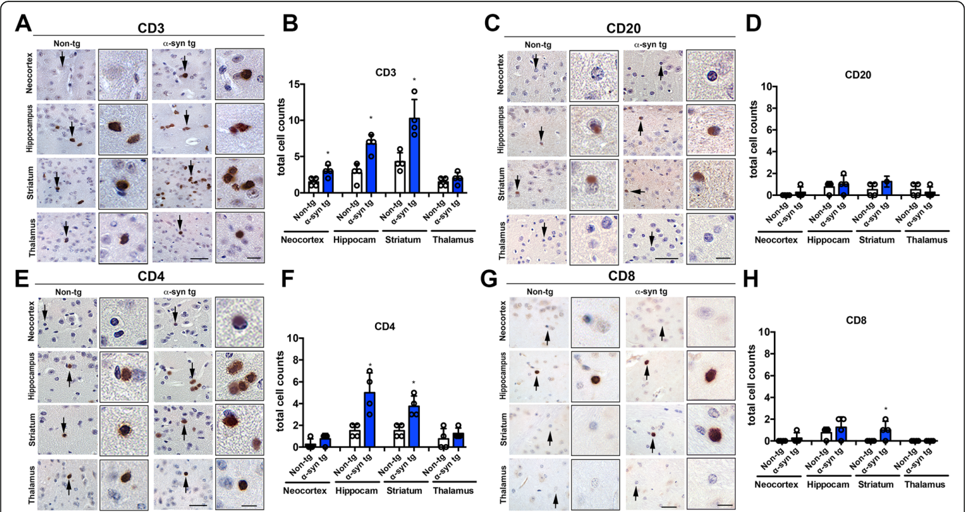
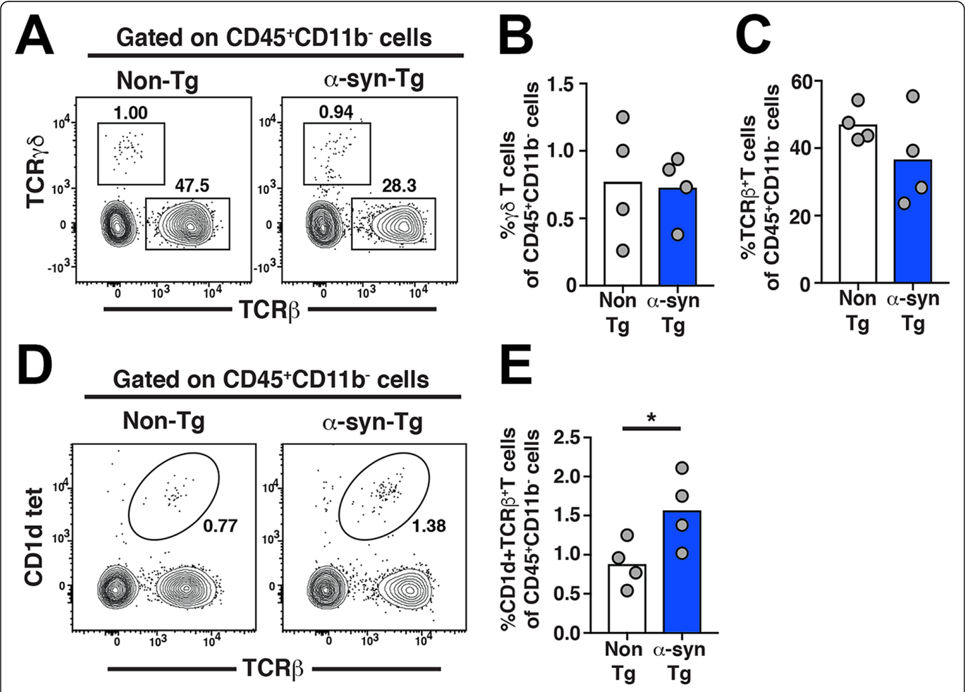
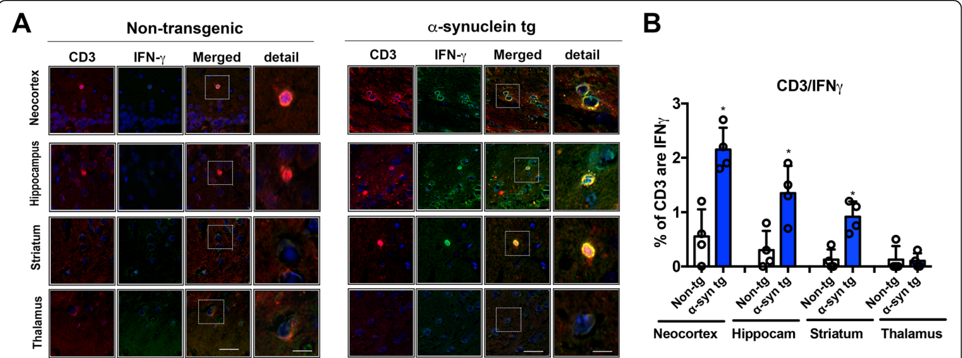
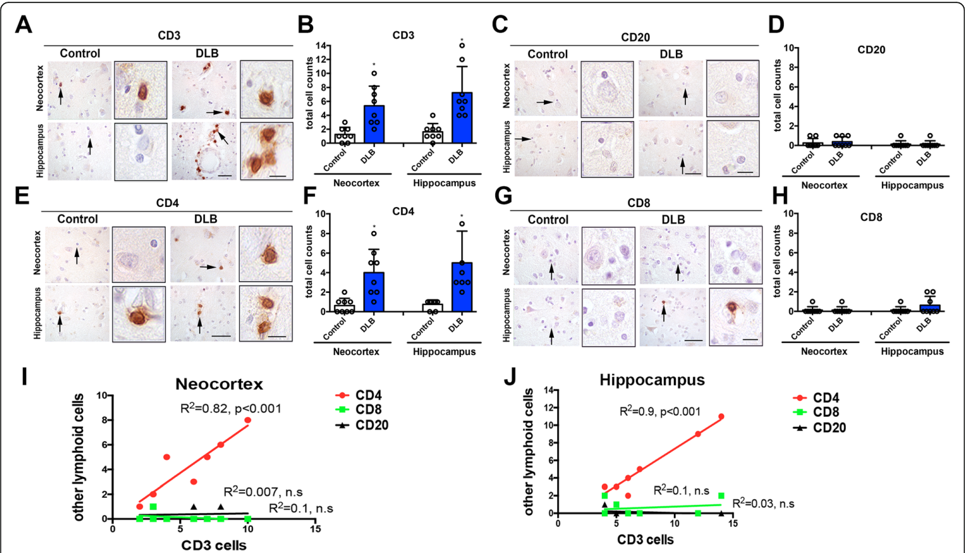
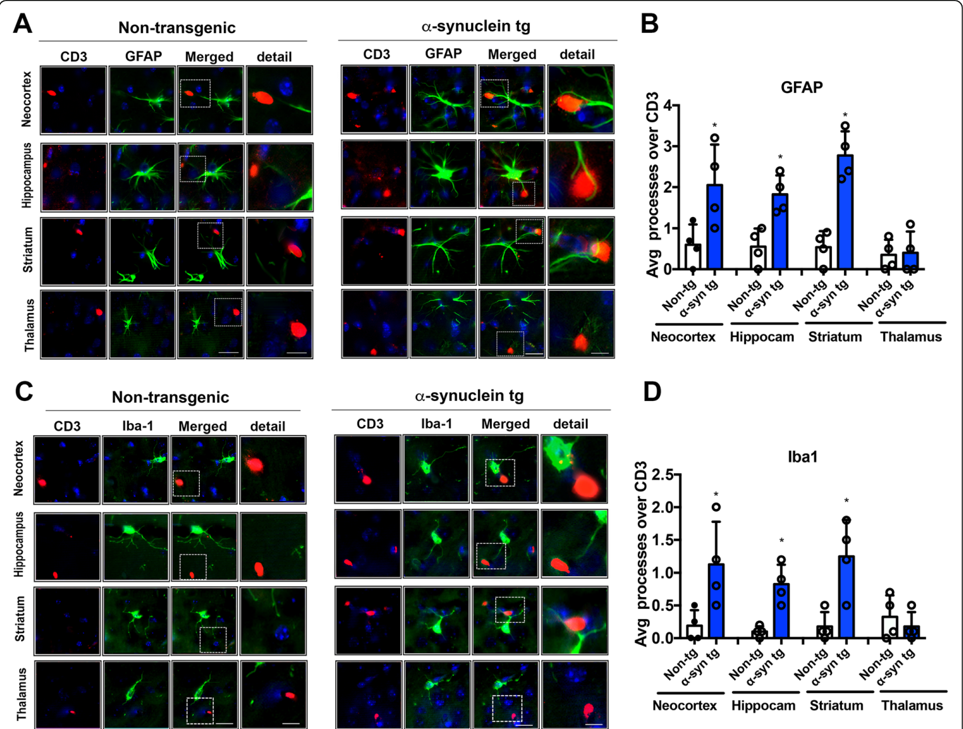
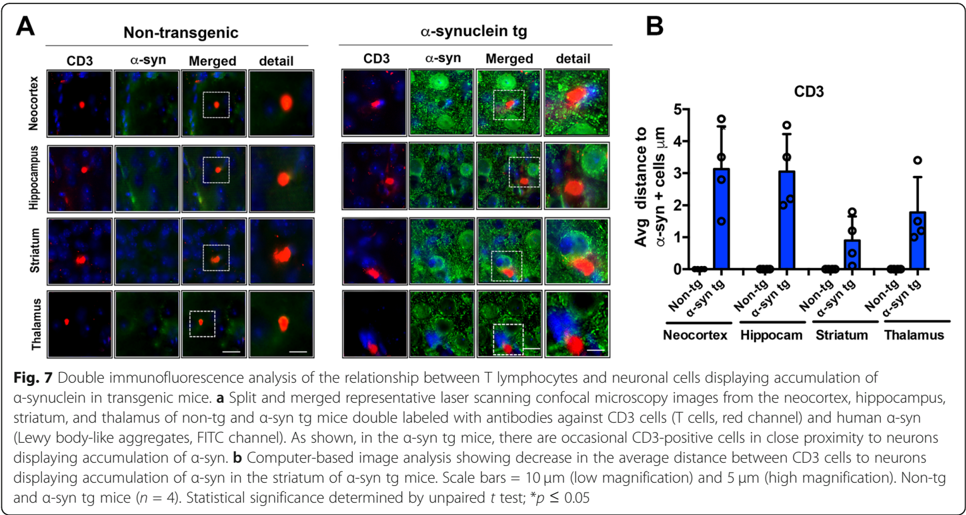
Background: α-Synuclein (α-syn) is a pre-synaptic protein which progressively accumulates in neuronal and non-neuronal cells in neurodegenerative diseases such as Parkinson’s disease (PD), dementia with Lewy bodies (DLB), and multiple system atrophy. Recent evidence suggests that aberrant immune activation may be involved in neurodegeneration in PD/DLB. While previous studies have often focused on the microglial responses, less is known about the role of the peripheral immune system in these disorders. Methods: To understand the involvement of the peripheral immune system in PD/DLB, we evaluated T cell populations in the brains of α-syn transgenic (tg) mice (e.g., Thy1 promoter line 61) and DLB patients. Results: Immunohistochemical analysis showed perivascular and parenchymal infiltration by CD3+/CD4+ helper T cells, but not cytotoxic T cells (CD3+/CD8+) or B cells (CD20+), in the neocortex, hippocampus, and striatum of α-syn tg mice. CD3+ cells were found in close proximity to the processes of activated astroglia, particularly in areas of the brain with significant astrogliosis, microgliosis, and expression of pro-inflammatory cytokines. In addition, a subset of CD3+ cells co-expressed interferon γ. Flow cytometric analysis of immune cells in the brains of α-syn tg mice revealed that CD1d-tet+ T cells were also increased in the brains of α-syn tg mice suggestive of natural killer T cells. In post-mortem DLB brains, we similarly detected increased numbers of infiltrating CD3+/CD4+ T cells in close proximity with blood vessels. Conclusion: These results suggest that infiltrating adaptive immune cells play an important role in neuroinflammation and neurodegeneration in synucleinopathies and that modulating peripheral T cells may be a viable therapeutic strategy for PD/DLB.
Overview
The claims and statistics of this paper haven’t been checked yet.
Free: it reads the open-access text and checks the first 5 claims that cite a source we can check. Create a free account to check every claim.
Integrity signals
Registry
Cites
Statistics
Figures
Verification
Claims the paper makes
The claims and statistics of this paper haven’t been checked yet.
Free: it reads the open-access text and checks the first 5 claims that cite a source we can check. Create a free account to check every claim.
Claims other papers make about this one
Each is checked against this paper’s own text: does it say what the citing paper says it does?
The cited source says what the claim attributes to it.
In the citing paper
“In an a-synuclein transgenic mouse model, infiltration of CD3 + /CD4 + helper T (Th) cells was increased in the brain (in close proximity to astrocytes and microglia) and this was accompanied by glial activation and enhanced expression of tumour necrosis factor (TNF) genes.88”
From The role of gut dysbiosis in Parkinson’s disease: mechanistic insights and therapeutic options (2021) · cites this paper as [88]
The cited source says what the claim attributes to it.
In the citing paper
“This suggests that infiltrating peripheral adaptive immune cells are involved in activating resident immune cells in the brain, thus enhancing neuroinflammation.88”
From The role of gut dysbiosis in Parkinson’s disease: mechanistic insights and therapeutic options (2021) · cites this paper as [88]
Self-check
Percentages, sums and reported differences re-computed from the paper’s own numbers.
The self-check needs the paper’s full text.
Citations
Cites
Diagnosis and management of dementia with Lewy bodies: Fourth consensus report of the DLB Consortium
McKeith, I. G., Boeve, B. F., Dickson, D. W., Halliday, G., Taylor, J.-P., Weintraub, D., Aarsland, D., Galvin, J., Attems, J., Ballard, C. G., et al. (2017) · Neurology · doi:10.1212/wnl.0000000000004058 · Cited by 4,476 · cited 2×
“This heterogeneous group of disorders includes Parkinson ’ s disease (PD), dementia with Lewy bodies (DLB), and multiple system atrophy (MSA) [6, 7].”
Self-citationBendelac, A., Savage, P. B., & Teyton, L. (2007) · Annual Review of Immunology · doi:10.1146/annurev.immunol.25.022106.141711 · Cited by 2,155 · cited 1×
“As with the mouse”
The many faces of α-synuclein: from structure and toxicity to therapeutic target
Lashuel, H. A., Overk, C. R., Oueslati, A., & Masliah, E. (2013) · Nature Reviews Neuroscience · doi:10.1038/nrn3406 · Cited by 1,622
Self-citationInclusion formation and neuronal cell death through neuron-to-neuron transmission of α-synuclein
Desplats, P., Lee, H.-J., Bae, E.-J., Patrick, C., Rockenstein, E., Crews, L., Spencer, B., Masliah, E., & Lee, S.-J. (2009) · Proceedings of the National Academy of Sciences · doi:10.1073/pnas.0903691106 · Cited by 1,485 · cited 1×
“shown that under pathological conditions, α -syn aggregates are released into the extracellular space [21, 86 – 88], where they can potentially activate T cells.”
Self-citationIwai, A., Masliah, E., Yoshimoto, M., Ge, N., Flanagan, L., Rohan de Silva, H. A., Kittel, A., & Saitoh, T. (1995) · Neuron · doi:10.1016/0896-6273(95)90302-x · Cited by 1,316 · cited 1×
“α-syn is primarily a pre-synaptic protein [30] and involved in endosomal formation and vesicle release at the synapse [31–33].”
Self-citationBrochard, V., Combadière, B., Prigent, A., Laouar, Y., Perrin, A., Beray-Berthat, V., Bonduelle, O., Alvarez-Fischer, D., Callebert, J., Launay, J.-M., et al. (2008) · Journal of Clinical Investigation · doi:10.1172/jci36470 · Cited by 1,172 · cited 1×
“PD patients have also been shown to have increased T cells infiltration [63, 64].”
Luk, K. C., Kehm, V. M., Zhang, B., O’Brien, P., Trojanowski, J. Q., & Lee, V. M. Y. (2012) · Journal of Experimental Medicine · doi:10.1084/jem.20112457 · Cited by 1,100
α-synuclein toxicity in neurodegeneration: mechanism and therapeutic strategies
Wong, Y. C., & Krainc, D. (2017) · Nature Medicine · doi:10.1038/nm.4269 · Cited by 897
T cells from patients with Parkinson’s disease recognize α-synuclein peptides
Sulzer, D., Alcalay, R. N., Garretti, F., Cote, L., Kanter, E., Agin-Liebes, J., Liong, C., McMurtrey, C., Hildebrand, W. H., Mao, X., et al. (2017) · Nature · doi:10.1038/nature22815 · Cited by 866
Kim, C., Ho, D.-H., Suk, J.-E., You, S., Michael, S., Kang, J., Joong Lee, S., Masliah, E., Hwang, D., Lee, H.-J., et al. (2013) · Nature Communications · doi:10.1038/ncomms2534 · Cited by 856 · cited 3×
“…also been shown to activate microglia and astrocytes via toll-like receptors (TLRs) to produce pro-inflammatory cytokines such as IL-1 β , IL-6, and TNF α [26 – 29]. α -syn is primarily a pre-synaptic protein [30] and involved in endosomal formation and vesicle release at the synapse [31 – 33].”
Self-citationAlpha-synuclein: Pathology, mitochondrial dysfunction and neuroinflammation in Parkinson’s disease
Rocha, E. M., De Miranda, B., & Sanders, L. H. (2018) · Neurobiology of Disease · doi:10.1016/j.nbd.2017.04.004 · Cited by 762 · cited 1×
“The mechanisms of neurodegeneration in synucleinopathies are not fully understood, but several lines of research indicate that α - syn oligomers might interfere with mitochondrial function, axonal transport, and endosomal and lysosomal trafficking in neurons [13 – 17].”
Qin, X.-Y., Zhang, S.-P., Cao, C., Loh, Y. P., & Cheng, Y. (2016) · JAMA Neurology · doi:10.1001/jamaneurol.2016.2742 · Cited by 554 · cited 1×
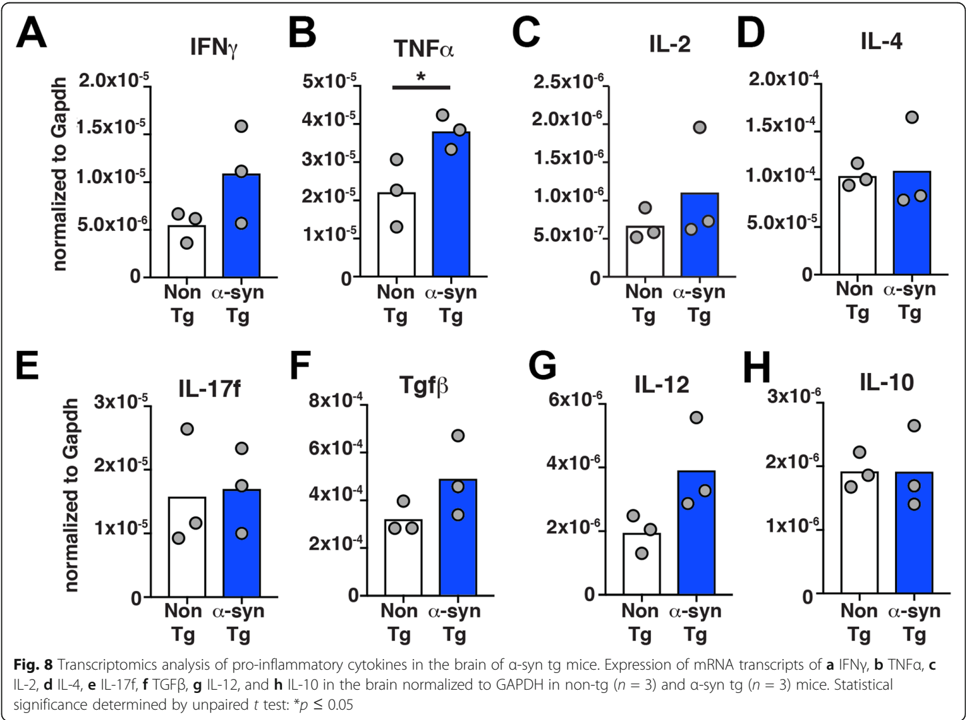
“In support of this possibility, we found increased levels of TNF α and have previously shown increased IL-1 β and IL-6 mRNA expression in α -syn tg mice, which are known to correlate with astrogliosis and inflammation in PD/DLB mouse models [48, 90] and patients [91].”
The α‐Synucleinopathies: Parkinson's Disease, Dementia with Lewy Bodies, and Multiple System Atrophy
SPILLANTINI, M. G., & GOEDERT, M. (2000) · Annals of the New York Academy of Sciences · doi:10.1111/j.1749-6632.2000.tb06900.x · Cited by 523
Sudhof, T. C., & Rizo, J. (2011) · Cold Spring Harbor Perspectives in Biology · doi:10.1101/cshperspect.a005637 · Cited by 510 · cited 1×
“…also been shown to activate microglia and astrocytes via toll-like receptors (TLRs) to produce pro-inflammatory cytokines such as IL-1 β , IL-6, and TNF α [26 – 29]. α -syn is primarily a pre-synaptic protein [30] and involved in endosomal formation and vesicle release at the synapse [31 – 33].”
Rockenstein, E., Mallory, M., Hashimoto, M., Song, D., Shults, C. W., Lang, I., & Masliah, E. (2002) · Journal of Neuroscience Research · doi:10.1002/jnr.10231 · Cited by 502 · cited 1×
“To characterize T cell populations in response to progressive deposition of α-syn, we performed flow cytometry and immunohistochemistry in 10–11months old α-syn tg (mThy1, line 61, n = 12) mice and age-matched non-tg littermates (n = 12) [51, 52].”
Self-citationSynucleinopathies: Clinical and Pathological Implications
Galvin, J. E., Lee, V. M.-Y., & Trojanowski, J. Q. (2001) · Archives of Neurology · doi:10.1001/archneur.58.2.186 · Cited by 466 · cited 1×
“…of the aging population are a group of neurodegenerative disorders with progressive α -synuclein ( α -syn) accumulation in neuronal and non-neuronal cells of cortical [1, 2] and subcortical brain regions with clinical presentations of dementia, parkinsonism, and autonomic dysfunction [3 – 5].”
Neuroprotective activities of CD4+CD25+ regulatory T cells in an animal model of Parkinson’s disease
Reynolds, A. D., Banerjee, R., Liu, J., Gendelman, H. E., & Lee Mosley, R. (2007) · Journal of Leukocyte Biology · doi:10.1189/jlb.0507296 · Cited by 420 · cited 1×
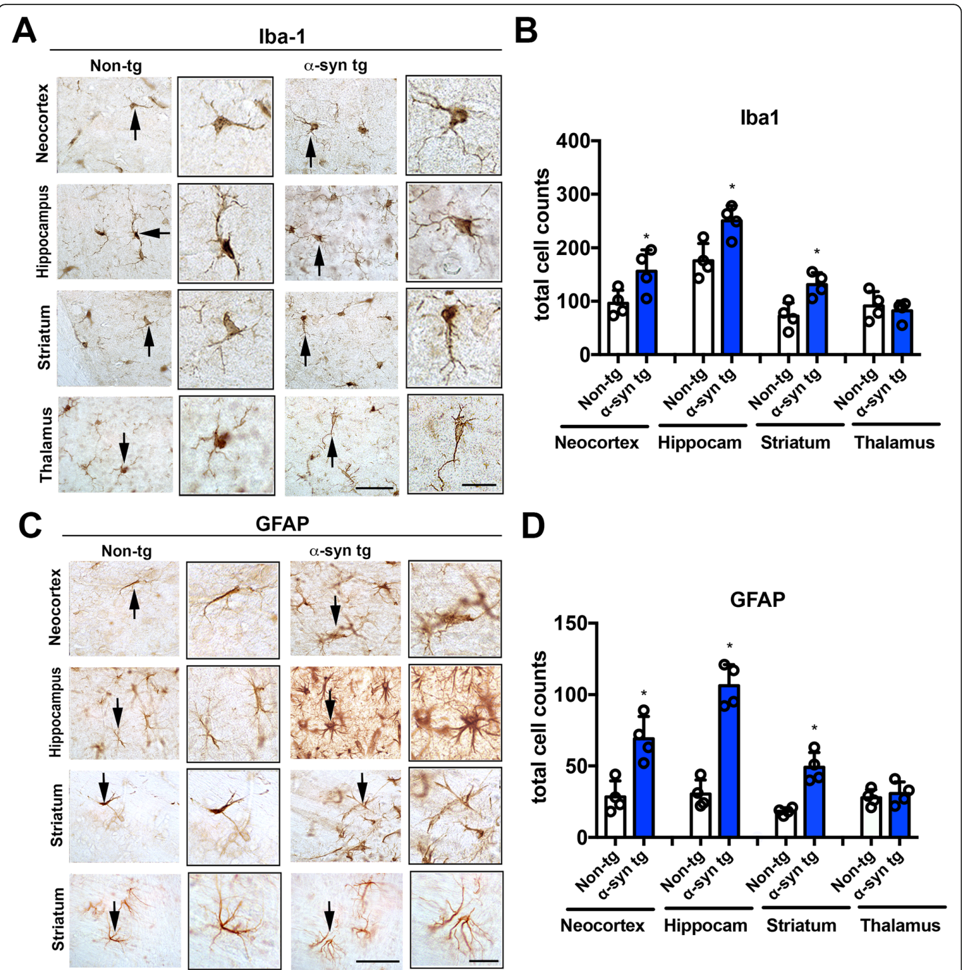
“Indeed, we observed a subset of CD3+ cells that were consistently IFN γ -positive in the neocortex, hippocampus, and striatum in α -syn tg mice compared to the very few, if any, identified in non-tg brains (Fig.”
Harms, A. S., Cao, S., Rowse, A. L., Thome, A. D., Li, X., Mangieri, L. R., Cron, R. Q., Shacka, J. J., Raman, C., & Standaert, D. G. (2013) · Journal of Neuroscience · doi:10.1523/jneurosci.5610-12.2013 · Cited by 406 · cited 3×
“Furthermore, several studies have associated α -syn levels with increased expression of MHC-II and other molecules critical for antigen presentation in microglia [26, 38] and astrocytes [39] in post-mortem brains and models of PD.”
Parkinson's Disease and Alpha Synuclein: Is Parkinson's Disease a Prion‐Like Disorder?
Olanow, C. W., & Brundin, P. (2013) · Movement Disorders · doi:10.1002/mds.25373 · Cited by 390 · cited 2×
“In addition, pathological α -syn aggregates are suggested to be released from cells and propagate from neuron to neuron [18 – 23] and neuron to glia, triggering innate neurotoxic inflammatory responses [24, 25].”
CD1-restricted CD4+ T cells in major histocompatibility complex class II-deficient mice.
Cardell, S., Tangri, S., Chan, S., Kronenberg, M., Benoist, C., & Mathis, D. (1995) · The Journal of experimental medicine · doi:10.1084/jem.182.4.993 · Cited by 384 · cited 1×
“Type I or invariant NKT cells (iNKT) possess a restricted TCR repertoire and recognize α-GalCer, whereas type II NKT cells or variant NKT cells express more diverse α/β TCRs and do not recognize α-GalCer [84].”
A Pathologic Cascade Leading to Synaptic Dysfunction in -Synuclein-Induced Neurodegeneration
Scott, D. A., Tabarean, I., Tang, Y., Cartier, A., Masliah, E., & Roy, S. (2010) · Journal of Neuroscience · doi:10.1523/jneurosci.1091-10.2010 · Cited by 353 · cited 1×
“…also been shown to activate microglia and astrocytes via toll-like receptors (TLRs) to produce pro-inflammatory cytokines such as IL-1 β , IL-6, and TNF α [26 – 29]. α -syn is primarily a pre-synaptic protein [30] and involved in endosomal formation and vesicle release at the synapse [31 – 33].”
Self-citationA Progressive Mouse Model of Parkinson’s Disease: The Thy1-aSyn (“Line 61”) Mice
Chesselet, M.-F., Richter, F., Zhu, C., Magen, I., Watson, M. B., & Subramaniam, S. R. (2012) · Neurotherapeutics · doi:10.1007/s13311-012-0104-2 · Cited by 346
Alpha-Synuclein Oligomers—Neurotoxic Molecules in Parkinson's Disease and Other Lewy Body Disorders
Ingelsson, M. (2016) · Frontiers in Neuroscience · doi:10.3389/fnins.2016.00408 · Cited by 344
Antibody-Aided Clearance of Extracellular α-Synuclein Prevents Cell-to-Cell Aggregate Transmission
Bae, E.-J., Lee, H.-J., Rockenstein, E., Ho, D.-H., Park, E.-B., Yang, N.-Y., Desplats, P., Masliah, E., & Lee, S.-J. (2012) · The Journal of Neuroscience · doi:10.1523/jneurosci.1292-12.2012 · Cited by 339 · cited 1×
“Remarkably, we have also shown that reducing the progressive accumulation of α-syn in the CNS with antibodies or antibodies in combination with anti-inflammatory or cytoregulatory approaches, such as enhancing CD25 + T reg cell trafficking to the CNS, rescues the astroglial inflammatory phenotype and reduces the level…”
Self-citationAlpha-synuclein oligomers: a new hope
Bengoa-Vergniory, N., Roberts, R. F., Wade-Martins, R., & Alegre-Abarrategui, J. (2017) · Acta Neuropathologica · doi:10.1007/s00401-017-1755-1 · Cited by 338
Alterations of T-lymphocyte populations in Parkinson disease
Baba, Y., Kuroiwa, A., Uitti, R. J., Wszolek, Z. K., & Yamada, T. (2005) · Parkinsonism & Related Disorders · doi:10.1016/j.parkreldis.2005.07.005 · Cited by 336 · cited 1×
“(Treg) with PD and increasing age [43, 44], while others report an increase [45, 46].”
The Role of Innate and Adaptive Immunity in Parkinson's Disease
Kannarkat, G. T., Boss, J. M., & Tansey, M. G. (2013) · Journal of Parkinson’s Disease · doi:10.3233/jpd-130250 · Cited by 324 · cited 1×
“E However, recent evidence shows that alterations in the adaptive immune response might also contribute to inflammation and neurodegeneration in AD and age-related synucleinopa-thies [58 – 60].”
CD4+ Regulatory and Effector/Memory T Cell Subsets Profile Motor Dysfunction in Parkinson’s Disease
Saunders, J. A. H., Estes, K. A., Kosloski, L. M., Allen, H. E., Dempsey, K. M., Torres-Russotto, D. R., Meza, J. L., Santamaria, P. M., Bertoni, J. M., Murman, D. L., et al. (2012) · Journal of Neuroimmune Pharmacology · doi:10.1007/s11481-012-9402-z · Cited by 323 · cited 1×
“For example, some studies show a reduced population of regulatory CD4 + T cells (Treg) with age and PD [41, 42], while others report an increase [43, 44].”
Innate Immunity and Neurodegeneration
Labzin, L. I., Heneka, M. T., & Latz, E. (2018) · Annual Review of Medicine · doi:10.1146/annurev-med-050715-104343 · Cited by 319
Cell-to-cell transmission of non-prion protein aggregates
Lee, S.-J., Desplats, P., Sigurdson, C., Tsigelny, I., & Masliah, E. (2010) · Nature Reviews Neurology · doi:10.1038/nrneurol.2010.145 · Cited by 309
Self-citationExtracellular α-synuclein—a novel and crucial factor in Lewy body diseases
Lee, H.-J., Bae, E.-J., & Lee, S.-J. (2014) · Nature Reviews Neurology · doi:10.1038/nrneurol.2013.275 · Cited by 306
Tissue-Specific Distribution of iNKT Cells Impacts Their Cytokine Response
Lee, Y. J., Wang, H., Starrett, G. J., Phuong, V., Jameson, S. C., & Hogquist, K. A. (2015) · Immunity · doi:10.1016/j.immuni.2015.06.025 · Cited by 299 · cited 1×
“1 or Killer-like receptor subfamily B) [75], CD1d-restricted TCR markers [76, 77], or CD1d tetramer in ex vivo spleen samples [78, 79] to identify NKT-like cells.”
Tachibana, T., Onodera, H., Tsuruyama, T., Mori, A., Nagayama, S., Hiai, H., & Imamura, M. (2005) · Clinical Cancer Research · doi:10.1158/1078-0432.ccr-05-0877 · Cited by 295 · cited 1×
“1 or Killer-like receptor subfamily B) [75], CD1d-restricted TCR markers [76, 77], or CD1d tetramer in ex vivo spleen samples [78, 79] to identify NKT-like cells.”
Role of Microglia TLRs in Neurodegeneration
Fiebich, B. L., Batista, C. R. A., Saliba, S. W., Yousif, N. M., & de Oliveira, A. C. P. (2018) · Frontiers in Cellular Neuroscience · doi:10.3389/fncel.2018.00329 · Cited by 291
The NKT cell system: bridging innate and acquired immunity
Taniguchi, M., Seino, K.-I., & Nakayama, T. (2003) · Nature Immunology · doi:10.1038/ni1203-1164 · Cited by 256 · cited 1×
“NKT cells co-express surface receptors characteristic of both T lymphocytes (e.g., CD3, α / β T cell receptor [TCR]) and NK cells (e.g., CD56) [81], and so are postulated to act at the interface between the adaptive and innate immune systems [82].”
Rosenkranz, D., Weyer, S., Tolosa, E., Gaenslen, A., Berg, D., Leyhe, T., Gasser, T., & Stoltze, L. (2007) · Journal of Neuroimmunology · doi:10.1016/j.jneuroim.2007.05.011 · Cited by 254 · cited 1×
“For example, some studies show a reduced population of regulatory CD4+ T cells (Treg) with PD and increasing age [43, 44], while others report an increase [45, 46].”
Lymphocyte populations in Parkinson's disease and in rat models of parkinsonism
Bas, J. (2001) · Journal of Neuroimmunology · doi:10.1016/s0165-5728(00)00422-7 · Cited by 250 · cited 1×
“Moreover, flow cytometric analysis revealed that human astrocytes express not only MHC-II but also T cell inhibitory molecule PD-L1 and co-stimulatory markers CD40, CD80, and CD86 [39].”
Role of α-Synuclein in Inducing Innate and Adaptive Immunity in Parkinson Disease
Allen Reish, H. E., & Standaert, D. G. (2015) · Journal of Parkinson’s Disease · doi:10.3233/jpd-140491 · Cited by 244
Pathogenesis of synaptic degeneration in Alzheimer's disease and Lewy body disease
Overk, C. R., & Masliah, E. (2014) · Biochemical Pharmacology · doi:10.1016/j.bcp.2014.01.015 · Cited by 242 · cited 2×
“Studies have additionally shown widespread α -syn accumulation in the neocortex and limbic systems of patients with Down syndrome, sporadic Alzheimer ’ s disease (AD), and familial AD from presenilin 1 (PS1) and amyloid precursor protein (APP) mutations [9 – 12].”
Self-citationWatson, M. B., Richter, F., Lee, S. K., Gabby, L., Wu, J., Masliah, E., Effros, R. B., & Chesselet, M.-F. (2012) · Experimental Neurology · doi:10.1016/j.expneurol.2012.06.025 · Cited by 241 · cited 3×
“R Similarly, transgenic (tg) mice overexpressing α -syn under neuronal promoters display age-dependent microglial and astrocytic activation in vulnerable brain regions accompanied by cytokine release and neurodegeneration similar to PD/DLB [48 – 50].”
Self-citationNatural Killer T Cells in Cancer Immunotherapy
Nair, S., & Dhodapkar, M. V. (2017) · Frontiers in Immunology · doi:10.3389/fimmu.2017.01178 · Cited by 234 · cited 1×
“Antigen recognition in NKT cells is restricted to those presented by the MHC-like molecule CD1d [83].”
Thakur, P., Breger, L. S., Lundblad, M., Wan, O. W., Mattsson, B., Luk, K. C., Lee, V. M. Y., Trojanowski, J. Q., & Björklund, A. (2017) · Proceedings of the National Academy of Sciences · doi:10.1073/pnas.1710442114 · Cited by 233 · cited 2×
“5 derived human α-synuclein overexpressing rat model, delivery of α-syn fibrils into substantia nigra results in not only prion-like seeding of α-syn but also glial activation and T cell infiltration [45].”
Structure, function and toxicity of alpha‐synuclein: the Bermuda triangle in synucleinopathies
Villar‐Piqué, A., Lopes da Fonseca, T., & Outeiro, T. F. (2016) · Journal of Neurochemistry · doi:10.1111/jnc.13249 · Cited by 218
Astrocytes have the capacity to act as antigen-presenting cells in the Parkinson’s disease brain
Rostami, J., Fotaki, G., Sirois, J., Mzezewa, R., Bergström, J., Essand, M., Healy, L., & Erlandsson, A. (2020) · Journal of Neuroinflammation · doi:10.1186/s12974-020-01776-7 · Cited by 212 · cited 5×
“Interestingly, human astrocytes were found additionally express molecules closely linked with T cell activity, including CD40, CD80, CD86, and PD L1 [39].”
InfluentialReduced T helper and B lymphocytes in Parkinson's disease
Stevens, C. H., Rowe, D., Morel-Kopp, M.-C., Orr, C., Russell, T., Ranola, M., Ward, C., & Halliday, G. M. (2012) · Journal of Neuroimmunology · doi:10.1016/j.jneuroim.2012.07.015 · Cited by 189 · cited 2×
“Patients with PD are also known to display altered T cell populations, particularly among CD4+ T cells, although the evidence is inconsistent [40 – 42].”
The concept of alpha-synuclein as a prion-like protein: ten years after
Steiner, J. A., Quansah, E., & Brundin, P. (2018) · Cell and Tissue Research · doi:10.1007/s00441-018-2814-1 · Cited by 183 · cited 1×
“shown that under pathological conditions, α -syn aggregates are released into the extracellular space [21, 86 – 88], where they can potentially activate T cells.”
Initiation of Antiviral B Cell Immunity Relies on Innate Signals from Spatially Positioned NKT Cells
Gaya, M., Barral, P., Burbage, M., Aggarwal, S., Montaner, B., Warren Navia, A., Aid, M., Tsui, C., Maldonado, P., Nair, U., et al. (2018) · Cell · doi:10.1016/j.cell.2017.11.036 · Cited by 180 · cited 1×
“As with the mouse”
Distinct α-Synuclein strains and implications for heterogeneity among α-Synucleinopathies
Peng, C., Gathagan, R. J., & Lee, V. M.-Y. (2018) · Neurobiology of Disease · doi:10.1016/j.nbd.2017.07.018 · Cited by 165
Papp–Lantos inclusions and the pathogenesis of multiple system atrophy: an update
Jellinger, K. A., & Lantos, P. L. (2010) · Acta Neuropathologica · doi:10.1007/s00401-010-0672-3 · Cited by 161 · cited 1×
“In DLB and PD, α -syn predominantly accumulates in neurons and only occasionally in glia; in MSA, α -syn aggregates are primarily detected in oligodendrocytes [8].”
Kawakami, K., Kinjo, Y., Uezu, K., Yara, S., Miyagi, K., Koguchi, Y., Nakayama, T., Taniguchi, M., & Saito, A. (2001) · The Journal of Immunology · doi:10.4049/jimmunol.167.11.6525 · Cited by 160
Kim, C., Spencer, B., Rockenstein, E., Yamakado, H., Mante, M., Adame, A., Fields, J. A., Masliah, D., Iba, M., Lee, H.-J., et al. (2018) · Molecular Neurodegeneration · doi:10.1186/s13024-018-0276-2 · Cited by 157
Self-citationEarls, R. H., Menees, K. B., Chung, J., Barber, J., Gutekunst, C.-A., Hazim, M. G., & Lee, J.-K. (2019) · Journal of Neuroinflammation · doi:10.1186/s12974-019-1636-8 · Cited by 151 · cited 1×
“As with the mouse”
Immunoprotection against toxic biomarkers is retained during Parkinson's disease progression
Алексеевна, Г. М., Sewell, R. D. E., Yanamandra, K., Davidova, T. V., Kucheryanu, V. G., Bocharov, E. V., Bocharova, O. A., Polyschuk, V. V., Sherstnev, V. V., & Morozova‐Roche, L. A. (2011) · Journal of Neuroimmunology · doi:10.1016/j.jneuroim.2010.12.001 · Cited by 121
Neurodegeneration and the ordered assembly of α-synuclein
Spillantini, M. G., & Goedert, M. (2018) · Cell and Tissue Research · doi:10.1007/s00441-017-2706-9 · Cited by 121
Popescu, A., Lippa, C. F., Lee, V. M.-Y., & Trojanowski, J. Q. (2004) · Archives of Neurology · doi:10.1001/archneur.61.12.1915 · Cited by 119 · cited 1×
“Studies have additionally shown widespread α -syn accumulation in the neocortex and limbic systems of patients with Down syndrome, sporadic Alzheimer ’ s disease (AD), and familial AD from presenilin 1 (PS1) and amyloid precursor protein (APP) mutations [9 – 12].”
The correlation of lymphocyte subsets, natural killer cell, and Parkinson’s disease: a meta-analysis
Jiang, S., Gao, H., Luo, Q., Wang, P., & Yang, X. (2017) · Neurological Sciences · doi:10.1007/s10072-017-2988-4 · Cited by 113
Clinical correlation of peripheral CD4+-cell sub-sets, their imbalance and Parkinson's disease
CHEN, Y., QI, B., XU, W., MA, B., LI, L., CHEN, Q., QIAN, W., LIU, X., & QU, H. (2015) · Molecular Medicine Reports · doi:10.3892/mmr.2015.4136 · Cited by 109 · cited 1×
“Another study identified increased numbers of Th1 and Th17 cells with a concomitant decrease in Th2 and Treg cells in PD patients and animal models [67].”
When Do α-Synucleinopathies Start? An Epidemiological Timeline: A Review
Savica, R., Boeve, B. F., & Mielke, M. M. (2018) · JAMA Neurology · doi:10.1001/jamaneurol.2017.4243 · Cited by 104 · cited 1×
“Background Synucleinopathies of the aging population are a group of neurodegenerative disorders with progressive α-synuclein (α-syn) accumulation in neuronal and non-neuronal cells of cortical [1, 2] and subcortical brain regions with clinical presentations of dementia, parkinsonism, and autonomic dysfunction [3–5].”
Transmission of α-synuclein seeds in neurodegenerative disease: recent developments
Karpowicz, R. J., Trojanowski, J. Q., & Lee, V. M.-Y. (2019) · Laboratory Investigation · doi:10.1038/s41374-019-0195-z · Cited by 103 · cited 1×
“In addition, pathological α -syn aggregates are suggested to be released from cells and propagate from neuron to neuron [18 – 23] and neuron to glia, triggering innate neurotoxic inflammatory responses [24, 25].”
T cell infiltration in both human multiple system atrophy and a novel mouse model of the disease
Williams, G. P., Marmion, D. J., Schonhoff, A. M., Jurkuvenaite, A., Won, W.-J., Standaert, D. G., Kordower, J. H., & Harms, A. S. (2020) · Acta Neuropathologica · doi:10.1007/s00401-020-02126-w · Cited by 102 · cited 6×
“Similar results were observed in a viral vectormediated oligodendroglial α-syn expression mouse model, where genetic depletion of TCR-β+ or CD4+ T cells attenuated α-syn-induced inflammation and demyelination in vivo [73].”
Influentialα-Synuclein: A Multifunctional Player in Exocytosis, Endocytosis, and Vesicle Recycling
Huang, M., Wang, B., Li, X., Fu, C., Wang, C., & Kang, X. (2019) · Frontiers in Neuroscience · doi:10.3389/fnins.2019.00028 · Cited by 101
The location of splenic NKT cells favours their rapid activation by blood‐borne antigen
Barral, P., Sánchez-Niño, M. D., van Rooijen, N., Cerundolo, V., & Batista, F. D. (2012) · The EMBO Journal · doi:10.1038/emboj.2012.87 · Cited by 97 · cited 1×
“1 or Killer-like receptor subfamily B) [75], CD1drestricted TCR markers [76, 77], or CD1d tetramer in ex vivo spleen samples [78, 79] to identify NKT-like cells.”
Interaction of astrocytes and T cells in physiological and pathological conditions
Xie, L., & Yang, S. (2015) · Brain Research · doi:10.1016/j.brainres.2015.03.026 · Cited by 93 · cited 1×
“E Several additional studies have also shown that astrocytes and T cells may interact under not only physiological but also pathological conditions such as stroke, multiple sclerosis, viral infection, and AD [93, 94].”
Non-cell-autonomous Neurotoxicity of α-synuclein Through Microglial Toll-like Receptor 2
Kim, C., Lee, H.-J., Masliah, E., & Lee, S.-J. (2016) · Experimental Neurobiology · doi:10.5607/en.2016.25.3.113 · Cited by 92
Self-citationNeurodegenerative diseases: The immunological perspective
Molteni, M., & Rossetti, C. (2017) · Journal of Neuroimmunology · doi:10.1016/j.jneuroim.2017.11.002 · Cited by 90 · cited 1×
“In the past, studies on neuroinflammation in AD and PD have generally focused on the abnormal activation of the innate immune system [29, 54 – 57].”
Gober, M. D., Fishelevich, R., Zhao, Y., Unutmaz, D., & Gaspari, A. A. (2007) · Journal of Investigative Dermatology · doi:10.1038/sj.jid.5701199 · Cited by 89 · cited 1×
“As with the mouse”
Alafuzoff, I. I., & Hartikainen, P. H. (2017) · Handbook of clinical neurology · doi:10.1016/b978-0-12-802395-2.00024-9 · Cited by 85
A critical role for alpha-synuclein in development and function of T lymphocytes
Shameli, A., Xiao, W., Zheng, Y., Shyu, S., Sumodi, J., Meyerson, H. J., Harding, C. V., & Maitta, R. W. (2016) · Immunobiology · doi:10.1016/j.imbio.2015.10.002 · Cited by 85 · cited 2×
“While it appears that CD4+ T cell infiltration of the CNS in response to extracellular α -syn might play a role in neuroinflammation and degeneration in PD, DLB, and relevant animal models [34, 46, 89], the role of other T cells in the disease process is less clear.”
Storelli, E., Cassina, N., Rasini, E., Marino, F., & Cosentino, M. (2019) · Frontiers in Neurology · doi:10.3389/fneur.2019.00013 · Cited by 84 · cited 1×
“In addition to the potentially neurotoxic effects of cytokines produced by Th1/Th17 cells [67, 68], Th2 and Treg cells are thought to regulate innate immunity in the CNS, suggesting that the imbalance in T cell types may contribute to overactive glia and chronic inflammation [69–71].”
Mihara, T., Nakashima, M., Kuroiwa, A., Akitake, Y., Ono, K., Hosokawa, M., Yamada, T., & Takahashi, M. (2007) · Parkinsonism & Related Disorders · doi:10.1016/j.parkreldis.2007.05.013 · Cited by 74 · cited 1×
“We found that the frequency of TCR β + cells and TCR γδ + cells as a fraction of CD45+CD11b-cells were comparable be-tween non-tg and α -syn tg mice (Fig.”
Regulation of the neurodegenerative process associated to Parkinson's disease by CD4+ T-cells
González, H., Contreras, F., & Pacheco, R. (2015) · Journal of Neuroimmune Pharmacology · doi:10.1007/s11481-015-9618-9 · Cited by 70
Exocytosis and Spreading of Normal and Aberrant α‐Synuclein
Emmanouilidou, E., & Vekrellis, K. (2016) · Brain Pathology · doi:10.1111/bpa.12373 · Cited by 68
Immunomodulation as a neuroprotective and therapeutic strategy for Parkinson's disease
Olson, K. E., & Gendelman, H. E. (2016) · Current Opinion in Pharmacology · doi:10.1016/j.coph.2015.10.006 · Cited by 63 · cited 2×
“…the CNS with antibodies or antibodies in combination with anti-inflammatory or cytoregulatory approaches, such as enhancing CD25+ T reg cell trafficking to the CNS, remarkably rescues the astroglial inflammatory phenotype and reduces the levels of TNF α and IL-6 in transgenic models [53, 70, 92].”
Caplan, I. F., & Maguire-Zeiss, K. A. (2018) · Frontiers in Pharmacology · doi:10.3389/fphar.2018.00417 · Cited by 63 · cited 2×
“…also been shown to activate microglia and astrocytes via toll-like receptors (TLRs) to produce pro-inflammatory cytokines such as IL-1 β , IL-6, and TNF α [26 – 29]. α -syn is primarily a pre-synaptic protein [30] and involved in endosomal formation and vesicle release at the synapse [31 – 33].”
Infiltrating T lymphocytes reduce myeloid phagocytosis activity in synucleinopathy model
Sommer, A., Fadler, T., Dorfmeister, E., Hoffmann, A.-C., Xiang, W., Winner, B., & Prots, I. (2016) · Journal of Neuroinflammation · doi:10.1186/s12974-016-0632-5 · Cited by 62 · cited 2×
“A However, previous studies have shown that α -syn is also expressed by hematopoietic cells and blood mononuclear cells and may even play a role in lymphocyte maturation [34 – 36].”
Chandra, G., Roy, A., Rangasamy, S. B., & Pahan, K. (2017) · The Journal of Immunology · doi:10.4049/jimmunol.1700149 · Cited by 62 · cited 1×
“…was been reported in acute neurotoxic models of PD such as 1-methyl-4-phenyl-1,2, 3,6-tetrahydropyridine (MPTP)-injected mice, where marked T cell infiltration was observed in the substantia nigra at day one after MPTP challenge before progressively decreasing and normalizing by day 30 [66].”
Cell-to-cell contact facilitates HIV transmission from lymphocytes to astrocytes via CXCR4
Li, G., Anderson, C., Jaeger, L., Do, T., Major, E. O., & Nath, A. (2015) · AIDS · doi:10.1097/qad.0000000000000605 · Cited by 61 · cited 1×
“E T This T cell-to-astrocyte transmission of HIV was blocked by an anti-CXCR4 antibody [95].”
Early start of progressive motor deficits in Line 61 α-synuclein transgenic mice
Rabl, R., Breitschaedel, C., Flunkert, S., Duller, S., Amschl, D., Neddens, J., Niederkofler, V., Rockenstein, E., Masliah, E., Roemer, H., et al. (2017) · BMC Neuroscience · doi:10.1186/s12868-017-0341-8 · Cited by 58 · cited 1×
“Mice To characterize T cell populations in response to progressive deposition of α-syn we performed flow cytometry and immunohistochemistry in 10–11 months old α-syn tg (mThy1, line 61, n = 12) mice and age-matched non-tg littermates (n = 12) [49, 50].”
Self-citationThe key role of T cells in Parkinson's disease pathogenesis and therapy
Baird, J. K., Bourdette, D., Meshul, C. K., & Quinn, J. F. (2019) · Parkinsonism & Related Disorders · doi:10.1016/j.parkreldis.2018.10.029 · Cited by 58 · cited 1×
“D Few CD8+ cells were detected in the brain and primarily in the hippocampus and striatum, with minimal differences between non-tg and α - syn tg mice (Fig.”
Spencer, B., Desplats, P. A., Overk, C. R., Valera-Martin, E., Rissman, R. A., Wu, C., Mante, M., Adame, A., Florio, J., Rockenstein, E., et al. (2016) · The Journal of Neuroscience · doi:10.1523/jneurosci.0775-16.2016 · Cited by 56
Self-citationNeuroprotective activities of regulatory T cells
Gendelman, H. E., & Appel, S. H. (2011) · Trends in Molecular Medicine · doi:10.1016/j.molmed.2011.08.005 · Cited by 55
Combined Active Humoral and Cellular Immunization Approaches for the Treatment of Synucleinopathies
Rockenstein, E. M., Ostroff, G. R., Dikengil, F., Rus, F., Mante, M., Florio, J. B., Adame, A., Trinh, I., Kim, C., Overk, C., et al. (2017) · Journal of Neuroscience · doi:10.1523/jneurosci.1170-17.2017 · Cited by 54 · cited 2×
“…the CNS with antibodies or antibodies in combination with anti-inflammatory or cytoregulatory approaches, such as enhancing CD25+ T reg cell trafficking to the CNS, remarkably rescues the astroglial inflammatory phenotype and reduces the levels of TNF α and IL-6 in transgenic models [53, 70, 92].”
Self-citationPeralta Ramos, J. M., Iribarren, P., Bousset, L., Melki, R., Baekelandt, V., & Van der Perren, A. (2019) · Frontiers in Immunology · doi:10.3389/fimmu.2019.00080 · Cited by 53 · cited 1×
“While it appears that CD4+ T cell infiltration of the CNS in response to extracellular α -syn might play a role in neuroinflammation and degeneration in PD, DLB, and relevant animal models [34, 46, 89], the role of other T cells in the disease process is less clear.”
The innate and adaptive immunological aspects in neurodegenerative diseases
Rodrigues, M. C. O., Sanberg, P. R., Cruz, L. E. G., & Garbuzova-Davis, S. N. (2013) · Journal of Neuroimmunology · doi:10.1016/j.jneuroim.2013.09.020 · Cited by 48 · cited 1×
“Compared to non-tg mice, α -syn tg animals showed significantly more CD4+ cells in the neocortex, hippocampus, and striatum, but not in the thalamus (Fig.”
Kim, C., Ojo-Amaize, E., Spencer, B., Rockenstein, E., Mante, M., Desplats, P., Wrasidlo, W., Adame, A., Nchekwube, E., Oyemade, O., et al. (2015) · Journal of Neuroinflammation · doi:10.1186/s12974-015-0455-9 · Cited by 45 · cited 1×
“Similarly, transgenic (tg) mice overexpressing α -syn under neuronal promoters display age-dependent microglial and astrocytic activation in vulnerable brain regions accompanied by cytokine release and neurodegeneration similar to PD/DLB [48 – 50].”
Self-citationGendelman, H. E., & Mosley, R. L. (2015) · Journal of Neuroimmune Pharmacology · doi:10.1007/s11481-015-9639-4 · Cited by 43
Park, J., Lee, J.-W., Cooper, S. H., Broxmeyer, H. E., Cannon, J. R., & Kim, C. H. (2017) · Journal of Leukocyte Biology · doi:10.1189/jlb.1a0417-147rr · Cited by 37 · cited 1×
“In addition to the potentially neurotoxic effects of cytokines produced by Th1/Th17 cells [67, 68], Th2 and Treg cells are thought to regulate innate immunity in the CNS, suggesting that the imbalance in T cell types may contribute to overactive glia and chronic inflammation [69–71].”
Self-citationTargeting Microglial and Neuronal Toll-like Receptor 2 in Synucleinopathies
Kwon, S., Iba, M., Masliah, E., & Kim, C. (2019) · Experimental Neurobiology · doi:10.5607/en.2019.28.5.547 · Cited by 35 · cited 1×
“In addition, pathological α -syn aggregates are suggested to be released from cells and propagate from neuron to neuron [18 – 23] and neuron to glia, triggering innate neurotoxic inflammatory responses [24, 25].”
Self-citationTargets and Mechanisms in Prevention of Parkinson's Disease through Immunomodulatory Treatments
Chelpin, M. V. E., & Vorup‐Jensen, T. (2017) · Scandinavian Journal of Immunology · doi:10.1111/sji.12542 · Cited by 30 · cited 1×
“In addition to the potentially neurotoxic effects of cytokines produced by Th1/Th17 cells [68, 69], Th2 and Treg cells are thought to suppress innate immune activation in the CNS, suggesting that the imbalance in T cell types may contribute to overactive glia and chronic inflammation [70 – 72].”
α-Synuclein deficiency promotes neuroinflammation by increasing Th1 cell-mediated immune responses
Ettle, B., Kuhbandner, K., Haase, S., Hoffmann, A., Winkler, J., & Linker, R. A. (2016) · Journal of Neuroinflammation · doi:10.1186/s12974-016-0694-4 · Cited by 29
Huseby, E. S., Kamimura, D., Arima, Y., Parello, C. S. L., Sasaki, K., & Murakami, M. (2015) · Frontiers in Cellular Neuroscience · doi:10.3389/fncel.2015.00295 · Cited by 28 · cited 1×
“Several additional studies have also shown that astrocytes and T cells may interact under not only physiological but also pathological conditions such as stroke, multiple sclerosis, viral infection, and AD [93, 94].”
Olesen, M. N., Christiansen, J. R., Petersen, S. V., Jensen, P. H., Pasławski, W., Romero‐Ramos, M., & Sánchez-Guajardo, V. (2018) · Heliyon · doi:10.1016/j.heliyon.2018.e00513 · Cited by 28 · cited 19×
“These results indicate that peripheral T lymphocytes may significantly contribute to myeloid cell function in the CNS, since in the presence of T cells, microglial phagocytosis of aggregated α -syn is reduced with a concomitant worsening of PD-like pathology [36].”
InfluentialChen, Y.-J., & Liao, H. (2007) · International journal of gerontology · doi:10.1016/s1873-9598(08)70025-5 · Cited by 19 · cited 2×
“1) [74], and so are postulated to act at the interface between the adaptive and innate immune systems [75].”
Price (1999) · doi:10.1002/1531-8249(199903)45:3
Research works printed but not linked: 1
- 90. Chesselet MF, Richter F, Zhu C, Magen I, Watson MB, Subramaniam SR. A progressive mouse model of Parkinson's disease: the Thy1-aSyn ("Line 61") mice. Neurotherapeutics. 2012;9:297-314. · DOI · Paper page
Cited by
The role of gut dysbiosis in Parkinson’s disease: mechanistic insights and therapeutic options
Wang, Q., Luo, Y., Ray Chaudhuri, K., Reynolds, R., Tan, E.-K., & Pettersson, S. (2021) · Brain · doi:10.1093/brain/awab156 · Cited by 281
CD4 + T cells contribute to neurodegeneration in Lewy body dementia
Gate, D., Tapp, E., Leventhal, O., Shahid, M., Nonninger, T. J., Yang, A. C., Strempfl, K., Unger, M. S., Fehlmann, T., Oh, H., et al. (2021) · Science · doi:10.1126/science.abf7266 · Cited by 214
Neuroinflammation and protein pathology in Parkinson’s disease dementia
Kouli, A., Camacho, M., Allinson, K., & Williams-Gray, C. H. (2020) · Acta Neuropathologica Communications · doi:10.1186/s40478-020-01083-5 · Cited by 189
The immune system in Parkinson's disease: what we know so far
Roodveldt, C., Bernardino, L. I., Çakmak, Ö. Ö., Dragić, M., Fladmark, K. E., Ertan, S., Aktaş, B., Pita, C., Ciglar, L., Garraux, G., et al. (2024) · Brain · doi:10.1093/brain/awae177 · Cited by 174
“149,287,301,302 However, two studies by the same lab showed B-cell infiltration in both neurotoxicant and α -syn based models.”
Backgroundα-Synuclein pathology as a target in neurodegenerative diseases
Park, H.-J., Kam, T., Dawson, V. L., & Dawson, T. M. (2024) · Nature Reviews Neurology · doi:10.1038/s41582-024-01043-w · Cited by 125
“Some evidence has also suggested that the adaptive immune system is involved in other α-synucleinopathies 291,292 .”
Metadata
- Authors
- Iba, M., Kim, C., Sallin, M., Kwon, S., Verma, A., Overk, C., Rissman, R. A., Sen, R., Sen, J. M., & Masliah, E.
- Affiliations
- National Institutes of Health (US)
- University of California San Diego (US)
- Corresponding author
- Masliah, Eliezer
- ORCID
- Venue
- Journal of Neuroinflammation
- Published
- 2020-07-17
- Volume
- 17
- Issue
- 1
- Pages
- 214-214
- ISSN
- 1742-2094 (ISSN-L)
- PMC
- PMC7368752
- OpenAlex
- W3043044468
- Semantic Scholar
- 93e850dc58558da59e668a93c3cae2ee6f487491
- Cited by
- 120
- References
- 94
- Citations by year
- 2026: 12 · 2025: 9 · 2024: 43 · 2023: 16 · 2022: 19 · 2021: 16 · 2020: 5
- FWCI
- 5.42
- Type
- journal article
- Language
- en
- Status
- Retracted
- Update notices
- retraction (2026-08-22)
- Open access
- gold
- doi.org
- Licence
- cc-by
- creativecommons.org/licenses/by/4.0 (tdm)
- creativecommons.org/licenses/by/4.0 (vor)
- Locations
- Journal of Neuroinflammation (publishedVersion, cc-by)
- Research Square (acceptedVersion, cc-by)
- PubMed Central (publishedVersion, cc-by)
- PubMed (publishedVersion)
- DOAJ (DOAJ: Directory of Open Access Journals) (submittedVersion, cc-by-sa)
- Funders
- National Institutes of Health (AG062429, AG018440)
- National Institute on Aging (Intramural Inter-laboratory Research Program)
- Topics
- Life Sciences › Neuroscience › Neurology › Neuroinflammation and Neurodegeneration Mechanisms
- Health Sciences › Medicine › Clinical Neurology › Parkinson's Disease Mechanisms and Treatments
- Life Sciences › Biochemistry, Genetics and Molecular Biology › Molecular Biology › Nuclear Receptors and Signaling
- Keywords
- neuroinflammation, T cell infiltration, Lewy body disease, Parkinson's disease, alpha-synuclein, CD4+ T helper cells, NKT cells, CD1d tetramer, synucleinopathies, neurodegeneration, peripheral immune system, astroglia, microglial activation, interferon-gamma
- MeSH terms
- Aged, Aged, 80 and over, Animals, Brain, Female, Humans, Inflammation, Male, Mice, Transgenic, T-Lymphocytes, Lewy Body Disease, Mice, alpha-Synuclein, Adaptive Immunity
About these checks
Registry, retraction, Cites and statistics results are computed, not judged, with one exception: a printed reference that no index lists is read once by a model before it counts as a citation error. Claims are extracted by a model and kept only when their quote appears verbatim in the text; each cited source is then checked, with a model’s help, for whether it says what the claim relies on. Those verdicts can be wrong — read the claim’s quote and the cited source before relying on one.
Statistics and arithmetic are recomputed, not judged.
Confidence bands are shown only for fields calibrated on our annotated test set. None is calibrated yet, so no band is shown.
What counts as a claim ›How we measure confidence ›How we check this ›
Are you an author, or do you see a problem with this page? Request a review
Data sources
Bibliographic data: Semantic Scholar, OpenAlex, Crossref.
Contains information from the Semantic Scholar Academic Graph Datasets, made available under the ODC Attribution License (ODC-BY 1.0).
Semantic Scholar’s data is described in: Kinney, R., et al. (2023). The Semantic Scholar Open Data Platform. arXiv:2301.10140.
