

High-fat diet exacerbates cognitive decline in mouse models of Alzheimer's disease and mixed dementia in a sex-dependent manner
Open accessPublished version of a preprint
The DOI matches its Crossref record; 105 of the 105 references it cites were found in a registry or an index.
Abstract
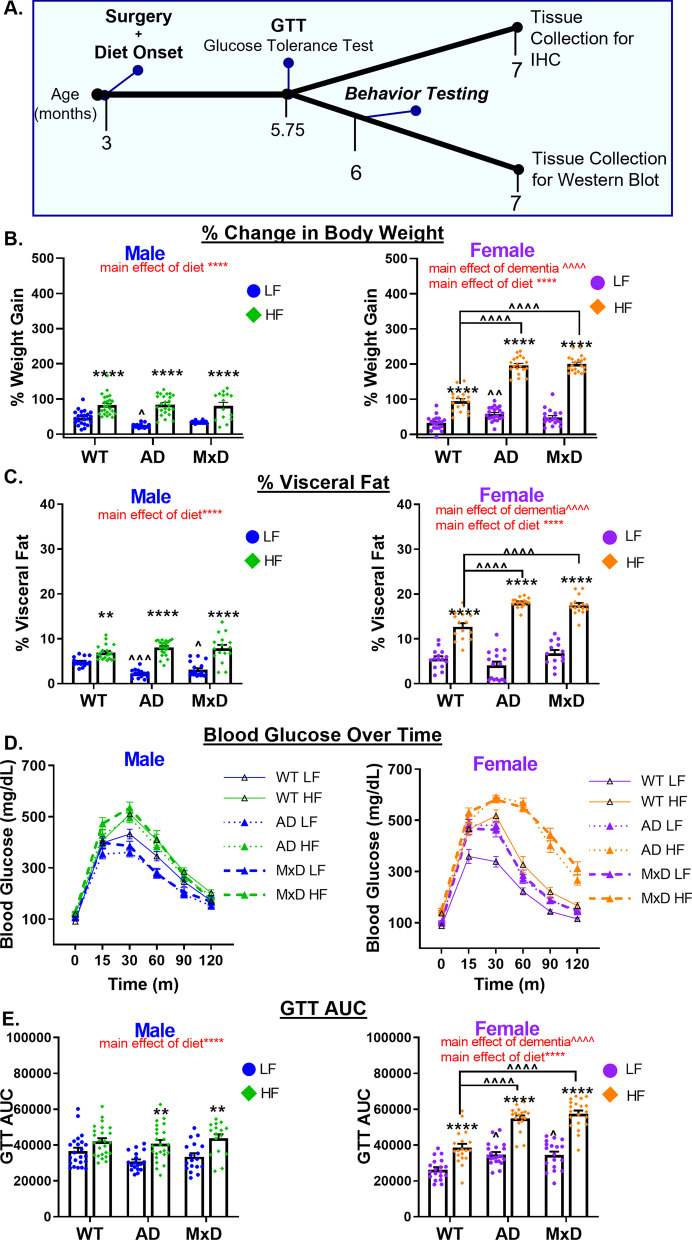
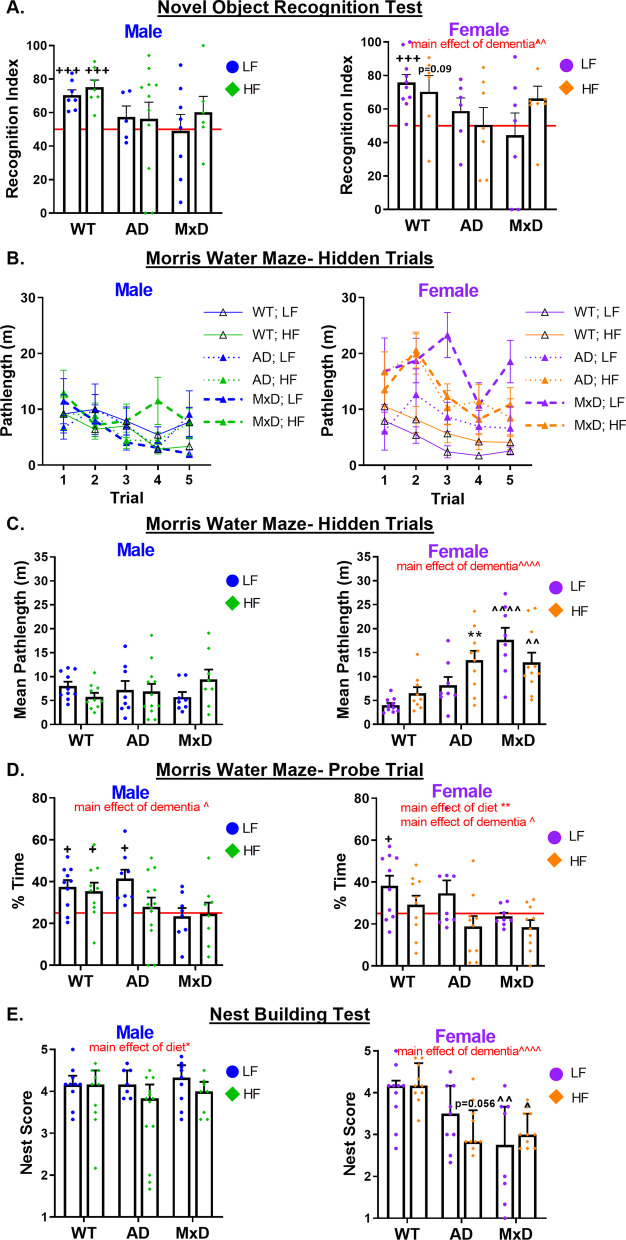
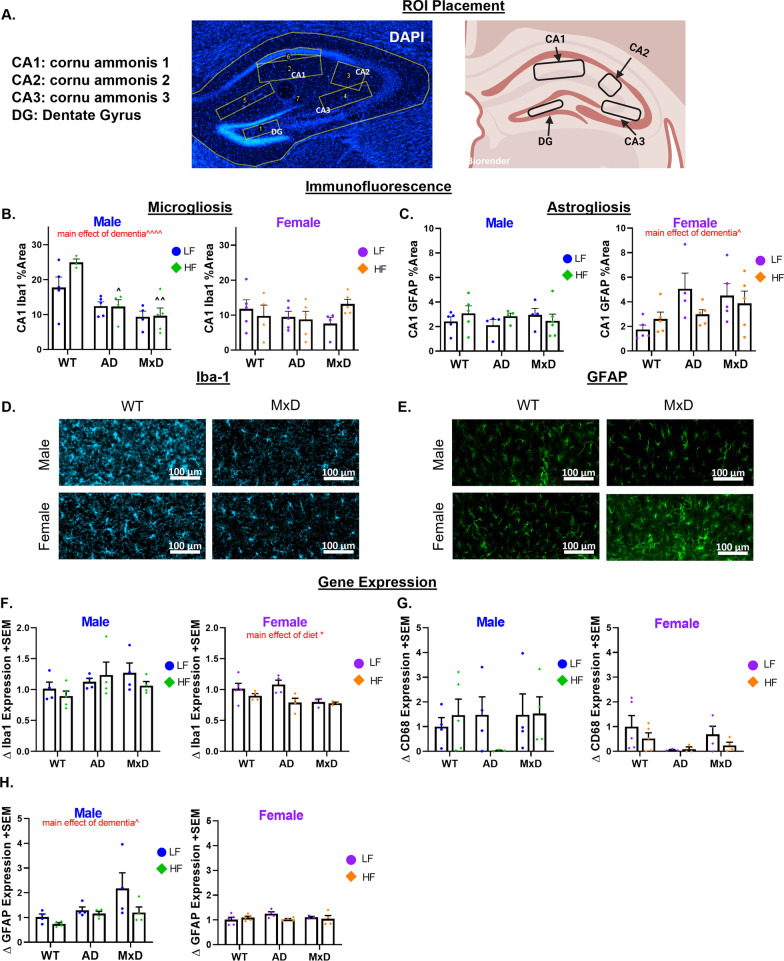
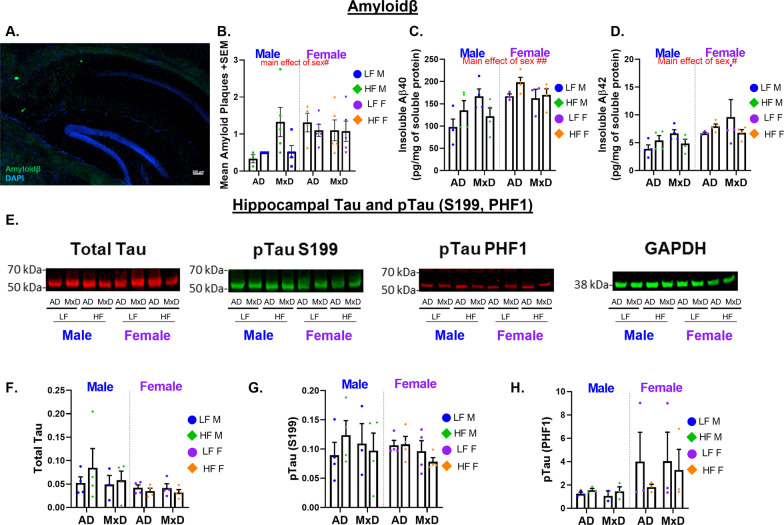
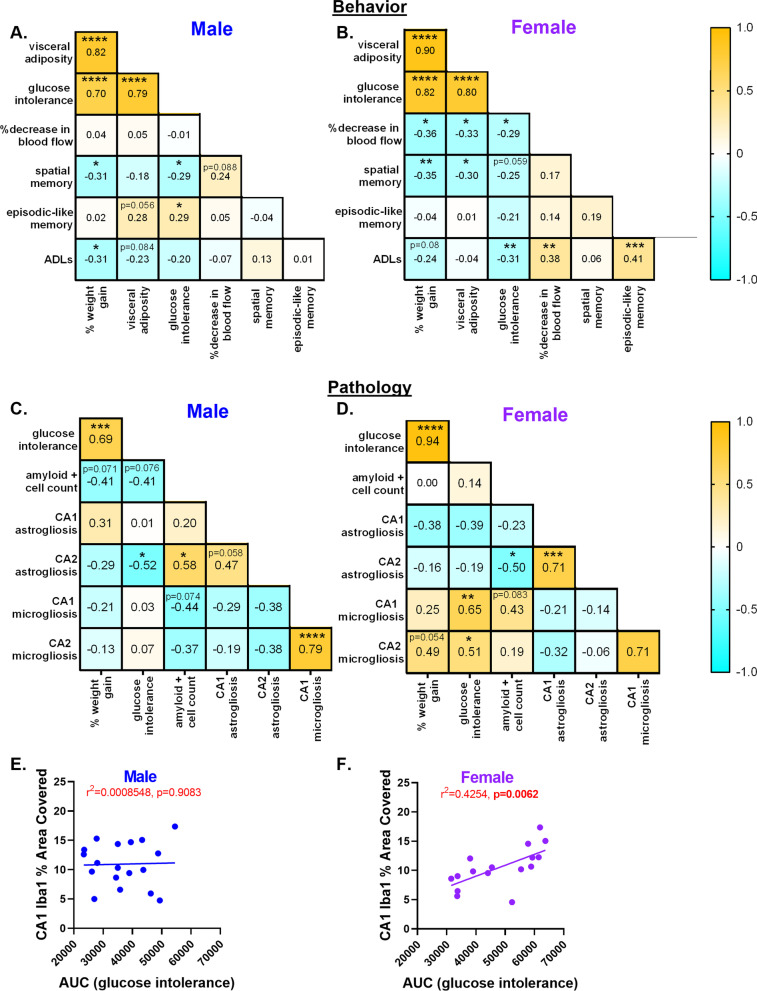
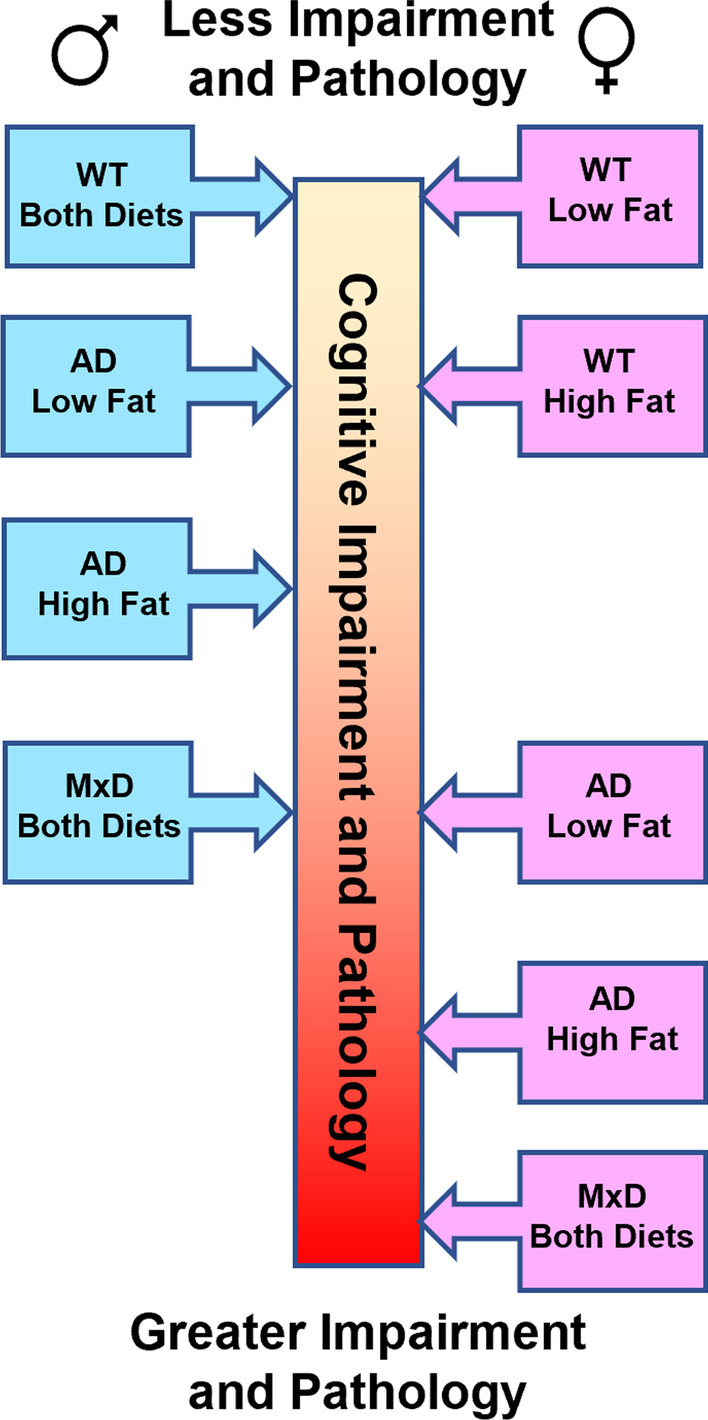
Background: Approximately 70% of Alzheimer’s disease (AD) patients have co-morbid vascular contributions to cognitive impairment and dementia (VCID); this highly prevalent overlap of dementia subtypes is known as mixed dementia (MxD). AD is more prevalent in women, while VCID is slightly more prevalent in men. Sex differences in risk factors may contribute to sex differences in dementia subtypes. Unlike metabolically healthy women, diabetic women are more likely to develop VCID than diabetic men. Prediabetes is 3× more prevalent than diabetes and is linked to earlier onset of dementia in women, but not men. How prediabetes influences underlying pathology and cognitive outcomes across different dementia subtypes is unknown. To fill this gap in knowledge, we investigated the impact of diet-induced prediabetes and biological sex on cognitive function and neuropathology in mouse models of AD and MxD. Methods: Male and female 3xTg-AD mice received a sham (AD model) or unilateral common carotid artery occlusion surgery to induce chronic cerebral hypoperfusion (MxD model). Mice were fed a control or high fat (HF; 60% fat) diet from 3 to 7 months of age. In both sexes, HF diet elicited a prediabetic phenotype (impaired glucose tolerance) and weight gain. Results: In females, but not males, metabolic consequences of a HF diet were more severe in AD or MxD mice compared to WT. In both sexes, HF-fed AD or MxD mice displayed deficits in spatial memory in the Morris water maze (MWM). In females, but not males, HF-fed AD and MxD mice also displayed impaired spatial learning in the MWM. In females, but not males, AD or MxD caused deficits in activities of daily living, regardless of diet. Astrogliosis was more severe in AD and MxD females compared to males. Further, AD/MxD females had more amyloid beta plaques and hippocampal levels of insoluble amyloid beta 40 and 42 than AD/MxD males. In females, but not males, more severe glucose intolerance (prediabetes) was correlated with increased hippocampal microgliosis. Conclusions: High-fat diet had a wider array of metabolic, cognitive, and neuropathological consequences in AD and MxD females compared to males. These findings shed light on potential underlying mechanisms by which prediabetes may lead to earlier dementia onset in women.
Overview
The claims and statistics of this paper haven’t been checked yet.
Free: it reads the open-access text and checks the first 5 claims that cite a source we can check. Create a free account to check every claim.
Integrity signals
Registry
Cites
Statistics
Figures
Verification
Claims the paper makes
The claims and statistics of this paper haven’t been checked yet.
Free: it reads the open-access text and checks the first 5 claims that cite a source we can check. Create a free account to check every claim.
Claims other papers make about this one
Each is checked against this paper’s own text: does it say what the citing paper says it does?
The source backs part of the claim, not all of it — or backs it for a different population, condition or comparison.
In the citing paper
“Epidemiological study has found that midlife central obesity increases risk of dementia as high as 3.6 times,372 possibly by activating systemic inflammation, thus worsening astrogliosis, microgliosis, neuroinflammation and Aβ pathology.373,374”
From Antiageing strategy for neurodegenerative diseases: from mechanisms to clinical advances (2025) · cites this paper as [374]
Experimental — accuracy not yet measured
Self-check
Percentages, sums and reported differences re-computed from the paper’s own numbers.
The self-check needs the paper’s full text.
Citations
Cites
Triple-Transgenic Model of Alzheimer’s Disease with Plaques and Tangles
Oddo, S., Caccamo, A., Shepherd, J. D., Murphy, M. P., Golde, T. E., Kayed, R., Metherate, R., Mattson, M. P., Akbari, Y., & LaFerla, F. M. (2003) · Neuron · doi:10.1016/s0896-6273(03)00434-3 · Cited by 4,126
2020 Alzheimer's disease facts and figures
(2020) · Alzheimer's & Dementia · doi:10.1002/alz.12068 · Cited by 2,353
Intracellular amyloid-β in Alzheimer's disease
LaFerla, F. M., Green, K. N., & Oddo, S. (2007) · Nature Reviews Neuroscience · doi:10.1038/nrn2168 · Cited by 1,942
Ding, E. L., Song, Y., Malik, V. S., & Liu, S. (2006) · JAMA · doi:10.1001/jama.295.11.1288 · Cited by 1,354
Billings, L. M., Oddo, S., Green, K. N., McGaugh, J. L., & LaFerla, F. M. (2005) · Neuron · doi:10.1016/j.neuron.2005.01.040 · Cited by 1,294
Assessing nest building in mice
Deacon, R. M. (2006) · Nature Protocols · doi:10.1038/nprot.2006.170 · Cited by 1,107
A white matter disorder in dementia of the Alzheimer type: A pathoanatomical study
Brun, A., & Englund, E. (1986) · Annals of Neurology · doi:10.1002/ana.410190306 · Cited by 1,014
Increased Risk of Type 2 Diabetes in Alzheimer Disease
Janson, J., Laedtke, T., Parisi, J. E., O’Brien, P., Petersen, R. C., & Butler, P. C. (2004) · Diabetes · doi:10.2337/diabetes.53.2.474 · Cited by 950
The overlap between vascular disease and Alzheimer’s disease - lessons from pathology
Attems, J., & Jellinger, K. A. (2014) · BMC Medicine · doi:10.1186/s12916-014-0206-2 · Cited by 739
Xue, M., Xu, W., Ou, Y.-N., Cao, X.-P., Tan, M.-S., Tan, L., & Yu, J.-T. (2019) · Ageing Research Reviews · doi:10.1016/j.arr.2019.100944 · Cited by 715
Research works printed but not linked: 2
- Javonillo DI Tran KM Phan J Hingco E Kramár EA da Cunha C Systematic Phenotyping and Characterization of the 3xTg-AD Mouse Model of Alzheimer's Disease Front Neurosci 2021 15 785276 10.3389/fnins.2021.785276 35140584 PMC8818877 · DOI · Paper page
- Zuloaga KL Johnson LA Roese NE Marzulla T Zhang W Nie X High fat diet-induced diabetes in mice exacerbates cognitive deficit due to chronic hypoperfusion J Cerebral Blood Flow Metab 2016 36 7 1257 1270 10.1177/0271678X15616400 PMC4929700 26661233 · DOI · Paper page
Cited by
Antiageing strategy for neurodegenerative diseases: from mechanisms to clinical advances
Jiang, Q., Liu, J., Huang, S., Wang, X.-Y., Chen, X., Liu, G.-H., Ye, K., Song, W., Masters, C. L., Wang, J., et al. (2025) · Signal Transduction and Targeted Therapy · doi:10.1038/s41392-025-02145-7 · Cited by 165
“373,374 Therefore, healthy lifestyles, such as regular physical activity and healthy diet, are associated with weigh loss and reduced the risk of dementia by 0.68 times.”
InfluentialObesity-Induced Brain Neuroinflammatory and Mitochondrial Changes
Schmitt, L. O., & Gaspar, J. M. (2023) · Metabolites · doi:10.3390/metabo13010086 · Cited by 109
Li, S., Cai, Y., Guan, T., Zhang, Y., Huang, K., Zhang, Z., Cao, W., & Guan, X. (2024) · Gut Microbes · doi:10.1080/19490976.2024.2374608 · Cited by 113
Evans, A. K., Saw, N. L., Woods, C. E., Vidano, L. M., Blumenfeld, S. E., Lam, R. K., Chu, E. K., Reading, C., & Shamloo, M. (2024) · Brain Behavior and Immunity · doi:10.1016/j.bbi.2024.02.025 · Cited by 94
State of the science on brain insulin resistance and cognitive decline due to Alzheimer's disease
Rhea, E. M., Leclerc, M., Yassine, H. N., Capuano, A. W., Tong, H., Petyuk, V. A., Macauley, S. L., Fioramonti, X., Carmichael, O., Calon, F., et al. (2023) · Aging and disease · doi:10.14336/ad.2023.0814 · Cited by 70
“Sex-dependent peripheral glucose intolerance and insulin resistance are typically observed as well, with females often affected earlier [157, 160, 165].”
BackgroundObesity-induced neuroinflammation and cognitive impairment in young adult versus middle-aged mice
Henn, R. E., Elzinga, S. E., Glass, E., Parent, R., Guo, K., Allouch, A. M., Mendelson, F. E., Hayes, J., Webber‐Davis, I. F., Murphy, G. G., et al. (2022) · Immunity & Ageing · doi:10.1186/s12979-022-00323-7 · Cited by 61
High-fat diet and neuroinflammation: The role of mitochondria
Song, M., Bai, Y., & Song, F. (2025) · Pharmacological Research · doi:10.1016/j.phrs.2025.107615 · Cited by 64
Alzheimer’s disease pathogenesis: standing at the crossroad of lipid metabolism and immune response
Wang, Z., Zhang, L., & Qin, C. (2025) · Molecular Neurodegeneration · doi:10.1186/s13024-025-00857-6 · Cited by 66
Várkonyi, D., Török, B., Sipos, E., Fazekas, C. L., Bánrévi, K., Correia, P., Chaves, T., Farkas, S., Szabó, A., Martínez‐Bellver, S., et al. (2022) · International Journal of Molecular Sciences · doi:10.3390/ijms231810816 · Cited by 43
Afsar, A., Castro, M. D. C. C., Soladogun, A. S., & Li, Z. (2023) · International Journal of Molecular Sciences · doi:10.3390/ijms24087258 · Cited by 49
cGAS/STING and innate brain inflammation following acute high-fat feeding
Elzinga, S. E., Henn, R. E., Murdock, B. J., Kim, B., Hayes, J. M., Mendelson, F. E., Webber‐Davis, I. F., Teener, S. J., Pacut, C. M., Lentz, S. I., et al. (2022) · Frontiers in Immunology · doi:10.3389/fimmu.2022.1012594 · Cited by 42
Gannon, O. J., Naik, J. S., Riccio, D. A., Mansour, F. M., Abi‐Ghanem, C., Salinero, A. E., Kelly, R. D., Brooks, H. L., & Zuloaga, K. L. (2023) · Biology of Sex Differences · doi:10.1186/s13293-023-00518-7 · Cited by 47
“The nest building test was performed as previously described [40].”
BackgroundMethodInfluentialSelf-citationValentin‐Escalera, J., Leclerc, M., & Calon, F. (2024) · Journal of Alzheimer s Disease · doi:10.3233/jad-230118 · Cited by 43
Slowing Alzheimer’s disease progression through probiotic supplementation
Medeiros, D., McMurry, K., Pfeiffer, M., Newsome, K., Testerman, T., Graf, J., Silver, A. C., & Sacchetti, P. (2024) · Frontiers in Neuroscience · doi:10.3389/fnins.2024.1309075 · Cited by 33
Latorre‐Leal, M., Rodriguez‐Rodriguez, P., Franchini, L., Nikolidakis, O., Daniilidou, M., Delac, L., Varshney, M., Arroyo‐García, L. E., Eroli, F., Winblad, B. G., et al. (2024) · Science Advances · doi:10.1126/sciadv.adj1354 · Cited by 32
“Gonadecto-my in mice causes memory impairments, especially in females, that can be reverted by exogenous E2 supplementation ( 66 – 68 ).”
Body Mass Index and Cognition: Associations Across Mid- to Late Life and Gender Differences
Crane, B. M., Nichols, E., Carlson, M. C., Deal, J. A., & Gross, A. L. (2023) · The Journals of Gerontology Series A · doi:10.1093/gerona/glad015 · Cited by 33
Robison, L. S., Gannon, O. J., Salinero, A. E., Abi‐Ghanem, C., Kelly, R. D., Riccio, D. A., Mansour, F. M., & Zuloaga, K. L. (2023) · Biology of Sex Differences · doi:10.1186/s13293-023-00536-5 · Cited by 40
“…that metabolic outcomes, including weight gain, visceral adiposity, and glucose intolerance, were inversely correlated with hippocampal-dependent spatial learning and memory, as measured by performance in the Morris water maze, in both male and female 3xTg-AD mice on control or high-fat diet [62].”
Self-citationSexual dimorphism in the context of nutrition and health
Pontifex, M. G., Vauzour, D., & Müller, M. M. (2023) · Proceedings of The Nutrition Society · doi:10.1017/s0029665123003610 · Cited by 29
Mackey-Alfonso, S. E., Butler, M. J., Taylor, A., Williams-Medina, A. R., Muscat, S. M., Fu, H., & Barrientos, R. M. (2024) · Brain Behavior and Immunity · doi:10.1016/j.bbi.2024.07.021 · Cited by 26
“In mouse models of AD, HFD exacerbated memory impairments (Knight et al., 2014; Mazzei, 2021; Walker et al., 2017; Lin, 2016; Gannon, 2022; Rollins, 2019; Nam, 2017; Barron et al., 2013; Vandal, 2014; Sah et al., 2017; Fanet, 2021) and increased AD pathology (Medrano-Jim ´ enez, 2019).”
BackgroundNiu, Y., Yan, H., Zhong, J.-F., Diao, Z., Li, J., Li, C., Chen, L., Huang, W., Xu, M., Xu, Z. N., et al. (2024) · American Journal of Clinical Nutrition · doi:10.1016/j.ajcnut.2024.11.001 · Cited by 28
Torres-Flores, M. I., & Peña‐Ortega, F. (2022) · Neuroscience · doi:10.1016/j.neuroscience.2022.07.006 · Cited by 22
Niu, Y., Chang, P., Liu, T., Shen, X., Zhao, H., Zhang, M., Lei, S., Chen, B., & Yu, J. (2022) · Frontiers in Molecular Neuroscience · doi:10.3389/fnmol.2022.1000482 · Cited by 22
Liang, Z., Gong, X., Zhao, Y., Zhao, Y., Yu, J., Huang, T., Yang, C., Wu, L., Huang, M., Wang, X., et al. (2024) · Molecular Nutrition & Food Research · doi:10.1002/mnfr.202300669 · Cited by 23
Mo, X., Cheng, R., Shen, L., Liu, N., Sun, Y., Lin, S., Jiang, G., Li, X., Peng, X., Zhang, Y., et al. (2024) · International Journal of Biological Macromolecules · doi:10.1016/j.ijbiomac.2024.134939 · Cited by 26
Abi‐Ghanem, C., Salinero, A. E., Kordit, D., Mansour, F. M., Kelly, R. D., Venkataganesh, H., Kyaw, N., Gannon, O. J., Riccio, D. A., Fredman, G., et al. (2023) · Biology of Sex Differences · doi:10.1186/s13293-023-00513-y · Cited by 22
Self-citationBioenergetics and lipid metabolism in Alzheimer's disease: From cell biology to systemic health
Maioli, S., Nalvarte, I., Ankarcrona, M., Schultzberg, M., Zuloaga, K. L., Goikolea, J., Visser, P. J., Strooper, B. D., Winblad, B., Pizzo, P., et al. (2025) · Journal of Internal Medicine · doi:10.1111/joim.70036 · Cited by 21
“In female models of amyloidosis and VCID (vascular contributions to cognitive impairment and dementia) fed on a high-fat diet, metabolic impairment (obesity and prediabetes) is more severe and accompanied by broad cognitive impairments than in male mice [222, 223].”
Self-citationSex-specific transcriptional rewiring in the brain of Alzheimer’s disease patients
Santiago, J. A., Quinn, J. P., & Potashkin, J. A. (2022) · Frontiers in Aging Neuroscience · doi:10.3389/fnagi.2022.1009368 · Cited by 16
“For example, a high-fat diet elicited a greater metabolic impairment, visceral fat accumulation, and glucose intolerance in female but not in male 3x-Tg AD mice (Gannon et al., 2022).”
BackgroundAbedi, A., Foroutan, T., Shalmani, L. M., & Dargahi, L. (2023) · Mechanisms of Ageing and Development · doi:10.1016/j.mad.2023.111795 · Cited by 16
Huang, Q., Liu, L., Tan, X., Wang, S., Wang, S., Luo, J., Chen, J., Yang, N., Jiang, J., Liu, Y., et al. (2024) · Journal of Affective Disorders · doi:10.1016/j.jad.2024.05.150 · Cited by 16
Sampath, D., Branyan, T. E., Markowsky, K., Gunda, R., Samiya, N. T., Obenaus, A., & Sohrabji, F. (2023) · Neurobiology of Aging · doi:10.1016/j.neurobiolaging.2023.05.001 · Cited by 13
“using the 3xTg-AD mouse model which showed that female transgenics are more susceptible to cognitive and neuropathological consequences when exposed a high-fat diet or high-fat diet in conjunction with chronic cerebral hypoperfusion (Gannon et al., 2022).”
Zheng, X., Luo, Z., Zheng, J., Deng, C., Liu, D., Chen, Y., Zhou, R., Zou, J., Huang, G., Zeng, Q., et al. (2025) · CNS Neuroscience & Therapeutics · doi:10.1111/cns.70497 · Cited by 15
Mackey-Alfonso, S. E., & Barrientos, R. M. (2025) · Alzheimer s & Dementia · doi:10.1002/alz.70911 · Cited by 15
Elzinga, S. E., Koubek, E. J., Hayes, J. M., Carter, A., Mendelson, F. E., Webber‐Davis, I. F., Lentz, S. I., & Feldman, E. L. (2023) · Frontiers in Cellular Neuroscience · doi:10.3389/fncel.2023.1167688 · Cited by 13
Dietary fat, telomere length and cognitive function: unravelling the complex relations
Mostafa, H. M. A., Gutiérrez-Tordera, L., Mateu-Fabregat, J., Papandreou, C., & Bulló, M. (2023) · Current Opinion in Lipidology · doi:10.1097/mol.0000000000000900 · Cited by 17
“For example, the consumption of walnut and pistachio, which are rich in PUFAs and MUFAs, was associated with longer telomere length [38,39].”
BackgroundSalinero, A. E., Abi‐Ghanem, C., Venkataganesh, H., Sura, A., Smith, R. M., Thrasher, C. A., Kelly, R. D., Hatcher, K. M., NyBlom, V., Shamlian, V., et al. (2024) · Hormones and Behavior · doi:10.1016/j.yhbeh.2024.105594 · Cited by 15
“qPCR was performed according to our previously published methods (Gannon et al., 2022; Salinero et al., 2020).”
MethodInfluentialSelf-citationDileo, E., Saba, F., Parasiliti‐Caprino, M., Rosso, C., & Bugianesi, E. (2025) · Nutrients · doi:10.3390/nu17030477 · Cited by 14
Loss of lysosomal acid lipase contributes to Alzheimer's disease pathology and cognitive decline
Barnett, A. M., McNair, E. M., Dawkins, L., Zou, J., Nikolova, V. D., Moy, S. S., Sutherland, G. T., Stevens, J., Colie, M., Katemboh, K., et al. (2025) · Alzheimer's & Dementia · doi:10.1002/alz.70486 · Cited by 12
Fecal microbiota transplantation ameliorates high‐fat diet‐induced memory impairment in mice
Pereira, L. T. G., Vilela, W. R., Bellozi, P. M. Q., Engel, D. F., de Paula, G. C., de Andrade, R. R., Mortari, M. R., Teixeira, M. D. M., Coleine, C., Figueiredo, C. P., et al. (2024) · Journal of Neurochemistry · doi:10.1111/jnc.16156 · Cited by 11
“Notably, heightened consumption of saturated fat not only exacerbates cognitive impairment in certain neurodegenerative diseases (Gannon et al., 2022 ) but can also independently induce cognitive dysfunction.”
Dietary Responses of Dementia-Related Genes Encoding Metabolic Enzymes
Parnell, L. D., Magadmi, R., Zwanger, S. M., Shukitt‐Hale, B., Lai, C., & Ordovás, J. M. (2023) · Nutrients · doi:10.3390/nu15030644 · Cited by 12
Liu, G., Shu, W., Chen, Y., Fu, Y., Fang, S., Zheng, H., Cheng, W., Lin, Q., Hu, Y., Jiang, N., et al. (2024) · Journal of Neuroinflammation · doi:10.1186/s12974-024-03097-5 · Cited by 12
“In contrast to the ketogenic diet, which has neuroprotective and angiogenic effects [2, 45, 46], HFD-related hyperlipidemia and metabolic syndromes have been shown to induce neuroinflammation, BBB impairment, and cognitive decline [4, 42, 47].”
BackgroundTrends in Gliosis in Obesity, and the Role of Antioxidants as a Therapeutic Alternative
Bandala, C., Cárdenas‐Rodríguez, N., Reyes-Long, S., Cortes-Altamirano, J. L., Garciadiego-Cázares, D., Lara‐Padilla, E., Ibáñez-Cervantes, G., Mancilla-Ramírez, J., Gómez‐Manzo, S., & Alfaro-Rodríguez, A. (2022) · Antioxidants · doi:10.3390/antiox11101972 · Cited by 13
Xu, L., Ma, Y., Ji, Y., Ma, Y., Wang, Y., Zhao, X., & Ge, S. (2023) · Experimental Gerontology · doi:10.1016/j.exger.2023.112320 · Cited by 9
Lu, S., Portela, I. D. J., Martino, N., Ramos, R. B., Salinero, A. E., Smith, R. M., Zuloaga, K. L., & Adam, A. P. (2024) · Neuroscience · doi:10.1016/j.neuroscience.2024.07.041 · Cited by 8
Self-citationHypercholesterolemia drives microglial dysfunction and weakens response to amyloid plaques
Kaye, S. D., Gold, A., Lin, D., Chen, M., Zhu, J., & Gao, J. (2025) · Experimental Neurology · doi:10.1016/j.expneurol.2025.115272 · Cited by 11
Type 2 Diabetes Comorbidity and Cognitive Decline in Patients with Alzheimer’s Disease
Davidson, S., Allenback, G. L., Decourt, B., & Sabbagh, M. N. (2023) · Journal of Alzheimer s Disease · doi:10.3233/jad-230489 · Cited by 9
Kim, Y., Jo, D., Arjunan, A., Ryu, Y., Lim, Y.-H., Choi, S. Y., Kim, H. K., & Song, J. (2024) · International Journal of Molecular Sciences · doi:10.3390/ijms25052567 · Cited by 11
“Recently, as the incidence of dementia accompanying metabolic disorders increases, the interest in the effects of IGF-1, which exhibits various ameliorating effects in metabolic disorders, on the central nervous system (CNS) is increasing [34–36].”
BackgroundThe LIDPAD Mouse Model Captures the Multisystem Interactions and Extrahepatic Complications in MASLD
Low, Z. S., Chua, D., Cheng, H. S., Tee, R., Tan, W., Ball, C., Sahib, N. B. E., Ng, S. S., Qu, J. T., Liu, Y., et al. (2024) · Advanced Science · doi:10.1002/advs.202404326 · Cited by 11
The significance of glutaredoxins for diabetes mellitus and its complications
Zhou, M., Hanschmann, E.-M., Römer, A., Linn, T., & Petry, S. F. (2024) · Redox Biology · doi:10.1016/j.redox.2024.103043 · Cited by 11
“Regarding the brain, HFD is known to induce neuronal inflammation and cognitive impairment in mice independent of a Grx knockout [244,245].”
BackgroundZhang, S., Sala, G., Nakamura, A., Kato, T., Furuya, K., Shimokata, H., Gao, X., Nishita, Y., & Otsuka, R. (2024) · Nutrition Journal · doi:10.1186/s12937-024-00935-3 · Cited by 9
“Another study in a female mouse model of Alzheimer’s disease and dementia demonstrated a broader range of metabolic, cognitive, and neuropathological consequences of a high-fat diet than that in male mice [42].”
BackgroundLiu, J. A., Bumgarner, J. R., Walker, W. H., Meléndez‐Fernández, O. H., Walton, J. C., DeVries, A. C., & Nelson, R. J. (2024) · Scientific Reports · doi:10.1038/s41598-024-57511-2 · Cited by 10
The role of gut microbiota in chronic restraint stress-induced cognitive deficits in mice
Ling, Q., Zhang, J., Zhong, L., Li, X., Sun, T., Xiang, H., Manyande, A., Zhao, G., Shi, Y., & Zhu, Q. (2024) · BMC Microbiology · doi:10.1186/s12866-024-03435-w · Cited by 9
“However, previous research has indicated a potential correlation between gender and cognition [51, 52].”
BackgroundSanz-Martos, A. B., Roca, M., Plaza, A., Merino, B., Ruiz‐Gayo, M., & Olmo, N. D. (2024) · Neuropharmacology · doi:10.1016/j.neuropharm.2024.110108 · Cited by 10
Xie, G., Jiang, G., Huang, L., Sun, S., Wan, Y., Li, F., Wu, B., Zhang, Y., Li, X., Xiong, B., et al. (2025) · Pharmaceuticals · doi:10.3390/ph18060790 · Cited by 13
“In clinical practice, mixed dementia accounts for more than ~70% of cases [237,238].”
Guo, D., Huang, H.-Y., Liu, H.-E., Liu, K., & Luo, X. (2023) · Pain Research and Management · doi:10.1155/2023/8893932 · Cited by 9
“Te cornu Pain Research and Management ammonis 1 and 3 (CA1 and CA3) regions in the hippocampus were determined following a previously described method [54].”
MethodEffects of Menopause and High Fat Diet on Metabolic Outcomes in a Mouse Model of Alzheimer’s Disease
Abi‐Ghanem, C., Salinero, A. E., Smith, R. M., Kelly, R. D., Belanger, K., Richard, R., Paul, A. S., Herzog, A. A., Thrasher, C. A., Rybka, K. A., et al. (2024) · Journal of Alzheimer s Disease · doi:10.3233/jad-231332 · Cited by 9
Self-citationAbi‐Ghanem, C., Kelly, R. D., Groom, E., Valerian, C. G., Paul, A. S., Thrasher, C. A., Salinero, A. E., Batchelder, M. R., Lafrican, J. J., Wang, M.-X., et al. (2025) · Alzheimer s & Dementia · doi:10.1002/alz.70026 · Cited by 8
“28,69,70 To date, one other study has examined the effects of an HF diet in App NL-F mice and found that, in male App NL-F , HF diet for 12 months led to an increase of A β in the hippocampus.”
InfluentialSelf-citationHuang, F., Marungruang, N., Martinsson, I., Camprubí-Ferrer, L., Nguyen, T. D., Gondo, T. F., Karlsson, E. N., Deierborg, T., Öste, R., & Heyman‐Lindén, L. (2023) · Frontiers in Nutrition · doi:10.3389/fnut.2023.1257472 · Cited by 9
Molecular mechanisms underlying obesity-induced memory dysfunction: a comprehensive narrative review
Golkar, A., Razazpour, F., Dalfardi, M., & Baghcheghi, Y. (2025) · Physiology & Behavior · doi:10.1016/j.physbeh.2025.115119 · Cited by 8
Liu, C., Yan, Q., Ding, X., Zhao, M., Chen, C., Zheng, Q., Yang, H., & Xie, Y. (2024) · International Journal of Biological Macromolecules · doi:10.1016/j.ijbiomac.2024.131610 · Cited by 7
Herbal medicines in Alzheimer’s disease and the involvement of gut microbiota
Liu, M., Li, T., Liang, H., & Zhong, P. (2024) · Frontiers in Pharmacology · doi:10.3389/fphar.2024.1416502 · Cited by 11
Campbell, K. J., Jiang, P., Olker, C. J., Lin, X., Kim, S. Y., Lee, C., Song, E. J., Turek, F. W., & Vitaterna, M. H. (2024) · Frontiers in Neurology · doi:10.3389/fneur.2024.1430989 · Cited by 7
Physiopathological Roles of White Adiposity and Gut Functions in Neuroinflammation
Spinedi, E., & Docena, G. H. (2024) · International Journal of Molecular Sciences · doi:10.3390/ijms252111741 · Cited by 8
“Furthermore, HFD-driven inflammation has been linked with a dysbi-otic microbiota [193].”
BackgroundLippi, S. L. P., Barkey, R. E., & Rodriguez, M. N. (2023) · Physiology & Behavior · doi:10.1016/j.physbeh.2023.114316 · Cited by 6
Gong, Y., Luo, H., Li, Z., Feng, Y., Liu, Z., & Chang, J. (2023) · Metabolites · doi:10.3390/metabo13080954 · Cited by 7
Srokowska, M., Żwierełło, W., Wszołek, A., & Gutowska, I. (2025) · Biology · doi:10.3390/biology14101317 · Cited by 8
“In both sexes, HFD induced a prediabetic phenotype (Figure 3) [116].”
High-fat diet exacerbates atopic dermatitis through alterations in the gut microbiome
Tabata, K., Ikarashi, N., Yoshida, R., Shinozaki, Y., Kato, Y., Kon, R., Iwasaki, Y., Yokoyama, K., Saito, R., Sakai, H., et al. (2025) · The Journal of Nutritional Biochemistry · doi:10.1016/j.jnutbio.2025.110164 · Cited by 5
Metabolic inflammation at the adipose-brain axis
Mateus-Gomes, S., Al-Sayyar, A., Lobey, B., Nadjar, A., Rua, R., & Ahmad, R. (2026) · Frontiers in Physiology · doi:10.3389/fphys.2026.1795058 · Cited by 7
Filbertone-Induced Nrf2 Activation Ameliorates Neuronal Damage via Increasing BDNF Expression
Gong, J. H., Kim, C.-S., Park, J., Kang, S., Jang, Y., Kim, M., Chung, H., Joe, Y., & Yu, R. (2024) · Neurochemical Research · doi:10.1007/s11064-024-04290-x · Cited by 5
The prospective therapeutic benefits of sesamol: neuroprotection in neurological diseases
Guo, Y., Wang, Y., Xu, B., & Li, Y. (2025) · Nutritional Neuroscience · doi:10.1080/1028415x.2025.2457051 · Cited by 6
“HFD causes Aβ accumulation and hyperpho-sphorylated Tau accumulation [82] and exacerbates cognitive deficits and memory loss [83].”
Chen, Y., Yao, X., Wang, C., Zhuang, H., Xie, B., Sun, C., Wang, Z., Zhou, X., Luo, Y., Zhang, Y., et al. (2025) · Brain Behavior and Immunity · doi:10.1016/j.bbi.2025.03.035 · Cited by 5
Teng, F., Sun, J.-H., Chen, Z., & Li, H. (2024) · Frontiers in Nutrition · doi:10.3389/fnut.2024.1415555 · Cited by 6
Xu, J., Xie, L., Yin, J., Shi, X., Dong, K., Tao, J., Xu, W., Ma, D., Zhang, S., Chen, J., et al. (2024) · Biomedicines · doi:10.3390/biomedicines12081701 · Cited by 6
“In accordance with prior previous research findings, an HFD induced increased hippocampal A β deposition, hyperphosphorylation of tau protein, and quantity of microglia and astrocytes, thereby triggering neuroinflammation in both WT and db/db mice [18,45].”
BackgroundResultColeborn, S. G., Gilson, Z. M., Yu, G., & Tremblay, M. (2025) · Frontiers in Aging Neuroscience · doi:10.3389/fnagi.2025.1642043 · Cited by 4
Swarnkar, P., & Rajput, P. (2025) · Brain Research · doi:10.1016/j.brainres.2025.149858 · Cited by 4
Xing, Z., Jiang, X., Yang, W., Wang, Y., Zhang, X., & Zhao, C. (2025) · Current Alzheimer Research · doi:10.2174/0115672050399032250715043316 · Cited by 5
Lv, H., Mao, N., Liu, A., Zhao, X., & Zhu, B. (2025) · Molecular Neurobiology · doi:10.1007/s12035-025-05300-x · Cited by 5
Abi‐Ghanem, C., Opiela, A. K., Paul, A. S., Comito, M. L., Li, H., Martino, G., Kyaw, N., Salinero, A. E., Mansour, F. M., Kelly, R. D., et al. (2025) · Biology of Sex Differences · doi:10.1186/s13293-025-00795-4 · Cited by 6
“Locomotor activity was evaluated using an open field test, as previously described [35, 36, 39–41].”
InfluentialSelf-citationYu, Y., Yang, H. J., Kim, M., Zhang, T., Li, C., Kim, M. J., Jang, D.-J., & Park, S. (2025) · Applied Biological Chemistry · doi:10.1186/s13765-025-01019-4 · Cited by 3
Sun, Q., Zheng, F., Chen, G., & Jin, L. (2026) · Frontiers in Neurology · doi:10.3389/fneur.2025.1644172 · Cited by 3
Obesity as a catalyst for neurodegeneration
Chen, B., Rodríguez-Díaz, A., Schneeberger, M., & Topol, E. J. (2026) · Nature Metabolism · doi:10.1038/s42255-026-01477-0 · Cited by 6
Wang, D., Irewole, E. A., Bays, L. D., Smith, M. D., & Schreurs, B. G. (2025) · Neurobiology of Learning and Memory · doi:10.1016/j.nlm.2025.108053 · Cited by 4
Modifiable Innate Biology within the Gut–Brain Axis for Alzheimer’s Disease
Marcos-Pasero, H., García-Tejedor, A., Giménez‐Bastida, J. A., & Laparra, J. M. (2022) · Biomedicines · doi:10.3390/biomedicines10092098 · Cited by 4
Viguier, C., Bullich, S., Botella, M., Fasseu, L., Alfonso, A., Rekik, K., Gauzin, S., Guiard, B. P., & Davezac, N. (2023) · Neuropharmacology · doi:10.1016/j.neuropharm.2023.109730 · Cited by 3
Experimental laboratory models as tools for understanding modifiable dementia risk
Sinclair, D., Canty, A. J., Ziebell, J. M., Woodhouse, A., Collins, J. M., Perry, S. E., Roccati, E., Kuruvilla, M. V., Leung, J. Y. K., Atkinson, R. A. K., et al. (2024) · Alzheimer s & Dementia · doi:10.1002/alz.13834 · Cited by 2
Cognitive impairment in patients with obesity and impaired carbohydrate metabolism (dysglycemia)
Dzgoeva, F. K., Ekusheva, E. V., & Demidova, V. V. (2024) · Problems of Endocrinology · doi:10.14341/probl13389 · Cited by 4
“Gannon O.J., Robison L.S. продемонстрировали нали-чие прямой корреляции между уровнем системного вос-паления в гиппокампе, вызванного ожирением на фоне высококалорийного питания, и нарушениями обучения и памяти [22].”
Valiauga, R., Talley, S., Khemmani, M., Noronha, M. F., Gogliotti, R. G., Wolfe, A. J., & Campbell, E. M. (2024) · Journal of Neuroinflammation · doi:10.1186/s12974-024-03140-5 · Cited by 2
Li, H., Zheng, J., Tan, K.-W., Su, J., Chen, W., Pang, R.-K., Wu, G., Qiu, Y.-H., Li, X., Cai, Y., et al. (2025) · International Immunopharmacology · doi:10.1016/j.intimp.2025.114461 · Cited by 2
Fei, Y., Zhang, J., Yuan, S., Liu, Y., Wang, X., Wang, M., Zhao, H., & Liu, Q. (2025) · Frontiers in Nutrition · doi:10.3389/fnut.2025.1585778 · Cited by 3
Association of sugar intake with incident dementia in the UK Biobank: a prospective cohort study
Che, Y., Wei, W., Mao, T., Qin, L., Wang, H., Li, Y., Da, W., Feng, J., Liu, L., Cheng, B., et al. (2025) · The Journal of Prevention of Alzheimer s Disease · doi:10.1016/j.tjpad.2025.100311 · Cited by 3
Ji, Z., Liu, S., Tian, Z., Guo, N., Wei, W., & Jiang, Q. (2025) · International Dental Journal · doi:10.1016/j.identj.2025.103929 · Cited by 2
“63-65 While these factors were not the focus of our current study, they may contribute to the observed outcomes.”
Lail, H. L., Lawrence, R. C., Pinheiro, F., Price, E., & Wanders, D. (2026) · PLoS ONE · doi:10.1371/journal.pone.0343503 · Cited by 2
“However, the metabolic and central consequences of high dietary fat intake reported in the literature vary considerably, depending on multiple factors including the duration of HFD exposure [18], the animal model used [19], and the age [20,21], and sex [22,23] of the animals.”
Neves, R. C. S. M., Figueiredo, R. C., & Faria‐Melibeu, A. D. C. (2024) · Current Alzheimer Research · doi:10.2174/0115672050348227241128095209 · Cited by 3
Pulido-Correa, V., Hernandez, A., Wind, E. J., Zhu, Y., Vogel, C., Binu, S., Jeneske, M., Kuni, D., Chiduruppa, V., Echeverria, B., et al. (2026) · Journal of Alzheimer s Disease · doi:10.1177/13872877261445916 · Cited by 3
Self-citationMelanotan-II reverses memory impairment induced by a short-term HF diet
Wekwejt, P., Wojda, U., & Kiryk, A. (2023) · Biomedicine & Pharmacotherapy · doi:10.1016/j.biopha.2023.115129 · Cited by 1
Estrogen-Dependent Variation in the Contributions of TRPM4 and TRPM5 to Fat Taste
Masterson, E., Dahir, N. S., Calder, A. N., Liu, Y., Lin, F., & Gilbertson, T. A. (2025) · Nutrients · doi:10.3390/nu17243847 · Cited by 2
“Recent studies have shown that a high-fat diet exacerbated the cognitive decline in Alzheimer’s disease in females [9].”
Klinger, H. M., Coughlan, G., Hayden, K. M., Manson, J. E., Wild, R. A., Jung, S. Y., Casanova, R., Liu, L., Shadyab, A. H., Wactawski‐Wende, J., et al. (2026) · Journal of Clinical and Experimental Neuropsychology · doi:10.1080/13803395.2025.2608340 · Cited by 1
“Diabetes mellitus and chronic hyperglycemia have been associated with an elevated risk of dementia (Gannon et al., 2022, Yaffe et al., 2004).”
Deng, C., Cao, X., Wang, X., Tang, C., & He, Z. (2026) · Frontiers in Microbiology · doi:10.3389/fmicb.2025.1687697 · Cited by 1
Sabourin, S., Thrasher, C. A., Smith, R. M., Belanger, K., Thibodeau, B., Abi‐Ghanem, C., Lafrican, J. J., Camon, C., Kelly, R. D., Richard, R., et al. (2026) · Journal of Neuroinflammation · doi:10.1186/s12974-026-03719-0 · Cited by 3
“We have also shown that these effects are sex-specific, such that pathology and behavioral deficits exacerbated by HFD are worse in females [19, 31–34].”
InfluentialSelf-citationUnhealthy dietary patterns and Alzheimer’s disease: associations and underlying mechanistic pathways
Ramasinghe, C., & Xu, B. (2026) · Critical Reviews in Food Science and Nutrition · doi:10.1080/10408398.2026.2691237 · Cited by 2
“…stress markers, induce insulin resistance, and elevate pro-inflammatory cytokines, these changes are associated with impaired synaptic plasticity and neuronal survival, potentially influencing cognitive decline independent of overt amyloid or tau pathology (Gannon et al. 2022; Mengr et al. 2023).”
PQBP1-dependent alternative RNA splicing underlies high calorie diet-induced cognitive impairment
Huang, Y., Homma, H., Yoshioka, Y., Watanabe, T., Fujino, S., Matsuyama, K., Chen, X., Fujita, K., Shiwaku, H., Spada, A. R. L., et al. (2026) · Molecular Psychiatry · doi:10.1038/s41380-026-03868-x · Cited by 1
Metadata
- Authors
- Gannon, O. J., Robison, L. S., Salinero, A. E., Abi-Ghanem, C., Mansour, F. M., Kelly, R. D., Tyagi, A., Brawley, R. R., Ogg, J. D., & Zuloaga, K. L.
- Affiliations
- Albany Medical College (US)
- Nova Southeastern University (US)
- Stetson University (US)
- Corresponding author
- Zuloaga, Kristen L.
- ORCID
- Venue
- Journal of Neuroinflammation
- Published
- 2022-05-14
- Volume
- 19
- Issue
- 1
- Pages
- 110-110
- ISSN
- 1742-2094 (ISSN-L)
- PMC
- PMC9107741
- OpenAlex
- W4280628531
- Cited by
- 127
- References
- 104
- Citations by year
- 2026: 21 · 2025: 33 · 2024: 41 · 2023: 24 · 2022: 8
- FWCI
- 9.48
- Type
- journal article
- Language
- en
- Open access
- gold
- doi.org
- Licence
- cc-by
- creativecommons.org/licenses/by/4.0 (tdm)
- creativecommons.org/licenses/by/4.0 (vor)
- Locations
- Journal of Neuroinflammation (publishedVersion, cc-by)
- bioRxiv (Cold Spring Harbor Laboratory) (acceptedVersion, cc-by)
- PubMed Central (publishedVersion, cc-by)
- PubMed (publishedVersion)
- DOAJ (DOAJ: Directory of Open Access Journals) (submittedVersion)
- Funders
- American Heart Association (16SDG27190001, 20PRE35080166)
- National Institute of Neurological Disorders and Stroke (R01NS110749, F31 NS115290)
- National Institute on Aging (U01AG072464)
- Albany Medical College startup funds
- Topics
- Life Sciences › Neuroscience › Neurology › Neurological Disease Mechanisms and Treatments
- Life Sciences › Neuroscience › Cellular and Molecular Neuroscience › Alzheimer's disease research and treatments
- Health Sciences › Medicine › Psychiatry and Mental health › Dementia and Cognitive Impairment Research
- Keywords
- Alzheimer's disease, mixed dementia, high-fat diet, prediabetes, sex differences, cognitive decline, 3xTg-AD mice, common carotid artery occlusion, cerebral hypoperfusion, spatial memory, astrocyte activation, microglial activation, amyloid plaques, impaired glucose tolerance
- MeSH terms
- Activities of Daily Living, Alzheimer Disease, Animals, Disease Models, Animal, Female, Humans, Male, Mice, Inbred C57BL, Mice, Transgenic, Prediabetic State, Dementia, Vascular, Amyloid beta-Peptides, Mice, Plaque, Amyloid, Diet, High-Fat, Cognitive Dysfunction
About these checks
Registry, retraction, Cites and statistics results are computed, not judged, with one exception: a printed reference that no index lists is read once by a model before it counts as a citation error. Claims are extracted by a model and kept only when their quote appears verbatim in the text; each cited source is then checked, with a model’s help, for whether it says what the claim relies on. Those verdicts can be wrong — read the claim’s quote and the cited source before relying on one.
Statistics and arithmetic are recomputed, not judged.
Confidence bands are shown only for fields calibrated on our annotated test set. None is calibrated yet, so no band is shown.
What counts as a claim ›How we measure confidence ›How we check this ›
Are you an author, or do you see a problem with this page? Request a review
Data sources
Bibliographic data: Semantic Scholar, OpenAlex, Crossref.
Contains information from the Semantic Scholar Academic Graph Datasets, made available under the ODC Attribution License (ODC-BY 1.0).
Semantic Scholar’s data is described in: Kinney, R., et al. (2023). The Semantic Scholar Open Data Platform. arXiv:2301.10140.
