

The function of gut microbiota in immune-related neurological disorders: a review
Open accessThe DOI matches its Crossref record; 210 of the 210 references it cites were found in a registry or an index.
Abstract
This review provides an overview of the importance of microbiota in the regulation of gut–brain communication in immune-related neurological disorders. The gastrointestinal (GI) tract hosts a diverse abundance of microbiota, referred to as gut microbiota. The gut microbiota plays a role in the maintenance of GI tract homeostasis and is likely to have multiple effects on brain development and function. The bidirectional communication between the gut microbiota and the brain is termed the microbiota–gut–brain axis. This communication between the intestine and the brain appears to affect human health and behavior, as certain animal studies have demonstrated the association between alterations in the gut microbiota and neurological disorders. Most insights about the microbiota–gut–brain axis come from germ-free animal models, which reveal the importance of gut microbiota in neural function. To date, many studies have observed the impact of the gut microbiota in patients with neurological disorders. Although many studies have investigated the microbiota–gut–brain axis, there are still limitations in translating this research to humans given the complexities of the relationship between the gut microbiota and the brain. In this review, we discuss emerging evidence of how the microbiota–gut–brain axis regulates brain development and function through biological networks, as well as the possible contribution of the microbiota–gut–brain axis in immune-related neurological disorders.
Overview
The claims and statistics of this paper haven’t been checked yet.
Free: it reads the open-access text and checks the first 5 claims that cite a source we can check. Create a free account to check every claim.
Integrity signals
Registry
Cites
Statistics
Figures
Verification
Claims the paper makes
The claims and statistics of this paper haven’t been checked yet.
Free: it reads the open-access text and checks the first 5 claims that cite a source we can check. Create a free account to check every claim.
Claims other papers make about this one
Each is checked against this paper’s own text: does it say what the citing paper says it does?
The cited source says what the claim attributes to it.
In the citing paper
“The gut microbiota is in constant communication with the immune system, influencing its maturation and performance as (3–6).”
From Unveiling the therapeutic symphony of probiotics, prebiotics, and postbiotics in gut-immune harmony (2024) · cites this paper as [5]
Self-check
Percentages, sums and reported differences re-computed from the paper’s own numbers.
The self-check needs the paper’s full text.
Citations
Cites
Changes of Intestinal Functions in Liver Cirrhosis
Fukui, H., & Wiest, R. (2016) · Inflammatory Intestinal Diseases · doi:10.1159/000444436 · Cited by 6,808
The Microbial Metabolites, Short-Chain Fatty Acids, Regulate Colonic T reg Cell Homeostasis
Smith, P. M., Howitt, M. R., Panikov, N., Michaud, M., Gallini, C. A., Bohlooly-Y, M., Glickman, J. N., & Garrett, W. S. (2013) · Science · doi:10.1126/science.1241165 · Cited by 5,413
Host-Bacterial Mutualism in the Human Intestine
Bäckhed, F., Ley, R. E., Sonnenburg, J. L., Peterson, D. A., & Gordon, J. I. (2005) · Science · doi:10.1126/science.1104816 · Cited by 5,277 · cited 1×
“The microorganisms living in the GI tract, including bacteria, archaea, fungi, and viruses, are termed the gut microbiota [9, 10].”
BackgroundMetabolites produced by commensal bacteria promote peripheral regulatory T-cell generation
Arpaia, N., Campbell, C., Fan, X., Dikiy, S., van der Veeken, J., deRoos, P., Liu, H., Cross, J. R., Pfeffer, K., Coffer, P. J., et al. (2013) · Nature · doi:10.1038/nature12726 · Cited by 4,838 · cited 1×
“Moreover, SCFAs also facilitate regulatory T cell (Treg) generation and homeostasis [33, 34].”
BackgroundMind-altering microorganisms: the impact of the gut microbiota on brain and behaviour
Cryan, J. F., & Dinan, T. G. (2012) · Nature Reviews Neuroscience · doi:10.1038/nrn3346 · Cited by 4,572
Bravo, J. A., Forsythe, P., Chew, M. V., Escaravage, E., Savignac, H. M., Dinan, T. G., Bienenstock, J., & Cryan, J. F. (2011) · Proceedings of the National Academy of Sciences · doi:10.1073/pnas.1102999108 · Cited by 3,888
Gut microbiota regulate motor deficits and neuroinflammation in a model of Parkinson's disease
Sampson, T. R., Debelius, J. W., Thron, T., Janssen, S., Shastri, G. G., Ilhan, Z. E., Challis, C., Schretter, C. E., Rocha, S., Gradinaru, V., et al. (2016) · Cell · doi:10.1016/j.cell.2016.11.018 · Cited by 3,622 · cited 5×
“In addition, the gut microbiota promoted α-syn-dependent microglial activation and motor dysfunction [173].”
BackgroundInfluentialIndigenous bacteria from the gut microbiota regulate host serotonin biosynthesis
Yano, J. M., Yu, K., Donaldson, G. P., Shastri, G. G., Ann, P., Ma, L., Nagler, C. R., Ismagilov, R. F., Mazmanian, S. K., & Hsiao, E. Y. (2015) · Cell · doi:10.1016/j.cell.2015.02.047 · Cited by 3,614 · cited 19×
“Various types of EECs can be identified by the hormones they produce.”
BackgroundInfluentialHost microbiota constantly control maturation and function of microglia in the CNS
Erny, D., Hrabě de Angelis, A. L., Jaitin, D., Wieghofer, P., Staszewski, O., David, E., Keren-Shaul, H., Mahlakoiv, T., Jakobshagen, K., Buch, T., et al. (2015) · Nature Neuroscience · doi:10.1038/nn.4030 · Cited by 3,569 · cited 5×
“Recent studies have highlighted the role of the gut microbiota in regulating microglial maturation and function [20].”
BackgroundInfluentialHsiao, E. Y., McBride, S. W., Hsien, S., Sharon, G., Hyde, E. R., McCue, T., Codelli, J. A., Chow, J., Reisman, S. E., Petrosino, J. F., et al. (2013) · Cell · doi:10.1016/j.cell.2013.11.024 · Cited by 3,283 · cited 3×
“Elevated serum levels of toxins and bacterial products, a result of increased intestinal permeability, can induce immune responses related to impaired brain function and social behavior [145, 146].”
Background
Cited by
Unveiling the therapeutic symphony of probiotics, prebiotics, and postbiotics in gut-immune harmony
Zhou, P., Chen, C., Patil, S., & Dong, S. (2024) · Frontiers in Nutrition · doi:10.3389/fnut.2024.1355542 · Cited by 193
“Understanding the implications of the gut-brain axis has opened avenues for potential interventions, including probiotics, prebiotics, and postbiotics, offering novel strategies for enhancing mental health (5).”
BackgroundShort chain fatty acids: the messengers from down below
Mansuy‐Aubert, V., & Ravussin, Y. (2023) · Frontiers in Neuroscience · doi:10.3389/fnins.2023.1197759 · Cited by 149
“In the past decade, a massive amount of studies - using extensively germ-free or fecal transplantation models - were useful in drawing primary correlative conclusions between the gut microbiota and several neurological conditions (Sittipo et al., 2022).”
BackgroundShort-chain fatty acids (SCFAs) in gut health: Implications for drug metabolism and therapeutics
Sankarganesh, P., Bhunia, A., Kumar, A. G., Babu, A. S., Gopukumar, S. T., & Elumalai, L. (2025) · Medicine in Microecology · doi:10.1016/j.medmic.2025.100139 · Cited by 144
The cancer-immune dialogue in the context of stress
Ma, Y., & Kroemer, G. (2023) · Nature reviews. Immunology · doi:10.1038/s41577-023-00949-8 · Cited by 133
“Gastrointestinal microflora-derived metabolites also exhibit immunoregulatory properties 218,219 .”
Role of Gut Microbiota in Neurological Disorders and Its Therapeutic Significance
Tiwari, P., Dwivedi, R., Bansal, M., Tripathi, M., & Dada, R. (2023) · Journal of Clinical Medicine · doi:10.3390/jcm12041650 · Cited by 117
“These MAMPs are recognized by toll-like receptors (TLRs) to activate the various immune cells to generate pro-inflammatory cytokines such asIL1β, IL6, TNF-α, and IL17 that enter the brain through the blood–brain barrier and cause neurological disorders [55].”
BackgroundWang, J., Yang, Y., Shi, Y., Wei, L., Gao, L., & Liu, M. (2024) · Environment International · doi:10.1016/j.envint.2024.108523 · Cited by 110
Yang, J., Liang, J., Hu, N., He, N., Liu, B., Liu, G., & Qin, Y. (2024) · CNS Neuroscience & Therapeutics · doi:10.1111/cns.70091 · Cited by 121
“A well-balanced gut microbiota supports anti-inflammatory processes and preserves the integrity of the gut barrier, which is crucial in preventing systemic inflammation from impacting the brain [155, 179, 180].”
BackgroundUsyk, M., Peters, B. A., Karthikeyan, S., McDonald, D. T., Sollecito, C. C., Vázquez‐Baeza, Y., Shaffer, J. P., Gellman, M. D., Talavera, G. A., Daviglus, M. L., et al. (2022) · Cell Reports Methods · doi:10.1016/j.crmeth.2022.100391 · Cited by 100
Probiotics: Protecting Our Health from the Gut
Varela-Trinidad, G. U., Domínguez-Díaz, C., Solórzano-Castanedo, K., Íñiguez-Gutiérrez, L., Hernández-Flores, T. D. J., & Fafutis‐Morris, M. (2022) · Microorganisms · doi:10.3390/microorganisms10071428 · Cited by 85
Yazıcı, D., Öğülür, İ., Pat, Y., Babayev, H., Barletta, E., Ardıçlı, S., Imam, M. B., Huang, M., Koch, J., Li, M., et al. (2023) · Seminars in Immunology · doi:10.1016/j.smim.2023.101846 · Cited by 82
A guide to germ‐free and gnotobiotic mouse technology to study health and disease
Jans, M., & Vereecke, L. (2024) · FEBS Journal · doi:10.1111/febs.17124 · Cited by 69
Singh, J., Vanlallawmzuali, Singh, A. K., Biswal, S., Zomuansangi, R., Lalbiaktluangi, C., Singh, B. P., Singh, P. K., Vellingiri, B., Iyer, M., et al. (2024) · Asian Journal of Psychiatry · doi:10.1016/j.ajp.2024.104068 · Cited by 76
Kim, Y., Lim, J., & Oh, J. (2024) · Biomedicine & Pharmacotherapy · doi:10.1016/j.biopha.2024.117277 · Cited by 71
Gut over Mind: Exploring the Powerful Gut–Brain Axis
Petrut, S., Brăgaru, M. A., Munteanu, A. E., Moldovan, A.-D., Moldovan, C., & Rusu, E. E. (2025) · Nutrients · doi:10.3390/nu17050842 · Cited by 79
“Mental health treatments such as cognitive behavioral therapy (CBT), mindfulness, and antidepressants have been shown to improve IBS symptoms, suggesting a central role for the brain–gut connection [62].”
Oshaghi, M., Kourosh‐Arami, M., & Roozbehkia, M. (2022) · Neurological Sciences · doi:10.1007/s10072-022-06413-0 · Cited by 62
Molecular insights into the pathogenic impact of vitamin D deficiency in neurological disorders
Anwar, M. J., Alenezi, S. K., & Alhowail, A. H. (2023) · Biomedicine & Pharmacotherapy · doi:10.1016/j.biopha.2023.114718 · Cited by 63
Blossom, V., Ullal, S. D., D’Souza, M. M., Ranade, A. V., Kumar, N. A., & Rai, R. (2025) · 3 Biotech · doi:10.1007/s13205-025-04468-2 · Cited by 65
Microglia and gut microbiota: A double-edged sword in Alzheimer's disease
Bano, N., Khan, S., Ahamad, S., Kanshana, J. S., Dar, N. J., Khan, S. J., Nazir, A., & Bhat, S. A. (2024) · Ageing Research Reviews · doi:10.1016/j.arr.2024.102515 · Cited by 53
Age-Related Cognitive Decline, Focus on Microbiome: A Systematic Review and Meta-Analysis
Coradduzza, D., Sedda, S., Cruciani, S., Miglio, M. R. D., Ventura, C., Nivoli, A., & Maioli, M. (2023) · International Journal of Molecular Sciences · doi:10.3390/ijms241813680 · Cited by 51
“The gut microbiota plays a critical intrinsic role in the communication between an individual’s gut and brain, enabling it to influence the brain and trigger the production of neurotransmitters and neurotrophins [33].”
The emerging roles of neuroactive components produced by gut microbiota
Dezfouli, M. A., Rashidi, S. K., Yazdanfar, N., Khalili, H., Goudarzi, M., Saadi, A., & Kiani, A. A. (2024) · Molecular Biology Reports · doi:10.1007/s11033-024-10097-4 · Cited by 51
“In the digestive system, the concentration of dopamine and noradrenaline is higher in the colon lumen [29].”
InfluentialKurhaluk, N., Kamiński, P., Bilski, R., Kołodziejska, R., Woźniak, A., & Ткаченко, Г. М. (2025) · International Journal of Molecular Sciences · doi:10.3390/ijms26083658 · Cited by 59
“The gut microbiota and its metabolites have the capacity to influence both immune responses and neurological processes through their connection to the central nervous system (CNS) [41].”
Luo, R., Chang, Y., Liang, H., Zhang, W., Song, Y., Li, G., & Cao, Y. (2023) · iMeta · doi:10.1002/imt2.86 · Cited by 47
Yadav, S. K., Ito, K., & Dhib-Jalbut, S. S. (2023) · International Journal of Molecular Sciences · doi:10.3390/ijms241914756 · Cited by 47
“…system, and, conversely, the innate and adaptive immune system can The gut microbiota can influence the development and function of the intestinal immune system, and, conversely, the innate and adaptive immune system can influence microbiota composition [7]. influence microbiota composition [7].”
BackgroundMicrobiome-based therapies for Parkinson’s disease
Alam, M., Abbas, K., Mustafa, M., Usmani, N., & Habib, S. (2024) · Frontiers in Nutrition · doi:10.3389/fnut.2024.1496616 · Cited by 50
Kyei-Baffour, V. O., Vijaya, A. K., Burokas, A., & Daliri, E. B. (2025) · Critical Reviews in Food Science and Nutrition · doi:10.1080/10408398.2025.2459341 · Cited by 59
Gut microbiome-gut brain axis-depression: interconnection
Patel, R. A., Panche, A. N., & Harke, S. N. (2024) · The World Journal of Biological Psychiatry · doi:10.1080/15622975.2024.2436854 · Cited by 49
Human intestinal microbiome: Role in health and disease
Cantón, R., Ramos, P. D. L., Botella, A. G., García‐Lledó, A., Hernández‐Sampelayo, T., Gómez‐Pavón, J., del Castillo, J. M. G., Martín-Delgado, M. C., Martín‐Sánchez, F. J., Martínez‐Sellés, M., et al. (2024) · Revista Española de Quimioterapia · doi:10.37201/req/056.2024 · Cited by 40
Gut Microbiota and Immune System Dynamics in Parkinson’s and Alzheimer’s Diseases
Kuštrimović, N. Z., Balkhi, S., Bilato, G., & Mortara, L. (2024) · International Journal of Molecular Sciences · doi:10.3390/ijms252212164 · Cited by 45
“Conversely, other genera like Eubacterium nodatum and Prevotella appear to offer protective effects against AD, suggesting that specific microbial populations may modulate disease progression through their influence on immune and inflammatory pathways [165].”
Jamshidi, P. K., Farsi, Y., Nariman, Z., Hatamnejad, M. R., Mohammadzadeh, B., Akbarialiabad, H., Nasiri, M. J., & Sechi, L. A. (2023) · International Journal of Molecular Sciences · doi:10.3390/ijms241914562 · Cited by 40
Probiotics: Bridging the interplay of a healthy gut and psychoneurological well‐being
Meher, A. K., Acharya, B., & Sahu, P. K. (2024) · Food Bioengineering · doi:10.1002/fbe2.12081 · Cited by 43
Munteanu, C., Onose, G., Poştaru, M., Turnea, M. A., Rotariu, M., & Galaction, A. (2024) · Pharmaceuticals · doi:10.3390/ph17111480 · Cited by 38
“Beneficial bacteria, such as Bifidobacterium and Lactobacillus species, contribute to an anti-inflammatory environment by modulating immune responses and preventing excessive microglial activation in the CNS [30].”
Gut microbiota immune cross-talk in amyotrophic lateral sclerosis
Kaul, M., Mukherjee, D., Weiner, H. L., & Cox, L. M. (2024) · Neurotherapeutics · doi:10.1016/j.neurot.2024.e00469 · Cited by 42
Mafe, A. N., & Büsselberg, D. (2025) · Foods · doi:10.3390/foods14091559 · Cited by 38
“One of the main aspects of these therapies is their ability to influence the microbiome, which modulates the brain through various biological processes, like immune modulation, inflammation reduction, and the production of neu-roactive metabolites [192].”
Taj, T., Kaushik, M., Islam, A., Das, J., Kumar, B., Hussain, M. S., Ramzan, M., Ashique, S., Tariq, M., Sridhar, S. B., et al. (2025) · Biomedicine & Pharmacotherapy · doi:10.1016/j.biopha.2025.118861 · Cited by 41
Wang, Y.-H., Liao, J., Jan, M., Wang, M., Su, H.-H., Tsai, W.-H., Liu, P.-H., Tsuei, Y.-S., & Huang, S. (2024) · Brain Behavior and Immunity · doi:10.1016/j.bbi.2024.10.026 · Cited by 37
“This shift increases the production of pro-inflammatory cytokines and chemo-kines, potentially exacerbating neuroinflammation and contributing to the development of neurological disorders (Loh, 2024; Sittipo, 2022).”
Işık, S., Alhelwani, S., Sahsahi, A., Balcilar, H., & Yeman-Kıyak, B. (2025) · Drug Delivery and Translational Research · doi:10.1007/s13346-025-01955-0 · Cited by 36
“The result is paralysis, disruptions in sensory function, and even potential organ failure due to the extent of damage to the nervous system [87, 89].”
Gașpar, B. S., Roşu, O. A., Enache, R. M., Profir, M., Pavelescu, L. A., & Creţoiu, S. M. (2025) · Journal of Fungi · doi:10.3390/jof11050333 · Cited by 40
Kartjito, M. S., Yosia, M., Wasito, E., Soloan, G., Agussalim, A. A. K., & Basrowi, R. W. (2023) · Nutrients · doi:10.3390/nu15122642 · Cited by 46
“Additionally, this research underscores the influence of gut microbiota on the integrity of the blood-brain barrier, suggesting its potential role in neuroimmunity and prevention of neuroinflammation [38].”
BackgroundKiełbik, P., & Witkowska‐Piłaszewicz, O. (2024) · Animals · doi:10.3390/ani14142048 · Cited by 33
“Current studies have proven the role of dopaminergic dysfunction in the pathophysiology of major depression [94,95].”
BackgroundLiu, N., Haziyihan, A., Zhao, W. G., Chen, Y., & Chao, H. (2024) · Translational Neurodegeneration · doi:10.1186/s40035-024-00434-9 · Cited by 28
“In contrast, SCFAs, which are produced mainly by Clostridium , Lactobacillus , and Bifidobacterium , can cross the BBB via monocarboxylate transporters [71].”
BackgroundPatricio-Martínez, A., Patricio, F., Macuil-Chapuli, E., Martínez-Juárez, E. Á., Flores-Díaz, S., Cedillo-Ramirez, M. L., & Limón, I. D. (2025) · Frontiers in Neuroscience · doi:10.3389/fnins.2025.1598011 · Cited by 28
“However, alterations during these critical early stages may have long-term health implications, predisposing individuals to inflammatory, immunological, and neurological disorders (Maciel-Fiuza et al., 2023; Sittipo et al., 2022).”
Tryptophan Metabolism: A New Look at the Role of Tryptophan Derivatives in the Human Body
Shatova, O. P., & Shestopalov, A. V. (2023) · Biology Bulletin Reviews · doi:10.1134/s2079086423020068 · Cited by 25
Brain-Gut and Microbiota-Gut-Brain Communication in Type-2 Diabetes Linked Alzheimer’s Disease
Momen, Y. S., Mishra, J., & Kumar, N. (2024) · Nutrients · doi:10.3390/nu16152558 · Cited by 29
“However, neither catecholamines nor neurotransmitters can cross the BBB and they act locally in the gut or in the peripheral tissue, modulating the function of resident immune cells, which may further alter neurological function [33,44,86].”
InfluentialGuha, L., Agnihotri, T. G., Jain, A., & Kumar, H. (2023) · Life Sciences · doi:10.1016/j.lfs.2023.122193 · Cited by 20
Tamayo, M., Agustí, A., Molina-Mendoza, G. V., Rossini, V., Francés‐Cuesta, C., Tolosa-Enguís, V., & Sanz, Y. (2024) · Brain Behavior and Immunity · doi:10.1016/j.bbi.2024.12.028 · Cited by 23
Effect of Gut Dysbiosis on Onset of GI Cancers
Kumari, S., Srilatha, M., & Nagaraju, G. P. (2024) · Cancers · doi:10.3390/cancers17010090 · Cited by 23
“The protective function involves the mucin, antimicrobial peptides, and secretory IgA, which maintain the intestinal barrier and prevent pathogen adherence [21].”
Luo, S., Pan, M., Fu, G., Meng, X., Zhao, Z., Yu, H., Yue, G.-X., & Lei, T. (2025) · Pharmacological Research · doi:10.1016/j.phrs.2025.107974 · Cited by 20
Gautam, P., Yadav, R., Vishwakarma, R. K., Shekhar, S., Pathak, A., & Singh, C. (2025) · ACS Chemical Neuroscience · doi:10.1021/acschemneuro.5c00254 · Cited by 18
Precision Nutrition and Gut–Brain Axis Modulation in the Prevention of Neurodegenerative Diseases
Tuigunov, D. N., Sinyavskiy, Y. A., Nurgozhin, T. S., Zholdassova, Z., Smagul, G., Omarov, Y., Dolmatova, O., Yeshmanova, A., & Omarova, I. (2025) · Nutrients · doi:10.3390/nu17193068 · Cited by 28
“These changes in the composition of the microbiota contribute to the activation of TH1/TH17-mediated immune responses, increased synthesis of proinflammatory cytokines (such as IL-6, TNF-α and IL-17), decreased immunoregulatory activity and increased permeability of the intestinal epithelium [183].”
Bauer, N., Liu, D., Nguyen, T., & Wang, B. (2024) · ACS Chemical Neuroscience · doi:10.1021/acschemneuro.3c00742 · Cited by 23
Dopaminergic signalling in gastrointestinal health and disease
Pasricha, T. S., & Kulkarni, S. (2025) · Nature Reviews Gastroenterology & Hepatology · doi:10.1038/s41575-025-01112-5 · Cited by 21
“Bacillus spp., Staphylococcus spp., Proteus spp., Serratia spp. and Escherichia spp. have been found to produce dopamine 140 .”
Peng, Z., Li, W., Wang, Y., Zhu, L., Yang, D., Zhao, G., Zhong, P., & Zhao, Z. (2025) · Food Hydrocolloids · doi:10.1016/j.foodhyd.2025.111350 · Cited by 17
Ruohan, Z., Ruting, W., Hongxi, W., Zhenjin, H., Jiale, L., Rongxin, Z., Jiang, F., & Yuanbo, S. (2025) · Frontiers in Microbiology · doi:10.3389/fmicb.2025.1664800 · Cited by 19
“Further research indicates that immune responses are closely associated with neuroinflammation, a major contributor to mood disorders (Sittipo et al., 2022).”
Targeting microbiota to alleviate the harm caused by sleep deprivation
Chen, H., Wang, C., Bai, J., Song, J., Bu, L., Ming, L., & Suo, H. (2023) · Microbiological Research · doi:10.1016/j.micres.2023.127467 · Cited by 17
Baslam, A., Aitbaba, A., Hanchi, A. L., Tazart, Z., Aboufatima, R., Soraa, N., Ait-El-Mokhtar, M., Boussaa, S., Baslam, M., & Chait, A. (2023) · International Journal of Molecular Sciences · doi:10.3390/ijms24109086 · Cited by 21
“GABA functions as the primary inhibitory neurotransmitter for the CNS, binding to specific receptors (GABAA and GABAB) to exert its inhibitory effects on the immune system [71].”
BackgroundBarbu, A. C., Stoleru, S., Zugravu, A., Poenaru, E., Dragomir, A.-F., Costescu, M., Aurelian, S. M., Shhab, Y., Stoleru, C. M., Coman, O. A., et al. (2025) · International Journal of Molecular Sciences · doi:10.3390/ijms27010271 · Cited by 22
Ispas, S., Tuta, L. A., Botnarciuc, M., Ispas, V., Staicovici, S., Ali, S., Twakor, A. N., Cojocaru, C., Herlo, A., & Petcu, A. (2023) · Journal of Personalized Medicine · doi:10.3390/jpm13111602 · Cited by 24
“This inflammatory response includes immune cell activation and the creation of cytokines, among other processes [64].”
BackgroundDeng, F., Yang, D., Qing, L., Chen, Y., Zou, J., Jia, M., Wang, Q., Jiang, R., & Li-hua, H. (2024) · Neural Regeneration Research · doi:10.4103/nrr.nrr-d-24-00607 · Cited by 16
“Their initiation is closely linked with factors such as neuroinflammation, oxidative stress (Jangra et al., 2024), mitochondrial malfunction (Requejo-Aguilar, 2023), and imbalances in the gut microbiome (Sittipo et al., 2022; Rehman et al., 2023).”
Gut Microbiota: An Ally in the Mechanisms and Interventions of Healthy Aging
Chatterjee, S. S., Hebbani, A. V., & Syed, K. (2025) · Gastrointestinal Disorders · doi:10.3390/gidisord7040068 · Cited by 17
Gut microbiota of two invasive fishes respond differently to temperature
Zhang, L., Yang, Z. F., Yang, F., Wang, G., Zeng, M., Zhang, Z., Yang, M., Wang, Z., & Li, Z. (2023) · Frontiers in Microbiology · doi:10.3389/fmicb.2023.1087777 · Cited by 17
“In many cases among invertebrates and vertebrates, gut microbiota can affect host development, behavior, health, and fitness (McFall-Ngai et al., 2013; Luczynski et al., 2016; Qiao et al., 2019; Sittipo et al., 2022).”
BackgroundAlqahtani, M. S. (2025) · Medicina · doi:10.3390/medicina61112017 · Cited by 26
“Interestingly, early microbial exposures can even influence the inheritance of disorders like obesity or type 2 diabetes mellitus (T2D) [8–10].”
A Scoping Review Evaluating the Current State of Gut Microbiota Research in Africa
Pheeha, S. M., Tamuzi, J. L., Chale-Matsau, B., Manda, S., & Nyasulu, P. S. (2023) · Microorganisms · doi:10.3390/microorganisms11082118 · Cited by 15
“In addition, the gut microbiota has been shown to have a significant impact on the immune system [12] and neurological function [13], making it a key area of research for scientists across a range of disciplines.”
The microbiome’s influence on obesity: mechanisms and therapeutic potential
Tadese, D. A., Mwangi, J., Luo, L., Zhang, H., Huang, X., Michira, B. B., Zhou, S., Kamau, P. M., Lu, Q., & Lai, R. (2024) · Science China Life Sciences · doi:10.1007/s11427-024-2759-3 · Cited by 24
“Variations in gut microbiota composition can result in decreased levels of these neurotransmitters, thereby affecting appetite, mood, and metabolic processes, which rank among the major etiological factors implicated in obesity development (Chen et al., 2021b; Sittipo et al., 2022).”
Wu, X., Yang, H.-J., Ryu, M. S., Jung, S., Ha, K., Jeong, D., & Park, S. (2024) · Nutrients · doi:10.3390/nu17010138 · Cited by 16
Zhao, H., Qiu, X., Wang, S., Wang, Y., Xie, L., Xia, X., & Li, W. (2025) · Frontiers in Microbiology · doi:10.3389/fmicb.2025.1578155 · Cited by 16
Gut–brain axis in health and brain disease
Olasunkanmi, O. I., Zheng, L., & Zheng, P. (2026) · Chinese Medical Journal · doi:10.1097/cm9.0000000000003920 · Cited by 14
“[73] Likewise, astrocytes, influenced by the GBA, also play a crucial role in neuroinflammation.”
Khoo, S. C., Zhang, N., Luang‐In, V., Goh, M. S., Sonne, C., & Ling, N. (2024) · Environmental Research · doi:10.1016/j.envres.2024.118441 · Cited by 15
Impact of cigarette smoking on gut microbial dysbiosis: a structured literature review
Imade, E. E., & Obayagbona, N. O. (2024) · Gut Microbiome · doi:10.1017/gmb.2024.3 · Cited by 16
Górecka-Mazur, A., Krygowska‐Wajs, A., Furgała, A., Li, J., Misselwitz, B., Pietraszko, W., Kwinta, B. M., & Yılmaz, B. (2024) · Neurogastroenterology & Motility · doi:10.1111/nmo.14846 · Cited by 17
Swarup, S., Gupta, A., Chung, M., Radhakrishnan, V., Davis, V., Lynch, M. D. J., Charles, T. C., Cheng, J., & Mendoza, G. (2025) · BMC Complementary Medicine and Therapies · doi:10.1186/s12906-025-04783-4 · Cited by 14
Harmony Within: Unravelling the Microbiome–Immune System Symbiosis for Health
Suchiita, A., Gupta, N., Nandi, K., Sonkar, S. C., & Chandra, L. (2025) · Advanced Gut & Microbiome Research · doi:10.1155/agm3/9927379 · Cited by 16
“This growing area of research is helping bridge the gap between gut health and mental well-being [13 – 15, 49, 50].”
Microbiota, diet, and the gut–brain axis in multiple sclerosis and stroke
Díaz-Marugán, L., Kantsjö, J. B., Rutsch, A., & Ronchi, F. (2023) · European Journal of Immunology · doi:10.1002/eji.202250229 · Cited by 13
“Alterations in the balance of host-microbial interactions in the gut, such as a dysbi-otic microbiota, disrupt these communication pathways and affect the host’s susceptibility to a variety of immune-mediated diseases, some of which are highly diverse [17–19].”
BackgroundMicrobiota and Gut–Liver Axis: An Unbreakable Bond?
Sivaprasadan, S., Anila, K. N., Nair, K., Mallick, S., Biswas, L., Valsan, A., Praseedom, R., Nair, B. K. G., & Sudhindran, S. (2024) · Current Microbiology · doi:10.1007/s00284-024-03694-w · Cited by 14
“Microbiota play vital roles in digestion, immunomodulation, gut endocrine function, neurological signalling, drug metabolism, elimination of toxins, stimulation of angiogenesis, and production of vitamin B, K, and folate [6, 7].”
Microbiome-Gut-Brain Axis: AI Insights
Amaan, A., Garg, P., & Prachi, S. (2024) · Insights in Biology and Medicine · doi:10.29328/journal.ibm.1001027 · Cited by 13
Ouyang, Q., Yu, H., Xu, L., Yu, M., & Zhang, Y. (2024) · Frontiers in Immunology · doi:10.3389/fimmu.2024.1451742 · Cited by 14
Koszła, O., Kukuła‐Koch, W., Jóźwiak, K., Jastrząb, R., Marć, M. A., Mytych, J., Tabęcka-Łonczyńska, A., Skóra, B., Szychowski, K. A., & Sołek, P. (2025) · Journal of Ethnopharmacology · doi:10.1016/j.jep.2025.119393 · Cited by 12
Wang, H., Lim, J. J., Gu, H., Xia, Z., & Cui, J. Y. (2025) · Toxicology · doi:10.1016/j.tox.2025.154265 · Cited by 14
Dutta, P., Rabeeah, S., Vargas, A., Oldfield, E. C., & Johnson, D. A. (2025) · Clinical Gastroenterology and Hepatology · doi:10.1016/j.cgh.2025.11.002 · Cited by 16
Devason, A. S., Thaiss, C. A., & de la Fuente‐Núñez, C. (2024) · ACS Chemical Neuroscience · doi:10.1021/acschemneuro.4c00307 · Cited by 11
Almheiri, R. T., Hajjar, B. M., Alkhaaldi, S. M. I., Rabeh, N., Aljoudi, S., Abd‐Elrahman, K. S., & Hamdan, H. (2025) · Journal of Translational Medicine · doi:10.1186/s12967-025-06201-2 · Cited by 14
“Originally, tryptophan metabolites released from bacteria of the Clostridium , Lactobacillus , or Pseudomonas genera play a role in neurogenesis, as well as neuronal proliferation and development [34].”
InfluentialMechanisms of the effect of gut microbes on depression through the microbiota-gut-brain axis
Zhou, X., Wang, S., Wang, X., Chen, X., Zhou, P., Ma, K., & Zhang, P. (2025) · Frontiers in Nutrition · doi:10.3389/fnut.2025.1634548 · Cited by 19
Jia, Y., Liu, G., Li, X., Duan, L., & Zhao, L. (2025) · Diabetology & Metabolic Syndrome · doi:10.1186/s13098-024-01543-1 · Cited by 13
“For example, the gut microbiota can regulate lipid deposition through interactions with G-protein-coupled receptors (GPCRs) via short-chain fatty acids (SCFAs) and influence metabolic processes in the liver and adipose tissue, thereby indirectly affecting the risk of DN [36, 37].”
Liu, Y., Zhang, P., & Sun, H. (2025) · Frontiers in Psychiatry · doi:10.3389/fpsyt.2025.1588135 · Cited by 18
“Gut microbiota can produce neurotransmitters directly or indirectly, via the host ’ s biosynthetic routes, and imbalances in this process can lead to disorders in neurotransmitter and neurodevelopmental function (51, 52).”
Yadav, A., Tadas, M., Kale, M. B., Wankhede, N. L., Umekar, M. J., Kotagale, N. R., & Taksande, B. G. (2025) · Physiology & Behavior · doi:10.1016/j.physbeh.2025.114989 · Cited by 13
The Role of the Gut-Brain Axis in Diseases
Chen, J. W., Xu, Y., & Cao, P. (2025) · Physiology · doi:10.1152/physiol.00016.2025 · Cited by 18
Lactic Acid Bacteria and Aging: Unraveling the Interplay for Healthy Longevity
Liu, R., & Sun, B. (2023) · Aging and Disease · doi:10.14336/ad.2023.0926 · Cited by 17
“LAB possess the ability to influence neurotransmitter production, regulate neuroinflammation, and modulate neural pathways involved in stress response and mood regulation [70, 71].”
BackgroundChen, J., Wei, X., Wu, X.-F., Zhang, Q., Xia, G., Xia, H., Shang, H., & Lin, S. H. (2024) · Aging · doi:10.18632/aging.205960 · Cited by 12
“Recent findings indicate that intestinal microbiota dysbiosis is linked to immune dysfunction in the brain, resulting in cognitive decline [8, 9].”
BackgroundWu, W., Li, S., & Ye, Z. (2025) · Journal of Affective Disorders · doi:10.1016/j.jad.2025.01.050 · Cited by 13
Neuro-Nutritional Approach to Neuropathic Pain Management: A Critical Review
Cominelli, G., Sulas, F., Pinto, D., Rinaldi, F., Favero, G., & Rezzani, R. (2025) · Nutrients · doi:10.3390/nu17091502 · Cited by 12
Gorini, F., Coi, A., Santoro, M. C., Tonacci, A., Sansone, F., Mariotti, E. B., Donati, M., Verdelli, A., Nasca, M. R., Amerio, P., et al. (2025) · International Journal of Molecular Sciences · doi:10.3390/ijms26136076 · Cited by 8
“…levels of neurotransmitters, in addition to being linked to a broad spectrum of immune-related neurological disorders, including developmental and psychiatric diseases and neurodegeneration, may also adversely influence the physiological functioning of the skin via the nervous system [30,105,106].”
Oyovwi, M. O., & Ajayi, A. F. (2025) · Discover Medicine · doi:10.1007/s44337-025-00495-3 · Cited by 11
Wang, Z., Ba, S., Li, M., Wei, Y., Wang, Y., Mao, J., Xiang, Y., Qin, D., & Zeng, C. (2026) · International Journal of Molecular Sciences · doi:10.3390/ijms27020604 · Cited by 9
“Additionally, gut microbiota-derived metabolites modulate the ontogeny, phenotypic differentiation, and activation of microglial cells and astrocytes [45].”
Salmerón, A. M., Pérez-Fernández, C., Abreu, A. C., Fernández, S., Tristán, A. I., Ruiz‐Sobremazas, D., Cabré, M., Guardia-Escote, L., Fernández, I., & Sánchez-Santed, F. (2024) · Toxicology · doi:10.1016/j.tox.2024.153871 · Cited by 11
Vella, V. R., Holman, P. J., Bodnar, T. S., & Raineki, C. (2025) · Advances in experimental medicine and biology · doi:10.1007/978-3-031-81908-7_2 · Cited by 6
Basgaran, A., Lymberopoulos, E., Burchill, E., Reis-Dehabadi, M., & Sharma, N. (2025) · Brain Communications · doi:10.1093/braincomms/fcaf059 · Cited by 8
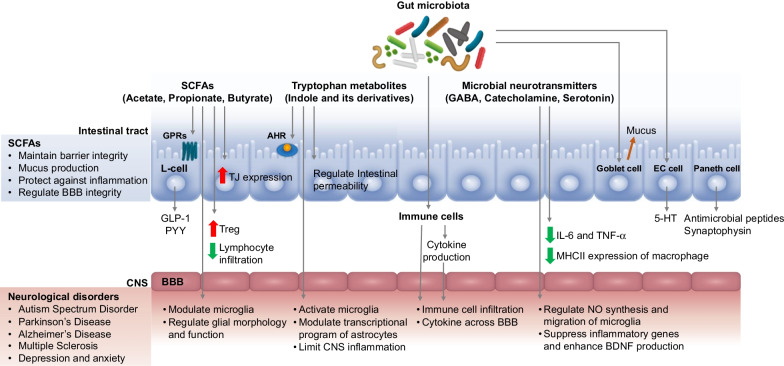
“40,41 Such SCFAs have important roles in gut-immune-brain crosstalk, through influences on regulatory T cell generation and homeostasis, binding to G-protein-coupled receptors with downstream stimulation of secretion of glucagon-like peptide 1 and peptide YY, and influences on blood brain barrier…”
Hunjan, G., Shah, S. S., Kosey, S., & Aran, K. R. (2025) · Journal of Neural Transmission · doi:10.1007/s00702-025-02938-8 · Cited by 9
“…and the adaptive immune system by secreting immunoglobulin A (IgA) through B cells, and commensal bacteria influence T-helper (Th) cells by promoting the differentiation of Th17 cells, which protect against infections, and Tregs that limit inflammation (Sittipo et al. 2020; Yoo et al. 2020).”
Wang, J., Lin, S., Bai, C., Zhang, H., Liu, H., Wang, M., & Guo, R. (2025) · The International Journal of Neuropsychopharmacology · doi:10.1093/ijnp/pyaf033 · Cited by 10
“43 Third, the formulation and administration method of antiparkin-sonian drugs may be critical factors in inducing inflammation.”
Lin, Z., Chang, C., Zhao, S., Fang, L., & Wang, P. (2025) · Cancer Biology and Medicine · doi:10.20892/j.issn.2095-3941.2025.0115 · Cited by 28
Benedetto, G. D., Sorge, G., Sarchiapone, M., & Martino, L. D. (2025) · Nutrients · doi:10.3390/nu17213476 · Cited by 10
Wang, W., Cui, J., Guo, Y., Kang, X., Liu, H., & Hao, Z. (2025) · Lab on a Chip · doi:10.1039/d5lc00937e · Cited by 9
Metadata
- Authors
- Sittipo, P., Choi, J., Lee, S., & Lee, Y. K.
- Affiliations
- Soonchunhyang University (KR)
- Chungnam National University (KR)
- Corresponding author
- Lee, Soojin
- Lee, Yun Kyung
- Venue
- Journal of Neuroinflammation
- Published
- 2022-06-15
- Volume
- 19
- Issue
- 1
- Pages
- 154-154
- ISSN
- 1742-2094 (ISSN-L)
- PMC
- PMC9199126
- OpenAlex
- W4282963464
- Cited by
- 221
- References
- 210
- Citations by year
- 2026: 57 · 2025: 85 · 2024: 47 · 2023: 29 · 2022: 3
- FWCI
- 4.27
- Type
- journal article
- Language
- en
- Open access
- gold
- doi.org
- Licence
- cc-by
- creativecommons.org/licenses/by/4.0 (tdm)
- creativecommons.org/licenses/by/4.0 (vor)
- Locations
- Journal of Neuroinflammation (publishedVersion, cc-by)
- PubMed Central (publishedVersion, cc-by)
- PubMed (publishedVersion)
- DOAJ (DOAJ: Directory of Open Access Journals) (submittedVersion)
- Funders
- National Research Foundation of Korea (2021R1I1A1A01045477, 2020R1A5A8017671, 2020R1I1A3073474, 2021M3A9I4027993, 2017M3A9F3043837)
- Topics
- Life Sciences › Biochemistry, Genetics and Molecular Biology › Molecular Biology › Gut microbiota and health
- Health Sciences › Medicine › Gastroenterology › Gastrointestinal motility and disorders
- Life Sciences › Neuroscience › Biological Psychiatry › Tryptophan and brain disorders
- Keywords
- gut microbiota, microbiota-gut-brain axis, neuroinflammation, brain development, gut-brain signaling, gastrointestinal homeostasis
- MeSH terms
- Gastrointestinal Microbiome, Animals, Brain, Humans, Immune System Diseases, Nervous System Diseases, Microbiota
About these checks
Registry, retraction, Cites and statistics results are computed, not judged, with one exception: a printed reference that no index lists is read once by a model before it counts as a citation error. Claims are extracted by a model and kept only when their quote appears verbatim in the text; each cited source is then checked, with a model’s help, for whether it says what the claim relies on. Those verdicts can be wrong — read the claim’s quote and the cited source before relying on one.
Statistics and arithmetic are recomputed, not judged.
Confidence bands are shown only for fields calibrated on our annotated test set. None is calibrated yet, so no band is shown.
What counts as a claim ›How we measure confidence ›How we check this ›
Are you an author, or do you see a problem with this page? Request a review
Data sources
Bibliographic data: Semantic Scholar, OpenAlex, Crossref.
Contains information from the Semantic Scholar Academic Graph Datasets, made available under the ODC Attribution License (ODC-BY 1.0).
Semantic Scholar’s data is described in: Kinney, R., et al. (2023). The Semantic Scholar Open Data Platform. arXiv:2301.10140.
