

The function of gut microbiota in immune-related neurological disorders: a review
Open accessThe DOI matches its Crossref record; 210 of the 210 references it cites were found in a registry or an index.
Abstract
This review provides an overview of the importance of microbiota in the regulation of gut–brain communication in immune-related neurological disorders. The gastrointestinal (GI) tract hosts a diverse abundance of microbiota, referred to as gut microbiota. The gut microbiota plays a role in the maintenance of GI tract homeostasis and is likely to have multiple effects on brain development and function. The bidirectional communication between the gut microbiota and the brain is termed the microbiota–gut–brain axis. This communication between the intestine and the brain appears to affect human health and behavior, as certain animal studies have demonstrated the association between alterations in the gut microbiota and neurological disorders. Most insights about the microbiota–gut–brain axis come from germ-free animal models, which reveal the importance of gut microbiota in neural function. To date, many studies have observed the impact of the gut microbiota in patients with neurological disorders. Although many studies have investigated the microbiota–gut–brain axis, there are still limitations in translating this research to humans given the complexities of the relationship between the gut microbiota and the brain. In this review, we discuss emerging evidence of how the microbiota–gut–brain axis regulates brain development and function through biological networks, as well as the possible contribution of the microbiota–gut–brain axis in immune-related neurological disorders.
Overview
The claims and statistics of this paper haven’t been checked yet.
Free: it reads the open-access text and checks the first 5 claims that cite a source we can check. Create a free account to check every claim.
Integrity signals
Registry
Cites
Statistics
Figures
Verification
Claims the paper makes
The claims and statistics of this paper haven’t been checked yet.
Free: it reads the open-access text and checks the first 5 claims that cite a source we can check. Create a free account to check every claim.
Claims other papers make about this one
Each is checked against this paper’s own text: does it say what the citing paper says it does?
The cited source says what the claim attributes to it.
In the citing paper
“The gut microbiota is in constant communication with the immune system, influencing its maturation and performance as (3–6).”
From Unveiling the therapeutic symphony of probiotics, prebiotics, and postbiotics in gut-immune harmony (2024) · cites this paper as [5]
Self-check
Percentages, sums and reported differences re-computed from the paper’s own numbers.
The self-check needs the paper’s full text.
Citations
Cites
Changes of Intestinal Functions in Liver Cirrhosis
Fukui, H., & Wiest, R. (2016) · Inflammatory Intestinal Diseases · doi:10.1159/000444436 · Cited by 6,808
The Microbial Metabolites, Short-Chain Fatty Acids, Regulate Colonic T reg Cell Homeostasis
Smith, P. M., Howitt, M. R., Panikov, N., Michaud, M., Gallini, C. A., Bohlooly-Y, M., Glickman, J. N., & Garrett, W. S. (2013) · Science · doi:10.1126/science.1241165 · Cited by 5,413
Host-Bacterial Mutualism in the Human Intestine
Bäckhed, F., Ley, R. E., Sonnenburg, J. L., Peterson, D. A., & Gordon, J. I. (2005) · Science · doi:10.1126/science.1104816 · Cited by 5,277 · cited 1×
“The microorganisms living in the GI tract, including bacteria, archaea, fungi, and viruses, are termed the gut microbiota [9, 10].”
BackgroundMetabolites produced by commensal bacteria promote peripheral regulatory T-cell generation
Arpaia, N., Campbell, C., Fan, X., Dikiy, S., van der Veeken, J., deRoos, P., Liu, H., Cross, J. R., Pfeffer, K., Coffer, P. J., et al. (2013) · Nature · doi:10.1038/nature12726 · Cited by 4,838 · cited 1×
“Moreover, SCFAs also facilitate regulatory T cell (Treg) generation and homeostasis [33, 34].”
BackgroundMind-altering microorganisms: the impact of the gut microbiota on brain and behaviour
Cryan, J. F., & Dinan, T. G. (2012) · Nature Reviews Neuroscience · doi:10.1038/nrn3346 · Cited by 4,572
Bravo, J. A., Forsythe, P., Chew, M. V., Escaravage, E., Savignac, H. M., Dinan, T. G., Bienenstock, J., & Cryan, J. F. (2011) · Proceedings of the National Academy of Sciences · doi:10.1073/pnas.1102999108 · Cited by 3,888
Gut microbiota regulate motor deficits and neuroinflammation in a model of Parkinson's disease
Sampson, T. R., Debelius, J. W., Thron, T., Janssen, S., Shastri, G. G., Ilhan, Z. E., Challis, C., Schretter, C. E., Rocha, S., Gradinaru, V., et al. (2016) · Cell · doi:10.1016/j.cell.2016.11.018 · Cited by 3,622 · cited 5×
“In addition, the gut microbiota promoted α-syn-dependent microglial activation and motor dysfunction [173].”
BackgroundInfluentialIndigenous bacteria from the gut microbiota regulate host serotonin biosynthesis
Yano, J. M., Yu, K., Donaldson, G. P., Shastri, G. G., Ann, P., Ma, L., Nagler, C. R., Ismagilov, R. F., Mazmanian, S. K., & Hsiao, E. Y. (2015) · Cell · doi:10.1016/j.cell.2015.02.047 · Cited by 3,614 · cited 19×
“Various types of EECs can be identified by the hormones they produce.”
BackgroundInfluentialHost microbiota constantly control maturation and function of microglia in the CNS
Erny, D., Hrabě de Angelis, A. L., Jaitin, D., Wieghofer, P., Staszewski, O., David, E., Keren-Shaul, H., Mahlakoiv, T., Jakobshagen, K., Buch, T., et al. (2015) · Nature Neuroscience · doi:10.1038/nn.4030 · Cited by 3,569 · cited 5×
“Recent studies have highlighted the role of the gut microbiota in regulating microglial maturation and function [20].”
BackgroundInfluentialHsiao, E. Y., McBride, S. W., Hsien, S., Sharon, G., Hyde, E. R., McCue, T., Codelli, J. A., Chow, J., Reisman, S. E., Petrosino, J. F., et al. (2013) · Cell · doi:10.1016/j.cell.2013.11.024 · Cited by 3,283 · cited 3×
“Elevated serum levels of toxins and bacterial products, a result of increased intestinal permeability, can induce immune responses related to impaired brain function and social behavior [145, 146].”
Background
Cited by
Items 101–200 of 221
Microbiota and Neuropeptides in Dysbiosis-Driven Inflammation: Emerging Therapeutic Perspectives
Singh, P., & Mohanty, B. (2025) · Endocrine Research · doi:10.1080/07435800.2025.2520252 · Cited by 11
“32 This underscores the potentially significant but partially understood role of EECs in gut inflammation.”
Crisis in the gut: navigating gastrointestinal challenges in Gulf War Illness with bioengineering
Collier, C. A., Salikhova, A., Sabir, S., Foncerrada, S., & Raghavan, S. A. (2024) · Military Medical Research · doi:10.1186/s40779-024-00547-2 · Cited by 9
“The gut microbiota plays a pivotal role in regulating the neuro-immune axis by influencing GI barrier function, immunity, and host protection [95], which ultimately impacts gut motility.”
BackgroundLing, P.-Z., Wong, K., Ho, J. Y. S., Cheng, W., & Chang, R. C. (2025) · NeuroImmunoModulation · doi:10.1159/000547746 · Cited by 9
“Ultimately, the microbial metabolites can enter the brain through the pathways mentioned in section 2.1 along the gut-brain axis [72–74].”
InfluentialDinić, M., Đokić, J., Jakovljević, S., Brdarić, E., Mitrović, H., Bisenić, A., Radojević, D., Bajić, S. S., Tomić, S., & Golić, N. (2025) · Scientific Reports · doi:10.1038/s41598-025-21839-0 · Cited by 8
Age-driven dysbiosis: gut microbiota in the pathogenesis and treatment of aging disorders
Kopalli, S. R., Wankhede, N. L., Rahangdale, S. R., Sammeta, S. S., Aglawe, M. M., Koppula, S., Taksande, B. G., Upaganlawar, A., Umekar, M. J., & Kale, M. B. (2026) · Biogerontology · doi:10.1007/s10522-026-10389-1 · Cited by 7
Lin, Y., Lu, P., Ding, Q., & Liu, M. (2026) · Biomedicines · doi:10.3390/biomedicines14040859 · Cited by 8
“In parallel, microbiota-driven tryptophan metabolism generates bioactive metabolites (e.g., indole derivatives and kynurenine pathway intermediates) that regulate serotonin biosynthesis and CNS immune signaling, thereby influencing mood and stress responsiveness [219,220].”
Tryptophan Metabolism: A New Look at the Role of Tryptophan Derivatives in the Human Body
Shatova, O. P., & Shestopalov, A. V. (2023) · Успехи современной биологии · doi:10.31857/s0042132423010076 · Cited by 8
Kordi, R., Andrews, T. J., & Hicar, M. D. (2025) · Virology · doi:10.1016/j.virol.2025.110523 · Cited by 7
The Impact of Microbiota on Neurological Disorders: Mechanisms and Therapeutic Implications
Merra, G., Placa, G. L., Covino, M., Candelli, M., Gasbarrini, A., & Franceschi, F. (2025) · OBM Neurobiology · doi:10.21926/obm.neurobiol.2501273 · Cited by 6
Gut Microbiome, Neuroinflammation, and Fetal Alcohol Spectrum Disorders: Insights from Rodent Models
Busayli, A. M., Xu, W., Raffah, G. A., & Chen, G. (2025) · Biology · doi:10.3390/biology14060593 · Cited by 7
“In addition, the gut microbiome plays a significant role in the function and development of the immune system through various pathways and metabolites that support brain homeostasis and influence overall brain function [29].”
Huang, B., Zhang, S., Dong, X., Chi, S., Yang, Q., Liu, H., Xie, S., Zhang, W., Tan, B., Guo, L., et al. (2025) · Aquaculture Nutrition · doi:10.1155/anu/3398904 · Cited by 4
“Assessing intestinal barrier function involves evaluating mucosal permeability, as increased permeability can trigger in fl ammatory responses [35].”
Epigenetics and the gut–brain axis: Insights into DNA methylation, aging, and Alzheimer disease
Kumar, V., Shukla, R., Gangani, S., Joseph, R., Jain, S., & Yadav, H. (2026) · Journal of Pharmacology and Experimental Therapeutics · doi:10.1016/j.jpet.2026.104299 · Cited by 6
Lee, M., Ahn, K., & Kim, M. (2024) · PLoS ONE · doi:10.1371/journal.pone.0312670 · Cited by 6
Mushrooms as Functional Foods for Ménière’s Disease
Bell, V., & Fernandes, T. H. (2023) · Applied Sciences · doi:10.3390/app132212348 · Cited by 8
Triva, F., Borghi, E., Marsiglia, M. D., Ottaviano, E., Ricci, E., Tognini, P., Montecucco, M., & Vignoli, A. (2025) · Frontiers in Neurology · doi:10.3389/fneur.2025.1642329 · Cited by 4
Toumazi, D., Charalambous, C., Constantinou, C., & Nicolaou, N. (2025) · Neuro-Oncology Advances · doi:10.1093/noajnl/vdaf267 · Cited by 5
Li, X., Zhou, W., Yang, S., Huang, X., & Zheng, K. (2026) · Frontiers in Neuroscience · doi:10.3389/fnins.2026.1806532 · Cited by 4
“The gut microbiota and the host cells decompose tryptophan to neuroactive kynurenine derivatives, and the ratio of kynurenine QUIN (KYNA) to QUIN is an essential factor (Sittipo et al., 2022).”
Ahn, J., Han, E.-J., & Chung, H. (2025) · Frontiers in Microbiology · doi:10.3389/fmicb.2025.1533580 · Cited by 6
“These findings contribute to the growing body of research suggesting that GI-resident microbiota play a crucial role in host physiological and behavioral regulation (Sittipo et al., 2022).”
Dehghani, E., Karimi, K., Arekhi, S., Ardeshir, M., Rezapour, R., Shayestehfar, M., & Memari, A. H. (2025) · BMC Nutrition · doi:10.1186/s40795-025-01043-z · Cited by 5
“Given these mechanistic pathways, previous research has extensively investigated the relationship between gut microbiota and the gut-brain axis on neurological function and behavior in individuals with NDDs [69, 70].”
Probiotics as a Treatment of Chronic Stress Associated Abnormalities
Agarwal, V., Chaudhary, R., & Gupta, A. (2025) · Probiotics and Antimicrobial Proteins · doi:10.1007/s12602-025-10553-y · Cited by 4
Jiang, L., Liu, D., Lv, L., Zhao, K., Wang, D., & Yang, Y. (2025) · Food Bioscience · doi:10.1016/j.fbio.2025.107177 · Cited by 5
Progress and Perspectives on the Estrogen–Microbiota–Brain Axis in Alzheimer’s Disease
Wang, M., Zeng, Y., Jin, Y., Wu, J., & Li, J. (2025) · Neurochemical Research · doi:10.1007/s11064-025-04613-6 · Cited by 5
“Comprehensive multi-cohort phenotyping and rigorously designed clinical trials are required to clarify mechanistic pathways and evaluate therapeutic potential. can disturb this balance, triggering a cascade of hormone– immune–neural dysfunctions [129, 130 ].”
Microbe–Diet Interactions and Personalized Nutrition
Kujawska, M., & Hall, L. J. (2025) · Annual Review of Food Science and Technology · doi:10.1146/annurev-food-111523-121845 · Cited by 9
Wang, W., Zhang, Q., Zhang, T., Lu, F., & Liu, F. (2025) · International Journal of Biological Macromolecules · doi:10.1016/j.ijbiomac.2025.149946 · Cited by 4
Buendia-Corona, R. E., Dey, M. F. V., Robles, L. V., Biviano, H. J. H., Hermosillo‐Abundis, C., & Pastrana, L. I. C. (2026) · Molecules · doi:10.3390/molecules31020366 · Cited by 4
“Systematic assessment of which metabolites possess BBB permeability and binding affinity to disorder-relevant receptors has not been comprehensively performed [25–27].”
When Gut Hormones Influence Brain Function in Depression
Siba, I. P., Martynhak, B. J., & Pereira, M. (2023) · Applied Biosciences · doi:10.3390/applbiosci2010005 · Cited by 5
Dietary Habits and Gut Microbiome: An Influence on Gut Brain Axis
Yadav, G. V. (2023) · doi:10.37191/mapsci-jidm-1(3)-014 · Cited by 4
Voicu, S. N., Scărlătescu, A. I., Apetroaei, M.-M., Nedea, M. I., Blejan, I. E., Udeanu, D. I., Velescu, B. Ș., Ghica, M., Nedea, O. A., Cobelschi, C., et al. (2024) · Nutrients · doi:10.3390/nu16071077 · Cited by 10
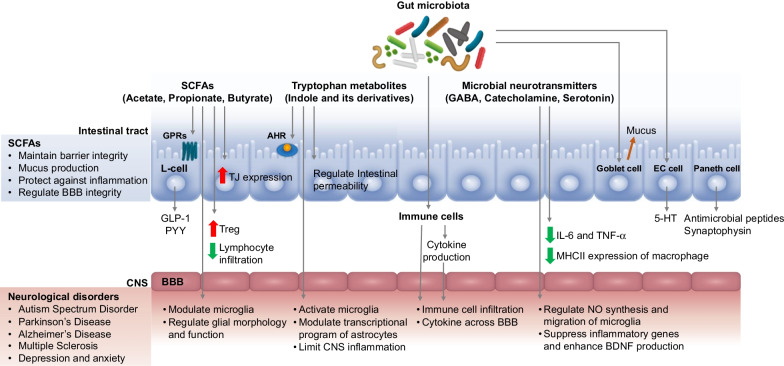
“Since a large part of the immune system’s response to environmental factors is mediated by bacterial ecosystems, a healthy gut microbiota can have a profound effect on the body’s immunity, influenced by neurotransmitters such as GABA, catecholamines, and serotonin [17–19].”
Microbiota-gut-brain Axis: Novel Potential Pathways for Developing Antiepileptogenic Drugs
Li, H., Lai, H., Xing, Y., Zou, S., & Yang, X. (2025) · Current Neuropharmacology · doi:10.2174/1570159x23666250414094040 · Cited by 6
Gut-brain connection in schizophrenia: A narrative review
Iqbal, A., Bokhari, S. F. H., Rehman, M. U., Sattar, S. M. F., Bakht, D., Dost, W., & Basit, A. (2025) · World Journal of Psychiatry · doi:10.5498/wjp.v15.i5.103751 · Cited by 7
Bali, P., Lal, P., Sivapuram, M. S., Kutikuppala, L. V. S., Avti, P., Chanana, A., Kumar, S., & Anand, A. (2024) · Neuroepidemiology · doi:10.1159/000538416 · Cited by 5
The role of secondary genomes in neurodevelopment and co-evolutionary dynamics
Singh, S., Saini, V., & Jha, H. C. (2025) · International review of neurobiology · doi:10.1016/bs.irn.2025.03.008 · Cited by 5
Zhou, M., Yang, Y., Wang, S., & Zhang, J. (2025) · Experimental Neurology · doi:10.1016/j.expneurol.2025.115601 · Cited by 4
Fernandes, L. A., de Souza, A. O., Nukui, Y., Marcusso, R. M. N., de Oliveira, A. C. P., Casseb, J., Clissa, P. B., Villas-Bôas, S. G., & Sanabani, S. S. (2026) · Smart Medicine · doi:10.1002/smmd.70024 · Cited by 3
“The gut microbiota influences distant organs, including the brain, through immune modulation, metabolite production and signaling pathways [9].”
Wang, X., Lin, Y.-F., & Zhou, M. (2026) · Frontiers in Neuroendocrinology · doi:10.1016/j.yfrne.2026.101233 · Cited by 3
Health risk analysis of micro-and nanoplastic exposure via the microbiota-gut-brain axis
Wang, X., Yu, H., Li, J., Han, S., & Chi, Y. (2026) · Frontiers in Immunology · doi:10.3389/fimmu.2026.1762813 · Cited by 8
“GABA exerts its effects by inhibiting the production of pro-in fl ammatory cytokines, promoting the generation of immunomodulatory molecules, regulating the inhibitory-excitatory balance essential for brain function, and in fl uencing neuropeptide secretion by enteric neuropeptide fi bres (39).”
Altan, Z. B., & Ihlamur, M. (2026) · Metabolic Brain Disease · doi:10.1007/s11011-026-01798-9 · Cited by 5
How gut microbiota contribute to neuropsychiatric disorders: evidence from neuroimaging studies
Jia, C., Zhu, W., Yu, Y., & Xie, Q. (2026) · Frontiers in Microbiology · doi:10.3389/fmicb.2026.1760096 · Cited by 5
“As research deepens, these mechanisms provides a theoretical basis and practical possibilities for microbiota-targeted intervention strategies (Ghezzi et al., 2022; Sittipo et al., 2022; Talat et al., 2025).”
Gut dopamine kick: How gut microbes turn on host receptors to fight pathogens
Gutman, E., & Litvak, Y. (2024) · Cell Host & Microbe · doi:10.1016/j.chom.2024.04.011 · Cited by 3
Atypical gut microbiota composition in a mouse model of developmental stuttering
Nanda, S., Lamot, B., Guarino, N., Usler, E. R., Chugani, D. C., Dutta, A., & Chow, H. M. (2024) · Scientific Reports · doi:10.1038/s41598-024-74766-x · Cited by 3
“Downregulation of chondroitin sulfate degradation may suggest a dysregulation of mucin production, which has been associated with neurological disorders 60 .”
BackgroundAlbert, V., Kedia, S., & Subramanian, A. (2025) · Indian Journal of Neurosurgery · doi:10.1055/s-0045-1806842 · Cited by 3
“A Comprehensive Review of the Brain – Gut Microbiota System in Traumatic Brain Injury Albert et al. Post-TBI phylogenetic changes in gut microbial populations have been reported in some clinical studies with small sample sizes, but they lack suf fi cient power and clinical intervention analysis…”
Lactiplantibacillus plantarum K8 lysates regulate hypoxia-induced gene expression
Jeong, J., Kang, B.-H., Ju, S., Park, N. Y., Kim, D., Dinh, N. T. B., Lee, J., Rhee, C. Y., Cho, D., Kim, H., et al. (2024) · Scientific Reports · doi:10.1038/s41598-024-56958-7 · Cited by 6
The Function of Tryptophan Metabolism in the Gut
Tang, X., Wan, L., Gao, J., Jiang, Q., Hu, S., Xiao, H., Wang, J., Qi, M., Wang, L., Huang, L., et al. (2024) · Springer eBooks · doi:10.1007/978-981-97-4719-1_2 · Cited by 3
Ma, Y., Ghiretti, L., Castellone, V., Mena, P. R., & Rubert, J. (2024) · Free Radical Biology and Medicine · doi:10.1016/j.freeradbiomed.2024.12.034 · Cited by 2
Enhancing Survival Following High-Risk Surgery by Modulating Actionable Items within the Pathobiome
Zaborina, O. Y., Zaborin, A., Keskey, R. C., & Alverdy, J. C. (2025) · IntechOpen eBooks · doi:10.5772/intechopen.1010335 · Cited by 2
Zhu, Y., Wu, Q., Luo, L., & Yang, S. (2025) · Frontiers in Veterinary Science · doi:10.3389/fvets.2025.1615674 · Cited by 2
“The gut microbiota is known to influence brain function through the production of metabolites, which in turn affect various physiological processes, including immune modulation, behavior, and metabolism (13).”
Jia, S., Tu, T., Hong, Y., Li, F., Wang, X., Meng, Y., & Lu, Y. (2025) · Food Bioscience · doi:10.1016/j.fbio.2025.107865 · Cited by 2
Myung, W., Jang, S. J., Lee, G., Lee, C., Lee, K., Moon, S. H., Jeong, Y., Kim, W.-K., Park, S.-J., Lee, H., et al. (2025) · Probiotics and Antimicrobial Proteins · doi:10.1007/s12602-025-10811-z · Cited by 5
“The gut microbiota also contributes to over 50% of peripheral dopamine production, a catecholamine crucial for maintaining mood and immune responses [19].”
Andalibi, M. S. S., Hastie, E., Barone, M. E., Tavasoli, A., Ellis, R., Letendre, S. L., & Trunfio, M. (2025) · Future Virology · doi:10.1080/17460794.2025.2595851 · Cited by 3
Zhang, Z., Tao, H., Mao, K., Meng, F., Jiang, S., Chen, J. Q., He, X., & Tian, X. (2026) · Journal of Ethnopharmacology · doi:10.1016/j.jep.2025.121147 · Cited by 2
Leclerc, L., Poudrier, J., Power, C., Lam, G. Y., & Falcone, E. L. (2026) · Frontiers in Aging Neuroscience · doi:10.3389/fnagi.2025.1744415 · Cited by 4
Role of Gut Microbiota in Psychiatric Disorders: From Mechanistic Insights to Therapeutic Strategies
Kim, Y. S., Woo, S., Ha, E., Ahn, S., Kim, E., Kim, S. I., Lim, W., & Kim, S. (2026) · Journal of Korean Medical Science · doi:10.3346/jkms.2026.41.e78 · Cited by 3
Rosas-Sánchez, G. U., Germán-Ponciano, L. J., Pérez-Vega, M. I., Gutiérrez‐Coronado, O., Muñoz‐Carrillo, J. L., Soriano-Hernández, A. D., Barrientos-Bonilla, A. A., Muñoz, C. G. R., & Soria-Fregozo, C. (2026) · Biomedicines · doi:10.3390/biomedicines14030637 · Cited by 2
Sivamaruthi, B. S., Kesika, P., Chaiyasut, C., & Varman, D. R. (2026) · Frontiers in Microbiology · doi:10.3389/fmicb.2026.1750377 · Cited by 4
“Recolonization with defined microbial consortia, particularly Clostridium species, restores dopamine and norepinephrine levels in the gut and partially normalizes central dopaminergic signaling (Sittipo et al., 2022).”
InfluentialKryczyk‐Poprawa, A., Rząsa-Duran, E., Varga, J. T., Ceglédi, A., Zábó, V., Fazekas‐Pongor, V., Major, D., Csípő, T., Szappanos, Á., Lipécz, Á., et al. (2026) · Nutrients · doi:10.3390/nu18152478 · Cited by 4
“These metabolites also participate in gut–brain communication by influencing serotonin biosynthesis, vagal signaling, microglial function, and blood–brain barrier integrity [198,200].”
Baslam, A., Kabdy, H., Chait, Y., Azraida, H., Yazouli, L. E., Aboufatima, R., Chait, A., & Baslam, M. (2024) · Biomedicines · doi:10.3390/biomedicines12061152 · Cited by 3
“Recent studies [68,69] indicate that the GM can influence the production, metabolism, and availability of dopamine in the body, suggesting a potential link between gut microbiota, dopamine regulation, and oxidative stress.”
BackgroundDas, B. K., Sarma, A., & Goswami, A. K. (2024) · Elsevier eBooks · doi:10.1016/b978-0-443-16013-4.00018-x · Cited by 3
Food Environment and Its Effects on Human Nutrition and Health
Mondragón, A. D. C., & Miranda, J. M. (2024) · Nutrients · doi:10.3390/nu16111733 · Cited by 2
“…not be forgotten that through nutrition, we can alleviate or cure diseases that affect organs far away from the digestive system, as in the case of nonfood allergies [14], respiratory viral infections [7], heart diseases [15], diseases of the nervous system, and neurological disorders [16,17].”
BackgroundPsychoneuroimmunology and Gut Microbiota
Mayegowda, S. B., Shah, M. A., & Ray, K. (2025) · Advances in medical diagnosis, treatment, and care (AMDTC) book series · doi:10.4018/979-8-3693-7432-0.ch020 · Cited by 1
Cross-talking between polycystic ovarian syndrome and gut microbiome: a comprehensive review
Choudhury, S. R., Koner, S., & Dey, R. (2026) · Middle East Fertility Society Journal · doi:10.1186/s43043-026-00304-6 · Cited by 1
“1 Relationship among hyperandrogenism (HA), gut microbiota dysbiosis, and metabolic dysfunction [18–22] dysfunction are predisposed to metabolic dysfunction, characterized by weight gain, insulin resistance (IR), and dyslipidemia, irrespective of body mass index [23].”
Deng, H., Li, B., Mu, Y., Xia, W., & Weng, N. (2026) · Frontiers in Pharmacology · doi:10.3389/fphar.2026.1766222 · Cited by 1
“Imbalance in this process can lead to disorders in neurotransmitters and neural development functions (Sittipo et al., 2022; Ullah et al., 2023).”
Unveiling the gut: microbiota and derived metabolites’ role in the rising tide of precocious puberty
Zhang, A., Wang, X., Wang, Z., Zhang, L., Zhu, X., Zhu, Y., Liu, Y., Zhu, C., Xu, D., Wang, H., et al. (2026) · Frontiers in Microbiology · doi:10.3389/fmicb.2026.1766234 · Cited by 3
“Evidence suggests that neurotransmitter metabolites such as 5-HT and dopamine can promote sexual maturation through activation of the HPGA (Sittipo et al., 2022), whereas GABA exerts an inhibitory effect on pubertal onset.”
Megur, A., & Kumar, B. (2026) · Food Reviews International · doi:10.1080/87559129.2026.2649298 · Cited by 1
“[125] Inflammatory responses in the CNS contribute to neuronal injury and are linked to conditions such as AD, PD, and schizophrenia.”
Sympatric Lepus spp. in the central Italian Alps host significantly different gut microbiotas
Marinangeli, L., Crestanello, B., Praeg, N., Rzehak, T., Seeber, J., Illmer, P., Marzano, F. N., Hauffe, H. C., & Galla, G. (2026) · Scientific Reports · doi:10.1038/s41598-026-44592-4 · Cited by 2
Zurdo-López, M. M., del Rio, M. S., Rudilla, M. C., Ibarra, A., & Doncel‐Pérez, E. (2026) · Frontiers in Neurology · doi:10.3389/fneur.2026.1815899 · Cited by 2
Reynolds, A., Glenn, E., Lavoie, B. A., Ishaq, S. L., & Li, Y. (2026) · Frontiers in Neuroscience · doi:10.3389/fnins.2026.1815972 · Cited by 1
“…tryptophan metabolism, where distinct microbial-derived indoles can either suppress or exacerbate neuroinflammation through AhR signaling, underscoring the need to move beyond simplistic “beneficial versus harmful” classifications (Sittipo et al., 2022; Ashique et al., 2024; Coretti et al., 2024).”
Siddharth, A., Vikash, & Basak, N. (2026) · Journal of Microbiological Methods · doi:10.1016/j.mimet.2026.107571 · Cited by 1
Yang, W., Liu, Y., Wang, H., & Yang, G. (2026) · Frontiers in Microbiology · doi:10.3389/fmicb.2026.1830033 · Cited by 1
“The intestinal microbiota may also interact with host signaling pathways to regulate metabolism in the liver and muscles, for example, through the vagus nerve or immune factors, thereby promoting glycogen synthesis and the expression of antioxidant enzymes (Sittipo et al., 2022).”
Sittipo, P., Park, J.-Y., Tiffany, E., Oh, A., Moon, S.-B., Lee, C.-H., Oh, J., Kim, T.-Y., Kweon, M., Choi, J., et al. (2026) · Experimental and Molecular Medicine · doi:10.1038/s12276-026-01779-z · Cited by 1
“Microbial metabolites, such as short-chain fatty acids and tryptophan derivatives, modulate T cell responses, microglial maturation, and neuroin fl ammation 16 – 18 .”
Self-citationFrom Gut to Gray Matter: The Surprising Links Between The Microbiome and Brain
Mukhopadhyay, S., Bhattacharyya, D., & Ghosh, J. (2023) · Journal Of Advanced Zoology · doi:10.17762/jaz.v44is6.2578 · Cited by 1
“These discoveries have connected the gut microbiota to a variety of neurological illnesses, including multiple sclerosis, Parkinson's disease, Alzheimer's disease, autism spectrum disorder, and depression (Faruqui et al., 2021; Cryan et al., 2020; Sittipo et al., 2022).”
BackgroundInfluentialAsgharzadeh, N., Ghavamnia, S., Amini-Khoei, H., Lorigooini, Z., Mardani, M., Bijad, E., Shahrani, D., Shahrani, M. A., & korrani, M. S. (2025) · Neuroscience Letters · doi:10.1016/j.neulet.2025.138200 · Cited by 1
Stenger, C. (2023) · Human-Animal Interactions · doi:10.1079/hai.2023.0009 · Cited by 3
Usyk, M., Peters, B. A., Karthikeyan, S., McDonald, D., Sollecito, C. C., Vázquez‐Baeza, Y., Shaffer, J. P., Gellman, M. D., Talavera, G. A., Daviglus, M. L., et al. (2022) · SSRN Electronic Journal · doi:10.2139/ssrn.4197397
Is alumina suitable for solid phase extraction of catecholamines from brain tissue?
Mirković, D., Beletić, A. D., Savić, M. M., Milinković, N., Matutinović, M. S., & Jančić, I. (2023) · Archives of Industrial Hygiene and Toxicology · doi:10.2478/aiht-2023-74-3706
“It has become clear that for brain research catecholamine analysis in brain tissue has a substantial advantage over plasma (2, 14).”
BackgroundLactiplantibacillus plantarum K8 lysates regulate hypoxia-induced gene expressionPreprint
Jeong, J., Kang, B.-H., Ju, S., Park, N. Y., Kim, D., Dinh, N. T. B., Lee, J., Rhee, C. Y., Cho, D., Kim, H., et al. (2023) · bioRxiv (Cold Spring Harbor Laboratory) · doi:10.1101/2023.12.08.570897
Relação entre doenças inflamatórias intestinais atividade física e doenças neurodegenerativas
Fernandes, I. D. C., dos Santos, B. W., Miguel, I. D., Dalarmi, L., Montrucchio, D. P., Dias, J. D. F. G., Miguel, M. D., & Miguel, O. G. (2023) · Revista Cereus · doi:10.18605/2175-7275/cereus.v15n4p319-334
Navigating the Gut-brain Axis: Insights into the Pathogenesis of Hepatic Encephalopathy
Emojevwe, V. A., Shahriari, A., & Mahboobi, H. (2024) · The International Journal of Gastroenterology and Hepatology Diseases · doi:10.2174/0126662906301568240427100342 · Cited by 1
(2025) · Elsevier eBooks · doi:10.1016/b978-3-437-21835-4.00116-5
Effects and mechanisms of esketamine on depression by targeting gut microbiota: A narrative review
Liu, J., & Zhou, C. (2025) · New discovery. · doi:10.61958/ndfs6517
Photobiomodulation for Degenerative Diseases: An Overview and Perspectives
Lizarelli, R. D. F. Z., Salgado, A. S. I., Cardoso, F. D. S., Souza, K. J. D. O., Bello, L. T., Assis, L., Cordon, R., & Bagnato, V. S. (2025) · Photobiomodulation Photomedicine and Laser Surgery · doi:10.1177/15578550251363061 · Cited by 1
“135 With the imbalance of the microbiome, a reduction in symbiotic strains, and an increase in pathogenic ones, there is a rise in the release of bacterial lipopolysaccharides.”
Manisha, M., Elamurugan, A., Nishvanth, F., Pavithra, N., Nivetha, S., Singh, A., Harikrishnan, N., & Ankul Singh, S. (2025) · Obesity Medicine · doi:10.1016/j.obmed.2025.100636 · Cited by 1
THE IMPACT OF GUT MICROBIOTA ON THE PATHOPHYSIOLOGY AND MANIFESTATION OF ADHD
Oświeczyńska, K., Sowa, A., Trząsalski, K., Kupisiak, S., & Jędrzejewska-Rzezak, P. (2025) · International Journal of Innovative Technologies in Social Science · doi:10.31435/ijitss.3(47).2025.3574
The microbiota-immune interaction in the gut-brain axis
Redazione (2025) · PNEI REVIEW · doi:10.3280/pnei2025oa20961
“Alterations in the GM and in the production of microbial metabolites have been associated with a wide range of immune ‐ related neurological disorders, including neurodevelopmental and neurodegenerative conditions (Sittipo et al. , 2022).”
Gündoğdu, A., Arıkan, M., Ulas, A., Koldaş, S. S., & Ece, G. T. (2025) · Next research. · doi:10.1016/j.nexres.2025.100846 · Cited by 3
Gut–Brain axis in neurological diseases
Roy, A., Chauhan, K., Parkash, J., Yadav, M., & Iyer, M. (2025) · Elsevier eBooks · doi:10.1016/b978-0-443-29932-2.00002-5
刘, 晓. (2025) · Advances in Clinical Medicine · doi:10.12677/acm.2025.15102849
Dermatological Associations of Neurodegenerative Disorders
Chen, W., Chauhan, S., & Ngo, M. (2025) · Springer eBooks · doi:10.1007/978-3-031-53888-9_91-1
Baykan, Ö., Akbas, F., Avcıkurt, A. S., & Baykan, H. (2025) · BMC Psychiatry · doi:10.1186/s12888-025-07548-y
“The gut plays a key role in neuromodulation and in regulating immune responses, thereby influencing intestinal, systemic, and neuro-inflammatory processes [8].”
Bariatric Surgery and Neurologic Diagnoses in Adults With Obesity: A Retrospective Cohort StudyPreprint
Lonergan, J. T., DeBass, C., Elkomi, R., Gillani, S. F., Elbin, C., Miller, N., & Michael, M. B. (2025) · Research Square · doi:10.21203/rs.3.rs-7919688/v1
From Autopoiesis to Symbiotic Entanglement: Rethinking Enactivism Through Metabolism and Microbes
Reynolds, J., & Baedke, J. (2025) · Adaptive Behavior · doi:10.1177/10597123251405680 · Cited by 1
“In addition, inter-study methodological heterogeneity creates reproducibility issues (Mulder et al., 2023), and several clinical gaps and challenges in validating causal pathways persist (Arneth, 2025; Hooks et al., 2018; Sittipo et al., 2022).”
Editorial: Genetic modulation of gut microbiome: effects on neurological health and aging
Wang, S., & Carroll‐Portillo, A. (2025) · Frontiers in Genetics · doi:10.3389/fgene.2025.1760164
Effect of baby food supplement on the growth and metabolite of lactic acid bacteria
Yaurentus, D. I., Yogiara, Y., Waturangi, D. E., Yulandi, A., & Tjandrawinata, R. R. (2025) · BMC Microbiology · doi:10.1186/s12866-025-04407-4 · Cited by 1
“Numerous studies have shown that gut microbiota play important roles in humans, such as producing metabolites and neurotransmitters like short-chain fatty acids (SCFAs), γ-Amino Butyric Acid (GABA), norepinephrine, and serotonin [3, 4].”
Phytopharmaceuticals and the Gut-Brain Axis in Neurodegenerative Therapy
Kharl, H. A. A., Mehreen, A., Gillani, Q.-U.-A., Afzal, A., Shakoor, F., Siddique, A., Taqi, M. H., & Farooq, A. B. B. (2026) · IGI Global eBooks · doi:10.4018/979-8-3373-4139-2.ch008
Fang, H., Zhang, J., Zhou, Q., Li, L., Cui, M., Li, C., & Lyu, S. (2026) · BMC Complementary Medicine and Therapies · doi:10.1186/s12906-026-05265-x · Cited by 1
Depression, type 2 diabetes mellitus, and omega-3 polyunsaturated fatty acids
Serhiyenko, V. A., Chemerys, O. M., Markevych, M.-Y. Y., & Serhiyenko, A. A. (2026) · INTERNATIONAL JOURNAL OF ENDOCRINOLOGY (Ukraine) · doi:10.22141/2224-0721.22.1.2026.1680
Kadandelu, M., Periya, S., Rekha, P. D., & Raghu, S. V. (2026) · Reviews in the Neurosciences · doi:10.1515/revneuro-2025-0144
“Evidence suggests that lowering these bacterial levels with vancomycin treatment can improve ASD symptoms, pointing to a possible connection between C. histolyticum and ASD-like behaviors (Parracho et al. 2005; Sandler et al. 2000; Sittipo et al. 2022).”
Microbial-derived mediators of the gut–brain axis: Implications for neurological disorders
Abady, M. M., Shawky, A. M., & Mohammed, D. M. (2026) · The Journal of Nutritional Biochemistry · doi:10.1016/j.jnutbio.2026.110394
The Role of Inflammation in the Brain: A Gut-Driven Phenomenon
Mahbub, N. U., Islam, M. M., & Hong, S. T. (2026) · Springer eBooks · doi:10.1007/978-981-95-7494-0_9
Synthetic Biology in Human Microbiome
Munshi, I. D., Acharya, M., & Mani, I. (2026) · Springer eBooks · doi:10.1007/978-981-95-3957-4_30
Nowacka, A., Śniegocki, M., & Ziółkowska, E. (2026) · International Journal of Molecular Sciences · doi:10.3390/ijms27115109
Metadata
- Authors
- Sittipo, P., Choi, J., Lee, S., & Lee, Y. K.
- Affiliations
- Soonchunhyang University (KR)
- Chungnam National University (KR)
- Corresponding author
- Lee, Soojin
- Lee, Yun Kyung
- Venue
- Journal of Neuroinflammation
- Published
- 2022-06-15
- Volume
- 19
- Issue
- 1
- Pages
- 154-154
- ISSN
- 1742-2094 (ISSN-L)
- PMC
- PMC9199126
- OpenAlex
- W4282963464
- Cited by
- 221
- References
- 210
- Citations by year
- 2026: 57 · 2025: 85 · 2024: 47 · 2023: 29 · 2022: 3
- FWCI
- 4.27
- Type
- journal article
- Language
- en
- Open access
- gold
- doi.org
- Licence
- cc-by
- creativecommons.org/licenses/by/4.0 (tdm)
- creativecommons.org/licenses/by/4.0 (vor)
- Locations
- Journal of Neuroinflammation (publishedVersion, cc-by)
- PubMed Central (publishedVersion, cc-by)
- PubMed (publishedVersion)
- DOAJ (DOAJ: Directory of Open Access Journals) (submittedVersion)
- Funders
- National Research Foundation of Korea (2021R1I1A1A01045477, 2020R1A5A8017671, 2020R1I1A3073474, 2021M3A9I4027993, 2017M3A9F3043837)
- Topics
- Life Sciences › Biochemistry, Genetics and Molecular Biology › Molecular Biology › Gut microbiota and health
- Health Sciences › Medicine › Gastroenterology › Gastrointestinal motility and disorders
- Life Sciences › Neuroscience › Biological Psychiatry › Tryptophan and brain disorders
- Keywords
- gut microbiota, microbiota-gut-brain axis, neuroinflammation, brain development, gut-brain signaling, gastrointestinal homeostasis
- MeSH terms
- Gastrointestinal Microbiome, Animals, Brain, Humans, Immune System Diseases, Nervous System Diseases, Microbiota
About these checks
Registry, retraction, Cites and statistics results are computed, not judged, with one exception: a printed reference that no index lists is read once by a model before it counts as a citation error. Claims are extracted by a model and kept only when their quote appears verbatim in the text; each cited source is then checked, with a model’s help, for whether it says what the claim relies on. Those verdicts can be wrong — read the claim’s quote and the cited source before relying on one.
Statistics and arithmetic are recomputed, not judged.
Confidence bands are shown only for fields calibrated on our annotated test set. None is calibrated yet, so no band is shown.
What counts as a claim ›How we measure confidence ›How we check this ›
Are you an author, or do you see a problem with this page? Request a review
Data sources
Bibliographic data: Semantic Scholar, OpenAlex, Crossref.
Contains information from the Semantic Scholar Academic Graph Datasets, made available under the ODC Attribution License (ODC-BY 1.0).
Semantic Scholar’s data is described in: Kinney, R., et al. (2023). The Semantic Scholar Open Data Platform. arXiv:2301.10140.
