

Peripheral inflammation in behavioural variant frontotemporal dementia: associations with central degeneration and clinical measures
Open accessThe DOI matches its Crossref record; 44 of the 44 references it cites were found in a registry or an index.
Abstract
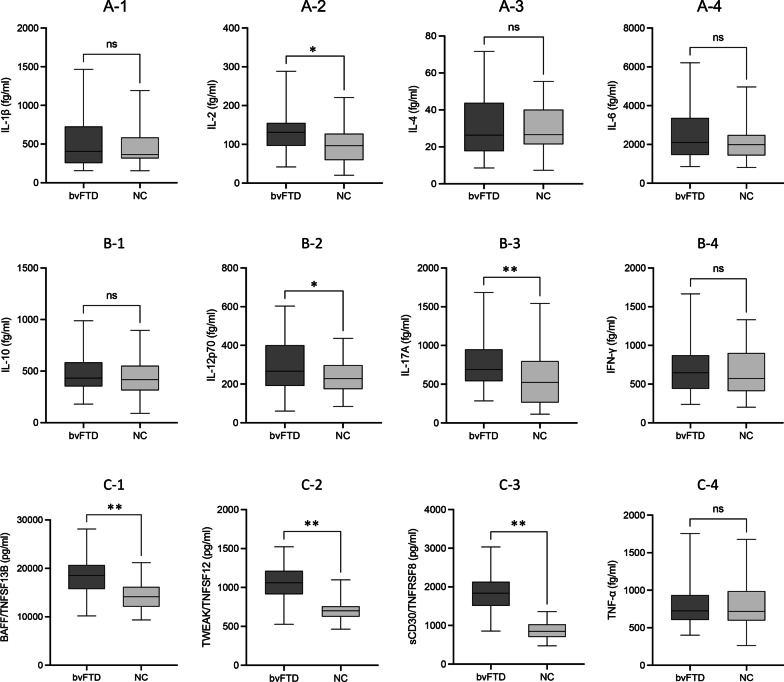
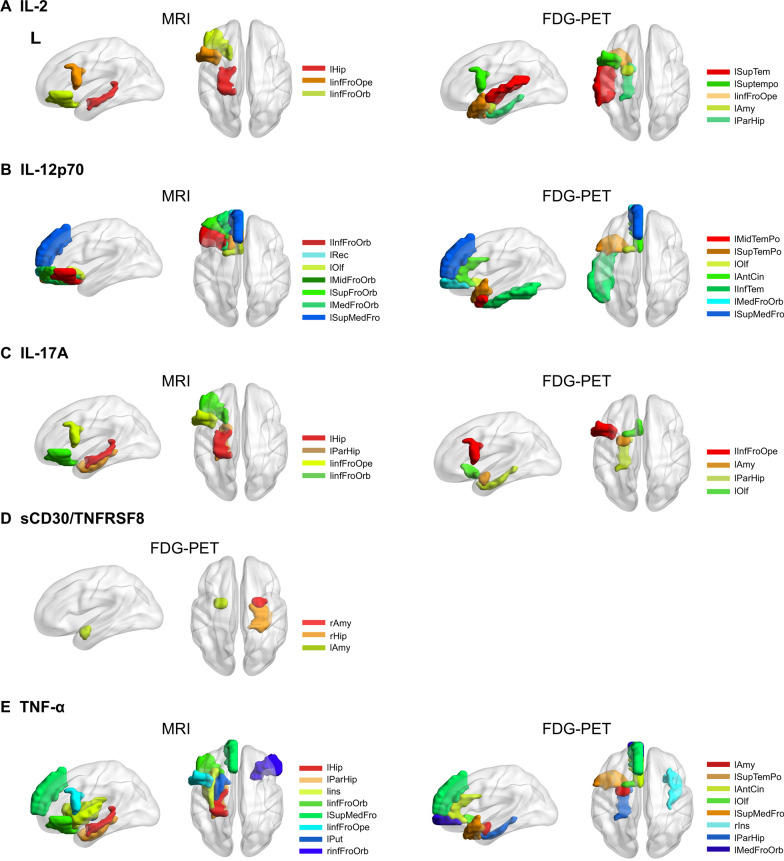
Background: Neuroinflammation plays a significant role in the progression of frontotemporal dementia (FTD). However, the association between peripheral inflammatory factors and brain neurodegeneration is poorly understood. We aimed to examine changes in peripheral inflammatory markers in patients with behavioural variant FTD (bvFTD) and explore the potential association between peripheral inflammation and brain structure, metabolism, and clinical parameters. Methods: Thirty-nine bvFTD patients and 40 healthy controls were enrolled and underwent assessment of plasma inflammatory factors, positron emission tomography/magnetic resonance imaging, and neuropsychological assessments. Group differences were tested using Student’s t test, Mann‒Whitney U test, or ANOVA. Partial correlation analysis and multivariable regression analysis were implemented using age and sex as covariates to explore the association between peripheral inflammatory markers, neuroimaging, and clinical measures. The false discovery rate was used to correct for the multiple correlation test. Results: Plasma levels of six factors, including interleukin (IL)-2, IL-12p70, IL-17A, tumour necrosis superfamily member 13B (TNFSF/BAFF), TNFSF12 (TWEAK), and TNFRSF8 (sCD30), were increased in the bvFTD group. Five factors were significantly associated with central degeneration, including IL-2, IL-12p70, IL-17A, sCD30/TNFRSF8, and tumour necrosis factor (TNF)-α; the association between inflammation and brain atrophy was mainly distributed in frontal–limbic–striatal brain regions, whereas the association with brain metabolism was mainly in the frontal–temporal–limbic–striatal regions. BAFF/TNFSF13B, IL-4, IL-6, IL-17A and TNF-α were found to correlate with clinical measures. Conclusion: Peripheral inflammation disturbance in patients with bvFTD participates in disease-specific pathophysiological mechanisms, which could be a promising target for diagnosis, treatment, and monitoring therapeutic efficacy.
Overview
The claims and statistics of this paper haven’t been checked yet.
Free: it reads the open-access text and checks the first 5 claims that cite a source we can check. Create a free account to check every claim.
Integrity signals
Registry
Cites
Statistics
Figures
Verification
Claims the paper makes
The claims and statistics of this paper haven’t been checked yet.
Free: it reads the open-access text and checks the first 5 claims that cite a source we can check. Create a free account to check every claim.
Claims other papers make about this one
Each is checked against this paper’s own text: does it say what the citing paper says it does?
In the citing paper
“Additionally, peripheral inflammatory markers, including IL-2, IL-17A, IL-12p70, tumour necrosis superfamily member 8 (TNFRSF8) and tumour necrosis factor (TNF)-α, are associated with neurodegeneration in individuals with FTLD, such as brain atrophy and abnormal metabolism, which are mainly distributed in frontal‒temporal regions.337”
From Antiageing strategy for neurodegenerative diseases: from mechanisms to clinical advances (2025) · cites this paper as [337]
Self-check
Percentages, sums and reported differences re-computed from the paper’s own numbers.
The self-check needs the paper’s full text.
Citations
Cites
Sensitivity of revised diagnostic criteria for the behavioural variant of frontotemporal dementia
Rascovsky, K., Hodges, J. R., Knopman, D., Mendez, M. F., Kramer, J. H., Neuhaus, J., van Swieten, J. C., Seelaar, H., Dopper, E. G. P., Onyike, C. U., et al. (2011) · Brain · doi:10.1093/brain/awr179 · Cited by 5,221 · cited 1×
“All patients were diagnosed with probable bvFTD according to the consensus criteria published in 2011 [18].”
MethodAppelhof, B., Bakker, C., Van Duinen-van den Ijssel, J. C. L., Zwijsen, S. A., Smalbrugge, M., Verhey, F. R. J., de Vugt, M. E., Zuidema, S. U., & Koopmans, R. T. C. M. (2017) · Dementia and Geriatric Cognitive Disorders · doi:10.1159/000477087 · Cited by 2,760
How neuroinflammation contributes to neurodegeneration
Ransohoff, R. M. (2016) · Science · doi:10.1126/science.aag2590 · Cited by 1,967 · cited 1×
“Several studies that include animal models [3–5], human fluid biomarkers [6–8], or brain tissue immunohistochemistry [9–11] have provided evidence that an ongoing inflammatory process is involved in the progression of sporadic or genetic FTD, manifesting as microglial activation/dystrophy, astrogliosis, and increased…”
BackgroundClearance of senescent glial cells prevents tau-dependent pathology and cognitive decline
Bussian, T. J., Aziz, A., Meyer, C. F., Swenson, B. L., van Deursen, J. M., & Baker, D. J. (2018) · Nature · doi:10.1038/s41586-018-0543-y · Cited by 1,289
Zhou, J., Greicius, M. D., Gennatas, E. D., Growdon, M. E., Jang, J. Y., Rabinovici, G. D., Kramer, J. H., Weiner, M., Miller, B. L., & Seeley, W. W. (2010) · Brain · doi:10.1093/brain/awq075 · Cited by 1,016
Deverman, B. E., & Patterson, P. H. (2009) · Neuron · doi:10.1016/j.neuron.2009.09.002 · Cited by 865 · cited 1×
“In addition, inflammatory mediators modulate brain development and synapse plasticity [16, 17]; synaptic dysfunction can be sensitively reflected by brain metabolic alterations.”
BackgroundImmune proteins in brain development and synaptic plasticity
Boulanger, L. M. (2009) · Neuron · doi:10.1016/j.neuron.2009.09.001 · Cited by 555 · cited 1×
“In addition, inflammatory mediators modulate brain development and synapse plasticity [16, 17]; synaptic dysfunction can be sensitively reflected by brain metabolic alterations.”
BackgroundC9orf72 is required for proper macrophage and microglial function in mice
O’Rourke, J. G., Bogdanik, L., Yáñez, A., Lall, D., Wolf, A. J., Muhammad, A. K. M. G., Ho, R., Carmona, S., Vit, J. P., Zarrow, J., et al. (2016) · Science · doi:10.1126/science.aaf1064 · Cited by 550
Frontotemporal Lobar Degeneration: Demographic Characteristics of 353 Patients
Johnson, J. K., Diehl, J., Mendez, M. F., Neuhaus, J., Shapira, J. S., Forman, M., Chute, D. J., Roberson, E. D., Pace-Savitsky, C., Neumann, M., et al. (2005) · Archives of Neurology · doi:10.1001/archneur.62.6.925 · Cited by 421 · cited 1×
“Background Behavioural variant frontotemporal dementia (bvFTD) is the most common clinical subtype of frontotemporal dementia (FTD) [1].”
BackgroundImaging robust microglial activation after lipopolysaccharide administration in humans with PET
Sandiego, C. M., Gallezot, J.-D., Pittman, B., Nabulsi, N., Lim, K., Lin, S.-F., Matuskey, D., Lee, J.-Y., O’Connor, K. C., Huang, Y., et al. (2015) · Proceedings of the National Academy of Sciences · doi:10.1073/pnas.1511003112 · Cited by 356 · cited 1×
“18 KDa translocator protein (TSPO) expressed in glia, including microglia and astrocytes, was reported to be quantified using TSPO ligands in noninvasive PET examination[40, 41].”
Background
Cited by
Antiageing strategy for neurodegenerative diseases: from mechanisms to clinical advances
Jiang, Q., Liu, J., Huang, S., Wang, X.-Y., Chen, X., Liu, G.-H., Ye, K., Song, W., Masters, C. L., Wang, J., et al. (2025) · Signal Transduction and Targeted Therapy · doi:10.1038/s41392-025-02145-7 · Cited by 165
Self-citationGut microbiota, circulating cytokines and dementia: a Mendelian randomization study
Ji, D., Chen, W.-Z., Zhang, L., Zhang, Z., & Chen, L. (2024) · Journal of Neuroinflammation · doi:10.1186/s12974-023-02999-0 · Cited by 164
“However, it seemed to be a negative correlation between MIF and DLB. TNF-α was significantly associated with FTD, which may be related to central degeneration [42].”
BackgroundAllostatic Interoceptive Overload Across Psychiatric and Neurological Conditions
Santamaría-García, H., Migeot, J., Medel, V., Hazelton, J. L., Teckentrup, V., Romero-Ortuno, R., Piguet, O., Lawor, B., Northoff, G., & Ibanez, A. (2025) · Biological Psychiatry · doi:10.1016/j.biopsych.2024.06.024 · Cited by 65
“Moreover, they display autonomic disruptions, metabolic imbalances, and in fl amma-tory dysregulation linked to clinical outcomes (125).”
BackgroundBlood inflammation relates to neuroinflammation and survival in frontotemporal lobar degeneration
Malpetti, M., Swann, P., Tsvetanov, K. A., Chouliaras, L., Strauss, A., Chikaura, T., Murley, A. G., Ashton, N. J., Barker, P. J., Jones, P. S., et al. (2024) · Brain · doi:10.1093/brain/awae269 · Cited by 52
“53 The relevance of TNF-α in FTLD-related conditions was further confirmed by evidence from a large cohort of patients with pathogenic C9orf72, progranulin or MAPT variants, showing that higher levels of TNF-α at baseline are associated with faster clinical progression and more rapid brain atrophy…”
Systemic inflammatory markers in ageing, Alzheimer's disease and other dementias
Cai, H., Zhao, T., Pang, Y., Fu, X., Ren, Z., Quan, S., & Jia, L. (2024) · Brain · doi:10.1093/brain/awae230 · Cited by 47
Paciolla, C., Manganelli, M., Chiano, M. D., Montenegro, F., Gallone, A., Sallustio, F., & Guida, G. (2025) · Cells · doi:10.3390/cells14221823 · Cited by 42
van Amerongen, S., Pulukuri, S. V., Tuz‐Zahra, F., Tripodis, Y., Cherry, J. D., Bernick, C. B., Geda, Y. E., Wethe, J. V., Katz, D. I., Alosco, M. L., et al. (2024) · Journal of Neuroinflammation · doi:10.1186/s12974-024-03034-6 · Cited by 28
“In frontotemporal dementia (FTD), patients with disinhibition had higher levels of plasma IL-6 compared to patients without disinhibition [30].”
BackgroundSynapse vulnerability and resilience across the clinical spectrum of dementias
Taddei, R. N., & Duff, K. (2025) · Nature Reviews Neurology · doi:10.1038/s41582-025-01094-7 · Cited by 28
“that results from the substantial axonal degeneration observed in FTD, and it has been proposed as a potential diagnostic and prognostic marker of neurocognitive dysfunction in FTD 241 .”
Biomarkers of Neurodegeneration in Post-Traumatic Stress Disorder: An Integrative Review
Rajkumar, R. P. (2023) · Biomedicines · doi:10.3390/biomedicines11051465 · Cited by 25
“Immune and inflammatory mechanisms have been implicated in the progression of several neurodegenerative disorders, including AD [93], frontotemporal dementia [94], and Parkinson’s disease [95].”
BackgroundYu, B., Li, M., Yu, Z., Zhang, H., Feng, X., Gao, A., Gao, R., & Gao, R. (2025) · BMC Geriatrics · doi:10.1186/s12877-025-05800-4 · Cited by 24
Chatzidimitriou, E., Ioannidis, P., Aretouli, E., Papaliagkas, V. T., & Μoraitou, D. (2023) · International Journal of Molecular Sciences · doi:10.3390/ijms241813810 · Cited by 19
Swann, P., Mirza-Davies, A., & O'Brien, J. T. (2024) · Journal of Inflammation Research · doi:10.2147/jir.s385825 · Cited by 19
“31 Apathy in gene carriers at the presymptomatic stage of FTD predicts cognitive decline.”
BackgroundInfluentialImmunological aspects of central neurodegeneration
Niso‐Santano, M., Fuentes, J. M., & Galluzzi, L. (2024) · Cell Discovery · doi:10.1038/s41421-024-00666-z · Cited by 21
“Moreover, individuals affected by FTD exhibit increased cerebrospinal levels of multiple pro-in fl ammatory cytokines including (but not limited to) IL2, IL12, IL17A, TNF, TGFB1 and CXCL1, at least in some patient cohorts positively correlated with disease severity 170 – 172 .”
BackgroundChu, M., Yue, A., Yan, S., Yu, B., He, Q., Chen, Y., Hou, J., Nan, H., Ye, H., Nie, B., et al. (2025) · Alzheimer s & Dementia · doi:10.1002/alz.70561 · Cited by 13
Self-citationYang, S., Ye, Z., Liu, M., Zhang, Y., Gan, X., Wu, Q., Zhou, C., He, P., Zhang, Y., & Qin, X. (2023) · Journal of the American Medical Directors Association · doi:10.1016/j.jamda.2023.06.003 · Cited by 12
Goleij, P., Amini, A., Sanaye, P. M., Heidari, M. M., Tabari, M. A. K., Aschner, M., Larsen, D. S., Khan, H., & Daglia, M. (2025) · Inflammopharmacology · doi:10.1007/s10787-025-01901-z · Cited by 14
“Peripheral inflammation in behavioral variant FTD patients showed elevations in the concentrations of IL-12p70, a biologically active species of IL-12, and IL-17A, another cytokine in the IL-23 downstream pathway, implicating the IL-12/IL-23 axis in bvFTD (Chu et al. 2023).”
Cognitive Decline and Dementia in Chronic Widespread Pain: A Longitudinal Population-based Study
Jiang, X., Johansson, E., Nijs, J., & Wang, X. (2025) · Anesthesiology · doi:10.1097/aln.0000000000005731 · Cited by 8
Chu, M. K., Jiang, D., Nan, H., Wen, L., Liu, L., Qu, M., & Wu, L. (2024) · Alzheimer s Research & Therapy · doi:10.1186/s13195-024-01422-x · Cited by 8
“Other inflammation cytokines (tumour necrosis superfamily member 13B [TNFSF/BAFF], IL-29/interferon [IFN]-λ2, IL-32, TWEAK/TNFSF12, and sCD30/TNFRSF8, IFN-γ, IL-10, IL-12p70, IL-17A, IL-1β, IL-2, IL-4, IL-6, and TNF-α) were assessed with the same method in our previous research [11].”
BackgroundMethodSelf-citationImmunological Fluid Biomarkers in Frontotemporal Dementia: A Systematic Review
Erichsen, P. A., Henriksen, E. E., Nielsen, J. E., Ejlerskov, P., Simonsen, A. H., & Toft, A. D. (2025) · Biomolecules · doi:10.3390/biom15040473 · Cited by 9
“…[119] TREM2 [37,65] YKL-40 [37] Blood Cathepsin S [98] PGRN [38,41,42,118,123,124] Cathepsin S [98] GFAP [18] C9 [59] Gal-3 [32] BAFF [82], IFN-y [82] IL-1b [82], IL-2 [82] IL-4 [82], IL-6 [82,83] ( GRN -FTD) IL-10 [82] IL-12p70 [82] sCD30 [82] TWEAK [82] YKL-40 [82] IL-6 [125] IL-18 [125] TNF…”
InfluentialHou, J., Chu, M. K., Chen, Z., Jiang, D., Chen, Y. A., Yue, A., He, Q., Lu, H. R., Xu, Y.-X., Qu, M., et al. (2025) · Journal of Neurology · doi:10.1007/s00415-025-13268-w · Cited by 7
Self-citationFesharaki‐Zadeh, A., Çayır, S., Ibrahim, W., Yang, Y., Gallezot, J., Naganawa, M., Wu, Y., Toyonaga, T., Sadabad, F. E., O’Dell, R. S., et al. (2026) · Alzheimer s & Dementia · doi:10.1002/alz.71283 · Cited by 4
Yang, Y., Guo, D., Yang, Q. F., Yang, C., Liu, J., Liu, H., Liu, W., Liu, Y., Liu, Y., & Liu, Y. (2025) · Fluids and Barriers of the CNS · doi:10.1186/s12987-025-00682-5 · Cited by 3
“Peripheral inflammatory markers, which are easily accessible and reflective of the systemic inflammatory state, have been shown to be correlated with the severity and progression of neurological diseases such as multiple system atrophy [6] and frontotemporal dementia [7].”
Bindra, G. S., Asad, S., Shanaa, J., Lui, F., Budson, A. E., Turk, K. W., & Cherry, J. D. (2025) · Free Neuropathology · doi:10.17879/freeneuropathology-2025-6382 · Cited by 4
Mallika, A. P., Jairani, P. S., Mathuranath, P. S., Menon, R. N., & Banerjee, M. (2025) · Neurogenetics · doi:10.1007/s10048-025-00834-7 · Cited by 1
“Evidence suggests that neuroinflammation plays a role in FTD (as reviewed in [ 19 ]), which is supported with the finding of microgliosis and increased levels of pro-inflammatory cytokines including TNF in their cerebrospinal fluid [60, 61 ].”
Park, S., Kim, D., Choi, J. H., Hong, C. H., Son, S. J., Roh, H. W., Shin, H., & Woo, H. G. (2025) · Briefings in Bioinformatics · doi:10.1093/bib/bbaf366 · Cited by 1
Proteome-wide association study identifies novel Alzheimer's disease-associated proteins
Sun, L., Wei, G., Ji, F., Ding, Y., Fan, J., Xu, Y., He, C., Zhou, Y., Liu, Z., Sun, Z., et al. (2025) · Journal of Alzheimer s Disease · doi:10.1177/13872877251409352 · Cited by 1
Mir, H.-D., Giorgini, G., Santos‐García, I., Dumais, E., Rodríguez‐Cueto, C., de Lago, E., Silvestri, C., Flamand, N., Fernández‐Ruíz, J., & Marzo, V. D. (2026) · The FASEB Journal · doi:10.1096/fj.202502312rr · Cited by 1
“A study from 2019 showed that Candidatus Arthromitus is a specific inducer of differentiation in T helper 17 cells, which secrete the inflammatory cytokine IL-17 [67] that was observed to be increased in FTD patients [68], results that are consistent with our findings.”
New Vistas for Withania somnifera in Signal Transduction of Inflammation and Aging
Sharma, E., Mehta, D., Muthuraj, P., Panda, S., Ajgaonkar, S., Maniar, D., Biju, A., & Nair, S. (2026) · Pharmaceutical Research · doi:10.1007/s11095-026-04060-0 · Cited by 1
“Further, atrophy and inflammation are most strongly correlated in the frontal-limbic-striatal brain regions of byFTD patients [40].”
Schizophrenia and frontotemporal dementia: distinct diseases with converging circuit dysfunctions
Casile, A., Sapienza, J., Vasciaveo, V., Barzon, B., Nasini, S., Guarato, G., Ave, C., Martini, F., Bosia, M., & Comai, S. (2026) · Neuroscience · doi:10.1016/j.neuroscience.2026.04.003 · Cited by 1
Fluid and Imaging Markers of Frontotemporal Lobar Degeneration
Prinse, F., Houwer, J. F. H. D., Dopper, E. G. P., & Seelaar, H. (2025) · Springer eBooks · doi:10.1007/978-3-031-80849-4_9 · Cited by 1
Petukhova, O. V., Yanishevskiy, S. N., Shcherbak, S. G., Sarana, А. М., Asinovskaya, A. Y., Макаренко, С. В., Попов, О. С., Николаевна, С. Н., & Апалько, С. В. (2025) · Arterial’naya Gipertenziya (Arterial Hypertension) · doi:10.18705/1607-419x-2025-2483
Ji, D., Chen, W.-Z., Zhang, L., Zhang, Z.-H., & Chen, L.-J. (2024) · Figshare · doi:10.6084/m9.figshare.26660615
Ji, D., Chen, W.-Z., Zhang, L., Zhang, Z.-H., & Chen, L.-J. (2024) · Figshare · doi:10.6084/m9.figshare.26660627
Ji, D., Chen, W.-Z., Zhang, L., Zhang, Z.-H., & Chen, L.-J. (2024) · Figshare · doi:10.6084/m9.figshare.24946444
Ji, D., Chen, W.-Z., Zhang, L., Zhang, Z.-H., & Chen, L.-J. (2024) · Figshare · doi:10.6084/m9.figshare.26660621
Ji, D., Chen, W.-Z., Zhang, L., Zhang, Z.-H., & Chen, L.-J. (2024) · Figshare · doi:10.6084/m9.figshare.24946649
Ji, D., Chen, W.-Z., Zhang, L., Zhang, Z.-H., & Chen, L.-J. (2024) · Figshare · doi:10.6084/m9.figshare.26660612
Ji, D., Chen, W.-Z., Zhang, L., Zhang, Z.-H., & Chen, L.-J. (2024) · Figshare · doi:10.6084/m9.figshare.26660618
van Amerongen, S., Pulukuri, S. V., Tuz‐Zahra, F., Tripodis, Y., Cherry, J. D., Bernick, C. B., Geda, Y. E., Wethe, J. V., Katz, D. I., Alosco, M. L., et al. (2024) · Figshare · doi:10.6084/m9.figshare.26679059
Ji, D., Chen, W.-Z., Zhang, L., Zhang, Z.-H., & Chen, L.-J. (2024) · Figshare · doi:10.6084/m9.figshare.26660624
Ji, D., Chen, W.-Z., Zhang, L., Zhang, Z.-H., & Chen, L.-J. (2024) · Figshare · doi:10.6084/m9.figshare.26660609
Ji, D., Chen, W.-Z., Zhang, L., Zhang, Z.-H., & Chen, L.-J. (2024) · Figshare · doi:10.6084/m9.figshare.26660630
Plasma biomarkers of neurodegeneration across the spectrum of brain health
Cooper, J. G. (2026) · cIRcle (University of British Columbia)
Jehu, D. A., Hanson, M., Huang, Y., Soares, A. L. D. S., Hergott, C., Waller, J. L., Young, L., Hall, W., Robinson‐Johnson, D., Allen, C., et al. (2026) · Life · doi:10.3390/life16081230
van de Zande, N. A., Ruiter, C. C. C., Polman, M. A., Brama, S. C. M., Roos, R. A. C., Kremer, P. H. C., & de Bot, S. T. (2026) · Brain Communications · doi:10.1093/braincomms/fcag289
“194 In dementia Lewy body, higher IL-6 levels were linked to more severe cognitive impairment.”
Metadata
- Authors
- Chu, M., Wen, L., Jiang, D., Liu, L., Nan, H., Yue, A., Wang, Y., Wang, Y., Qu, M., Wang, N., & Wu, L.
- Affiliations
- Capital Medical University (CN)
- Corresponding author
- Wang, Ningqun
- Wu, Liyong
- ORCID
- Venue
- Journal of Neuroinflammation
- Published
- 2023-03-08
- Volume
- 20
- Issue
- 1
- Pages
- 65-65
- ISSN
- 1742-2094 (ISSN-L)
- PMC
- PMC9996857
- OpenAlex
- W4323544166
- Semantic Scholar
- fd6bcae6568067298e648c90ae87bd80e42d57a7
- Cited by
- 33
- References
- 44
- Citations by year
- 2026: 5 · 2025: 15 · 2024: 10 · 2023: 3
- FWCI
- 8.55
- Type
- journal article
- Language
- en
- Open access
- gold
- doi.org
- Licence
- cc-by
- creativecommons.org/licenses/by/4.0 (tdm)
- creativecommons.org/licenses/by/4.0 (vor)
- Locations
- Journal of Neuroinflammation (publishedVersion, cc-by)
- PubMed Central (publishedVersion, cc-by)
- PubMed (publishedVersion)
- DOAJ (DOAJ: Directory of Open Access Journals) (submittedVersion, cc-by-sa)
- Funders
- National Natural Science Foundation of China (82271464)
- Topics
- Health Sciences › Medicine › Psychiatry and Mental health › Dementia and Cognitive Impairment Research
- Life Sciences › Neuroscience › Neurology › Neuroinflammation and Neurodegeneration Mechanisms
- Life Sciences › Neuroscience › Cellular and Molecular Neuroscience › Alzheimer's disease research and treatments
- Keywords
- behavioral variant frontotemporal dementia, peripheral inflammation, plasma inflammatory markers, IL-17A, interleukin-12p70, interleukin-2, TWEAK, soluble CD30, TNF-α, brain atrophy, brain metabolism, neuroinflammation, disease progression
- MeSH terms
- Brain, Humans, Inflammation, Magnetic Resonance Imaging, Neuropsychological Tests, Interleukin-17, Pick Disease of the Brain, Frontotemporal Dementia
About these checks
Registry, retraction, Cites and statistics results are computed, not judged, with one exception: a printed reference that no index lists is read once by a model before it counts as a citation error. Claims are extracted by a model and kept only when their quote appears verbatim in the text; each cited source is then checked, with a model’s help, for whether it says what the claim relies on. Those verdicts can be wrong — read the claim’s quote and the cited source before relying on one.
Statistics and arithmetic are recomputed, not judged.
Confidence bands are shown only for fields calibrated on our annotated test set. None is calibrated yet, so no band is shown.
What counts as a claim ›How we measure confidence ›How we check this ›
Are you an author, or do you see a problem with this page? Request a review
Data sources
Bibliographic data: Semantic Scholar, OpenAlex, Crossref.
Contains information from the Semantic Scholar Academic Graph Datasets, made available under the ODC Attribution License (ODC-BY 1.0).
Semantic Scholar’s data is described in: Kinney, R., et al. (2023). The Semantic Scholar Open Data Platform. arXiv:2301.10140.
