

Peripheral inflammation in behavioural variant frontotemporal dementia: associations with central degeneration and clinical measures
Open accessThe DOI matches its Crossref record; 44 of the 44 references it cites were found in a registry or an index.
Abstract
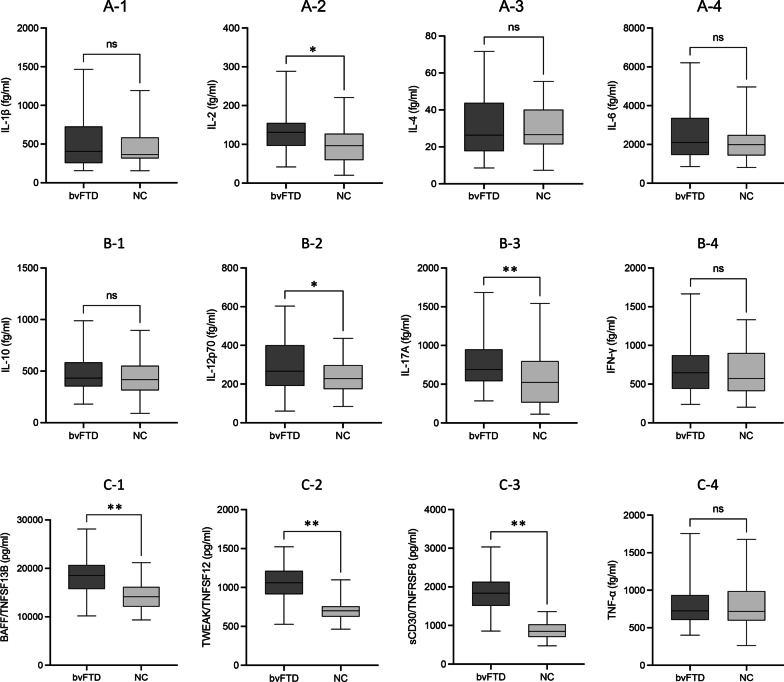
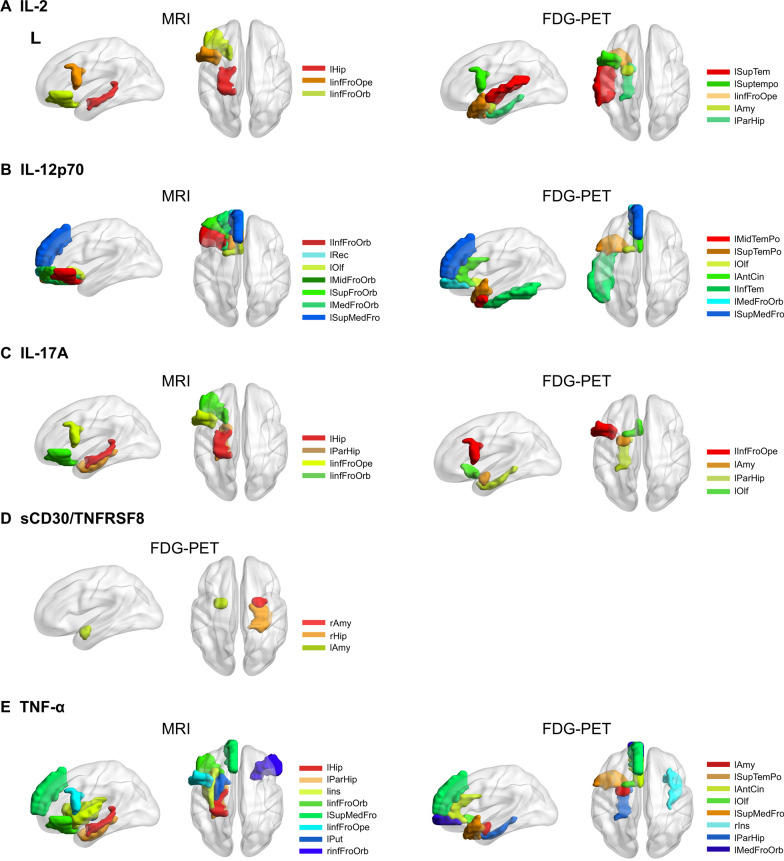
Background: Neuroinflammation plays a significant role in the progression of frontotemporal dementia (FTD). However, the association between peripheral inflammatory factors and brain neurodegeneration is poorly understood. We aimed to examine changes in peripheral inflammatory markers in patients with behavioural variant FTD (bvFTD) and explore the potential association between peripheral inflammation and brain structure, metabolism, and clinical parameters. Methods: Thirty-nine bvFTD patients and 40 healthy controls were enrolled and underwent assessment of plasma inflammatory factors, positron emission tomography/magnetic resonance imaging, and neuropsychological assessments. Group differences were tested using Student’s t test, Mann‒Whitney U test, or ANOVA. Partial correlation analysis and multivariable regression analysis were implemented using age and sex as covariates to explore the association between peripheral inflammatory markers, neuroimaging, and clinical measures. The false discovery rate was used to correct for the multiple correlation test. Results: Plasma levels of six factors, including interleukin (IL)-2, IL-12p70, IL-17A, tumour necrosis superfamily member 13B (TNFSF/BAFF), TNFSF12 (TWEAK), and TNFRSF8 (sCD30), were increased in the bvFTD group. Five factors were significantly associated with central degeneration, including IL-2, IL-12p70, IL-17A, sCD30/TNFRSF8, and tumour necrosis factor (TNF)-α; the association between inflammation and brain atrophy was mainly distributed in frontal–limbic–striatal brain regions, whereas the association with brain metabolism was mainly in the frontal–temporal–limbic–striatal regions. BAFF/TNFSF13B, IL-4, IL-6, IL-17A and TNF-α were found to correlate with clinical measures. Conclusion: Peripheral inflammation disturbance in patients with bvFTD participates in disease-specific pathophysiological mechanisms, which could be a promising target for diagnosis, treatment, and monitoring therapeutic efficacy.
Overview
The claims and statistics of this paper haven’t been checked yet.
Free: it reads the open-access text and checks the first 5 claims that cite a source we can check. Create a free account to check every claim.
Integrity signals
Registry
Cites
Statistics
Figures
Verification
Claims the paper makes
The claims and statistics of this paper haven’t been checked yet.
Free: it reads the open-access text and checks the first 5 claims that cite a source we can check. Create a free account to check every claim.
Claims other papers make about this one
Each is checked against this paper’s own text: does it say what the citing paper says it does?
In the citing paper
“Additionally, peripheral inflammatory markers, including IL-2, IL-17A, IL-12p70, tumour necrosis superfamily member 8 (TNFRSF8) and tumour necrosis factor (TNF)-α, are associated with neurodegeneration in individuals with FTLD, such as brain atrophy and abnormal metabolism, which are mainly distributed in frontal‒temporal regions.337”
From Antiageing strategy for neurodegenerative diseases: from mechanisms to clinical advances (2025) · cites this paper as [337]
Self-check
Percentages, sums and reported differences re-computed from the paper’s own numbers.
The self-check needs the paper’s full text.
Citations
Cites
Sensitivity of revised diagnostic criteria for the behavioural variant of frontotemporal dementia
Rascovsky, K., Hodges, J. R., Knopman, D., Mendez, M. F., Kramer, J. H., Neuhaus, J., van Swieten, J. C., Seelaar, H., Dopper, E. G. P., Onyike, C. U., et al. (2011) · Brain · doi:10.1093/brain/awr179 · Cited by 5,221 · cited 1×
“All patients were diagnosed with probable bvFTD according to the consensus criteria published in 2011 [18].”
MethodAppelhof, B., Bakker, C., Van Duinen-van den Ijssel, J. C. L., Zwijsen, S. A., Smalbrugge, M., Verhey, F. R. J., de Vugt, M. E., Zuidema, S. U., & Koopmans, R. T. C. M. (2017) · Dementia and Geriatric Cognitive Disorders · doi:10.1159/000477087 · Cited by 2,760
How neuroinflammation contributes to neurodegeneration
Ransohoff, R. M. (2016) · Science · doi:10.1126/science.aag2590 · Cited by 1,967 · cited 1×
“Several studies that include animal models [3–5], human fluid biomarkers [6–8], or brain tissue immunohistochemistry [9–11] have provided evidence that an ongoing inflammatory process is involved in the progression of sporadic or genetic FTD, manifesting as microglial activation/dystrophy, astrogliosis, and increased…”
BackgroundClearance of senescent glial cells prevents tau-dependent pathology and cognitive decline
Bussian, T. J., Aziz, A., Meyer, C. F., Swenson, B. L., van Deursen, J. M., & Baker, D. J. (2018) · Nature · doi:10.1038/s41586-018-0543-y · Cited by 1,289
Zhou, J., Greicius, M. D., Gennatas, E. D., Growdon, M. E., Jang, J. Y., Rabinovici, G. D., Kramer, J. H., Weiner, M., Miller, B. L., & Seeley, W. W. (2010) · Brain · doi:10.1093/brain/awq075 · Cited by 1,016
Deverman, B. E., & Patterson, P. H. (2009) · Neuron · doi:10.1016/j.neuron.2009.09.002 · Cited by 865 · cited 1×
“In addition, inflammatory mediators modulate brain development and synapse plasticity [16, 17]; synaptic dysfunction can be sensitively reflected by brain metabolic alterations.”
BackgroundImmune proteins in brain development and synaptic plasticity
Boulanger, L. M. (2009) · Neuron · doi:10.1016/j.neuron.2009.09.001 · Cited by 555 · cited 1×
“In addition, inflammatory mediators modulate brain development and synapse plasticity [16, 17]; synaptic dysfunction can be sensitively reflected by brain metabolic alterations.”
BackgroundC9orf72 is required for proper macrophage and microglial function in mice
O’Rourke, J. G., Bogdanik, L., Yáñez, A., Lall, D., Wolf, A. J., Muhammad, A. K. M. G., Ho, R., Carmona, S., Vit, J. P., Zarrow, J., et al. (2016) · Science · doi:10.1126/science.aaf1064 · Cited by 550
Frontotemporal Lobar Degeneration: Demographic Characteristics of 353 Patients
Johnson, J. K., Diehl, J., Mendez, M. F., Neuhaus, J., Shapira, J. S., Forman, M., Chute, D. J., Roberson, E. D., Pace-Savitsky, C., Neumann, M., et al. (2005) · Archives of Neurology · doi:10.1001/archneur.62.6.925 · Cited by 421 · cited 1×
“Background Behavioural variant frontotemporal dementia (bvFTD) is the most common clinical subtype of frontotemporal dementia (FTD) [1].”
BackgroundImaging robust microglial activation after lipopolysaccharide administration in humans with PET
Sandiego, C. M., Gallezot, J.-D., Pittman, B., Nabulsi, N., Lim, K., Lin, S.-F., Matuskey, D., Lee, J.-Y., O’Connor, K. C., Huang, Y., et al. (2015) · Proceedings of the National Academy of Sciences · doi:10.1073/pnas.1511003112 · Cited by 356 · cited 1×
“18 KDa translocator protein (TSPO) expressed in glia, including microglia and astrocytes, was reported to be quantified using TSPO ligands in noninvasive PET examination[40, 41].”
BackgroundNeuroinflammation in frontotemporal dementia
Bright, F., Werry, E. L., Dobson-Stone, C., Piguet, O., Ittner, L. M., Halliday, G. M., Hodges, J. R., Kiernan, M. C., Loy, C. T., Kassiou, M., et al. (2019) · Nature Reviews Neurology · doi:10.1038/s41582-019-0231-z · Cited by 280 · cited 5×
“Several studies that include animal models [3–5], human fluid biomarkers [6–8], or brain tissue immunohistochemistry [9–11] have provided evidence that an ongoing inflammatory process is involved in the progression of sporadic or genetic FTD, manifesting as microglial activation/dystrophy, astrogliosis, and increased…”
BackgroundInfluentialLoss-of-function mutations in the C9ORF72 mouse ortholog cause fatal autoimmune disease
Burberry, A., Suzuki, N., Wang, J.-Y., Moccia, R., Mordes, D. A., Stewart, M. H., Suzuki-Uematsu, S., Ghosh, S., Singh, A., Merkle, F. T., et al. (2016) · Science Translational Medicine · doi:10.1126/scitranslmed.aaf6038 · Cited by 269
Atanasio, A., Decman, V., White, D., Ramos, M., Ikiz, B., Lee, H.-C., Siao, C.-J., Brydges, S., LaRosa, E., Bai, Y., et al. (2016) · Scientific Reports · doi:10.1038/srep23204 · Cited by 263 · cited 1×
“IL-17A is increased in C9 murine models, which supports our clinical findings [20, 21].”
ResultNetwork Dysfunction in Alzheimer’s Disease and Frontotemporal Dementia: Implications for Psychiatry
Zhou, J., & Seeley, W. W. (2014) · Biological Psychiatry · doi:10.1016/j.biopsych.2014.01.020 · Cited by 231
In vivo detection of microglial activation in frontotemporal dementia
Cagnin, A., Rossor, M., Sampson, E. L., MacKinnon, T., & Banati, R. B. (2004) · Annals of Neurology · doi:10.1002/ana.20332 · Cited by 187 · cited 1×
“Study in FTD using the TSPO ligand 11C-PK1119 was reported, which labelled the presence of an active glial response in frontotemporal brain regions, providing evidence for neuroinflammation in diseasespecific brain regions[43].”
MethodFiliano, A. J., Martens, L. H., Young, A. H., Warmus, B. A., Zhou, P., Diaz-Ramirez, G., Jiao, J., Zhang, Z., Huang, E. J., Gao, F.-B., et al. (2013) · The Journal of Neuroscience · doi:10.1523/jneurosci.6103-11.2013 · Cited by 170
TDP-43 frontotemporal lobar degeneration and autoimmune disease
Miller, Z. A., Rankin, K. P., Graff-Radford, N. R., Takada, L. T., Sturm, V. E., Cleveland, C. M., Criswell, L. A., Jaeger, P. A., Stan, T., Heggeli, K. A., et al. (2013) · Journal of Neurology, Neurosurgery & Psychiatry · doi:10.1136/jnnp-2012-304644 · Cited by 170 · cited 1×
“In this study, we also found increased levels of BAFF/ TNFSF13B, TWEAK/TNFSF12, and sCD30/TNFRSF8 in bvFTD; however, TNF-α was not changed, which is consistent with some studies [6, 29] and inconsistent with others [23, 27, 28].”
ResultOeckl, P., Weydt, P., Steinacker, P., Anderl-Straub, S., Nordin, F., Volk, A. E., Diehl-Schmid, J., Andersen, P. M., Kornhuber, J., Danek, A., et al. (2019) · Journal of Neurology, Neurosurgery & Psychiatry · doi:10.1136/jnnp-2018-318868 · Cited by 139
Krabbe, G., Minami, S. S., Etchegaray, J. I., Taneja, P., Djukic, B., Davalos, D., Le, D., Lo, I., Zhan, L., Reichert, M. C., et al. (2017) · Proceedings of the National Academy of Sciences · doi:10.1073/pnas.1700477114 · Cited by 132 · cited 1×
“Animal studies have also demonstrated a direct association between progranulin and microglial TNF production [31].”
BackgroundChing, A. S. C., Kuhnast, B., Damont, A., Roeda, D., Tavitian, B., & Dollé, F. (2012) · Insights into Imaging · doi:10.1007/s13244-011-0128-x · Cited by 129 · cited 1×
“Overexpression of TSPO in active microglia and astrocytes was confirmed to be a reliable indicator of neuroinflammation in other neurodegenerative diseases [42].”
BackgroundSjogren, M. (2004) · Journal of Neurology, Neurosurgery & Psychiatry · doi:10.1136/jnnp.2003.019422 · Cited by 125 · cited 1×
“In this study, we also found increased levels of BAFF/ TNFSF13B, TWEAK/TNFSF12, and sCD30/TNFRSF8 in bvFTD; however, TNF-α was not changed, which is consistent with some studies [6, 29] and inconsistent with others [23, 27, 28].”
ResultFluid biomarkers in frontotemporal dementia: past, present and future
Swift, I. J., Sogorb-Esteve, A., Heller, C., Synofzik, M., Otto, M., Graff, C., Galimberti, D., Todd, E., Heslegrave, A. J., van der Ende, E. L., et al. (2021) · Journal of Neurology, Neurosurgery & Psychiatry · doi:10.1136/jnnp-2020-323520 · Cited by 122 · cited 1×
“In patients with FTD, increased expression of both intrathecal and peripheral inflammatory markers was noted [14].”
BackgroundPatterns of microglial cell activation in frontotemporal lobar degeneration
Lant, S. B., Robinson, A. C., Thompson, J. C., Rollinson, S., Pickering‐Brown, S., Snowden, J. S., Davidson, Y. S., Gerhard, A., & Mann, D. M. A. (2014) · Neuropathology and Applied Neurobiology · doi:10.1111/nan.12092 · Cited by 102
Galimberti, D., Venturelli, E., Fenoglio, C., Guidi, I., Villa, C., Bergamaschini, L. C., Cortini, F., Scalabrini, D., Baron, P., Vergani, C., et al. (2008) · Journal of Neurology · doi:10.1007/s00415-008-0737-6 · Cited by 99
Bossù, P., Salani, F., Alberici, A., Archetti, S., Bellelli, G., Galimberti, D., Scarpini, E., Spalletta, G., Caltagirone, C., Padovani, A., et al. (2011) · Journal of Neuroinflammation · doi:10.1186/1742-2094-8-65 · Cited by 91 · cited 1×
“In this study, we also found increased levels of BAFF/ TNFSF13B, TWEAK/TNFSF12, and sCD30/TNFRSF8 in bvFTD; however, TNF-α was not changed, which is consistent with some studies [6, 29] and inconsistent with others [23, 27, 28].”
ResultBellucci, A., Bugiani, O., Ghetti, B., & Spillantini, M. G. (2011) · Neurodegenerative Diseases · doi:10.1159/000322228 · Cited by 88
Gerrits, E., Giannini, L. A. A., Brouwer, N., Melhem, S., Seilhean, D., Le Ber, I., The Brainbank Neuro-CEB Neuropathology Network, Kamermans, A., Kooij, G., de Vries, H. E., et al. (2022) · Nature Neuroscience · doi:10.1038/s41593-022-01124-3 · Cited by 88 · cited 1×
“With the impairment of the blood–brain barrier, dysregulated pro- and antiinflammatory factors are observed in both CSF and serum [12, 19].”
BackgroundIntrathecal chemokine levels in Alzheimer disease and frontotemporal lobar degeneration
Galimberti, D., Schoonenboom, N., Scheltens, P., Fenoglio, C., Venturelli, E., Pijnenburg, Y. A. L., Bresolin, N., & Scarpini, E. (2006) · Neurology · doi:10.1212/01.wnl.0000191324.08289.9d · Cited by 82
Boxer, A. L., Gold, M., Huey, E., Gao, F., Burton, E. A., Chow, T., Kao, A., Leavitt, B. R., Lamb, B., Grether, M., et al. (2013) · Alzheimer's & Dementia · doi:10.1016/j.jalz.2012.03.002 · Cited by 80 · cited 2×
“The underlying mechanism of bvFTD is the accumulation and deposition of abnormal pathological proteins, especially in the frontal–temporal brain regions, including tauopathy (TAU), TAR DNAbinding protein of 43 kDa (TDP-43), and fused-in-sarcoma (FUS) [2].”
BackgroundGalimberti, D., Bonsi, R., Fenoglio, C., Serpente, M., Cioffi, S., Fumagalli, G., Arighi, A., Ghezzi, L., Arcaro, M., Mercurio, M., et al. (2015) · Brain Behavior and Immunity · doi:10.1016/j.bbi.2015.05.006 · Cited by 70 · cited 2×
“IFN-γ, IL-1β, IL-4, and IL-10 levels have previously been reported to be normal in studies targeting genetic or sporadic FTD, which was consistent with our results [7, 22, 23].”
ResultWoollacott, I. O. C., Nicholas, J. M., Heslegrave, A., Heller, C., Foiani, M. S., Dick, K. M., Russell, L. L., Paterson, R. W., Keshavan, A., Fox, N. C., et al. (2018) · Alzheimer's Research & Therapy · doi:10.1186/s13195-018-0405-8 · Cited by 62 · cited 1×
“In other studies, levels of inflammatory factors such as serum chemokine ligand 4 (CCL4) were positively correlated with age[23], and CSF soluble triggering receptor expressed on myeloid cells 2 (sTREM2) levels were positively correlated with age and negatively correlated with disease duration[39].”
BackgroundPitel, A., Aupée, A., Chételat, G., Mézenge, F., Beaunieux, H., Sayette, V. D. L., Viader, F., Baron, J., Eustache, F., & Desgranges, B. (2009) · PLoS ONE · doi:10.1371/journal.pone.0007748 · Cited by 47 · cited 1×
“[18F]-FDG–PET is used to visualize the distribution of neural injury and genuine synaptic dysfunction, which is not only due to local neural damage but also remote from morphological damage in other components of the functional circuit [36, 37].”
MethodPlasma levels of progranulin and interleukin-6 in frontotemporal lobar degeneration
Gibbons, L., Rollinson, S., Thompson, J. C., Robinson, A., Davidson, Y. S., Richardson, A., Neary, D., Pickering-Brown, S. M., Snowden, J. S., & Mann, D. M. A. (2015) · Neurobiology of Aging · doi:10.1016/j.neurobiolaging.2014.10.023 · Cited by 44
FDG-PET Contributions to the Pathophysiology of Memory Impairment
Segobin, S. H., Joie, R. L., Ritz, L., Beaunieux, H., Desgranges, B., Chételat, G., Pitel, A., & Eustache, F. (2015) · Neuropsychology Review · doi:10.1007/s11065-015-9297-6 · Cited by 42 · cited 1×
“[18F]-FDG–PET is used to visualize the distribution of neural injury and genuine synaptic dysfunction, which is not only due to local neural damage but also remote from morphological damage in other components of the functional circuit [36, 37].”
MethodPatterns of Microglial Cell Activation in Alzheimer Disease and Frontotemporal Lobar Degeneration
Taipa, R., Brochado, P., Robinson, A., Reis, I., Costa, P., Mann, D. M., Melo Pires, M., & Sousa, N. (2017) · Neurodegenerative Diseases · doi:10.1159/000457127 · Cited by 37
Luu, T. G., & Kim, H. (2022) · Pharmaceutics · doi:10.3390/pharmaceutics14112545 · Cited by 33
Inflammatory and Pro-resolving Mediators in Frontotemporal Dementia and Alzheimer’s Disease
Fraga, V. G., Magalhães, C. A., Loures, C. D. M. G., de Souza, L. C., Guimarães, H. C., Zauli, D. A. G., Carvalho, M. D. G., Ferreira, C. N., Caramelli, P., de Sousa, L. P., et al. (2019) · Neuroscience · doi:10.1016/j.neuroscience.2019.09.008 · Cited by 28 · cited 1×
“In this study, we also found increased levels of BAFF/ TNFSF13B, TWEAK/TNFSF12, and sCD30/TNFRSF8 in bvFTD; however, TNF-α was not changed, which is consistent with some studies [6, 29] and inconsistent with others [23, 27, 28].”
ResultInflammatory markers of CHMP2B-mediated frontotemporal dementia
Roos, P., von Essen, M. R., Nielsen, T. T., Johannsen, P., Stokholm, J., Bie, A. S., Waldemar, G., Simonsen, A. H., Heslegrave, A., Zetterberg, H., et al. (2018) · Journal of Neuroimmunology · doi:10.1016/j.jneuroim.2018.08.009 · Cited by 25 · cited 4×
“IFN-γ, IL-1β, IL-4, and IL-10 levels have previously been reported to be normal in studies targeting genetic or sporadic FTD, which was consistent with our results [7, 22, 23].”
BackgroundResultInfluentialKatisko, K., Solje, E., Korhonen, P., Jääskeläinen, O., Loppi, S. H., Hartikainen, P. H., Koivisto, A. M., Kontkanen, A., Korhonen, V. E., Helisalmi, S., et al. (2019) · Journal of Neurology · doi:10.1007/s00415-019-09552-1 · Cited by 22 · cited 3×
“IFN-γ, IL-1β, IL-4, and IL-10 levels have previously been reported to be normal in studies targeting genetic or sporadic FTD, which was consistent with our results [7, 22, 23].”
BackgroundResultChu, M. K., Liu, L., Wang, J., Liu, L., Kong, Y., Jing, D., Xie, K., Cui, Y., Cui, B., Zhang, J., et al. (2021) · Journal of Alzheimer s Disease · doi:10.3233/jad-215127 · Cited by 21
Self-citationPro-Inflammatory Cytokine Genes Influence the Clinical Features of Frontotemporal Lobar Degeneration
Rainero, I., Rubino, E., Cappa, G., Rota, E., Valfrè, W., Ferrero, P., Fenoglio, P., Baci, D., D’Amico, G., Vaula, G., et al. (2009) · Dementia and Geriatric Cognitive Disorders · doi:10.1159/000225962 · Cited by 15
Liu, L., Chu, M. K., Nie, B., Liu, L., Xie, K., Cui, Y., Kong, Y., Chen, Z., Nan, H., Chen, K., et al. (2022) · Alzheimer s Research & Therapy · doi:10.1186/s13195-022-01000-z · Cited by 14
Self-citationCSF glial markers are elevated in a subset of patients with genetic frontotemporal dementia
Woollacott, I., Swift, I. J., Sogorb‐Esteve, A., Heller, C., Knowles, K., Bouzigues, A., Russell, L. L., Peakman, G., Greaves, C. V., Convery, R. S., et al. (2022) · Annals of Clinical and Translational Neurology · doi:10.1002/acn3.51672 · Cited by 13
Vieira, É. L. M., Caramelli, P., Rocha, N. P., Cardoso, M. G. D. F., de Miranda, A. S., Teixeira, A. L., & de Souza, L. C. (2021) · Journal of Neuroimmunology · doi:10.1016/j.jneuroim.2021.577531 · Cited by 9 · cited 1×
“Only one previous study discovered a significant role of peripheral inflammatory factors from the TNF family in modulating specific central disease-related structural abnormalities in patients with bvFTD [15].”
Background
Cited by
Antiageing strategy for neurodegenerative diseases: from mechanisms to clinical advances
Jiang, Q., Liu, J., Huang, S., Wang, X.-Y., Chen, X., Liu, G.-H., Ye, K., Song, W., Masters, C. L., Wang, J., et al. (2025) · Signal Transduction and Targeted Therapy · doi:10.1038/s41392-025-02145-7 · Cited by 165
Self-citationGut microbiota, circulating cytokines and dementia: a Mendelian randomization study
Ji, D., Chen, W.-Z., Zhang, L., Zhang, Z., & Chen, L. (2024) · Journal of Neuroinflammation · doi:10.1186/s12974-023-02999-0 · Cited by 164
“However, it seemed to be a negative correlation between MIF and DLB. TNF-α was significantly associated with FTD, which may be related to central degeneration [42].”
BackgroundAllostatic Interoceptive Overload Across Psychiatric and Neurological Conditions
Santamaría-García, H., Migeot, J., Medel, V., Hazelton, J. L., Teckentrup, V., Romero-Ortuno, R., Piguet, O., Lawor, B., Northoff, G., & Ibanez, A. (2025) · Biological Psychiatry · doi:10.1016/j.biopsych.2024.06.024 · Cited by 65
“Moreover, they display autonomic disruptions, metabolic imbalances, and in fl amma-tory dysregulation linked to clinical outcomes (125).”
BackgroundBlood inflammation relates to neuroinflammation and survival in frontotemporal lobar degeneration
Malpetti, M., Swann, P., Tsvetanov, K. A., Chouliaras, L., Strauss, A., Chikaura, T., Murley, A. G., Ashton, N. J., Barker, P. J., Jones, P. S., et al. (2024) · Brain · doi:10.1093/brain/awae269 · Cited by 52
“53 The relevance of TNF-α in FTLD-related conditions was further confirmed by evidence from a large cohort of patients with pathogenic C9orf72, progranulin or MAPT variants, showing that higher levels of TNF-α at baseline are associated with faster clinical progression and more rapid brain atrophy…”
Systemic inflammatory markers in ageing, Alzheimer's disease and other dementias
Cai, H., Zhao, T., Pang, Y., Fu, X., Ren, Z., Quan, S., & Jia, L. (2024) · Brain · doi:10.1093/brain/awae230 · Cited by 47
Metadata
- Authors
- Chu, M., Wen, L., Jiang, D., Liu, L., Nan, H., Yue, A., Wang, Y., Wang, Y., Qu, M., Wang, N., & Wu, L.
- Affiliations
- Capital Medical University (CN)
- Corresponding author
- Wang, Ningqun
- Wu, Liyong
- ORCID
- Venue
- Journal of Neuroinflammation
- Published
- 2023-03-08
- Volume
- 20
- Issue
- 1
- Pages
- 65-65
- ISSN
- 1742-2094 (ISSN-L)
- PMC
- PMC9996857
- OpenAlex
- W4323544166
- Cited by
- 33
- References
- 44
- Citations by year
- 2026: 5 · 2025: 15 · 2024: 10 · 2023: 3
- FWCI
- 8.55
- Type
- journal article
- Language
- en
- Open access
- gold
- doi.org
- Licence
- cc-by
- creativecommons.org/licenses/by/4.0 (tdm)
- creativecommons.org/licenses/by/4.0 (vor)
- Locations
- Journal of Neuroinflammation (publishedVersion, cc-by)
- PubMed Central (publishedVersion, cc-by)
- PubMed (publishedVersion)
- DOAJ (DOAJ: Directory of Open Access Journals) (submittedVersion, cc-by-sa)
- Funders
- National Natural Science Foundation of China (82271464)
- Topics
- Health Sciences › Medicine › Psychiatry and Mental health › Dementia and Cognitive Impairment Research
- Life Sciences › Neuroscience › Neurology › Neuroinflammation and Neurodegeneration Mechanisms
- Life Sciences › Neuroscience › Cellular and Molecular Neuroscience › Alzheimer's disease research and treatments
- Keywords
- behavioral variant frontotemporal dementia, peripheral inflammation, plasma inflammatory markers, IL-17A, interleukin-12p70, interleukin-2, TWEAK, soluble CD30, TNF-α, brain atrophy, brain metabolism, neuroinflammation, disease progression
- MeSH terms
- Brain, Humans, Inflammation, Magnetic Resonance Imaging, Neuropsychological Tests, Interleukin-17, Pick Disease of the Brain, Frontotemporal Dementia
About these checks
Registry, retraction, Cites and statistics results are computed, not judged, with one exception: a printed reference that no index lists is read once by a model before it counts as a citation error. Claims are extracted by a model and kept only when their quote appears verbatim in the text; each cited source is then checked, with a model’s help, for whether it says what the claim relies on. Those verdicts can be wrong — read the claim’s quote and the cited source before relying on one.
Statistics and arithmetic are recomputed, not judged.
Confidence bands are shown only for fields calibrated on our annotated test set. None is calibrated yet, so no band is shown.
What counts as a claim ›How we measure confidence ›How we check this ›
Are you an author, or do you see a problem with this page? Request a review
Data sources
Bibliographic data: Semantic Scholar, OpenAlex, Crossref.
Contains information from the Semantic Scholar Academic Graph Datasets, made available under the ODC Attribution License (ODC-BY 1.0).
Semantic Scholar’s data is described in: Kinney, R., et al. (2023). The Semantic Scholar Open Data Platform. arXiv:2301.10140.
