

Family planning knowledge, attitudes and practices in refugee and migrant pregnant and post-partum women on the Thailand-Myanmar border – a mixed methods study
Open accessThe DOI matches its Crossref record; 34 of the 34 references it cites were found in a registry or an index; 5 of the 32 sources its claims cite were checked for support.
Abstract
BACKGROUND: Lack of data in marginalized populations on knowledge, attitudes and practices (KAP) hampers efforts to improve modern contraceptive practice. A mixed methods study to better understand family planning KAP amongst refugee and migrant women on the Thailand-Myanmar border was conducted as part of an ongoing effort to improve reproductive health, particularly maternal mortality, through Shoklo Malaria Research Unit (SMRU) antenatal and birthing services. METHODS: Cross-sectional surveys and focus group discussions (FGDs) in currently pregnant women; and in-depth interviews (IDIs) in selected post-partum women with three children or more; were conducted. Quantitative data were described with medians and proportions and compared using standard statistical tests. Risk factors associated with high parity (>3) were identified using logistic regression analysis. Qualitative data were coded and grouped and discussed using identified themes. RESULTS: In January-March 2015, 978 women participated in cross-sectional studies, 120 in FGD and 21 in IDI. Major positive findings were: > 90 % of women knew about contraceptives for birth spacing, >60 % of women in the FGD and IDI reported use of family planning (FP) in the past and nearly all women knew where they could obtain FP supplies. Major gaps identified included: low uptake of long acting contraception (LAC), lack of awareness of emergency contraception (>90 % of women), unreliable estimates of when child bearing years end, and misconceptions surrounding female sterilization. Three was identified as the ideal number of children in the cross-sectional survey but less than half of the women with this parity or higher in the IDI actually adopted LAC leaving them at risk for unintended pregnancy. Discussing basic female anatomy using a simple diagram was well received in FGD and IDIs. LAC uptake has increased particularly the IUD from 2013-2015. CONCLUSION: Definitive contextual issues were identified during this study and a significant range of action points have been implemented in FP services at SMRU as a result, particularly in regard to the IUD. The importance of the role and attitudes of husbands were acknowledged by women and studies to investigate male perspectives in future may enhance FP practice in this area.
Overview
CoChat Summary
TL;DR
This mixed methods study found high family planning awareness among pregnant and post-partum refugee and migrant women on the Thailand-Myanmar border, but major gaps in long-acting contraception uptake, emergency contraception knowledge, and sterilization misconceptions. Findings prompted SMRU service changes, particularly increased IUD uptake.
Key findings
- In January–March 2015, 978 women completed cross-sectional surveys, 120 participated in 24 FGDs, and 21 completed IDIs; >90% knew about contraceptives for birth spacing, >60% in FGD/IDI reported past family planning use, and nearly all knew where to obtain supplies.
- Major gaps included >90% never having heard of emergency contraception, low LAC uptake, and less than half of IDI women with parity ≥3 adopting LAC: at one month post-partum, LAC uptake was confirmed in 42.9% (9/21), while 28.6% (6/21) could not be traced.
- Median ideal number of children was 3, but over one-third thought more than 3 was ideal (42.8% refugee vs 35.1% migrant); high parity >3 was associated with history of child death (AOR 17.539), age ≥35 years (AOR 16.232), and Burman Muslim ethnicity (AOR 2.699).
- LAC uptake increased in MLA and MKT from 2013–2015, mostly due to IUD uptake; MLA IUD use rose from 60 per 1,000 live births in 2013 to 248 per 1,000 in 2015, while WPA showed no significant increase.
Methods
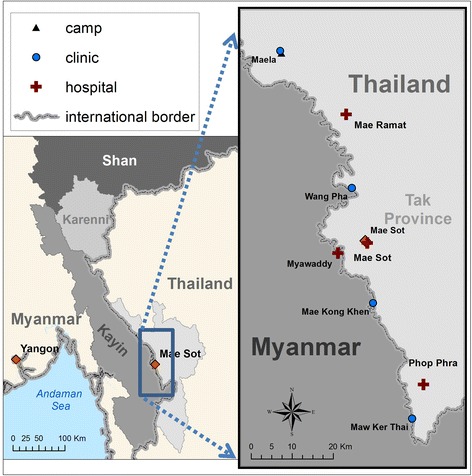
- Cross-sectional surveys in currently pregnant women at three SMRU antenatal clinics (MLA, WPA, MKT) from Jan–Mar 2015; FGDs with pregnant women; IDIs with selected post-partum women of parity ≥3; and a review of family planning uptake from 2013–2015.
- Quantitative data were described with medians and proportions, compared using Mann-Whitney-U or Chi-squared tests, and factors associated with parity >3 were evaluated by logistic regression.
- Qualitative data from FGDs and IDIs were coded and analyzed thematically, with independent coding by two authors and a third author resolving disagreements.
Limitations
- The paper states: data were self-reported with possible recall bias; ethical questions allowed “don’t know”; FGDs could be dominated by one person; IDIs cannot be generalized to younger women with lower parity; and men were not engaged despite their influence.
- Evident from the text: the cross-sectional survey included only pregnant women and does not reflect views of single or unmarried women; migrant family planning data were limited and not collated into a single data source; and one-month post-partum follow-up in the IDIs was incomplete.
Model-written summary. Check it against the paper before relying on it.
Integrity signals
Registry
Cites
Statistics
Figures
Verification
Claims the paper makes
5 Valid · 0 Not valid · 26 Not checked · 120 Own results and interpretations
Every source the paper cites for this claim was checked and supports it.
In the paper
“which at the time was indicative of a significant unmet need for the procedure [12].”
§ Family planning knowledge, attitudes and practices in refugee and migrant pregnant and post-partum women on the Thailand-Myanmar border – a mixed methods study > Background
What the sources say
- Supportedcites [12] Weerasuriya CK Tan SO Alexakis LC Set AK Rijken MJ Martyn P Nosten F McGready R Evaluation of a surgical service in the chronic phase of a refugee camp: an example from the Thai-Myanmar border Confl Health 2012 6 5 10.1186/1752-1505-6-5 22866971 PMC3493322 source
The Results (Non-acute surgical burden) report sterilisation dominating the case mix (60.1%, n=514) with 477 female procedures (Table 1: tubal ligation 477, 55.8%), and give median [range] age 33 [23–50] and parity 5 [2–13] for the women sterilized by mini-laparotomy. The Discussion states 'The dominance of sterilizations is not unexpected given the unmet need in this area', supporting the attribution of an unmet need for the procedure; 'significant' is the citing authors' intensifier but is consistent with the ~60% dominance reported. (LLM, conf=0.85)
hedgedstates an association- Asserted: passes — The authors put it forward as true.
- Checkable: passes — It can be checked against evidence.
- Load-bearing: unclear — It is unclear whether the paper’s conclusions depend on it.
- Based: passes — The paper gives a reason why it holds.
- Supported
The cited sources support only part of this claim — read each source’s verdict below.
In the paper
“A poor understanding of marginalized populations prevents effective service provision due to a lack of local insight sensitive to the cultural, social and educational values of women in remote and rural areas [14, 15].”
§ Family planning knowledge, attitudes and practices in refugee and migrant pregnant and post-partum women on the Thailand-Myanmar border – a mixed methods study > Background
What the sources say
- Partly supportedcites [14] Jimenez-Soto E Dettrick Z Firth S Byrne A La Vincente S Informing family planning research priorities: a perspective from the front line in Asia Trop Med Int Health 2013 18 674 677 10.1111/tmi.12094 23489549 sourceExperimental — accuracy not yet measured
The paper supports the core of the attribution: 'Limited understanding of how temporary migration patterns affect family planning needs' states that 'Little is known about the movements of certain populations preventing the appropriate delivery of family planning services' and that 'Understanding locally specific migration patterns would support more suitable family planning service delivery', and 'Lack of data at levels where planning is done' calls the dearth of locally relevant data a significant barrier to effective planning. Cultural factors appear too ('Cultural taboos surrounding sexual activity in unmarried women', 'Omission of unmarried women'). However, no passage in our copy invokes women's educational values, and the paper's populations are defined by migration status, marital status and subnational data gaps across districts and cities — including urban, highly transient settings — rather than women in 'remote and rural areas'. Those two elements of the citing sentence are not supported by this source. (LLM, conf=0.72)
- Not checked yetcites [15] Potts M Weinrib R Campbell M Why bold policies for family planning are needed now Contraception 2013 87 393 395 10.1016/j.contraception.2013.01.001 23410716 source
plainstates a cause- Asserted: passes — The authors put it forward as true.
- Checkable: passes — It can be checked against evidence.
- Load-bearing: passes — The paper’s conclusions depend on it.
- Based: passes — The paper gives a reason why it holds.
- Partly supported
Every source the paper cites for this claim was checked and supports it.
In the paper
“Needs for appropriate family planning in conflict affected areas are significant and recent research suggests use of LARCs are highly feasible [23].”
§ Family planning knowledge, attitudes and practices in refugee and migrant pregnant and post-partum women on the Thailand-Myanmar border – a mixed methods study > Discussion
What the sources say
- Supportedcites [23] Curry DW Rattan J Huang S Noznesky E Delivering high-quality family planning services in crisis-affected settings II: results Glob Health Sci Pract 2015 3 25 33 10.9745/GHSP-D-14-00112 25745118 PMC4356273 source
The Background says many women in crisis situations want to avoid pregnancy but cannot obtain family planning services, and describes high unmet need for modern contraception in the project countries. The Discussion also reports that providing family planning services, including LARCs, was feasible in five crisis-affected settings. (LLM, conf=0.93)
plain- Asserted: passes — The authors put it forward as true.
- Checkable: passes — It can be checked against evidence.
- Load-bearing: unclear — It is unclear whether the paper’s conclusions depend on it.
- Based: passes — The paper gives a reason why it holds.
- Supported
Every source the paper cites for this claim was checked and supports it.
In the paper
“40 % of women reported they did not want more children”
§ Family planning knowledge, attitudes and practices in refugee and migrant pregnant and post-partum women on the Thailand-Myanmar border – a mixed methods study > Background
What the sources say
- Supportedcites [13] Mullany LC Lee TJ Yone L Lee CI Teela KC Paw P Shwe Oo EK Maung C Kuiper H Masenior NF Impact of community-based maternal health workers on coverage of essential maternal health interventions among internally displaced communities in eastern Burma: the MOM project PLoS Med 2010 7 e1000317 10.1371/journal.pmed.1000317 20689805 PMC2914639 source
The Family Planning section (p. Results) states that 'approximately 40% of all women responding to this question in both survey periods did not want more children', and Table 4 gives the endline figure as 41.6% (n = 950) against a baseline of 42.0%, with PRR = 0.99 (0.91-1.07). The citing sentence's rounded 40% at end of program matches the source's endline value; the source additionally notes desire for more children did not change. (LLM, conf=0.90)
plainn = 2,442- Asserted: passes — The authors put it forward as true.
- Checkable: passes — It can be checked against evidence.
- Load-bearing: unclear — It is unclear whether the paper’s conclusions depend on it.
- Based: passes — The paper gives a reason why it holds.
- Supported
A result the paper reports from its own data — it cites no other source for it, so there is none to check. The quote shows it is in the paper.
In the paper
“Three was identified as the ideal number of children in the cross-sectional survey”
§ Family planning knowledge, attitudes and practices in refugee and migrant pregnant and post-partum women on the Thailand-Myanmar border – a mixed methods study > Abstract > Results
plainn = 978- Asserted: passes — The authors put it forward as true.
- Checkable: passes — It can be checked against evidence.
- Load-bearing: unclear — It is unclear whether the paper’s conclusions depend on it.
- Based: passes — The paper gives a reason why it holds.
85 more claims
Create a free account to see all 151 claims and to verify the 27 references still open.
- It may state two separate claims as one. 25
- Probably not a substantial claim. 44
- The quote only partly states this claim. 3
Claims other papers make about this one
Each is checked against this paper’s own text: does it say what the citing paper says it does?
In the citing paper
“Cultural barriers also complicate interventions for adolescents, as contraception use before a woman's first child is often discouraged 41 and there is confusion about the safety of effective methods for adolescents, even among healthcare providers.”
From Trends and birth outcomes in adolescent refugees and migrants on the Thailand-Myanmar border, 1986-2016: an observational study (2018) · cites this paper as [41]
Self-check
Percentages, sums and reported differences re-computed from the paper’s own numbers.
Each contradiction between two passages listed here was confirmed by an independent check.
Rated major: it would touch a result — a value a result rests on, reported and recomputed p-values on opposite sides of the significance level, two passages that conflict with no sign which is right, or a cited work retracted before this paper was published.
In the paper
§ Family planning knowledge, attitudes and practices in refugee and migrant pregnant and post-partum women on the Thailand-Myanmar border – a mixed methods study > Methods > Data analysis
“Factors with a p < 0.10 in univariate analysis were entered into a forward logistic regression model with parity of three or more as the dependent variable, with associations presented as adjusted odds ratios (AOR) with their 95 % confidence intervals.”
§ Family planning knowledge, attitudes and practices in refugee and migrant pregnant and post-partum women on the Thailand-Myanmar border – a mixed methods study > Results > Cross-sectional surveys
“Table: Table 4 Factors associated with a parity >3 in refugee and migrant women on the Thailand Myanmar border”
Rated minor: it would not touch a result — a value no result rests on, a p-value that stays on the same side of the significance level, or a conflict that is clerical, resolved elsewhere in the paper, or outside its own findings.
In the paper
“| Age ≥35y | 118 | 52.5 (56) | 1.992 (1.646-2.410), p < 0.001 | 16.232 (9.355-28.165), p < 0.001 |”
§ Family planning knowledge, attitudes and practices in refugee and migrant pregnant and post-partum women on the Thailand-Myanmar border – a mixed methods study > Results > Cross-sectional surveys
Reported 52.5 · recomputed 47.457627
Rated minor: it would not touch a result — a value no result rests on, a p-value that stays on the same side of the significance level, or a conflict that is clerical, resolved elsewhere in the paper, or outside its own findings.
In the paper
§ Family planning knowledge, attitudes and practices in refugee and migrant pregnant and post-partum women on the Thailand-Myanmar border – a mixed methods study > Results > Cross-sectional surveys
“| History child death | 97 | 56.7 (55) | 2.166 (1.724-2.722), p < 0.001 | 17.539 (9.749-31.553), P < 0.001 |”
§ Family planning knowledge, attitudes and practices in refugee and migrant pregnant and post-partum women on the Thailand-Myanmar border – a mixed methods study > Results > Cross-sectional surveys
“| No history child death | 823 | 6.2 (51) | Reference group | Reference group |”
Rated minor: it would not touch a result — a value no result rests on, a p-value that stays on the same side of the significance level, or a conflict that is clerical, resolved elsewhere in the paper, or outside its own findings.
In the paper
§ Family planning knowledge, attitudes and practices in refugee and migrant pregnant and post-partum women on the Thailand-Myanmar border – a mixed methods study > Results > Family planning statistics 2013 to 2015
“| Sterilization, per 1,000 live births | 81 | 55 | 67 | | 76 | 59 | | 73 | 44 |”
§ Family planning knowledge, attitudes and practices in refugee and migrant pregnant and post-partum women on the Thailand-Myanmar border – a mixed methods study > Results > Family planning statistics 2013 to 2015
“| Sterilization, per 1,000 live births | (65–97) | (42–69) | (84–100) | 0 | (57–95) | (43–75) | 0 | (53–93) | (28–59) |”
Rated minor: it would not touch a result — a value no result rests on, a p-value that stays on the same side of the significance level, or a conflict that is clerical, resolved elsewhere in the paper, or outside its own findings.
In the paper
“| LAC Total, per 1,000 live births | 173 | 158 | 337 | | 99 | 86 | | 73 | 124 |”
§ Family planning knowledge, attitudes and practices in refugee and migrant pregnant and post-partum women on the Thailand-Myanmar border – a mixed methods study > Results > Family planning statistics 2013 to 2015
Reported 337 · recomputed 321
1 more finding
Create a free account to see every finding of this check.
Citations
Cites
What can “thematic analysis” offer health and wellbeing researchers?
Braun, V., & Clarke, V. (2014) · International Journal of Qualitative Studies on Health and Well-being · doi:10.3402/qhw.v9.26152 · Cited by 3,056 · cited 1×
“Data from FGDs were analysed using thematic analysis to identify and code themes emerging from the data [19, 20].”
MethodMaternal deaths averted by contraceptive use: an analysis of 172 countries
Ahmed, S., Li, Q., Liu, L., & Tsui, A. O. (2012) · The Lancet · doi:10.1016/s0140-6736(12)60478-4 · Cited by 898 · cited 1×
“Contraceptive benefits arise especially among those at higher risk for maternal, perinatal and child mortality including pregnancies: at very young (<18 years) and old (>34 years) maternal ages; at high parities; with short inter-pregnancy intervals; and those that would have ended in unsafe abortion [3].”
BackgroundAlkema, L., Kantorova, V., Menozzi, C., & Biddlecom, A. (2013) · The Lancet · doi:10.1016/s0140-6736(12)62204-1 · Cited by 584 · cited 1×
“3 % (3 · 0–8 · 9) in 2010), whereas in Myanmar the estimate was 4 times higher at 20 · 0 % (12 · 4–29 · 5) in sentinel sites [10].”
Qualitative methods for assessing health care.
Fitzpatrick, R., & Boulton, M. (1994) · Quality in Health Care · doi:10.1136/qshc.3.2.107 · Cited by 298 · cited 1×
“Data from FGDs were analysed using thematic analysis to identify and code themes emerging from the data [19, 20].”
MethodBarriers of Modern Contraceptive Practices among Asian Women: A Mini Literature Review
Najafi-Sharjabad, F., Yahya, S. Z. S., Rahman, H. A., Juni, M. H., & Manaf, R. A. (2013) · Global Journal of Health Science · doi:10.5539/gjhs.v5n5p181 · Cited by 164 · cited 1×
“Indeed family planning is key to preventing the social, economic and health consequences that result from unintentional pregnancies [2].”
BackgroundRisk of Mortality Associated With Neonatal Hypothermia in Southern Nepal
Mullany, L. C., Katz, J., Khatry, S. K., LeClerq, S. C., Darmstadt, G. L., & Tielsch, J. M. (2010) · Archives of Pediatrics & Adolescent Medicine · doi:10.1001/archpediatrics.2010.103 · Cited by 160 · cited 1×
“Maternal mortality on the Thailand-Myanmar border in rural dwelling refugee (79:100,000 live births) and migrant (252:100,000 live births) populations [5], and the displaced in eastern Myanmar (721:100,000 live births) [6], remains high.”
BackgroundEducation, Diversity, and Inclusion in Burmese Refugee Camps in Thailand
Oh, S., & van der Stouwe, M. (2008) · Comparative Education Review · doi:10.1086/591299 · Cited by 114 · cited 1×
“are thought to be a bad influence [28].”
BackgroundSaving maternal lives in resource-poor settings: Facing reality
Prata, N., Sreenivas, A., Vahidnia, F., & Potts, M. (2008) · Health Policy · doi:10.1016/j.healthpol.2008.05.007 · Cited by 112 · cited 1×
“Family planning for high risk pregnancies is estimated to reduce the risk of maternal death by up to 58 % [4].”
BackgroundMcGready, R., Boel, M., Rijken, M. J., Ashley, E. A., Cho, T., Moo, O., Paw, M. K., Pimanpanarak, M., Hkirijareon, L., Carrara, V. I., et al. (2012) · PLoS ONE · doi:10.1371/journal.pone.0040244 · Cited by 101 · cited 3×
“Maternal mortality on the Thailand-Myanmar border in rural dwelling refugee (79:100,000 live births) and migrant (252:100,000 live births) populations [5], and the displaced in eastern Myanmar (721:100,000 live births) [6], remains high.”
BackgroundMethodSelf-citationMullany, L. C., Lee, T. J., Yone, L., Lee, C. I., Teela, K. C., Paw, P., Shwe Oo, E. K., Maung, C., Kuiper, H., Masenior, N. F., et al. (2010) · PLoS Medicine · doi:10.1371/journal.pmed.1000317 · Cited by 92 · cited 1×
“5 % [13].”
Low seroprevalence of HIV and syphilis in pregnant women in refugee camps on the Thai-Burma border.
Plewes, K., Lee, T., Kajeechewa, L., Thwin, M. M., Lee, S. J., Carrara, V. I., Nosten, F., & Mcgready, R. (2008) · International Journal of STD & AIDS · doi:10.1258/ijsa.2008.008034 · Cited by 66 · cited 1×
“Consultations and negotiations with key members of the generally conservative local community [30] have commenced as a result of this study and as previously recommended from an evaluation of the availability, service delivery, and barriers to access to emergency contraceptive pills (ECPs) along the Thailand–Burma bor…”
BackgroundSelf-citationCarrara, V. I., Hogan, C., De Pree, C., Nosten, F., & McGready, R. (2011) · BMC Pregnancy and Childbirth · doi:10.1186/1471-2393-11-45 · Cited by 53 · cited 1×
“Due to limited ability to read fluently, as previously assessed in these clinics [18], a verbal explanation of the study was provided to all participants in their preferred language (Karen or Burmese) prior to each section of the study.”
BackgroundSelf-citationDelivering High-Quality Family Planning Services in Crisis-Affected Settings II: Results
Curry, D. W., Rattan, J., Huang, S., & Noznesky, E. (2015) · Global Health: Science and Practice · doi:10.9745/ghsp-d-14-00112 · Cited by 53 · cited 1×
“Needs for appropriate family planning in conflict affected areas are significant and recent research suggests use of LARCs are highly feasible [23].”
BackgroundHoogenboom, G., Thwin, M. M., Velink, K., Baaijens, M., Charrunwatthana, P., Nosten, F., & McGready, R. (2015) · BMC Pregnancy and Childbirth · doi:10.1186/s12884-015-0444-0 · Cited by 48 · cited 1×
“The care provided in the SMRU birth facilities is described in more detail in a recent publication on quality of care [17].”
MethodSelf-citationZaw, P. P. T., Liabsuetrakul, T., Htay, T. T., & McNeil, E. B. (2012) · BMC Health Services Research · doi:10.1186/1472-6963-12-458 · Cited by 41 · cited 1×
“This study does not reflect the views of single and unmarried women, and obtaining more information in this area could be very helpful to inform FP services [26].”
BackgroundByrne, A., Morgan, A., Jimenez‐Soto, E., & Dettrick, Z. (2012) · Reproductive Health · doi:10.1186/1742-4755-9-27 · Cited by 41 · cited 1×
“Context plays a major role in barriers and enablers of successful strategies to fill unmet family planning needs [21].”
BackgroundBelton, S., & Whittaker, A. (2007) · Social Science & Medicine · doi:10.1016/j.socscimed.2007.05.046 · Cited by 37 · cited 1×
“As has induced abortion, a problem recognized in migrant Burmese women in urban centres such as Mae Sot [8] and more recently for rural refugees and migrants who travel to Mae Sot [9].”
BackgroundReproductive health and quality of life of young Burmese refugees in Thailand
Benner, M. T., Townsend, J., Kaloi, W., Htwe, K., Naranichakul, N., Hunnangkul, S., Carrara, V. I., & Sondorp, E. (2010) · Conflict and Health · doi:10.1186/1752-1505-4-5 · Cited by 36 · cited 1×
“This is especially important since a survey conducted with 15–24 year olds a decade earlier (2005–6) in Mae Ra Ma Luang and Mae La Oon refugee camps, approximately 300 km north of MLA, reported young people had very limited knowledge of reproductive health issues, with only about one in five correctly answering at lea…”
BackgroundHobstetter, M., Sietstra, C., Walsh, M., Leigh, J., & Foster, A. M. (2015) · International Journal of Gynecology & Obstetrics · doi:10.1016/j.ijgo.2015.05.008 · Cited by 25 · cited 1×
“Consultations and negotiations with key members of the generally conservative local community [30] have commenced as a result of this study and as previously recommended from an evaluation of the availability, service delivery, and barriers to access to emergency contraceptive pills (ECPs) along the Thailand–Burma bor…”
BackgroundWeerasuriya, C. K., Tan, S. O., Alexakis, L. C., Set, A. K., Rijken, M. J., Martyn, P., Nosten, F., & McGready, R. (2012) · Conflict and Health · doi:10.1186/1752-1505-6-5 · Cited by 24 · cited 1×
“An older report from 2005–07 evaluating surgical services (2005–07) in the same camp confirmed 477 sterilizations were provided for women with a median age of 33 years and a median parity of 5 which at the time was indicative of a significant unmet need for the procedure [12].”
BackgroundSelf-citationCupples, J. B., Zukoski, A. P., & Dierwechter, T. (2010) · Health Promotion Practice · doi:10.1177/1524839909358847 · Cited by 24 · cited 1×
“Male peer educators could be considered in this setting since disagreement by the husband was noted in one-third of the FGD comments as to why a high-risk woman may not have had a sterilization, and because in remarriage a woman may have more children than they desire [39].”
BackgroundMbizvo, M. T., Chou, D., & Shaw, D. (2013) · International Journal of Gynecology & Obstetrics · doi:10.1016/j.ijgo.2013.02.007 · Cited by 22 · cited 1×
“This theme emerged from the IDIs, where husbands were noted to both positively and negatively impact LAC uptake [38].”
BackgroundGedeon, J., Hsue, S. N., Walsh, M., Sietstra, C., MarSan, H., & Foster, A. M. (2015) · Conflict and Health · doi:10.1186/s13031-015-0034-9 · Cited by 18 · cited 1×
“There is a paucity of information on the use of long-acting reversible contraceptives (LARC) in the Thailand-Myanmar border area despite the protracted nature of the camps, but a 2013 study involving in-depth interviews of 31 intrauterine-device (IUD) users, 21 of whom were from MLA Refugee camp, portrayed positive ex…”
BackgroundDitton, M. J., & Lehane, L. (2009) · Journal of Empirical Research on Human Research Ethics · doi:10.1525/jer.2009.4.3.37 · Cited by 16 · cited 1×
“Strengths and gaps in KAP towards FP in rural refugee and migrant women were identified in this study and provide an avenue for change, potentially impacting maternal mortality and morbidity in these marginalized populations [24, 25].”
BackgroundExpanding access to medical abortion: challenges and opportunities
Ganatra, B., Guest, P., & Berer, M. (2014) · Reproductive Health Matters · doi:10.1016/s0968-8080(14)43793-5 · Cited by 15 · cited 1×
“Legal termination is only available for rape and life-saving medical indications in Thailand and Myanmar, but the answer suggests women will put themselves at risk to solve problems of unwanted pregnancy [29] and indeed this has been observed in clinical practice in this setting [9].”
BackgroundCaring for the Karen. A newly arrived refugee group.
Power, D. V., Moody, E., Trussell, K., O’Fallon, A., Chute, S., Kyaw, M., Letts, J., & Mamo, B. (2010) · PubMed · Cited by 14
Impact of having a high-risk pregnancy on future postpartum contraceptive method choice
Kiykac Altinbas, S., Bayoglu Tekin, Y., Dilbaz, B., Kilic, S., Khalil, S. S., & Kandemir, O. (2014) · Women and Birth · doi:10.1016/j.wombi.2014.06.006 · Cited by 14 · cited 1×
“This finding diverges from recent observations in a developed country setting where personal history of pregnancy complications appeared to positively affect contraceptive choices [32].”
Result(2014) · PubMed Central · Cited by 12
Aeromonas spp. Bacteremia in Pregnant Women, Thailand–Myanmar Border, 2011
Turner, P., Willemse, C., Phakaudom, K., Zin, T. W., Nosten, F., & McGready, R. (2012) · Emerging Infectious Diseases · doi:10.3201/eid1809.111592 · Cited by 11 · cited 2×
“As has induced abortion, a problem recognized in migrant Burmese women in urban centres such as Mae Sot [8] and more recently for rural refugees and migrants who travel to Mae Sot [9].”
BackgroundSelf-citationArrowsmith, M. E., Aicken, C. R. H., Majeed, A., & Saxena, S. (2012) · Contraception · doi:10.1016/j.contraception.2012.05.015 · Cited by 11 · cited 1×
“The FGDs also suggest that discussing basic anatomy is a beneficial tool in FP counseling in this setting, providing possibly unknown information and allaying fears about contraceptive methods [33].”
BackgroundHealth and healing: traditional medicine and the Karen experience.
Oleson, H., Chute, S., O’Fallon, A., & Sherwood, N. E. (2012) · PubMed · Cited by 9
Spiegel, P. B., Cornier, N., & Schilperoord, M. (2009) · PLoS Medicine · doi:10.1371/journal.pmed.1000093 · Cited by 6 · cited 1×
“In this case, the cost of family planning supplies but not health workers who can implement the work, has been met for a short time by a charitable donor but this is precarious in terms of sustainability [34].”
BackgroundWhy bold policies for family planning are needed now
Potts, M., Weinrib, R., & Campbell, M. (2013) · Contraception · doi:10.1016/j.contraception.2013.01.001 · Cited by 4 · cited 1×
“prevents effective service provision due to a lack of local insight sensitive to the cultural, social and educational values of women in remote and rural areas [14, 15].”
BackgroundInforming family planning research priorities: a perspective from the front line in Asia
Jimenez‐Soto, E., Dettrick, Z., Firth, S., Byrne, A., & La Vincente, S. (2013) · Tropical Medicine & International Health · doi:10.1111/tmi.12094 · Cited by 2 · cited 1×
“prevents effective service provision due to a lack of local insight sensitive to the cultural, social and educational values of women in remote and rural areas [14, 15].”
Background
Research works printed but not linked: 1
- Hobstetter M, Walsh M, Leigh J, Lee C, Siestra C, Foster A: Separated by borders, united in need: An assessment of reproductive health on the Thailand-Burma border. In. Cambridge, MA: Ibis Reproductive Health; 2012: Available from: http://www.ibisreproductivehealth.org/sites/default/files/files/publications/separatedbyborders-English.pdf Accessed May 2015.
Cited by
Tousaw, E., Moo, S. N. H. G., Arnott, G., & Foster, A. M. (2017) · Contraception · doi:10.1016/j.contraception.2017.06.015 · Cited by 39
Women’s sexual and reproductive health in war and conflict: are we seeing the full picture?
Hedström, J., & Herder, T. (2023) · Global Health Action · doi:10.1080/16549716.2023.2188689 · Cited by 37
Access to female contraceptives by Rohingya refugees, Bangladesh
Khan, M. N., Islam, M. M., Rahman, M. M., & Rahman, M. M. (2021) · Bulletin of the World Health Organization · doi:10.2471/blt.20.269779 · Cited by 31
Tousaw, E., La, R. K., Arnott, G., Chinthakanan, O., & Foster, A. M. (2017) · Reproductive Health Matters · doi:10.1080/09688080.2017.1392220 · Cited by 33
Seifu, B., Yilma, D., & Daba, W. (2020) · Open Access Journal of Contraception · doi:10.2147/oajc.s268561 · Cited by 29
“About three-fourth of the study participants had good knowledge of PPFP, which was found to be lower than other comparable studies from central Ethiopia, Thailand, and Nepal.3,16,22 Nonetheless it was higher than the study from Axum, Ethiopia (46%).23 The variance may be due to the differences in the study period and…”
BackgroundResultInfluential
Metadata
- Authors
- Salisbury, P., Hall, L., Kulkus, S., Paw, M. K., Tun, N. W., Min, A. M., Chotivanich, K., Srikanok, S., Ontuwong, P., Sirinonthachai, S., Nosten, F., Somerset, S., & McGready, R.
- Affiliations
- Mahidol University (TH)
- Australian Catholic University (AU)
- Corresponding author
- McGready, Rose
- ORCID
- Venue
- Reproductive Health
- Published
- 2016-08-19
- Volume
- 13
- Issue
- 1
- Pages
- 94-94
- ISSN
- 1742-4755 (ISSN-L)
- PMC
- PMC4992227
- OpenAlex
- W2510888939
- Semantic Scholar
- d0aef4111b331c0ad85065b1b8025874fc74d4da
- Cited by
- 59
- References
- 34
- Citations by year
- 2026: 3 · 2025: 5 · 2024: 2 · 2023: 9 · 2022: 4 · 2021: 15 · 2020: 8 · 2019: 2 · 2018: 5 · 2017: 5 · 2016: 1
- FWCI
- 4.30
- Type
- journal article
- Language
- en
- Open access
- gold
- doi.org
- Licence
- Locations
- Reproductive Health (publishedVersion, cc-by)
- PubMed Central (publishedVersion, cc-by)
- PubMed (publishedVersion)
- Research Bank (Australian Catholic University) (submittedVersion, cc-by)
- Funders
- Wellcome Trust (WT-106698)
- Topics
- Health Sciences › Medicine › Public Health, Environmental and Occupational Health › Reproductive Health and Contraception
- Health Sciences › Medicine › Pediatrics, Perinatology and Child Health › Global Maternal and Child Health
- Health Sciences › Medicine › Urology › Male Reproductive Health Studies
- Keywords
- family planning, contraceptive knowledge, attitudes and practices, refugee women, migrant women, pregnant women, postpartum women, Thai-Myanmar border, long-acting reversible contraception, intrauterine devices, emergency contraception, birth spacing, parity, maternal mortality, Shoklo Malaria Research Unit
- MeSH terms
- Adolescent, Adult, Myanmar, Contraception, Cross-Sectional Studies, Family Planning Services, Female, Humans, Interviews as Topic, Intrauterine Devices, Health Knowledge, Attitudes, Practice, Middle Aged, Parity, Pregnancy, Refugees, Sterilization, Reproductive, Thailand, Transients and Migrants, Focus Groups, Young Adult
About these checks
Registry, retraction, Cites and statistics results are computed, not judged, with one exception: a printed reference that no index lists is read once by a model before it counts as a citation error. Claims are extracted by a model and kept only when their quote appears verbatim in the text; each cited source is then checked, with a model’s help, for whether it says what the claim relies on. Those verdicts can be wrong — read the claim’s quote and the cited source before relying on one.
The claim verdicts this report counts are experimental: their accuracy is not yet measured.
A language model drew the claims from the paper on 2026-10-06, under version 3 of the claim definition (model deepseek-v4.1-flash, prompt extract-v3).
A second model labelled each claim on 2026-10-06 (model jev-1.13-20260917, definition revision gold-guideline-v0.2).
Cited sources are checked with a language model’s help (qwen3.8-omni-flash and gpt-6-sol).
Statistics and arithmetic are recomputed, not judged.
Confidence bands are shown only for fields calibrated on our annotated test set. None is calibrated yet, so no band is shown.
What counts as a claim ›How we measure confidence ›How we check this ›
Are you an author, or do you see a problem with this page? Request a review
Data sources
Bibliographic data: Semantic Scholar, OpenAlex, Crossref.
Contains information from the Semantic Scholar Academic Graph Datasets, made available under the ODC Attribution License (ODC-BY 1.0).
Semantic Scholar’s data is described in: Kinney, R., et al. (2023). The Semantic Scholar Open Data Platform. arXiv:2301.10140.
