

Benefits of virtual reality based cognitive rehabilitation through simulated activities of daily living: a randomized controlled trial with stroke patients
Open accessThe DOI matches its Crossref record; 58 of the 59 references it cites were found in a registry or an index.
Abstract
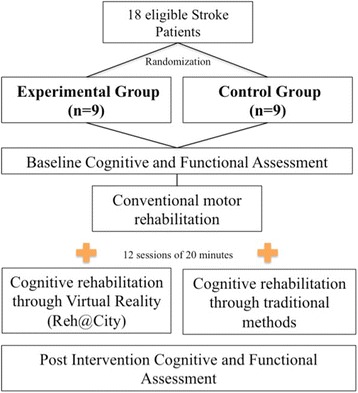
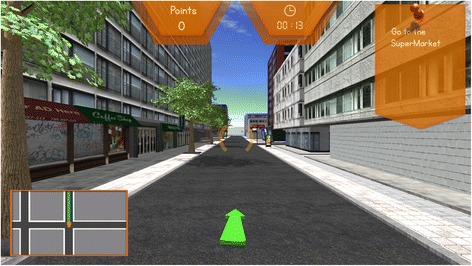
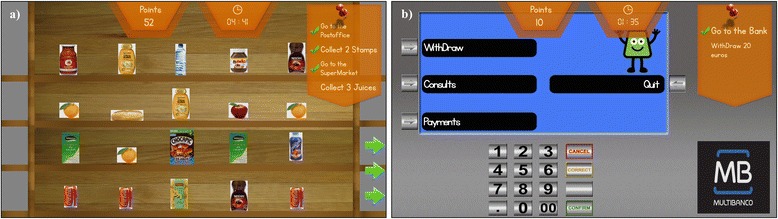
BACKGROUND: Stroke is one of the most common causes of acquired disability, leaving numerous adults with cognitive and motor impairments, and affecting patients' capability to live independently. There is substancial evidence on post-stroke cognitive rehabilitation benefits, but its implementation is generally limited by the use of paper-and-pencil methods, insufficient personalization, and suboptimal intensity. Virtual reality tools have shown potential for improving cognitive rehabilitation by supporting carefully personalized, ecologically valid tasks through accessible technologies. Notwithstanding important progress in VR-based cognitive rehabilitation systems, specially with Activities of Daily Living (ADL's) simulations, there is still a need of more clinical trials for its validation. In this work we present a one-month randomized controlled trial with 18 stroke in and outpatients from two rehabilitation units: 9 performing a VR-based intervention and 9 performing conventional rehabilitation. METHODS: The VR-based intervention involved a virtual simulation of a city - Reh@City - where memory, attention, visuo-spatial abilities and executive functions tasks are integrated in the performance of several daily routines. The intervention had levels of difficulty progression through a method of fading cues. There was a pre and post-intervention assessment in both groups with the Addenbrooke Cognitive Examination (primary outcome) and the Trail Making Test A and B, Picture Arrangement from WAIS III and Stroke Impact Scale 3.0 (secondary outcomes). RESULTS: A within groups analysis revealed significant improvements in global cognitive functioning, attention, memory, visuo-spatial abilities, executive functions, emotion and overall recovery in the VR group. The control group only improved in self-reported memory and social participation. A between groups analysis, showed significantly greater improvements in global cognitive functioning, attention and executive functions when comparing VR to conventional therapy. CONCLUSIONS: Our results suggest that cognitive rehabilitation through the Reh@City, an ecologically valid VR system for the training of ADL's, has more impact than conventional methods. TRIAL REGISTRATION: This trial was not registered because it is a small sample study that evaluates the clinical validity of a prototype virtual reality system.
Overview
The claims and statistics of this paper haven’t been checked yet.
Free: it reads the open-access text and checks the first 5 claims that cite a source we can check. Create a free account to check every claim.
Integrity signals
Registry
Cites
Statistics
Figures
Verification
Claims the paper makes
The claims and statistics of this paper haven’t been checked yet.
Free: it reads the open-access text and checks the first 5 claims that cite a source we can check. Create a free account to check every claim.
Claims other papers make about this one
Each is checked against this paper’s own text: does it say what the citing paper says it does?
The source backs part of the claim, not all of it — or backs it for a different population, condition or comparison.
In the citing paper
“Furthermore, VR’s immersive nature promotes participant engagement and naturalistic behavior, potentially improving assessment accuracy [12].”
From Enhancing Ecological Validity: Virtual Reality Assessment of Executive Functioning in Children and Adolescents with ADHD (2024) · cites this paper as [12]
Experimental — accuracy not yet measured
Self-check
Percentages, sums and reported differences re-computed from the paper’s own numbers.
The self-check needs the paper’s full text.
Citations
Cites
Folstein, M. F., Folstein, S. E., & McHugh, P. R. (1975) · Journal of Psychiatric Research · doi:10.1016/0022-3956(75)90026-6 · Cited by 88,282
Kok, J. S., Berg, I. J., & Scherder, E. J. A. (2013) · Dementia and Geriatric Cognitive Disorders Extra · doi:10.1159/000353441 · Cited by 20,589
Older Adults' Reasons for Using Technology while Aging in Place
Peek, S. T. M., Luijkx, K. G., Rijnaard, M. D., Nieboer, M. E., van der Voort, C. S., Aarts, S., van Hoof, J., Vrijhoef, H. J. M., & Wouters, E. J. M. (2016) · Gerontology · doi:10.1159/000430949 · Cited by 19,690
Sensitivity and False Alarm Rate of a Fall Sensor in Long-Term Fall Detection in the Elderly
Kangas, M., Korpelainen, R., Vikman, I., Nyberg, L., & Jämsä, T. (2015) · Gerontology · doi:10.1159/000362720 · Cited by 18,909
SUS: A 'Quick and Dirty' Usability Scale
(1996) · Usability Evaluation In Industry · doi:10.1201/9781498710411-35 · Cited by 8,989
Validity of the Trail Making Test as an Indicator of Organic Brain Damage
Reitan, R. M. (1958) · Perceptual and Motor Skills · doi:10.2466/pms.1958.8.3.271 · Cited by 7,928
An Empirical Evaluation of the System Usability Scale
Bangor, A., Kortum, P. T., & Miller, J. T. (2008) · International Journal of Human–Computer Interaction · doi:10.1080/10447310802205776 · Cited by 5,181 · cited 1×
“Final scores for the SUS can range from 0 to 100, where higher scores indicate better usability: 90s is exceptional, 80s is good and 70s is acceptable [50].”
BackgroundWechsler Adult Intelligence Scale-III
Ryan, J. J., & Lopez, S. J. (2001) · Understanding Psychological Assessment · doi:10.1007/978-1-4615-1185-4_2 · Cited by 3,731
Trail Making Test A and B: normative data stratified by age and education
Tombaugh, T. (2004) · Archives of Clinical Neuropsychology · doi:10.1016/s0887-6177(03)00039-8 · Cited by 3,239 · cited 1×
“The fact that this test is highly influenced by schooling [54] and that our sample had few years of education might explain the persistence of low performance in this test from pre to post assessment.”
BackgroundLanghorne, P., Bernhardt, J., & Kwakkel, G. (2011) · The Lancet · doi:10.1016/s0140-6736(11)60325-5 · Cited by 2,726
Research works printed but not linked: 4
- Kizony R Korman M Sinoff G Klinger E Josman N Using a virtual supermarket as a tool for training executive functions in people with mild cognitive impairment 2012 Laval 9th ICDVRAT
- Chirivella J del Barco A Blasco S Penades V Mas G Gagliardo P Neuro@ home [ii]: A software platform of clinically designed videogames designed for the cognitive rehabilitation of stroke patients Brain Injury 2014 517 878
- Guerreiro M Silva AP Botelho MA Leitão O Castro-Caldas A Garcia C Adaptação à população portuguesa da tradução do Mini Mental State Examination (MMSE) Revista Portuguesa de Neurologia 1994 1 9 9 10
- Research Randomizer [Internet] Research randomizer 2016
Cited by
Items 201–300 of 374
Vidal, E., Castro-Gutierrez, E., Arisaca, R., Paz-Valderrama, A., & Albiol-Pérez, S. (2023) · JMIR Formative Research · doi:10.2196/50492 · Cited by 4
“Faria et al [33] presented a VR-based intervention focused on executive function tasks integrated into ADL involving a virtual simulation of a city.”
BackgroundJanavičiūtė, J., Petrolienė, R., Zajanckauskaitė-Staskevičienė, L., Paulauskas, A., & Šinkariova, L. (2025) · BMC Psychology · doi:10.1186/s40359-025-03135-8 · Cited by 4
Connections that Care: WhatsApp as a Support Space for Stroke Survivors
Rodrigues, M., Silva, I. D. S., & Soares, L. (2025) · Advances in Geriatric Medicine and Research · doi:10.20900/agmr20250020 · Cited by 4
Self-citationZhao, Y., Guo, C., Zhang, D., Wei, X., Jiang, X., & Bi, H. (2025) · Clinical Rehabilitation · doi:10.1177/02692155251394944 · Cited by 4
Task Generator 2.0: Integrating Interactive Technology with Personalized Task Generation
Marcos, T., Faria, A. L., Badia, S. B. I., & Quintal, F. (2025) · Procedia Computer Science · doi:10.1016/j.procs.2025.02.240 · Cited by 4
Self-citationChen, Y.-C., & Liang, H. (2025) · Virtual Reality · doi:10.1007/s10055-025-01165-6 · Cited by 4
Neurorestoration treatment for post-stroke cognitive impairment (PSCI)
Yang, Z., Wu, H., Wang, H., Yu, X., Zhu, J., Xie, M., Chen, S., Wu, Y., Zhou, X., Song, S., et al. (2025) · Journal of Neurorestoratology · doi:10.1016/j.jnrt.2025.100240 · Cited by 4
Shurupova, M. A., Aizenshtein, A. D., Trofimova, A. K., & Ivanova, G. Е. (2021) · S S Korsakov Journal of Neurology and Psychiatry · doi:10.17116/jnevro202112112233 · Cited by 4
Validating Structural Cognitive Training Using Immersive Virtual Reality
Oliveira, E., Pereira, N. A. A., Alves, J., Henriques, P. R., & Rodrigues, N. F. (2023) · SeGAH ... IEEE ... International Conference on Serious Games and Applications for Health/IEEE International Conference on Serious Games and Applications for Health · doi:10.1109/segah57547.2023.10253789 · Cited by 4
Kumkwan, Y., Utriyaprasit, K., Tankumpuan, T., Lertmanorat, Z., & Mathayomchan, B. (2024) · International Journal of Nursing Sciences · doi:10.1016/j.ijnss.2024.08.008 · Cited by 4
Technological Tools for the Intervention and Computerized Dynamic Assessment of Executive Functions
Bustamante, J. C., & Navarro, J. J. (2022) · Advances in psychology, mental health, and behavioral studies (APMHBS) book series · doi:10.4018/978-1-7998-9075-1.ch014 · Cited by 4
ATHENA Research Book, Volume 2
Györkös, J., Blonder, R., Delouis, A. F., Javornik, J., & Petridis, K. (2023) · University of Maribor, University Press eBooks · doi:10.18690/um.4.2023 · Cited by 4
Dispositivo háptico vibrotáctil inalámbrico para asistencia de actividades motoras
Castillo, J. R. T., Lomelí, J. S. P., Casallas, E. C., & Castañeda, M. (2018) · Visión electrónica · doi:10.14483/22484728.13310 · Cited by 4
Törő, B., Prontvai, N., Csutorás, B., Kós, P., Kopácsi, B., Kozma, D., Keresztesy, V., Kutas, J., Kóra, S., Haidegger, T. P., et al. (2025) · Acta Polytechnica Hungarica · doi:10.12700/aph.22.10.2025.10.6 · Cited by 3
Dantu, R., Murad, M. M. I., Sharma, K., Dutta, K., & Cravens-Ray, L. (2026) · International Journal of Medical Informatics · doi:10.1016/j.ijmedinf.2026.106311 · Cited by 3
Goumopoulos, C., Skikos, G., Soilemezis, P., & Koumanakos, D. P. (2026) · Smart Health · doi:10.1016/j.smhl.2026.100657 · Cited by 3
Puwarawuttipanit, W. (2021) · Siriraj Medical Journal/San Sirirat · doi:10.33192/smj.2021.31 · Cited by 3
COGNITIVE TRAINING FOLLOWING STROKE: A PILOT STUDY WITH THE NEUROAIREH@B PLATFORM
Câmara, J., Paulino, T., Spínola, M., Branco, D., Cameirão, M. S., Faria, A. L., Ferreira, L., Moreira, A., Silva, A. R., Vilar, M., et al. (2022) · Psicologia Saúde & Doenças · doi:10.15309/22psd230203 · Cited by 3
Self-citation宋, 梦. (2023) · Advances in Clinical Medicine · doi:10.12677/acm.2023.1351172 · Cited by 3
Mathew, R., Sapru, K., Gandhi, D. N., Surve, T. A. N., Pande, D., Parikh, A., Sharma, R. B., Kaur, R., & Hasibuzzaman, M. A. (2025) · World Journal of Methodology · doi:10.5662/wjm.v15.i3.98132 · Cited by 3
Jang, K.-M., Kim, T., Jeong, Y., & Do, J. (2025) · Applied Neuropsychology Adult · doi:10.1080/23279095.2025.2481482 · Cited by 3
Gesture Control for Cognitive Training Based on VR Technologies
Hudák, M., Sobota, B., & Korečko, Š. (2018) · International Conference on Emerging eLearning Technologies and Applications (ICETA) · doi:10.1109/iceta.2018.8572028 · Cited by 3
Styazhkina, E. M., Otvetchikova, D. I., & Marchenkova, L. (2024) · Fizioterapevt (Physiotherapist) · doi:10.33920/med-14-2405-12 · Cited by 3
Technology as a Support for Rehabilitation Patients After Stroke
Kania, D., Romaniszyn‐Kania, P., Mańka, A., Ledwoń, D. J., Łysień, A. M., Nawrat–Szołtysik, A., Danch–Wierzchowska, M., Michnik, R., Mitas, A. W., & Myśliwiec, A. P. (2020) · Advances in intelligent systems and computing · doi:10.1007/978-3-030-52180-6_24 · Cited by 3
Pinnow, D., Hubbard, H. I., & Meulenbroek, P. A. (2021) · Frontiers in Virtual Reality · doi:10.3389/frvir.2021.685921 · Cited by 3
Thomas, T. H. H. N. (2021) · Biomedical Journal of Scientific & Technical Research · doi:10.26717/bjstr.2021.38.006120 · Cited by 3
ORVIPO: An Ontological Prototype for Modeling 3D Scenes in Operating Rooms
Jaziri, F., Messaoudi, R., Mtibaa, A., Courbon, J., Kilani, M., Mhiri, M., & Vacavant, A. (2021) · Procedia Computer Science · doi:10.1016/j.procs.2021.08.118 · Cited by 3
Tele-Monitoring and Tele-Rehabilitation of the Hand in Hemiplegic Patients: A Preliminary Study
Vismara, L., Ferraris, C., Votta, V., Nerino, R., Clerici, D., & Mauro, A. (2022) · Lecture notes in electrical engineering · doi:10.1007/978-3-031-08838-4_20 · Cited by 3
Virtual and real ATM use performance in patients with acquired brain injury and healthy controls
Oliveira, J., Gamito, P. S., Pereira, R., Salvador, Á., Bourbon‐Teles, J., Dias, F., Galhordas, J., & Fantasia, A. (2023) · Virtual Reality · doi:10.1007/s10055-023-00819-7 · Cited by 3
Conti, A. F., Meyer, L. P., & Bekele, T. M. (2022) · Journal of Current Research in Oral Surgery · doi:10.51847/1szwylkokm · Cited by 3
Karami, J., abbariki, A., & jashnpour, M. (2020) · فصلنامه علمی و پژوهشی اعتیادپژوهی · doi:10.29252/etiadpajohi.14.56.267 · Cited by 3
Hamedali, B., Khalatbari, J., Al-zakerini, S. M., & Seyrafi, M. (2020) · doi:10.32592/ajnpp.2021.8.2.106 · Cited by 3
Spatial Augmented Reality in Serious Games for Cognitive Rehabilitation of the Elderly
Silva, R. J. N. (2020) · Portuguese National Funding Agency for Science, Research and Technology (RCAAP Project by FCT) · Cited by 3
Treino cognitivo com recurso a novas tecnologias: um estudo em contexto psiquiátrico
Teixeira, L. F. D. C., Ferreira, R., & Câmara, J. (2021) · Portuguese National Funding Agency for Science, Research and Technology (RCAAP Project by FCT) · doi:10.34640/universidademadeira2021teixeiraferreiracamara · Cited by 2
Vasconcelos, R., Nóbrega, M., Badia, S. B. I., & Faria, A. L. (2024) · Applied Neuropsychology Adult · doi:10.1080/23279095.2024.2434940 · Cited by 2
Self-citationVR-Based Rehabilitation in a Virtual Home: A Perspective on Cognitive and Motor Recovery
Perrucci, T., Celino, M., D’Errico, G., Pellegrino, G., Barba, M. C., & Paolis, L. T. D. (2025) · Lecture notes in computer science · doi:10.1007/978-3-031-97778-7_34 · Cited by 2
Costa, R., Lima, S., Cameirão, M. S., Badia, S. B. I., & Faria, A. L. (2025) · International Journal of Clinical and Health Psychology · doi:10.1016/j.ijchp.2025.100623 · Cited by 2
Self-citationVirtual reality eye movement training for neglect rehabilitation
Belger, J., Peters, L. P., Jakober, J., Wagner, S., Preim, B., Villringer, A., & Thöne-Otto, A. I. T. (2025) · International Journal of Clinical and Health Psychology · doi:10.1016/j.ijchp.2025.100630 · Cited by 2
Sorrentino, G., Edwards, M., Baldini, N., Mustile, M., Lejeune, T. M., & Everard, G. J. (2025) · Journal of NeuroEngineering and Rehabilitation · doi:10.1186/s12984-025-01844-0 · Cited by 2
Virtual Reality Testing in Neurology and Neuro-ophthalmology
Musleh, A. M., Tarazi, A., Kilani, A., & Shdaifat, A. K. (2026) · Neurologic Clinics · doi:10.1016/j.ncl.2025.12.001 · Cited by 2
Tan, R. R., Liaw, S. Y., Thng, Y. Y. Q., Ruksakulpiwat, S., Baťalík, L., & Chong, M. S. (2026) · International Journal of Nursing Studies Advances · doi:10.1016/j.ijnsa.2026.100629 · Cited by 2
Zhao, Y., Yu, J., Liu, J., Chen, Z., Xiang, W., Zhu, S., Qian, Y., Wang, R., Mao, J., Feng, Z., et al. (2022) · Digital Medicine · doi:10.4103/digm.digm_42_21 · Cited by 2
Rehabilitation of Memory Disorders
Schnider, A., & Ptak, R. (2023) · Clinical and Translational Neuroscience · doi:10.3390/ctn7010007 · Cited by 2
Guiatni, M., Tair, M., Amara, Y., & Bouksani, B. (2023) · IEEE International Symposium on Industrial Electronics (ISIE) · doi:10.1109/isie51358.2023.10228090 · Cited by 2
Effects of Virtual Reality (VR) for Cognitive Rehabilitation in Stroke Survivors
Tariq, T., Shahid, Z., Ashraf, H., Inam, R., Saeed, A., Arslan, M., & Aslam, I. (2024) · Journal of Health and Rehabilitation Research · doi:10.61919/jhrr.v4i3.1467 · Cited by 2
Janavičiūtė, J., & Šinkariova, L. (2024) · Advances in Cognitive Psychology · doi:10.5709/acp-0432-0 · Cited by 2
Rehabilitation of Cognitive Functions in a Virtual Environment: A Systematic Review
Kuznetsov, A. A., & Petrenko, T. S. (2024) · Ural Medical Journal · doi:10.52420/umj.23.6.91 · Cited by 2
Accessibility Components in Virtual Reality
Michalewska, M. A. (2025) · Wiley eBooks · doi:10.1002/9781394278480.ch6 · Cited by 2
Besari, A. R. A., Rahmah, S. A., Ardilla, F., Saputra, A. A., Obo, T., & Kubota, N. (2025) · Lecture notes in computer science · doi:10.1007/978-981-96-0786-0_2 · Cited by 2
Kang, S. H., Kim, D., Seo, K. M., & Choi, K. N. (2018) · Medicine · doi:10.1097/md.0000000000011932 · Cited by 2
Jeon, M.-J., & Moon, J.-H. (2019) · Journal of Digital Convergence · doi:10.14400/jdc.2019.17.9.271 · Cited by 2
Decision making of forensic psychiatric inpatients deemed incompetent to stand trial
Karyadi, K. A., Nitch, S. R., Kinney, D. I., & Britt, W. G. (2020) · Applied Neuropsychology Adult · doi:10.1080/23279095.2019.1709847 · Cited by 2
Virtual City system for cognitive training in elderly
Fajnerová, I., Plechatá, A., Sahula, V., Hrdlicka, J., & Wild, J. (2019) · International Conference on Virtual Rehabilitation · doi:10.1109/icvr46560.2019.8994428 · Cited by 2
Ishida, J., Murai, T., Ueda, K., Furukawa, T. A., & Tanemura, R. (2021) · Neuropsychological Rehabilitation · doi:10.1080/09602011.2021.1987276 · Cited by 2
Nekrasova, J. Y., Vorontsova, V. S., Kanarskii, M. M., Pradhan, P., Shunenkov, D. A., Puzin, S. S., Владимирович, П. И., Podolskaya, J. А., & Юрьевна, К. А. (2021) · Physical and rehabilitation medicine medical rehabilitation · doi:10.36425/rehab65949 · Cited by 2
Attitudes towards and Usability of Head-mounted Virtual Reality in Older Adults
Schraepen, B., Huygelier, H., van Ee, R., Abeele, V. V., & Gillebert, C. R. (2017) · Lirias · Cited by 3
Virtual Mirror Therapy System for Stroke and Acquired Brain Injury Patients with Hemiplegia
MacNeil, L. B. L. (2017) · The Atrium (University of Guelph) · Cited by 2
Virtual Reality in rehabilitation: a user perspective
Pesonen, L., Otieno, L., Ezema, L., Kusi, D. B., & Hellstén, T. (2017) · Theseus (Ammattikorkeakoulujen) · Cited by 2
Higgins, L. (2019) · UEA Digital Repository (University of East Anglia) · Cited by 2
Li, S., Sun, B., Wei, N., Shen, Z., Jin, K., Zhao, H., Chen, Y., Huang, M., & Xu, Y. (2020) · Research Square · doi:10.21203/rs.3.rs-49234/v2 · Cited by 2
Araya, J. A. (2021) · UPM Digital Archive (Technical University of Madrid) · doi:10.20868/upm.thesis.70103 · Cited by 2
Application and investigation of wearable devices in the field of health care (Preprint)Preprint
Ye, Z., Zhang, J., Xie, Y., Xu, S., Gao, F., & Wu, X. (2020) · doi:10.2196/preprints.18905 · Cited by 2
Post Stroke Rehabilitation Using Computer-based Cognitive Intervention (CBCI): A Systematic Review
Kulshrestha, S., Agrawal, M., Singh, A. K., & Kulshreshtha, D. (2020) · Current Psychiatry Research and Reviews · doi:10.2174/2666082216999200622135105 · Cited by 1
The Use of Virtual Reality in the Science of Psychology
Lampathaki, N., Evangelou, M., Papageorgiou, M., Tsiavou, A. S., & Chomko, G. (2022) · Homo Virtualis · doi:10.12681/homvir.30340 · Cited by 1
Besari, A. R. A., Ardilla, F., Saputra, A. A., Kurnianingsih, K., Obo, T., & Kubota, N. (2025) · Journal of Advanced Computational Intelligence and Intelligent Informatics · doi:10.20965/jaciii.2025.p0012 · Cited by 1
Virtual Reality Application for Enhanced Cognitive Rehabilitation and Occupational Therapy
Kosmidis, M., Kansizoglou, I., Balaska, V. E., Psomoulis, A., Bratanov, D., & Gasteratos, A. C. (2025) · Lecture notes in computer science · doi:10.1007/978-3-031-98284-2_5 · Cited by 1
do Prado, R. A. K., Steclan, C. A., Sumiya, A., Petreça, D. R., & Horodéski, J. S. (2025) · Revista Eletrônica Acervo Saúde · doi:10.25248/reas.e21457.2025 · Cited by 1
Training SONAR spatial interpretation using virtual reality
Salamon, J., Nicholls, M. E. R., Baetu, I., Nicoll, D., & Griffiths, O. (2025) · Cognitive Research Principles and Implications · doi:10.1186/s41235-025-00686-7 · Cited by 1
Drakatos, N., Pergantis, P., Petropoulos, A., Bardis, N. G., Doukas, N., & Drigas, A. S. (2026) · Advanced Neurology · doi:10.36922/an026290039 · Cited by 1
The Use of Virtual Cues in Acquired Brain Injury Rehabilitation. Meaningful Evidence
Albiol-Pérez, S., Bacca-Maya, A.-F., Gutierrez-Beltran, E.-J., Valdivia‐Salas, S., Gaudés, R. J., Cano, S. P., & Jacho-Guanoluisa, N. (2019) · Advances in intelligent systems and computing · doi:10.1007/978-3-030-16184-2_75 · Cited by 1
Arriagada, J., & Valiente, M. (2019) · Anales de Edificación · doi:10.20868/ade.2019.4375 · Cited by 1
田口, 周., 橋本, 晋., & 長谷, 公. (2019) · Journal of the Society of Biomechanisms · doi:10.3951/sobim.43.1_23 · Cited by 1
Digitalisaatio tuo neuropsykologisen kuntoutuksen lähelle potilasta
Kallio, E.-L., Vuori, O., Jokinen, H., & Hietanen, M. (2020) · Helda - University of Helsinki Institutional Repository · Cited by 1
Reis, E. R. D. S., Campelo, M. P. B., da Rocha, M. L. A., Wagner, S. D. S., Cavalcanti, C. D. A. T., Lopes, I. M. S. D. S., & do Nascimento, N. F. (2021) · Inova Saúde · doi:10.18616/inova.v12i1.6541 · Cited by 1
(2019) · Asia-Pacific Biotech News · doi:10.1142/s0219030319001071 · Cited by 1
Lee, S.-Y., Chang, K.-Y., & Gang, M.-Y. (2022) · Journal of Clinical Movement Science in Human · doi:10.17817/2022.06.06.1111749 · Cited by 1
Proffitt, R. M., Boone, A. E., Schaffer, O. C., Strickland, M., Wood, L., & Wolf, T. (2022) · American Journal of Occupational Therapy · doi:10.5014/ajot.2022.050090 · Cited by 1
Non-pharmacological therapy options for chemotherapy-related cognitive impairment
Piechowicz, P., Dunaj, P., Janota, A., Kołodziejczyk, K., & Dzierżanowski, T. (2022) · Medycyna Paliatywna · doi:10.5114/pm.2022.127038 · Cited by 1
Psychosocial Rehabilitation Through Social Cognitive Approaches
Singha, R. (2024) · Advances in medical technologies and clinical practice book series · doi:10.4018/979-8-3693-1265-0.ch011 · Cited by 1
Mauro Obreque, Q., Galvéz-García, G., & Doussoulin, A. (2024) · Revista chilena de neuro-psiquiatría · doi:10.4067/s0717-92272024000200133 · Cited by 1
Nurture social skills in autism in a postpandemic era
Soares, L. (2024) · Elsevier eBooks · doi:10.1016/b978-0-443-27366-7.00012-2 · Cited by 1
Self-citationSellner, T., Ehmann, P., Spielmann, J., Gogolla, F., Rösgen, A.-K., Mayer, J., Schoenfeld, M. A., & Flor, H. (2025) · Frontiers in Virtual Reality · doi:10.3389/frvir.2025.1575744 · Cited by 1
Eklund, R. (2021) · Neuropsy Open: kliinisen neuropsykologian verkkojulkaisu · Cited by 1
Supporting physical training in healthy older adults through biocybernetic adaptation and exergaming
Cardona, M., & Edison, J. R. (2018) · Portuguese National Funding Agency for Science, Research and Technology (RCAAP Project by FCT) · Cited by 1
AUGMENTED REALITY FOR ADVANCED PROSTHETIC TRAINING IN NON-AMPUTEES
Deus, L. (2023) · Digital Commons - URI (University of Rhode Island) · doi:10.23860/thesis-deus-lauren-2023 · Cited by 1
Virtuaalitodellisuuden käyttö fyysisessä kuntoutuksessa : systemaattinen kirjallisuuskartoitus
Metsäranta, T. (2020) · Jyväskylä University Digital Archive (University of Jyväskylä) · Cited by 1
SW aplikace pro ověření kognitivních funkcí
Malaníková, E. (2019) · DSpace VŠB-TUO (VŠB-TUO) · Cited by 1
Using Technology in the Assessment and Rehabilitation of Spatial Neglect
Morse, H. (2023) · UEA Digital Repository (University of East Anglia) · Cited by 1
Zhang, B. L. F. (2023) · TSpace (University of Toronto) · Cited by 1
Abe, K., Martono, N. P., Yamaguchi, T., Ohwada, H., & Giovannetti, T. (2017) · Lecture notes in computer science · doi:10.1007/978-3-319-58524-6_27
Systemic Lisbon Battery na reabilitação neurocognitiva da lesão cerebral adquirida
Silva, A. R. T. (2018) · Portuguese National Funding Agency for Science, Research and Technology (RCAAP Project by FCT)
Effects of virtual reality on social participation after stroke: a systematic review
Queiroz, L. C., de Menezes, K. K. P., & Avelino, P. R. (2018) · Manual Therapy Posturology & Rehabilitation Journal · doi:10.17784/mtprehabjournal.2018.16.558
Mazzini, N. A. (2019) · Digital Library of Theses and Dissertations (Universidade de São Paulo) · doi:10.11606/d.39.2019.tde-30012019-134358
Avaliação da Atenção com recurso ao Teste da Galeria Virtual
Holmes, D. P. W. (2018) · Portuguese National Funding Agency for Science, Research and Technology (RCAAP Project by FCT)
VR Medical Treatments. A 15-Year Statistical Overview
Núñez, J. M. S., Sánchez, R. G., & García, J. O. (2019) · Lecture notes in mechanical engineering · doi:10.1007/978-3-030-12346-8_49
Imhof, K. (2018) · Zürcher Hochschule für Angewandte Wissenschaften digital collection (Zurich University of Applied Sciences) · doi:10.21256/zhaw-2378
Optimering av JM:s försäljningsprocess av inredningsprodukter med VR-teknik
Lindqvist, N. (2017) · DiVA (Digitala Vetenskapliga Arkivet)
The Use of e-health Applications in Stroke Rehabilitation : a Literature Review
Chiwalala, A., Obeng-Kwaah, V., & Tabe, E. (2020) · Theseus (Ammattikorkeakoulujen)
Rutledge, L. M. (2019) · TSpace (University of Toronto)
Evidence Synthesis of Shoulder Pain Among Canadian Firefighters
Nazari, G. (2020) · Scholarship@Western (Western University)
Metadata
- Authors
- Faria, A. L., Andrade, A., Soares, L., & i Badia, S. B.
- Affiliations
- University of Coimbra (PT)
- Universidade da Madeira (PT)
- Corresponding author
- Faria, Ana Lúcia
- Venue
- Journal of NeuroEngineering and Rehabilitation
- Published
- 2016-11-02
- Volume
- 13
- Issue
- 1
- Pages
- 96-96
- ISSN
- 1743-0003 (ISSN-L)
- PMC
- PMC5094135
- OpenAlex
- W2546450171
- Cited by
- 307
- References
- 59
- Citations by year
- 2026: 16 · 2025: 42 · 2024: 37 · 2023: 37 · 2022: 46 · 2021: 43 · 2020: 29 · 2019: 31 · 2018: 15 · 2017: 10
- FWCI
- 19.97
- Type
- journal article
- Language
- en
- Open access
- gold
- doi.org
- Licence
- cc-by
- Locations
- Journal of NeuroEngineering and Rehabilitation (publishedVersion, cc-by)
- PubMed Central (publishedVersion, cc-by)
- PubMed (publishedVersion)
- Acceda (Universidad de Las Palmas de Gran Canaria) (submittedVersion)
- Portuguese National Funding Agency for Science, Research and Technology (RCAAP Project by FCT) (submittedVersion, cc-by)
- Funders
- European Commission (BE) (303891 RehabNet FP7-PEOPLE-2011-CIG)
- Fundação para a Ciência e a Tecnologia (PT) (LARSyS UID/EEA/50009/2013)
- Agência Regional para o Desenvolvimento da Investigação, Tecnologia e Inovação
- Topics
- Health Sciences › Medicine › Rehabilitation › Stroke Rehabilitation and Recovery
- Social Sciences › Psychology › Experimental and Cognitive Psychology › Cognitive Functions and Memory
- Physical Sciences › Computer Science › Human-Computer Interaction › Virtual Reality Applications and Impacts
- Keywords
- virtual reality, cognitive rehabilitation, stroke, activities of daily living, executive function, attention, memory, visuospatial ability, conventional rehabilitation comparison, post-stroke cognitive impairment
- MeSH terms
- Stroke Rehabilitation, Activities of Daily Living, Aged, Attention, Cognition Disorders, Computer Simulation, Female, Health Status, Humans, Male, Memory, Middle Aged, Neuropsychological Tests, Space Perception, User-Computer Interface, Treatment Outcome, Stroke, Executive Function
About these checks
Registry, retraction, Cites and statistics results are computed, not judged, with one exception: a printed reference that no index lists is read once by a model before it counts as a citation error. Claims are extracted by a model and kept only when their quote appears verbatim in the text; each cited source is then checked, with a model’s help, for whether it says what the claim relies on. Those verdicts can be wrong — read the claim’s quote and the cited source before relying on one.
Statistics and arithmetic are recomputed, not judged.
Confidence bands are shown only for fields calibrated on our annotated test set. None is calibrated yet, so no band is shown.
What counts as a claim ›How we measure confidence ›How we check this ›
Are you an author, or do you see a problem with this page? Request a review
Data sources
Bibliographic data: Semantic Scholar, OpenAlex, Crossref.
Contains information from the Semantic Scholar Academic Graph Datasets, made available under the ODC Attribution License (ODC-BY 1.0).
Semantic Scholar’s data is described in: Kinney, R., et al. (2023). The Semantic Scholar Open Data Platform. arXiv:2301.10140.
