

Benefits of virtual reality based cognitive rehabilitation through simulated activities of daily living: a randomized controlled trial with stroke patients
Open accessThe DOI matches its Crossref record; 58 of the 59 references it cites were found in a registry or an index.
Abstract
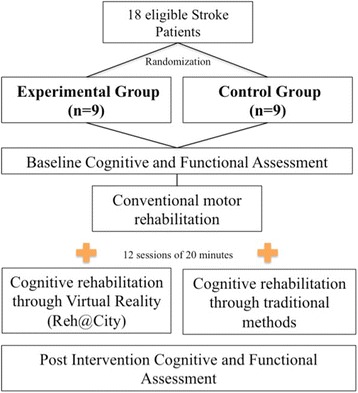
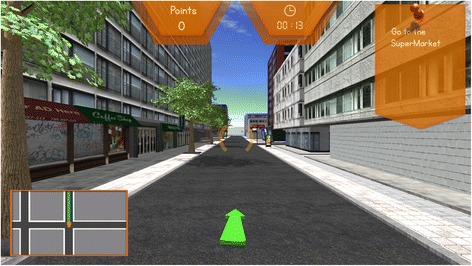
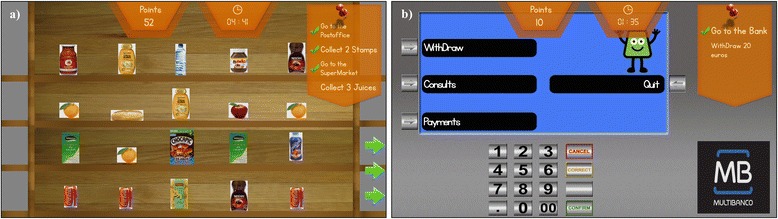
BACKGROUND: Stroke is one of the most common causes of acquired disability, leaving numerous adults with cognitive and motor impairments, and affecting patients' capability to live independently. There is substancial evidence on post-stroke cognitive rehabilitation benefits, but its implementation is generally limited by the use of paper-and-pencil methods, insufficient personalization, and suboptimal intensity. Virtual reality tools have shown potential for improving cognitive rehabilitation by supporting carefully personalized, ecologically valid tasks through accessible technologies. Notwithstanding important progress in VR-based cognitive rehabilitation systems, specially with Activities of Daily Living (ADL's) simulations, there is still a need of more clinical trials for its validation. In this work we present a one-month randomized controlled trial with 18 stroke in and outpatients from two rehabilitation units: 9 performing a VR-based intervention and 9 performing conventional rehabilitation. METHODS: The VR-based intervention involved a virtual simulation of a city - Reh@City - where memory, attention, visuo-spatial abilities and executive functions tasks are integrated in the performance of several daily routines. The intervention had levels of difficulty progression through a method of fading cues. There was a pre and post-intervention assessment in both groups with the Addenbrooke Cognitive Examination (primary outcome) and the Trail Making Test A and B, Picture Arrangement from WAIS III and Stroke Impact Scale 3.0 (secondary outcomes). RESULTS: A within groups analysis revealed significant improvements in global cognitive functioning, attention, memory, visuo-spatial abilities, executive functions, emotion and overall recovery in the VR group. The control group only improved in self-reported memory and social participation. A between groups analysis, showed significantly greater improvements in global cognitive functioning, attention and executive functions when comparing VR to conventional therapy. CONCLUSIONS: Our results suggest that cognitive rehabilitation through the Reh@City, an ecologically valid VR system for the training of ADL's, has more impact than conventional methods. TRIAL REGISTRATION: This trial was not registered because it is a small sample study that evaluates the clinical validity of a prototype virtual reality system.
Overview
The claims and statistics of this paper haven’t been checked yet.
Free: it reads the open-access text and checks the first 5 claims that cite a source we can check. Create a free account to check every claim.
Integrity signals
Registry
Cites
Statistics
Figures
Verification
Claims the paper makes
The claims and statistics of this paper haven’t been checked yet.
Free: it reads the open-access text and checks the first 5 claims that cite a source we can check. Create a free account to check every claim.
Claims other papers make about this one
Each is checked against this paper’s own text: does it say what the citing paper says it does?
The source backs part of the claim, not all of it — or backs it for a different population, condition or comparison.
In the citing paper
“Furthermore, VR’s immersive nature promotes participant engagement and naturalistic behavior, potentially improving assessment accuracy [12].”
From Enhancing Ecological Validity: Virtual Reality Assessment of Executive Functioning in Children and Adolescents with ADHD (2024) · cites this paper as [12]
Experimental — accuracy not yet measured
Self-check
Percentages, sums and reported differences re-computed from the paper’s own numbers.
The self-check needs the paper’s full text.
Citations
Cites
Folstein, M. F., Folstein, S. E., & McHugh, P. R. (1975) · Journal of Psychiatric Research · doi:10.1016/0022-3956(75)90026-6 · Cited by 88,282
Hirono, N., Mori, E., Ikejiri, Y., Imamura, T., Shimomura, T., Hashimoto, M., Yamashita, H., & Ikeda, M. (1997) · Brain and nerve · Cited by 21,030
Kok, J. S., Berg, I. J., & Scherder, E. J. A. (2013) · Dementia and Geriatric Cognitive Disorders Extra · doi:10.1159/000353441 · Cited by 20,589
Older Adults' Reasons for Using Technology while Aging in Place
Peek, S. T. M., Luijkx, K. G., Rijnaard, M. D., Nieboer, M. E., van der Voort, C. S., Aarts, S., van Hoof, J., Vrijhoef, H. J. M., & Wouters, E. J. M. (2016) · Gerontology · doi:10.1159/000430949 · Cited by 19,690
Sensitivity and False Alarm Rate of a Fall Sensor in Long-Term Fall Detection in the Elderly
Kangas, M., Korpelainen, R., Vikman, I., Nyberg, L., & Jämsä, T. (2015) · Gerontology · doi:10.1159/000362720 · Cited by 18,909
SUS: A 'Quick and Dirty' Usability Scale
(1996) · Usability Evaluation In Industry · doi:10.1201/9781498710411-35 · Cited by 8,989
Validity of the Trail Making Test as an Indicator of Organic Brain Damage
Reitan, R. M. (1958) · Perceptual and Motor Skills · doi:10.2466/pms.1958.8.3.271 · Cited by 7,928
An Empirical Evaluation of the System Usability Scale
Bangor, A., Kortum, P. T., & Miller, J. T. (2008) · International Journal of Human–Computer Interaction · doi:10.1080/10447310802205776 · Cited by 5,181 · cited 1×
“Final scores for the SUS can range from 0 to 100, where higher scores indicate better usability: 90s is exceptional, 80s is good and 70s is acceptable [50].”
BackgroundWechsler Adult Intelligence Scale-III
Ryan, J. J., & Lopez, S. J. (2001) · Understanding Psychological Assessment · doi:10.1007/978-1-4615-1185-4_2 · Cited by 3,731
Trail Making Test A and B: normative data stratified by age and education
Tombaugh, T. (2004) · Archives of Clinical Neuropsychology · doi:10.1016/s0887-6177(03)00039-8 · Cited by 3,239 · cited 1×
“The fact that this test is highly influenced by schooling [54] and that our sample had few years of education might explain the persistence of low performance in this test from pre to post assessment.”
BackgroundLanghorne, P., Bernhardt, J., & Kwakkel, G. (2011) · The Lancet · doi:10.1016/s0140-6736(11)60325-5 · Cited by 2,726
Mioshi, E., Dawson, K., Mitchell, J., Arnold, R., & Hodges, J. R. (2006) · International Journal of Geriatric Psychiatry · doi:10.1002/gps.1610 · Cited by 2,016 · cited 11×
“Abbreviations ACE: Addenbrooke Cognitive Examination; ADL’s: Activities of daily living; DA: Decreasing Assistance; MMSE: Mini-Mental State Examination; SIS 3.0: Stroke Impact Scale 3.0; SUS: System Usability Scale; TMT A: Trail Making Test A; TMT B: Trail Making Test B; USN: Unilateral spatial neglect; VR: Virtual re…”
BackgroundInfluentialTHE TOKEN TEST: A SENSITIVE TEST TO DETECT RECEPTIVE DISTURBANCES IN APHASICS
DE RENZI, E., & VIGNOLO, L. A. (1962) · Brain · doi:10.1093/brain/85.4.665 · Cited by 1,862
Evidence-based cognitive rehabilitation: updated review of the literature from 2003 through 2008
Cicerone, K. D., Langenbahn, D. M., Braden, C., Malec, J. F., Kalmar, K., Fraas, M., Felicetti, T., Laatsch, L., Harley, J. P., Bergquist, T., et al. (2011) · Archives of Physical Medicine and Rehabilitation · doi:10.1016/j.apmr.2010.11.015 · Cited by 1,599
Evidence-Based Cognitive Rehabilitation: Updated Review of the Literature From 1998 Through 2002
Cicerone, K. D., Dahlberg, C., Malec, J. F., Langenbahn, D. M., Felicetti, T., Kneipp, S., Ellmo, W., Kalmar, K., Giacino, J. T., Harley, J. P., et al. (2005) · Archives of Physical Medicine and Rehabilitation · doi:10.1016/j.apmr.2005.03.024 · Cited by 1,140
Virtual reality for stroke rehabilitation
Laver, K. E., George, S., Thomas, S., Deutsch, J. E., & Crotty, M. (2015) · Cochrane Database of Systematic Reviews · doi:10.1002/14651858.cd008349.pub3 · Cited by 1,131
Line bisection and unilateral visual neglect in patients with neurologic impairment
Schenkenberg, T., Bradford, D. C., & Ajax, E. T. (1980) · Neurology · doi:10.1212/wnl.30.5.509 · Cited by 977
Duncan, P. W., Bode, R. K., Min Lai, S., & Perera, S. (2003) · Archives of Physical Medicine and Rehabilitation · doi:10.1016/s0003-9993(03)00035-2 · Cited by 908
Cognitive Rehabilitation: An Integrative Neuropsychological Approach
Sohlberg, M. M., & Mateer, C. A. (2001) · Cited by 607
Karbach, J., & Verhaeghen, P. (2014) · Psychological Science · doi:10.1177/0956797614548725 · Cited by 589
Stroke, Cognitive Deficits, and Rehabilitation: Still an Incomplete Picture
Cumming, T. B., Marshall, R. S., & Lazar, R. M. (2013) · International Journal of Stroke · doi:10.1111/j.1747-4949.2012.00972.x · Cited by 427
Pollock, A., St George, B., Fenton, M., & Firkins, L. (2014) · International Journal of Stroke · doi:10.1111/j.1747-4949.2012.00942.x · Cited by 401
Pendlebury, S. T., Mariz, J., Bull, L., Mehta, Z., & Rothwell, P. M. (2012) · Stroke · doi:10.1161/strokeaha.111.633586 · Cited by 398
Optale, G., Urgesi, C., Busato, V., Marin, S., Piron, L., Priftis, K., Gamberini, L., Capodieci, S., & Bordin, A. (2010) · Neurorehabilitation and Neural Repair · doi:10.1177/1545968309353328 · Cited by 318 · cited 1×
“Most of the existing randomized controlled trials with VR-based cognitive rehabilitation, focus in specific cognitive domains, as memory [52, 53] and attention [33], or specific deficits, as USN [22, 30].”
BackgroundCognitive training on stroke patients via virtual reality-based serious games
Gamito, P., Oliveira, J., Coelho, C., Morais, D., Lopes, P., Pacheco, J., Brito, R., Soares, F., Santos, N., & Barata, A. F. (2017) · Disability and Rehabilitation · doi:10.3109/09638288.2014.934925 · Cited by 221
Lin, K.-C., Fu, T., Wu, C.-Y., Wang, Y.-H., Liu, J.-S., Hsieh, C.-J., & Lin, S.-F. (2010) · Neurorehabilitation and Neural Repair · doi:10.1177/1545968309356295 · Cited by 203
Dementia and cognitive impairment three months after stroke
Madureira, S., Guerreiro, M., & Ferro, J. M. (2001) · European Journal of Neurology · doi:10.1046/j.1468-1331.2001.00332.x · Cited by 180
Cognitive and Affective Predictors of Rehabilitation Participation After Stroke
Skidmore, E. R., Whyte, E. M., Holm, M. B., Becker, J. T., Butters, M. A., Dew, M. A., Munin, M. C., & Lenze, E. J. (2010) · Archives of Physical Medicine and Rehabilitation · doi:10.1016/j.apmr.2009.10.026 · Cited by 173
Cochrane review: virtual reality for stroke rehabilitation.
Laver, K., George, S., Thomas, S., Deutsch, J. E., & Crotty, M. (2012) · PubMed · Cited by 155
Effect of Virtual Reality on Cognition in Stroke Patients
Kim, B. R., Chun, M. H., Kim, L. S., & Park, J. Y. (2011) · Annals of Rehabilitation Medicine · doi:10.5535/arm.2011.35.4.450 · Cited by 147
Brainin, M., Norrving, B., Sunnerhagen, K. S., Goldstein, L. B., Cramer, S. C., Donnan, G. A., Duncan, P. W., Francisco, G., Good, D., Graham, G., et al. (2011) · International Journal of Stroke · doi:10.1111/j.1747-4949.2010.00539.x · Cited by 144
Cochrane review on Virtual Reality in Stroke Rehabilitation
Saposnik, G. (2018) · Stroke · Cited by 135
Psychometric Evaluation of the Stroke Impact Scale 3.0
Vellone, E., Savini, S., Fida, R., Dickson, V. V., Melkus, G. D., Carod-Artal, F. J., Rocco, G., & Alvaro, R. (2015) · Journal of Cardiovascular Nursing · doi:10.1097/jcn.0000000000000145 · Cited by 133
The Effect of Virtual Reality Training on Unilateral Spatial Neglect in Stroke Patients
Kim, Y. M., Chun, M. H., Yun, G. J., Song, Y. J., & Young, H. E. (2011) · Annals of Rehabilitation Medicine · doi:10.5535/arm.2011.35.3.309 · Cited by 116
A Blueprint for Transforming Stroke Rehabilitation Care in Canada: The Case for Change
Teasell, R. W., Foley, N. C., Salter, K. L., & Jutai, J. W. (2008) · Archives of Physical Medicine and Rehabilitation · doi:10.1016/j.apmr.2007.08.164 · Cited by 110
Influence of cognitive impairment on the institutionalisation rate 3 years after a stroke
Pasquini, M., Leys, D., Rousseaux, M., Pasquier, F., & Henon, H. (2007) · Journal of Neurology, Neurosurgery & Psychiatry · doi:10.1136/jnnp.2006.102533 · Cited by 110
van Heugten, C., Wolters Gregório, G., & Wade, D. (2012) · Neuropsychological Rehabilitation · doi:10.1080/09602011.2012.680891 · Cited by 108
Training Multitasking in a Virtual Supermarket: A Novel Intervention After Stroke
Rand, D., (Tamar) Weiss, P. L., & Katz, N. (2009) · The American Journal of Occupational Therapy · doi:10.5014/ajot.63.5.535 · Cited by 107
Feigin, V. L., Barker-Collo, S. L., McNaughton, H., Brown, P. M., & Kerse, N. M. (2008) · International Journal of Stroke · doi:10.1111/j.1747-4949.2008.00177.x · Cited by 104
Virtual reality-based prospective memory training program for people with acquired brain injury
Yip, B. C. B., & Man, D. W. K. (2013) · NeuroRehabilitation: An International, Interdisciplinary Journal · doi:10.3233/nre-130827 · Cited by 86
Jacoby, M., Averbuch, S., Sacher, Y., Katz, N., Weiss, P. L., & Kizony, R. (2013) · IEEE Transactions on Neural Systems and Rehabilitation Engineering · doi:10.1109/tnsre.2012.2235184 · Cited by 86
Riva, G. (1997) · Medical Entomology and Zoology · Cited by 85
Rethinking the Continuum of Stroke Rehabilitation
Teasell, R. W., Fernández, M. M., McIntyre, A., & Mehta, S. (2014) · Archives of Physical Medicine and Rehabilitation · doi:10.1016/j.apmr.2013.11.014 · Cited by 85
Association of Cognitive Functioning, Incident Stroke, and Mortality in Older Adults
Rajan, K. B., Aggarwal, N. T., Wilson, R. S., Everson-Rose, S. A., & Evans, D. A. (2014) · Stroke · doi:10.1161/strokeaha.114.005143 · Cited by 71
Navarro, M.-D., Lloréns, R., Noé, E., Ferri, J., & Alcañiz, M. (2013) · Neuropsychological Rehabilitation · doi:10.1080/09602011.2013.806269 · Cited by 61
Behavioural Approaches in Neuropsychological Rehabilitation
Wilson, B. A., Herbert, C. M., & Shiel, A. (2004) · Psychology Press eBooks · doi:10.4324/9780203641545 · Cited by 55
Aubin, G., Béliveau, M.-F., & Klinger, E. (2018) · Neuropsychological Rehabilitation · doi:10.1080/09602011.2015.1074083 · Cited by 53
Vourvopoulos, A., Faria, A. L., Ponnam, K., & Badia, S. B. I. (2014) · International Conference on Advances in Computer Entertainment Technology (ACE) · doi:10.1145/2663806.2663852 · Cited by 52
Self-citationBehavioural Approaches in Neuropsychological Rehabilitation: Optimising Rehabilitation Procedures
Wilson, B. A., Herbert, C. M., & Shiel, A. (2003) · Cited by 39
Klinger, É., Kadri, A., Sorita, É., Guiet, J.-L. L., Coignard, P., Fuchs, P., Leroy, L., du Lac, N., Servant, F., & Joseph, P. (2013) · IRBM · doi:10.1016/j.irbm.2013.01.005 · Cited by 35
Guidelines for the Selection of a Method of Fading Cues
Riley, G. A., & Heaton, S. (2000) · Neuropsychological Rehabilitation · doi:10.1080/096020100389219 · Cited by 34
Long-term rehabilitation after stroke: where do we go from here?
Aziz, N. (2010) · Reviews in Clinical Gerontology · doi:10.1017/s0959259810000080 · Cited by 28
The Stroke Association UK Stroke Survivor Needs Survey: Final Report , 2010.
McKevitt, C., Fudge, N., Redfern, J., Sheldenkar, A., Crichton, S. L., & Wolfe, C. D. A. (2010) · Research Portal (King's College London) · Cited by 25
Faria, A. L., Vourvopoulos, A., Cameirão, M. S., Fernandes, J. C., & Badia, S. B. I. (2014) · Portuguese National Funding Agency for Science, Research and Technology (RCAAP Project by FCT) · doi:10.13140/rg.2.1.4967.8887 · Cited by 13
Self-citationVirtual City: Neurocognitive rehabilitation of Acquired Brain Injury
Dores, A. R., Miranda, M. J., Carvalho, I. P., Mendes, L., Barbosa, F., Coelho, A. F., de Sousa, L., & Castro‐Caldas, A. (2012) · Portuguese National Funding Agency for Science, Research and Technology (RCAAP Project by FCT) · Cited by 11
Neuropsychological Rehabilitation 3.0: State of the Science
Parsons, T. D. (2016) · Springer eBooks · doi:10.1007/978-3-319-31075-6_7 · Cited by 11
Research works printed but not linked: 4
- Kizony R Korman M Sinoff G Klinger E Josman N Using a virtual supermarket as a tool for training executive functions in people with mild cognitive impairment 2012 Laval 9th ICDVRAT
- Chirivella J del Barco A Blasco S Penades V Mas G Gagliardo P Neuro@ home [ii]: A software platform of clinically designed videogames designed for the cognitive rehabilitation of stroke patients Brain Injury 2014 517 878
- Guerreiro M Silva AP Botelho MA Leitão O Castro-Caldas A Garcia C Adaptação à população portuguesa da tradução do Mini Mental State Examination (MMSE) Revista Portuguesa de Neurologia 1994 1 9 9 10
- Research Randomizer [Internet] Research randomizer 2016
Cited by
Virtual reality for stroke rehabilitation
Laver, K. E., George, S., Thomas, S., Deutsch, J. E., & Crotty, M. (2015) · Cochrane Database of Systematic Reviews · doi:10.1002/14651858.cd008349.pub3 · Cited by 1,131
Virtual reality for stroke rehabilitation
Laver, K. E., Lange, B., George, S., Deutsch, J. E., Saposnik, G., & Crotty, M. (2017) · Cochrane Database of Systematic Reviews · doi:10.1002/14651858.cd008349.pub4 · Cited by 800
Wearable health devices in health care: narrative systematic review
Lu, L., Zhang, J., Xie, Y., Gao, F., Xu, S., Wu, X., & Ye, Z. (2020) · JMIR mHealth and uHealth · doi:10.2196/18907 · Cited by 701
El Husseini, N., Katzan, I. L., Rost, N. S., Blake, M. L., Byun, E., Pendlebury, S. T., Aparicio, H. J., Marquine, M. J., Gottesman, R. F., Smith, E. E., et al. (2023) · Stroke · doi:10.1161/str.0000000000000430 · Cited by 539
Is clinical virtual reality ready for primetime?
Rizzo, A. “., & Koenig, S. T. (2017) · Neuropsychology · doi:10.1037/neu0000405 · Cited by 372
Metadata
- Authors
- Faria, A. L., Andrade, A., Soares, L., & i Badia, S. B.
- Affiliations
- University of Coimbra (PT)
- Universidade da Madeira (PT)
- Corresponding author
- Faria, Ana Lúcia
- Venue
- Journal of NeuroEngineering and Rehabilitation
- Published
- 2016-11-02
- Volume
- 13
- Issue
- 1
- Pages
- 96-96
- ISSN
- 1743-0003 (ISSN-L)
- PMC
- PMC5094135
- OpenAlex
- W2546450171
- Cited by
- 307
- References
- 59
- Citations by year
- 2026: 16 · 2025: 42 · 2024: 37 · 2023: 37 · 2022: 46 · 2021: 43 · 2020: 29 · 2019: 31 · 2018: 15 · 2017: 10
- FWCI
- 19.97
- Type
- journal article
- Language
- en
- Open access
- gold
- doi.org
- Licence
- cc-by
- Locations
- Journal of NeuroEngineering and Rehabilitation (publishedVersion, cc-by)
- PubMed Central (publishedVersion, cc-by)
- PubMed (publishedVersion)
- Acceda (Universidad de Las Palmas de Gran Canaria) (submittedVersion)
- Portuguese National Funding Agency for Science, Research and Technology (RCAAP Project by FCT) (submittedVersion, cc-by)
- Funders
- European Commission (BE) (303891 RehabNet FP7-PEOPLE-2011-CIG)
- Fundação para a Ciência e a Tecnologia (PT) (LARSyS UID/EEA/50009/2013)
- Agência Regional para o Desenvolvimento da Investigação, Tecnologia e Inovação
- Topics
- Health Sciences › Medicine › Rehabilitation › Stroke Rehabilitation and Recovery
- Social Sciences › Psychology › Experimental and Cognitive Psychology › Cognitive Functions and Memory
- Physical Sciences › Computer Science › Human-Computer Interaction › Virtual Reality Applications and Impacts
- Keywords
- virtual reality, cognitive rehabilitation, stroke, activities of daily living, executive function, attention, memory, visuospatial ability, conventional rehabilitation comparison, post-stroke cognitive impairment
- MeSH terms
- Stroke Rehabilitation, Activities of Daily Living, Aged, Attention, Cognition Disorders, Computer Simulation, Female, Health Status, Humans, Male, Memory, Middle Aged, Neuropsychological Tests, Space Perception, User-Computer Interface, Treatment Outcome, Stroke, Executive Function
About these checks
Registry, retraction, Cites and statistics results are computed, not judged, with one exception: a printed reference that no index lists is read once by a model before it counts as a citation error. Claims are extracted by a model and kept only when their quote appears verbatim in the text; each cited source is then checked, with a model’s help, for whether it says what the claim relies on. Those verdicts can be wrong — read the claim’s quote and the cited source before relying on one.
Statistics and arithmetic are recomputed, not judged.
Confidence bands are shown only for fields calibrated on our annotated test set. None is calibrated yet, so no band is shown.
What counts as a claim ›How we measure confidence ›How we check this ›
Are you an author, or do you see a problem with this page? Request a review
Data sources
Bibliographic data: Semantic Scholar, OpenAlex, Crossref.
Contains information from the Semantic Scholar Academic Graph Datasets, made available under the ODC Attribution License (ODC-BY 1.0).
Semantic Scholar’s data is described in: Kinney, R., et al. (2023). The Semantic Scholar Open Data Platform. arXiv:2301.10140.
