

Gut bacteria Akkermansia is associated with reduced risk of obesity: evidence from the American Gut Project
Open accessThe DOI matches its Crossref record; 26 of the 26 references it cites were found in a registry or an index.
Abstract
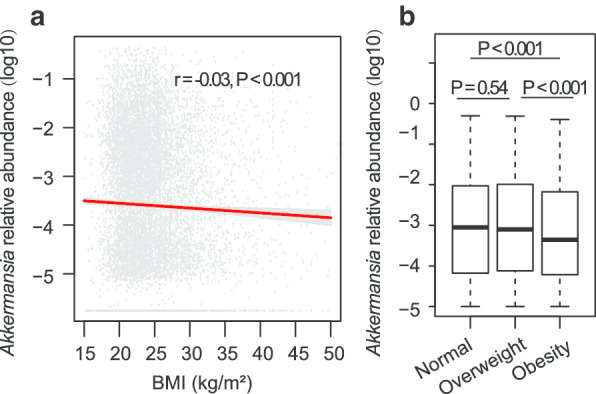
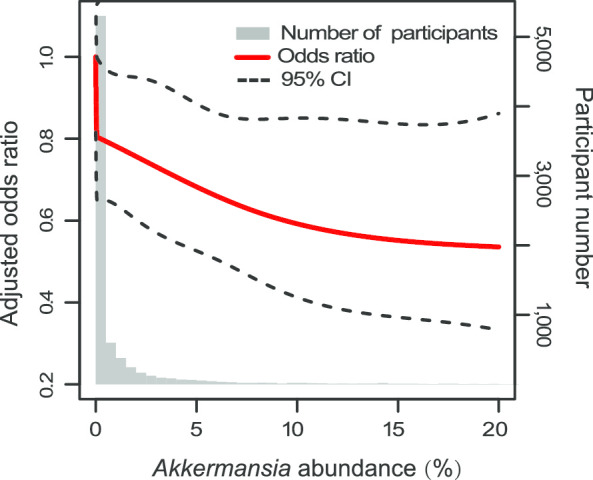
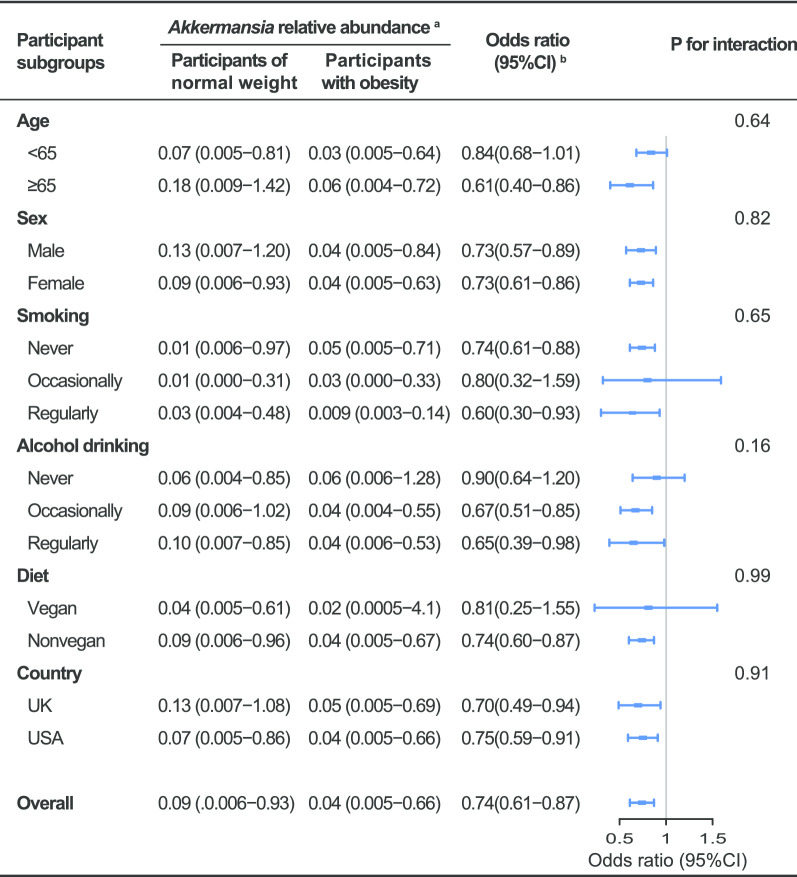
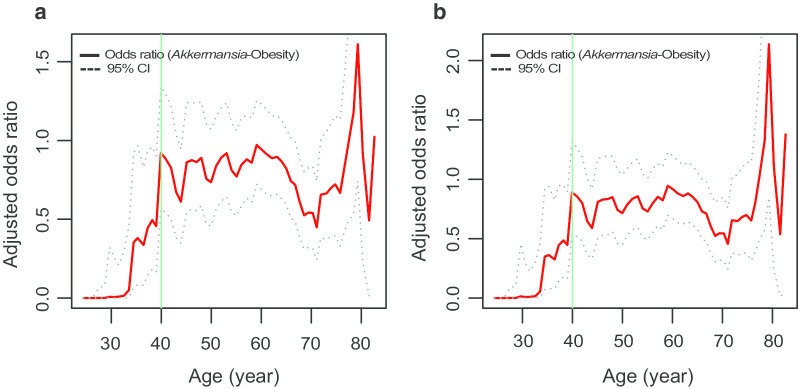
Background: Gut bacteria Akkermansia has been shown an anti-obesity protective effect in previous studies and may be used as promising probiotics. However, the above effect may be confounded by common factors, such as sex, age and diets, which should be verified in a generalized population. Methods: We used datasets from the American Gut Project to strictly reassess the association and further examined the effect of aging on it. A total of 10,534 participants aged 20 to 99 years from the United States and the United Kingdom were included. The relative abundance of Akkermansia was assessed based on 16S rRNA sequencing data. Obesity (body mass index, BMI ≥ 30 kg/m 2) risks were compared across Akkermansia quintiles in logistic models with adjustment for common confounders. Restricted cubic splines were used to examine dose response effects between Akkermansia, obesity and age. A sliding-windows-based algorithm was used to investigate the effect of aging on Akkermansia-obesity associations. Results: The median abundance of Akkermansia was 0.08% (interquartile range: 0.006–0.93%), and the prevalence of obesity was 11.03%. Nonlinear association was detected between Akkermansia and obesity risk (P = 0.01). The odds ratios (95% confidence interval) for obesity across the increasing Akkermansia quintiles (referencing to the first quintile) were 1.14 (0.94–1.39), 0.94 (0.77–1.15), 0.70 (0.56–0.85) and 0.79 (0.64–0.96) after adjusting for age and sex (P for trend < 0.001). This association remained unchanged after further controlling for smoking, alcohol drinking, diet, and country. The odds ratios (95% CI) of Akkermansia were 0.19 (0.03–0.62) and 0.77 (0.64–0.91) before and over 40 years, respectively, indicating that the protective effect of Akkermansia against obesity was not stable with aging. Conclusion: High relative abundance of Akkermansia is associated with low risk of obesity and the association declines with aging.
Overview
The claims and statistics of this paper haven’t been checked yet.
Free: it reads the open-access text and checks the first 5 claims that cite a source we can check. Create a free account to check every claim.
Integrity signals
Registry
Cites
Statistics
Figures
Verification
Claims the paper makes
The claims and statistics of this paper haven’t been checked yet.
Free: it reads the open-access text and checks the first 5 claims that cite a source we can check. Create a free account to check every claim.
Claims other papers make about this one
Each is checked against this paper’s own text: does it say what the citing paper says it does?
The cited source doesn’t support the claim as written.
In the citing paper
“Another group performed 16S rRNA gene amplicon sequencing of 37 NSCLC patient feces, confirming that Akk was enriched in patients responding to ICI 26 .”
From Intestinal Akkermansia muciniphila predicts clinical response to PD-1 blockade in patients with advanced non-small-cell lung cancer (2022) · cites this paper as [26]
Checked by a reasoning model — may be wrong.
Experimental — accuracy not yet measured
Self-check
Percentages, sums and reported differences re-computed from the paper’s own numbers.
The self-check needs the paper’s full text.
Citations
Cites
The SILVA ribosomal RNA gene database project: improved data processing and web-based tools
Quast, C., Pruesse, E., Yilmaz, P., Gerken, J., Schweer, T., Yarza, P., Peplies, J., & Glöckner, F. O. (2012) · Nucleic Acids Research · doi:10.1093/nar/gks1219 · Cited by 33,055 · cited 1×
“8) by using the Silva_16s_v123 database [18].”
An obesity-associated gut microbiome with increased capacity for energy harvest
Turnbaugh, P. J., Ley, R. E., Mahowald, M. A., Magrini, V., Mardis, E. R., & Gordon, J. I. (2006) · Nature · doi:10.1038/nature05414 · Cited by 12,444 · cited 1×
“Some beneficial bacteria, such as gut Akkermansia, may play a decisive role in reducing the burden of obesity, via modulation of glucose metabolism and low-grade inflammation [2, 3].”
BackgroundVSEARCH: a versatile open source tool for metagenomics
(2016) · doi:10.7717/peerj.2584 · Cited by 10,773
A metagenome-wide association study of gut microbiota in type 2 diabetes
Qin, J., Li, Y., Cai, Z., Li, S., Zhu, J., Zhang, F., Liang, S., Zhang, W., Guan, Y., Shen, D., et al. (2012) · Nature · doi:10.1038/nature11450 · Cited by 6,762 · cited 1×
“For example, metformin administration increased Akkermansia abundance in obese mice and type 2 diabetic subjects [27, 28].”
BackgroundSelf-citationCross-talk between Akkermansia muciniphila and intestinal epithelium controls diet-induced obesity
Everard, A., Belzer, C., Geurts, L., Ouwerkerk, J. P., Druart, C., Bindels, L. B., Guiot, Y., Derrien, M., Muccioli, G. G., Delzenne, N. M., et al. (2013) · Proceedings of the National Academy of Sciences · doi:10.1073/pnas.1219451110 · Cited by 4,511
Depommier, C., Everard, A., Druart, C., Plovier, H., Van Hul, M., Vieira-Silva, S., Falony, G., Raes, J., Maiter, D., Delzenne, N. M., et al. (2019) · Nature Medicine · doi:10.1038/s41591-019-0495-2 · Cited by 2,357
Plovier, H., Everard, A., Druart, C., Depommier, C., Van Hul, M., Geurts, L., Chilloux, J., Ottman, N., Duparc, T., Lichtenstein, L., et al. (2017) · Nature Medicine · doi:10.1038/nm.4236 · Cited by 2,204 · cited 1×
“Other interventional studies, in humans and mice, used 108–1010 CFU/day to improve metabolic diseases [7, 8].”
BackgroundShin, N.-R., Lee, J.-C., Lee, H.-Y., Kim, M.-S., Whon, T. W., Lee, M.-S., & Bae, J.-W. (2014) · Gut · doi:10.1136/gutjnl-2012-303839 · Cited by 1,550
Next-Generation Beneficial Microbes: The Case of Akkermansia muciniphila
Cani, P. D., & de Vos, W. M. (2017) · Frontiers in Microbiology · doi:10.3389/fmicb.2017.01765 · Cited by 1,058 · cited 2×
“The genus and its main species Akkermansia muciniphila inversely correlated with metabolic syndrome [4, 5].”
BackgroundAkkermansia muciniphila and its role in regulating host functions
Derrien, M., Belzer, C., & de Vos, W. M. (2017) · Microbial Pathogenesis · doi:10.1016/j.micpath.2016.02.005 · Cited by 1,044
Research works printed but not linked: 1
- Shin NE, Lee JC, Lee HY, et al. An increase in the Akkermansia spp. popula- tion induced by metformin treatment improves glucose homeostasis in diet-induced obese mice. Gut. 2014;63(5):727-35. · DOI · Paper page
Cited by
Items 101–177 of 177
Beckers, K. F., Schulz, C. J., Liu, C., Barras, E., Childers, G. W., Stout, R. W., & Sones, J. L. (2023) · PLoS ONE · doi:10.1371/journal.pone.0287145 · Cited by 6
“In humans, Akkermansia is involved in glucose metabolism and obesity [42].”
BackgroundAssociation between Gut Microbiota and Inflammation: Mediation Analysis Using Waist Circumference
Ayala-García, J. C., Bahena-Román, M., Díaz-Benítez, C. E., Bermúdez-Morales, V. H., Cruz, M., Lagunas-Martínez, A., & Burguete-García, A. I. (2024) · Journal of Interferon & Cytokine Research · doi:10.1089/jir.2024.0020 · Cited by 4
“A study examining GM and health in individuals from the United States and the United Kingdom observed that those with a higher presence of A. muciniphila had up to 22% lower risk of being obese than those of normal weight (Zhou et al., 2020).”
Biopsychosocial and Environmental Factors That Impact Brain-Gut-Microbiome Interactions in Obesity
Sood, R., Kilpatrick, L. A., Keefer, L., & Church, A. (2025) · Clinical Gastroenterology and Hepatology · doi:10.1016/j.cgh.2025.07.045 · Cited by 7
“43 However, individuals living in a neighborhood with a high ADI exhibit lower gut microbiome diversity and higher prevalence of multidrug-resistant organisms.”
Abdullah, B., Idorus, M. Y., Daud, S., Aazmi, M. S., Pillai, T. K., & Zain, Z. M. (2023) · Malaysian Journal of Medical Sciences · doi:10.21315/mjms2023.30.1.10 · Cited by 5
Gong, T., Zhou, Y., Shi, Q., Li, Y., Wang, H., Zhang, M., & Liao, L. (2024) · Food & Nutrition Research · doi:10.29219/fnr.v67.9990 · Cited by 4
Assessment of gut microbiota in the elderly with sarcopenic obesity: a case-control study
Hosseini, F., Behrouzi, A., Shafaie, E., Sharifi, F., & Ejtahed, H. (2025) · Journal of Diabetes & Metabolic Disorders · doi:10.1007/s40200-025-01584-x · Cited by 6
Islam, M. R., Schultz, K. A., Varghese, M., Abrishami, S., Villano, J., & Singer, K. (2021) · Journal of the American Association for Laboratory Animal Science · doi:10.30802/aalas-jaalas-20-000139 · Cited by 8
Bucheli, J. E. V., Todorov, S. D., & Holzapfel, W. H. (2022) · Beneficial Microbes · doi:10.3920/bm2022.0022 · Cited by 6
Research advances on whole grains benefit on metabolic syndrome via gut homeostasis regulation
Wang, X., Liang, H., Zhu, H., Wang, Y., Sun, H., Liu, L., Xiao, J., Yan, N., Wang, C., & Liu, L. (2026) · Critical Reviews in Food Science and Nutrition · doi:10.1080/10408398.2025.2599514 · Cited by 4
“The diversity of the gut microbiota is reduced in obese individuals compared to slim individuals, mainly due to an increase in sequestering bacteria and a decrease in bacillus-like bacteria (Zhou et al. 2020).”
Self-citationThe Gut Microbiota: An Essential Component in Understanding Pediatric Obesity: A Narrative Review
Lupu, V. V., Nedelcu, A. H., Balas, R. B., Anton, C., Tarnita, I., Azoicai, A. N., Forna, L., Munteanu, D., Anton, S. C., Shawais, S. K., et al. (2026) · Nutrients · doi:10.3390/nu18060952 · Cited by 4
Yu, Q., Chen, A., Yi, J., Iqbal, M., Tang, Z., Ge, H., Hu, Y., Liu, W., Zheng, L., Tang, J., et al. (2026) · Gut Microbes · doi:10.1080/19490976.2026.2652460 · Cited by 4
“22 This suggests that controlling SCFA levels in the gut by altering the gut microbiota community might be used in the diagnosis and treatment of lung cancer.”
InfluentialDang, Y., Huang, J., Peng, X., Wang, Y., & Wang, J. (2025) · Microbiology Spectrum · doi:10.1128/spectrum.01188-25 · Cited by 3
“This species also has multiple metabolic functions and maintains the integrity of the gastrointestinal mucosa (23, 32).”
Iniguez, A. B., Du, ., & Zhu, M. J. (2025) · Trends in Food Science & Technology · doi:10.1016/j.tifs.2025.105106 · Cited by 3
Complex relationship between childhood obesity and the gut microbiota
Tran, T. N., Luong, T. V., Nguyen, N. V. D., & Dang, H. N. N. (2025) · World Journal of Clinical Pediatrics · doi:10.5409/wjcp.v14.i2.100975 · Cited by 3
Reutericyclin mitigates risperidone-induced suppression of anaerobic energy expenditure
Hadiono, M. A., Kazen, A. B., Aboulalazm, F. A., Burnett, C. M.-L., Reho, J. J., Kindel, T. L., Grobe, J. L., & Kirby, J. R. (2025) · American Journal of Physiology-Regulatory, Integrative and Comparative Physiology · doi:10.1152/ajpregu.00190.2024 · Cited by 3
Gallardo-Becerra, L., Cornejo‐Granados, F., Bikel, S., Arenas, I., López-Leal, G., Alvarado-González, C., Sánchez-López, F., Manzo, R., Corzo, G. A., Espino-Solís, G. P., et al. (2025) · Microbial Ecology · doi:10.1007/s00248-025-02620-2 · Cited by 2
Tume, F., Palma-Gutierrez, E. J., Mamani-Urrutia, V., Requena, F., & Ruiz, J. (2026) · Revista Española de Nutrición Humana y Dietética · doi:10.14306/renhyd.30.1.2596 · Cited by 2
Ayala-García, J. C., García-Vera, A. M., Lagunas-Martínez, A., Orbe-Orihuela, Y. C., Castañeda-Márquez, A. C., Díaz-Benítez, C. E., Bermúdez-Morales, V. H., Cruz, M., Bahena-Román, M., & Burguete-García, A. I. (2023) · Children · doi:10.3390/children10111799 · Cited by 2
Łoniewski, I., Banasiewicz, T., Sieńko, J., Skonieczna‐Żydecka, K., & Stachowska, E. (2024) · Gastroenterology Review · doi:10.5114/pg.2024.145833 · Cited by 6
“In addition, A. muciniphila levels in overweight and obese individuals have been found to be positively correlated with better metabolic status and greater efficacy of caloric restriction in reducing body weight [121, 122].”
Harnessing Probiotics: Exploring the Role of the Gut Microbiome in Combating Obesity
Riyasdeen, A., Kunnathodi, F., Arafat, A. A., Azmi, S., Mustafa, M., Ahmad, I., & Alotaibi, H. F. (2025) · Probiotics and Antimicrobial Proteins · doi:10.1007/s12602-025-10605-3 · Cited by 3
“Based on datasets from the American Gut Project, a study involving 10,534 subjects revealed a correlation between a reduced risk of obesity and a high relative abundance of Akkermansia [85].”
Mysterious Akkermansia muciniphila. What do we know about it? A review
Zakharova, I. N., Berezhnaya, I. V., Dubovets, N. F., Владимировна, С. Е., Dubovets, E. A., & Dubovets, A. A. (2023) · Pediatrics Consilium Medicum · doi:10.26442/26586630.2023.1.202190 · Cited by 3
Chen, G., Peng, Y., Huang, Y., Xie, M., Dai, Z., Cai, H., Dong, W., Xu, W., Xie, Z., Chen, D., et al. (2022) · Research Square · doi:10.21203/rs.3.rs-1356629/v1 · Cited by 2
Self-citationGribi, K., Sebaihia, M., Bekara, M. E. A., Djebbar, A., Zeraoulia, M., & Klouche-Khelil, N. (2024) · Microbiology and Biotechnology Letters · doi:10.48022/mbl.2401.01015 · Cited by 1
Salberg, S., Macowan, M. G., Doshen, A., Yamakawa, G. R., Sgro, M., Marsland, B. J., Henderson, L. A., & Mychasiuk, R. (2025) · NeuroImage · doi:10.1016/j.neuroimage.2025.121057 · Cited by 2
“Finally, under homeostatic conditions, Akkermansia is associated with metabolic and immune health (Zhou et al., 2020) and is believed to restore gut barrier integrity by increasing colonic mucus thickness (van der Lugt et al., 2019).”
Zhou, Y., Li, J., Li, L., Shen, N., Li, X.-Y., Bao, N.-M., Yang, X., Qiu, B., Chen, Z., Gu, W., et al. (2025) · Journal of Agriculture and Food Research · doi:10.1016/j.jafr.2025.102236 · Cited by 3
Vanadyl sulfate supplementation alters the intestinal microbiome and bile acid metabolism
He, X., Dennis, K. K., Jarrell, Z. R., Ly, V. T., Go, Y., & Jones, D. P. (2025) · Toxicology and Applied Pharmacology · doi:10.1016/j.taap.2025.117548 · Cited by 1
Bayesian latent ising model for joint microbial and metabolomic network inference
Ni, Y., & Zhu, W. (2026) · Journal of Applied Statistics · doi:10.1080/02664763.2026.2636648 · Cited by 1
Cook, K. L., Giles, E. D., Sekela, J. J., Simpson, J. B., Redinbo, M. R., Wilson, A., Umar, S., Befort, C. A., Kimler, B. F., Hursting, S. D., et al. (2026) · Cancer Prevention Research · doi:10.1158/1940-6207.capr-26-0021 · Cited by 1
“Previous reports suggest that 83% of the US population express A. muciniphila , and data also demonstrate that this microbe decreases with age (72, 73), potentially supporting the observed underexpression of this taxa in our cohort.”
Kashal, F. R., Sharifi, F., Najafi, S., Marvasti, F. E., Moodi, M., Shafaei, E., Taghavi, M., Hosseini, F.-S., Khorashadizadeh, M., Namaei, M. H., et al. (2026) · Aging Clinical and Experimental Research · doi:10.1007/s40520-026-03403-6 · Cited by 1
“…a potential biomarker for individuals with pre-sarcopenia; Research indicated that people with sarcopenia exhibit reduced gut microbiota diversity, characterized by elevated levels of Lactobacillus disease [17], BMI and obesity, while exhibiting a favorable association with weight reduction [18].”
Characterizing alterations in the gut microbiota following postpartum weight change
Chalifour, B., Trifonova, D. I., Holzhausen, E. A., Bailey, M. J., Schmidt, K. A., Babaei, M., Mokhtari, P., Goran, M. I., & Alderete, T. L. (2023) · mSystems · doi:10.1128/msystems.00808-23 · Cited by 2
“These include body fat mass and fasting glucose in both mice and human studies; it is thought that higher levels of Akkermansia could actually reduce the risk for obesity (67, 68).”
BackgroundGut Microbiome’s Next Generation Probiotic: Akkermansia Overview and Supplementation Health Benefits
Nayak, S., McLean, M. E., Mishra, S., Sahoo, R. K., & Swain, D. M. (2024) · Acta Scientifci Nutritional Health · doi:10.31080/asnh.2024.08.1382 · Cited by 1
Probiotics, Prebiotics, Synbiotics, Postbiotics and Other Biotics. What's Next?
Requena, T., & Pérez‐Martínez, G. (2021) · Elsevier eBooks · doi:10.1016/b978-0-12-819265-8.00094-2 · Cited by 1
Impact of probiotic supplementation and the role of gut microbiome in obesity
Prasanth, M. I., Malar, D. S., Kesika, P., Tencomnao, T., & Sivamaruthi, B. S. (2022) · Elsevier eBooks · doi:10.1016/b978-0-323-85170-1.00015-4 · Cited by 2
The gut microbiota: A driver of Type 2 diabetes
Scheithauer, T. P. M. (2023) · doi:10.5463/thesis.82
Gong, T., Zhou, Y., Shi, Q., Li, Y., Wang, H., & Liao, L. (2024) · Food & Nutrition Research · doi:10.29219/fnr.v68.9990
Disputes and Challenges of Immune Checkpoint Inhibitors in Gastrointestinal Cancers
(2024) · Frontiers research topics · doi:10.3389/978-2-8325-4910-0
Gut microbiota, circulating cytokines and gastro-duodenal ulcer: a Mendelian randomization studyPreprint
Du, T., Jin, W.-F., Chen, H., & Huang, L. (2024) · Research Square · doi:10.21203/rs.3.rs-4474692/v1
Microbiome in multiple sclerosis
Baranzini, S. E. (2024) · Elsevier eBooks · doi:10.1016/b978-0-12-823848-6.00012-9 · Cited by 1
Jiang, G., Li, H., Xie, L., Li, S., Yu, W., Xu, Y., He, M., Jiang, Y., Bai, X., Zhou, J., et al. (2024) · SSRN Electronic Journal · doi:10.2139/ssrn.4905392
Self-citationRamadan Intermittent Fasting: A Contemporary Health Perspective
Khaled, M. B., Diaf, M., Alhussain, M. H., & Faris, M. E. (2025) · Cambridge University Press eBooks · doi:10.1017/9781009231268.011 · Cited by 1
Wu, L., Xue, L., Ding, X., Jiang, H., Zhang, R., Zheng, A., Zu, Y., Tan, S., Wang, X., & Liu, Z. (2025) · Frontiers in Veterinary Science · doi:10.3389/fvets.2025.1520678
“Moreover, Akkermansia has been demonstrated to be negatively related to obesity and diabetes (67, 68).”
Self-citationAkkermansia Muciniphila is Associated with Human Health: What Should we Know?
Ostrowski, B., & Krawczyk, B. (2025) · Postępy Mikrobiologii - Advancements of Microbiology · doi:10.2478/am-2025-0011 · Cited by 1
Wen, Y., Chen, S.-P., Wei, T., Wu, N., Yao, Y., Xu, L.-L., Mao, J.-H., Zhao, Y., & Tu, Y.-G. (2025) · Food & Function · doi:10.1039/d5fo02959g
Additional file 1 of The older, the less potential benefit for type 2 diabetes from weight control
Zhou, Q., Sun, J., Wu, Z., Wu, W., Zhang, X., Pan, Q., Qi, H., Yuan, H., Shi, H., Cao, S., et al. (2022) · Figshare · doi:10.6084/m9.figshare.19625444
Self-citationAlsulaiman, R. M., Al-Quorain, A., Al‐Muhanna, F., Piotrowski, S., Kurdi, E. A., Vatte, C., Alquorain, A. A., Alfaraj, N. H., Alrezuk, A. M., Robinson, F. L., et al. (2024) · Figshare · doi:10.6084/m9.figshare.26607202
Alsulaiman, R. M., Al-Quorain, A., Al‐Muhanna, F., Piotrowski, S., Kurdi, E. A., Vatte, C., Alquorain, A. A., Alfaraj, N. H., Alrezuk, A. M., Robinson, F. L., et al. (2024) · Figshare · doi:10.6084/m9.figshare.26607205
Alsulaiman, R. M., Al-Quorain, A., Al‐Muhanna, F., Piotrowski, S., Kurdi, E. A., Vatte, C., Alquorain, A. A., Alfaraj, N. H., Alrezuk, A. M., Robinson, F. L., et al. (2024) · Figshare · doi:10.6084/m9.figshare.26607187
Lin, M.-J., Su, T.-H., Chen, C.-C., Wu, W.-K., Hsu, S.-J., Tseng, T.-C., Liao, S.-H., Hong, C.-M., Yang, H.-C., Liu, C.-J., et al. (2023) · Figshare · doi:10.6084/m9.figshare.23084134
Self-citationAlsulaiman, R. M., Al-Quorain, A., Al‐Muhanna, F., Piotrowski, S., Kurdi, E. A., Vatte, C., Alquorain, A. A., Alfaraj, N. H., Alrezuk, A. M., Robinson, F. L., et al. (2024) · Figshare · doi:10.6084/m9.figshare.26607163
Alsulaiman, R. M., Al-Quorain, A., Al‐Muhanna, F., Piotrowski, S., Kurdi, E. A., Vatte, C., Alquorain, A. A., Alfaraj, N. H., Alrezuk, A. M., Robinson, F. L., et al. (2024) · Figshare · doi:10.6084/m9.figshare.26607178
Cuisiniere, T., Calvé, A., Fragoso, G., Oliero, M., Hajjar, R., Gonzalez, E., & Santos, M. M. (2021) · Figshare · doi:10.6084/m9.figshare.16696296
Lin, M.-J., Su, T.-H., Chen, C.-C., Wu, W.-K., Hsu, S.-J., Tseng, T.-C., Liao, S.-H., Hong, C.-M., Yang, H.-C., Liu, C.-J., et al. (2023) · Figshare · doi:10.6084/m9.figshare.23084131
Self-citationLin, M.-J., Su, T.-H., Chen, C.-C., Wu, W.-K., Hsu, S.-J., Tseng, T.-C., Liao, S.-H., Hong, C.-M., Yang, H.-C., Liu, C.-J., et al. (2023) · Figshare · doi:10.6084/m9.figshare.23084116
Self-citationAlsulaiman, R. M., Al-Quorain, A., Al‐Muhanna, F., Piotrowski, S., Kurdi, E. A., Vatte, C., Alquorain, A. A., Alfaraj, N. H., Alrezuk, A. M., Robinson, F. L., et al. (2024) · Figshare · doi:10.6084/m9.figshare.26607169
Alsulaiman, R. M., Al-Quorain, A., Al‐Muhanna, F., Piotrowski, S., Kurdi, E. A., Vatte, C., Alquorain, A. A., Alfaraj, N. H., Alrezuk, A. M., Robinson, F. L., et al. (2024) · Figshare · doi:10.6084/m9.figshare.26607172
Alsulaiman, R. M., Al-Quorain, A., Al‐Muhanna, F., Piotrowski, S., Kurdi, E. A., Vatte, C., Alquorain, A. A., Alfaraj, N. H., Alrezuk, A. M., Robinson, F. L., et al. (2024) · Figshare · doi:10.6084/m9.figshare.26607199
Alsulaiman, R. M., Al-Quorain, A., Al‐Muhanna, F., Piotrowski, S., Kurdi, E. A., Vatte, C., Alquorain, A. A., Alfaraj, N. H., Alrezuk, A. M., Robinson, F. L., et al. (2024) · Figshare · doi:10.6084/m9.figshare.26607211
Lin, M.-J., Su, T.-H., Chen, C.-C., Wu, W.-K., Hsu, S.-J., Tseng, T.-C., Liao, S.-H., Hong, C.-M., Yang, H.-C., Liu, C.-J., et al. (2023) · Figshare · doi:10.6084/m9.figshare.23084122
Self-citationAlsulaiman, R. M., Al-Quorain, A., Al‐Muhanna, F., Piotrowski, S., Kurdi, E. A., Vatte, C., Alquorain, A. A., Alfaraj, N. H., Alrezuk, A. M., Robinson, F. L., et al. (2024) · Figshare · doi:10.6084/m9.figshare.26607181
Alsulaiman, R. M., Al-Quorain, A., Al‐Muhanna, F., Piotrowski, S., Kurdi, E. A., Vatte, C., Alquorain, A. A., Alfaraj, N. H., Alrezuk, A. M., Robinson, F. L., et al. (2024) · Figshare · doi:10.6084/m9.figshare.26607175
Lin, M.-J., Su, T.-H., Chen, C.-C., Wu, W.-K., Hsu, S.-J., Tseng, T.-C., Liao, S.-H., Hong, C.-M., Yang, H.-C., Liu, C.-J., et al. (2023) · Figshare · doi:10.6084/m9.figshare.23084128
Self-citationAlsulaiman, R. M., Al-Quorain, A., Al‐Muhanna, F., Piotrowski, S., Kurdi, E. A., Vatte, C., Alquorain, A. A., Alfaraj, N. H., Alrezuk, A. M., Robinson, F. L., et al. (2024) · Figshare · doi:10.6084/m9.figshare.26607208
Alsulaiman, R. M., Al-Quorain, A., Al‐Muhanna, F., Piotrowski, S., Kurdi, E. A., Vatte, C., Alquorain, A. A., Alfaraj, N. H., Alrezuk, A. M., Robinson, F. L., et al. (2024) · Figshare · doi:10.6084/m9.figshare.26607190
Alsulaiman, R. M., Al-Quorain, A., Al‐Muhanna, F., Piotrowski, S., Kurdi, E. A., Vatte, C., Alquorain, A. A., Alfaraj, N. H., Alrezuk, A. M., Robinson, F. L., et al. (2024) · Figshare · doi:10.6084/m9.figshare.26607166
Lin, M.-J., Su, T.-H., Chen, C.-C., Wu, W.-K., Hsu, S.-J., Tseng, T.-C., Liao, S.-H., Hong, C.-M., Yang, H.-C., Liu, C.-J., et al. (2023) · Figshare · doi:10.6084/m9.figshare.23084125
Self-citationAlsulaiman, R. M., Al-Quorain, A., Al‐Muhanna, F., Piotrowski, S., Kurdi, E. A., Vatte, C., Alquorain, A. A., Alfaraj, N. H., Alrezuk, A. M., Robinson, F. L., et al. (2024) · Figshare · doi:10.6084/m9.figshare.26607196
Lin, M.-J., Su, T.-H., Chen, C.-C., Wu, W.-K., Hsu, S.-J., Tseng, T.-C., Liao, S.-H., Hong, C.-M., Yang, H.-C., Liu, C.-J., et al. (2023) · Figshare · doi:10.6084/m9.figshare.23084119
Self-citationAlsulaiman, R. M., Al-Quorain, A., Al‐Muhanna, F., Piotrowski, S., Kurdi, E. A., Vatte, C., Alquorain, A. A., Alfaraj, N. H., Alrezuk, A. M., Robinson, F. L., et al. (2024) · Figshare · doi:10.6084/m9.figshare.26607184
Alsulaiman, R. M., Al-Quorain, A., Al‐Muhanna, F., Piotrowski, S., Kurdi, E. A., Vatte, C., Alquorain, A. A., Alfaraj, N. H., Alrezuk, A. M., Robinson, F. L., et al. (2024) · Figshare · doi:10.6084/m9.figshare.26607193
Gut Microbiota in Lipodystrophies and Obesity: A Common Signature?
Colangeli, L., Teofani, A., Desideri, A., Biocca, S., Pacifico, T., Parrotta, M. E., Fertitta, V., Fortini, P., Ceccarini, G., Magno, S., et al. (2026) · Microorganisms · doi:10.3390/microorganisms14010132 · Cited by 1
Feng, H., Zeng, X., Yu, S., Sun, Q., Li, G., Li, Y., Liu, J., & Rao, N. (2026) · Applied Microbiology and Biotechnology · doi:10.1007/s00253-025-13685-x · Cited by 1
“Notably, Zhou et al. (2020) found that aging may diminish the protective effect of A. muciniphila .”
García-Rojas, V., Hernández‐Sánchez, H., CARREÑO-DURAN, L. R., Gómez-Santiago, F., Maldonado‐Hernández, J., Guzmán‐Ortiz, F. A., Bermúdez‐Humarán, L. G., Torres-Maravilla, E., Velázquez-López, A. A., & Mora‐Escobedo, R. (2026) · TIP Revista Especializada en Ciencias Químico-Biológicas · doi:10.22201/fesz.23958723e.2026.791
Alzahrani, N. S., Alshammari, G. M., Yagoub, A. E. A., Krishnamoorthy, R., Alshuniaber, M. A., Moubayed, N., & Yahya, M. A. (2026) · Natural Product Communications · doi:10.1177/1934578x261431451
“61 The substantial increase in Lactobacillus further supports the notion that the components of millet favor the proliferation of probiotic-type microbes.”
Mueangaun, S., Tonphu, K., Lerkdumnernkit, N., Sengking, J., Tocharus, J., Benjakul, S., & Tocharus, C. (2026) · Journal of Physiology and Biochemistry · doi:10.1007/s13105-026-01193-z · Cited by 1
Population scale analysis reveals gut microbiome diversity and functional shifts linked to obesity
Yeo, L.-F., Palmu, J., Havulinna, A. S., Mongad, D., Pärnänen, K. M. M., Salomaa, V. V., Lahti, L., Knight, R. D., & Niiranen, T. (2026) · iScience · doi:10.1016/j.isci.2026.117043 · Cited by 1
“32 In a clinical trial, 32 over-weight/obese volunteers administered Akkermansia muciniphila supplements exhibited overall improved metabolic parameters.”
Fassatoui, M., Pédron, T., Kheriji, N., Hechmi, M., Dallali, H., Jmel, H., Henda, J., Abid, A., SANSONETTI, P. J., & Kéfi, R. (2026) · Bioscience Reports · doi:10.1042/bsr20260157
“An enrichment with Akkermansia could protect against obesity [31].”
Demidova, T. Y., Геннадьевна, Л. К., & Teplova, A. S. (2026) · Russian Journal of Evidence-Based Gastroenterology · doi:10.17116/dokgastro20261503123
Metadata
- Authors
- Zhou, Q., Zhang, Y., Wang, X., Yang, R., Zhu, X., Zhang, Y., Chen, C., Yuan, H., Yang, Z., & Sun, L.
- Affiliations
- Beijing Hospital (CN)
- Chinese Academy of Sciences (CN)
- Kunming Medical University (CN)
- Corresponding author
- Sun, Liang
- ORCID
- Venue
- Nutrition & Metabolism
- Published
- 2020-10-22
- Volume
- 17
- Issue
- 1
- Pages
- 90-90
- ISSN
- 1743-7075 (ISSN-L)
- PMC
- PMC7583218
- OpenAlex
- W3094588332
- Cited by
- 175
- References
- 26
- Citations by year
- 2026: 16 · 2025: 35 · 2024: 43 · 2023: 32 · 2022: 35 · 2021: 14
- FWCI
- 6.56
- Type
- journal article
- Language
- en
- Open access
- gold
- doi.org
- Licence
- cc-by
- creativecommons.org/licenses/by/4.0 (tdm)
- creativecommons.org/licenses/by/4.0 (vor)
- Locations
- Nutrition & Metabolism (publishedVersion, cc-by)
- PubMed Central (publishedVersion, cc-by)
- PubMed (publishedVersion)
- DOAJ (DOAJ: Directory of Open Access Journals) (submittedVersion, cc-by-sa)
- Funders
- the Doctoral Scientific Research Foundation of Beijing Hospital (bj-2018-024)
- the National Scientific Foundation of P. R. China (81571385 and 91849132)
- Institute of Chinese Materia Medica, China Academy of Chinese Medical Sciences and Peking Union Medical College (2018RC330003)
- Chinese Academy of Meteorological Sciences (2018-I2M-1-002)
- the Beijing Hospital Nova Project (BJ-2018-139)
- Topics
- Life Sciences › Biochemistry, Genetics and Molecular Biology › Molecular Biology › Gut microbiota and health
- Life Sciences › Agricultural and Biological Sciences › Food Science › Probiotics and Fermented Foods
- Health Sciences › Medicine › Endocrinology, Diabetes and Metabolism › Adipokines, Inflammation, and Metabolic Diseases
- Keywords
- Akkermansia, obesity, gut microbiota, aging, body mass index, probiotics, dose-response relationship, American Gut Project, sex differences, microbiome
About these checks
Registry, retraction, Cites and statistics results are computed, not judged, with one exception: a printed reference that no index lists is read once by a model before it counts as a citation error. Claims are extracted by a model and kept only when their quote appears verbatim in the text; each cited source is then checked, with a model’s help, for whether it says what the claim relies on. Those verdicts can be wrong — read the claim’s quote and the cited source before relying on one.
Statistics and arithmetic are recomputed, not judged.
Confidence bands are shown only for fields calibrated on our annotated test set. None is calibrated yet, so no band is shown.
What counts as a claim ›How we measure confidence ›How we check this ›
Are you an author, or do you see a problem with this page? Request a review
Data sources
Bibliographic data: Semantic Scholar, OpenAlex, Crossref.
Contains information from the Semantic Scholar Academic Graph Datasets, made available under the ODC Attribution License (ODC-BY 1.0).
Semantic Scholar’s data is described in: Kinney, R., et al. (2023). The Semantic Scholar Open Data Platform. arXiv:2301.10140.
