

Gut bacteria Akkermansia is associated with reduced risk of obesity: evidence from the American Gut Project
Open accessThe DOI matches its Crossref record; 26 of the 26 references it cites were found in a registry or an index.
Abstract
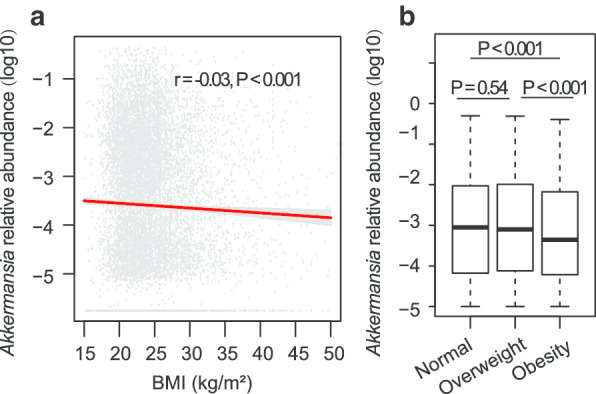
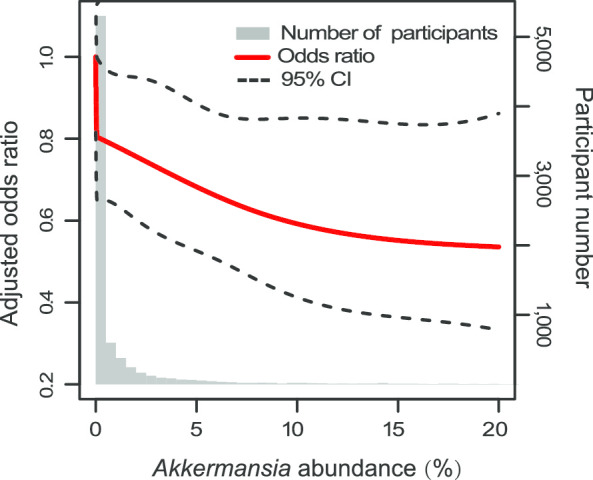
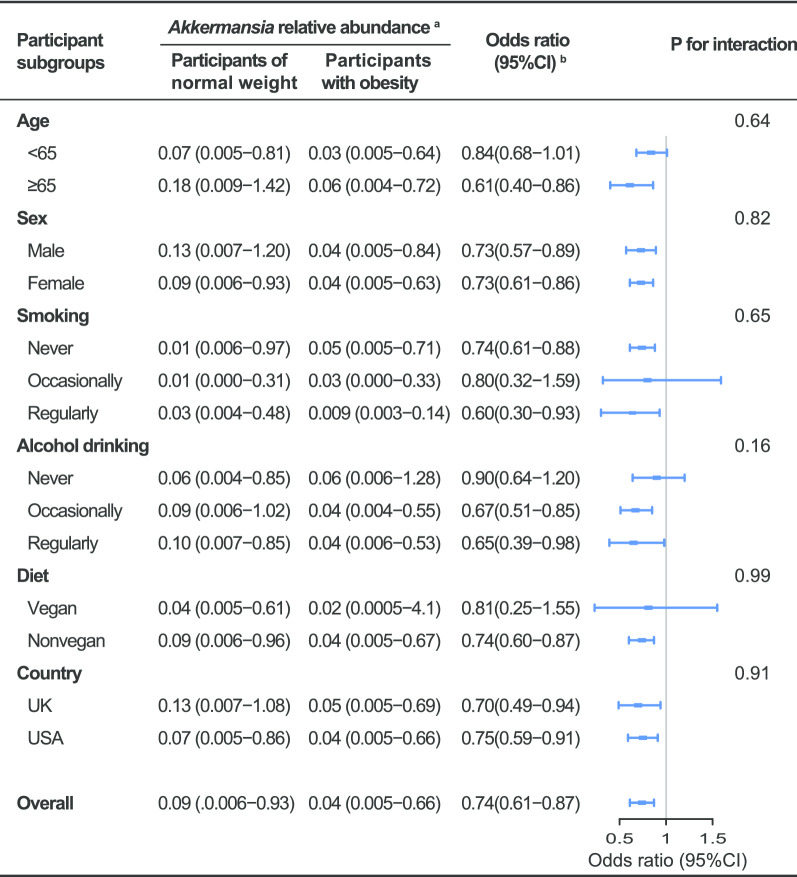
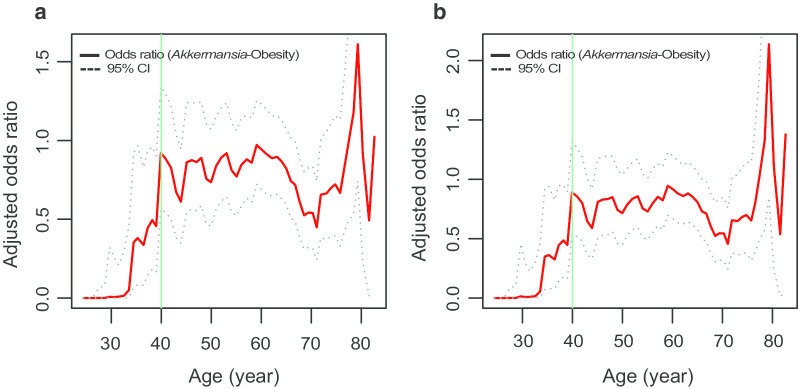
Background: Gut bacteria Akkermansia has been shown an anti-obesity protective effect in previous studies and may be used as promising probiotics. However, the above effect may be confounded by common factors, such as sex, age and diets, which should be verified in a generalized population. Methods: We used datasets from the American Gut Project to strictly reassess the association and further examined the effect of aging on it. A total of 10,534 participants aged 20 to 99 years from the United States and the United Kingdom were included. The relative abundance of Akkermansia was assessed based on 16S rRNA sequencing data. Obesity (body mass index, BMI ≥ 30 kg/m 2) risks were compared across Akkermansia quintiles in logistic models with adjustment for common confounders. Restricted cubic splines were used to examine dose response effects between Akkermansia, obesity and age. A sliding-windows-based algorithm was used to investigate the effect of aging on Akkermansia-obesity associations. Results: The median abundance of Akkermansia was 0.08% (interquartile range: 0.006–0.93%), and the prevalence of obesity was 11.03%. Nonlinear association was detected between Akkermansia and obesity risk (P = 0.01). The odds ratios (95% confidence interval) for obesity across the increasing Akkermansia quintiles (referencing to the first quintile) were 1.14 (0.94–1.39), 0.94 (0.77–1.15), 0.70 (0.56–0.85) and 0.79 (0.64–0.96) after adjusting for age and sex (P for trend < 0.001). This association remained unchanged after further controlling for smoking, alcohol drinking, diet, and country. The odds ratios (95% CI) of Akkermansia were 0.19 (0.03–0.62) and 0.77 (0.64–0.91) before and over 40 years, respectively, indicating that the protective effect of Akkermansia against obesity was not stable with aging. Conclusion: High relative abundance of Akkermansia is associated with low risk of obesity and the association declines with aging.
Overview
The claims and statistics of this paper haven’t been checked yet.
Free: it reads the open-access text and checks the first 5 claims that cite a source we can check. Create a free account to check every claim.
Integrity signals
Registry
Cites
Statistics
Figures
Verification
Claims the paper makes
The claims and statistics of this paper haven’t been checked yet.
Free: it reads the open-access text and checks the first 5 claims that cite a source we can check. Create a free account to check every claim.
Claims other papers make about this one
Each is checked against this paper’s own text: does it say what the citing paper says it does?
The cited source doesn’t support the claim as written.
In the citing paper
“Another group performed 16S rRNA gene amplicon sequencing of 37 NSCLC patient feces, confirming that Akk was enriched in patients responding to ICI 26 .”
From Intestinal Akkermansia muciniphila predicts clinical response to PD-1 blockade in patients with advanced non-small-cell lung cancer (2022) · cites this paper as [26]
Checked by a reasoning model — may be wrong.
Experimental — accuracy not yet measured
Self-check
Percentages, sums and reported differences re-computed from the paper’s own numbers.
The self-check needs the paper’s full text.
Citations
Cites
The SILVA ribosomal RNA gene database project: improved data processing and web-based tools
Quast, C., Pruesse, E., Yilmaz, P., Gerken, J., Schweer, T., Yarza, P., Peplies, J., & Glöckner, F. O. (2012) · Nucleic Acids Research · doi:10.1093/nar/gks1219 · Cited by 33,055 · cited 1×
“8) by using the Silva_16s_v123 database [18].”
An obesity-associated gut microbiome with increased capacity for energy harvest
Turnbaugh, P. J., Ley, R. E., Mahowald, M. A., Magrini, V., Mardis, E. R., & Gordon, J. I. (2006) · Nature · doi:10.1038/nature05414 · Cited by 12,444 · cited 1×
“Some beneficial bacteria, such as gut Akkermansia, may play a decisive role in reducing the burden of obesity, via modulation of glucose metabolism and low-grade inflammation [2, 3].”
BackgroundVSEARCH: a versatile open source tool for metagenomics
(2016) · doi:10.7717/peerj.2584 · Cited by 10,773
A metagenome-wide association study of gut microbiota in type 2 diabetes
Qin, J., Li, Y., Cai, Z., Li, S., Zhu, J., Zhang, F., Liang, S., Zhang, W., Guan, Y., Shen, D., et al. (2012) · Nature · doi:10.1038/nature11450 · Cited by 6,762 · cited 1×
“For example, metformin administration increased Akkermansia abundance in obese mice and type 2 diabetic subjects [27, 28].”
BackgroundSelf-citationCross-talk between Akkermansia muciniphila and intestinal epithelium controls diet-induced obesity
Everard, A., Belzer, C., Geurts, L., Ouwerkerk, J. P., Druart, C., Bindels, L. B., Guiot, Y., Derrien, M., Muccioli, G. G., Delzenne, N. M., et al. (2013) · Proceedings of the National Academy of Sciences · doi:10.1073/pnas.1219451110 · Cited by 4,511
Depommier, C., Everard, A., Druart, C., Plovier, H., Van Hul, M., Vieira-Silva, S., Falony, G., Raes, J., Maiter, D., Delzenne, N. M., et al. (2019) · Nature Medicine · doi:10.1038/s41591-019-0495-2 · Cited by 2,357
Plovier, H., Everard, A., Druart, C., Depommier, C., Van Hul, M., Geurts, L., Chilloux, J., Ottman, N., Duparc, T., Lichtenstein, L., et al. (2017) · Nature Medicine · doi:10.1038/nm.4236 · Cited by 2,204 · cited 1×
“Other interventional studies, in humans and mice, used 108–1010 CFU/day to improve metabolic diseases [7, 8].”
BackgroundShin, N.-R., Lee, J.-C., Lee, H.-Y., Kim, M.-S., Whon, T. W., Lee, M.-S., & Bae, J.-W. (2014) · Gut · doi:10.1136/gutjnl-2012-303839 · Cited by 1,550
Next-Generation Beneficial Microbes: The Case of Akkermansia muciniphila
Cani, P. D., & de Vos, W. M. (2017) · Frontiers in Microbiology · doi:10.3389/fmicb.2017.01765 · Cited by 1,058 · cited 2×
“The genus and its main species Akkermansia muciniphila inversely correlated with metabolic syndrome [4, 5].”
BackgroundAkkermansia muciniphila and its role in regulating host functions
Derrien, M., Belzer, C., & de Vos, W. M. (2017) · Microbial Pathogenesis · doi:10.1016/j.micpath.2016.02.005 · Cited by 1,044
Research works printed but not linked: 1
- Shin NE, Lee JC, Lee HY, et al. An increase in the Akkermansia spp. popula- tion induced by metformin treatment improves glucose homeostasis in diet-induced obese mice. Gut. 2014;63(5):727-35. · DOI · Paper page
Cited by
Derosa, L., Routy, B., Thomas, A. M., Iebba, V., Zalcman, G., Friard, S., Mazieres, J., Audigier-Valette, C., Moro-Sibilot, D., Goldwasser, F., et al. (2022) · Nature Medicine · doi:10.1038/s41591-021-01655-5 · Cited by 685
Le Roy, T., Moens de Hase, E., Van Hul, M., Paquot, A., Pelicaen, R., Régnier, M., Depommier, C., Druart, C., Everard, A., Maiter, D., et al. (2022) · Gut · doi:10.1136/gutjnl-2020-323778 · Cited by 226
“To this aim, we used several independent cohorts such as the HMP, 25 the AGP 23 24 and the FGFP. 26 Based on the 16S rRNA gene sequence of D. welbionis J115 T , this sequence variant had a prevalence of 62.7% and a relative abundance range of 0%–3.9% in the HMP cohort (n=161).”
InfluentialThe role of the gut microbiota in multiple sclerosis
Correale, J., Hohlfeld, R., & Baranzini, S. E. (2022) · Nature Reviews Neurology · doi:10.1038/s41582-022-00697-8 · Cited by 207
Jardon, K. M., Canfora, E. E., Goossens, G. H., & Blaak, E. E. (2022) · Gut · doi:10.1136/gutjnl-2020-323715 · Cited by 181
“51 52 A 3-month supplementation of Akkermansia muciniphila improved insulin sensitivity and reduced blood markers of liver dysfunction and inflammation in individuals with IR and overweight/obesity.”
BackgroundGenotypic and Phenotypic Diversity among Human Isolates of Akkermansia muciniphila
Becken, B., Davey, L., Middleton, D. R., Mueller, K. D., Sharma, A., Holmes, Z. C., Dallow, E., Remick, B., Barton, G. M., David, L. A., et al. (2021) · mBio · doi:10.1128/mbio.00478-21 · Cited by 125
Masse, K. E., & Lu, V. B. (2023) · Frontiers in Endocrinology · doi:10.3389/fendo.2023.1169624 · Cited by 120
Gut Microbiota and Host Metabolism: From Proof of Concept to Therapeutic Intervention
Cani, P. D., Moens de Hase, E., & Van Hul, M. (2021) · Microorganisms · doi:10.3390/microorganisms9061302 · Cited by 112
Chanda, D., & De, D. (2024) · Gut Microbes · doi:10.1080/19490976.2024.2304900 · Cited by 130
“42,43 Likewise, the potential anti-obesity effect of Odoribacter splanchnicus and Ruthenibacterium lactatiformans could be associated with their anti-inflammatory effect on the gut epithelium, which involves the induction of immune cells to produce interleukin-10 (IL-10) and IFNγ.”
BackgroundStrainGE: a toolkit to track and characterize low-abundance strains in complex microbial communities
van Dijk, L. R., Walker, B. J., Straub, T. J., Worby, C. J., Grote, A., Schreiber, H. L., Anyansi, C., Pickering, A. J., Hultgren, S. J., Manson, A. L., et al. (2022) · Genome Biology · doi:10.1186/s13059-022-02630-0 · Cited by 99
The Role of the Gut Microbiota in the Gut–Brain Axis in Obesity: Mechanisms and Future Implications
van Son, J., Koekkoek, L. L., la Fleur, S. E., Serlie, M. J. M., & Nieuwdorp, M. (2021) · International Journal of Molecular Sciences · doi:10.3390/ijms22062993 · Cited by 92
“More recently, Akkermansia muciniphila, a strain that has been negatively associated with obesity [186], was tested in a randomized placebo-controlled study.”
BackgroundRamos, C., Gibson, G. R., Walton, G., Magistro, D., Kinnear, W., & Hunter, K. A. (2022) · Nutrients · doi:10.3390/nu14030674 · Cited by 91
Gut Microbiota Characteristics of People with Obesity by Meta-Analysis of Existing Datasets
Gong, J., Shen, Y., Zhang, H., Cao, M., Guo, M., He, J., Zhang, B., & Xiao, C. (2022) · Nutrients · doi:10.3390/nu14142993 · Cited by 94
“PRJEB25642 [23] 2018 India 228 259 425 QIAamp DNA Stool Mini Kit V4 Io torrent PRJNA417579 [22] 2019 Columbia 87 57 20 QIAamp DNA Stool Mini Kit V4 MiSeq PRJNA434133 [24] 2019 UK 61 71 PSP Spin Stool DNA Plus Kit V4 MiSeq PRJNA417691 [21] 2019 Mexico 20 30 ZR Faecal DNA MiniPrep V3 Ion torrent PRJEB11419 [25] 2019 USA…”
MethodDysbiotic change in gastric microbiome and its functional implication in gastric carcinogenesis
Park, J., Seo, H., Kang, C.-S., Shin, T.-S., Kim, J. W., Park, J., Kim, J. G., & Kim, Y. (2022) · Scientific Reports · doi:10.1038/s41598-022-08288-9 · Cited by 82
Chen, G., Peng, Y., Huang, Y., Xie, M., Dai, Z., Cai, H., Dong, W., Xu, W., Xie, Z., Chen, D., et al. (2023) · Journal of Advanced Research · doi:10.1016/j.jare.2022.10.010 · Cited by 61
Self-citationEarly life gut microbiome and its impact on childhood health and chronic conditions
Núñez, H., Nieto, P. A., Mars, R. A. T., Ghavami, M., Hoy, C. S., & Sukhum, K. V. (2025) · Gut Microbes · doi:10.1080/19490976.2025.2463567 · Cited by 89
Outlook on next-generation probiotics from the human gut
Filippis, F. D., Esposito, A., & Ercolini, D. (2022) · Cellular and Molecular Life Sciences · doi:10.1007/s00018-021-04080-6 · Cited by 75
Baek, G. H., Yoo, K. M., Kim, S.-Y., Lee, D. H., Chung, H., Jung, S., Park, S., & Kim, J. (2023) · Nutrients · doi:10.3390/nu15112610 · Cited by 70
“The Akkermansia muciniphila , which is known as an anti-obesity species [32] and is commercially available, did not show significant differences with collagen peptide consumption (Figure S4).”
BackgroundWei, B., Zhang, B., Du, A., Zhou, Z., Lu, D., Zhu, Z.-H., Ke, S., Wang, S., Yu, Y., Chen, J., et al. (2022) · Carbohydrate Polymers · doi:10.1016/j.carbpol.2022.119411 · Cited by 61
Melatonin–Microbiome Two-Sided Interaction in Dysbiosis-Associated Conditions
Ieșanu, M. I., Zahiu, C. D. M., Dogaru, I.-A., Chiţimuș, D. M., Pîrcălăbioru, G. G., Voiculescu, S. E., Isac, S., Galoş, F., Pavel, B., O’Mahony, S. M., et al. (2022) · Antioxidants · doi:10.3390/antiox11112244 · Cited by 64
The interplay between herbal medicines and gut microbiota in metabolic diseases
Wang, L., Gou, X., Ding, Y., Liu, J., Wang, Y., Wang, Y., Zhang, J., Du, L., Peng, W., & Fan, G. (2023) · Frontiers in Pharmacology · doi:10.3389/fphar.2023.1105405 · Cited by 77
“Moreover, Akkermansia bacteria are associated with a reduced risk of obesity (Zhou et al., 2020).”
BackgroundMargiotta, E., Caldiroli, L., Callegari, M. L., Miragoli, F., Zanoni, F., Armelloni, S., Rizzo, V., Messa, P., & Vettoretti, S. (2021) · Toxins · doi:10.3390/toxins13070472 · Cited by 65
“Akkermansia is considered a beneficial bacterium due to its anti-inflammatory properties, and it has been found to be negatively correlated with inflammatory bowel disease [32], BMI and obesity [33,34], while it is positively associated with weight loss [35].”
BackgroundAssociation of gut microbiota with obesity in children and adolescents
Cho, K. Y. (2022) · Korean Journal of Pediatrics · doi:10.3345/cep.2021.01837 · Cited by 62
Zhou, Q., Pang, G., Zhang, Z., Yuan, H., Chen, C., Zhang, N., Yang, Z., & Sun, L. (2021) · Diabetes Metabolic Syndrome and Obesity · doi:10.2147/dmso.s311388 · Cited by 60
“Our finding of an Akkermansia–obesity association is consistent with another study based on the American Gut Project, which included around 10,000 subjects.(26) Both studies adjusted for potential confounders such as age, sex, and geographic region, and we observed a significant relationship between Akkermansia and bo…”
ResultSelf-citationThe gut microbiota–brain axis: Role of the gut microbial metabolites of dietary food in obesity
Song, X., Wang, L., Liu, Y., Zhang, X., Weng, P., Liu, L., Zhang, R., & Wu, Z. (2022) · Food Research International · doi:10.1016/j.foodres.2022.110971 · Cited by 58
Exploring the Gut Microbiota and Cardiovascular Disease
Murphy, K., O’Donovan, A. N., Caplice, N. M., Ross, R. P., & Stanton, C. (2021) · Metabolites · doi:10.3390/metabo11080493 · Cited by 54
“…et al. 2017 9 obese subjects following medical dietary treatment, 5 following RYGB, 5 following sleeve gastrectomy ↑Proteobacteria in surgical patients 28649469 Zhou et al. 2020 10,534 subjects from American GutProject Akkermansia is associated with ↓risk of obesity 33110437 Table 1.”
BackgroundByndloss, M. X., Devkota, S., Duca, F. A., Niess, J. H., Nieuwdorp, M., Orho‐Melander, M., Sanz, Y., Tremaroli, V., & Zhao, L. (2024) · Diabetologia · doi:10.1007/s00125-024-06198-1 · Cited by 63
“For example, despite specific strains (e.g. Akkermansia ) having been associated with a healthy metabolic phenotype [211], an RCT intervention with A. muciniphila did not identify strong metabolic effects [143].”
BackgroundHsu, C., Chan, J. Y. H., Wu, K. L. H., Yu, H., Lee, W., Hou, C., & Tain, Y. (2021) · International Journal of Molecular Sciences · doi:10.3390/ijms22052674 · Cited by 40
“Since minocycline treatment augmented the Akkermansia abundance and attenuated HF-induced obesity and Akkermansia plays a decisive role in reducing the risk of obesity [29], additional study is warranted to clarify whether the protective effect of minocycline on obesity is directly attributed to its regulation on the…”
BackgroundLiudvytska, O., & Kołodziejczyk-Czepas, J. (2022) · Nutrients · doi:10.3390/nu14102053 · Cited by 45
Singh, V., Mahra, K., Jung, D.-R., & Shin, J. (2024) · Probiotics and Antimicrobial Proteins · doi:10.1007/s12602-024-10262-y · Cited by 47
“Studies have found that the decreased abundance of Akkermansia is positively linked with obesity [54].”
The Gut Microbiome in Human Obesity: A Comprehensive Review
Borrego-Ruiz, A., & Borrego, J. J. (2025) · Biomedicines · doi:10.3390/biomedicines13092173 · Cited by 66
“…suggests that obesity is more broadly characterized by an increased prevalence of Actinomycetota and Bacillota phyla, along with a decreased prevalence of species within the Bacteroidota and Verrucomicrobiota phyla, including A. muciniphila , as well as a reduction in F. prausnitzii [99,100].”
Mao, K., Gao, J., Wang, X., Li, X., Geng, S., Zhang, T., Sadiq, F. A., & Sang, Y. (2022) · Frontiers in Nutrition · doi:10.3389/fnut.2021.811619 · Cited by 40
“In fact, the relationship betweenAkkermansia and obesity is complicated and there are many other factors, such as aging and health status, which affect the abundance of this species in a gut (51).”
BackgroundSelf-citationAlbouery, M., Bretin, A., Buteau, B., Gregoire, S., Martine, L., Gambert, S., Bron, A. M., Acar, N., Chassaing, B., & Bringer, M.-A. (2021) · Nutrients · doi:10.3390/nu13031037 · Cited by 38
“muciniphila abundance has also been reported in patients with metabolic disorders [67,68], while supplementation with A.”
BackgroundObesity and the gut microbiota: implications of neuroendocrine and immune signaling
Romaní‐Pérez, M., Liébana-García, R., Flor‐Duro, A., Bonillo‐Jiménez, D., Bullich‐Vilarrubias, C., Olivares, M., & Sanz, Y. (2024) · FEBS Journal · doi:10.1111/febs.17249 · Cited by 37
“Akkermansia muciniphila is another bacterial species that has been associated with normal BMI versus obesity in some observational human studies [161,164].”
Thim-uam, A., Makjaroen, J., Issara-Amphorn, J., Saisorn, W., Wannigama, D. L., Chancharoenthana, W., & Leelahavanichkul, A. (2022) · International Journal of Molecular Sciences · doi:10.3390/ijms23031676 · Cited by 33
“After DSS administration, splenectomy induced several differences from sham-DSS mice, as indicated by (i) higher E. coli, Shigella, and Alistipes in the genus-level analysis, despite the lower Proteobacteria (in phylum-level analysis), (ii) higher Verrucomicrobia and Akkermansia, (iii) lower Allobacum and Ruminococcus…”
BackgroundThe Role of Gut Microbiota in the Onset and Progression of Obesity and Associated Comorbidities
Enache, R. M., Profir, M., Roşu, O. A., Creţoiu, S. M., & Gașpar, B. S. (2024) · International Journal of Molecular Sciences · doi:10.3390/ijms252212321 · Cited by 38
Cuisiniere, T., Calvé, A., Fragoso, G., Oliero, M., Hajjar, R., González, E., & Santos, M. M. (2021) · BMC Microbiology · doi:10.1186/s12866-021-02320-0 · Cited by 38
Chiappori, F., Cupaioli, F. A., Consiglio, A., Nanni, N. D., Mosca, E., Licciulli, F., & Mezzelani, A. (2022) · Nutrients · doi:10.3390/nu14071340 · Cited by 36
“Furthermore, Akkermansia is related to a healthy gut, and it is thought to have anti-obesity and anti-diabetic effects [81,82]; this family promotes gut barrier integrity, modulates immune response, and inhibits inflammation and syntrophy with other microbiota species [83].”
BackgroundLekang, K., Shekhar, S., Berild, D., Petersen, F. C., & Winther-Larsen, H. C. (2022) · PLoS ONE · doi:10.1371/journal.pone.0275737 · Cited by 34
“Akkerman-sia has been suggested to protect against obesity due to its modulating capacity on glucose metabolism [85] and is considered positive for human gut health.”
Kumar, R., Kane, H., Wang, Q., Hibberd, A. A., Jensen, H. M., Kim, H., Bak, S. Y., Auzanneau, I., Bry, S., Christensen, N. J., et al. (2022) · Cells · doi:10.3390/cells11132084 · Cited by 32
“muciniphila is associated with better health and that it is depleted in subjects with metabolic disorders [52].”
Cheng, L., Wei, Y., Xu, L., Peng, L., Wang, Y., & Wei, X. (2022) · Foods · doi:10.3390/foods11203210 · Cited by 30
“Our findings are in accordance with previous studies in which a high relative abundance of Akkermansia was associated with a low risk of obesity [39], and the administration of Akkermansia muciniphila protected HFD-fed mice against obesity and associated complications by reducing energy efficiency and body weight, pro…”
ResultThe Impact of a Very-Low-Calorie Ketogenic Diet in the Gut Microbiota Composition in Obesity
Zambrano, A. K., Cadena-Ullauri, S., Guevara‐Ramírez, P., Frías-Toral, E., Ruiz‐Pozo, V. A., Paz‐Cruz, E., Tamayo‐Trujillo, R., Chapela, S. P., Montalván, M., Sarno, G., et al. (2023) · Nutrients · doi:10.3390/nu15122728 · Cited by 34
“Similarly, a reduction in the Akkermansia and Bifidobacterium genera has been correlated with obesity in different studies [95,98].”
BackgroundKim, K. S., Tiffany, E., Lee, J., Oh, A., Jin, H., Kim, J.-S., Lee, J., Nam, M. H., Hong, S., Park, S., et al. (2023) · Gut Microbes · doi:10.1080/19490976.2023.2221811 · Cited by 29
Byndloss, M. X., Devkota, S., Duca, F. A., Niess, J. H., Nieuwdorp, M., Orho‐Melander, M., Sanz, Y., Tremaroli, V., & Zhao, L. (2024) · Diabetes Care · doi:10.2337/dci24-0052 · Cited by 51
“For example, despite speci fi c strains (e.g., Akkermansia ) having been associated with a healthy metabolic phenotype (211), an RCT intervention with A. muciniphila did not identify strong metabolic effects (143).”
BackgroundAkkermansia muciniphila: The state of the art, 18 years after its first discovery
Iwaza, R., Wasfy, R. M., Dubourg, G., Raoult, D., & Lagier, J. (2022) · Frontiers in Gastroenterology · doi:10.3389/fgstr.2022.1024393 · Cited by 38
Morrison, M. C., Gart, E., van Duyvenvoorde, W., Snabel, J. M., Nielsen, M. J., Leeming, D. J., Menke, A. L., & Kleemann, R. (2022) · International Journal of Molecular Sciences · doi:10.3390/ijms23042325 · Cited by 24
“muciniphila, which is thought to have health-promoting properties [10], is decreased in obesity and associated metabolic diseases [11].”
BackgroundGut microbiota analyses of inflammatory bowel diseases from a representative Saudi population
Alsulaiman, R., Al-Quorain, A. A., Al‐Muhanna, F., Piotrowski, S., Kurdi, E. A., Vatte, C., Alquorain, A. A., Alfaraj, N. H., Alrezuk, A. M., Robinson, F. L., et al. (2023) · BMC Gastroenterology · doi:10.1186/s12876-023-02904-2 · Cited by 27
de Hase, E. M., Neyrinck, A. M., Rodriguez, J., Cnop, M., Paquot, N., Thissen, J., Xu, Y., Beloqui, A., Bindels, L. B., Delzenne, N. M., et al. (2023) · Diabetologia · doi:10.1007/s00125-023-06032-0 · Cited by 25
“For comparison, A. muciniphila is detected in 70–80% of the general population when using part of the same cohorts [20].”
Byndloss, M. X., Devkota, S., Duca, F. A., Niess, J. H., Nieuwdorp, M., Orho‐Melander, M., Sanz, Y., Tremaroli, V., & Zhao, L. (2024) · Diabetes · doi:10.2337/dbi24-0028 · Cited by 35
Malnutrition and Its Influence on Gut sIgA–Microbiota Dynamics
Profir, M., Enache, R. M., Roşu, O. A., Pavelescu, L. A., Creţoiu, S. M., & Gașpar, B. S. (2025) · Biomedicines · doi:10.3390/biomedicines13010179 · Cited by 27
Sun, Y., Li, D., Zhao, L., Liu, X., Guan, K., Ma, Y., Wang, R., & Li, Q. (2025) · Journal of Dairy Science · doi:10.3168/jds.2024-26193 · Cited by 24
Mount, S., Canfora, E. E., Jocken, J. W. E., Umanets, A., Hul, G. B. J., Coenjaerds, M. M. J., Laquidain, P. A., Adriaens, M. E., Holst, J. J., Jardon, K. M. C., et al. (2026) · Nature Medicine · doi:10.1038/s41591-026-04394-7 · Cited by 36
“In this context, a population-based study of over 10,000 individuals showed that individuals with obesity have a low level of A. muciniphila abundance 39 .”
Mechanism Underlying Metformin Action and Its Potential to Reduce Gastric Cancer Risk
Lan, W.-H., Lin, T., Yeh, J.-A., Feng, C., Hsu, J., Lin, H., Kuo, C., & Lai, C. (2022) · International Journal of Molecular Sciences · doi:10.3390/ijms232214163 · Cited by 25
Stark, K. G., Falkowski, N. R., Brown, C. A., McDonald, R. A., & Huffnagle, G. B. (2022) · Frontiers in Allergy · doi:10.3389/falgy.2022.851993 · Cited by 20
Intestinal Epithelial Inactivity of Dual Oxidase 2 Results in Microbiome-Mediated Metabolic Syndrome
Hazime, H., Ducasa, G. M., Santander, A. M., Brito, N., Gonzalez-Horta, E. E., Ban, Y. J., Kaunitz, J. D., Akiba, Y., Fernández, I., Burgueño, J. F., et al. (2023) · Cellular and Molecular Gastroenterology and Hepatology · doi:10.1016/j.jcmgh.2023.06.009 · Cited by 17
“Our data in DA IEC-KO mice also showed a striking reduction in relative abundance in bacteria from the family Akkermansiaceae (Figure 5D), which is associated with leanness and protection from obesity.(36) To gain insight into the functional state of the microbiota, we”
BackgroundThe microbiome-gut-brain axis in nutritional neuroscience
Schellekens, H., Ribeiro, G., Cuesta‐Marti, C., & Cryan, J. F. (2022) · Nutritional Neuroscience · doi:10.1080/1028415x.2022.2128007 · Cited by 21
Sub-Chronic Difenoconazole Exposure Induced Gut Microbiota Dysbiosis in Mice
Bao, Z., Wang, W., Wang, X., Qian, M., & Jin, Y. (2022) · Toxics · doi:10.3390/toxics10010034 · Cited by 18
Self-citationZhang, R., Sun, J., Wang, C., Wang, X., Zhao, P. Z., Yuan, Y., Hu, A. C., & Zhou, Q. (2022) · Frontiers in Public Health · doi:10.3389/fpubh.2021.797183 · Cited by 24
“A modified sliding-window-based algorithm (SWAN) was used to depict the trajectories of the prevalence of MetS with age for cross-sectional data (14, 15).”
MethodResultSelf-citationZhao, L., Zhao, Q., Sharafeldin, S., Sang, L., Wang, C., Xue, Y., & Shen, Q. (2025) · Nutrients · doi:10.3390/nu17040733 · Cited by 19
“Akkermansia is commonly reported to have beneficial effects, such as weight reduction and decreased lipid accumulation, and is negatively correlated with body weight [70].”
Lin, M., Su, T., Chen, C., Wu, W., Hsu, S., Tseng, T., Liao, S., Hong, C., Yang, H., Liu, C., et al. (2023) · Gut Pathogens · doi:10.1186/s13099-023-00549-w · Cited by 19
“This species also performs several metabolic functions and maintains gastrointestinal mucosal integrity [26, 27].”
BackgroundSelf-citationBai, J., Eldridge, R. C., Houser, M. C., Martin, M., Powell, C., Sutton, K. S., Noh, H. I., Wu, Y., Olson, T. A., Konstantinidis, K. T., et al. (2024) · Journal of Translational Medicine · doi:10.1186/s12967-024-05066-1 · Cited by 22
“Similarly, decreased abundance of Akker-mansia species is associated with various adverse health effects, including metabolic disorders, inflammatory and neurodegenerative diseases, and even cancers [62, 63].”
BackgroundRumyantsev, K. A., Polyakova, V., Sorokina, I. V., Feoktistova, P. S., Khatkov, I. E., Бодунова, Н. А., & Zhukova, L. (2024) · Life · doi:10.3390/life14101219 · Cited by 20
“In obese people, this dysbiosis appears to be associated with increases in Firmicutes , the genus Clostridium , and the species Eubacterium rectale , Clostridium coccoides , Lactobacillus reuteri , Clostridium histolyticum , Staphylococcus aureus , and Akkermansia muciniphila [24].”
BackgroundEffects of Human, Caprine, and Bovine Milk Fat Globules on Microbiota Adhesion and Gut Microecology
Yao, Y., Zhou, X., Hadiatullah, H., Li, C., Wang, X., & Wang, S. (2021) · Journal of Agricultural and Food Chemistry · doi:10.1021/acs.jafc.1c01801 · Cited by 18
Self-citationWeber, A. M., Ibrahim, H., Baxter, B. A., Kumar, R., Maurya, A. K., Kumar, D., Agarwal, R., Raina, K., & Ryan, E. P. (2023) · Cancers · doi:10.3390/cancers15082231 · Cited by 16
“A high relative abundance of Akkermansia has been linked with a lower risk of obesity [68] and improved colon health [69], and studies have shown that higher levels of inflammation in the colon were associated with reduced abundances of Akkermansia [70].”
BackgroundGut microbiota composition is associated with the efficacy of Delta-24-RGDOX in malignant gliomas
Meléndez-Vázquez, N. M., Nguyen, T. T., Fan, X., Lopez-Rivas, A. R., Fueyo-Margareto, J., Gomez‐Manzano, C., & Godoy‐Vitorino, F. (2024) · Molecular Therapy Oncology · doi:10.1016/j.omton.2024.200787 · Cited by 19
“54,55 It is generally a bene fi cial bacterium, and commercial probiotics have even been developed, as supplementation restores epithelial mucosal integrity in mouse models of diabetes and obesity.”
BackgroundWang, S., Bao, Z., Li, Z., Zhao, M., Wang, X., & Liu, F. (2025) · Gut Microbes · doi:10.1080/19490976.2025.2566305 · Cited by 19
“59 As aging is associated with decreased gut diversity, weakened barrier function, and greater susceptibility to dysbiosis, Akkermansia may more easily occupy ecological niches during intervention.”
Self-citationRank selection for non‐negative matrix factorization
Cai, Y. F., Gu, H., & Kenney, T. (2023) · Statistics in Medicine · doi:10.1002/sim.9934 · Cited by 23
Dietert, R. R., & Dietert, J. M. (2022) · Microorganisms · doi:10.3390/microorganisms10020229 · Cited by 13
Li, X., Yao, Y., Yu, C., Wei, T., Xi, Q., Li, J., Chen, F., Deng, Z., & Luo, T. F. (2022) · Journal of the Science of Food and Agriculture · doi:10.1002/jsfa.12352 · Cited by 13
Choi, S. I., Kim, N., Choi, Y., Nam, R. H., Jang, J. Y., & Cho, S. (2024) · Journal of Neurogastroenterology and Motility · doi:10.5056/jnm23096 · Cited by 16
“56-58 However, in our study, we consistently confirmed an increase in A. muciniphila after long-term administration of a HFD. 28,59 Furthermore, we found a negative correlation between the relative fecal abundance of A. muciniphila and fecal concentrations of acetic acid and butyric acid…”
Spatial profiles of the bacterial microbiota throughout the gastrointestinal tract of dairy goats
Hu, Q., Luo, J., Cheng, F., Wang, P., Gong, P., Lv, X., Wang, X., Yang, M., & Wei, P. (2024) · Applied Microbiology and Biotechnology · doi:10.1007/s00253-024-13200-8 · Cited by 14
“Akkermansia spp . isolated from the mammalian GIT chyme and fecal contents had functions in synthesizing enzymes to deconstruct and utilize mucin in the GIT (Gong et al. 2020; Tailford et al. 2015) and showed an anti-obesity protective effect via modulation of glucose metabolism (Zhou et al. 2020).”
Self-citationNoori, P., Sotoodehnejadnematalahi, F., Rahimi, P., & Siadat, S. D. (2025) · Digestion · doi:10.1159/000543446 · Cited by 15
“Many studies have reported the bene fi cial effects of A. muciniphila on energy metabolism, in fl ammation, and gut integrity, and its abundance has been linked to type 2 diabetes and obesity [7 – 9].”
Salsinha, A. S., Araújo-Rodrigues, H., Dias, C., Cima, A., Rodríguez-Alcalá, L. M., Relvas, J. B., & Pintado, M. (2025) · Clinical Nutrition · doi:10.1016/j.clnu.2025.04.007 · Cited by 13
Liu, L., Jia, R., Chen, W., Chen, W., Wang, X., & Guo, Z. (2025) · International Journal of Biological Macromolecules · doi:10.1016/j.ijbiomac.2025.143256 · Cited by 13
Self-citationCircadian rhythms in metabolic organs and the microbiota during acute fasting in mice
Pickel, L., Lee, J. H., Maughan, H., Shi, I. Q., Verma, N., Yeung, C., Guttman, D. S., & Sung, H. (2022) · Physiological Reports · doi:10.14814/phy2.15393 · Cited by 13
“Abundances of species in this genus are inversely associated with metabolic disease, obesity, and inflammation (Zhou, 2017; Zhou et al., 2020), potentially through its effects on glucagonlike peptide 1 (GLP1) secretion(Yoon et al.”
BackgroundLiu, T., Zhang, M., Xie, Q., Gu, J., Zeng, S., & Huang, D. (2025) · Journal of Agricultural and Food Chemistry · doi:10.1021/acs.jafc.4c13173 · Cited by 16
Li, X., Lin, D., Hu, X., Shi, X., Huang, W., Ouyang, Y., Chen, X., Xiong, Y., Wu, X., Hong, D., et al. (2025) · CNS Neuroscience & Therapeutics · doi:10.1111/cns.70320 · Cited by 19
Widjaja, F., & Rietjens, I. M. C. M. (2023) · Biomedicines · doi:10.3390/biomedicines11102658 · Cited by 13
Popov, I. V., Belkassem, N., Schrijver, R. S., Chebotareva, I. P., Chikindas, M. L., Ermakov, A. M., & Venema, K. (2024) · Veterinary Sciences · doi:10.3390/vetsci11080377 · Cited by 9
Fujii, T., Karasawa, K., Takahashi, H., Shirai, I., Funasaka, K., Ohno, E., Hirooka, Y., & Tochio, T. (2024) · Microbiology · doi:10.1099/mic.0.001510 · Cited by 13
Kurz, C. E., Arbeeva, L. S., Azcárate-Peril, M. A., Stewart, D. A., Lascelles, B. D. X., Loeser, R. F., & Nelson, A. E. (2025) · Osteoarthritis and Cartilage Open · doi:10.1016/j.ocarto.2025.100603 · Cited by 9
“In a large study using 16S rRNA microbiome sequencing, there was a nonlinear association between the abundance of Akkermansia and obesity such that greater abundance was associated with lower obesity risk, most notably under age 40 years [33].”
Parallel Pathways, Divergent Outcomes: Adipose Tissue–Neural Crosstalk in Depression and Obesity
Prodaniuc, A., Amălinei, C., Căruntu, I.-D., Riscanu, L., & Grigoraş, A. (2025) · Journal of Clinical Medicine · doi:10.3390/jcm14238307 · Cited by 13
CHIERICO, F. D., Marzano, V., Scanu, M., Reddel, S., Dentici, M. L., Capolino, R., Donato, M. D., Spasari, I., Fiscarelli, E. V., Digilio, M. C., et al. (2023) · Scientific Reports · doi:10.1038/s41598-023-36704-1 · Cited by 9
Ramírez-Maldonado, L. M., Guerrero-Castro, J., Rodríguez-Mejía, J. L., Cárdenas‐Conejo, Y., Bonales-Alatorre, E. O., Valencia-Cruz, G., Anguiano-García, P. T., Vega-Juarez, I. I., Dagnino-Acosta, A., Ruvalcaba-Galindo, J., et al. (2024) · American Journal of Physiology-Gastrointestinal and Liver Physiology · doi:10.1152/ajpgi.00198.2024 · Cited by 13
Kwon, H.-S., Kim, S.-J., Shin, K. J., Kim, S. H., Yun, J., Bae, J., Tak, H.-J., Lee, N., & Kim, H.-J. (2024) · Nutrients · doi:10.3390/nu16131993 · Cited by 12
“Akkermansia, recognized as a next-generation probiotic [24,25], exhibits a propensity to proliferate post-probiotic consumption but shows reduced levels in obese individuals compared to those with normal weight [26].”
BackgroundThe older, the less potential benefit for type 2 diabetes from weight control
Zhou, Q., Sun, J., Wu, Z., Wu, W., Zhang, X., Pan, Q., Qi, H., Yuan, H., Shi, H., Cao, S., et al. (2022) · BMC Geriatrics · doi:10.1186/s12877-022-02979-8 · Cited by 11
“A sliding-window-based algorithm (SWAN) was developed to sample and analyse trajectories or trends of factors across aging for cross-sectional studies [24].”
MethodSelf-citationWei, G., Liu, W., Shen, F., Xie, R., Wang, F., Guo, H., & Liu, L. (2025) · Journal of Environmental Sciences · doi:10.1016/j.jes.2025.05.036 · Cited by 9
Aznou, A., Drenth, J. P. H., Nieuwdorp, M., & Meijnikman, A. S. (2025) · Yearbook of pediatric endocrinology · doi:10.1210/jendso/bvaf130 · Cited by 10
“Recent studies have confirmed the inverse relation between Akkermansia and obesity in large cohorts [57], while multiple interventional studies in mice and humans have shed a light on the potential of A. muciniphila as a probiotic treatment of overweight and obesity [58].”
Potential role of gut microbes in the efficacy and toxicity of immune checkpoints inhibitors
Ma, J., Wei, Q., Cheng, X. M., Zhang, J., Zhang, Z., & Su, J. (2023) · Frontiers in Pharmacology · doi:10.3389/fphar.2023.1170591 · Cited by 9
“, 2022), reduce obesity and its complications (Zhou et al., 2020), alleviate neurodegenerative diseases (Blacher et al.”
BackgroundIntestinal flora was associated with occurrence risk of chronic non-communicable diseases
Jiang, G., Li, H.-Y., Xie, L., Fan, J.-Y., Li, S., Yu, W., Xu, Y.-T., He, M., Jiang, Y., Bai, X., et al. (2025) · World Journal of Gastroenterology · doi:10.3748/wjg.v31.i11.103507 · Cited by 8
“Obesity: Two observational studies determine whether changes in the gut microbiota are associated with obesity[57,58].”
Self-citationZhao, S., Hu, S., Sun, K., Luo, L., & Zeng, L. (2023) · Journal of Functional Foods · doi:10.1016/j.jff.2023.105495 · Cited by 7
Gurung, M., Mulakala, B. K., Schlegel, B. T., Rajasundaram, D., Shankar, K., Bode, L., Ruebel, M. L., Sims, C. R., Martinez, A., Andres, A., et al. (2024) · Clinical Nutrition ESPEN · doi:10.1016/j.clnesp.2024.08.027 · Cited by 8
Song, H., Lu, J., & Chu, Q. (2024) · Nutrition Research · doi:10.1016/j.nutres.2024.11.001 · Cited by 8
FakhriRavari, A., & Nguyen, M. H. (2025) · Gastrointestinal Disorders · doi:10.3390/gidisord7040072 · Cited by 9
Ткачева, О. Н., Klimenko, N. S., Kashtanova, D. A., Tyakht, A., Maytesyan, L., Akopyan, A. A., Игоревич, К. С., & Strazhesko, I. D. (2023) · Microorganisms · doi:10.3390/microorganisms11041036 · Cited by 8
“In this study, the numerator of the balance linked to this parameter included the taxa linked to beneficial effects on human metabolism: Akkermansia [50] and Christensenellaceae [51].”
BackgroundXiang, Q., Sun, S., Liu, Y., Wu, Z., & Zhang, X. (2023) · Food Bioscience · doi:10.1016/j.fbio.2023.103051 · Cited by 7
Lim, S., Park, M.-J., Yoon, K., Lee, J., Matienzo, M. E., Hong, S., Kim, K., Baek, Y.-B., Lee, C., Kim, Y.-M., et al. (2025) · Food Chemistry X · doi:10.1016/j.fochx.2025.102679 · Cited by 11
“The increased ratio of Akkermansia in the gut of male mice fed an HFD, induced by rebaudioside, has been reported to be inversely correlated with obesity (Zhou et al., 2020).”
Long, X.-F., Fang, Y., Li, Y., Li, J., Wang, X., Wang, X., Zhang, L., & Liu, Y. (2025) · Frontiers in Endocrinology · doi:10.3389/fendo.2025.1599879 · Cited by 7
Self-citationMezhibovsky, E., Wu, G. G., Wu, Y., Ning, Z., Bacalia, K. M. A., Sadangi, S., Patel, R. M., Poulev, A., Duran, R. M., Macor, M., et al. (2025) · npj Science of Food · doi:10.1038/s41538-025-00443-6 · Cited by 7
“A. muciniphila abundance was shown to be lower in subjects with obesity 76 .”
Microbiome Composition in Microscopic Colitis: A Systematic Review
Garczyk, A., Mardas, M., & Stelmach-Mardas, M. (2023) · International Journal of Molecular Sciences · doi:10.3390/ijms24087026 · Cited by 6
“However, the correlation between Akkermansia and being overweight was insignificant [28].”
BackgroundAkkermansia muciniphila promotes testosterone‐mediated hair growth inhibition in mice
Lee, E., Kim, D., Seo, H., Hahm, J., Seo, J., Lee, S., Kim, D., Ahn, J., & Jung, C. H. (2023) · FASEB BioAdvances · doi:10.1096/fba.2023-00056 · Cited by 5
Metadata
- Authors
- Zhou, Q., Zhang, Y., Wang, X., Yang, R., Zhu, X., Zhang, Y., Chen, C., Yuan, H., Yang, Z., & Sun, L.
- Affiliations
- Beijing Hospital (CN)
- Chinese Academy of Sciences (CN)
- Kunming Medical University (CN)
- Corresponding author
- Sun, Liang
- ORCID
- Venue
- Nutrition & Metabolism
- Published
- 2020-10-22
- Volume
- 17
- Issue
- 1
- Pages
- 90-90
- ISSN
- 1743-7075 (ISSN-L)
- PMC
- PMC7583218
- OpenAlex
- W3094588332
- Cited by
- 175
- References
- 26
- Citations by year
- 2026: 16 · 2025: 35 · 2024: 43 · 2023: 32 · 2022: 35 · 2021: 14
- FWCI
- 6.56
- Type
- journal article
- Language
- en
- Open access
- gold
- doi.org
- Licence
- cc-by
- creativecommons.org/licenses/by/4.0 (tdm)
- creativecommons.org/licenses/by/4.0 (vor)
- Locations
- Nutrition & Metabolism (publishedVersion, cc-by)
- PubMed Central (publishedVersion, cc-by)
- PubMed (publishedVersion)
- DOAJ (DOAJ: Directory of Open Access Journals) (submittedVersion, cc-by-sa)
- Funders
- the Doctoral Scientific Research Foundation of Beijing Hospital (bj-2018-024)
- the National Scientific Foundation of P. R. China (81571385 and 91849132)
- Institute of Chinese Materia Medica, China Academy of Chinese Medical Sciences and Peking Union Medical College (2018RC330003)
- Chinese Academy of Meteorological Sciences (2018-I2M-1-002)
- the Beijing Hospital Nova Project (BJ-2018-139)
- Topics
- Life Sciences › Biochemistry, Genetics and Molecular Biology › Molecular Biology › Gut microbiota and health
- Life Sciences › Agricultural and Biological Sciences › Food Science › Probiotics and Fermented Foods
- Health Sciences › Medicine › Endocrinology, Diabetes and Metabolism › Adipokines, Inflammation, and Metabolic Diseases
- Keywords
- Akkermansia, obesity, gut microbiota, aging, body mass index, probiotics, dose-response relationship, American Gut Project, sex differences, microbiome
About these checks
Registry, retraction, Cites and statistics results are computed, not judged, with one exception: a printed reference that no index lists is read once by a model before it counts as a citation error. Claims are extracted by a model and kept only when their quote appears verbatim in the text; each cited source is then checked, with a model’s help, for whether it says what the claim relies on. Those verdicts can be wrong — read the claim’s quote and the cited source before relying on one.
Statistics and arithmetic are recomputed, not judged.
Confidence bands are shown only for fields calibrated on our annotated test set. None is calibrated yet, so no band is shown.
What counts as a claim ›How we measure confidence ›How we check this ›
Are you an author, or do you see a problem with this page? Request a review
Data sources
Bibliographic data: Semantic Scholar, OpenAlex, Crossref.
Contains information from the Semantic Scholar Academic Graph Datasets, made available under the ODC Attribution License (ODC-BY 1.0).
Semantic Scholar’s data is described in: Kinney, R., et al. (2023). The Semantic Scholar Open Data Platform. arXiv:2301.10140.
