

The DOI matches its Crossref record; 61 of the 62 references it cites were found in a registry or an index, and 1 are not checked yet.
The carcinogenic effect of various multi-walled carbon nanotubes (MWCNTs) after intraperitoneal injection in rats
Open accessAbstract
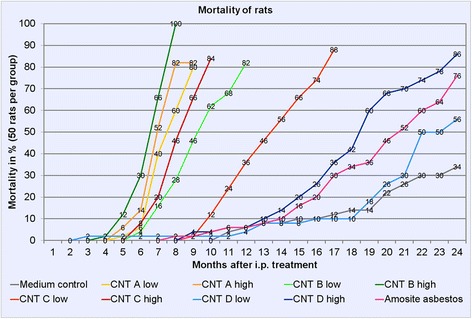
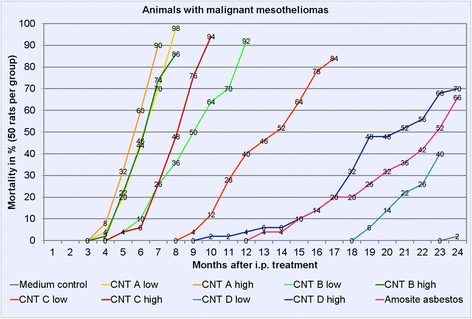
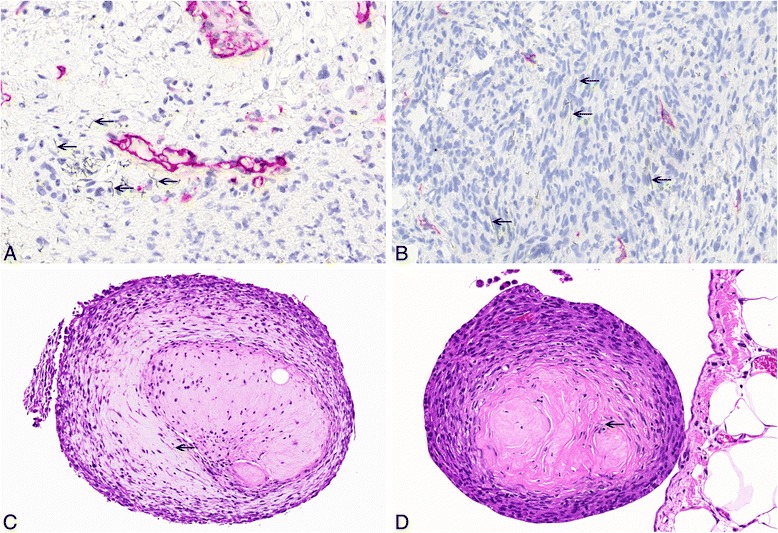
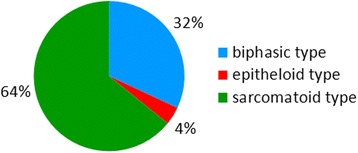
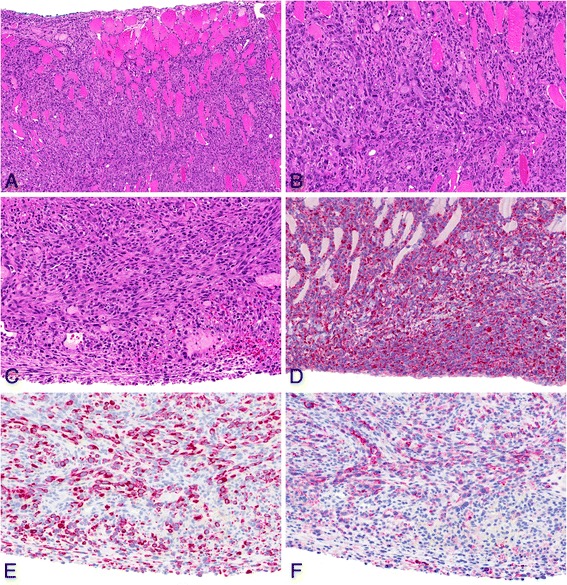
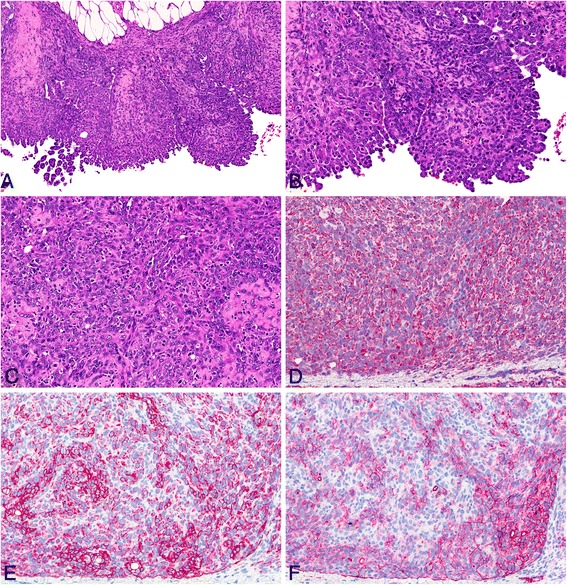
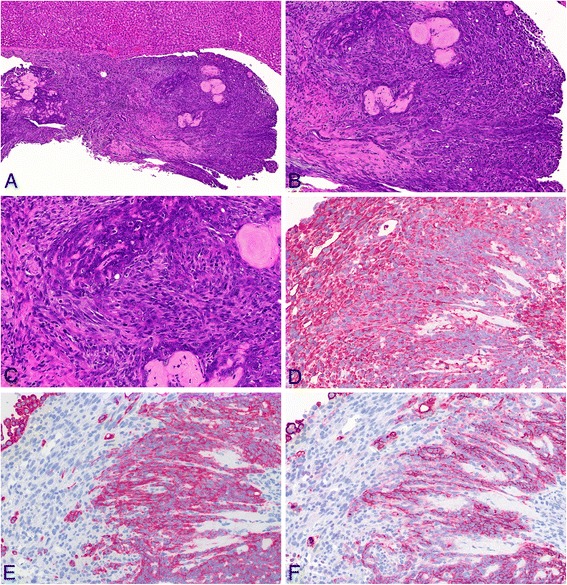
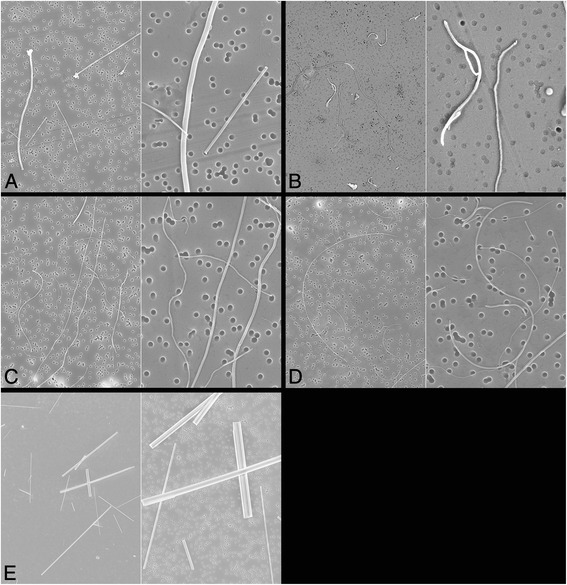
BACKGROUND: Biological effects of tailor-made multi-walled carbon nanotubes (MWCNTs) without functionalization were investigated in vivo in a two-year carcinogenicity study. In the past, intraperitoneal carcinogenicity studies in rats using biopersistent granular dusts had always been negative, whereas a number of such studies with different asbestos fibers had shown tumor induction. The aim of this study was to identify possible carcinogenic effects of MWCNTs. We compared induced tumors with asbestos-induced mesotheliomas and evaluated their relevance for humans by immunohistochemical methods. METHODS: A total of 500 male Wistar rats (50 per group) were treated once by intraperitoneal injection with 10⁹ or 5 × 10⁹ WHO carbon nanotubes of one of four different MWCNTs suspended in artificial lung medium, which was also used as negative control. Amosite asbestos (10⁸ WHO fibers) served as positive control. Morbid rats were sacrificed and necropsy comprising all organs was performed. Histopathological classification of tumors and, additionally, immunohistochemistry were conducted for podoplanin, pan-cytokeratin, and vimentin to compare induced tumors with malignant mesotheliomas occurring in humans. RESULTS: Treatments induced tumors in all dose groups, but incidences and times to tumor differed between groups. Most tumors were histologically and immunohistochemically classified as malignant mesotheliomas, revealing a predominantly superficial spread on the serosal surface of the abdominal cavity. Furthermore, most tumors showed invasion of peritoneal organs, especially the diaphragm. All tested MWCNT types caused mesotheliomas. We observed highest frequencies and earliest appearances after treatment with the rather straight MWCNT types A and B. In the MWCNT C groups, first appearances of morbid mesothelioma-bearing rats were only slightly later. Later during the two-year study, we found mesotheliomas also in rats treated with MWCNT D - the most curved type of nanotubes. Malignant mesotheliomas induced by intraperitoneal injection of different MWCNTs and of asbestos were histopathologically and immunohistochemically similar, also compared with mesotheliomas in man, suggesting similar pathogenesis. CONCLUSION: We showed a carcinogenic effect for all tested MWCNTs. Besides aspect ratio, curvature seems to be an important parameter influencing the carcinogenicity of MWCNTs.
Overview
The claims and statistics of this paper haven’t been checked yet.
Run the check — free, no account needed. It reads the open-access text and checks the sources it cites.
Integrity signals
Registry
Cites
Statistics
Figures
Verification
Claims the paper makes
The claims and statistics of this paper haven’t been checked yet.
Run the check — free, no account needed. It reads the open-access text and checks the sources it cites.
Claims other papers make about this one
Each is checked against this paper’s own text: does it say what the citing paper says it does?
In the citing paper
“In addition, this rigidity range is similar to the bounds of the critical rigidity value of 7”
From Macrophages bend long fibres with flexural rigidity lower than 3 mN·nm2 to avoid frustrated phagocytosis (2026) · cites this paper as [25]
In the citing paper
“Intraperitoneal injection of suspensions of different MWCNT materials in rodents that were kept for 24 months showed fibre-specific toxicity for critical fibres exhibiting different geometric mean diameters except thinnest with a diameter of 37”
From Macrophages bend long fibres with flexural rigidity lower than 3 mN·nm2 to avoid frustrated phagocytosis (2026) · cites this paper as [25]
Self-check
Percentages, sums and reported differences re-computed from the paper’s own numbers.
The self-check needs the paper’s full text.
Citations
Cites
Poland, C. A., Duffin, R., Kinloch, I., Maynard, A., Wallace, W. A. H., Seaton, A., Stone, V., Brown, S., MacNee, W., & Donaldson, K. (2008) · Nature Nanotechnology · doi:10.1038/nnano.2008.111 · Cited by 2,645
Histological Typing of Lung and Pleural Tumours
Travis, W. D., Colby, T. V., CORRIN, B., Shimosato, Y., & Brambilla, E. M. (1999) · Springer eBooks · doi:10.1007/978-3-642-60049-4 · Cited by 1,534
Donaldson, K., Aitken, R., Tran, L., Stone, V., Duffin, R., Forrest, G., & Alexander, A. (2006) · Toxicological Sciences · doi:10.1093/toxsci/kfj130 · Cited by 1,167
The new World Health Organization classification of lung tumours
Brambilla, E. M., Travis, W. D., Colby, T. V., CORRIN, B., & Shimosato, Y. (2001) · European Respiratory Journal · doi:10.1183/09031936.01.00275301 · Cited by 1,129
Donaldson, K., Murphy, F. A., Duffin, R., & Poland, C. A. (2010) · Particle and Fibre Toxicology · doi:10.1186/1743-8977-7-5 · Cited by 916
Takagi, A., Hirose, A., Nishimura, T., Fukumori, N., Ogata, A., Ohashi, N., Kitajima, S., & Kanno, J. (2008) · The Journal of Toxicological Sciences · doi:10.2131/jts.33.105 · Cited by 832
Nagai, H., Okazaki, Y., Chew, S. H., Misawa, N., Yamashita, Y., Akatsuka, S., Ishihara, T., Yamashita, K., Yoshikawa, Y., Yasui, H., et al. (2011) · Proceedings of the National Academy of Sciences · doi:10.1073/pnas.1110013108 · Cited by 535
Husain, A. N., Colby, T. V., Ordóǹez, N. G., Krausz, T. N., Attanoos, R. L., Beasley, M. B., Borczuk, A., Butnor, K. J., Cagle, P. T., Chirieac, L. R., et al. (2012) · Archives of Pathology & Laboratory Medicine · doi:10.5858/arpa.2012-0214-oa · Cited by 470
Pulmonary toxicity of carbon nanotubes and asbestos — Similarities and differences
Donaldson, K., Poland, C. A., Murphy, F. A., MacFarlane, M., Chernova, T., & Schinwald, A. (2013) · Advanced Drug Delivery Reviews · doi:10.1016/j.addr.2013.07.014 · Cited by 339
Husain, A. N., Colby, T. V., Ordóǹez, N. G., Krausz, T. N., Borczuk, A., Cagle, P. T., Chirieac, L. R., Churg, A., Galateau-Sallé, F., Gibbs, A. R., et al. (2009) · Archives of Pathology & Laboratory Medicine · doi:10.5858/133.8.1317 · Cited by 332
Research works printed but not linked: 2
- Recommendation from the Scientific Committee on Occupational Exposure Limits for man-made mineral fibres (MMMF) with no indication for carcinogenicity and not specified elsewhere SCOEL/SUM/88 2012, 2012: 1–17.
- Technical rules for hazardous substances 905. Technical Rules (TRGS) established by the Committee on Hazardous Substances (AGS). Verzeichnis krebserzeugender, erbgutverändernder oder fortpflanzungsgefährdender Stoffe German Federal Institute for Occupational Safety and Health (BAuA) 2014, 24: 3–4.
Cited by
Sorted by citations
Polydopamine-Based Multifunctional (Nano)materials for Cancer Therapy
Mrówczyński, R. (2017) · ACS Applied Materials & Interfaces · doi:10.1021/acsami.7b08392 · Cited by 266
Lung carcinogenicity of inhaled multi-walled carbon nanotube in rats
Kasai, T., Umeda, Y., Ohnishi, M., Mine, T., Kondo, H., Takeuchi, T., Matsumoto, M., & Fukushima, S. (2015) · Particle and Fibre Toxicology · doi:10.1186/s12989-016-0164-2 · Cited by 262
Singh, A. V., Laux, P., Luch, A., Sudrik, C., Wiehr, S., Wild, A., Santomauro, G., Bill, J., & Sitti, M. (2019) · Toxicology Mechanisms and Methods · doi:10.1080/15376516.2019.1566425 · Cited by 204
Electrical stimulation system based on electroactive biomaterials for bone tissue engineering
Zhang, X., Wang, T., Zhang, Z., Liu, H., Li, L., Wang, A., Ouyang, J., Xie, T., Zhang, L., Xue, J., et al. (2023) · Materials Today · doi:10.1016/j.mattod.2023.06.011 · Cited by 192
Poulsen, S. S., Jackson, P., Kling, K. I., Knudsen, K. B., Skaug, V., Kyjovska, Z. O., Thomsen, B. L., Clausen, P. A., Atluri, R., Berthing, T., et al. (2016) · Nanotoxicology · doi:10.1080/17435390.2016.1202351 · Cited by 186
Metadata
- Authors
- Rittinghausen, S., Hackbarth, A., Creutzenberg, O., Ernst, H., Heinrich, U., Leonhardt, A., & Schaudien, D.
- Affiliations
- Fraunhofer Institute for Toxicology and Experimental Medicine (DE)
- Leibniz Institute for Solid State and Materials Research (DE)
- Corresponding author
- Rittinghausen, Susanne
- Venue
- Particle and Fibre Toxicology
- Published
- 2014-11-20
- Volume
- 11
- Issue
- 1
- Pages
- 59-59
- ISSN
- 1743-8977 (ISSN-L)
- PMC
- PMC4243371
- OpenAlex
- W2152314477
- Cited by
- 193
- References
- 61
- Citations by year
- 2026: 5 · 2025: 8 · 2024: 16 · 2023: 15 · 2022: 16 · 2021: 21 · 2020: 25 · 2019: 17 · 2018: 24 · 2017: 22 · 2016: 13 · 2015: 11
- FWCI
- 12.28
- Type
- journal article
- Language
- en
- Open access
- gold
- doi.org
- Locations
- Particle and Fibre Toxicology (publishedVersion, cc-by)
- Europe PMC (PubMed Central) (publishedVersion, cc-by)
- PubMed Central (publishedVersion, cc-by)
- PubMed (publishedVersion)
- Fraunhofer-Publica (Fraunhofer-Gesellschaft) (submittedVersion, other-oa)
- Fraunhofer-Publica (Fraunhofer-Gesellschaft) (submittedVersion)
- Funders
- Bundesministerium für Bildung und Forschung (03X0109A)
- Topics
- Health Sciences › Medicine › Pulmonary and Respiratory Medicine › Occupational and environmental lung diseases
- Physical Sciences › Engineering › Biomedical Engineering › Graphene and Nanomaterials Applications
- Life Sciences › Biochemistry, Genetics and Molecular Biology › Cancer Research › Carcinogens and Genotoxicity Assessment
- Keywords
- multi-walled carbon nanotubes, carcinogenicity, malignant mesothelioma, intraperitoneal injection, asbestos, amosite, nanotube curvature, aspect ratio, podoplanin, pancytokeratin, vimentin, rats, nanotube toxicity
- MeSH terms
- Abdominal Neoplasms, Animals, Carcinogens, Dose-Response Relationship, Drug, Immunohistochemistry, Injections, Intraperitoneal, Male, Mesothelioma, Microscopy, Electron, Scanning, Neoplasm Invasiveness, Neoplasm Proteins, Particle Size, Serous Membrane, Carcinogenicity Tests, Survival Analysis, Rats, Wistar, Nanotubes, Carbon
About these checks
Registry, retraction, Cites and statistics results are computed, not judged, with one exception: a printed reference that no index lists is read once by a model before it counts as a citation error. Claims are extracted by a model and kept only when their quote appears verbatim in the text; each cited source is then checked, with a model’s help, for whether it says what the claim relies on. Those verdicts can be wrong — read the claim’s quote and the cited source before relying on one.
Statistics and arithmetic are recomputed, not judged.
Confidence bands are shown only for fields calibrated on our annotated test set. None is calibrated yet, so no band is shown.
What counts as a claim ›How we measure confidence ›How we check this ›
Are you an author, or do you see a problem with this page? Request a review
