

Refugees, asylum-seekers and undocumented migrants and the experience of parenthood: a synthesis of the qualitative literature
Open accessThe DOI matches its Crossref record; 171 of the 180 references it cites were found in a registry or an index; 61 of the 245 sources its claims cite were checked for support.
Abstract
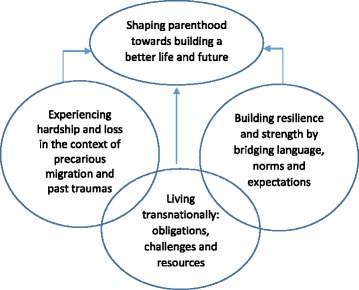
OBJECTIVE: To synthesize the recent qualitative literature and identify the integrative themes describing the parenthood experiences of refugees, asylum-seekers and undocumented migrants. METHODS: We searched seven online databases for the period January 2006 to February 2017. We included English and French published peer-reviewed articles and graduate-level dissertations, which qualitatively examined the parenthood experiences of refugees, asylum-seekers and undocumented migrants. We summarized study characteristics and performed a thematic analysis across the studies. RESULTS: One hundred thirty eight studies met inclusion criteria. All but three were conducted in high-income countries, mainly in the US. Migrants studied were mostly undocumented from Latin America and refugees from Sub-Saharan Africa. Almost all studies (93%) included mothers; about half (47%) included fathers; very few (5%) included extended family members. We identified three integrative themes: 1) experiencing hardship and/or loss in the context of precarious migration and past traumas; 2) building resilience and strength by bridging language, norms and expectations; and 3) living transnationally: obligations, challenges and resources. Each theme contributed to shaping the parenthood experience; the transnationalism theme intersected with the themes on hardship and loss and resilience and strength. CONCLUSION: More research is needed with fathers, extended family members, asylum-seekers and in the LMIC context. A transnational lens needs to be applied to programs, policies and future research for refugee, asylum-seeker and undocumented migrant parents. Addressing transnational concerns (family separation and reunification), acknowledging transnational resources, fostering a transnational family identity and conducting transnational and longitudinal studies are potentially pivotal approaches for this sub-population of parents.
Overview
CoChat Summary
TL;DR
This review synthesizes 138 qualitative studies on parenthood among refugees, asylum-seekers, and undocumented migrants, identifying three integrative themes: hardship/loss, resilience/strength, and transnational living. It argues that a transnational lens is needed for research, policy, and practice with these families.
Key findings
- The review identified three integrative themes: (1) experiencing hardship and loss in the context of precarious migration and past traumas; (2) building resilience and strength by bridging language, norms and expectations; and (3) living transnationally: obligations, challenges and resources.
- Of 138 included studies, 93% (n = 129) included mothers, 47% (n = 65) included fathers, and only 5% (n = 7) included extended family members; only 7% (n = 10) included asylum-seekers.
- Almost all studies were conducted in high-income countries, predominantly the United States (54%; n = 75), followed by Europe (15%; n = 20), Australia (14%; n = 19), and Canada (12%; n = 17); only three studies (2%) were in low- or middle-income countries.
- Migrants studied were mostly undocumented from Latin America and refugees from Sub-Saharan Africa; the transnationalism theme intersected with the hardship/loss and resilience/strength themes.
Methods
- Searched seven online databases (EMBASE, Medline, Global Health, CINAHL, PsycINFO, sociological abstracts, social work abstracts) for January 2006 to February 2017, limited to English and French peer-reviewed articles and graduate-level dissertations.
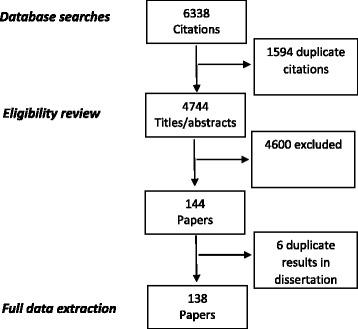
- Included empirical qualitative or mixed-methods studies with qualitative themes that examined the parenthood experiences of refugees, asylum-seekers, and/or undocumented migrants; 138 studies met inclusion criteria.
- Extracted study characteristics and original themes/sub-themes into an Excel database, then conducted thematic analysis to generate integrative themes; one reviewer screened all titles/abstracts, a second independently reviewed 10%, with 92% agreement.
Limitations
- The paper states that two-thirds of included studies also sampled other migrant groups and none reported results separately, making it difficult to isolate the experiences of refugees, asylum-seekers, and undocumented migrants; asylum-seekers, fathers, and extended family members were under-represented, and mother/father results were always combined.
- The paper states that it excluded other migrant groups (e.g., temporary agricultural or domestic workers, mail-order brides), that few studies were from LMICs, and that language restrictions and exclusion of grey literature may have missed relevant literature, particularly from LMICs.
- Evident from the text: methodological quality was not an exclusion criterion, so included studies were not formally appraised for quality.
Model-written summary. Check it against the paper before relying on it.
Integrity signals
Registry
Cites
Statistics
Figures
Verification
Claims the paper makes
42 Valid · 2 Not valid · 43 Not checked · 73 Own results and interpretations
The cited sources support only part of this claim — read each source’s verdict below.
In the paper
“Thirteen papers (9%) overlapped in their data sources and reported duplicate findings [38–50].”
§ Refugees, asylum-seekers and undocumented migrants and the experience of parenthood: a synthesis of the qualitative literature > Results
What the sources say
- Not checked — no full text of the sourcecites [38] Bacallao ML Smokowski PR Entre dos mundos/between two worlds: bicultural development in context J Prim Prev 2009 30 421 451 10.1007/s10935-009-0176-x 19408123 source
- Not checked — no full text of the sourcecites [39] Bacallao ML Smokowski PR The costs of getting ahead: Mexican family system changes after immigration Family Relations: An Interdisciplinary Journal of Applied Family Studies 2007 56 52 66 10.1111/j.1741-3729.2007.00439.x source
- Partly supportedcites [40] Lenette C 'I Am a widow, mother and Refugee': narratives of two refugee widows resettled to Australia J Refug Stud 2014 27 403 421 10.1093/jrs/fet045 sourceExperimental — accuracy not yet measured
The Context of Study section (page unavailable) says this article’s findings came from a larger ethnographic study and cites other publications using that research, supporting overlap in data sources. The copy does not establish that this article reported duplicate findings; the count of thirteen papers (9%) is a claim about the citing document’s set of papers, not a figure this individual paper verifies. (LLM, conf=0.82)
- Partly supportedcites [41] Lenette C Mistrust and refugee women who are lone parents in resettlement contexts Qual Soc Work 2015 14 119 134 10.1177/1473325013517924 sourceExperimental — accuracy not yet measured
The Study Overview says this paper draws on a four-woman study whose broader findings were reported in two other papers, supporting overlap in data sources. It does not establish that the findings were duplicates or substantiate the citing document’s total of thirteen papers (9%). (LLM, conf=0.84)
- Could not verifycites [42] Lenette C Brough M Cox L Everyday resilience: narratives of single refugee women with children Qualitative Social Work: Research and Practice 2013 12 637 653 10.1177/1473325012449684 sourceExperimental — accuracy not yet measured
The Study Overview (page unavailable) describes an ethnographic study of four women, and the Discussion reports its findings. Neither section establishes that its data or findings duplicate those of another paper; searches for overlapping data and prior reporting found no such passage. The paper also cannot establish the citing review’s total of thirteen papers (9%). (LLM, conf=0.72)
- Supportedcites [43] Tingvold L Hauff E Allen J Middelthon A-L Seeking balance between the past and the present: Vietnamese refugee parenting practices and adolescent well-being International Journal of Intercultural Relations 2012 36 563 574 10.1016/j.ijintrel.2012.03.004 22711948 PMC3375913 source
The citation is one of a range identifying papers the citing authors classified as having overlapping data and findings; the thirteen-paper count and 9% are the citing authors’ tally. This paper’s Participants section (§2.1; page unavailable) describes families drawn from an earlier refugee cohort, and its Results (§3.2.1; page unavailable) explicitly say an earlier Tingvold et al. paper discussed extended-family influence and that this study found a similar pattern. (LLM, conf=0.84)
- Partly supportedcites [44] Tingvold L Middelthon A-L Allen J Hauff E Parents and children only? Acculturation and the influence of extended family members among Vietnamese refugees International Journal of Intercultural Relations 2012 36 260 270 10.1016/j.ijintrel.2011.03.005 24510190 PMC3478776 sourceExperimental — accuracy not yet measured
The Methods, §2.1 (page unavailable), says this study selected families from a cohort also used in Vaage et al. (2009, 2010), supporting overlap in participants. It describes this study’s later qualitative interviews but does not establish that its findings duplicated those papers’ findings. The count of thirteen papers (9%) is the citing document’s aggregate, not a figure this individual paper establishes. (LLM, conf=0.84)
- Not checked — no full text of the sourcecites [45] Carranza M Value transmission among Salvadorian mothers and daughters: Marianismo and sexual morality Child & Adolescent Social Work Journal 2013 30 311 327 10.1007/s10560-012-0291-z source
- Not checked — no full text of the sourcecites [46] Carranza ME Building resilience and resistance against racism and discrimination among Salvadorian female youth in Canada Child & Family Social Work 2007 12 390 398 10.1111/j.1365-2206.2007.00492.x source
- Not checked — no full text of the sourcecites [47] Este DC Tachble A Fatherhood in the Canadian context: perceptions and experiences of Sudanese refugee men Sex Roles 2009 60 456 466 10.1007/s11199-008-9532-1 source
plain- Asserted: passes — The authors put it forward as true.
- Checkable: passes — It can be checked against evidence.
- Load-bearing: unclear — It is unclear whether the paper’s conclusions depend on it.
- Based: passes — The paper gives a reason why it holds.
The cited sources support only part of this claim — read each source’s verdict below.
In the paper
“adversely impacted their safety (since migrants would not seek help, including for family violence)”
§ Refugees, asylum-seekers and undocumented migrants and the experience of parenthood: a synthesis of the qualitative literature > Results > Refugees, asylum-seekers and undocumented migrants and parenthood experiences: Integrative themes
What the sources say
- Not checked — no full text of the sourcecites [72] Schmalzbauer L Gender on a new frontier: Mexican migration in the rural mountain west Gender & Society 2009 23 747 767 10.1177/0891243209346563 source
- Not checked — no full text of the sourcecites [94] Willen SS Plotting a moral trajectory, sans papiers: outlaw motherhood as inhabitable space of welcome Ethos 2014 42 84 100 10.1111/etho.12040 source
- Partly supportedcites [99] Kelly UA “I’m A mother first”: the influence of mothering in the decision-making processes of battered immigrant Latino women Research in Nursing & Health 2009 32 286 297 10.1002/nur.20327 19350663 PMC5936047 sourceExperimental — accuracy not yet measured
The Findings (‘Prioritizing My Children’) report that threats of deportation were especially powerful for undocumented women and that some avoided healthcare providers rather than risk separation from their children. The Discussion also describes heightened risks of disclosing intimate partner violence. The claim extends these findings about battered immigrant Latina mothers to migrants generally and makes help avoidance sound universal; neither extension is supported. Page numbers were not available in our copy. (LLM, conf=0.86)
hedgedstates a cause- Asserted: passes — The authors put it forward as true.
- Checkable: passes — It can be checked against evidence.
- Load-bearing: unclear — It is unclear whether the paper’s conclusions depend on it.
- Based: passes — The paper gives a reason why it holds.
The cited sources support only part of this claim — read each source’s verdict below.
In the paper
“In studies with refugee families, the main contributors to their sense of loss and to the adversity that they faced, were the forced nature of their migration and experiences of war, violence and the death of family members and friends”
§ Refugees, asylum-seekers and undocumented migrants and the experience of parenthood: a synthesis of the qualitative literature > Results > Refugees, asylum-seekers and undocumented migrants and parenthood experiences: Integrative themes
What the sources say
- Partly supportedcites [22] Kelly A Nel PW Nolte L Negotiating motherhood as a refugee: experiences of loss, love, survival and pain in the context of forced migration European Journal of Psychotherapy & Counselling 2016 18 252 270 10.1080/13642537.2016.1214160 sourceExperimental — accuracy not yet measured
The “Multiple stories of loss” and “Loss as a constant companion to parenting” sections describe refugee mothers losing family members through violence and experiencing separation and other losses associated with forced migration (page numbers unavailable). The copy does not identify deaths of friends as a source of loss or establish war experiences as a main contributor; the claim also generalizes findings about refugee mothers to refugee families more broadly. (LLM, conf=0.84)
- Not checked — no full text of the sourcecites [24] Stewart M Dennis C Kariwo M Kushner K Letourneau N Makumbe K Makwarimba E Shizha E Challenges faced by refugee new parents from Africa in Canada J Immigr Minor Health 2015 17 1146 1156 10.1007/s10903-014-0062-3 24989494 source
- Not checked — no full text of the sourcecites [53] Atwell R Gifford SM McDonald-Wilmsen B Resettled refugee families and their Children's futures: coherence, hope and support J Comp Fam Stud 2009 40 677 697 source
plainstates a cause- Asserted: passes — The authors put it forward as true.
- Checkable: passes — It can be checked against evidence.
- Load-bearing: passes — The paper’s conclusions depend on it.
- Based: passes — The paper gives a reason why it holds.
- Partly supported
The cited sources support only part of this claim — read each source’s verdict below.
In the paper
“Parents in several studies reported needing to prepare and support their children to deal with discrimination”
§ Refugees, asylum-seekers and undocumented migrants and the experience of parenthood: a synthesis of the qualitative literature > Results > Refugees, asylum-seekers and undocumented migrants and parenthood experiences: Integrative themes
What the sources say
- Partly supportedcites [22] Kelly A Nel PW Nolte L Negotiating motherhood as a refugee: experiences of loss, love, survival and pain in the context of forced migration European Journal of Psychotherapy & Counselling 2016 18 252 270 10.1080/13642537.2016.1214160 sourceExperimental — accuracy not yet measured
In “A shifting view of the self as a mother” (page unavailable), Charity describes her daughter experiencing racism, and the authors say Charity tries to reassure her that the problem lies with those holding racist views. This supports the need to support a child facing discrimination, but the paper does not report parents preparing children for it. (LLM, conf=0.85)
- Not checked — no full text of the sourcecites [24] Stewart M Dennis C Kariwo M Kushner K Letourneau N Makumbe K Makwarimba E Shizha E Challenges faced by refugee new parents from Africa in Canada J Immigr Minor Health 2015 17 1146 1156 10.1007/s10903-014-0062-3 24989494 source
- Not checked yetcites [25] Uchechukwu Ogbu H Brady B Kinlen L Parenting in direct provision: Parents' perspectives regarding stresses and supports Child Care in Practice 2014 20 256 269 10.1080/13575279.2013.875462 source
Checked before — its earlier verdict is held back until a new check runs.
plain- Asserted: passes — The authors put it forward as true.
- Checkable: passes — It can be checked against evidence.
- Load-bearing: unclear — It is unclear whether the paper’s conclusions depend on it.
- Based: passes — The paper gives a reason why it holds.
- Partly supported
The sources with a verdict support this claim; the rest weren’t checked yet, have no full text we could read, or their verdicts aren’t rated yet.
In the paper
“Some refugee mothers, including unaccompanied minors, experienced parenthood as the result of rape”
§ Refugees, asylum-seekers and undocumented migrants and the experience of parenthood: a synthesis of the qualitative literature > Results > Refugees, asylum-seekers and undocumented migrants and parenthood experiences: Integrative themes
What the sources say
- Not checked — no full text of the sourcecites [81] Vervliet M Mol JD Broekaert E Derluyn I That I live, that's because of her': intersectionality as framework for unaccompanied refugee mothers Br J Soc Work 2014 44 2023 2041 10.1093/bjsw/bct060 source
- Supportedcites [82] Mantovani N Thomas H Choosing motherhood: the complexities of pregnancy decision-making among young black women 'looked after' by the state Midwifery 2014 30 e72 e78 10.1016/j.midw.2013.10.015 24262702 source
The Participants section reports that 11 participants arrived in Britain as unaccompanied minors, nine of whom were asylum seekers, and that eight participants conceived as a result of rape. Reproductive experiences specifies that seven of those rapes occurred amid ethnic conflicts in the participants’ homelands. The paper describes these mothers as asylum seekers or migrants rather than establishing refugee status for each of them, but supports the substance of the claim. (LLM, conf=0.88)
plainstates a cause- Asserted: passes — The authors put it forward as true.
- Checkable: passes — It can be checked against evidence.
- Load-bearing: unclear — It is unclear whether the paper’s conclusions depend on it.
- Based: passes — The paper gives a reason why it holds.
88 more claims · 23 with their cited sources checked
Create a free account to see all 160 claims and to verify the 19 references still open.
- It may state two separate claims as one. 61
- Probably not a substantial claim. 12
Claims other papers make about this one
Each is checked against this paper’s own text: does it say what the citing paper says it does?
The cited source says what the claim attributes to it.
In the citing paper
“Migrant families stay connected to their countries of origin and their transnational ties may contribute to their hardships and/or may be a source of strength and resiliency [1].”
From Transnationalism and care of migrant families during pregnancy, postpartum and early-childhood: an integrative review (2020) · cites this paper as [1]
The cited source says what the claim attributes to it.
In the citing paper
“The review findings are consistent with other research that shows migrant families maintain emotional, social and economic ties with family, and also use health services and receive support from the home country [1].”
From Transnationalism and care of migrant families during pregnancy, postpartum and early-childhood: an integrative review (2020) · cites this paper as [1]
The cited source says what the claim attributes to it.
In the citing paper
“Parenting challenges include disciplining and socializing children as they adjust to a new cultural context [9].”
From La Maison Bleue: Strengthening resilience among migrant mothers living in Montreal, Canada (2019) · cites this paper as [9]
The cited source says what the claim attributes to it.
In the citing paper
“Similar to previous studies, participants reported language barriers, isolation, a loss of support for child-rearing, and cultural and environmental stresses [8–10, 16].”
From La Maison Bleue: Strengthening resilience among migrant mothers living in Montreal, Canada (2019) · cites this paper as [9]
1 more claim about this paper
Create a free account to see every claim other papers make about this one.
Citations
Cites
Using thematic analysis in psychology
Braun, V., & Clarke, V. (2006) · Qualitative Research in Psychology · doi:10.1191/1478088706qp063oa · Cited by 194,414
Tong, A., Sainsbury, P., & Craig, J. (2007) · International Journal for Quality in Health Care · doi:10.1093/intqhc/mzm042 · Cited by 42,509
Methods for the thematic synthesis of qualitative research in systematic reviews
Thomas, J., & Harden, A. (2008) · BMC Medical Research Methodology · doi:10.1186/1471-2288-8-45 · Cited by 9,312
Conceptualizing Simultaneity: A Transnational Social Field Perspective on Society
Levitt, P., & Schiller, N. G. (2004) · International Migration Review · doi:10.1111/j.1747-7379.2004.tb00227.x · Cited by 2,787 · cited 2×
“In order to develop more relevant policies and practices, including in healthcare, a transnational lens is needed [171, 179, 180].”
BackgroundSynthesising qualitative and quantitative evidence: A review of possible methods
Dixon-Woods, M., Agarwal, S., Jones, D., Young, B., & Sutton, A. (2005) · Journal of Health Services Research & Policy · doi:10.1177/135581960501000110 · Cited by 2,132 · cited 3×
“A coding framework was developed iteratively by incorporating the content and essence of the original study themes into codes that represented the parenthood experiences from across the studies [26, 28].”
BackgroundMethodTransnationalism: A New Analytic Framework for Understanding Migration
SCHILLER, N. G., BASCH, L., & BLANC‐SZANTON, C. (1992) · Annals of the New York Academy of Sciences · doi:10.1111/j.1749-6632.1992.tb33484.x · Cited by 1,851
Do international migration and remittances reduce poverty in developing countries?
Adams, R. H., & Page, J. (2005) · World Development · doi:10.1016/j.worlddev.2005.05.004 · Cited by 1,448
Conceptualizing Simultaneity : A Transnational Social Field Perspective on Society
Schiller, P. L. A. N. G. (2007) · Cited by 1,365
Transnational Migration Studies: Past Developments and Future Trends
Levitt, P., & Jaworsky, B. N. (2007) · Annual Review of Sociology · doi:10.1146/annurev.soc.33.040406.131816 · Cited by 1,283
THEMATIC ANALYSIS: A CRITICAL REVIEW OF ITS PROCESS AND EVALUATION
Ibrahim, M. (2012) · Cited by 1,266
Research works printed but not linked: 21
- Jimeno C Martinovic J Gauthier M Bouchard H Urquhart D Immigrant, children, youth and families: a qualitative analysis of the challenges of integration 2010 The Social Planning Council of Ottawa Ottawa
- European network of National Observatories on childhood. Public policies supporting positive parenthood: new policy perspectives, the proceedings of the ChildONEurope seminar on positive parenthood, Florence, Istitutodegli Innocenti, 23 May 2013. Istituto degli Innocenti di Firenze; 2014.
- Oxford University Press: English Oxford living dictionaries. https://en.oxforddictionaries.com/definition/parenthood. 2017. Accessed 26 June 2017.
- Fraser N Guilt trippin' and the mothering of black boys in Toronto 2012 Toronto York University
- Peregrine Antalis EJ Belonging in the margins: mothering as citizenship among resettled refugees in Chicago, Illinois 2015 Chicago University of Illinois at Chicago
- Betts V Transnational gender, sexuality, and identity construction: ambivalent subjectivities of Somali refugee women in the GTA 2011 Guelph, Ontario, Canada University of Guelph
- De Los Rios C Gender and identity in a community of working class Latina mothers 2008 College Park, Maryland University of Maryland
- Davies DB “I swam across all that” an ethnography of Cambodian women's strength 2007 Toronto York University
- Abrego LJ Menjivar C Immigrant Latina mothers as targets of legal violence Int J Sociol Fam 2011 37 9 26
- Smith K Families in transition: the experiences of first-generation west-Indian immigrants in New York city schools 2012 New York Binghamton University
- Su DN Educational resources of Cambodian American adolescents: the role of "hidden capital" 2011 Santa Cruz California University of California
- Perez A Understanding attitudes about education within two cultural contexts: comparing the perceptions and expectations of Mexican mothers in the greater Los Angeles area to their cohort in Mexico 2010 Thousand Oaks, California California Lutheran University
- Teniente VE Latina immigrant mothers and daughters negotiating pathways to higher education 2015 San Antonio, Texas The University of Texas at San Antonio
- Jonsdottir I A study of expectations for school and education of Kurdish parents living in northern Iraq, Norway, and native Norwegian parents 2012 New York St. John's University
- Reyes L Jr Immigrant parents: experience in the college decision process of their children 2014 Las Cruces New Mexico State University
- Baergen H Language losing and language keeping in Spanish-speaking families in Ontario: the Mothers' perspectives 2007 Winnipeg, Manitoba University of Manitoba
- Moya SL Mexican immigrant mothers and the promotion of cultural values in the second generation 2008 Tempe, Arizona Arizona State University
- de Ruiz JN Voice in the mother-daughter relationship: a renegotiation of bicultural identity in Mexican American women 2010 Wheaton College Wheaton, Illinois
- Lai P Impact of migration and trauma on communication in Vietnamese families 2009 San Francisco, California Alliant International University
- Sanchez M Counter-story of an undocumented Mexican immigrant mother of a mixed-legal status family: a source of empowerment for her children 2013 Davis, California University of California Davis
- Burgess A. Interconnectedness: the grandparents role in childbearing and parenting. International Journal of Childbirth Education. 2015;30
Cited by
Mukumbang, F. C., Ambe, A. N., & Adebiyi, B. O. (2020) · International Journal for Equity in Health · doi:10.1186/s12939-020-01259-4 · Cited by 188
Parenting Interventions for Refugees and Forcibly Displaced Families: A Systematic Review
Gillespie, S., Banegas, J. M., Maxwell, J., Chan, A. C. Y., Darawshy, N. A., Wasil, A. R., Marsalis, S. E., & Gewirtz, A. H. (2022) · Clinical Child and Family Psychology Review · doi:10.1007/s10567-021-00375-z · Cited by 93
“Caregivers who have been resettled in high-income countries (HICs) may continue to face limited access to resources and social support, while also navigating differing parenting norms and family roles in a new cultural context (Merry et al., 2017; Osman et al., 2016).”
BackgroundA qualitative study on resilience in adult refugees in Germany
Walther, L., Amann, J., Flick, U., Ta, T. M. T., Bajbouj, M., & Hahn, E. W. (2021) · BMC Public Health · doi:10.1186/s12889-021-10817-6 · Cited by 89
“Although migration holds particular challenges for parents, such as having to manage childrearing alongside integration and facing acculturation-related intergenerational conflicts [55], we found that children can promote positive adaptation in refugee parents.”
BackgroundResultVos, S. R., Clark‐Ginsberg, A., Puente-Durán, S., Salas‐Wright, C. P., Duque, M., Herrera, I. C., Maldonado‐Molina, M. M., Castillo, M. N., Lee, T. K., García, M. F., et al. (2021) · New Directions for Child and Adolescent Development · doi:10.1002/cad.20397 · Cited by 81
Are asylum seekers, refugees and foreign migrants considered in the COVID-19 vaccine discourse?
Mukumbang, F. C. (2020) · BMJ Global Health · doi:10.1136/bmjgh-2020-004085 · Cited by 52
La Maison Bleue: Strengthening resilience among migrant mothers living in Montreal, Canada
Aubé, T., Pisanu, S., & Merry, L. (2019) · PLOS ONE · doi:10.1371/journal.pone.0220107 · Cited by 56
Self-citationMaternal and Child Health During Forced Displacement
Hirani, S. A. A., & Richter, S. (2019) · Journal of Nursing Scholarship · doi:10.1111/jnu.12460 · Cited by 48
Cun, A. (2019) · Early Childhood Education Journal · doi:10.1007/s10643-019-00983-z · Cited by 42
Parenting in times of refuge: A qualitative investigation
Eltanamly, H., Leijten, P. H. O., van Rooij, F. B., & Overbeek, G. J. (2021) · Family Process · doi:10.1111/famp.12717 · Cited by 50
“Sudden increases in financial burdens can trigger role strain, where parents view themselves as inadequate and incapable of living up to their previously identified parental roles (Goode, 1960; Merry et al., 2017), which is associated with less nurturing and engaged parenting (Berryhill, 2016).”
BackgroundAccess to COVID-19 Vaccination during the Pandemic in the Informal Settlements of Rome
Bentivegna, E., Meo, S. D., Carriero, A., Capriotti, N., Barbieri, A., & Martelletti, P. (2022) · International Journal of Environmental Research and Public Health · doi:10.3390/ijerph19020719 · Cited by 34
“Furthermore, pre-existing social inequalities and vulnerabilities are exacerbated in times of emergency [9,29].”
BackgroundMangrio, E., Carlson, E., & Zdravkovic, S. (2019) · Scandinavian Journal of Public Health · doi:10.1177/1403494819893535 · Cited by 46
Families on hold: How the context of an asylum centre affects parenting experiences
Lietaert, I., Verhaeghe, F., & Derluyn, I. (2019) · Child & Family Social Work · doi:10.1111/cfs.12706 · Cited by 41
Facebook groups as transnational counter public sphere for diasporic communities
Mpofu, P., Asak, M. O., & Salawu, A. (2022) · Cogent Arts and Humanities · doi:10.1080/23311983.2022.2027598 · Cited by 40
“Journeying to foreign lands often brings high hopes and excitement, however, the process of migration, living in diaspora, as well as connecting with fellow migrants and the homeland may come with agonising trials, hurdles and disillusionments (Magalhaes et al., 2010; Merry et al., 2017).”
BackgroundMprah, A., Haith‐Cooper, M., Duda‐Mikulin, E. A., & Meddings, F. (2023) · BMC Pregnancy and Childbirth · doi:10.1186/s12884-023-05568-8 · Cited by 32
“Hence, the need for greater understanding of the experiences of refugee, asylum-seeking and undocumented migrant families to inform health, social services, practices and policies [25].”
BackgroundEltanamly, H., Leijten, P. H. O., van Roekel, E., Mouton, B., Pluess, M., & Overbeek, G. J. (2022) · Child Development · doi:10.1111/cdev.13848 · Cited by 35
Antony‐Newman, M., & Niyozov, S. (2023) · Canadian Journal of Education / Revue canadienne de l éducation · doi:10.53967/cje-rce.5859 · Cited by 44
“Secondly, due to the nature of international migration, refugees often belong to the most vulnerable and marginalized groups of students due to higher levels of poverty (UNHCR, 2017), language barriers (Abu-Ghaida et al., 2021), and unrecognized immigration status (Merry et al., 2017).”
Gatwiri, K., & Anderson, L. (2020) · Child & Family Social Work · doi:10.1111/cfs.12799 · Cited by 25
Merry, L., Villadsen, S. F., Sicard, V., & Lewis-Hibbert, N. (2020) · BMC Health Services Research · doi:10.1186/s12913-020-05632-5 · Cited by 22
“The review findings are consistent with other research that shows migrant families maintain emotional, social and economic ties with family, and also use health services and receive support from the home country [1].”
BackgroundResultInfluentialSelf-citationMobile phones, informal markets and young urban entrepreneurs in Zimbabwe: An Exploratory Study
Tsarwe, S., & Mare, A. (2020) · Area Development and Policy · doi:10.1080/23792949.2020.1790021 · Cited by 26
Johnsen, H. L., Christensen, U., Juhl, M., & Villadsen, S. F. (2020) · International Journal of Environmental Research and Public Health · doi:10.3390/ijerph17031040 · Cited by 15
“A recent synthesis of qualitative literature by Merry and colleagues found that during parenthood immigrant’s experiences are impacted by a continuing and pervasive transnational dimension [42].”
BackgroundFathering Practices in Sweden During the COVID-19: Experiences of Syrian Refugee Fathers
Wissö, T., & Bäck-Wiklund, M. (2021) · Frontiers in Sociology · doi:10.3389/fsoc.2021.721881 · Cited by 16
“An international review of 138 qualitative studies (conducted between 2006 and 2017) regarding parenthood experiences of refugees, asylum-seekers and undocumented migrants revealed that, in almost all the studies, migrant parents described experiences of having to manage different languages, traditions, beliefs and pr…”
BackgroundDestitution in pregnancy: forced migrant women's lived experiences
Ellul, R., McCarthy, R., & Haith‐Cooper, M. (2020) · British Journal of Midwifery · doi:10.12968/bjom.2020.28.11.778 · Cited by 15
Rogers, H. J., Homer, C., & Henry, A. (2023) · BMC Health Services Research · doi:10.1186/s12913-023-10194-3 · Cited by 17
“Previous studies have recommended the need to explore migrant partners experiences [5, 51, 64, 65].”
BackgroundLearning About the Literacy Practices of Mothers with Refugee Backgrounds
Cun, A. (2022) · Urban Education · doi:10.1177/00420859221104759 · Cited by 19
“Second, I review the relevant literature on the literacy practices of students and parents with refugee backgrounds, as this helps interpret the ways in expectations about parenting ” (Merry et al., 2017, p. 83).”
Pérez‐Aronsson, A., Warner, G., Sarkadi, A., & Osman, F. (2019) · Frontiers in Psychiatry · doi:10.3389/fpsyt.2019.00789 · Cited by 16
“Although supportive relationships within the family were described as important in the present study, it seems that, when discussing children’s mental health, there is less emphasis on transnational ties, whereby links are maintained with the home country, than reported in previous studies with refugee parents (19).”
BackgroundResultInfluentialEltanamly, H., Leijten, P. H. O., van Roekel, E., & Overbeek, G. J. (2023) · Journal of Family Psychology · doi:10.1037/fam0001059 · Cited by 19
Refugee parents’ experiences of coming to Sweden: A qualitative study
Västhagen, M., Özdemir, M., Ghaderi, A., Kimber, B., Giles, C. J., Özdemir, S. B., Oppedal, B., & Enebrink, P. (2022) · International Journal of Intercultural Relations · doi:10.1016/j.ijintrel.2022.08.010 · Cited by 25
‘Permanent Temporariness’ as a Critical Lens: A Framework for Social Work with Forced Migrants
Birger, L. (2023) · The British Journal of Social Work · doi:10.1093/bjsw/bcad260 · Cited by 15
Parenting and mental health in protracted refugee situations: A systematic review
Khraisha, Q., Abujaber, N., Carpenter, S., Crossen, R. J., Kappenberg, J., Kelly, R., Murphy, C., Norton, O., Put, S. M., Schnoebelen, K., et al. (2024) · Comprehensive Psychiatry · doi:10.1016/j.comppsych.2024.152536 · Cited by 17
Aikins, A. D., Sanuade, O. A., Baatiema, L., Adjaye-Gbewonyo, K., Addo, J., & Agyemang, C. O. (2023) · PLoS ONE · doi:10.1371/journal.pone.0277325 · Cited by 15
“A limited set of studies and reviews report multiple barriers to healthcare for African communities in Europe, North America and other countries in the Global North, including inequitable access to healthcare services, language barriers in service delivery, and (conscious and unconscious) biases in diagnostic and trea…”
BackgroundKhraisha, Q., Sawalha, L., Hadfield, K., Al‐Soleiti, M., Dajani, R. B., & Panter‐Brick, C. (2023) · Social Science & Medicine · doi:10.1016/j.socscimed.2023.116452 · Cited by 12
van Beurden, S. L., & de Haan, M. (2019) · Learning Culture and Social Interaction · doi:10.1016/j.lcsi.2018.12.003 · Cited by 12
Refugee caregivers: Associations between psychosocial wellbeing and parenting in Uganda
Meinhart, M., Mangen, P. O., Hermosilla, S., Cohen, F., Agaba, G. S., Kajungu, R., Knox, J., Obalim, G., & Stark, L. (2023) · Stress and Health · doi:10.1002/smi.3236 · Cited by 13
Bulford, E., Fogarty, A., Giallo, R., Brown, S., Szwarc, J., & Riggs, E. (2022) · International Journal of Environmental Research and Public Health · doi:10.3390/ijerph19116940 · Cited by 11
“In general, however, fathers are underrepresented in research exploring the experiences of parents of refugee background [30].”
BackgroundEscrig-Piñol, A., Gastaldo, D., Cortinois, A. A., & McLaughlin, J. (2023) · Social Sciences · doi:10.3390/socsci12090523 · Cited by 12
Building resilience in transcultural adults: investigating the effect of a strength-based programme
Khawaja, N. G., Kamo, R., & Ramirez, E. (2021) · Australian Psychologist · doi:10.1080/00050067.2021.1919489 · Cited by 7
“Further, their strategies to use spirituality also strengthened (Betancourt & Khan, 2008; Merry et al., 2017).”
BackgroundInfluentialDigital literacy practices and identities of two children with refugee backgrounds
Cun, A. (2022) · Bilingual Research Journal · doi:10.1080/15235882.2022.2105442 · Cited by 11
“…families with refugee backgrounds experienced challenges during their resettlement in a host country, primarily due to the cultural and educational system differences between their home countries and the host country (Isik-Ercan, 2012; McBrien, 2005; Merry, Pelaez, & Edwards, 2017; Snell, 2018).”
BackgroundRaising children in the UK: the screams of Zimbabwean migrant parents
Machaka, R. (2023) · Journal of Ethnic and Migration Studies · doi:10.1080/1369183x.2023.2219854 · Cited by 10
“This study exposes the silence that transnational responsibilities in the form of remit-ting money to Zimbabwe and stresses related to migrant life a ff ect parents ’ experiences (Merry, Pelaez, and Edwards 2017; Mugadza et al. 2019).”
BackgroundMerry, L. A., Kevork, M., & Hille, J. (2023) · Wellbeing Space and Society · doi:10.1016/j.wss.2023.100170 · Cited by 12
Self-citationMerry, L. A., Hanley, J., Ruiz‐Casares, M., Archambault, I., & Mogere, D. M. (2019) · BMJ Open · doi:10.1136/bmjopen-2019-029074 · Cited by 10
“A recent qualitative literature review describing the parenthood experiences of refugees, asylum seekers and undocumented migrants, however, suggests families may receive transnational family support in multiple ways.(22) This includes receiving parenting advice on a range of topics (nutrition, socialisation and disci…”
InfluentialSelf-citationParental care in trajectories of forced migration: Ruptures and changing conditions for family life
Shapiro, D. K. (2022) · Child & Family Social Work · doi:10.1111/cfs.12914 · Cited by 10
Mhamied, A. A., Bogossian, A., & Hanley, J. (2023) · The Journal of Men s Studies · doi:10.1177/10608265231181789 · Cited by 10
“While the literature on the impact of migration and resettlement on refugee families is extensive, there is still a paucity of literature specifically dedicated to immigrant and refugee fathers (Merry et al., 2017; Shafer & Bellamy, 2016; Shapiro & Krysik, 2010).”
BackgroundSocial and Curricular Inclusion in Refugee Education: Critical Approaches to Education Advocacy
Greene, A. M. A., Espiritu, Y. L., & Nyamangah, D. (2023) · Social Inclusion · doi:10.17645/si.v11i2.6376 · Cited by 15
Migrant Burmese women living in southern Thailand and motherhood: An ethnographic study
Phanwichatkul, T., Burns, E., Liamputtong, P., & Schmied, V. A. (2019) · Nursing and Health Sciences · doi:10.1111/nhs.12613 · Cited by 8
Rousou, E., Apostolara, P., Velonaki, V. S., Papadopoulos, I., Kalokairinou, A., Sakellaraki, O., Dudau, V., Kuckert‐Wöstheinrich, A., Lazzarino, R., Mauceri, M., et al. (2024) · Journal of Migration and Health · doi:10.1016/j.jmh.2024.100294 · Cited by 15
Parenting in exile: Narratives of evolving parenting practices in transnational contact zones
Bergset, K. (2020) · Theory & Psychology · doi:10.1177/0959354320920940 · Cited by 5
“Bakhtin’s notions of contact zones, multivoicedness, and ideological becoming are used as analytical tools because they enlarge our understanding of parenting in exile (for an empirical overview, see Merry et al., 2017; Salami et al., 2017).”
‘This is not what I want for my children’: agency and parenting in Danish asylum centres
Barghadouch, A., Skovdal, M., Nørredam, M. L., & Vitus, K. (2022) · European Journal of Public Health · doi:10.1093/eurpub/ckac036 · Cited by 5
Oyekale, A. S. (2022) · Sustainability · doi:10.3390/su141610270 · Cited by 5
Father engagement in Syrian Asylum-Seeker families with children on the autistic spectrum
Avcı, Ö. H., & Zencir, T. (2023) · Research in Autism · doi:10.1016/j.rasd.2023.102226 · Cited by 5
Haar, K., El‐Khani, A., Hawng, H., Brang, T. T., Mar, W., Lynn, Z. K. K., & Maalouf, W. E. (2025) · Healthcare · doi:10.3390/healthcare13091090 · Cited by 6
“This could be due to the combination of stress caregivers experience themselves or to the novel needs their children are presenting and to the lack of pre-existing strategies or knowledge on how they might face them [8,9].”
Family life under strain: the impact of forced migration on refugee parenting in reception centers
Johansen, J. D., Varvin, S., & Sagbakken, M. (2025) · Frontiers in Psychology · doi:10.3389/fpsyg.2025.1554692 · Cited by 11
Mayer, Y. (2022) · Children & Society · doi:10.1111/chso.12657 · Cited by 4
International Displacement and Family Stress in Latin America
Weitzman, A., Huss, K., Blanton, M., Swindle, J., Camacho, G. B., & Robles, A. (2023) · Journal of Family Issues · doi:10.1177/0192513x231151291 · Cited by 6
Parenting and Education: The Example of Refugee Parents in Greece
Sarikoudi, G., & Αποστολίδου, Ά. (2020) · Refuge Canada s Journal on Refuge · doi:10.25071/1920-7336.40629 · Cited by 4
Transnationalism and parenthood in a new country
Merry, L., & Edwards, N. (2019) · International Journal of Migration, Health and Social Care · doi:10.1108/ijmhsc-02-2019-0023 · Cited by 3
Self-citationSafety at the Heart of Well-Being of Migrant-Background Children in Canada
Gervais, C., Daoust-Zidane, N., Thomson-Sweeny, J., Campeau, M., & Côté, I. (2025) · Child Indicators Research · doi:10.1007/s12187-025-10265-3 · Cited by 4
“In sum, the findings illustrate experiences of safety across all aspects of the children’s lives, perfectly aligned with the goal of many parents’ decision to migrate: to raise their children within a secure and protected environment (Merry et al., 2017; Perreira et al., 2006).”
Parviainen, H., Lämsä, R., Kiviruusu, O. H., & Santalahti, P. (2022) · Health & Place · doi:10.1016/j.healthplace.2022.102823 · Cited by 10
Wu, Y. M., Kreitewolf, J., & Kronick, R. (2023) · International Journal of Environmental Research and Public Health · doi:10.3390/ijerph20227076 · Cited by 6
The Struggle for Survival of Syrian Immigrant Single Mothers: A Qualitative Study in Türkiye
Katmer, A. N., Tapan, M. G., & DEMİREL, A. C. (2025) · Child & Family Social Work · doi:10.1111/cfs.70049 · Cited by 3
Infertility in Muslim Refugees: A Review of the Literature
Reaves, S. (2019) · Journal of Refugee & Global Health · doi:10.18297/rgh/vol2/iss2/9 · Cited by 4
“Refugees may have traumatic histories, such as experiences of rape or other sexual abuse, which may pose a challenge for health providers [5,37,38].”
BackgroundInfluentialZiaian, T., Puvimanasinghe, T. S., Miller, E., Augoustinos, M., Esterman, A., Baddeley, M. C., Arthur, N. M., de Anstiss, H., Tsoulis, E., Stewart-Jones, T., et al. (2023) · PLoS ONE · doi:10.1371/journal.pone.0285023 · Cited by 3
‘Here, parents become nothing’: ‘Unparenting’ in Israel's policies toward Eritrean refugees
Birger, L., Kedem, O., & Nadan, Y. (2022) · Child & Family Social Work · doi:10.1111/cfs.12907 · Cited by 4
Gender, culture and belonging in the diasporic space : Zimbabwean women in Britain
Chikwira, L. (2020) · Cited by 3
Chan, C. D., Rodriguez, C. S., & Jones, C. T. (2025) · Journal of Marital and Family Therapy · doi:10.1111/jmft.70047 · Cited by 2
“…families often serve as crucial sources of connection (Utr ž an and Northwood 2017; Utr ž an and Wieling 2020), yet parents can struggle with meeting the complex needs of their children due to other occupational, health care, and housing stressors (Báez et al. 2024; Merry et al. 2017).”
InfluentialA Phenomenological Inquiry of Asylum Seekers’ Migration Trauma and Adjustment in the United States
Attia, M., Gummaluri, S., Decker, E., Fulton-Delong, B., Deshpande, M., & Tang, S. (2024) · International Journal for the Advancement of Counselling · doi:10.1007/s10447-024-09581-0 · Cited by 3
“…either barriers or facilitators that may impact the post-migration adjustment of asylum seekers concerning a variety of factors such as source of support, fear of deportation for undocumented migrants, fear of separation from children, and close connections within the family (Merry et al., 2017).”
InfluentialLife Stories of Syrian Refugees: A Qualitative Study
Issari, P., Christopoulou, A., & Galika, A. (2021) · Psychology · doi:10.4236/psych.2021.1210097 · Cited by 6
“The value of the family and of parenthood—as well as sacrifices and self-denial in order to provide a better life for them—seemed to comprise powerful motives, and sources of empowerment and resilience in all of the situations throughout their journey for a better future (Crawley et al., 2016; Shneikat & Ryan, 2017; M…”
BackgroundCun, A., & Zhao, S. (2024) · Early Childhood Education Journal · doi:10.1007/s10643-024-01658-0 · Cited by 2
Aiyar, R., Due, C., Taylor, A. M., & Sawyer, A. C. P. (2025) · Journal of Family Studies · doi:10.1080/13229400.2025.2500052 · Cited by 1
“Similar to emerging parenthood research with migrant groups from various cultural backgrounds (Aubé et al., 2019; Merry et al., 2017; Russo et al., 2015), mothers in this study drew from their internal perseverance, existing skills, and external resources including family, community, and children,…”
Cun, A. (2025) · Journal of Language Identity & Education · doi:10.1080/15348458.2025.2501727 · Cited by 2
“Previous studies have shown that individuals, especially parents from immigrant and refugee backgrounds, need time to figure out “how systems (education, welfare, social services, health, and child protection) [work]” (Merry et al., 2017, p. 83) in the United States.”
Chaoilte, A. N., Clemente, N. S., Lilygreen, R., Ward, A., Longley, N., & Eisen, S. (2025) · BMJ Public Health · doi:10.1136/bmjph-2024-001939 · Cited by 1
Allport, T., Musse, S., Ingram, J. C., Feder, G. S., Osman, F., & Redwood, S. (2026) · Global Health Action · doi:10.1080/16549716.2026.2731693 · Cited by 1
van der Linden, I., van Kesteren, N. M. C., de Jong, P., & Pannebakker, F. D. (2020) · JGZ Tijdschrift voor jeugdgezondheidszorg · doi:10.1007/s12452-020-00224-5 · Cited by 1
Spates, K. S., Evans, N. M., Smith, J. J., Gairola, R., Jindra, R., Guttoo, P., Kabasele, C. M., Kirkland, C., & Aminu, P. (2024) · International Journal of Migration Health and Social Care · doi:10.1108/ijmhsc-08-2022-0087 · Cited by 2
Alözkan, C., Cuijpers, P. J., Dawson, K. S., Mittendorfer‐Rutz, E., Akhtar, A., Bryant, R. A., & Sijbrandij, M. (2024) · Cambridge Prisms Global Mental Health · doi:10.1017/gmh.2024.93 · Cited by 3
“These conflicts with families are anticipated considering the previous studies which have consistently highlighted challenges in parenting following resettlement in a new country (Merry et al., 2017; Pangas et al., 2019; Västhagen et al., 2022).”
Ames, H. M. R., Hestevik, C. H., Jardim, P. S. J., Larsen, M. S., Langøien, L. J., Bergsund, H. B., & Borge, T. C. (2025) · Cochrane Evidence Synthesis and Methods · doi:10.1002/cesm.70012 · Cited by 1
Garlito, P. A. C., Rodríguez-Hernández, M., & Crespo, C. C. (2021) · Cadernos Brasileiros de Terapia Ocupacional · doi:10.1590/2526-8910.ctoao2121 · Cited by 1
van Beurden, S. L. (2023) · Utrecht University Repository (Utrecht University) · doi:10.33540/1698
Abstracts des Kongresses für Kinder- und Jugendmedizin 2023
(2023) · Monatsschrift Kinderheilkunde · doi:10.1007/s00112-023-01825-4 · Cited by 1
Noh, H., Jo, H., Kleek, M. G. V., & Kang, Y. (2026) · CHI Conference on Human Factors in Computing Systems · doi:10.1145/3772318.3791231 · Cited by 1
“In refugee families, for example, storytelling has been used to resist deficit narratives, preserve cultural memory, and equip children to navigate exclusionary societies [60, 113, 160, 166, 168].”
Barber, K. (2020) · Refuge Canada s Journal on Refuge · doi:10.25071/1920-7336.40775
Doulberis, M., Kiosses, C., Papaefthymiou, A., et al. (2021) · Archives of Medical Science - Civilization Diseases · doi:10.5114/amscd.2021.105524
Researching Migrant Motherhood Using the Drawing Method
Benza, S., & Liamputtong, P. (2021) · Springer eBooks · doi:10.1007/978-3-030-48277-0_73-1
Confait, L., & Settler, F. G. (2020) · Alternation Interdisciplinary Journal for the Study of the Arts and Humanities in Southern Africa · doi:10.29086/2519-5476/2020/sp34a6
Researching Migrant Motherhood Using the Drawing Method
Benza, S., & Liamputtong, P. (2021) · Springer eBooks · doi:10.1007/978-3-030-48277-0_73-2
Researching Migrant Motherhood Using the Drawing Method
Benza, S., & Liamputtong, P. (2022) · Springer eBooks · doi:10.1007/978-3-030-48277-0_73-3
Researching Migrant Motherhood Using the Drawing Method
Benza, S., & Liamputtong, P. (2022) · Springer eBooks · doi:10.1007/978-3-030-89594-5_73
Zimbabwean parents' experiences of bearing and raising children in the UK
Machaka, R. (2021) · Sheffield Hallam University · doi:10.7190/shu-thesis-00489
Collaboration or Competition? The Relationship Between Locals and Migrants in the Informal Economy
Sithole, T., & Maharaj, P. (2023) · Sustainable development goals series · doi:10.1007/978-3-031-21151-5_8
Ziegelasch, N., Hoffmann, A., Pokas, D., et al. (2023) · Research Square · doi:10.21203/rs.3.rs-3328899/v1
Namver, S., & Yildirim, Y. (2023) · Springer texts in education · doi:10.1007/978-3-031-33834-2_3
Merry, L. A., Hanley, J., Ruiz‐Casares, M., Archambault, I., & Mogere, D. M. (2024) · doi:10.32920/25361005.v1
Self-citationMerry, L. A., Hanley, J., Ruiz‐Casares, M., Archambault, I., & Mogere, D. M. (2024) · doi:10.32920/25361005
Self-citationClavel, C., Brunson, L., & Saïas, T. (2023) · Enfances Familles Générations · doi:10.7202/1110044ar
Networks on Paint! Conducting Sociograms Via Graphic Raster Editors as Embedded in Online Interviews
Aydemir, M. (2024) · Sociological Research Online · doi:10.1177/13607804241237773
“Today, visualizing social network analyses can be done through quantitative and mixed-method research designs (Merry et al., 2017; Moody et al., 2005).”
Linthout, L., Keygnaert, I., Benbouriche, M., Desombre, C., & Derluyn, I. (2024) · Child & Family Social Work · doi:10.1111/cfs.13190 · Cited by 1
Szelei, N., Primdahl, N. L., Skovdal, M., Aalto, S., Osman, F., Hilden, P. K., Kankaanpää, R., Andersen, A. J., Sarkadi, A., Watters, C., et al. (2024) · Pastoral Care in Education · doi:10.1080/02643944.2024.2382272 · Cited by 2
“Migrant families might carry stressful and traumatic experiences (Merry et al., 2017), or feel insecurities due to a language barrier and unfamiliarity with a new school system (Reynolds et al., 2015; Sainsbury & Renzaho, 2011; Schneider & Arnot, 2018).”
Cascio, G., Limodio, M., Maini, B., Massari, F., Oluyemi, V., & Petitti, A. M. (2024) · PSICOLOGIA DELLA SALUTE · doi:10.3280/pds2024-003007
Cun, A. (2024) · The Teacher Educator · doi:10.1080/08878730.2024.2425962 · Cited by 1
“Previous studies have investigated the challenges experienced by immigrant parents when participating in their children’s schooling in the United States (Author, year; McBrien, 2005; Merry et al., 2017).”
Where There is Hope and Family, There is Home: Foundations of Refugee Families’ Wellbeing in Canada
Isaqzai, S., Akesson, B., & Frensch, K. M. (2025) · Journal of Immigrant & Refugee Studies · doi:10.1080/15562948.2025.2514168
Hosseini, Z., Alkhani, L., & Alucozai, D. (2025) · Journal of Child and Family Studies · doi:10.1007/s10826-025-03168-y
“Parents often report that building their children’s futures gives them determination and a sense of meaning in the face of chal - lenges (Merry et al., 2017 ).”
Metadata
- Authors
- Merry, L., Pelaez, S., & Edwards, N. C.
- Affiliations
- University of Ottawa (CA)
- Corresponding author
- Merry, Lisa
- Venue
- Globalization and Health
- Published
- 2017-09-19
- Volume
- 13
- Issue
- 1
- Pages
- 75-75
- ISSN
- 1744-8603 (ISSN-L)
- PMC
- PMC5606020
- OpenAlex
- W2755579030
- Cited by
- 130
- References
- 180
- Citations by year
- 2026: 18 · 2025: 14 · 2024: 15 · 2023: 25 · 2022: 17 · 2021: 14 · 2020: 16 · 2019: 11
- FWCI
- 0.98
- Type
- journal article
- Language
- en
- Open access
- gold
- doi.org
- Licence
- cc-by
- Locations
- Globalization and Health (publishedVersion, cc-by)
- Europe PMC (PubMed Central) (publishedVersion, cc-by)
- PubMed Central (publishedVersion, cc-by)
- PubMed (publishedVersion)
- DOAJ (DOAJ: Directory of Open Access Journals) (submittedVersion, cc-by-sa)
- uO Research (University of Ottawa) (submittedVersion, public-domain)
- Topics
- Social Sciences › Psychology › Clinical Psychology › Migration, Health and Trauma
- Social Sciences › Sociology and Political Science › Migration, Refugees, and Integration
- Social Sciences › Education › Education and experiences of immigrants and refugees
- Keywords
- asylum seekers, undocumented immigrants, transnationalism, family separation, family reunification, resilience, trauma, precarious migration, migrant mothers, migrant fathers, extended family, family identity
- MeSH terms
- Culture, Humans, Language, Refugees, Transients and Migrants, Parenting
About these checks
Registry, retraction, Cites and statistics results are computed, not judged, with one exception: a printed reference that no index lists is read once by a model before it counts as a citation error. Claims are extracted by a model and kept only when their quote appears verbatim in the text; each cited source is then checked, with a model’s help, for whether it says what the claim relies on. Those verdicts can be wrong — read the claim’s quote and the cited source before relying on one.
The claim verdicts this report counts are experimental: their accuracy is not yet measured.
A language model drew the claims from the paper on 2026-10-07, under version 3 of the claim definition (model deepseek-v4.1-flash, prompt extract-v3).
A second model labelled each claim on 2026-10-07 (model jev-1.13-20260917, definition revision gold-guideline-v0.2).
Cited sources are checked with a language model’s help (gpt-6-sol).
Statistics and arithmetic are recomputed, not judged.
Confidence bands are shown only for fields calibrated on our annotated test set. None is calibrated yet, so no band is shown.
What counts as a claim ›How we measure confidence ›How we check this ›
Are you an author, or do you see a problem with this page? Request a review
Data sources
Bibliographic data: Semantic Scholar, OpenAlex, Crossref.
Contains information from the Semantic Scholar Academic Graph Datasets, made available under the ODC Attribution License (ODC-BY 1.0).
Semantic Scholar’s data is described in: Kinney, R., et al. (2023). The Semantic Scholar Open Data Platform. arXiv:2301.10140.
