

Best practices in scaling digital health in low and middle income countries
Open accessThe DOI matches its Crossref record; 8 of the 8 references it cites were found in a registry or an index; 10 of the 45 sources its claims cite were checked for support.
Abstract
Healthcare challenges in low and middle income countries (LMICs) have been the focus of many digital initiatives that have aimed to improve both access to healthcare and the quality of healthcare delivery. Moving beyond the initial phase of piloting and experimentation, these initiatives are now more clearly focused on the need for effective scaling and integration to provide sustainable benefit to healthcare systems.Based on real-life case studies of scaling digital health in LMICs, five key focus areas have been identified as being critical for success. Firstly, the intrinsic characteristics of the programme or initiative must offer tangible benefits to address an unmet need, with end-user input from the outset. Secondly, all stakeholders must be engaged, trained and motivated to implement a new initiative, and thirdly, the technical profile of the initiative should be driven by simplicity, interoperability and adaptability. The fourth focus area is the policy environment in which the digital healthcare initiative is intended to function, where alignment with broader healthcare policy is essential, as is sustainable funding that will support long-term growth, including private sector funding where appropriate. Finally, the extrinsic ecosystem should be considered, including the presence of the appropriate infrastructure to support the use of digital initiatives at scale.At the global level, collaborative efforts towards a less-siloed approach to scaling and integrating digital health may provide the necessary leadership to enable innovative solutions to reach healthcare workers and patients in LMICs. This review provides insights into best practice for scaling digital health initiatives in LMICs derived from practical experience in real-life case studies, discussing how these may influence the development and implementation of health programmes in the future.
Overview
CoChat Summary
TL;DR
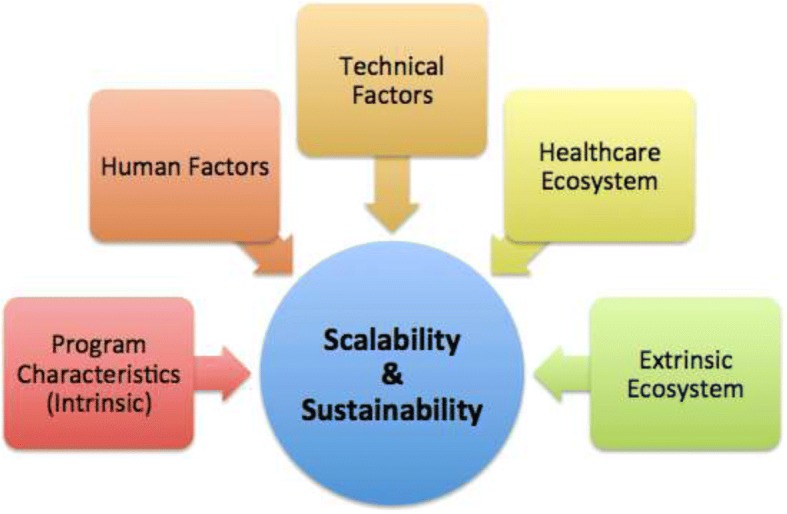
This review distills best practices for scaling digital health in low and middle income countries (LMICs) from real-life case studies discussed at a Digital Health Dialogue in Ghana. It identifies five critical focus areas: programme characteristics, human factors, technical factors, the healthcare ecosystem, and the extrinsic ecosystem.
Key findings
- Five focus areas are critical for scaling digital health in LMICs: programme characteristics, human factors, technical factors, healthcare ecosystem, and extrinsic ecosystem; these should be considered individually and as an interlinked system.
- Simplicity, interoperability, and adaptability are emphasized: simple systems using SMS, IVR, USSD, or voice may scale more easily than complex internet/data-dependent technologies; examples include the mDiabetes Project in Senegal and BBC Mobile Kunji, while CommCare has scaled to > 50,000 mobile users with offline capacity and patient security options.
- Policy alignment, sustainable financing, and ecosystem readiness matter: Uganda issued an mHealth moratorium in 2012 to align digital health with national strategy; Ghana telemedicine moved from public-private support to Ghana Health Service covering operational and maintenance costs; MomConnect was integrated into South Africa’s National Department of Health in 2015; and it is estimated that around 60% of healthcare financing in Africa comes from private sources.
- Human factors and real-time data use are important: training, motivation, clear roles, and supervision support scale; ComHIP trained licensed chemical sellers in Ghana, M-TIBA in Kenya was built on the familiar M-PESA system, and real-time data systems such as Open Smart Register Platform in Bangladesh can support performance monitoring and justify further investment.
Methods
- This is a review based on real-life case studies and expert discussions from a Digital Health Dialogue held in Ghana, synthesizing practical experience into five focus areas for scaling digital health in LMICs.
- The paper reports no systematic review protocol, search strategy, inclusion criteria, primary data collection, or quantitative analysis; it draws on selected case examples and expert input.
Limitations
- Stated: the recommendations are collated from case studies and experts willing to discuss successes and failures; specific guidelines and best practices for digital health will likely change rapidly, though the core principles across the five domains are likely to hold true.
- Stated: many factors fall outside individual projects’ influence, such as stability of the national electrical grid, cellular coverage in remote areas, and government leadership; human resource capacity in health informatics, information sciences, statistical analysis, and technology management is often in short supply; interoperability, adaptability, data storage, access, and confidentiality remain challenges.
- Evident: the case-study and expert-discussion design lacks systematic search, selection criteria, and quantitative outcome synthesis, so findings may reflect selected examples and may not be broadly generalizable.
Model-written summary. Check it against the paper before relying on it.
Integrity signals
Registry
Cites
Statistics
Figures
Verification
Claims the paper makes
9 Valid · 2 Not valid · 26 Not checked · 53 Own results and interpretations
Every source the paper cites for this claim was checked and supports it.
In the paper
“Frustrated by the proliferation of separate projects that were not sharing data, nor integrated within the health system, the Ministry of Health of Uganda issued a moratorium on mHealth projects in the country in 2012 [16].”
§ Best practices in scaling digital health in low and middle income countries > Background > Practical experience of scaling up digital health innovations
What the sources say
- Supportedcites [16] Huang F Blaschke S Lucas H Beyond pilotitis: taking digital health interventions to the national level in China and Uganda Glob Health 2017 13 49 10.1186/s12992-017-0275-z PMC5535287 28756767 source
The Introduction (page not provided) describes frustration with stand-alone digital health projects and says Uganda’s government initiated a moratorium in 2012, requiring future interventions to prioritize interoperability and conformity with Ministry of Health data requirements. That supports the claim’s description of separate projects lacking data sharing and health-system integration. (LLM, conf=0.91)
plainstates a cause- Asserted: passes — The authors put it forward as true.
- Checkable: passes — It can be checked against evidence.
- Load-bearing: unclear — It is unclear whether the paper’s conclusions depend on it.
- Based: passes — The paper gives a reason why it holds.
- Supported
The cited sources support only part of this claim — read each source’s verdict below.
In the paper
“This innovative programme is an example of how digital health can help to alleviate the burden on sometimes overloaded primary healthcare systems [10, 11].”
§ Best practices in scaling digital health in low and middle income countries > Background > Practical experience of scaling up digital health innovations
What the sources say
- Not matchedcites [10] FHI 360. Community-based Hypertension Improvement Project (ComHIP). 2016;:1–2. https://www.fhi360.org/projects/community-based-hypertension-improvement-project-comhip. Accessed 19 Oct 2017.
We searched by its title and found no matching paper.
- Supportedcites [11] Lamptey P Laar A Adler AJ Dirks R Caldwell A Prieto-Merino D Evaluation of a community-based hypertension improvement program (ComHIP) in Ghana: data from a baseline survey BMC Public Health 2017 17 368 10.1186/s12889-017-4260-5 28454523 PMC5410035 source
The Background (page unavailable) describes ComHIP as using ICTs and task shifting to enhance the Ghana Health Service’s capacity to manage hypertension. It also describes limited workforce capacity. This supports the sentence’s use of ComHIP as an example of how digital health can help, rather than as proof that the programme has already reduced workload. (LLM, conf=0.86)
plainstates a possible causeSingle case- Asserted: passes — The authors put it forward as true.
- Checkable: passes — It can be checked against evidence.
- Load-bearing: unclear — It is unclear whether the paper’s conclusions depend on it.
- Based: passes — The paper gives a reason why it holds.
- Not matched
Every source the paper cites for this claim was checked and supports it.
In the paper
“In the example of the Uganda mHealth moratorium, the government chose to align the goals of digital health with a broader national health strategy [16].”
§ Best practices in scaling digital health in low and middle income countries > Background > Practical experience of scaling up digital health innovations
What the sources say
- Supportedcites [16] Huang F Blaschke S Lucas H Beyond pilotitis: taking digital health interventions to the national level in China and Uganda Glob Health 2017 13 49 10.1186/s12992-017-0275-z PMC5535287 28756767 source
The Introduction (page unavailable) says Uganda’s government imposed the mHealth moratorium to require future interventions to prioritize interoperability, sustainability, and conformity with Ministry of Health requirements. The Uganda case study (page unavailable) describes integration of mTrac into the national health information system. Together, these support the paraphrase that the government sought to align digital health initiatives with its broader health-system strategy. (LLM, conf=0.86)
plainSingle case- Asserted: passes — The authors put it forward as true.
- Checkable: passes — It can be checked against evidence.
- Load-bearing: unclear — It is unclear whether the paper’s conclusions depend on it.
- Based: passes — The paper gives a reason why it holds.
- Supported
The cited sources support only part of this claim — read each source’s verdict below.
In the paper
“The ComHIP programme in Ghana on the other hand, provides an example of a programme that addresses unmet needs in managing chronic diseases in LMICs by leveraging existing technologies that do not require policy engagement [11].”
§ Best practices in scaling digital health in low and middle income countries > Background > Practical experience of scaling up digital health innovations
What the sources say
- Partly supportedcites [11] Lamptey P Laar A Adler AJ Dirks R Caldwell A Prieto-Merino D Evaluation of a community-based hypertension improvement program (ComHIP) in Ghana: data from a baseline survey BMC Public Health 2017 17 368 10.1186/s12889-017-4260-5 28454523 PMC5410035 sourceExperimental — accuracy not yet measured
The Background (page not provided) describes ComHIP as a Ghanaian hypertension-control programme that uses ICTs and task shifting to improve management, addressing a documented need. It does not establish that ComHIP requires no policy engagement. The Discussion mentions policy-maker engagement, but for an earlier programme, not ComHIP. (LLM, conf=0.85)
plainstates a causeSingle case- Asserted: passes — The authors put it forward as true.
- Checkable: passes — It can be checked against evidence.
- Load-bearing: unclear — It is unclear whether the paper’s conclusions depend on it.
- Based: passes — The paper gives a reason why it holds.
- Partly supported
The cited sources support only part of this claim — read each source’s verdict below.
In the paper
“For example, ComHIP utilises mobile phones to empower patients by sending daily reminders for follow-up appointments, medication adherence, and nutritional health information.”
§ Best practices in scaling digital health in low and middle income countries > Background > Practical experience of scaling up digital health innovations
What the sources say
- Partly supportedcites [11] Lamptey P Laar A Adler AJ Dirks R Caldwell A Prieto-Merino D Evaluation of a community-based hypertension improvement program (ComHIP) in Ghana: data from a baseline survey BMC Public Health 2017 17 368 10.1186/s12889-017-4260-5 28454523 PMC5410035 sourceExperimental — accuracy not yet measured
The Background (page unavailable) says ComHIP uses information and communication technologies. It describes lifestyle messages, appointment reminders, and treatment-adherence support in an earlier FHI 360 pilot, not specifically in ComHIP. Our copy does not establish that ComHIP sent those messages or that reminders were daily. (LLM, conf=0.86)
plainstates a cause- Asserted: passes — The authors put it forward as true.
- Checkable: passes — It can be checked against evidence.
- Load-bearing: unclear — It is unclear whether the paper’s conclusions depend on it.
- Based: passes — The paper gives a reason why it holds.
- Partly supported
28 more claims
Create a free account to see all 90 claims and every source verdict.
- It may state two separate claims as one. 34
- Probably not a substantial claim. 41
Claims other papers make about this one
Each is checked against this paper’s own text: does it say what the citing paper says it does?
The source backs part of the claim, not all of it — or backs it for a different population, condition or comparison.
In the citing paper
“Instead, most mHealth systems often collect and transmit data to their own independent repositories that are separate from facility-based EHR systems—adding to the problem of siloed information for patients spread across multiple systems [19].”
From mUzima Mobile Electronic Health Record (EHR) System: Development and Implementation at Scale (2021) · cites this paper as [19]
Experimental — accuracy not yet measuredIn the citing paper
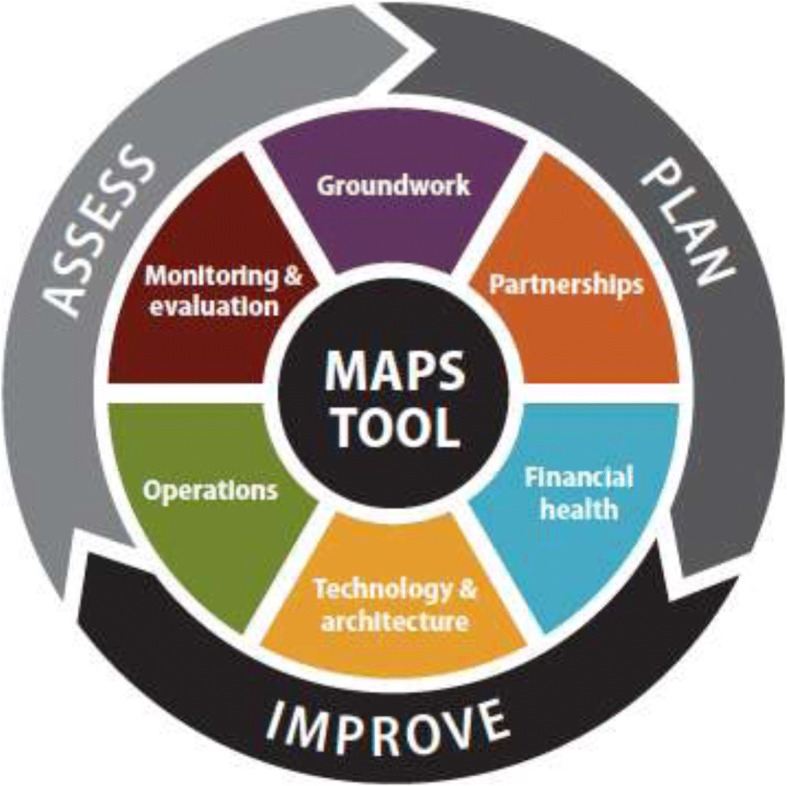
“Best practices for scaling these initiatives in LMICs have been established on the basis of real-world experiences, including the World Health Organization’s mHealth Assessment and Planning for Scale (MAPS) Toolkit (11).”
From Artificial intelligence for global health (2019) · cites this paper as [11]
Citations
Cites
Asp, G., Pettersson, K. O., Sandberg, J., Kabakyenga, J., & Agardh, A. (2014) · Global Health Action · doi:10.3402/gha.v7.22904 · Cited by 255
Community-based approaches and partnerships: innovations in health-service delivery in Bangladesh
El Arifeen, S., Christou, A., Reichenbach, L., Osman, F. A., Azad, K., Islam, K. S., Ahmed, F., Perry, H. B., & Peters, D. H. (2013) · The Lancet · doi:10.1016/s0140-6736(13)62149-2 · Cited by 244
Beyond pilotitis: taking digital health interventions to the national level in China and Uganda
Huang, F., Blaschke, S., & Lucas, H. (2017) · Globalization and Health · doi:10.1186/s12992-017-0275-z · Cited by 182
Surka, S., Edirippulige, S., Steyn, K., Gaziano, T., Puoane, T., & Levitt, N. (2014) · International Journal of Medical Informatics · doi:10.1016/j.ijmedinf.2014.06.008 · Cited by 91
King, C., Hall, J., Banda, M., Beard, J., Bird, J., Kazembe, P., & Fottrell, E. (2014) · Global Health Action · doi:10.3402/gha.v7.25878 · Cited by 62
Lamptey, P., Laar, A., Adler, A. J., Dirks, R., Caldwell, A., Prieto-Merino, D., Aerts, A., Pearce, N., & Perel, P. (2017) · BMC Public Health · doi:10.1186/s12889-017-4260-5 · Cited by 53
Self-citationThe meaning of health in Africa
Baylies, C. (1986) · Review of African Political Economy · doi:10.1080/03056248608703687 · Cited by 10
Baylies, C., & Bujra, J. (1997) · Review of African Political Economy · doi:10.1080/03056249708704270 · Cited by 9
Research works printed but not linked: 4
- Novartis Foundation Telemedicine Project in Ghana Healthcare 2010
- CommCare Introducing CommCare Solutions 2017 1 3
- Flaming A Canty M Javetski G Lesh N The CommCare Evidence Base for Frontline Workers 2015
- PATH Digital Square: New global initiative will connect the world for better health through digital technology 2017 1 7
Cited by
Items 101–200 of 440
Mantell, J. E., Masvawure, T. B., Zech, J. M., Reidy, W. J., Msukwa, M., Glenshaw, M. T., Grund, J. M., Williams, D., Pitt, B., & Rabkin, M. (2022) · PLoS ONE · doi:10.1371/journal.pone.0266445 · Cited by 19
Digital health services in Bangladesh—The need for a sustainable design framework
Zahid, A., Yadav, U. N., & Mistry, S. K. (2023) · World Medical & Health Policy · doi:10.1002/wmh3.580 · Cited by 20
Advancing Cardiovascular Health Equity Globally Through Digital Technologies
Ogungbe, O., Longenecker, C. T., Beaton, A., de Loizaga, S. R., Brant, L. C. C., Turkson‐Ocran, R., Bastani, P. B., Sarfo, F. S., & Commodore-Mensah, Y. Y. (2024) · Journal of the American Heart Association · doi:10.1161/jaha.123.031237 · Cited by 23
Alam, M. Z., & Khanam, L. (2023) · International Journal of Pharmaceutical and Healthcare Marketing · doi:10.1108/ijphm-05-2021-0055 · Cited by 19
Schuetze, L., Srivastava, S., Missenye, A. M., Rwezaula, E. J., Stoermer, M., & Allegri, M. D. (2023) · Journal of Medical Internet Research · doi:10.2196/38818 · Cited by 17
Salako, O., Enyi, A., Miesfeldt, S., Kabukye, J. K., Ngoma, M., Namisango, E., LeBaron, V., Sisimayi, C., Ebenso, B., Lorenz, K. A., et al. (2023) · International Journal of Environmental Research and Public Health · doi:10.3390/ijerph20247190 · Cited by 15
“Recent lessons from India may have relevance to SSA, where socio-economic characteristics such as age, literacy and sociocultural norms remain major barriers to the equitable use of digital technologies [82].”
Backgroundde Andrade, J. B. C., Fagundes, T. P., Katsuyama, E. S., & Silva, G. S. (2025) · Stroke · doi:10.1161/strokeaha.125.050448 · Cited by 23
Borda, A., Molnar, A., Heys, M., Musyimi, C. W., & Kostkova, P. (2023) · Frontiers in Public Health · doi:10.3389/fpubh.2023.1153971 · Cited by 14
Digital mental health interventions for school teachers – A narrative review
Costardi, C. G., D'agostini, A. C. C., Pan, P. M., & Bressan, R. A. (2023) · Early Intervention in Psychiatry · doi:10.1111/eip.13431 · Cited by 17
Aguilera, B., Razavi, D., Vélez, C. M., Kapiriri, L., Abelson, J., Nouvet, É., Danis, M., Goold, S. D., Ieystn, W., & Noorulhuda, M. (2024) · Health Policy · doi:10.1016/j.healthpol.2024.105013 · Cited by 20
Scale up mHealth HIV interventions: site and public health perspectives and lessons learned from P3
Paul, M. E., Castillo, M., Emmanuel, P. J., Bauermeister, J. A., Mena, L. A., Sullivan, P. S., & Hightow‐Weidman, L. (2021) · mHealth · doi:10.21037/mhealth-20-65 · Cited by 11
Hlangwani, E., Mpye, K. L., Matsuro, L., & Dlamini, B. C. (2023) · Sustainability Science Practice and Policy · doi:10.1080/15487733.2023.2200300 · Cited by 26
Dillip, A., Kahamba, G., Sambaiga, R. F., Shekalaghe, E., Kapologwe, N., Kitali, E. J., Kengia, J. T., Haonga, T., Nzilibili, S. M. M., Tanda, M., et al. (2024) · BMC Health Services Research · doi:10.1186/s12913-024-11302-7 · Cited by 19
Xie, W., Paul, R. R., Goon, I. Y., Anan, A., Rahim, A., Hossain, M. M., Hersch, F. B., Oldenburg, B. F., Chambers, J. C., & Mridha, M. K. (2023) · BMJ Open · doi:10.1136/bmjopen-2023-073743 · Cited by 21
Bressan, T., Valdivia-Gago, A., Silvera-Ccallo, R., Llanos‐Cuentas, A., Camara, D. F. C., Padilla-Huamantinco, P. G., Vilcarromero, S., Miranda, J. J., & Zavaleta-Cortijo, C. (2022) · International Journal for Equity in Health · doi:10.1186/s12939-022-01773-7 · Cited by 21
Nathan, J. J., Agarwal, D. M., Peres, I. T., Bastos, L. D. S. L., Resende, N., Hamacher, S., Cheyne, A., Jamieson, N. E., Kawade, A. S., Khoo, E. M., et al. (2024) · Journal of Global Health Reports · doi:10.29392/001c.120508 · Cited by 11
Lim, S. C., Kataria, I., Ngongo, C. J., Usek, V. S., Kudtarkar, S. R., Chandran, A., & Mustapha, F. I. (2022) · Global Health Promotion · doi:10.1177/17579759221091197 · Cited by 16
Roles for mHealth to support Community Health Workers addressing COVID-19
O’Donovan, J., Hamala, R., Nalubwama, M., Ameniko, M., Govina, G., Gray, N., Panjabi, R., Palazuelos, D., & Namanda, A. S. (2020) · Global Health Promotion · doi:10.1177/1757975920967924 · Cited by 12
Singla, D. R., Fernandes, L., Savel, K. A., Shah, A. V., Agrawal, R., Bhan, A., Nadkarni, A., Sharma, A., Khan, A., Lahiri, A., et al. (2024) · Cambridge Prisms Global Mental Health · doi:10.1017/gmh.2024.11 · Cited by 14
Ming, D. K. Y., Merriel, A., Freeman, D. M. E., Kingdon, C., Chimwaza, Y., Islam, M. S., Cass, A. E. G., Greenfield, B., Malata, A. M., Hoque, M., et al. (2024) · The Lancet Digital Health · doi:10.1016/s2589-7500(24)00217-6 · Cited by 18
Ebenso, B., Namisango, E., Abejirinde, I.-O., & Allsop, M. J. (2025) · Frontiers in Digital Health · doi:10.3389/fdgth.2025.1634223 · Cited by 12
EN-BIRTH Study Group, Ruysen, H., Rahman, A. E., Gordeev, V. S., Hossain, M. T., Basnet, O., Shirima, K., Rahman, Q. S.-U., Zaman, S. B., Rana, N., et al. (2021) · BMC Pregnancy and Childbirth · doi:10.1186/s12884-020-03426-5 · Cited by 13
Nasir, S., Nasir, N., Khan, S., Khan, W. A., & Akyürek, S. S. (2023) · Journal of Organizational Change Management · doi:10.1108/jocm-07-2023-0282 · Cited by 12
Songtaweesin, W. N., LeGrand, S., Bandara, S., Piccone, C., Wongharn, P., Moonwong, J., Jupimai, T., Saisaengjan, C., Theerawit, T., Muessig, K. E., et al. (2021) · Journal of Medical Internet Research · doi:10.2196/23852 · Cited by 15
Advancing digital health in Yemen: challenges, opportunities, and way forward
Alhammadi, O. A. S., Mohamed, H. I., Musa, S. S., Ahmed, M. M., Lemma, M. A., Uwamahoro, J., Romeo, B. M., Abdullahi, Y., Othman, Z. K., Hamid, M. R., et al. (2024) · Exploration of Digital Health Technologies · doi:10.37349/edht.2024.00035 · Cited by 16
Development of a Mobile, Self-Sovereign Identity Approach for Facility Birth Registration in Kenya
Freytsis, M., Barclay, I., Radha, S. K., Czajka, A., Siwo, G. H., Taylor, I., & Bucher, S. (2021) · Frontiers in Blockchain · doi:10.3389/fbloc.2021.631341 · Cited by 20
Fruchtman, C. S., Mbuyita, S., Mwanyika‐Sando, M., Braun, M., de Savigny, D., & Muñoz, D. C. (2021) · BMC Health Services Research · doi:10.1186/s12913-021-06285-8 · Cited by 14
Provision of Digital Primary Health Care Services: Overview of Reviews
Fava, V. M. D., & Lapão, L. V. (2024) · Journal of Medical Internet Research · doi:10.2196/53594 · Cited by 30
Duong, H. T., Dao, S., Dang, H., Nguyen, L., Ngo, T., Nguyen, T. D., Tran, L. A., Nguyen, D., Rivera, M., & Nguyen, N. T. (2021) · JMIR Formative Research · doi:10.2196/28096 · Cited by 11
Mujuni, D., Tumwine, J., Musisi, K., Otim, E., Farhat, M. R., Nabulobi, D., Nyombi, A., Tumuhairwe, A. K., Mugisa, M. D., Oola, D., et al. (2024) · PLOS Digital Health · doi:10.1371/journal.pdig.0000566 · Cited by 17
Khubchandani, J., Sharma, S., England-Kennedy, E. S., Pai, A., & Banerjee, S. K. (2023) · Journal of Medicine Surgery and Public Health · doi:10.1016/j.glmedi.2023.100030 · Cited by 13
Dereje, D., Lamba, D., Abessa, T. G., Kenea, C., Ramari, C., Osama, M., Kossi, O., Boma, P. M., Panda, J., Kushnir, A. D., et al. (2025) · Frontiers in Digital Health · doi:10.3389/fdgth.2025.1505717 · Cited by 13
Ghomrawi, H., Many, B. T., Holl, J. L., Ahmed, A. G., Jackson, M. E., Sibley, J., Khan, R., Kaufmann, E. E., Appeadu‐Mensah, W., & Abdullah, F. (2023) · International Journal of Medical Informatics · doi:10.1016/j.ijmedinf.2023.105046 · Cited by 12
DiAndreth, L., Jarrett, B. A., Elf, J. L., Nishath, T., Donville, B., Heidari, O., Cox, S., Moreton, J., Ramnath, A., Lebina, L., et al. (2020) · AIDS and Behavior · doi:10.1007/s10461-020-02912-3 · Cited by 11
Rahman, A. M., Friberg, I. K., Dolphyne, A., Fjeldheim, I., Khatun, F., O’Donnell, B., Pervin, J., Rahman, M., Rahman, A., Nu, U. T., et al. (2021) · JMIR Research Protocols · doi:10.2196/26918 · Cited by 10
Healthcare Barriers Among Working-Age Persons with Disabilities in Trinidad
Parey, B., & Sinanan, L. (2021) · Qualitative Health Research · doi:10.1177/10497323211059151 · Cited by 12
A socio-legal critique of the commercialization of digital health in Sub-Saharan Africa
Sekalala, S. R., Rawson, B., & Andanda, P. (2025) · Policy Studies · doi:10.1080/01442872.2025.2451966 · Cited by 18
Meghana, R. V. N. S. P., Singh, J., & Huda, R. K. (2025) · Clinical Epidemiology and Global Health · doi:10.1016/j.cegh.2025.102137 · Cited by 22
Towards Digital Transformation for Universal Health Coverage
Bloom, G., Balasubramaniam, P., Marín, A., Nelson, E. M., Quak, E.-J., Husain, L., & Barker, T. (2023) · OpenDocs (Institute of Development Studies) · doi:10.19088/cc.2023.005 · Cited by 14
Lampariello, R., & Ancellin-Panzani, S. (2021) · Family Medicine and Community Health · doi:10.1136/fmch-2021-000959 · Cited by 11
Barriers to digital health implementation in low- and middle-income countries: a narrative review
Olayiwola, Q. B., Sanusi, O. M., Amoo, G. S., Agboola, O. J., Adeyemi, J. A., Suleiman, H. A., Ibrahim, M. A., & Hassan, T. A. (2026) · Discover Public Health · doi:10.1186/s12982-026-01875-5 · Cited by 32
Sociotechnical factors of sustainable digital health systems: A system dynamics model
Fanta, G. B., & Pretorius, L. (2023) · Health Policy and Technology · doi:10.1016/j.hlpt.2023.100729 · Cited by 21
Nathan, J. J., Abdullah, A. B., Evans, J., Ramdzan, S. N., Fletcher, M. J., Hussein, N. B., Hanafi, N. S., & Khoo, E. M. (2025) · Journal of Global Health · doi:10.7189/jogh.15.03044 · Cited by 20
Mwase, C., Nkhoma, K. B., & Allsop, M. J. (2022) · Digital Health · doi:10.1177/20552076221133707 · Cited by 12
Navigating complexities: agile digital health initiatives in developing countries
Bhushan, I., Anandampillai, K., & Agarwal, S. (2024) · Oxford Open Digital Health · doi:10.1093/oodh/oqae032 · Cited by 13
Luai, A. F., Radzi, N. A. M., & Sabri, B. A. M. (2024) · Journal of international oral health · doi:10.4103/jioh.jioh_281_23 · Cited by 11
Jiménez-Díaz, G., Aune, A., Elizarrarás-Rivas, J., Gierman, L. M., Keitsch, M. M., Marcuzzi, A., & Infanti, J. J. (2024) · BMC Health Services Research · doi:10.1186/s12913-024-11141-6 · Cited by 11
Digital tools for youth health promotion: principles, policies and practices in sub-Saharan Africa
Ferretti, A., Adjei, K. K., Ali, J., Atuire, C., Tambe, A. B., Banougnin, B. H., Cengiz, N., Gichoya, J. W., Jjingo, D., Juma, D. O., et al. (2024) · Health Promotion International · doi:10.1093/heapro/daae030 · Cited by 14
Yang, J., Dung, N. T., Thach, P. N., Phong, N. T., Phu, V. D., Phu, K. D., Yen, L. M., Thy, D. B. X., Soltan, A. A. S., Thwaites, L., et al. (2023) · medRxiv · doi:10.1101/2023.11.05.23298109 · Cited by 11
Improving HIV-related care through eHealth
van den Berk, G. E. L., Leoni, M. C., Behrens, G. M. N., Taljaard, J., & Arends, J. E. (2019) · The Lancet HIV · doi:10.1016/s2352-3018(19)30348-0 · Cited by 12
Brasileiro, J., Queiroz, A. A. F. L. N., Hightow‐Weidman, L., & Muessig, K. E. (2025) · Current HIV/AIDS Reports · doi:10.1007/s11904-025-00732-5 · Cited by 9
Ferreira, J. M. G., Generoso, J. R., Marra, A. R., Deliberato, R. O., Dewan, M. L., Loeb, D., Real, F. J., Collins, K. L., Ely, K., Zackoff, M. W., et al. (2025) · Journal of General Internal Medicine · doi:10.1007/s11606-025-09794-y · Cited by 15
Sahoo, K. C., Negi, S., Mahapatra, P., Samantaray, K., Dash, G. C., Dubey, S., Sahay, M. R., Sahoo, R. K., Bhattacharya, D., Sahoo, B., et al. (2023) · Frontiers in Public Health · doi:10.3389/fpubh.2023.1170386 · Cited by 13
Kurniawan, A. L., Theresia, T., Faradina, A., Paramastri, R., Haryana, N. R., Ginting, R. M. S., Nurrahma, B. A., Kinasih, L. S., Khan, A. F., Aji, A. S., et al. (2025) · Journal of Health Population and Nutrition · doi:10.1186/s41043-025-01091-y · Cited by 15
Arnaert, A., Ponzoni, N., Debe, Z., Meda, M. M., Nana, N. G., & Arnaert, S. (2019) · Journal of Nursing Education and Practice · doi:10.5430/jnep.v10n3p57 · Cited by 9
Barriers to digital endpoints in data collection in low and middle-income countries
Meslamani, A. Z. A. (2024) · Expert Review of Pharmacoeconomics & Outcomes Research · doi:10.1080/14737167.2024.2331047 · Cited by 12
Chepkirui, M., Dellicour, S., Musuva, R., Odero, I. A., Omondi, B., Omondi, B., Onyango, E., Barsosio, H. C., Otiso, L., Okomo, G. O., et al. (2025) · PLOS Digital Health · doi:10.1371/journal.pdig.0000870 · Cited by 20
The Digital Ecosystem and Major Public Health Informatics Initiatives in Resource-Limited Settings
Gashu, K. D. (2024) · Sustainable development goals series · doi:10.1007/978-3-031-71118-3_4 · Cited by 21
Walking the Talk: Reimagining Primary Health Care After COVID-19
Bank, W. (2021) · The World Bank Open Knowledge Repository (World Bank) · doi:10.1596/35842 · Cited by 19
Experience of Supporting Telemedicine Networks With the Collegium System: First 6 Years
Wootton, R., & Bonnardot, L. (2019) · Frontiers in Public Health · doi:10.3389/fpubh.2019.00226 · Cited by 8
Schuetze, L., Srivastava, S., Kuunibe, N., Rwezaula, E. J., Missenye, A. M., Stoermer, M., & Allegri, M. D. (2023) · International Journal of Health Policy and Management · doi:10.34172/ijhpm.2023.6896 · Cited by 12
Remote Pathology Practice: The Time for Remote Diagnostic Pathology in This Digital Era is Now
Schukow, C. P., & Allen, T. C. (2023) · Archives of Pathology & Laboratory Medicine · doi:10.5858/arpa.2023-0385-ed · Cited by 10
Santosa, A., Li, J. W., & Tan, T. C. (2025) · Healthcare · doi:10.3390/healthcare13040438 · Cited by 12
Alyahya, M. S. I., Abu-Rmeileh, N. M. E., Khader, Y. S., Nemer, M., Al-Sheyab, N., de Corbion, A. P., Cabrera, L. L., & Sahay, S. (2022) · Methods of Information in Medicine · doi:10.1055/s-0042-1756651 · Cited by 7
Application of SEM and fsQCA to predict m-health adoption in the BoP market
Hussain, M., Begum, Q., Rahman, M. S., & Imran, A. (2023) · Digital Policy Regulation and Governance · doi:10.1108/dprg-02-2023-0024 · Cited by 8
O'Donnell, A. (2020) · Addiction · doi:10.1111/add.14986 · Cited by 6
The Global Health Informatics landscape and JAMIA
Fraser, H., Zahiri, K., Kim, N. J., Kim, C., & Craig, S. (2023) · Journal of the American Medical Informatics Association · doi:10.1093/jamia/ocad024 · Cited by 9
Afrocentric Collaborative Care: Supporting Context Specific Digital Health and Care
Arueyingho, O., Bidwell, N. J., Peters, A. N., O’Neill, J., Metatla, O., Ayobi, A., Nkwo, M. S., Lawrence, D. O., Zimba, R. F., Ismaila, H., et al. (2023) · ACM Conference on Computer Supported Cooperative Work (CSCW) · doi:10.1145/3584931.3611287 · Cited by 7
International dimensions of clinical decision support systems
Magrabi, F., Cresswell, K. M., & Fraser, H. (2023) · Elsevier eBooks · doi:10.1016/b978-0-323-91200-6.00013-9 · Cited by 10
Ramani-Chander, A., Thrift, A. G., van Olmen, J., Wouters, E., Delobelle, P., Vedanthan, R., Miranda, J. J., Neve, J. D., Esandi, M. E., Koot, J. A. R., et al. (2024) · Health Policy and Planning · doi:10.1093/heapol/czae043 · Cited by 10
Nature Medicine Commission on dialysis policy in low- and middle-income countries
Teerawattananon, Y., Chavarina, K. K., Phannajit, J., Sutawong, J., Yongphiphatwong, N., Chawla, N., Botwright, S., Chuanchaiyakul, T., Anothaisintawee, T., Arogundade, F. A., et al. (2026) · Nature Medicine · doi:10.1038/s41591-025-04084-w · Cited by 13
AI-IoT integration in Tanzania’s primary healthcare system: a narrative review
Mwogosi, A., Simba, R., Kayya, A., Abdallah, S., Mkane, P., Lugaba, A., & Hussein, H. (2025) · Journal of Health Organization and Management · doi:10.1108/jhom-01-2025-0013 · Cited by 9
Little, K. M., Nwala, A. A., Demise, E., Archie, S., Nwokoma, E. I., Onyezobi, C. E., Anyasi, H., Afolabi, K., OlaOlorun, F. M., Rademacher, K. H., et al. (2023) · BMC Health Services Research · doi:10.1186/s12913-023-10211-5 · Cited by 7
Artificial Intelligence for Global Healthcare
Parsa, A. D., Hakkim, S., Vinnakota, D., Mahmud, I., Bulsari, S., Dehghani, L., Pulikkottil, A. T., Sivasubramanian, M., & Kabir, R. (2023) · Medical virology · doi:10.1007/978-981-99-0369-6_1 · Cited by 12
Oluokun, E. O., Adedoyin, F. F., Doğan, H., & Jiang, N. (2024) · JMIR Human Factors · doi:10.2196/45826 · Cited by 7
Muliokela, R. K., Banda, K., Hussen, A. M., Malumo, S., Kashoka, A., Mwiche, A., Chiboma, I., Barreix, M., Nyirenda, M., Sithole, Z., et al. (2024) · JMIR Medical Informatics · doi:10.2196/58858 · Cited by 7
Nabukenya, J., Alunyu, A. E., Drumright, L. N., Semwanga, A. R., & Kasasa, S. (2023) · Journal of the American Medical Informatics Association · doi:10.1093/jamia/ocad034 · Cited by 12
Medical equipment in the global south: perspective of sustainability and donations
Paustian, F., Gøl, R., Julsgart, H. W., et al. (2025) · Frontiers in Health Services · doi:10.3389/frhs.2025.1638305 · Cited by 7
Towe, V. L., Bogart, L. M., McBain, R. K., Wagner, L., Stevens, C., Fischer, S. H., & MacCarthy, S. (2020) · International Journal of Care Coordination · doi:10.1177/2053434520913206 · Cited by 8
Safary, E., Beran, D., Vetter, B., Lepeska, M., Abdraimova, A., Dunganova, A., Besançon, S., Lazo‐Porras, M., Mazanett, J. P., Pérez-León, S., et al. (2024) · BMJ Open · doi:10.1136/bmjopen-2023-076685 · Cited by 7
Panda, R., Lahoti, S., Mishra, N., Prabhu, R. R., Singh, K., Rai, A. K., & Rai, K. (2024) · Human Resources for Health · doi:10.1186/s12960-024-00907-y · Cited by 9
Sunday, O. (2025) · Epidemiology and Health Data Insights · doi:10.63946/ehdi/17088 · Cited by 6
Kim, H. H., Lee, J., Kim, H. H., Hwang, S. H., Yi, I., Kao, S., Kim, D., Sohn, H., Kim, J., Choi, Y., et al. (2022) · Journal of Medical Internet Research · doi:10.2196/31206 · Cited by 6
Barriers to the Use of Patient-Reported Outcome Measures in Low- and Middle-income Countries
Malapati, S. H., Edelen, M. O., Nthumba, P. M., Ranganathan, K. L., & Pusic, A. L. (2024) · Plastic & Reconstructive Surgery Global Open · doi:10.1097/gox.0000000000005576 · Cited by 7
Lounsbury, O., Roberts, L. F., Kurek, N., Shaw, A., Flott, K., Ghafur, S., Labrique, A. B., Leatherman, S. T., Darzi, A. W., & Neves, A. L. (2022) · Journal of Global Health Reports · doi:10.29392/001c.37241 · Cited by 5
Self-citationAdvancements in e-Governance Initiatives: Digitalizing Healthcare in India
Das, S., Garg, V., & Joseph, J. J. (2023) · Lecture notes in networks and systems · doi:10.1007/978-981-99-5085-0_28 · Cited by 7
Achungura, G., Raza, A., Katre, V., et al. (2024) · Health Systems & Reform · doi:10.1080/23288604.2024.2401190 · Cited by 5
Mboweni, S. H. (2024) · Health SA Gesondheid · doi:10.4102/hsag.v29i0.2412 · Cited by 6
Pfob, A., Pinker, K., Vaz-Luís, I., Meglio, A. D., Cardoso, M. J., Curigliano, G., Gentilini, O., Gruber, G., Hauser, N., Heil, J., et al. (2025) · The Lancet Oncology · doi:10.1016/s1470-2045(25)00463-2 · Cited by 11
Obstacles of eHealth Capacity Building and Innovation Promotion Initiative in African Countries
Asah, F. N., Kaasbøll, J., & Anthun, K. S. (2022) · Studies in health technology and informatics · doi:10.3233/shti220961 · Cited by 7
Zhou, L., Jiang, M., Duan, R., Zuo, F., Li, Z., & Xu, S. (2024) · JMIR mhealth and uhealth · doi:10.2196/48842 · Cited by 9
Otaigbe, I. I. (2023) · Frontiers in Digital Health · doi:10.3389/fdgth.2023.1298861 · Cited by 7
Thakur, A., Reshmi, B., Mithra, P., Sekaran, V. C., & Kumar, S. (2025) · Healthcare · doi:10.3390/healthcare13172223 · Cited by 20
Adem, J. B., Alhur, A. A., Walle, A. D., Mamo, D. N., Kebede, S. D., & Degefa, S. M. (2025) · Health Informatics Journal · doi:10.1177/14604582251381262 · Cited by 7
Mustafa, N. K., Ibrahim, R. B., Aljunid, S. M., Aizuddin, A. N., & Awang, Z. (2025) · Journal of Medical Internet Research · doi:10.2196/74226 · Cited by 9
Brown, T. M., Dee, A., McCullough, M. C., Santos, P., & Kulber, D. A. (2024) · Plastic & Reconstructive Surgery Global Open · doi:10.1097/gox.0000000000006226 · Cited by 4
AI and digital health for childhood cancer care in Ghana
Nyarko, E. N. Y., Santa, S. A., & Diaba‐Nuhoho, P. (2025) · Communications Medicine · doi:10.1038/s43856-025-01047-7 · Cited by 5
Viejo, J. D. M., & Ros, F. M. N. (2025) · JMIR Medical Informatics · doi:10.2196/74932 · Cited by 4
Metadata
- Authors
- Labrique, A. B., Wadhwani, C., Williams, K. A., Lamptey, P., Hesp, C., Luk, R., & Aerts, A.
- Affiliations
- Johns Hopkins University (US)
- Novartis Foundation (CH)
- Family Health International 360 (US)
- PharmAccess Group (NL)
- Corresponding author
- Labrique, Alain B.
- Venue
- Globalization and Health
- Published
- 2018-11-03
- Volume
- 14
- Issue
- 1
- Pages
- 103-103
- ISSN
- 1744-8603 (ISSN-L)
- PMC
- PMC6215624
- OpenAlex
- W2899241902
- Semantic Scholar
- c32a3a9141707f83f0e3d4ed6c159851be09887a
- Cited by
- 449
- References
- 8
- Citations by year
- 2026: 88 · 2025: 82 · 2024: 73 · 2023: 58 · 2022: 44 · 2021: 65 · 2020: 30 · 2019: 6 · 2018: 2
- FWCI
- 4.65
- Type
- journal article
- Language
- en
- Open access
- gold
- doi.org
- Licence
- cc-by
- creativecommons.org/licenses/by/4.0/ (tdm)
- Locations
- Globalization and Health (publishedVersion, cc-by)
- Europe PMC (PubMed Central) (publishedVersion, other-oa)
- PubMed Central (publishedVersion, cc-by)
- PubMed (publishedVersion)
- LSHTM Research Online (London School of Hygiene and Tropical Medicine) (acceptedVersion)
- DOAJ (DOAJ: Directory of Open Access Journals) (submittedVersion, cc-by-sa)
- Funders
- Novartis Foundation
- Topics
- Health Sciences › Medicine › Public Health, Environmental and Occupational Health › Healthcare Systems and Practices
- Physical Sciences › Computer Science › Information Systems › ICT in Developing Communities
- Health Sciences › Medicine › Public Health, Environmental and Occupational Health › Telemedicine and Telehealth Implementation
- Keywords
- digital health, scaling, low- and middle-income countries, health system integration, stakeholder engagement, interoperability, health policy alignment, sustainable funding, digital health infrastructure, end-user involvement, health care access, private sector funding
- MeSH terms
- Developing Countries, Humans, Telemedicine, Evidence-Based Practice
About these checks
Registry, retraction, Cites and statistics results are computed, not judged, with one exception: a printed reference that no index lists is read once by a model before it counts as a citation error. Claims are extracted by a model and kept only when their quote appears verbatim in the text; each cited source is then checked, with a model’s help, for whether it says what the claim relies on. Those verdicts can be wrong — read the claim’s quote and the cited source before relying on one.
The claim verdicts this report counts are experimental: their accuracy is not yet measured.
A language model drew the claims from the paper on 2026-09-30, under version 3 of the claim definition (model deepseek-v4.1-flash, prompt extract-v3).
A second model labelled each claim on 2026-09-30 (model jev-1.13-20260917, definition revision gold-guideline-v0.2).
Cited sources are checked with a language model’s help (gpt-6-sol).
Statistics and arithmetic are recomputed, not judged.
Confidence bands are shown only for fields calibrated on our annotated test set. None is calibrated yet, so no band is shown.
What counts as a claim ›How we measure confidence ›How we check this ›
Are you an author, or do you see a problem with this page? Request a review
Data sources
Bibliographic data: Semantic Scholar, OpenAlex, Crossref.
Contains information from the Semantic Scholar Academic Graph Datasets, made available under the ODC Attribution License (ODC-BY 1.0).
Semantic Scholar’s data is described in: Kinney, R., et al. (2023). The Semantic Scholar Open Data Platform. arXiv:2301.10140.
