

Best practices in scaling digital health in low and middle income countries
Open accessThe DOI matches its Crossref record; 8 of the 8 references it cites were found in a registry or an index; 10 of the 45 sources its claims cite were checked for support.
Abstract
Healthcare challenges in low and middle income countries (LMICs) have been the focus of many digital initiatives that have aimed to improve both access to healthcare and the quality of healthcare delivery. Moving beyond the initial phase of piloting and experimentation, these initiatives are now more clearly focused on the need for effective scaling and integration to provide sustainable benefit to healthcare systems.Based on real-life case studies of scaling digital health in LMICs, five key focus areas have been identified as being critical for success. Firstly, the intrinsic characteristics of the programme or initiative must offer tangible benefits to address an unmet need, with end-user input from the outset. Secondly, all stakeholders must be engaged, trained and motivated to implement a new initiative, and thirdly, the technical profile of the initiative should be driven by simplicity, interoperability and adaptability. The fourth focus area is the policy environment in which the digital healthcare initiative is intended to function, where alignment with broader healthcare policy is essential, as is sustainable funding that will support long-term growth, including private sector funding where appropriate. Finally, the extrinsic ecosystem should be considered, including the presence of the appropriate infrastructure to support the use of digital initiatives at scale.At the global level, collaborative efforts towards a less-siloed approach to scaling and integrating digital health may provide the necessary leadership to enable innovative solutions to reach healthcare workers and patients in LMICs. This review provides insights into best practice for scaling digital health initiatives in LMICs derived from practical experience in real-life case studies, discussing how these may influence the development and implementation of health programmes in the future.
Overview
CoChat Summary
TL;DR
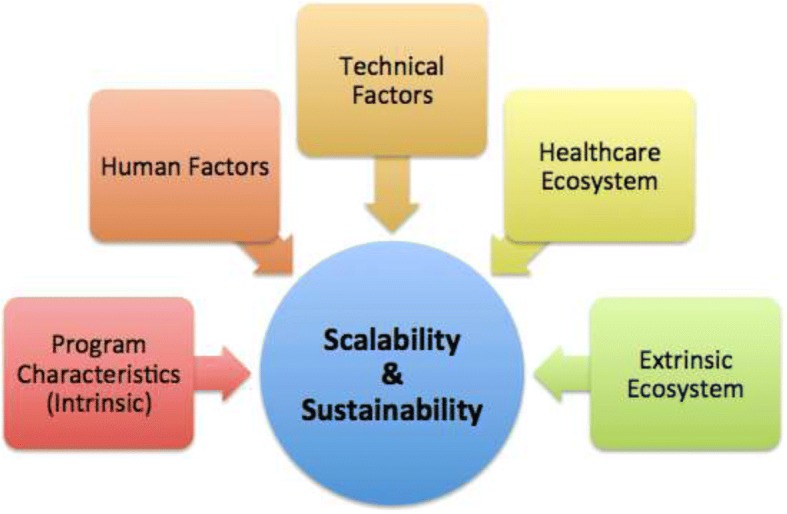
This review distills best practices for scaling digital health in low and middle income countries (LMICs) from real-life case studies discussed at a Digital Health Dialogue in Ghana. It identifies five critical focus areas: programme characteristics, human factors, technical factors, the healthcare ecosystem, and the extrinsic ecosystem.
Key findings
- Five focus areas are critical for scaling digital health in LMICs: programme characteristics, human factors, technical factors, healthcare ecosystem, and extrinsic ecosystem; these should be considered individually and as an interlinked system.
- Simplicity, interoperability, and adaptability are emphasized: simple systems using SMS, IVR, USSD, or voice may scale more easily than complex internet/data-dependent technologies; examples include the mDiabetes Project in Senegal and BBC Mobile Kunji, while CommCare has scaled to > 50,000 mobile users with offline capacity and patient security options.
- Policy alignment, sustainable financing, and ecosystem readiness matter: Uganda issued an mHealth moratorium in 2012 to align digital health with national strategy; Ghana telemedicine moved from public-private support to Ghana Health Service covering operational and maintenance costs; MomConnect was integrated into South Africa’s National Department of Health in 2015; and it is estimated that around 60% of healthcare financing in Africa comes from private sources.
- Human factors and real-time data use are important: training, motivation, clear roles, and supervision support scale; ComHIP trained licensed chemical sellers in Ghana, M-TIBA in Kenya was built on the familiar M-PESA system, and real-time data systems such as Open Smart Register Platform in Bangladesh can support performance monitoring and justify further investment.
Methods
- This is a review based on real-life case studies and expert discussions from a Digital Health Dialogue held in Ghana, synthesizing practical experience into five focus areas for scaling digital health in LMICs.
- The paper reports no systematic review protocol, search strategy, inclusion criteria, primary data collection, or quantitative analysis; it draws on selected case examples and expert input.
Limitations
- Stated: the recommendations are collated from case studies and experts willing to discuss successes and failures; specific guidelines and best practices for digital health will likely change rapidly, though the core principles across the five domains are likely to hold true.
- Stated: many factors fall outside individual projects’ influence, such as stability of the national electrical grid, cellular coverage in remote areas, and government leadership; human resource capacity in health informatics, information sciences, statistical analysis, and technology management is often in short supply; interoperability, adaptability, data storage, access, and confidentiality remain challenges.
- Evident: the case-study and expert-discussion design lacks systematic search, selection criteria, and quantitative outcome synthesis, so findings may reflect selected examples and may not be broadly generalizable.
Model-written summary. Check it against the paper before relying on it.
Integrity signals
Registry
Cites
Statistics
Figures
Verification
Claims the paper makes
9 Valid · 2 Not valid · 26 Not checked · 53 Own results and interpretations
Every source the paper cites for this claim was checked and supports it.
In the paper
“Frustrated by the proliferation of separate projects that were not sharing data, nor integrated within the health system, the Ministry of Health of Uganda issued a moratorium on mHealth projects in the country in 2012 [16].”
§ Best practices in scaling digital health in low and middle income countries > Background > Practical experience of scaling up digital health innovations
What the sources say
- Supportedcites [16] Huang F Blaschke S Lucas H Beyond pilotitis: taking digital health interventions to the national level in China and Uganda Glob Health 2017 13 49 10.1186/s12992-017-0275-z PMC5535287 28756767 source
The Introduction (page not provided) describes frustration with stand-alone digital health projects and says Uganda’s government initiated a moratorium in 2012, requiring future interventions to prioritize interoperability and conformity with Ministry of Health data requirements. That supports the claim’s description of separate projects lacking data sharing and health-system integration. (LLM, conf=0.91)
plainstates a cause- Asserted: passes — The authors put it forward as true.
- Checkable: passes — It can be checked against evidence.
- Load-bearing: unclear — It is unclear whether the paper’s conclusions depend on it.
- Based: passes — The paper gives a reason why it holds.
- Supported
The cited sources support only part of this claim — read each source’s verdict below.
In the paper
“This innovative programme is an example of how digital health can help to alleviate the burden on sometimes overloaded primary healthcare systems [10, 11].”
§ Best practices in scaling digital health in low and middle income countries > Background > Practical experience of scaling up digital health innovations
What the sources say
- Not matchedcites [10] FHI 360. Community-based Hypertension Improvement Project (ComHIP). 2016;:1–2. https://www.fhi360.org/projects/community-based-hypertension-improvement-project-comhip. Accessed 19 Oct 2017.
We searched by its title and found no matching paper.
- Supportedcites [11] Lamptey P Laar A Adler AJ Dirks R Caldwell A Prieto-Merino D Evaluation of a community-based hypertension improvement program (ComHIP) in Ghana: data from a baseline survey BMC Public Health 2017 17 368 10.1186/s12889-017-4260-5 28454523 PMC5410035 source
The Background (page unavailable) describes ComHIP as using ICTs and task shifting to enhance the Ghana Health Service’s capacity to manage hypertension. It also describes limited workforce capacity. This supports the sentence’s use of ComHIP as an example of how digital health can help, rather than as proof that the programme has already reduced workload. (LLM, conf=0.86)
plainstates a possible causeSingle case- Asserted: passes — The authors put it forward as true.
- Checkable: passes — It can be checked against evidence.
- Load-bearing: unclear — It is unclear whether the paper’s conclusions depend on it.
- Based: passes — The paper gives a reason why it holds.
- Not matched
Every source the paper cites for this claim was checked and supports it.
In the paper
“In the example of the Uganda mHealth moratorium, the government chose to align the goals of digital health with a broader national health strategy [16].”
§ Best practices in scaling digital health in low and middle income countries > Background > Practical experience of scaling up digital health innovations
What the sources say
- Supportedcites [16] Huang F Blaschke S Lucas H Beyond pilotitis: taking digital health interventions to the national level in China and Uganda Glob Health 2017 13 49 10.1186/s12992-017-0275-z PMC5535287 28756767 source
The Introduction (page unavailable) says Uganda’s government imposed the mHealth moratorium to require future interventions to prioritize interoperability, sustainability, and conformity with Ministry of Health requirements. The Uganda case study (page unavailable) describes integration of mTrac into the national health information system. Together, these support the paraphrase that the government sought to align digital health initiatives with its broader health-system strategy. (LLM, conf=0.86)
plainSingle case- Asserted: passes — The authors put it forward as true.
- Checkable: passes — It can be checked against evidence.
- Load-bearing: unclear — It is unclear whether the paper’s conclusions depend on it.
- Based: passes — The paper gives a reason why it holds.
- Supported
The cited sources support only part of this claim — read each source’s verdict below.
In the paper
“The ComHIP programme in Ghana on the other hand, provides an example of a programme that addresses unmet needs in managing chronic diseases in LMICs by leveraging existing technologies that do not require policy engagement [11].”
§ Best practices in scaling digital health in low and middle income countries > Background > Practical experience of scaling up digital health innovations
What the sources say
- Partly supportedcites [11] Lamptey P Laar A Adler AJ Dirks R Caldwell A Prieto-Merino D Evaluation of a community-based hypertension improvement program (ComHIP) in Ghana: data from a baseline survey BMC Public Health 2017 17 368 10.1186/s12889-017-4260-5 28454523 PMC5410035 sourceExperimental — accuracy not yet measured
The Background (page not provided) describes ComHIP as a Ghanaian hypertension-control programme that uses ICTs and task shifting to improve management, addressing a documented need. It does not establish that ComHIP requires no policy engagement. The Discussion mentions policy-maker engagement, but for an earlier programme, not ComHIP. (LLM, conf=0.85)
plainstates a causeSingle case- Asserted: passes — The authors put it forward as true.
- Checkable: passes — It can be checked against evidence.
- Load-bearing: unclear — It is unclear whether the paper’s conclusions depend on it.
- Based: passes — The paper gives a reason why it holds.
- Partly supported
The cited sources support only part of this claim — read each source’s verdict below.
In the paper
“For example, ComHIP utilises mobile phones to empower patients by sending daily reminders for follow-up appointments, medication adherence, and nutritional health information.”
§ Best practices in scaling digital health in low and middle income countries > Background > Practical experience of scaling up digital health innovations
What the sources say
- Partly supportedcites [11] Lamptey P Laar A Adler AJ Dirks R Caldwell A Prieto-Merino D Evaluation of a community-based hypertension improvement program (ComHIP) in Ghana: data from a baseline survey BMC Public Health 2017 17 368 10.1186/s12889-017-4260-5 28454523 PMC5410035 sourceExperimental — accuracy not yet measured
The Background (page unavailable) says ComHIP uses information and communication technologies. It describes lifestyle messages, appointment reminders, and treatment-adherence support in an earlier FHI 360 pilot, not specifically in ComHIP. Our copy does not establish that ComHIP sent those messages or that reminders were daily. (LLM, conf=0.86)
plainstates a cause- Asserted: passes — The authors put it forward as true.
- Checkable: passes — It can be checked against evidence.
- Load-bearing: unclear — It is unclear whether the paper’s conclusions depend on it.
- Based: passes — The paper gives a reason why it holds.
- Partly supported
28 more claims
Create a free account to see all 90 claims and every source verdict.
- It may state two separate claims as one. 34
- Probably not a substantial claim. 41
Claims other papers make about this one
Each is checked against this paper’s own text: does it say what the citing paper says it does?
The source backs part of the claim, not all of it — or backs it for a different population, condition or comparison.
In the citing paper
“Instead, most mHealth systems often collect and transmit data to their own independent repositories that are separate from facility-based EHR systems—adding to the problem of siloed information for patients spread across multiple systems [19].”
From mUzima Mobile Electronic Health Record (EHR) System: Development and Implementation at Scale (2021) · cites this paper as [19]
Experimental — accuracy not yet measuredIn the citing paper
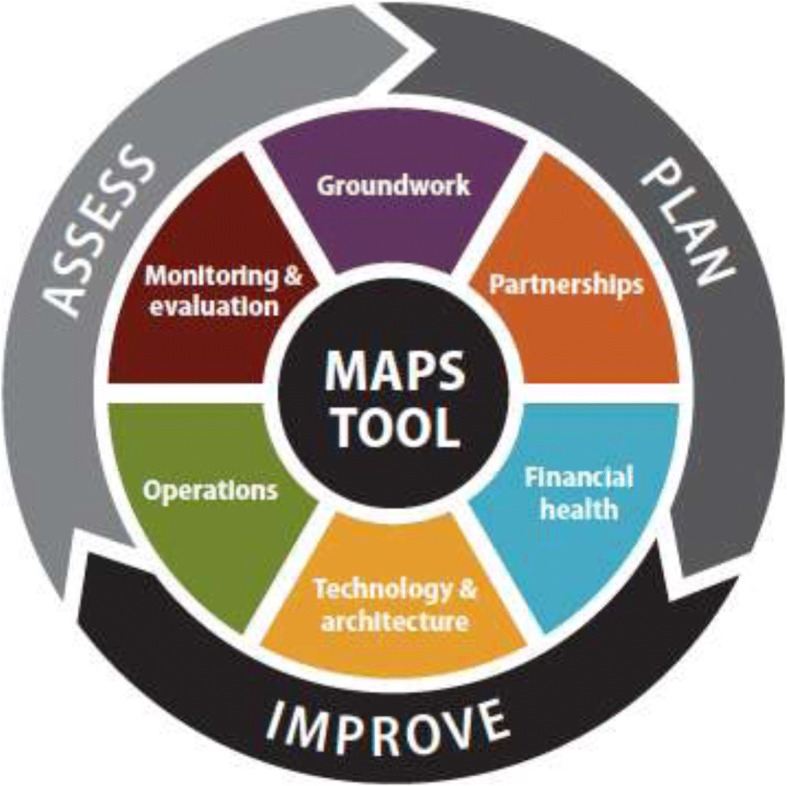
“Best practices for scaling these initiatives in LMICs have been established on the basis of real-world experiences, including the World Health Organization’s mHealth Assessment and Planning for Scale (MAPS) Toolkit (11).”
From Artificial intelligence for global health (2019) · cites this paper as [11]
Citations
Cites
Asp, G., Pettersson, K. O., Sandberg, J., Kabakyenga, J., & Agardh, A. (2014) · Global Health Action · doi:10.3402/gha.v7.22904 · Cited by 255
Community-based approaches and partnerships: innovations in health-service delivery in Bangladesh
El Arifeen, S., Christou, A., Reichenbach, L., Osman, F. A., Azad, K., Islam, K. S., Ahmed, F., Perry, H. B., & Peters, D. H. (2013) · The Lancet · doi:10.1016/s0140-6736(13)62149-2 · Cited by 244
Beyond pilotitis: taking digital health interventions to the national level in China and Uganda
Huang, F., Blaschke, S., & Lucas, H. (2017) · Globalization and Health · doi:10.1186/s12992-017-0275-z · Cited by 182
Surka, S., Edirippulige, S., Steyn, K., Gaziano, T., Puoane, T., & Levitt, N. (2014) · International Journal of Medical Informatics · doi:10.1016/j.ijmedinf.2014.06.008 · Cited by 91
King, C., Hall, J., Banda, M., Beard, J., Bird, J., Kazembe, P., & Fottrell, E. (2014) · Global Health Action · doi:10.3402/gha.v7.25878 · Cited by 62
Lamptey, P., Laar, A., Adler, A. J., Dirks, R., Caldwell, A., Prieto-Merino, D., Aerts, A., Pearce, N., & Perel, P. (2017) · BMC Public Health · doi:10.1186/s12889-017-4260-5 · Cited by 53
Self-citationThe meaning of health in Africa
Baylies, C. (1986) · Review of African Political Economy · doi:10.1080/03056248608703687 · Cited by 10
Baylies, C., & Bujra, J. (1997) · Review of African Political Economy · doi:10.1080/03056249708704270 · Cited by 9
Research works printed but not linked: 4
- Novartis Foundation Telemedicine Project in Ghana Healthcare 2010
- CommCare Introducing CommCare Solutions 2017 1 3
- Flaming A Canty M Javetski G Lesh N The CommCare Evidence Base for Frontline Workers 2015
- PATH Digital Square: New global initiative will connect the world for better health through digital technology 2017 1 7
Cited by
Items 201–300 of 440
Ireri, S., Waiganjo, P., Ochieng, D. O., Kagiri, M., Anindo, M., Adoyo, M., Wanjiru, R., Kirui, J., Pundo, R., Kimani, M., et al. (2025) · Oxford Open Digital Health · doi:10.1093/oodh/oqaf020 · Cited by 12
Chidama, Y. E., & Ononiwu, C. (2022) · The Electronic Journal of Information Systems in Developing Countries · doi:10.1002/isd2.12256 · Cited by 8
Kiendrébéogo, J. A., Tapsoba, C., Sory, O., Kaboré, I., Kafando, Y., Tiendrébéogo, S., Zombré, D., Kaboré, R., Konsebo, N., Nacanabo, R., et al. (2024) · Oxford Open Digital Health · doi:10.1093/oodh/oqae013 · Cited by 5
Haider, K. A., Gulam, O., Adamjee, R., Balouch, B., & Hoodbhoy, Z. A. (2022) · Digital Health · doi:10.1177/20552076221129076 · Cited by 8
Iozzia, L., Cerina, L., Mainardi, L. T., Barbieri, R., & Valenza, G. (2018) · Methods of Information in Medicine · doi:10.3414/me17-02-0013 · Cited by 4
Re, M. D., Espinoza, F., Belón-Hercilla, V., Anza‐Ramirez, C., Custodio, N., Montesinos, R., Cuba-Fuentes, M. S., Butler, C., & Calvo, R. A. (2025) · CHI Conference Extended Abstracts on Human Factors in Computing Systems (CHI EA) · doi:10.1145/3706599.3706662 · Cited by 6
Global telehealth and digital health
Ramnath, V. R. (2023) · Elsevier eBooks · doi:10.1016/b978-0-443-15980-0.00009-0 · Cited by 4
Development and validation of the Workplace Relational Needs Satisfaction Scale (W-RNSS)
Hanc, V., Žvelc, G., & Bajec, B. (2024) · Frontiers in Psychology · doi:10.3389/fpsyg.2024.1419765 · Cited by 12
Pedersen, K., & Schlichter, B. R. (2023) · Interactive Journal of Medical Research · doi:10.2196/40205 · Cited by 4
Wild, H. B. H., Marfo, C. A., Mock, C., Gaarder, T., Gyedu, A., Wallis, L. A., Makasa, E. M. M., Hagander, L. E., Reynolds, T. A., Hardcastle, T. C., et al. (2023) · World Journal of Surgery · doi:10.1007/s00268-023-06985-8 · Cited by 4
Adjei-Boateng, D., & Ikoh, C. L. (2025) · Cureus · doi:10.7759/cureus.85943 · Cited by 9
Cui, T., Li, T., Gong, L., Wang, K., & Luo, Q. (2025) · BMC Public Health · doi:10.1186/s12889-025-22818-w · Cited by 5
Aisyah, D. N., Setiawan, A. H., Lokopessy, A. F., Mayadewi, C. A., Endryantoro, M. T. A., Wibowo, V., Disviana, S., Laksana, I., Aviandito, M., Kozlakidis, Z., et al. (2025) · JMIR Medical Informatics · doi:10.2196/65940 · Cited by 18
Gibson, I., Kerins, C., Foley, L., Hynes, L., Byrne, M., Murphy, A. W., Reardon, C. M., McEvoy, J. W., & Meade, O. (2024) · HRB Open Research · doi:10.12688/hrbopenres.13929.1 · Cited by 5
Ekie, J., Gueye, B., Ekie, T., & Niang, I. (2021) · International Conference on Digital Age & Technological Advances for Sustainable Development (ICDATA) · doi:10.1109/icdata52997.2021.00046 · Cited by 3
Nemer, M., Khader, Y. S., Alyahya, M. S. I., de Corbion, A. P., Sahay, S., & Abu-Rmeileh, N. M. E. (2023) · Frontiers in Digital Health · doi:10.3389/fdgth.2023.1165692 · Cited by 4
The Role of Telemedicine in Enhancing Surgical Care Delivery in Africa: A Literature Review
Huey, A. K. S., Sengar, A. S., Kazan, Z., Choudhary, K., Patel, R. P., Wojtara, M. S., & Uwishema, O. (2024) · Health Science Reports · doi:10.1002/hsr2.70264 · Cited by 4
Sackey, G., Owoyele, B., Baiden, F., & Konigorski, S. (2024) · medRxiv · doi:10.1101/2024.12.29.24319752 · Cited by 4
Park, L. G., Kariuki, J. K., Hendriks, J., Gallagher, R. D., & Burke, L. E. (2025) · European Journal of Cardiovascular Nursing · doi:10.1093/eurjcn/zvaf242 · Cited by 6
Nantume, A., Shah, S., Cauvel, T., Tomback, M., Kilpatrick, R. D., Afzal, B., & Kiwanuka, N. (2021) · Frontiers in Digital Health · doi:10.3389/fdgth.2021.730951 · Cited by 4
German, C. J., Kengia, J. T., Mwanyika, H., Makaranga, J. T., Werner, L., Benadotte, C., Kisanga, A., Macha, T., Weja, J., Mugeta, S., et al. (2024) · Gates Open Research · doi:10.12688/gatesopenres.15870.1 · Cited by 2
Nanyonga, S., Blanshard, P., Crevola, L. M., & Simeon‐Dubach, D. (2026) · Frontiers in Public Health · doi:10.3389/fpubh.2026.1710904 · Cited by 8
Sethy, M., Mahapatro, S. R., Mundu, G. B., & Sahoo, D. M. (2026) · Frontiers in Health Services · doi:10.3389/frhs.2026.1808077 · Cited by 10
Obodo, O. R. (2025) · International Journal of Scientific Research and Modern Technology. · doi:10.38124/ijsrmt.v4i9.816 · Cited by 2
Health information — relevance and accessibility (literature review)
Анатольевна, П. О., Камынина, Н. Н., Skulkina, Y. N., & Korotkova, E. О. (2021) · Health Care of the Russian Federation · doi:10.47470/0044-197x-2021-65-5-498-502 · Cited by 3
Healthcare Innovation & Entrepreneurship, Digital Health Entrepreneurship
Tariq, M. U. (2023) · Springer eBooks · doi:10.1007/978-981-19-6696-5_16 · Cited by 7
Odoh, L., & Aimiosior, O. (2024) · Health Open Research · doi:10.12688/healthopenres.13512.1 · Cited by 3
Brasileiro, J., Muessig, K. E., Lascko, T., Sam-Agudu, N. A., Rochelle, A. E., Mansfield, M. E., Ehoche, A., Adebajo, S., Hightow-Weidman, L. B., Charurat, M., et al. (2026) · Implementation Science Communications · doi:10.1186/s43058-026-00913-2 · Cited by 3
Mastala, P. I., Kalonde, P. K., Chikhola, E., Bailey, J. L. B., Nkhoma, J., Lohr, F., Hiwa, T., Phiri, B., Wood, C., Kapalamula, T. F., et al. (2026) · One Health Outlook · doi:10.1186/s42522-025-00193-1 · Cited by 7
Pearce, L. M. N., Howell, M., Yamato, T. P., Bacha, J. M. R., Pompeu, J. E., Howard, K., Sherrington, C., & Hassett, L. M. (2024) · International Journal of Medical Informatics · doi:10.1016/j.ijmedinf.2024.105589 · Cited by 3
Artificial intelligence for anemia screening, diagnosis, and management
Olawade, D. B., Adeniji, Y. J., Olatunbosun, F. A., Egbon, E., & David-Olawade, A. C. (2025) · Current Research in Translational Medicine · doi:10.1016/j.retram.2025.103560 · Cited by 9
Dhodho, E., Masiye, K., Banda, F., Bepe, T., Nyathi, N., & Chinyanga, T. T. (2026) · Oxford Open Digital Health · doi:10.1093/oodh/oqag003 · Cited by 5
Patel, K., Nayak, B., Behera, T. R., Mandal, N., Rana, S., Gupta, N., Malik, A., Patil, S., & Palo, S. K. (2022) · International Journal of Community Medicine and Public Health · doi:10.18203/2394-6040.ijcmph20222901 · Cited by 3
Doukani, A. (2022) · Springer eBooks · doi:10.1007/978-3-030-89594-5_109 · Cited by 2
Makhanya, Z., Moffett, B., Pozuelo, J. R., Davis, M., Gumikiriza‐Onoria, J. L., Geffen, S., Baloyi, T. C., Sodi, T., Kinyanda, E., Craske, M. G., et al. (2026) · JMIR Mental Health · doi:10.2196/86470 · Cited by 1
Discursive framework for a multi-disease digital health passport in Africa: a perspective
Towett, G., Snead, R. S., Marczika, J., & y Nogueira, I. P. (2024) · Globalization and Health · doi:10.1186/s12992-024-01067-3 · Cited by 4
Njoroge, J. K., Gitau, T. M., Yegon, E. K., Mwita, N., Koimur, A., Ochieng, M., Omondi, R., & Amihanda, R. (2025) · Frontiers in Public Health · doi:10.3389/fpubh.2025.1612973 · Cited by 4
Liyanage, A., Irfaan, S., Moonesinghe, L., Kasturiaratchi, K., Franck, C. P., & Hussein, R. (2025) · Journal of Medical Internet Research · doi:10.2196/74235 · Cited by 5
Lubanga, A. F., Kafera, G., Bwanali, A. N., Choi, Y., Lee, C., Ham, E., Lee, J. Y., Chung, J., & Chung, J. (2025) · Frontiers in Oral Health · doi:10.3389/froh.2025.1443313 · Cited by 2
Strategies for Sustainable Preparedness and Response in LMIC
Mphande, F. A. (2023) · Sustainable development goals series · doi:10.1007/978-981-99-4254-1_8 · Cited by 8
Maternal Recommender System Systematic Literature Review: State of the Art and Future Studies
Priambodo, R., Handayani, P. W., & Aji, R. F. (2023) · Interdisciplinary Journal of Information Knowledge and Management · doi:10.28945/5215 · Cited by 2
Digital Transformation in the Control of Neglected Tropical Diseases: A Scoping Review
Rodrigues, D. D. S., Fonseca, B. D. P. F. E., & Fernandes, E. (2024) · Current Tropical Medicine Reports · doi:10.1007/s40475-024-00319-x · Cited by 3
Ndlovu, K., Stein, N., Gaopelo, R., Monkge, M., Moen, L., & Molwantwa, M. C. (2025) · Oxford Open Digital Health · doi:10.1093/oodh/oqaf014 · Cited by 3
Buchan, M. C., Katapally, T. R., & Bhawra, J. (2025) · JMIR Formative Research · doi:10.2196/53339 · Cited by 5
Patel, N., Wahal, E., Galindo, A. M., Rodarte, A., Jesudason, T., Aarsand, R., & Tordrup, D. (2021) · doi:10.2196/preprints.36046 · Cited by 2
Xie, W., Ahmed, S., Ahsan, A., Sarker, T., Akter, F., Hossain, M. M., Anan, A., Quayyum, Z., Hussain, A. E., Amin, M. R., et al. (2024) · Research Square · doi:10.21203/rs.3.rs-4469744/v1 · Cited by 2
Doukani, A. (2022) · Springer eBooks · doi:10.1007/978-3-030-48277-0_109-3 · Cited by 2
Feldacker, C., Fabens, I., Dong, T. Q., et al. (2024) · medRxiv · doi:10.1101/2024.12.05.24317906 · Cited by 2
Omenka, C. O., Klinton, J. S., Ku, D., Heitkamp, P., Agbaje, A. V., Morita, P. P., & Dodd, W. (2026) · BMC Infectious Diseases · doi:10.1186/s12879-026-12852-3 · Cited by 5
Jemiluyi, O. O. (2025) · SN Business & Economics · doi:10.1007/s43546-025-00885-w · Cited by 3
Obstacles to Spine Surgery in Limited-Resource Environments
Sebaaly, A., Daher, M., Nassar, J. E., Kreichati, G. E., Kharrat, K. E., & Daniels, A. H. (2025) · Journal of Bone and Joint Surgery · doi:10.2106/jbjs.25.01208 · Cited by 4
Mukora, F. N., Matekenya, T., Mahlangu, G., Chirisa, I. E., & Muparutsa, C. H. S. (2022) · Advances in IT standards and standardization research (AISSR) book series/Advances in IT standards and standardization research series · doi:10.4018/978-1-6684-3901-2.ch006 · Cited by 1
Implementation of a marketing plan for the dissemination of the WHO SkinNTDs app in Cameroon
Moungui, H. C., Iyawa, P. T., Nana-Djeunga, H. C., Ruiz-Postigo, J. A., & Carrión, C. (2025) · PLoS ONE · doi:10.1371/journal.pone.0333295 · Cited by 3
Ndlovu, K., Mauco, K. L., Makhura, O. J., Hu, R., Motlogelwa, N. P., Masizana-Katongo, A., Lo, E., Mphoyakgosi, T., & Moyo, S. M. (2023) · JMIR Formative Research · doi:10.2196/50897 · Cited by 3
Application of digital health products in community-dwelling older adults: A scoping review
Guo, Y., Peng, R., Zhang, C., Li, X., Du, Y., Chen, Y., Lu, Y., Li, Z., & Feng, H. (2025) · Geriatric Nursing · doi:10.1016/j.gerinurse.2025.103420 · Cited by 3
Leng, S., & Zhao, L. (2026) · Sustainability · doi:10.3390/su18010410 · Cited by 2
E-HEALTH OPPORTUNITIES FOR THE LOW AND MIDDLE-INCOME COUNTRIES
Rayan, R. Α. (2020) · Global Journal of Public Health Medicine · doi:10.37557/gjphm.v2isp1.40 · Cited by 5
O’Leary, P., Domeracki, A., Raymond, J., Kozhumam, A., Macha, V., Sakita, F., Krym, V., Vissoci, J. R. N., & Staton, C. (2023) · PLOS Global Public Health · doi:10.1371/journal.pgph.0002154 · Cited by 3
David-Olawade, A. C., Adeniji, Y. J., Onuoha, J. U., Bello, O. J., Analikwu, C. C., Egbon, E., & Olawade, D. B. (2026) · Gastroenterology & Endoscopy · doi:10.1016/j.gande.2026.03.003 · Cited by 5
The role of digital therapeutics in the management of prostate cancer: A systematic scoping review
Chen, M., Wu, X., Chen, L., & Wang, Y. (2025) · Digital Health · doi:10.1177/20552076251376261 · Cited by 3
Implementation Status of Public Health Informatics
Chanyalew, M. A. (2024) · Sustainable development goals series · doi:10.1007/978-3-031-71118-3_5 · Cited by 1
Sarker, T., Xie, W., Ahsan, A., Akter, F., Hossain, M. M., Anan, A., Sultana, J., Goon, I. Y., Hersch, F. B., Quayyum, Z., et al. (2026) · BMC Health Services Research · doi:10.1186/s12913-026-14719-4 · Cited by 1
Tamrat, T., Muliokela, R. K., Hussen, A. M., Maya, E. T., Endehabtu, B. F., Dery, S. K. K., Telake, H. A., Asante, J., Weldeab, A. N., Thwin, S. S., et al. (2025) · Health Research Policy and Systems · doi:10.1186/s12961-025-01397-7 · Cited by 1
The future of diagnostics in Africa
Kebede, Y., Ndlovu, N., Nabadda, S. N., Sawadogo, C., Fuller, D., Pai, M., Ashenafi, A., Vojnov, L., Kadam, R., Kallarakal, A., et al. (2026) · Nature Medicine · doi:10.1038/s41591-026-04308-7 · Cited by 2
Future Developments of Digital Health and Considerations on Sustainability
Zamstein, N., Nanyonga, S., Morel, E., Wayne, R., Nottebaum, S., & Kozlakidis, Z. (2024) · Sustainable development goals series · doi:10.1007/978-3-031-62332-5_23 · Cited by 2
Feldacker, C., Fabens, I., Dong, T. Q., Moyo, K., Makhele, C., Phohole, M., Igaba, N., Hlongwane, S., Pienaar, J., Sardini, M., et al. (2025) · PLoS ONE · doi:10.1371/journal.pone.0314436 · Cited by 3
Human--AI Interaction in Low-Tech, Low-Resource Healthcare Systems
Wasi, A. T., & Sukanya, M. R. (2026) · ACM Interactive Health Conference · doi:10.1145/3786579.3804944 · Cited by 1
Zhou, Y., & Xu, L. (2026) · Frontiers in Public Health · doi:10.3389/fpubh.2026.1726172 · Cited by 1
Wianecki, N., Ofei, L. M., Crespi, C. M., Wane, D., Sangare, R., Rideau, A., Diaw, M., & Massey, P. M. (2025) · Health Promotion International · doi:10.1093/heapro/daaf117 · Cited by 1
Identifying Gaps in Mobile Data Collection by Frontline Health Workers in Bangladesh
Patwary, M. M., & Islam, N. (2025) · Annals of Global Health · doi:10.5334/aogh.4868 · Cited by 1
Mugabo, H., Rukundo, G., Ngabonziza, J. C. S., Mazarati, J.-B., Aghatise, J., & Akinwusi, O. (2024) · Oxford Open Digital Health · doi:10.1093/oodh/oqae034 · Cited by 1
Nanyonga, S., Medina, P. B., Kozlakidis, Z., Garcia, D. L., Ivanova, D., & Katsaounis, P. (2024) · Sustainable development goals series · doi:10.1007/978-3-031-62332-5_25 · Cited by 1
Digital Health Interventions to Empower People with Sickle Cell Disease: Toward Patient-Led Design
Issom, D.-Z. (2022) · IntechOpen eBooks · doi:10.5772/intechopen.104962 · Cited by 2
Digital divide in diabetes care: qualitative insights from the DIG-EQUITY study, India
Anjana, R. M., Nitika, S., Kuriakose, S., Gibson, A. A., Kamotho, C., Heine, M., Brant, L. C. C., Tromp, J., Jose, A. P., & Ranjani, H. (2026) · BMC Public Health · doi:10.1186/s12889-026-26999-w · Cited by 3
Designing Okuma: A Digital Health Tool for Type 2 Diabetes in Nigeria
Arueyingho, O., O’Kane, A. A., Marshall, P., Aprioku, J. S., Nkwo, M. S., & Shivam, R. (2025) · African Human Computer Interaction Conference (AfriCHI) · doi:10.1145/3757232.3757233 · Cited by 2
Mobile health interventions for substance use reduction: a systematic review
Guta, M. T., Abamecha, F., Amdisa, D., & Abate, K. H. (2025) · F1000Research · doi:10.12688/f1000research.162638.1 · Cited by 1
An, L. P., Nguyen, T. T., Cao, V. T. C., Ha, T. H. D., Chung, L. T. T., Truong, T. N., Tung, N. L. N., Dao, K. B., Nguyen, H. V., Khanh, P. N. Q., et al. (2024) · JMIR Human Factors · doi:10.2196/44619 · Cited by 2
Impact of Digital Healthcare Technology and Services on LMICs
Ansari, S. R., & Ibrahim, M. I. M. (2022) · Springer eBooks · doi:10.1007/978-3-030-50247-8_49-1 · Cited by 1
Human-Centered AI in Healthcare
Majumder, N. N., & Adebiyi, B. O. (2026) · Springer eBooks · doi:10.1007/978-981-97-8440-0_112-1 · Cited by 2
Proceedings from the CIHLMU Symposium 2020 on “eHealth: Trends and innovations”
Noreña, I., Shah, N., Ndenkeh, J. J. N., Hernandez, C., Sitoe, N. E., Sillah, A. K., Shin, A., Han, W. W., Devaera, Y., Mosoba, M. M., et al. (2020) · BMC Proceedings · doi:10.1186/s12919-020-00202-3 · Cited by 3
Seeiso, T., & Mhlongo, E. M. (2025) · BMJ Open · doi:10.1136/bmjopen-2024-093878 · Cited by 2
Doukani, A. (2021) · Springer eBooks · doi:10.1007/978-3-030-48277-0_109-1 · Cited by 2
Beyond seed funding: why Nigerian digital health startups struggle to grow
Elechi, U. S., Onah, C. O., Tarawallie, M. A., & Ironuru, I. C. (2025) · Health Economics Review · doi:10.1186/s13561-025-00708-6 · Cited by 4
Alhur, A., Alhur, A. A., Alharbi, B. F. A., AlDosri, A., aldosari, M., Alwabisi, R., Dausary, S. A., aldawsri, S., Alrasheed, A., Alzahrani, S. S., et al. (2022) · doi:10.53555/jptcp.v30i19.5521 · Cited by 1
Implementasi DHIS2 untuk Program Surveilans Kasus Gigitan Hewan Penyebab Rabies di Indonesia
Raharjo, U. D. (2022) · Journal of Information Systems for Public Health · doi:10.22146/jisph.71311 · Cited by 4
Thew, H. Z., Yap, A. Q. R., Tan, T. Q., Goh, J. H., & Chen, T. C. (2025) · Springer eBooks · doi:10.1007/978-981-95-2175-3_4 · Cited by 1
Digitizing HIV care in Uganda: Patient and provider perspectives on the AmFine patient portal
Kiconco, R., Atwine, R., Kamuganga, F., Kanyesigye, M., Owamaani, D., Sanyu, N., Tumuhimbise, W., Muyindike, W. R., Musiimenta, A., & Cimino, J. J. (2025) · Digital Health · doi:10.1177/20552076251376270 · Cited by 1
Shrestha, R. K., Paudel, S., Adhikari, T. B., Khatri, B., Adhikari, S., Neupane, D., Vaidya, A., Kallestrup, P., & Rijal, A. (2025) · British Journal of Sports Medicine · doi:10.1136/bjsports-2025-110035 · Cited by 5
Metadata
- Authors
- Labrique, A. B., Wadhwani, C., Williams, K. A., Lamptey, P., Hesp, C., Luk, R., & Aerts, A.
- Affiliations
- Johns Hopkins University (US)
- Novartis Foundation (CH)
- Family Health International 360 (US)
- PharmAccess Group (NL)
- Corresponding author
- Labrique, Alain B.
- Venue
- Globalization and Health
- Published
- 2018-11-03
- Volume
- 14
- Issue
- 1
- Pages
- 103-103
- ISSN
- 1744-8603 (ISSN-L)
- PMC
- PMC6215624
- OpenAlex
- W2899241902
- Semantic Scholar
- c32a3a9141707f83f0e3d4ed6c159851be09887a
- Cited by
- 449
- References
- 8
- Citations by year
- 2026: 88 · 2025: 82 · 2024: 73 · 2023: 58 · 2022: 44 · 2021: 65 · 2020: 30 · 2019: 6 · 2018: 2
- FWCI
- 4.65
- Type
- journal article
- Language
- en
- Open access
- gold
- doi.org
- Licence
- cc-by
- creativecommons.org/licenses/by/4.0/ (tdm)
- Locations
- Globalization and Health (publishedVersion, cc-by)
- Europe PMC (PubMed Central) (publishedVersion, other-oa)
- PubMed Central (publishedVersion, cc-by)
- PubMed (publishedVersion)
- LSHTM Research Online (London School of Hygiene and Tropical Medicine) (acceptedVersion)
- DOAJ (DOAJ: Directory of Open Access Journals) (submittedVersion, cc-by-sa)
- Funders
- Novartis Foundation
- Topics
- Health Sciences › Medicine › Public Health, Environmental and Occupational Health › Healthcare Systems and Practices
- Physical Sciences › Computer Science › Information Systems › ICT in Developing Communities
- Health Sciences › Medicine › Public Health, Environmental and Occupational Health › Telemedicine and Telehealth Implementation
- Keywords
- digital health, scaling, low- and middle-income countries, health system integration, stakeholder engagement, interoperability, health policy alignment, sustainable funding, digital health infrastructure, end-user involvement, health care access, private sector funding
- MeSH terms
- Developing Countries, Humans, Telemedicine, Evidence-Based Practice
About these checks
Registry, retraction, Cites and statistics results are computed, not judged, with one exception: a printed reference that no index lists is read once by a model before it counts as a citation error. Claims are extracted by a model and kept only when their quote appears verbatim in the text; each cited source is then checked, with a model’s help, for whether it says what the claim relies on. Those verdicts can be wrong — read the claim’s quote and the cited source before relying on one.
The claim verdicts this report counts are experimental: their accuracy is not yet measured.
A language model drew the claims from the paper on 2026-09-30, under version 3 of the claim definition (model deepseek-v4.1-flash, prompt extract-v3).
A second model labelled each claim on 2026-09-30 (model jev-1.13-20260917, definition revision gold-guideline-v0.2).
Cited sources are checked with a language model’s help (gpt-6-sol).
Statistics and arithmetic are recomputed, not judged.
Confidence bands are shown only for fields calibrated on our annotated test set. None is calibrated yet, so no band is shown.
What counts as a claim ›How we measure confidence ›How we check this ›
Are you an author, or do you see a problem with this page? Request a review
Data sources
Bibliographic data: Semantic Scholar, OpenAlex, Crossref.
Contains information from the Semantic Scholar Academic Graph Datasets, made available under the ODC Attribution License (ODC-BY 1.0).
Semantic Scholar’s data is described in: Kinney, R., et al. (2023). The Semantic Scholar Open Data Platform. arXiv:2301.10140.
