

Best practices in scaling digital health in low and middle income countries
Open accessThe DOI matches its Crossref record; 8 of the 8 references it cites were found in a registry or an index; 10 of the 45 sources its claims cite were checked for support.
Abstract
Healthcare challenges in low and middle income countries (LMICs) have been the focus of many digital initiatives that have aimed to improve both access to healthcare and the quality of healthcare delivery. Moving beyond the initial phase of piloting and experimentation, these initiatives are now more clearly focused on the need for effective scaling and integration to provide sustainable benefit to healthcare systems.Based on real-life case studies of scaling digital health in LMICs, five key focus areas have been identified as being critical for success. Firstly, the intrinsic characteristics of the programme or initiative must offer tangible benefits to address an unmet need, with end-user input from the outset. Secondly, all stakeholders must be engaged, trained and motivated to implement a new initiative, and thirdly, the technical profile of the initiative should be driven by simplicity, interoperability and adaptability. The fourth focus area is the policy environment in which the digital healthcare initiative is intended to function, where alignment with broader healthcare policy is essential, as is sustainable funding that will support long-term growth, including private sector funding where appropriate. Finally, the extrinsic ecosystem should be considered, including the presence of the appropriate infrastructure to support the use of digital initiatives at scale.At the global level, collaborative efforts towards a less-siloed approach to scaling and integrating digital health may provide the necessary leadership to enable innovative solutions to reach healthcare workers and patients in LMICs. This review provides insights into best practice for scaling digital health initiatives in LMICs derived from practical experience in real-life case studies, discussing how these may influence the development and implementation of health programmes in the future.
Overview
CoChat Summary
TL;DR
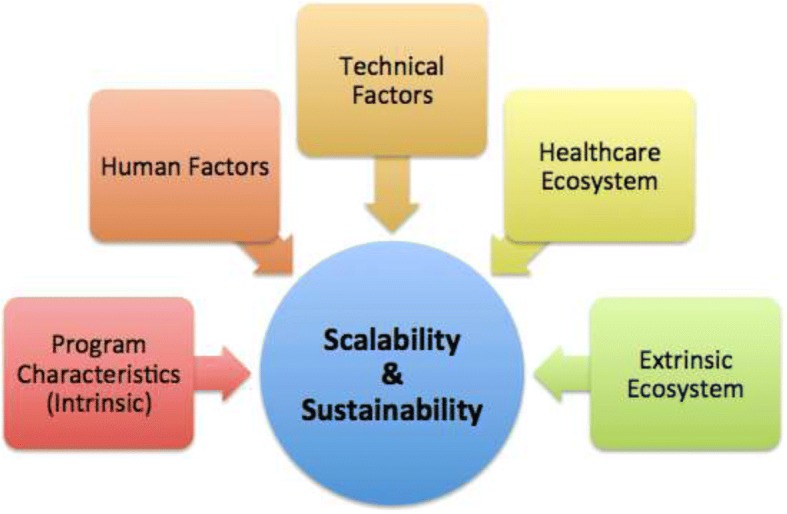
This review distills best practices for scaling digital health in low and middle income countries (LMICs) from real-life case studies discussed at a Digital Health Dialogue in Ghana. It identifies five critical focus areas: programme characteristics, human factors, technical factors, the healthcare ecosystem, and the extrinsic ecosystem.
Key findings
- Five focus areas are critical for scaling digital health in LMICs: programme characteristics, human factors, technical factors, healthcare ecosystem, and extrinsic ecosystem; these should be considered individually and as an interlinked system.
- Simplicity, interoperability, and adaptability are emphasized: simple systems using SMS, IVR, USSD, or voice may scale more easily than complex internet/data-dependent technologies; examples include the mDiabetes Project in Senegal and BBC Mobile Kunji, while CommCare has scaled to > 50,000 mobile users with offline capacity and patient security options.
- Policy alignment, sustainable financing, and ecosystem readiness matter: Uganda issued an mHealth moratorium in 2012 to align digital health with national strategy; Ghana telemedicine moved from public-private support to Ghana Health Service covering operational and maintenance costs; MomConnect was integrated into South Africa’s National Department of Health in 2015; and it is estimated that around 60% of healthcare financing in Africa comes from private sources.
- Human factors and real-time data use are important: training, motivation, clear roles, and supervision support scale; ComHIP trained licensed chemical sellers in Ghana, M-TIBA in Kenya was built on the familiar M-PESA system, and real-time data systems such as Open Smart Register Platform in Bangladesh can support performance monitoring and justify further investment.
Methods
- This is a review based on real-life case studies and expert discussions from a Digital Health Dialogue held in Ghana, synthesizing practical experience into five focus areas for scaling digital health in LMICs.
- The paper reports no systematic review protocol, search strategy, inclusion criteria, primary data collection, or quantitative analysis; it draws on selected case examples and expert input.
Limitations
- Stated: the recommendations are collated from case studies and experts willing to discuss successes and failures; specific guidelines and best practices for digital health will likely change rapidly, though the core principles across the five domains are likely to hold true.
- Stated: many factors fall outside individual projects’ influence, such as stability of the national electrical grid, cellular coverage in remote areas, and government leadership; human resource capacity in health informatics, information sciences, statistical analysis, and technology management is often in short supply; interoperability, adaptability, data storage, access, and confidentiality remain challenges.
- Evident: the case-study and expert-discussion design lacks systematic search, selection criteria, and quantitative outcome synthesis, so findings may reflect selected examples and may not be broadly generalizable.
Model-written summary. Check it against the paper before relying on it.
Integrity signals
Registry
Cites
Statistics
Figures
Verification
Claims the paper makes
9 Valid · 2 Not valid · 26 Not checked · 53 Own results and interpretations
Every source the paper cites for this claim was checked and supports it.
In the paper
“Frustrated by the proliferation of separate projects that were not sharing data, nor integrated within the health system, the Ministry of Health of Uganda issued a moratorium on mHealth projects in the country in 2012 [16].”
§ Best practices in scaling digital health in low and middle income countries > Background > Practical experience of scaling up digital health innovations
What the sources say
- Supportedcites [16] Huang F Blaschke S Lucas H Beyond pilotitis: taking digital health interventions to the national level in China and Uganda Glob Health 2017 13 49 10.1186/s12992-017-0275-z PMC5535287 28756767 source
The Introduction (page not provided) describes frustration with stand-alone digital health projects and says Uganda’s government initiated a moratorium in 2012, requiring future interventions to prioritize interoperability and conformity with Ministry of Health data requirements. That supports the claim’s description of separate projects lacking data sharing and health-system integration. (LLM, conf=0.91)
plainstates a cause- Asserted: passes — The authors put it forward as true.
- Checkable: passes — It can be checked against evidence.
- Load-bearing: unclear — It is unclear whether the paper’s conclusions depend on it.
- Based: passes — The paper gives a reason why it holds.
- Supported
The cited sources support only part of this claim — read each source’s verdict below.
In the paper
“This innovative programme is an example of how digital health can help to alleviate the burden on sometimes overloaded primary healthcare systems [10, 11].”
§ Best practices in scaling digital health in low and middle income countries > Background > Practical experience of scaling up digital health innovations
What the sources say
- Not matchedcites [10] FHI 360. Community-based Hypertension Improvement Project (ComHIP). 2016;:1–2. https://www.fhi360.org/projects/community-based-hypertension-improvement-project-comhip. Accessed 19 Oct 2017.
We searched by its title and found no matching paper.
- Supportedcites [11] Lamptey P Laar A Adler AJ Dirks R Caldwell A Prieto-Merino D Evaluation of a community-based hypertension improvement program (ComHIP) in Ghana: data from a baseline survey BMC Public Health 2017 17 368 10.1186/s12889-017-4260-5 28454523 PMC5410035 source
The Background (page unavailable) describes ComHIP as using ICTs and task shifting to enhance the Ghana Health Service’s capacity to manage hypertension. It also describes limited workforce capacity. This supports the sentence’s use of ComHIP as an example of how digital health can help, rather than as proof that the programme has already reduced workload. (LLM, conf=0.86)
plainstates a possible causeSingle case- Asserted: passes — The authors put it forward as true.
- Checkable: passes — It can be checked against evidence.
- Load-bearing: unclear — It is unclear whether the paper’s conclusions depend on it.
- Based: passes — The paper gives a reason why it holds.
- Not matched
Every source the paper cites for this claim was checked and supports it.
In the paper
“In the example of the Uganda mHealth moratorium, the government chose to align the goals of digital health with a broader national health strategy [16].”
§ Best practices in scaling digital health in low and middle income countries > Background > Practical experience of scaling up digital health innovations
What the sources say
- Supportedcites [16] Huang F Blaschke S Lucas H Beyond pilotitis: taking digital health interventions to the national level in China and Uganda Glob Health 2017 13 49 10.1186/s12992-017-0275-z PMC5535287 28756767 source
The Introduction (page unavailable) says Uganda’s government imposed the mHealth moratorium to require future interventions to prioritize interoperability, sustainability, and conformity with Ministry of Health requirements. The Uganda case study (page unavailable) describes integration of mTrac into the national health information system. Together, these support the paraphrase that the government sought to align digital health initiatives with its broader health-system strategy. (LLM, conf=0.86)
plainSingle case- Asserted: passes — The authors put it forward as true.
- Checkable: passes — It can be checked against evidence.
- Load-bearing: unclear — It is unclear whether the paper’s conclusions depend on it.
- Based: passes — The paper gives a reason why it holds.
- Supported
The cited sources support only part of this claim — read each source’s verdict below.
In the paper
“The ComHIP programme in Ghana on the other hand, provides an example of a programme that addresses unmet needs in managing chronic diseases in LMICs by leveraging existing technologies that do not require policy engagement [11].”
§ Best practices in scaling digital health in low and middle income countries > Background > Practical experience of scaling up digital health innovations
What the sources say
- Partly supportedcites [11] Lamptey P Laar A Adler AJ Dirks R Caldwell A Prieto-Merino D Evaluation of a community-based hypertension improvement program (ComHIP) in Ghana: data from a baseline survey BMC Public Health 2017 17 368 10.1186/s12889-017-4260-5 28454523 PMC5410035 sourceExperimental — accuracy not yet measured
The Background (page not provided) describes ComHIP as a Ghanaian hypertension-control programme that uses ICTs and task shifting to improve management, addressing a documented need. It does not establish that ComHIP requires no policy engagement. The Discussion mentions policy-maker engagement, but for an earlier programme, not ComHIP. (LLM, conf=0.85)
plainstates a causeSingle case- Asserted: passes — The authors put it forward as true.
- Checkable: passes — It can be checked against evidence.
- Load-bearing: unclear — It is unclear whether the paper’s conclusions depend on it.
- Based: passes — The paper gives a reason why it holds.
- Partly supported
The cited sources support only part of this claim — read each source’s verdict below.
In the paper
“For example, ComHIP utilises mobile phones to empower patients by sending daily reminders for follow-up appointments, medication adherence, and nutritional health information.”
§ Best practices in scaling digital health in low and middle income countries > Background > Practical experience of scaling up digital health innovations
What the sources say
- Partly supportedcites [11] Lamptey P Laar A Adler AJ Dirks R Caldwell A Prieto-Merino D Evaluation of a community-based hypertension improvement program (ComHIP) in Ghana: data from a baseline survey BMC Public Health 2017 17 368 10.1186/s12889-017-4260-5 28454523 PMC5410035 sourceExperimental — accuracy not yet measured
The Background (page unavailable) says ComHIP uses information and communication technologies. It describes lifestyle messages, appointment reminders, and treatment-adherence support in an earlier FHI 360 pilot, not specifically in ComHIP. Our copy does not establish that ComHIP sent those messages or that reminders were daily. (LLM, conf=0.86)
plainstates a cause- Asserted: passes — The authors put it forward as true.
- Checkable: passes — It can be checked against evidence.
- Load-bearing: unclear — It is unclear whether the paper’s conclusions depend on it.
- Based: passes — The paper gives a reason why it holds.
- Partly supported
28 more claims
Create a free account to see all 90 claims and every source verdict.
- It may state two separate claims as one. 34
- Probably not a substantial claim. 41
Claims other papers make about this one
Each is checked against this paper’s own text: does it say what the citing paper says it does?
The source backs part of the claim, not all of it — or backs it for a different population, condition or comparison.
In the citing paper
“Instead, most mHealth systems often collect and transmit data to their own independent repositories that are separate from facility-based EHR systems—adding to the problem of siloed information for patients spread across multiple systems [19].”
From mUzima Mobile Electronic Health Record (EHR) System: Development and Implementation at Scale (2021) · cites this paper as [19]
Experimental — accuracy not yet measuredIn the citing paper
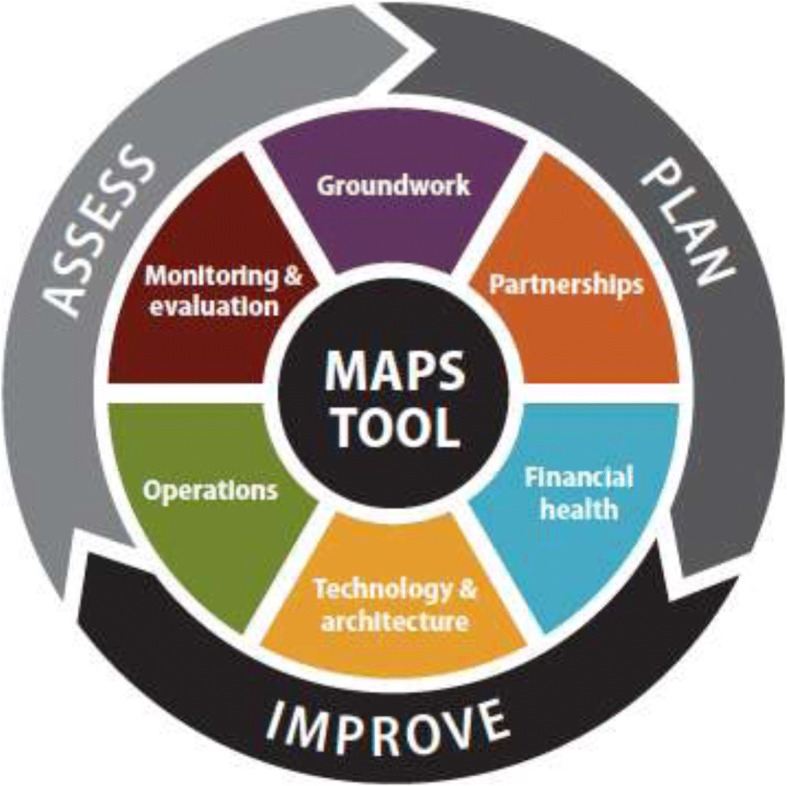
“Best practices for scaling these initiatives in LMICs have been established on the basis of real-world experiences, including the World Health Organization’s mHealth Assessment and Planning for Scale (MAPS) Toolkit (11).”
From Artificial intelligence for global health (2019) · cites this paper as [11]
Citations
Cites
Asp, G., Pettersson, K. O., Sandberg, J., Kabakyenga, J., & Agardh, A. (2014) · Global Health Action · doi:10.3402/gha.v7.22904 · Cited by 255
Community-based approaches and partnerships: innovations in health-service delivery in Bangladesh
El Arifeen, S., Christou, A., Reichenbach, L., Osman, F. A., Azad, K., Islam, K. S., Ahmed, F., Perry, H. B., & Peters, D. H. (2013) · The Lancet · doi:10.1016/s0140-6736(13)62149-2 · Cited by 244
Beyond pilotitis: taking digital health interventions to the national level in China and Uganda
Huang, F., Blaschke, S., & Lucas, H. (2017) · Globalization and Health · doi:10.1186/s12992-017-0275-z · Cited by 182
Surka, S., Edirippulige, S., Steyn, K., Gaziano, T., Puoane, T., & Levitt, N. (2014) · International Journal of Medical Informatics · doi:10.1016/j.ijmedinf.2014.06.008 · Cited by 91
King, C., Hall, J., Banda, M., Beard, J., Bird, J., Kazembe, P., & Fottrell, E. (2014) · Global Health Action · doi:10.3402/gha.v7.25878 · Cited by 62
Lamptey, P., Laar, A., Adler, A. J., Dirks, R., Caldwell, A., Prieto-Merino, D., Aerts, A., Pearce, N., & Perel, P. (2017) · BMC Public Health · doi:10.1186/s12889-017-4260-5 · Cited by 53
Self-citationThe meaning of health in Africa
Baylies, C. (1986) · Review of African Political Economy · doi:10.1080/03056248608703687 · Cited by 10
Baylies, C., & Bujra, J. (1997) · Review of African Political Economy · doi:10.1080/03056249708704270 · Cited by 9
Research works printed but not linked: 4
- Novartis Foundation Telemedicine Project in Ghana Healthcare 2010
- CommCare Introducing CommCare Solutions 2017 1 3
- Flaming A Canty M Javetski G Lesh N The CommCare Evidence Base for Frontline Workers 2015
- PATH Digital Square: New global initiative will connect the world for better health through digital technology 2017 1 7
Cited by
Medical imaging and nuclear medicine: a Lancet Oncology Commission
Hricak, H., Abdel-Wahab, M., Atun, R., Lette, M. M., Paez, D., Brink, J. A., Donoso-Bach, L., Frija, G., Hierath, M., Holmberg, O., et al. (2021) · The Lancet Oncology · doi:10.1016/s1470-2045(20)30751-8 · Cited by 368
Applied body-fluid analysis by wearable devices
Brasier, N., Wang, J., Gao, W., Sempionatto, J. R., Dincer, C., Ates, H. C., Güder, F., Olenik, S., Schauwecker, I., Schaffarczyk, D., et al. (2024) · Nature · doi:10.1038/s41586-024-08249-4 · Cited by 298
Mobile Health (mHealth) in Low- and Middle-Income Countries
McCool, J., Dobson, R., Whittaker, R., & Paton, C. (2022) · Annual Review of Public Health · doi:10.1146/annurev-publhealth-052620-093850 · Cited by 269
Sustainable Development Goals relevant to kidney health: an update on progress
Luyckx, V. A., Al-Aly, Z., Bello, A. K., Bellorin-Font, E., Carlini, R. G., Fabian, J., Garcia-Garcia, G., Iyengar, A., Sekkarie, M., van Biesen, W., et al. (2021) · Nature Reviews Nephrology · doi:10.1038/s41581-020-00363-6 · Cited by 221
Kaboré, S. S., Ngangue, P., Soubeiga, D., Barro, A., Pilabré, A. H., Bationo, N., Pafadnam, Y., Drabo, K. M., Hien, H., & Savadogo, G. B. L. (2022) · Frontiers in Digital Health · doi:10.3389/fdgth.2022.1014375 · Cited by 203
“Facilitators for the sustainability of DHIs such as triggered and selected according to the needs of communities ’ healthcare workers, designed and implanted with the participation of end-users, and the possibility of continual feedback from end-users are similar to results found in the study of Labrique et al. (32).”
BackgroundResultInfluentialEnhancing global access to cancer medicines
Cortes, J., Perez‐García, J. M., Llombart‐Cussac, A., Curigliano, G., El Saghir, N. S., Cardoso, F., Barrios, C. H., Wagle, S., Roman, J., Harbeck, N., et al. (2020) · CA: A Cancer Journal for Clinicians · doi:10.3322/caac.21597 · Cited by 203
Artificial intelligence for global health
Hosny, A., & Aerts, H. J. W. L. (2019) · Science · doi:10.1126/science.aay5189 · Cited by 177
The Role of Digital Navigators in Promoting Clinical Care and Technology Integration into Practice
Wisniewski, H., Gorrindo, T., Rauseo-Ricupero, N., Hilty, D., & Torous, J. (2020) · Digital Biomarkers · doi:10.1159/000510144 · Cited by 155
iCHECK-DH: Guidelines and Checklist for the Reporting on Digital Health Implementations
Perrin Franck, C., Babington-Ashaye, A., Dietrich, D., Bediang, G., Veltsos, P., Gupta, P. P., Juech, C., Kadam, R., Collin, M., Setian, L., et al. (2023) · Journal of Medical Internet Research · doi:10.2196/46694 · Cited by 111
WHO digital health guidelines: a milestone for global health
Labrique, A., Agarwal, S., Tamrat, T., & Mehl, G. (2020) · npj Digital Medicine · doi:10.1038/s41746-020-00330-2 · Cited by 112
Self-citationDigital health promotion: promise and peril
Koh, A., Swanepoel, D. W., Ling, A. M. C., Ho, B. L., Tan, S. Y., & Lim, J. F. Y. (2021) · Health Promotion International · doi:10.1093/heapro/daab134 · Cited by 128
(2022) · doi:10.2196/preprints.42161 · Cited by 106
Generalizability assessment of AI models across hospitals in a low-middle and high income country
Yang, J., Dung, N. T., Thạch, P. N., Phong, N. T., Phu, V. D., Dong, P. K., Yen, L. M., Thy, D. B. X., Soltan, A. A. S., Thwaites, L., et al. (2024) · Nature Communications · doi:10.1038/s41467-024-52618-6 · Cited by 136
Watson, A., & Wilkinson, T. M. A. (2022) · Therapeutic Advances in Respiratory Disease · doi:10.1177/17534666221075493 · Cited by 110
Current challenges of digital health interventions in Pakistan: mixed methods analysis
Kazi, A. M., Qazi, S. A., Ahsan, N., Khawaja, S., Sameen, F., Saqib, M., Khan Mughal, M. A., Wajidali, Z., Ali, S., Ahmed, R. M., et al. (2020) · Journal of Medical Internet Research · doi:10.2196/21691 · Cited by 93
Scale-up of Digital Innovations in Health Care: Expert Commentary on Enablers and Barriers
Schlieter, H., Marsch, L. A., Whitehouse, D., Otto, L., Londral, A. R., Teepe, G. W., Benedict, M., Ollier, J., Ulmer, T., Gasser, N., et al. (2022) · Journal of Medical Internet Research · doi:10.2196/24582 · Cited by 88
Current Challenges of Digital Health Interventions in Pakistan: Mixed Methods Analysis (Preprint)
(2020) · doi:10.2196/preprints.21691 · Cited by 93
World Heart Federation Roadmap for Digital Health in Cardiology
Tromp, J., Jindal, D., Redfern, J., Bhatt, A. B., Séverin, T., Banerjee, A., Ge, J., Itchhaporia, D., Jaarsma, T., Lanas, F. T., et al. (2022) · Global Heart · doi:10.5334/gh.1141 · Cited by 96
McLean, K. A., Mountain, K. E., Shaw, C. A., Drake, T. M., Pius, R., Knight, S. R., Fairfield, C. J., Sgrò, A., Bouamrane, M.-M., Cambridge, W. A., et al. (2021) · npj Digital Medicine · doi:10.1038/s41746-021-00526-0 · Cited by 80
Digital healthcare: Historical development, applications, and future research directions
Sharma, R., & Kshetri, N. (2020) · International Journal of Information Management · doi:10.1016/j.ijinfomgt.2020.102105 · Cited by 105
Pervin, J., Venkateswaran, M., Nu, U. T., Rahman, M., O’Donnell, B., Friberg, I. K., Rahman, A. M., & Frøen, J. F. (2021) · PLoS ONE · doi:10.1371/journal.pone.0257782 · Cited by 83
Khan, A., Shrivastava, R., Tugnawat, D., Singh, A., Dimidjian, S., Patel, V., Bhan, A., & Naslund, J. A. (2020) · Journal of Technology in Behavioral Science · doi:10.1007/s41347-020-00154-7 · Cited by 63
Ratnayake, R., Tammaro, M., Tiffany, A., Kongelf, A., Polonsky, J. A., & McClelland, A. (2020) · The Lancet Planetary Health · doi:10.1016/s2542-5196(20)30221-7 · Cited by 60
Koch, S., Marschollek, M., Wolf, K.-H., Plischke, M., & Haux, R. (2008) · Methods of Information in Medicine · doi:10.3414/me9136 · Cited by 73
Challenges and Solutions in translating sepsis guidelines into practice in resource-limited settings
Ranjit, S., & Kissoon, N. “. (2021) · Translational Pediatrics · doi:10.21037/tp-20-310 · Cited by 83
Swartz, A., LeFevre, A. E., Perera, S., Kinney, M. V., & George, A. S. (2021) · Globalization and Health · doi:10.1186/s12992-021-00716-1 · Cited by 63
The Ayushman Bharat Digital Mission of India: An Assessment
Mishra, U. S., Yadav, S., & Joe, W. (2024) · Health Systems & Reform · doi:10.1080/23288604.2024.2392290 · Cited by 72
Graham, S. A., Stein, N., Shemaj, F., Branch, O. H., Paruthi, J., & Kanick, S. C. (2021) · Frontiers in Digital Health · doi:10.3389/fdgth.2021.642818 · Cited by 56
Tom-Aba, D., Silenou, B. C., Doerrbecker, J., Fourie, C., Leitner, C., Wahnschaffe, M., Strysewske, M., Arinze, C. C., & Krause, G. (2020) · JMIR Public Health and Surveillance · doi:10.2196/15860 · Cited by 57
Royston, G., Pakenham-Walsh, N. M., & Zielinski, C. (2020) · BMJ Global Health · doi:10.1136/bmjgh-2020-002475 · Cited by 63
Diagnostic digital pathology implementation: Learning from the digital health experience
Betmouni, S. (2021) · Digital Health · doi:10.1177/20552076211020240 · Cited by 60
Singh, N., Scott, K., George, A. S., LeFevre, A. E., & Ved, R. R. (2021) · BMJ Global Health · doi:10.1136/bmjgh-2021-005041 · Cited by 47
Kaushik, A., Barcellona, C., Mandyam, N. K., Tan, S. Y., & Tromp, J. (2025) · Journal of Medical Internet Research · doi:10.2196/58338 · Cited by 82
Prodan, A., Deimel, L., Ahlqvist, J., Birov, S., Thiel, R., Toivanen, M., Kolitsi, Z., & Kalra, D. (2022) · Frontiers in Medicine · doi:10.3389/fmed.2022.854665 · Cited by 44
Making Digital Health “Solutions” Sustainable in Healthcare Systems: A Practitioner Perspective
Cripps, M., & Scarbrough, H. (2022) · Frontiers in Digital Health · doi:10.3389/fdgth.2022.727421 · Cited by 46
Ebenso, B., Okusanya, B. O., Okunade, K. S., Akeju, D. O., Ajepe, A., Akaba, G. O., Yalma, R. M., Dirisu, O., Tukur, J., Abdullahi, M. K., et al. (2021) · Frontiers in Global Women s Health · doi:10.3389/fgwh.2021.670494 · Cited by 54
Pfob, A., Sidey-Gibbons, C. J., Schuessler, M., Lu, S.-C., Xu, C., Dubsky, P. C., Golatta, M., & Heil, J. (2021) · JCO Clinical Cancer Informatics · doi:10.1200/cci.21.00032 · Cited by 42
Lessons Learned From Implementing Digital Health Tools to Address COVID-19 in LMICs
Mason, C., Lazenby, S., Stuhldreher, R., Kimball, M., & Bartlein, R. (2022) · Frontiers in Public Health · doi:10.3389/fpubh.2022.859941 · Cited by 45
Egermark, M., Blasiak, A., Remus, A., Sapanel, Y., & Ho, D. (2022) · Advanced Intelligent Systems · doi:10.1002/aisy.202200056 · Cited by 38
Nkhoma, K. B., Ebenso, B., Akeju, D. O., Adejoh, S. O., Bennett, M., Chirenje, M. Z., Dandadzi, A., Nabirye, E., Namukwaya, E., Namisango, E., et al. (2021) · BMC Palliative Care · doi:10.1186/s12904-020-00694-y · Cited by 44
Toolkits for implementing and evaluating digital health: A systematic review of rigor and reporting
Godinho, M. A., Ansari, S., Guo, G. N., & Liaw, S. (2021) · Journal of the American Medical Informatics Association · doi:10.1093/jamia/ocab010 · Cited by 37
EN-BIRTH Study Group, Rahman, A. E., Hossain, A. T., Zaman, S. B., Salim, N., Ashish, K. C., Day, L. T., Ameen, S., Ruysen, H., Kija, E., et al. (2021) · BMC Pregnancy and Childbirth · doi:10.1186/s12884-020-03424-7 · Cited by 35
Overcoming the barriers of mobile health that hamper sustainability in low-resource environments
Greve, M., Brendel, B., van Osten, N., & Kolbe, L. M. (2021) · Journal of Public Health · doi:10.1007/s10389-021-01536-8 · Cited by 37
Marongwe, P., Wasunna, B., Gavera, J., Murenje, V., Gwenzi, F., Hove, J., Mauhy, C., Xaba, S., Mugwanya, R., Makunike-Chikwinya, B., et al. (2022) · PLOS Digital Health · doi:10.1371/journal.pdig.0000066 · Cited by 26
Digital Health Platforms for Breast Cancer Care: A Scoping Review
Kirsch, E. P., Kunte, S. A., Wu, K. A., Kaplan, S. J., Hwang, E. S., Plichta, J. K., & Lad, S. P. (2024) · Journal of Clinical Medicine · doi:10.3390/jcm13071937 · Cited by 42
Unlock digital health promotion in LMICs to benefit the youth
Ferretti, A., Vayena, E., & Blasimme, A. (2023) · PLOS Digital Health · doi:10.1371/journal.pdig.0000315 · Cited by 44
Williams, J. A., Cisse, F. A., Schaekermann, M., Sakadi, F., Tassiou, N. R., Hotan, G. C., Bah, A. K., Hamani, A. B. D., Lim, A. S. P., Leung, E., et al. (2019) · Seizure · doi:10.1016/j.seizure.2019.05.025 · Cited by 34
Kyaw, T. L., Ng, N., Theocharaki, M., Wennberg, P., & Sahlèn, K.-G. (2023) · Interactive Journal of Medical Research · doi:10.2196/42396 · Cited by 41
Gani, I., Litchfield, I. J., Shukla, D., Delanerolle, G., Cockburn, N., & Pathmanathan, A. (2025) · Journal of Medical Internet Research · doi:10.2196/62763 · Cited by 60
Biga, R., Nottebaum, S., Kozlakidis, Z., & Psomiadis, S. (2024) · Sustainable development goals series · doi:10.1007/978-3-031-62332-5_18 · Cited by 45
Akdemir, A., Smith, A. B., Wu, V. S., Rincones, O., Russell, H., Lyhne, J. D., Kemp, E., David, M., & Bamgboje‐Ayodele, A. (2024) · Psycho-Oncology · doi:10.1002/pon.6290 · Cited by 43
Mosch, L. K., Poncette, A.-S., Spies, C., Weber‐Carstens, S., Schieler, M., Krampe, H., & Balzer, F. (2022) · JMIR Formative Research · doi:10.2196/22866 · Cited by 47
Measuring and evaluating sexual health in the era of digital health: challenges and opportunities
Gibbs, J., Solomon, D., Jackson, L., Mullick, S., Burns, F. M., & Shahmanesh, M. (2022) · Sexual Health · doi:10.1071/sh22068 · Cited by 38
Emerging digital technologies in cancer treatment, prevention, and control
Hesse, B. W., Kwaśnicka, D., & Ahern, D. K. (2021) · Translational Behavioral Medicine · doi:10.1093/tbm/ibab033 · Cited by 34
Mitchell-Gillespie, B., Hashim, H. H., Griffin, M., & AlHeresh, R. A. (2020) · Globalization and Health · doi:10.1186/s12992-020-00614-y · Cited by 34
Collins, T. E., Akselrod, S., Altymysheva, A., Nga, P. T., Banatvala, N., & Berlina, D. (2023) · BMJ · doi:10.1136/bmj-2022-071074 · Cited by 46
Ramanadhan, S., Ganapathy, K., Nukala, L., Rajagopalan, S., & Camillus, J. C. (2022) · PLoS ONE · doi:10.1371/journal.pone.0261907 · Cited by 32
Mapping the Landscape of Digital Health Intervention Strategies: 25-Year Synthesis
Liu, S., Ma, J., Sun, M., Zhang, C., Gao, Y., & Xu, J. (2025) · Journal of Medical Internet Research · doi:10.2196/59027 · Cited by 44
Knapp, A. P., Rehmus, W., & Chang, A. Y. (2020) · International Journal of Dermatology · doi:10.1111/ijd.15063 · Cited by 34
(2020) · doi:10.2196/preprints.26381 · Cited by 29
The potential of digital molecular diagnostics for infectious diseases in sub-Saharan Africa
The Digital Diagnostics for Africa Network (2022) · PLOS Digital Health · doi:10.1371/journal.pdig.0000064 · Cited by 35
Hussein, R., Griffin, A. C., Pichon, A., & Oldenburg, J. (2022) · Journal of the American Medical Informatics Association · doi:10.1093/jamia/ocac198 · Cited by 44
Predicting Subjective Recovery from Lower Limb Surgery Using Consumer Wearables
Karas, M., Marinsek, N., Goldhahn, J., Foschini, L., Ramirez, E., & Clay, I. (2020) · Digital Biomarkers · doi:10.1159/000511531 · Cited by 30
mUzima Mobile Electronic Health Record (EHR) System: Development and Implementation at Scale
Were, M. C., Savai, S., Mokaya, B., Mbugua, S., Ribeka, N., Cholli, P., & Yeung, A. (2021) · Journal of Medical Internet Research · doi:10.2196/26381 · Cited by 29
“Instead, most mHealth systems often collect and transmit data to their own independent repositories that are separate from facility-based EHR systems—adding to the problem of siloed information for patients spread across multiple systems [19].”
BackgroundField-testing of primary health-care indicators, India
(2020) · doi:10.2471/blt.19.249565 · Cited by 26
(2020) · doi:10.2196/preprints.24182 · Cited by 26
Aune, A., Vartdal, G., Jiménez-Díaz, G., Gierman, L. M., Bergseng, H., & Darj, E. (2023) · JMIR Pediatrics and Parenting · doi:10.2196/40463 · Cited by 24
Yang, J., Clifton, L., Dung, N. T., Phong, N. T., Yen, L. M., Thy, D. B. X., Soltan, A. A. S., Thwaites, L., & Clifton, D. A. (2024) · Scientific Reports · doi:10.1038/s41598-024-64210-5 · Cited by 27
Hicks, J. P., Allsop, M. J., Akaba, G. O., Yalma, R. M., Dirisu, O., Okusanya, B., Tukur, J., Okunade, K., Akeju, D., Ajepe, A., et al. (2021) · JMIR mHealth and uHealth · doi:10.2196/24182 · Cited by 26
“The overall findings of our research align with those of previous digital health research in which multimedia content was delivered at scale to FHWs in Nigeria and other LMICs and which found that (1) FHWs had positive attitudes toward technology-enabled learning; (2) previous training and familiarity with technology…”
ResultCarnahan, E., Ferriss, E. L., Beylerian, E. N., Mwansa, F. D., Bulula, N., Lyimo, D., Kalbarczyk, A., Labrique, A. B., Werner, L., & Shearer, J. (2020) · Global Health Science and Practice · doi:10.9745/ghsp-d-20-00134 · Cited by 17
Self-citationKrishnan, N., Gu, J., & Abroms, L. (2020) · Addictive Behaviours · doi:10.1016/j.addbeh.2020.106676 · Cited by 24
Okuzu, O., Malaga, R. A., Okereafor, K., Amos, U., Dosunmu, A. O., Oyeneyin, A., Adeoye, V., Sambo, M. N., & Ebenso, B. (2022) · Frontiers in Digital Health · doi:10.3389/fdgth.2022.1008458 · Cited by 46
Quach, A., Tosif, S., Nababan, H. Y., Duke, T., Graham, H., Were, W. M., Muzigaba, M., & Russell, F. M. (2021) · BMJ Global Health · doi:10.1136/bmjgh-2021-006804 · Cited by 30
Meherali, S. M., Hartling, L., & Scott, S. D. (2021) · JMIR Formative Research · doi:10.2196/13908 · Cited by 18
Ugarte‐Gil, C., Icochea, M., Otero, J. C. L., Villaizan, K., Young, N. R., Cao, Y., Liu, B., Griffin, T., & Brunette, M. (2020) · Health Informatics Journal · doi:10.1177/1460458220938535 · Cited by 24
Fatoye, F., Gebrye, T., Mbada, C. E., & Useh, U. (2023) · Journal of Medical Internet Research · doi:10.2196/41113 · Cited by 37
Akeju, D. O., Okusanya, B. O., Okunade, K. S., Ajepe, A., Allsop, M. J., & Ebenso, B. (2022) · Frontiers in Global Women s Health · doi:10.3389/fgwh.2022.696529 · Cited by 34
Ebo, T. O., David-Olawade, A. C., Ebo, D. M., Egbon, E., & Olawade, D. B. (2025) · Digital engineering. · doi:10.1016/j.dte.2025.100056 · Cited by 47
Feldacker, C., Pienaar, J., Wasunna, B., Ndebele, F., Makhele, C., Day, S., Tweya, H. M., Oni, F., Sardini, M., Adhikary, B., et al. (2023) · Journal of Medical Internet Research · doi:10.2196/42111 · Cited by 17
Mwogosi, A., & Mambile, C. (2024) · Records Management Journal · doi:10.1108/rmj-04-2023-0023 · Cited by 32
Lambert, Y., Galindo, M. S., Suárez-Mútis, M. C., Mutricy, L., Sanna, A., Garancher, L., Cairo, H., Hiwat, H., Miller, J. B., Gomes, J. H., et al. (2022) · JMIR Formative Research · doi:10.2196/29856 · Cited by 15
Why are digital health policies crucial?
Meslamani, A. Z. A. (2024) · Journal of Medical Economics · doi:10.1080/13696998.2024.2302254 · Cited by 26
Alzghaibi, H. (2025) · Healthcare · doi:10.3390/healthcare13050494 · Cited by 36
Cloud-based applications for accessing satellite Earth observations to support malaria early warning
Wimberly, M. C., Nekorchuk, D. M., & Kankanala, R. R. (2022) · Scientific Data · doi:10.1038/s41597-022-01337-y · Cited by 26
Chamberlain, S., Dutt, P., Godfrey, A., Mitra, R., LeFevre, A. E., Scott, K., Mendiratta, J., Chauhan, V., & Arora, S. (2021) · BMJ Global Health · doi:10.1136/bmjgh-2021-005341 · Cited by 31
Scott, R. E., & Mars, M. (2020) · Journal of Telemedicine and Telecare · doi:10.1177/1357633x20932416 · Cited by 23
Digital applications to support self-management of multimorbidity: A scoping review
Smith, L., Simpson, G., Holt, S., & Dambha‐Miller, H. (2025) · International Journal of Medical Informatics · doi:10.1016/j.ijmedinf.2025.105988 · Cited by 28
Balla, K., Malm, K., Njie, O. B., Ogouyemi, A., Uhomoibhi, P., Poku-Awuku, A., Tchouatieu, A.-M., Aïkpon, R. Y., Bah, A. M., Kolley, O., et al. (2022) · BMJ Global Health · doi:10.1136/bmjgh-2021-007899 · Cited by 15
Dang, H., Dao, S., Carnahan, E., Kawakyu, N., Duong, H. T., Nguyen, T. D., Nguyen, D., Nguyen, L., Rivera, M., Ngo, T., et al. (2020) · Journal of Medical Internet Research · doi:10.2196/19923 · Cited by 16
Yim, D., Chandra, S., Sondh, R. S., Thottarath, S., & Sivaprasad, S. (2021) · Indian Journal of Ophthalmology · doi:10.4103/ijo.ijo_1411_21 · Cited by 26
X-Ray Image Compression Using Convolutional Recurrent Neural Networks
Sushmit, A. S., Zaman, S. U., Humayun, A. I., Hasan, T., & Bhuiyan, M. I. H. (2019) · IEEE-EMBS International Conference on Biomedical and Health Informatics (BHI ...) · doi:10.1109/bhi.2019.8834656 · Cited by 22
Challenges and Strategies for Enhancing eHealth Capacity Building Programs in African Nations
Asah, F. N., & Kaasbøll, J. (2023) · Journal of Personalized Medicine · doi:10.3390/jpm13101463 · Cited by 27
Clay, I., Angelopoulos, C., Bailey, A. L., Blocker, A., Carini, S., Carvajal, R., Drummond, D., McManus, K. F., Oakley-Girvan, I. A., Patel, K., et al. (2021) · Journal of Medical Internet Research · doi:10.2196/34493 · Cited by 20
Shah, A., Guessi, M., Wali, S., Ware, P., McDonald, M. A., O'Sullivan, M., Posada, J. D., Ross, H. J., & Seto, E. (2021) · JMIR Cardio · doi:10.2196/25277 · Cited by 21
van de Vijver, S. J. M., Hummel, D., van Dijk, A. H., Cox, J., van Dijk, O., den Broek, N. V., & Metting, E. (2022) · JMIR Formative Research · doi:10.2196/38424 · Cited by 25
El rol de enfermería en la salud digital: oportunidades y desafíos para la ciencia del cuidado
Benavente-Rubio, A. (2022) · Revista Médica Clínica Las Condes · doi:10.1016/j.rmclc.2022.11.004 · Cited by 40
Materia, F. T., Smyth, J. M., Puoane, T. R., Tsolekile, L. P., Goggin, K., Kodish, S. R., Fox, A. T., Resnicow, K., Werntz, S., & Catley, D. (2023) · BMC Public Health · doi:10.1186/s12889-023-16388-y · Cited by 19
Scaling Digital Health Innovation: Developing a New ‘Service Readiness Level’ Framework of Evidence
Hughes, J., Lennon, M., Rogerson, R., & Crooks, G. (2021) · International Journal of Environmental Research and Public Health · doi:10.3390/ijerph182312575 · Cited by 25
Metadata
- Authors
- Labrique, A. B., Wadhwani, C., Williams, K. A., Lamptey, P., Hesp, C., Luk, R., & Aerts, A.
- Affiliations
- Johns Hopkins University (US)
- Novartis Foundation (CH)
- Family Health International 360 (US)
- PharmAccess Group (NL)
- Corresponding author
- Labrique, Alain B.
- Venue
- Globalization and Health
- Published
- 2018-11-03
- Volume
- 14
- Issue
- 1
- Pages
- 103-103
- ISSN
- 1744-8603 (ISSN-L)
- PMC
- PMC6215624
- OpenAlex
- W2899241902
- Semantic Scholar
- c32a3a9141707f83f0e3d4ed6c159851be09887a
- Cited by
- 449
- References
- 8
- Citations by year
- 2026: 88 · 2025: 82 · 2024: 73 · 2023: 58 · 2022: 44 · 2021: 65 · 2020: 30 · 2019: 6 · 2018: 2
- FWCI
- 4.65
- Type
- journal article
- Language
- en
- Open access
- gold
- doi.org
- Licence
- cc-by
- creativecommons.org/licenses/by/4.0/ (tdm)
- Locations
- Globalization and Health (publishedVersion, cc-by)
- Europe PMC (PubMed Central) (publishedVersion, other-oa)
- PubMed Central (publishedVersion, cc-by)
- PubMed (publishedVersion)
- LSHTM Research Online (London School of Hygiene and Tropical Medicine) (acceptedVersion)
- DOAJ (DOAJ: Directory of Open Access Journals) (submittedVersion, cc-by-sa)
- Funders
- Novartis Foundation
- Topics
- Health Sciences › Medicine › Public Health, Environmental and Occupational Health › Healthcare Systems and Practices
- Physical Sciences › Computer Science › Information Systems › ICT in Developing Communities
- Health Sciences › Medicine › Public Health, Environmental and Occupational Health › Telemedicine and Telehealth Implementation
- Keywords
- digital health, scaling, low- and middle-income countries, health system integration, stakeholder engagement, interoperability, health policy alignment, sustainable funding, digital health infrastructure, end-user involvement, health care access, private sector funding
- MeSH terms
- Developing Countries, Humans, Telemedicine, Evidence-Based Practice
About these checks
Registry, retraction, Cites and statistics results are computed, not judged, with one exception: a printed reference that no index lists is read once by a model before it counts as a citation error. Claims are extracted by a model and kept only when their quote appears verbatim in the text; each cited source is then checked, with a model’s help, for whether it says what the claim relies on. Those verdicts can be wrong — read the claim’s quote and the cited source before relying on one.
The claim verdicts this report counts are experimental: their accuracy is not yet measured.
A language model drew the claims from the paper on 2026-09-30, under version 3 of the claim definition (model deepseek-v4.1-flash, prompt extract-v3).
A second model labelled each claim on 2026-09-30 (model jev-1.13-20260917, definition revision gold-guideline-v0.2).
Cited sources are checked with a language model’s help (gpt-6-sol).
Statistics and arithmetic are recomputed, not judged.
Confidence bands are shown only for fields calibrated on our annotated test set. None is calibrated yet, so no band is shown.
What counts as a claim ›How we measure confidence ›How we check this ›
Are you an author, or do you see a problem with this page? Request a review
Data sources
Bibliographic data: Semantic Scholar, OpenAlex, Crossref.
Contains information from the Semantic Scholar Academic Graph Datasets, made available under the ODC Attribution License (ODC-BY 1.0).
Semantic Scholar’s data is described in: Kinney, R., et al. (2023). The Semantic Scholar Open Data Platform. arXiv:2301.10140.
