

Reverse transcriptase droplet digital PCR shows high resilience to PCR inhibitors from plant, soil and water samples
Open accessThe DOI matches its Crossref record; 29 of the 29 references it cites were found in a registry or an index.
Abstract
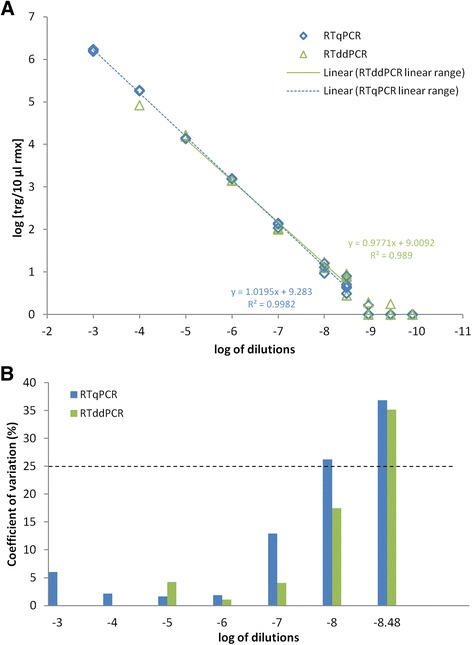
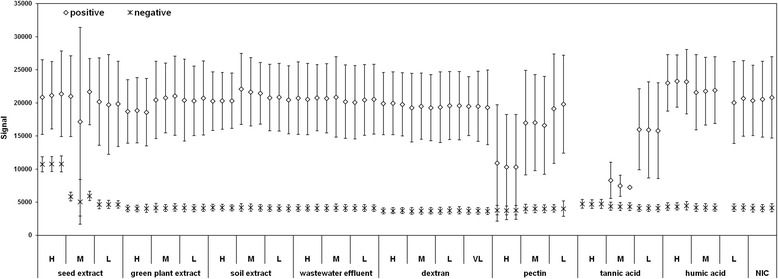
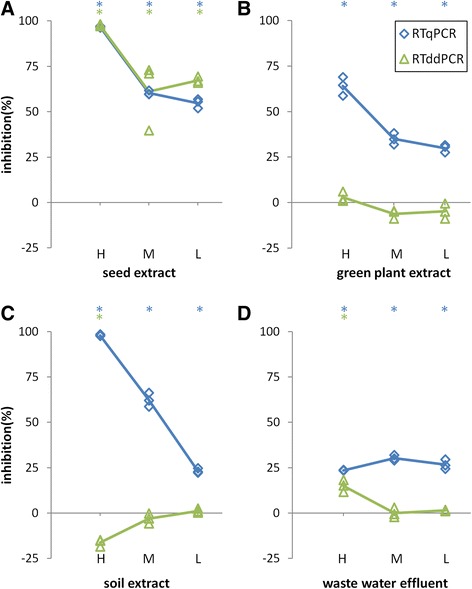
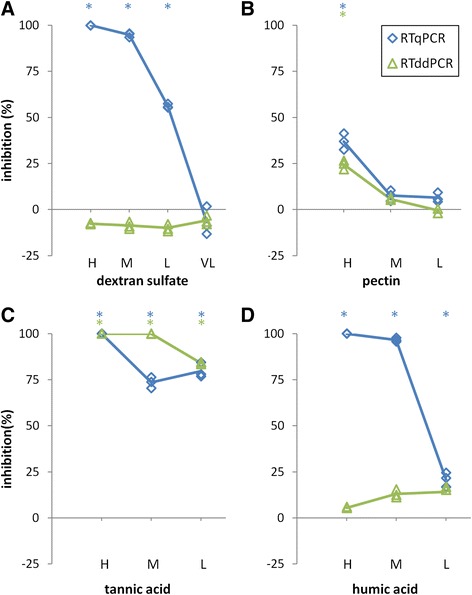
BACKGROUND: Detection and quantification of plant pathogens in the presence of inhibitory substances can be a challenge especially with plant and environmental samples. Real-time quantitative PCR has enabled high-throughput detection and quantification of pathogens; however, its quantitative use is linked to standardized reference materials, and its sensitivity to inhibitors can lead to lower quantification accuracy. Droplet digital PCR has been proposed as a method to overcome these drawbacks. Its absolute quantification does not rely on standards and its tolerance to inhibitors has been demonstrated mostly in clinical samples. Such features would be of great use in agricultural and environmental fields, therefore our study compared the performance of droplet digital PCR method when challenged with inhibitors common to plant and environmental samples and compared it with quantitative PCR. RESULTS: Transfer of an existing Pepper mild mottle virus assay from reverse transcription real-time quantitative PCR to reverse transcription droplet digital PCR was straight forward. When challenged with complex matrices (seeds, plants, soil, wastewater) and selected purified inhibitors droplet digital PCR showed higher resilience to inhibition for the quantification of an RNA virus (Pepper mild mottle virus), compared to reverse transcription real-time quantitative PCR. CONCLUSIONS: This study confirms the improved detection and quantification of the PMMoV RT-ddPCR in the presence of inhibitors that are commonly found in samples of seeds, plant material, soil, and wastewater. Together with absolute quantification, independent of standard reference materials, this makes droplet digital PCR a valuable tool for detection and quantification of pathogens in inhibition prone samples.
Overview
The claims and statistics of this paper haven’t been checked yet.
Free: it reads the open-access text and checks the first 5 claims that cite a source we can check. Create a free account to check every claim.
Integrity signals
Registry
Cites
Statistics
Figures

Verification
Claims the paper makes
The claims and statistics of this paper haven’t been checked yet.
Free: it reads the open-access text and checks the first 5 claims that cite a source we can check. Create a free account to check every claim.
Claims other papers make about this one
Each is checked against this paper’s own text: does it say what the citing paper says it does?
The source backs part of the claim, not all of it — or backs it for a different population, condition or comparison.
In the citing paper
“Thereby, ddPCR technology can be used for extremely low-target quantitation from variably contaminated samples where the sample dilution requirements to assure consistent and acceptable reaction efficiency, primer annealing and Cq values for qPCR would likely lead to undetectable target levels11, 15.”
From Droplet Digital PCR versus qPCR for gene expression analysis with low abundant targets: from variable nonsense to publication quality data (2017) · cites this paper as [11]
Experimental — accuracy not yet measuredThe source backs part of the claim, not all of it — or backs it for a different population, condition or comparison.
In the citing paper
“These factors offer the advantage of direct and independent quantification of DNA without standard curves giving more precise and reproducible data versus qPCR especially in the presence of sample contaminants that can partially inhibit Taq polymerase and/or primer annealing11–13.”
From Droplet Digital PCR versus qPCR for gene expression analysis with low abundant targets: from variable nonsense to publication quality data (2017) · cites this paper as [11]
Experimental — accuracy not yet measured
Self-check
Percentages, sums and reported differences re-computed from the paper’s own numbers.
The self-check needs the paper’s full text.
Citations
Cites
Simultaneous Inference in General Parametric Models
Hothorn, T., Bretz, F., & Westfall, P. (2008) · Biometrical Journal · doi:10.1002/bimj.200810425 · Cited by 13,847 · cited 1×
“the general linear hypothesis method (R package multcomp, [30]).”
MethodBustin, S. (2000) · Journal of Molecular Endocrinology · doi:10.1677/jme.0.0250169 · Cited by 3,872 · cited 1×
“Then linear regression (target concentration vs Cq) was used to derive the number of detected targets from the Cq of the samples [28].”
MethodInhibition and facilitation of nucleic acid amplification
Wilson, I. G. (1997) · Applied and Environmental Microbiology · doi:10.1128/aem.63.10.3741-3751.1997 · Cited by 2,266 · cited 1×
“Interference with cell lysis, sequestration or degradation of nucleic acids, and hindrance of polymerase activity are all common mechanisms of PCR inhibition [8].”
BackgroundAbsolute quantification by droplet digital PCR versus analog real-time PCR
Hindson, C. M., Chevillet, J. R., Briggs, H. A., Gallichotte, E. N., Ruf, I. K., Hindson, B. J., Vessella, R. L., & Tewari, M. (2013) · Nature Methods · doi:10.1038/nmeth.2633 · Cited by 1,488 · cited 1×
“, PCR amplification of nucleic acids, it has been proposed that ddPCR can provide higher tolerance to inhibitors present in certain samples [11,13,16,17].”
BackgroundHuggett, J. F., Foy, C. A., Benes, V., Emslie, K., Garson, J. A., Haynes, R., Hellemans, J., Kubista, M., Mueller, R. D., Nolan, T., et al. (2013) · Clinical Chemistry · doi:10.1373/clinchem.2013.206375 · Cited by 859
RNA Viral Community in Human Feces: Prevalence of Plant Pathogenic Viruses
Zhang, T., Breitbart, M., Lee, W. H., Run, J.-Q., Wei, C. L., Soh, S. W. L., Hibberd, M. L., Liu, E. T., Rohwer, F., & Ruan, Y. (2005) · PLoS Biology · doi:10.1371/journal.pbio.0040003 · Cited by 805
A Study of PCR Inhibition Mechanisms Using Real Time PCR*,†
Opel, K. L., Chung, D., & McCord, B. R. (2010) · Journal of Forensic Sciences · doi:10.1111/j.1556-4029.2009.01245.x · Cited by 525
Baker, M. (2012) · Nature Methods · doi:10.1038/nmeth.2027 · Cited by 524 · cited 2×
“to a variety of different scientific fields [11-13].”
BackgroundMethods in virus diagnostics: From ELISA to next generation sequencing
Boonham, N., Kreuze, J., Winter, S., van der Vlugt, R., Bergervoet, J., Tomlinson, J., & Mumford, R. (2014) · Virus Research · doi:10.1016/j.virusres.2013.12.007 · Cited by 448 · cited 1×
“Background At present, real-time quantitative PCR (qPCR) is the method of choice for detection and quantification of many pathogens and other DNA and RNA targets [1-3].”
MethodMolecular detection of pathogens in water – The pros and cons of molecular techniques
Girones, R., Ferrús, M. A., Alonso, J. L., Rodriguez-Manzano, J., Calgua, B., de Abreu Corrêa, A., Hundesa, A., Carratala, A., & Bofill-Mas, S. (2010) · Water Research · doi:10.1016/j.watres.2010.06.030 · Cited by 445
Research works printed but not linked: 1
- Peist R Honsel D Twieling G Löffert D PCR inhibitors in plant DNA preparations QIAGEN news 2001 3 7 9
Cited by
Items 101–200 of 276
A new assay for quantitative detection of hepatitis A virus
Persson, S., Alm, E., Karlsson, M., Enkirch, T., Norder, H., Eriksson, R., Simonsson, M., & Ellström, P. (2020) · Journal of Virological Methods · doi:10.1016/j.jviromet.2020.114010 · Cited by 24
The Next-Generation PCR-Based Quantification Method for Ambient Waters: Digital PCR
Cao, Y., Griffith, J. F., & Weisberg, S. B. (2016) · Methods in molecular biology · doi:10.1007/978-1-4939-3774-5_7 · Cited by 24
Efficient method for isolation of high-quality RNA from Psidium guajava L. tissues
Carpinetti, P. A., Fioresi, V. S., Cruz, T. D. A., de Almeida, F. A. N., Canal, D., Ferreira, A., & Ferreira, M. F. D. S. (2021) · PLoS ONE · doi:10.1371/journal.pone.0255245 · Cited by 21
“From these results, it can be inferred that all samples present some level of DNA polymerase inhibition, as expected for plant samples [67], and the interference is slightly more accentuated in CTAB2 than in CTAB1 samples.”
Košir, A. B., Müller, S., Žel, J., Milavec, M., Mallory, A. C., & Dobnik, D. (2023) · Foods · doi:10.3390/foods12224156 · Cited by 22
Lv, X., Gu, X., Wang, L., He, X., He, C., Zhang, J., & Zhao, L. (2021) · LWT · doi:10.1016/j.lwt.2021.111388 · Cited by 22
Zamhuri, A., Soon, C. F., Nordin, A. N., Rahim, R. A., Sultana, N., Khan, M. A., Lim, G. P., & Tee, K. S. (2022) · Sensing and Bio-Sensing Research · doi:10.1016/j.sbsr.2022.100482 · Cited by 23
Persson, S., Karlsson, M., Borsch-Reniers, H., Ellström, P., Eriksson, R., & Simonsson, M. (2019) · Food and Environmental Virology · doi:10.1007/s12560-019-09387-z · Cited by 22
Application of Digital PCR in the Analysis of Transgenic Soybean Plants
Wan, J., Song, L., Wu, Y., Brzoska, P. M., Keys, D. N., Chen, C., Valliyodan, B., Shannon, J. G., & Nguyen, H. T. (2016) · Advances in Bioscience and Biotechnology · doi:10.4236/abb.2016.710039 · Cited by 20
Quality control of digital PCR assays and platforms
Vynck, M., Vandesompele, J., & Thas, O. (2017) · Analytical and Bioanalytical Chemistry · doi:10.1007/s00216-017-0538-9 · Cited by 21
Linzner, N., Bartel, A., Schumacher, V., Grau, J. H., Wyler, E., Preuß, H., Garske, S., Bitzegeio, J., Kirst, E., Liere, K., et al. (2024) · Microorganisms · doi:10.3390/microorganisms12122475 · Cited by 19
Huge, B. J., North, D., Mousseau, C. B., Bibby, K. J., Dovic̀hi, N. J., & Champion, M. M. (2022) · Scientific Reports · doi:10.1038/s41598-022-25187-1 · Cited by 19
Isham, I. M., Najimudeen, S. M., Cork, S. C., Gupta, A. V., & Abdul-Careem, M. F. (2023) · Journal of Virological Methods · doi:10.1016/j.jviromet.2023.114859 · Cited by 20
Chai, X., Liu, S., Liu, C., Bai, J., Meng, J., Tian, H., Han, X., Han, G., Xu, X., & Li, Q. (2024) · Emerging Microbes & Infections · doi:10.1080/22221751.2024.2324502 · Cited by 19
“Previously, Rac ˇ ki et al. found that the degree of inhibition of one-step RT-ddPCR ampli fi cation of RNA by undiluted raw wastewater is the same as that of RT-qPCR determination [29].”
MethodThe Mycorrizal Status in Vineyards Affected by Esca
Landi, L., Foglia, R., Murolo, S., & Romanazzi, G. (2021) · Journal of Fungi · doi:10.3390/jof7100869 · Cited by 20
“This technique showed higher sensitivity and specificity, compared to qPCR, for the diagnosis of AMF infection on root DNA, usually contaminated by high content of humic acid and root exudates, which result in PCR inhibition [56].”
MethodChoi, C. H., Kim, E., Yang, S.-M., Kim, D.-S., Suh, S., Lee, G.-Y., & Kim, H. (2022) · Foods · doi:10.3390/foods11091331 · Cited by 22
Event-specific PCR methods to quantify the genetically modified DBN9936 maize
Li, J., Gao, H., Li, Y., Fang, X., Zhai, S., Wu, G., & Wu, Y. (2021) · Journal of Food Composition and Analysis · doi:10.1016/j.jfca.2021.104236 · Cited by 18
A one-stage deep learning based method for automatic analysis of droplet-based digital PCR images
Yao, Y., Zhao, S., Liang, Y., Hu, F., & Peng, N. (2023) · The Analyst · doi:10.1039/d3an00615h · Cited by 19
Digital PCR in Virology: Current Applications and Future Perspectives
Gleerup, D., Trypsteen, W., Fraley, S. I., & Spiegelaere, W. D. (2024) · Molecular Diagnosis & Therapy · doi:10.1007/s40291-024-00751-9 · Cited by 18
“This was shown, among others, by Rački et al. [74] who assessed RT-q/dPCR inhibition using an assay for pepper mild mottle virus.”
Mehle, N., Gregur, L., Košir, A. B., & Dobnik, D. (2020) · Plants · doi:10.3390/plants9030326 · Cited by 18
“As well as eliminating the need for standard curves, dPCR has been shown to be more resilient to inhibitors [24,25].”
BackgroundZupančič, M., Kogovšek, P., Šter, T., Remec-Rekar, Š., Cerasino, L., Baebler, Š., Klemenčić, A. K., & Eleršek, T. (2021) · Toxins · doi:10.3390/toxins13020133 · Cited by 18
“This is expected, as the presence of inhibitory compounds in environmental samples can interfere with qPCR amplification [23], which can result in higher intra-assay variability.”
BackgroundDimond, J. L., Gathright, B. R., Bouma, J. V., Carson, H. S., & Sowul, K. (2022) · Environmental DNA · doi:10.1002/edn3.351 · Cited by 18
Reliability of miRNA Analysis from Fixed and Paraffin-Embedded Tissues
Azzalini, E., Martino, E. D., Fattorini, P., Canzonieri, V., Stanta, G., & Bonin, S. (2019) · International Journal of Molecular Sciences · doi:10.3390/ijms20194819 · Cited by 19
“This is evident when comparing real-time PCR results with ddPCR because the latter has already shown higher resilience to PCR inhibitors [27].”
ResultKošir, A. B., Cvelbar, T., Kammel, M., Grunert, H., Zeichhardt, H., & Milavec, M. (2020) · Journal of Virological Methods · doi:10.1016/j.jviromet.2020.113864 · Cited by 17
“…as the partitions with partial inhibition of amplification can be distinguished from the negative partitions, while in qPCR, the inhibition shifts the quantitation cycle or cq to a higher cycle, which leads to underestimation of the target concentration (Dingle et al., 2013; Rački et al., 2014).”
Kuhlmann, K., Cieselski, M., & Schumann, J. E. (2021) · Biological Procedures Online · doi:10.1186/s12575-021-00144-w · Cited by 19
“secondary amplifications may occur more frequently [6, 7, 21].”
Khan, K., Tighe, S. W., & Badireddy, A. R. (2021) · Journal of Biomolecular Techniques JBT · doi:10.7171/jbt.21-3203-012 · Cited by 17
Ratoon Stunting Disease of Sugarcane: A Review Emphasizing Detection Strategies and Challenges
Chakraborty, M., Soda, N., Strachan, S., Ngo, C. N., Bhuiyan, S. A., Shiddiky, M. J. A., & Ford, R. (2023) · Phytopathology · doi:10.1094/phyto-05-23-0181-rvw · Cited by 16
Zhu, L., Zhang, S., Xun, Y., Jiang, Y., Xia, B., Chen, X., Wang, L., Jiang, H., & Ma, S. (2017) · Pathology & Oncology Research · doi:10.1007/s12253-017-0286-3 · Cited by 16
Hua, S. S. T., Palumbo, J. D., Parfitt, D. E., Sarreal, S. B. L., & O’Keeffe, T. L. (2018) · Mycotoxin Research · doi:10.1007/s12550-018-0313-6 · Cited by 16
“Additionally, the nature of ddPCR (partitioning of reactions into thousands of nanodroplets, each of which is its own PCR reaction) is less sensitive to PCR inhibitors, which is an inherent problem in analysis of DNAs isolated from soil (Rački et al. 2014).”
BackgroundGibert, S., Edel‐Hermann, V., Mcolo, R. M., Gautheron, E., Michel, J., Bernaud, E., Gautheron, N., Sol, J.-M., Capelle, G., Galland, R., et al. (2021) · European Journal of Plant Pathology · doi:10.1007/s10658-021-02325-5 · Cited by 16
Quantitative Analysis with Droplet Digital PCR
Mehle, N., & Dreo, T. (2018) · Methods in molecular biology · doi:10.1007/978-1-4939-8837-2_14 · Cited by 15
Self-citationYou, Z., Mei, Y., Wang, X., Chen, X., & Xu, J. (2021) · Food Control · doi:10.1016/j.foodcont.2021.108234 · Cited by 15
Bernhardt, L., Lillehaug, A., Qviller, L., Weli, S. C., Grønneberg, E., Nilsen, H., & Myrmel, M. (2021) · Diseases of Aquatic Organisms · doi:10.3354/dao03618 · Cited by 15
Giraldo, P. A., Cogan, N. O. I., SPANGENBERG, G. C., Smith, K. F., & Shinozuka, H. (2019) · Frontiers in Plant Science · doi:10.3389/fpls.2018.01923 · Cited by 18
Bernhardt, L., Myrmel, M., Lillehaug, A., Qviller, L., & Weli, S. C. (2020) · Diseases of Aquatic Organisms · doi:10.3354/dao03572 · Cited by 15
Choice of primer pairs and PCR polymerase affect the detection of fish eDNA
Min, X., Li, F., Zhang, X., Guo, F., Zhang, F., & Zhang, Y. (2023) · Environmental Sciences Europe · doi:10.1186/s12302-023-00812-6 · Cited by 16
“…diluting matrix-derived inhibitors; (3) adding bovine serum albumin (BSA), T4 gene32 protein (GP32) Master Mix or using other DNA polymerases [1, 30], (4) model calibration in data analysis (e.g., PMMoV assay as a model system to study the effect of inhibitors of PCR in environment matrices) [41].”
MethodVidović, S., Taylor, R., HEDDERLEY, D. I., Fletcher, G. C., & Wei, N. (2024) · Scientific Reports · doi:10.1038/s41598-024-54753-y · Cited by 14
赵砚婷, Yan, Z., Song, K., Li, Y., Shen, L., Cui, Y., Du, Z., Yang, R., Song, Y., Jing, L., et al. (2024) · PLoS neglected tropical diseases · doi:10.1371/journal.pntd.0012167 · Cited by 14
Giraldez, M. D., Chevillet, J. R., & Tewari, M. (2018) · Methods in molecular biology · doi:10.1007/978-1-4939-7778-9_26 · Cited by 15
Yu, N., Han, J., Deng, T., Chen, L., Zhang, J., Xing, R., Wang, P., Zhao, G., & Chen, Y. (2020) · Food Analytical Methods · doi:10.1007/s12161-020-01887-0 · Cited by 14
SARS-CoV-2: fate in water environments and sewage surveillance as an early warning system
Panchal, D., Tripathy, P., Prakash, O., Sharma, A., & Pal, S. (2021) · Water Science & Technology · doi:10.2166/wst.2021.146 · Cited by 15
Zhu, X., Su, S., Fu, M., Peng, Z., Wang, D., Rui, X., Wang, F., Liu, X., Liu, B., Zhu, L., et al. (2019) · The Analyst · doi:10.1039/c9an00637k · Cited by 15
Particle association and size fraction of molecular viral fecal pollution indicators in wastewater
Greaves, J., North, D., & Bibby, K. J. (2022) · Environmental Science Water Research & Technology · doi:10.1039/d2ew00126h · Cited by 13
Use of Pleural Fluid Digital PCR Analysis to Improve the Diagnosis of Pleural Tuberculosis
Li, Z., Sun, Q., Du, B., Jia, H., Dong, J., Lyu, L., Zhu, C., Xing, A., Yang, X., Wei, R., et al. (2022) · Microbiology Spectrum · doi:10.1128/spectrum.01632-22 · Cited by 13
Lovera, A., Rodríguez, E., Simbaqueba, J., David, D. M. B., Carmona, S. L., Izquierdo-García, L. F., Correa, J. C. G., Pacheco, R. I. L., Fuentes, M. P., Yzquierdo, G. A. R., et al. (2023) · Plant Pathology · doi:10.1111/ppa.13813 · Cited by 13
Antkiewicz, D. S., Janssen, K. H., Roguet, A., Pilch, H. E., Fahney, R. B., Mullen, P. A., Knuth, G. N., Everett, D., Doolittle, E. M., King, K., et al. (2024) · Environmental Science Water Research & Technology · doi:10.1039/d3ew00958k · Cited by 15
Muscat Flavor in Grapevine: A Digital PCR Assay to Track Allelic Variation in VvDXS Gene
Morcia, C., Tumino, G., Raimondi, S., Schneider, A., & Terzi, V. (2021) · Genes · doi:10.3390/genes12050747 · Cited by 14
“Even the greater resilience of this technique is remarkable compared to the other PCR-based technologies and to inhibitors that are commonly found in the samples of seeds, plant materials, soils, and wastewater [20].”
ResultQuantification of Circular RNAs Using Digital Droplet PCR
Das, A., Das, D., & Panda, A. C. (2022) · Journal of Visualized Experiments · doi:10.3791/64464 · Cited by 13
Hu, G., Huang, K. Q., Zhou, W., Wang, R., Zhao, W., Zou, H., Li, W., Wu, S., Li, M., & Wang, G. (2023) · Journal of Fish Diseases · doi:10.1111/jfd.13749 · Cited by 15
Zamboni, C., Zamarian, V., Stefanello, D., Ferrari, R., Auletta, L., Milanesi, S., Mauri, S., Grieco, V., Ceciliani, F., & Lecchi, C. (2023) · Frontiers in Veterinary Science · doi:10.3389/fvets.2022.1083174 · Cited by 14
“Digital PCR is a recently developed technology that can be used to quantify absolute nucleic acid quantification and is increasingly accepted as the gold standard for biomarker evaluation because of its high precision and its lack of need for standardization by target molecules (68, 69).”
MethodMairiang, D., Songjaeng, A., Hansuealueang, P., Malila, Y., Lertsethtakarn, P., Silapong, S., Poolpanichupatam, Y., Klungthong, C., Chin-inmanu, K., Thiemmeca, S., et al. (2021) · Diagnostics · doi:10.3390/diagnostics11040639 · Cited by 15
“The superior detection and quantification performance of RT-ddPCR over qRT-PCR with environmental and clinical samples containing low target concentrations was also reported in previous studies on rotavirus [13], pepper mild mottle virus [35], pepino mosaic virus [36], and severe acute respiratory syndrome coronavirus…”
MethodDavis, R. L., Isakeit, T., & Chappell, T. M. (2022) · Plant Disease · doi:10.1094/pdis-08-21-1664-re · Cited by 13
Evaluation of sequencing and PCR-based methods for the quantification of the viral genome formula
Boezen, D., Johnson, M. L., Grum‐Grzhimaylo, A. A., van der Vlugt, R. A. A., & Zwart, M. P. (2023) · Virus Research · doi:10.1016/j.virusres.2023.199064 · Cited by 14
“Thus, the error margin on a dPCR estimate is narrower than for qPCR estimates, and any PCR inhibitors present in the sample will not have a major effect on quantification (Rački et al., 2014).”
BackgroundDiagnostics and Identification of Diseases, Insects and Mites
Spadaro, D., Agustí, N., Ortega, S. F., & Hurtado, M. A. (2020) · Springer eBooks · doi:10.1007/978-3-030-22304-5_8 · Cited by 13
Shaffer, B. C., Kebriaei, P., Lima, M. J. G. D., & Jiménez, A. (2024) · Bone Marrow Transplantation · doi:10.1038/s41409-024-02481-2 · Cited by 14
Yi, J., Wang, N., Wu, J., Tang, Y., Zhang, J., Zhu, L., Rui, X., Guo, Y. S., & Xu, Y. (2021) · Frontiers in Medicine · doi:10.3389/fmed.2021.761788 · Cited by 13
Murolo, S., Moumni, M., Mancini, V., Allagui, M. B., Landi, L., & Romanazzi, G. (2022) · Frontiers in Microbiology · doi:10.3389/fmicb.2021.764447 · Cited by 12
“Many studies have reported that ddPCR is beneficial in terms of improved sensitivity of pathogen detection, and reduced effects of PCR inhibitors on PCR efficiency (Rački et al., 2014; Dupas et al., 2019; Bae et al., 2020).”
Background[Progress in digital PCR technology and application].
Lin, J., Su, G., Su, W., & Zhou, C. (2017) · PubMed · doi:10.13345/j.cjb.160269 · Cited by 12
Öz, Y. Y., Sönmez, Ö. İ., Karaman, S., Öz, E., Ünal, C. B., & Karataş, A. Y. (2020) · European Food Research and Technology · doi:10.1007/s00217-020-03531-x · Cited by 12
Decoding the Baltic Sea’s past and present: A simple molecular index for ecosystem assessment
Schmidt, A., Romahn, J., Andrén, E., Kremp, A., Kaiser, J., Arz, H. W., Dellwig, O., Bálint, M., & Epp, L. S. (2024) · Ecological Indicators · doi:10.1016/j.ecolind.2024.112494 · Cited by 11
Zink, F. A., Tembrock, L. R., Timm, A. E., & Gilligan, T. M. (2022) · Journal of Economic Entomology · doi:10.1093/jee/toac177 · Cited by 10
Circulating microRNA-197-3p as a potential biomarker for asbestos exposure
Frontini, F., Bononi, I., Torreggiani, E., Mauro, G. D., Mazzoni, E., Stendardo, M., Boschetto, P., Libener, R., Guaschino, R., Grosso, F., et al. (2021) · Scientific Reports · doi:10.1038/s41598-021-03189-9 · Cited by 10
Al-Faliti, M., Kotlarz, N., McCall, C., Harris, A., Smith, A. L., Stadler, L. B., Reyes, F. L. D. L., & Vela, J. D. (2022) · ACS ES&T Water · doi:10.1021/acsestwater.2c00106 · Cited by 10
Droplet Digital PCR for Absolute Quantification of Plant Pathogens
Selvaraj, V., Maheshwari, Y., Hajeri, S., & Yokomi, R. K. (2019) · Springer eBooks · doi:10.1007/978-981-13-8499-8_25 · Cited by 11
Chen, C., Chen, J., Zhang, Y., Yong-bo, L., Wang, Z., Li, X., Zhou, W., & Zhang, Z. (2020) · Journal of Food Quality · doi:10.1155/2020/2843056 · Cited by 9
An overview of molecular markers for identification of non-human fecal pollution sources
Žlender, T., & Rupnik, M. (2023) · Frontiers in Microbiology · doi:10.3389/fmicb.2023.1256174 · Cited by 10
Parsaei, M., Dashtkoohi, M., Salmani, T. A., Najafi, M. S., Haddadi, M. R., Ghaemi, M., & Hantoushzadeh, S. (2024) · BMC Pregnancy and Childbirth · doi:10.1186/s12884-024-06655-0 · Cited by 10
“Furthermore, the reduced volume of required reagents contributes to the cost-effectiveness of this highly accurate method [11–13].”
MethodBaettig, C. G., Zirngibl, M., Smith, K. F., Lear, G., & Tremblay, L. A. (2023) · Marine Pollution Bulletin · doi:10.1016/j.marpolbul.2023.114829 · Cited by 9
Evaluation of digital real-time PCR assay as a molecular diagnostic tool for single-cell analysis
Chang, C.-H., Mau‐Hsu, D., Chen, K.-C., Wei, C., Chiu, C.-Y., & Young, T. (2018) · Scientific Reports · doi:10.1038/s41598-018-21041-5 · Cited by 9
Budowle, B., Sajantila, A., & Vaněk, D. (2025) · Genes · doi:10.3390/genes16121503 · Cited by 8
Molecular Monitoring in Soil Bioremediation: From Genetic Potential to Verified Pathway Operation
Cycoń, M. (2026) · International Journal of Molecular Sciences · doi:10.3390/ijms27073111 · Cited by 8
Optimizing detectability of the endangered fan mussel using eDNA and ddPCR
Marques, V., Loot, G., Blanchet, S., Miaud, C., Planes, S., Peyran, C., Arnal, V., Calvet, C., Pioch, S., & Manel, S. (2024) · Ecology and Evolution · doi:10.1002/ece3.10807 · Cited by 8
“Additional advantages of ddPCR include a better tolerance to PCR inhibitors present in plants, soil, water, and food (Morisset et al., 2013 ; Rački et al., 2014) and the access to DNA absolute quantification without relying on a standard curve (Hunter et al., 2018).”
BackgroundYao, X., Li, J., Wan, D., Gao, H., Li, Y., Fang, X., Zhai, S., Wu, G., & Wu, Y. (2024) · Journal of Food Composition and Analysis · doi:10.1016/j.jfca.2024.106657 · Cited by 8
Lancíková, V., & Hricová, A. (2020) · Plants · doi:10.3390/plants9080966 · Cited by 10
Evaluation of Droplet Digital PCR for the Detection of Black Canker Disease in Tomato
Wang, L., Tian, Q., Zhou, P., Zhao, W., & Sun, X. (2021) · Plant Disease · doi:10.1094/pdis-02-21-0317-re · Cited by 8
Epigenetic biomarkers for disease diagnosis
García‐Giménez, J. L., Beltrán-García, J., Mateo, C. R., Seco-Cervera, M., Pérez-Machado, G., & Mena, S. (2019) · Elsevier eBooks · doi:10.1016/b978-0-12-814259-2.00002-9 · Cited by 9
Comparison of RT-qPCR and Digital PCR Methods for Wastewater-Based Testing of SARS-CoV-2Preprint
Hinkle, A., Greenwald, H., Metzger, M., Thornton, M. M., Kennedy, L. C., Loomis, K., Herrera, M., Abayan, R., Nelson, K. L., & Kantor, R. S. (2022) · medRxiv · doi:10.1101/2022.06.15.22276459 · Cited by 8
“Several investigations found that ddPCR was more sensitive and less likely to experience 70 inhibition than qPCR (7,9,12,13), while one study suggested that inhibition of reverse 71 transcription was greater in ddPCR than qPCR (11).”
BackgroundUsing DNA archived in lake sediments to reconstruct past ecosystems
Picard, M., Eggers, J. M. V., Brasell, K. A., Yan, D., Klaminder, J., Alsos, I. G., Barouillet, C., Cheng, Y., Dommain, R., Dulias, K., et al. (2024) · Elsevier eBooks · doi:10.1016/b978-0-323-99931-1.00171-9 · Cited by 9
Amplification-Free Testing of microRNA Biomarkers in Cancer
Soleimanpour, B., Díaz‐Mochon, J. J., & Pernagallo, S. (2025) · Cancers · doi:10.3390/cancers17162715 · Cited by 9
“Consequently, ddPCR is regarded as a robust method for the analysis of complex or degraded samples [46].”
Gleerup, D., Vynck, M., Gysens, L., Baere, C. D., Trypsteen, W., Vandesompele, J., Thas, O., Martens, A., Haspeslagh, M., & Spiegelaere, W. D. (2026) · Analytica Chimica Acta · doi:10.1016/j.aca.2026.345210 · Cited by 7
Fusco, G., Cardillo, L., Valvini, O., Pucciarelli, A., Picazio, G., Anna, C., Napoletano, M., Pellicanò, R., Ottaiano, M., de Martinis, C., et al. (2024) · Veterinary Quarterly · doi:10.1080/01652176.2024.2390944 · Cited by 7
“Same results were obtained by Rački and colleagues (Rački et al. 2014) that evaluated the effects of inhibitors among seeds, plants, soil and wastewater, using serially diluted pectin, dextran sulfate, tannic acid and humic acid.”
ResultNema, R. K., Singh, S., Singh, A. K., Sarma, D. K., Diwan, V., Tiwari, R. R., Mondal, R. K., & Mishra, P. K. (2024) · Science in One Health · doi:10.1016/j.soh.2024.100080 · Cited by 7
Roman, V., Jourdain, F., Pele, E., Brottet, É., Guinard, A., Mouly, D., Medragh, S., Cordevant, C., Gassilloud, B., & Dina, J. (2025) · Water Research · doi:10.1016/j.watres.2025.124379 · Cited by 7
Simultaneous Giant Virus and Virophage Quantification Using Droplet Digital PCR
del Arco, A., Fischer, M., & Becks, L. (2022) · Viruses · doi:10.3390/v14051056 · Cited by 7
“The specificity of real-time qPCR can be lowered by the indiscriminate binding of dyes, depending on the total DNA amount and sample background complexity, while ddPCR avoids this type of signal saturation by partitioning the reaction into droplets [24,25].”
BackgroundNeidel, V., & Traugott, M. (2023) · Scientific Reports · doi:10.1038/s41598-023-29019-8 · Cited by 7
He, Q., Shang, X., Tian, R., Zhu, X., & Guo, W. (2023) · Industrial Crops and Products · doi:10.1016/j.indcrop.2023.117284 · Cited by 7
SARS-CoV-2 subgenomic RNA: formation process and rapid molecular diagnostic methods
Ge, X., Zhou, H., Shen, F., Yang, G., Zhang, Y., Zhang, X., & Li, H. (2023) · Clinical Chemistry and Laboratory Medicine (CCLM) · doi:10.1515/cclm-2023-0846 · Cited by 7
Nucleic Acid–Based Methods in the Detection of Foodborne Pathogens
Aslan, H., Ekinci, A., & Aslan, İ. (2020) · Elsevier eBooks · doi:10.1016/b978-0-12-819304-4.00013-0 · Cited by 9
Natarajan, S., Bucur, D., Kildea, S., & Doohan, F. M. (2025) · Analytical and Bioanalytical Chemistry · doi:10.1007/s00216-025-05840-0 · Cited by 8
Johnson, B., Takahashi, K., & Cheng, Y. Y. (2021) · Frontiers in Oncology · doi:10.3389/fonc.2021.748444 · Cited by 6
“Furthermore, the ddPCR can be applied to detect extremely low concentrated target molecules from variably contaminated samples, whereby the sample dilution requirements to ensure a consistent reaction efficiency, primer annealing and quantification cycle (Cq) values for non-digital qPCR would likely result in undetect…”
MethodNie, X., Singh, M., Chen, D., Gilchrist, C., Soqrat, Y., Shukla, M., Creelman, A., Dickison, V., Nie, B., Lavoie, J., et al. (2020) · Plant Disease · doi:10.1094/pdis-06-20-1321-re · Cited by 6
Droplet digital PCR as a tool for investigating dynamics of cryptic symbionts
Hiillos, A., Thonig, A., & Knott, K. E. (2021) · Ecology and Evolution · doi:10.1002/ece3.8372 · Cited by 7
“…rare copies (Brys et al., 2020; Doi et al., 2015; Hindson et al., 2013). ddPCR assays also tolerate inhibition better than qPCR (Dingle et al., 2013; Poh et al., 2020; Rački et al., 2014), and the end-point measurement of the nu - cleic acid quantitation is not affected by amplification efficiency.”
BackgroundGuo, M., Deng, L. F., Liang, H., Du, Y., Gao, W., Tian, N., Bi, Y., Li, J., Ma, T., Zhang, Y., et al. (2023) · Viruses · doi:10.3390/v15010178 · Cited by 7
“The specificity of conventional qPCR can be affected by sample impurities, due to the nonspecific binding of dyes, while ddPCR avoids the problem by separating the reactions into many droplets [20,21].”
BackgroundCarli, M., Pedrelli, A., Panattoni, A., Pellegrini, E., Nali, C., Cotrozzi, L., & Rizzo, D. (2025) · Plant Methods · doi:10.1186/s13007-025-01460-y · Cited by 5
“These findings confirm that HSV-extracted DNA is suitable for FDp detection, provided that a preliminary dilution step is performed to mitigate inhibitor effects [57, 58].”
Poeydebat, C., Courchinoux, E., Mazet, I. D., Rodriguez, M., Chataigner, A., Lelièvre, M., Goutouly, J., Rossi, J., Raynal, M., Delière, L., et al. (2025) · Applied and Environmental Microbiology · doi:10.1128/aem.01667-25 · Cited by 5
Bertinelli, G., Tizzani, L., Luigi, M., Monticelli, S., & Ilardi, V. (2024) · Plants · doi:10.3390/plants13233276 · Cited by 5
Spilsberg, B., Sekse, C., Urdahl, A. M., Nesse, L. L., & Johannessen, G. S. (2021) · Frontiers in Microbiology · doi:10.3389/fmicb.2020.581575 · Cited by 6
“ddPCR is reported to be slightly less sensitive to PCR inhibitors than realtime PCR (Rački et al., 2014; Zhao et al., 2016).”
Diana, L., Traglia, G. M., Diana, V., Calvinho, L. F., Laporta, J., Iriarte, A., & Puentes, R. (2024) · Frontiers in Animal Science · doi:10.3389/fanim.2023.1336816 · Cited by 5
Robbins, A. A., Gallagher, T. L., Toledo, D. M., Hershberger, K. C., Salmela, S. M., Barney, R. E., Szczepiorkowski, Z. M., Tsongalis, G. J., Martin, I. W., Hubbard, J. A., et al. (2024) · Microbiology Spectrum · doi:10.1128/spectrum.01122-23 · Cited by 5
“Droplet digital PCR has also been shown to have better resistance to PCR inhibitors, particularly in wastewater (18).”
BackgroundMiller, M. A., Bloch, M., Balaguera‐Reina, S. A., Olejniczak, K. A., Persaud, C. A. F., HELMICK, E. E., Mazzotti, F. J., & Bahder, B. W. (2024) · Ecology and Evolution · doi:10.1002/ece3.70598 · Cited by 5
Monitoring important soil-borne plant pathogens in Swedish crop production using real-time PCR
Almquist, C. (2016) · Epsilon Open Archive (Sveriges lantbruksuniversitet biblioteket (Swedish University of Agricultural Sciences)) · Cited by 10
Metadata
- Authors
- Rački, N., Dreo, T., Gutierrez-Aguirre, I., Blejec, A., & Ravnikar, M.
- Affiliations
- National Institute of Biology (SI)
- Corresponding author
- Rački, Nejc
- Venue
- Plant Methods
- Published
- 2014-12
- Volume
- 10
- Issue
- 1
- Pages
- 42-42
- ISSN
- 1746-4811 (ISSN-L)
- PMC
- PMC4307183
- OpenAlex
- W2100347303
- Cited by
- 257
- References
- 29
- Citations by year
- 2026: 18 · 2025: 20 · 2024: 32 · 2023: 20 · 2022: 26 · 2021: 34 · 2020: 28 · 2019: 25 · 2018: 24 · 2017: 11 · 2016: 15 · 2015: 4
- FWCI
- 4.10
- Type
- journal article
- Language
- en
- Open access
- gold
- doi.org
- Locations
- Plant Methods (publishedVersion, cc-by)
- Europe PMC (PubMed Central) (publishedVersion, cc-by)
- PubMed Central (publishedVersion, cc-by)
- PubMed (publishedVersion)
- DiRROS repository (University of Maribor) (publishedVersion, cc-by)
- Funders
- Javna Agencija za Raziskovalno Dejavnost RS (L2-4314)
- Univerza v Ljubljani
- Urad Republike Slovenije za Meroslovje
- European Regional Development Fund
- Topics
- Life Sciences › Biochemistry, Genetics and Molecular Biology › Molecular Biology › Molecular Biology Techniques and Applications
- Life Sciences › Agricultural and Biological Sciences › Plant Science › Plant Virus Research Studies
- Health Sciences › Medicine › Infectious Diseases › SARS-CoV-2 detection and testing
- Keywords
- droplet digital PCR, PCR inhibitors, reverse transcription, pepper mild mottle virus, plant pathogen detection, absolute quantification, soil sample, wastewater, plant viruses
About these checks
Registry, retraction, Cites and statistics results are computed, not judged, with one exception: a printed reference that no index lists is read once by a model before it counts as a citation error. Claims are extracted by a model and kept only when their quote appears verbatim in the text; each cited source is then checked, with a model’s help, for whether it says what the claim relies on. Those verdicts can be wrong — read the claim’s quote and the cited source before relying on one.
Statistics and arithmetic are recomputed, not judged.
Confidence bands are shown only for fields calibrated on our annotated test set. None is calibrated yet, so no band is shown.
What counts as a claim ›How we measure confidence ›How we check this ›
Are you an author, or do you see a problem with this page? Request a review
Data sources
Bibliographic data: Semantic Scholar, OpenAlex, Crossref.
Contains information from the Semantic Scholar Academic Graph Datasets, made available under the ODC Attribution License (ODC-BY 1.0).
Semantic Scholar’s data is described in: Kinney, R., et al. (2023). The Semantic Scholar Open Data Platform. arXiv:2301.10140.
