

Changes in cannabis use, exposure, and health perceptions following legalization of adult recreational cannabis use in California: a prospective observational study
Open accessThe DOI matches its Crossref record; 26 of the 26 references it cites were found in a registry or an index.
Abstract
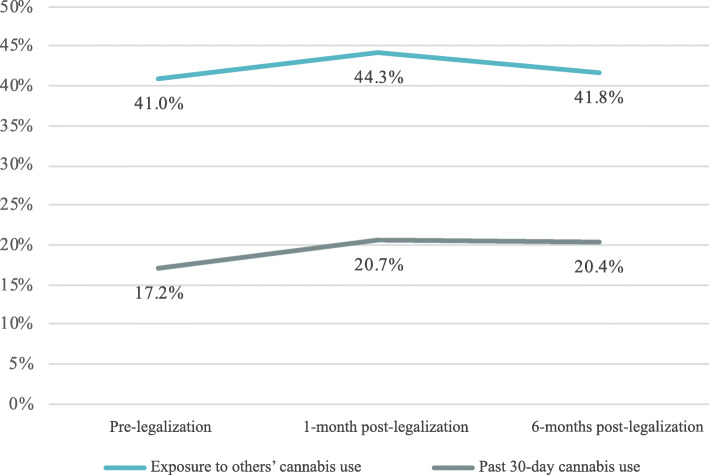
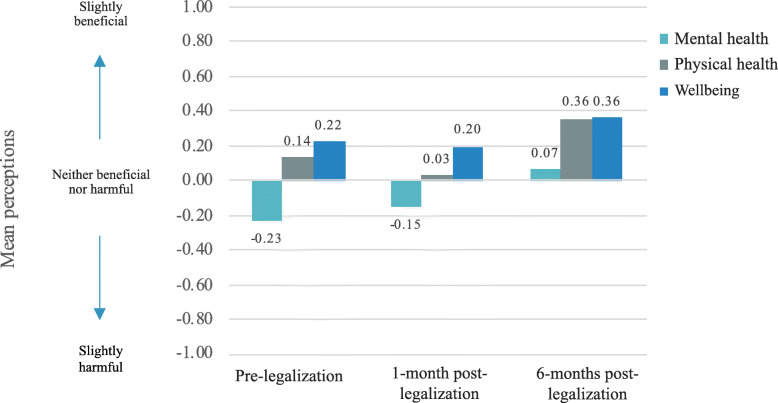
Background: Most U.S. states have legalized cannabis for medical and/or recreational use. In a 6-month prospective observational study, we examined changes in adult cannabis use patterns and health perceptions following broadened legalization of cannabis use from medical to recreational purposes in California. Methods: Respondents were part of Stanford University’s WELL for Life registry, an online adult cohort concentrated in Northern California. Surveys were administered online in the 10 days prior to state legalization of recreational use (1/1/18) and 1-month (2/1/18–2/15/18) and 6-months (7/1/2018–7/15/18) following the change in state policy. Online surveys assessed self-reported past 30-day cannabis use, exposure to others’ cannabis use, and health perceptions of cannabis use. Logistic regression models and generalized estimating equations (GEE) examined associations between participant characteristics and cannabis use pre- to 1-month and 6-months post-legalization. Results: The sample (N = 429, 51% female, 55% non-Hispanic White, age mean = 56 ± 14.6) voted 58% in favor of state legalization of recreational cannabis use, with 26% opposed, and 16% abstained. Cannabis use in the past 30-days significantly increased from pre-legalization (17%) to 1-month post-legalization (21%; odds ratio (OR) = 1.28, p-value (p) = .01) and stayed elevated over pre-legalization levels at 6-months post-legalization (20%; OR = 1.28, p = .01). Exposure to others’ cannabis use in the past 30 days did not change significantly over time: 41% pre-legalization, 44% 1-month post-legalization (OR = 1.18, p = .11), and 42% 6-months post-legalization (OR = 1.08, p = .61). Perceptions of health benefits of cannabis use increased from pre-legalization to 6-months post-legalization (OR = 1.19, p = .02). Younger adults, those with fewer years of education, and those reporting histories of depression were more likely to report recent cannabis use pre- and post-legalization. Other mental illness was associated with cannabis use at post-legalization only. In a multivariate GEE adjusted for sociodemographic characteristics and diagnoses, favoring legalization and the interaction of time and positive health perceptions were associated with a greater likelihood of using cannabis. Conclusions: Legalized recreational cannabis use was associated with greater self-reported past 30-day use post-legalization, and with more-positive health perceptions of cannabis use. Future research is needed to examine longer-term perceptions and behavioral patterns following legalization of recreational cannabis use, especially among those with mental illness.
Overview
The claims and statistics of this paper haven’t been checked yet.
Free: it reads the open-access text and checks the first 5 claims that cite a source we can check. Create a free account to check every claim.
Integrity signals
Registry
Cites
Statistics
Figures
Verification
Claims the paper makes
The claims and statistics of this paper haven’t been checked yet.
Free: it reads the open-access text and checks the first 5 claims that cite a source we can check. Create a free account to check every claim.
Claims other papers make about this one
Each is checked against this paper’s own text: does it say what the citing paper says it does?
The source backs part of the claim, not all of it — or backs it for a different population, condition or comparison.
In the citing paper
“While general adult samples had some mixed findings, the majority of studies (80%) suggested increasing rates of use associated with RCL. 51”
From The Impact of Recreational Cannabis Legalization on Cannabis Use and Associated Outcomes: A Systematic Review (2023) · cites this paper as [51]
Experimental — accuracy not yet measured
Self-check
Percentages, sums and reported differences re-computed from the paper’s own numbers.
The self-check needs the paper’s full text.
Citations
Cites
Harris, P. A., Taylor, R., Thielke, R., Payne, J., Gonzalez, N., & Conde, J. G. (2009) · Journal of Biomedical Informatics · doi:10.1016/j.jbi.2008.08.010 · Cited by 51,384 · cited 2×
“Harris PA, Taylor R, Thielke R, Payne J, Gonzalez N, Conde JG. Research electronic data capture (REDCap)--a metadata-driven methodology and workflow process for providing translational research informatics support.”
MethodLongitudinal data analysis using generalized linear models
LIANG, K.-Y., & ZEGER, S. L. (1986) · Biometrika · doi:10.1093/biomet/73.1.13 · Cited by 18,550
National Conference of State Legislatures
(2011) · Reference Reviews · doi:10.1108/09504121111114072 · Cited by 2,315
Cannabinoids for Medical Use: A Systematic Review and Meta-analysis
Whiting, P. F., Wolff, R. F., Deshpande, S., Di Nisio, M., Duffy, S., Hernandez, A. V., Keurentjes, J. C., Lang, S., Misso, K., Ryder, S., et al. (2015) · JAMA · doi:10.1001/jama.2015.6358 · Cited by 2,169
Groce, E. (2018) · Journal of Medical Regulation · doi:10.30770/2572-1852-104.4.32 · Cited by 1,330
Cerdá, M., Mauro, C., Hamilton, A., Levy, N. S., Santaella-Tenorio, J., Hasin, D., Wall, M. M., Keyes, K. M., & Martins, S. S. (2020) · JAMA Psychiatry · doi:10.1001/jamapsychiatry.2019.3254 · Cited by 598
Attrition in longitudinal studies
Twisk, J., & de Vente, W. (2002) · Journal of Clinical Epidemiology · doi:10.1016/s0895-4356(01)00476-0 · Cited by 527 · cited 1×
“Rather than remove respondents who did not complete all the surveys and conduct a completecase analysis that could lead to less power and biased results, we used GEE analyses, which is useful in dealing with missing data and does not require imputation [34].”
MethodCommittee on the Health Effects of Marijuana: An Evidence Review and Research Agenda, Board on Population Health and Public Health Practice, Division, H. A. M., & National Academies of Sciences, E. (2017) · National Academies Press eBooks · doi:10.17226/24625 · Cited by 455
Jetly, R., Heber, A., Fraser, G., & Boisvert, D. (2015) · Psychoneuroendocrinology · doi:10.1016/j.psyneuen.2014.11.002 · Cited by 321 · cited 1×
“Few studies have examined cannabis’s effects on well-being, a construct related to quality of life, and findings have been mixed [9, 10].”
BackgroundAssociation of High-Potency Cannabis Use With Mental Health and Substance Use in Adolescence
Hines, L. A., Freeman, T. P., Gage, S. H., Zammit, S., Hickman, M., Cannon, M., Munafo, M., MacLeod, J., & Heron, J. (2020) · JAMA Psychiatry · doi:10.1001/jamapsychiatry.2020.1035 · Cited by 208 · cited 1×
“The literature suggests potential anxiolytic effects of CBD [7], but also points to the association of mental health harms with high-potency cannabis use [28].”
Background
Research works printed but not linked: 7
- Meng Y Ponce N The changing landscape: tobacco and marijuana use among young adults in California UCLA Center for health policy Reseach 2020
- Daniller A Two-thirds of Americans support marijuana legalization 2019
- Substance Abuse and Mental Health Services Administration Key substance use and mental health indicators in the United States: results from the 2019 National Survey on drug use and health. Center for Behavioral Health Statistics and Quality, Substance Abuse and Mental Health Services Administration 2020
- California Legislative Information SB-94 cannabis: medicinal and adult use 2017
- Corp IBM IBM SPSS statistics for windows 2017 Armonk IBM Corp
- Substance Abuse and Mental Health Services Administration Key substance use and mental health indicators in the United States: results from the 2017 National Survey on drug use and health 2018
- Vuong TD Zhang X Roeseler A California tobacco facts and figures 2019 2019 Sacramento California Department of Public Health
Cited by
Farrelly, K. N., Wardell, J. D., Marsden, E., Scarfe, M. L., Najdzionek, P., Turna, J., & MacKillop, J. (2023) · Substance Abuse Research and Treatment · doi:10.1177/11782218231172054 · Cited by 162
Prevalence of and trends in current cannabis use among US youth and adults, 2013–2022
Mattingly, D. T., Richardson, M. K., & Hart, J. L. (2024) · Drug and Alcohol Dependence Reports · doi:10.1016/j.dadr.2024.100253 · Cited by 104
“In the United States (US), cannabis remains the most used psychoactive substance despite shifting views of its social acceptability and perceived harm (Gali et al., 2021; Hasin, 2018; Substance Abuse and Mental Health Services Administration, 2023).”
Comparison of State-Level Regulations for Cannabis Contaminants and Implications for Public Health
Jameson, L. E., Conrow, K. D., Pinkhasova, D. V., Boulanger, H. L., Ha, H., Jourabchian, N., Johnson, S. A., Simeone, M. P., Afia, I. A., Cahill, T. M., et al. (2022) · Environmental Health Perspectives · doi:10.1289/ehp11206 · Cited by 65
Medical Cannabis State and Federal Regulations
Perlman, A. I., McLeod, H. M., Ventresca, E. C., Salinas, M. G., Post, P. J., Schuh, M. J., & Dabrh, A. M. A. (2021) · Mayo Clinic Proceedings · doi:10.1016/j.mayocp.2021.05.005 · Cited by 46
Halladay, J. E., Freibott, C. E., Lipson, S. K., Zhou, S., & Eisenberg, D. (2022) · Journal of American College Health · doi:10.1080/07448481.2022.2098030 · Cited by 35
“Despite limited scientific evidence of benefits for cannabinoid-based psychotherapeutics 49 , there have been increases in public perceptions of health benefits related to cannabis use 50 and declines in the perceived risks of using cannabis, particularly among those with depression.”
Cannabis Legalization and the Decline of Cannabis Use Disorder (CUD) Treatment Utilization in the US
Mennis, J. L., Stahler, G. J., & Mason, M. J. (2023) · Current Addiction Reports · doi:10.1007/s40429-022-00461-4 · Cited by 35
Ehlke, S. J., Kendzor, D. E., Smith, M., Sifat, M. S., Boozary, L. K., & Cohn, A. M. (2022) · American Journal on Addictions · doi:10.1111/ajad.13344 · Cited by 26
Nguyen, N. P. T., Holmes, L. M., Pravosud, V., Cohen, B. E., & Ling, P. M. (2023) · Addictive Behaviors · doi:10.1016/j.addbeh.2023.107758 · Cited by 22
Young Adult Depression and Cannabis Use: Associations Before and After Recreational Legalization
Mennis, J. L., Mason, M. J., Coatsworth, J. D., Russell, M. A., & Zaharakis, N. M. (2023) · American Journal of Preventive Medicine · doi:10.1016/j.amepre.2023.09.023 · Cited by 22
Allel, K., Salustri, F., Haghparast‐Bidgoli, H., & Kiadaliri, A. (2021) · Population Health Metrics · doi:10.1186/s12963-021-00271-2 · Cited by 24
Screening, brief intervention, and referral to treatment (SBIRT) for cannabis: A scoping review
Gette, J. A., Regan, T., & Schumacher, J. A. (2023) · Journal of Substance Use and Addiction Treatment · doi:10.1016/j.josat.2023.208957 · Cited by 22
Harris-Lane, L. M., Storey, D. P., Drakes, D. H., Donnan, J. R., Bishop, L. D., & Harris, N. (2023) · International Journal of Drug Policy · doi:10.1016/j.drugpo.2023.104193 · Cited by 11
Effects of Recreational Cannabis Legalization on Mental Health: Scoping Review
Fortier, A., Zouaoui, I., Dumais, A., & Potvin, S. (2024) · Psychiatric Services · doi:10.1176/appi.ps.20230434 · Cited by 12
Tolan, N. V., Krasowski, M. D., Mathias, P. C., Wiencek, J. R., Babić, N., Chai, P. R., Chambliss, A. B., Choucair, I., Demetriou, C. A., Erickson, T. B., et al. (2023) · Clinical Toxicology · doi:10.1080/15563650.2023.2177552 · Cited by 12
Carnide, N., Lee, H., Landsman, V., Frone, M. R., Furlan, A. D., & Smith, P. M. (2022) · Occupational and Environmental Medicine · doi:10.1136/oemed-2022-108316 · Cited by 9
Romm, K. F., Ehlke, S. J., Smith, M., Vogel, E. A., McQuoid, J., Kendzor, D. E., & Cohn, A. M. (2023) · Substance Use & Addiction Journal · doi:10.1177/29767342231208519 · Cited by 9
“67 Greater exposure to cannabis-related marketing is also associated with greater purchasing access (e.g., via dispensaries, online) and cannabis availability.”
BackgroundMohebbian, M., Najafi, S., Choi, Y. N., Schütz, C. G., Kassam, R., Kazanjian, A., & Puyat, J. H. (2025) · PLOS mental health. · doi:10.1371/journal.pmen.0000358 · Cited by 8
“A majority of original studies took place in the United States (n = 24) [38–40, 42, 44,47–51, 53– 55, 59–61 ,63,64, 68– 71 Most papers utilized data from national or regional administrative databases, such as vital statistics, emergency department presentations, hospital admission/discharge…”
Ghandour, L. A., Slim, A., Abbas, N., & El‐Khoury, J. (2024) · Harm Reduction Journal · doi:10.1186/s12954-024-00958-3 · Cited by 7
“Besides impact on consumption, legalization of cannabis use, namely recreational, has been associated with more positive health perceptions of cannabis use [21].”
BackgroundBond, B. W., Duric, B., Spinazzola, E., Trotta, G., Chesney, E., Li, Z., Quattrone, D., Tripoli, G., Gayer-Anderson, C. E., Rodríguez, V., et al. (2025) · The Canadian Journal of Psychiatry · doi:10.1177/07067437241290187 · Cited by 7
Multi-Modal Cannabis Use Among U.S. Young Adults: Findings from the 2022 and 2023 BRFSS in 23 States
Kim, N., Flora, S. M., & Macander, C. (2025) · International Journal of Environmental Research and Public Health · doi:10.3390/ijerph22040495 · Cited by 8
Predictors of Cannabis Use Among Canadian University Students
Llewelyn-Williams, J., & Mykota, D. B. (2023) · Cannabis · doi:10.26828/cannabis/2023/000160 · Cited by 9
“…in some jurisdictions may have impacted an individual’s perceptions of cannabis, as policy change has been associated with increased perceptions of health benefits of cannabis use and decreased perceptions of harm (Friese, 2017; Gali et al., 2021; O’Callaghan & Joyce, 2006; Park & Levenson, 2002).”
BackgroundPuljević, C., Cossart, A. R., Davies, E., Barratt, M. J., Maier, L. J., Jauffret‐Roustide, M., WINSTOCK, A. R., & Ferris, J. (2023) · Drugs Habits and Social Policy · doi:10.1108/dhs-12-2022-0048 · Cited by 5
Nicholson, R. C., Choi, U. E., Mojtabai, R., & Thrul, J. (2026) · American Journal of Psychiatry · doi:10.1176/appi.ajp.20250336 · Cited by 4
Wang, N., Yao, T., Sung, H., & Max, W. B. (2021) · Substance Use & Misuse · doi:10.1080/10826084.2021.1995758 · Cited by 5
“A longitudinal study of an online adult cohort in Northern California showed that past 30-day cannabis use significantly increased one month after the legalization of recreational cannabis sales and stayed elevated at 6-month post-legalization (Gali et al., 2021).”
BackgroundGonzález‐Roz, A., Belisario, K. L., Secades‐Villa, R., Muñiz, J., & MacKillop, J. M. (2023) · Addictive Behaviors · doi:10.1016/j.addbeh.2023.107878 · Cited by 4
The association of perceived cannabis risks and benefits with cannabis use since cancer diagnosis
McDaniels-Davidson, C. R., Parada, H., Kasiri, N., Patel, S. P., Strong, D. R., & Doran, N. (2024) · JNCI Monographs · doi:10.1093/jncimonographs/lgad024 · Cited by 4
Hammond, C. J., Fristad, M. A., Moon, Y. J., Batt, M. M., Dopp, R. R., Ghaziuddin, N., Hulvershorn, L. A., Leffler, J. M., Singh, M. K., Sullivan, A. E., et al. (2025) · International Journal of Environmental Research and Public Health · doi:10.3390/ijerph22101576 · Cited by 4
Lowery, B. C., Swayne, M. R. E., & Kong, A. Y. (2025) · Cannabis and Cannabinoid Research · doi:10.1089/can.2024.0065 · Cited by 3
“…in Northern California found that the passage of recreational cannabis policies resulted in signi fi cantly greater acceptance and use of cannabis 6 and anecdotal evidence suggests that many of the public health consequences of cannabis are underreported and often unrecognized by health care…”
Age–period–cohort analysis of past 12‐month cannabis use in Germany (1995–2021)
Schöllner, N., Glos, A., Möckl, J., Krowartz, E., Hoch, E., & Olderbak, S. G. (2025) · Addiction · doi:10.1111/add.70087 · Cited by 2
“An increased availability of cannabis products and a reduction in perceived risk may follow the change in legal status [12 – 14].”
Adams, M., & Effertz, T. (2022) · SUCHT - Zeitschrift für Wissenschaft und Praxis / Journal of Addiction Research and Practice · doi:10.1024/0939-5911/a000791 · Cited by 4
Lapham, G. T., Bobb, J. F., Luce, C., Oliver, M. M., Hamilton, L., Hyun, N., Hallgren, K. A., & Matson, T. E. (2024) · Journal of General Internal Medicine · doi:10.1007/s11606-024-09061-6 · Cited by 5
Indicators of Intergenerational Transmission of Cannabis Use Among US Young Adults
Cui, Y., Wang, Y., LoParco, C. R., Romm, K. F., Cavazos‐Rehg, P. A., Chakraborty, R., McCready, D. M., Yang, Y. T., & Berg, C. J. (2025) · Substance Use & Addiction Journal · doi:10.1177/29767342251337212 · Cited by 2
“…to more cannabis marketing, which may lead to higher perceived social acceptability, lower perceived risk, higher use intentions, and higher odds of use 47,48 ; however, having CUP may be a more proximal and powerful source of cannabis exposure than the legalized retail and marketing environment.”
Krowartz, E., Riemerschmid, C., Klug, S. J., Tanaka, L. F., & Eva-Hoch (2025) · Journal of Cannabis Research · doi:10.1186/s42238-025-00341-4 · Cited by 2
“In the U.S., the legalization of cannabis in several states has facilitated greater acceptance of CBD as a medical product and was associated with more favorable health perceptions regarding cannabis consumption (Gali et al. 2021).”
Falasinnu, T., Le, N., Wang, Y., Alagappan, A., Walker, A. L., Park, T., Leung, J., Chaichian, Y., Weisman, M. H., Kenney, M. O., et al. (2025) · Journal of Pain · doi:10.1016/j.jpain.2025.105633 · Cited by 3
Spatial and temporal pattern of cannabis use disorder in California 2010-2019
Cao, Y., Jankowska, M. M., Yang, J., & Shi, Y. (2022) · Spatial and Spatio-temporal Epidemiology · doi:10.1016/j.sste.2022.100520 · Cited by 3
Edible cannabinoids impact meal structure and food impulsivity in female rats
Lord, M. N., Spaulding, M. O., Hoffman, J. R., Basma, R. K., & Noble, E. E. (2025) · iScience · doi:10.1016/j.isci.2025.112415 · Cited by 3
DiGuiseppi, G., Fedorova, E. V., Lankenau, S. E., Davis, J. P., & Wong, C. F. (2022) · Journal of Studies on Alcohol and Drugs · doi:10.15288/jsad.21-00286 · Cited by 2
Risk of Motor Vehicle Collisions and Culpability among Older Drivers Using Cannabis: A Meta-Analysis
Chinna‐Meyyappan, A., Wang, H. J., Bawa, K. K., Ellazar, E. A., Norris-Roozmon, E., Naglie, G., Herrmann, N., Charlton, J., Koppel, S., Castel, S., et al. (2023) · Brain Sciences · doi:10.3390/brainsci13030421 · Cited by 2
Karavani, G., Bobrowski, A., Lajkosz, K., Lau, S. A., Lo, K. C., Grober, E. D., Krakowsky, Y., & Jarvi, K. A. (2024) · Cannabis and Cannabinoid Research · doi:10.1089/can.2023.0164 · Cited by 1
Budtender Perceptions and Knowledge of Cannabis and Mental Health: A Preliminary Study
Lowe, D. J. E., Wang, C., Rueda, S., & George, T. P. (2025) · Cannabis · doi:10.26828/cannabis/2025/000292 · Cited by 1
“Such legislative action corresponds to heightened frequency and initiation of cannabis use, as well as diminished perceived harm associated with use (Cerdá et al., 2020; Gali et al., 2021; Gunadi et al., 2022; Hall et al., 2023; Hasin & Walsh, 2021).”
Trends in Post Legalization Cannabis Use Among Ethnic Groups in California: 2018–2023
Caetano, R., Paschall, M. J., Vaeth, P. A. C., & Kaplan, Z. B. (2025) · Substance Use & Misuse · doi:10.1080/10826084.2025.2579709 · Cited by 1
“Some papers focus on national data (Cerdá et al., 2020; Kim et al., 2021), others focus on state data (Gali et al., 2021; Kerr et al., 2018) and others on undergraduate college students (Parnes et al., 2018) or high school data (O’Hara et al., 2023).”
Zhai, H., Zhang, Y., Kim, M., Zhou, X., Ferracciolo, J. M., Krukonis, E. S., Liu, C., & Zhou, Z. (2026) · International Dental Journal · doi:10.1016/j.identj.2025.109386 · Cited by 1
Public Knowledge, Perceptions, and Behavioral Intention Regarding Medical Cannabis in Belgium
Pav, M., Haesaert, G., & Steur, H. D. (2023) · Journal of Psychoactive Drugs · doi:10.1080/02791072.2023.2209893 · Cited by 1
“This is particularly important because changes in legislation can improve perceptions (Gali et al. 2021) and increase the use of cannabis and illicit drugs (Treister-Goltzman et al. 2019).”
BackgroundRitter, A. J., Bell, J. R., Strang, J., Ezard, N., Rodgers, C., Běláčková, V., JAUNCEY, M. E., Siefried, K. J., Roberts, D. M., van den Brink, W., et al. (2025) · International Journal of Drug Policy · doi:10.1016/j.drugpo.2025.104749 · Cited by 3
Examining a migration-based phenomenon of heroin use in an urban drug scene in Sao Paulo, Brazil
Ribeiro, M., Frajzinger, R., Perrenoud, L. O., & Fischer, B. (2021) · International Journal of Migration Health and Social Care · doi:10.1108/ijmhsc-06-2020-0065 · Cited by 2
Havemann‐Reinecke, U., Manthey, J., Verthein, U., Patzak, J., Thomasius, R., Tsamitros, N., & Gutwinksi, S. (2022) · SUCHT - Zeitschrift für Wissenschaft und Praxis / Journal of Addiction Research and Practice · doi:10.1024/0939-5911/a000792
Understanding Early Stressful Experiences as a Risk Factor for Problematic Cannabis Use.
Aubin, K. C. M. (2024) · Carleton University's Institutional Repository (MacOdrum Library, Carleton University) · doi:10.22215/etd/2024-16255
Bordonaro, R., Bean, E. N., & Cao, L. (2025) · Discover Public Health · doi:10.1186/s12982-025-00406-y
“For example, just as it has in Maine, cannabis usage has grown more prevalent in California since recreational use legalization, with more individuals self-reporting use at both one-and six-months post-legalization [18].”
Rosa, L., Lisano, J. K., Martin‐Willett, R., & Bidwell, L. C. (2025) · Research Square · doi:10.21203/rs.3.rs-6075879/v1
“Research suggests positive expectancies may contribute to increased cannabis use (Gali et al., 2021), thus it is particularly important to examine this relationship’s link to negative affect and problematic cannabis use.”
Ageze, D., Dell’Acqua, R. G., Marcotte, T. D., Baird, S., Garcia, J., Rybar, J., & Hill, L. L. (2025) · Cannabis · doi:10.26828/cannabis/2025/000291
“This is due to a shift in societal perception and acceptance of cannabis use, as well as the emerging medicinal benefits of FDA-approved cannabinoid medications such as Dronabinol, Nabilone, and Epidiolex (Gali et al., 2021; McGinty et al., 2017; Lutge et al., 2013; Smith et al., 2015; Kafil et al., 2018; Mücke et al.…”
Chang, K., D’Anna, L. H., Owens, J., & Wood, J. L. (2025) · Substance Use & Misuse · doi:10.1080/10826084.2025.2592877
“…co-use, there are increased opportunities for Black men to use tobacco in conjunction with cannabis and to develop health-compromising patterns of use (Carliner et al., 2017; Gali et al., 2021; Mennis et al., 2023; Montemayor et al., 2025; Pew Research Center, 2024; Weinberger et al., 2022).”
Ghandour, L. A., Slim, A., Abbas, N., & El‐Khoury, J. (2024) · Figshare · doi:10.6084/m9.figshare.25231153
Cannabinoid Use Among Adult Women: A Scoping Review
Trice, C., Prebihalo, S. E., Rattan, S., Spencer, K., Karasick, A., Scott-Richardson, M., Punzalan, C., Gensheimer, K. F., Markon, A. O., South, E. M., et al. (2025) · Journal of Women s Health · doi:10.1177/15409996251385404
Changes in cannabis use following legalization: Effects in first-episode psychosis
Purushothaman, D., Tayfur, S. N., Song, Z., Li, F., Corbera, S., Sykes, L. Y., Riley, S., Terashima, J. P., D’Souza, D. C., Tek, C., et al. (2026) · Schizophrenia Research · doi:10.1016/j.schres.2026.02.001
Cannabis Legalization and Public Health Outcomes: Scoping Review with ☸️SAIMSARA
SAIMSARA (2026) · SAIMSARA Journal · doi:10.62487/saimsara19c0132a
Specka, M., Rabl, J., Bonnet, U., Rosner, M., Schmitt, A., & Scherbaum, N. (2026) · Brain Sciences · doi:10.3390/brainsci16070730
“Reports showed a decrease in perceived harm risks [26], a more positive general attitude towards cannabis [27], more-positive health perceptions of cannabis use [28], and a shift in perceived cannabis effects on mental health from slightly harmful to slightly beneficial.”
Kasiri, N., McDaniels-Davidson, C. R., Doran, N., Patel, S. P., Strong, D. R., & Parada, H. (2026) · Supportive Care in Cancer · doi:10.1007/s00520-026-11185-w
Diallo, L., Spitta, G., Krasniqi, S., Bahr, N. S., Dörr, S., Reichert, D., Reichert, M., Wiedenhöft, J. L., Priemer, U. W. E., Banaschewski, T., et al. (2026) · Scientific Reports · doi:10.1038/s41598-026-70148-7
“The increase of cannabis consumption amount per use day pre-to post-legalization selectively occurred in younger individuals which has not been shown in comparable studies before 14,15 – 16 .”
Metadata
- Authors
- Gali, K., Winter, S. J., Ahuja, N. J., Frank, E., & Prochaska, J. J.
- Affiliations
- Stanford Medicine (US)
- University of British Columbia (CA)
- Corresponding author
- Prochaska, Judith J.
- Venue
- Substance Abuse Treatment, Prevention, and Policy
- Published
- 2021-02-12
- Volume
- 16
- Issue
- 1
- Pages
- 16-16
- ISSN
- 1747-597X (ISSN-L)
- PMC
- PMC7881543
- OpenAlex
- W3126756663
- Semantic Scholar
- aa07906b9e13f36a236fa86efe3fc77629a3c1a2
- Cited by
- 59
- References
- 26
- Citations by year
- 2026: 7 · 2025: 18 · 2024: 8 · 2023: 13 · 2022: 8 · 2021: 5
- FWCI
- 4.96
- Type
- journal article
- Language
- en
- Open access
- gold
- doi.org
- Licence
- cc-by
- creativecommons.org/licenses/by/4.0/ (tdm)
- creativecommons.org/licenses/by/4.0/ (vor)
- Locations
- Substance Abuse Treatment Prevention and Policy (publishedVersion, cc-by)
- PubMed Central (publishedVersion, cc-by)
- PubMed (publishedVersion)
- eScholarship (California Digital Library) (submittedVersion)
- cIRcle (University of British Columbia) (submittedVersion, cc-by)
- DOAJ (DOAJ: Directory of Open Access Journals) (submittedVersion, cc-by-sa)
- Open Collections
- Funders
- National Heart, Lung, and Blood Institute (T32HL007034)
- Amway
- Canada Research Chair Program at the University of British Columbia
- Annenberg Physician Training Program in Addiction Medicine
- Topics
- Health Sciences › Medicine › Pharmacology (medical) › Cannabis and Cannabinoid Research
- Health Sciences › Medicine › Public Health, Environmental and Occupational Health › Smoking Behavior and Cessation
- Health Sciences › Medicine › Epidemiology › Substance Abuse Treatment and Outcomes
- Keywords
- cannabis legalization, recreational cannabis, medical cannabis, cannabis use patterns, cannabis exposure, health perception, cannabis policy, California, depression, age and education differences, substance use trends
- MeSH terms
- Recreational Drug Use, Adult, California, Cannabis, Humans, Legislation, Drug, Perception, Prospective Studies, Cohort Studies
About these checks
Registry, retraction, Cites and statistics results are computed, not judged, with one exception: a printed reference that no index lists is read once by a model before it counts as a citation error. Claims are extracted by a model and kept only when their quote appears verbatim in the text; each cited source is then checked, with a model’s help, for whether it says what the claim relies on. Those verdicts can be wrong — read the claim’s quote and the cited source before relying on one.
Statistics and arithmetic are recomputed, not judged.
Confidence bands are shown only for fields calibrated on our annotated test set. None is calibrated yet, so no band is shown.
What counts as a claim ›How we measure confidence ›How we check this ›
Are you an author, or do you see a problem with this page? Request a review
Data sources
Bibliographic data: Semantic Scholar, OpenAlex, Crossref.
Contains information from the Semantic Scholar Academic Graph Datasets, made available under the ODC Attribution License (ODC-BY 1.0).
Semantic Scholar’s data is described in: Kinney, R., et al. (2023). The Semantic Scholar Open Data Platform. arXiv:2301.10140.
