

Implementation of safety checklists in surgery: a realist synthesis of evidence
Open accessThe DOI matches its Crossref record; 82 of the 84 references it cites were found in a registry or an index.
Abstract
AIM: The aim of this review is to present a realist synthesis of the evidence of implementation interventions to improve adherence to the use of safety checklists in surgery. BACKGROUND: Surgical safety checklists have been shown to improve teamwork and patient safety in the operating room. Yet, despite the benefits associated with their use, universal implementation of and compliance with these checklists has been inconsistent. DATA SOURCES: An overview of the literature from 2008 is examined in relation to checklist implementation, compliance, and sustainability. REVIEW METHODS: Pawson's and Rycroft-Malone's realist synthesis methodology was used to explain the interaction between context, mechanism, and outcome. This approach incorporated the following: defining the scope of the review, searching and appraising the evidence, extracting and synthesising the findings, and disseminating, implementing, and evaluating the evidence. We identified two theories a priori that explained contextual nuances associated with implementation and evaluation of checklists in surgery: the Normalisation Process Theory and Responsive Regulation Theory. RESULTS: We identified four a priori propositions: (1) Checklist protocols that are prospectively tailored to the context are more likely to be used and sustained in practice, (2) Fidelity and sustainability is increased when checklist protocols can be seamlessly integrated into daily professional practice, (3) Routine embedding of checklist protocols in practice is influenced by factors that promote or inhibit clinicians' participation, and (4) Regulation reinforcement mechanisms that are more contextually responsive should lead to greater compliance in using checklist protocols. The final explanatory model suggests that the sustained use of surgical checklists is discipline-specific and is more likely to occur when medical staff are actively engaged and leading the process of implementation. Involving clinicians in tailoring the checklist to better fit their context of practice and giving them the opportunity to reflect and evaluate the implementation intervention enables greater participation and ownership of the process. CONCLUSIONS: A major limitation in the surgical checklist literature is the lack of robust descriptions of intervention methods and implementation strategies. Despite this, two consequential findings have emerged through this realist synthesis: First, the sustained use of surgical checklists is discipline-specific and is more successful when physicians are actively engaged and leading implementation. Second, involving clinicians in tailoring the checklist to their context and encouraging them to reflect on and evaluate the implementation process enables greater participation and ownership.
Overview
The claims and statistics of this paper haven’t been checked yet.
Free: it reads the open-access text and checks the first 5 claims that cite a source we can check. Create a free account to check every claim.
Integrity signals
Registry
Cites
Statistics
Figures
Verification
Claims the paper makes
The claims and statistics of this paper haven’t been checked yet.
Free: it reads the open-access text and checks the first 5 claims that cite a source we can check. Create a free account to check every claim.
Claims other papers make about this one
Each is checked against this paper’s own text: does it say what the citing paper says it does?
The source backs part of the claim, not all of it — or backs it for a different population, condition or comparison.
In the citing paper
“A recent review concluded that the implementation of a surgical safety checklist is”
From Society for Maternal-Fetal Medicine Special Statement: Surgical safety checklists for cesarean delivery (2021) · cites this paper as [13]
Experimental — accuracy not yet measured
Self-check
Percentages, sums and reported differences re-computed from the paper’s own numbers.
The self-check needs the paper’s full text.
Citations
Cites
Michie, S., van Stralen, M. M., & West, R. (2011) · Implementation Science · doi:10.1186/1748-5908-6-42 · Cited by 13,697 · cited 5×
“The TDF is a systematic method of selection which improves intervention design because it incorporates a wide-ranging understanding of the nature of the behaviour that requires change, the context, and the practitioners involved [16].”
BackgroundMethodInfluentialDiffusion of Innovations in Service Organizations: Systematic Review and Recommendations
GREENHALGH, T., ROBERT, G., MACFARLANE, F., BATE, P., & KYRIAKIDOU, O. (2004) · The Milbank Quarterly · doi:10.1111/j.0887-378x.2004.00325.x · Cited by 7,448 · cited 1×
“Despite an intervention being deemed to be demonstrably efficacious, its long-term impact is contingent on its effectiveness in the ‘real world’, that is, the clinical environment [67–69].”
BackgroundA surgical safety checklist to reduce morbidity and mortality in a global population
Haynes, A. B., Weiser, T. G., Berry, W. R., Lipsitz, S. R., Breizat, A.-H. S., Dellinger, E. P., Herbosa, T., Joseph, S., Kibatala, P. L., Lapitan, M. C. M., et al. (2009) · New England Journal of Medicine · doi:10.1056/nejmsa0810119 · Cited by 5,688 · cited 2×
“The authors of that study concluded that checklist use did not culminate in striking improvements in patient outcomes, a finding that runs counter to other studies [37, 61, 70] in this field.”
ResultCane, J., O’Connor, D., & Michie, S. (2012) · Implementation Science · doi:10.1186/1748-5908-7-37 · Cited by 4,888 · cited 2×
“Moreover, in implementation, it is not about what is done but more about how all of the strategies interact in the multifaceted intervention [20, 78].”
BackgroundFrom best evidence to best practice: effective implementation of change in patients' care
Grol, R., & Grimshaw, J. (2003) · The Lancet · doi:10.1016/s0140-6736(03)14546-1 · Cited by 4,531
Making psychological theory useful for implementing evidence based practice: a consensus approach
Michie, S. (2005) · Quality and Safety in Health Care · doi:10.1136/qshc.2004.011155 · Cited by 3,440 · cited 1×
“Theory has not commonly been used in the field of safety research to inform implementation [75, 76].”
BackgroundRealist review - a new method of systematic review designed for complex policy interventions
Pawson, R., Greenhalgh, T., Harvey, G., & Walshe, K. (2005) · Journal of Health Services Research & Policy · doi:10.1258/1355819054308530 · Cited by 3,190 · cited 2×
“Importantly, the reviewer’s interpretive judgements are integral to the synthesis process and can never fully be standardised or rationalised [23, 66].”
BackgroundImplementing, Embedding, and Integrating Practices: An Outline of Normalization Process Theory
May, C., & Finch, T. (2009) · Sociology · doi:10.1177/0038038509103208 · Cited by 2,115
Greenhalgh, T., & Peacock, R. (2005) · BMJ · doi:10.1136/bmj.38636.593461.68 · Cited by 2,045 · cited 1×
“Despite an intervention being deemed to be demonstrably efficacious, its long-term impact is contingent on its effectiveness in the ‘real world’, that is, the clinical environment [67–69].”
BackgroundPawson, R. (2006) · doi:10.4135/9781849209120 · Cited by 1,791
The incidence and nature of in-hospital adverse events: a systematic review
de Vries, E. N., Ramrattan, M. A., Smorenburg, S. M., Gouma, D. J., & Boermeester, M. A. (2008) · Quality and Safety in Health Care · doi:10.1136/qshc.2007.023622 · Cited by 1,784
Murray, E., Treweek, S., Pope, C., MacFarlane, A., Ballini, L., Dowrick, C., Finch, T., Kennedy, A., Mair, F., O'Donnell, C., et al. (2010) · BMC Medicine · doi:10.1186/1741-7015-8-63 · Cited by 1,478
Development of a theory of implementation and integration: Normalization Process Theory
May, C. R., Mair, F., Finch, T., MacFarlane, A., Dowrick, C., Treweek, S., Rapley, T., Ballini, L., Ong, B. N., Rogers, A., et al. (2009) · Implementation Science · doi:10.1186/1748-5908-4-29 · Cited by 1,409 · cited 2×
“The four components of NPT include the following: coherence (sense-making), cognitive participation (engagement), collective action (actions that enable the intervention to be implemented), and reflexive monitoring (formal and informal assessment of the benefits and costs of the intervention) [25, 27].”
BackgroundDesigning and evaluating complex interventions to improve health care
Campbell, N. C., Murray, E., Darbyshire, J., Emery, J., Farmer, A., Griffiths, F., Guthrie, B., Lester, H., Wilson, P., & Kinmonth, A. L. (2007) · BMJ · doi:10.1136/bmj.39108.379965.be · Cited by 1,331 · cited 2×
“Complex behaviour-based interventions comprise theories, involve the actions of individuals, consist of an interrelated chain of steps or processes that interact and are rarely linear, are embedded in a social system, and are predisposed to modifications [21, 22].”
BackgroundBaker, R., Camosso-Stefinovic, J., Gillies, C., Shaw, E. J., Cheater, F., Flottorp, S., & Robertson, N. (2010) · Cochrane Database of Systematic Reviews · doi:10.1002/14651858.cd005470.pub2 · Cited by 1,003
Effect of a comprehensive surgical safety system on patient outcomes
de Vries, E. N., Prins, H. A., Crolla, R. M. P. H., den Outer, A. J., van Andel, G., van Helden, S. H., Schlack, W. S., van Putten, M. A., Gouma, D. J., Dijkgraaf, M. G. W., et al. (2010) · New England Journal of Medicine · doi:10.1056/nejmsa0911535 · Cited by 998
Specifying and reporting complex behaviour change interventions: the need for a scientific method
Michie, S., Fixsen, D., Grimshaw, J. M., & Eccles, M. P. (2009) · Implementation Science · doi:10.1186/1748-5908-4-40 · Cited by 976 · cited 5×
“Hence, prior to implementation, it is important for interventionists to consider likely changes and implications for those whom the intervention is designed [79, 80].”
BackgroundInfluentialStorylines of research in diffusion of innovation: a meta-narrative approach to systematic review
Greenhalgh, T., Robert, G., Macfarlane, F., Bate, P., Kyriakidou, O., & Peacock, R. (2005) · Social Science & Medicine · doi:10.1016/j.socscimed.2004.12.001 · Cited by 913 · cited 2×
“Importantly, the reviewer’s interpretive judgements are integral to the synthesis process and can never fully be standardised or rationalised [23, 66].”
BackgroundIndividual determinants of research utilization by nurses: a systematic review update
Squires, J. E., Estabrooks, C. A., Gustavsson, P., & Wallin, L. (2011) · Implementation Science · doi:10.1186/1748-5908-6-1 · Cited by 798
Realist synthesis: illustrating the method for implementation research
Rycroft-Malone, J., McCormack, B., Hutchinson, A. M., DeCorby, K., Bucknall, T. K., Kent, B., Schultz, A., Snelgrove-Clarke, E., Stetler, C. B., Titler, M., et al. (2012) · Implementation Science · doi:10.1186/1748-5908-7-33 · Cited by 742
Introduction of surgical safety checklists in Ontario, Canada
Urbach, D. R., Govindarajan, A., Saskin, R., Wilton, A. S., & Baxter, N. N. (2014) · New England Journal of Medicine · doi:10.1056/nejmsa1308261 · Cited by 627
An implementation research agenda
Eccles, M. P., Armstrong, D., Baker, R., Cleary, K., Davies, H., Davies, S., Glasziou, P., Ilott, I., Kinmonth, A.-L., Leng, G., et al. (2009) · Implementation Science · doi:10.1186/1748-5908-4-18 · Cited by 481
Bosk, C. L., Dixon-Woods, M., Goeschel, C. A., & Pronovost, P. J. (2009) · The Lancet · doi:10.1016/s0140-6736(09)61440-9 · Cited by 454
van Klei, W. A., Hoff, R. G., van Aarnhem, E. E. H. L., Simmermacher, R. K. J., Regli, L. P. E., Kappen, T. H., van Wolfswinkel, L., Kalkman, C. J., Buhre, W. F., & Peelen, L. M. (2012) · Annals of Surgery · doi:10.1097/sla.0b013e31823779ae · Cited by 429
Bergs, J., Hellings, J., Cleemput, I., Zurel, Ö., De Troyer, V, Van Hiel, M., Demeere, J.-L., Claeys, D., & Vandijck, D. (2014) · British Journal of Surgery · doi:10.1002/bjs.9381 · Cited by 390 · cited 1×
“The results of several meta-analyses suggest that there is an association with checklist use and reductions in mortality [12, 13], wound infection [13, 14], pneumonia [14], blood loss [14], and any complication [13, 14].”
ResultEffective surgical safety checklist implementation
Conley, D. M., Singer, S. J., Edmondson, L., Berry, W. R., & Gawande, A. A. (2011) · Journal of the American College of Surgeons · doi:10.1016/j.jamcollsurg.2011.01.052 · Cited by 372 · cited 1×
“[60], Styer et al.”
Pawson, R., & Manzano-Santaella, A. (2012) · Evaluation · doi:10.1177/1356389012440912 · Cited by 349 · cited 13×
“Review methods: Pawson’s and Rycroft-Malone’s realist synthesis methodology was used to explain the interaction between context, mechanism, and outcome.”
BackgroundMethodInfluentialClinical Review: Checklists—Translating Evidence into Practice
Winters, B. D., Gurses, A. P., Lehmann, H., Sexton, J. B., Rampersad, C., & Pronovost, P. J. (2009) · Critical Care · doi:10.1186/cc7792 · Cited by 348 · cited 1×
“Checklists also function as an aide memoir for including key information or actions that may otherwise be overlooked or forgotten, thereby reducing the potential for human error [7, 9].”
BackgroundPractical challenges of introducing WHO surgical checklist: UK pilot experience
Vats, A., Vincent, C. A., Nagpal, K., Davies, R. W., Darzi, A., & Moorthy, K. (2010) · BMJ · doi:10.1136/bmj.b5433 · Cited by 323 · cited 1×
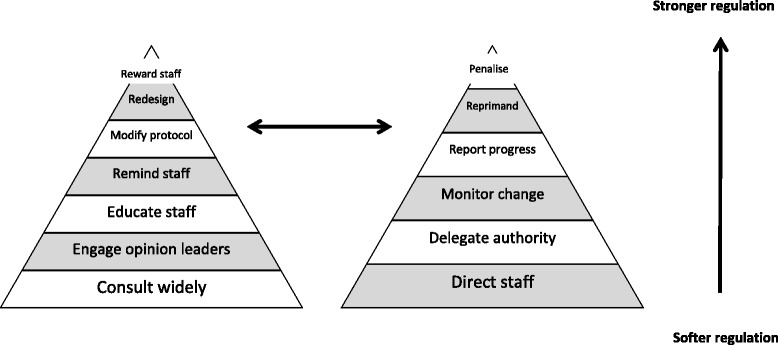
“On the sanction pyramid, ‘soft’ regulation in the form of monitoring compliance through audit and reporting was evident in several studies [54, 56, 58, 62].”
ResultBarriers to staff adoption of a surgical safety checklist
Fourcade, A., Blache, J.-L., Grenier, C., Bourgain, J.-L., & Minvielle, E. (2012) · BMJ Quality & Safety · doi:10.1136/bmjqs-2011-000094 · Cited by 321 · cited 5×
“Real-world compliance with checklists varies: In one hospital in the Netherlands, completion rates were as low as 39 % [61]; while a recent Canadian study [65] found that self-reported compliance rates across 101 hospitals were high, ranging from 92 to 98 % [63].”
InfluentialBorchard, A., Schwappach, D. L. B., Barbir, A., & Bezzola, P. (2012) · Annals of Surgery · doi:10.1097/sla.0b013e3182682f27 · Cited by 311 · cited 1×
“The results of several meta-analyses suggest that there is an association with checklist use and reductions in mortality [12, 13], wound infection [13, 14], pneumonia [14], blood loss [14], and any complication [13, 14].”
ResultRuss, S. J., Sevdalis, N., Moorthy, K., Mayer, E. K., Rout, S., Caris, J., Mansell, J., Davies, R., Vincent, C., & Darzi, A. (2015) · Annals of Surgery · doi:10.1097/sla.0000000000000793 · Cited by 250 · cited 4×
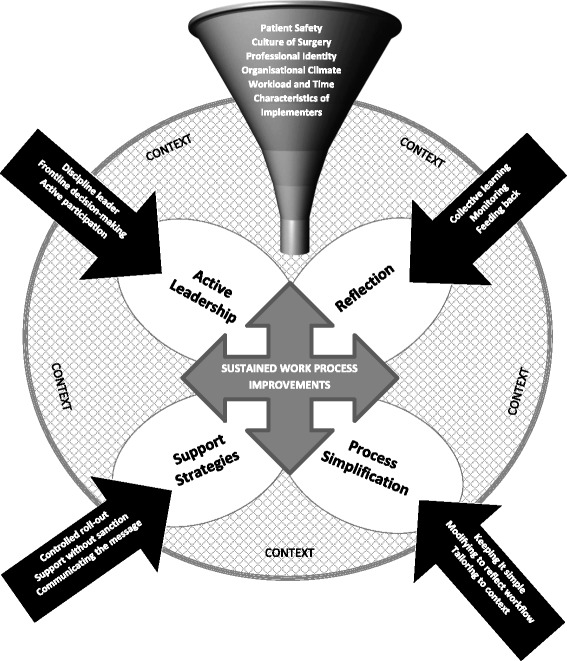
“Aspects of context such as organisational culture, professional identity, workload, and professional identity were recognised in several review studies [35, 42, 43, 63] and in relation to being either barriers or enablers to checklist implementation [63, 64].”
BackgroundMethodInfluentialTrends in guideline implementation: a scoping systematic review
and the members of the Guidelines International Network Implementation Working Group, Gagliardi, A. R., & Alhabib, S. (2015) · Implementation Science · doi:10.1186/s13012-015-0247-8 · Cited by 229 · cited 3×
“compliance/non-compliance), tailoring of interventions to a given problem or context, and evaluating implementation and the mechanism of action [74, 75].”
BackgroundDevelopment and validation of the SURgical PAtient Safety System (SURPASS) checklist
de Vries, E. N., Hollmann, M. W., Smorenburg, S. M., Gouma, D. J., & Boermeester, M. A. (2009) · Quality and Safety in Health Care · doi:10.1136/qshc.2008.027524 · Cited by 219
Surgical safety checklists: do they improve outcomes?
Walker, I. A., Reshamwalla, S., & Wilson, I. H. (2012) · British Journal of Anaesthesia · doi:10.1093/bja/aes175 · Cited by 218 · cited 1×
“Arguably, evidence of checklist effectiveness on outcomes is important [11, 15]; yet, there is often a disconnect between discussion of effectiveness and the manner and context in which the intervention was delivered.”
BackgroundTeam communications in surgery – creating a culture of safety
Gillespie, B. M., Gwinner, K., Chaboyer, W. P., & Fairweather, N. (2013) · Journal of Interprofessional Care · doi:10.3109/13561820.2013.784243 · Cited by 206 · cited 1×
“However, success or failure is contingent on contextual factors such as organisational climate, culture of surgery, and workload and time [73].”
BackgroundSelf-citationImplementing a surgical checklist: More than checking a box
Levy, S. M., Senter, C. E., Hawkins, R. B., Zhao, J. Y., Doody, K., Kao, L. S., Lally, K. P., & Tsao, K. (2012) · Surgery · doi:10.1016/j.surg.2012.05.034 · Cited by 194 · cited 5×
“[40], Norton and Rangel [45], Stryer et al.”
BackgroundMethodInfluentialCompliance with the WHO Surgical Safety Checklist: deviations and possible improvements
Rydenfält, C., Johansson, G. I., Odenrick, P., Akerman, K., & Larsson, P. (2013) · International Journal for Quality in Health Care · doi:10.1093/intqhc/mzt004 · Cited by 191 · cited 2×
“In the studies where compliance rates were reported, adherence for the check-in phase ranged from 23 to 98 % [18, 31, 32, 34, 36–39, 41, 45, 46, 48, 50, 52, 55, 56, 58] while timeout ranged from 19 to 100 % [18, 32, 36–39, 41, 42, 45, 46, 48, 50–52, 54, 58, 59], and sign-out ranged from 2 to 93 % [31, 32, 36, 37, 39,…”
BackgroundGillespie, B. M., Chaboyer, W., Longbottom, P., & Wallis, M. (2010) · International Journal of Nursing Studies · doi:10.1016/j.ijnurstu.2009.11.001 · Cited by 171 · cited 2×
“The intent of the checklist as a safety tool is to create a dialogue among team members, improving team communications and flattening the hierarchy that often characterises the culture of surgical teams [7, 8].”
BackgroundSelf-citationRisk-adjusted surgical audit with the POSSUM scoring system in a developing country
Yii, M. K., & Ng, K. J. (2002) · British journal of surgery · doi:10.1046/j.0007-1323.2001.01979.x · Cited by 165
Use of the WHO surgical safety checklist in trauma and orthopaedic patients
Sewell, M., Adebibe, M., Jayakumar, P., Jowett, C., Kong, K., Vemulapalli, K., & Levack, B. (2011) · International Orthopaedics · doi:10.1007/s00264-010-1112-7 · Cited by 164 · cited 2×
“Factors such as forgetfulness, time constraints, and duplication were identified as barriers to implementation success, [34, 53, 63, 64] but they may actually be surrogates for a perceived lack of value for the practice.”
BackgroundThirty-Day Outcomes Support Implementation of a Surgical Safety Checklist
Bliss, L. A., Ross-Richardson, C. B., Sanzari, L. J., Shapiro, D. S., Lukianoff, A. E., Bernstein, B. A., & Ellner, S. J. (2012) · Journal of the American College of Surgeons · doi:10.1016/j.jamcollsurg.2012.07.015 · Cited by 157 · cited 1×
“In the studies where compliance rates were reported, adherence for the check-in phase ranged from 23 to 98 % [18, 31, 32, 34, 36–39, 41, 45, 46, 48, 50, 52, 55, 56, 58] while timeout ranged from 19 to 100 % [18, 32, 36–39, 41, 42, 45, 46, 48, 50–52, 54, 58, 59], and sign-out ranged from 2 to 93 % [31, 32, 36, 37, 39,…”
Haugen, A. S., Søfteland, E., Eide, G. E., Sevdalis, N., Vincent, C. A., Nortvedt, M. W., & Harthug, S. (2013) · British Journal of Anaesthesia · doi:10.1093/bja/aet005 · Cited by 147 · cited 2×
“Of the 35 studies, 8 reported attitudinal improvements in communication or safety culture [36, 38, 39, 45, 47, 49, 50, 53].”
BackgroundRoutine Amoxicillin for Uncomplicated Severe Acute Malnutrition in Children
Isanaka, S., Langendorf, C., Berthé, F., Gnegne, S., Li, N., Ousmane, N., Harouna, S., Hassane, H., Schaefer, M., Adehossi, E., et al. (2016) · New England Journal of Medicine · doi:10.1056/nejmoa1507024 · Cited by 141
Kwok, A. C., Funk, L. M., Baltaga, R., Lipsitz, S. R., Merry, A. F., Dziekan, G., Ciobanu, G., Berry, W. R., & Gawande, A. A. (2013) · Annals of Surgery · doi:10.1097/sla.0b013e3182777fa4 · Cited by 140 · cited 5×
“Of the 35 studies, 8 reported attitudinal improvements in communication or safety culture [36, 38, 39, 45, 47, 49, 50, 53].”
BackgroundInfluentialGillespie, B. M., Chaboyer, W. P., Thalib, L., John, M. J., Fairweather, N., & Slater, K. (2014) · Anesthesiology · doi:10.1097/aln.0000000000000232 · Cited by 138
Self-citationMortality in sepsis versus non-sepsis induced acute lung injury
Sevransky, J., Martin, G. S., Shanholtz, C. B., Méndez-Téllez, P. A., Pronovost, P. J., Brower, R. G., & Needham, D. M. (2009) · Critical Care · doi:10.1186/cc8048 · Cited by 128
El-Jardali, F., Lavis, J. N., Ataya, N., & Jamal, D. (2012) · Implementation Science · doi:10.1186/1748-5908-7-2 · Cited by 128
To Your Health: How to Understand What Research Tells Us about Risk
KRAEMER, H. C., Lowe, K. K., & Kupfer, D. J. (2005) · Cited by 128
Askarian, M., Kouchak, F., & Palenik, C. J. (2011) · Quality Management in Health Care · doi:10.1097/qmh.0b013e318231357c · Cited by 112
TAKALA, R. S. K., PAUNIAHO, S. ‐., KOTKANSALO, A., HELMIÖ, P., BLOMGREN, K., HELMINEN, M., KINNUNEN, M., TAKALA, A., AALTONEN, R., KATILA, A. J., et al. (2011) · Acta Anaesthesiologica Scandinavica · doi:10.1111/j.1399-6576.2011.02525.x · Cited by 101 · cited 1×
“Of the 35 studies, 8 reported attitudinal improvements in communication or safety culture [36, 38, 39, 45, 47, 49, 50, 53].”
BackgroundCase Series of Acute Abdominal Surgery in Rural Sierra Leone
McConkey, S. J. (2002) · World Journal of Surgery · doi:10.1007/s00268-001-0258-2 · Cited by 101 · cited 1×
“8 % [2] but may be as much as 10 times higher in developing countries [3].”
BackgroundStrategies for Improving Surgical Quality — Checklists and Beyond
Birkmeyer, J. D. (2010) · New England Journal of Medicine · doi:10.1056/nejme1009542 · Cited by 98 · cited 1×
“Improvements in team communications, a reduction in interruptions and distractions, and an increase in error identification and prevention of AE have been attributed to the use of surgical safety checklists [10, 11].”
MethodTo Your Health: How to Understand What Research Tells Us About Risk
Kraemer, H. C., Lowe, K. K., & Kupfer, D. J. (2005) · doi:10.1093/oso/9780195178708.001.0001 · Cited by 92
BÖHMER, A. B., WAPPLER, F., TINSCHMANN, T., KINDERMANN, P., RIXEN, D., BELLENDIR, M., SCHWANKE, U., BOUILLON, B., & GERBERSHAGEN, M. U. (2012) · Acta Anaesthesiologica Scandinavica · doi:10.1111/j.1399-6576.2011.02590.x · Cited by 85
Mobilising modern facts: health technology assessment and the politics of evidence
May, C. (2006) · Sociology of Health & Illness · doi:10.1111/j.1467-9566.2006.00505.x · Cited by 82 · cited 2×
“As part of embedding a practice so that it becomes ‘normalised’ into routine work patterns, gaining an understanding of what health professionals do and how they work is crucial to inform how such practices can be sustained [26].”
BackgroundThe introduction of a surgical safety checklist in a tertiary referral obstetric centre
Kearns, R. J., Uppal, V, Bonner, J., Robertson, J., Daniel, M., & McGrady, E. M. (2011) · BMJ Quality & Safety · doi:10.1136/bmjqs.2010.050179 · Cited by 81 · cited 4×
“In several of our review studies, checklist implementation posed logistical challenges in relation to workflow, especially during emergency procedures [35, 50, 55, 63, 64].”
BackgroundInfluentialChecklists in the operating room: Help or hurdle? A qualitative study on health workers' experiences
Thomassen, Ø., Brattebø, G., Heltne, J.-K., Søfteland, E., & Espeland, A. (2010) · BMC Health Services Research · doi:10.1186/1472-6963-10-342 · Cited by 80 · cited 2×
“Sustainability in safety improvement clearly needs organisational and professional commitment to a wider set of interventions concerning safety in the surgical process [65, 71, 72].”
BackgroundMethodYuan, C. T., Walsh, D., Tomarken, J. L., Alpern, R., Shakpeh, J. K., & Bradley, E. H. (2012) · The Joint Commission Journal on Quality and Patient Safety · doi:10.1016/s1553-7250(12)38032-x · Cited by 80 · cited 1×
“Follow-up periods to ascertain sustainability ranged from 1 to 12 months [31, 41, 42, 44, 50, 62].”
BackgroundKasatpibal, N., Senaratana, W., Chitreecheur, J., Chotirosniramit, N., Pakvipas, P., & Junthasopeepun, P. (2012) · Surgical Infections · doi:10.1089/sur.2011.043 · Cited by 79 · cited 7×
“Review methods: Pawson’s and Rycroft-Malone’s realist synthesis methodology was used to explain the interaction between context, mechanism, and outcome.”
BackgroundMethodInfluentialVogts, N., Hannam, J. A., Merry, A., & Mitchell, S. J. (2011) · PubMed · Cited by 78
Building shared situational awareness in surgery through distributed dialog
Gillespie, B. M., Fairweather, Chaboyer, & Gwinner, K. (2013) · Journal of Multidisciplinary Healthcare · doi:10.2147/jmdh.s40710 · Cited by 77 · cited 2×
“The authors of that study concluded that checklist use did not culminate in striking improvements in patient outcomes, a finding that runs counter to other studies [37, 61, 70] in this field.”
BackgroundResultSelf-citationImplementation of the WHO Surgical Safety Checklist in an Ethiopian Referral Hospital
Bashford, T., Reshamwalla, S., McAuley, J., Allen, N., McNatt, Z., & Gebremedhen, Y. D. (2014) · Patient Safety in Surgery · doi:10.1186/1754-9493-8-16 · Cited by 68 · cited 3×
“[31], Bell and Pontin [57], Berrisford et al.”
BackgroundReview article: Perioperative checklist methodologies
Weiser, T. G., & Berry, W. R. (2012) · Canadian Journal of Anesthesia/Journal canadien d anesthésie · doi:10.1007/s12630-012-9854-x · Cited by 62 · cited 3×
“Clearly, the ways in which safety improvement initiatives such as checklists are embedded in clinical practice has consequences—and their implementation can culminate in their misuse or non-use [4].”
BackgroundImplementing a Pediatric Surgical Safety Checklist in the OR and Beyond
Norton, E. K., & Rangel, S. J. (2010) · AORN Journal · doi:10.1016/j.aorn.2009.11.069 · Cited by 58 · cited 6×
“Of the 35 studies, 8 reported attitudinal improvements in communication or safety culture [36, 38, 39, 45, 47, 49, 50, 53].”
BackgroundInfluentialThe Surgical Safety Checklist: Lessons Learned During Implementation
Calland, J. F., Turrentine, F. E., Guerlain, S. A. E., Bovbjerg, V., Poole, G. R., Lebeau, K., Peugh, J., & Adams, R. B. (2011) · The American Surgeon · doi:10.1177/000313481107700923 · Cited by 58 · cited 1×
“Of the 35 studies, 8 reported attitudinal improvements in communication or safety culture [36, 38, 39, 45, 47, 49, 50, 53].”
BackgroundThe World Health Organization Surgical Safety Checklist
Sparkes, D. J., & Rylah, B. G. (2010) · British Journal of Hospital Medicine · doi:10.12968/hmed.2010.71.5.47908 · Cited by 57 · cited 5×
“Aspects of context such as organisational culture, professional identity, workload, and professional identity were recognised in several review studies [35, 42, 43, 63] and in relation to being either barriers or enablers to checklist implementation [63, 64].”
BackgroundInfluentialWhy isn't 'time out' being implemented? An exploratory study
Gillespie, B. M., Chaboyer, W., Wallis, M., & Fenwick, C. (2010) · Quality and Safety in Health Care · doi:10.1136/qshc.2008.030593 · Cited by 51 · cited 3×
“Aspects of context such as organisational culture, professional identity, workload, and professional identity were recognised in several review studies [35, 42, 43, 63] and in relation to being either barriers or enablers to checklist implementation [63, 64].”
BackgroundSelf-citationMainthia, R., Lockney, T., Зотов, А. С., France, D. J., Bennett, M. L., Jacques, P. J. S., Furman, W. R., Randa, S., Feistritzer, N. R., Eavey, R. D., et al. (2012) · Surgery · doi:10.1016/j.surg.2011.12.005 · Cited by 49 · cited 4×
“One study used an environmental redesign strategy in the form of interactive whiteboards for the ‘timeout’ section of the SSC checklist [46].”
BackgroundMethodInfluentialBerrisford, R. G., Wilson, I. H., Davidge, M., & Sanders, D. (2011) · European Journal of Cardio-Thoracic Surgery · doi:10.1093/ejcts/ezr179 · Cited by 45
Cullati, S., Licker, M. J., Francis, P., Degiorgi, A., Bezzola, P., Courvoisier, D. S., & Chopard, P. (2014) · PLoS ONE · doi:10.1371/journal.pone.0101915 · Cited by 36 · cited 2×
“In the studies where compliance rates were reported, adherence for the check-in phase ranged from 23 to 98 % [18, 31, 32, 34, 36–39, 41, 45, 46, 48, 50, 52, 55, 56, 58] while timeout ranged from 19 to 100 % [18, 32, 36–39, 41, 42, 45, 46, 48, 50–52, 54, 58, 59], and sign-out ranged from 2 to 93 % [31, 32, 36, 37, 39,…”
BackgroundImplementing checklists in the operating room
Low, D. K., WALKER, I. A., Heitmiller, E. S., & Kurth, D. (2012) · Pediatric Anesthesia · doi:10.1111/pan.12018 · Cited by 36 · cited 2×
“The intent of the checklist as a safety tool is to create a dialogue among team members, improving team communications and flattening the hierarchy that often characterises the culture of surgical teams [7, 8].”
BackgroundShekelle, P., Pronovost, P. J., Wachter, R. M., Carr, L. H., Foy, R., Dy, S. M., Hempel, S., McDonald, K. M., Øvretveit, J., & Rubenstein, L. V. (2010) · Cited by 31
Styer, K. A., Ashley, S. W., Schmidt, I., Zive, E. M., & Eappen, S. (2011) · AORN Journal · doi:10.1016/j.aorn.2011.03.012 · Cited by 27 · cited 1×
“Aspects of context such as organisational culture, professional identity, workload, and professional identity were recognised in several review studies [35, 42, 43, 63] and in relation to being either barriers or enablers to checklist implementation [63, 64].”
BackgroundHelmiö, P., Takala, A., Aaltonen, L. A., Pauniaho, S., Ikonen, T. S., & Blomgren, K. B. (2012) · Clinical Otolaryngology · doi:10.1111/j.1749-4486.2012.02486.x · Cited by 26 · cited 1×
“Of the 35 studies, 8 reported attitudinal improvements in communication or safety culture [36, 38, 39, 45, 47, 49, 50, 53].”
BackgroundTruran, P., Critchley, R. J., & Gilliam, A. (2010) · The Surgeon · doi:10.1016/j.surge.2010.11.024 · Cited by 26 · cited 1×
“[51] reported a reduction in venous thromboembolism compliance following checklist implementation.”
BackgroundThe Use of Checklists as a Method to Reduce Human Error in Cardiac Operating Rooms
Spiess, B. D. (2012) · International Anesthesiology Clinics · doi:10.1097/aia.0b013e31827da461 · Cited by 18 · cited 2×
“Arguably, evidence of checklist effectiveness on outcomes is important [11, 15]; yet, there is often a disconnect between discussion of effectiveness and the manner and context in which the intervention was delivered.”
BackgroundMethodHow implementing the surgical safety checklist improved staff teamwork in theatre.
Bell, R., & Pontin, L. (2010) · PubMed · Cited by 7
Implementation of a Surgical Safety Checklist
Stathatos, N. (2018) · USF Scholarship Repository (University of San Francisco) · Cited by 7
Pérez-Guisado, J., de Haro-Padilla, J. M., & Rioja, L. F. (2012) · Plastic & Reconstructive Surgery · doi:10.1097/prs.0b013e3182419b1c · Cited by 4 · cited 3×
“Pérez-Guisado J. Implementation of the World Health Organization surgical safety checklist in plastic and reconstructive patients.”
BackgroundTheatre team learns to use checklist to make surgery safer.
Bittle, M. J. (2011) · PubMed · Cited by 4
(2010) · PubMed · Cited by 2
Research works printed but not linked: 2
- Pawson R Tilley N Realistic evaluation 1997 London Sage
- Braithwaite J The essence of responsive regulation UBC Law Rev 2011 44 3 475 520
Cited by
Impact of the World Health Organization Surgical Safety Checklist on Patient Safety
Haugen, A. S., Sevdalis, N., & Søfteland, E. (2019) · Anesthesiology · doi:10.1097/aln.0000000000002674 · Cited by 175
Operating Room Crisis Checklists and Emergency Manuals
Hepner, D. L., Arriaga, A. F., Cooper, J. B., Goldhaber-Fiebert, S. N., Gaba, D. M., Berry, W. R., Boorman, D. J., & Bader, A. M. (2017) · Anesthesiology · doi:10.1097/aln.0000000000001731 · Cited by 112
Cooper, A., Davies, F., Edwards, A., Anderson, P., Carson‐Stevens, A., Cooke, M. W., Donaldson, L., Dale, J. R., Evans, B. A., Hibbert, P. D., et al. (2019) · BMJ Open · doi:10.1136/bmjopen-2018-024501 · Cited by 84
“Cochrane review of four studies, published in 2018, highlighted inconsistent results and a lack of evidence on safety.”
Implementation process of the surgical safety checklist: integrative review
Tostes, M. F. D. P., & Galvão, C. M. (2019) · Revista Latino-Americana de Enfermagem · doi:10.1590/1518-8345.2921.3104 · Cited by 67
“In contrast, the way the SSC implementation process occurs can lead to incomplete or inconsistent execution of the tool and low compliance rate by the surgical team(6).”
BackgroundReal-Time Debriefing After Critical Events
Arriaga, A. F., Szyld, D., & Pian-Smith, M. C. M. (2020) · Anesthesiology Clinics · doi:10.1016/j.anclin.2020.08.003 · Cited by 81
Metadata
- Authors
- Gillespie, B. M., & Marshall, A.
- Affiliations
- Griffith University (AU)
- Corresponding author
- Gillespie, Brigid M.
- Venue
- Implementation Science
- Published
- 2015-09-28
- Volume
- 10
- Issue
- 1
- Pages
- 137-137
- ISSN
- 1748-5908 (ISSN-L)
- PMC
- PMC4587654
- OpenAlex
- W2171973804
- Cited by
- 130
- References
- 84
- Citations by year
- 2026: 4 · 2025: 9 · 2024: 11 · 2023: 7 · 2022: 11 · 2021: 18 · 2020: 10 · 2019: 16 · 2018: 19 · 2017: 15 · 2016: 9
- FWCI
- 3.40
- Type
- journal article
- Language
- en
- Open access
- gold
- doi.org
- Licence
- Locations
- Implementation Science (publishedVersion, cc-by)
- PubMed Central (publishedVersion, cc-by)
- PubMed (publishedVersion)
- Griffith Research Online (submittedVersion, cc-by)
- Funders
- Griffith University
- Medical Research Council
- National Health and Medical Research Council
- Topics
- Health Sciences › Medicine › Public Health, Environmental and Occupational Health › Patient Safety and Medication Errors
- Health Sciences › Health Professions › General Health Professions › Health Policy Implementation Science
- Health Sciences › Medicine › Public Health, Environmental and Occupational Health › Healthcare Quality and Management
- Keywords
- surgical safety checklist, checklist implementation, patient safety, operating room teamwork, Normalisation Process Theory, clinician engagement, implementation sustainability, checklist compliance, context-mechanism-outcome
- MeSH terms
- Clinical Protocols, Diffusion of Innovation, Humans, Inservice Training, Leadership, Reinforcement, Psychology, Surgical Procedures, Operative, Program Evaluation, Evidence-Based Medicine, Checklist, Patient Safety
About these checks
Registry, retraction, Cites and statistics results are computed, not judged, with one exception: a printed reference that no index lists is read once by a model before it counts as a citation error. Claims are extracted by a model and kept only when their quote appears verbatim in the text; each cited source is then checked, with a model’s help, for whether it says what the claim relies on. Those verdicts can be wrong — read the claim’s quote and the cited source before relying on one.
Statistics and arithmetic are recomputed, not judged.
Confidence bands are shown only for fields calibrated on our annotated test set. None is calibrated yet, so no band is shown.
What counts as a claim ›How we measure confidence ›How we check this ›
Are you an author, or do you see a problem with this page? Request a review
Data sources
Bibliographic data: Semantic Scholar, OpenAlex, Crossref.
Contains information from the Semantic Scholar Academic Graph Datasets, made available under the ODC Attribution License (ODC-BY 1.0).
Semantic Scholar’s data is described in: Kinney, R., et al. (2023). The Semantic Scholar Open Data Platform. arXiv:2301.10140.
