

A modified theoretical framework to assess implementation fidelity of adaptive public health interventions
Open accessThe DOI matches its Crossref record, with a small difference in title or year; 65 of the 67 references it cites were found in a registry or an index; 15 of the 45 sources its claims cite were checked for support.
Abstract
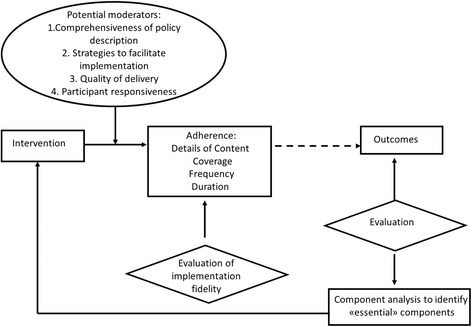
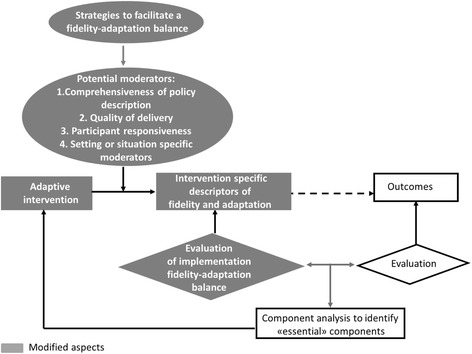
BACKGROUND: One of the major debates in implementation research turns around fidelity and adaptation. Fidelity is the degree to which an intervention is implemented as intended by its developers. It is meant to ensure that the intervention maintains its intended effects. Adaptation is the process of implementers or users bringing changes to the original design of an intervention. Depending on the nature of the modifications brought, adaptation could either be potentially positive or could carry the risk of threatening the theoretical basis of the intervention, resulting in a negative effect on expected outcomes. Adaptive interventions are those for which adaptation is allowed or even encouraged. Classical fidelity dimensions and conceptual frameworks do not address the issue of how to adapt an intervention while still maintaining its effectiveness. DISCUSSION: We support the idea that fidelity and adaptation co-exist and that adaptations can impact either positively or negatively on the intervention's effectiveness. For adaptive interventions, research should answer the question how an adequate fidelity-adaptation balance can be reached. One way to address this issue is by looking systematically at the aspects of an intervention that are being adapted. We conducted fidelity research on the implementation of an empowerment strategy for dengue prevention in Cuba. In view of the adaptive nature of the strategy, we anticipated that the classical fidelity dimensions would be of limited use for assessing adaptations. The typology we used in the assessment-implemented, not-implemented, modified, or added components of the strategy-also had limitations. It did not allow us to answer the question which of the modifications introduced in the strategy contributed to or distracted from outcomes. We confronted our empirical research with existing literature on fidelity, and as a result, considered that the framework for implementation fidelity proposed by Carroll et al. in 2007 could potentially meet our concerns. We propose modifications to the framework to assess both fidelity and adaptation. The modified Carroll et al.'s framework we propose may permit a comprehensive assessment of the implementation fidelity-adaptation balance required when implementing adaptive interventions, but more empirical research is needed to validate it.
Overview
CoChat Summary
## TL;DR
The paper argues that for adaptive interventions, fidelity and adaptation should be assessed together rather than as opposing concepts. It proposes a modified Carroll et al. framework, informed by a fidelity study of a dengue-prevention empowerment strategy in Cuba, to better capture the fidelity-adaptation balance.
## Key findings
- The authors’ prior fidelity research on an empowerment strategy for dengue prevention in Cuba found “a wide variability of fidelity,” largely explained by intervention complexity and implementers’ lack of knowledge of basic principles, and this variation “did not result in a substantial loss of effectiveness.”
- In that empirical study, surveillance was the most implemented component, followed by capacity building; community work and organization and management were less implemented or modified.
- The authors conclude that the Rebchook et al. typology was useful but insufficient: it could not explain which modifications contributed to or distracted from outcomes, and it did not provide a detailed view of fidelity in terms of content, dose, and coverage.
- They propose that a modified Carroll et al. framework can assess both fidelity and adaptation by using intervention-specific descriptors rather than fixed adherence subcategories alone.
## Methods
- This is a debate/conceptual paper that develops a modified theoretical framework using the authors’ prior empirical fidelity study as the main motivating example.
- The empirical example was a retrospective assessment of an empowerment strategy for dengue vector control implemented between October 2004 and December 2007 in 16 communities in La Lisa municipality, Havana City.
- The prior study used a three-step assessment: individual evaluations by three developers, discussion by six developers, then refinement with implementers in a participatory workshop; qualitative data were transformed into quantitative data, and semi-structured interviews were conducted with 13 implementers.
## Limitations
- The authors explicitly state that the modified framework needs more empirical research to be tested and validated.
- They say the typology used in their empirical study had limitations because it did not answer which modifications affected outcomes and did not capture fidelity in enough detail; this limitation is stated in the paper.
- Evident from the text: the paper is largely conceptual and relies on one prior case example, so its proposed framework is not validated here.
Model-written summary. Check it against the paper before relying on it.
Integrity signals
Registry
Cites
Statistics
Figures
Verification
Claims the paper makes
12 Valid · 1 Not valid · 10 Not checked · 19 Own results and interpretations
Every source the paper cites for this claim was checked and supports it.
In the paper
“The modified Carroll et al.’s framework we propose may permit a comprehensive assessment of the implementation fidelity-adaptation balance required when implementing adaptive interventions, but more empirical research is needed to validate it.”
§ A modified theoretical framework to assess implementation fidelity of adaptive public health interventions > Abstract > Summary
What the sources say
- Supportedcites [15] Carroll C Patterson M Wood S Booth A Rick J Balain S A conceptual framework for implementation fidelity Implement Sci 2007 2 40 10.1186/1748-5908-2-40 18053122 PMC2213686 source
The citation identifies Carroll et al.’s framework, which the paper presents in its Proposed framework section. The Elements and relationships section also discusses balancing adaptation to local conditions with fidelity to an intervention’s essential elements. Whether the citing authors’ proposed modification permits comprehensive assessment is their own tentative conclusion, not a finding attributed to Carroll et al. (LLM, conf=0.91)
hedgedstates a possible cause- Asserted: passes — The authors put it forward as true.
- Checkable: unclear — It is unclear whether it could be checked against evidence.
- Load-bearing: passes — The paper’s conclusions depend on it.
- Based: passes — The paper gives a reason why it holds.
- Supported
The sources with a verdict support this claim; the rest weren’t checked yet, have no full text we could read, or their verdicts aren’t rated yet.
In the paper
“The need for such an adequate fidelity-adaptation balance, emphasized by Backer [11] and von Thiele Schwarz et al. [12], is strongly supported by the results of our empirical fidelity research [61] and further research on diffusion of the empowerment strategy for dengue prevention [69].”
§ A modified theoretical framework to assess implementation fidelity of adaptive public health interventions > Background > A modified Carroll et al.’s framework for implementation fidelity
What the sources say
- Not checked yetcites [11] Backer TE: Finding the balance: program fidelity and adaptation in substance abuse prevention: a state-of-the-art review. Rockville, MD: Center for Substance Abuse Prevention. 2002. Available at: http://www.csun.edu/sites/default/files/FindingBalance1.pdf. Accessed 11 Jan 2010.
- Not checked — no full text of the sourcecites [12] von Thiele Schwarz U, Hasson H, Lindfors P: Applying a fidelity framework to understand adaptations in an occupational health intervention. Work 2014, 51. doi: 10.3233/WOR-141840 24594534 source
- Supportedcites [61] Pérez D Lefèvre P Castro M Sánchez L Toledo ME Vanlerbergue V Van der Stuyft P Process-oriented fidelity research assists in evaluation, adjustment and scaling up of community-based interventions Health Policy Plan 2010 26 413 422 10.1093/heapol/czq077 21149346 source
The Framework and procedures to assess fidelity/reinvention section says strict fidelity could contradict this participatory intervention, while adaptations that preserve a component’s purpose can maintain fidelity. The Discussion calls for monitoring both positive and negative reinvention during scaling-up. Together, these support the attributed need to balance fidelity and adaptation in this kind of intervention; no page numbers are available in our copy. (LLM, conf=0.87)
boosted- Asserted: passes — The authors put it forward as true.
- Checkable: unclear — It is unclear whether it could be checked against evidence.
- Load-bearing: passes — The paper’s conclusions depend on it.
- Based: passes — The paper gives a reason why it holds.
Every source the paper cites for this claim was checked and supports it.
In the paper
“Community work and organization and management were less implemented or modified [61].”
§ A modified theoretical framework to assess implementation fidelity of adaptive public health interventions > Background > Our empirical research: fidelity-adaptation balance in the implementation of an empowerment strategy
What the sources say
- Supportedcites [61] Pérez D Lefèvre P Castro M Sánchez L Toledo ME Vanlerbergue V Van der Stuyft P Process-oriented fidelity research assists in evaluation, adjustment and scaling up of community-based interventions Health Policy Plan 2010 26 413 422 10.1093/heapol/czq077 21149346 source
In ‘Fidelity of implementation by components,’ the paper reports low implementation or modification of organization and management. The ‘Community work’ section describes several activities that were not carried out or were implemented in few circumscriptions, while the ‘Capacity-building’ section reports that component was relatively well implemented. Together, these passages support the comparison. (LLM, conf=0.88)
plain- Asserted: passes — The authors put it forward as true.
- Checkable: passes — It can be checked against evidence.
- Load-bearing: unclear — It is unclear whether the paper’s conclusions depend on it.
- Based: passes — The paper gives a reason why it holds.
- Supported
The sources with a verdict support this claim; the rest weren’t checked yet, have no full text we could read, or their verdicts aren’t rated yet.
In the paper
“Several studies have demonstrated that the fidelity with which an intervention is implemented affects its effectiveness [8–15].”
§ A modified theoretical framework to assess implementation fidelity of adaptive public health interventions > Background
What the sources say
- Not checked — no full text of the sourcecites [8] Dusenbury L Brannigan R Falco M Hansen WB A review of research on fidelity of implementation: implications for drug abuse prevention in school settings Heal Educ Res 2003 18 237 256 10.1093/her/18.2.237 12729182 source
- Not checked — no full text of the sourcecites [9] Sundell K Beelmann A Hasson H von Thiele Schwarz U Novel programs, international adoptions, or contextual adaptations? Meta-analytical results from German and Swedish intervention research J Clin Child Adolesc Psychol 2015 25864716 source
- Not matchedcites [10] Hall GE Hord SM Implementing change: patterns, principles, potholes 2001 New York Allyn & Bacon
We searched by its title and found no matching paper.
- Not matchedcites [11] Backer TE: Finding the balance: program fidelity and adaptation in substance abuse prevention: a state-of-the-art review. Rockville, MD: Center for Substance Abuse Prevention. 2002. Available at: http://www.csun.edu/sites/default/files/FindingBalance1.pdf. Accessed 11 Jan 2010.
We searched by its title and found no matching paper.
- Not checked — no full text of the sourcecites [12] von Thiele Schwarz U, Hasson H, Lindfors P: Applying a fidelity framework to understand adaptations in an occupational health intervention. Work 2014, 51. doi: 10.3233/WOR-141840 24594534 source
- Not checked — no full text of the sourcecites [13] Dane A Schneider B Program integrity in primary and early secondary prevention: are implementation effects out of control? Clin Psychol Rev 1998 18 23 45 10.1016/S0272-7358(97)00043-3 9455622 source
- Not checked — no full text of the sourcecites [14] Dusenbury L Brannigan R Hansen WB Walsh J Falco M Quality of implementation: developing measures crucial to understanding the diffusion of preventive interventions Health Edu Res 2005 20 308 313 10.1093/her/cyg134 15522898 source
- Supportedcites [15] Carroll C Patterson M Wood S Booth A Rick J Balain S A conceptual framework for implementation fidelity Implement Sci 2007 2 40 10.1186/1748-5908-2-40 18053122 PMC2213686 source
The Background states that studies have demonstrated that implementation fidelity affects how well an intervention succeeds. It also describes examples in which outcomes were weaker under poor implementation and stronger under high fidelity. (LLM, conf=0.94)
boostedstates a cause- Asserted: passes — The authors put it forward as true.
- Checkable: passes — It can be checked against evidence.
- Load-bearing: passes — The paper’s conclusions depend on it.
- Based: passes — The paper gives a reason why it holds.
The sources with a verdict support this claim; the rest weren’t checked yet, have no full text we could read, or their verdicts aren’t rated yet.
In the paper
“The need for such an adequate fidelity-adaptation balance, emphasized by Backer [11] and von Thiele Schwarz et al. [12], is strongly supported by the results of our empirical fidelity research [61] and further research on diffusion of the empowerment strategy for dengue prevention [69].”
§ A modified theoretical framework to assess implementation fidelity of adaptive public health interventions > Background > A modified Carroll et al.’s framework for implementation fidelity
What the sources say
- Not checked yetcites [11] Backer TE: Finding the balance: program fidelity and adaptation in substance abuse prevention: a state-of-the-art review. Rockville, MD: Center for Substance Abuse Prevention. 2002. Available at: http://www.csun.edu/sites/default/files/FindingBalance1.pdf. Accessed 11 Jan 2010.
- Not checked — no full text of the sourcecites [12] von Thiele Schwarz U, Hasson H, Lindfors P: Applying a fidelity framework to understand adaptations in an occupational health intervention. Work 2014, 51. doi: 10.3233/WOR-141840 24594534 source
- Supportedcites [61] Pérez D Lefèvre P Castro M Sánchez L Toledo ME Vanlerbergue V Van der Stuyft P Process-oriented fidelity research assists in evaluation, adjustment and scaling up of community-based interventions Health Policy Plan 2010 26 413 422 10.1093/heapol/czq077 21149346 source
The Framework and procedures to assess fidelity/reinvention section says strict adherence was not necessary for this participatory strategy and adopts a mutual-adaptation perspective. The Discussion reports that the fidelity research identified implementation problems and informed adjustments for scaling up. This supports the citing sentence’s attribution to this paper [61]; the separate claim about further diffusion research is cited to [69]. (LLM, conf=0.88)
boostedstates an association- Asserted: passes — The authors put it forward as true.
- Checkable: passes — It can be checked against evidence.
- Load-bearing: passes — The paper’s conclusions depend on it.
- Based: passes — The paper gives a reason why it holds.
15 more claims · 1 with their cited sources checked
Create a free account to see all 42 claims and to verify the 6 references still open.
- It may state two separate claims as one. 12
- Probably not a substantial claim. 15
Claims other papers make about this one
Each is checked against this paper’s own text: does it say what the citing paper says it does?
The source backs part of the claim, not all of it — or backs it for a different population, condition or comparison.
In the citing paper
“An important determinant which can complicate logic model specification and measurement is the process of adaptation—modifications to the intervention or its delivery (implementation), through the input of service providers or implementers [68].”
From Guidance for conducting feasibility and pilot studies for implementation trials (2020) · cites this paper as [68]
Experimental — accuracy not yet measuredThe cited source says what the claim attributes to it.
In the citing paper
“However, modifications that remove key elements of an intervention, or fail to align with population needs, may be less effective [7, 11–14].”
From The FRAME: an expanded framework for reporting adaptations and modifications to evidence-based interventions (2019) · cites this paper as [11]
Citations
Cites
Rogers, E. M., Singhal, A., & Quinlan, M. M. (2019) · An Integrated Approach to Communication Theory and Research · doi:10.4324/9780203710753-35 · Cited by 37,322
Valente, T. W. (2003) · Genetics in Medicine · doi:10.1097/01.gim.0000061743.67794.c4 · Cited by 13,723
Proctor, E., Silmere, H., Raghavan, R., Hovmand, P., Aarons, G., Bunger, A., Griffey, R., & Hensley, M. (2011) · Administration and Policy in Mental Health and Mental Health Services Research · doi:10.1007/s10488-010-0319-7 · Cited by 8,721 · cited 2×
“When translation efforts fail, it helps to determine if the failure occurred because the intervention was ineffective (intervention failure) or whether it was deployed incorrectly (implementation failure) [7].”
BackgroundDengue and Dengue Hemorrhagic Fever
Gubler, D. J. (1998) · Clinical Microbiology Reviews · doi:10.1128/cmr.11.3.480 · Cited by 4,310
(2005) · Cited by 3,748
Bellg, A. J., Treatment Fidelity Workgroup of the NIH Behavior Change Consortium, Borrelli, B., Resnick, B., Hecht, J., Minicucci, D. S., Ory, M., Ogedegbe, G., Orwig, D., Ernst, D., et al. (2004) · Health Psychology · doi:10.1037/0278-6133.23.5.443 · Cited by 2,620
A conceptual framework for implementation fidelity
Carroll, C., Patterson, M., Wood, S., Booth, A., Rick, J., & Balain, S. (2007) · Implementation Science · doi:10.1186/1748-5908-2-40 · Cited by 2,559
Glasgow, R. E., Lichtenstein, E., & Marcus, A. C. (2003) · American Journal of Public Health · doi:10.2105/ajph.93.8.1261 · Cited by 1,836
Dusenbury, L. (2003) · Health Education Research · doi:10.1093/her/18.2.237 · Cited by 1,671 · cited 3×
“Translating evidence-based health interventions has resulted in one of the major dilemmas in implementation research: fidelity versus adaptation [8, 9].”
BackgroundDane, A. V., & Schneider, B. H. (1998) · Clinical Psychology Review · doi:10.1016/s0272-7358(97)00043-3 · Cited by 1,557 · cited 5×
“the program is delivered; participant responsiveness—the degree to which participants are engaged; and program differentiation—critical features that distinguishes the program [8–14].”
BackgroundInfluential
Research works printed but not linked: 5
- Hall GE Hord SM Implementing change: patterns, principles, potholes 2001 New York Allyn & Bacon
- Pérez D: Procesos de implementación de estrategias participativas en el control de aedes aegypti. Propuestas para su evaluación y transformación. Thesis Dissertation, Cuba: Havana University; 2011
- Dissemination Working Group Common elements of developing and implementing program models 1999 Calgary FYI Consulting Ltd
- Creswell J Clarck VP Design and conducting mixed methods research 2011 Washington DC Sage Publications
- Freire P La educación liberadora 1981 Madrid Akal
Cited by
Items 101–196 of 196
Taliep, N., Ismail, G., Bulbulia, S., & in collaboration with Building Bridges NPO (2021) · International Journal of Injury Control and Safety Promotion · doi:10.1080/17457300.2021.1995441 · Cited by 5
Logan, V., Bamsey, A., Carter, N., Hughes, D., Turner, A., & Jordan, S. E. (2022) · Pharmacy · doi:10.3390/pharmacy10030052 · Cited by 7
Flannery, C., Dennehy, R., Riordan, F., Cronin, F., Moriarty, E., Turvey, S., O’Connor, K. A., Barry, P. J., Jonsson, A., Duggan, E., et al. (2022) · BMJ Open · doi:10.1136/bmjopen-2021-056182 · Cited by 7
Stockton, D. A., Fowler, C., Debono, D. S., & Travaglia, J. (2022) · Journal of Child Health Care · doi:10.1177/13674935221129003 · Cited by 9
Ahmad, S. Z., Ivers, N. M., Zenlea, I. S., Parsons, J. A., Shah, B. R., Mukerji, G., Punthakee, Z., & Shulman, R. M. (2024) · Implementation Science Communications · doi:10.1186/s43058-024-00563-2 · Cited by 8
Ekhammar, A., Larsson, M. E. H., Samsson, K. S., & Bernhardsson, S. (2024) · BMC Health Services Research · doi:10.1186/s12913-024-11758-7 · Cited by 5
“The low implementation fidelity of optional components is an example of the balance that needs to be achieved between fidelity and adaptation, as discussed by Perez et al. [38] in their proposed modified implementation fidelity framework.”
What matters when exploring fidelity when using health IT to reduce disparities?
Handley, M. A., Landeros, J., Wu, C., Najmabadi, A., Vargas, D., & Athavale, P. (2021) · BMC Medical Informatics and Decision Making · doi:10.1186/s12911-021-01476-z · Cited by 6
Carabalí, M., Pérez, D., Degroote, S., Reyes, A., Kaufman, J. S., & Ridde, V. (2020) · Global Health Promotion · doi:10.1177/1757975920943859 · Cited by 5
Self-citationCompaoré, R., Ouédraogo, A. M., Tougri, H., Badolo, O., & Kouanda, S. (2020) · African Evaluation Journal · doi:10.4102/aej.v8i1.437 · Cited by 4
Worton, S. K., & Furman, E. (2021) · Evidence & Policy · doi:10.1332/174426421x16149619754826 · Cited by 7
McNerney, N. A., Losensky, M. J., Lash, M. M., Rozaieski, K., Ortiz, D., Garcia, A. N., & Rethorn, Z. D. (2020) · PLoS ONE · doi:10.1371/journal.pone.0241434 · Cited by 4
“Theoretical fidelity is defined as “the degree to which an intervention is implemented as intended by its developers” [6].”
BackgroundSchinckus, L., den Broucke, S. V., van der Zanden, G., Levin‐Zamir, D., Mueller, G., Riemenschneider, H., Hayter, V., Yardley, L., Schillinger, D., Doyle, G., et al. (2021) · International Journal of Environmental Research and Public Health · doi:10.3390/ijerph18084095 · Cited by 7
Connecting the Dots from Professional Development to Student Learning
Ellingson, C., Edwards, K., Roehrig, G., Höelscher, M., Haroldson, R., & Dubinsky, J. M. (2021) · CBE—Life Sciences Education · doi:10.1187/cbe.21-02-0035 · Cited by 9
“As argued in our theoretical framework, these modifications are inevitable and desirable to support student learning (Perez et al., 2016).”
BackgroundMethodDavis, J. L., Ayakaka, I., Ggita, J. M., Ochom, E., Babirye, D., Turimumahoro, P., Gupta, A. J., Mugabe, F., Armstrong-Hough, M. J., Cattamanchi, A., et al. (2022) · Frontiers in Public Health · doi:10.3389/fpubh.2022.837211 · Cited by 5
“Preliminary evaluation of the individual implementation components might have allowed additional opportunities for iterative adaptation to improve the fidelity and fit of the strategy to the local setting (60, 61).”
BackgroundAnderson, E., Wiener, R. S., Molloy-Paolillo, B. K., McCullough, M. B., Kim, B., Harris, J. I., Rinne, S. T., Elwy, A. R., & Bokhour, B. G. (2023) · PLoS ONE · doi:10.1371/journal.pone.0286326 · Cited by 8
“fidelity: successful implementation initiatives must tailor an intervention to fit the context while also preserving the intervention’s core, indispensable characteristics, yet the boundary between the core and the periphery may be far from obvious [60,62,63].”
BackgroundIs it time for a paradigm shift to complexity-informed implementation fidelity?
Wiedenman, E. M., Campbell-Scherer, D. L., Iqbal, A., Ofosu, N. N., Hyde, A. M., McKay, R. C., Hunter, K. H., Castillo, E., & Tandon, P. (2025) · npj Complexity · doi:10.1038/s44260-025-00057-9 · Cited by 4
Camões‐Costa, V., Chakraborty, S. P., Mozaffari, F., Collie, A., Kenardy, J. A., Brijnath, B., Mortimer, D., Enticott, J., Kidd, M. R., Trevena, L. J., et al. (2023) · Implementation Science Communications · doi:10.1186/s43058-023-00531-2 · Cited by 4
Kunkel, M. C., Talmage, A., Noble, M., Haitsma, K. S. V., & Abbott, K. H. (2024) · The Gerontologist · doi:10.1093/geront/gnae122 · Cited by 3
Addanki, S., Macedo, L. G., MacDermid, J. C., & Moll, S. E. (2022) · Work · doi:10.3233/wor-205084 · Cited by 3
Kalolo, A., Lalashowi, J., Pamba, D. I., Shayo, P. J., Gitige, C. G., Mvungi, H., Ntagazwa, W., Lekule, I. A., Kisonga, R. M., Mleoh, L., et al. (2022) · BMJ Open · doi:10.1136/bmjopen-2021-054434 · Cited by 3
Agudelo, E. L., Battaglioli, T., Soto, A., Gómez, J. V., Ramírez, H. A., Ospina, V. P., Salva, A. J. R., Solórzano, P. O., Pérez, D., Gómez-Arias, R. D., et al. (2022) · BMJ Open · doi:10.1136/bmjopen-2021-056262 · Cited by 3
Self-citationMavodza, C., Bernays, S., Mackworth-Young, C. R. S., Nyamwanza, R. P., Nzombe, P., Dauya, E., Chikwari, C. D., Tembo, M., Apollo, T., Mugurungi, O. M., et al. (2023) · Global Implementation Research and Applications · doi:10.1007/s43477-023-00075-6 · Cited by 5
Measuring and predicting teachers’ commitment to implementing evidence-based programs
Cramer, T., Cappella, E., Morris, P., & Ganimian, A. (2023) · Early Childhood Research Quarterly · doi:10.1016/j.ecresq.2023.04.009 · Cited by 8
Schäfer, W. L. A., Johnson, J. K., Shallcross, M. L., Iroz, C. B., Huang, R., Balbale, S. N., & Stulberg, J. J. (2024) · Implementation Science Communications · doi:10.1186/s43058-024-00561-4 · Cited by 4
“Additionally, it is important to consider the balance between adaptability of elements and fidelity to the intervention [44].”
BackgroundRodríguez, L. A., Barquera, S., Aguilar-Salinas, C. A., Sepúlveda-Amor, J., Sánchez‐Romero, L. M., Denova‐Gutiérrez, E., Balderas-Arteaga, N., Loaeza, L. M., Handley, M. A., Basu, S., et al. (2020) · Contemporary Clinical Trials · doi:10.1016/j.cct.2020.106067 · Cited by 3
Teuscher (2017) · Research Publications (Maastricht University) · doi:10.26481/dis.20170710dt · Cited by 4
Ngoma, T., Kaiser, J. L., Morgan, A., Vian, T., Hamer, D. H., Rockers, P. C., Sakanga, V., Biemba, G., Bwalya, M., & Scott, N. (2025) · BMJ Public Health · doi:10.1136/bmjph-2024-001215 · Cited by 2
Too good to be true? China's new conceptual scheme for data property rights
Li, J., Gao, L., & Shi, J. (2025) · Telecommunications Policy · doi:10.1016/j.telpol.2025.103145 · Cited by 6
Balogun, M. R., Kumah, E. A., Adaramoye, V. O., Eboreime, E., Ameh, C., & Afolabi, B. B. (2026) · PLOS Global Public Health · doi:10.1371/journal.pgph.0004858 · Cited by 5
“Fidelity, which is the degree to which an intervention is implemented as intended, provides a viable assessment of the contribution of an intervention to outcomes or if outcomes are due to unknown or external factors [38,80].”
Santander, K. K., Landini, F., Andrade, R. M. R., & Bravo, G. P. (2022) · Cuadernos de Desarrollo Rural · doi:10.11144/javeriana.cdr18.foip · Cited by 5
Shalev, L., Rudolf, M. C. J., & Spitzer, S. (2022) · Frontiers in Health Services · doi:10.3389/frhs.2022.944367 · Cited by 3
“Fidelity is the need to maintain uniformity according to the original research protocol, compared to adaptability which is the need for protocol adaptation in new settings and contexts to increase implementation success (25, 47, 48).”
BackgroundOptimizing Teamwork in the Operating Room: A Scoping Review of Actionable Teamwork Strategies
Ghanmi, N., Bondok, M., Etherington, C., Saddiki, Y., Lefebvre, I., Berthelot, P., Dion, P., Raymond, B., Seguin, J., Sekhavati, P., et al. (2024) · Cureus · doi:10.7759/cureus.60522 · Cited by 25
Klabbers, R. E., Feldacker, C., Huwa, J. M., Kiruthu-Kamamia, C., Thawani, A., & Tweya, H. M. (2025) · Implementation Science · doi:10.1186/s13012-025-01418-7 · Cited by 2
“Several frameworks evaluate implementation fidelity [2, 6, 20–22].”
Rich, J. V., Klinger, D. A., Young, S. F., & Donnelly, C. A. (2020) · The Canadian Journal for the Scholarship of Teaching and Learning · doi:10.5206/cjsotl-rcacea.2020.2.8597 · Cited by 2
13. Le mode de gouvernance bureaucratique-étatique
de Sardan, J. O. (2021) · Collection Histoire africaine · doi:10.3917/kart.olivi.2021.01.0441 · Cited by 2
Ingman, B. C., Loecke, C., & Belansky, E. S. (2022) · Frontiers in Health Services · doi:10.3389/frhs.2022.816536 · Cited by 2
“From a training and technical assistance perspective, our approach to fidelity was aligned with suggestions that an adaptive approach to fidelity is essential when scaling up programming (52).”
BackgroundRamsden, V., Middleton, S., McInnes, E., Babl, F. E., & Tavender, E. J. (2022) · Emergency Medicine Australasia · doi:10.1111/1742-6723.14052 · Cited by 3
Pérez, D., der Stuyft, P. V., Ridde, V., & Lefèvre, P. (2019) · SSM - Population Health · doi:10.1016/j.ssmph.2018.10.005 · Cited by 2
Self-citationAmankwaa, I. (2021) · Open Access Victoria University of Wellington | Te Herenga Waka (Figshare) · doi:10.26686/wgtn.14842896.v1 · Cited by 3
McEachan, R., Rashid, R., Santorelli, G., Tate, J., Thorpe, J. M., McQuaid, J. B., Wright, J., Pickett, K. E., Pringle, K., Bojke, L., et al. (2022) · Research Square · doi:10.21203/rs.3.rs-1486145/v1 · Cited by 2
Fischer, R. D., & Karl, J. A. (2024) · doi:10.31234/osf.io/4qjfy · Cited by 2
Radovich, E., Karki, S., Das, S., Shakya, R., McCarthy, O., Shrestha, A., Calvert, C., Campbell, O. M. R., & Penn‐Kekana, L. (2024) · medRxiv · doi:10.1101/2024.05.07.24306757 · Cited by 5
Schepan, M. L., Jungmann, T., Kliem, S., Siegert, C., Sandner, M., & Brand, T. (2024) · Frontiers in Health Services · doi:10.3389/frhs.2023.1159976 · Cited by 1
Setswe, G., Day, S., Ndebele, F., Pienaar, J., Ncube, V., & Feldacker, C. (2025) · BMJ Open · doi:10.1136/bmjopen-2024-091934 · Cited by 1
Kaczmarek, P. M., Laser, C., Wiegand‐Grefe, S., & Pawils, S. (2025) · BMC Health Services Research · doi:10.1186/s12913-025-13031-x · Cited by 1
Ramsden, V., Babl, F. E., Haskell, L., Wilson, C. L., McInnes, E., Middleton, S., Kühn, L., Wallace, A., Bourke, E. M., Jordan, F., et al. (2025) · BMJ Quality & Safety · doi:10.1136/bmjqs-2025-019007 · Cited by 1
Chan, C. M. J., Müller‐Riemenschneider, F., Chia, M., Chong, M. F., & Hildon, Z. J. (2025) · Frontiers in Public Health · doi:10.3389/fpubh.2025.1708767 · Cited by 1
Long, A., Cooper, M., Richardson, C. L., & Nazar, H. (2026) · Frontiers in Public Health · doi:10.3389/fpubh.2026.1757096 · Cited by 2
“However, delivering every component may not be essential for success (13); an intervention can still be effective if its core, essential elements are delivered consistently.”
Sturesson, S. J., Bejerholm, U., Knutagård, M., Denvall, V., & Stylianides, K. C. (2026) · Implementation Science Communications · doi:10.1186/s43058-026-00875-5 · Cited by 2
“As discussed by von Thiele et al., and other authors [1, 23], it is essential to evaluate adaptations in relation to both outcomes and the intervention’s theoretical foundation.”
Brik, A. B. (2026) · Evaluation Review · doi:10.1177/0193841x261463320 · Cited by 1
Bogale, B., Tiruneh, G. T., Argaw, M. D., Semahegn, A., Fesseha, N., Tesfaye, C., Teferi, M., Tadesse, H., Belete, M., Girma, A., et al. (2026) · PLoS ONE · doi:10.1371/journal.pone.0353519 · Cited by 1
“Poorly planned modifications may dilute or alter core intervention functions, whereas rigid adherence to original designs may reduce relevance, acceptability, and feasibility in diverse implementation settings [11,16,17].”
Abousifein, M. E., Nathanson, J., Jiancaro, T., Tang, A., Ahluwalia, P., Bayoumi, A. M., Avery, L. M., Silva, G. D., Ibáñez-Carrasco, F., Ilić, I., et al. (2026) · JMIR Rehabilitation and Assistive Technologies · doi:10.2196/84902 · Cited by 1
“There is a need for balancing FOI with personalized and tailored implementation of interventions for adults living with HIV [74-76].”
Siraneh, Y., Woldie, M. K., & Birhanu, Z. (2022) · International Journal of Women s Health · doi:10.2147/ijwh.s349053 · Cited by 2
“However, to ensure the transferability of intermediate outcomes across a range of settings, stakeholders’ priority should be represented in the measurement process.(17,19,23) The literature suggests that studies usually capture those outcome measures (user satisfaction) at different times after the initial implementat…”
BackgroundAyton, D., Pirotta, S., Morello, R., Rosenich, E., Barton, C., Lavale, A., Pase, M. P., Maruff, P. T., Yassi, N., Brodtmann, A. G., et al. (2022) · Journal of Alzheimer s Disease · doi:10.3233/jad-220341 · Cited by 1
Siraneh, Y., Woldie, M. K., & Birhanu, Z. (2022) · International Journal of Women s Health · doi:10.2147/ijwh.s385662 · Cited by 2
“Adaptive interventions are those for which adaptation is allowed or even encouraged.(16) Organizational readiness is a shared psychological state in which members feel committed to implement an intervention through receptive means.”
BackgroundAssessment of the intervention process with teacher to prevent children behavior problems
Fava, D. C., Andretta, I., & Marin, A. H. (2023) · Estudos de Psicologia (Campinas) · doi:10.1590/1982-0275202340e210002 · Cited by 4
“…and conducting the intervention; 4) engagement, which refers to the degree to which participants get involved in the proposed tasks; and 5) differentiation, which would be related to how much the intervention achieves immediate results in addition to the final outcomes (Pérez et al., 2015).”
ResultGebeyehu, E. M., Debie, A., Yazachew, L., Fetene, S. M., & Azanaw, K. A. (2023) · BMC Infectious Diseases · doi:10.1186/s12879-023-08263-3 · Cited by 4
Vázquez, N., Continente, X., Bartrolí, M., Juárez, O., Muñoz, L., Sánchez‐Martínez, F., Pérez, A., & Ariza, C. (2023) · Gaceta Sanitaria · doi:10.1016/j.gaceta.2023.102323 · Cited by 2
Amuasi, J., Agbogbatey, M., Sarfo, F. S., Beyuo, A., Agasiya, P., Adobasom-Anane, A. G., Newton, S., & Ovbiagele, B. I. (2024) · BMJ Open · doi:10.1136/bmjopen-2024-084584 · Cited by 1
Chau, L. W., Murphy, J., Nguyen, V. C., Tran, H. N., Minas, H., Lam, R. W. M., Hayashi, K., Nguyen, T. U. O. N. G., Krebs, E., & O'Neil, J. (2026) · BMC Health Services Research · doi:10.1186/s12913-026-15031-x · Cited by 1
“In this context, there is a need to evaluate if and how the technical and theoretical intervention components are applied in the new mode, while maintaining or enhancing its effectiveness [10].”
InfluentialCaron, V., Paquet, A., & Bérubé, A. (2019) · Revue de psychoéducation · doi:10.7202/1066145ar · Cited by 6
“La présente étude visait à recueillir le point de vue des intervenants en ce qui concerne les composantes essentielles du programme ICI ainsi que les adaptations jugées favorables .”
BackgroundInfluentialBalancing fidelity and adaptation : a guide for evidence-based program implementation
Parker, L. A., Martinez, A. D., & Cooper, B. R. (2019) · Cited by 2
Assessing fidelity of community-tuberculosis programme in the central region of Burkina Faso
Donessouné, F. M. G., Sossa, O. G., Compaoré, R., Yaméogo, E. W. M., Tougri, H., & Kouanda, S. (2023) · African Evaluation Journal · doi:10.4102/aej.v11i1.613 · Cited by 1
Balogun, M. R., Kumah, E. A., Adaramoye, V. O., Eboreime, E., Ameh, C., & Afolabi, B. B. (2025) · medRxiv · doi:10.1101/2025.06.13.25329470 · Cited by 1
“Fidelity, which is the degree to which an intervention is implemented as intended, provides a viable assessment of the contribution of an intervention to outcomes or if outcomes are due to unknown or external factors (35,75).”
Response to the commentary “to the bone”
McMahon, S. A., Muula, A. S., & Allegri, M. D. (2019) · SSM - Population Health · doi:10.1016/j.ssmph.2019.100380
Reed, N., Wilson, N., & Hayes, K. J. (2020) · International Journal of Health Care Quality Assurance · doi:10.1108/ijhcqa-08-2019-0140
Ingman, B. C., Loecke, C., & Belansky, E. S. (2021) · Research Square · doi:10.21203/rs.3.rs-951439/v1
Overview of Intervention Delivery
(2021) · Wiley eBooks · doi:10.1002/9781119610113.ch6
Evaluatie van het proces van implementatie
Hulscher, M., & Wensing, M. (2023) · Bohn Stafleu van Loghum eBooks · doi:10.1007/978-90-368-2909-0_22
O'BRIEN, A. (2023) · Cronfa (Swansea University) · doi:10.23889/suthesis.63004
Secondary school MTSS framework implemented with fidelity: a case study
Kirk, J. N. (2023) · Digital Repository Service (Northeastern University) · doi:10.17760/d20486940
Alla, F., Cambon, L., & Ridde, V. (2024) · IRD Éditions eBooks · doi:10.4000/books.irdeditions.48333
Alla, F., Cambon, L., & Ridde, V. (2023) · IRD Éditions eBooks · doi:10.4000/books.irdeditions.48412
PhD, M. I. A., MPhil, S. G., Owusu, M., Boateng, D., Fidelis Atibila;, R. N., & Maude, R. (2024) · Research Square · doi:10.21203/rs.3.rs-4490058/v1 · Cited by 1
Earnshaw, A., Carter, H. E., Wallis, S., McPhail, S., McGowan, K., & Naicker, S. (2025) · BMJ Open · doi:10.1136/bmjopen-2024-089438 · Cited by 1
Models of care for Indigenous children in rural and remote settings: A global scoping review
Freeman, J., Stubbs, T., Chadwick, V. L., Pickard, A., Esgin, T., Elliott, E. J., & Martiniuk, A. L. C. (2025) · PLOS Global Public Health · doi:10.1371/journal.pgph.0004934
“The broad concept is well discussed in literature and referred to as the ‘fidelity-adaptation dilemma’ [51,52].”
Fidelity in Health Services Research
Guerbaaï, R.-A., Holle, D., Quasdorf, T., & Saringer-Hamiti, L. (2025) · Springer eBooks · doi:10.1007/978-3-031-87869-5_16
Martino, V. D. (2025) · EDUCATION SCIENCES AND SOCIETY · doi:10.3280/ess1-2025oa19752
Abebayehu, S., & Gebeyehu, E. M. (2025) · Journal of the International Association of Providers of AIDS Care (JIAPAC) · doi:10.1177/23259582251372458
Shang, M., Inusah, A. S., Li, X., & Qiao, S. (2025) · Research Square · doi:10.21203/rs.3.rs-7659482/v1
Stevens, N., & Alla, F. (2025) · BMC Public Health · doi:10.1186/s12889-025-25040-w · Cited by 1
“In particular, evaluations that focus solely on the effectiveness of complex interventions are considered insufficient to guide decision-making [48–50].”
Exploring modifications to rapid response systems in Norwegian hospital units
Ohlsen, J. T., Hartveit, M., Harthug, S., Hansen, M. J. T., Olsen, S. L., & Wæhle, H. V. (2025) · Implementation Science Communications · doi:10.1186/s43058-025-00817-7
“An important goal of reporting and studying modifications and adaptations is to improve the intervention, its implementation and outcomes [9, 11].”
Essien, A. A., Hansa, S., Sehowa, K., et al. (2025) · South African Journal of Childhood Education · doi:10.4102/sajce.v15i1.1738
Best, S., Price, E., Cherednichenko, B., Underhill, C. R., Ismail, H., Fehlberg, Z., & Taylor, N. J. (2026) · Implementation Science Communications · doi:10.1186/s43058-026-00855-9 · Cited by 1
“This sentiment typifies current conceptualizations of fidelity and adaptation as a balance and not a matter of mutual exclusivity [39, 40].”
Karl, J. A., & Fischer, R. (2024) · OSF Preprints (OSF Preprints)
Arnahoutova, K., Goris, K., Geest, S. D., Leppla, L., Mielke, J., Croes, F., Zink, L., Houbracken, L., Bosmans, V., Maertens, J. A., et al. (2026) · European Journal of Oncology Nursing · doi:10.1016/j.ejon.2026.103167
A Conceptual Framework of Participant Responsiveness (PR) in Behavioral Health Interventions
Moon, D. J., Lee, H., Faruque, J. A., & McGuier, E. A. (2026) · Global Implementation Research and Applications · doi:10.1007/s43477-026-00222-9
Latif, H. M. (2026) · Water Resources Management · doi:10.1007/s11269-026-04558-7
“Subsequent literature tracing revealed the frequent citation of Carroll et al. (2007) in fidelity research (e.g.: Muntinga et al. 2015; Pérez et al. 2015; Gautier et al. 2016).”
Mapping Meaningful Populations of Children With Special Health Care Needs
Gatewood, A. K., Morgen, M., Eickhoff, J., Brosco, J. P., Houtrow, A. J., Chung, P. J., Ghandour, R. M., Payne, S., & Coller, R. J. (2026) · JAMA Health Forum · doi:10.1001/jamahealthforum.2026.1199 · Cited by 1
Kirabira, J., Atim, L. M., & Spencer, A. (2026) · Pediatric Health Medicine and Therapeutics · doi:10.2147/phmt.s526169
“56,57 The common theories that have been used to design HIV status disclosure interventions in different populations include progression theory which contends that HIV/AIDS progress makes people disclose and the theory of competing consequences whereby people carefully consider the positive and…”
From concept to care: Implementing value-based burn care in the Netherlands
van Uden, D., van der Vlegel, M., Geelen, S. J. G., et al. (2026) · Burns · doi:10.1016/j.burns.2026.108115
Galindo, M. S., Gatti, C., Dupart, O., Debruyker, A., Thomas, N., Nacher, M., & Basurko, C. (2026) · BMC Public Health · doi:10.1186/s12889-026-28456-0 · Cited by 1
Ridgeway, J. L., LaVecchia, C. M., Gionfriddo, M. R., Branda, M. E., Clayton, M. W., Paul, M. M., Hartasanchez, S. A., Kunneman, M., HARGRAVES, I. G., Montori, V. M., et al. (2026) · PEC Innovation · doi:10.1016/j.pecinn.2026.100495
Mazzuchelli, D. S. R., McDorman, S. A., Arechiga, X. M., Turbides, J., Cardoza, C., Masters, A., Roby, E., Dong, R., Kim, J., Seery, A. M., et al. (2026) · Research Square · doi:10.21203/rs.3.rs-10209463/v1
Kozuki, N., Luka, L. A., Caroline, I., Nyuany, L. M., Mothupi, M. C., Ayom, A. A., Kuol, J. M. D., Kimemia, G., Cochran-George, M., Machora, D., et al. (2026) · Research Square · doi:10.21203/rs.3.rs-10694575/v1 · Cited by 1
Metadata
- Authors
- Pérez, D., Van der Stuyft, P., Zabala, M. D. C., Castro, M., & Lefèvre, P.
- Affiliations
- Instituto de Medicina Tropical “Pedro Kourí” (CU)
- University of Havana (CU)
- Instituut voor Tropische Geneeskunde (BE)
- Corresponding author
- Pérez, Dennis
- ORCID
- Castro, Marta
- Venue
- Implementation Science
- Published
- 2015-12
- Volume
- 11
- Issue
- 1
- Pages
- 106-106
- ISSN
- 1748-5908 (ISSN-L)
- PMC
- PMC4939032
- OpenAlex
- W2461608023
- Cited by
- 237
- References
- 67
- Citations by year
- 2026: 19 · 2025: 22 · 2024: 36 · 2023: 24 · 2022: 35 · 2021: 42 · 2020: 22 · 2019: 19 · 2018: 13 · 2017: 3 · 2016: 1 · 2015: 1
- FWCI
- 10.94
- Type
- journal article
- Language
- en
- Update notices
- correction (2016-07-26)
- Open access
- gold
- doi.org
- Licence
- cc-by
- Locations
- Implementation Science (publishedVersion, cc-by)
- Europe PMC (PubMed Central) (publishedVersion, cc-by)
- PubMed Central (publishedVersion, cc-by)
- PubMed (publishedVersion)
- Ghent University Academic Bibliography (Ghent University) (submittedVersion, cc-by)
- Topics
- Health Sciences › Health Professions › General Health Professions › Health Policy Implementation Science
- Social Sciences › Public Administration › Evaluation and Performance Assessment
- Health Sciences › Medicine › Public Health, Environmental and Occupational Health › Public Health Policies and Education
- Keywords
- implementation fidelity, intervention adaptation, adaptive interventions, dengue prevention, community empowerment, public health interventions
- MeSH terms
- Cuba, Dengue, Health Promotion, Humans, Power, Psychological, Public Health, Program Evaluation
About these checks
Registry, retraction, Cites and statistics results are computed, not judged, with one exception: a printed reference that no index lists is read once by a model before it counts as a citation error. Claims are extracted by a model and kept only when their quote appears verbatim in the text; each cited source is then checked, with a model’s help, for whether it says what the claim relies on. Those verdicts can be wrong — read the claim’s quote and the cited source before relying on one.
The claim verdicts this report counts are experimental: their accuracy is not yet measured.
A language model drew the claims from the paper on 2026-10-10, under version 3 of the claim definition (model deepseek-v4.1-flash, prompt extract-v3).
A second model labelled each claim on 2026-10-10 (model jev-1.13-20260917, definition revision gold-guideline-v0.2).
Cited sources are checked with a language model’s help (gpt-6-sol).
Statistics and arithmetic are recomputed, not judged.
Confidence bands are shown only for fields calibrated on our annotated test set. None is calibrated yet, so no band is shown.
What counts as a claim ›How we measure confidence ›How we check this ›
Are you an author, or do you see a problem with this page? Request a review
Data sources
Bibliographic data: Semantic Scholar, OpenAlex, Crossref.
Contains information from the Semantic Scholar Academic Graph Datasets, made available under the ODC Attribution License (ODC-BY 1.0).
Semantic Scholar’s data is described in: Kinney, R., et al. (2023). The Semantic Scholar Open Data Platform. arXiv:2301.10140.
