

A step toward understanding the mechanism of action of audit and feedback: a qualitative study of implementation strategies
Open accessThe DOI matches its Crossref record; 26 of the 26 references it cites were found in a registry or an index.
Abstract
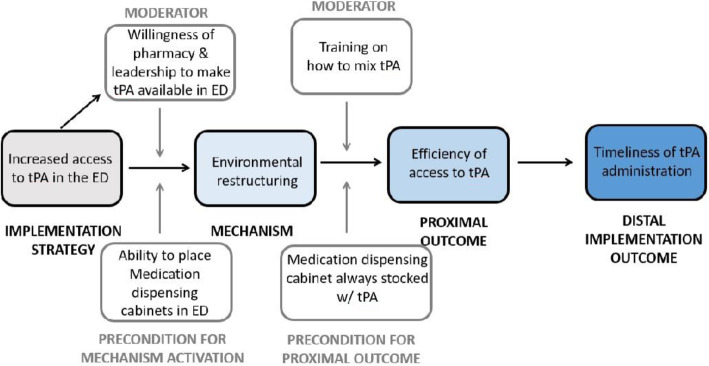
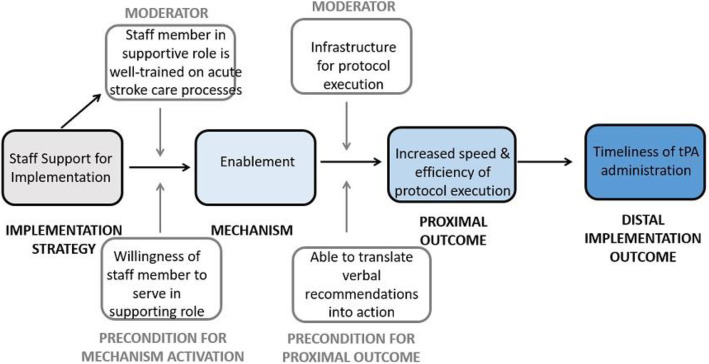
Background: Audit and feedback (A&F) is a widely used implementation strategy. Understanding mechanisms of action of A&F increases the likelihood that the strategy will lead to implementation of an evidence-based practice. We therefore sought to understand one hospital’s experience selecting and implementing an A&F intervention, to determine the implementation strategies that were used by staff and to specify the mechanism of action of those implementation strategies using causal pathway models, with the ultimate goal of improving acute stroke treatment practices. Methods: We selected an A&F strategy in a hospital, initially based on implementation determinants and staff consideration of their performance on acute stroke treatment measures. After 7 months of A&F, we conducted semi-structured interviews of hospital providers and administrative staff to understand how it contributed to implementing guideline-concordant acute stroke treatment (medication named tissue plasminogen activator). We coded the interviews to identify the implementation strategies that staff used following A&F and to assess their mechanisms of action. Results: We identified five implementation strategies that staff used following the feedback intervention. These included (1) creating folders containing the acute stroke treatment protocol for the emergency department, (2) educating providers about the protocol for acute stroke, (3) obtaining computed tomography imaging of stroke patients immediately upon emergency department arrival, (4) increasing access to acute stroke medical treatment in the emergency department, and (5) providing additional staff support for implementation of the protocol in the emergency department. We identified enablement, training, and environmental restructuring as mechanisms of action through which the implementation strategies acted to improve guideline-concordant and timely acute stroke treatment. Conclusions: A&F of a hospital’s acute stroke treatment practices generated additional implementation strategies that acted through various mechanisms of action. Future studies should focus on how initial implementation strategies can be amplified through internal mechanisms.
Overview
The claims and statistics of this paper haven’t been checked yet.
Free: it reads the open-access text and checks the first 5 claims that cite a source we can check. Create a free account to check every claim.
Integrity signals
Registry
Cites
Statistics
Figures
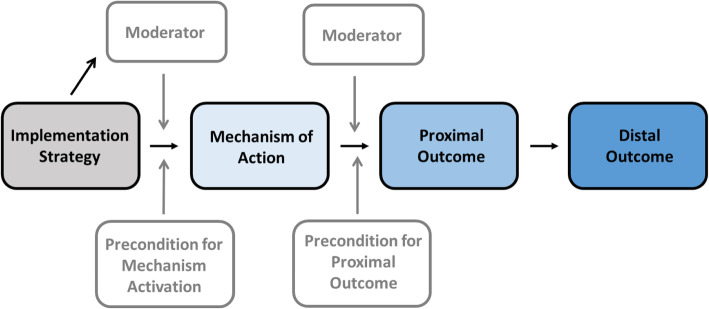
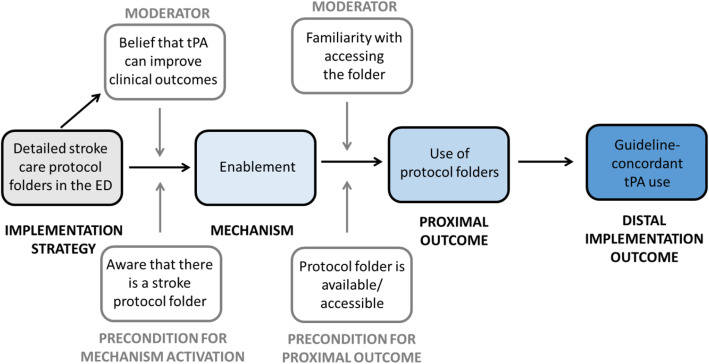
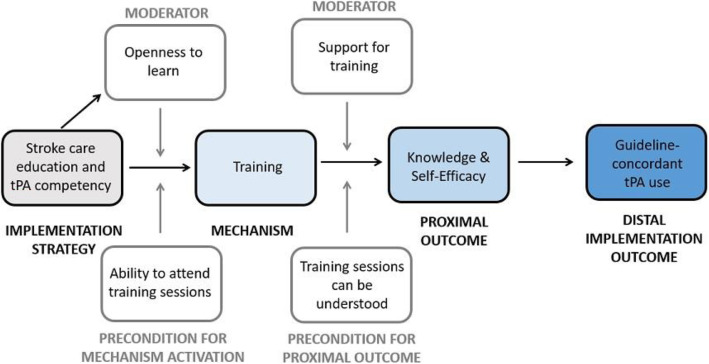
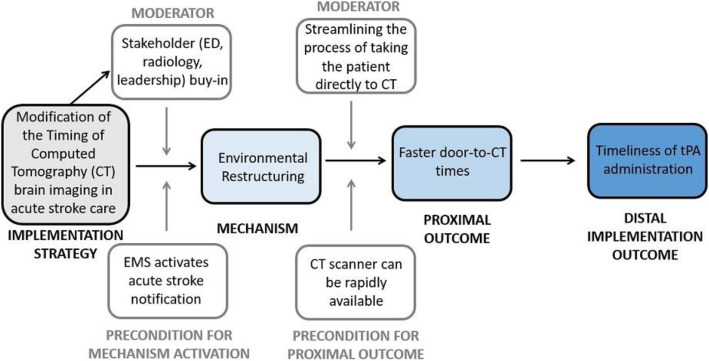
Verification
Claims the paper makes
The claims and statistics of this paper haven’t been checked yet.
Free: it reads the open-access text and checks the first 5 claims that cite a source we can check. Create a free account to check every claim.
Claims other papers make about this one
Each is checked against this paper’s own text: does it say what the citing paper says it does?
The source backs part of the claim, not all of it — or backs it for a different population, condition or comparison.
In the citing paper
“Current literature also reflects an increasing number of studies testing the effectiveness of implementation strategies and the mechanisms that explain how these strategies may influence implementation outcomes [25–31].”
From Ten years of implementation outcomes research: a scoping review (2023) · cites this paper as [31]
Experimental — accuracy not yet measured
Self-check
Percentages, sums and reported differences re-computed from the paper’s own numbers.
The self-check needs the paper’s full text.
Citations
Cites
The theory of planned behavior
Ajzen, I. (1991) · Organizational Behavior and Human Decision Processes · doi:10.1016/0749-5978(91)90020-t · Cited by 134,657
Michie, S., van Stralen, M. M., & West, R. (2011) · Implementation Science · doi:10.1186/1748-5908-6-42 · Cited by 13,697
Tissue Plasminogen Activator for Acute Ischemic Stroke
(1995) · New England Journal of Medicine · doi:10.1056/nejm199512143332401 · Cited by 11,654
Cane, J., O’Connor, D., & Michie, S. (2012) · Implementation Science · doi:10.1186/1748-5908-7-37 · Cited by 4,888
Implementation strategies: recommendations for specifying and reporting
Proctor, E. K., Powell, B. J., & McMillen, J. C. (2013) · Implementation Science · doi:10.1186/1748-5908-8-139 · Cited by 2,585 · cited 1×
“[16] to define the implementation strategies.”
Knowledge translation of research findings
Grimshaw, J. M., Eccles, M. P., Lavis, J. N., Hill, S. J., & Squires, J. E. (2012) · Implementation Science · doi:10.1186/1748-5908-7-50 · Cited by 2,407
(2014) · Cited by 2,276
Flottorp, S. A., Oxman, A. D., Krause, J., Musila, N. R., Wensing, M., Godycki-Cwirko, M., Baker, R., & Eccles, M. P. (2013) · Implementation Science · doi:10.1186/1748-5908-8-35 · Cited by 1,138
Implementation Mapping: Using Intervention Mapping to Develop Implementation Strategies
Fernandez, M. E., ten Hoor, G. A., van Lieshout, S., Rodriguez, S. A., Beidas, R. S., Parcel, G., Ruiter, R. A. C., Markham, C. M., & Kok, G. (2019) · Frontiers in Public Health · doi:10.3389/fpubh.2019.00158 · Cited by 914
Motivation through conscious goal setting
Locke, E. A. (1996) · Applied and Preventive Psychology · doi:10.1016/s0962-1849(96)80005-9 · Cited by 624
Lewis, C. C., Klasnja, P., Powell, B. J., Lyon, A. R., Tuzzio, L., Jones, S., Walsh-Bailey, C., & Weiner, B. (2018) · Frontiers in Public Health · doi:10.3389/fpubh.2018.00136 · Cited by 588
Ivers, N. M., Sales, A., Colquhoun, H., Michie, S., Foy, R., Francis, J. J., & Grimshaw, J. M. (2014) · Implementation Science · doi:10.1186/1748-5908-9-14 · Cited by 400 · cited 1×
“A&F is an effective means of improving implementation of evidence-based practices [17], but there is variability in the effectiveness of A&F which might partially be explained by a lack of understanding of how it works [18].”
BackgroundSelf-citationBrown, B., Gude, W. T., Blakeman, T., van der Veer, S. N., Ivers, N., Francis, J. J., Lorencatto, F., Presseau, J., Peek, N., & Daker-White, G. (2019) · Implementation Science · doi:10.1186/s13012-019-0883-5 · Cited by 387
Links Between Behavior Change Techniques and Mechanisms of Action: An Expert Consensus Study
Connell, L. E., Carey, R. N., de Bruin, M., Rothman, A. J., Johnston, M., Kelly, M. P., & Michie, S. (2019) · Annals of Behavioral Medicine · doi:10.1093/abm/kay082 · Cited by 342
Intervention among Suicidal Men: Future Directions for Telephone Crisis Support Research
Hunt, T., Wilson, C. J., Woodward, A., Caputi, P., & Wilson, I. G. (2018) · Frontiers in Public Health · doi:10.3389/fpubh.2018.00001 · Cited by 83
Audit and feedback: effects on professional practice
Ivers, N., Yogasingam, S., Lacroix, M., Brown, K. A., Antony, J., Soobiah, C., Simeoni, M., Willis, T. A., Crawshaw, J., Antonopoulou, V., et al. (2025) · Cochrane Database of Systematic Reviews · doi:10.1002/14651858.cd000259.pub4 · Cited by 78 · cited 1×
“A&F is an effective means of improving implementation of evidence-based practices [17], but there is variability in the effectiveness of A&F which might partially be explained by a lack of understanding of how it works [18].”
BackgroundGude, W. T., van Engen-Verheul, M. M., van der Veer, S. N., de Keizer, N. F., & Peek, N. B. (2016) · BMJ Quality & Safety · doi:10.1136/bmjqs-2015-004795 · Cited by 71
Marked Regional Variation in Acute Stroke Treatment Among Medicare Beneficiaries
Skolarus, L. E., Meurer, W. J., Shanmugasundaram, K., Adelman, E. E., Scott, P., & Burke, J. F. (2015) · Stroke · doi:10.1161/strokeaha.115.009163 · Cited by 61
Self-citationSkolarus, L. E., Murphy, J. B., Zimmerman, M. A., Bailey, S., Fowlkes, S., Brown, D. L., Lisabeth, L. D., Greenberg, E., & Morgenstern, L. B. (2013) · Circulation Cardiovascular Quality and Outcomes · doi:10.1161/circoutcomes.111.000017 · Cited by 42
Self-citationWagner, D. J., Durbin, J., Barnsley, J. M., & Ivers, N. M. (2019) · BMC Health Services Research · doi:10.1186/s12913-019-4226-7 · Cited by 36
Impetus to change: a multi-site qualitative exploration of the national audit of dementia
Sykes, M. J., Thomson, R., Kolehmainen, N., Allan, L. M., & Finch, T. L. (2020) · Implementation Science · doi:10.1186/s13012-020-01004-z · Cited by 29
Gould, N. J., Lorencatto, F., During, C., Rowley, M., Glidewell, L., Walwyn, R. E. A., Michie, S., Foy, R., Stanworth, S. J., Grimshaw, J., et al. (2018) · PLoS ONE · doi:10.1371/journal.pone.0206676 · Cited by 27
Skolarus, L. E., Neshewat, G. M., Evans, L., Green, M., Rehman, N., Landis‐Lewis, Z., Schrader, J. W., & Sales, A. E. (2019) · BMC Health Services Research · doi:10.1186/s12913-019-4012-6 · Cited by 26
Self-citationInstitutional use of National Clinical Audits by healthcare providers
McVey, L., Alvarado, N., Keen, J., Greenhalgh, J., Mamas, M. A., Gale, C. P., Doherty, P., Feltbower, R. G., Elshehaly, M., Dowding, D., et al. (2020) · Journal of Evaluation in Clinical Practice · doi:10.1111/jep.13403 · Cited by 21
Pedersen, M. S., Landheim, A. S., Møller, M., & Lien, L. (2018) · BMC Health Services Research · doi:10.1186/s12913-018-2862-y · Cited by 17
Stroke Ready Very Brief Intervention Improves Immediate Postintervention Stroke Preparedness
Robles, M. C., Springer, M. V., Corches, C. L., Burke, J. F., Lin, C. C., Oliver, A., & Skolarus, L. E. (2020) · Circulation Cardiovascular Quality and Outcomes · doi:10.1161/circoutcomes.120.006643 · Cited by 4
Self-citation
Research works printed but not linked: 1
- 6. Association AH. Get with the Guidelines -Stroke Patient Management Tool: American Heart Association; 2020. Available from: https://www.heart.org/en/ professional/quality-improvement/get-with-the-guidelines/get-with-the- guidelines-stroke/get-with-the-guidelines-stroke-patient-management-tool.
Cited by
Ten years of implementation outcomes research: a scoping review
Proctor, E. K., Bunger, A. C., Lengnick-Hall, R., Gerke, D. R., Martin, J. K., Phillips, R. J., & Swanson, J. C. (2023) · Implementation Science · doi:10.1186/s13012-023-01286-z · Cited by 424
“Current literature also reflects an increasing number of studies testing the effectiveness of implementation strategies and the mechanisms that explain how these strategies may influence implementation outcomes [25–31].”
BackgroundConceptual tensions and practical trade-offs in tailoring implementation interventions
McHugh, S., Riordan, F., Curran, G. M., Lewis, C. C., Wolfenden, L., Presseau, J., Lengnick‐Hall, R., & Powell, B. J. (2022) · Frontiers in Health Services · doi:10.3389/frhs.2022.974095 · Cited by 69
A structured approach to applying systems analysis methods for examining implementation mechanisms
Kim, B., Cruden, G., Crable, E. L., Quanbeck, A., Mittman, B. S., & Wagner, A. D. (2023) · Implementation Science Communications · doi:10.1186/s43058-023-00504-5 · Cited by 34
Muusse, J. S. C., Zuidema, R., van Scherpenseel, M. C., & Velde, S. J. T. (2023) · BMC Family Practice · doi:10.1186/s12875-023-02066-w · Cited by 24
Zhang, X., Zhao, J., Zheng, L., Li, X., & Hao, Y. (2022) · International Journal of Nursing Sciences · doi:10.1016/j.ijnss.2022.06.010 · Cited by 24
Metadata
- Authors
- Springer, M. V., Sales, A. E., Islam, N., McBride, A. C., Landis-Lewis, Z., Tupper, M., Corches, C. L., Robles, M. C., & Skolarus, L. E.
- Affiliations
- University of Michigan (US)
- Corresponding author
- Springer, Mellanie V.
- Venue
- Implementation Science
- Published
- 2021-04-01
- Volume
- 16
- Issue
- 1
- Pages
- 35-35
- ISSN
- 1748-5908 (ISSN-L)
- PMC
- PMC8017642
- OpenAlex
- W3143519847
- Semantic Scholar
- e9982443b37c575ba1f095d94efa2d3400d70506
- Cited by
- 22
- References
- 26
- Citations by year
- 2025: 4 · 2024: 4 · 2023: 10 · 2022: 3 · 2021: 1
- FWCI
- 5.05
- Type
- journal article
- Language
- en
- Open access
- gold
- doi.org
- Licence
- cc-by
- creativecommons.org/licenses/by/4.0/ (tdm)
- creativecommons.org/licenses/by/4.0/ (vor)
- Locations
- Implementation Science (publishedVersion, cc-by)
- PubMed Central (publishedVersion, cc-by)
- PubMed (publishedVersion)
- Deep Blue (University of Michigan) (submittedVersion)
- DOAJ (DOAJ: Directory of Open Access Journals) (submittedVersion, cc-by-sa)
- Funders
- National Institute on Minority Health and Health Disparities (U01 MD010579)
- Topics
- Health Sciences › Health Professions › General Health Professions › Health Policy Implementation Science
- Health Sciences › Medicine › Public Health, Environmental and Occupational Health › Clinical practice guidelines implementation
- Health Sciences › Health Professions › General Health Professions › Health Sciences Research and Education
- Keywords
- audit and feedback, implementation strategies, mechanism of action, acute stroke care, tissue plasminogen activator, guideline-concordant care, emergency department, enablement, training, environmental restructuring
- MeSH terms
- Emergency Service, Hospital, Feedback, Humans, Tissue Plasminogen Activator, Stroke, Qualitative Research
About these checks
Registry, retraction, Cites and statistics results are computed, not judged, with one exception: a printed reference that no index lists is read once by a model before it counts as a citation error. Claims are extracted by a model and kept only when their quote appears verbatim in the text; each cited source is then checked, with a model’s help, for whether it says what the claim relies on. Those verdicts can be wrong — read the claim’s quote and the cited source before relying on one.
Statistics and arithmetic are recomputed, not judged.
Confidence bands are shown only for fields calibrated on our annotated test set. None is calibrated yet, so no band is shown.
What counts as a claim ›How we measure confidence ›How we check this ›
Are you an author, or do you see a problem with this page? Request a review
Data sources
Bibliographic data: Semantic Scholar, OpenAlex, Crossref.
Contains information from the Semantic Scholar Academic Graph Datasets, made available under the ODC Attribution License (ODC-BY 1.0).
Semantic Scholar’s data is described in: Kinney, R., et al. (2023). The Semantic Scholar Open Data Platform. arXiv:2301.10140.
