

Protective ileostomy increased the incidence of rectal stenosis after anterior resection for rectal cancer
Open accessThe DOI matches its Crossref record; 29 of the 29 references it cites were found in a registry or an index.
Abstract
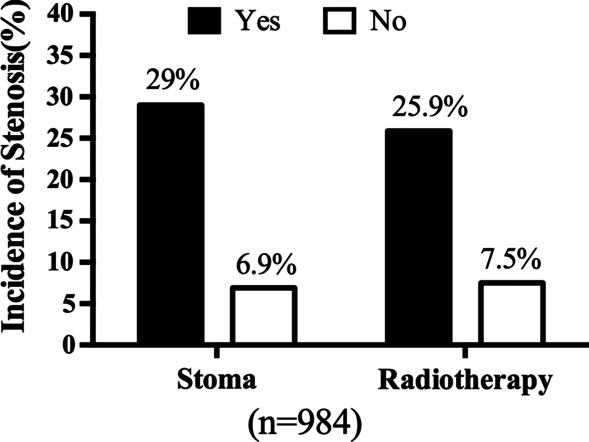
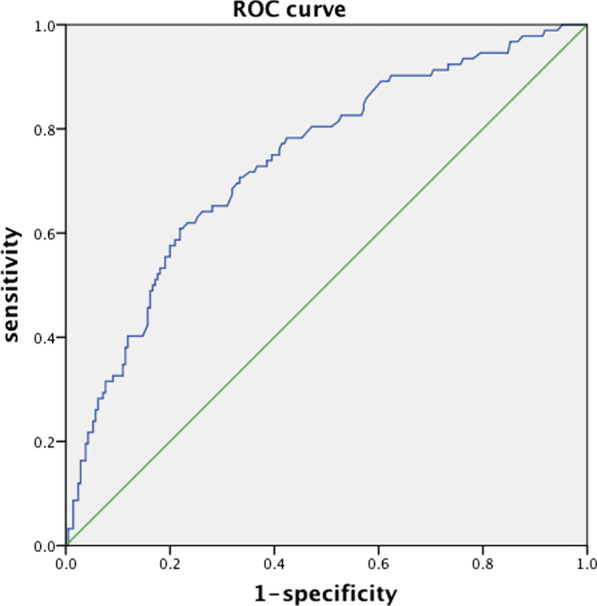
Background: In most of the views, rectal stenosis after anterior resection for rectal cancer results from pelvic radiotherapy. However, patients without receiving radiotherapy also suffer stenosis. In this study, we evaluated the factors associated with rectal stenosis after anterior rectal resection (ARR). Methods: We conducted a retrospective study with ARR patients who underwent neoadjuvant chemoradiotherapy and the patients without radiotherapy. Patients who received watch and wait strategy with a clinical complete response after chemoradiotherapy were also included. Patients with colonoscopy follow-up were included for further analyses; 439 patients who underwent neoadjuvant chemoradiotherapy; 545 patients who received ARR without radiotherapy and 33 patients who received watch and wait strategy. Stenosis was diagnosed when a 12-mm diameter colonoscopy could not be passed through the rectum. Univariate and multivariate logistic regression analyses were performed to identify variables associated with rectal stenosis. Results: According to the multivariate analysis in patients receiving ARR, both protective stoma and preoperative radiotherapy affected the occurrence of stenosis, with the odds ratios (ORs) of 3.375 and 2.251, respectively. According to the multivariate analysis, a preventive ileostomy was the only factor associated with stenosis both in patients receiving preoperative radiotherapy and without radiotherapy. Non-reversal ileostomy and long time between ileostomy and restoration increased the possibility of stenosis. In 33 patients who received watch and wait strategy, only one patient (3%) experienced stenosis. Conclusion: Both surgery and radiotherapy are risk factors for rectal stenosis in rectal cancer patients. Compared to preoperative radiotherapy, a protective ileostomy is a more critical factor associated with rectal stenosis.
Overview
The claims and statistics of this paper haven’t been checked yet.
Free: it reads the open-access text and checks the first 5 claims that cite a source we can check. Create a free account to check every claim.
Integrity signals
Registry
Cites
Statistics
Figures
Verification
Claims the paper makes
The claims and statistics of this paper haven’t been checked yet.
Free: it reads the open-access text and checks the first 5 claims that cite a source we can check. Create a free account to check every claim.
Claims other papers make about this one
Each is checked against this paper’s own text: does it say what the citing paper says it does?
The source backs part of the claim, not all of it — or backs it for a different population, condition or comparison.
In the citing paper
“The increased number of anastomotic stenosis noticed in the stoma subgroup matches current observations investigating patients after anterior resection for rectal cancer25.”
From Managing the aftermath: complications and outcome after colorectal resection for deep infiltrating endometriosis-insights from a certified surgical endoscopy center (2026) · cites this paper as [25]
Experimental — accuracy not yet measured
Self-check
Percentages, sums and reported differences re-computed from the paper’s own numbers.
The self-check needs the paper’s full text.
Citations
Cites
Siegel, R. L., Miller, K. D., & Jemal, A. (2020) · CA: A Cancer Journal for Clinicians · doi:10.3322/caac.21590 · Cited by 20,444
Preoperative versus Postoperative Chemoradiotherapy for Rectal Cancer
Sauer, R., Becker, H., Hohenberger, W., Rödel, C., Wittekind, C., Fietkau, R., Martus, P., Tschmelitsch, J., Hager, E., Hess, C. F., et al. (2004) · New England Journal of Medicine · doi:10.1056/nejmoa040694 · Cited by 6,050 · cited 1×
“Preoperative radiotherapy is confirmed as a standard treatment for locally advanced rectal cancer because it reduces local recurrence compared with postoperative radiotherapy [11, 22].”
Background(2011) · Hepatogastroenterology · doi:10.5754/hge11753 · Cited by 2,435
Self-citationSauer, R., Liersch, T., Merkel, S., Fietkau, R., Hohenberger, W., Hess, C., Becker, H., Raab, H.-R., Villanueva, M.-T., Witzigmann, H., et al. (2012) · Journal of Clinical Oncology · doi:10.1200/jco.2011.40.1836 · Cited by 2,095 · cited 1×
“Preoperative radiotherapy is confirmed as a standard treatment for locally advanced rectal cancer because it reduces local recurrence compared with postoperative radiotherapy [11, 22].”
BackgroundRectal Cancer, Version 2.2018, NCCN Clinical Practice Guidelines in Oncology
Benson, A. B., Venook, A. P., Al-Hawary, M. M., Cederquist, L., Chen, Y.-J., Ciombor, K. K., Cohen, S., Cooper, H. S., Deming, D., Engstrom, P. F., et al. (2018) · Journal of the National Comprehensive Cancer Network · doi:10.6004/jnccn.2018.0061 · Cited by 944 · cited 1×
“Neoadjuvant chemoradiotherapy followed by total mesorectal excision (TME) has become the standard care for T3-4 and node-positive tumors in rectal cancer [2].”
BackgroundAdoption of Total Neoadjuvant Therapy for Locally Advanced Rectal Cancer
Cercek, A., Roxburgh, C. S. D., Strombom, P., Smith, J. J., Temple, L. K. F., Nash, G. M., Guillem, J. G., Paty, P. B., Yaeger, R., Stadler, Z. K., et al. (2018) · JAMA Oncology · doi:10.1001/jamaoncol.2018.0071 · Cited by 650 · cited 1×
“Recently, the total neoadjuvant therapy (TNT) has been showing increased pCR and outcomes [24, 25].”
BackgroundSystematic Review and Meta-Analysis of the Role of Defunctioning Stoma in Low Rectal Cancer Surgery
Hüser, N., Michalski, C. W., Erkan, M., Schuster, T., Rosenberg, R., Kleeff, J., & Friess, H. (2008) · Annals of Surgery · doi:10.1097/sla.0b013e318176bf65 · Cited by 616 · cited 1×
“Due to the fistula’s high rate, most authors recommend performing a loop ileostomy for protecting anastomoses [3, 15].”
BackgroundFokas, E., Allgäuer, M., Polat, B., Klautke, G., Grabenbauer, G. G., Fietkau, R., Kuhnt, T., Staib, L., Brunner, T., Grosu, A.-L., et al. (2019) · Journal of Clinical Oncology · doi:10.1200/jco.19.00308 · Cited by 549
Myerson, R. J., Garofalo, M. C., El Naqa, I., Abrams, R. A., Apte, A., Bosch, W. R., Das, P., Gunderson, L. L., Hong, T. S., Kim, J. J. J., et al. (2009) · International Journal of Radiation Oncology*Biology*Physics · doi:10.1016/j.ijrobp.2008.08.070 · Cited by 524 · cited 1×
“The RTOG contouring atlas was referenced for clinical tumor volume (CTV) contouring [7].”
MethodColorectal anastomotic stenosis results of a survey of the ASCRS membership
Luchtefeld, M. A., Milsom, J. W., Senagore, A., Surrell, J. A., & Mazier, W. P. (1989) · Diseases of the Colon & Rectum · doi:10.1007/bf02562119 · Cited by 190
Results of reoperations in colorectal anastomotic strictures
Schlegel, R. D., Dehni, N., Parc, R., Caplin, S., & Tiret, E. (2001) · Diseases of the Colon & Rectum · doi:10.1007/bf02234598 · Cited by 181
Chude, G. G., Rayate, N. V., Patris, V., Koshariya, M., Jagad, R. B., Kawamoto, J., & Lygidakis, N. J. (2008) · PubMed · Cited by 177
André, T., Vernerey, D., Mineur, L., Bennouna, J., Desrame, J., Faroux, R., Fratte, S., Hug de Larauze, M., Paget-Bailly, S., Chibaudel, B., et al. (2018) · Journal of Clinical Oncology · doi:10.1200/jco.2017.76.0355 · Cited by 177 · cited 2×
“André T, Vernerey D, Mineur L, et al. Three versus 6 months of oxaliplatinbased adjuvant chemotherapy for patients with stage III colon cancer: disease-free survival results from a randomized, open-label, international duration evaluation of adjuvant (IDEA) France, Phase III Trial.”
Qin, Q., Ma, T., Deng, Y., Zheng, J., Zhou, Z., Wang, H., Wang, L., & Wang, J. (2016) · Diseases of the Colon & Rectum · doi:10.1097/dcr.0000000000000665 · Cited by 164
Self-citationZhu, J. Y., Liu, A., Sun, X., Liu, L., Zhu, Y., Zhang, T., Jia, J., Tan, S., Wu, J., Wang, X., et al. (2020) · Journal of Clinical Oncology · doi:10.1200/jco.20.01932 · Cited by 143
Self-citationHistologic Analysis of the Irradiated Anal Sphincter
da Silva, G. M., Berho, M. E., Wexner, S. D., Efron, J. E., Weiss, E. G., Nogueras, J. J., Vernava, A. M., Connor, J. T., & Gervaz, P. (2003) · Diseases of the Colon & Rectum · doi:10.1007/s10350-004-6800-1 · Cited by 108
Bannura, G. C., Cumsille, M. A., E, A. B., Contreras, J., Melo, C., & C, D. S. (2004) · World Journal of Surgery · doi:10.1007/s00268-004-7375-7 · Cited by 104 · cited 1×
“, that a history of heavy smoking was significantly associated with anastomotic complications, such as leakage and stricture [20, 21].”
BackgroundPolese, L., Vecchiato, M., Frigo, A. C., Sarzo, G., Cadrobbi, R., Rizzato, R., Bressan, A., & Merigliano, S. (2011) · Colorectal Disease · doi:10.1111/j.1463-1318.2011.02819.x · Cited by 96
Kim, M. J., Shin, R., Oh, H., Park, J. W., Jeong, S., & Park, J. (2011) · World Journal of Surgery · doi:10.1007/s00268-011-1286-1 · Cited by 89 · cited 1×
“, that a history of heavy smoking was significantly associated with anastomotic complications, such as leakage and stricture [20, 21].”
BackgroundEffect of Pentoxifylline and Tocopherol on Radiation Proctitis/Enteritis
Hille, A., Christiansen, H., Pradier, O., Hermann, R. M., Siekmeyer, B., Weiss, E., Hilgers, R., Hess, C. F., & Schmidberger, H. (2005) · Strahlentherapie und Onkologie · doi:10.1007/s00066-005-1390-y · Cited by 78
Gothard, L., Cornes, P., Brooker, S., Earl, J., Glees, J. P., Hall, E., Peckitt, C., Tait, D., & Yarnold, J. R. (2005) · Radiotherapy and Oncology · doi:10.1016/j.radonc.2005.02.002 · Cited by 60
Bourgier, C., Auperin, A., Rivera, S., Boisselier, P., Petit, B., Lang, P., Lassau, N., Taourel, P., Tétreau, R., Azria, D., et al. (2019) · International Journal of Radiation Oncology*Biology*Physics · doi:10.1016/j.ijrobp.2019.02.024 · Cited by 51
Alongi, F., Fersino, S., Mazzola, R., Fiorentino, A., Giaj‐Levra, N., Ricchetti, F., Ruggieri, R., Paola, G. D., Cirillo, M., Gori, S., et al. (2016) · Clinical & Translational Oncology · doi:10.1007/s12094-016-1522-0 · Cited by 42 · cited 1×
“[16, 17] We found that most of the stenoses occurred above the anastomosis instead of at the anastomosis.”
BackgroundBertocchi, E., Barugola, G., Nicosia, L., Mazzola, R., Ricchetti, F., Dell’Abate, P., Alongi, F., & Ruffo, G. (2020) · La radiologia medica · doi:10.1007/s11547-020-01189-9 · Cited by 42 · cited 1×
“[16, 17] We found that most of the stenoses occurred above the anastomosis instead of at the anastomosis.”
BackgroundKim, C. W., Kim, J. H., Yu, C. S., Shin, U. S., Park, J. S., Jung, K. Y., Kim, T. W., Yoon, S. N., Lim, S., & Kim, J. C. (2010) · International Journal of Radiation Oncology*Biology*Physics · doi:10.1016/j.ijrobp.2009.07.1684 · Cited by 37
Cai, G., Zhu, J. Y., Palmer, J. D., Xu, Y., Hu, W., Gu, W., Cai, S., & Zhang, Z. (2015) · Radiation Oncology · doi:10.1186/s13014-015-0360-5 · Cited by 26 · cited 1×
“Recently, irinotecan and capecitabine concurrently with radiotherapy showed excellent effects in our phase 1, 2 [8, 9] and phase 3 trials [10].”
BackgroundSelf-citationZhu, J. Y., Li, X., Shen, Y., Guan, Y., Gu, W., Lian, P., Sheng, W., Cai, S., & Zhang, Z. (2017) · Radiotherapy and Oncology · doi:10.1016/j.radonc.2017.11.026 · Cited by 16 · cited 1×
“Recently, irinotecan and capecitabine concurrently with radiotherapy showed excellent effects in our phase 1, 2 [8, 9] and phase 3 trials [10].”
BackgroundSelf-citationZhu, H., Bai, B., Shan, L., Wang, X., Chen, M., Mao, W., & Huang, X. (2017) · Oncotarget · doi:10.18632/oncotarget.20602 · Cited by 15 · cited 1×
“In most of the views, pelvic irradiation induces rectal stenosis [6].”
BackgroundChi, P., Chen, Z., Gao, Y., Lin, H., Lu, X., & Huang, Y. (2015) · PubMed · Cited by 5
Cited by
He, F., Yang, F., Chen, D., Tang, C., Woraikat, S., Xiong, J., & Qian, K. (2023) · Asian Journal of Surgery · doi:10.1016/j.asjsur.2023.08.209 · Cited by 25
Zhou, L., Qin, Z., & Wang, L. (2023) · European Journal of Surgical Oncology · doi:10.1016/j.ejso.2023.107120 · Cited by 10
Zhang, X., Meng, Q., Du, J., Tian, Z., Li, Y. J., Yu, B., & Niu, W. (2024) · Scientific Reports · doi:10.1038/s41598-024-79283-5 · Cited by 13
“However, Neoadjuvant therapy has been associated with an increased rate of anastomotic fistulas post-surgery 22 , making prophylactic stoma formation necessary for more patients to mitigate symptoms 23 .”
He, F., Yang, F., Tang, C., Chen, D., Zhao, D., Xiong, J., Zou, Y. F., Huang, G., & Qian, K. (2024) · Canadian Journal of Gastroenterology and Hepatology · doi:10.1155/2024/2410643 · Cited by 7
“036), which is consistent with the results of the study of Zhang et al. [30].”
ResultCai, C., Zhang, X., Sun, X., Wang, H., Chen, E., Chen, L., Gu, B., Wang, J., Huang, X., Lao, W., et al. (2024) · BMC Cancer · doi:10.1186/s12885-024-12994-0 · Cited by 7
“Radiotherapy is a risk factor for rectal stiffness and stenosis [31, 32].”
Background
Metadata
- Authors
- Zhang, H., Li, S., Jin, X., Wu, X., Zhang, Z., Shen, L., Wan, J., Wang, Y., Wang, Y., Yang, W., Zhou, M., Zhang, J., Lv, T., Deng, Y., Xia, F., & Zhang, Z.
- Affiliations
- Shanghai Medical College of Fudan University (CN)
- Zoucheng People's Hospital (CN)
- Corresponding author
- Zhang, Zhiyuan
- Xia, Fan
- Zhang, Zhen
- ORCID
- Venue
- Radiation Oncology
- Published
- 2022-05-12
- Volume
- 17
- Issue
- 1
- Pages
- 93-93
- ISSN
- 1748-717X (ISSN-L)
- PMC
- PMC9097119
- OpenAlex
- W4280525446
- Semantic Scholar
- c9cb5a5bfb496ec48c0f6481b749dd9bf049dcbf
- Cited by
- 12
- References
- 29
- Citations by year
- 2026: 3 · 2025: 1 · 2024: 5 · 2023: 3
- FWCI
- 0.94
- Type
- journal article
- Language
- en
- Open access
- gold
- doi.org
- Licence
- cc-by
- creativecommons.org/licenses/by/4.0 (tdm)
- creativecommons.org/licenses/by/4.0 (vor)
- Locations
- Radiation Oncology (publishedVersion, cc-by)
- PubMed Central (publishedVersion, cc-by)
- PubMed (publishedVersion)
- DOAJ (DOAJ: Directory of Open Access Journals) (submittedVersion, cc-by-sa)
- Funders
- National Natural Science Foundation of China (81773357)
- Wu Jieping Medical Foundation (HYHX2021010)
- Topics
- Health Sciences › Medicine › Oncology › Colorectal Cancer Surgical Treatments
- Health Sciences › Medicine › Surgery › Stoma care and complications
- Health Sciences › Medicine › Surgery › Colorectal and Anal Carcinomas
- Keywords
- rectal stenosis, protective ileostomy, anterior resection, rectal cancer, neoadjuvant chemoradiotherapy, preoperative radiotherapy, watch-and-wait strategy, risk factors, stoma closure
- MeSH terms
- Constriction, Pathologic, Humans, Ileostomy, Rectal Neoplasms, Retrospective Studies, Incidence, Neoadjuvant Therapy
About these checks
Registry, retraction, Cites and statistics results are computed, not judged, with one exception: a printed reference that no index lists is read once by a model before it counts as a citation error. Claims are extracted by a model and kept only when their quote appears verbatim in the text; each cited source is then checked, with a model’s help, for whether it says what the claim relies on. Those verdicts can be wrong — read the claim’s quote and the cited source before relying on one.
Statistics and arithmetic are recomputed, not judged.
Confidence bands are shown only for fields calibrated on our annotated test set. None is calibrated yet, so no band is shown.
What counts as a claim ›How we measure confidence ›How we check this ›
Are you an author, or do you see a problem with this page? Request a review
Data sources
Bibliographic data: Semantic Scholar, OpenAlex, Crossref.
Contains information from the Semantic Scholar Academic Graph Datasets, made available under the ODC Attribution License (ODC-BY 1.0).
Semantic Scholar’s data is described in: Kinney, R., et al. (2023). The Semantic Scholar Open Data Platform. arXiv:2301.10140.
