

The DOI matches its Crossref record; 41 of the 41 references it cites were found in a registry or an index.
Tuberous Sclerosis registry to increase disease Awareness (TOSCA): baseline data on 2093 patients
Open accessAbstract
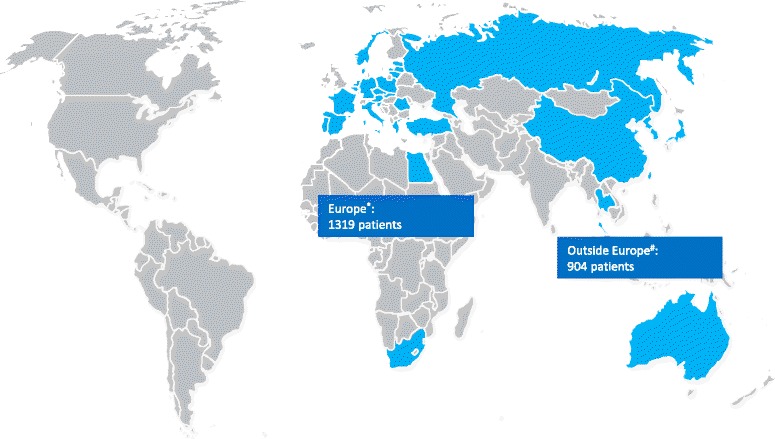
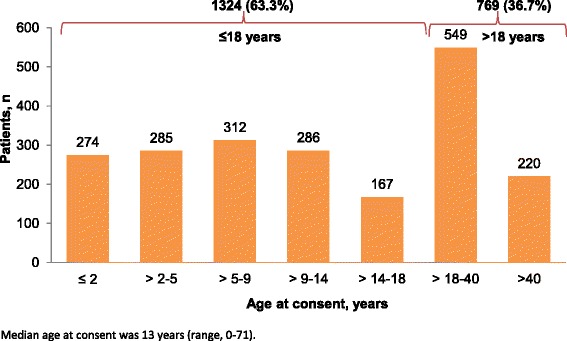
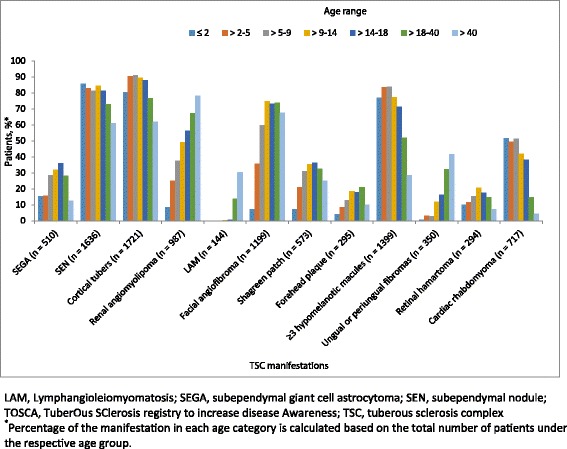
BACKGROUND: Tuberous sclerosis complex (TSC) is a rare autosomal dominant genetic disorder. Many gaps remain in the understanding of TSC because of the complexity in clinical presentation. The TuberOus SClerosis registry to increase disease Awareness (TOSCA) is an international disease registry designed to address knowledge gaps in the natural history and management of TSC. Here, we present the baseline data of TOSCA cohort. METHODS: Patients of any age diagnosed with TSC, having a documented visit for TSC within the preceding 12 months, or newly diagnosed individuals were included. The registry includes a "core" section designed to record detailed background information on each patient including disease manifestations, interventions, and outcomes collected at baseline and updated annually. "Subsections" of the registry recorded additional data related to specific features of TSC. RESULTS: Baseline "core" data from 2093 patients enrolled from 170 sites across 31 countries were available at the cut-off date September 30, 2014. Median age of patients at enrollment was 13 years (range, 0-71) and at diagnosis of TSC was 1 year (range, 0-69). The occurrence rates of major manifestations of TSC included - cortical tubers (82.2%), subependymal nodules (78.2%), subependymal giant cell astrocytomas (24.4%), renal angiomyolipomas (47.2%), lymphangioleiomyomatosis (6.9%), cardiac rhabdomyomas (34.3%), facial angiofibromas (57.3%), forehead plaque (14.1%), ≥ 3 hypomelanotic macules (66.8%), and shagreen patches (27.4%). Epilepsy was reported in 1748 (83.5%) patients, of which 1372 were diagnosed at ≤ 2 years (78%). Intellectual disability was identified in 451 (54.9%) patients of those assessed. TSC-associated neuropsychiatric disorders (TAND) were diagnosed late, and not evaluated in 30-50% of patients. CONCLUSION: TOSCA is the largest clinical case series of TSC to date. It provided a detailed description of the disease trajectory with increased awareness of various TSC manifestations. The rates of different features of TSC reported here reflect the age range and referral patterns of clinics contributing patients to the cohort. Documentation of TAND and LAM was poor. A widespread adoption of the international TSC assessment and treatment guidelines, including use of the TAND Checklist, could improve surveillance. The registry provides valuable insights into the necessity for monitoring, timing, and indications for the treatment of TSC.
Overview
The claims and statistics of this paper haven’t been checked yet.
Run the check — free, no account needed. It reads the open-access text and checks the sources it cites.
Integrity signals
Registry
Cites
Statistics
Figures
Verification
Claims the paper makes
The claims and statistics of this paper haven’t been checked yet.
Run the check — free, no account needed. It reads the open-access text and checks the sources it cites.
Claims other papers make about this one
Each is checked against this paper’s own text: does it say what the citing paper says it does?
The cited source says what the claim attributes to it.
In the citing paper
“Tuberous sclerosis–associated neuropsychiatric disorders have been reported in the pediatric and adult TSC populations.13,14”
From Association of Cognitive and Behavioral Features Between Adults With Tuberous Sclerosis and Frontotemporal Dementia (2020) · cites this paper as [13]
Self-check
Percentages, sums and reported differences re-computed from the paper’s own numbers.
The self-check needs the paper’s full text.
Citations
Cites
The Tuberous Sclerosis Complex
Crino, P. B., Nathanson, K. L., & Henske, E. P. (2006) · New England Journal of Medicine · doi:10.1056/nejmra055323 · Cited by 1,793
The TSC1–TSC2 complex: a molecular switchboard controlling cell growth
Huang, J., & Manning, B. D. (2008) · Biochemical Journal · doi:10.1042/bj20080281 · Cited by 1,237 · cited 1×
“Mutations of TSC1 or TSC2 gene result in overactivation of the mammalian target of rapamycin (mTOR) complex 1, a key intracellular regulator of cell growth and proliferation, resulting in the hamartomatous lesions found in multiple organs [5, 6].”
BackgroundCuratolo, P., Bombardieri, R., & Jóźwiak, S. (2008) · The Lancet · doi:10.1016/s0140-6736(08)61279-9 · Cited by 1,106
Self-citationEfficacy and safety of sirolimus in lymphangioleiomyomatosis
McCormack, F. X., Inoue, Y., Moss, J., Singer, L. G., Strange, C., Nakata, K., Barker, A. F., Chapman, J. T., Brantly, M. L., Stocks, J. M., et al. (2011) · New England Journal of Medicine · doi:10.1056/nejmoa1100391 · Cited by 1,099
Tuberous Sclerosis Complex Consensus Conference: Revised Clinical Diagnostic Criteria
Roach, E. S., Gómez, M. R., & Northrup, H. (1998) · Journal of Child Neurology · doi:10.1177/088307389801301206 · Cited by 1,061
Dabora, S. L., Jóźwiak, S., Franz, D. N., Roberts, P. S., Nieto, A., Chung, J., Choy, Y.-S., Reeve, M. P., Thiele, E. A., Egelhoff, J. C., et al. (2001) · The American Journal of Human Genetics · doi:10.1086/316951 · Cited by 998
Bissler, J. J., Kingswood, J. C., Radzikowska, E., Zonnenberg, B. A., Frost, M., Белоусова, Е. Д., Sauter, M., Nonomura, N., Brakemeier, S., de Vries, P. J., et al. (2013) · The Lancet · doi:10.1016/s0140-6736(12)61767-x · Cited by 880
Self-citationKrueger, D. A., Northrup, H., Northrup, H., Krueger, D. A., Roberds, S. L., Smith, K., Sampson, J. R., Korf, B. R., Kwiatkowski, D. J., Mowat, D. R., et al. (2013) · Pediatric Neurology · doi:10.1016/j.pediatrneurol.2013.08.002 · Cited by 851
Self-citationEpidemiology of Tuberous Sclerosis
OSBORNE, J., Fryer, A. E., & Webb, D. W. (1991) · Annals of the New York Academy of Sciences · doi:10.1111/j.1749-6632.1991.tb37754.x · Cited by 733
Neurological and neuropsychiatric aspects of tuberous sclerosis complex
Curatolo, P., Moavero, R., & de Vries, P. J. (2015) · The Lancet Neurology · doi:10.1016/s1474-4422(15)00069-1 · Cited by 600
Self-citation
Cited by
Sorted by citations
Northrup, H., Aronow, M. E., Bebin, E. M., Bissler, J. J., Darling, T. N., de Vries, P. J., Frost, M., Fuchs, Z., Gosnell, E. S., Gupta, N., et al. (2021) · Pediatric Neurology · doi:10.1016/j.pediatrneurol.2021.07.011 · Cited by 770
Self-citationThiele, E. A., Bebin, E. M., Bhathal, H., Jansen, F. E., Kotulska, K., Lawson, J. A., O'Callaghan, F. J., Wong, M., Sahebkar, F., Checketts, D., et al. (2021) · JAMA Neurology · doi:10.1001/jamaneurol.2020.4607 · Cited by 281
Self-citationEpilepsy in tuberous sclerosis complex: Findings from the TOSCA Study
Nabbout, R., Belousova, E., Benedik, M. P., Carter, T., Cottin, V., Curatolo, P., Dahlin, M. G., ́Amato, L. D., d’Augères, G. B., de Vries, P. J., et al. (2018) · Epilepsia Open · doi:10.1002/epi4.12286 · Cited by 249
Self-citationManagement of epilepsy associated with tuberous sclerosis complex: Updated clinical recommendations
Curatolo, P., Nabbout, R., Lagae, L., Aronica, E., Ferreira, J. C., Feucht, M., Hertzberg, C., Jansen, A. C., Jansen, F., Kotulska, K., et al. (2018) · European Journal of Paediatric Neurology · doi:10.1016/j.ejpn.2018.05.006 · Cited by 190
Self-citationTSC-associated neuropsychiatric disorders (TAND): findings from the TOSCA natural history study
de Vries, P. J., Belousova, E., Benedik, M. P., Carter, T., Cottin, V., Curatolo, P., Dahlin, M. G., D’Amato, L., d’Augères, G. B., Ferreira, J. C., et al. (2018) · Orphanet Journal of Rare Diseases · doi:10.1186/s13023-018-0901-8 · Cited by 190
Self-citation
Metadata
- Authors
- on behalf of TOSCA consortium and TOSCA investigators, Kingswood, J. C., d’Augères, G. B., Belousova, E., Ferreira, J. C., Carter, T., Castellana, R., Cottin, V., Curatolo, P., Dahlin, M., de Vries, P. J., Feucht, M., Fladrowski, C., Gislimberti, G., Hertzberg, C., Jozwiak, S., Lawson, J. A., Macaya, A., Nabbout, R., O’Callaghan, F., Benedik, M. P., Qin, J., Marques, R., Sander, V., Sauter, M., Takahashi, Y., Touraine, R., Youroukos, S., Zonnenberg, B., & Jansen, A. C.
- Affiliations
- Royal Sussex County Hospital (GB)
- Hospital de Egas Moniz (PT)
- Tuberous Sclerosis Association (GB)
- Novartis (Spain) (ES)
- Lyon 1 Université (FR)
- Policlinico Tor Vergata (IT)
- Karolinska University Hospital (SE)
- University of Cape Town (ZA)
- Novartis (Italy) (IT)
- Vivantes Klinikum (DE)
- Sydney Children's Hospital (AU)
- Vall d'Hebron Hospital Universitari (ES)
- Hôpital Necker-Enfants Malades (FR)
- Peking University People's Hospital (CN)
- National Epilepsy Center (JP)
- Hôpital Nord (FR)
- University Medical Center Utrecht (NL)
- Universitair Ziekenhuis Brussel (BE)
- Corresponding author
- Kingswood, John C.
- ORCID
- Kingswood, John C.
- d’Augères, Guillaume B.
- Ferreira, José C.
- Carter, Tom
- Cottin, Vincent
- Curatolo, Paolo
- Dahlin, Maria
- de Vries, Petrus J.
- Feucht, Martha
- Fladrowski, Carla
- Hertzberg, Christoph
- Lawson, John A.
- Macaya, Alfons
- Nabbout, Rima
- Qin, Jiong
- Sauter, Matthias
- Takahashi, Yukitoshi
- Touraine, Renaud
- Zonnenberg, Bernard
- Jansen, Anna C.
- Venue
- Orphanet Journal of Rare Diseases
- Published
- 2017-01-05
- Volume
- 12
- Issue
- 1
- Pages
- 2-2
- ISSN
- 1750-1172 (ISSN-L)
- PMC
- PMC5217262
- OpenAlex
- W2569230786
- Cited by
- 267
- References
- 41
- Citations by year
- 2026: 21 · 2025: 37 · 2024: 25 · 2023: 25 · 2022: 32 · 2021: 46 · 2020: 35 · 2019: 16 · 2018: 17 · 2017: 12
- FWCI
- 16.19
- Type
- journal article
- Language
- en
- Open access
- gold
- doi.org
- Licence
- cc-by
- Locations
- Orphanet Journal of Rare Diseases (publishedVersion, cc-by)
- PubMed Central (publishedVersion, cc-by)
- PubMed (publishedVersion)
- LA Referencia (Red Federada de Repositorios Institucionales de Publicaciones Científicas) (publishedVersion, cc-by-nc-nd)
- Cineca Institutional Research Information System (Tor Vergata University) (submittedVersion)
- UCL Discovery (University College London) (submittedVersion)
- Open University of Cape Town (University of Cape Town) (submittedVersion)
- RECERCAT (Consorci de Serveis Universitaris de Catalunya) (submittedVersion, cc-by-nc-nd)
- UNSWorks (University of New South Wales, Sydney, Australia) (submittedVersion, cc-by)
- VUBIR (Vrije Universiteit Brussel) (submittedVersion)
- Funders
- Novartis Pharma AG
- Topics
- Health Sciences › Medicine › Genetics (clinical) › Tuberous Sclerosis Complex Research
- Health Sciences › Medicine › Dermatology › Genetic and rare skin diseases.
- Health Sciences › Medicine › Surgery › Vascular Malformations and Hemangiomas
- Keywords
- tuberous sclerosis complex, disease manifestations, natural history (disease), epilepsy, intellectual disability, subependymal giant cell astrocytoma, renal angiomyolipoma, cardiac rhabdomyoma, facial angiofibroma, cortical tubers, hypomelanotic macules, shagreen patch, lymphangioleiomyomatosis
- MeSH terms
- Adolescent, Adult, Aged, Awareness, Child, Child, Preschool, Epilepsy, Europe, Female, Humans, Infant, Infant, Newborn, Male, Middle Aged, Registries, Tuberous Sclerosis, Lymphangioleiomyomatosis, Angiomyolipoma, Young Adult
About these checks
Registry, retraction, Cites and statistics results are computed, not judged, with one exception: a printed reference that no index lists is read once by a model before it counts as a citation error. Claims are extracted by a model and kept only when their quote appears verbatim in the text; each cited source is then checked, with a model’s help, for whether it says what the claim relies on. Those verdicts can be wrong — read the claim’s quote and the cited source before relying on one.
Statistics and arithmetic are recomputed, not judged.
Confidence bands are shown only for fields calibrated on our annotated test set. None is calibrated yet, so no band is shown.
What counts as a claim ›How we measure confidence ›How we check this ›
Are you an author, or do you see a problem with this page? Request a review
