

The DOI matches its Crossref record; 14 of the 14 references it cites were found in a registry or an index.
A comprehensive study of the rare diseases and conditions targeted by orphan drug designations and approvals over the forty years of the Orphan Drug Act
Open accessAbstract
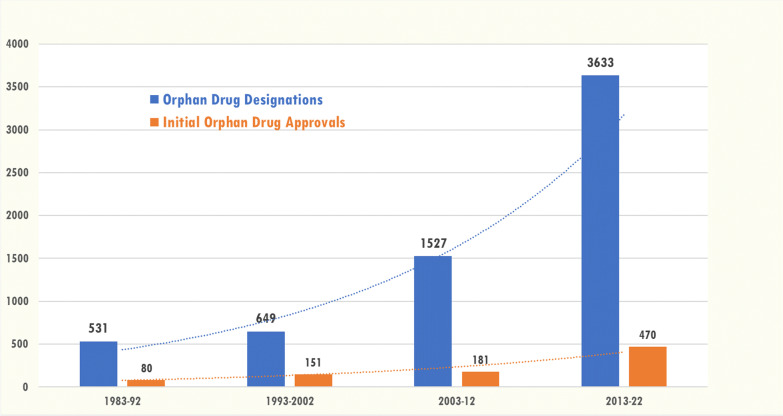
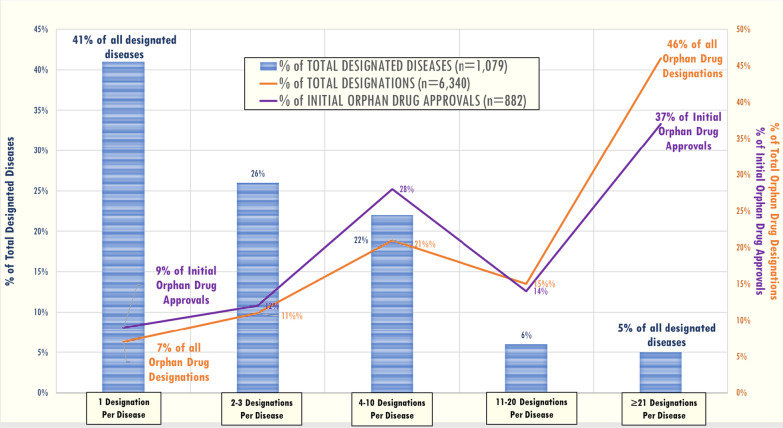
Background: Rare diseases affect more than 30 million Americans. The passage of the Orphan Drug Act (ODA) in the United States in 1983 represented a launching point for a rare disease drug development revolution for these patients. Financial incentives provided by the ODA through its Orphan Drug Designation Program, in addition to remarkable scientific advances over the past 40 years, have led to hundreds of drug approvals for rare diseases. Our research examines the rare diseases that have been targeted by orphan drug designations and subsequent approvals since the law was enacted. Methods: Using an internal FDA database, we classified and analyzed all orphan drug designations and approvals from 1983 to 2022 by disease and therapeutic area. Results: Over the 40 years of the ODA, 6,340 orphan drug designations were granted, representing drug development for 1,079 rare diseases. Additionally, 882 of those designations resulted in at least one FDA approval for use in 392 rare diseases. Much of this development has been concentrated in oncology as seven of the top ten most designated and approved diseases were rare cancers. Conclusions: Researchers have estimated that there may be 7000–10,000 rare diseases that have been identified and described. Based on our study, we can conclude that around 5% of rare diseases have an FDA-approved drug and up to 15% of rare diseases have at least one drug that has been developed and shown promise in their treatment, diagnosis or prevention. Funding of basic and translational science for rare disease drug development should continue in order to bring therapies to the millions of affected patients who remain without treatment options.
Overview
The claims and statistics of this paper haven’t been checked yet.
Run the check — free, no account needed. It reads the open-access text and checks the sources it cites.
Integrity signals
Registry
Cites
Statistics
Figures
Verification
Claims the paper makes
The claims and statistics of this paper haven’t been checked yet.
Run the check — free, no account needed. It reads the open-access text and checks the sources it cites.
Claims other papers make about this one
Each is checked against this paper’s own text: does it say what the citing paper says it does?
In the citing paper
“Moreover, around 95% of rare diseases have no FDA-approved drugs and up to 85% of rare diseases do not have even one drug developed that would show promise in rare disease treatment, diagnosis or prevention21.”
From A foundation model for clinician-centered drug repurposing (2024) · cites this paper as [21]
In the citing paper
“For instance, the molecular basis of many rare diseases remains poorly understood21.”
From A foundation model for clinician-centered drug repurposing (2024) · cites this paper as [21]
Self-check
Percentages, sums and reported differences re-computed from the paper’s own numbers.
The self-check needs the paper’s full text.
Citations
Cites
Rare-disease genetics in the era of next-generation sequencing: discovery to translation
Boycott, K. M., Vanstone, M. R., Bulman, D. E., & MacKenzie, A. (2013) · Nature Reviews Genetics · doi:10.1038/nrg3555 · Cited by 804
How many rare diseases are there?
Haendel, M., Vasilevsky, N., Unni, D., Bologa, C., Harris, N., Rehm, H., Hamosh, A., Baynam, G., Groza, T., McMurry, J., et al. (2020) · Nature Reviews Drug Discovery · doi:10.1038/d41573-019-00180-y · Cited by 554 · cited 1×
“Now, four decades later, hundreds of “orphan” drugs have been approved for use in the 7000–10,000 diseases and conditions that are considered rare.[3].”
BackgroundMondo: Unifying diseases for the world, by the world
Vasilevsky, N. A., Matentzoglu, N. A., Toro, S., Flack, J. E., Hegde, H., Unni, D. R., Alyea, G. F., Amberger, J. S., Babb, L., Balhoff, J. P., et al. (2022) · doi:10.1101/2022.04.13.22273750 · Cited by 107
Miller, K. L., Fermaglich, L. J., & Maynard, J. W. (2021) · Orphanet Journal of Rare Diseases · doi:10.1186/s13023-021-01901-6 · Cited by 96
Self-citationCFTR modulator therapies – Effect on life expectancy in people with cystic fibrosis
Balfour-Lynn, I. M., & King, J. A. (2022) · Paediatric Respiratory Reviews · doi:10.1016/j.prrv.2020.05.002 · Cited by 85
The Orphan Drug Act. The first 7 years.
Asbury, C. H. (1991) · PubMed · Cited by 70
Investigating the landscape of US orphan product approvals
Miller, K. L., & Lanthier, M. L. (2018) · Orphanet Journal of Rare Diseases · doi:10.1186/s13023-018-0930-3 · Cited by 52
Self-citationShould rare diseases get special treatment?
Magalhães, M. D. A. F. M. (2021) · Journal of Medical Ethics · doi:10.1136/medethics-2021-107691 · Cited by 48
Important Role of Translational Science in Rare Disease Innovation, Discovery, and Drug Development
Pariser, A., & Gahl, W. A. (2014) · Journal of General Internal Medicine · doi:10.1007/s11606-014-2881-2 · Cited by 43
Asbury, C. H. (1991) · JAMA · doi:10.1001/jama.1991.03460070075046 · Cited by 37
Cited by
Sorted by citations
A foundation model for clinician-centered drug repurposing
Huang, K., Chandak, P., Wang, Q., Havaldar, S., Vaid, A., Leskovec, J., Nadkarni, G. N., Glicksberg, B. S., Gehlenborg, N., & Zitnik, M. (2024) · Nature Medicine · doi:10.1038/s41591-024-03233-x · Cited by 249
“For instance, the molecular basis of many rare diseases remains poorly understood 21 .”
BackgroundMichaeli, D. T., Michaeli, T., Albers, S., Boch, T., & Michaeli, J. C. (2023) · The European Journal of Health Economics · doi:10.1007/s10198-023-01639-x · Cited by 133
A roadmap for affordable genetic medicines
Kliegman, M., Zaghlula, M., Abrahamson, S. L., Esensten, J. H., Wilson, R. C., Urnov, F. D., & Doudna, J. A. (2024) · Nature · doi:10.1038/s41586-024-07800-7 · Cited by 69
Drug repurposing for Alzheimer’s disease and other neurodegenerative disorders
Cummings, J. L., Zhou, Y., Stone, A. V., Cammann, D., Tonegawa‐Kuji, R., Cacho, J. R. F., & Cheng, F. (2025) · Nature Communications · doi:10.1038/s41467-025-56690-4 · Cited by 80
Domaradzki, J., & Walkowiak, D. (2024) · Scientific Reports · doi:10.1038/s41598-024-63962-4 · Cited by 31
Considerations for mRNA Product Development, Regulation and Deployment Across the Lifecycle
Skerritt, J. H. (2025) · Vaccines · doi:10.3390/vaccines13050473 · Cited by 31
Rare diseases: still on the fringes of universal health coverage in Europe
Tumiene, B., Juozapavičiūtė, A., & Andriukaitis, V. (2023) · The Lancet Regional Health - Europe · doi:10.1016/j.lanepe.2023.100783 · Cited by 22
Genomics of drug target prioritization for complex diseases
Chen, R. K., Duffy, Á., & Do, R. (2025) · Nature Reviews Genetics · doi:10.1038/s41576-025-00904-4 · Cited by 28
The role of public health in rare diseases: hemophilia as an example
El-Sayed, A., Reiss, U. M., Hanna, D. A., & Bolous, N. S. (2025) · Frontiers in Public Health · doi:10.3389/fpubh.2025.1450625 · Cited by 16
Artificial intelligence in rare diseases: toward clinical impact
Amorim, A. M. B., Orzeł, U., Caniceiro, A. B., Rosário‐Ferreira, N., & Moreira, I. S. (2025) · Trends in Pharmacological Sciences · doi:10.1016/j.tips.2025.10.010 · Cited by 14
Orphan Drug Label Expansions: Analysis Of Subsequent Rare And Common Indication Approvals
Miller, K. L., & Lanthier, M. L. (2024) · Health Affairs · doi:10.1377/hlthaff.2023.00219 · Cited by 13
Self-citationChen, J., Nie, L., Lee, S., Chu, H., Tian, H., Wang, Y., He, W., Jemielita, T., Gruber, S., Song, Y., et al. (2025) · Clinical Pharmacology & Therapeutics · doi:10.1002/cpt.3631 · Cited by 13
Mease, C., Miller, K. L., Fermaglich, L. J., Best, J., Liu, G., & Torjusen, E. (2024) · Orphanet Journal of Rare Diseases · doi:10.1186/s13023-024-03097-x · Cited by 12
Self-citationNijim, S., Korsunska, A., Zinski, J. M., Bolden, S. E., Zuccato, M., Repasky, M., & Fajgenbaum, D. C. (2025) · JAMA Network Open · doi:10.1001/jamanetworkopen.2025.8330 · Cited by 12
Rare disease challenges and potential actions in the Middle East
Fasseeh, A. N., Korra, N., Al-Jedai, A. H., Seyam, A. M., Almudaiheem, H., Alabdulkarim, H. A., Janahi, M., Gamal, M., Fahmy, S., Dallal, S. A. M. A., et al. (2025) · International Journal for Equity in Health · doi:10.1186/s12939-025-02388-4 · Cited by 11
Comparative analysis of FDA approvals by top 20 pharma companies (2014–2023)
Schuhmacher, A., Gassmann, O., Hinder, M., & Hartl, D. (2024) · Drug Discovery Today · doi:10.1016/j.drudis.2024.104128 · Cited by 11
mTOR pathway diseases: challenges and opportunities from bench to bedside and the mTOR node
Ritter, L. M., Annear, N. M. P., Baple, E. L., Ben-Chaabane, L. Y., Bódi, I., Brosson, L., Cadwgan, J., Coslett, B., Crosby, A. H., Davies, D. M., et al. (2025) · Orphanet Journal of Rare Diseases · doi:10.1186/s13023-025-03740-1 · Cited by 12
The Lived Experience of Pediatric Gene Therapy: A Scoping Review
Kimberly, L. L., Hunt, C., Beaverson, K. L., James, E. S., Bateman-House, A., McGowan, R., & deSante-Bertkau, J. E. (2023) · Human Gene Therapy · doi:10.1089/hum.2023.157 · Cited by 9
Integrating Machine Learning-Based Approaches into the Design of ASO Therapies
Leckie, J., & Yokota, T. (2025) · Genes · doi:10.3390/genes16020185 · Cited by 9
Realizing the Potential of Gene Therapies for Rare and Ultra-Rare Inherited Diseases
Booth, C., & Aiuti, A. (2023) · Human Gene Therapy · doi:10.1089/hum.2023.127 · Cited by 9
Kostadinov, K. R., Popova-Sotirova, I., Marinova, Y., Мусурлиева, Н., Iskrov, G. G., & Stefanov, R. S. (2024) · Cancers · doi:10.3390/cancers16081489 · Cited by 10
Increasing Diversity, Equity, Inclusion, and Accessibility in Rare Disease Clinical Trials
Baynam, G. S., Baker, S., Steward, C. A., Summar, M. L., Halley, M. C., & Pariser, A. (2024) · Pharmaceutical Medicine · doi:10.1007/s40290-024-00529-8 · Cited by 8
Rare Disease Innovation at the FDA—Opportunities for Implementation
Shore, C., Worku, T., & Kahn, J. (2024) · JAMA · doi:10.1001/jama.2024.20358 · Cited by 8
Moon, S., Ruiz, A. A., Vieira, M., Large, K. E., & Slovenski, I. (2025) · Journal of Pharmaceutical Policy and Practice · doi:10.1080/20523211.2024.2436899 · Cited by 9
Tosi, L. L., Hart, T. S., Beug, G., Carter, E., & Perfetto, E. M. (2025) · Orphanet Journal of Rare Diseases · doi:10.1186/s13023-025-03973-0 · Cited by 9
Michaeli, D. T., Michaeli, T., Albers, S., & Michaeli, J. C. (2024) · Targeted Oncology · doi:10.1007/s11523-024-01081-w · Cited by 8
Toro, W., Yang, M., Patel, A., Su, Z., Dabbous, O. H., & Garrison, L. P. (2024) · Value in Health · doi:10.1016/j.jval.2024.12.006 · Cited by 7
Human-based complex in vitro models: their promise and potential for rare disease therapeutics
Parvatam, S., Pistollato, F., Marshall, L. J., Furtmann, F., Jahagirdar, D., Choudhury, M. C., Mohanty, S., Mittal, H., Meganathan, S., & Mishra, R. (2025) · Frontiers in Cell and Developmental Biology · doi:10.3389/fcell.2025.1526306 · Cited by 7
Palmer, E. E., Recsei, K., McKnight, L., Roberts, N., Baynam, G. S., Zurynski, Y., Farrar, M. A., Healy, L., Millis, N., Zurynski, Y., et al. (2025) · EBioMedicine · doi:10.1016/j.ebiom.2025.105710 · Cited by 5
Prioritizing disease-associated missense variants with chemoproteomic-detected amino acids
Palafox, M. F., Boatner, L. M., Wilde, B. R., Christofk, H. R., Backus, K. M., & Arboleda, V. A. (2025) · The American Journal of Human Genetics · doi:10.1016/j.ajhg.2025.04.017 · Cited by 6
Leveraging generative AI to assist biocuration of medical actions for rare disease
Niyonkuru, E., Caufield, J. H., Carmody, L., Gargano, M. A., Toro, S., Whetzel, P. L., Blau, H., Gomez, M. S., Casiraghi, E., Chimirri, L., et al. (2024) · Bioinformatics Advances · doi:10.1093/bioadv/vbaf141 · Cited by 5
Digital health technology use in clinical trials of rare diseases: a systematic review
Mao, X., Zeng, D., Wang, X., Pearce, D. A., Baynam, G. S., Chavannes, N. H., Chung, W. K., Wu, H., Tham, Y. C., Zhang, S., et al. (2025) · Communications Medicine · doi:10.1038/s43856-025-01137-6 · Cited by 5
Advances in Bone-Targeting Drug Delivery: Emerging Strategies Using Adeno-Associated Virus
Sato, T., Chaugule, S. R., Greenblatt, M. B., Gao, G., & Shim, J. (2024) · Human Gene Therapy · doi:10.1089/hum.2024.034 · Cited by 5
Ramamoorthy, A., Younis, I. R., Wen, Y., Mehanna, M., Giacomini, K. M., & van der Graaf, P. H. (2024) · Clinical Pharmacology & Therapeutics · doi:10.1002/cpt.3474 · Cited by 5
Iyer, K. A., Tenchov, R., Sasso, J. M., Ralhan, K., Jotshi, J., Polshakov, D. A., Maind, A., & Zhou, Q. A. (2025) · Biochemistry · doi:10.1021/acs.biochem.4c00722 · Cited by 6
Singh, K., Usman, S., Zeeshan, S., Yanamala, N. V. K., Nichols, M., Bhise, V. V., Bokhari, S., Sengupta, P. P., & Ahmed, Z. (2025) · Methods in cell biology · doi:10.1016/bs.mcb.2025.03.018 · Cited by 5
Trends in FDA drug approvals: 2021–2024 insights & innovations
Raut, G., & Sharma, S. (2025) · Annales Pharmaceutiques Françaises · doi:10.1016/j.pharma.2025.06.004 · Cited by 6
Rare disease 101: an online resource teaching on over 7000 rare diseases in one short course
Dunne, T. F., Jeffries, D., & McKay, L. (2024) · Orphanet Journal of Rare Diseases · doi:10.1186/s13023-024-03286-8 · Cited by 5
Strategies to Advance Drug Repurposing for Rare Diseases
Hong, D., & Kesselheim, A. S. (2025) · JAMA Network Open · doi:10.1001/jamanetworkopen.2025.8339 · Cited by 4
Information content as a health system screening tool for rare diseases
Groza, T., Robinson, P. N., Lim, W. K., Narasimhalu, K., Hsieh, J. Y. C., Yeo, K. K., Goh, B. K., Thomas, T. G. S., Wong, T. Y., Karnani, N., et al. (2025) · npj Digital Medicine · doi:10.1038/s41746-025-02096-x · Cited by 4
Non-oncology orphan drug development: Productivity and probability of success
Parker, S., Hajjar, J. E., Jonker, A. H., Kahn, S. R., Kritikou, P., Kyriakopoulou, C., & Haight, A. R. (2025) · Drug Discovery Today · doi:10.1016/j.drudis.2025.104568 · Cited by 4
Unifying the odyssey: artificial intelligence for rare disease diagnosis and therapy
Ho, M., Žitnik, M., Azachi, R., Basu, S., Rajpurkar, P., & Sidlow, R. (2026) · Health and Technology · doi:10.1007/s12553-026-01057-y · Cited by 4
Durmuş, S., Yücesan, E., Aktug, S., Utz, B., Çağlayan, A. O., Gençpınar, P., Günay, Ç., Oktay, Y., Yildirim, R. N., Yigit, A., et al. (2025) · Frontiers in Public Health · doi:10.3389/fpubh.2024.1501942 · Cited by 4
The Six Ds of Exponentials and drug discovery: A path toward reversing Eroom’s law
Tropsha, A., Martin, H., & Cherkasov, A. R. (2025) · Drug Discovery Today · doi:10.1016/j.drudis.2025.104341 · Cited by 5
Balakumar, P., Mulukuri, N. V. L. S., & Jagadeesh, G. (2025) · Pharmacology & Therapeutics · doi:10.1016/j.pharmthera.2025.108945 · Cited by 5
The Orphan Drug Act at 40: Legislative Triumph and the Challenges of Success
Saltonstall, P. L., ROSS, H., & KIM, P. T. (2023) · Milbank Quarterly · doi:10.1111/1468-0009.12680 · Cited by 4
Dercksen, M., Conradie, E. H., Hendriksz, C. J., Malherbe, H. L., & Vorster, B. C. (2023) · South African Medical Journal · doi:10.7196/samj.2023.v113i12.1507 · Cited by 4
Hong, K., Nugent, B. M., Bandukwala, A., Schuck, R. N., Tomita, Y. A., Pepe, S., Doi, M., Winiecki, S. K., & Lee, K. J. (2025) · Clinical Trials · doi:10.1177/17407745241309318 · Cited by 3
Long-Term Follow-Up of Patients Receiving Cell and Gene Therapy Products
Irinyi, L., Mintzes, B. J., Warning, J., Collie, L., Rush, A., Turtle, C. J., & Byrne, J. A. (2025) · Human Gene Therapy · doi:10.1177/10430342251403439 · Cited by 3
Advances in glycosaminoglycan based diagnostic strategies for mucopolysaccharidoses
Pathak, A., & Poluri, K. M. (2026) · Glycoscience & Therapy · doi:10.1016/j.glycos.2026.100036 · Cited by 3
Domaradzki, J. (2026) · Frontiers in Public Health · doi:10.3389/fpubh.2026.1743598 · Cited by 3
Brown, F., Vargas, M., Stanisic, S., Fatzinger, G., & Iliach, O. (2025) · Frontiers in Medicine · doi:10.3389/fmed.2025.1474087 · Cited by 3
Perspective on Clinical Trials: What Researchers Need to Know
Barde, P. J., & Barde, M. (2025) · Springer eBooks · doi:10.1007/978-3-031-81787-8_11 · Cited by 3
Papadopoulos, Z., Hatzidimitriou, A. G., & Psomas, G. (2025) · Molecules · doi:10.3390/molecules30112383 · Cited by 3
A surrogate endpoint-based provisional approval causal roadmap, illustrated by vaccine development
Gilbert, P. B., Peng, J., Han, L., Lange, T., Lu, Y., Nie, L., Shih, M., Waddy, S. P., Wiley, K., Yann, M. L.-J., et al. (2024) · Biostatistics · doi:10.1093/biostatistics/kxaf018 · Cited by 3
Ponomareva, D. V. (2025) · Lex genetica. · doi:10.17803/lexgen-2025-4-2-28-46 · Cited by 3
Trends, lag and characteristics of rare disease drug approval in the USA and China, 1983–2022
Wang, S., Liu, X., Zou, Y., Tang, Y., Zuo, W., Jiang, R., Shang, J., Tian, X., Liu, Q. P., Xu, T., et al. (2025) · Orphanet Journal of Rare Diseases · doi:10.1186/s13023-025-04175-4 · Cited by 3
Farid, T., Ruzhnikov, M. R. Z., Duggal, M., Tumas, K. C., Strongin, S. R., Sid, E., Fuchs, S. R., Sacks, L. V., Pichard, D. C., Pilgrim-Grayson, C., et al. (2025) · American Journal of Medical Genetics Part C Seminars in Medical Genetics · doi:10.1002/ajmg.c.32153 · Cited by 3
Ipe, A., Fermaglich, L. J., Kraft, S., Mease, C., Le, T., & Miller, K. L. (2024) · Expert Opinion on Orphan Drugs · doi:10.1080/21678707.2024.2333245 · Cited by 3
Self-citationRyder, S. (2024) · Clinical Pharmacology & Therapeutics · doi:10.1002/cpt.3382 · Cited by 3
Leveraging Generative AI to Accelerate Biocuration of Medical Actions for Rare DiseasePreprint
Niyonkuru, E., Caufield, J. H., Carmody, L., Gargano, M. A., Toro, S., Whetzel, T., Blau, H., Soto, M., Casiraghi, E., Chimirri, L., et al. (2024) · medRxiv · doi:10.1101/2024.08.22.24310814 · Cited by 3
The Promise and Challenges of Genomics for Patients and Families Affected by Rare Conditions
Andersen, C. A., Pelling, A. L., & Wynn, S. L. (2025) · Annals of Human Genetics · doi:10.1111/ahg.70008 · Cited by 2
Patel, Y. P., Ghaddar, L., Lin, Y., Karim, N., Chan, K., Dupuis, L. L., & Tadrous, M. (2025) · PLoS ONE · doi:10.1371/journal.pone.0304540 · Cited by 2
Advances in Cell and Gene Therapy for Rare Disease Treatment
Baek, H. J., Nam, Y., Rim, Y. A., & Ju, J. H. (2025) · International Journal of Stem Cells · doi:10.15283/ijsc25028 · Cited by 4
A case-based explainable graph neural network framework for mechanistic drug repositioning
Gonzalez-Cavazos, A. C., Tu, R., Sinha, M., & Su, A. I. (2026) · Bioinformatics · doi:10.1093/bioinformatics/btag008 · Cited by 2
Kim, M., & Hong, E. (2026) · Clinical Pharmacology & Therapeutics · doi:10.1002/cpt.70228 · Cited by 2
Lim, N., Meagher, C. E., Bye, A., Lorentzos, M., Dale, R. C., Mohammad, S. S., Howell, K. B., Palmer, E. E., Woodcock, I. R., Macdonald‐Laurs, E., et al. (2026) · Neurotherapeutics · doi:10.1016/j.neurot.2026.e00921 · Cited by 2
The Role of Pharmacogenomics in Rare Diseases
Man, A., Groeneweg, G. S. S., Ross, C. J., & Carleton, B. (2024) · Drug Safety · doi:10.1007/s40264-024-01416-6 · Cited by 2
Bupp, C. P., VanSickle, E., Michael, J., Schultz, C. R., Nguyen, K., Hoefer, M., Rajasekaran, S., & Bachmann, A. S. (2025) · American Journal of Medical Genetics Part C Seminars in Medical Genetics · doi:10.1002/ajmg.c.32138 · Cited by 2
Analysis of the Structural Transformations Underlying the Design of Innovative Next-in-Class Drugs
Balakin, K. V. (2023) · Russian Journal of General Chemistry · doi:10.1134/s107036322315001x · Cited by 2
Antisense oligonucleotides in rare neurogenetic disorders
Shin, H. J., Ko, A., Oh, J., & Kang, H. (2024) · Journal of genetic medicine · doi:10.5734/jgm.2024.21.2.41 · Cited by 1
Precision Omics Initiative Sweden (PROMISE): A New Model for Biomedical ResearchPreprint
mpe, A. K. A., Gudmundsson, S., Walsh, C. P., Lindblad‐Toh, K., Johansson, Å., Clareborn, A., Ameur, A., Edsjö, A., Fioretos, T., Ehrencrona, H., et al. (2024) · SSRN Electronic Journal · doi:10.2139/ssrn.4992987 · Cited by 2
Trends from two decades of orphan designations in paediatric rare neuromuscular diseases
Duarte, D. M., Lima, M. B. D. S., & Sepodes, B. M. N. (2024) · Journal of the Neurological Sciences · doi:10.1016/j.jns.2024.122989 · Cited by 1
Re-envisioning clinical trial design in systemic sclerosis
Volkmann, E. R., Tashkin, D. P., & Smith, V. M. (2025) · Expert Review of Clinical Immunology · doi:10.1080/1744666x.2025.2500612 · Cited by 1
Nadir Hastalıklarda Tedaviye Erişim: Mevcut Durum, Engeller ve Çözüm Önerileri
Yıldırım, M., & Keskin, H. (2025) · Sağlık Bilimlerinde Değer · doi:10.33631/sabd.1507046 · Cited by 1
Gomez-Ferreria, M. A., Garcia-Muñoz, V., & Zwiers, A. (2025) · Orphanet Journal of Rare Diseases · doi:10.1186/s13023-025-04095-3 · Cited by 1
Advancing ATMPs for orphan diseases: redefining the roles of pharmaceutical companies and academia
Hidalgo‐Simon, A., & Booth, C. (2025) · Blood Immunology & Cellular Therapy · doi:10.1016/j.bict.2025.100023 · Cited by 1
Adverse events experienced by people living with chronic rare diseases: A scoping review
Kwaan, L., Aldous, C. M., & Malherbe, H. L. (2025) · Rare · doi:10.1016/j.rare.2025.100116 · Cited by 1
Douglas, C. M. W., Kleinhout‐Vliek, T., Hagendijk, R., Rabeharisoa, V., Boon, W., Aith, F., Cláudio Cordovil Oliveira, U. F. R. J., Grunebaum, S., & Moors, E. H. M. (2025) · Orphanet Journal of Rare Diseases · doi:10.1186/s13023-025-04132-1 · Cited by 1
Genetic Targets, Financial Creativity: BridgeBio’s Model for Sustainable Drug Development
Shukla, C. G., Tendler, I., Kumar, N., & Lo, A. W. (2025) · Drug Discovery Today · doi:10.1016/j.drudis.2025.104583 · Cited by 1
Martin, P. A., Ding, J., & Hanchard, M. (2025) · Social Science & Medicine · doi:10.1016/j.socscimed.2025.118888 · Cited by 1
Cerimagic, T., Sosnin, S. D., & Ecker, G. F. (2026) · Digital Discovery · doi:10.1039/d5dd00536a · Cited by 2
Australia’s top 10 rare disease research priorities: a priority setting partnership
Sivaramakrishnan, H., Reilly, M., Jaffe, A. B., Baynam, G., Helwani, F., McKenzie, A., & Finlay-Jones, A. (2026) · Journal of Rare Diseases · doi:10.1007/s44162-026-00146-w
Trends in oncology marketing applications in the European Union: a five‐year systematic review
Basto, R., Karaya, S., & Zwiers, A. (2026) · Frontiers in Pharmacology · doi:10.3389/fphar.2025.1738701 · Cited by 1
Beninger, P. R. (2026) · Clinical Therapeutics · doi:10.1016/j.clinthera.2026.02.014 · Cited by 1
Martinez, J., & Lopez, C. (2026) · Pharmacophore · doi:10.51847/4hpglzx1ca · Cited by 1
Mutation-centric kinase drug repurposing for rare cancers
Chan, M., Ma, H., Subbiah, V., & Gujral, T. S. (2026) · Nature reviews. Cancer · doi:10.1038/s41568-026-00944-w · Cited by 1
Anwar, S., & Yokota, T. (2026) · Genes · doi:10.3390/genes17070780 · Cited by 1
Hars, E. S., & McReynolds, L. J. (2024) · Clinical Pharmacology & Therapeutics · doi:10.1002/cpt.3393 · Cited by 1
Reframing risks in rare diseases: economics of networks, spillovers, and scale
Runge, C. F., Campbell, J. D., & Runge, C. P. (2024) · Frontiers in Pharmacology · doi:10.3389/fphar.2024.1516725 · Cited by 1
Manjunatha, L., Saundarya, M. S., Dokuru, D. R., Venugopal, N., Waldrop, J. N., Blount, L. G., Kartha, R. V., & Rajasimha, H. K. (2025) · medRxiv · doi:10.1101/2025.04.30.25326209 · Cited by 1
Should We Call Every Cancer a Rare Cancer?
Nabhan, C., & Subbiah, V. (2026) · Journal of Clinical Oncology · doi:10.1200/jco-26-00596 · Cited by 1
Designing therapies relevant in human genetic disorders
Smith, M. (2024) · Elsevier eBooks · doi:10.1016/b978-0-443-23648-8.00011-5
Use of Basket Trials to Solve Sleep Problems in Patients with Rare Diseases
Pullen, L. C., Bott, N., McCanless, C., Revana, A., Sevinc, G., Gorman, C., Duncan, A., Poliquin, S., Pfalzer, A. C., Schmidt, K. Q., et al. (2024) · Clocks & Sleep · doi:10.3390/clockssleep6040044
D’Silva, A., Barnes, J., Djafar, J. V., Bhattacharya, K., Yan, J., Mohammad, S. S., Bandodkar, S., Johnson, A., Tchan, M. C., Miteff, C., et al. (2025) · Neurotherapeutics · doi:10.1016/j.neurot.2025.e00546 · Cited by 1
Model-informed drug development in rare diseases
Brine, N., Dyer, C., & Smith, K. (2025) · Medical Writing · doi:10.56012/sbrq7799
Moroz, T., Taylor, M., Schmitt, P., Donovan, D. J., & Nori, M. (2025) · Future Rare Diseases · doi:10.1080/23995270.2025.2499402
Insights into Support Systems for Orphan Drug Development: A Comparative Study
Leng, Y., Tang, Y., Yu, W., Hou, Y., He, H., Han, Y., Huang, H., Zhang, W., & Li, N. (2025) · Therapeutic Innovation & Regulatory Science · doi:10.1007/s43441-025-00833-8
Eslick, G. D. (2025) · Springer eBooks · doi:10.1007/978-1-4614-6625-3_91-1
Metadata
- Authors
- Fermaglich, L. J., & Miller, K. L.
- Affiliations
- United States Food and Drug Administration (US)
- Corresponding author
- Fermaglich, Lewis J.
- Venue
- Orphanet Journal of Rare Diseases
- Published
- 2023-06-23
- Volume
- 18
- Issue
- 1
- Pages
- 163-163
- ISSN
- 1750-1172 (ISSN-L)
- PMC
- PMC10290406
- OpenAlex
- W4381839562
- Cited by
- 134
- References
- 14
- Citations by year
- 2026: 41 · 2025: 58 · 2024: 28 · 2023: 7
- FWCI
- 27.29
- Type
- journal article
- Language
- en
- Open access
- gold
- doi.org
- Locations
- Orphanet Journal of Rare Diseases (publishedVersion, cc-by)
- PubMed Central (publishedVersion, cc-by)
- PubMed (publishedVersion)
- DOAJ (DOAJ: Directory of Open Access Journals) (submittedVersion, cc-by-sa)
- Topics
- Social Sciences › Economics, Econometrics and Finance › Economics and Econometrics › Pharmaceutical Economics and Policy
- Health Sciences › Medicine › Pediatrics, Perinatology and Child Health › Pharmaceutical studies and practices
- Health Sciences › Nursing › Issues, ethics and legal aspects › Biomedical Ethics and Regulation
- Keywords
- rare diseases, orphan drugs, Orphan Drug Act, orphan drug designation, drug approval, rare tumor, anticancer drug development, therapeutic areas, FDA drug approval, rare disease drug development
- MeSH terms
- Humans, Neoplasms, Orphan Drug Production, United States, United States Food and Drug Administration, Drug Approval, Rare Diseases
About these checks
Registry, retraction, Cites and statistics results are computed, not judged, with one exception: a printed reference that no index lists is read once by a model before it counts as a citation error. Claims are extracted by a model and kept only when their quote appears verbatim in the text; each cited source is then checked, with a model’s help, for whether it says what the claim relies on. Those verdicts can be wrong — read the claim’s quote and the cited source before relying on one.
Statistics and arithmetic are recomputed, not judged.
Confidence bands are shown only for fields calibrated on our annotated test set. None is calibrated yet, so no band is shown.
What counts as a claim ›How we measure confidence ›How we check this ›
Are you an author, or do you see a problem with this page? Request a review
