

Deletion of aquaporin-4 in APP/PS1 mice exacerbates brain Aβ accumulation and memory deficits
Open accessThe DOI matches its Crossref record; 65 of the 66 references it cites were found in a registry or an index.
Abstract
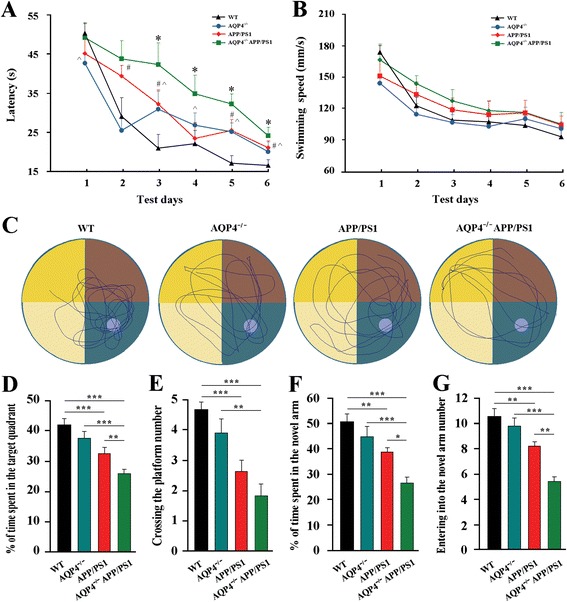
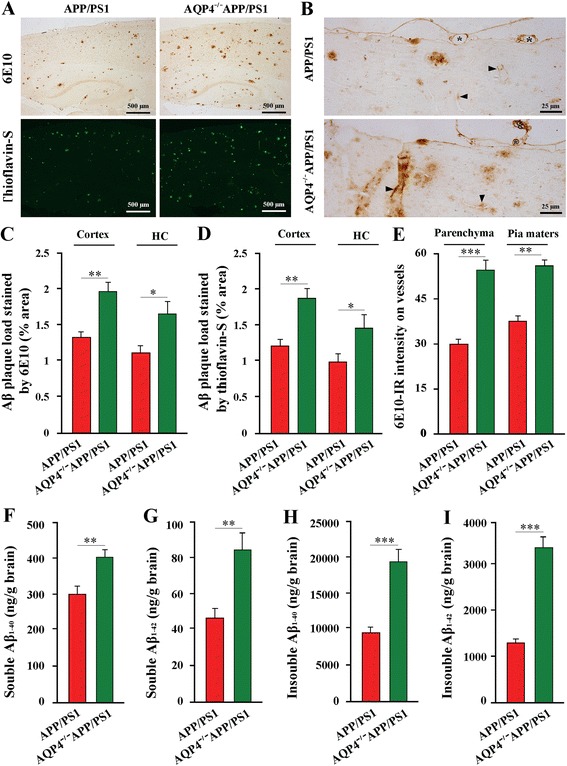
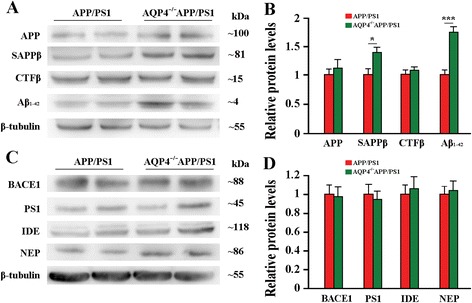
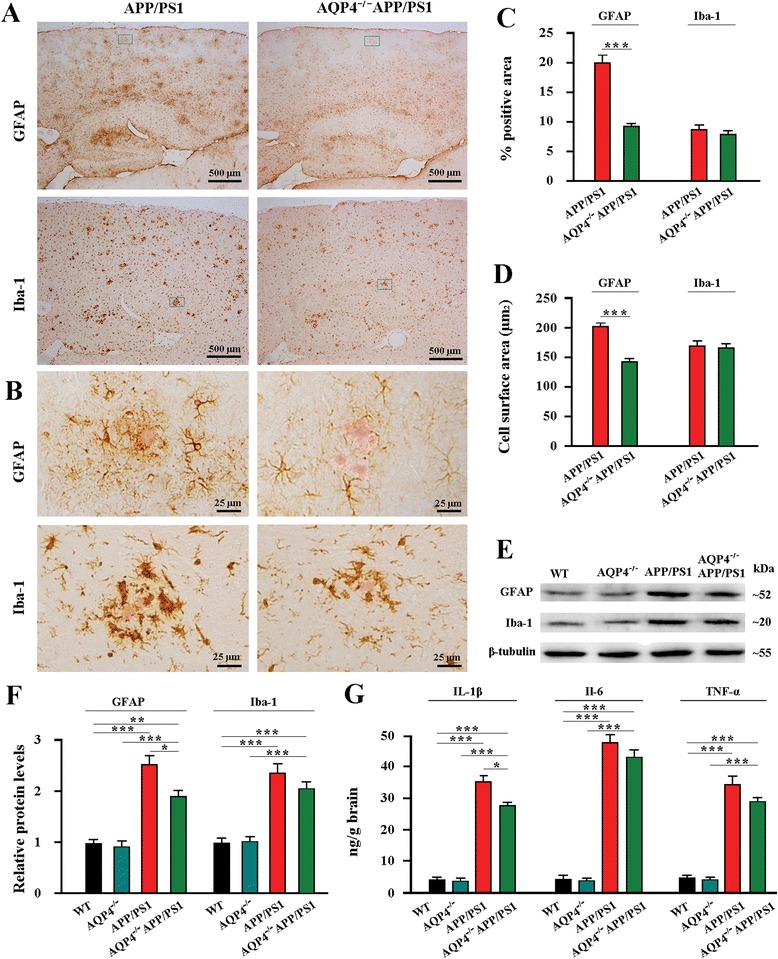
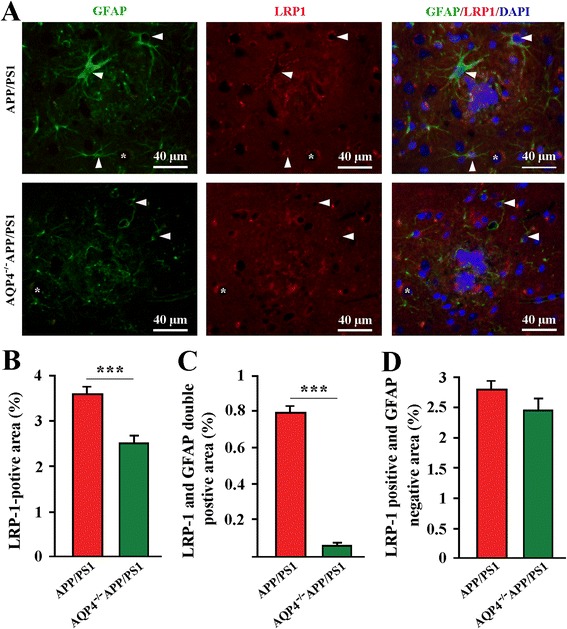
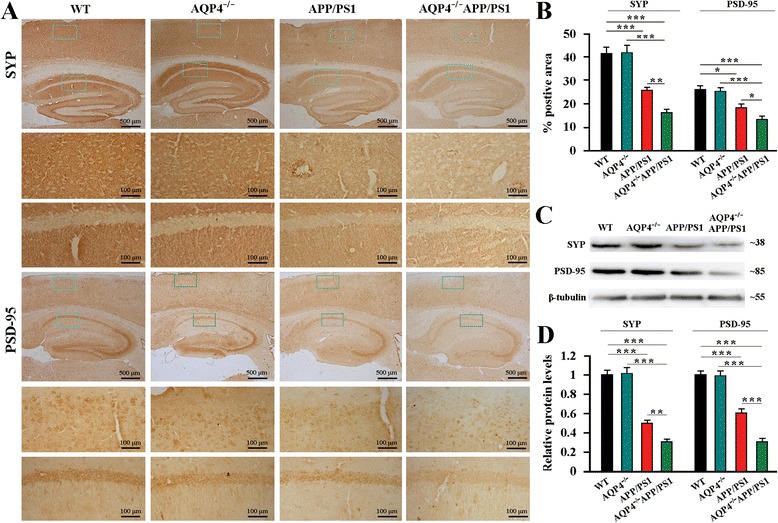
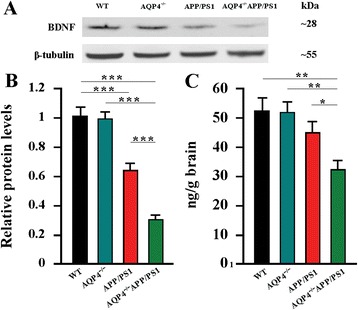
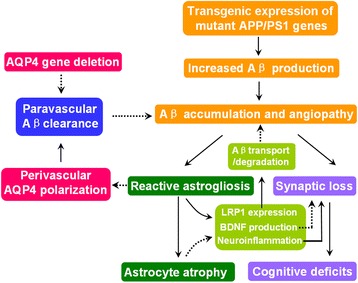
BACKGROUND: Preventing or reducing amyloid-beta (Aβ) accumulation in the brain is an important therapeutic strategy for Alzheimer's disease (AD). Recent studies showed that the water channel aquaporin-4 (AQP4) mediates soluble Aβ clearance from the brain parenchyma along the paravascular pathway. However the direct evidence for roles of AQP4 in the pathophysiology of AD remains absent. RESULTS: Here, we reported that the deletion of AQP4 exacerbated cognitive deficits of 12-moth old APP/PS1 mice, with increases in Aβ accumulation, cerebral amyloid angiopathy and loss of synaptic protein and brain-derived neurotrophic factor in the hippocampus and cortex. Furthermore, AQP4 deficiency increased atrophy of astrocytes with significant decreases in interleukin-1 beta and nonsignificant decreases in interleukin-6 and tumor necrosis factor-alpha in hippocampal and cerebral samples. CONCLUSIONS: These results suggest that AQP4 attenuates Aβ pathogenesis despite its potentially inflammatory side-effects, thus serving as a promising target for treating AD.
Overview
The claims and statistics of this paper haven’t been checked yet.
Free: it reads the open-access text and checks the first 5 claims that cite a source we can check. Create a free account to check every claim.
Integrity signals
Registry
Cites
Statistics
Figures
Verification
Claims the paper makes
The claims and statistics of this paper haven’t been checked yet.
Free: it reads the open-access text and checks the first 5 claims that cite a source we can check. Create a free account to check every claim.
Claims other papers make about this one
Each is checked against this paper’s own text: does it say what the citing paper says it does?
In the citing paper
“AQP4 deletion was found to increase Aβ accumulation and astrocytic atrophy in APP/PS1 mouse brain, with consequent effects on cognitive impairment [418].”
From Molecular and cellular mechanisms underlying the pathogenesis of Alzheimer’s disease (2020) · cites this paper as [418]
In the citing paper
“the suppression of glymphatic flow by deletion of AQP4 water channels sharply increased both amyloid-ß plaque formation and cognitive deficits in a mouse model of Alzheimer disease (69).”
From Glymphatic failure as a final common pathway to dementia (2020) · cites this paper as [69]
In the citing paper
“Indeed, a recent study reported that deletion of AQP4 accelerated amyloid plaque formation in a murine model of Alzheimer disease (69).”
From Glymphatic failure as a final common pathway to dementia (2020) · cites this paper as [69]
Self-check
Percentages, sums and reported differences re-computed from the paper’s own numbers.
The self-check needs the paper’s full text.
Citations
Cites
The Mouse Brain in Stereotaxic Coordinates
Paxinos, G. (2001) · Cited by 13,440
Iliff, J. J., Wang, M., Liao, Y., Plogg, B. A., Peng, W., Gundersen, G. A., Benveniste, H., Vates, G. E., Deane, R., Goldman, S. A., et al. (2012) · Science Translational Medicine · doi:10.1126/scitranslmed.3003748 · Cited by 5,824 · cited 7×
“Deletion of the AQP4 gene damages rapid water transport-dependent clearance of 125 I-A β 1 – 40 from brain parenchyma to the blood and CSF [5].”
InfluentialSleep Drives Metabolite Clearance from the Adult Brain
Xie, L., Kang, H., Xu, Q., Chen, M. J., Liao, Y., Thiyagarajan, M., O’Donnell, J., Christensen, D. J., Nicholson, C., Iliff, J. J., et al. (2013) · Science · doi:10.1126/science.1241224 · Cited by 5,411 · cited 1×
“In addition, it has been shown that paravascular A β clearance is regulated by the sleep-wake cycle, which is disturbed in many patients with AD [58].”
The mouse brain in stereotaxic coordinates
Konsman, J.-P. (2003) · Psychoneuroendocrinology · doi:10.1016/s0306-4530(03)00088-x · Cited by 4,045 · cited 1×
“in the mouse brain atlas as landmarks [62].”
Decreased Clearance of CNS β-Amyloid in Alzheimer’s Disease
Mawuenyega, K. G., Sigurdson, W., Ovod, V., Munsell, L., Kasten, T., Morris, J. C., Yarasheski, K. E., & Bateman, R. J. (2010) · Science · doi:10.1126/science.1197623 · Cited by 2,078
The toxic Aβ oligomer and Alzheimer's disease: an emperor in need of clothes
Benilova, I., Karran, E., & De Strooper, B. (2012) · Nature Neuroscience · doi:10.1038/nn.3028 · Cited by 1,962 · cited 1×
“When the balance between brain Aβ production and clearance is broken, aggregated Aβ in the extracellular space gradually manifests its neurotoxic effects, finally causing neurodegeneration and cognitive impairment [51].”
Twenty years of the Alzheimer's disease amyloid hypothesis: a genetic perspective
Tanzi, R. E., & Bertram, L. (2005) · Cell · doi:10.1016/j.cell.2005.02.008 · Cited by 1,849 · cited 6×
“Cerebral cortex and hippocampus extracts were loaded onto 10-16 % Tris/tricine SDS gels, and transferred to nitrocellulose membranes before overnight incubation with one of the following primary antibodies: rabbit anti-APP (1:1000; Millipore), rabbit anti-A β 1 – 42 (1:1000; Sigma-Aldrich, Saint Louis, MO, USA) and mo…”
InfluentialAlzheimer Mechanisms and Therapeutic Strategies
Huang, Y., & Mucke, L. (2012) · Cell · doi:10.1016/j.cell.2012.02.040 · Cited by 1,758 · cited 1×
“To this point, there are no effective therapeutic strategies for this devastating disease [1].”
Impairment of paravascular clearance pathways in the aging brain
Kress, B. T., Iliff, J. J., Xia, M., Wang, M., Wei, H. S., Zeppenfeld, D., Xie, L., Kang, H., Xu, Q., Liew, J. A., et al. (2014) · Annals of Neurology · doi:10.1002/ana.24271 · Cited by 1,521 · cited 3×
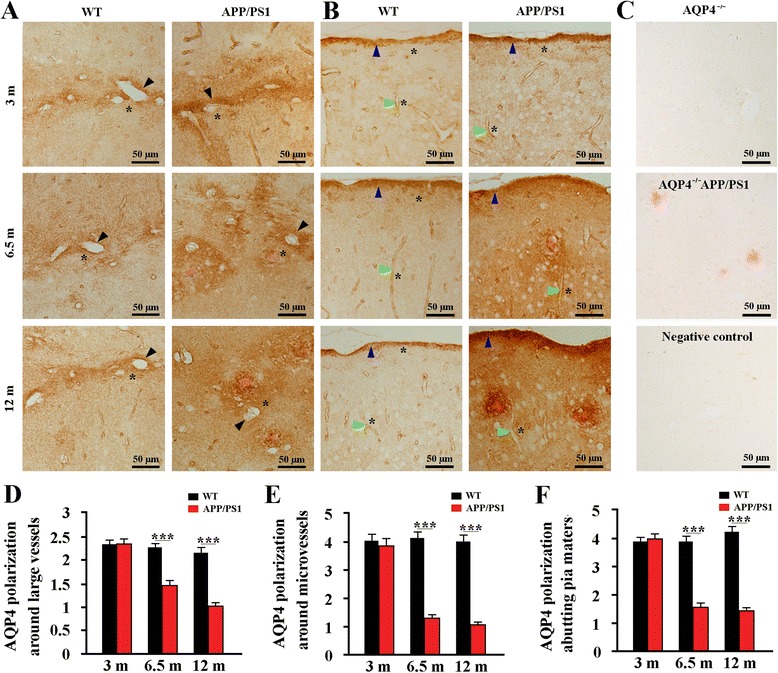
“Perivascular (or pia) AQP4 polarization was obtained by comparing expression ratios of AQP4 at perivascular (or pia surface) versus parenchymal domains [6, 41].”
Impairment of Glymphatic Pathway Function Promotes Tau Pathology after Traumatic Brain Injury
Iliff, J. J., Chen, M. J., Plog, B. A., Zeppenfeld, D. M., Soltero, M., Yang, L., Singh, I., Deane, R., & Nedergaard, M. (2014) · The Journal of Neuroscience · doi:10.1523/jneurosci.3020-14.2014 · Cited by 1,159 · cited 4×
“This expression feature has been shown to facilitate the efficient clearance of ISF solutes, such as Aβ and Tau, from the brain parenchyma [3, 5].”
Influential
Cited by
Items 301–400 of 530
Cerebrospinal fluid‐tissue exchange revealed by phase alternate labeling with null recovery MRI
Li, A. M., & Xu, J. (2021) · Magnetic Resonance in Medicine · doi:10.1002/mrm.29092 · Cited by 17
Ahmed, S., Yu, J. H., Mockett, B. G., Zhang, H., Abraham, W. C., & Liu, P. (2022) · International Journal of Molecular Sciences · doi:10.3390/ijms23137316 · Cited by 16
“Aβ can also be cleared from the brain by the glymphatic system through AQP4 water channels in astrocytes [57,58].”
BackgroundGuo, X., Liu, Y., Morgan, D., & Zhao, L. (2020) · Aging and Disease · doi:10.14336/ad.2020.0201 · Cited by 18
“Reduced PSD-95 is also seen in the 8 or 12-month-old APP/PS1 mice [98, 99].”
BackgroundYin, J., Cao, L., Liu, Y., & Huang, Y. M. (2025) · Movement Disorders · doi:10.1002/mds.30194 · Cited by 17
Kopeć, K., Koziorowski, D., & Szlufik, S. (2025) · International Journal of Molecular Sciences · doi:10.3390/ijms26157552 · Cited by 16
“Moreover, AQP4 deficiency aggravates cognitive dysfunction in knockout animals [97].”
Torres, V. O., Pizzo, M. E., Chan, D., Dugas, J. C., Huynh, D., Joy, D. A., Liang, E., Sarrafha, L., Becerra, I. A., Chau, R., et al. (2025) · Journal of Cerebral Blood Flow & Metabolism · doi:10.1177/0271678x251361997 · Cited by 17
“51,52 In summary, our data provides new mechanistic insights into the impact that changes in TfR protein levels may exert on TfR-mediated transport in healthy aging and a mouse model of AD.”
Deregulation of the Glymphatic System in Alzheimer’s Disease: Genetic and Non-Genetic Factors
Hu, Y., Su, T., Wu, L. Y., Wu, J., Liu, D., Zhu, L., & Yuan, M. (2024) · Aging and Disease · doi:10.14336/ad.2023.1229 · Cited by 21
CSF β-Amyloid and Tau Biomarker Changes in Veterans With Mild Traumatic Brain Injury
Li, G., Iliff, J. J., Shofer, J. B., Mayer, C. L., Meabon, J. S., Cook, D. G., Pagulayan, K. F., Raskind, M. A., Zetterberg, H., Blennow, K., et al. (2024) · Neurology · doi:10.1212/wnl.0000000000209197 · Cited by 17
Salminen, A. (2024) · European Journal of Neuroscience · doi:10.1111/ejn.16450 · Cited by 15
“Several studies have revealed that aquaporin-4 (AQP4) has a crucial role in the clearance of β -amyloid from the brain (Hablitz et al., 2020; Sapkota et al., 2022; Xu et al., 2015).”
The effects of AQP4 rs162009 on resting‐state brain activity in Parkinson's disease
Jiang, M., Fang, Y., Dai, S., Si, X., Wang, Z., Tang, J., Gao, T., Liu, Y., Song, Z., Pu, J., et al. (2023) · CNS Neuroscience & Therapeutics · doi:10.1111/cns.14208 · Cited by 16
Glymphatic-meningeal lymphatic system, a new therapeutic target for sleep disorders
Xiao, M., Marshall, C., & Yin, K. (2025) · Neuroscience · doi:10.1016/j.neuroscience.2025.09.008 · Cited by 14
Self-citationYin, Y., Peng, Y. H., Nie, L., Li, X., Xiao, Y., Jiang, H., Gao, L., & Liu, H. (2023) · Neuroradiology · doi:10.1007/s00234-023-03269-9 · Cited by 14
“Several studies on AQP4-null mice have demonstrated that the loss of perivascular AQP4 impairs glymphatic transport and clearance capacity [15, 17, 18].”
BackgroundAquaporin-4 as a cerebrospinal fluid biomarker of Alzheimer’s disease
José, N. G. D. S., Halbgebauer, S., Steinacker, P., Anderl‐Straub, S., Abu‐Rumeileh, S., Barba, L., Oeckl, P., Bellomo, G., Gaetani, L., Toja, A., et al. (2024) · Translational Neurodegeneration · doi:10.1186/s40035-024-00451-8 · Cited by 14
Dias, L., Nabais, A. M., Borges-Martins, V. P. P., Canas, P. M., Cunha, R. A., & Agostinho, P. M. (2025) · Journal of Neurochemistry · doi:10.1111/jnc.16299 · Cited by 14
“…extracellular solute clearance, including the removal of extracellular glutamate and glucose (Cha et al. 2023; Zeng et al. 2007), accumulated extracellular tau protein (Harrison et al. 2020; Zhao et al. 2017) and clearance of amyloid-beta (Aβ) (Iliff et al. 2012; Xu et al. 2015; Zhang et al. 2020).”
Aquaporin 4 knockout increases complete freund's adjuvant-induced spinal central sensitization
Wang, C., Wu, Q., Wang, Z., Hu, L., Marshall, C., & Xiao, M. (2020) · Brain Research Bulletin · doi:10.1016/j.brainresbull.2020.01.004 · Cited by 14
Self-citationZhao, Y., Peng, Y., Wei, X., Wu, G., Li, B., Li, X., Long, L., Zeng, J., Luo, W., Tian, Y., et al. (2024) · ACS Chemical Neuroscience · doi:10.1021/acschemneuro.4c00060 · Cited by 13
Dysregulated neurofluid coupling as a new noninvasive biomarker for primary progressive aphasia
Zeng, X., Hua, L., Ma, G., Zhao, Z., & Yuan, Z. (2024) · NeuroImage · doi:10.1016/j.neuroimage.2024.120924 · Cited by 13
Wu, Y., Xu, F., Zhu, D., Li, A. V., Wang, K., Qin, Q., & Xu, J. (2025) · NeuroImage · doi:10.1016/j.neuroimage.2025.121095 · Cited by 13
“…part in immune surveillance (Iliff et al., 2012; Iliff et al., 2013; Absinta et al., 2017; Ahn et al., 2019) and the clearance of amyloid-beta (Xu et al., 2015; Xie et al., 2013; Rasmussen et al., 2018; Louveau et al., 2016; Chen et al., 2022), with implications for neurodegenerative diseases…”
El sistema glinfático y su implicación en las enfermedades del sistema nervioso
Toriello, M., González‐Quintanilla, V., & Pascual, J. (2021) · Medicina Clínica · doi:10.1016/j.medcli.2020.08.020 · Cited by 14
Zhang, T., Zhang, S., Peng, Y., Wang, Y., Gao, P., Hu, Y., Wang, Z., Noda, M., Hiramatsu, M., Liu, J., et al. (2021) · Food & Function · doi:10.1039/d1fo01755a · Cited by 15
Mehta, N. H., Wang, X. H., Keil, S. A., Xi, K., Zhou, L., Lee, K., Tan, W., Spector, E., Goldan, A., Kelly, J., et al. (2024) · Fluids and Barriers of the CNS · doi:10.1186/s12987-024-00530-y · Cited by 12
Cerebral small vessel disease: The impact of glymphopathy and sleep disorders
Hein, Z. M., Nassir, C. M. N. C. M., Ramli, M. D. C., Jaffer, U., Mehat, M. Z., Mustapha, M., & Hamid, H. A. (2025) · Journal of Cerebral Blood Flow & Metabolism · doi:10.1177/0271678x251333933 · Cited by 13
The Glymphatic System and Sleep Dysfunction in Parkinson’s Disease
Urso, D., Gnoni, V., Rollo, E., Santoro, C., Jost, W. H., & Logroscino, G. (2025) · Sleep Medicine Clinics · doi:10.1016/j.jsmc.2025.06.008 · Cited by 12
Zhang, X., Hatoum, L., Ying, J., & Huang, C. (2025) · Psychoradiology · doi:10.1093/psyrad/kkaf031 · Cited by 15
“…reduces glymphatic efficiency and has been linked to impaired clearance in neurodegenerative and psychiatric disorders (Kress et al. , 2014 ; Z. Xu et al. , 2015; Mestre et al. , 2018 a; Ohene et al. , 2019 ; Wei et al. , 2019 ; Harrison et al. , 2020 ; Gomolka et al. , 2023 ; Peng et al. ,…”
Volonté, C., Hu, G., Shaw, C. A., Claudio, V. J., dos Santos, J. A., Vaz, S. H., Sebastião, A. M., Balcar, V. J., Mozley, P. D., Verde, F., et al. (2026) · Exploration of Neuroprotective Therapy · doi:10.37349/ent.2026.1004136 · Cited by 14
Self-citationEarly glymphatic failure in AppNL-F knock-in mice is linked to parenchymal border macrophages loss
Liu, N., Yang, Y., Kritsilis, M., Swanberg, K. M., Liu, C., Liu, X., Moonen, B., Deierborg, T., Nilsson, P., Syvänen, S., et al. (2026) · Brain · doi:10.1093/brain/awag080 · Cited by 13
Deng, Y., Song, H., Yan, X., Zhao, Y. D., Chu, L., Ding, J., Shen, X., & Qi, X. (2022) · Frontiers in Genetics · doi:10.3389/fgene.2022.868856 · Cited by 13
Choi, H. J., Han, M., Jung, B., Hong, Y.-R., Shin, S., Lim, S., Lee, E., Kim, Y. K., & Park, J. (2022) · Biomedicines · doi:10.3390/biomedicines10123191 · Cited by 12
“Earlier studies showed that AQP-4-deficient mice exhibited slow CSF influx and reduced solute clearance in the brain interstitium, supporting the hypothesis that the glymphatic system is AQP-4dependent [5,43].”
BackgroundEarly growth response 2 in the mPFC regulates mouse social and cooperative behaviors
Zhang, Y., Feng, W., Wang, Z., Pang, Y., Jin, Y., Chen, S., Ding, S., Wang, T., Zou, Y., Sun, P. G., et al. (2023) · Lab Animal · doi:10.1038/s41684-022-01090-0 · Cited by 12
Self-citationOptogenetics in Alzheimer’s Disease: Focus on Astrocytes
Mitroshina, Е. V., Kalinina, E. P., & Vedunova, M. V. (2023) · Antioxidants · doi:10.3390/antiox12101856 · Cited by 13
Approaches for Increasing Cerebral Efflux of Amyloid-β in Experimental Systems
Loeffler, D. A. (2024) · Journal of Alzheimer s Disease · doi:10.3233/jad-240212 · Cited by 13
Effect of Osteopathic Cranial Manipulative Medicine on an Aged Rat Model of Alzheimer Disease
Tobey, H., Lucas, T., Bledsoe, D., Mykins, M., Campbell, C., Berr, S. S., Sasser, T. A., Helm, R. F., Brolinson, P. G., Klein, B. G., et al. (2019) · Journal of Osteopathic Medicine · doi:10.7556/jaoa.2019.121 · Cited by 14
Zhao, T., Pan, P., Jia, Y., Zhou, Y., Zhang, X., Guan, H., Li, Q., & Zhou, Y. (2025) · Aging and Disease · doi:10.14336/ad.2025.0801 · Cited by 15
“Consequently, as AQP4 is down-regulated, vascular Aβ deposition occurs, which can lead to BBB breakdown and alterations of water transport, further leading to delays in neurovascular coupling responses [77,79].”
Chen, Z., Bi, S., He, H., Qi, Z., Xu, X., Cui, B., Li, N., Hu, Y., Jin, Z., Yan, S., et al. (2025) · Neurobiology of Disease · doi:10.1016/j.nbd.2025.107064 · Cited by 11
Qin, J., Fang, Y., Duanmu, X., Wen, J., Wu, H., Wu, C., Guo, T., Zhou, C., Zheng, Q., Yuan, W., et al. (2025) · npj Parkinson s Disease · doi:10.1038/s41531-025-01139-0 · Cited by 11
“Animal studies have demonstrated that AQP4-facilitated glymphatic impairment has been implicated in PD 16 – 18 .”
Meningeal lymphatics as a therapeutic target for neurodegenerative disorders
Feng, Y., Wang, S., Xia, H., Jiang, X., Wu, M., Pan, S., & Song, W. (2025) · Translational Neurodegeneration · doi:10.1186/s40035-025-00528-y · Cited by 12
Zhang, Z., Li, S., Xu, L., Xiao, S., Li, Y., Huang, J., Huang, J., Zuo, Y., Wen, W., Dai, Q., et al. (2026) · Nature Neuroscience · doi:10.1038/s41593-026-02261-9 · Cited by 14
“Both AQP4 polarity in astrocytic endfeet and vasomotion driven by arterial pulsations are known to regulate glymphatic efficiency 11,12 , whose disruption is associated with accumulation of neurotoxic factors, including Aβ and phosphorylated tau, and acceleration of disease progression 13,14 .”
Miconazole Promotes Cooperative Ability of a Mouse Model of Alzheimer Disease
Wang, Z., Zhang, Y., Feng, W., Pang, Y., Chen, S., Ding, S., Chen, Y., Sheng, C., Marshall, C., Shi, J., et al. (2022) · The International Journal of Neuropsychopharmacology · doi:10.1093/ijnp/pyac061 · Cited by 11
“Immunohistochemical staining was performed as previously described (Xu et al., 2015).”
MethodSelf-citationThe aquaporin-4 water channel and updates on its potential as a drug target for Alzheimer’s disease
Silverglate, B., Gao, X., Lee, H., Maliha, P., & Grossberg, G. T. (2023) · Expert Opinion on Therapeutic Targets · doi:10.1080/14728222.2023.2240017 · Cited by 12
“In AD model mice with AQP4 deficiency, Αβ plaques lacked surrounding GFAP-IR astrocytes, indicating AQP4 deficiency alters Aβ -related reactive gliosis and accelerates plaque accumulation in AD [57].”
Mouse brain elastography changes with sleep/wake cycles, aging, and Alzheimer's disease
Ge, G. R., Song, W., Giannetto, M. J., Rolland, J. P., Nedergaard, M., & Parker, K. J. (2024) · NeuroImage · doi:10.1016/j.neuroimage.2024.120662 · Cited by 12
Potential roles of brain barrier dysfunctions in the early stage of Alzheimer’s disease
Jian, W., Zhang, Z., Chu, S., Peng, Y., & Chen, N. (2018) · Brain Research Bulletin · doi:10.1016/j.brainresbull.2018.08.012 · Cited by 11
Significant enhanced expressions of aquaporin-1, -4 and -9 in the brains of various prion diseases
Shi, Q., Wu, Y.-Z., Yang, X., Xiao, K., Maimaitiming, A., Gao, L., Chen, C., Gao, C., Guo, Y., & Dong, X. (2019) · Prion · doi:10.1080/19336896.2019.1660487 · Cited by 11
“AQP4 is responsible for the clearance of interstitial Aβ from the brain parenchyma in animal experiments [18,19].”
BackgroundMarazuela, P., Bonaterra‐Pastra, A., Faura, J., Peñalba, A., Pizarro, J., Pancorbo, O., Rodríguez‐Luna, D., Vert, C., Rovira, À., Pujadas, F., et al. (2021) · Journal of Clinical Medicine · doi:10.3390/jcm10050989 · Cited by 12
“Indeed, studies performed in AD and CAA transgenic mouse models have confirmed that AQP4 deletion promotes cognitive deficits and increases Aβ accumulation and synaptic damage, suggesting a possible contribution of AQP4 to Aβ clearance through the brain vasculature [48].”
BackgroundResearch on the Glial–Lymphatic System and Its Relationship With Alzheimer’s Disease
Ding, D., Wang, X., Li, Q., Li, L., & Wu, J. W. (2021) · Frontiers in Neuroscience · doi:10.3389/fnins.2021.605586 · Cited by 13
“Xu et al. (2015) found that, in AD mice, changes in the expression of AQP4, which plays an important role in the glial–lymphatic system on astrocytes, affect the clearance of endogenous Aβ.”
BackgroundUrushihata, T., Takuwa, H., Takahashi, M., Kershaw, J., Tachibana, Y., Nitta, N., Shibata, S., Yasui, M., Higuchi, M., & Obata, T. (2021) · European Radiology Experimental · doi:10.1186/s41747-021-00244-y · Cited by 11
The Role of Advanced Imaging in Neurosurgical Diagnosis
Cole, K. L., Findlay, M. C., Kundu, M., Johansen, C. M., Rawanduzy, C. A., & Lucke-Wold, B. P. (2023) · Journal of Modern Medical Imaging · doi:10.53964/jmmi.2023002 · Cited by 18
“Alzheimer’s disease and other dementias[107,108], and micro-infarct disease or stroke[109–111].”
BackgroundPosture-Dependent Collapse of the Optic Nerve Subarachnoid Space: A Combined MRI and Modeling Study
Holmlund, P., Støverud, K.-H., Wåhlin, A., Wiklund, U., Malm, J., Jóhannesson, G., & Eklund, A. (2021) · Investigative Ophthalmology & Visual Science · doi:10.1167/iovs.62.4.26 · Cited by 11
Dong, Z., Wang, F., Strom, A., Eckstein, K., Bachrátá, B., Robinson, S., Rosen, B. R., Wald, L. L., Lewis, L. D., & Polimeni, J. R. (2025) · bioRxiv (Cold Spring Harbor Laboratory) · doi:10.1101/2025.03.22.644745 · Cited by 12
“Recent animal studies suggest that a normal-functioning CSF system is crucial for maintaining brain health across the lifespan ( 37, 38 ), and disruptions in CSF flow may contribute to the development of dementia and other disorders ( 4, 39-41 ).”
Braissant, O., McLin, V. A., Sessa, D., & Pierzchała, K. (2025) · Scientific Reports · doi:10.1038/s41598-025-21054-x · Cited by 10
“This impairment slowed CSF influx and interstitial efflux, leading to interstitial fluid stagnation and enlargement of the interstitial space, thereby reducing Aβ clearance and resulting in increased Aβ deposition and further plaque formation 40,42,43 .”
Astrocytes as Therapeutic Targets in Neurodegenerative Disorders
Salas, I. H., Alfonso-Triguero, M., Castro, B. D., Elazar, N., Escartin, C., Akl, C. F., Hill, S. A., Quintana, F. J., & Arranz, A. M. (2025) · Journal of Neuroscience · doi:10.1523/jneurosci.1379-25.2025 · Cited by 10
Macura, I. J., Milanović, D., Tešić, V., Major, T., Perović, M., Adžić, M., & Ivković, S. (2024) · International Journal of Molecular Sciences · doi:10.3390/ijms25179400 · Cited by 11
Sivasaravanaparan, M., Olesen, L. Ø., Severino, M., von Linstow, C. U., Lambertsen, K. L., Gramsbergen, J. B., Hasselstrøm, J. B., Metaxas, A., Wiborg, O., & Finsen, B. R. (2022) · Journal of Alzheimer s Disease · doi:10.3233/jad-220019 · Cited by 11
The glymphatic system: A new insight into the understanding of neurological diseases
Liao, J., An, Z., Cheng, Q., Liu, Y., Chen, Y., Su, Z., Usman, A. M., Tang, Z., & Xiao, G. (2024) · Brain‐X · doi:10.1002/brx2.70011 · Cited by 12
Self-citationXu, P., Zhou, W., Wang, S., Wang, L., Bai, Y. Z., Xing, S., Xue, W., Li, M., Shi, J., & Wu, H. (2025) · Theranostics · doi:10.7150/thno.112661 · Cited by 11
“Synaptic dysfunction in the hippocampus is the primary cause of cognitive decline [99, 100].”
Interplay between gut Microbiome and glymphatic system in cognitive function and memory regulation
Alavian, F., & Hajimohammadi, A. (2025) · Molecular Biology Reports · doi:10.1007/s11033-025-11129-3 · Cited by 10
Tahmasian, M., Elberse, J. D., Ahmadi, R., Wen, L., Rosenzweig, I., Genon, S., Eickhoff, S. B., & Mander, B. A. (2026) · GeroScience · doi:10.1007/s11357-026-02152-8 · Cited by 9
Recent advances in Alzheimer’s disease pathogenesis and therapeutics from an immune perspective
Nguyen, T.-D., Dang, L. N., Jang, J., & Park, S. (2023) · Journal of Pharmaceutical Investigation · doi:10.1007/s40005-023-00631-0 · Cited by 9
“Additionally, astrocytes participate in the clearance of soluble Aβ from the parenchyma via paravenous drainage (Xu et al. 2015).”
BackgroundExposure to Low-Intensity Blast Increases Clearance of Brain Amyloid Beta
Abutarboush, R., Reed, E., Chen, Y., Gu, M., Watson, C., Kawoos, U., Statz, J. K., Tschiffely, A. E., Ciarlone, S. L., Garcia, G. S. P., et al. (2024) · Journal of Neurotrauma · doi:10.1089/neu.2023.0284 · Cited by 10
“93,94 Similar to our findings, increase in overall cortical AQP immunoreactivity and decrease of perivascular AQP4 were reported in AD patients.”
Self-citationLiu, L., Tu, L.-D., Shen, Q., Bao, Y., Xu, F., Zhang, D., & Xu, Y. (2024) · Neurological Sciences · doi:10.1007/s10072-024-07438-3 · Cited by 10
“Damage to the PVS has been linked to the accumulation of metabolic waste products, ultimately leading to cognitive dysfunction [7].”
Functional abnormalities of the glymphatic system in cognitive disorders
Shentu, W., Kong, Q., Zhang, Y., Li, W., Chen, Q., Yan, S., Wang, J., Lai, Q., Qi, X., & Qiao, S. (2025) · Neural Regeneration Research · doi:10.4103/nrr.nrr-d-24-01049 · Cited by 9
“…despite the fact that a small number of comparative experiments with the AQP4 knockout model have yielded negative results (Smith et al., 2017), the overall replication of similar results and meta-analyses continue to support this view (Xu et al., 2015; Mestre et al., 2018a; Smith et al., 2019).”
Acquired immunity and Alzheimer's disease
Feng, W., Zhang, Y., Sun, P. G., & Xiao, M. (2022) · Journal of Biomedical Research · doi:10.7555/jbr.36.20220083 · Cited by 9
Self-citationAquaporin 4 and brain-related disorders: Insights into its apoptosis roles
Dadgostar, E., Tajiknia, V., Shamsaki, N., Taheri, M. N., Aschner, M., Mirzaei, H., & Tamtaji, O. R. (2021) · EXCLI journal · doi:10.17179/excli2021-3735 · Cited by 10
Sepehrband, F., Barisano, G., Sheikh‐Bahaei, N., Choupan, J., Cabeen, R. P., Crawford, M. S., Mack, W. J., Chui, H. C., Ringman, J. M., Toga, A. W., et al. (2020) · Alzheimer s & Dementia · doi:10.1002/alz.045605 · Cited by 10
An, S. H., Han, M., Jung, W. S., Choi, J. W., Ha, E. J., Park, S., Rhim, J. H., Han, M., & Park, J. H. (2025) · Magnetic Resonance in Medical Sciences · doi:10.2463/mrms.mp.2024-0088 · Cited by 8
“This pathway is essential for the clearance of metabolic waste, such as amyloid-beta peptides, alpha-synuclein aggregates, and hyperphosphorylated tau proteins, which, if accumulated, are associated with neurodegenerative diseases like Alzheimer ’ s disease, 12 Parkinson disease, 13 and CTE.”
Ohara, M., & Hattori, T. (2025) · Neurodegenerative Diseases · doi:10.1159/000546286 · Cited by 11
“As demonstrated in the seminal work by Iliff et al. [1], numerous studies have shown an association between impaired glymphatic function and the accumulation of β -amyloid [1, 50, 51] or tau [52, 53] in the brain (Fig.”
Astrocytes and Memory: Implications for the Treatment of Memory-related Disorders
Wang, J., Cheng, P., Qu, Y., & Zhu, G. (2024) · Current Neuropharmacology · doi:10.2174/1570159x22666240128102039 · Cited by 8
“In contrast, the knockout of AQP4 enhanced the production of Aβ in the brains of APP/PS1 mice [137].”
BackgroundLi, Y., Yan, Z., Shao, N., Tang, S. H., Zhang, X., Liu, X. M., & Tang, J. (2024) · Sleep Medicine · doi:10.1016/j.sleep.2024.07.023 · Cited by 8
Astrocyte–Neuron Interactions in Alzheimer’s Disease
Muñoz‐Castro, C., & Serrano‐Pozo, A. (2024) · Advances in neurobiology · doi:10.1007/978-3-031-64839-7_14 · Cited by 10
Shirbandi, K., Jafari, M., Mazaheri, F., & Tahmasbi, M. (2025) · CNS Neuroscience & Therapeutics · doi:10.1111/cns.70434 · Cited by 9
“AQP-4 dysfunction plays a pivotal role in glymphatic impairment, as demonstrated by animal models where AQP-4 deletion exacerbates cognitive decline, beta-amyloid accumulation, and alpha-synuclein aggregation [44].”
RETRACTED: Exploring the role of astrocytic dysfunction and AQP4 in depression
Rana, T., Behl, T., Shamsuzzaman, M., Singh, S., Sharma, N., Sehgal, A., Alshahrani, A. M., Aldahish, A. A., Chidambaram, K., Dailah, H. G., et al. (2022) · Cellular Signalling · doi:10.1016/j.cellsig.2022.110359 · Cited by 9
RetractedDemirgan, S., Akyol, O., Temel, Z., Şengelen, A., Pekmez, M., Demirgan, R., Sevdi, M. S., Erkalp, K., & Selcan, A. (2019) · Biomolecules and Biomedicine · doi:10.17305/bjbms.2019.4116 · Cited by 9
“demonstrated increased Aβ accumulation and memory impairment in MWM as a consequence of knockout of AQP4 in a mouse model of Alzheimer’s disease [27].”
BackgroundAlcaide, D., Cacheux, J., Bancaud, A., Muramatsu, R., & Matsunaga, Y. T. (2023) · Biomaterials Science · doi:10.1039/d3bm00027c · Cited by 7
The glycosaminoglycan chains of perlecan regulate the perivascular fluid transport
Singh, A., Kaakinen, M., Elamaa, H., Kiviniemi, V. J., & Eklund, L. (2025) · Fluids and Barriers of the CNS · doi:10.1186/s12987-025-00648-7 · Cited by 8
“Previous studies have linked impaired solute clearance along proposed perivascular routes to the accumulation of Tau and Aβ [44, 50–53].”
The glymphatic system and its involvement in disorders of the nervous system
Toriello, M., González‐Quintanilla, V., & Pascual, J. (2021) · Medicina Clínica (English Edition) · doi:10.1016/j.medcle.2021.03.003 · Cited by 9
Zhou, X., Zhang, Y., Zhou, C., & Ma, J. (2021) · Chinese Journal of Integrative Medicine · doi:10.1007/s11655-021-3342-5 · Cited by 8
“Compared with the control group, AQP-4 knockout reduced the clearance of Aβ by about 25%–50% in the APP/PS1 mice,((19)) AQP-4knockout 5xFAD mice resulted in an enhancement in Aβ deposition in cerebral cortex.”
BackgroundResultAquaporin-4 Mediated Aggregation of Alzheimer’s Amyloid β-Peptide
Maroli, N. (2023) · ACS Chemical Neuroscience · doi:10.1021/acschemneuro.3c00233 · Cited by 7
Alzheimer Dementia as a Consequence of the Brain Glymphatic System Dysfunction
Shirolapov, I. V., Zakharov, A. V., Bulgakova, S. V., Kulikovskikh, I., Pavlova, O. N., Lyamin, A. V., Smirnova, D. A., & Khivintseva, E. (2023) · Психиатрия психотерапия и клиническая психология · doi:10.34883/pi.2023.14.3.004 · Cited by 7
Li, Y., Yang, W., Tang, Y., Tao, Z., Li, P., Xu, B., Zhao, X., & Lu, X. (2025) · Free Radical Biology and Medicine · doi:10.1016/j.freeradbiomed.2025.12.004 · Cited by 6
Aquaporin-4 Dysfunction in Depression: From Pathogenic Mechanisms to Novel Therapeutic Targeting
Xie, X., Li, H., Chang, Y., Ji, M., Wang, M., Hu, J., & Sheng, H. (2026) · International Journal of Molecular Sciences · doi:10.3390/ijms27031233 · Cited by 6
Keil, S. A., Li, Y., Krieger, A. C., Wang, X. H., Nguyen, T., Ivanidze, J., Chiang, G. C.-Y., Butler, T. A., & Zhou, L. (2026) · Neurobiology of Disease · doi:10.1016/j.nbd.2026.107325 · Cited by 6
Zheng, M., Su, W., Tian, L., & Gao, W. (2026) · Brain Research · doi:10.1016/j.brainres.2026.150221 · Cited by 7
The Glymphatic System and Meningeal Lymphatics: Current Understandings and Future Perspectives
Sun, H., Fan, H., Zhou, Y., Zhu, H., Chen, Y., Zhang, R., Wang, K., Pan, Y., & Zhang, A. (2026) · MedComm · doi:10.1002/mco2.70691 · Cited by 6
Self-citationJazaeri, S. Z., Taghizadeh, G., Fahanik‐Babaei, J., Goudarzi, S., Saadatmand, P., Joghataei, M. T., & Khanahmadi, Z. (2023) · Physiology & Behavior · doi:10.1016/j.physbeh.2023.114353 · Cited by 6
Yılmaz, H., Şengelen, A., Demirgan, S., Paşaoğlu, E., Çağatay, M., Erman, İ. E., Bay, M., Güneyli, H. C., & Uçar, E. Ö. (2022) · Toxicology Mechanisms and Methods · doi:10.1080/15376516.2022.2127389 · Cited by 6
“Moreover, knockout of AQP4 showed increased amyloid-beta (Ab) accumulation and memory impairment in a mouse model of Alzheimer’s disease (Xu et al. 2015).”
BackgroundDetection of Glymphatic Outflow of Tau from Brain to Cerebrospinal Fluid in Mice
Ishida, K., & Yamada, K. (2024) · Methods in molecular biology · doi:10.1007/978-1-0716-3629-9_19 · Cited by 6
Park, S.-H., Lee, J.-Y., Jhee, K.-H., & Yang, S.-A. (2020) · Toxicology Reports · doi:10.1016/j.toxrep.2020.08.032 · Cited by 8
“plaque deposit compared to normal mice, and also, the behavioral study of AQP4 knockout mice showed impairment in memory [33].”
BackgroundTang, K., Zhou, J., Yang, H., Tan, X., Xie, M., Tao, X., Ge, X., & Xu, J. (2010) · PubMed · Cited by 7
Huang, Y., Zhen, Z., Deng, L., Ou, P., Shi, L., Shi, F., Hua, R., Wu, J., Chen, W., Wen, R., et al. (2025) · Brain Communications · doi:10.1093/braincomms/fcaf118 · Cited by 5
“9,28,29 Thus, an increased PVS burden in SCA3 patients may aggravate ataxin-3 protein accumulation, damage the blood–brain barrier and disrupt dynamic cerebrospinal fluid circulation.”
Niu, R., Feng, W.-Q., Chen, L., & Bao, T. (2025) · International Journal of Molecular Sciences · doi:10.3390/ijms26104841 · Cited by 6
Khabibov, M., Гарифуллин, А., Sadreeva, A., Fernandez, M. F., Шамилевич, К. М., Topchu, I., Kharin, L. V., & Boumber, Y. (2025) · Current Neuropharmacology · doi:10.2174/011570159x359861250224051857 · Cited by 6
“Due to the presence of CSF dynamics in AD patients, there is a significant imbalance in the accumulation and clearance of soluble Aβ, which significantly contributes to the accumulation of Aβ in the interstitial fluid and the formation of plaques [137, 138].”
Shirolapov, I. V., Zakharov, A. V., Smirnova, D. A., Lyamin, A. V., & Gayduk, A. (2023) · S S Korsakov Journal of Neurology and Psychiatry · doi:10.17116/jnevro202312310142 · Cited by 5
Is multiple sclerosis a glymphaticopathy?
Alghanimy, A., Giovannoni, G., Lechner‐Scott, J., Levy, M. L., Yeh, E. A., & Hawkes, C. H. (2023) · Multiple Sclerosis and Related Disorders · doi:10.1016/j.msard.2023.105141 · Cited by 5
Mai, W., Peng, D., Wu, L., Gao, N., Zhang, X., Zhang, R., Chen, R., Zhong, X., Chen, H., Xie, Q., et al. (2025) · Ecotoxicology and Environmental Safety · doi:10.1016/j.ecoenv.2025.119238 · Cited by 4
Hao, J., Wan, Q., & Chen, C. (2025) · Folia Biologica · doi:10.14712/fb2025071030140 · Cited by 4
Ghaderi, S., Mohammadi, S., Jouzdani, A. F., & Ahmadzadeh, A. M. (2025) · CNS Neuroscience & Therapeutics · doi:10.1002/cns.70695 · Cited by 5
“Experimental evidence has shown that AQP4 knockout in AD mouse models dramatically worsens amyloid accumulation and cognitive deficits [91, 92].”
Effects of natural reduced water on cognitive functions in older adults: A RCT study
Shinada, T., Kokubun, K., Takano, Y., Iki, H., Kobayashi, K., Hamasaki, T., & Taki, Y. (2024) · Heliyon · doi:10.1016/j.heliyon.2024.e38505 · Cited by 4
EBP1 potentiates amyloid β pathology by regulating γ-secretase
Kim, B.-S., Hwang, I., Ko, H. R., Kim, Y. K., Kim, H. J., Seo, S. W., Choi, Y., Lim, S., Kim, Y. K., Nie, S., et al. (2025) · Nature Aging · doi:10.1038/s43587-024-00790-1 · Cited by 4
“Whether mouse Aβ or tau could aggregate into pathological fibrils has been questioned previously, though extensive studies support that both mouse Aβ and mouse tau aggregate into amyloid deposits and NFT-like aggregates 47–49 , mimicking the pathological features in human patients with AD.”
Prasannan, P., Siney, E. J., Chatterjee, S., Johnston, D. A., Shah, M., Mudher, A. K., & Willaime‐Morawek, S. (2022) · In vitro models · doi:10.1007/s44164-022-00038-5 · Cited by 4
Almanza, D. L., Koletar, M. M., Lai, A. Y., Lam, W. W., Joo, I. L., Hill, M. E., Stanisz, G. J., McLaurin, J., & Stefanovic, B. (2024) · Theranostics · doi:10.7150/thno.98793 · Cited by 4
“Increase expression of AQP4 around beta amyloid plaques in animal models of AD [96,97].”
Pilot Study: Lymphatic Brain Decongestion: A New Surgical Technique in Alzheimer Disease
Topalis, A., Bekiari, C., Demiri, E. C., & Dionyssiou, D. D. (2025) · Plastic & Reconstructive Surgery Global Open · doi:10.1097/gox.0000000000006806 · Cited by 4
Metadata
- Authors
- Xu, Z., Xiao, N., Chen, Y., Huang, H., Marshall, C., Gao, J., Cai, Z., Wu, T., Hu, G., & Xiao, M.
- Affiliations
- Nanjing Medical University (CN)
- University of Kentucky (US)
- Hubei University of Medicine (CN)
- Jiangsu Province Hospital (CN)
- Corresponding author
- Xiao, Ming
- ORCID
- Venue
- Molecular Neurodegeneration
- Published
- 2015-11-02
- Volume
- 10
- Issue
- 1
- Pages
- 58-58
- ISSN
- 1750-1326 (ISSN-L)
- PMC
- PMC4631089
- OpenAlex
- W1923535990
- Semantic Scholar
- 2dddad3776ddd042c748b3e3be95e4635cb49a09
- Cited by
- 500
- References
- 66
- Citations by year
- 2026: 47 · 2025: 61 · 2024: 66 · 2023: 77 · 2022: 66 · 2021: 49 · 2020: 49 · 2019: 27 · 2018: 28 · 2017: 19 · 2016: 9 · 2015: 1
- FWCI
- 14.00
- Type
- journal article
- Language
- en
- Open access
- gold
- doi.org
- Licence
- cc-by
- Locations
- Molecular Neurodegeneration (publishedVersion, cc-by)
- Europe PMC (PubMed Central) (publishedVersion, cc-by)
- PubMed Central (publishedVersion, cc-by)
- PubMed (publishedVersion)
- UKnowledge (University of Kentucky) (submittedVersion, cc-by)
- Funders
- National Natural Science Foundation of China (CN) (81271210)
- Natural Science Foundation of Jiangsu Educational Department (14KJA320001)
- Topics
- Life Sciences › Neuroscience › Cellular and Molecular Neuroscience › Alzheimer's disease research and treatments
- Health Sciences › Medicine › Clinical Neurology › Cerebrospinal fluid and hydrocephalus
- Life Sciences › Biochemistry, Genetics and Molecular Biology › Molecular Biology › Ion Transport and Channel Regulation
- Keywords
- aquaporin-4, amyloid-beta deposition, Alzheimer's disease, APP/PS1 mice, cerebral amyloid angiopathy, memory impairment, neuroinflammation, brain-derived neurotrophic factor, synaptic proteins, hippocampus, IL-1β
- MeSH terms
- Alzheimer Disease, Animals, Brain, Cognition Disorders, Inflammation, Memory Disorders, Mice, Transgenic, Amyloid beta-Peptides, Cerebral Amyloid Angiopathy, Brain-Derived Neurotrophic Factor, Aquaporin 4
About these checks
Registry, retraction, Cites and statistics results are computed, not judged, with one exception: a printed reference that no index lists is read once by a model before it counts as a citation error. Claims are extracted by a model and kept only when their quote appears verbatim in the text; each cited source is then checked, with a model’s help, for whether it says what the claim relies on. Those verdicts can be wrong — read the claim’s quote and the cited source before relying on one.
Statistics and arithmetic are recomputed, not judged.
Confidence bands are shown only for fields calibrated on our annotated test set. None is calibrated yet, so no band is shown.
What counts as a claim ›How we measure confidence ›How we check this ›
Are you an author, or do you see a problem with this page? Request a review
Data sources
Bibliographic data: Semantic Scholar, OpenAlex, Crossref.
Contains information from the Semantic Scholar Academic Graph Datasets, made available under the ODC Attribution License (ODC-BY 1.0).
Semantic Scholar’s data is described in: Kinney, R., et al. (2023). The Semantic Scholar Open Data Platform. arXiv:2301.10140.
