

Deletion of aquaporin-4 in APP/PS1 mice exacerbates brain Aβ accumulation and memory deficits
Open accessThe DOI matches its Crossref record; 65 of the 66 references it cites were found in a registry or an index.
Abstract
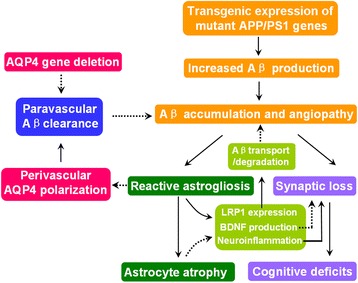
BACKGROUND: Preventing or reducing amyloid-beta (Aβ) accumulation in the brain is an important therapeutic strategy for Alzheimer's disease (AD). Recent studies showed that the water channel aquaporin-4 (AQP4) mediates soluble Aβ clearance from the brain parenchyma along the paravascular pathway. However the direct evidence for roles of AQP4 in the pathophysiology of AD remains absent. RESULTS: Here, we reported that the deletion of AQP4 exacerbated cognitive deficits of 12-moth old APP/PS1 mice, with increases in Aβ accumulation, cerebral amyloid angiopathy and loss of synaptic protein and brain-derived neurotrophic factor in the hippocampus and cortex. Furthermore, AQP4 deficiency increased atrophy of astrocytes with significant decreases in interleukin-1 beta and nonsignificant decreases in interleukin-6 and tumor necrosis factor-alpha in hippocampal and cerebral samples. CONCLUSIONS: These results suggest that AQP4 attenuates Aβ pathogenesis despite its potentially inflammatory side-effects, thus serving as a promising target for treating AD.
Overview
The claims and statistics of this paper haven’t been checked yet.
Free: it reads the open-access text and checks the first 5 claims that cite a source we can check. Create a free account to check every claim.
Integrity signals
Registry
Cites
Statistics
Figures
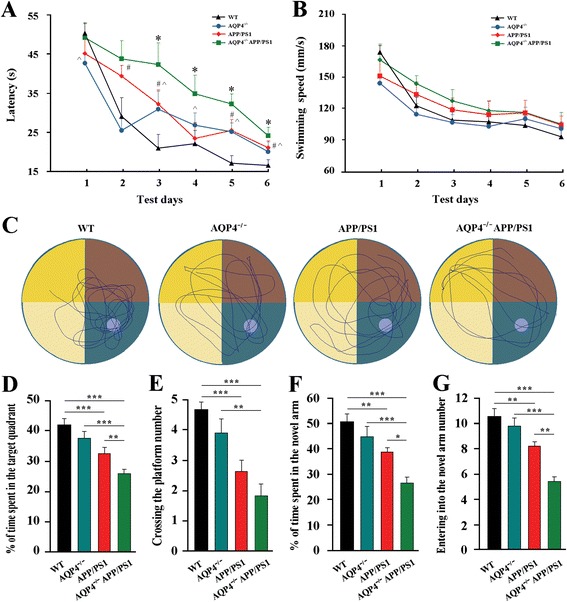
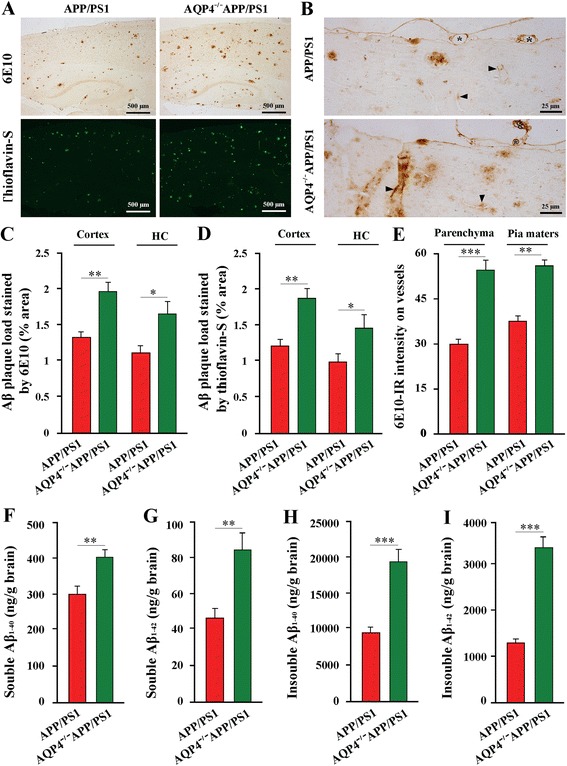
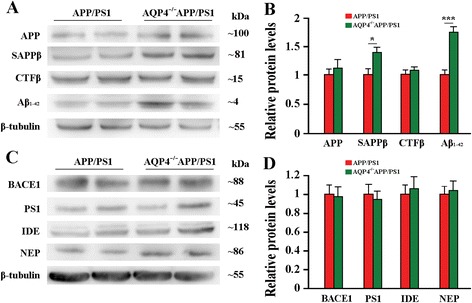
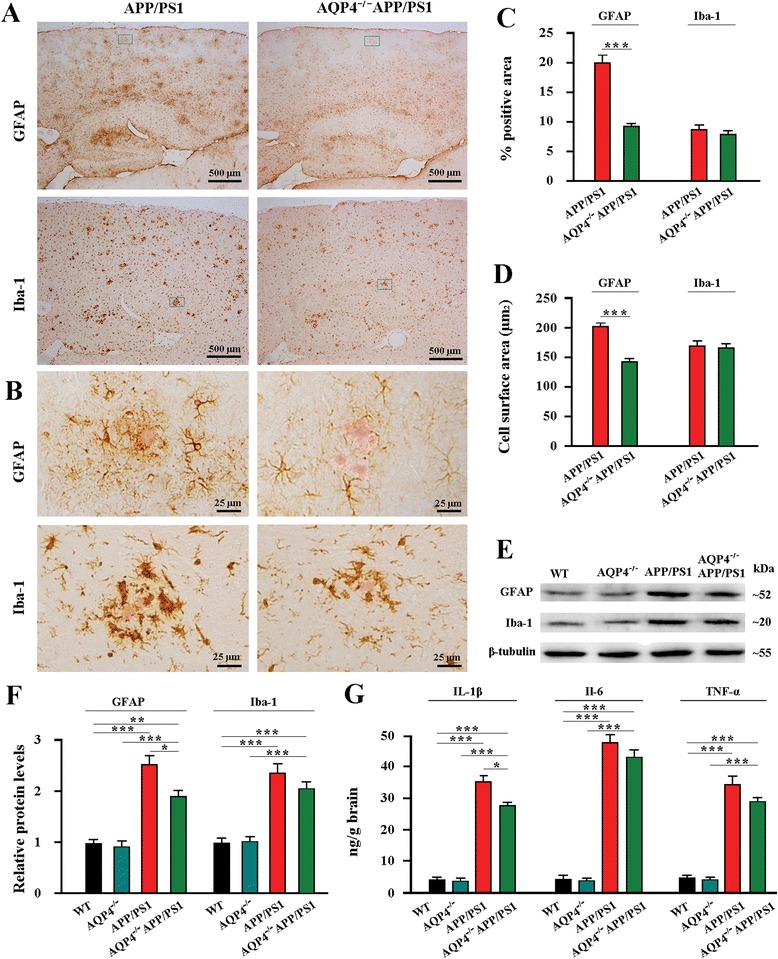
Verification
Claims the paper makes
The claims and statistics of this paper haven’t been checked yet.
Free: it reads the open-access text and checks the first 5 claims that cite a source we can check. Create a free account to check every claim.
Claims other papers make about this one
Each is checked against this paper’s own text: does it say what the citing paper says it does?
In the citing paper
“AQP4 deletion was found to increase Aβ accumulation and astrocytic atrophy in APP/PS1 mouse brain, with consequent effects on cognitive impairment [418].”
From Molecular and cellular mechanisms underlying the pathogenesis of Alzheimer’s disease (2020) · cites this paper as [418]
In the citing paper
“the suppression of glymphatic flow by deletion of AQP4 water channels sharply increased both amyloid-ß plaque formation and cognitive deficits in a mouse model of Alzheimer disease (69).”
From Glymphatic failure as a final common pathway to dementia (2020) · cites this paper as [69]
In the citing paper
“Indeed, a recent study reported that deletion of AQP4 accelerated amyloid plaque formation in a murine model of Alzheimer disease (69).”
From Glymphatic failure as a final common pathway to dementia (2020) · cites this paper as [69]
Self-check
Percentages, sums and reported differences re-computed from the paper’s own numbers.
The self-check needs the paper’s full text.
Citations
Cites
The Mouse Brain in Stereotaxic Coordinates
Paxinos, G. (2001) · Cited by 13,440
Iliff, J. J., Wang, M., Liao, Y., Plogg, B. A., Peng, W., Gundersen, G. A., Benveniste, H., Vates, G. E., Deane, R., Goldman, S. A., et al. (2012) · Science Translational Medicine · doi:10.1126/scitranslmed.3003748 · Cited by 5,824 · cited 7×
“Deletion of the AQP4 gene damages rapid water transport-dependent clearance of 125 I-A β 1 – 40 from brain parenchyma to the blood and CSF [5].”
InfluentialSleep Drives Metabolite Clearance from the Adult Brain
Xie, L., Kang, H., Xu, Q., Chen, M. J., Liao, Y., Thiyagarajan, M., O’Donnell, J., Christensen, D. J., Nicholson, C., Iliff, J. J., et al. (2013) · Science · doi:10.1126/science.1241224 · Cited by 5,411 · cited 1×
“In addition, it has been shown that paravascular A β clearance is regulated by the sleep-wake cycle, which is disturbed in many patients with AD [58].”
The mouse brain in stereotaxic coordinates
Konsman, J.-P. (2003) · Psychoneuroendocrinology · doi:10.1016/s0306-4530(03)00088-x · Cited by 4,045 · cited 1×
“in the mouse brain atlas as landmarks [62].”
Decreased Clearance of CNS β-Amyloid in Alzheimer’s Disease
Mawuenyega, K. G., Sigurdson, W., Ovod, V., Munsell, L., Kasten, T., Morris, J. C., Yarasheski, K. E., & Bateman, R. J. (2010) · Science · doi:10.1126/science.1197623 · Cited by 2,078
The toxic Aβ oligomer and Alzheimer's disease: an emperor in need of clothes
Benilova, I., Karran, E., & De Strooper, B. (2012) · Nature Neuroscience · doi:10.1038/nn.3028 · Cited by 1,962 · cited 1×
“When the balance between brain Aβ production and clearance is broken, aggregated Aβ in the extracellular space gradually manifests its neurotoxic effects, finally causing neurodegeneration and cognitive impairment [51].”
Twenty years of the Alzheimer's disease amyloid hypothesis: a genetic perspective
Tanzi, R. E., & Bertram, L. (2005) · Cell · doi:10.1016/j.cell.2005.02.008 · Cited by 1,849 · cited 6×
“Cerebral cortex and hippocampus extracts were loaded onto 10-16 % Tris/tricine SDS gels, and transferred to nitrocellulose membranes before overnight incubation with one of the following primary antibodies: rabbit anti-APP (1:1000; Millipore), rabbit anti-A β 1 – 42 (1:1000; Sigma-Aldrich, Saint Louis, MO, USA) and mo…”
InfluentialAlzheimer Mechanisms and Therapeutic Strategies
Huang, Y., & Mucke, L. (2012) · Cell · doi:10.1016/j.cell.2012.02.040 · Cited by 1,758 · cited 1×
“To this point, there are no effective therapeutic strategies for this devastating disease [1].”
Impairment of paravascular clearance pathways in the aging brain
Kress, B. T., Iliff, J. J., Xia, M., Wang, M., Wei, H. S., Zeppenfeld, D., Xie, L., Kang, H., Xu, Q., Liew, J. A., et al. (2014) · Annals of Neurology · doi:10.1002/ana.24271 · Cited by 1,521 · cited 3×
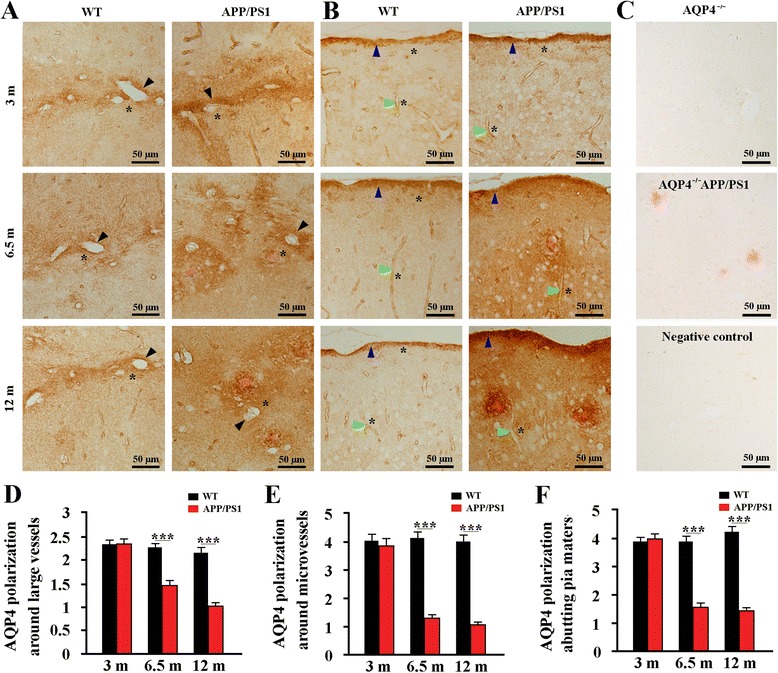
“Perivascular (or pia) AQP4 polarization was obtained by comparing expression ratios of AQP4 at perivascular (or pia surface) versus parenchymal domains [6, 41].”
Impairment of Glymphatic Pathway Function Promotes Tau Pathology after Traumatic Brain Injury
Iliff, J. J., Chen, M. J., Plog, B. A., Zeppenfeld, D. M., Soltero, M., Yang, L., Singh, I., Deane, R., & Nedergaard, M. (2014) · The Journal of Neuroscience · doi:10.1523/jneurosci.3020-14.2014 · Cited by 1,159 · cited 4×
“This expression feature has been shown to facilitate the efficient clearance of ISF solutes, such as Aβ and Tau, from the brain parenchyma [3, 5].”
InfluentialBrain-wide pathway for waste clearance captured by contrast-enhanced MRI
Iliff, J. J., Lee, H., Yu, M., Feng, T., Logan, J., Nedergaard, M., & Benveniste, H. (2013) · Journal of Clinical Investigation · doi:10.1172/jci67677 · Cited by 1,148
Interleukin-6, a Major Cytokine in the Central Nervous System
Erta, M., Quintana, A., & Hidalgo, J. (2012) · International Journal of Biological Sciences · doi:10.7150/ijbs.4679 · Cited by 1,087 · cited 1×
“Aside from reactive astrocytes and microglia, IL-6 and TNF-α are also produced by degenerative neurons [54, 55].”
Nagahara, A. H., Merrill, D. A., Coppola, G., Tsukada, S., Schroeder, B. E., Shaked, G. M., Wang, L., Blesch, A., Kim, A., Conner, J. M., et al. (2009) · Nature Medicine · doi:10.1038/nm.1912 · Cited by 1,034 · cited 1×
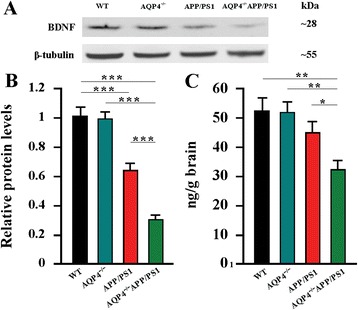
“Decreased production of BDNF, in turn, exacerbates A β -related neurodegeneration in late-onset AD [39].”
Physiological Roles of Aquaporin-4 in Brain
Nagelhus, E. A., & Ottersen, O. P. (2013) · Physiological Reviews · doi:10.1152/physrev.00011.2013 · Cited by 766 · cited 3×
“paratively low at astrocyte membrane facing neuropil regions [8, 40].”
Co-expression of multiple transgenes in mouse CNS: a comparison of strategies
Jankowsky, J. L., Slunt, H. H., Ratovitski, T., Jenkins, N. A., Copeland, N. G., & Borchelt, D. R. (2001) · Biomolecular Engineering · doi:10.1016/s1389-0344(01)00067-3 · Cited by 746 · cited 1×
“described [59, 60] (Additional file 4: Figure S4).”
Aquaporin water channels in the nervous system
Papadopoulos, M. C., & Verkman, A. S. (2013) · Nature Reviews Neuroscience · doi:10.1038/nrn3468 · Cited by 741 · cited 2×
“paratively low at astrocyte membrane facing neuropil regions [8, 40].”
Essential role of brain-derived neurotrophic factor in adult hippocampal function
Monteggia, L. M., Barrot, M., Powell, C. M., Berton, O., Galanis, V., Gemelli, T., Meuth, S., Nagy, A., Greene, R. W., & Nestler, E. J. (2004) · Proceedings of the National Academy of Sciences · doi:10.1073/pnas.0402141101 · Cited by 685 · cited 1×
“is a key regulator of neuronal survival and synaptic plasticity that are required for the long-term learning and memory [37].”
Aquaporin 4 and neuromyelitis optica
Papadopoulos, M. C., & Verkman, A. (2012) · The Lancet Neurology · doi:10.1016/s1474-4422(12)70133-3 · Cited by 597 · cited 1×
“The critical role of AQP4 in astrocyte functions is evenly evident in pathological conditions, including cerebral edema [47], intracerebral hemorrhage [48], neuromyelitis optica [49], neuroinflammation [19], and epilepsy [50].”
SZE, C.-I., TRONCOSO, J. C., KAWAS, C., MOUTION, P., PRICE, D. L., & MARTIN, L. J. (1997) · Journal of Neuropathology and Experimental Neurology · doi:10.1097/00005072-199708000-00011 · Cited by 562 · cited 1×
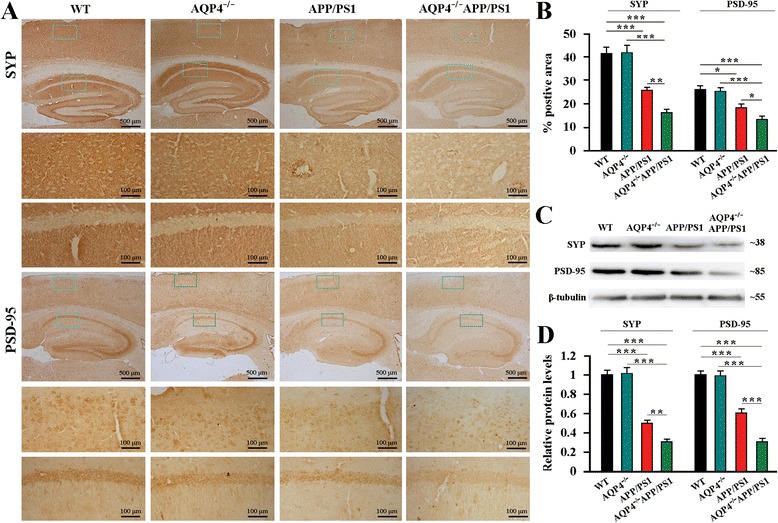
“Both synaptophysin (SYP) and post-synaptic density protein-95 (PSD-95) are particularly vulnerable to the toxic effects of Αβ , and their loss correlates with cognitive decline in AD [34 – 36].”
Olabarria, M., Noristani, H. N., Verkhratsky, A., & Rodríguez, J. J. (2010) · Glia · doi:10.1002/glia.20967 · Cited by 499 · cited 1×
“It has also been shown that, apart from reactive hypertrophy, a subpopulation of astrocytes undergo apoptosis or atrophy in AD patients [26, 27] and transgenic AD animal models [28, 29], due to chronic exposure to high concentrations of Aβ.”
Alzheimer's disease: synaptic dysfunction and Aβ
Shankar, G. M., & Walsh, D. M. (2009) · Molecular Neurodegeneration · doi:10.1186/1750-1326-4-48 · Cited by 486
Astrocyte apoptosis: implications for neuroprotection
Takuma, K., Baba, A., & Matsuda, T. (2004) · Progress in Neurobiology · doi:10.1016/j.pneurobio.2004.02.001 · Cited by 435 · cited 1×
“It has also been shown that, apart from reactive hypertrophy, a subpopulation of astrocytes undergo apoptosis or atrophy in AD patients [26, 27] and transgenic AD animal models [28, 29], due to chronic exposure to high concentrations of Aβ.”
Deane, R., Wu, Z., & Zlokovic, B. V. (2004) · Stroke · doi:10.1161/01.str.0000143452.85382.d1 · Cited by 392 · cited 1×
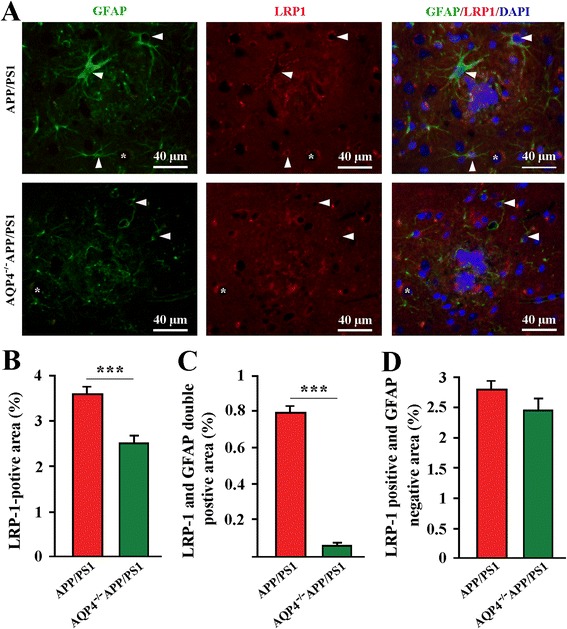
“Atrophic astrocytes surrounding Aβ plaques decreased LRP1 expression in AQP4APP/PS1 mice Low density lipoprotein receptor-related protein-1 (LRP1) is expressed by multiple brain cell types, with an important role in ISF soluble Αβ uptake and clearance across the blood–brain-barrier [32, 33].”
Attenuating astrocyte activation accelerates plaque pathogenesis in APP/PS1 mice
Kraft, A. W., Hu, X., Yoon, H., Yan, P., Xiao, Q., Wang, Y., Gil, S. C., Brown, J., Wilhelmsson, U., Restivo, J. L., et al. (2013) · The FASEB Journal · doi:10.1096/fj.12-208660 · Cited by 355 · cited 3×
“Although the long term deletion of AQP4 has a tendency to attenuate the glial inflammation that has detrimental effects on the brain, it should be noted that it impairs beneficial effects of reactive gliosis, such as up-regulation of BDNF expression [56], facilitating Aβ clearance and restricting the growth of Aβ plaq…”
Role of Aquaporin-4 in Cerebral Edema and Stroke
Zador, Z., Stiver, S., Wang, V., & Manley, G. T. (2008) · Handbook of Experimental Pharmacology · doi:10.1007/978-3-540-79885-9_7 · Cited by 315 · cited 1×
“The critical role of AQP4 in astrocyte functions is evenly evident in pathological conditions, including cerebral edema [47], intracerebral hemorrhage [48], neuromyelitis optica [49], neuroinflammation [19], and epilepsy [50].”
Cytokine signals propagate through the brain
Vitkovic, L., Konsman, J. P., Bockaert, J., Dantzer, R., Homburger, V, & Jacque, C. (2000) · Molecular Psychiatry · doi:10.1038/sj.mp.4000813 · Cited by 310 · cited 1×
“Aside from reactive astrocytes and microglia, IL-6 and TNF-α are also produced by degenerative neurons [54, 55].”
Kim, J., Castellano, J. M., Jiang, H., Basak, J. M., Parsadanian, M., Pham, V., Mason, S. M., Paul, S. M., & Holtzman, D. M. (2009) · Neuron · doi:10.1016/j.neuron.2009.11.013 · Cited by 308
Xiao, Q., Yan, P., Ma, X., Liu, H., Perez, R., Zhu, A., Gonzales, E., Burchett, J. M., Schuler, D. R., Cirrito, J. R., et al. (2014) · The Journal of Neuroscience · doi:10.1523/jneurosci.3788-13.2014 · Cited by 266 · cited 3×
“Although the long term deletion of AQP4 has a tendency to attenuate the glial inflammation that has detrimental effects on the brain, it should be noted that it impairs beneficial effects of reactive gliosis, such as up-regulation of BDNF expression [56], facilitating Aβ clearance and restricting the growth of Aβ plaq…”
Interstitial fluid drainage is impaired in ischemic stroke and Alzheimer’s disease mouse models
Arbel-Ornath, M., Hudry, E., Eikermann-Haerter, K., Hou, S., Gregory, J. L., Zhao, L., Betensky, R. A., Frosch, M. P., Greenberg, S. M., & Bacskai, B. J. (2013) · Acta Neuropathologica · doi:10.1007/s00401-013-1145-2 · Cited by 257 · cited 2×
“Nevertheless, loss of perivascular AQP4 polarization would impair perivascular clearance of Aβ, causing amyloid deposition within the walls of cortical and pial vessels [7, 57].”
Apelt, J., & Schliebs, R. (2001) · Brain Research · doi:10.1016/s0006-8993(00)03176-0 · Cited by 257
Loss of Astrocyte Polarization in the Tg-ArcSwe Mouse Model of Alzheimer's Disease
Yang, J., Lunde, L. K., Nuntagij, P., Oguchi, T., Camassa, L. M. A., Nilsson, L. N. G., Lannfelt, L., Xu, Y., Amiry-Moghaddam, M., Ottersen, O. P., et al. (2011) · Journal of Alzheimer’s Disease · doi:10.3233/jad-2011-110725 · Cited by 228 · cited 2×
“Several studies have suggested that AQP4 mediating drainage of ISF and solutes from brain parenchyma along vascular walls are dependent on the perivascular AQP4 polarization [5, 12].”
Auguste, K. I., Jin, S., Uchida, K., Yan, D., Manley, G. T., Papadopoulos, M. C., & Verkman, A. S. (2007) · The FASEB Journal · doi:10.1096/fj.06-6848com · Cited by 224 · cited 1×
“Previous studies suggested that AQP4 deficiency alters astrocyte reactivation after traumatic brain or spinal cord injuries and chemical agents-induced neurodegeneration [14 – 17].”
Tong, L., Balazs, R., Thornton, P. L., & Cotman, C. W. (2004) · The Journal of Neuroscience · doi:10.1523/jneurosci.5463-03.2004 · Cited by 221
Shao, C. Y., Mirra, S. S., Sait, H. B. R., Sacktor, T. C., & Sigurdsson, E. M. (2011) · Acta Neuropathologica · doi:10.1007/s00401-011-0843-x · Cited by 219
Suh, J., Choi, S. H., Romano, D. M., Gannon, M. A., Lesinski, A. N., Kim, D. Y., & Tanzi, R. E. (2013) · Neuron · doi:10.1016/j.neuron.2013.08.035 · Cited by 217 · cited 1×
“Formic acid supernatants were neutralized with 1 M Tris for insoluble Aβ1–40 and Aβ1–42 analysis [63].”
Eckman, C. B., & Eckman, E. A. (2005) · Biochemical Society Transactions · doi:10.1042/bst20051101 · Cited by 200
Mehlhorn, G., Hollborn, M., & Schliebs, R. (2000) · International Journal of Developmental Neuroscience · doi:10.1016/s0736-5748(00)00012-5 · Cited by 198 · cited 1×
“Compared with IL-6, IL-1 β is produced by reactive astrocytes already in a very early stage of A β deposition [52, 53].”
Proinflammatory role of aquaporin‐4 in autoimmune neuroinflammation
Li, L., Zhang, H., Varrin-Doyer, M., Zamvil, S. S., & Verkman, A. S. (2011) · The FASEB Journal · doi:10.1096/fj.10-177279 · Cited by 190 · cited 7×
“This view is further supported by reduced cytokine (IL-6 and TNF-α) secretion in AQP4 astrocyte cultures exposed to LPS [19].”
InfluentialCognitive Deficits and Delayed Neuronal Loss in a Mouse Model of Multiple Microinfarcts
Wang, M., Iliff, J. J., Liao, Y., Chen, M. J., Shinseki, M. S., Venkataraman, A., Cheung, J., Wang, W., & Nedergaard, M. (2012) · The Journal of Neuroscience · doi:10.1523/jneurosci.1860-12.2012 · Cited by 182 · cited 2×
“Perivascular (or pia) AQP4 polarization was obtained by comparing expression ratios of AQP4 at perivascular (or pia surface) versus parenchymal domains [6, 41].”
Fuller, S. L., Steele, M. L., & Münch, G. W. (2009) · Mutation research. Fundamental and molecular mechanisms of mutagenesis · doi:10.1016/j.mrfmmm.2009.08.016 · Cited by 180 · cited 1×
“Thus, reactive gliosis may play a double-edged role in the AD pathology [30, 31].”
Binder, D. K., Nagelhus, E. A., & Ottersen, O. P. (2012) · Glia · doi:10.1002/glia.22317 · Cited by 171 · cited 1×
“The critical role of AQP4 in astrocyte functions is evenly evident in pathological conditions, including cerebral edema [47], intracerebral hemorrhage [48], neuromyelitis optica [49], neuroinflammation [19], and epilepsy [50].”
Failure of Perivascular Drainage of β‐amyloid in Cerebral Amyloid Angiopathy
Hawkes, C. A., Jayakody, N., Johnston, D. A., Bechmann, I., & Carare, R. O. (2014) · Brain Pathology · doi:10.1111/bpa.12159 · Cited by 163 · cited 1×
“Nevertheless, loss of perivascular AQP4 polarization would impair perivascular clearance of Aβ, causing amyloid deposition within the walls of cortical and pial vessels [7, 57].”
Kulijewicz‐Nawrot, M., Verkhratsky, A., Chvátal, A., Syková, E., & Rodríguez, J. J. (2012) · Journal of Anatomy · doi:10.1111/j.1469-7580.2012.01536.x · Cited by 160 · cited 1×
“It has also been shown that, apart from reactive hypertrophy, a subpopulation of astrocytes undergo apoptosis or atrophy in AD patients [26, 27] and transgenic AD animal models [28, 29], due to chronic exposure to high concentrations of Aβ.”
Hoshi, A., Yamamoto, T., Shimizu, K., Ugawa, Y., Nishizawa, M., Takahashi, H., & Kakita, A. (2012) · Journal of Neuropathology & Experimental Neurology · doi:10.1097/nen.0b013e3182632566 · Cited by 140 · cited 1×
“Altered AQP4 expression and localization in reactive astrocytes has been observed in patients with AD and several transgenic mouse models of AD [9 – 12].”
Skucas, V. A., Mathews, I. B., Yang, J., Cheng, Q., Treister, A., Duffy, A. M., Verkman, A. S., Hempstead, B. L., Wood, M. A., Binder, D. K., et al. (2011) · The Journal of Neuroscience · doi:10.1523/jneurosci.6249-10.2011 · Cited by 136 · cited 2×
“For example, deletion of AQP4 in mice impairs BDNFdependent synaptic plasticity without alterations of synaptic protein expression in the intact brain [45].”
Aquaporin Expression in the Brains of Patients With or Without Cerebral Amyloid Angiopathy
Moftakhar, P., Lynch, M. D., Pomakian, J. L., & Vinters, H. V. (2010) · Journal of Neuropathology & Experimental Neurology · doi:10.1097/nen.0b013e3181fd252c · Cited by 136 · cited 1×
“and glial limitans beneath the pia mater [3, 10, 12, 41].”
Savioz, A., Leuba, G., & Vallet, P. G. (2014) · Ageing Research Reviews · doi:10.1016/j.arr.2014.09.004 · Cited by 130 · cited 1×
“Both synaptophysin (SYP) and post-synaptic density protein-95 (PSD-95) are particularly vulnerable to the toxic effects of Αβ , and their loss correlates with cognitive decline in AD [34 – 36].”
Functional Role of Lipoprotein Receptors in Alzheimers Disease
Pietrzik, C., & Jaeger, S. (2008) · Current Alzheimer Research · doi:10.2174/156720508783884675 · Cited by 126 · cited 2×
“Atrophic astrocytes surrounding Aβ plaques decreased LRP1 expression in AQP4APP/PS1 mice Low density lipoprotein receptor-related protein-1 (LRP1) is expressed by multiple brain cell types, with an important role in ISF soluble Αβ uptake and clearance across the blood–brain-barrier [32, 33].”
Fan, Y., Zhang, J., Sun, X.-L., Gao, L., Zeng, X.-N., Ding, J.-H., Cao, C., Niu, L., & Hu, G. (2005) · Journal of Neuroscience Research · doi:10.1002/jnr.20664 · Cited by 110 · cited 2×
“AQP4 mice in a CD1 genetic background have been established in our laboratory [59] and successfully used for investigating roles of AQP4 in astrocyte function and neuropsychiatric disorders [15–18, 21, 46, 48].”
Self-citationMicroglial transplantation increases amyloid‐β clearance in Alzheimer model rats
Takata, K., Kitamura, Y., Yanagisawa, D., Morikawa, S., Morita, M., Inubushi, T., Tsuchiya, D., Chishiro, S., Saeki, M., Taniguchi, T., et al. (2007) · FEBS Letters · doi:10.1016/j.febslet.2007.01.009 · Cited by 106
Microglial Activation in Alzheimers Disease
Schlachetzki, J., & Hull, M. (2009) · Current Alzheimer Research · doi:10.2174/156720509790147179 · Cited by 104 · cited 2×
“Serving as macrophage-like cells in the CNS, undoubtedly activated microglia perform a scavenging effect on Aβ plaque and degenerated neuronal components [31].”
Involvement of Aquaporin 4 in Astrocyte Function and Neuropsychiatric Disorders
Xiao, M., & Hu, G. (2014) · CNS Neuroscience & Therapeutics · doi:10.1111/cns.12267 · Cited by 95 · cited 1×
“Accumulating evidence supports the notion that the glial water channel AQP4 is not only responsible for maintaining brain water homeostasis, but also involved in various biological functions of astrocytes such as regulation of extracellular space volume, potassium buffering, calcium signal transduction, neuronal excit…”
Self-citationAquaporin-4 mediates astrocyte response to β-amyloid
Yang, W., Wu, Q., Chan, Y., Gao, J., Xiao, M., Gu, M., Ding, J., & Hu, G. (2012) · Molecular and Cellular Neuroscience · doi:10.1016/j.mcn.2012.02.002 · Cited by 94 · cited 3×
“ated with a reduction in the uptake of Aβ [18].”
InfluentialSelf-citationAquaporin expression in the cerebral cortex is increased at early stages of Alzheimer disease
Pérez, E., Barrachina, M., Rodríguez, A., Torrejón-Escribano, B., Boada, M., Hernández, I., Sánchez, M., & Ferrer, I. (2006) · Brain Research · doi:10.1016/j.brainres.2006.09.109 · Cited by 93
Effects of Aquaporin-4 on edema formation following intracerebral hemorrhage
Tang, Y., Wu, P., Su, J., Xiang, J. Y., Cai, D., & Dong, Q. (2010) · Experimental Neurology · doi:10.1016/j.expneurol.2010.01.015 · Cited by 91 · cited 1×
“The critical role of AQP4 in astrocyte functions is evenly evident in pathological conditions, including cerebral edema [47], intracerebral hemorrhage [48], neuromyelitis optica [49], neuroinflammation [19], and epilepsy [50].”
Fan, Y., Kong, H., Shi, X., Sun, X., Ding, J., Wu, J., & Hu, G. (2007) · Neurobiology of Aging · doi:10.1016/j.neurobiolaging.2007.02.015 · Cited by 77 · cited 1×
“AQP4 − / − mice in a CD1 genetic background have been established in our laboratory [59] and successfully used for investigating roles of AQP4 in astrocyte function and neuropsychiatric disorders [15 – 18, 21, 46, 48].”
Self-citationAmyloid: Little proteins, big clues
Schnabel, J. (2011) · Nature · doi:10.1038/475s12a · Cited by 74 · cited 2×
“Aβ accumulation is a key pathological source for synaptic loss and cognitive impairment in AD patients and transgenic mice [42, 43].”
Greatly attenuated experimental autoimmune encephalomyelitis in aquaporin-4 knockout mice
Li, L., Zhang, H., & Verkman, A. S. (2009) · BMC Neuroscience · doi:10.1186/1471-2202-10-94 · Cited by 68 · cited 5×
“In agreement with the present finding, reduced reactive astrogliosis and microgliosis is also observed in AQP4 mice in experimental autoimmune encephalomyelitis and after intracerebral injection of LPS [19, 20].”
InfluentialAquaporin-4 promotes memory consolidation in Morris water maze
Fan, Y., Liu, M., Wu, X., Wang, F., Ding, J., Chen, J., & Hu, G. (2011) · Brain Structure and Function · doi:10.1007/s00429-011-0373-2 · Cited by 66 · cited 2×
“AQP4 mice had an easier time finding the hidden platform during the early stage of the training (1 day), but seemed to forgot quickly during the latter stages (3–6 days), indicating impaired memory consolidation [21].”
Self-citationKimura, N., Takahashi, M., Tashiro, T., & Terao, K. (2006) · Journal of Neuroscience Research · doi:10.1002/jnr.20984 · Cited by 59
Kobayashi, K., Hayashi, M., Nakano, H., Shimazaki, M., Sugimori, K., & Koshino, Y. (2005) · Journal of Alzheimer s Disease · doi:10.3233/jad-2004-6606 · Cited by 58 · cited 1×
“It has also been shown that, apart from reactive hypertrophy, a subpopulation of astrocytes undergo apoptosis or atrophy in AD patients [26, 27] and transgenic AD animal models [28, 29], due to chronic exposure to high concentrations of Aβ.”
Liu, L., Lu, Y., Kong, H., Li, L., Marshall, C., Xiao, M., Ding, J., Gao, J., & Hu, G. (2011) · The International Journal of Neuropsychopharmacology · doi:10.1017/s1461145711000022 · Cited by 57 · cited 2×
“Immunohistochemical staining was performed as previously described [16].”
Self-citationVoluntary exercise counteracts Aβ25-35-induced memory impairment in mice
Wang, Q. L., Xu, Z., Tang, J., Sun, J., Gao, J., Wu, T., & Xiao, M. (2013) · Behavioural Brain Research · doi:10.1016/j.bbr.2013.09.024 · Cited by 43 · cited 1×
“term spatial working memory of the mice, as previously described [61].”
Self-citationWu, Q., Zhang, Y., Gao, J., Li, X., Kong, H., Zhang, Y., Xiao, M., Shields, C. B., & Hu, G. (2014) · Molecular Neurobiology · doi:10.1007/s12035-013-8607-3 · Cited by 42 · cited 1×
“Previous studies suggested that AQP4 deficiency alters astrocyte reactivation after traumatic brain or spinal cord injuries and chemical agents-induced neurodegeneration [14 – 17].”
Self-citationGlia Protein Aquaporin‐4 Regulates Aversive Motivation of Spatial Memory in Morris Water Maze
Zhang, J., Li, Y., Chen, Z., Dang, H., Ding, J., Fan, Y., & Hu, G. (2013) · CNS Neuroscience & Therapeutics · doi:10.1111/cns.12191 · Cited by 37 · cited 1×
“Behavioral analyses reveal that AQP4 mice have impairment in memory consolidation, rather than short-term memory [21, 45, 46].”
Self-citation
Cited by
The glymphatic pathway in neurological disorders.
Rasmussen, M. K., Mestre, H., & Nedergaard, M. (2018) · The Lancet Neurology · doi:10.1016/s1474-4422(18)30318-1 · Cited by 1,560
Functional aspects of meningeal lymphatics in ageing and Alzheimer’s disease
Da Mesquita, S., Louveau, A., Vaccari, A., Smirnov, I., Cornelison, R. C., Kingsmore, K. M., Contarino, C., Onengut-Gumuscu, S., Farber, E., Raper, D., et al. (2018) · Nature · doi:10.1038/s41586-018-0368-8 · Cited by 1,445
Glymphatic failure as a final common pathway to dementia
Nedergaard, M., & Goldman, S. A. (2020) · Science · doi:10.1126/science.abb8739 · Cited by 1,145
Molecular and cellular mechanisms underlying the pathogenesis of Alzheimer’s disease
Guo, T., Zhang, D., Zeng, Y., Huang, T. Y., Xu, H., & Zhao, Y. (2020) · Molecular Neurodegeneration · doi:10.1186/s13024-020-00391-7 · Cited by 994
“AQP4 deletion was found to increase Aβ accumulation and astrocytic atrophy in APP/PS1 mouse brain, with consequent effects on cognitive impairment [418].”
BackgroundCerebral amyloid angiopathy and Alzheimer disease — one peptide, two pathways
Greenberg, S. M., Bacskai, B. J., Hernandez-Guillamon, M., Pruzin, J., Sperling, R., & van Veluw, S. J. (2020) · Nature Reviews Neurology · doi:10.1038/s41582-019-0281-2 · Cited by 947
Metadata
- Authors
- Xu, Z., Xiao, N., Chen, Y., Huang, H., Marshall, C., Gao, J., Cai, Z., Wu, T., Hu, G., & Xiao, M.
- Affiliations
- Nanjing Medical University (CN)
- University of Kentucky (US)
- Hubei University of Medicine (CN)
- Jiangsu Province Hospital (CN)
- Corresponding author
- Xiao, Ming
- ORCID
- Venue
- Molecular Neurodegeneration
- Published
- 2015-11-02
- Volume
- 10
- Issue
- 1
- Pages
- 58-58
- ISSN
- 1750-1326 (ISSN-L)
- PMC
- PMC4631089
- OpenAlex
- W1923535990
- Cited by
- 500
- References
- 66
- Citations by year
- 2026: 47 · 2025: 61 · 2024: 66 · 2023: 77 · 2022: 66 · 2021: 49 · 2020: 49 · 2019: 27 · 2018: 28 · 2017: 19 · 2016: 9 · 2015: 1
- FWCI
- 14.00
- Type
- journal article
- Language
- en
- Open access
- gold
- doi.org
- Licence
- cc-by
- Locations
- Molecular Neurodegeneration (publishedVersion, cc-by)
- Europe PMC (PubMed Central) (publishedVersion, cc-by)
- PubMed Central (publishedVersion, cc-by)
- PubMed (publishedVersion)
- UKnowledge (University of Kentucky) (submittedVersion, cc-by)
- Funders
- National Natural Science Foundation of China (CN) (81271210)
- Natural Science Foundation of Jiangsu Educational Department (14KJA320001)
- Topics
- Life Sciences › Neuroscience › Cellular and Molecular Neuroscience › Alzheimer's disease research and treatments
- Health Sciences › Medicine › Clinical Neurology › Cerebrospinal fluid and hydrocephalus
- Life Sciences › Biochemistry, Genetics and Molecular Biology › Molecular Biology › Ion Transport and Channel Regulation
- Keywords
- aquaporin-4, amyloid-beta deposition, Alzheimer's disease, APP/PS1 mice, cerebral amyloid angiopathy, memory impairment, neuroinflammation, brain-derived neurotrophic factor, synaptic proteins, hippocampus, IL-1β
- MeSH terms
- Alzheimer Disease, Animals, Brain, Cognition Disorders, Inflammation, Memory Disorders, Mice, Transgenic, Amyloid beta-Peptides, Cerebral Amyloid Angiopathy, Brain-Derived Neurotrophic Factor, Aquaporin 4
About these checks
Registry, retraction, Cites and statistics results are computed, not judged, with one exception: a printed reference that no index lists is read once by a model before it counts as a citation error. Claims are extracted by a model and kept only when their quote appears verbatim in the text; each cited source is then checked, with a model’s help, for whether it says what the claim relies on. Those verdicts can be wrong — read the claim’s quote and the cited source before relying on one.
Statistics and arithmetic are recomputed, not judged.
Confidence bands are shown only for fields calibrated on our annotated test set. None is calibrated yet, so no band is shown.
What counts as a claim ›How we measure confidence ›How we check this ›
Are you an author, or do you see a problem with this page? Request a review
Data sources
Bibliographic data: Semantic Scholar, OpenAlex, Crossref.
Contains information from the Semantic Scholar Academic Graph Datasets, made available under the ODC Attribution License (ODC-BY 1.0).
Semantic Scholar’s data is described in: Kinney, R., et al. (2023). The Semantic Scholar Open Data Platform. arXiv:2301.10140.
