

Identification of novel cerebrospinal fluid biomarker candidates for dementia with Lewy bodies: a proteomic approach
Open accessThe DOI matches its Crossref record; 57 of the 57 references it cites were found in a registry or an index.
Abstract
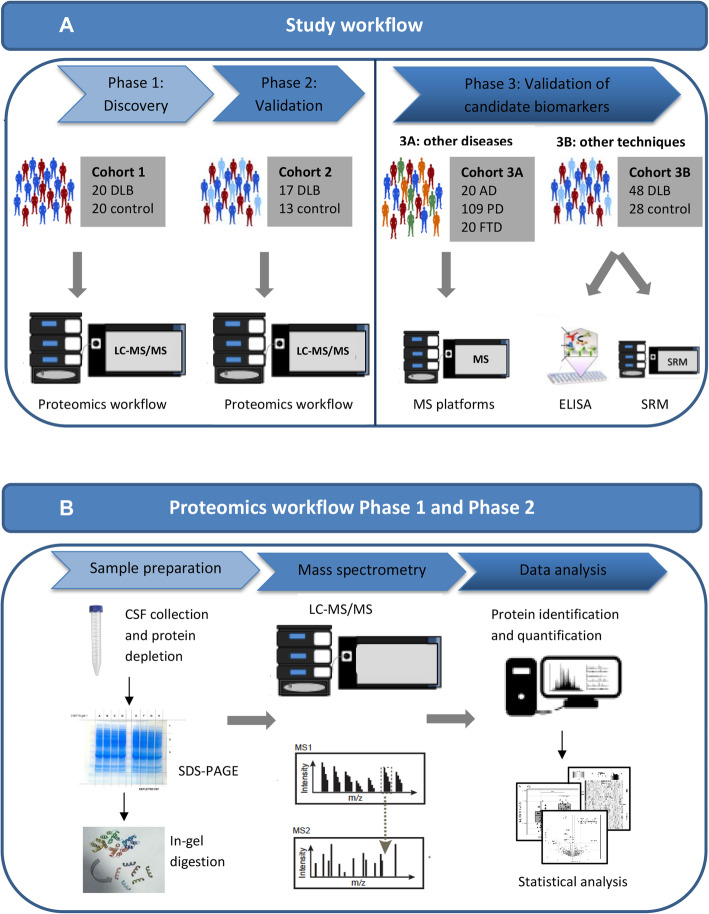
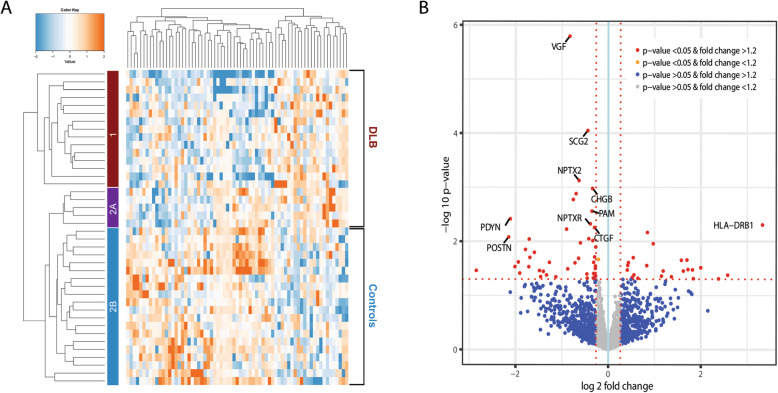
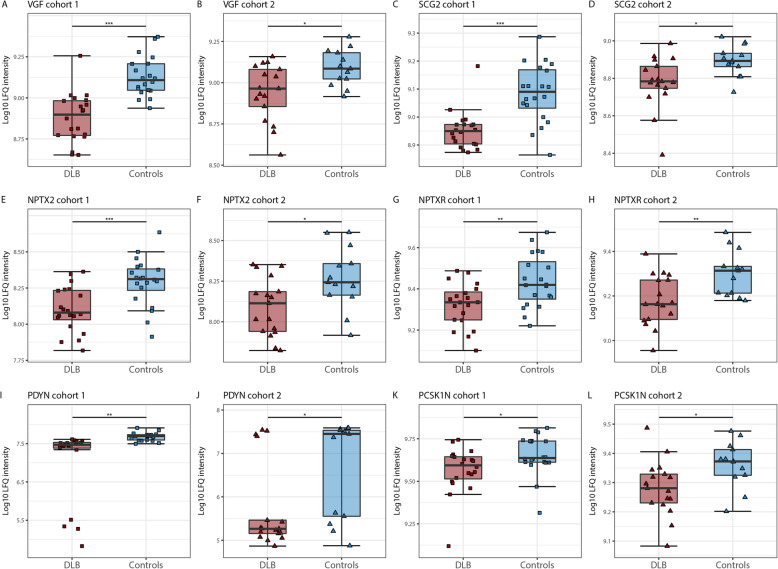
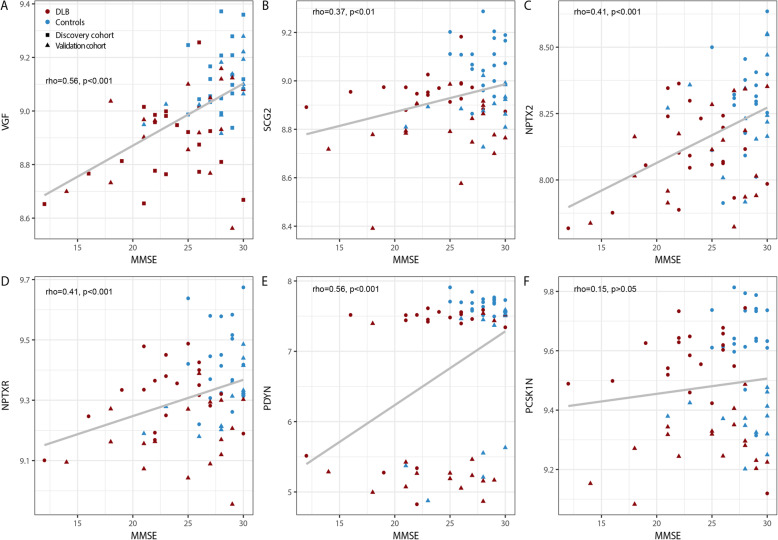
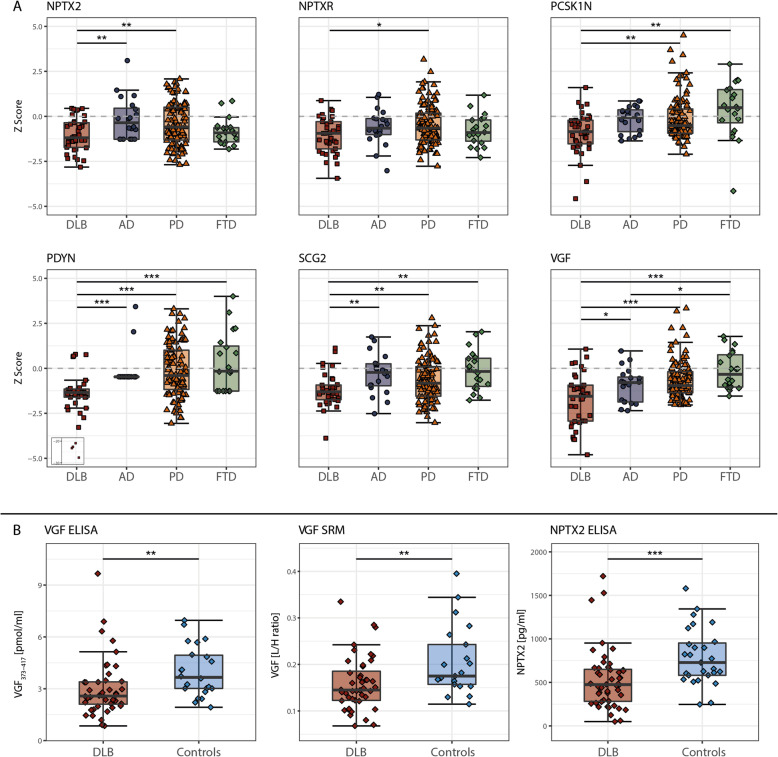
Background: Diagnosis of dementia with Lewy bodies (DLB) is challenging, largely due to a lack of diagnostic tools. Cerebrospinal fluid (CSF) biomarkers have been proven useful in Alzheimer’s disease (AD) diagnosis. Here, we aimed to identify novel CSF biomarkers for DLB using a high-throughput proteomic approach. Methods: We applied liquid chromatography/tandem mass spectrometry with label-free quantification to identify biomarker candidates to individual CSF samples from a well-characterized cohort comprising patients with DLB (n = 20) and controls (n = 20). Validation was performed using (1) the identical proteomic workflow in an independent cohort (n = 30), (2) proteomic data from patients with related neurodegenerative diseases (n = 149) and (3) orthogonal techniques in an extended cohort consisting of DLB patients and controls (n = 76). Additionally, we utilized random forest analysis to identify the subset of candidate markers that best distinguished DLB from all other groups. Results: In total, we identified 1995 proteins. In the discovery cohort, 69 proteins were differentially expressed in DLB compared to controls (p < 0.05). Independent cohort replication confirmed VGF, SCG2, NPTX2, NPTXR, PDYN and PCSK1N as candidate biomarkers for DLB. The downregulation of the candidate biomarkers was somewhat more pronounced in DLB in comparison with related neurodegenerative diseases. Using random forest analysis, we identified a panel of VGF, SCG2 and PDYN to best differentiate between DLB and other clinical groups (accuracy: 0.82 (95%CI: 0.75–0.89)). Moreover, we confirmed the decrease of VGF and NPTX2 in DLB by ELISA and SRM methods. Low CSF levels of all biomarker candidates, except PCSK1N, were associated with more pronounced cognitive decline (0.37 < r < 0.56, all p < 0.01). Conclusion: We identified and validated six novel CSF biomarkers for DLB. These biomarkers, particularly when used as a panel, show promise to improve diagnostic accuracy and strengthen the importance of synaptic dysfunction in the pathophysiology of DLB.
Overview
The claims and statistics of this paper haven’t been checked yet.
Free: it reads the open-access text and checks the first 5 claims that cite a source we can check. Create a free account to check every claim.
Integrity signals
Registry
Cites
Statistics
Figures
Verification
Claims the paper makes
The claims and statistics of this paper haven’t been checked yet.
Free: it reads the open-access text and checks the first 5 claims that cite a source we can check. Create a free account to check every claim.
Claims other papers make about this one
Each is checked against this paper’s own text: does it say what the citing paper says it does?
The cited source says what the claim attributes to it.
In the citing paper
“The decrease of neuronal pentraxins in the Lewy body dementias groups corroborates our previous findings [41] and could be due to the accumulation of these proteins in Lewy bodies, as it has been found for NPTX2 in Parkinson’s disease [67].”
The cited source says what the claim attributes to it.
In the citing paper
“Several proteomics studies have identified neuronal pentraxins to be deregulated in the CSF of patients with neurodegenerative diseases [22, 41, 42].”
Self-check
Percentages, sums and reported differences re-computed from the paper’s own numbers.
The self-check needs the paper’s full text.
Citations
Cites
1 retracted
Accumulation of oligomer-prone α-synuclein exacerbates synaptic and neuronal degeneration in vivo
Rockenstein, E., Nuber, S., Overk, C. R., Ubhi, K., Mante, M., Patrick, C., Adame, A., Trejo-Morales, M., Gerez, J., Picotti, P., et al. (2014) · Brain · doi:10.1093/brain/awu057 · Cited by 238
RetractedBreiman, L. (2001) · Machine Learning · doi:10.1023/a:1010933404324 · Cited by 133,538
Cox, J., & Mann, M. (2008) · Nature Biotechnology · doi:10.1038/nbt.1511 · Cited by 14,855
Smyth, G. K. (2004) · Statistical Applications in Genetics and Molecular Biology · doi:10.2202/1544-6115.1027 · Cited by 11,829
NIA‐AA Research Framework: Toward a biological definition of Alzheimer's disease
Jack, C. R., Bennett, D. A., Blennow, K., Carrillo, M. C., Dunn, B., Haeberlein, S. B., Holtzman, D. M., Jagust, W., Jessen, F., Karlawish, J., et al. (2018) · Alzheimer's & Dementia · doi:10.1016/j.jalz.2018.02.018 · Cited by 10,537
Mass spectrometry-based proteomics
Aebersold, R., & Mann, M. (2003) · Nature · doi:10.1038/nature01511 · Cited by 6,955
Cox, J., Hein, M. Y., Luber, C. A., Paron, I., Nagaraj, N., & Mann, M. (2014) · Molecular & Cellular Proteomics · doi:10.1074/mcp.m113.031591 · Cited by 5,180 · cited 1×
“using the label-free quantification (LFQ) algorithm in MaxQuant and MaxLFQ intensities were obtained [23].”
MethodDiagnosis and management of dementia with Lewy bodies: Third report of the DLB consortium
McKeith, I. G., Dickson, D. W., Lowe, J., Emre, M., O'Brien, J. T., Feldman, H., Cummings, J., Duda, J. E., Lippa, C., Perry, E. K., et al. (2005) · Neurology · doi:10.1212/01.wnl.0000187889.17253.b1 · Cited by 5,069
Diagnosis and management of dementia with Lewy bodies: Fourth consensus report of the DLB Consortium
McKeith, I. G., Boeve, B. F., Dickson, D. W., Halliday, G., Taylor, J.-P., Weintraub, D., Aarsland, D., Galvin, J., Attems, J., Ballard, C. G., et al. (2017) · Neurology · doi:10.1212/wnl.0000000000004058 · Cited by 4,476
International Classification of Sleep Disorders-Third Edition
Sateia, M. J. (2014) · Chest · doi:10.1378/chest.14-0970 · Cited by 3,860 · cited 3×
“Clinical hallmarks of DLB are cognitive decline accompanied by parkinsonism, visual hallucinations, fluctuating cognition and rapid eye movement (REM) sleep behavior disorder (RBD) [2].”
BackgroundReduced Number of Hypocretin Neurons in Human Narcolepsy
Thannickal, T. C., Moore, R. Y., Nienhuis, R., Ramanathan, L., Gulyani, S., Aldrich, M., Cornford, M., & Siegel, J. M. (2000) · Neuron · doi:10.1016/s0896-6273(00)00058-1 · Cited by 2,089
Cerebrospinal fluid and plasma biomarkers in Alzheimer disease
Blennow, K., Hampel, H., Weiner, M., & Zetterberg, H. (2010) · Nature Reviews Neurology · doi:10.1038/nrneurol.2010.4 · Cited by 1,863
Schulz-Schaeffer, W. J. (2010) · Acta Neuropathologica · doi:10.1007/s00401-010-0711-0 · Cited by 627
Walker, Z., Possin, K. L., Boeve, B. F., & Aarsland, D. (2015) · The Lancet · doi:10.1016/s0140-6736(15)00462-6 · Cited by 592
Synaptic clustering of AMPA receptors by the extracellular immediate-early gene product narp.
O’Brien, R. J., Xu, D., Petralia, R. S., Steward, O., Huganir, R. L., & Worley, P. (1999) · Neuron · doi:10.1016/s0896-6273(00)80782-5 · Cited by 471
Self-citationOptimizing Patient Care and Research: The Amsterdam Dementia Cohort
van der Flier, W. M., Pijnenburg, Y. A. L., Prins, N., Lemstra, A. W., Bouwman, F. H., Teunissen, C. E., van Berckel, B. N. M., Stam, C. J., Barkhof, F., Visser, P. J., et al. (2014) · Journal of Alzheimer's Disease · doi:10.3233/jad-132306 · Cited by 398
Self-citationAbdi, F., Quinn, J. F., Jankovic, J., McIntosh, M., Leverenz, J. B., Peskind, E., Nixon, R., Nutt, J., Chung, K., Zabetian, C., et al. (2006) · Journal of Alzheimer's Disease · doi:10.3233/jad-2006-9309 · Cited by 384
Mollenhauer, B., Cullen, V., Kahn, I., Krastins, B., Outeiro, T. F., Pepivani, I., Ng, J., Schulz-Schaeffer, W., Kretzschmar, H. A., McLean, P. J., et al. (2008) · Experimental Neurology · doi:10.1016/j.expneurol.2008.06.004 · Cited by 382
A panel of cerebrospinal fluid potential biomarkers for the diagnosis of Alzheimer's disease
Carrette, O., Demalte, I., Scherl, A., Yalkinoglu, O., Corthals, G., Burkhard, P., Hochstrasser, D. F., & Sanchez, J. (2003) · PROTEOMICS · doi:10.1002/pmic.200300470 · Cited by 374
Pathological roles of α-synuclein in neurological disorders
Vekrellis, K., Xilouri, M., Emmanouilidou, E., Rideout, H. J., & Stefanis, L. (2011) · The Lancet Neurology · doi:10.1016/s1474-4422(11)70213-7 · Cited by 357
A Pathologic Cascade Leading to Synaptic Dysfunction in -Synuclein-Induced Neurodegeneration
Scott, D. A., Tabarean, I., Tang, Y., Cartier, A., Masliah, E., & Roy, S. (2010) · Journal of Neuroscience · doi:10.1523/jneurosci.1091-10.2010 · Cited by 353
The Extended Granin Family: Structure, Function, and Biomedical Implications
Bartolomucci, A., Possenti, R., Mahata, S. K., Fischer-Colbrie, R., Loh, Y. P., & Salton, S. R. J. (2011) · Endocrine Reviews · doi:10.1210/er.2010-0027 · Cited by 348
Mulder, C., Verwey, N. A., van der Flier, W. M., Bouwman, F. H., Kok, A., van Elk, E. J., Scheltens, P., & Blankenstein, M. A. (2010) · Clinical Chemistry · doi:10.1373/clinchem.2009.130518 · Cited by 335
Narp regulates homeostatic scaling of excitatory synapses on parvalbumin-expressing interneurons
Chang, M. C., Park, J. M., Pelkey, K. A., Grabenstatter, H. L., Xu, D., Linden, D. J., Sutula, T. P., McBain, C. J., & Worley, P. F. (2010) · Nature Neuroscience · doi:10.1038/nn.2621 · Cited by 316
Self-citationNPTX2 and cognitive dysfunction in Alzheimer’s Disease
Xiao, M.-F., Xu, D., Craig, M. T., Pelkey, K. A., Chien, C.-C., Shi, Y., Zhang, J., Resnick, S., Pletnikova, O., Salmon, D., et al. (2017) · eLife · doi:10.7554/elife.23798 · Cited by 316
Self-citationConcomitant loss of dynorphin, NARP, and orexin in narcolepsy
Crocker, A., España, R. A., Papadopoulou, M., Saper, C. B., Faraco, J., Sakurai, T., Honda, M., Mignot, E., & Scammell, T. E. (2005) · Neurology · doi:10.1212/01.wnl.0000168173.71940.ab · Cited by 301 · cited 1×
“Interestingly, a substantial loss of hypothalamic cells producing hypocretin, PDYN and NPTX2 has been found in patients with narcolepsy [47, 48].”
Background30 years of dynorphins — New insights on their functions in neuropsychiatric diseases
Schwarzer, C. (2009) · Pharmacology & Therapeutics · doi:10.1016/j.pharmthera.2009.05.006 · Cited by 289
Xu, D., Hopf, C., Reddy, R., Cho, R. W., Guo, L., Lanahan, A., Petralia, R. S., Wenthold, R. J., O'Brien, R. J., & Worley, P. (2003) · Neuron · doi:10.1016/s0896-6273(03)00463-x · Cited by 265 · cited 1×
“NPTX2 and NPTXR are members of the neuronal pentraxin family [39].”
BackgroundSelf-citationSynaptic markers of cognitive decline in neurodegenerative diseases: a proteomic approach
Bereczki, E., Branca, R. M., Francis, P. T., Pereira, J. B., Baek, J.-H., Hortobágyi, T., Winblad, B., Ballard, C., Lehtiö, J., & Aarsland, D. (2018) · Brain · doi:10.1093/brain/awx352 · Cited by 220
Hansson, O., Hall, S., Öhrfelt, A., Zetterberg, H., Blennow, K., Minthon, L., Nägga, K., Londos, E., Varghese, S., Majbour, N. K., et al. (2014) · Alzheimer's Research & Therapy · doi:10.1186/alzrt255 · Cited by 205
The dynorphin/κ-opioid receptor system and its role in psychiatric disorders
Tejeda, H. A., Shippenberg, T. S., & Henriksson, R. (2011) · Cellular and Molecular Life Sciences · doi:10.1007/s00018-011-0844-x · Cited by 180
Synaptic failure and α‐synuclein
Calo, L., Wegrzynowicz, M., Santivañez‐Perez, J., & Grazia Spillantini, M. (2016) · Movement Disorders · doi:10.1002/mds.26479 · Cited by 170
Heywood, W. E., Galimberti, D., Bliss, E., Sirka, E., Paterson, R. W., Magdalinou, N. K., Carecchio, M., Reid, E., Heslegrave, A., Fenoglio, C., et al. (2015) · Molecular Neurodegeneration · doi:10.1186/s13024-015-0059-y · Cited by 159
Biobanking of CSF: International standardization to optimize biomarker development
Teunissen, C. E., Tumani, H., Engelborghs, S., & Mollenhauer, B. (2014) · Clinical Biochemistry · doi:10.1016/j.clinbiochem.2013.12.024 · Cited by 137
Self-citationOeckl, P., Metzger, F., Nagl, M., von Arnim, C. A. F., Halbgebauer, S., Steinacker, P., Ludolph, A. C., & Otto, M. (2016) · Molecular & Cellular Proteomics · doi:10.1074/mcp.m116.059915 · Cited by 133
Self-citationSynaptic phosphorylated α-synuclein in dementia with Lewy bodies
Colom-Cadena, M., Pegueroles, J., Herrmann, A. G., Henstridge, C. M., Muñoz, L., Querol-Vilaseca, M., Martín-Paniello, C. S., Luque-Cabecerans, J., Clarimon, J., Belbin, O., et al. (2017) · Brain · doi:10.1093/brain/awx275 · Cited by 127
van Steenoven, I., on behalf of the European DLB consortium, Aarsland, D., Weintraub, D., Londos, E., Blanc, F., van der Flier, W. M., Teunissen, C. E., Mollenhauer, B., Fladby, T., et al. (2016) · Journal of Alzheimer's Disease · doi:10.3233/jad-160322 · Cited by 124
Self-citationα‐Synuclein species as potential cerebrospinal fluid biomarkers for dementia with lewy bodies
van Steenoven, I., Majbour, N. K., Vaikath, N. N., Berendse, H. W., van der Flier, W. M., van de Berg, W. D. J., Teunissen, C. E., Lemstra, A. W., & El‐Agnaf, O. M. A. (2018) · Movement Disorders · doi:10.1002/mds.111 · Cited by 104
Self-citationTeunissen, C. E., Elias, N., Koel‐Simmelink, M. J. A., Durieux‐Lu, S., Malekzadeh, A., Pham, T. V., Piersma, S. R., Beccari, T., Meeter, L. H. H., Dopper, E. G. P., et al. (2016) · Alzheimer's & Dementia: Diagnosis, Assessment & Disease Monitoring · doi:10.1016/j.dadm.2015.12.004 · Cited by 103
Self-citationGenome-scale proteome quantification by DEEP SEQ mass spectrometry
Zhou, F., Lu, Y., Ficarro, S. B., Adelmant, G., Jiang, W., Luckey, C. J., & Marto, J. A. (2013) · Nature Communications · doi:10.1038/ncomms3171 · Cited by 92
Whole gel processing procedure for GeLC-MS/MS based proteomics
Piersma, S. R., Warmoes, M. O., de Wit, M., de Reus, I., Knol, J. C., & Jiménez, C. R. (2013) · Proteome Science · doi:10.1186/1477-5956-11-17 · Cited by 87
Self-citationFerri, G., Noli, B., Brancia, C., D’Amato, F., & Cocco, C. (2011) · Journal of Chemical Neuroanatomy · doi:10.1016/j.jchemneu.2011.05.007 · Cited by 87
Self-citationHurd, Y. L. (2002) · Molecular Psychiatry · doi:10.1038/sj.mp.4000930 · Cited by 77
Cocco, C., D’Amato, F., Noli, B., Ledda, A., Brancia, C., Bongioanni, P., & Ferri, G. (2010) · Journal of Anatomy · doi:10.1111/j.1469-7580.2010.01309.x · Cited by 75
Self-citationMoran, L. B., Hickey, L., Michael, G. J., Derkacs, M., Christian, L. M., Kalaitzakis, M. E., Pearce, R. K. B., & Graeber, M. B. (2008) · Acta Neuropathologica · doi:10.1007/s00401-007-0309-3 · Cited by 69
The BioFIND study: Characteristics of a clinically typical Parkinson's disease biomarker cohort
Kang, U. J., Goldman, J. G., Alcalay, R. N., Xie, T., Tuite, P., Henchcliffe, C., Hogarth, P., Amara, A. W., Frank, S., Rudolph, A., et al. (2016) · Movement Disorders · doi:10.1002/mds.26613 · Cited by 63
Proteomic Approaches for the Discovery of Biofluid Biomarkers of Neurodegenerative Dementias
Carlyle, B. C., Trombetta, B. A., & Arnold, S. E. (2018) · Proteomes · doi:10.3390/proteomes6030032 · Cited by 60
Teunissen, C. E., Otto, M., Engelborghs, S., Herukka, S.-K., Lehmann, S., Lewczuk, P., Lleó, A., Perret-Liaudet, A., Tumani, H., Turner, M. R., et al. (2018) · Alzheimer's Research & Therapy · doi:10.1186/s13195-018-0359-x · Cited by 56
Self-citationA novel function for pro SAAS as an amyloid anti‐aggregant in Alzheimer's disease
Hoshino, A., Helwig, M., Rezaei, S., Berridge, C., Eriksen, J. L., & Lindberg, I. (2014) · Journal of Neurochemistry · doi:10.1111/jnc.12454 · Cited by 52
The neural chaperone proSAAS blocks α-synuclein fibrillation and neurotoxicity
Jarvela, T. S., Lam, H. A., Helwig, M., Lorenzen, N., Otzen, D. E., McLean, P. J., Maidment, N. T., & Lindberg, I. (2016) · Proceedings of the National Academy of Sciences · doi:10.1073/pnas.1601091113 · Cited by 46
Singh, I. N., Goody, R. J., Goebel-Goody, S. M., Martin, K., Knapp, P. E., Marinova, Z., Hirschberg, D., Yakovleva, T., Bergman, T., Bakalkin, G. Y., et al. (2003) · Neuroscience · doi:10.1016/j.neuroscience.2003.08.033 · Cited by 36
Profiles of VGF Peptides in the Rat Brain and Their Modulations after Phencyclidine Treatment
Noli, B., Sanna, F., Brancia, C., D’Amato, F., Manconi, B., Vincenzoni, F., Messana, I., Melis, M. R., Argiolas, A., Ferri, G., et al. (2017) · Frontiers in Cellular Neuroscience · doi:10.3389/fncel.2017.00158 · Cited by 24
Self-citationD’Amato, F., Cocco, C., Noli, B., Cabras, T., Messana, I., & Ferri, G. (2012) · Journal of Chemical Neuroanatomy · doi:10.1016/j.jchemneu.2012.05.001 · Cited by 24
Self-citationFratantoni, S. A., Piersma, S. R., & Jiménez, C. R. (2010) · PROTEOMICS - CLINICAL APPLICATIONS · doi:10.1002/prca.200900179 · Cited by 21
Self-citationVGF Changes during the Estrous Cycle: A Novel Endocrine Role for TLQP Peptides?
Noli, B., Brancia, C., D’Amato, F., Ferri, G., & Cocco, C. (2014) · PLoS ONE · doi:10.1371/journal.pone.0108456 · Cited by 16
Self-citationLow-Abundant Cerebrospinal Fluid Proteome Alterations in Dementia with Lewy Bodies
Dieks, J.-K., Gawinecka, J., Asif, A. R., Varges, D., Gmitterová, K., Streich, J.-H., Dihazi, H., Heinemann, U., & Zerr, I. (2013) · Journal of Alzheimer s Disease · doi:10.3233/jad-121810 · Cited by 14
van Steenoven, I., Majbour, N. K., Vaikath, N. N., Berendse, H. W., van der Flier, W. M., van de Berg, W. D. J., Teunissen, C. E., Lemstra, A. W., & El-Agnaf, O. M. A. (2018) · Movement Disorders · doi:10.1002/mds.27598 · Cited by 4
Self-citation
Cited by
ApoE in Alzheimer’s disease: pathophysiology and therapeutic strategies
Raulin, A.-C., Doss, S. V., Trottier, Z. A., Ikezu, T. C., Bu, G., & Liu, C.-C. (2022) · Molecular Neurodegeneration · doi:10.1186/s13024-022-00574-4 · Cited by 756
Targeting synapse function and loss for treatment of neurodegenerative diseases
Dejanovic, B., Sheng, M., & Hanson, J. E. (2023) · Nature Reviews Drug Discovery · doi:10.1038/s41573-023-00823-1 · Cited by 194
Zhou, J., Wade, S. D., Graykowski, D., Xiao, M.-F., Zhao, B., Giannini, L. A. A., Hanson, J. E., van Swieten, J. C., Sheng, M., Worley, P. F., et al. (2023) · Science Translational Medicine · doi:10.1126/scitranslmed.adf0141 · Cited by 152
Self-citationVGF as a biomarker and therapeutic target in neurodegenerative and psychiatric diseases
Quinn, J. P., Kandigian, S. E., Trombetta, B. A., Arnold, S. E., & Carlyle, B. C. (2021) · Brain Communications · doi:10.1093/braincomms/fcab261 · Cited by 124
Brockmann, K., Quadalti, C., Lerche, S., Rossi, M., Wurster, I., Baiardi, S., Röeben, B., Mammana, A., Zimmermann, M., Hauser, A., et al. (2021) · Acta Neuropathologica Communications · doi:10.1186/s40478-021-01276-6 · Cited by 138
Metadata
- Authors
- van Steenoven, I., Koel-Simmelink, M. J. A., Vergouw, L. J. M., Tijms, B. M., Piersma, S. R., Pham, T. V., Bridel, C., Ferri, G.-L., Cocco, C., Noli, B., Worley, P. F., Xiao, M.-F., Xu, D., Oeckl, P., Otto, M., van der Flier, W. M., de Jong, F. J., Jimenez, C. R., Lemstra, A. W., & Teunissen, C. E.
- Affiliations
- Amsterdam Neuroscience (NL)
- Erasmus MC (NL)
- Amsterdam University Medical Centers (NL)
- University of Cagliari (IT)
- Johns Hopkins University (US)
- University Hospital Ulm (DE)
- Corresponding author
- van Steenoven, Inger
- ORCID
- Venue
- Molecular Neurodegeneration
- Published
- 2020-06-18
- Volume
- 15
- Issue
- 1
- Pages
- 36-36
- ISSN
- 1750-1326 (ISSN-L)
- PMC
- PMC7301448
- OpenAlex
- W3036301115
- Cited by
- 83
- References
- 57
- Citations by year
- 2026: 3 · 2025: 20 · 2024: 11 · 2023: 16 · 2022: 15 · 2021: 15 · 2020: 3
- FWCI
- 5.30
- Type
- journal article
- Language
- en
- Open access
- gold
- doi.org
- Licence
- cc-by
- creativecommons.org/licenses/by/4.0 (tdm)
- creativecommons.org/licenses/by/4.0 (vor)
- Locations
- Molecular Neurodegeneration (publishedVersion, cc-by)
- PubMed Central (publishedVersion, cc-by)
- PubMed (publishedVersion)
- Pure Amsterdam UMC (publishedVersion, cc-by)
- Amsterdam UMC (VU Amsterdam) - Institutional Repository (publishedVersion, other-oa)
- Archive ouverte UNIGE (University of Geneva) (publishedVersion, other-oa)
- EUR Research Repository (Erasmus University Rotterdam) (submittedVersion, other-oa)
- RePub (Erasmus University Rotterdam) (submittedVersion, other-oa)
- DOAJ (DOAJ: Directory of Open Access Journals) (submittedVersion, cc-by-sa)
- UNICA IRIS Institutional Research Information System (University of Cagliari) (submittedVersion, cc-by)
- Archive ouverte UNIGE (University of Geneva) (submittedVersion, cc-by)
- Data Archiving and Networked Services (DANS) (submittedVersion, other-oa)
- Funders
- Alzheimer Nederland (Not applicable)
- Stichting VUmc Fonds (Not applicable)
- Stichting Dioraphte (Not applicable)
- ZonMw (733050509, 733050102, 733050206, 91116017)
- Bundesministerium für Bildung und Forschung (01GI1007A)
- EU Joint Programme – Neurodegenerative Disease Research (01ED1512)
- Deutsche Forschungsgemeinschaft (SFB 1237)
- Regione Autonoma della Sardegna (2012-CRP-60834)
- Topics
- Health Sciences › Medicine › Clinical Neurology › Parkinson's Disease Mechanisms and Treatments
- Health Sciences › Medicine › Psychiatry and Mental health › Dementia and Cognitive Impairment Research
- Physical Sciences › Chemistry › Spectroscopy › Advanced Proteomics Techniques and Applications
- Keywords
- dementia with Lewy bodies, cerebrospinal fluid biomarkers, proteomics, VGF, secretogranin II, NPTX2, prodynorphin, diagnostic biomarker panel, cognitive decline, synaptic dysfunction, neurodegenerative diseases
- MeSH terms
- Aged, Alzheimer Disease, Dementia, Female, Humans, Male, Middle Aged, Peptide Fragments, Cohort Studies, Biomarkers, Amyloid beta-Peptides, tau Proteins, Lewy Body Disease, Proteomics, Cognitive Dysfunction
About these checks
Registry, retraction, Cites and statistics results are computed, not judged, with one exception: a printed reference that no index lists is read once by a model before it counts as a citation error. Claims are extracted by a model and kept only when their quote appears verbatim in the text; each cited source is then checked, with a model’s help, for whether it says what the claim relies on. Those verdicts can be wrong — read the claim’s quote and the cited source before relying on one.
Statistics and arithmetic are recomputed, not judged.
Confidence bands are shown only for fields calibrated on our annotated test set. None is calibrated yet, so no band is shown.
What counts as a claim ›How we measure confidence ›How we check this ›
Are you an author, or do you see a problem with this page? Request a review
Data sources
Bibliographic data: Semantic Scholar, OpenAlex, Crossref.
Contains information from the Semantic Scholar Academic Graph Datasets, made available under the ODC Attribution License (ODC-BY 1.0).
Semantic Scholar’s data is described in: Kinney, R., et al. (2023). The Semantic Scholar Open Data Platform. arXiv:2301.10140.
