

New approaches to symptomatic treatments for Alzheimer’s disease
Open accessThe DOI matches its Crossref record; 127 of the 128 references it cites were found in a registry or an index.
Abstract
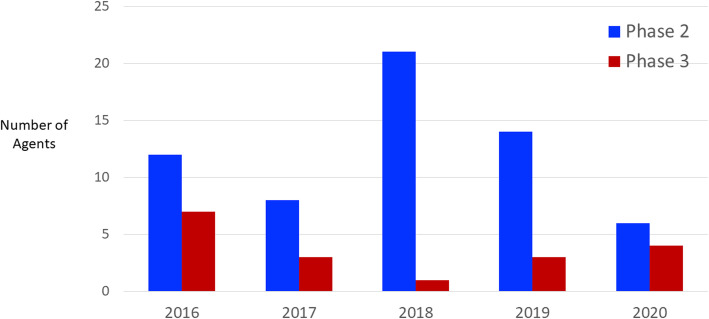
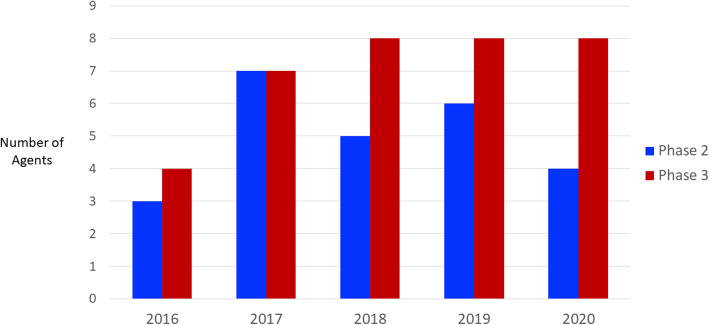
Background: Successful development of agents that improve cognition and behavior in Alzheimer’s disease (AD) is critical to improving the lives of patients manifesting the symptoms of this progressive disorder. Discussion: There have been no recent approvals of cognitive enhancing agents for AD. There are currently 6 cognitive enhancers in Phase 2 trials and 4 in phase 3. They represent a variety of novel mechanisms. There has been progress in developing new treatments for neuropsychiatric symptoms in AD with advances in treatment of insomnia, psychosis, apathy, and agitation in AD. There are currently 4 AD-related psychotropic agents in Phase 2 trials and 7 in Phase 3 trials. Many novel mechanisms are being explored for the treatment of cognitive and behavioral targets. Progress in trial designs, outcomes measures, and population definitions are improving trial conduct for symptomatic treatment of AD. Conclusions: Advances in developing new agents for cognitive and behavioral symptoms of AD combined with enhanced trial methods promise to address the unmet needs of patients with AD for improved cognition and amelioration of neuropsychiatric symptoms.
Overview
The claims and statistics of this paper haven’t been checked yet.
Free: it reads the open-access text and checks the first 5 claims that cite a source we can check. Create a free account to check every claim.
Integrity signals
Registry
Cites
Statistics
Figures
Verification
Claims the paper makes
The claims and statistics of this paper haven’t been checked yet.
Free: it reads the open-access text and checks the first 5 claims that cite a source we can check. Create a free account to check every claim.
Claims other papers make about this one
Each is checked against this paper’s own text: does it say what the citing paper says it does?
The cited source says what the claim attributes to it.
In the citing paper
“Patients with AD exhibit a substantial accumulation of amyloid-β (Aβ) plaques and neurofibrillary tangles (NFTs) within their brains, accompanied by a cascade of pathological processes such as neuroinflammation, synaptic dysfunction, mitochondrial and bioenergetic disturbances, as well as vascular abnormalities.”
From Recent advances in Alzheimer's disease: Mechanisms, clinical trials and new drug development strategies. (2024) · cites this paper as [6]
Self-check
Percentages, sums and reported differences re-computed from the paper’s own numbers.
The self-check needs the paper’s full text.
Citations
Cites
Folstein, M. F., Folstein, S. E., & McHugh, P. R. (1975) · Journal of Psychiatric Research · doi:10.1016/0022-3956(75)90026-6 · Cited by 88,282
Hirono, N., Mori, E., Ikejiri, Y., Imamura, T., Shimomura, T., Hashimoto, M., Yamashita, H., & Ikeda, M. (1997) · Brain and nerve · Cited by 21,039
Kok, J. S., Berg, I. J., & Scherder, E. J. A. (2013) · Dementia and Geriatric Cognitive Disorders Extra · doi:10.1159/000353441 · Cited by 20,589
Older Adults' Reasons for Using Technology while Aging in Place
Peek, S. T. M., Luijkx, K. G., Rijnaard, M. D., Nieboer, M. E., van der Voort, C. S., Aarts, S., van Hoof, J., Vrijhoef, H. J. M., & Wouters, E. J. M. (2016) · Gerontology · doi:10.1159/000430949 · Cited by 19,690
Sensitivity and False Alarm Rate of a Fall Sensor in Long-Term Fall Detection in the Elderly
Kangas, M., Korpelainen, R., Vikman, I., Nyberg, L., & Jämsä, T. (2015) · Gerontology · doi:10.1159/000362720 · Cited by 18,909
Neuroinflammation in Alzheimer's disease
Heneka, M. T., Carson, M. J., Khoury, J. E., Landreth, G. E., Brosseron, F., Feinstein, D. L., Jacobs, A. H., Wyss-Coray, T., Vitorica, J., Ransohoff, R. M., et al. (2015) · The Lancet Neurology · doi:10.1016/s1474-4422(15)70016-5 · Cited by 6,226
A new rating scale for Alzheimer's disease
(1984) · American Journal of Psychiatry · doi:10.1176/ajp.141.11.1356 · Cited by 4,175
Alzheimer's Disease and Senile Dementia: Loss of Neurons in the Basal Forebrain
Whitehouse, P., Price, D., Struble, R., Clark, A., Coyle, J., & DeLong, M. R. (1982) · Science · doi:10.1126/science.7058341 · Cited by 3,627
Scheltens, P., Blennow, K., Breteler, M. M. B., de Strooper, B., Frisoni, G. B., Salloway, S., & Van der Flier, W. M. (2016) · The Lancet · doi:10.1016/s0140-6736(15)01124-1 · Cited by 3,125
The cholinergic system in the pathophysiology and treatment of Alzheimer’s disease
Hampel, H., Mesulam, M.-M., Cuello, A. C., Farlow, M. R., Giacobini, E., Grossberg, G. T., Khachaturian, A. S., Vergallo, A., Cavedo, E., Snyder, P. J., et al. (2018) · Brain · doi:10.1093/brain/awy132 · Cited by 1,918
Cited by
Items 201–247 of 247
Insights into the neuroprotective properties of Biochanin-A
Hussein, S., Tolba, M. F., Michel, H. E., & Azab, S. S. (2022) · Archives of Pharmaceutical Sciences Ain Shams University · doi:10.21608/aps.2022.154272.1097
“These aberrant protein aggregates cause several physiological reactions, including neuroinflammation, mitochondrial dysfunction, epigenetic modifications, and blood-brain barrier abnormalities, and ultimately result in neuron degeneration [72].”
BackgroundAlter und Altern aus Sicht der Schul- und der Chinesischen Medizin
Agarwal, K., & Spyra, P.-S. (2023) · AkupunkturPraxis · doi:10.1055/a-1963-0087
“-2-Studien -2-Studien erfolgversprechende Effekte erzielen, wie Brexpiprazol, Dextromethorphan/Chinidin, Dextrome-thorphan/Nobilon oder auch Prazosin [26].”
BackgroundShrivastava, S., Kumar, A., Jeengar, M. K., & Sahu, C. (2023) · BENTHAM SCIENCE PUBLISHERS eBooks · doi:10.2174/9789815136142123010007
Early Diagnosis of Alzheimer’s Disease: Why you should care
EMJ, E. (2024) · Neurology - the American medical journal. · doi:10.33590/neurolamj/rrma7676
Different drugs used as therapeutic targets against AD till date
Nahar, M., Khan, A. G., Rai, R., & Jat, D. (2024) · Elsevier eBooks · doi:10.1016/b978-0-443-15540-6.00009-4
Understanding Alzheimer’s Disease: A Multidisciplinary Perspective
Akbarzadehmoallemkoalei, M., Yektakasmaei, M. P., Tabar, S. S. S., Zolfaghari, K., Noorikoloori, S., Niktalab, P., Rouzrokh, S., Sheykhzadeh, Z., Sanavi, M. A., Dozdouzan, M. A., et al. (2024) · Integrated science · doi:10.1007/978-3-031-72079-6_14 · Cited by 1
Ullah, A., Lee, G.-J., Park, J., Park, A.-R., Kwon, H. T., & Lim, S. I. (2025) · International Journal of Biological Macromolecules · doi:10.1016/j.ijbiomac.2025.142757
Li, R., Xiong, W., & Sun, C. (2025) · International Journal of Neuroscience · doi:10.1080/00207454.2025.2540989
“…damage and accelerate disease progression [4,5]. current treatments, such as cholinesterase inhibitors and NMDA receptor antagonists, only relieve symptoms [6,7]. the fDA-approved drugs aducanumab and lecanemab delay disease by targeting amyloid plaques but do not reverse neuronal damage [2,8].”
Roflumilast: a selective phosphodiesterase-4 inhibitor for the treatment of Alzheimer’s disease
Sang, Z. (2025) · Elsevier eBooks · doi:10.1016/b978-0-443-33885-4.00037-8
Begum, A., Ramu, S., Sundar, L. M., Rawal, P., Irene, P. R., Shaik, S. F., & Raj, B. (2025) · In Silico Pharmacology · doi:10.1007/s40203-025-00427-0
“Current treatments primarily aim to alleviate symptoms rather than address the underlying mechanisms of cognitive dysfunction (Cummings 2021 ; Yiannopoulou and Papageorgiou 2020 ).”
Targeting Molecular Pathways for Neuroprotection in Neurodegenerative Disorders
Tyagi, S. J., & Sharma, K. K. (2025) · International Journal of Pharma Professional’s Research (IJPPR) · doi:10.69580/ijppr.16.2.2025.104-124
Rizzo, S. J. S. (2025) · Current Opinion in Neurobiology · doi:10.1016/j.conb.2025.103138
“These syndromes manifest as symptom clusters, or endophenotypes, that include cognitive impairment and functional deterioration as well as the non-cognitive behavioral and psychological symptoms of dementia often referred to as BPSD [5,6].”
Sharaf, Y. M., Nazeam, J. A., Abu‐Elfotuh, K., Gowifel, A. M. H., Atwa, A. M., Mohamed, E. K., Hamdan, A. M., Almotairi, R., Hamdan, A. M., Osman, S. M., et al. (2025) · Pharmaceuticals · doi:10.3390/ph18121892
“The deposition of A β plaques and NFTs in the brain is associated with disrupted synaptic communication, mitochondrial dysfunction, and activation of neuroinflammatory cascades, ultimately resulting in neurodegeneration [4,5].”
Li, L., Yu, X., Sheng, C., Jiang, X., Zhang, Q., Han, Y., & Jiang, J. (2022) · Figshare · doi:10.6084/m9.figshare.21130048
Tang, H., Shaaban, C. E., DeKosky, S. T., Smith, G. E., Hu, X., Jaffee, M. S., Salloum, R. G., Bian, J., & Guo, J. (2024) · Figshare · doi:10.6084/m9.figshare.27059017
Carvalho, L. P. D. (2023) · LA Referencia (Red Federada de Repositorios Institucionales de Publicaciones Científicas)
Issa, A. C. D. A. (2022) · LA Referencia (Red Federada de Repositorios Institucionales de Publicaciones Científicas)
The Change in Dementia Presentation During the Past Decades
Jhang, K.-M., Lee, C.-J., & Chen, Y.-C. (2026) · Springer eBooks · doi:10.1007/978-981-95-5222-1_11
McMackin, R., Price, S., Slator, G. R., Hardiman, O., & Kelly, J. (2026) · Brain Communications · doi:10.1093/braincomms/fcag006
“It is perhaps most commonly associated with Alzheimer’s disease 1-3 but also occurs in other neurodegenerative diseases, such as amyotrophic lateral sclerosis (ALS) 4-6 and Parkinson’s disease.”
InfluentialKetamine or Esketamine in Special Populations of Patients With Treatment-Resistant Depression
Grabarczyk, Ł., Wolfermann, S. R., Oniszczuk, H., & Radkowski, P. (2026) · Medical Science Monitor · doi:10.12659/msm.950601
“Depression in AD is particularly difficult to treat because it may arise from distinct pathophysiological mechanisms, including progressive neurodegeneration and imbalance of neurotransmitter systems, which can reduce the effectiveness of conventional antidepressant therapies [32,33].”
Elevated CSF Serotonin in Prodromal Alzheimer’s Disease Patients Developing Psychosis
Monge‐García, V., Pérez‐González, R., Monge-García, S., Gasparini‐Berenguer, R., Sánchez–Payá, J., Silva-Afonso, R. D. F., & Monge-Argilés, J. A. (2026) · Journal of dementia and Alzheimer's disease · doi:10.3390/jdad3010014
“Prior investigations suggest that excessive activation of 5-HT2A receptors may precipitate PS [12].”
Alzheimer’s disease : epistemology, ethics, innovation
Daly, T. P. (2021) · theses.fr (ABES) · doi:10.70675/6e99838az7dd4z402fz98fdzeca072d3ad13 · Cited by 2
Integrative role of orexigenic peptides in neuroprotection and neurodegenerative disease modulation
Sopko, Z., Pačesová, A., Železná, B., & Maletínská, L. (2026) · Bioscience Reports · doi:10.1042/bsr20250362
Shabi, A. (2026) · International journal of high school research · doi:10.36838/ijhsr87.80
Tzieras, I., Manolopoulos, A., Tweedie, D., Luo, W., Maccecchini, M., Egan, J. M., Greig, N. H., & Kapogiannis, D. (2026) · Neurotherapeutics · doi:10.1016/j.neurot.2026.e00918
“…monoclonal antibodies have recently been approved for early AD [3], and symptomatic treatments, such as cholinesterase inhibitors and memantine, remain widely used [4], without the ability to halt disease progression, patients eventually advance to severe AD, where therapeutic options are limited.”
Longitudinal study of Alzheimer's disease progression through MRI markers: A Systematic ReviewPreprint
Lotfalipour, M., Banifatemeh, M. S., Amini, B., Hemmat, F., Mirzakhani, P., Saemi, M., Solhirad, M., & Sadeghi, A. Z. (2026) · Research Square · doi:10.21203/rs.3.rs-9688545/v1
Current perspectives on the genetics of neurodegenerative diseases: A narrative review
Chaudhary, S., Iyer, S., Narwal, S., Mitra, M., & Tare, M. (2026) · Aging advances. · doi:10.4103/agingadv.agingadv-d-25-00030 · Cited by 1
Metabolic dysregulation in Alzheimer’s disease: Mechanisms, markers, and therapeutic prospects
Mittal, R., Priya, Banerjee, J., & Dixit, A. (2026) · International review of neurobiology · doi:10.1016/bs.irn.2026.05.011
Muhammad, B. Y., Lawal, A. H., Yahaya, A., & Ahmed, S. T. (2026) · Nigerian Journal of Pure and Applied Sciences · doi:10.48198/njpas/25.a36
Written in the Stars: Astrocyte Biology From Evolution to Disease
Falcone, C., Arckens, L., Baiula, M., Bedini, A., Bocchi, R., Broadhead, M. J., Caprini, M., Cavaliere, F., Cesca, F., Chowdhury, H. H., et al. (2026) · Acta Physiologica · doi:10.1111/apha.70289 · Cited by 1
“Early-stage alterations in mood and social behavior, anxiety and sleep disturbances are among the clinical features commonly observed in AD patients, together with progressive memory loss and emergence of more severe neuropsychiatric symptoms [269].”
Okafor, N. I., Abdelgader, A., Abobaker, M., & Choonara, Y. E. (2026) · ChemistryOpen · doi:10.1002/open.202500425
“In terms of treatment, just six FDA-approved medications are available in the United States, none of which target the fundamental mechanisms driving the condition [62, 63].”
Current treatments for dementias
Spires‐Jones, T. L. (2026) · Oxford University Press eBooks · doi:10.1093/9780198995296.003.0006
Gene–Environment Interactions in Metal-Associated Neurodegenerative Diseases
Elavarasi, T., Saranraj, P., & Lokeshwari, B. (2026) · IGI Global eBooks · doi:10.4018/979-8-2600-1403-5.ch005
Alanazi, M. A. (2026) · The Annals of Clinical and Analytical Medicine · doi:10.4328/acam.22898
Li, J., Liu, Q., Ma, Q., Shen, T., Xia, J., Yang, X., Liu, K., Li, N., & Yan, B. (2026) · Journal of Global Health · doi:10.7189/jogh.16.04311
“Beyond its classical neuropathological hallmarks, the pathogenesis of AD is increasingly recognised to involve chronic neuroinflammation, mitochondrial dysfunction, metabolic imbalance, and cerebrovascular dysfunction [ 4 , 5 ].”
Wusiyin, M., Wei, X., Liu, X., Aheizan, A., Maituzi, A., & Huang, R. (2026) · Research Square · doi:10.21203/rs.3.rs-10579672/v1
Liu, Y., Liu, S., Yan, H., Yang, X., Wu, Y., Liu, C., & Xu, Y. (2026) · Frontiers in Neuroscience · doi:10.3389/fnins.2026.1890235
“…nonpharmacological approaches, especially neuromodulation techniques (NMTs), have gained increasing attention for their potential to improve cognition and functional outcomes, though further research is needed to establish their efficacy and optimize treatment protocols (Cummings, 2021).”
Gu, Z., Dong, Y., Shang, S., Liu, A., Wang, J., Chi, X., Xie, A., & Li, M. (2026) · Research Square · doi:10.21203/rs.3.rs-8965858/v1
BindingDB Entry 50017977: Chemical update on the potential for serotonin 5-HT
BindingDB (2023) · UC San Diego · doi:10.7270/q2vq36sj
Decoding the Gut-Brain Axis: Implications for Neurodegenerative Disease Therapies
(2026) · Frontiers research topics · doi:10.3389/978-2-8325-8753-9
Efficacy of ORM‐12741 on agitation/aggression symptoms in participants with Alzheimer's disease
Rinne, J. O., Cummings, J. L., Breznoščáková, D., Hakulinen, P., Hänninen, J., Goetghebeur, P., Miller, D. S., & Rouru, J. (2026) · Alzheimer s & Dementia Translational Research & Clinical Interventions · doi:10.1002/trc2.70332
Self-citationTectoridin attenuates Alzheimer's pathology by inhibiting Aβ aggregation in 3xTg-AD mice
Wang, C., Zhang, R., Lo, H. H., Wu, J., Song, L., Qu, L., Wang, H., Liu, M., Yun, X., Chen, X., et al. (2026) · European Journal of Pharmacology · doi:10.1016/j.ejphar.2026.179540
Metadata
- Authors
- Cummings, J.
- Affiliations
- University of Nevada, Las Vegas (US)
- Corresponding author
- Cummings, Jeffrey
- ORCID
- Cummings, Jeffrey
- Venue
- Molecular Neurodegeneration
- Published
- 2021-01-13
- Volume
- 16
- Issue
- 1
- Pages
- 2-2
- ISSN
- 1750-1326 (ISSN-L)
- PMC
- PMC7805095
- OpenAlex
- W3120244708
- Cited by
- 226
- References
- 128
- Citations by year
- 2026: 25 · 2025: 39 · 2024: 47 · 2023: 42 · 2022: 45 · 2021: 28
- FWCI
- 5.50
- Type
- journal article
- Language
- en
- Update notices
- correction (2021-04-01)
- Open access
- gold
- doi.org
- Licence
- cc-by
- creativecommons.org/licenses/by/4.0 (tdm)
- creativecommons.org/licenses/by/4.0 (vor)
- Locations
- Molecular Neurodegeneration (publishedVersion, cc-by)
- PubMed Central (publishedVersion, cc-by)
- PubMed (publishedVersion)
- Digital Scholarship - UNLV (University of Nevada Reno) (submittedVersion, cc-by)
- DOAJ (DOAJ: Directory of Open Access Journals) (submittedVersion, cc-by-sa)
- Funders
- National Institute of General Medical Sciences (P20GM109025)
- National Institute of Neurological Disorders and Stroke (U01NS093334)
- National Institute on Aging (R01AG053798)
- Topics
- Life Sciences › Neuroscience › Cellular and Molecular Neuroscience › Alzheimer's disease research and treatments
- Health Sciences › Medicine › Psychiatry and Mental health › Dementia and Cognitive Impairment Research
- Health Sciences › Medicine › Pharmacology (medical) › Cholinesterase and Neurodegenerative Diseases
- Keywords
- Alzheimer's disease, symptomatic treatment, nootropic drugs, neuropsychiatric symptoms, psychotropic drugs, insomnia, psychosis, apathy, agitation, clinical trial design, outcome measures
- MeSH terms
- Aged, Alzheimer Disease, Anxiety, Cognition, Depression, Humans, Psychomotor Agitation, Apathy
About these checks
Registry, retraction, Cites and statistics results are computed, not judged, with one exception: a printed reference that no index lists is read once by a model before it counts as a citation error. Claims are extracted by a model and kept only when their quote appears verbatim in the text; each cited source is then checked, with a model’s help, for whether it says what the claim relies on. Those verdicts can be wrong — read the claim’s quote and the cited source before relying on one.
Statistics and arithmetic are recomputed, not judged.
Confidence bands are shown only for fields calibrated on our annotated test set. None is calibrated yet, so no band is shown.
What counts as a claim ›How we measure confidence ›How we check this ›
Are you an author, or do you see a problem with this page? Request a review
Data sources
Bibliographic data: Semantic Scholar, OpenAlex, Crossref.
Contains information from the Semantic Scholar Academic Graph Datasets, made available under the ODC Attribution License (ODC-BY 1.0).
Semantic Scholar’s data is described in: Kinney, R., et al. (2023). The Semantic Scholar Open Data Platform. arXiv:2301.10140.
