

The DOI matches its Crossref record; 205 of the 205 references it cites were found in a registry or an index.
TREM2 in the pathogenesis of AD: a lipid metabolism regulator and potential metabolic therapeutic target
Open accessAbstract
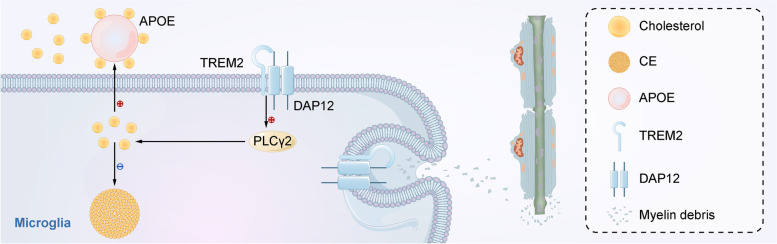
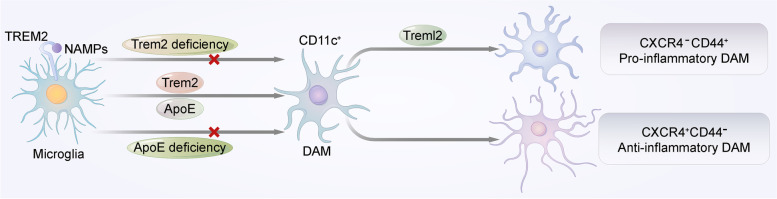
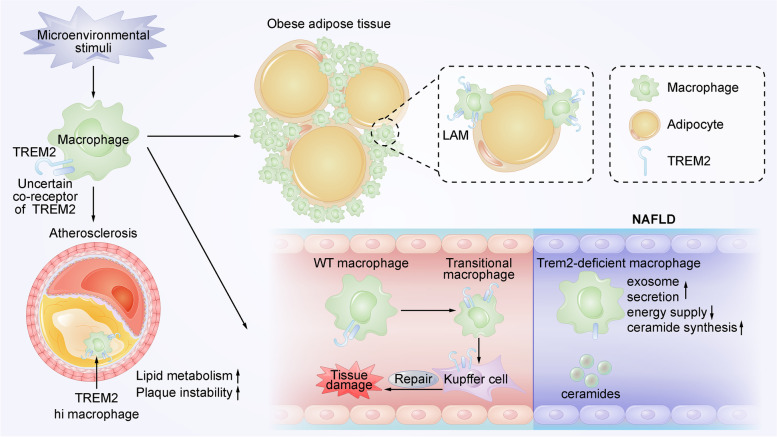
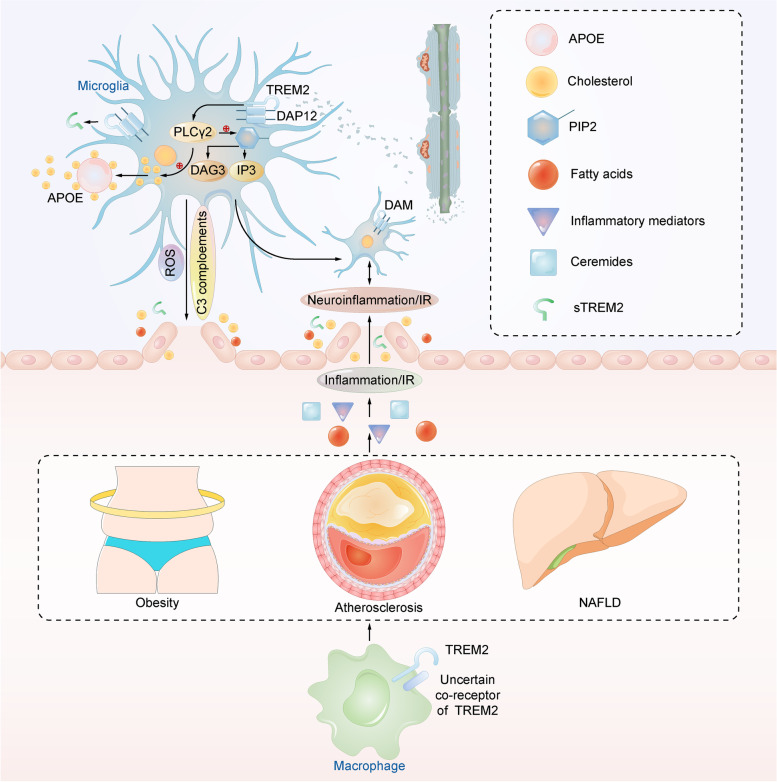
Triggering receptor expressed on myeloid cells 2 (TREM2) is a single-pass transmembrane immune receptor that is mainly expressed on microglia in the brain and macrophages in the periphery. Recent studies have identified TREM2 as a risk factor for Alzheimer’s disease (AD). Increasing evidence has shown that TREM2 can affect lipid metabolism both in the central nervous system (CNS) and in the periphery. In the CNS, TREM2 affects the metabolism of cholesterol, myelin, and phospholipids and promotes the transition of microglia into a disease-associated phenotype. In the periphery, TREM2 influences lipid metabolism by regulating the onset and progression of obesity and its complications, such as hypercholesterolemia, atherosclerosis, and nonalcoholic fatty liver disease. All these altered lipid metabolism processes could influence the pathogenesis of AD through several means, including affecting inflammation, insulin resistance, and AD pathologies. Herein, we will discuss a potential pathway that TREM2 mediates lipid metabolism to influence the pathogenesis of AD in both the CNS and periphery. Moreover, we discuss the possibility that TREM2 may be a key factor that links central and peripheral lipid metabolism under disease conditions, including AD. This link may be due to impacts on the integrity of the blood–brain barrier, and we introduce potential pathways by which TREM2 affects the blood–brain barrier. Moreover, we discuss the role of lipids in TREM2-associated treatments for AD. We propose some potential therapies targeting TREM2 and discuss the prospect and limitations of these therapies.
Overview
The claims and statistics of this paper haven’t been checked yet.
Run the check — free, no account needed. It reads the open-access text and checks the sources it cites.
Integrity signals
Registry
Cites
Statistics
Figures
Verification
Claims the paper makes
The claims and statistics of this paper haven’t been checked yet.
Run the check — free, no account needed. It reads the open-access text and checks the sources it cites.
Claims other papers make about this one
Each is checked against this paper’s own text: does it say what the citing paper says it does?
The cited source says what the claim attributes to it.
In the citing paper
“TREM2 binds to various lipid ligands, such as APOE particles (main cholesterol carriers in the brain) and myelin debris, to mediate lipid sensing and uptake (36).”
From Reducing microglial lipid load enhances β amyloid phagocytosis in an Alzheimer’s disease mouse model (2025) · cites this paper as [36]
Self-check
Percentages, sums and reported differences re-computed from the paper’s own numbers.
The self-check needs the paper’s full text.
Citations
Cites
2 retracted
RETRACTED: An update on the role of miR-124 in the pathogenesis of human disorders
Ghafouri‐Fard, S., Shoorei, H., Bahroudi, Z., Abak, A., Majidpoor, J., & Taheri, M. N. (2021) · Biomedicine & Pharmacotherapy · doi:10.1016/j.biopha.2020.111198 · Cited by 79
RetractedSharma, S., Prasanthi, J. R. P., Schommer, E., Feist, G., & Ghribi, O. (2008) · Neurobiology of Disease · doi:10.1016/j.nbd.2008.08.002 · Cited by 68
RetractedObesity is associated with macrophage accumulation in adipose tissue
Weisberg, S. P., McCann, D., Desai, M., Rosenbaum, M., Leibel, R. L., & Ferrante, A. W. (2003) · Journal of Clinical Investigation · doi:10.1172/jci200319246 · Cited by 10,041
Neuroinflammation in Alzheimer's disease
Heneka, M. T., Carson, M. J., Khoury, J. E., Landreth, G. E., Brosseron, F., Feinstein, D. L., Jacobs, A. H., Wyss-Coray, T., Vitorica, J., Ransohoff, R. M., et al. (2015) · The Lancet Neurology · doi:10.1016/s1474-4422(15)70016-5 · Cited by 6,226
A Unique Microglia Type Associated with Restricting Development of Alzheimer’s Disease
Keren-Shaul, H., Spinrad, A., Weiner, A., Matcovitch-Natan, O., Dvir-Szternfeld, R., Ulland, T. K., David, E., Baruch, K., Lara-Astaiso, D., Toth, B., et al. (2017) · Cell · doi:10.1016/j.cell.2017.05.018 · Cited by 5,493
TLR4 links innate immunity and fatty acid-induced insulin resistance
Shi, H., Kokoeva, M. V., Inouye, K., Tzameli, I., Yin, H., & Flier, J. S. (2006) · Journal of Clinical Investigation · doi:10.1172/jci28898 · Cited by 3,690
Regulation of inflammatory responses by gut microbiota and chemoattractant receptor GPR43
Maslowski, K. M., Vieira, A. T., Ng, A., Kranich, J., Sierro, F., Yu, D., Schilter, H. C., Rolph, M. S., Mackay, F., Artis, D., et al. (2009) · Nature · doi:10.1038/nature08530 · Cited by 3,241
Kim, H. J., Park, S. Y., Choi, Y. J., Han, S. J., Lee, K. W., & Kim, D. J. (2013) · Hormone Research in Paediatrics · doi:10.1159/000348848 · Cited by 3,061
TREM2 Variants in Alzheimer's Disease
Guerreiro, R., Wojtas, A., Bras, J., Carrasquillo, M., Rogaeva, E., Majounie, E., Cruchaga, C., Sassi, C., Kauwe, J. S. K., Younkin, S., et al. (2013) · New England Journal of Medicine · doi:10.1056/nejmoa1211851 · Cited by 3,020
Krasemann, S., Madore, C., Cialic, R., Baufeld, C., Calcagno, N., El Fatimy, R., Beckers, L., O’Loughlin, E., Xu, Y., Fanek, Z., et al. (2017) · Immunity · doi:10.1016/j.immuni.2017.08.008 · Cited by 2,979
Cited by
Sorted by citations
Amyloid Precursor Protein and Alzheimer’s Disease
Orobets, K. S., & Karamyshev, A. L. (2023) · International Journal of Molecular Sciences · doi:10.3390/ijms241914794 · Cited by 141
Fang, C., Zhong, R., Lu, S., Yu, G., Liu, Z., Yan, C., Gao, J., Tang, Y., Wang, Y., Zhao, Q., et al. (2024) · International Journal of Biological Sciences · doi:10.7150/ijbs.91519 · Cited by 127
Self-citationTREM2: Potential therapeutic targeting of microglia for Alzheimer's disease
Li, Y., Xu, H., Wang, H., Yang, K., Luan, J., & Wang, S. (2023) · Biomedicine & Pharmacotherapy · doi:10.1016/j.biopha.2023.115218 · Cited by 133
TREM2 regulates microglial lipid droplet formation and represses post-ischemic brain injury
Wei, W., Zhang, L., Xin, W., Pan, Y., Tatenhorst, L., Hao, Z., Gerner, S. T., Huber, S., Juenemann, M., Butz, M., et al. (2024) · Biomedicine & Pharmacotherapy · doi:10.1016/j.biopha.2023.115962 · Cited by 122
TREM2 inhibition triggers antitumor cell activity of myeloid cells in glioblastoma
Sun, R., Han, R., McCornack, C., Khan, S., Tabor, G. T., Chen, Y., Hou, J., Jiang, H., Schoch, K. M., Mao, D. D., et al. (2023) · Science Advances · doi:10.1126/sciadv.ade3559 · Cited by 119
Decoding microglial immunometabolism: a new frontier in Alzheimer's disease research
Jung, E. S., Choi, H., & Mook-Jung, I. (2025) · Molecular Neurodegeneration · doi:10.1186/s13024-025-00825-0 · Cited by 124
Peripheral and central neuroimmune mechanisms in Alzheimer’s disease pathogenesis
Zhang, S., Gao, Y., Zhao, Y., Huang, T. Y., Zheng, Q., & Wang, X. (2025) · Molecular Neurodegeneration · doi:10.1186/s13024-025-00812-5 · Cited by 78
Reducing microglial lipid load enhances β amyloid phagocytosis in an Alzheimer’s disease mouse model
Wu, X., Miller, J. A., Lee, B. T. K., Wang, Y., & Ruedl, C. (2025) · Science Advances · doi:10.1126/sciadv.adq6038 · Cited by 67
“TREM2 binds to various lipid ligands, such as APOE particles (main cholesterol carriers in the brain) and myelin debris, to mediate lipid sensing and uptake ( 36 ).”
Self-citationObesity-induced chronic low-grade inflammation in adipose tissue: A pathway to Alzheimer’s disease
Zhai, W., Meng, Z., Chunxiao, W., Lingjie, M., Anguo, Z., Zhang, Y., Xinran, C., Yanjiao, X., & Li, S. (2024) · Ageing Research Reviews · doi:10.1016/j.arr.2024.102402 · Cited by 69
Cao, Y., Zhao, L.-W., Chen, Z.-X., & Li, S.-H. (2024) · Frontiers in Neuroscience · doi:10.3389/fnins.2024.1430465 · Cited by 65
Zhou, Y., Tada, M., Cai, Z., Andhey, P. S., Swain, A., Miller, K. R., Gilfillan, S., Artyomov, M. N., Takao, M., Kakita, A., et al. (2023) · Nature Immunology · doi:10.1038/s41590-022-01403-y · Cited by 62
Functional diversity of cardiac macrophages in health and disease
Yang, S. H., Penna, V. R., & Lavine, K. J. (2025) · Nature Reviews Cardiology · doi:10.1038/s41569-024-01109-8 · Cited by 67
Immune mechanisms and shared immune targets in neurodegenerative diseases
Weiner, H. L. (2024) · Nature Reviews Neurology · doi:10.1038/s41582-024-01046-7 · Cited by 72
Alzheimer’s disease pathogenesis: standing at the crossroad of lipid metabolism and immune response
Wang, Z., Zhang, L., & Qin, C. (2025) · Molecular Neurodegeneration · doi:10.1186/s13024-025-00857-6 · Cited by 60
The therapeutic potential of TREM2 in cancer
Wolf, E. M., Fingleton, B., & Hasty, A. H. (2022) · Frontiers in Oncology · doi:10.3389/fonc.2022.984193 · Cited by 51
Yang, Y., Li, G., Zhong, Y., Xu, Q., Chen, B.-J., Lin, Y.-T., Chapkin, R. S., & Cai, J. J. (2023) · Nucleic Acids Research · doi:10.1093/nar/gkad450 · Cited by 48
Spatial neurolipidomics—MALDI mass spectrometry imaging of lipids in brain pathologies
Jha, D., Blennow, K., Zetterberg, H., Savas, J. N., & Hanrieder, J. (2024) · Journal of Mass Spectrometry · doi:10.1002/jms.5008 · Cited by 55
Roles of TREM2 in the Pathological Mechanism and the Therapeutic Strategies of Alzheimer's Disease
Lin, M., Yu, J., Zhang, W., Lao, F., & Huang, H. (2024) · The Journal of Prevention of Alzheimer s Disease · doi:10.14283/jpad.2024.164 · Cited by 46
Crosstalk between bone and brain in Alzheimer's disease: Mechanisms, applications, and perspectives
Liu, Z., Liu, M., Xiong, Y., Wang, Y., & Bu, X. (2024) · Alzheimer's & Dementia · doi:10.1002/alz.13864 · Cited by 39
Self-citationHe, C., Chen, B., Yang, H., & Zhou, X. (2025) · Frontiers in Aging Neuroscience · doi:10.3389/fnagi.2025.1554398 · Cited by 40
Self-citationLi, W., Meng, X., Peng, K., Han, Y., Liu, H., Zhao, W., Wang, G., Deng, L., Liu, H., Li, Z., et al. (2023) · Advanced Science · doi:10.1002/advs.202305989 · Cited by 36
Xu, Y., Hillman, H., Chang, M., Barrow, F., Ivanov, S., Revelo, X. S., & Williams, J. W. (2025) · Communications Biology · doi:10.1038/s42003-025-08387-z · Cited by 35
The immunometabolic reprogramming of microglia in Alzheimerʼs disease
Chen, H., Guo, Z., Sun, Y., & Dai, X. (2023) · Neurochemistry International · doi:10.1016/j.neuint.2023.105614 · Cited by 30
Lipid droplets in the nervous system: involvement in cell metabolic homeostasis
Zhang, Y., Chen, Y., Zhuang, C., Qi, J., Zhao, R. C., & Wang, J. (2024) · Neural Regeneration Research · doi:10.4103/nrr.nrr-d-23-01401 · Cited by 30
Roles of TREM2 in Alzheimer’s disease
Qi, X., Zhu, K., Ke, W., Wang, J., Mao, S., & Chen, G. (2025) · Translational Neurodegeneration · doi:10.1186/s40035-025-00515-3 · Cited by 38
Sharp, F. R., DeCarli, C. S., Jin, L., & Zhan, X. (2023) · Frontiers in Aging Neuroscience · doi:10.3389/fnagi.2023.1096206 · Cited by 33
SERS-Based Optical Nanobiosensors for the Detection of Alzheimer’s Disease
Gao, F., Li, F., Wang, J., Yu, H., Li, X., Chen, H., Wang, J., Qin, D., Li, Y., Liu, S., et al. (2023) · Biosensors · doi:10.3390/bios13090880 · Cited by 31
Wang, L., Liu, H., Zhou, L., Zheng, P., Li, H., Zhang, H., & Liu, W. (2024) · Nature and Science of Sleep · doi:10.2147/nss.s468420 · Cited by 28
Évora, A., Garcia, G., Rubi, A., Vitis, E. D., Matos, A. T., Vaz, A. R., Gervaso, F., Gigli, G., Polini, A., & Brites, D. M. T. O. (2025) · Frontiers in Pharmacology · doi:10.3389/fphar.2025.1474012 · Cited by 31
Zhou, W., He, J., Shen, G., Liu, Y., Zhao, P., & Li, J. (2024) · Cell Death and Disease · doi:10.1038/s41419-024-07002-z · Cited by 28
Mechanisms of TREM2 mediated immunosuppression and regulation of cancer progression
Lei, X., Gou, Y., Hao, J. Y., & Huang, X. J. (2024) · Frontiers in Oncology · doi:10.3389/fonc.2024.1375729 · Cited by 26
Kalkman, H. O., & Smigielski, L. (2025) · Molecular Neurobiology · doi:10.1007/s12035-025-04989-0 · Cited by 29
Ma, H., Gao, L., Chang, R., Zhai, L., & Zhao, Y. (2024) · Heliyon · doi:10.1016/j.heliyon.2024.e38018 · Cited by 30
Clusterin/apolipoprotein J, its isoforms and Alzheimer's disease
Milinkeviciute, G., & Green, K. N. (2023) · Frontiers in Aging Neuroscience · doi:10.3389/fnagi.2023.1167886 · Cited by 24
Complement C3aR signaling: Immune and metabolic modulation and its impact on Alzheimer's disease
Gedam, M., & Zheng, H. (2024) · European Journal of Immunology · doi:10.1002/eji.202350815 · Cited by 27
TREM2 in Neurodegenerative Disorders: Mutation Spectrum, Pathophysiology, and Therapeutic Targeting
Yang, H.-W., Kim, D., Yang, Y., Bagyinszky, E., & An, S. S. A. (2025) · International Journal of Molecular Sciences · doi:10.3390/ijms26157057 · Cited by 26
Self-citationZhang, X., Chen, X., Zhang, L., Sun, Y., Liang, Y., Li, H., & Zhang, Y. (2023) · Neurochemistry International · doi:10.1016/j.neuint.2023.105639 · Cited by 23
Serum soluble TREM2 is an independent biomarker associated with coronary heart disease
Liu, W., Weng, S., Liu, H., Cao, C., Wang, S., Wu, S., He, J., Yang, Y., Hu, D., Luo, Y., et al. (2023) · Clinica Chimica Acta · doi:10.1016/j.cca.2023.117499 · Cited by 22
Wang, J., Du, L., Zhang, T., Chu, Y., Wang, Y., Wang, Y. T., Ji, X., Kang, Y., Cui, R., Zhang, G., et al. (2024) · Neuropharmacology · doi:10.1016/j.neuropharm.2024.110006 · Cited by 22
Self-citationZhao, Y., Guo, Q., Tian, J., Liu, W., & Wang, X. (2024) · Ageing Research Reviews · doi:10.1016/j.arr.2024.102596 · Cited by 23
Circadian Influences on Brain Lipid Metabolism and Neurodegenerative Diseases
Hussain, Y., Dar, M. I., & Pan, X. (2024) · Metabolites · doi:10.3390/metabo14120723 · Cited by 23
Qadir, A. M., Omer, R. A., Sulaiman, S. H., & Barzani, H. A. H. (2026) · Metabolic Brain Disease · doi:10.1007/s11011-025-01778-5 · Cited by 22
The prevalence and risk factors for cognitive impairment in obesity and NAFLD
Wernberg, C. W., Grønkjær, L. L., Jacobsen, B. G., Chandran, V. I., Krag, A. A., Graversen, J. H., Weißenborn, K., Vilstrup, H., & Lauridsen, M. M. (2023) · Hepatology Communications · doi:10.1097/hc9.0000000000000203 · Cited by 25
Španić, E., Leko, M. B., Horvat, L. L., Brgić, K., Vogrinc, Ž., Boban, M., Klepac, N., Borovečki, F., & Šimić, G. (2023) · Neurology International · doi:10.3390/neurolint15030053 · Cited by 21
Hotspots and trends of microglia in Alzheimer's disease: a bibliometric analysis during 2000–2022
Zhang, L., Yao, Q., Hu, J., Qiu, B., Xiao, Y., Zhang, Q., Zeng, Y., Zheng, S., Zhang, Y., Wan, Y., et al. (2024) · European journal of medical research · doi:10.1186/s40001-023-01602-9 · Cited by 21
Cholesterol Metabolism in CNS Diseases: The Potential of SREBP2 and LXR as Therapeutic Targets
Wang, N.-Q., Sun, P.-X., Shen, Q.-Q., & Deng, M.-Y. (2025) · Molecular Neurobiology · doi:10.1007/s12035-024-04672-w · Cited by 19
TREM2 in Neurodegenerative Diseases: Mechanisms and Therapeutic Potential
Li, L., Zheng, X., Ma, H., Zhu, M., Li, X., Sun, X., & Feng, X. (2025) · Cells · doi:10.3390/cells14171387 · Cited by 22
Zhou, Y., Huang, Z., Lin, B., Ma, M., Hao, Y., Liu, J., Xu, W., Huang, G., Mo, W., Wang, X., et al. (2025) · Cellular and Molecular Immunology · doi:10.1038/s41423-024-01235-w · Cited by 19
He, X., Li, Z., Li, S., Zhang, X., Liu, D., Han, X., He, H., Chen, J., Dong, X., Long, W., et al. (2025) · Phytomedicine · doi:10.1016/j.phymed.2025.156579 · Cited by 20
TREM2 risk variants and associated endophenotypes in alzheimer’s disease
Dijkstra, J. I. R., Vermunt, L., Venkatraghavan, V., Ozhegov, G., Coomans, E. M., Ossenkoppele, R., van de Giessen, E., Hulsman, M., de Geus, C. M., van der Flier, W. M., et al. (2025) · Alzheimer's Research & Therapy · doi:10.1186/s13195-025-01700-2 · Cited by 18
TREM2 in MASH: integrating lipid metabolism and immune response
Shi, S., Zhou, Y. Y., Zhang, H., & Zhang, J. (2025) · Frontiers in Immunology · doi:10.3389/fimmu.2025.1604837 · Cited by 21
Wang, D., Liu, J., Zhu, Q., Wei, X., Zhang, X., Chen, Q., Zhao, Y., Tang, H., & Xu, W. (2024) · Nutrients · doi:10.3390/nu16203558 · Cited by 17
TREM2 in cardiovascular diseases: Mechanisms and therapeutic perspectives
Zhu, W., Yue, Z., Wang, Y., Guo, L., & Liu, C. (2025) · Ageing Research Reviews · doi:10.1016/j.arr.2025.102774 · Cited by 18
Self-citationWu, B., Liu, Y., Li, H., Zhu, L., Zeng, L., Zhang, Z., & Peng, W. (2023) · Neural Regeneration Research · doi:10.4103/1673-5374.391305 · Cited by 22
Trem2 acts as a non‐classical receptor of interleukin‐4 to promote diabetic wound healing
Zhu, X., Zhang, C., Jiang, W., Zeng, Z., Zhang, K., Du, M., Chen, J., Wu, Q., Liao, W., Chen, Y., et al. (2024) · Clinical and Translational Medicine · doi:10.1002/ctm2.70026 · Cited by 17
Microglial apolipoprotein E particles contribute to neuronal senescence and synaptotoxicity
Wang, N., Cai, L., Pei, X., Lin, Z., Huang, L., Liang, C., Wei, M., Shao, L., Guo, T., Huang, F., et al. (2024) · iScience · doi:10.1016/j.isci.2024.110006 · Cited by 18
The cross-talk between ApoE and Tau protein in Alzheimer’s disease
Chinnathambi, S., Kumarappan, M., & Chandrashekar, M. (2024) · Advances in protein chemistry and structural biology · doi:10.1016/bs.apcsb.2024.08.004 · Cited by 16
Wu, S., He, Y., Li, J., Zhuang, H., Wang, P., He, X., Guo, Y., Li, Z., Shen, H., Liu, Y., et al. (2025) · Free Radical Biology and Medicine · doi:10.1016/j.freeradbiomed.2025.01.022 · Cited by 17
Zhu, B., Wangzhou, A., Yu, D., Li, T., Schmidt, R., Florencio, S. L. D., Chao, L., Thurber, A. L., Zhou, M., Msheik, Z., et al. (2024) · Neuron · doi:10.1016/j.neuron.2025.06.020 · Cited by 17
TREM2 in neurodegeneration and diseases
Abdulkhaliq, A. A., Alasiri, G., Kim, B., Khan, J., Ajoolabady, A., Yousof, S. M., Ren, J., Tuomilehto, J., Borai, A., Alrfaei, B. M., et al. (2026) · Molecular Psychiatry · doi:10.1038/s41380-026-03505-7 · Cited by 16
Ianni, M., Corraliza-Gómez, M., Costa-Coelho, T., Ferreira-Manso, M., Inteiro-Oliveira, S., Alemãn-Serrano, N., Sebastião, A. M., Garcia, G., Diógenes, M. J., & Brites, D. M. T. O. (2024) · International Journal of Molecular Sciences · doi:10.3390/ijms25179475 · Cited by 18
Loss of TREM2 diminishes CAA despite an overall increase of amyloid load in Tg‐SwDI mice
Zhong, R., Xu, Y., Williams, J. W., & Li, L. (2024) · Alzheimer s & Dementia · doi:10.1002/alz.14222 · Cited by 16
Genetic and environmental risk factors for dementia in African adults: A systematic review
Donkor, D. M., Marfo, E., Bockarie, A. S., Tettevi, E. J., Antwi, M. H., Dogah, J., Osei, G. N., & Simpong, D. L. (2025) · Alzheimer s & Dementia · doi:10.1002/alz.70220 · Cited by 15
Mechanisms of 3-Hydroxyl 3-Methylglutaryl CoA Reductase in Alzheimer’s Disease
Zhou, X., Wu, X., Wang, R., Han, L., Li, H.-L., & Zhao, W. (2023) · International Journal of Molecular Sciences · doi:10.3390/ijms25010170 · Cited by 19
Njoku, G. C., & Kanmogne, G. D. (2025) · International Journal of Molecular Sciences · doi:10.3390/ijms26189069 · Cited by 15
Piccioni, G., Maisto, N., d’Ettorre, A., Strimpakos, G., Nisticò, R., Triaca, V., & Mango, D. (2024) · Translational Psychiatry · doi:10.1038/s41398-024-03019-2 · Cited by 13
Chronic IL-21 drives neuroinflammation and promotes lipid accumulation in microglia
Oyamada, H. A. A., Ying, Y., Agrawal, S., Liu, A., Subramanian, V. S., Bento, C. A. M., & Agrawal, A. (2025) · Immunity & Ageing · doi:10.1186/s12979-025-00510-2 · Cited by 14
Wei, G., Huang, N., Li, M., Guan, F., Chen, L., Liao, Y.-Y., Xie, X., Li, Y., Su, Z., Chen, J., et al. (2024) · European Journal of Pharmacology · doi:10.1016/j.ejphar.2024.176433 · Cited by 13
Macrophage Phenotypic Switch and Obesity‐Associated Metabolic Risk: Mechanisms and Targets
Vera, K., Hemakumar, C., Bilachi, R. S., Ramírez, D. C., & Gomez-Mejiba, S. (2025) · Oxidative Medicine and Cellular Longevity · doi:10.1155/omcl/6710641 · Cited by 12
Targeting lipid metabolism in neurodegenerative diseases: From experimental to clinical
Long, J., Liu, S., Shi, Y., Zhang, C., Li, Q., & Ai, Q. (2025) · Metabolism · doi:10.1016/j.metabol.2025.156436 · Cited by 12
Senescence and aging differentially alter key metabolic pathways in murine brain microglia
Stojiljkovic, M. R., Schmeer, C. W., & Witte, O. W. (2024) · Neuroscience Letters · doi:10.1016/j.neulet.2024.137751 · Cited by 13
Shang, X., Maimaiti, N., Fan, J., Wang, L., Wang, Y., Sun, H., Lv, J., Zhang, X., Wang, J., & Ma, X. (2024) · Journal of Inflammation Research · doi:10.2147/jir.s435216 · Cited by 13
Self-citationGene interactions analysis of brain spatial transcriptome for Alzheimer's disease
Wang, S., Greenbaum, J., Qiu, C., Swerdlow, R. H., Haeri, M., Gong, Y., Shen, H., Xiao, H., & Deng, H. (2024) · Genes & Diseases · doi:10.1016/j.gendis.2024.101337 · Cited by 13
Wang, Q., Cao, Y., Ye, S., Ding, M., Ge, W., Liang, Y., & Chen, J. (2024) · PLoS Pathogens · doi:10.1371/journal.ppat.1012543 · Cited by 12
Scortegagna, M., Murad, R., Bina, P., Feng, Y., Porritt, R. A., Terskikh, A. V., Tian, X., Adams, P. D., Vuori, K., & Ronai, Z. A. (2025) · Cancer Research · doi:10.1158/0008-5472.can-24-4317 · Cited by 13
Yang, F.-G., Yang, H., Han, S.-W., Wang, J.-T., Gao, W. B., Ye, Q.-Y., Zhang, M.-M., Yu, Y., & Li, H.-L. (2026) · Ageing Research Reviews · doi:10.1016/j.arr.2026.103050 · Cited by 11
Self-citationCRISPR/Cas9 Gene Editing: A Novel Approach Towards Alzheimer's Disease Treatment
Tripathi, S., Sharma, Y., Rane, R. A., & Kumar, D. (2024) · CNS & Neurological Disorders - Drug Targets · doi:10.2174/0118715273283786240408034408 · Cited by 11
Hu, L., Liu, J., Peng, J., Li, X., Huang, Z., Zhang, C., & Fan, S. (2025) · Diseases · doi:10.3390/diseases13020060 · Cited by 12
Shifting Microglial Phenotypes: Targeting Disease-Associated Microglia in Neurodegeneration
Sasidharan, A., Somayaji, Y., & Fernandes, R. (2025) · ACS Chemical Neuroscience · doi:10.1021/acschemneuro.5c00159 · Cited by 11
Wu, Q., He, Q., Zhang, X., Chen, S., & Xue, X. (2024) · Aging and Disease · doi:10.14336/ad.2024.0834 · Cited by 9
Chen, S., Fu, J., Yan, J., Zhao, R., Qian, C., Yisimayili, Z., & Wu, J. (2025) · American Journal of Physiology-Endocrinology and Metabolism · doi:10.1152/ajpendo.00071.2025 · Cited by 10
Investigation of Potential Drug Targets for Cholesterol Regulation to Treat Alzheimer’s Disease
Passero, M., Zhai, T., & Huang, Z. J. (2023) · International Journal of Environmental Research and Public Health · doi:10.3390/ijerph20136217 · Cited by 10
Zhu, H., Hu, E., Guo, X. H., Yuan, Z., Jiang, H., Zhang, W., Tang, T., Wang, Y., & Li, T. (2024) · Pharmacological Research · doi:10.1016/j.phrs.2024.107533 · Cited by 9
Self-citationYang, Q., Cai, Y., Wang, Z., Guo, S., Qiu, S., & Zhang, A. (2025) · Life Sciences · doi:10.1016/j.lfs.2025.123411 · Cited by 9
Garcia, C., Banerjee, A., Montgomery, C. B., Adcock, L., Maezawa, I., Ramsey, J. J., Grodzki, A. C., Kim, K., & Cortopassi, G. A. (2025) · Frontiers in Aging · doi:10.3389/fragi.2025.1628835 · Cited by 10
El-Hamri, M.-A., & Abboussi, O. (2026) · Ageing Research Reviews · doi:10.1016/j.arr.2026.103138 · Cited by 9
Que, X., Zhang, T., Liu, X. Y., Yin, Y., Xia, X., Gong, P., Song, W., Qin, Q., Xu, Q., & Tang, Y. (2025) · Progress in Neurobiology · doi:10.1016/j.pneurobio.2025.102732 · Cited by 8
Self-citationSerneels, L., Sierksma, A. S. R., Pasciuto, E., Geric, I., Nair, A. L., Martínez‐Muriana, A., Snellinx, A., & Strooper, B. D. (2025) · Molecular Neurodegeneration · doi:10.1186/s13024-025-00823-2 · Cited by 8
Elucidating the Role of Trem2 in Lipid Metabolism and Neuroinflammation
Zhao, C., Qi, W., Lv, X., Gao, X.-L., Liu, C.-N., & Zheng, S.-M. (2025) · CNS Neuroscience & Therapeutics · doi:10.1111/cns.70338 · Cited by 7
Unveiling the impact of TREM-2+ Macrophages in metabolic disorders
Contreras, M., Matos, A. D. O., Dantas, P. H. D. S., Neto, J. R. D. C., Silva‐Sales, M., & Sales‐Campos, H. (2024) · Cellular Immunology · doi:10.1016/j.cellimm.2024.104882 · Cited by 10
Zhang, X., Wang, R., Pan, X., Chen, Z., Li, Y., Hu, Y., Liu, F., & Cao, X. (2025) · Molecular Neurobiology · doi:10.1007/s12035-025-04820-w · Cited by 8
PGRN as an emerging regulator of lipid metabolism in neurodegenerative diseases
Shi, Y., Hou, W., Li, B., & Zhu, C. (2025) · Communications Biology · doi:10.1038/s42003-025-08272-9 · Cited by 9
Li, R., Zhang, J., Wu, J., Fan, J.-Q., & Lin, B. (2025) · Science Advances · doi:10.1126/sciadv.adw9299 · Cited by 11
Self-citationSystems-level organization of extracellular proteostasis
Gomes, C. M., & Vendruscolo, M. (2026) · Science · doi:10.1126/science.aed3712 · Cited by 8
Miao, J., Liu, X., Liao, Y., Li, Y., Kuang, Y., Zheng, J., Li, Z., & Lan, J. X. (2023) · Frontiers in Pharmacology · doi:10.3389/fphar.2023.1214756 · Cited by 8
Alzheimer’s Disease in Diabetic Patients: A Lipidomic Prospect
Makki, B. E., & Rahman, S. B. (2023) · Neuroscience · doi:10.1016/j.neuroscience.2023.08.033 · Cited by 7
Malhi, N. K., Luo, Y., Tang, X., Chadha, R. S., Tapia, A., Yuan, D., Yin, S., Liu, X., Chen, M., Qi, M., et al. (2024) · bioRxiv (Cold Spring Harbor Laboratory) · doi:10.1101/2024.05.14.594235 · Cited by 7
Wei, Z., Pan, X., Cui, X., Zhang, J., Dai, X., Zeng, Y., & Chen, X. (2025) · Frontiers in Aging Neuroscience · doi:10.3389/fnagi.2025.1537388 · Cited by 7
McCool, J. L., Sebastian, A., Hum, N. R., Wilson, S. P., Davalos, O. A., Murugesh, D. K., Amiri, B., Morfin, C., Christiansen, B., & Loots, G. G. (2025) · PLoS ONE · doi:10.1371/journal.pone.0312587 · Cited by 6
Liu, X., Wang, W., Nie, Q., Liu, X., Sun, L., Ma, Q., Zhang, J., & Wei, Y. (2025) · Neuroscience Bulletin · doi:10.1007/s12264-024-01343-7 · Cited by 6
Metadata
- Authors
- Li, R.-Y., Qin, Q., Yang, H.-C., Wang, Y.-Y., Mi, Y.-X., Yin, Y.-S., Wang, M., Yu, C.-J., & Tang, Y.
- Affiliations
- Capital Medical University (CN)
- Corresponding author
- Tang, Yi
- Venue
- Molecular Neurodegeneration
- Published
- 2022-06-03
- Volume
- 17
- Issue
- 1
- Pages
- 40-40
- ISSN
- 1750-1326 (ISSN-L)
- PMC
- PMC9166437
- OpenAlex
- W4281650031
- Cited by
- 204
- References
- 205
- Citations by year
- 2026: 48 · 2025: 78 · 2024: 46 · 2023: 31 · 2022: 1
- FWCI
- 4.02
- Type
- journal article
- Language
- en
- Open access
- gold
- doi.org
- Locations
- Molecular Neurodegeneration (publishedVersion, cc-by)
- PubMed Central (publishedVersion, cc-by)
- PubMed (publishedVersion)
- DOAJ (DOAJ: Directory of Open Access Journals) (submittedVersion)
- Funders
- Natural Science Foundation of Beijing Municipality (JQ19024)
- National Natural Science Foundation of China (81970996)
- Capital’s Funds for Health Improvement and Research (CFH202041033)
- National Key R&D Program of China (2017YFC1310102, 2019YFC0118200)
- Topics
- Life Sciences › Neuroscience › Neurology › Neuroinflammation and Neurodegeneration Mechanisms
- Life Sciences › Neuroscience › Cellular and Molecular Neuroscience › Alzheimer's disease research and treatments
- Health Sciences › Medicine › Psychiatry and Mental health › Dementia and Cognitive Impairment Research
- Keywords
- TREM2, Alzheimer's disease, lipid metabolism, microglia, disease-associated microglia, cholesterol metabolism, myelin, phospholipids, obesity, hypercholesterolemia, atherosclerosis, non-alcoholic fatty liver disease, blood-brain barrier, insulin resistance, inflammation
- MeSH terms
- Alzheimer Disease, Brain, Central Nervous System, Humans, Membrane Glycoproteins, Receptors, Immunologic, Microglia, Lipid Metabolism
About these checks
Registry, retraction, Cites and statistics results are computed, not judged, with one exception: a printed reference that no index lists is read once by a model before it counts as a citation error. Claims are extracted by a model and kept only when their quote appears verbatim in the text; each cited source is then checked, with a model’s help, for whether it says what the claim relies on. Those verdicts can be wrong — read the claim’s quote and the cited source before relying on one.
Statistics and arithmetic are recomputed, not judged.
Confidence bands are shown only for fields calibrated on our annotated test set. None is calibrated yet, so no band is shown.
What counts as a claim ›How we measure confidence ›How we check this ›
Are you an author, or do you see a problem with this page? Request a review
