

The DOI matches its Crossref record; 369 of the 369 references it cites were found in a registry or an index.
Microbial-derived metabolites as a risk factor of age-related cognitive decline and dementia
Open accessAbstract
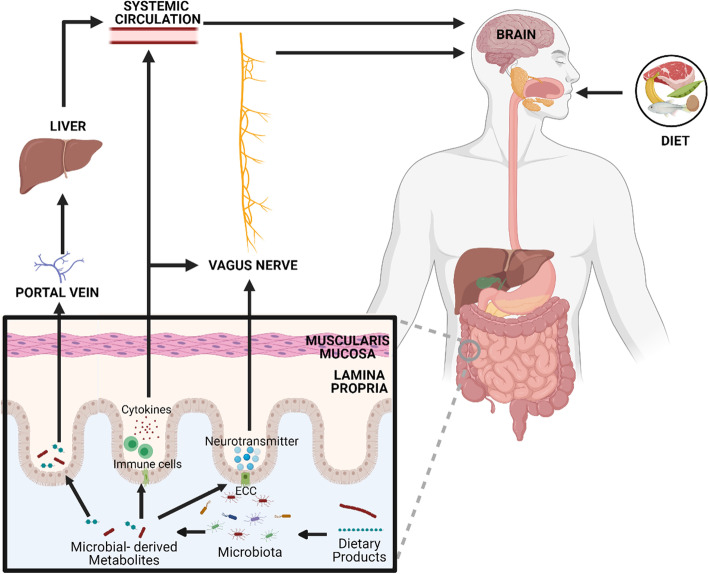
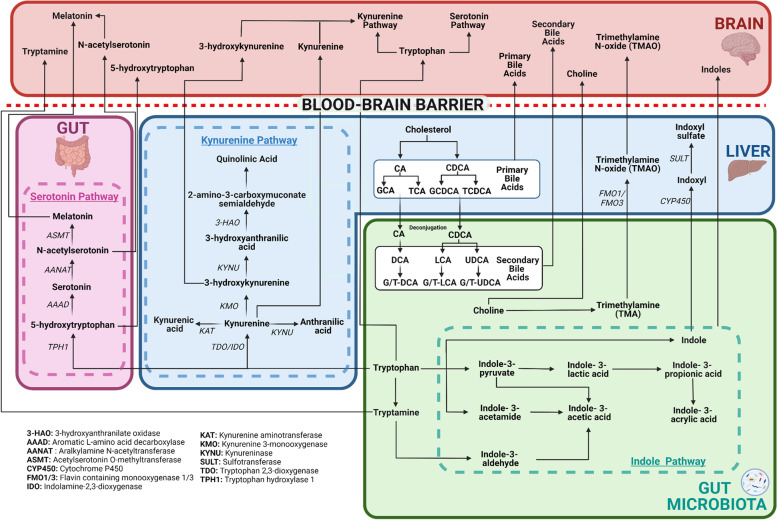
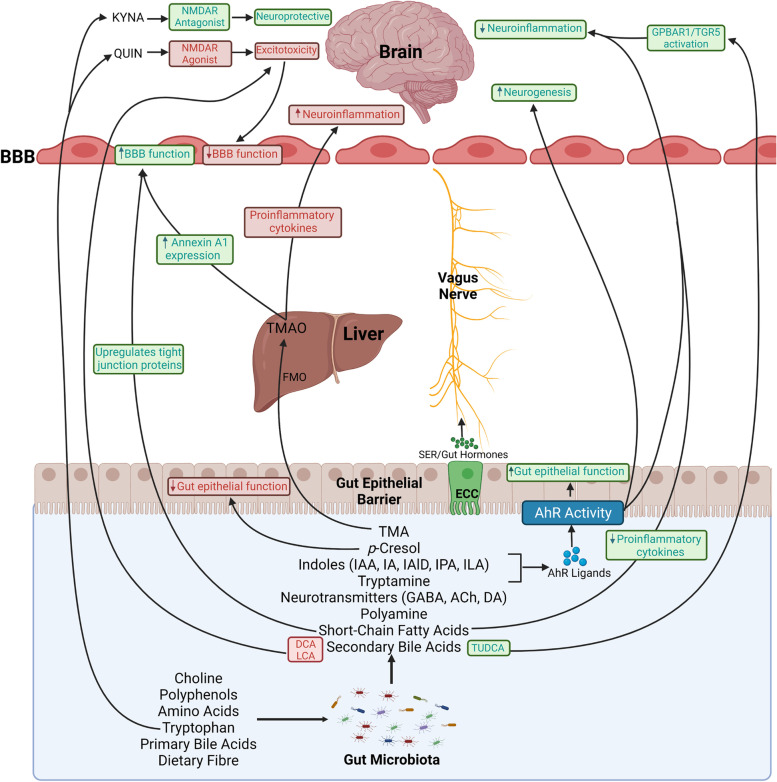
A consequence of our progressively ageing global population is the increasing prevalence of worldwide age-related cognitive decline and dementia. In the absence of effective therapeutic interventions, identifying risk factors associated with cognitive decline becomes increasingly vital. Novel perspectives suggest that a dynamic bidirectional communication system between the gut, its microbiome, and the central nervous system, commonly referred to as the microbiota-gut-brain axis, may be a contributing factor for cognitive health and disease. However, the exact mechanisms remain undefined. Microbial-derived metabolites produced in the gut can cross the intestinal epithelial barrier, enter systemic circulation and trigger physiological responses both directly and indirectly affecting the central nervous system and its functions. Dysregulation of this system (i.e., dysbiosis) can modulate cytotoxic metabolite production, promote neuroinflammation and negatively impact cognition. In this review, we explore critical connections between microbial-derived metabolites (secondary bile acids, trimethylamine-N-oxide (TMAO), tryptophan derivatives and others) and their influence upon cognitive function and neurodegenerative disorders, with a particular interest in their less-explored role as risk factors of cognitive decline.
Overview
The claims and statistics of this paper haven’t been checked yet.
Run the check — free, no account needed. It reads the open-access text and checks the sources it cites.
Integrity signals
Registry
Cites
Statistics
Figures
Verification
Claims the paper makes
The claims and statistics of this paper haven’t been checked yet.
Run the check — free, no account needed. It reads the open-access text and checks the sources it cites.
Claims other papers make about this one
Each is checked against this paper’s own text: does it say what the citing paper says it does?
In the citing paper
“Studies in animals have demonstrated the effect that the GM has on neural development and neurochemistry in the host, influencing the stress system, behavior, and cognition (42–47).”
From Signalling cognition: The gut microbiota and hypothalamic-pituitary-adrenal axis (2023) · cites this paper as [47]
Self-check
Percentages, sums and reported differences re-computed from the paper’s own numbers.
The self-check needs the paper’s full text.
Citations
Cites
1 retracted
Dementia prevention, intervention, and care: 2020 report of the Lancet Commission
Livingston, G., Huntley, J., Sommerlad, A., Ames, D., Ballard, C., Banerjee, S., Brayne, C., Burns, A., Cohen-Mansfield, J., Cooper, C., et al. (2020) · The Lancet · doi:10.1016/s0140-6736(20)30367-6 · Cited by 10,430 · cited 1×
“Currently, hypertension [7], diabetes mellitus [8, 9], arteriosclerosis [10], obesity [11] and hypercholesterolemia [12] are the most significant risk factors associated with age-related cognitive decline among others [13].”
BackgroundRetractedChanges of Intestinal Functions in Liver Cirrhosis
Fukui, H., & Wiest, R. (2016) · Inflammatory Intestinal Diseases · doi:10.1159/000444436 · Cited by 6,820
Cryan, J. F., O'Riordan, K. J., Cowan, C. S. M., Sandhu, K. V., Bastiaanssen, T. F. S., Boehme, M., Codagnone, M. G., Cussotto, S., Fulling, C., Golubeva, A. V., et al. (2019) · Physiological Reviews · doi:10.1152/physrev.00018.2018 · Cited by 5,286
Structure and function of the blood–brain barrier
Abbott, N. J., Patabendige, A. A. K., Dolman, D. E. M., Yusof, S. R., & Begley, D. J. (2010) · Neurobiology of Disease · doi:10.1016/j.nbd.2009.07.030 · Cited by 5,185
den Besten, G., van Eunen, K., Groen, A. K., Venema, K., Reijngoud, D.-J., & Bakker, B. M. (2013) · Journal of Lipid Research · doi:10.1194/jlr.r036012 · Cited by 5,048
Host-gut microbiota metabolic interactions
Nicholson, J. K., Holmes, E., Kinross, J., Burcelin, R., Gibson, G., Jia, W., & Pettersson, S. (2012) · Science · doi:10.1126/science.1223813 · Cited by 4,760
Richness of human gut microbiome correlates with metabolic markers
Le Chatelier, E., Nielsen, T., Qin, J., Prifti, E., Hildebrand, F., Falony, G., Almeida, M., Arumugam, M., Batto, J.-M., Kennedy, S., et al. (2013) · Nature · doi:10.1038/nature12506 · Cited by 4,662
Intestinal microbiota metabolism of l-carnitine, a nutrient in red meat, promotes atherosclerosis
Koeth, R. A., Wang, Z., Levison, B. S., Buffa, J. A., Org, E., Sheehy, B. T., Britt, E. B., Fu, X., Wu, Y., Li, L., et al. (2013) · Nature Medicine · doi:10.1038/nm.3145 · Cited by 4,386
Hearing loss and cognitive decline in older adults
Lin, F. R., Yaffe, K., Xia, J., Xue, Q.-L., Harris, T. B., Purchase-Helzner, E., Satterfield, S., Ayonayon, H. N., Ferrucci, L., Simonsick, E. M., et al. (2013) · JAMA Internal Medicine · doi:10.1001/jamainternmed.2013.1868 · Cited by 4,017
Bravo, J. A., Forsythe, P., Chew, M. V., Escaravage, E., Savignac, H. M., Dinan, T. G., Bienenstock, J., & Cryan, J. F. (2011) · Proceedings of the National Academy of Sciences · doi:10.1073/pnas.1102999108 · Cited by 3,888
Research works printed but not linked: 7
- Donaldson GP, Lee SM, Mazmanian SK. Gut biogeography of the bacterial microbiota. Nat Rev Microbiol Nature Publishing Group. 2016;14:20–32. · DOI · Paper page
- Bercik P, Denou E, Collins J, Jackson W, Lu J, Jury J, et al. The intestinal microbiota affect central levels of brain-derived neurotropic factor and behavior in mice. Gastroenterology. 2011;141(599–609):609.e1-3.
- Diaz Heijtz R, Wang S, Anuar F, Qian Y, Björkholm B, Samuelsson A, et al. Normal gut microbiota modulates brain development and behavior. Proc Natl Acad Sci U S A. 2011;108:3047–52. · DOI · Paper page
- Hubbard T, Murray I, Bisson W, Lahoti T, Gowda K, Amin S, et al. Adaptation of the human aryl hydrocarbon receptor to sense microbiota-derived indoles. Scientific Reports. 2015;5:12689. · DOI · Paper page
- Kim L-J, Chalmers TJ, Smith GC, Das A, Poon EWK, Wang J, et al. Nicotinamide mononucleotide (NMN) deamidation by the gut microbiome and evidence for indirect upregulation of the NAD+ metabolome. bioRxiv. Cold Spring Harbor Laboratory; 2020;289561:1–85.
- Soda K, Kawakami M. Mediterranean diet and polyamine intake: possible contribution of increased polyamine intake to inhibition of age-associated disease. Nutr Diet Suppl. 2010;3:1.
- Bray N. The microbiota–gut–brain axis. Nature Research: Nature Publishing Group; 2019.
Cited by
Sorted by citations
Microbiota–gut–brain axis and its therapeutic applications in neurodegenerative diseases
Loh, J. S., Mak, W. Q., Tan, L. K. S., Ng, C. X., Chan, H. H., Yeow, S. H., Foo, J. B., Ong, Y. S., How, C. W., & Khaw, K. Y. (2024) · Signal Transduction and Targeted Therapy · doi:10.1038/s41392-024-01743-1 · Cited by 1,193
Signalling cognition: The gut microbiota and hypothalamic-pituitary-adrenal axis
Rusch, J. A., Layden, B. T., & Dugas, L. R. (2023) · Frontiers in Endocrinology · doi:10.3389/fendo.2023.1130689 · Cited by 415
Microbiota from Alzheimer’s patients induce deficits in cognition and hippocampal neurogenesis
Grabrucker, S., Marizzoni, M., Silajdžić, E., Lopizzo, N., Mombelli, E., Nicolas, S., Dohm-Hansen, S., Scassellati, C., Moretti, D. V., Rosa, M., et al. (2023) · Brain · doi:10.1093/brain/awad303 · Cited by 236
Current understanding of the Alzheimer’s disease-associated microbiome and therapeutic strategies
Seo, D.-O., & Holtzman, D. M. (2024) · Experimental & Molecular Medicine · doi:10.1038/s12276-023-01146-2 · Cited by 259
The changing metabolic landscape of bile acids – keys to metabolism and immune regulation
Mohanty, I., Allaband, C., Mannochio-Russo, H., Abiead, Y. E., Hagey, L. R., Knight, R. D., & Dorrestein, P. C. (2024) · Nature Reviews Gastroenterology & Hepatology · doi:10.1038/s41575-024-00914-3 · Cited by 236
Metadata
- Authors
- Connell, E., Le Gall, G., Pontifex, M. G., Sami, S., Cryan, J. F., Clarke, G., Müller, M., & Vauzour, D.
- Affiliations
- University of East Anglia (GB)
- University College Cork (IE)
- Corresponding author
- Vauzour, David
- ORCID
- Venue
- Molecular Neurodegeneration
- Published
- 2022-06-17
- Volume
- 17
- Issue
- 1
- Pages
- 43-43
- ISSN
- 1750-1326 (ISSN-L)
- PMC
- PMC9204954
- OpenAlex
- W4283020259
- Cited by
- 208
- References
- 369
- Citations by year
- 2026: 41 · 2025: 60 · 2024: 57 · 2023: 38 · 2022: 12
- FWCI
- 4.39
- Type
- journal article
- Language
- en
- Open access
- gold
- doi.org
- Locations
- Molecular Neurodegeneration (publishedVersion, cc-by)
- PubMed Central (publishedVersion, cc-by)
- PubMed (publishedVersion)
- UEA Digital Repository (University of East Anglia) (acceptedVersion, other-oa)
- DOAJ (DOAJ: Directory of Open Access Journals) (submittedVersion)
- Lenus, The Irish Health Repository (Dr Steevens Hospital Library) (submittedVersion)
- Topics
- Life Sciences › Biochemistry, Genetics and Molecular Biology › Molecular Biology › Gut microbiota and health
- Health Sciences › Medicine › Psychiatry and Mental health › Dementia and Cognitive Impairment Research
- Life Sciences › Neuroscience › Biological Psychiatry › Tryptophan and brain disorders
- Keywords
- age-related cognitive decline, dementia, microbiota-gut-brain axis, dysbiosis, secondary bile acids, trimethylamine N-oxide, tryptophan derivatives, neuroinflammation, neurodegenerative diseases, gut microbiota, risk factors
- MeSH terms
- Gastrointestinal Microbiome, Aging, Dementia, Humans, Risk Factors, Cognitive Dysfunction
About these checks
Registry, retraction, Cites and statistics results are computed, not judged, with one exception: a printed reference that no index lists is read once by a model before it counts as a citation error. Claims are extracted by a model and kept only when their quote appears verbatim in the text; each cited source is then checked, with a model’s help, for whether it says what the claim relies on. Those verdicts can be wrong — read the claim’s quote and the cited source before relying on one.
Statistics and arithmetic are recomputed, not judged.
Confidence bands are shown only for fields calibrated on our annotated test set. None is calibrated yet, so no band is shown.
What counts as a claim ›How we measure confidence ›How we check this ›
Are you an author, or do you see a problem with this page? Request a review
