

The DOI matches its Crossref record; 369 of the 369 references it cites were found in a registry or an index.
Microbial-derived metabolites as a risk factor of age-related cognitive decline and dementia
Open accessAbstract
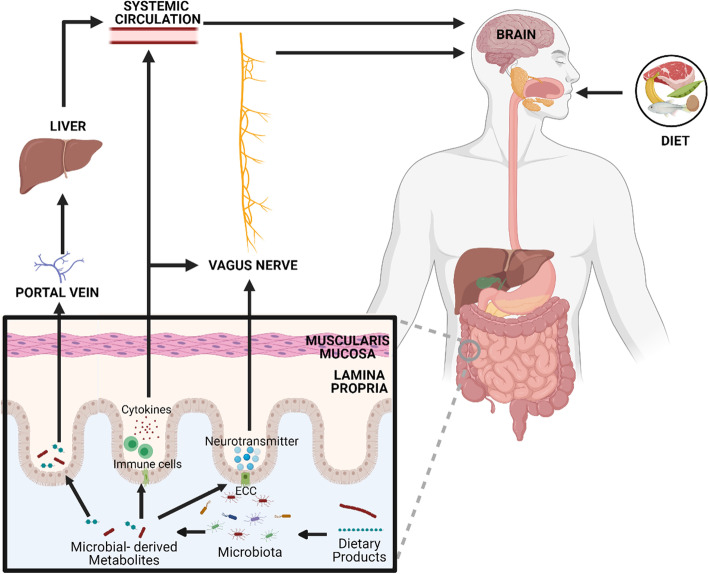
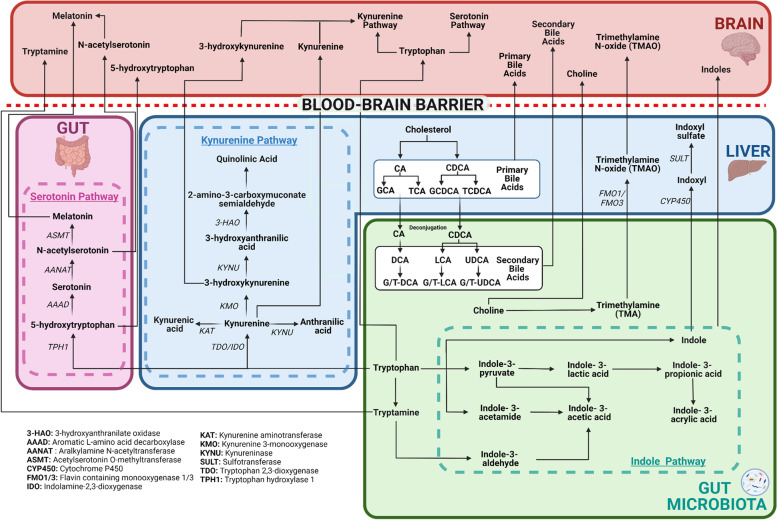
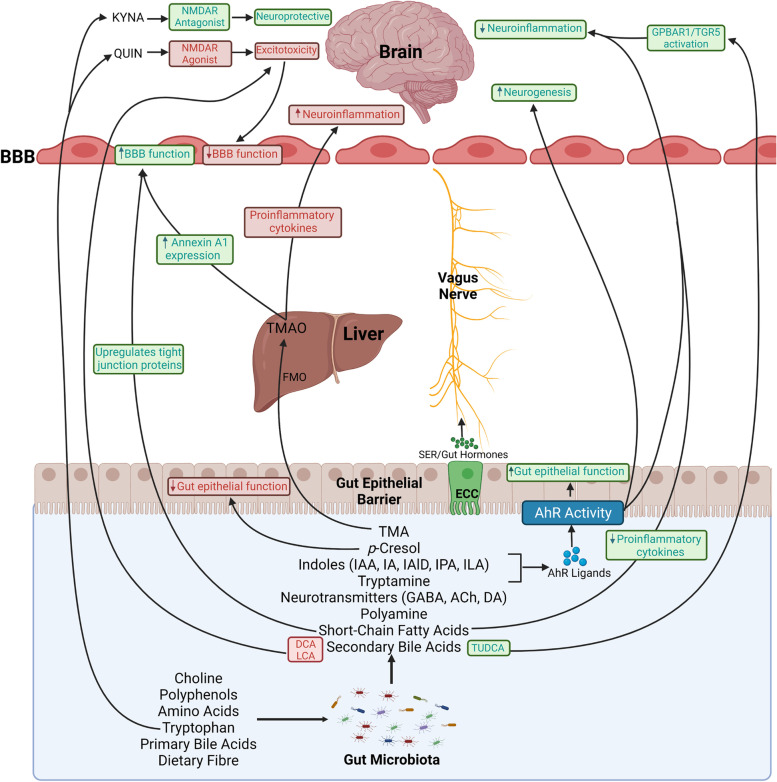
A consequence of our progressively ageing global population is the increasing prevalence of worldwide age-related cognitive decline and dementia. In the absence of effective therapeutic interventions, identifying risk factors associated with cognitive decline becomes increasingly vital. Novel perspectives suggest that a dynamic bidirectional communication system between the gut, its microbiome, and the central nervous system, commonly referred to as the microbiota-gut-brain axis, may be a contributing factor for cognitive health and disease. However, the exact mechanisms remain undefined. Microbial-derived metabolites produced in the gut can cross the intestinal epithelial barrier, enter systemic circulation and trigger physiological responses both directly and indirectly affecting the central nervous system and its functions. Dysregulation of this system (i.e., dysbiosis) can modulate cytotoxic metabolite production, promote neuroinflammation and negatively impact cognition. In this review, we explore critical connections between microbial-derived metabolites (secondary bile acids, trimethylamine-N-oxide (TMAO), tryptophan derivatives and others) and their influence upon cognitive function and neurodegenerative disorders, with a particular interest in their less-explored role as risk factors of cognitive decline.
Overview
The claims and statistics of this paper haven’t been checked yet.
Run the check — free, no account needed. It reads the open-access text and checks the sources it cites.
Integrity signals
Registry
Cites
Statistics
Figures
Verification
Claims the paper makes
The claims and statistics of this paper haven’t been checked yet.
Run the check — free, no account needed. It reads the open-access text and checks the sources it cites.
Claims other papers make about this one
Each is checked against this paper’s own text: does it say what the citing paper says it does?
In the citing paper
“Studies in animals have demonstrated the effect that the GM has on neural development and neurochemistry in the host, influencing the stress system, behavior, and cognition (42–47).”
From Signalling cognition: The gut microbiota and hypothalamic-pituitary-adrenal axis (2023) · cites this paper as [47]
Self-check
Percentages, sums and reported differences re-computed from the paper’s own numbers.
The self-check needs the paper’s full text.
Citations
Cites
1 retracted
Dementia prevention, intervention, and care: 2020 report of the Lancet Commission
Livingston, G., Huntley, J., Sommerlad, A., Ames, D., Ballard, C., Banerjee, S., Brayne, C., Burns, A., Cohen-Mansfield, J., Cooper, C., et al. (2020) · The Lancet · doi:10.1016/s0140-6736(20)30367-6 · Cited by 10,430 · cited 1×
“Currently, hypertension [7], diabetes mellitus [8, 9], arteriosclerosis [10], obesity [11] and hypercholesterolemia [12] are the most significant risk factors associated with age-related cognitive decline among others [13].”
BackgroundRetractedChanges of Intestinal Functions in Liver Cirrhosis
Fukui, H., & Wiest, R. (2016) · Inflammatory Intestinal Diseases · doi:10.1159/000444436 · Cited by 6,820
Cryan, J. F., O'Riordan, K. J., Cowan, C. S. M., Sandhu, K. V., Bastiaanssen, T. F. S., Boehme, M., Codagnone, M. G., Cussotto, S., Fulling, C., Golubeva, A. V., et al. (2019) · Physiological Reviews · doi:10.1152/physrev.00018.2018 · Cited by 5,286
Structure and function of the blood–brain barrier
Abbott, N. J., Patabendige, A. A. K., Dolman, D. E. M., Yusof, S. R., & Begley, D. J. (2010) · Neurobiology of Disease · doi:10.1016/j.nbd.2009.07.030 · Cited by 5,185
den Besten, G., van Eunen, K., Groen, A. K., Venema, K., Reijngoud, D.-J., & Bakker, B. M. (2013) · Journal of Lipid Research · doi:10.1194/jlr.r036012 · Cited by 5,048
Host-gut microbiota metabolic interactions
Nicholson, J. K., Holmes, E., Kinross, J., Burcelin, R., Gibson, G., Jia, W., & Pettersson, S. (2012) · Science · doi:10.1126/science.1223813 · Cited by 4,760
Richness of human gut microbiome correlates with metabolic markers
Le Chatelier, E., Nielsen, T., Qin, J., Prifti, E., Hildebrand, F., Falony, G., Almeida, M., Arumugam, M., Batto, J.-M., Kennedy, S., et al. (2013) · Nature · doi:10.1038/nature12506 · Cited by 4,662
Intestinal microbiota metabolism of l-carnitine, a nutrient in red meat, promotes atherosclerosis
Koeth, R. A., Wang, Z., Levison, B. S., Buffa, J. A., Org, E., Sheehy, B. T., Britt, E. B., Fu, X., Wu, Y., Li, L., et al. (2013) · Nature Medicine · doi:10.1038/nm.3145 · Cited by 4,386
Hearing loss and cognitive decline in older adults
Lin, F. R., Yaffe, K., Xia, J., Xue, Q.-L., Harris, T. B., Purchase-Helzner, E., Satterfield, S., Ayonayon, H. N., Ferrucci, L., Simonsick, E. M., et al. (2013) · JAMA Internal Medicine · doi:10.1001/jamainternmed.2013.1868 · Cited by 4,017
Bravo, J. A., Forsythe, P., Chew, M. V., Escaravage, E., Savignac, H. M., Dinan, T. G., Bienenstock, J., & Cryan, J. F. (2011) · Proceedings of the National Academy of Sciences · doi:10.1073/pnas.1102999108 · Cited by 3,888
Greicius, M. D., Srivastava, G., Reiss, A. L., & Menon, V. (2004) · Proceedings of the National Academy of Sciences · doi:10.1073/pnas.0308627101 · Cited by 3,684
Normal gut microbiota modulates brain development and behavior
Heijtz, R. D., Wang, S., Anuar, F., Qian, Y., Björkholm, B., Samuelsson, A., Hibberd, M. L., Forssberg, H., & Pettersson, S. (2011) · Proceedings of the National Academy of Sciences · doi:10.1073/pnas.1010529108 · Cited by 3,228 · cited 1×
“These behavioural changes were accompanied by altered brain-derived neurotrophic factor (BDNF) expression in the hippocampus [54, 57, 58], a molecule inherently linked with synaptic plasticity and cognitive function [59–61], and significant microbiota-associated changes in the quantity of dopamine and activation of se…”
BackgroundGut Microbiota Regulation of Tryptophan Metabolism in Health and Disease
Agus, A., Planchais, J., & Sokol, H. (2018) · Cell Host & Microbe · doi:10.1016/j.chom.2018.05.003 · Cited by 3,180 · cited 2×
“Tryptophan is a biosynthetic precursor to numerous microbial and host metabolites, making it essential to human health [190].”
BackgroundBlood–brain barrier breakdown in Alzheimer disease and other neurodegenerative disorders
Sweeney, M. D., Sagare, A. P., & Zlokovic, B. V. (2018) · Nature Reviews Neurology · doi:10.1038/nrneurol.2017.188 · Cited by 3,076
Gut microbiota functions: metabolism of nutrients and other food components
Rowland, I., Gibson, G., Heinken, A., Scott, K., Swann, J., Thiele, I., & Tuohy, K. (2018) · European Journal of Nutrition · doi:10.1007/s00394-017-1445-8 · Cited by 2,878
Environment dominates over host genetics in shaping human gut microbiota
Rothschild, D., Weissbrod, O., Barkan, E., Kurilshikov, A., Korem, T., Zeevi, D., Costea, P. I., Godneva, A., Kalka, I. N., Bar, N., et al. (2018) · Nature · doi:10.1038/nature25973 · Cited by 2,859
Review article: the role of butyrate on colonic function
HAMER, H. M., JONKERS, D., VENEMA, K., VANHOUTVIN, S., TROOST, F. J., & BRUMMER, R. ‐. (2008) · Alimentary Pharmacology & Therapeutics · doi:10.1111/j.1365-2036.2007.03562.x · Cited by 2,721
Metabolomics analysis reveals large effects of gut microflora on mammalian blood metabolites
Wikoff, W. R., Anfora, A. T., Liu, J., Schultz, P. G., Lesley, S. A., Peters, E. C., & Siuzdak, G. (2009) · Proceedings of the National Academy of Sciences · doi:10.1073/pnas.0812874106 · Cited by 2,677
Zelante, T., Iannitti, R. G., Cunha, C., De Luca, A., Giovannini, G., Pieraccini, G., Zecchi, R., D’Angelo, C., Massi-Benedetti, C., Fallarino, F., et al. (2013) · Immunity · doi:10.1016/j.immuni.2013.08.003 · Cited by 2,614
The gut-brain axis: interactions between enteric microbiota, central and enteric nervous systems.
(2015) · PubMed Central · Cited by 2,540
Gut biogeography of the bacterial microbiota
Donaldson, G. P., Lee, S. M., & Mazmanian, S. K. (2016) · Nature Reviews Microbiology · doi:10.1038/nrmicro3552 · Cited by 2,535
The gut microbiota influences blood-brain barrier permeability in mice
Braniste, V., Al-Asmakh, M., Kowal, C., Anuar, F., Abbaspour, A., Tóth, M., Korecka, A., Bakocevic, N., Ng, L. G., Kundu, P., et al. (2014) · Science Translational Medicine · doi:10.1126/scitranslmed.3009759 · Cited by 2,530
2019 Alzheimer’s disease facts and figures.
Alzheimer's Association (2019) · Alzheimer's & Dementia · doi:10.1016/j.jalz.2019.01.010 · Cited by 2,461
Microbiome definition re-visited: old concepts and new challenges
Berg, G., Rybakova, D., Fischer, D., Cernava, T., Vergès, M.-C. C., Charles, T., Chen, X., Cocolin, L., Eversole, K., Corral, G. H., et al. (2020) · Microbiome · doi:10.1186/s40168-020-00875-0 · Cited by 2,275
Microbial tryptophan catabolites in health and disease
Roager, H. M., & Licht, T. R. (2018) · Nature Communications · doi:10.1038/s41467-018-05470-4 · Cited by 2,236
Diabetes mellitus and the risk of dementia: The Rotterdam Study
Ott, A., Stolk, R. P., van Harskamp, F., Pols, H. A. P., Hofman, A., & Breteler, M. M. B. (1999) · Neurology · doi:10.1212/wnl.53.9.1937 · Cited by 2,175
Gut microbiome alterations in Alzheimer’s disease
Vogt, N. M., Kerby, R. L., Dill-McFarland, K. A., Harding, S. J., Merluzzi, A. P., Johnson, S. C., Carlsson, C. M., Asthana, S., Zetterberg, H., Blennow, K., et al. (2017) · Scientific Reports · doi:10.1038/s41598-017-13601-y · Cited by 2,137
Mechanisms Regulating Intestinal Barrier Integrity and Its Pathological Implications
Chelakkot, C., Ghim, J., & Ryu, S. H. (2018) · Experimental & Molecular Medicine · doi:10.1038/s12276-018-0126-x · Cited by 2,017
Gut Microbial Metabolite TMAO Enhances Platelet Hyperreactivity and Thrombosis Risk
Zhu, W., Gregory, J. C., Org, E., Buffa, J. A., Gupta, N., Wang, Z., Li, L., Fu, X., Wu, Y., Mehrabian, M., et al. (2016) · Cell · doi:10.1016/j.cell.2016.02.011 · Cited by 1,968
The cholinergic system in the pathophysiology and treatment of Alzheimer’s disease
Hampel, H., Mesulam, M.-M., Cuello, A. C., Farlow, M. R., Giacobini, E., Grossberg, G. T., Khachaturian, A. S., Vergallo, A., Cavedo, E., Snyder, P. J., et al. (2018) · Brain · doi:10.1093/brain/awy132 · Cited by 1,918
Clarke, G., Grenham, S., Scully, P., Fitzgerald, P., Moloney, R. D., Shanahan, F., Dinan, T. G., & Cryan, J. F. (2013) · Molecular Psychiatry · doi:10.1038/mp.2012.77 · Cited by 1,893
Self-citationBercik, P., Denou, E., Collins, J., Jackson, W., Lu, J., Jury, J., Deng, Y., Blennerhassett, P., Macri, J., McCoy, K. D., et al. (2011) · Gastroenterology · doi:10.1053/j.gastro.2011.04.052 · Cited by 1,748
Bile Acid Metabolism and Signaling
Chiang, J. Y. L. (2013) · Comprehensive physiology · doi:10.1002/cphy.c120023 · Cited by 1,662
The Impact of Age on Cognition
Murman, D. (2015) · Seminars in Hearing · doi:10.1055/s-0035-1555115 · Cited by 1,619
Kivipelto, M., Helkala, E.-L., Laakso, M. P., Hänninen, T., Hallikainen, M., Alhainen, K., Soininen, H., Tuomilehto, J., & Nissinen, A. (2001) · BMJ · doi:10.1136/bmj.322.7300.1447 · Cited by 1,618
Samuel, B. S., Shaito, A., Motoike, T., Rey, F. E., Backhed, F., Manchester, J. K., Hammer, R. E., Williams, S. C., Crowley, J., Yanagisawa, M., et al. (2008) · Proceedings of the National Academy of Sciences · doi:10.1073/pnas.0808567105 · Cited by 1,564
Rothhammer, V., Mascanfroni, I. D., Bunse, L., Takenaka, M. C., Kenison, J. E., Mayo, L., Chao, C.-C., Patel, B., Yan, R., Blain, M., et al. (2016) · Nature Medicine · doi:10.1038/nm.4106 · Cited by 1,559
Alzheimer's disease: Targeting the Cholinergic System
H. Ferreira-Vieira, T., M. Guimaraes, I., R. Silva, F., & M. Ribeiro, F. (2016) · Current Neuropharmacology · doi:10.2174/1570159x13666150716165726 · Cited by 1,551
Kynurenines in the mammalian brain: when physiology meets pathology
Schwarcz, R., Bruno, J. P., Muchowski, P. J., & Wu, H.-Q. (2012) · Nature Reviews Neuroscience · doi:10.1038/nrn3257 · Cited by 1,530 · cited 1×
“However, fluctuations in the systemic concentrations of these metabolites directly impacts KP metabolism in the CNS, including the synthesis of kynurenic acid and quinolinic acid in the brain [202].”
BackgroundNeurotransmitter modulation by the gut microbiota
Strandwitz, P. (2018) · Brain Research · doi:10.1016/j.brainres.2018.03.015 · Cited by 1,527
Odamaki, T., Kato, K., Sugahara, H., Hashikura, N., Takahashi, S., Xiao, J.-Z., Abe, F., & Osawa, R. (2016) · BMC Microbiology · doi:10.1186/s12866-016-0708-5 · Cited by 1,521
Gut microbial metabolites as multi-kingdom intermediates
Krautkramer, K. A., Fan, J., & Bäckhed, F. (2021) · Nature Reviews Microbiology · doi:10.1038/s41579-020-0438-4 · Cited by 1,398
The vagus nerve at the interface of the microbiota-gut-brain axis
Bonaz, B., Bazin, T., & Pellissier, S. (2018) · Frontiers in Neuroscience · doi:10.3389/fnins.2018.00049 · Cited by 1,397
Neufeld, K. M., Kang, N., Bienenstock, J., & Foster, J. A. (2011) · Neurogastroenterology & Motility · doi:10.1111/j.1365-2982.2010.01620.x · Cited by 1,392
Cattaneo, A., Cattane, N., Galluzzi, S., Provasi, S., Lopizzo, N., Festari, C., Ferrari, C., Guerra, U. P., Paghera, B., Muscio, C., et al. (2017) · Neurobiology of Aging · doi:10.1016/j.neurobiolaging.2016.08.019 · Cited by 1,382
The Liver as an Immunological Organ
Racanelli, V., & Rehermann, B. (2006) · Hepatology · doi:10.1002/hep.21060 · Cited by 1,377
Impact of the Gut Microbiota on Intestinal Immunity Mediated by Tryptophan Metabolism
Gao, J., Xu, K., Liu, H., Liu, G., Bai, M., Peng, C., Li, T., & Yin, Y. (2018) · Frontiers in Cellular and Infection Microbiology · doi:10.3389/fcimb.2018.00013 · Cited by 1,357
Gut microbiota-derived metabolites as central regulators in metabolic disorders
Agus, A., Clément, K., & Sokol, H. (2021) · Gut · doi:10.1136/gutjnl-2020-323071 · Cited by 1,347
Alzheimer’s disease: pathogenesis, diagnostics, and therapeutics
Tiwari, S., Atluri, V., Kaushik, A., Yndart, A., & Nair, M. (2019) · International Journal of Nanomedicine · doi:10.2147/ijn.s200490 · Cited by 1,308
Age-associated cognitive decline
Deary, I. J., Corley, J., Gow, A. J., Harris, S. E., Houlihan, L. M., Marioni, R. E., Penke, L., Rafnsson, S. B., & Starr, J. M. (2009) · British Medical Bulletin · doi:10.1093/bmb/ldp033 · Cited by 1,295
Type 2 Diabetes, APOE Gene, and the Risk for Dementia and Related Pathologies
Peila, R., Rodriguez, B. L., & Launer, L. J. (2002) · Diabetes · doi:10.2337/diabetes.51.4.1256 · Cited by 1,207
O’Toole, P. W., & Jeffery, I. B. (2015) · Science · doi:10.1126/science.aac8469 · Cited by 1,202
Differential aging of the brain: Patterns, cognitive correlates and modifiers
Raz, N., & Rodrigue, K. M. (2006) · Neuroscience & Biobehavioral Reviews · doi:10.1016/j.neubiorev.2006.07.001 · Cited by 1,195
GABA-modulating bacteria of the human gut microbiota
Strandwitz, P., Kim, K. H., Terekhova, D., Liu, J. K., Sharma, A., Levering, J., McDonald, D., Dietrich, D., Ramadhar, T. R., Lekbua, A., et al. (2018) · Nature Microbiology · doi:10.1038/s41564-018-0307-3 · Cited by 1,170 · cited 1×
“This molecule was recently shown to be both a product of bacteria in the gut [250, 253, 254] and an important substrate for other gut community members [255].”
BackgroundRole of Pro-Inflammatory Cytokines Released from Microglia in Neurodegenerative Diseases
Smith, J. A., Das, A., Ray, S. K., & Banik, N. L. (2012) · Brain Research Bulletin · doi:10.1016/j.brainresbull.2011.10.004 · Cited by 1,165
Regulation of antibacterial defense in the small intestine by the nuclear bile acid receptor
Inagaki, T., Moschetta, A., Lee, Y.-K., Peng, L., Zhao, G., Downes, M., Yu, R. T., Shelton, J. M., Richardson, J. A., Repa, J. J., et al. (2006) · Proceedings of the National Academy of Sciences · doi:10.1073/pnas.0509592103 · Cited by 1,164 · cited 1×
“For example, bile acids can bind to the FXR receptor in enterocytes, initiating the production of antimicrobial peptides such as angiogenin 1 and RNAse family member 4, which can inhibit bacterial overgrowth in the gut and intestinal barrier dysfunction [100].”
BackgroundKynurenine pathway of tryptophan metabolism: regulatory and functional aspects
Badawy, A. A.-B. (2017) · International Journal of Tryptophan Research · doi:10.1177/1178646917691938 · Cited by 1,158
Spermidine in health and disease
Madeo, F., Eisenberg, T., Pietrocola, F., & Kroemer, G. (2018) · Science · doi:10.1126/science.aan2788 · Cited by 1,154
Stress & the gut-brain axis: Regulation by the microbiome
Foster, J. A., Rinaman, L., & Cryan, J. F. (2017) · Neurobiology of Stress · doi:10.1016/j.ynstr.2017.03.001 · Cited by 1,150
Dopamine and the regulation of cognition and attention
Nieoullon, A. (2002) · Progress in Neurobiology · doi:10.1016/s0301-0082(02)00011-4 · Cited by 1,131
Altered profile of human gut microbiome is associated with cirrhosis and its complications
Bajaj, J. S., Heuman, D. M., Hylemon, P. B., Sanyal, A. J., White, M. B., Monteith, P., Noble, N. A., Unser, A. B., Daita, K., Fisher, A. R., et al. (2014) · Journal of Hepatology · doi:10.1016/j.jhep.2013.12.019 · Cited by 1,099
Dopamine: Functions, Signaling, and Association with Neurological Diseases
Klein, M. O., Battagello, D. S., Cardoso, A. R., Hauser, D. N., Bittencourt, J. C., & Correa, R. G. (2019) · Cellular and Molecular Neurobiology · doi:10.1007/s10571-018-0632-3 · Cited by 1,073
Plasma phospholipids identify antecedent memory impairment in older adults
Mapstone, M. E., Cheema, A. K., Fiandaca, M. S., Zhong, X., Mhyre, T. R., MacArthur, L. H., Hall, W. J., Fisher, S. G., Peterson, D. R., Haley, J. M., et al. (2014) · Nature Medicine · doi:10.1038/nm.3466 · Cited by 1,060
Simpson, D. S. A., & Oliver, P. L. (2020) · Antioxidants · doi:10.3390/antiox9080743 · Cited by 1,044 · cited 2×
“Indeed, spermidine is needed to chemically modify eukaryotic initiation factor 5A (eIF5A), an important enzyme involved in TCA cycle maintenance and electron transport chain in macrophages [352], highlighting an important role for this polyamine in the regulation of mitochondrial metabolism as any reduced activity can…”
BackgroundGut microbes and the brain: paradigm shift in neuroscience
Mayer, E. A., Knight, R., Mazmanian, S. K., Cryan, J. F., & Tillisch, K. (2014) · The Journal of Neuroscience · doi:10.1523/jneurosci.3299-14.2014 · Cited by 1,033
Bercik, P., Park, A. J., Sinclair, D., Khoshdel, A., Lu, J., Huang, X., Deng, Y., Blennerhassett, P. A., Fahnestock, M., Moine, D., et al. (2011) · Neurogastroenterology & Motility · doi:10.1111/j.1365-2982.2011.01796.x · Cited by 1,018
Scahill, R. I., Frost, C. D., Jenkins, R., Whitwell, J. L., Rossor, M. N., & Fox, N. C. (2003) · Archives of Neurology · doi:10.1001/archneur.60.7.989 · Cited by 959
Burokas, A., Arboleya, S., Moloney, R. D., Peterson, V. L., Murphy, K., Clarke, G., Stanton, C., Dinan, T. G., & Cryan, J. F. (2017) · Biological Psychiatry · doi:10.1016/j.biopsych.2016.12.031 · Cited by 952
Indoleacrylic Acid Produced by Commensal Peptostreptococcus Species Suppresses Inflammation
Wlodarska, M., Luo, C., Kolde, R., d'Hennezel, E. B., Annand, J. W., Heim, C. E., Krastel, P., Schmitt, E. K., Omar, A. S., Creasey, E. A., et al. (2017) · Cell Host & Microbe · doi:10.1016/j.chom.2017.06.007 · Cited by 918
Seldin, M. M., Meng, Y., Qi, H., Zhu, W., Wang, Z., Hazen, S. L., Lusis, A. J., & Shih, D. M. (2016) · Journal of the American Heart Association · doi:10.1161/jaha.115.002767 · Cited by 911
Bacterial infection causes stress-induced memory dysfunction in mice
Gareau, M. G., Wine, E., Rodrigues, D. M., Cho, J. H., Whary, M. T., Philpott, D. J., MacQueen, G., & Sherman, P. M. (2011) · Gut · doi:10.1136/gut.2009.202515 · Cited by 909 · cited 1×
“These behavioural changes were accompanied by altered brain-derived neurotrophic factor (BDNF) expression in the hippocampus [54, 57, 58], a molecule inherently linked with synaptic plasticity and cognitive function [59–61], and significant microbiota-associated changes in the quantity of dopamine and activation of se…”
BackgroundJenkins, T., Nguyen, J., Polglaze, K., & Bertrand, P. (2016) · Nutrients · doi:10.3390/nu8010056 · Cited by 904
Lactobacillus reuteri induces gut intraepithelial CD4 + CD8αα + T cells
Cervantes-Barragan, L., Chai, J. N., Tianero, M. D., Di Luccia, B., Ahern, P. P., Merriman, J., Cortez, V. S., Caparon, M. G., Donia, M. S., Gilfillan, S., et al. (2017) · Science · doi:10.1126/science.aah5825 · Cited by 896
The neuropharmacology of butyrate: the bread and butter of the microbiota-gut-brain axis
Stilling, R. M., van de Wouw, M., Clarke, G., Stanton, C., Dinan, T. G., & Cryan, J. F. (2016) · Neurochemistry International · doi:10.1016/j.neuint.2016.06.011 · Cited by 891
Gut Microbiota is Altered in Patients with Alzheimer’s Disease
Zhuang, Z.-Q., Shen, L.-L., Li, W.-W., Fu, X., Zeng, F., Gui, L., Lü, Y., Cai, M., Zhu, C., Tan, Y.-L., et al. (2018) · Journal of Alzheimer's Disease · doi:10.3233/jad-180176 · Cited by 885
Cardiovascular risk factors and cognitive decline in middle-aged adults
Knopman, D., Boland, L. L., Mosley, T., Howard, G., Liao, D., Szklo, M., McGovern, P., & Folsom, A. R. (2001) · Neurology · doi:10.1212/wnl.56.1.42 · Cited by 883
Bansal, T., Alaniz, R. C., Wood, T. K., & Jayaraman, A. (2010) · Proceedings of the National Academy of Sciences · doi:10.1073/pnas.0906112107 · Cited by 868
Microbially Produced Imidazole Propionate Impairs Insulin Signaling through mTORC1
Koh, A., Molinaro, A., Ståhlman, M., Khan, M. T., Schmidt, C., Mannerås-Holm, L., Wu, H., Carreras, A., Jeong, H., Olofsson, L. E., et al. (2018) · Cell · doi:10.1016/j.cell.2018.09.055 · Cited by 824
Pinto-Sanchez, M. I., Hall, G. B., Ghajar, K., Nardelli, A., Bolino, C., Lau, J. T., Martin, F.-P., Cominetti, O., Welsh, C., Rieder, A., et al. (2017) · Gastroenterology · doi:10.1053/j.gastro.2017.05.003 · Cited by 821
The kynurenine pathway: a finger in every pie
Savitz, J. B. (2019) · Molecular Psychiatry · doi:10.1038/s41380-019-0414-4 · Cited by 805
Review: microbial transformations of human bile acids
Guzior, D. V., & Quinn, R. A. (2021) · Microbiome · doi:10.1186/s40168-021-01101-1 · Cited by 795
Interplay between the human gut microbiome and host metabolism
Visconti, A., Le Roy, C. I., Rosa, F., Rossi, N., Martin, T. C., Mohney, R. P., Li, W., de Rinaldis, E., Bell, J. T., Venter, J. C., et al. (2019) · Nature Communications · doi:10.1038/s41467-019-12476-z · Cited by 782
A Neural Circuit for Gut-Induced Reward
Han, W., Téllez, L. A., Perkins, M. H., Pérez-Martínez, I. O., Qu, T., Ferreira, J. G. P., Ferreira, T. L., Quinn, D., Liu, Z.-W., Gao, X., et al. (2018) · Cell · doi:10.1016/j.cell.2018.08.049 · Cited by 772
Gut microbiota depletion from early adolescence in mice: implications for brain and behaviour
Desbonnet, L., Clarke, G., Traplin, A., O’Sullivan, O., Crispie, F., Moloney, R. D., Cotter, P. D., Dinan, T. G., & Cryan, J. F. (2015) · Brain Behavior and Immunity · doi:10.1016/j.bbi.2015.04.004 · Cited by 760
Hwu, P., Du, M. X., Lapointe, R., Do, M., Taylor, M. W., & Young, H. A. (2000) · The Journal of Immunology · doi:10.4049/jimmunol.164.7.3596 · Cited by 747
Gut microbes and metabolites as modulators of blood-brain barrier integrity and brain health
Parker, A., Fonseca, S., & Carding, S. R. (2019) · Gut Microbes · doi:10.1080/19490976.2019.1638722 · Cited by 745
Mitochondrial dysfunction is a trigger of Alzheimer's disease pathophysiology
Moreira, P. I., Carvalho, C., Zhu, X., Smith, M. A., & Perry, G. (2010) · Biochimica et Biophysica Acta (BBA) - Molecular Basis of Disease · doi:10.1016/j.bbadis.2009.10.006 · Cited by 734
L -Tryptophan: Basic Metabolic Functions, Behavioral Research and Therapeutic Indications
Richard, D. M., Dawes, M. A., Mathias, C. W., Acheson, A., Hill‐Kapturczak, N., & Dougherty, D. M. (2009) · International Journal of Tryptophan Research · doi:10.4137/ijtr.s2129 · Cited by 733
Fröhlich, E. E., Farzi, A., Mayerhofer, R., Reichmann, F., Jačan, A., Wagner, B., Zinser, E., Bordag, N., Magnes, C., Fröhlich, E., et al. (2016) · Brain Behavior and Immunity · doi:10.1016/j.bbi.2016.02.020 · Cited by 720
Meta-analysis of Alzheimer’s disease risk with obesity, diabetes, and related disorders
Profenno, L. A., Porsteinsson, A. P., & Faraone, S. V. (2010) · Biological Psychiatry · doi:10.1016/j.biopsych.2009.02.013 · Cited by 718
MahmoudianDehkordi, S., Arnold, M., Nho, K., Ahmad, S., Jia, W., Xie, G., Louie, G., Kueider‐Paisley, A., Moseley, M. A., Thompson, J. W., et al. (2019) · Alzheimer's & Dementia · doi:10.1016/j.jalz.2018.07.217 · Cited by 706
Microbial conversion of choline to trimethylamine requires a glycyl radical enzyme
Craciun, S., & Balskus, E. P. (2012) · Proceedings of the National Academy of Sciences · doi:10.1073/pnas.1215689109 · Cited by 701
Agostoni, E., Chinnock, J. E., Daly, M. D. B., & Murray, J. G. (1957) · The Journal of Physiology · doi:10.1113/jphysiol.1957.sp005703 · Cited by 688
Tang, W. H. W., Wang, Z., Fan, Y., Levison, B., Hazen, J. E., Donahue, L. M., Wu, Y., & Hazen, S. L. (2014) · Journal of the American College of Cardiology · doi:10.1016/j.jacc.2014.02.617 · Cited by 681
Liu, P., Wu, L., Peng, G., Han, Y., Tang, R., Ge, J., Zhang, L., Jia, L., Yue, S., Zhou, K., et al. (2019) · Brain, Behavior, and Immunity · doi:10.1016/j.bbi.2019.05.008 · Cited by 669
Asano, Y., Hiramoto, T., Nishino, R., Aiba, Y., Kimura, T., Yoshihara, K., Koga, Y., & Sudo, N. (2012) · American Journal of Physiology-Gastrointestinal and Liver Physiology · doi:10.1152/ajpgi.00341.2012 · Cited by 659
Mitochondrial Dysfunction and Oxidative Stress in Alzheimer’s Disease
Misrani, A., Tabassum, S., & Yang, L. (2021) · Frontiers in Aging Neuroscience · doi:10.3389/fnagi.2021.617588 · Cited by 654
Diffusion tensor imaging and aging
Sullivan, E. V., & Pfefferbaum, A. (2006) · Neuroscience & Biobehavioral Reviews · doi:10.1016/j.neubiorev.2006.06.002 · Cited by 649
Luczynski, P., McVey Neufeld, K.-A., Oriach, C. S., Clarke, G., Dinan, T. G., & Cryan, J. F. (2016) · International Journal of Neuropsychopharmacology · doi:10.1093/ijnp/pyw020 · Cited by 632
Janeiro, M., Ramírez, M., Milagro, F., Martínez, J., & Solas, M. (2018) · Nutrients · doi:10.3390/nu10101398 · Cited by 631 · cited 1×
“TMAO concentrations vary with age [184], diet [169] and cholic acid levels (a BA known to induce FMO3 expression via FXR activation [185]); factors often not accounted for in association studies.”
BackgroundMapping hippocampal and ventricular change in Alzheimer disease
Thompson, P. M., Hayashi, K. M., de Zubicaray, G. I., Janke, A. L., Rose, S., Semple, J. M., Hong, M., Herman, D. H., Gravano, D. M., Doddrell, D. M., et al. (2004) · NeuroImage · doi:10.1016/j.neuroimage.2004.03.040 · Cited by 618
Chen, M., Zhu, X., Ran, L., Lang, H., Yi, L., & Mi, M. (2017) · Journal of the American Heart Association · doi:10.1161/jaha.117.006347 · Cited by 600
Gut Microbe to Brain Signaling: What Happens in Vagus…
Fülling, C., Dinan, T. G., & Cryan, J. F. (2019) · Neuron · doi:10.1016/j.neuron.2019.02.008 · Cited by 590
Sochocka, M., Donskow-Łysoniewska, K., Diniz, B. S., Kurpas, D., Brzozowska, E., & Leszek, J. (2019) · Molecular Neurobiology · doi:10.1007/s12035-018-1188-4 · Cited by 584
TLR Signaling in the Gut in Health and Disease
Abreu, M. T., Fukata, M., & Arditi, M. (2005) · The Journal of Immunology · doi:10.4049/jimmunol.174.8.4453 · Cited by 577
Dopamine Signaling in reward-related behaviors
Baik, J. (2013) · Frontiers in Neural Circuits · doi:10.3389/fncir.2013.00152 · Cited by 568
Linkage of gut microbiome with cognition in hepatic encephalopathy
Bajaj, J. S., Ridlon, J. M., Hylemon, P. B., Thacker, L. R., Heuman, D. M., Smith, S., Sikaroodi, M., & Gillevet, P. M. (2012) · American Journal of Physiology-Gastrointestinal and Liver Physiology · doi:10.1152/ajpgi.00190.2011 · Cited by 547
Impact of diabetes on cognitive function and brain structure
Moheet, A. A., Mangia, S., & Seaquist, E. R. (2015) · Annals of the New York Academy of Sciences · doi:10.1111/nyas.12807 · Cited by 539
Bajaj, J. S., Hylemon, P. B., Ridlon, J. M., Heuman, D. M., Daita, K., White, M. B., Monteith, P., Noble, N. A., Sikaroodi, M., & Gillevet, P. M. (2012) · American Journal of Physiology-Gastrointestinal and Liver Physiology · doi:10.1152/ajpgi.00152.2012 · Cited by 530
Lü, K., Abo, R., Schlieper, K. A., Graffam, M. E., Levine, S. S., Wishnok, J. S., Swenberg, J. A., Tannenbaum, S. R., & Fox, J. G. (2014) · Environmental Health Perspectives · doi:10.1289/ehp.1307429 · Cited by 527
van Kessel, S. P., Frye, A. K., El-Gendy, A. O., Castejon, M., Keshavarzian, A., van Dijk, G., & El Aidy, S. (2019) · Nature Communications · doi:10.1038/s41467-019-08294-y · Cited by 521
Kynurenine 3-Monooxygenase Inhibition in Blood Ameliorates Neurodegeneration
Zwilling, D., Huang, S., Sathyasaikumar, K. V., Notarangelo, F. M., Guidetti, P., Wu, H., Lee, J. H., Truong, J. K., Andrews-Zwilling, Y. S., Hsieh, E., et al. (2011) · Cell · doi:10.1016/j.cell.2011.05.020 · Cited by 519
Gut microbiota and dysbiosis in Alzheimer's disease: Implications for pathogenesis and treatment
Liu, S., Gao, J., Zhu, M., Liu, K., & Zhang, H.-L. (2020) · Molecular Neurobiology · doi:10.1007/s12035-020-02073-3 · Cited by 516 · cited 1×
“Broad deviations in these microbial compositions, often referred to as “dysbiosis”, condition distinctly different metabolic profiles that may contribute to cognitive decline [23, 24].”
BackgroundTrimethylamine N-oxide: the good, the bad and the unknown.
Velasquez, M., Ramezani, A., Manal, A., & Raj, D. (2016) · Toxins · doi:10.3390/toxins8110326 · Cited by 504
Mild cognitive impairment has similar alterations as Alzheimer's disease in gut microbiota
Li, B., He, Y., Ma, J., Huang, P., Du, J., Cao, L. H., Wang, Y., Xiao, Q., Tang, H., & Chen, S. (2019) · Alzheimer s & Dementia · doi:10.1016/j.jalz.2019.07.002 · Cited by 484
Oxidative stress and aberrant signaling in aging and cognitive decline
Dröge, W., & Schipper, H. M. (2007) · Aging Cell · doi:10.1111/j.1474-9726.2007.00294.x · Cited by 479
The gut microbiota-derived metabolite trimethylamine N-oxide is elevated in Alzheimer’s disease
Vogt, N. M., Romano, K. A., Darst, B. F., Engelman, C. D., Johnson, S. C., Carlsson, C. M., Asthana, S., Blennow, K., Zetterberg, H., Bendlin, B. B., et al. (2018) · Alzheimer's Research & Therapy · doi:10.1186/s13195-018-0451-2 · Cited by 471
The relationship between obesity and cognitive health and decline
Dye, L., Boyle, N. B., Champ, C., & Lawton, C. (2017) · Proceedings of the Nutrition Society · doi:10.1017/s0029665117002014 · Cited by 469
Carrier-mediated blood-brain barrier transport of short-chain monocarboxylic organic acids
Oldendorf, W. (1973) · American Journal of Physiology-Legacy Content · doi:10.1152/ajplegacy.1973.224.6.1450 · Cited by 463 · cited 1×
“In fact, the uptake of SCFAs into the brain has formerly been exhibited in rodents following the injection of 14C-SCFAs into the carotid artery [293].”
BackgroundGastrointestinal hormones and food intake
Strader, A. D., & Woods, S. C. (2005) · Gastroenterology · doi:10.1053/j.gastro.2004.10.043 · Cited by 461
Mild cognitive impairment and its management in older people
Eshkoor, S. A., Mun, C. Y., Ng, C. K., & Hamid, T. A. (2015) · Clinical Interventions in Aging · doi:10.2147/cia.s73922 · Cited by 460
Tryptophan Metabolic Pathways and Brain Serotonergic Activity: A Comparative Review
Höglund, E., Øverli, Ø., & Winberg, S. (2019) · Frontiers in Endocrinology · doi:10.3389/fendo.2019.00158 · Cited by 443
Russell, W. R., Duncan, S. H., Scobbie, L., Duncan, G., Cantlay, L., Calder, A. G., Anderson, S. E., & Flint, H. J. (2013) · Molecular Nutrition & Food Research · doi:10.1002/mnfr.201200594 · Cited by 417
Haran, J. P., Bhattarai, S. K., Foley, S. E., Dutta, P., Ward, D. V., Bucci, V., & McCormick, B. A. (2019) · mBio · doi:10.1128/mbio.00632-19 · Cited by 412
What has serotonin to do with depression?
Cowen, P. J., & Browning, M. D. (2015) · World Psychiatry · doi:10.1002/wps.20229 · Cited by 410
Role of Monocarboxylate Transporters in Drug Delivery to the Brain
Vijay, N., & Morris, M. (2014) · Current Pharmaceutical Design · doi:10.2174/13816128113199990462 · Cited by 408
Commensal bacteria-dependent indole production enhances epithelial barrier function in the colon
Shimada, Y., Kinoshita, M., Harada, K., Mizutani, M., Masahata, K., Kayama, H., & Takeda, K. (2013) · PLoS ONE · doi:10.1371/journal.pone.0080604 · Cited by 404
Quinolinic acid: an endogenous neurotoxin with multiple targets
Lugo-Huitrón, R., Ugalde Muñiz, P., Pineda, B., Pedraza-Chaverrí, J., Ríos, C., & Pérez-de la Cruz, V. (2013) · Oxidative Medicine and Cellular Longevity · doi:10.1155/2013/104024 · Cited by 394
Lovelace, M. D., Varney, B., Sundaram, G., Lennon, M. J., Lim, C. K., Jacobs, K., Guillemin, G. J., & Brew, B. J. (2017) · Neuropharmacology · doi:10.1016/j.neuropharm.2016.03.024 · Cited by 393 · cited 1×
“Enzymes such as tryptophan hydroxylase and IDO balance the ratio of tryptophan metabolism via the KP and serotonin pathways [224].”
BackgroundDissimilatory Amino Acid Metabolism in Human Colonic Bacteria
Smith, E. A., & Macfarlane, G. T. (1997) · Anaerobe · doi:10.1006/anae.1997.0121 · Cited by 388
Polyamines and eIF5A Hypusination Modulate Mitochondrial Respiration and Macrophage Activation
Puleston, D. J., Buck, M. D., Geltink, R. I. K., Kyle, R. L., Caputa, G., O’Sullivan, D., Cameron, A. M., Castoldi, Â., Musa, Y., Kabat, A. M., et al. (2019) · Cell Metabolism · doi:10.1016/j.cmet.2019.05.003 · Cited by 385
Gut microbial molecules in behavioural and neurodegenerative conditions
Needham, B. D., Kaddurah-Daouk, R., & Mazmanian, S. K. (2020) · Nature Reviews Neuroscience · doi:10.1038/s41583-020-00381-0 · Cited by 379
Adaptation of the human aryl hydrocarbon receptor to sense microbiota-derived indoles
Hubbard, T. D., Murray, I. A., Bisson, W. H., Lahoti, T. S., Gowda, K., Amin, S. G., Patterson, A. D., & Perdew, G. H. (2015) · Scientific Reports · doi:10.1038/srep12689 · Cited by 377
Ho, L., Ono, K., Tsuji, M., Mazzola, P., Singh, R., & Pasinetti, G. M. (2018) · Expert Review of Neurotherapeutics · doi:10.1080/14737175.2018.1400909 · Cited by 376
Age-related changes in the default mode network are more advanced in Alzheimer disease
Jones, D. T., Machulda, M. M., Vemuri, P., McDade, E. M., Zeng, G., Senjem, M. L., Gunter, J. L., Przybelski, S. A., Avula, R. T., Knopman, D. S., et al. (2011) · Neurology · doi:10.1212/wnl.0b013e318233b33d · Cited by 370
Balagopal, P., de Ferranti, S. D., Cook, S., Daniels, S. R., Gidding, S. S., Hayman, L. L., McCrindle, B. W., Mietus‐Snyder, M., & Steinberger, J. (2011) · Circulation · doi:10.1161/cir.0b013e31821c7c64 · Cited by 363
Dietary trimethylamine N-oxide exacerbates impaired glucose tolerance in mice fed a high fat diet
Gao, X., Liu, X., Xu, J., Xue, C., Xue, Y., & Wang, Y. (2014) · Journal of Bioscience and Bioengineering · doi:10.1016/j.jbiosc.2014.03.001 · Cited by 360
Hypertension and the Risk of Mild Cognitive Impairment
Reitz, C., Tang, M.-X., Manly, J., Mayeux, R., & Luchsinger, J. A. (2007) · Archives of Neurology · doi:10.1001/archneur.64.12.1734 · Cited by 360
Neurotransmitters as food supplements: the effects of GABA on brain and behavior
Boonstra, E., de Kleijn, R., Colzato, L. S., Alkemade, A., Forstmann, B. U., & Nieuwenhuis, S. (2015) · Frontiers in Psychology · doi:10.3389/fpsyg.2015.01520 · Cited by 357
Microbiota-derived short chain fatty acids modulate microglia and promote Aβ plaque deposition
Colombo, A. V., Sadler, R. K., Llovera, G., Singh, V., Roth, S., Heindl, S., Sebastian Monasor, L., Verhoeven, A., Peters, F., Parhizkar, S., et al. (2021) · eLife · doi:10.7554/elife.59826 · Cited by 354
Marizzoni, M., Cattaneo, A., Mirabelli, P., Festari, C., Lopizzo, N., Nicolosi, V., Mombelli, E., Mazzelli, M., Luongo, D., Naviglio, D., et al. (2020) · Journal of Alzheimer s Disease · doi:10.3233/jad-200306 · Cited by 351
Nho, K., Kueider‐Paisley, A., MahmoudianDehkordi, S., Arnold, M., Risacher, S. L., Louie, G., Blach, C., Baillie, R., Han, X., Kastenmüller, G., et al. (2019) · Alzheimer's & Dementia · doi:10.1016/j.jalz.2018.08.012 · Cited by 343
Schroeder, J. C., DiNatale, B. C., Murray, I. A., Flaveny, C. A., Liu, Q., Laurenzana, E. M., Lin, J.-M., Strom, S. C., Omiecinski, C. J., Amin, S., et al. (2009) · Biochemistry · doi:10.1021/bi901786x · Cited by 340
Bile acids as endogenous etiologic agents in gastrointestinal cancer
Bernstein, H., Bernstein, C., Payne, C. M., & Dvorak, K. (2009) · World Journal of Gastroenterology · doi:10.3748/wjg.15.3329 · Cited by 340
Indoleamine 2,3 dioxygenase and quinolinic acid Immunoreactivity in Alzheimer's disease hippocampus
Guillemin, G. J., Brew, B. J., Noonan, C. E., Takikawa, O., & Cullen, K. M. (2005) · Neuropathology and Applied Neurobiology · doi:10.1111/j.1365-2990.2005.00655.x · Cited by 338
Missailidis, C., Hällqvist, J., Qureshi, A. R., Barany, P., Heimbürger, O., Lindholm, B., Stenvinkel, P., & Bergman, P. (2016) · PLOS ONE · doi:10.1371/journal.pone.0141738 · Cited by 338
Org, E., Blum, Y., Kasela, S., Mehrabian, M., Kuusisto, J., Kangas, A. J., Soininen, P., Wang, Z., Ala‐Korpela, M., Hazen, S. L., et al. (2017) · Genome biology · doi:10.1186/s13059-017-1194-2 · Cited by 337
Brain acetylcholine: Increase after systematic choline administration
Cohen, E. L., & Wurtman, R. J. (1975) · Life Sciences · doi:10.1016/0024-3205(75)90194-0 · Cited by 336
Alzheimer's Disease and Mild Cognitive Impairment
Kelley, B. J., & Petersen, R. C. (2007) · Neurologic Clinics · doi:10.1016/j.ncl.2007.03.008 · Cited by 335
Impact of intestinal microbiota on intestinal luminal metabolome
Matsumoto, M., Kibe, R., Ooga, T., Aiba, Y., Kurihara, S., Sawaki, E., Koga, Y., & Benno, Y. (2012) · Scientific Reports · doi:10.1038/srep00233 · Cited by 334
Saito, Y., Sato, T., Nomoto, K., & Tsuji, H. (2018) · FEMS Microbiology Ecology · doi:10.1093/femsec/fiy125 · Cited by 331
TMAO: A small molecule of great expectations
Ufnal, M., Żądło‐Dobrowolska, A., & Ostaszewski, R. (2015) · Nutrition · doi:10.1016/j.nut.2015.05.006 · Cited by 327
Role of Microbiota-Gut-Brain Axis in Regulating Dopaminergic Signaling
Hamamah, S., Aghazarian, A., Nazaryan, A., Hajnal, A. S., & Covașă, M. (2022) · Biomedicines · doi:10.3390/biomedicines10020436 · Cited by 327
Wang, Z., Levison, B. S., Hazen, J. E., Donahue, L., Li, X.-M., & Hazen, S. L. (2014) · Analytical Biochemistry · doi:10.1016/j.ab.2014.03.016 · Cited by 320
Movement of fatty acids, fatty acid analogs, and bile acids across phospholipid bilayers
Kamp, F., & Hamilton, J. A. (1993) · Biochemistry · doi:10.1021/bi00092a017 · Cited by 315
Tofalo, R., Cocchi, S., & Suzzi, G. (2019) · Frontiers in Nutrition · doi:10.3389/fnut.2019.00016 · Cited by 306
Modulation of Gut Microbiota–Brain Axis by Probiotics, Prebiotics, and Diet
Liu, X., Cao, S., & Zhang, X. (2015) · Journal of Agricultural and Food Chemistry · doi:10.1021/acs.jafc.5b02404 · Cited by 304
Trimethylamine‐N‐oxide promotes brain aging and cognitive impairment in mice
Li, D., Ke, Y., Zhan, R., Liu, C., Zhao, M., Zeng, A., Shi, X., Ji, L., Cheng, S., Pan, B., et al. (2018) · Aging Cell · doi:10.1111/acel.12768 · Cited by 304
The 4F2hc/LAT1 complex transports l-DOPA across the blood–brain barrier
Kageyama, T., Nakamura, M., Matsuo, A., Yamasaki, Y., Takakura, Y., Hashida, M., Kanai, Y., Naito, M., Tsuruo, T., Minato, N., et al. (2000) · Brain Research · doi:10.1016/s0006-8993(00)02758-x · Cited by 298
Kynurenine and its metabolites in Alzheimer's disease patients
Gulaj, E., Pawlak, K., Bień, B., & Pawlak, D. (2010) · Advances in Medical Sciences · doi:10.2478/v10039-010-0023-6 · Cited by 289
Bile acid signaling pathways from the enterohepatic circulation to the central nervous system
Mertens, K. L., Kalsbeek, A., Soeters, M. R., & Eggink, H. M. (2017) · Frontiers in Neuroscience · doi:10.3389/fnins.2017.00617 · Cited by 287
Molinaro, A., Lassen, P. B., Henricsson, M., Wu, H., Adriouch, S., Belda, E., Chakaroun, R., Nielsen, T., Bergh, P., Rouault, C., et al. (2020) · Nature Communications · doi:10.1038/s41467-020-19589-w · Cited by 287
The roles of peripheral serotonin in metabolic homeostasis
El‐Merahbi, R., Löffler, M. C., Mayer, A. E., & Sumara, G. (2015) · FEBS Letters · doi:10.1016/j.febslet.2015.05.054 · Cited by 284
Janik, R., Thomason, L. A. M., Stanisz, A. M., Forsythe, P., Bienenstock, J., & Stanisz, G. J. (2016) · NeuroImage · doi:10.1016/j.neuroimage.2015.11.018 · Cited by 283
Regulation of microglial inflammatory response by sodium butyrate and short‐chain fatty acids
Huuskonen, J., Suuronen, T., Nuutinen, T., Kyrylenko, S., & Salminen, A. (2004) · British Journal of Pharmacology · doi:10.1038/sj.bjp.0705682 · Cited by 281
Vernetti, L. A., Gough, A., Baetz, N. W., Blutt, S. E., Broughman, J. R., Brown, J. A., Foulke-Abel, J. D., Hasan, N. M., In, J., Kelly, E. J., et al. (2017) · Scientific Reports · doi:10.1038/srep42296 · Cited by 279
Patnala, R., Arumugam, T. V., Gupta, N., & Dheen, S. T. (2017) · Molecular Neurobiology · doi:10.1007/s12035-016-0149-z · Cited by 278
The kynurenine pathway as a therapeutic target in cognitive and neurodegenerative disorders
Stone, T. W., & Darlington, L. G. (2013) · British Journal of Pharmacology · doi:10.1111/bph.12230 · Cited by 276
Yu, M., Wang, Q., Ma, Y., Li, L., Yu, K., Zhang, Z., Chen, G., Li, X., Xiao, W., Xu, P., et al. (2018) · International Journal of Biological Sciences · doi:10.7150/ijbs.22259 · Cited by 274
Kibe, R., Kurihara, S., Sakai, Y., Suzuki, H., Ooga, T., Sawaki, E., Muramatsu, K., Nakamura, A., Yamashita, A., Kitada, Y., et al. (2014) · Scientific Reports · doi:10.1038/srep04548 · Cited by 273
Polyamines: Bio-Molecules with Diverse Functions in Plant and Human Health and Disease
Handa, A. K., Fatima, T., & Mattoo, A. K. (2018) · Frontiers in Chemistry · doi:10.3389/fchem.2018.00010 · Cited by 271
Brain cholesterol turnover required for geranylgeraniol production and learning in mice
Kotti, T. J., Ramirez, D. M. O., Pfeiffer, B. E., Huber, K. M., & Russell, D. W. (2006) · Proceedings of the National Academy of Sciences · doi:10.1073/pnas.0600316103 · Cited by 270
Trimethylamine-N-oxide (TMAO) as Novel Potential Biomarker of Early Predictors of Metabolic Syndrome
Barrea, L., Annunziata, G., Muscogiuri, G., Somma, C. D., Laudisio, D., Maisto, M., de Alteriis, G., Tenore, G. C., Colao, A., & Savastano, S. (2018) · Nutrients · doi:10.3390/nu10121971 · Cited by 266
Blood–brain barrier leakage is increased in parkinson’s disease
Al-Bachari, S., Naish, J. H., Parker, G. J. M., Emsley, H. C. A., & Parkes, L. M. (2020) · Frontiers in Physiology · doi:10.3389/fphys.2020.593026 · Cited by 263
Serotonin and Human Cognitive Performance
Schmitt, J. A. J., Wingen, M., Ramaekers, J. G., Evers, E. A. T., & Riedel, W. J. (2006) · Current Pharmaceutical Design · doi:10.2174/138161206777698909 · Cited by 260
Quinn, M., McMillin, M., Galindo, C., Frampton, G., Pae, H. Y., & DeMorrow, S. (2014) · Digestive and Liver Disease · doi:10.1016/j.dld.2014.01.159 · Cited by 259
The Excitotoxin Quinolinic Acid Induces Tau Phosphorylation in Human Neurons
Rahman, A., Ting, K., Cullen, K. M., Braidy, N., Brew, B. J., & Guillemin, G. J. (2009) · PLoS ONE · doi:10.1371/journal.pone.0006344 · Cited by 257
The Neuroprotective Effects of Phenolic Acids: Molecular Mechanism of Action
Szwajgier, D., Borowiec, K., & Pustelniak, K. (2017) · Nutrients · doi:10.3390/nu9050477 · Cited by 255
Structural and Functional Dysbiosis of Fecal Microbiota in Chinese Patients With Alzheimer's Disease
Ling, Z., Zhu, M., Yan, X., Cheng, Y., Shao, L., Liu, X., Jiang, R., & Wu, S. (2021) · Frontiers in Cell and Developmental Biology · doi:10.3389/fcell.2020.634069 · Cited by 252
Free amino acid and dipeptide changes in the body fluids from Alzheimer’s disease subjects
Fonteh, A. N., Harrington, R. J., Tsai, A., Liao, P. S., & Harrington, M. G. (2006) · Amino Acids · doi:10.1007/s00726-006-0409-8 · Cited by 248
The Nrf2-ARE Pathway: A Valuable Therapeutic Target for the Treatment of Neurodegenerative Diseases
Gururaj Joshi, A., & Johnson, J. A. (2012) · Recent Patents on CNS Drug Discovery · doi:10.2174/157488912803252023 · Cited by 246
Dehhaghi, M., Panahi, H. K. S., & Guillemin, G. J. (2019) · International Journal of Tryptophan Research · doi:10.1177/1178646919852996 · Cited by 245
Roberts, L. M., Black, D. S., Raman, C., Woodford, K., Zhou, M., Haggerty, J. E., Yan, A. T., Cwirla, S. E., & Grindstaff, K. K. (2008) · Neuroscience · doi:10.1016/j.neuroscience.2008.06.015 · Cited by 240
How bile acids confer gut mucosal protection against bacteria
Hofmann, A. F., & Eckmann, L. (2006) · Proceedings of the National Academy of Sciences · doi:10.1073/pnas.0600780103 · Cited by 239
Jacobs, H. I. L., Becker, J. A., Kwong, K. K., Engels, N., Prokopiou, P. C., Papp, K. V., Properzi, M. J., Hampton, O. L., Uquillas, F. D., Sanchez, J. S., et al. (2021) · Science Translational Medicine · doi:10.1126/scitranslmed.abj2511 · Cited by 236
Tran, T. T. T., Corsini, S., Kellingray, L., Hegarty, C., Le Gall, G., Narbad, A., Müller, M., Tejera, N., O'Toole, P. W., Minihane, A.-M., et al. (2019) · The FASEB Journal · doi:10.1096/fj.201900071r · Cited by 233
Self-citationWang, D., Ho, L., Faith, J. J., Ono, K., Janle, E. M., Lachcik, P. J., Cooper, B. R., Jannasch, A., D’Arcy, B., Williams, B. A., et al. (2015) · Molecular Nutrition & Food Research · doi:10.1002/mnfr.201400544 · Cited by 231
Cerebral low-molecular metabolites influenced by intestinal microbiota: a pilot study
Matsumoto, M., Kibe, R., Ooga, T., Aiba, Y., Sawaki, E., Koga, Y., & Benno, Y. (2013) · Frontiers in Systems Neuroscience · doi:10.3389/fnsys.2013.00009 · Cited by 227
Dietary spermidine improves cognitive function
Schroeder, S., Hofer, S. J., Zimmermann, A., Pechlaner, R., Dammbrueck, C., Pendl, T., Marcello, G. M., Pogatschnigg, V., Bergmann, M., Müller, M., et al. (2021) · Cell Reports · doi:10.1016/j.celrep.2021.108985 · Cited by 225 · cited 4×
“5-HT: Serotonin (5-hydroxytryptamine); ACh: Acetylcholine; AD: Alzheimer’s disease; AhR: Aryl hydrocarbon receptor; Aβ: Amyloid-β; BA: Bile acids; BBB: Blood–brain barrier; BDNF: Brain-derived neurotrophic factor; CA: Cholic acid; CDCA: Chenodeoxycholic acid; CNS: Central nervous system; CSF: Cerebrospinal fluid; CYP2…”
BackgroundInfluentialYanguas‐Casás, N., Barreda‐Manso, M. A., Nieto‐Sampedro, M., & Romero‐Ramírez, L. (2017) · Journal of Cellular Physiology · doi:10.1002/jcp.25742 · Cited by 223
Zilberter, Y., & Zilberter, M. Y. (2017) · Journal of Neuroscience Research · doi:10.1002/jnr.24064 · Cited by 222
Bolandzadeh, N., Davis, J. C., Tam, R. C., Handy, T. C., & Liu-Ambrose, T. Y. L. (2012) · BMC Neurology · doi:10.1186/1471-2377-12-126 · Cited by 221
Hoyles, L., Pontifex, M. G., Rodriguez-Ramiro, I., Anis-Alavi, M. A., Jelane, K. S., Snelling, T., Solito, E., Fonseca, S., Carvalho, A. L., Carding, S. R., et al. (2021) · Microbiome · doi:10.1186/s40168-021-01181-z · Cited by 221
Tryptophan-metabolizing gut microbes regulate adult neurogenesis via the aryl hydrocarbon receptor
Wei, G. Z., Martin, K. A., Xing, P. Y., Agrawal, R., Whiley, L., Wood, T. K., Hejndorf, S., Ng, Y. Z., Low, J. Z. Y., Rossant, J., et al. (2021) · Proceedings of the National Academy of Sciences · doi:10.1073/pnas.2021091118 · Cited by 220
Wang, S., Yu, Y., & Adeli, K. (2020) · Microorganisms · doi:10.3390/microorganisms8040527 · Cited by 216
Gut microbiota, cognitive frailty and dementia in older individuals: A systematic review
Ticinesi, A., Tana, C., Nouvenne, A., Prati, B., Lauretani, F., & Meschi, T. (2018) · Clinical Interventions in Aging · doi:10.2147/cia.s139163 · Cited by 215
Increase in blood–brain barrier leakage in healthy, older adults
Verheggen, I. C. M., de Jong, J. J. A., van Boxtel, M. P. J., Gronenschild, E. H. B. M., Palm, W. M., Postma, A. A., Jansen, J. F. A., Verhey, F. R. J., & Backes, W. H. (2020) · GeroScience · doi:10.1007/s11357-020-00211-2 · Cited by 214
Neuroinflammation and Cognitive Aging
Ownby, R. L. (2010) · Current Psychiatry Reports · doi:10.1007/s11920-009-0082-1 · Cited by 212
Spermidine: A physiological autophagy inducer acting as an anti-aging vitamin in humans?
Madeo, F., Bauer, M. A., Carmona-Gutierrez, D., & Kroemer, G. (2019) · Autophagy · doi:10.1080/15548627.2018.1530929 · Cited by 212
Metabolic Network Analysis Reveals Altered Bile Acid Synthesis and Metabolism in Alzheimer’s Disease
Baloni, P., Funk, C. C., Yan, J., Yurkovich, J. T., Kueider-Paisley, A., Nho, K., Heinken, A., Jia, W., Mahmoudiandehkordi, S., Louie, G., et al. (2020) · Cell Reports Medicine · doi:10.1016/j.xcrm.2020.100138 · Cited by 211
Research works printed but not linked: 7
- Donaldson GP, Lee SM, Mazmanian SK. Gut biogeography of the bacterial microbiota. Nat Rev Microbiol Nature Publishing Group. 2016;14:20–32. · DOI · Paper page
- Bercik P, Denou E, Collins J, Jackson W, Lu J, Jury J, et al. The intestinal microbiota affect central levels of brain-derived neurotropic factor and behavior in mice. Gastroenterology. 2011;141(599–609):609.e1-3.
- Diaz Heijtz R, Wang S, Anuar F, Qian Y, Björkholm B, Samuelsson A, et al. Normal gut microbiota modulates brain development and behavior. Proc Natl Acad Sci U S A. 2011;108:3047–52. · DOI · Paper page
- Hubbard T, Murray I, Bisson W, Lahoti T, Gowda K, Amin S, et al. Adaptation of the human aryl hydrocarbon receptor to sense microbiota-derived indoles. Scientific Reports. 2015;5:12689. · DOI · Paper page
- Kim L-J, Chalmers TJ, Smith GC, Das A, Poon EWK, Wang J, et al. Nicotinamide mononucleotide (NMN) deamidation by the gut microbiome and evidence for indirect upregulation of the NAD+ metabolome. bioRxiv. Cold Spring Harbor Laboratory; 2020;289561:1–85.
- Soda K, Kawakami M. Mediterranean diet and polyamine intake: possible contribution of increased polyamine intake to inhibition of age-associated disease. Nutr Diet Suppl. 2010;3:1.
- Bray N. The microbiota–gut–brain axis. Nature Research: Nature Publishing Group; 2019.
Cited by
Sorted by citations
Microbiota–gut–brain axis and its therapeutic applications in neurodegenerative diseases
Loh, J. S., Mak, W. Q., Tan, L. K. S., Ng, C. X., Chan, H. H., Yeow, S. H., Foo, J. B., Ong, Y. S., How, C. W., & Khaw, K. Y. (2024) · Signal Transduction and Targeted Therapy · doi:10.1038/s41392-024-01743-1 · Cited by 1,193
Signalling cognition: The gut microbiota and hypothalamic-pituitary-adrenal axis
Rusch, J. A., Layden, B. T., & Dugas, L. R. (2023) · Frontiers in Endocrinology · doi:10.3389/fendo.2023.1130689 · Cited by 415
Microbiota from Alzheimer’s patients induce deficits in cognition and hippocampal neurogenesis
Grabrucker, S., Marizzoni, M., Silajdžić, E., Lopizzo, N., Mombelli, E., Nicolas, S., Dohm-Hansen, S., Scassellati, C., Moretti, D. V., Rosa, M., et al. (2023) · Brain · doi:10.1093/brain/awad303 · Cited by 236
Current understanding of the Alzheimer’s disease-associated microbiome and therapeutic strategies
Seo, D.-O., & Holtzman, D. M. (2024) · Experimental & Molecular Medicine · doi:10.1038/s12276-023-01146-2 · Cited by 259
The changing metabolic landscape of bile acids – keys to metabolism and immune regulation
Mohanty, I., Allaband, C., Mannochio-Russo, H., Abiead, Y. E., Hagey, L. R., Knight, R. D., & Dorrestein, P. C. (2024) · Nature Reviews Gastroenterology & Hepatology · doi:10.1038/s41575-024-00914-3 · Cited by 236
Metadata
- Authors
- Connell, E., Le Gall, G., Pontifex, M. G., Sami, S., Cryan, J. F., Clarke, G., Müller, M., & Vauzour, D.
- Affiliations
- University of East Anglia (GB)
- University College Cork (IE)
- Corresponding author
- Vauzour, David
- ORCID
- Venue
- Molecular Neurodegeneration
- Published
- 2022-06-17
- Volume
- 17
- Issue
- 1
- Pages
- 43-43
- ISSN
- 1750-1326 (ISSN-L)
- PMC
- PMC9204954
- OpenAlex
- W4283020259
- Cited by
- 208
- References
- 369
- Citations by year
- 2026: 41 · 2025: 60 · 2024: 57 · 2023: 38 · 2022: 12
- FWCI
- 4.39
- Type
- journal article
- Language
- en
- Open access
- gold
- doi.org
- Locations
- Molecular Neurodegeneration (publishedVersion, cc-by)
- PubMed Central (publishedVersion, cc-by)
- PubMed (publishedVersion)
- UEA Digital Repository (University of East Anglia) (acceptedVersion, other-oa)
- DOAJ (DOAJ: Directory of Open Access Journals) (submittedVersion)
- Lenus, The Irish Health Repository (Dr Steevens Hospital Library) (submittedVersion)
- Topics
- Life Sciences › Biochemistry, Genetics and Molecular Biology › Molecular Biology › Gut microbiota and health
- Health Sciences › Medicine › Psychiatry and Mental health › Dementia and Cognitive Impairment Research
- Life Sciences › Neuroscience › Biological Psychiatry › Tryptophan and brain disorders
- Keywords
- age-related cognitive decline, dementia, microbiota-gut-brain axis, dysbiosis, secondary bile acids, trimethylamine N-oxide, tryptophan derivatives, neuroinflammation, neurodegenerative diseases, gut microbiota, risk factors
- MeSH terms
- Gastrointestinal Microbiome, Aging, Dementia, Humans, Risk Factors, Cognitive Dysfunction
About these checks
Registry, retraction, Cites and statistics results are computed, not judged, with one exception: a printed reference that no index lists is read once by a model before it counts as a citation error. Claims are extracted by a model and kept only when their quote appears verbatim in the text; each cited source is then checked, with a model’s help, for whether it says what the claim relies on. Those verdicts can be wrong — read the claim’s quote and the cited source before relying on one.
Statistics and arithmetic are recomputed, not judged.
Confidence bands are shown only for fields calibrated on our annotated test set. None is calibrated yet, so no band is shown.
What counts as a claim ›How we measure confidence ›How we check this ›
Are you an author, or do you see a problem with this page? Request a review
