

Unraveling the complex role of MAPT-containing H1 and H2 haplotypes in neurodegenerative diseases
Open accessThe DOI matches its Crossref record; 94 of the 94 references it cites were found in a registry or an index; 1 of the 152 sources its claims cite were checked for support.
Abstract
A ~ 1 Mb inversion polymorphism exists within the 17q21.31 locus of the human genome as direct (H1) and inverted (H2) haplotype clades. This inversion region demonstrates high linkage disequilibrium, but the frequency of each haplotype differs across ancestries. While the H1 haplotype exists in all populations and shows a normal pattern of genetic variability and recombination, the H2 haplotype is enriched in European ancestry populations, is less frequent in African ancestry populations, and nearly absent in East Asian ancestry populations. H1 is a known risk factor for several neurodegenerative diseases, and has been associated with many other traits, suggesting its importance in cellular phenotypes of the brain and entire body. Conversely, H2 is protective for these diseases, but is associated with predisposition to recurrent microdeletion syndromes and neurodevelopmental disorders such as autism. Many single nucleotide variants and copy number variants define H1/H2 haplotypes and sub-haplotypes, but identifying the causal variant(s) for specific diseases and phenotypes is complex due to the extended linkage equilibrium. In this review, we assess the current knowledge of this inversion region regarding genomic structure, gene expression, cellular phenotypes, and disease association. We discuss recent discoveries and challenges, evaluate gaps in knowledge, and highlight the importance of understanding the effect of the 17q21.31 haplotypes to promote advances in precision medicine and drug discovery for several diseases. Graphical Abstract
Overview
CoChat Summary
TL;DR
The 17q21.31 ~1 Mb inversion defines H1 and H2 haplotypes, with H1 generally increasing risk for neurodegenerative diseases and H2 protective for those diseases but linked to microdeletion/neurodevelopmental disorders. This review synthesizes genomic structure, gene expression, and disease associations, emphasizing unresolved causal variants and ancestry bias.
Key findings
- H1 is associated with striking risk for PSP (OR = 5.46 for H1 relative to H2; OR = 1.91 for H1c relative to other H1 sub-haplotypes) and CBD (OR = 3.7), with lower odds for AD (OR = 1.06), PD (OR = 1.30), and bvFTD (OR = 1.2); specific H1 sub-haplotypes have been associated with lower PD risk (OR = 0.77).
- H2 frequency is enriched in European ancestry populations (0.1–0.4), lower in African (0.1–0.15) and East Asian (0–0.09) ancestry populations; H2 is associated with 17q21.31 microdeletion syndrome and autism, and in 1 KG-AFR-like individuals H2 is not protective for PD.
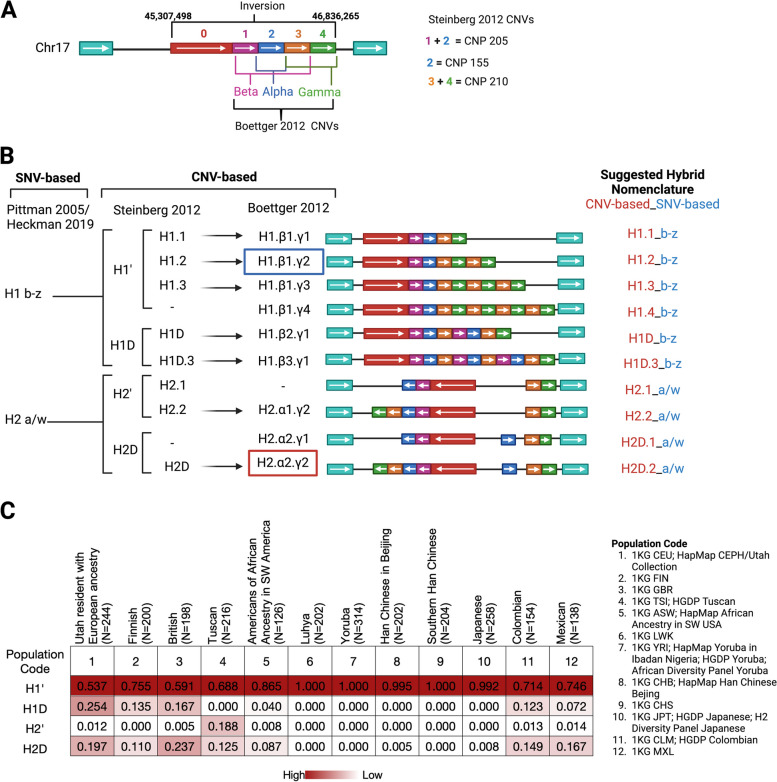
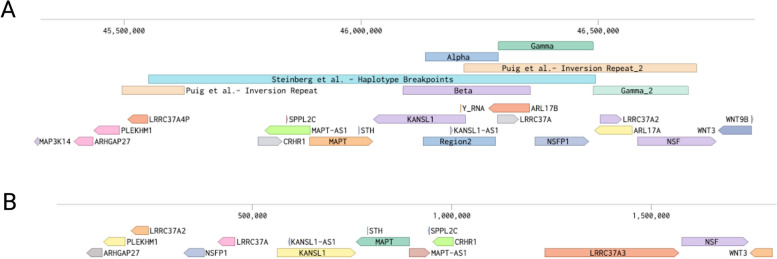
- The inversion contains 15 genes plus non-coding RNAs and pseudogenes, with 22 additional genes in the 500 Kb flanking region; over 2,366 SNVs have been used to define H1/H2 haplotypes and sub-haplotypes, while CNVs in genes such as LRRC37A/2, KANSL1, and NSF further diversify the locus.
- MAPT expression findings are inconsistent: H1 shows higher MAPT expression than H2 in blood and in AD temporal cortex and cerebellum, but not in brain samples from healthy individuals; the H1_c sub-haplotype may contribute to tauopathy risk.
Methods
- Narrative review assessing current knowledge of the 17q21.31 inversion region regarding genomic structure, gene expression, cellular phenotypes, and disease association; no systematic review or meta-analysis is stated.
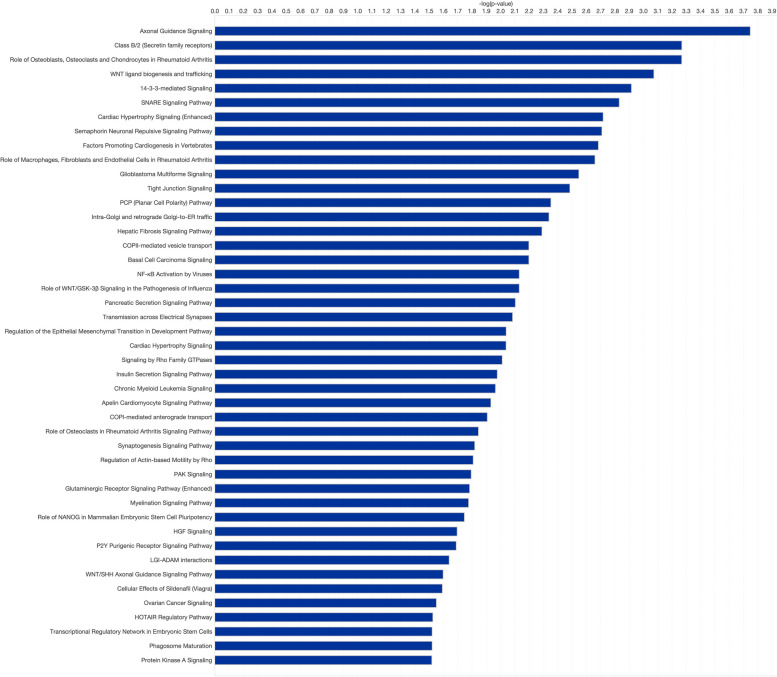
- Includes a pathway analysis comparing brain gene expression for genes within the 1 Mb inversion plus 1 Mb surrounding the inversion between H1 and H2 homozygous individuals using Ingenuity Pathway Analysis and Ensembl 110; sample size and data source are not stated in the text.
- Synthesizes genetic association studies, haplotype/CNV nomenclature, and model systems including iPSC-derived models and mouse models from the cited literature.
Limitations
- Stated: Eurocentric bias in biomedical science means current studies and reference datasets primarily focus on 1 KG-EUR-like individuals; ancestry-specific references and admixed populations are needed, especially because H1 disease associations are mainly established in 1 KG-EUR-like populations and H2 is less frequent or absent in others.
- Stated: lack of an animal model for human-specific haplotype differences; generating iPSC CRISPR-edited isogenic lines with the whole ~1 Mb inversion is challenging, current studies require larger sample sizes than isogenic comparison and should be considered observational, and mouse models contain only short fragments of the inversion.
- Evident from the text: as a review, it does not provide a systematic search or meta-analysis; MAPT expression effects are inconsistent across studies, and causal variants remain difficult to identify because of extended linkage disequilibrium and because SNV- and CNV-based classification schemes do not fully overlap.
Model-written summary. Check it against the paper before relying on it.
Integrity signals
Registry
Cites
Statistics
Figures
Verification
Claims the paper makes
1 Valid · 4 Not valid · 97 Not checked · 33 Own results and interpretations
The cited sources support only part of this claim — read each source’s verdict below.
In the paper
“To date, over 2,366 SNVs have been used to define haplotypes [26] and sub-haplotypes of H1/H2 [27–29].”
§ Unraveling the complex role of MAPT-containing H1 and H2 haplotypes in neurodegenerative diseases > Background > Haplotype and sub-haplotype structure
What the sources say
- Partly supportedcites [26] Corces MR Shcherbina A Kundu S Gloudemans MJ Frésard L Granja JM Louie BH Eulalio T Shams S Bagdatli ST Single-cell epigenomic analyses implicate candidate causal variants at inherited risk loci for Alzheimer's and Parkinson's diseases Nat Genet 2020 52 1158 1168 10.1038/s41588-020-00721-x 33106633 PMC7606627 sourceExperimental — accuracy not yet measured
Our copy supports the SNV/haplotype half of the claim: METHODS 'Identification of MAPT haplotypes' reports 'This resulted in 2,366 SNPs that could be confidently called as haplotype divergent,' and RESULTS ('Epigenomic dissection of the MAPT locus…') states H1 and H2 'differ by (i) > 2,000 SNPs across the two haplotypes and (ii) an ~1-Mb inversion,' with reads split on 'one of the 2,366 haplotype divergent SNPs.' However, the structural difference the paper describes is the ~1-Mb inversion, not copy number variants, and the paper assigns only H1/H2 status (METHODS 'MAPT locus differential expression analysis': 539 H1/H1, 260 H2/H1, 33 H2/H2) — it never defines or discusses sub-haplotypes. Searched our copy for 'copy number variant' and 'sub-haplotype' with no matching passage, so those parts of the attributed claim are unsupported by this source. (LLM, conf=0.78)
- Not checked yetcites [27] Pittman AM Myers AJ Abou-Sleiman P Fung HC Kaleem M Marlowe L Duckworth J Leung D Williams D Kilford L Linkage disequilibrium fine mapping and haplotype association analysis of the tau gene in progressive supranuclear palsy and corticobasal degeneration J Med Genet 2005 42 837 846 10.1136/jmg.2005.031377 15792962 PMC1735957 source
- Not checked yetcites [28] Myers AJ Pittman AM Zhao AS Rohrer K Kaleem M Marlowe L Lees A Leung D McKeith IG Perry RH The MAPT H1c risk haplotype is associated with increased expression of tau and especially of 4 repeat containing transcripts Neurobiol Dis 2007 25 561 570 10.1016/j.nbd.2006.10.018 17174556 source
- Not checked yetcites [29] Heckman MG Kasanuki K Brennan RR Labbé C Vargas ER Soto AI Murray ME Koga S Dickson DW Ross OA Association of MAPT H1 subhaplotypes with neuropathology of lewy body disease Mov Disord 2019 34 1325 1332 10.1002/mds.27773 31234228 PMC7996001 source
plainstates an association- Asserted: passes — The authors put it forward as true.
- Checkable: passes — It can be checked against evidence.
- Load-bearing: passes — The paper’s conclusions depend on it.
- Based: passes — The paper gives a reason why it holds.
- Partly supported
A result the paper reports from its own data — it cites no other source for it, so there is none to check. The quote shows it is in the paper.
In the paper
“in this review, we report two more in KANSL1 rs36076725 (Asp to Glu) and rs35833914 (Phe to Leu).”
§ Unraveling the complex role of MAPT-containing H1 and H2 haplotypes in neurodegenerative diseases > Background > Effect of haplotype on gene expression
plainstates an association- Asserted: passes — The authors put it forward as true.
- Checkable: passes — It can be checked against evidence.
- Load-bearing: unclear — It is unclear whether the paper’s conclusions depend on it.
- Based: passes — The paper gives a reason why it holds.
A result the paper states — it cites no source for it, so there is none to check. The quote shows it is in the paper.
In the paper
“Overall, there are 19 missense variants in five genes within the inversion (CRHR1, SPPL2C, MAPT, STH, KANSL1).”
§ Unraveling the complex role of MAPT-containing H1 and H2 haplotypes in neurodegenerative diseases > Background > Effect of haplotype on gene expression
plain- Asserted: passes — The authors put it forward as true.
- Checkable: passes — It can be checked against evidence.
- Load-bearing: unclear — It is unclear whether the paper’s conclusions depend on it.
- Based: passes — The paper gives a reason why it holds.
A result the paper reports from its own data — it cites no other source for it, so there is none to check. The quote shows it is in the paper.
In the paper
“Based on our pathway analysis (Fig. 5), the stem cell pluripotency pathway and NANOG are altered between the H1 and H2 haplotypes, supporting the hypothesis that loss of the hESC H3K4me1 super enhancer may modulate this effect.”
§ Unraveling the complex role of MAPT-containing H1 and H2 haplotypes in neurodegenerative diseases > Background > Effect of haplotype on gene expression
plainstates an association- Asserted: passes — The authors put it forward as true.
- Checkable: passes — It can be checked against evidence.
- Load-bearing: passes — The paper’s conclusions depend on it.
- Based: passes — The paper gives a reason why it holds.
- Rests on an assumption not shown here.
A result the paper reports from its own data — it cites no other source for it, so there is none to check. The quote shows it is in the paper.
In the paper
“Significant pathways include axonal guidance, synaptogenesis, tight junction signaling, NF-kB activation by viruses, cardiomyocytes hypertrophic signaling, and pathways shared by macrophages, fibroblasts, and endothelial cells in Rheumatoid arthritis.”
§ Unraveling the complex role of MAPT-containing H1 and H2 haplotypes in neurodegenerative diseases > Background > Effect of haplotype on gene expression
plainstates an association- Asserted: passes — The authors put it forward as true.
- Checkable: passes — It can be checked against evidence.
- Load-bearing: passes — The paper’s conclusions depend on it.
- Based: passes — The paper gives a reason why it holds.
- Rests on an assumption not shown here.
46 more claims
Create a free account to see all 135 claims and to verify the 150 references still open.
- Probably not a substantial claim. 55
- It may state two separate claims as one. 50
Self-check
Percentages, sums and reported differences re-computed from the paper’s own numbers.
Each contradiction between two passages listed here was confirmed by an independent check.
Rated minor: it would not touch a result — a value no result rests on, a p-value that stays on the same side of the significance level, or a conflict that is clerical, resolved elsewhere in the paper, or outside its own findings.
In the paper
§ Unraveling the complex role of MAPT-containing H1 and H2 haplotypes in neurodegenerative diseases > Background > Effect of haplotype on gene expression
“Of the latter, two gains of proline and four losses of proline substitutions may affect protein structure, stability, or function, along with polar to non-polar changes [44].”
§ Unraveling the complex role of MAPT-containing H1 and H2 haplotypes in neurodegenerative diseases > Background > Haplotype and sub-haplotype structure
“| rs62621252 | SPPL2C | S224P | 45,845,576 | T | | | | C | [33] | | rs62054815a | SPPL2C | A332T | 45,845,900 | G | | | | A | [33] | | rs12185233a | SPPL2C | R461P | 45,846,288 | G | | | | C | [33] | | rs12185268a | SPPL2C | I471V | 45,846,317 | A | | | | G | [33] | | rs12373123a | SPPL2C | S601P | 45,846,707 | T | | | | C | [33] |”
Rated minor: it would not touch a result — a value no result rests on, a p-value that stays on the same side of the significance level, or a conflict that is clerical, resolved elsewhere in the paper, or outside its own findings.
In the paper
§ Unraveling the complex role of MAPT-containing H1 and H2 haplotypes in neurodegenerative diseases > Background > Effect of haplotype on gene expression
“we report two more in KANSL1 rs36076725 (Asp to Glu) and rs35833914 (Phe to Leu).”
§ Unraveling the complex role of MAPT-containing H1 and H2 haplotypes in neurodegenerative diseases > Background > Haplotype and sub-haplotype structure
“| rs36076725 | KANSL1 | F917L | 46,033,166 | G | | | | A | [11] | | rs35833914 | KANSL1 | D914E | 46,033,175 | G | | | | A | [11] |”
Rated minor: it would not touch a result — a value no result rests on, a p-value that stays on the same side of the significance level, or a conflict that is clerical, resolved elsewhere in the paper, or outside its own findings.
In the paper
§ Unraveling the complex role of MAPT-containing H1 and H2 haplotypes in neurodegenerative diseases > Background > Haplotype and sub-haplotype structure
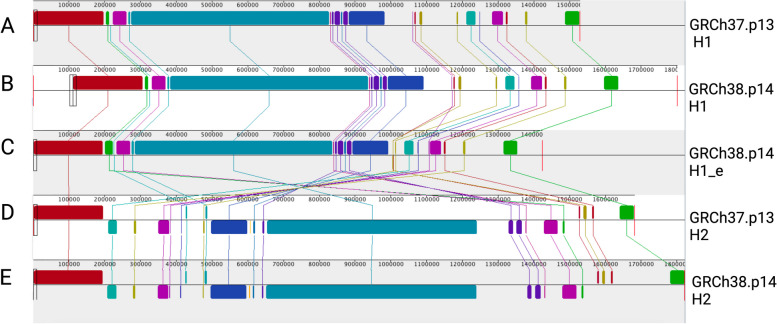
“an alternative sub-haplotype reference NT_187663.1/KI270908v1_alt in GRCh38, H1.2_c.”
§ Unraveling the complex role of MAPT-containing H1 and H2 haplotypes in neurodegenerative diseases > Background > Haplotype and sub-haplotype structure
“GRCh38 direct orientation sub-haplotype H1.2_e (GRCh38-NT_187663.1)”
Rated minor: it would not touch a result — a value no result rests on, a p-value that stays on the same side of the significance level, or a conflict that is clerical, resolved elsewhere in the paper, or outside its own findings.
In the paper
§ Unraveling the complex role of MAPT-containing H1 and H2 haplotypes in neurodegenerative diseases > Background
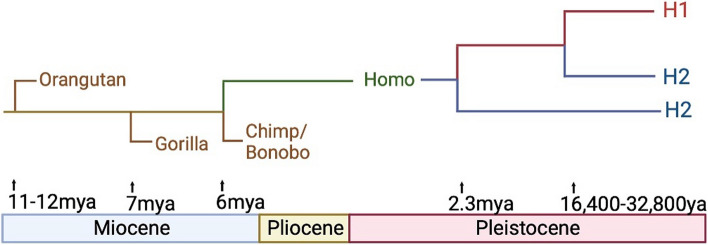
“The first inversion event is estimated to have occurred 2.3 million years ago (Mya)”
§ Unraveling the complex role of MAPT-containing H1 and H2 haplotypes in neurodegenerative diseases > Background
“in the Pliocene (5.3–2.6 Mya)”
Rated minor: it would not touch a result — a value no result rests on, a p-value that stays on the same side of the significance level, or a conflict that is clerical, resolved elsewhere in the paper, or outside its own findings.
In the paper
§ Unraveling the complex role of MAPT-containing H1 and H2 haplotypes in neurodegenerative diseases > Background > Haplotype and sub-haplotype structure
“chr17_ctg5_hap1/GL00025.1 in the GRCh37 assembly and GL00025.2 in the GRCh38 assembly”
§ Unraveling the complex role of MAPT-containing H1 and H2 haplotypes in neurodegenerative diseases > Background > Haplotype and sub-haplotype structure
“H2 assemblies: D GRCh37 scaffold NT_167251.1 (GL00258.1), E GRCh38 Scaffold NT_167251.2 (GL00258.2)”
1 more finding
Create a free account to see every finding of this check.
Citations
Cites
Association of missense and 5′-splice-site mutations in tau with the inherited dementia FTDP-17
Hutton, M., Lendon, C. L., Rizzu, P., Baker, M., Froelich, S., Houlden, H., Pickering-Brown, S., Chakraverty, S., Isaacs, A., Grover, A., et al. (1998) · Nature · doi:10.1038/31508 · Cited by 3,498
Self-citationNew insights into the genetic etiology of Alzheimer’s disease and related dementias
Bellenguez, C., Küçükali, F., Jansen, I. E., Kleineidam, L., Moreno-Grau, S., Amin, N., Naj, A. C., Campos-Martin, R., Grenier-Boley, B., Andrade, V., et al. (2022) · Nature Genetics · doi:10.1038/s41588-022-01024-z · Cited by 2,498
Nalls, M. A., Blauwendraat, C., Vallerga, C. L., Heilbron, K., Bandres-Ciga, S., Chang, D., Tan, M., Kia, D. A., Noyce, A. J., Xue, A., et al. (2019) · The Lancet Neurology · doi:10.1016/s1474-4422(19)30320-5 · Cited by 2,454
International Parkinson's Disease Genomics Consortium (IPDGC), Nalls, M. A., Parkinson's Study Group (PSG) Parkinson's Research: The Organized GENetics Initiative (PROGENI), 23andMe, GenePD, NeuroGenetics Research Consortium (NGRC), Hussman Institute of Human Genomics (HIHG), Investigator, T. A. J. D., (CHARGE), C. F. H. A. A. R. I. G. E., North American Brain Expression Consortium (NABEC), et al. (2014) · Nature Genetics · doi:10.1038/ng.3043 · Cited by 1,895 · cited 1×
“…odds ratios (ORs) for PSP (OR = 5.46 for H1 relative to H2; OR = 1.91 for H1c relative to other H1 sub-haplotypes) [36, 37] and CBD (OR = 3.7) [32] risk, with lower odds ratios for AD (OR = 1.06) [74], PD (OR = 1.30) [35, 75], and behavioral variant FTD (bvFTD) (OR = 1.2) [76] risk (Table 2).”
BackgroundInfluentialSelf-citationGenome-wide association study reveals genetic risk underlying Parkinson's disease
Simón-Sánchez, J., Schulte, C., Bras, J. M., Sharma, M., Gibbs, J. R., Berg, D., Paisan-Ruiz, C., Lichtner, P., Scholz, S. W., Hernandez, D. G., et al. (2009) · Nature Genetics · doi:10.1038/ng.487 · Cited by 1,751
Self-citationMendelian Proportions in a Mixed Population
Hardy, G. H. (1908) · Science · doi:10.1126/science.28.706.49 · Cited by 1,339
A draft human pangenome reference.
Liao, W.-W., Asri, M., Ebler, J., Doerr, D., Haukness, M., Hickey, G., Lu, S., Lucas, J. K., Monlong, J., Abel, H. J., et al. (2023) · Nature · doi:10.1038/s41586-023-05896-x · Cited by 1,129
Study, L. C., Okbay, A., Baselmans, B. M. L., De Neve, J.-E., Turley, P., Nivard, M. G., Fontana, M. A., Meddens, S. F. W., Linnér, R. K., Rietveld, C. A., et al. (2016) · Nature Genetics · doi:10.1038/ng.3552 · Cited by 1,013 · cited 1×
“31 locus, share many phenotypic consequences in humans including increased risk of neurodegenerative diseases, hemophilia A [23], mental disorders [24] and autoimmune disease [25].”
BackgroundA common inversion under selection in Europeans
Stefansson, H., Helgason, A., Thorleifsson, G., Steinthorsdottir, V., Masson, G., Barnard, J., Baker, A., Jonasdottir, A., Ingason, A., Gudnadottir, V. G., et al. (2005) · Nature Genetics · doi:10.1038/ng1508 · Cited by 828
Inversions disrupting the factor VIII gene are a common cause of severe haemophilia A
Lakich, D., Kazazian, H. H., Antonarakis, S. E., & Gitschier, J. (1993) · Nature Genetics · doi:10.1038/ng1193-236 · Cited by 788
Research works printed but not linked: 1
- Lesley W, Raquel R, Alejandro M, Ruth C, Michael AL, Maryam S, Catherine B, Leon H, Cornelis B, Andrew BS, et al. Investigation of the genetic aetiology of Lewy body diseases with and without dementia. medRxiv. 2023:2023.2010.2017.23297157.
Cited by
Chronic overlapping pain conditions and nociplastic pain
Johnston, K. J. A., Signer, R., & Huckins, L. M. (2025) · Human Genetics and Genomics Advances · doi:10.1016/j.xhgg.2024.100381 · Cited by 35
“77,79 Tissue enrichment of nociplastic pain genes highlights thyroid, heart, and tibial nerve involvement Autoimmune disorders including autoimmune hypothyroidism may also be misdiagnosed as fibromyalgia, and hypothyroidism may both cause pain and worsen pain associated with pre-existing conditions.”
Progressive Supranuclear Palsy—A Global Review
Kukkle, P. L., Neupane, R., Pantelyat, A. Y., Wills, A.-M. A., Jabbari, E., Dopper, E. G. P., Kovács, G. G., Höglinger, G. U., Aiba, I., Litvan, I., et al. (2025) · Movement Disorders Clinical Practice · doi:10.1002/mdc3.70338 · Cited by 20
Hemispheric Asymmetry in the Genetic Overlap between Schizophrenia and White Matter Microstructure
Zhang, Y., Liu, M., Wang, S., Zhang, W., Dong, H., Qian, Q., Wu, Y., Wu, Q., Xu, J., Zhai, Y., et al. (2026) · Cyborg and Bionic Systems · doi:10.34133/cbsystems.0451 · Cited by 20
MAPT haplotype-associated transcriptomic changes in progressive supranuclear palsy
Ressler, H. W., Humphrey, J., Vialle, R. A., Babrowicz, B. M., Kandoi, S., Raj, T., Dickson, D. W., Ertekin‐Taner, N., Crary, J. F., & Farrell, K. W. (2024) · Acta Neuropathologica Communications · doi:10.1186/s40478-024-01839-3 · Cited by 19
Single-nucleus transcriptome-wide association study of human brain disorders
Venkatesh, S., Kosoy, R., Wu, Z., Anyfantakis, M., Dillard, C., Prashant, N. M., Burstein, D., Mathur, D. D., Chatzinakos, C., Ajanaku, B., et al. (2026) · Nature · doi:10.1038/s41586-026-10836-6 · Cited by 9
Metadata
- Authors
- Pedicone, C., Weitzman, S. A., Renton, A. E., & Goate, A. M.
- Affiliations
- Icahn School of Medicine at Mount Sinai (US)
- Corresponding author
- Goate, Alison M.
- Venue
- Molecular Neurodegeneration
- Published
- 2024-05-29
- Volume
- 19
- Issue
- 1
- Pages
- 43-43
- ISSN
- 1750-1326 (ISSN-L)
- PMC
- PMC11138017
- OpenAlex
- W4399125941
- Semantic Scholar
- 31cef14f6338ae693e54299864c08535c57fb5ed
- Cited by
- 56
- References
- 93
- Citations by year
- 2026: 34 · 2025: 18 · 2024: 4
- FWCI
- 2.66
- Type
- journal article
- Language
- en
- Open access
- gold
- doi.org
- Licence
- cc-by
- creativecommons.org/licenses/by/4.0 (tdm)
- creativecommons.org/licenses/by/4.0 (vor)
- Locations
- Molecular Neurodegeneration (publishedVersion, cc-by)
- PubMed Central (publishedVersion, cc-by)
- PubMed (publishedVersion)
- DOAJ (DOAJ: Directory of Open Access Journals) (submittedVersion)
- Funders
- National Institute on Aging (NIH U54-NS123746)
- Tau Consortium
- Topics
- Life Sciences › Biochemistry, Genetics and Molecular Biology › Genetics › Genomic variations and chromosomal abnormalities
- Life Sciences › Biochemistry, Genetics and Molecular Biology › Genetics › Genetic Associations and Epidemiology
- Life Sciences › Biochemistry, Genetics and Molecular Biology › Genetics › Genome Rearrangement Algorithms
- Keywords
- MAPT, 17q21.31, inversion polymorphism, neurodegenerative diseases, linkage disequilibrium, copy number variation, single nucleotide variants, microdeletion syndromes, autism spectrum disorder, neurodevelopmental disorders, gene expression, precision medicine, drug discovery
- MeSH terms
- Haplotypes, Humans, Linkage Disequilibrium, tau Proteins, Neurodegenerative Diseases, Genetic Predisposition to Disease, Polymorphism, Single Nucleotide
About these checks
Registry, retraction, Cites and statistics results are computed, not judged, with one exception: a printed reference that no index lists is read once by a model before it counts as a citation error. Claims are extracted by a model and kept only when their quote appears verbatim in the text; each cited source is then checked, with a model’s help, for whether it says what the claim relies on. Those verdicts can be wrong — read the claim’s quote and the cited source before relying on one.
The claim verdicts this report counts are experimental: their accuracy is not yet measured.
A language model drew the claims from the paper on 2026-11-26, under version 3 of the claim definition (model deepseek-v4.1-flash, prompt extract-v3).
A second model labelled each claim on 2026-11-26 (model jev-1.13-20260917, definition revision gold-guideline-v0.2).
Cited sources are checked with a language model’s help (qwen3.8-omni-flash).
Statistics and arithmetic are recomputed, not judged.
Confidence bands are shown only for fields calibrated on our annotated test set. None is calibrated yet, so no band is shown.
What counts as a claim ›How we measure confidence ›How we check this ›
Are you an author, or do you see a problem with this page? Request a review
Data sources
Bibliographic data: Semantic Scholar, OpenAlex, Crossref.
Contains information from the Semantic Scholar Academic Graph Datasets, made available under the ODC Attribution License (ODC-BY 1.0).
Semantic Scholar’s data is described in: Kinney, R., et al. (2023). The Semantic Scholar Open Data Platform. arXiv:2301.10140.
