

Isometric yoga improves the fatigue and pain of patients with chronic fatigue syndrome who are resistant to conventional therapy: a randomized, controlled trial
Open accessThe DOI matches its Crossref record; 27 of the 27 references it cites were found in a registry or an index.
Abstract
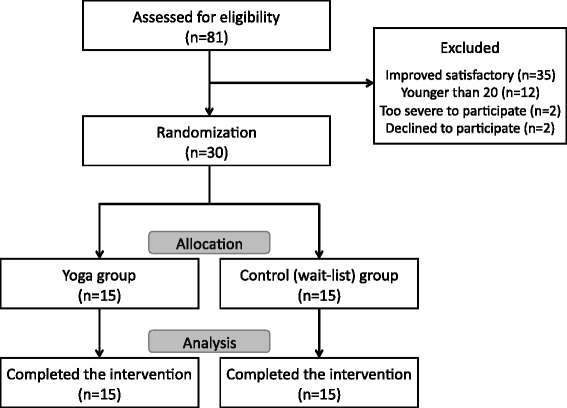
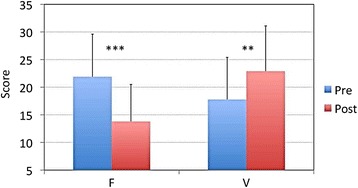
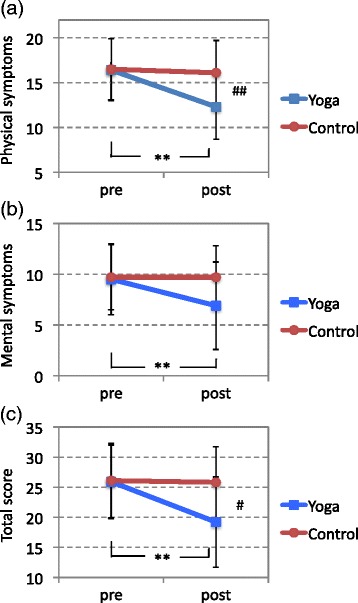
BACKGROUND: Patients with chronic fatigue syndrome (CFS) often complain of persistent fatigue even after conventional therapies such as pharmacotherapy, cognitive behavioral therapy, or graded exercise therapy. The aim of this study was to investigate in a randomized, controlled trial the feasibility and efficacy of isometric yoga in patients with CFS who are resistant to conventional treatments. METHODS: This trial enrolled 30 patients with CFS who did not have satisfactory improvement after receiving conventional therapy for at least six months. They were randomly divided into two groups and were treated with either conventional pharmacotherapy (control group, n = 15) or conventional therapy together with isometric yoga practice that consisted of biweekly, 20-minute sessions with a yoga instructor and daily in-home sessions (yoga group, n = 15) for approximately two months. The short-term effect of isometric yoga on fatigue was assessed by administration of the Profile of Mood Status (POMS) questionnaire immediately before and after the final 20-minute session with the instructor. The long-term effect of isometric yoga on fatigue was assessed by administration of the Chalder's Fatigue Scale (FS) questionnaire to both groups before and after the intervention. Adverse events and changes in subjective symptoms were recorded for subjects in the yoga group. RESULTS: All subjects completed the intervention. The mean POMS fatigue score decreased significantly (from 21.9 ± 7.7 to 13.8 ± 6.7, P < 0.001) after a yoga session. The Chalder's FS score decreased significantly (from 25.9 ± 6.1 to 19.2 ± 7.5, P = 0.002) in the yoga group, but not in the control group. In addition to the improvement of fatigue, two patients with CFS and fibromyalgia syndrome in the yoga group also reported pain relief. Furthermore, many subjects reported that their bodies became warmer and lighter after practicing isometric yoga. Although there were no serious adverse events in the yoga group, two patients complained of tiredness and one of dizziness after the first yoga session with the instructor. CONCLUSIONS: Isometric yoga as an add-on therapy is both feasible and successful at relieving the fatigue and pain of a subset of therapy-resistant patients with CFS. TRIAL REGISTRATION: University Hospital Medical Information Network (UMIN CTR) UMIN000009646.
Overview
The claims and statistics of this paper haven’t been checked yet.
Free: it reads the open-access text and checks the first 5 claims that cite a source we can check. Create a free account to check every claim.
Integrity signals
Registry
Cites
Statistics
Figures
Verification
Claims the paper makes
The claims and statistics of this paper haven’t been checked yet.
Free: it reads the open-access text and checks the first 5 claims that cite a source we can check. Create a free account to check every claim.
Claims other papers make about this one
Each is checked against this paper’s own text: does it say what the citing paper says it does?
The source backs part of the claim, not all of it — or backs it for a different population, condition or comparison.
In the citing paper
“There are some promising results to improve anxiety, fatigue, depression, quality of life, and physical functioning [28,29,30,31,32] in ME/CFS.”
From Systematic review of mind‐body interventions to treat myalgic encephalomyelitis/chronic fatigue syndrome (2021) · cites this paper as [28]
Experimental — accuracy not yet measured
Self-check
Percentages, sums and reported differences re-computed from the paper’s own numbers.
The self-check needs the paper’s full text.
Citations
Cites
The Chronic Fatigue Syndrome: A Comprehensive Approach to Its Definition and Study
Fukuda, K., Straus, S. E., Hickie, I., Sharpe, M. C., Dobbins, J. G., Komaroff, A., & and International Chronic Fatigue Syndrome Study Group. (1994) · Annals of Internal Medicine · doi:10.7326/0003-4819-121-12-199412150-00009 · Cited by 4,969
Development of a fatigue scale
Chalder, T., Berelowitz, G., Pawlikowska, T., Watts, L., Wessely, S., Wright, D., & Wallace, E. P. (1993) · Journal of Psychosomatic Research · doi:10.1016/0022-3999(93)90081-p · Cited by 3,032 · cited 1×
“To assess the chronic effects of isometric yoga, fatigue was assessed with Chalder’s fatigue scale (FS) [15] before and after the intervention period in the yoga and control groups.”
MethodWhite, P., Goldsmith, K., Johnson, A., Potts, L., Walwyn, R., DeCesare, J., Baber, H., Burgess, M., Clark, L., Cox, D., et al. (2011) · The Lancet · doi:10.1016/s0140-6736(11)60096-2 · Cited by 897
Streeter, C. C., Gerbarg, P. L., Saper, R. B., Ciraulo, D. A., & Brown, R. P. (2012) · Medical Hypotheses · doi:10.1016/j.mehy.2012.01.021 · Cited by 694 · cited 1×
“It also increases heart rate variability and shifts the autonomic nervous system from a state predominated by sympathetic activity to one predominated by parasympathetic activity [27,28].”
BackgroundMechanisms of Cancer-Related Fatigue
Ryan, J. L., Carroll, J. K., Ryan, E. P., Mustian, K. M., Fiscella, K., & Morrow, G. R. (2007) · The Oncologist · doi:10.1634/theoncologist.12-s1-22 · Cited by 583 · cited 1×
“These include dysfunction of the autonomic nervous system and the hypothalamic-pituitary-adrenal axis, disruption of circadian rhythms, and misregulation of cytokine expression [18-23].”
BackgroundCognitive behaviour therapy for chronic fatigue syndrome in adults
Price, J. R., Mitchell, E., Tidy, E., & Hunot, V. (2008) · Cochrane Database of Systematic Reviews · doi:10.1002/14651858.cd001027.pub2 · Cited by 401
Yoga on Our Minds: A Systematic Review of Yoga for Neuropsychiatric Disorders
Balasubramaniam, M., Telles, S., & Doraiswamy, P. M. (2013) · Frontiers in Psychiatry · doi:10.3389/fpsyt.2012.00117 · Cited by 376
Yoga for persistent fatigue in breast cancer survivors: A randomized controlled trial
Bower, J. E., Garet, D., Sternlieb, B., Ganz, P. A., Irwin, M. R., Olmstead, R., & Greendale, G. (2012) · Cancer · doi:10.1002/cncr.26702 · Cited by 352 · cited 2×
“Previous studies have demonstrated that yoga improves the fatigue of patients with cancer [7].”
BackgroundStress, Inflammation, and Yoga Practice
Kiecolt-Glaser, J. K., Christian, L., Preston, H., Houts, C. R., Malarkey, W. B., Emery, C. F., & Glaser, R. (2010) · Psychosomatic Medicine · doi:10.1097/psy.0b013e3181cb9377 · Cited by 327 · cited 1×
“Yoga has been reported to reduce serum levels of cortisol [24] and proinflammatory cytokines such as interleukin-6 [25,26].”
BackgroundImmunological aspects of chronic fatigue syndrome
Lorusso, L., Mikhaylova, S. V., Capelli, E., Ferrari, D., Ngonga, G. K., & Ricevuti, G. (2009) · Autoimmunity Reviews · doi:10.1016/j.autrev.2008.08.003 · Cited by 277 · cited 1×
“These include dysfunction of the autonomic nervous system and the hypothalamic-pituitary-adrenal axis, disruption of circadian rhythms, and misregulation of cytokine expression [18-23].”
BackgroundCarson, J. W., Carson, K. M., Porter, L. S., Keefe, F. J., & Seewaldt, V. L. (2009) · Supportive Care in Cancer · doi:10.1007/s00520-009-0587-5 · Cited by 231 · cited 1×
“In fact, several studies have demonstrated that yoga is effective in improving the fatigue of patients with cancer [7,8] as well as of healthy subjects [9].”
BackgroundEffects of Yoga on Inflammation and Exercise Capacity in Patients With Chronic Heart Failure
Pullen, P. R., Nagamia, S. H., Mehta, P. K., Thompson, W. R., Benardot, D., Hammoud, R., Parrott, J. M., Sola, S., & Khan, B. V. (2008) · Journal of Cardiac Failure · doi:10.1016/j.cardfail.2007.12.007 · Cited by 217 · cited 1×
“Yoga has been reported to reduce serum levels of cortisol [24] and proinflammatory cytokines such as interleukin-6 [25,26].”
BackgroundDecrease in Serum Cortisol during Yoga Exercise is Correlated with Alpha Wave Activation
Kamei, T., Toriumi, Y., Kimura, H., Kumano, H., Ohno, S., & Kimura, K. (2000) · Perceptual and Motor Skills · doi:10.2466/pms.2000.90.3.1027 · Cited by 178 · cited 1×
“Yoga has been reported to reduce serum levels of cortisol [24] and proinflammatory cytokines such as interleukin-6 [25,26].”
BackgroundHoad, A., Spickett, G., Elliott, J., & Newton, J. (2008) · QJM · doi:10.1093/qjmed/hcn123 · Cited by 127 · cited 1×
“We intentionally avoided standing postures, because a considerable number of CFS patients suffer from orthostatic intolerance, including postural orthostatic tachycardia syndrome [13].”
BackgroundPowell, D. J. H., Liossi, C., Moss-Morris, R., & Schlotz, W. (2013) · Psychoneuroendocrinology · doi:10.1016/j.psyneuen.2013.07.004 · Cited by 94 · cited 1×
“These include dysfunction of the autonomic nervous system and the hypothalamic-pituitary-adrenal axis, disruption of circadian rhythms, and misregulation of cytokine expression [18-23].”
BackgroundYoshihara, K., Hiramoto, T., Oka, T., Kubo, C., & Sudo, N. (2014) · BioPsychoSocial Medicine · doi:10.1186/1751-0759-8-1 · Cited by 85 · cited 1×
“In fact, several studies have demonstrated that yoga is effective in improving the fatigue of patients with cancer [7,8] as well as of healthy subjects [9].”
BackgroundSelf-citationChalder, T. (2013) · The Wiley Handbook of Cognitive Behavioral Therapy · doi:10.1002/9781118528563.wbcbt23 · Cited by 63
How to exercise people with chronic fatigue syndrome: evidence‐based practice guidelines
Cauwenbergh, D. V., Kooning, M. D., Ickmans, K., & Nijs, J. (2012) · European Journal of Clinical Investigation · doi:10.1111/j.1365-2362.2012.02701.x · Cited by 53
Dougall, D., Johnson, A., Goldsmith, K., Sharpe, M., Angus, B., Chalder, T., & White, P. (2014) · Journal of Psychosomatic Research · doi:10.1016/j.jpsychores.2014.04.002 · Cited by 46 · cited 4×
“Abbreviations ANOVA: Analysis of variance; BP: Bodily pain; CFS: Chronic fatigue syndrome; CBT: Cognitive behavioral therapy; F: Fatigue; GET: Graded exercise therapy; GH: General health perception; MCS: Mental component summary; MH: Mental health; SD: Standard deviation; SF: Social functioning; SF-8: Short form-8; PF…”
BackgroundInfluentialEffects of Kampo on functional gastrointestinal disorders
Oka, T., Okumi, H., Nishida, S., Ito, T., Morikiyo, S., Kimura, Y., Murakami, M., & JOPM-EBM Working Team (2014) · BioPsychoSocial Medicine · doi:10.1186/1751-0759-8-5 · Cited by 38 · cited 1×
“Inclusion criteria were the following: (1) the subject’s fatigue did not improve sufficiently with ordinary treatment given in our Department (as an example see [10]), including pharmacotherapy (for example, antidepressants, Japanese traditional herbal medicine [11,12], and/or coenzyme Q10), psychotherapy, and/or GET;…”
BackgroundSelf-citationProspective Observational Study of Treatments for Unexplained Chronic Fatigue
Bentler, S., Hartz, A. J., & Kuhn, E. M. (2005) · The Journal of Clinical Psychiatry · doi:10.4088/jcp.v66n0513 · Cited by 35 · cited 1×
“Yoga is one of the most commonly accepted mind/ body therapies of complementary and alternative medicine and is recommended as an alternative therapy for improving unexplained chronic fatigue [6].”
BackgroundKampo medicine for palliative care in Japan
Okumi, H., & Koyama, A. (2014) · BioPsychoSocial Medicine · doi:10.1186/1751-0759-8-6 · Cited by 35 · cited 1×
“Inclusion criteria were the following: (1) the subject’s fatigue did not improve sufficiently with ordinary treatment given in our Department (as an example see [10]), including pharmacotherapy (for example, antidepressants, Japanese traditional herbal medicine [11,12], and/or coenzyme Q10), psychotherapy, and/or GET;…”
BackgroundOka, T., Kanemitsu, Y., Sudo, N., Hayashi, H., & Oka, K. (2013) · BioPsychoSocial Medicine · doi:10.1186/1751-0759-7-7 · Cited by 28 · cited 1×
“Inclusion criteria were the following: (1) the subject’s fatigue did not improve sufficiently with ordinary treatment given in our Department (as an example see [10]), including pharmacotherapy (for example, antidepressants, Japanese traditional herbal medicine [11,12], and/or coenzyme Q10), psychotherapy, and/or GET;…”
BackgroundSelf-citationImmunological similarities between cancer and chronic fatigue syndrome: the common link to fatigue?
Meeus, M., Mistiaen, W. P., Lambrecht, L., & Nijs, J. (2009) · PubMed · Cited by 26
Wyller, V. B., & Helland, I. B. (2013) · BioPsychoSocial Medicine · doi:10.1186/1751-0759-7-5 · Cited by 26 · cited 1×
“These include dysfunction of the autonomic nervous system and the hypothalamic-pituitary-adrenal axis, disruption of circadian rhythms, and misregulation of cytokine expression [18-23].”
BackgroundChronic fatigue syndrome.[update in Clin Evid. 2002 Dec;(8):1075-88; PMID: 12603930]
Reid, S., Chalder, T., Cleare, A. J., Hotopf, M. H., & Wessely, S. C. (2002) · Research Portal (King's College London) · Cited by 12
Influence of Psychological Stress on Chronic Fatigue Syndrome
Oka, T. (2013) · Advances in Neuroimmune Biology · doi:10.3233/nib-130077 · Cited by 10 · cited 1×
“These include dysfunction of the autonomic nervous system and the hypothalamic-pituitary-adrenal axis, disruption of circadian rhythms, and misregulation of cytokine expression [18-23].”
BackgroundSelf-citation
Research works printed but not linked: 2
- 14. McNair D, Lorr M, Droppleman L: Mannual for the Profile of Mood States (POMS). San Diego: Educational and Industrial Testing Service; 1971.
- 16. Fukuhara S, Suzukamo Y: Mannual of the SF-8 Japanese version. Kyoto: Institute for Health Outcomes & Process Evaluation Research; 2004.
Cited by
Field, T. (2016) · Complementary Therapies in Clinical Practice · doi:10.1016/j.ctcp.2016.06.005 · Cited by 204
“Yoga has also been effective for patients with chronic fatigue syndrome in at least one study [111].”
BackgroundWormgoor, M. E. A., & Rodenburg, S. C. (2021) · Journal of Translational Medicine · doi:10.1186/s12967-020-02683-4 · Cited by 123
“In addition, it was explicitly mentioned that none of the participants reported PEM after practicing yoga [72].”
BackgroundMethodInfluentialKavuri, V., Selvan, P., Malamud, A., Nagarathna, R., & Selvan, S. R. (2015) · European Journal of Integrative Medicine · doi:10.1016/j.eujim.2015.11.001 · Cited by 94
Yoga intervention and functional pain syndromes: a selective review
Sutar, R. F., Yadav, S., & Desai, G. (2016) · International Review of Psychiatry · doi:10.1080/09540261.2016.1191448 · Cited by 86
A Randomized Trial of Yoga for Children Hospitalized With Sickle Cell Vaso-Occlusive Crisis
Moody, K., Abrahams, B., Baker, R. A., Santizo, R. O., Manwani, D. G., Carullo, V. P., Eugenio, D., & Carroll, A. E. (2017) · Journal of Pain and Symptom Management · doi:10.1016/j.jpainsymman.2016.12.351 · Cited by 73
“Evidence, though limited, has shown yoga to reduce pain in children with chronic fatigue syndrome(13), gastroesophageal reflux disease(14), headache(15), and irritable bowel syndrome(16).”
Background
Metadata
- Authors
- Oka, T., Tanahashi, T., Chijiwa, T., Lkhagvasuren, B., Sudo, N., & Oka, K.
- Affiliations
- Kyushu University (JP)
- Kurume University (JP)
- Corresponding author
- Oka, Takakazu
- Venue
- BioPsychoSocial Medicine
- Published
- 2014-12
- Volume
- 8
- Issue
- 1
- Pages
- 27-27
- ISSN
- 1751-0759 (ISSN-L)
- PMC
- PMC4269854
- OpenAlex
- W2146525714
- Cited by
- 59
- References
- 27
- Citations by year
- 2026: 8 · 2025: 8 · 2024: 9 · 2023: 4 · 2022: 5 · 2021: 5 · 2020: 4 · 2019: 3 · 2018: 3 · 2017: 2 · 2016: 4 · 2015: 4
- FWCI
- 2.54
- Type
- journal article
- Language
- en
- Open access
- gold
- doi.org
- Locations
- BioPsychoSocial Medicine (publishedVersion, cc-by)
- PubMed Central (publishedVersion, cc-by)
- PubMed (publishedVersion)
- Topics
- Health Sciences › Medicine › Psychiatry and Mental health › Fibromyalgia and Chronic Fatigue Syndrome Research
- Health Sciences › Medicine › Clinical Neurology › Long-Term Effects of COVID-19
- Health Sciences › Health Professions › Physical Therapy, Sports Therapy and Rehabilitation › Musculoskeletal pain and rehabilitation
- Keywords
- chronic fatigue syndrome, fatigue, analgesia, fibromyalgia, adjunctive therapy, Profile of Mood States, Chalder Fatigue Scale, adverse events
About these checks
Registry, retraction, Cites and statistics results are computed, not judged, with one exception: a printed reference that no index lists is read once by a model before it counts as a citation error. Claims are extracted by a model and kept only when their quote appears verbatim in the text; each cited source is then checked, with a model’s help, for whether it says what the claim relies on. Those verdicts can be wrong — read the claim’s quote and the cited source before relying on one.
Statistics and arithmetic are recomputed, not judged.
Confidence bands are shown only for fields calibrated on our annotated test set. None is calibrated yet, so no band is shown.
What counts as a claim ›How we measure confidence ›How we check this ›
Are you an author, or do you see a problem with this page? Request a review
Data sources
Bibliographic data: Semantic Scholar, OpenAlex, Crossref.
Contains information from the Semantic Scholar Academic Graph Datasets, made available under the ODC Attribution License (ODC-BY 1.0).
Semantic Scholar’s data is described in: Kinney, R., et al. (2023). The Semantic Scholar Open Data Platform. arXiv:2301.10140.
