

The longitudinal effects of seated isometric yoga on blood biomarkers, autonomic functions, and psychological parameters of patients with chronic fatigue syndrome: a pilot study
Open accessThe DOI matches its Crossref record; 75 of the 76 references it cites were found in a registry or an index.
Abstract
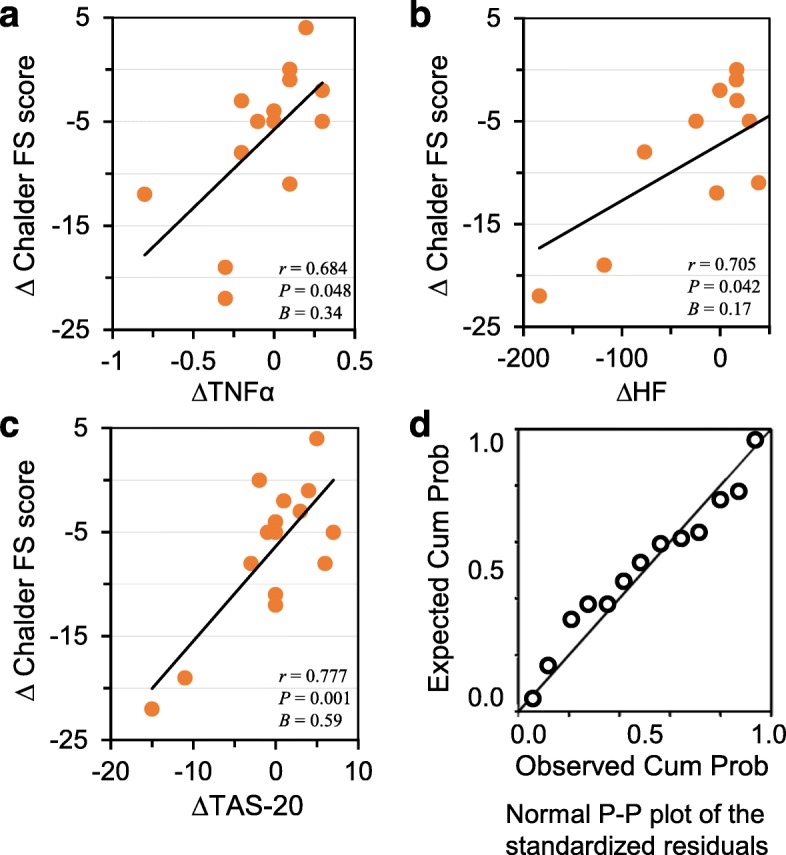
Background: In a previous randomized controlled trial, we found that practicing seated isometric yoga regularly for 2 months improved the fatigue of patients with chronic fatigue syndrome (CFS) who are resistant to conventional therapy. The aim of this pilot study was to investigate the possible mechanisms behind this finding by comparing blood biomarkers, autonomic nervous function, and psychological indices before versus after an intervention period of seated isometric yoga practice. Methods: Fifteen patients with CFS who did not show satisfactory improvements after at least 6 months of conventional therapy practiced seated isometric yoga (biweekly 20-min sessions with a yoga instructor and daily practice at home) for 2 months. The longitudinal effects of seated isometric yoga on fatigue, blood biomarkers, autonomic function, and psychological state were investigated by comparing the following parameters before and after the intervention period: Fatigue severity was assessed by the Chalder fatigue scale (FS) score. Levels of the blood biomarkers cortisol, DHEA-S, TNF-α, IL-6, prolactin, carnitine, TGF-β1, BDNF, MHPG, HVA, and α-MSH were measured. The autonomic nervous functions assessed were heart rate (HR) and HR variability. Psychological indices included the 20-item Toronto Alexithymia Scale (TAS-20) and the Hospital Anxiety and Depression Scale (HADS). Results: Practicing seated isometric yoga for 2 months resulted in significant reductions in the Chalder FS (P = 0.002) and HADS-depression (P = 0.02) scores. No significant changes were observed in any other parameter evaluated. The change in Chalder FS score was not correlated with the change in HADS-depression score. However, this change was positively correlated with changes in the serum TNF-α levels (P = 0.048), the high frequency component of HR variability (P = 0.042), and TAS-20 scores (P = 0.001). Conclusions: Regular practice of seated isometric yoga for 2 months reduced the fatigue and depressive symptom scores of patients with CFS without affecting any other parameters we investigated. This study failed to identify the markers responsible for the longitudinal fatigue-relieving effect of seated isometric yoga. However, considering that the reduced fatigue was associated with decreased serum TNF-α level and TAS-20 scores, fatigue improvement might be related to reduced inflammation and improved alexithymia in these patients. Trial registration: University Hospital Medical Information Network (UMIN CTR)UMIN000009646. Registered Dec 27, 2012.
Overview
The claims and statistics of this paper haven’t been checked yet.
Free: it reads the open-access text and checks the first 5 claims that cite a source we can check. Create a free account to check every claim.
Integrity signals
Registry
Cites
Statistics
Figures
Verification
Claims the paper makes
The claims and statistics of this paper haven’t been checked yet.
Free: it reads the open-access text and checks the first 5 claims that cite a source we can check. Create a free account to check every claim.
Self-check
Percentages, sums and reported differences re-computed from the paper’s own numbers.
The self-check needs the paper’s full text.
Citations
Cites
Statistical Power Analysis for the Behavioral Sciences
Muller, K. (1989) · Technometrics · doi:10.1080/00401706.1989.10488618 · Cited by 99,167
Faul, F., Erdfelder, E., Lang, A.-G., & Buchner, A. (2007) · Behavior Research Methods · doi:10.3758/bf03193146 · Cited by 65,971 · cited 1×
“7 [49], the power achieved for the pairedsample, two-tailed t test of the 15 subjects was computed as 98%.”
MethodStatistical power analysis for the behavioral sciences
(1990) · Computers, Environment and Urban Systems · doi:10.1016/0198-9715(90)90050-4 · Cited by 65,269
The Hospital Anxiety and Depression Scale
Zigmond, A. S., & Snaith, R. P. (1983) · Acta Psychiatrica Scandinavica · doi:10.1111/j.1600-0447.1983.tb09716.x · Cited by 47,139
Statistical Power Analysis for the Behavioral Sciences (2nd ed.).
Lachenbruch, P. A., & Cohen, J. (1989) · Journal of the American Statistical Association · doi:10.2307/2290095 · Cited by 37,395
Depression and quality of life in older persons: A review
Sivertsen, H., Bjørkløf, G. H., Engedal, K., Selbæk, G., & Helvik, A.-S. (2015) · Dementia and Geriatric Cognitive Disorders · doi:10.1159/000437299 · Cited by 14,152
The Chronic Fatigue Syndrome: A Comprehensive Approach to Its Definition and Study
Fukuda, K., Straus, S. E., Hickie, I., Sharpe, M. C., Dobbins, J. G., Komaroff, A., & and International Chronic Fatigue Syndrome Study Group. (1994) · Annals of Internal Medicine · doi:10.7326/0003-4819-121-12-199412150-00009 · Cited by 4,969
Adaptive linear step-up procedures that control the false discovery rate
Benjamini, Y., Krieger, A. M., & Yekutieli, D. (2006) · Biometrika · doi:10.1093/biomet/93.3.491 · Cited by 3,228
Development of a fatigue scale
Chalder, T., Berelowitz, G., Pawlikowska, T., Watts, L., Wessely, S., Wright, D., & Wallace, E. P. (1993) · Journal of Psychosomatic Research · doi:10.1016/0022-3999(93)90081-p · Cited by 3,032 · cited 1×
“The severity of fatigue was assessed using the Chalder FS, which is a well-validated self-reported scale that measures the physical and mental symptoms of fatigue [38, 39].”
MethodShaffer, F., McCraty, R., & Zerr, C. L. (2014) · Frontiers in Psychology · doi:10.3389/fpsyg.2014.01040 · Cited by 1,866 · cited 1×
“LF/HF was used as an index of sympathetic activity [42, 43].”
MethodMyalgic encephalomyelitis: International Consensus Criteria
Carruthers, B. M., van de Sande, M. I., De Meirleir, K. L., Klimas, N. G., Broderick, G., Mitchell, T., Staines, D., Powles, A. C. P., Speight, N., Vallings, R., et al. (2011) · Journal of Internal Medicine · doi:10.1111/j.1365-2796.2011.02428.x · Cited by 1,235 · cited 4×
“Furthermore, patients with CFS sometimes have comorbid depressive disorders [23] and characteristics of alexithymia, which is characterized by difficulty identifying and expressing emotions [24].”
BackgroundMethodInfluentialDopamine as a Prolactin (PRL) Inhibitor
Ben-Jonathan, N., & Hnasko, R. (2001) · Endocrine Reviews · doi:10.1210/edrv.22.6.0451 · Cited by 983 · cited 1×
“[14, 15, 62] and dopamine acts as a PRL-inhibiting hormone [63].”
BackgroundGreenlee, H., DuPont‐Reyes, M. J., Balneaves, L. G., Carlson, L. E., Cohen, M. R., Deng, G., Johnson, J. A., Mumber, M., Seely, D., Zick, S. M., et al. (2017) · CA A Cancer Journal for Clinicians · doi:10.3322/caac.21397 · Cited by 768 · cited 1×
“Furthermore, regular yoga practice showed numerous psychological benefits, such as reduction of perceived stress, anxiety, and depression (for review, see [31]).”
BackgroundCatecholamine metabolism: basic aspects and clinical significance.
Kopin, I. J. (1985) · Pharmacological Reviews · doi:10.1016/s0031-6997(25)06859-0 · Cited by 582 · cited 3×
“Plasma levels of MHPG, a major metabolite of noradrenaline [14, 15], are reported to be lower in patients with CFS than in healthy subjects [16].”
BackgroundCytokine signature associated with disease severity in chronic fatigue syndrome patients
Montoya, J. G., Holmes, T. H., Anderson, J. N., Maecker, H. T., Rosenberg-Hasson, Y., Valencia, I. J., Chu, L., Younger, J. W., Tato, C. M., & Davis, M. M. (2017) · Proceedings of the National Academy of Sciences · doi:10.1073/pnas.1710519114 · Cited by 402 · cited 1×
“Although the findings are still inconsistent [57], several studies have shown”
ResultNakatomi, Y., Mizuno, K., Ishii, A., Wada, Y., Tanaka, M., Tazawa, S., Onoe, K., Fukuda, S., Kawabe, J., Takahashi, K., et al. (2014) · Journal of Nuclear Medicine · doi:10.2967/jnumed.113.131045 · Cited by 365
Yoga for persistent fatigue in breast cancer survivors: A randomized controlled trial
Bower, J. E., Garet, D., Sternlieb, B., Ganz, P. A., Irwin, M. R., Olmstead, R., & Greendale, G. (2012) · Cancer · doi:10.1002/cncr.26702 · Cited by 352 · cited 1×
“rhythm of cortisol secretion [27], reduced proinflammatory markers such as TNF-α [28, 29], and reduced the fatigue [27, 30] of these patients.”
BackgroundMorgan, C. A., Southwick, S., Hazlett, G., Rasmusson, A., Hoyt, G., Zimolo, Z., & Charney, D. (2004) · Archives of General Psychiatry · doi:10.1001/archpsyc.61.8.819 · Cited by 304 · cited 1×
“Furthermore, it also increased serum levels of DHEA-S [26], which buffers the negative effects of stress [51].”
BackgroundCahn, B. R., Goodman, M. S., Peterson, C. T., Maturi, R., & Mills, P. J. (2017) · Frontiers in Human Neuroscience · doi:10.3389/fnhum.2017.00315 · Cited by 292 · cited 1×
“Previous studies have demonstrated that regular practice of yoga improved the diurnal cortisol rhythm of cancer patients [27] and that it increased the cortisol awakening response of healthy subjects [52].”
BackgroundBower, J. E., Greendale, G., Crosswell, A. D., Garet, D., Sternlieb, B., Ganz, P. A., Irwin, M. R., Olmstead, R., Arevalo, J., & Cole, S. W. (2014) · Psychoneuroendocrinology · doi:10.1016/j.psyneuen.2014.01.019 · Cited by 283 · cited 1×
“rhythm of cortisol secretion [27], reduced proinflammatory markers such as TNF-α [28, 29], and reduced the fatigue [27, 30] of these patients.”
BackgroundHypothalamic-pituitary-adrenal axis dysfunction in chronic fatigue syndrome
Papadopoulos, A. S., & Cleare, A. J. (2012) · Nature Reviews Endocrinology · doi:10.1038/nrendo.2011.153 · Cited by 280 · cited 2×
“HPA axis dysfunctions include attenuated diurnal changes in the cortisol level [4, 5] and a decreased blood level of dehydroepiandrosterone sulfate (DHEA-S) [6, 7].”
BackgroundMechanisms and Mediators of Psychological Stress-Induced Rise in Core Temperature
Oka, T., Oka, K., & Hori, T. (2001) · Psychosomatic Medicine · doi:10.1097/00006842-200105000-00018 · Cited by 271
Self-citationRandomized, Controlled Trial of Yoga in Women With Breast Cancer Undergoing Radiotherapy
Chandwani, K. D., Perkins, G., Nagendra, H. R., Raghuram, N. V., Spelman, A., Nagarathna, R., Johnson, K., Fortier, A., Arun, B., Wei, Q., et al. (2014) · Journal of Clinical Oncology · doi:10.1200/jco.2012.48.2752 · Cited by 246 · cited 2×
“Previous studies have demonstrated that regular practice of yoga improved the diurnal cortisol rhythm of cancer patients [27] and that it increased the cortisol awakening response of healthy subjects [52].”
BackgroundMaes, M. H. J., Twisk, F., Kubera, M., & Ringel, K. (2011) · Journal of Affective Disorders · doi:10.1016/j.jad.2011.09.004 · Cited by 172 · cited 1×
“Another study also reported positive correlations between TNF-α levels and the severity of sadness, autonomic symptoms, and the flu-like malaise of patients with CFS [9].”
BackgroundExercise Capacity in Chronic Fatigue Syndrome
De Becker, P., Roeykens, J., Reynders, M., McGregor, N., & De Meirleir, K. (2000) · Archives of Internal Medicine · doi:10.1001/archinte.160.21.3270 · Cited by 159
Chronic fatigue syndrome and circulating cytokines: A systematic review
Blundell, S., Ray, K. K., Buckland, M., & White, P. D. (2015) · Brain, Behavior, and Immunity · doi:10.1016/j.bbi.2015.07.004 · Cited by 159 · cited 1×
“In contrast, TGF-β1 has both pro- and antiinflammatory properties [59].”
BackgroundCarnitine Metabolism and Deficiency Syndromes
Rebouche, C. J., & Engel, A. G. (1983) · Mayo Clinic Proceedings · doi:10.1016/s0025-6196(25)18819-8 · Cited by 156 · cited 1×
“ciency causes abnormal energy metabolism, resulting in muscle weakness or myalgia [69, 70], and thus the involvement of carnitine in CFS was investigated.”
BackgroundBoneva, R. S., Decker, M. J., Maloney, E. M., Lin, J.-M. S., Jones, J. F., Helgason, H. G., Heim, C. C., Rye, D. B., & Reeves, W. C. (2007) · Autonomic Neuroscience · doi:10.1016/j.autneu.2007.08.002 · Cited by 150 · cited 16×
“Beat-to-beat HR was assessed on the electrocardiogram, and HRV indices and respiratory rate were measured using the software program Kiritsu Meijin (Crosswell Co., Inc., Yokohama, Japan) [40] and the HR monitor LRR-03 (GMS, Tokyo, Japan).”
BackgroundInfluentialMoriguchi, Y., Maeda, M., Igarashi, T., Ishikawa, T., Shoji, M., Kubo, C., & Komaki, G. (2007) · BioPsychoSocial Medicine · doi:10.1186/1751-0759-1-7 · Cited by 143
Intracerebroventricular injection of interleukin-1β induces hyperalgesia in rats
Oka, T., Aou, S., & Hori, T. (1993) · Brain Research · doi:10.1016/0006-8993(93)90060-z · Cited by 142 · cited 1×
“α-MSH is released from the melanotroph of the intermediate lobe of the pituitary gland and exerts anti-inflammatory effects [53, 54].”
BackgroundSelf-citationSawada, Y., Ohtomo, N., Tanaka, Y., Tanaka, G., Yamakoshi, K.-I., Terachi, S., Shimamoto, K., Nakagawa, M., Sato, S., Kuroda, S., et al. (1997) · Medical & Biological Engineering & Computing · doi:10.1007/bf02534083 · Cited by 137 · cited 1×
“Therefore, in Kiritsu Meijin, HRV was analyzed using the MemCalc method [41], which is a new technique for time series analyses.”
MethodTNF-α and Chronic Fatigue Syndrome
Moss, R. B., Mercandetti, A. J., & Vojdani, A. (1999) · Journal of Clinical Immunology · doi:10.1023/a:1020595709352 · Cited by 133
Pal, R., Singh, S. N., Chatterjee, A., & Saha, M. (2014) · AGE · doi:10.1007/s11357-014-9683-7 · Cited by 130 · cited 1×
“Given that regular yoga practice has been reported to increase the blood levels of BDNF of healthy subjects [60] and chronic pain patients [61], we anticipated that regular practice of seated isometric yoga could also increase the BDNF of patients with CFS.”
BackgroundIntracerebroventricular injection of interleukin-6 induces thermal hyperalgesia in rats
Oka, T., Oka, K., Hosoi, M., & Hori, T. (1995) · Brain Research · doi:10.1016/0006-8993(95)00691-i · Cited by 130 · cited 1×
“α-MSH is released from the melanotroph of the intermediate lobe of the pituitary gland and exerts anti-inflammatory effects [53, 54].”
BackgroundSelf-citationHoudenhove, B. V., Eede, F. V. D., & Luyten, P. (2009) · Medical Hypotheses · doi:10.1016/j.mehy.2008.11.044 · Cited by 121 · cited 1×
“symptoms such as flu-like malaise [50].”
Acylcarnitine Deficiency in Chronic Fatigue Syndrome
Kuratsune, H., Yamaguti, K., Takahashi, M., Misaki, H., Tagawa, S., & Kitani, T. (1994) · Clinical Infectious Diseases · doi:10.1093/clinids/18.supplement_1.s62 · Cited by 120 · cited 2×
“Previous studies demonstrated that serum acylcarnitine, but not free carnitine, was lower in patients with CFS than healthy subjects and that the acylcarnitine concentration recovered as CFS symptoms improved [21, 22].”
BackgroundResultCarnitine deficiency syndromes
Breningstall, G. N. (1990) · Pediatric Neurology · doi:10.1016/0887-8994(90)90037-2 · Cited by 101 · cited 1×
“ciency causes abnormal energy metabolism, resulting in muscle weakness or myalgia [69, 70], and thus the involvement of carnitine in CFS was investigated.”
BackgroundCaseras, X., Mataix-Cols, D., Rimes, K. A., Giampietro, V., Brammer, M., Zelaya, F., Chalder, T., & Godfrey, E. (2008) · Psychological Medicine · doi:10.1017/s0033291708003450 · Cited by 98 · cited 3×
“suppress their emotional response to anxiety-provoking stimuli [72], which might be related to the higher TAS-”
BackgroundPowell, D. J. H., Liossi, C., Moss-Morris, R., & Schlotz, W. (2013) · Psychoneuroendocrinology · doi:10.1016/j.psyneuen.2013.07.004 · Cited by 94 · cited 2×
“HPA axis dysfunctions include attenuated diurnal changes in the cortisol level [4, 5] and a decreased blood level of dehydroepiandrosterone sulfate (DHEA-S) [6, 7].”
BackgroundMiller, A. H., Jones, J. F., Drake, D. F., Tian, H., Unger, E. R., & Pagnoni, G. (2014) · PLoS ONE · doi:10.1371/journal.pone.0098156 · Cited by 90 · cited 3×
“Dysfunctions in the central nervous system include hypoactivity of the dopaminergic nervous system in response to reward stimuli [12, 13].”
BackgroundDifferences in adrenal steroid profile in chronic fatigue syndrome, in depression and in health
Scott, L. V., Salahuddin, F. F., Cooney, J. M., Svec, F., & Dinan, T. G. (1999) · Journal of Affective Disorders · doi:10.1016/s0165-0327(98)00169-4 · Cited by 88 · cited 8×
“These findings may provide insights into our understanding of the mechanisms underlying the longitudinal fatigue-relieving effects of seated isometric yoga for patients with CFS. Abbreviations A: Anxiety; ANS: Autonomic nervous system; BDNF: Brain-derived neurotrophic factor; CFS: Chronic fatigue syndrome; CVR-R: Coef…”
BackgroundInfluentialReduced Cardiac Vagal Modulation Impacts on Cognitive Performance in Chronic Fatigue Syndrome
Beaumont, A., Burton, A. R., Lemon, J., Bennett, B. K., Lloyd, A., & Vollmer-Conna, U. (2012) · PLoS ONE · doi:10.1371/journal.pone.0049518 · Cited by 88 · cited 16×
“Beat-to-beat HR was assessed on the electrocardiogram, and HRV indices and respiratory rate were measured using the software program Kiritsu Meijin (Crosswell Co., Inc., Yokohama, Japan) [40] and the HR monitor LRR-03 (GMS, Tokyo, Japan).”
BackgroundInfluentialLee, M., Moon, W., & Kim, J. (2014) · Evidence-Based Complementary and Alternative Medicine · doi:10.1155/2014/203173 · Cited by 85 · cited 1×
“Given that regular yoga practice has been reported to increase the blood levels of BDNF of healthy subjects [60] and chronic pain patients [61], we anticipated that regular practice of seated isometric yoga could also increase the BDNF of patients with CFS.”
BackgroundVagal tone is reduced during paced breathing in patients with the chronic fatigue syndrome
Sisto, S. A., Tapp, W. N., Drastal, S. D., Bergen, M. A., DeMasi, I., Cordero, D. C., & Natelson, B. H. (1995) · Clinical Autonomic Research · doi:10.1007/bf01826195 · Cited by 78 · cited 16×
“Beat-to-beat HR was assessed on the electrocardiogram, and HRV indices and respiratory rate were measured using the software program Kiritsu Meijin (Crosswell Co., Inc., Yokohama, Japan) [40] and the HR monitor LRR-03 (GMS, Tokyo, Japan).”
BackgroundInfluentialGarcia, M. N., Hause, A. M., Walker, C. M., Orange, J. S., Hasbun, R., & Murray, K. O. (2014) · Viral Immunology · doi:10.1089/vim.2014.0035 · Cited by 73
Khaiboullina, S. F., DeMeirleir, K. L., Rawat, S., Berk, G. S., Gaynor-Berk, R. S., Mijatovic, T., Blatt, N., Rizvanov, A. A., Young, S. G., & Lombardi, V. C. (2015) · Cytokine · doi:10.1016/j.cyto.2014.11.019 · Cited by 72
Increased neutrophil apoptosis in chronic fatigue syndrome: Table 1
Kennedy, G., Spence, V, Underwood, C., & Belch, J. J. F. (2004) · Journal of Clinical Pathology · doi:10.1136/jcp.2003.015511 · Cited by 72
Demitrack, M. A., Gold, P. W., Dale, J. K., Krahn, D. D., Kling, M. A., & Straus, S. E. (1992) · Biological Psychiatry · doi:10.1016/0006-3223(92)90187-5 · Cited by 72 · cited 3×
“Plasma levels of MHPG, a major metabolite of noradrenaline [14, 15], are reported to be lower in patients with CFS than in healthy subjects [16].”
BackgroundMusic Attenuated a Decrease in Parasympathetic Nervous System Activity after Exercise
Jia, T., Ogawa, Y., Miura, M., Ito, O., & Kohzuki, M. (2016) · PLoS ONE · doi:10.1371/journal.pone.0148648 · Cited by 72 · cited 1×
“LF/HF was used as an index of sympathetic activity [42, 43].”
MethodReliability and Validity of the Japanese Version of the Chalder Fatigue Scale among Youth in Japan
Tanaka, M., Fukuda, S., Mizuno, K., Imai-Matsumura, K., Jodoi, T., Kawatani, J., Takano, M., Miike, T., Tomoda, A., & Watanabe, Y. (2008) · Psychological Reports · doi:10.2466/pr0.103.3.682-690 · Cited by 64
Raghuram, N., Rao, R., Nagendra, H., Vinay, C., Chandrashekara, S., Gopinath, K., & Srinath, B. (2008) · International Journal of Yoga · doi:10.4103/0973-6131.36795 · Cited by 59 · cited 1×
“rhythm of cortisol secretion [27], reduced proinflammatory markers such as TNF-α [28, 29], and reduced the fatigue [27, 30] of these patients.”
BackgroundOka, T., Tanahashi, T., Chijiwa, T., Lkhagvasuren, B., Sudo, N., & Oka, K. (2014) · BioPsychoSocial Medicine · doi:10.1186/s13030-014-0027-8 · Cited by 59 · cited 12×
“In the first study, we compared the changes in Chalder FS scores in yoga and control groups in an RCT [25].”
BackgroundMethodResultInfluentialSelf-citationNagaoka, S., Iwamoto, N., & Arai, H. (1997) · Biological Psychiatry · doi:10.1016/s0006-3223(96)00244-2 · Cited by 55 · cited 3×
“Plasma levels of MHPG, a major metabolite of noradrenaline [14, 15], are reported to be lower in patients with CFS than in healthy subjects [16].”
BackgroundDehydroepiandrosterone sulfate deficiency in chronic fatigue syndrome.
Kuratsune, H., Yamaguti, K., Sawada, M., Kodate, S., Machii, T., Kanakura, Y., & Kitani, T. (1998) · International Journal of Molecular Medicine · doi:10.3892/ijmm.1.1.143 · Cited by 52 · cited 8×
“These findings may provide insights into our understanding of the mechanisms underlying the longitudinal fatigue-relieving effects of seated isometric yoga for patients with CFS. Abbreviations A: Anxiety; ANS: Autonomic nervous system; BDNF: Brain-derived neurotrophic factor; CFS: Chronic fatigue syndrome; CVR-R: Coef…”
BackgroundInfluentialOka, T., Tanahashi, T., Sudo, N., Lkhagvasuren, B., & Yamada, Y. (2018) · BioPsychoSocial Medicine · doi:10.1186/s13030-018-0123-2 · Cited by 47 · cited 10×
“In our previous study, we demonstrated that a single session of seated isometric yoga significantly decreased the serum cortisol levels, suggesting short-term anti-stress effects [26].”
BackgroundResultInfluentialSelf-citationIntracerebroventricular Injection of Tumor Necrosis Factor-αInduces Thermal Hyperalgesia in Rats
Oka, T., Wakugawa, Y., Hosoi, M., Oka, K., & Hori, T. (1996) · Neuroimmunomodulation · doi:10.1159/000097238 · Cited by 46
Self-citationKuratsune, H., Yamaguti, K., Lindh, G., Evengard, B., Takahashi, M., Machii, T., Matsumura, K., Takaishi, J., Kawata, S., Långström, B., et al. (1998) · International Journal of Molecular Medicine · doi:10.3892/ijmm.2.1.51 · Cited by 43 · cited 2×
“Previous studies demonstrated that serum acylcarnitine, but not free carnitine, was lower in patients with CFS than healthy subjects and that the acylcarnitine concentration recovered as CFS symptoms improved [21, 22].”
BackgroundResultKomaki, G., Maeda, M., 有村, 達., Nakata, A., Shinoda, H., Ogata, I., Shimura, M., Kawamura, N., & Kubo, C. (2003) · Journal of Psychosomatic Research · doi:10.1016/s0022-3999(03)00360-x · Cited by 43
Effects of Kampo on functional gastrointestinal disorders
Oka, T., Okumi, H., Nishida, S., Ito, T., Morikiyo, S., Kimura, Y., Murakami, M., & JOPM-EBM Working Team (2014) · BioPsychoSocial Medicine · doi:10.1186/1751-0759-8-5 · Cited by 38 · cited 1×
“These drugs included antidepressants such as duloxetine, hypnotics, pregabalin, coenzyme Q10, or Japanese traditional herbal medicines such as hochuekkito, which is often prescribed to improve energy for (Qi)-deficient conditions [34, 36].”
BackgroundSelf-citationLow putamen activity associated with poor reward sensitivity in childhood chronic fatigue syndrome
Mizuno, K., Kawatani, J., Tajima, K., Sasaki, A. T., Yoneda, T., Komi, M., Hirai, T., Tomoda, A., Joudoi, T., & Watanabe, Y. (2016) · NeuroImage: Clinical · doi:10.1016/j.nicl.2016.09.016 · Cited by 38 · cited 3×
“Dysfunctions in the central nervous system include hypoactivity of the dopaminergic nervous system in response to reward stimuli [12, 13].”
BackgroundYoshimura, R., Nakamura, J., Shinkai, K., & Ueda, N. (2004) · Progress in Neuro-Psychopharmacology and Biological Psychiatry · doi:10.1016/j.pnpbp.2004.01.008 · Cited by 37 · cited 1×
“[14, 15, 62] and dopamine acts as a PRL-inhibiting hormone [63].”
BackgroundOgawa, T., Shishioh‐Ikejima, N., Konishi, H., Makino, T., Sei, H., Kiryu‐Seo, S., Tanaka, M., Watanabe, Y., & Kiyama, H. (2009) · Journal of Neurochemistry · doi:10.1111/j.1471-4159.2009.06057.x · Cited by 37 · cited 1×
“An animal study suggested that fatigueinducing prolonged stress suppresses hypothalamusderived dopamine release in the intermediate lobe and elicits hyper-secretion of α-MSH [64].”
BackgroundKampo medicine for palliative care in Japan
Okumi, H., & Koyama, A. (2014) · BioPsychoSocial Medicine · doi:10.1186/1751-0759-8-6 · Cited by 35 · cited 1×
“These drugs included antidepressants such as duloxetine, hypnotics, pregabalin, coenzyme Q10, or Japanese traditional herbal medicines such as hochuekkito, which is often prescribed to improve energy for (Qi)-deficient conditions [34, 36].”
BackgroundOka, T., Kanemitsu, Y., Sudo, N., Hayashi, H., & Oka, K. (2013) · BioPsychoSocial Medicine · doi:10.1186/1751-0759-7-7 · Cited by 28 · cited 1×
“As stress exacerbates CFS symptoms [3, 33], both changes may be beneficial for CFS patients.”
BackgroundSelf-citationShishioh‐Ikejima, N., Ogawa, T., Yamaguti, K., Watanabe, Y., Kuratsune, H., & Kiyama, H. (2010) · BMC Neurology · doi:10.1186/1471-2377-10-73 · Cited by 27 · cited 2×
“The plasma α-MSH of CFS patients is reported to be higher than that of healthy subjects [17].”
BackgroundCvejic, E., Sandler, C. X., Keech, A., Barry, B. K., Lloyd, A. R., & Vollmer-Conna, U. S. (2017) · Journal of Psychosomatic Research · doi:10.1016/j.jpsychores.2017.10.010 · Cited by 27
Orjatsalo, M., Alakuijala, A., & Partinen, M. (2018) · Journal of Clinical Sleep Medicine · doi:10.5664/jcsm.6924 · Cited by 24
Maroti, D., Molander, P., & Bilevičiūtė-Ljungar, I. (2016) · Scandinavian Journal of Psychology · doi:10.1111/sjop.12332 · Cited by 23 · cited 3×
“A previous study reported higher TAS-20 scores for patients with CFS than for healthy subjects [24].”
BackgroundKobayashi, Y., Fujikawa, T., Kobayashi, H., Sumida, K., Suzuki, S., Kagimoto, M., Okuyama, Y., Ehara, Y., Katsumata, M., Fujita, M., et al. (2016) · Journal of Atherosclerosis and Thrombosis · doi:10.5551/jat.34645 · Cited by 20 · cited 1×
“Japan) [40] and the HR monitor LRR-03 (GMS, Tokyo, Japan).”
BackgroundOka, T., Wakita, H., & Kimura, K. (2017) · BioPsychoSocial Medicine · doi:10.1186/s13030-017-0090-z · Cited by 19 · cited 1×
“might provide a possible strategy for treating CFS [75].”
BackgroundSelf-citationGroven, N., Fors, E. A., Iversen, V. C., White, L. R., & Reitan, S. K. (2018) · Nordic Journal of Psychiatry · doi:10.1080/08039488.2018.1493747 · Cited by 16 · cited 1×
“Patients with CFS sometimes suffer from comorbid reactive depression [23], and thus show higher HADS-D scores than healthy subjects [24, 71, 72].”
BackgroundTakakura, S., Oka, T., & Sudo, N. (2019) · BioPsychoSocial Medicine · doi:10.1186/s13030-019-0171-2 · Cited by 16
Self-citationAutonomic Dysfunction in Chronic Fatigue Syndrome
Yamaguti, K., Tajima, S., & Kuratsune, H. (2013) · Advances in Neuroimmune Biology · doi:10.3233/nib-130072 · Cited by 15 · cited 16×
“Beat-to-beat HR was assessed on the electrocardiogram, and HRV indices and respiratory rate were measured using the software program Kiritsu Meijin (Crosswell Co., Inc., Yokohama, Japan) [40] and the HR monitor LRR-03 (GMS, Tokyo, Japan).”
BackgroundInfluentialSepede, G., Racciatti, D., Gorgoretti, V., Nacci, M., Pizzigallo, E., ONOFRJ, M. C., Giannantonio, M. D., Niolu, C., Salerno, R. M., & Gambi, F. (2011) · International Journal of Immunopathology and Pharmacology · doi:10.1177/039463201102400419 · Cited by 12 · cited 1×
“As comorbid depression has been demonstrated to increase the level of psychophysical distress in patients with CFS [73], the seated isometric yoga-induced reduction in depressive symptoms must be beneficial for them.”
BackgroundInfluence of Psychological Stress on Chronic Fatigue Syndrome
Oka, T. (2013) · Advances in Neuroimmune Biology · doi:10.3233/nib-130077 · Cited by 10 · cited 2×
“However, previous studies have suggested that patients with CFS display several abnormalities and/or alterations, including those of the hypothalamic–pituitary–adrenocortical (HPA) axis, immune system, central nervous system, autonomic nervous system (ANS) and mitochondrial energy metabolism [3].”
BackgroundSelf-citation
Research works printed but not linked: 4
- 2. Carruthers BM, van de Sande MI. Myalgic encephalomyelitis/chronic fatigue syndrome: a clinical case definition and guidelines for medical practitioners an overview of the Canadian consensus document; 2005.
- 32. Institute of Medicine: Beyond Myalgic Encephalomyelitis/Chronic Fatigue Syndrome. Redefining an Illness: The National Academies Press; 2015. http:// www.nationalacademies.org/hmd/Reports/2015/ME-CFS.aspx.
- 35. Oka T. Efficacy and limitations of autogenic training as a treatment of chronic fatigue syndrome. Jpn J Autogenic Ther. 2015;35(1):12-9.
- 45. Zigmond AS, Snaith RP, Kitamura T. The hospital anxiety and depression scale (in Japanese). Seisinka-Sindangaku. 1993;4:371-2.
Cited by
The cholinergic anti-inflammatory pathway in humans: State-of-the-art review and future directions
Alen, N. V. (2022) · Neuroscience & Biobehavioral Reviews · doi:10.1016/j.neubiorev.2022.104622 · Cited by 100
Casagrande, P. D. O., Coimbra, D. R., de Souza, L. C., & Andrade, A. (2022) · PM&R · doi:10.1002/pmrj.12867 · Cited by 49
“…NR 131 YG:66 HEP:65 19 75.3 7.5 ♀♂ Gautam et al. (2019)46 Rheumatoid arthritis ACR—2010 72 YG:36 CG:36 YG:06 CG:04 YG: 45.7 1.6 CG: 42.1 1.7 ♀♂ Oka et al. (2019)47 Chronic fatigue syndrome ACR—1994 30 YG:15 CG:15 None YG: 38.0 11.1 CG: 39.1 14.2 ♀♂ Lazaridou et al. (2019)48…”
BackgroundInfluentialKhanpour Ardestani, S., Karkhaneh, M., Stein, E., Punja, S., Junqueira, D. R., Kuzmyn, T., Pearson, M., Smith, L., Olson, K., & Vohra, S. (2021) · Medicina · doi:10.3390/medicina57070652 · Cited by 30
“Eight studies measured anxiety and depression using the Hospital Anxiety and De‐ pression Scale (HADS) [29,30,40,41,43,44,51,91].”
BackgroundMethodInfluentialA Systematic Review and Meta-Analysis of the Association Between Perceived Injustice and Depression
Lynch, J., Fox, S., D’Alton, P., & Gaynor, K. (2021) · Journal of Pain · doi:10.1016/j.jpain.2020.12.009 · Cited by 31
Raanes, E. F. W., & Stiles, T. C. (2021) · Frontiers in Psychiatry · doi:10.3389/fpsyt.2021.716320 · Cited by 23
Metadata
- Authors
- Oka, T., Tanahashi, T., Lkhagvasuren, B., & Yamada, Y.
- Affiliations
- Kyushu University (JP)
- Corresponding author
- Oka, Takakazu
- Venue
- BioPsychoSocial Medicine
- Published
- 2019-11-05
- Volume
- 13
- Issue
- 1
- Pages
- 28-28
- ISSN
- 1751-0759 (ISSN-L)
- PMC
- PMC6836361
- OpenAlex
- W2984063854
- Cited by
- 25
- References
- 76
- Citations by year
- 2026: 4 · 2025: 4 · 2024: 2 · 2023: 2 · 2022: 5 · 2021: 6 · 2020: 1 · 2019: 1
- FWCI
- 2.59
- Type
- journal article
- Language
- en
- Open access
- gold
- doi.org
- Licence
- cc-by
- creativecommons.org/licenses/by/4.0/ (tdm)
- creativecommons.org/licenses/by/4.0/ (vor)
- Locations
- BioPsychoSocial Medicine (publishedVersion, cc-by)
- Europe PMC (PubMed Central) (publishedVersion, cc-by)
- PubMed Central (publishedVersion, cc-by)
- PubMed (publishedVersion)
- DOAJ (DOAJ: Directory of Open Access Journals) (submittedVersion, cc-by-sa)
- Funders
- AMED (Integrative medicine, GAPFREE2)
- Topics
- Health Sciences › Medicine › Psychiatry and Mental health › Fibromyalgia and Chronic Fatigue Syndrome Research
- Health Sciences › Medicine › Clinical Neurology › Long-Term Effects of COVID-19
- Health Sciences › Medicine › Cardiology and Cardiovascular Medicine › Cardiovascular Syncope and Autonomic Disorders
- Keywords
- chronic fatigue syndrome, fatigue reduction, depressive symptoms, alexithymia, autonomic function, heart rate variability, TNF-α, inflammation, blood biomarkers, cortisol, dehydroepiandrosterone sulfate, brain-derived neurotrophic factor, MHPG, homovanillic acid, alpha-melanocyte-stimulating hormone, TGF-β1, interleukin-6, prolactin, L-carnitine
About these checks
Registry, retraction, Cites and statistics results are computed, not judged, with one exception: a printed reference that no index lists is read once by a model before it counts as a citation error. Claims are extracted by a model and kept only when their quote appears verbatim in the text; each cited source is then checked, with a model’s help, for whether it says what the claim relies on. Those verdicts can be wrong — read the claim’s quote and the cited source before relying on one.
Statistics and arithmetic are recomputed, not judged.
Confidence bands are shown only for fields calibrated on our annotated test set. None is calibrated yet, so no band is shown.
What counts as a claim ›How we measure confidence ›How we check this ›
Are you an author, or do you see a problem with this page? Request a review
Data sources
Bibliographic data: Semantic Scholar, OpenAlex, Crossref.
Contains information from the Semantic Scholar Academic Graph Datasets, made available under the ODC Attribution License (ODC-BY 1.0).
Semantic Scholar’s data is described in: Kinney, R., et al. (2023). The Semantic Scholar Open Data Platform. arXiv:2301.10140.
