

Cognitive–behavioral therapy for management of mental health and stress-related disorders: Recent advances in techniques and technologies
Open accessThe DOI matches its Crossref record; 19 of the 19 references it cites were found in a registry or an index.
Abstract
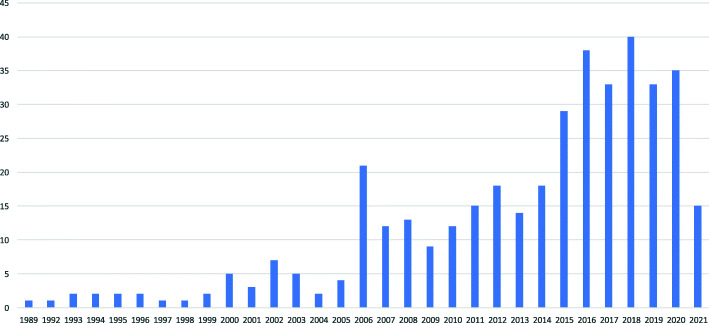
Cognitive–behavioral therapy (CBT) helps individuals to eliminate avoidant and safety-seeking behaviors that prevent self-correction of faulty beliefs, thereby facilitating stress management to reduce stress-related disorders and enhance mental health. The present review evaluated the effectiveness of CBT in stressful conditions among clinical and general populations, and identified recent advances in CBT-related techniques. A search of the literature for studies conducted during 1987–2021 identified 345 articles relating to biopsychosocial medicine; 154 (45%) were review articles, including 14 systemic reviews, and 53 (15%) were clinical trials including 45 randomized controlled trials. The results of several randomized controlled trials indicated that CBT was effective for a variety of mental problems (e.g., anxiety disorder, attention deficit hypersensitivity disorder, bulimia nervosa, depression, hypochondriasis), physical conditions (e.g., chronic fatigue syndrome, fibromyalgia, irritable bowel syndrome, breast cancer), and behavioral problems (e.g., antisocial behaviors, drug abuse, gambling, overweight, smoking), at least in the short term; more follow-up observations are needed to assess the long-term effects of CBT. Mental and physical problems can likely be managed effectively with online CBT or self-help CBT using a mobile app, but these should be applied with care, considering their cost-effectiveness and applicability to a given population.
Overview
The claims and statistics of this paper haven’t been checked yet.
Free: it reads the open-access text and checks the first 5 claims that cite a source we can check. Create a free account to check every claim.
Integrity signals
Registry
Cites
Statistics
Figures
Verification
Claims the paper makes
The claims and statistics of this paper haven’t been checked yet.
Free: it reads the open-access text and checks the first 5 claims that cite a source we can check. Create a free account to check every claim.
Claims other papers make about this one
Each is checked against this paper’s own text: does it say what the citing paper says it does?
The source backs part of the claim, not all of it — or backs it for a different population, condition or comparison.
In the citing paper
“multiple mobile applications support tracking and management of symptoms common during BZD tapering (e.g., sleep impairment, anxiety, depression).204–208”
From Joint Clinical Practice Guideline on Benzodiazepine Tapering: Considerations When Risks Outweigh Benefits (2025) · cites this paper as [208]
Experimental — accuracy not yet measuredThe source backs part of the claim, not all of it — or backs it for a different population, condition or comparison.
In the citing paper
“Cognitive-behavioural therapy emphasizes cognitive restructuring, which involves identifying irrational thoughts and negative ideations and instead allows substitution with positive reinforcement coping strategies to meet conceived expectations [42]. It also incoporates behavioural activation, which encourages engagement in positive activities and thoughts that enhance emotional regulation and cop”
From Psychosocial interventions for improving marital intimacy, sexual satisfaction, and quality of life of women and couples with infertility problems in low and middle-income countries: Systematic review protocol (2025) · cites this paper as [42]
Experimental — accuracy not yet measured
Self-check
Percentages, sums and reported differences re-computed from the paper’s own numbers.
The self-check needs the paper’s full text.
Citations
Cites
The Efficacy of Cognitive Behavioral Therapy: A Review of Meta-analyses
Hofmann, S. G., Asnaani, A., Vonk, I. J. J., Sawyer, A. T., & Fang, A. (2012) · Cognitive Therapy and Research · doi:10.1007/s10608-012-9476-1 · Cited by 3,445 · cited 1×
“CBT is a type of psychotherapeutic treatment that helps people to identify and change destructive or disturbing thought patterns that have a negative influence on their behavior and emotions [1].”
BackgroundPrevalence of chronic benign pain disorder among adults: a review of the literature
Verhaak, P. F. M., Kerssens, J. J., Dekker, J., Sorbi, M. J., & Bensing, J. M. (1998) · Pain · doi:10.1016/s0304-3959(98)00117-1 · Cited by 743
Cherkin, D. C., Sherman, K. J., Balderson, B. H., Cook, A. J., Anderson, M. L., Hawkes, R. J., Hansen, K. E., & Turner, J. A. (2016) · JAMA · doi:10.1001/jama.2016.2323 · Cited by 729 · cited 2×
“logical well-being and quality of life [11].”
BackgroundCognitive therapy: A 30-year retrospective.
Beck, A. T. (1991) · American Psychologist · doi:10.1037//0003-066x.46.4.368 · Cited by 607 · cited 1×
“In the US, Albert Ellis founded rational emotive therapy to help clients modify their irrational thoughts when encountering problematic events, and Aaron Beck employed cognitive therapy for depressed clients using Ellison’s model [3].”
Cognitive Behavior Therapy for Hypochondriasis: A Randomized Controlled Trial
Barsky, A. J., & Ahern, D. K. (2004) · JAMA · doi:10.1001/jama.291.12.1464 · Cited by 307
Schmidt, S., Grossman, P., Schwarzer, B., Jena, S., Naumann, J., & Walach, H. (2011) · PAIN · doi:10.1016/j.pain.2010.10.043 · Cited by 297 · cited 1×
“disease conditions like panic disorder and agoraphobia [6], and mindfulness reduces stress-related pain in fibromyalgia [7].”
BackgroundHellman, C. J. C., Budd, M., Borysenko, J., McClelland, D. C., & Benson, H. (1990) · Behavioral Medicine · doi:10.1080/08964289.1990.9934605 · Cited by 155 · cited 1×
“medicine, it has been reported that cognitive restructuring is effective in improving psychosomatic symptoms [5], exposure therapy is suitable for a variety of anxious”
BackgroundBiopsychosocial Approach to Assessing and Managing Patients with Chronic Pain
Cheatle, M. D. (2015) · Medical Clinics of North America · doi:10.1016/j.mcna.2015.08.007 · Cited by 137 · cited 1×
“The use of biopsychosocial approaches to treat chronic pain is shown to be clinically and economically efficacious [10]; for example, CBT is effective for chronic low-back pain [11].”
BackgroundFeliu‐Soler, A., Cebolla, A., McCracken, L. M., D’Amico, F., Knapp, M. R. J., López-Montoyo, A., García‐Campayo, J., Soler, J., Baños, R., Pérez‐Aranda, A., et al. (2017) · Behavior Therapy · doi:10.1016/j.beth.2017.07.001 · Cited by 73 · cited 2×
“The first- and second-wave forms of CBT arose via attempts to develop well-specified and rigorous techniques based on empirically validated basic principles [4].”
BackgroundCoping with Work-Related Stress through Guided Imagery and Music (GIM): Randomized Controlled Trial
Beck, B. D., Hansen, Å. M., & Gold, C. (2015) · Journal of Music Therapy · doi:10.1093/jmt/thv011 · Cited by 65 · cited 1×
“Most clinical trials recruited the samples from patient populations in order to assess specific diseases, but some targeted at those from non-patient populations like a working population in order to assessing mind-body conditions relating to sick leave [9].”
Background
Research works printed but not linked: 1
- Cochrane library. Cochrane reviews. [ https://www.cochranelibrary.com/] Accessed 15 June 2021.
Cited by
Qing, W., Zhang, W., & An, S. (2023) · Internet Interventions · doi:10.1016/j.invent.2023.100690 · Cited by 87
“In addition, formidable barriers are impeding access to traditional face-to-face clinical therapy, including elevated costs, limited availability in remote regions, and a shortage of skilled therapists (Hofmann, 2011; Nakao et al., 2021; Hedman et al., 2012).”
BackgroundUnraveling the Complex Web of Fibromyalgia: A Narrative Review
Sharie, S. A., Varga, S. J., Al-Husinat, L., Sarzi‐Puttini, P., Araydah, M., Bal’awi, B. R., & Varrassi, G. (2024) · Medicina · doi:10.3390/medicina60020272 · Cited by 71
“The findings of a study indicate that individuals adhering to a vegan diet experienced notable enhancements in reported pain [98].”
BackgroundHu, Y., Wang, W.-R., Ma, W., Wang, W., Ren, W., Wang, S., Fu, F., & Li, Y. (2024) · International Journal of Molecular Medicine · doi:10.3892/ijmm.2024.5475 · Cited by 70
Psychological risk factors and cardiovascular disease
Carola, V., Vincenzo, C., Vincenzo, G. D., Morale, C., Cecchi, V., & Nicolais, G. (2024) · Frontiers in Psychology · doi:10.3389/fpsyg.2024.1419731 · Cited by 56
Brunner, E., Chen, C.-Y. A., Klein, T., Maust, D., Mazer-Amirshahi, M., Mecca, M., Najera, D., Ogbonna, C., Rajneesh, K. F., Roll, E., et al. (2025) · Journal of General Internal Medicine · doi:10.1007/s11606-025-09499-2 · Cited by 51
Metadata
- Authors
- Nakao, M., Shirotsuki, K., & Sugaya, N.
- Affiliations
- International University of Health and Welfare (JP)
- Musashino University (JP)
- Yokohama City University (JP)
- Corresponding author
- Nakao, Mutsuhiro
- Venue
- BioPsychoSocial Medicine
- Published
- 2021-10-03
- Volume
- 15
- Issue
- 1
- Pages
- 16-16
- ISSN
- 1751-0759 (ISSN-L)
- PMC
- PMC8489050
- OpenAlex
- W3204339337
- Cited by
- 339
- References
- 19
- Citations by year
- 2026: 75 · 2025: 137 · 2024: 88 · 2023: 30 · 2022: 9
- FWCI
- 30.69
- Type
- journal article
- Language
- en
- Open access
- gold
- doi.org
- Licence
- cc-by
- creativecommons.org/licenses/by/4.0 (tdm)
- creativecommons.org/licenses/by/4.0 (vor)
- Locations
- BioPsychoSocial Medicine (publishedVersion, cc-by)
- Europe PMC (PubMed Central) (publishedVersion, other-oa)
- PubMed Central (publishedVersion, cc-by)
- PubMed (publishedVersion)
- DOAJ (DOAJ: Directory of Open Access Journals) (submittedVersion, cc-by-sa)
- Funders
- ministry of education and science (kakenhi C)
- Topics
- Social Sciences › Psychology › Experimental and Cognitive Psychology › Anxiety, Depression, Psychometrics, Treatment, Cognitive Processes
- Social Sciences › Psychology › Applied Psychology › Digital Mental Health Interventions
- Social Sciences › Psychology › Clinical Psychology › Psychological Treatments and Assessments
- Keywords
- cognitive behavioral therapy, stress management, stress-related disorders, mental health, anxiety disorders, depression, bulimia nervosa, health anxiety, chronic fatigue syndrome, fibromyalgia, irritable bowel syndrome, breast cancer, antisocial behavior, drug abuse, gambling, smoking, mobile application, cost-effectiveness
About these checks
Registry, retraction, Cites and statistics results are computed, not judged, with one exception: a printed reference that no index lists is read once by a model before it counts as a citation error. Claims are extracted by a model and kept only when their quote appears verbatim in the text; each cited source is then checked, with a model’s help, for whether it says what the claim relies on. Those verdicts can be wrong — read the claim’s quote and the cited source before relying on one.
Statistics and arithmetic are recomputed, not judged.
Confidence bands are shown only for fields calibrated on our annotated test set. None is calibrated yet, so no band is shown.
What counts as a claim ›How we measure confidence ›How we check this ›
Are you an author, or do you see a problem with this page? Request a review
How to cite
Cite CoChat for the checks on this page, and the paper for its own findings.
- This page
- CoChat. (2026). Citation check: Cognitive–behavioral therapy for management of mental health and stress-related disorders: Recent advances in techniques and technologies. https://app.cochat.ai/papers/10.1186/s13030-021-00219-w
- The paper
- Nakao, M., Shirotsuki, K., & Sugaya, N. (2021). Cognitive–behavioral therapy for management of mental health and stress-related disorders: Recent advances in techniques and technologies. BioPsychoSocial Medicine. https://doi.org/10.1186/s13030-021-00219-w
Data sources
Bibliographic data: Semantic Scholar, OpenAlex, Crossref.
Contains information from the Semantic Scholar Academic Graph Datasets, made available under the ODC Attribution License (ODC-BY 1.0).
Semantic Scholar’s data is described in: Kinney, R., et al. (2023). The Semantic Scholar Open Data Platform. arXiv:2301.10140.
