

Mechanisms of change for interventions aimed at improving the wellbeing, mental health and resilience of children and adolescents affected by war and armed conflict: a systematic review of reviews
Open accessThe DOI matches its Crossref record; 52 of the 53 references it cites were found in a registry or an index; 18 of the 81 sources its claims cite were checked for support.
Abstract
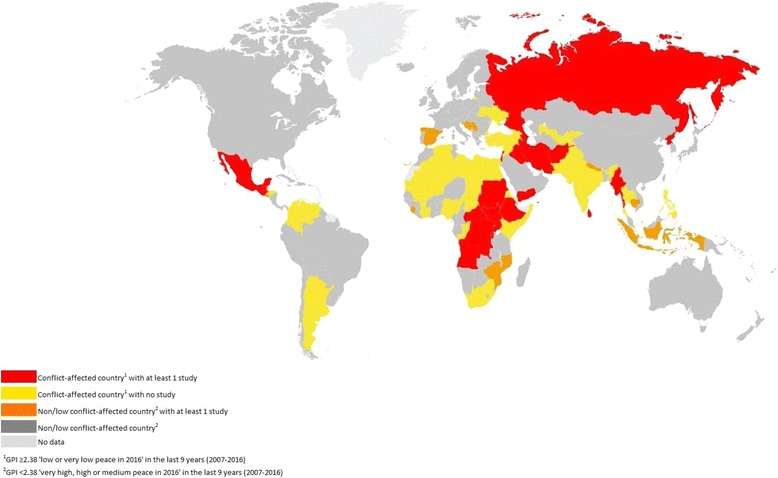
Despite increasing research and clinical interest in delivering psychosocial interventions for children affected by war, little research has been conducted on the underlying mechanisms of change associated with these interventions. This review aimed to identify these processes in order to inform existing interventions and highlight research gaps. A systematic review of reviews was conducted drawing from academic databases (PubMed, PILOTS, Cochrane Library for Systematic Reviews) and field resources (e.g. Médecins Sans Frontières and the Psychosocial Centre of the International Federation of Red Cross and Red Crescent Societies), with extracted data analysed using Thematic Content Analysis. Thirteen reviews of psychosocial or psychological interventions for children and adolescents (< 25 years old) affected by war, armed conflict or political violence were identified, covering over 30 countries worldwide. Qualitative analysis identified 16 mechanisms of change, one of which was an adverse mechanism. Themes included protection from harm, play, community and family capacity building, strengthening relationships with caregivers, improved emotional regulation, therapeutic rapport, trauma processing, and cognitive restructuring; with the adverse mechanism relating to the pathologising of normal reactions. However, only 4 mechanisms were supported by strong empirical evidence, with only moderate or poor quality evidence supporting the other mechanisms. The poor quality of supporting evidence limits what can be inferred from this review's findings, but serves to highlight clinically informed mechanisms of change for existing and widely used non-specialist interventions in the field, which urgently need rigorous scientific testing to inform their continued practice.
Overview
CoChat Summary
TL;DR
This systematic review of reviews identified 16 mechanisms of change—including one adverse mechanism—across 13 reviews of psychosocial or psychological interventions for children and adolescents affected by war, armed conflict, or political violence. Only four mechanisms had high-quality supporting evidence, and the review concludes that most mechanisms require rigorous statistical testing.
Key findings
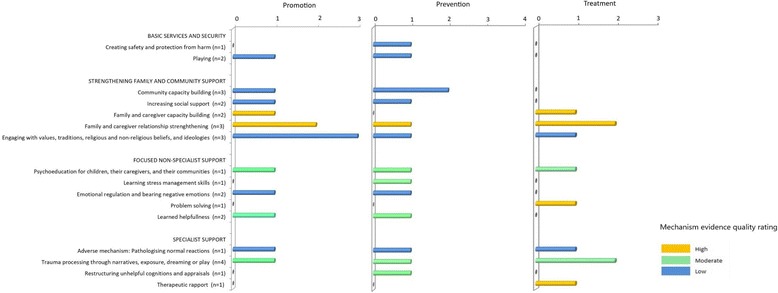
- Thirteen reviews were included, covering over 30 countries worldwide, with pooled sample sizes ranging from 730 to 32,046 participants; 16 mechanisms were identified across the four IASC tiers, including one adverse mechanism: pathologising normal reactions.
- Only 4 mechanisms were supported by high-quality evidence: family and caregiver capacity building, family and caregiver relationship strengthening, problem solving, and therapeutic rapport; 7 mechanisms were rated low quality, 5 moderate, and 4 high.
- Only 6 of the 13 reviews referred to mechanisms of change, and only one review cited two studies that statistically tested mechanisms; trauma processing was the most cited mechanism.
- AMSTAR quality assessment rated 5 reviews low quality, 6 moderate, and 2 high; countries with brutal conflicts such as the Central African Republic, Syria, and Somalia were not included in a single review.
Methods
- Systematic review of reviews using PRISMA and Cochrane Handbook guidance; PubMed, PILOTS, and Cochrane Library for Systematic Reviews were searched on 25 April 2017, plus grey literature from sources including MSF, IFRC Psychosocial Centre, War Trauma Foundation, War Child, Save the Children, and Médecins du Monde; 2,359 records yielded 13 included reviews.
- Inclusion criteria covered children, adolescents, and young people aged 25 or younger affected by war, armed conflict, or political violence, receiving any psychological or psychosocial intervention at any IASC pyramid level; single terrorism-related events in non-war-affected countries and displaced populations in non-war-affected countries were excluded.
- Data were extracted and analysed using Thematic Content Analysis within Malterud’s framework and Newell and Burnard’s approach; duplicate screening reached 96.08% agreement (Cohen’s kappa = 0.89, SE = 0.14), with duplicate analysis, AMSTAR quality assessment, and a Kazdin-based rating of mechanism evidence quality.
Limitations
- Stated: primary research lacked description and statistical testing of mechanisms; 7 reviews were excluded from analysis because they did not address mechanisms; 5 mechanisms were supported by poor-quality evidence; 5 of 13 reviews were poor methodological quality and only 2 were high quality; only two primary studies statistically tested mechanisms.
- Stated: the wide scope limits use for targeted interventions for particular symptom clusters or disorders, and there was conceptual difficulty differentiating mechanisms from therapeutic activities and protective factors.
- Stated: time and resource restrictions limited the number of databases searched and restricted PubMed to a title search; evident from the text, the qualitative synthesis cannot establish causal mediation, and geographic gaps limit generalisability.
Model-written summary. Check it against the paper before relying on it.
Integrity signals
Registry
Cites
Statistics
Figures
Verification
Claims the paper makes
13 Valid · 2 Not valid · 41 Not checked · 64 Own results and interpretations
At least one cited source doesn’t support this claim or points to a different paper, and none confirmed it — see the verdicts below.
In the paper
“The evidence for this mechanism is rated as high as it is based on mediational analysis of the mechanism.”
§ Mechanisms of change for interventions aimed at improving the wellbeing, mental health and resilience of children and adolescents affected by war and armed conflict: a systematic review of reviews > Results > Mechanisms of change
What the sources say
- Disputedcites [36] Jordans MJ, Pigott H, Tol WA. Interventions for children affected by armed conflict: a systematic review of mental health and psychosocial support in low- and middle-income countries. Curr Psychiatry Rep. 2016;18(1) 10.1007/s11920-015-0648-z. PMC4713453 26769198 sourceExperimental — accuracy not yet measured
Our copy does not rate the rapport/therapeutic-relationship mechanism as high-quality evidence: the two counseling-mechanism publications [20, 21] are described as 'case studies' (Intervention Modalities, Results), which in this review's own Morris-adapted scheme is level 4, the lowest evidence class (Method, Data Synthesis and Analysis). It also frames the relationship as a moderator rather than a mediator: 'Effects of individual counseling for children were moderated by the relationship the client had with their counselor...' (Discussion > Summary) and 'The delivery agent's relationship with the participant was described as integral to positive treatment effects in both publications on mechanisms of counseling' (Results > Cultural Modifications and Key Themes). The review further stresses a general lack of rigor, with only two studies having majority low risk-of-bias scores (Discussion > Comparison). No passage reports mediational analysis underpinning a high evidence rating. (LLM, conf=0.75)
Checked by a reasoning model — may be wrong.
plain- Asserted: passes — The authors put it forward as true.
- Checkable: passes — It can be checked against evidence.
- Load-bearing: unclear — It is unclear whether the paper’s conclusions depend on it.
- Based: passes — The paper gives a reason why it holds.
- Disputed
The cited sources support only part of this claim — read each source’s verdict below.
In the paper
“These include factors such as an internal locus of control, parental support, and community acceptance [11]; all of which can be targeted to build resilience in war-affected populations.”
§ Mechanisms of change for interventions aimed at improving the wellbeing, mental health and resilience of children and adolescents affected by war and armed conflict: a systematic review of reviews > Background
What the sources say
- Partly supportedcites [11] Tol WA Song S Jordans MJ Annual research review: resilience and mental health in children and adolescents living in areas of armed conflict--a systematic review of findings in low- and middle-income countries J Child Psychol Psychiatry 2013 54 4 445 460 10.1111/jcpp.12053 23414226 sourceExperimental — accuracy not yet measured
The Discussion's concluding paragraph (p. n/a) does support two of the three factors as intervention targets: 'Intervention development should focus on how to augment the possible family-level predictors ... particularly parental support and monitoring. In addition, practitioners may build on peer-, school- and community-level resources (e.g. school retention, community acceptance for child soldiers).' However, internal locus of control is not offered as a target: the 'Protective' section reports only one longitudinal study (Kuterovic-Jagodic, 2003) with a protective effect for PTSD symptoms in the post-conflict phase but not during ongoing violence, and related agency/control constructs (appraisal of control, hardiness, self-efficacy, optimism) were frequently non-protective. The review also explicitly cautions against building interventions on a pre-existing 'shopping list' of attributes and stresses tailoring to context, so the claim's blanket assertion that all three 'can be targeted to build resilience' overstates the source, particularly for locus of control. (LLM, conf=0.80)
plainstates a cause- Asserted: passes — The authors put it forward as true.
- Checkable: passes — It can be checked against evidence.
- Load-bearing: passes — The paper’s conclusions depend on it.
- Based: passes — The paper gives a reason why it holds.
- Partly supported
The cited sources support only part of this claim — read each source’s verdict below.
In the paper
“Only one review [36] referred to two studies that statistically tested the mechanisms of change.”
§ Mechanisms of change for interventions aimed at improving the wellbeing, mental health and resilience of children and adolescents affected by war and armed conflict: a systematic review of reviews > Results > Mechanisms of change
What the sources say
- Partly supportedcites [36] Jordans MJ, Pigott H, Tol WA. Interventions for children affected by armed conflict: a systematic review of mental health and psychosocial support in low- and middle-income countries. Curr Psychiatry Rep. 2016;18(1) 10.1007/s11920-015-0648-z. PMC4713453 26769198 sourceExperimental — accuracy not yet measured
Our copy does refer to exactly two studies on mechanisms: Results > Cultural Modifications and Key Themes states 'The delivery agent's relationship with the participant was described as integral to positive treatment effects in both publications on mechanisms of counseling [20, 21]', and Table 1 lists Jordans (2012) [21] (Burundi) and Jordans (2013) [20] (South Sudan) with primary outcome 'treatment mechanisms'. However, the review characterises these as case studies (Intervention Modalities: 'The case studies that investigated counseling mechanisms...'; evidence level 4) reporting associations with 'd = N/A', i.e. it does not state that either study statistically tested mechanisms of change, so that qualifier is unsupported. The 'only one review' comparison is the citing authors' own framing across reviews and is not something this source asserts. (LLM, conf=0.72)
plain- Asserted: passes — The authors put it forward as true.
- Checkable: passes — It can be checked against evidence.
- Load-bearing: unclear — It is unclear whether the paper’s conclusions depend on it.
- Based: passes — The paper gives a reason why it holds.
- Rests on an assumption not shown here.
- Partly supported
The cited sources support only part of this claim — read each source’s verdict below.
In the paper
“Despite increasing research and clinical interest in delivering psychosocial interventions for children affected by war, little research has been conducted on the underlying mechanisms of change associated with these interventions.”
- Also stated in: § Data analysis · plain
“Due to insufficient quantitative testing of mechanisms in the literature [28], a qualitative data analysis was conducted.”
§ Mechanisms of change for interventions aimed at improving the wellbeing, mental health and resilience of children and adolescents affected by war and armed conflict: a systematic review of reviews > Abstract
What the sources say
- Partly supportedcites [28] Kazdin AE Mediators and mechanisms of change in psychotherapy research Annu Rev Clin Psychol 2007 3 1 2 10.1146/annurev.clinpsy.3.022806.091432 17716046 sourceExperimental — accuracy not yet measured
Our copy of Kazdin (2007) supports the generic half of the claim: the Abstract (p. 1) states that after decades of psychotherapy research 'we cannot provide an evidence-based explanation for how or why even our most well studied interventions produce change,' and RECOMMENDATIONS FOR RESEARCH (p. 16) says 'little research has addressed the conditions necessary to establish mediators or mechanisms,' with child and adolescent therapy noted as an area of many treatments and few mechanism studies (REASONS FOR STUDYING MEDIATORS AND MECHANISMS, p. 3; CURRENT STATUS, p. 6). However, the population the citing sentence specifies — psychosocial interventions for children affected by war — appears nowhere in our copy; searches for war, armed conflict, refugees and war trauma returned only unrelated passages on maltreatment, extinction learning and animal stress reactivity. The paper's illustrative areas are therapeutic alliance and cognitive therapy for adult depression (pp. 6-7), so the war-affected-children qualifier is not attributable to this source. (LLM, conf=0.70)
plainstates an association- Asserted: passes — The authors put it forward as true.
- Checkable: passes — It can be checked against evidence.
- Load-bearing: passes — The paper’s conclusions depend on it.
- Based: passes — The paper gives a reason why it holds.
- Also stated in: § Data analysis · plain
The cited sources support only part of this claim — read each source’s verdict below.
In the paper
“The limitations of this research and the difficulty in applying intervention-specific findings in low-resource settings has resulted in a large theory-practice gap [20].”
§ Mechanisms of change for interventions aimed at improving the wellbeing, mental health and resilience of children and adolescents affected by war and armed conflict: a systematic review of reviews > Background
What the sources say
- Partly supportedcites [20] Tol WA Barbui C Galappatti A Silove D Betancourt TS Souza RS Golaz A van Ommeren M Mental health and psychosocial support in humanitarian settings: linking practice and research Lancet 2011 378 1581 1591 10.1016/S0140-6736(11)61094-5 22008428 PMC3985411 sourceExperimental — accuracy not yet measured
The Conclusion (page unavailable) identifies a major disconnection between research and practice: the interventions studied are infrequently implemented in humanitarian programmes. It also notes methodological limitations. The copy does not specifically attribute the gap to difficulty applying intervention-specific findings in low-resource settings. (LLM, conf=0.83)
plainstates a cause- Asserted: passes — The authors put it forward as true.
- Checkable: passes — It can be checked against evidence.
- Load-bearing: passes — The paper’s conclusions depend on it.
- Based: passes — The paper gives a reason why it holds.
- Partly supported
47 more claims · 8 with their cited sources checked
Create a free account to see all 120 claims and to verify the 63 references still open.
- It may state two separate claims as one. 49
- Probably not a substantial claim. 27
- The quote only partly states this claim. 2
Claims other papers make about this one
Each is checked against this paper’s own text: does it say what the citing paper says it does?
In the citing paper
“Furthermore, because family support has been identified as a protective factor associated with resilience in youths exposed to adversities e.g., [55,59], in the presence of an adversity such as living amidst a pandemic, family cohesion may also protect against distress.”
From Exploring the Impact of COVID-19 on Mental Health Outcomes in Children and Adolescents: A Systematic Review (2020) · cites this paper as [59]
Self-check
Percentages, sums and reported differences re-computed from the paper’s own numbers.
Each contradiction between two passages listed here was confirmed by an independent check.
Rated minor: it would not touch a result — a value no result rests on, a p-value that stays on the same side of the significance level, or a conflict that is clerical, resolved elsewhere in the paper, or outside its own findings.
In the paper
§ Mechanisms of change for interventions aimed at improving the wellbeing, mental health and resilience of children and adolescents affected by war and armed conflict: a systematic review of reviews > Results
“Ager et al. [17] | Systematic review of quantitative studies | 1997–2012 | 10”
§ Mechanisms of change for interventions aimed at improving the wellbeing, mental health and resilience of children and adolescents affected by war and armed conflict: a systematic review of reviews > References
“17. Ager A Akesson B Stark L Flouri E Okot B McCollister F Boothby N The impact of the school-based psychosocial structured activities (PSSA) program on conflict-affected children in northern Uganda”
Rated minor: it would not touch a result — a value no result rests on, a p-value that stays on the same side of the significance level, or a conflict that is clerical, resolved elsewhere in the paper, or outside its own findings.
In the paper
§ Mechanisms of change for interventions aimed at improving the wellbeing, mental health and resilience of children and adolescents affected by war and armed conflict: a systematic review of reviews > Abstract
“children and adolescents (< 25 years old) affected by war”
§ Mechanisms of change for interventions aimed at improving the wellbeing, mental health and resilience of children and adolescents affected by war and armed conflict: a systematic review of reviews > Method > Inclusion criteria
“children, adolescents and young people aged 25 or younger”
Rated minor: it would not touch a result — a value no result rests on, a p-value that stays on the same side of the significance level, or a conflict that is clerical, resolved elsewhere in the paper, or outside its own findings.
In the paper
§ Mechanisms of change for interventions aimed at improving the wellbeing, mental health and resilience of children and adolescents affected by war and armed conflict: a systematic review of reviews > Results > Subjective reflection and researcher bias
“the eighth mechanism of engaging with traditions was worded carefully”
§ Mechanisms of change for interventions aimed at improving the wellbeing, mental health and resilience of children and adolescents affected by war and armed conflict: a systematic review of reviews > Results > Mechanisms of change
“7 | Engaging with values, traditions, religious and non-religious beliefs, and ideologies”
Rated minor: it would not touch a result — a value no result rests on, a p-value that stays on the same side of the significance level, or a conflict that is clerical, resolved elsewhere in the paper, or outside its own findings.
In the paper
§ Mechanisms of change for interventions aimed at improving the wellbeing, mental health and resilience of children and adolescents affected by war and armed conflict: a systematic review of reviews > Results > Mechanisms of change
“3 | Community capacity building | Apfel and Simon [1]; Ager et al. [17]; Peltonen & Punamäki [6]”
§ Mechanisms of change for interventions aimed at improving the wellbeing, mental health and resilience of children and adolescents affected by war and armed conflict: a systematic review of reviews > Results > Mechanisms of change
“Three reviews [6, 14, 17] cited community capacity building and the strengthening of community protective mechanisms for children as an important mechanism of change”
Rated minor: it would not touch a result — a value no result rests on, a p-value that stays on the same side of the significance level, or a conflict that is clerical, resolved elsewhere in the paper, or outside its own findings.
In the paper
§ Mechanisms of change for interventions aimed at improving the wellbeing, mental health and resilience of children and adolescents affected by war and armed conflict: a systematic review of reviews > Results
“Kalskma-Van Lith [49] | Unsystematic narrative review”
§ Mechanisms of change for interventions aimed at improving the wellbeing, mental health and resilience of children and adolescents affected by war and armed conflict: a systematic review of reviews > References
“49. Gillies D, Maiocchi L, Bhandari AP, Taylor F, Gray C, O’Brien L. Psychological therapies for children and adolescents exposed to trauma.”
1 more finding
Create a free account to see every finding of this check.
Citations
Cites
Preferred Reporting Items for Systematic Reviews and Meta-Analyses: the PRISMA statement
Moher, D., Liberati, A., Tetzlaff, J., Altman, D. G., & for the PRISMA Group (2009) · BMJ · doi:10.1136/bmj.b2535 · Cited by 83,823
Preferred reporting items for systematic reviews and meta-analyses: the PRISMA Statement.
(2009) · PubMed Central · Cited by 44,859
A cognitive model of posttraumatic stress disorder
Ehlers, A., & Clark, D. M. (2000) · Behaviour Research and Therapy · doi:10.1016/s0005-7967(99)00123-0 · Cited by 6,147 · cited 5×
“in the cognitive model of PTSD by Ehlers & Clarke [43]) and this review found moderate evidence to support its continued practice in war settings.”
BackgroundInfluentialThe Lifelong Effects of Early Childhood Adversity and Toxic Stress
Shonkoff, J. P., Garner, A. S., THE COMMITTEE ON PSYCHOSOCIAL ASPECTS OF CHILD AND FAMILY HEALTH, C. O. E. C., Siegel, B. S., Dobbins, M. I., Earls, M. F., Garner, A. S., McGuinn, L., Pascoe, J., & Wood, D. L. (2012) · Pediatrics · doi:10.1542/peds.2011-2663 · Cited by 5,164
Qualitative research: standards, challenges, and guidelines
Malterud, K. (2001) · The Lancet · doi:10.1016/s0140-6736(01)05627-6 · Cited by 5,014 · cited 1×
“Data was analysed within Malterud’s framework for qualitative research [29] using Newell and Burnard’s”
MethodDevelopment of AMSTAR: A measurement tool to assess the methodological quality of systematic reviews
Shea, B. J., Grimshaw, J. M., Wells, G. A., Boers, M., Andersson, N., Hamel, C., Porter, A. C., Tugwell, P., Moher, D., & Bouter, L. M. (2007) · BMC Medical Research Methodology · doi:10.1186/1471-2288-7-10 · Cited by 4,374
Mediators and Mechanisms of Change in Psychotherapy Research
Kazdin, A. E. (2007) · Annual Review of Clinical Psychology · doi:10.1146/annurev.clinpsy.3.022806.091432 · Cited by 2,504 · cited 6×
“Due to insufficient quantitative testing of mechanisms in the literature [28], a qualitative data analysis was con-”
BackgroundMethodInfluentialManuscripts Accepted for Publication
(2005) · Child Development · doi:10.1111/j.1467-8624.2005.00876.x · Cited by 2,047
How important are the common factors in psychotherapy? An update
Wampold, B. E. (2015) · World Psychiatry · doi:10.1002/wps.20238 · Cited by 1,728 · cited 1×
“This finding is in keeping with past research in non-war settings, which has found therapeutic rapport to be the strongest mechanism of therapeutic change, followed by specific treatment and client factors [44, 45].”
ResultAnalysing and presenting qualitative data
Burnard, P., Gill, P., Stewart, K., Treasure, E., & Chadwick, B. (2008) · British Dental Journal · doi:10.1038/sj.bdj.2008.292 · Cited by 1,140 · cited 1×
“Analysis is rooted in Grounded Theory and has been used extensively in public health research [31].”
BackgroundPsychotherapy outcome research: Implications for integrative and eclectical therapists.
Lambert, M. J. (1992) · Cited by 773
OSTNER, I. (2000) · Lien social et Politiques · doi:10.7202/005207ar · Cited by 720
IASC Guidelines on Mental Health and Psychosocial Support in Emergency Settings
Carll, E. K. (2008) · PsycEXTRA Dataset · doi:10.1037/e518422011-002 · Cited by 681
Mental health and psychosocial support in humanitarian settings: linking practice and research
Tol, W. A., Barbui, C., Galappatti, A., Silove, D., Betancourt, T. S., Souza, R., Golaz, A., & van Ommeren, M. (2011) · The Lancet · doi:10.1016/s0140-6736(11)61094-5 · Cited by 625 · cited 5×
“interventions for PTSD and humanitarian agencies’ focus on delivering basic services and community support [20, 50].”
BackgroundInfluentialWessells, M. (2010) · 57th Annual Meeting (October 26-31, 2010) · Cited by 544
Tol, W. A., Song, S., & Jordans, M. J. D. (2013) · Journal of Child Psychology and Psychiatry · doi:10.1111/jcpp.12053 · Cited by 497 · cited 5×
“([11], p449) example of the role of ‘Sumud’ for the wellbeing of children in the occupied”
BackgroundInfluentialBetancourt, T. S., Meyers-Ohki, S. E., Charrow, A. P., & Tol, W. A. (2013) · Harvard Review of Psychiatry · doi:10.1097/hrp.0b013e318283bf8f · Cited by 326 · cited 11×
“Many reviews highlight the number of studies with no control groups [13], lacking culturally and linguistically appropriate standardised outcome measures [14], with poor clarity on theoretical models of interventions [15] or with limited transparency of cultural adaptations of ‘exported’ interventions, developed in on…”
BackgroundInfluentialMelander, E., Pettersson, T., & Themnér, L. (2016) · Journal of Peace Research · doi:10.1177/0022343316663032 · Cited by 325 · cited 2×
“The Uppsala Conflict Data Program [51] identified that the highest number of fatalities”
BackgroundO’Callaghan, P., McMullen, J., Shannon, C., Rafferty, H., & Black, A. (2013) · Journal of the American Academy of Child & Adolescent Psychiatry · doi:10.1016/j.jaac.2013.01.013 · Cited by 307 · cited 2×
“Different aims of interventions, be it the treatment of psychiatric disorders such as Trauma-Focused Cognitive Behavioural Therapy (TFCBT) [16], the promotion of wellbeing such as Psychosocial Structured Activities [17], the prevention of mental health problems and psychiatric disorders such as the school-based interv…”
BackgroundTrauma‐Focused Cognitive Behavioural Therapy for Children and Parents
Cohen, J. A., & Mannarino, A. P. (2008) · Child and Adolescent Mental Health · doi:10.1111/j.1475-3588.2008.00502.x · Cited by 288 · cited 4×
“Treatment refers to interventions that aim to treat mental ill health and psychiatric disorders, such as Trauma-Focused Cognitive Behavioural Therapy (TF-CBT) [25] and Narrative Exposure Therapy for children (KidNET) [26, 27].”
InfluentialTol, W. A., Komproe, I. H., Susanty, D., Jordans, M. J. D., Macy, R. D., & De Jong, J. T. V. M. (2008) · JAMA · doi:10.1001/jama.300.6.655 · Cited by 286
Berger, R., Pat‐Horenczyk, R., & Gelkopf, M. (2007) · Journal of Traumatic Stress · doi:10.1002/jts.20225 · Cited by 275 · cited 2×
“Different aims of interventions, be it the treatment of psychiatric disorders such as Trauma-Focused Cognitive Behavioural Therapy (TFCBT) [16], the promotion of wellbeing such as Psychosocial Structured Activities [17], the prevention of mental health problems and psychiatric disorders such as the school-based interv…”
BackgroundMechanisms of action in youth psychotherapy
Weersing, V. R., & Weisz, J. R. (2002) · Journal of Child Psychology and Psychiatry · doi:10.1111/1469-7610.00002 · Cited by 224 · cited 1×
“However, past research has not replicated this finding in child and adolescent populations due to insufficient mediational analyses [46].”
BackgroundJordans, M. J. D., Tol, W. A., Komproe, I. H., & De Jong, J. V. T. M. (2009) · Child and Adolescent Mental Health · doi:10.1111/j.1475-3588.2008.00515.x · Cited by 222 · cited 2×
“[13] Systematic review of qualitative and quantitative studies 1991–2008 66 1824 Child & Adolescents Afghanistan, Angola, Azarbaijan, Chechnya, Croatia, Bosnia, Ethiopia, Guatemala, Iraq, Kosovo, Mexico, Mozambique, Rwanda, Sierra Leone, Sri Lanka, Uganda, WestBank & Gaza, Zimbabwe War, armed conflict or community vio…”
BackgroundRoberts, N. P., Kitchiner, N. J., Kenardy, J., & Bisson, J. I. (2009) · Cochrane Database of Systematic Reviews · doi:10.1002/14651858.cd006869.pub2 · Cited by 218 · cited 1×
“menting trauma processing too early after an incident has long been established [47] and has since been avoided by humanitarian agencies who opt instead for”
BackgroundJordans, M. J. D., Pigott, H., & Tol, W. A. (2016) · Current Psychiatry Reports · doi:10.1007/s11920-015-0648-z · Cited by 216 · cited 13×
“Statistical testing in two studies cited by Jordans, Pigott and Tol [36] provides high quality evidence for this mechanism.”
BackgroundMethodInfluentialEthics of conducting research in conflict settings
Ford, N., Mills, E. J., Zachariah, R., & Upshur, R. (2009) · Conflict and Health · doi:10.1186/1752-1505-3-7 · Cited by 165 · cited 1×
“Conducting high quality research in current conflicts, often with low or extremely low resources, can prove operationally and ethically difficult, with trials being hampered by outbreaks of violence, population displacement, high drop-out, and security concerns for practitioners travelling to work [12].”
BackgroundPreventive interventions among children exposed to trauma of armed conflict: a literature review
Peltonen, K., & Punamäki, R. (2010) · Aggressive Behavior · doi:10.1002/ab.20334 · Cited by 159 · cited 14×
“Peltonen & Punamäki [6] describe how this process helps in ‘making sense of trauma…empowering coping skills and integrating of fragmented and intrusive thoughts and feelings into a more coherent experience.’”
BackgroundInfluentialAger, A., Akesson, B., Stark, L., Flouri, E., Okot, B., McCollister, F., & Boothby, N. (2011) · Journal of Child Psychology and Psychiatry · doi:10.1111/j.1469-7610.2011.02407.x · Cited by 153 · cited 8×
“One review [17] cited the need to first and foremost protect children from harm, to create a protective environment and a sense of safety, in order to prevent further traumatisation, exploitation, and to pro-”
BackgroundInfluentialPsychological therapies for children and adolescents exposed to trauma
Gillies, D., Maiocchi, L., Bhandari, A. P., Taylor, F., Gray, C., & O'Brien, L. (2016) · Cochrane Database of Systematic Reviews · doi:10.1002/14651858.cd012371 · Cited by 143 · cited 3×
“Kalskma-Van Lith [49] Unsystematic narrative review NR NR NR Children & Adolescents NR War-affected areas”
BackgroundInfluentialResearch for evidence-based practice
Newell, R., & Burnard, P. (2006) · Cited by 130
Brown, F. L., de Graaff, A. M., Annan, J., & Betancourt, T. S. (2017) · Journal of Child Psychology and Psychiatry · doi:10.1111/jcpp.12671 · Cited by 107 · cited 2×
“[37] Systematic review of quantitative studies (RCTs or CTs) 1840–2015 28 5457 ≤ 24 Bosnia, Burundi, Democratic Republic of the Congo, Indonesia, Iran, Kosovo, Lebanon, Nepal, Palestine, Rwanda, Sierra Leone, Areas affected by recent or ongoing conflict (postWorld War II), including former child soldiers, and in a LMI…”
BackgroundNarrative exposure therapy in children : a case study
Schauer, E., Neuner, F., Elbert, T. R., Ertl, V., Onyut, L. P., Odenwald, M. G., & Schauer, M. (2004) · KOPS (University of Konstanz) · Cited by 97
Morina, N., Malek, M., Nickerson, A., & Bryant, R. A. (2017) · British Journal of Psychiatry · doi:10.1192/bjp.bp.115.180265 · Cited by 91 · cited 1×
“This is even more important in the context of global mental health and LMIC, where interventions need to be both efficacious and readily available for large-scale implementation in low resource and insecure settings [37, 38].”
Background(2011) · doi:10.1057/9780230343320_10 · Cited by 79
PTSD, depression and anxiety among former abductees in Northern Uganda
Pfeiffer, A., & Elbert, T. (2011) · Conflict and Health · doi:10.1186/1752-1505-5-14 · Cited by 71 · cited 1×
“depression, and anxiety [5], disproportionately affect those whose lives are, or have been, affected by war, with”
BackgroundHarel‐Fisch, Y., Radwan, Q., Walsh, S. D., Laufer, A., Amitai, G., Fogel‐Grinvald, H., & Abdeen, Z. (2010) · Child Abuse & Neglect · doi:10.1016/j.chiabu.2009.12.007 · Cited by 70 · cited 1×
“conflict, which is in keeping with research on the protective effect of attachment security and parental support during ongoing conflicts [39, 40].”
ResultInter-agency agreement on mental health and psychosocial support in emergency settings
Inter-Agency Standing Committee Task Force on Mental Health, Settings, P. S. I. E., van Ommeren, M., & Wessells, M. (2007) · Bulletin of the World Health Organization · doi:10.2471/blt.07.047894 · Cited by 49
Psychosocial interventions for children in war-affected areas: the state of the art
Kalksma-Van Lith, B. (2007) · Intervention · doi:10.1097/wtf.0b013e3280c264cd · Cited by 40
Tol, W. A., Jordans, M. J. D., Kohrt, B. A., Betancourt, T. S., & Komproe, I. H. (2013) · Handbook of Resilience in Children of War · doi:10.1007/978-1-4614-6375-7_2 · Cited by 39 · cited 2×
“and societies into which they are born’ [9], has also unsurprisingly been shown to be greatly affected by the environment of war [10].”
BackgroundPsychosocial Interventions for Children of War: The Value of a Model of Resiliency
Apfel, R. J., & Simon, B. (1996) · Cited by 37
White, R., & Wild, J. (2016) · Behavior Therapy · doi:10.1016/j.beth.2016.02.004 · Cited by 36 · cited 1×
“The natural tendency to avoid difficult, shameful or painful emotions may not be detrimental to children’s psychological wellness during or in the immediate aftermath of a disaster as it enables children to concentrate on survival and escape [1]; and it may also encourage concrete thinking during exposure which is ass…”
BackgroundBłażek, M., Kaźmierczak, M., & Besta, T. (2015) · Journal of Religion and Health · doi:10.1007/s10943-014-9833-3 · Cited by 30 · cited 1×
“The unusual mechanism of altruistic acts, or ‘learned helpfulness’, with moderate supporting evidence, is reported to promote a sense of purpose and control, both of which have been associated with better outcomes for children affected by war [20, 42].”
BackgroundFasfous, A. F., Peralta-Ramírez, I., & Pérez-García, M. (2013) · Journal of Muslim Mental Health · doi:10.3998/jmmh.10381607.0007.203 · Cited by 27 · cited 13×
“The higher prevalence rate of psychiatric disorders has been recognized in a number of countries and regions; Posttraumatic Stress Disorder (PTSD) [4], depression, and anxiety [5], disproportionately affect those whose lives are, or have been, affected by war, with particular damaging effects of direct exposure to vio…”
BackgroundInfluentialOʼSullivan, C., Bosqui, T., & Shannon, C. (2016) · Intervention · doi:10.1097/wtf.0000000000000110 · Cited by 20 · cited 6×
“Many reviews highlight the number of studies with no control groups [13], lacking culturally and linguistically appropriate standardised outcome measures [14], with poor clarity on theoretical models of interventions [15] or with limited transparency of cultural adaptations of ‘exported’ interventions, developed in on…”
BackgroundInfluentialSelf-citationPotential treatment mechanisms of counseling for children in Burundi: A series of n = 1 studies.
Jordans, M. J. D., Komproe, I. H., Smallegange, E., Ntamatumba, P., Tol, W. A., & De Jong, J. T. V. M. (2012) · American Journal of Orthopsychiatry · doi:10.1111/j.1939-0025.2012.01171.x · Cited by 18 · cited 1×
“ity reviews, only two primary studies were identified by the reviewers that statistically tested mechanisms of change [54, 55].”
BackgroundResearch in ongoing conflict zones: Effects of a school-based intervention for Palestinian children.
Constandinides, D., Kamens, S., Marshoud, B., & Flefel, F. (2011) · Peace and Conflict: Journal of Peace Psychology · doi:10.1080/10781919.2011.587174 · Cited by 14 · cited 3×
“Different aims of interventions, be it the treatment of psychiatric disorders such as Trauma-Focused Cognitive Behavioural Therapy (TFCBT) [16], the promotion of wellbeing such as Psychosocial Structured Activities [17], the prevention of mental health problems and psychiatric disorders such as the school-based interv…”
BackgroundSelf-citationTreatment Processes of Counseling for Children in South Sudan: A Multiple n = 1 Design
Jordans, M. J. D., Komproe, I. H., Tol, W. A., Nsereko, J., & de Jong, J. T. V. M. (2013) · Community Mental Health Journal · doi:10.1007/s10597-013-9591-9 · Cited by 14 · cited 1×
“ity reviews, only two primary studies were identified by the reviewers that statistically tested mechanisms of change [54, 55].”
BackgroundAttachment insecurity, posttraumatic stress, and hostility in adolescents exposed to armed conflict.
Bosqui, T. J., Marshoud, B., & Shannon, C. (2017) · Peace and Conflict Journal of Peace Psychology · doi:10.1037/pac0000260 · Cited by 13 · cited 1×
“conflict, which is in keeping with research on the protective effect of attachment security and parental support during ongoing conflicts [39, 40].”
ResultSelf-citationMental Health Research in the Syrian Humanitarian Crisis
Jefee-Bahloul, H., & Khoshnood, K. (2014) · Frontiers in Public Health · doi:10.3389/fpubh.2014.00044 · Cited by 12 · cited 1×
“This gap is likely to be due in part to the logistical, resource and security difficulties in conducting research in Syria, but has also been criticised as being a failure of the academic and humanitarian world to engage with each other to produce research that is of good quality but also responds to the short term an…”
BackgroundThe Guernica Generation: Basque Refugee Children of the Spanish Civil War.
(1987) · doi:10.2307/2546540 · Cited by 8 · cited 2×
“in 15) or follow ups of historical conflicts such as the Spanish Civil War ([35], reviewed in 1).”
BackgroundUntitled work
Moher (2009) · doi:10.1371/journal.pmed1000097
Research works printed but not linked: 9
- Médecins Sans Frontières Psychosocial and mental health interventions in areas of mass violence: A community-based approach 2011 Amsterdam Médecins Sans Frontières
- Save the Children The children’s resilience programme: psychosocial support in and out of school 2013 Copenhagen Save the Children
- Save the Children Invisible wounds: The impact of six years of war on the mental health of Syria’s children 2017 London Save the Children
- UNICEF An overview of child well-being in rich countries 2007 Florence United Nations Children’s Fund Innocenti Research Centre
- War Child Psychosocial interventions with children in war-affected areas 2007 Amsterdam War Child Holland
- Schauer M Neuner F Elbert T Narrative exposure therapy: a short-term treatment for traumatic stress disorders (2nd edn) 2011 Göttingen Hogrefe Publishing
- Institute for Economics and Peace Global peace index 2016 New York Institute for Economics and Peace
- Red Cross Psychological first aid: an Australian guide to supporting people affected by disaster 2013 Victoria Australian Red Cross
- Kalksma-van Lith B de Graaff D Jansveld E de Jager A Psychosocial interventions with children affected by war 2007 Amsterdam War Child Holland
Cited by
Nearchou, F., Flinn, C., Niland, R., Subramaniam, S. S., & Hennessy, E. (2020) · International Journal of Environmental Research and Public Health · doi:10.3390/ijerph17228479 · Cited by 577
“, [55,59], in the presence of an adversity such as living amidst a pandemic, family cohesion may also protect against distress.”
BackgroundThe effects of war, displacement, and trauma on child development
Hazer, L., & Gredebäck, G. (2023) · Humanities and Social Sciences Communications · doi:10.1057/s41599-023-02438-8 · Cited by 176
Mental health in refugee children
Dangmann, C., Dybdahl, R., & Solberg, Ø. (2022) · Current Opinion in Psychology · doi:10.1016/j.copsyc.2022.101460 · Cited by 68
van der Boor, C. F., Amos, R., Nevitt, S., Dowrick, C., & White, R. G. (2020) · Conflict and Health · doi:10.1186/s13031-020-00292-y · Cited by 68
“Simultaneously, the lack of studies evaluating the efficacy of interventions for increasing QoL in AS&R populations [8, 9] has been noted.”
BackgroundFostering Resilience in Children: The Essential Role of Healthcare Professionals and Families
Pettoello‐Mantovani, M., Pop, T. L., Meštrović, J., Ferrara, P., Giardino, I., Carrasco-Sanz, A., Nigri, L., Namazova-Baranova, L. S., Vural, M., & Cokugras, F. C. (2019) · The Journal of Pediatrics · doi:10.1016/j.jpeds.2018.10.069 · Cited by 62
Metadata
- Authors
- Bosqui, T. J., & Marshoud, B.
- Affiliations
- American University of Beirut (LB)
- Corresponding author
- Bosqui, Tania Josiane
- Venue
- Conflict and Health
- Published
- 2018-05-09
- Volume
- 12
- Issue
- 1
- Pages
- 15-15
- ISSN
- 1752-1505 (ISSN-L)
- PMC
- PMC5941634
- OpenAlex
- W2799889451
- Cited by
- 98
- References
- 52
- Citations by year
- 2026: 9 · 2025: 19 · 2024: 11 · 2023: 19 · 2022: 18 · 2021: 8 · 2020: 8 · 2019: 5
- FWCI
- 0.88
- Type
- journal article
- Language
- en
- Open access
- gold
- doi.org
- Licence
- cc-by
- creativecommons.org/licenses/by/4.0/ (tdm)
- Locations
- Conflict and Health (publishedVersion, cc-by)
- Europe PMC (PubMed Central) (publishedVersion, cc-by)
- PubMed Central (publishedVersion, cc-by)
- PubMed (publishedVersion)
- DOAJ (DOAJ: Directory of Open Access Journals) (submittedVersion)
- Funders
- Economic and Social Research Council (ES/L007509/1)
- Topics
- Social Sciences › Psychology › Clinical Psychology › Posttraumatic Stress Disorder Research
- Social Sciences › Psychology › Clinical Psychology › Migration, Health and Trauma
- Health Sciences › Health Professions › General Health Professions › Health and Conflict Studies
- Keywords
- mechanisms of change, psychosocial interventions, children in armed conflict, armed conflict, resilience, child well-being, mental health, trauma processing, emotion regulation, therapeutic rapport, cognitive restructuring, caregiver relationships, play, humanitarian settings
About these checks
Registry, retraction, Cites and statistics results are computed, not judged, with one exception: a printed reference that no index lists is read once by a model before it counts as a citation error. Claims are extracted by a model and kept only when their quote appears verbatim in the text; each cited source is then checked, with a model’s help, for whether it says what the claim relies on. Those verdicts can be wrong — read the claim’s quote and the cited source before relying on one.
The claim verdicts this report counts are experimental: their accuracy is not yet measured.
A language model drew the claims from the paper on 2026-10-06, under version 3 of the claim definition (model deepseek-v4.1-flash, prompt extract-v3).
A second model labelled each claim on 2026-10-06 (model jev-1.13-20260917, definition revision gold-guideline-v0.2).
Cited sources are checked with a language model’s help (qwen3.8-omni-flash and gpt-6-sol).
Statistics and arithmetic are recomputed, not judged.
Confidence bands are shown only for fields calibrated on our annotated test set. None is calibrated yet, so no band is shown.
What counts as a claim ›How we measure confidence ›How we check this ›
Are you an author, or do you see a problem with this page? Request a review
Data sources
Bibliographic data: Semantic Scholar, OpenAlex, Crossref.
Contains information from the Semantic Scholar Academic Graph Datasets, made available under the ODC Attribution License (ODC-BY 1.0).
Semantic Scholar’s data is described in: Kinney, R., et al. (2023). The Semantic Scholar Open Data Platform. arXiv:2301.10140.
