

Sustainable financing mechanisms for strengthening mental health systems in Nigeria
Open accessThe DOI matches its Crossref record; 19 of the 19 references it cites were found in a registry or an index; 19 of the 53 sources its claims cite were checked for support.
Abstract
Multi-method assessment of sustainable financing options for mental health systems in Nigeria.
Overview
CoChat Summary
## TL;DR
This paper uses a multi-methods situational analysis, stakeholder interviews, and policy analysis to identify feasible ways to finance mental health services in Nigeria. Its main recommendation is to expand health insurance coverage, alongside better integration of mental health into primary care and other funded programs, to reduce out-of-pocket spending and the treatment gap.
## Key findings
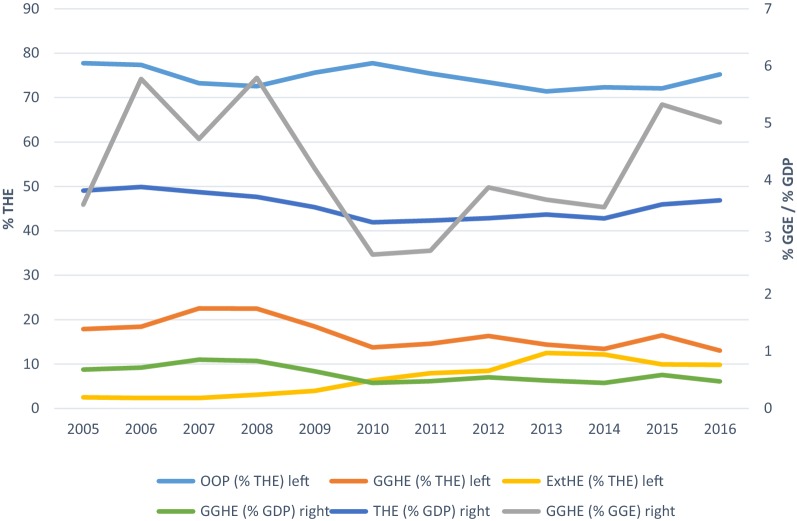
- The paper reports that only 1 out of every 5 persons with a mental disorder in Nigeria is able to access any care, and that out-of-pocket (OOP) payments were about 72% of health care spending in 2015.
- In the situational analysis, the authors report that the lifetime prevalence of mental, neurological and substance use (MNS) disorders was 12.1% and the 12-month prevalence was 5.8%; they estimate 21.8 million Nigerians are at risk over a lifetime and 10.4 million may suffer from at least one mental disorder in a given year.
- The paper states that only about 3.3% of the health budget is allocated to mental health, and of that, 90% goes to specialist neuropsychiatric hospitals for salaries and recurrent expenditure.
- From the finance analysis, the authors report that scaling up interventions for psychosis, depression, and epilepsy would cost about N27.8b ($78.9M), or about N45.5 ($0.14) per capita, which is about 10% of the 2017 public health budget; they also note the average healthy years gained were about 30,318.0 for psychosis, 379,364.0 for depression, and 9,224.0 for epilepsy.
## Methods
- The study used a multi-methods approach built on the Emerald sustainable financing framework, combining situational analysis, 12 key informant interviews, and policy analysis of sustainable financing options.
- The situational analysis reviewed Nigeria’s health system, macro-fiscal/economic profile, political context, and mental health context, including a SWOT analysis based on desk review of government documents, published and grey literature, and global databases.
- Interviews were conducted with 12 purposively selected stakeholders drawn from health and finance sectors and other state/non-state actors; transcripts were analyzed using a pre-determined a priori coding framework.
## Limitations
- The paper explicitly states that the situational analysis was limited to available official reports and estimates, some of which were not very recent; the authors note that more recent reports would have been more accurate.
- The paper also indicates that the epidemiological data on mental disorders were nearly 13 years old and that no other nationally representative studies had been conducted since then. This is a limitation evident in the text.
- The text suggests that some funding and coverage estimates were crude approximations based on limited data sources, which is an evident limitation from the way figures were derived.
Model-written summary. Check it against the paper before relying on it.
Integrity signals
Registry
Cites
Statistics
Figures
Verification
Claims the paper makes
16 Valid · 10 Not valid · 30 Not checked · 75 Own results and interpretations
The cited sources support only part of this claim — read each source’s verdict below.
In the paper
“only 1 out of every 5 persons with a mental disorder is able to access any care [3]”
§ Sustainable financing mechanisms for strengthening mental health systems in Nigeria > Introduction
What the sources say
- Partly supportedcites [3] Demyttenaere K Bruffaerts R Posada-Villa J Gasquet I Kovess V Prevalence, severity, and unmet need for treatment of mental disorders in the World Health Organization World Mental Health Surveys JAMA 2004 291 2581 2590 10.1001/jama.291.21.2581 15173149 sourceExperimental — accuracy not yet measured
The Severity and Treatment section reports that 76.3%–85.4% of serious cases in less-developed countries received no treatment in the preceding year, broadly consistent with about one in five receiving treatment. It does not establish that one in five Nigerians with any mental disorder accessed care: the figure concerns serious cases across less-developed countries, and treatment received is not the same as ability to access care. Page numbers are unavailable in our copy. (LLM, conf=0.84)
plain- Asserted: passes — The authors put it forward as true.
- Checkable: passes — It can be checked against evidence.
- Load-bearing: passes — The paper’s conclusions depend on it.
- Based: passes — The paper gives a reason why it holds.
- Partly supported
The cited sources support only part of this claim — read each source’s verdict below.
In the paper
“the treatment gap for low- and middle-income countries (LMICs) is between 76 and 85%”
§ Sustainable financing mechanisms for strengthening mental health systems in Nigeria > Introduction
What the sources say
- Partly supportedcites [3] Demyttenaere K Bruffaerts R Posada-Villa J Gasquet I Kovess V Prevalence, severity, and unmet need for treatment of mental disorders in the World Health Organization World Mental Health Surveys JAMA 2004 291 2581 2590 10.1001/jama.291.21.2581 15173149 sourceExperimental — accuracy not yet measured
The Abstract and “Severity and Treatment” section report that 76.3%–85.4% of serious cases in less-developed countries received no treatment. The citing sentence omits the restriction to serious cases, making the figure sound applicable to all mental disorders. (LLM, conf=0.88)
plain- Asserted: passes — The authors put it forward as true.
- Checkable: passes — It can be checked against evidence.
- Load-bearing: unclear — It is unclear whether the paper’s conclusions depend on it.
- Based: passes — The paper gives a reason why it holds.
- Partly supported
The sources with a verdict support this claim; the rest weren’t checked yet, have no full text we could read, or their verdicts aren’t rated yet.
In the paper
“established relationship between mental illness and poverty”
§ Sustainable financing mechanisms for strengthening mental health systems in Nigeria > Abstract > Background and aims
What the sources say
- Supportedcites [6] Knapp M Funk M Curran C Prince M Grigg M McDaid D Economic barriers to better mental health practice and policy Health Policy Plan. 2006 21 3 157 170 10.1093/heapol/czl003 16522714 source
The Introduction describes mental health problems as having “reinforcing relationships with poverty.” The Insufficiency of resources section also discusses how long-term mental health problems strain family finances and how poverty might increase morbidity risk, while noting that the causal pathways are disputed. These passages support a relationship without establishing a particular causal direction. (LLM, conf=0.92)
- Not checked — no full text of the sourcecites [7] Dixon A McDaid D Knapp M Curran C Financing mental health services in low- and middle-income countries Health Policy Plan. 2006 21 3 171 182 10.1093/heapol/czl004 16533860 source
boostedstates an association- Asserted: passes — The authors put it forward as true.
- Checkable: passes — It can be checked against evidence.
- Load-bearing: passes — The paper’s conclusions depend on it.
- Based: passes — The paper gives a reason why it holds.
- Supported
The cited sources support only part of this claim — read each source’s verdict below.
In the paper
“The association between mental illness and lost productivity, as well as eventual risk of poverty has also been demonstrated in the sub-Saharan African countries of South Africa, Nigeria and Ghana [9–11].”
§ Sustainable financing mechanisms for strengthening mental health systems in Nigeria > Introduction
What the sources say
- Partly supportedcites [9] Lund C Myer L Stein DJ Williams DR Flisher AJ Ustun mental illness and lost income among adult South Africans Soc Psychiatry Psychiatr Epidemiol 2013 48 5 845 851 10.1007/s00127-012-0587-5 23007296 PMC3627034 sourceExperimental — accuracy not yet measured
The Discussion reports a strong association between severe depression and anxiety disorders and lost income in South Africa. The Introduction describes lost income as a threat of impoverishment, but the Discussion says the study is cross-sectional and cannot establish whether mental illness causes income loss; it does not demonstrate an eventual risk of poverty. This source addresses South Africa, while the sentence also cites other papers for Nigeria and Ghana. (LLM, conf=0.88)
- Not checked — no full text of the sourcecites [10] Esan OB Kola L Gureje O Mental disorders and earnings: results from the Nigerian National Survey of Mental Health and Well-Being (NSMHW) J Ment Health Policy Econ. 2012 15 2 77 82 22813940
- Not checked — no full text of the sourcecites [11] Addo R Nonvignon J Aikins M Household costs of mental health care in Ghana J Ment Health Policy Econ. 2013 16 4 151 159 24526584
boostedstates an association- Asserted: passes — The authors put it forward as true.
- Checkable: passes — It can be checked against evidence.
- Load-bearing: unclear — It is unclear whether the paper’s conclusions depend on it.
- Based: passes — The paper gives a reason why it holds.
- Partly supported
Every source the paper cites for this claim was checked and supports it.
In the paper
“the successful integration of mental health care into primary care using the principle of task-sharing, an approach which has been successfully piloted in the country”
§ Sustainable financing mechanisms for strengthening mental health systems in Nigeria > Results > Opportunities for sustainable mental health financing
What the sources say
- Supportedcites [31] Gureje O Abdulmalik J Kola L Musa E Yasamy MT Adebayo K Integrating mental health into primary care in Nigeria: report of a demonstration project using the mental health gap action programme intervention guide BMC Health Serv Res. 2015 21 15 242 10.1186/s12913-015-0911-3 PMC4475323 26094025 source
The Abstract (Background and Methods; page unavailable) describes a task-shifting pilot that integrated mental health services into primary care in eight local government areas of Osun State, Nigeria. The Abstract (Conclusion; page unavailable) says the supervised training model showed that scaling up these services in Nigerian primary care is feasible. The claim is supported as a description of a successful pilot, not nationwide implementation. (LLM, conf=0.90)
plain- Asserted: passes — The authors put it forward as true.
- Checkable: passes — It can be checked against evidence.
- Load-bearing: passes — The paper’s conclusions depend on it.
- Based: passes — The paper gives a reason why it holds.
- Supported
29 more claims · 2 with their cited sources checked
Create a free account to see all 131 claims and every source verdict.
- Probably not a substantial claim. 76
- It may state two separate claims as one. 52
- The quote only partly states this claim. 1
Claims other papers make about this one
Each is checked against this paper’s own text: does it say what the citing paper says it does?
The check wasn’t confident either way, so it gives no verdict — never disputed.
In the citing paper
“In Nigeria, stigma has been widely documented as a deterrent to help-seeking [17–20].”
From Integrating mental health into primary care: evaluation of the Health Action for Psychiatric Problems In Nigeria including Epilepsy and SubstanceS (HAPPINESS) pilot project (2022) · cites this paper as [17]
Experimental — accuracy not yet measured
Self-check
Percentages, sums and reported differences re-computed from the paper’s own numbers.
Rated major: it would touch a result — a value a result rests on, reported and recomputed p-values on opposite sides of the significance level, two passages that conflict with no sign which is right, or a cited work retracted before this paper was published.
In the paper
“With the 2017 Nigeria’s budgetary allocation to public health as N304B ($0.856m at N355 per $1), the total cost is about 10% of the government’s 2017 public health budget.”
§ Sustainable financing mechanisms for strengthening mental health systems in Nigeria > Discussion
Reported 0.856 · recomputed 856338028.169014
Citations
Cites
Poverty and common mental disorders in low and middle income countries: A systematic review
Lund, C., Breen, A., Flisher, A. J., Kakuma, R., Corrigall, J., Joska, J. A., Swartz, L., & Patel, V. (2010) · Social Science & Medicine · doi:10.1016/j.socscimed.2010.04.027 · Cited by 1,375
Self-citationInternational Organization for Migration (IOM)
Turner, B. (2006) · The Statesman’s Yearbook 2007 · doi:10.1057/9780230271357_40 · Cited by 768
Gureje, O., Lasebikan, V. O., Kola, L., & Makanjuola, V. A. (2006) · British Journal of Psychiatry · doi:10.1192/bjp.188.5.465 · Cited by 363
Self-citationStrengthening mental health systems in low-and middle-income countries: the Emerald programme
Semrau, M., Evans-Lacko, S., Alem, A., Ayuso-Mateos, J. L., Chisholm, D., Gureje, O., Hanlon, C., Jordans, M., Kigozi, F., Lempp, H., et al. (2015) · BMC Medicine · doi:10.1186/s12916-015-0309-4 · Cited by 288
Self-citationThe global burden of mental disorders.
Ustün, T. B. (1999) · American Journal of Public Health · doi:10.2105/ajph.89.9.1315 · Cited by 258
Economic barriers to better mental health practice and policy
Knapp, M. (2006) · Health Policy and Planning · doi:10.1093/heapol/czl003 · Cited by 189
Gureje, O., Abdulmalik, J., Kola, L., Musa, E., Yasamy, M. T., & Adebayo, K. (2015) · BMC Health Services Research · doi:10.1186/s12913-015-0911-3 · Cited by 188
Self-citationMental illness and lost income among adult South Africans
Lund, C., Myer, L., Stein, D. J., Williams, D. R., & Flisher, A. J. (2013) · Social Psychiatry and Psychiatric Epidemiology · doi:10.1007/s00127-012-0587-5 · Cited by 87
Self-citationFinancing mental health services in low- and middle-income countries
Dixon, A. (2006) · Health Policy and Planning · doi:10.1093/heapol/czl004 · Cited by 68
Research works printed but not linked: 8
- Ihua B. Emigration of Nigerian Medical Doctors Survey Report. Technical Report for NOI Polls and Nigeria Health Watch. Abuja, Nigeria. 2017. https://www.researchgate.net/publication/319546512_Emigration_of_Nigerian_Medical_Doctors_Survey_Report. Accessed 21 Jan 2019.
- World Health Organization Country profile of Nigeria 2014 Geneva Mental Health Atlas of the WHO
- World Health Organisation WHO-AIMS report on mental health system in Nigeria 2006 Ibadan WHO and Ministry of Health
- Borno State Ministry of Health Borno state mental health strategic framework 2018–2021 2018 Nigeria Maiduguri
- World Health Organization Global Health Expenditure Database, World Health Organization (2005–2016) 2017 Geneva World Health Organization
- National Health Accounts of Nigeria 2000–2016 2019 Abuja Federal Ministry of Health
- Federal Ministry of Health (FMoH). Strategic Review of Nigeria’s National Health Insurance Scheme. Abuja Nigeria; 2014.
- Olayiwola S.O. Adverse Selection. Moral Hazard and the Welfare Effects of Health Insurance in Nigeria. An unpublished Ph.D. thesis submitted to the department of Economics, University of Ibadan. November, 2015.
Cited by
Global Mental Health: Where We Are and Where We Are Going
Moitra, M., Owens, S., Hailemariam, M., Wilson, K. S., Mensa-Kwao, A., Gonese, G., Kamamia, C. K., White, B., Young, D. M., & Collins, P. Y. (2023) · Current Psychiatry Reports · doi:10.1007/s11920-023-01426-8 · Cited by 239
Carbonell, Á., Navarro‐Pérez, J., & Mestre, M. (2020) · Health & Social Care in the Community · doi:10.1111/hsc.12968 · Cited by 174
Jaca, A., Malinga, T., Iwu, C. J., Nnaji, C. A., Okeibunor, J., Kamuya, D., & Wiysonge, C. S. (2022) · International Journal of Environmental Research and Public Health · doi:10.3390/ijerph19010587 · Cited by 91
“Abdulmalik, 2019 [17] Health and financial sectors stakeholders.”
BackgroundAccessing Mental Health Services in Africa: Current state, efforts, challenges and recommendation
Nicholas, A., Joshua, O., & Elizabeth, O. (2022) · Annals of Medicine & Surgery · doi:10.1016/j.amsu.2022.104421 · Cited by 63
“For instance, a poll on mental health conducted by the Africa Polling Institute (API) and EpiAFRIC in Nigeria, the most popu-lous nation in Africa, reveals a poor awareness of mental health, with the majority of respondents unaware that they have mental health illnesses [1].”
Mental health challenges in Nigeria: Bridging the gap between demand and resources
Precious, F. K., Igwe, S. C., Toluwalogo, N.-O., Udokang, E. I., Ogaya, J. B., & Lucero‐Prisno, D. E. (2024) · Cambridge Prisms Global Mental Health · doi:10.1017/gmh.2024.19 · Cited by 98
“However, properly integrating mental health services into primary care using the task-sharing principle, a strategy successfully piloted in Nigeria, may be a practical approach to increase accessibility to mental health care services (Abdulmalik et al., 2019).”
BackgroundJidong, D. E., Bailey, D., Sodi, T., Gibson, L. M., Sawadogo, N., Ikhile, D., Musoke, D., Madhombiro, M., & Mbah, M. F. (2021) · The Journal of Mental Health Training Education and Practice · doi:10.1108/jmhtep-08-2020-0057 · Cited by 41
Depressive and anxiety symptoms and COVID-19-related factors among men and women in Nigeria
Oginni, O. A., Oloniniyi, I. O., Ibigbami, O. I., Ugo, V., Amiola, A., Ogunbajo, A., Esan, O., Adelola, A., Daropale, O., Ebuka, M., et al. (2021) · PLoS ONE · doi:10.1371/journal.pone.0256690 · Cited by 52
“This is even more important in low and middle-income countries like Nigeria where mental health coverage and funding are inadequate [16, 17].”
BackgroundChu, C., Roxas, N., Aguocha, C. M., Nwefoh, E., Wang, K., Dike, C., & Iheanacho, T. (2022) · BMC Health Services Research · doi:10.1186/s12913-022-07703-1 · Cited by 30
Nutritional therapy can reduce the burden of depression management in low income countries: A review
Ekong, M. B., & Iniodu, C. F. (2021) · IBRO Neuroscience Reports · doi:10.1016/j.ibneur.2021.06.002 · Cited by 36
Derkyi-Kwarteng, A. N., Agyepong, I. A., Afun, N. E. E., & Gilson, L. (2021) · International Journal of Health Policy and Management · doi:10.34172/ijhpm.2021.38 · Cited by 62
Ogunwale, A., Fadipe, B., & Bifarin, O. O. (2023) · Frontiers in Public Health · doi:10.3389/fpubh.2023.1122396 · Cited by 32
“3% in Nigeria) to levels closer to the recommended level of about 10% of government health expenditure (44, 78) Currently, less than 5% of mental health research funding is made available to Low Middle Income Counties (LMICs) (60).”
BackgroundNwakasi, C. C., de Medeiros, K., & Bosun-Arije, F. S. (2021) · Qualitative Health Research · doi:10.1177/10497323211004105 · Cited by 29
Mental health experiences of mothers in Jos, Nigeria: An interpretative phenomenological analysis
Jidong, D. E., Husain, N., Francis, C., Murshed, M., Roche, A., Ike, T. J., Karick, H., Dagona, Z. K., Pwajok, J. Y., Nyam, P. P., et al. (2021) · SAGE Open Medicine · doi:10.1177/2050312120970714 · Cited by 25
A bird's eye view of the mental health systems in India
Suhas, S., Arvind, B. A., Sukumar, G. M., Banandur, P. S., Nirisha, P. L., Kumar, C. N., Benegal, V., Rao, G. N., Varghese, M., Gururaj, G., et al. (2023) · Indian Journal of Psychiatry · doi:10.4103/indianjpsychiatry.indianjpsychiatry_845_23 · Cited by 21
“[26] The key learnings from the Mental Health Systems Assessment of the NMHS are as follows,”
Depressive and anxiety symptoms and COVID-19-related factors among men and women in NigeriaPreprint
Oginni, O. A., Oloniniyi, I. O., Ibigbami, O. I., et al. (2021) · medRxiv · doi:10.1101/2021.06.09.21258609 · Cited by 19
Maternal mental health and child well-being in Nigeria: A systematic review
Jidong, D. E., Husain, N., Ike, T. J., Murshed, M., Pwajok, J. Y., Roche, A., Karick, H., Dagona, Z. K., Karuri, G. S., Francis, C., et al. (2021) · Health Psychology Open · doi:10.1177/20551029211012199 · Cited by 28
“However, only one out of every five persons who suffer from mental health problems can access any care (Abdulmalik et al., 2019).”
BackgroundPederson, A. B., Fokuo, J. K., Thornicroft, G., Bamgbose, O. O., Ogunnubi, O. P., Ogunsola, K., & Oshodi, Y. (2022) · Transcultural Psychiatry · doi:10.1177/13634615211055007 · Cited by 20
Acuña‐Rodríguez, M., Moreno, O. F., Montoya-Quintero, K. F., & Mansaray, F. T. (2025) · Psychology Research and Behavior Management · doi:10.2147/prbm.s532912 · Cited by 20
Patel, N. M., Savaliya, G. V., Mehta, P. J., & Kataria, L. (2025) · Indian Journal of Psychological Medicine · doi:10.1177/02537176251379999 · Cited by 24
Pharmacogenetic testing in psychiatry: Perspective on clinical utility
Adiukwu, F. N., Adesokun, O., Essien, E. A., Yalçın, N., Ransing, R. S., Nagendrappa, S., Jatchavala, C., Olakunke, A. B., Nawaz, F. A., & Khan, N. (2023) · Asian Journal of Psychiatry · doi:10.1016/j.ajp.2023.103674 · Cited by 17
The dynamics of mental health policy in Iran over the last century
Rastegar, H., Morasae, E. K., & Doshmangir, L. (2025) · BMC Psychology · doi:10.1186/s40359-025-02384-x · Cited by 12
Jidong, D. E., Husain, M. I., Ike, T. J., Husain, N., Taru, M. Y., Nwoga, C. N., Francis, C., Jack, D. B., Mwankon, S. B., Xue, S., et al. (2023) · International Journal of Bipolar Disorders · doi:10.1186/s40345-022-00276-2 · Cited by 12
Fernández, L. G., Yoon, G. H., Firima, E., Gupta, R., Sematle, M. P., Khomolishoele, M., Molulela, M., Bane, M., Tlahani, M., Lee, T. T., et al. (2024) · International Journal of Mental Health and Addiction · doi:10.1007/s11469-024-01309-w · Cited by 15
“…absence of demand, increasing the supply of MH services was not enough to reduce the treatment gap for common mental disorders (Shidhaye et al., 2019), and comparable data is becoming available within the sub-Saharan region (Abdulmalik et al., 2019; Bakibinga et al., 2022; Nicholas et al., 2022).”
Newspaper depiction of mental illness in Nigeria
Erubami, J. A., Bebenimibo, P., Ezeah, G., & Muobike, O. (2023) · Journal of Public Health in Africa · doi:10.4081/jphia.2023.1527 · Cited by 6
Adewuya, A. O., Ola, B., Coker, O., Atilola, O., Olibamoyo, O., Lebimoyo, A., & Oladipo, O. (2026) · Health Policy and Planning · doi:10.1093/heapol/czag033 · Cited by 6
“…been concentrated in tertiary psychiatric facilities, with chronic under-financing (consistently below 1% of state health budgets), workforce shortages, weak supply chains, and minimal integration into primary health care collectively constraining service expansion (Abdulmalik et al. 2019).”
COVID-19 in Nigeria: implications for prevalent public mental health challenges
Ola, B. A., & Olibamoyo, O. (2020) · Mental Health Review Journal · doi:10.1108/mhrj-07-2020-0050 · Cited by 7
Problems and critical reforms in mental health care: an examination of Nigeria’s situation
Nweke, S. C., Ewelike, S. C., Okon, I. I., et al. (2024) · International Journal of Surgery Global Health · doi:10.1097/gh9.0000000000000486 · Cited by 3
Enelamah, N. V., Lombe, M., Betancourt, T. S., Shen, C., & Williams, D. R. (2024) · Journal of Child and Family Studies · doi:10.1007/s10826-023-02763-1 · Cited by 3
“The need for evidence is especially true for Nigeria ’ s population of over 200 million people, where the burden of common mental health disorders, such as symptoms of anxiety and depression, is often underestimated (Abdulmalik et al., 2019).”
Implementation of the Nigerian Mental Health Act 2021
Ogunwale, A. (2023) · The Lancet Psychiatry · doi:10.1016/s2215-0366(23)00261-4 · Cited by 3
Psychoanalysis and psychoanalytic psychotherapy in the South African context
Kadish, Y., & Smith, C. (2020) · Psychoanalytic Psychotherapy · doi:10.1080/02668734.2020.1827286 · Cited by 5
Yan, X., Wu, D., Li, R.-J., Wu, Y., Hu, X., Wang, X., Huang, K. J., Zhu, T., Zhu, Q., Fang, L., et al. (2025) · Journal of Affective Disorders · doi:10.1016/j.jad.2025.03.108 · Cited by 3
Onu, J. U., Olatayo, T. I., Okoye, O. C., Akujobi, N. C., & OHAERI, J. U. (2025) · PLOS mental health. · doi:10.1371/journal.pmen.0000251 · Cited by 2
“This is particularly important in our study setting where the health system is weak, with no health insurance coverage for the unemployed and also for most of those employed, who constitute the majority of our patients [26].”
Working in Psychiatry: Staff Perception of the Brazzaville Hospital and University Center
Essie, D. E. M., Gandou, P., Mouanga, A. M., Prefina, M., Ondzotto, G., Ntsiba, H., & Jean-Rosaire, I. (2020) · Open Journal of Psychiatry · doi:10.4236/ojpsych.2020.102005 · Cited by 2
“The chronic lack of resources for health in general and critical for mental health may explain the poor working conditions in psychiatric services in Africa in general [14] [16];”
BackgroundOmoge, A. O., & Omoge, M. O. (2026) · Mental Wellness · doi:10.4081/mw.2026.52 · Cited by 1
Mental health care services in Nigeria: A qualitative enquiry from family physicians’ perspective
Adeleke, O. T., Akinbode, A. O., Aibangbee, O., Orji, E. J., Oluwasanya, A. N., Adekunle, W. A., Oduniyi, O. A., Olabode, A. T., & Ariba, A. J. (2025) · PLOS mental health. · doi:10.1371/journal.pmen.0000285 · Cited by 8
Okesanya, O. J., Manirambona, E., Edu, E., Shomuyiwa, D. O., Ahmed, M. M., Ukoaka, B. M., & Eliseo, D. L.-P. (2025) · Journal of Rare Diseases · doi:10.1007/s44162-025-00085-y · Cited by 1
Ndung’u, J. G., & Bíró, É. (2024) · BMC Public Health · doi:10.1186/s12889-024-20863-5 · Cited by 3
Silas, U. J., Dotimi, D. A., & Oladunni, R. (2024) · International Journal of Community Medicine and Public Health · doi:10.18203/2394-6040.ijcmph20241477
Mental Health of Prison Inmates in the Nigerian Criminal Justice System
Eseadi, C. (2021) · Springer eBooks · doi:10.1007/978-3-030-71024-8_10 · Cited by 1
IBRAHIM, A. O., & Afolabi, A. (2026) · International journal of education & well-being. · doi:10.62416/ijwb-97
“In contexts such as Nigeria, weak funding structures, limited mental health professionals, stigma, and poor service integration create further barriers to sustainable care (Abdulmalik, Olayiwola, Docrat, et al., 2019).”
Baatiema, L., Gyimah, L., Ansong, J., Chisholm, D., & Meessen, B. (2026) · BJPsych Open · doi:10.1192/bjo.2026.10984
Self-citationBalogun, M., & Clayson, A. (2026) · BMC Public Health · doi:10.1186/s12889-026-28271-7
“While more recent estimates suggest a rising trend in the general population—with point prevalence rates cited at 10.65% [67] and general prevalence at 11.1% [68]—the rates identified in our cohort remain at the upper threshold or significantly exceed these national averages.”
InfluentialBehzadi, A., Barooni, M., & Fatahpour, A. (2026) · Health Economics Review · doi:10.1186/s13561-026-00788-y
Oladipo, O. E., & Adewuya, A. O. (2026) · SSM - Mental Health · doi:10.1016/j.ssmmh.2026.100653
Bridging the gap by improving access to psychological services in low resource settings
Reddy, C., Godinho, J. D., & Kumar, A. R. P. (2026) · Discover Public Health · doi:10.1186/s12982-026-01835-z · Cited by 1
Forensic psychiatry and mental health services within the Nigerian criminal justice system
Ogunsina, O., Adaramola, O. O., Adeyemi, A. O., & Afolabi, S. A. (2026) · Discover Mental Health · doi:10.1007/s44192-026-00396-6
“Mental healthcare is not prioritized in national health budgets, although there is no specific budget line, it was estimated that only about 3% of the country’s health budget goes to funding mental health [25, 27].”
A Qualitative Study of Religious Beliefs About Mental Health in Nigeria
Jidong, D. E., Ike, T. J., Dada, S. O., & Jidong, J. E. (2025) · The American Journal of Geriatric Psychiatry Open Science Education and Practice · doi:10.1016/j.osep.2025.12.004
Aderinwale, Z. A., Majeed, A. O., & Adetola-Kazeem, H. (2025) · CogNexus · doi:10.63084/cognexus.v1i03.190 · Cited by 1
“…on mental health carried out by the Africa Polling Institute (API) and EpiAFRIC in Nigeria, the continent's most populous country, indicates a lack of awareness about mental health issues, as most respondents are unaware that they are experiencing mental health disorders (Abdulmalik et al., 2019).”
The impact of innovative financing mechanisms on the economic growth of Nigeria
Ojogbo, S., Uchenna, N. G., & Akinpelu, A. (2025) · Economic Profile · doi:10.52244/ep.2025.29.05
Ikwunze, E. P., & Nwakasi, C. C. (2025) · Research Square · doi:10.21203/rs.3.rs-6393174/v1
Knowledge of mental disorders in primary healthcare nurses in the Western Cape, South Africa
Musafiri, J. J., Bimerew, M. S., & Chipps, J. A. (2025) · Curationis · doi:10.4102/curationis.v48i1.2677
“On the African continent, a study reported the prevalence of mental disorders in Nigeria, where 21.8m people may develop one of the mental disorders in their lifetime (Abdulmalik et al., 2019).”
Jidong, D. E., Ike, T. J., Taru, M. Y., Pwajok, J. Y., Nwoga, C. N., Jidong, J. E., Francis, C., Mwankon, S. B., Karick, H., Dagona, Z. K., et al. (2025) · Frontiers in Psychiatry · doi:10.3389/fpsyt.2025.1552406 · Cited by 2
Adegbite, O. A., & Palalas, A. (2025) · Open Praxis · doi:10.55982/openpraxis.17.3.905 · Cited by 4
Breaking the Chains: Nigeria's New Mental Health Law and its Impact on Care and Rights
Adepoju, V. A. (2024) · PubMed · doi:10.60787/nmj-64-2-192
Insights in Public Mental Health: 2022
Rössler, W. (2024) · Frontiers research topics · doi:10.3389/978-2-8325-4490-7
Bamgbose, O. O., Pederson, A. B., & Okocha, A. A. G. (2023) · International Journal for the Advancement of Counselling · doi:10.1007/s10447-023-09525-0 · Cited by 3
“Therefore, active advocacy for an updated mental health bill could increase the status of mental health, ensure a dedicated mental health budget (Abdulmalik et al., 2019), and lend support to existing efforts.”
BackgroundAcademic Research & Reviews in Social,Human and Administrative Sciences-III-
Bizotto, B. L. S. (2023) · doi:10.59740/academy.38 · Cited by 1
Osoro, O. (2022) · The African Review · doi:10.1163/1821889x-bja10036
Jidong, D. E., Husain, I. M., Ike, T. J., et al. (2022) · Research Square · doi:10.21203/rs.3.rs-1927978/v1
Relief for Psychiatric Patients in Malaysia: Results from expert interviews
Kamarunzaman, N. Z., Soh, M. C., Liu, J., & Rani, N. D. M. (2022) · Environment-Behaviour Proceedings Journal · doi:10.21834/ebpj.v7i20.3447
“In contrast, Abdulmalik et al. (2019) found that integration of mental health care with other strategic partners would assist in funding the programs and benefitting the PMI.”
BackgroundIlesanmi, O. O., Ilesanmi, F. I., Hajji, R., & Moussa, G. (2022) · IntechOpen eBooks · doi:10.5772/intechopen.104546
Exploring the experiences of mental health among internal migrants in Nigeria
Labinjo, T. (2022) · Sheffield Hallam University · doi:10.7190/shu-thesis-00450 · Cited by 1
Metadata
- Authors
- Abdulmalik, J., Olayiwola, S., Docrat, S., Lund, C., Chisholm, D., & Gureje, O.
- Affiliations
- University of Ibadan (NG)
- Federal University of Technology (NG)
- University of Cape Town (ZA)
- World Health Organization (CH)
- Corresponding author
- Abdulmalik, Jibril
- Venue
- International Journal of Mental Health Systems
- Published
- 2019-05-31
- Volume
- 13
- Issue
- 1
- Pages
- 38-38
- ISSN
- 1752-4458 (ISSN-L)
- PMC
- PMC6543636
- OpenAlex
- W2947753699
- Semantic Scholar
- e6d544e401d7ce3413aa951f6407a44629633bd1
- Cited by
- 63
- References
- 19
- Citations by year
- 2026: 12 · 2025: 14 · 2024: 8 · 2023: 9 · 2022: 8 · 2021: 8 · 2020: 4
- FWCI
- 6.06
- Type
- journal article
- Language
- en
- Open access
- gold
- doi.org
- Licence
- cc-by
- creativecommons.org/licenses/by/4.0/ (tdm)
- creativecommons.org/licenses/by/4.0/ (vor)
- Locations
- International Journal of Mental Health Systems (publishedVersion, cc-by)
- PubMed Central (publishedVersion, cc-by)
- PubMed (publishedVersion)
- Research Portal (King's College London) (publishedVersion, cc-by)
- DOAJ (DOAJ: Directory of Open Access Journals) (submittedVersion)
- Open University of Cape Town (University of Cape Town) (submittedVersion)
- Zenodo (CERN European Organization for Nuclear Research) (submittedVersion, cc-by)
- Greater South Information System
- Funders
- the European Union's Seventh Framework Programme (305968)
- Topics
- Health Sciences › Medicine › Public Health, Environmental and Occupational Health › Healthcare Systems and Reforms
- Health Sciences › Medicine › Psychiatry and Mental health › Mental Health Treatment and Access
- Social Sciences › Psychology › Clinical Psychology › Psychiatric care and mental health services
- Keywords
- mental health funding, sustainable finance, Nigeria, universal health coverage, out-of-pocket costs, impoverishment, access to mental health care, treatment gap, health insurance reform, integration of mental health into primary care, performance-based funding, mental health policy, financial protection, help-seeking
About these checks
Registry, retraction, Cites and statistics results are computed, not judged, with one exception: a printed reference that no index lists is read once by a model before it counts as a citation error. Claims are extracted by a model and kept only when their quote appears verbatim in the text; each cited source is then checked, with a model’s help, for whether it says what the claim relies on. Those verdicts can be wrong — read the claim’s quote and the cited source before relying on one.
The claim verdicts this report counts are experimental: their accuracy is not yet measured.
A language model drew the claims from the paper on 2026-10-06, under version 3 of the claim definition (model deepseek-v4.1-flash, prompt extract-v3).
A second model labelled each claim on 2026-10-06 (model jev-1.13-20260917, definition revision gold-guideline-v0.2).
Cited sources are checked with a language model’s help (gpt-6-sol).
Statistics and arithmetic are recomputed, not judged.
Confidence bands are shown only for fields calibrated on our annotated test set. None is calibrated yet, so no band is shown.
What counts as a claim ›How we measure confidence ›How we check this ›
Are you an author, or do you see a problem with this page? Request a review
Data sources
Bibliographic data: Semantic Scholar, OpenAlex, Crossref.
Contains information from the Semantic Scholar Academic Graph Datasets, made available under the ODC Attribution License (ODC-BY 1.0).
Semantic Scholar’s data is described in: Kinney, R., et al. (2023). The Semantic Scholar Open Data Platform. arXiv:2301.10140.
