

Providing manualized individual trauma-focused CBT to unaccompanied refugee minors with uncertain residence status: a pilot study
Open accessThe DOI matches its Crossref record; 40 of the 41 references it cites were found in a registry or an index.
Abstract
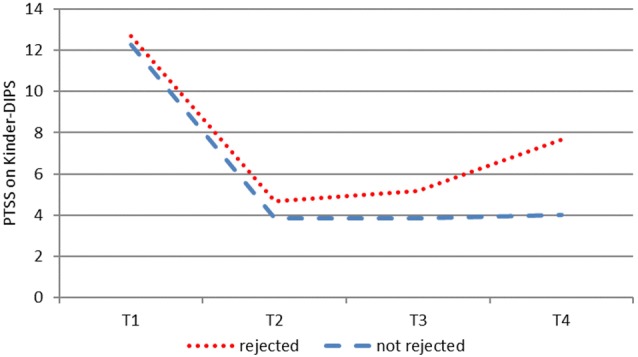
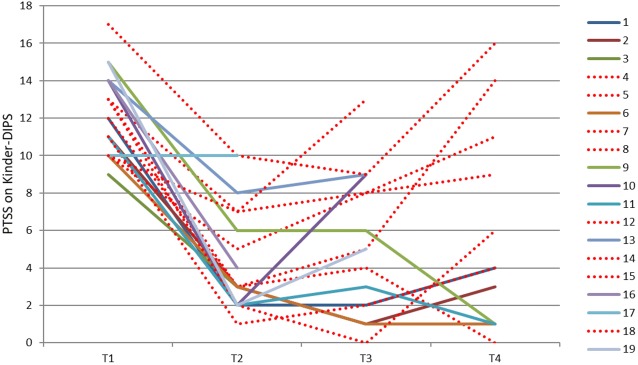
Unaccompanied refugee minors (URMs) seeking asylum show high rates of posttraumatic stress disorder (PTSD), depression and anxiety. In addition, they experience post-migration stressors like an uncertain residence status. Therefore, psychotherapeutic interventions for URMs are urgently needed but have scarcely been investigated up to now. This study aimed to examine manualized individual trauma-focused cognitive behavioural therapy (TF-CBT) for URMs with PTSD involving their professional caregivers (i.e. social workers in child and adolescent welfare facilities). We conducted an uncontrolled pilot study with three follow-up assessments (post-intervention, 6 weeks, and 6 months). Participants who met the PTSD diagnostic criteria were treated in a university psychotherapeutic outpatient clinic in Germany with a mean of 15 sessions of TF-CBT. All participants (n = 26) were male UM (M age = 17.1, SD = 1.0), predominately from Afghanistan (n = 19, 73.1%) and did not have a residence permit. The sample was severely traumatized according to the number of traumatic event types reported (M = 11.3, SD = 2.8). The primary outcome was PTSD measured with the Child and Adolescent Trauma Screen (CATS) and the Diagnostic Interview for Mental Disorders in Childhood and Adolescence (Kinder-DIPS). Secondary outcomes were depression, behavioural and somatic symptoms. All but the somatic symptoms were assessed in both self-report and proxy report. At post-intervention the completer sample (n = 19) showed significantly decreased PTSD symptoms, F (1, 18) = 11.41, p = .003, with a large effect size (d = 1.08). Improvements remained stable after 6 weeks and 6 months. In addition to PTSD symptoms, their caregivers reported significantly decreased depressive and behavioural symptoms in participants. According to the clinical interview, 84% of PTSD cases recovered after TF-CBT treatment. After 6 months, youths whose asylum request had been rejected showed increased PTSD symptoms according to individual trajectories in the Kinder-DIPS. The effect was, however, non-significant. Intervention studies are feasible with URMs. This pilot study presents preliminary evidence for the efficacy of an evidence-based intervention like TF-CBT in reducing PTSD symptoms in URMs. Stressors related to asylum proceedings after the end of therapy have the potential to negatively influence psychotherapy outcomes.
Overview
The claims and statistics of this paper haven’t been checked yet.
Free: it reads the open-access text and checks the first 5 claims that cite a source we can check. Create a free account to check every claim.
Integrity signals
Registry
Cites
Statistics
Figures
Verification
Claims the paper makes
The claims and statistics of this paper haven’t been checked yet.
Free: it reads the open-access text and checks the first 5 claims that cite a source we can check. Create a free account to check every claim.
Claims other papers make about this one
Each is checked against this paper’s own text: does it say what the citing paper says it does?
The source backs part of the claim, not all of it — or backs it for a different population, condition or comparison.
In the citing paper
“improvements were maintained at two weeks to 6-months follow-up [61, 67, 68, 73].”
From Examining cognitive behavioral therapy interventions for unaccompanied minors: a systematic review and qualitative research synthesis. (2025) · cites this paper as [68]
Experimental — accuracy not yet measuredThe source backs part of the claim, not all of it — or backs it for a different population, condition or comparison.
In the citing paper
“Overall, TF-CBT appears to have the most evidence pointing to effectiveness in the enhancement of psychological well-being of UM, either as an individual or group modality [67–70, 72, 73].”
From Examining cognitive behavioral therapy interventions for unaccompanied minors: a systematic review and qualitative research synthesis. (2025) · cites this paper as [68]
Experimental — accuracy not yet measuredThe cited source says what the claim attributes to it.
In the citing paper
“Another uncontrolled pilot study investigated the effect of trauma-focused CBT among unaccompanied refugee minors suffering from PTSD, with promising effects (Unterhitzenberger et al., 2019).”
From Investigating the potential of a novel internet-based cognitive behavioural intervention for Dari and Farsi speaking refugee youth: A feasibility study (2022) · cites this paper as Unterhitzenberger et al., 2019
The cited source says what the claim attributes to it.
In the citing paper
“TF-CBT appeared to reduce PTSD symptoms in most studies (n = 7) [66–72]”
From Examining cognitive behavioral therapy interventions for unaccompanied minors: a systematic review and qualitative research synthesis. (2025) · cites this paper as [68]
The cited source says what the claim attributes to it.
In the citing paper
“and maintained at 6-months-follow-up [67, 68, 71].”
From Examining cognitive behavioral therapy interventions for unaccompanied minors: a systematic review and qualitative research synthesis. (2025) · cites this paper as [68]
3 more claims about this paper
Create a free account to see every claim other papers make about this one.
Self-check
Percentages, sums and reported differences re-computed from the paper’s own numbers.
The self-check needs the paper’s full text.
Citations
Cites
Diagnostic and Statistical Manual of Mental Disorders
American Psychiatric Association (2013) · doi:10.1176/appi.books.9780890425596 · Cited by 116,369
Diagnostic and Statistical Manual of Mental Disorders(DSM)
(2008) · Encyclopedia of Counseling · doi:10.4135/9781412963978.n182 · Cited by 10,830
Jacobson, N. S., & Truax, P. (1991) · Journal of Consulting and Clinical Psychology · doi:10.1037/0022-006x.59.1.12 · Cited by 7,770
Psychometric properties of the strengths and difficulties questionnaire
GOODMAN, R. (2001) · Journal of the American Academy of Child & Adolescent Psychiatry · doi:10.1097/00004583-200111000-00015 · Cited by 6,813
The PHQ-15: Validity of a New Measure for Evaluating the Severity of Somatic Symptoms
Kroenke, K., Spitzer, R. L., & Williams, J. B. W. (2002) · Psychosomatic Medicine · doi:10.1097/00006842-200203000-00008 · Cited by 3,298
Goodman, R., Meltzer, H., & Bailey, V. (1998) · European Child & Adolescent Psychiatry · doi:10.1007/s007870050057 · Cited by 2,238
(1995) · International Journal of Methods in Psychiatric Research · Cited by 1,847
Treating Trauma and Traumatic Grief in Children and Adolescents
Cohen, J. A., Mannarino, A. P., & Deblinger, E. (2006) · Cited by 1,199
Bubier, R. B. J. L., & Sloan, D. M. (2007) · Journal of Contemporary Psychotherapy · doi:10.1007/s10879-006-9043-8 · Cited by 785
Bean, T., Derluyn, I., Eurelings-Bontekoe, E., Broekaert, E., & Spinhoven, P. (2007) · Journal of Nervous & Mental Disease · doi:10.1097/01.nmd.0000243751.49499.93 · Cited by 401
Research works printed but not linked: 2
- National Institute for Health and Care Excellence (NICE). Post-traumatic stress disorder: NICE guideline; 2018. 31211536
- Schneider S Pflug V Margraf J In-Albon T Kinder-DIPS: Diagnostisches Interview bei psychischen Störungen im Kindes- und Jugendalter 2017 Bochum Ruhr-Universität Bochum 23988834
Cited by
Scharpf, F., Kaltenbach, E., Nickerson, A., & Hecker, T. (2021) · Clinical Psychology Review · doi:10.1016/j.cpr.2020.101930 · Cited by 240
Thielemann, J. F. B., Kasparik, B., König, J., Unterhitzenberger, J., & Rosner, R. (2022) · Child Abuse & Neglect · doi:10.1016/j.chiabu.2022.105899 · Cited by 140
Self-citationMüller, L. R. F., Gössmann, K., Hartmann, F., Büter, K. P., Rosner, R., & Unterhitzenberger, J. (2019) · BMC Public Health · doi:10.1186/s12889-019-7263-6 · Cited by 76
Self-citationChipalo, E. (2021) · Journal of Child & Adolescent Trauma · doi:10.1007/s40653-021-00370-0 · Cited by 68
Pfeiffer, E., Sukale, T., Müller, L. R. F., Plener, P. L., Rosner, R., Fegert, J. M., Sachser, C., & Unterhitzenberger, J. (2019) · European Journal of Psychotraumatology · doi:10.1080/20008198.2019.1675990 · Cited by 56
“uncontrolled pre-post pilot study design (data collection: January 2016 - July 2018) (Unterhitzenberger et al., 2019).”
BackgroundSelf-citationRosner, R., Sachser, C., Hornfeck, F., Kilian, R., Kindler, H., Muche, R., Müller, L. R. F., Thielemann, J., Waldmann, T., Ziegenhain, U., et al. (2020) · Trials · doi:10.1186/s13063-020-04922-x · Cited by 40
Self-citationLawton, K., & Spencer, A. (2021) · Journal of Immigrant and Minority Health · doi:10.1007/s10903-021-01151-5 · Cited by 39
Rodríguez, I. M., & Dobler, V. (2021) · Journal of Child & Adolescent Trauma · doi:10.1007/s40653-021-00385-7 · Cited by 51
Lindegaard, T., Wasteson, E., Demetry, Y., Andersson, G., Richards, D., & Shahnavaz, S. (2022) · Internet Interventions · doi:10.1016/j.invent.2022.100533 · Cited by 30
Soltan, F., Cristofalo, D., Marshall, D. C., Purgato, M., Taddese, H. B., Vanderbloemen, L., Barbui, C., & Uphoff, E. (2022) · Cochrane Database of Systematic Reviews · doi:10.1002/14651858.cd013657.pub2 · Cited by 41
Scharpf, F., Mkinga, G., Neuner, F., Machumu, M., & Hecker, T. (2020) · Development and Psychopathology · doi:10.1017/s0954579420000516 · Cited by 32
Vogel, A., & Rosner, R. (2020) · Clinical Child and Family Psychology Review · doi:10.1007/s10567-019-00305-0 · Cited by 25
Self-citationMárquez, Y. I., Deblinger, E., & Dovi, A. T. (2019) · Cognitive and Behavioral Practice · doi:10.1016/j.cbpra.2019.10.001 · Cited by 34
van Es, C. M., Sleijpen, M., Velu, M. E., Boelen, P. A., van Loon, R. E., Veldman, M., Kusmallah, N., Ekster, P. J. C., & Mooren, T. T. M. (2021) · Child and Adolescent Psychiatry and Mental Health · doi:10.1186/s13034-021-00404-3 · Cited by 28
Genç, E. (2022) · Children and Youth Services Review · doi:10.1016/j.childyouth.2022.106602 · Cited by 36
Hornfeck, F., Eglinsky, J., Garbade, M., Rosner, R., Kindler, H., Pfeiffer, E., & Sachser, C. (2023) · Frontiers in Psychology · doi:10.3389/fpsyg.2023.1149634 · Cited by 25
“, 2015) and after a refusal of their asylum claim (Jakobsen et al., 2017; Müller et al., 2019; Unterhitzenberger et al., 2019).”
BackgroundSelf-citationSalmon, M., Sibeoni, J., Harf, A., Moro, M. R., & Ludot-Grégoire, M. (2022) · Frontiers in Psychiatry · doi:10.3389/fpsyt.2022.897002 · Cited by 20
“It is used in the care of young refugees in Germany and has resulted in significant improvement in physical symptoms (assessed by the PHQ 15) (83).”
Velu, M. E., Kuiper, R. M., Schok, M., Sleijpen, M., de Roos, C., & Mooren, T. T. M. (2025) · European Journal of Psychotraumatology · doi:10.1080/20008066.2025.2494362 · Cited by 25
“…reductions in posttraumatic stress symptoms were found at post-intervention and maintained at follow-up for up to 6 months for Trauma-focused CBT (TF-CBT) (Schottelkorb et al., 2012; Unterhitzenberger et al., 2015; Unterhitzenber-ger & Rosner, 2016; Unterhitzenberger, Wintersohl, et al., 2019).”
Rondung, E., Leiler, A., Sarkadi, A., Bjärtå, A., Lampa, E., Löfving, S. G., Calam, R., Oppedal, B., Keeshin, B., & Warner, G. (2022) · Pilot and Feasibility Studies · doi:10.1186/s40814-022-00998-1 · Cited by 18
Molendijk, M. L., Baart, C., Schaffeld, J., Akçakaya, Z., Rönnau, C., Kooistra, M. J., de Kleine, R. A., Strater, C., & Mooshammer, L. (2024) · Clinical Psychology & Psychotherapy · doi:10.1002/cpp.3042 · Cited by 28
Dowdy-Hazlett, T., Killian, M., & Woods, M. N. (2021) · Children and Youth Services Review · doi:10.1016/j.childyouth.2021.106259 · Cited by 17
Zemestani, M., Mohammed, A. F., Ismail, A. A., & Vujanovic, A. A. (2022) · Behavior Therapy · doi:10.1016/j.beth.2022.01.009 · Cited by 27
Müller, L. R. F., Gössmann, K., Schmid, R. F., Rosner, R., & Unterhitzenberger, J. (2021) · PLoS ONE · doi:10.1371/journal.pone.0246069 · Cited by 21
“Despite the paucity of adequate treatments, there are promising approaches that have been pursued in the past [46,47,84].”
BackgroundSelf-citationFortuna, L. R., Martínez, W., & Porche, M. V. M. (2023) · Journal of Child & Adolescent Trauma · doi:10.1007/s40653-023-00541-1 · Cited by 28
“In fact, a previous study showed re-emergence of severe PTSD symptoms in unaccompanied immigrant children who experience stressors such as being denied asylum (Unterhitzenberger et al., 2019).”
BackgroundHornfeck, F., Sowade, C., & Bovenschen, I. (2022) · Children and Youth Services Review · doi:10.1016/j.childyouth.2022.106490 · Cited by 22
Unterhitzenberger, J., Haberstumpf, S., Rosner, R., & Pfeiffer, E. (2021) · Clinical Psychology in Europe · doi:10.32872/cpe.5431 · Cited by 12
“(Unterhitzenberger et al., 2019).”
InfluentialSelf-citationSolhaug, A. K., Røysamb, E., & Oppedal, B. (2023) · Child and Adolescent Psychiatry and Mental Health · doi:10.1186/s13034-023-00595-x · Cited by 11
“In an intervention study with URMs in Germany, lack of permanent asylum status negatively affected the outcome of TF-CBT by impairing the participants’ feelings of safety [34].”
BackgroundResultMüller, L. R. F., Herold, M. L., Unterhitzenberger, J., & Rosner, R. (2023) · Frontiers in Psychology · doi:10.3389/fpsyg.2023.1148690 · Cited by 12
“This form of psychotherapy has already produced promising initial results in the treatment of minor refugees (Unterhitzenberger et al., 2019).”
ResultSelf-citationUnaccompanied refugee minors and resettlement: Turning points towards integration
Andersson, E. S., Skar, A. S., & Jensen, T. K. (2021) · European Journal of Social Psychology · doi:10.1002/ejsp.2761 · Cited by 17
Homesickness in asylum seekers: The role of mental health and migration-related factors
Rosner, R., Hagl, M., Bücheler, L., & Comteße, H. (2022) · Frontiers in Psychiatry · doi:10.3389/fpsyt.2022.1034370 · Cited by 17
Self-citationWeise, C., Grupp, F., Reese, J., Schade‐Brittinger, C., Ehring, T. W., Morina, N., Stangier, U., Steil, R., Johow, J., & Mewes, R. (2021) · BMJ Open · doi:10.1136/bmjopen-2020-047385 · Cited by 11
“20 Furthermore, studies have used psychoeducation as part of a comprehensive psychotherapeutic intervention 21–24 or psychoeducation has served as a comparison condition for psychotherapeutic interventions.”
BackgroundMorroni, D., Konstantinou, P., Gkleka, C., Kassianos, A. P., & Karekla, M. (2025) · European Child & Adolescent Psychiatry · doi:10.1007/s00787-024-02500-z · Cited by 9
“[61, 67, 68, 73].”
InfluentialBehandlung der PTBS bei Kindern und Jugendlichen
Rosner, R., Gutermann, J., Landolt, M. A., Plener, P. L., & Steil, R. (2019) · Springer eBooks · doi:10.1007/978-3-662-59783-5_3 · Cited by 11
Self-citationVan Es, C. M., Velu, M. E., Sleijpen, M., van der Aa, N., Boelen, P. A., & Mooren, T. (2023) · Frontiers in Psychology · doi:10.3389/fpsyg.2023.1125740 · Cited by 7
Dietlinger, F. K., Kasparik, B., Unterhitzenberger, J., Saupe, L. B., & Rosner, R. (2025) · Child and Adolescent Psychiatry and Mental Health · doi:10.1186/s13034-025-00873-w · Cited by 8
Self-citationPsychotherapeutic and Psychosocial Interventions with Unaccompanied Minors: A Scoping Review
Moutsou, I., Georgaca, E., & Varaklis, T. (2023) · Healthcare · doi:10.3390/healthcare11060918 · Cited by 10
“Five of the papers concern further analysis [40,61,72], extra aspects [50] or systematization [75] of previously published studies [39,44,60,71,76]; thus, we do not regard them as distinct.”
BackgroundSteil, R., Fischer, A. M., & Rosner, R. (2021) · Kindheit und Entwicklung · doi:10.1026/0942-5403/a000343 · Cited by 8
Self-citationMüller, L. R. F., Unterhitzenberger, J., Wintersohl, S., Rosner, R., & König, J. (2021) · International Journal of Environmental Research and Public Health · doi:10.3390/ijerph18136803 · Cited by 7
“It has been validated in an international (Western) sample with good reliability and validity and has since been used repeatedly with refugee youth [1,6,7].”
BackgroundSelf-citationKvestad, I., Bøe, T., Sayyad, N., Skogen, J. C., Randal, S. B., & Lehmann, S. (2021) · European Child & Adolescent Psychiatry · doi:10.1007/s00787-021-01876-6 · Cited by 22
Stallwitz, A., Nordgren, J., & Richert, T. (2023) · Journal of Ethnic and Migration Studies · doi:10.1080/1369183x.2023.2290984 · Cited by 8
“…with respect to their individual and social resources in terms of psychosocial resilience (e.g. Keles et al. 2018) supportive social contacts (e.g. Honkasalo 2017), and legal and structural properties such as residence status and a ffi liations with social services (Unterhitzenberger et al. 2019).”
Dobler, V., Nestler, J., Konzelmann, M., & Kennerley, H. (2023) · Behavioural and Cognitive Psychotherapy · doi:10.1017/s1352465823000437 · Cited by 4
“In Europe, interventions based on trauma focused cognitive behavioral therapy (TF-CBT) have demonstrated some effectiveness both in individual (Unterhitzenberger et al ., 2019) and group sessions (King and Said, 2019; Oppedal et al ., 2019; Pfeiffer et al ., 2019) and have shown post-treatment…”
BackgroundEfficacy of exposure in group settings for youth with posttraumatic stress symptoms
Pfeiffer, E. (2021) · Child and Adolescent Psychiatry and Mental Health · doi:10.1186/s13034-021-00408-z · Cited by 3
“However, research has shown that refugees benefit just as much from established trauma-focused treatments [25, 26].”
MIGRATION, HOW DOES IT AFFECT MENTAL HEALTH?
Tonkuş, M. B., & KALIN, Z. (2022) · Hakkari Review · doi:10.31457/hr.1073528 · Cited by 4
Serrano-García, J., Billah, F. Z. R. A., Moreno, E. M. O., & López, J. E. (2024) · Social Sciences · doi:10.3390/socsci13080392 · Cited by 5
Editorial: Mental health in children and adolescents with a refugee background
Pfeiffer, E., & Derluyn, I. (2023) · Frontiers in Psychology · doi:10.3389/fpsyg.2023.1284530 · Cited by 3
Kasparik, B., Farani, M., Pfeiffer, E., Sachser, C., & Rosner, R. (2025) · Child and Adolescent Psychiatry and Mental Health · doi:10.1186/s13034-025-00862-z · Cited by 2
“It has also been demonstrated to be efficacious in non-Western countries [19, 20] and in refugee populations [21, 22].”
Self-citationMendez, P., Celada-Dalton, T., & Quebles, I. (2023) · International Perspectives in Psychology · doi:10.1027/2157-3891/a000074 · Cited by 3
Home, School, and Community-based Services for Forcibly Displaced Youth and Their Families
Hosseini, Z., & Motamedi, M. (2024) · Child and Adolescent Psychiatric Clinics of North America · doi:10.1016/j.chc.2024.03.015 · Cited by 2
Du, H., Wu, R., Tang, H., Wu, L.-N., Zhang, L.-J., Liu, Z.-H., Li, J., Li, R., Wang, G., Zhou, Y., et al. (2012) · PubMed · Cited by 2
Frick, U., Sipar, D., Bücheler, L., Haug, F., Haug, J., Almeqbaali, K. M., Pryss, R. C., Rosner, R., & Comteße, H. (2023) · JMIR Formative Research · doi:10.2196/44551 · Cited by 6
Self-citationInterventions Used in the Psychotherapeutic Treatment of Post-Traumatic Stress Disorder (PTSD)
Carneiro, J. M., & Bertelli, R. (2021) · Advances in Social Sciences Research Journal · doi:10.14738/assrj.89.10924 · Cited by 1
Rosner, R., Pfeiffer, E., Thielemann, J. F. B., Eglinsky, J., Garbade, M., Kasparik, B., Segler, J., Müller, L. R. F., & Sachser, C. (2026) · The Lancet Global Health · doi:10.1016/s2214-109x(26)00055-0 · Cited by 3
Self-citationSlewa‐Younan, S., & Armstrong, G. (2022) · MDPI eBooks · doi:10.3390/books978-3-0365-4713-8 · Cited by 1
Kleinschmitt, A. (2024) · Transcultural Psychiatry · doi:10.1177/13634615231187255 · Cited by 3
Efficacy of Exposure in Group Settings for Youth With Posttraumatic Stress SymptomsPreprint
Pfeiffer, E. (2021) · Research Square · doi:10.21203/rs.3.rs-656813/v1
Psychological Interventions for Refugee Minors
Emmelkamp, P. M. G. (2023) · Springer eBooks · doi:10.1007/978-3-031-34078-9_8
Kasparik, B., Eilers, R., & Rosner, R. (2023) · Die Psychotherapie · doi:10.1007/s00278-023-00688-0
Self-citationDiržytė, A., Radzevičienė, J., Perminas, A., Vijaikis, A., Kazakevičiūtė, I., Jackevičienė, L., Simonavičiūtė, V., & Kumžaitė, M. (2024) · Preprints.org · doi:10.20944/preprints202404.0033.v1 · Cited by 1
Yotsidi, V., Anastasiou, T., Doulgeris, K., Theodosiou, P., & Richardson, C. (2024) · Research in Psychotherapy Psychopathology Process and Outcome · doi:10.4081/ripppo.2024.796 · Cited by 1
Trauma-Focused Interventions for Children and Adolescents in Migration Contexts
Dobler, V., Derluyn, I., Draper, A., Marcellino, E., & Pfeiffer, E. (2024) · Springer eBooks · doi:10.1007/978-3-031-77215-3_20 · Cited by 1
Morroni, D., Charalambous, E., & Karekla, M. (2025) · Journal of Contextual Behavioral Science · doi:10.1016/j.jcbs.2025.100919 · Cited by 1
Rosner, R., Sachser, C., Hornfeck, F., Kilian, R., Kindler, H., Muche, R., Müller, L. R. F., Thielemann, J. F. B., Waldmann, T., Ziegenhain, U., et al. (2020) · Figshare · doi:10.6084/m9.figshare.13357397
Self-citationBose, C. N., & Diaz, M. (2026) · Frontiers in Psychiatry · doi:10.3389/fpsyt.2025.1715650 · Cited by 1
Arenas-Carranza, S., López, J. E., & Moreno, E. M. O. (2026) · Youth · doi:10.3390/youth6010026
“Consequently, the objectives of the studies analysed focus on aspects such as psychological well-being and professional skills, which in turn correlate with sustainable effects in the medium term (Unterhitzenberger et al., 2019; Morroni et al., 2025).”
Gégoire, M. L. (2022) · theses.fr (ABES) · doi:10.70675/50b26098ze8c5z4924z9daazb7e9d7eb6eda · Cited by 1
Demazure, G. (2022) · theses.fr (ABES) · doi:10.70675/8c59e220z562bz4dddz89c7zb0c0c14d8688 · Cited by 2
Riedel-Wendt, F., & Unterhitzenberger, J. (2026) · KJP up2date · doi:10.1055/a-2461-8901
Self-citationDietlinger, F. K., Kasparik, B., Unterhitzenberger, J., & Rosner, R. (2026) · Evidence-Based Practice in Child and Adolescent Mental Health · doi:10.1080/23794925.2026.2701042
Self-citation
Metadata
- Authors
- Unterhitzenberger, J., Wintersohl, S., Lang, M., König, J., & Rosner, R.
- Affiliations
- Catholic University of Eichstätt-Ingolstadt (DE)
- Corresponding author
- Unterhitzenberger, Johanna
- Venue
- Child and Adolescent Psychiatry and Mental Health
- Published
- 2019-05-17
- Volume
- 13
- Issue
- 1
- Pages
- 22-22
- ISSN
- 1753-2000 (ISSN-L)
- PMC
- PMC6524217
- OpenAlex
- W2947283652
- Semantic Scholar
- 21a099b5580c5db7d61d484521bd33e51581e65b
- Cited by
- 70
- References
- 41
- Citations by year
- 2026: 6 · 2025: 4 · 2024: 9 · 2023: 13 · 2022: 13 · 2021: 15 · 2020: 4 · 2019: 5
- FWCI
- 10.79
- Type
- journal article
- Language
- en
- Open access
- gold
- doi.org
- Licence
- cc-by
- creativecommons.org/licenses/by/4.0/ (tdm)
- creativecommons.org/licenses/by/4.0/ (vor)
- Locations
- Child and Adolescent Psychiatry and Mental Health (publishedVersion, cc-by)
- Europe PMC (PubMed Central) (publishedVersion, cc-by)
- PubMed Central (publishedVersion, cc-by)
- PubMed (publishedVersion)
- Publication Server of the Catholic University Eichstätt-Ingolstadt (Catholic University of Eichstätt-Ingolstadt) (submittedVersion)
- DOAJ (DOAJ: Directory of Open Access Journals) (submittedVersion, cc-by-sa)
- Funders
- Deutsche Forschungsgemeinschaft (Open Access Publishing Fund)
- proFOR+ (Funding programme by Catholic University Eichstätt-Ingolstadt)
- Topics
- Social Sciences › Psychology › Clinical Psychology › Migration, Health and Trauma
- Social Sciences › Psychology › Clinical Psychology › Posttraumatic Stress Disorder Research
- Social Sciences › Psychology › Clinical Psychology › Psychoanalysis and Psychopathology Research
- Keywords
- unaccompanied refugee children, trauma-focused cognitive behavioral therapy, post-traumatic stress disorder, asylum seekers, asylum procedure, depression, behavioural symptoms, somatic symptoms, manualized psychotherapy, Afghan refugees
About these checks
Registry, retraction, Cites and statistics results are computed, not judged, with one exception: a printed reference that no index lists is read once by a model before it counts as a citation error. Claims are extracted by a model and kept only when their quote appears verbatim in the text; each cited source is then checked, with a model’s help, for whether it says what the claim relies on. Those verdicts can be wrong — read the claim’s quote and the cited source before relying on one.
Statistics and arithmetic are recomputed, not judged.
Confidence bands are shown only for fields calibrated on our annotated test set. None is calibrated yet, so no band is shown.
What counts as a claim ›How we measure confidence ›How we check this ›
Are you an author, or do you see a problem with this page? Request a review
Data sources
Bibliographic data: Semantic Scholar, OpenAlex, Crossref.
Contains information from the Semantic Scholar Academic Graph Datasets, made available under the ODC Attribution License (ODC-BY 1.0).
Semantic Scholar’s data is described in: Kinney, R., et al. (2023). The Semantic Scholar Open Data Platform. arXiv:2301.10140.
