

The DOI matches its Crossref record; 130 of the 130 references it cites were found in a registry or an index.
Prospects for combining immune checkpoint blockade with PARP inhibition
Open accessAbstract
The immunogenicity of a cancer cell is derived from accumulated somatic mutations. However, on the contrary to increased immunogenicity, anti-cancer immune response tends to be feeble. This impaired anti-cancer immunity could be attributed to multiple factors including loss of immunodominant epitopes, downregulation of major histocompatibility complex, and immunosuppressive microenvironment, as well as aberrant negative co-stimulatory signals. Immune checkpoint inhibitors block negative co-stimulatory signals such as programmed cell death-1 and cytotoxic T-lymphocyte-associated protein 4, ultimately reactivating anti-cancer immunity. Immune checkpoint inhibitors elicit potent anti-cancer effect and have been approved for multiple cancers. Nevertheless, there still are significant potential improvements for the applications of checkpoint inhibitor, especially considering frequent resistance. Recent studies demonstrated that additional PARP inhibition could alleviate resistance and enhance efficacy of immune checkpoint blockade therapy via promoting cross-presentation and modifying immune microenvironment. We proposed that PARP inhibitors could enhance the priming and tumor-killing activities of T cell, boost the whole cancer-immunity cycle, and thereby improve the response to immune checkpoint blockade. In this review, we focused the latest understanding of the effect of PARP inhibitors on anti-cancer immunity and PARP inhibitors combining immune checkpoint blockade therapy. Moreover, we summarized the preclinical and clinical evidence and discussed the feasibility of this combination therapy in future clinical practice.
Overview
The claims and statistics of this paper haven’t been checked yet.
Run the check — free, no account needed. It reads the open-access text and checks the sources it cites.
Integrity signals
Registry
Cites
Statistics
Figures
Verification
Claims the paper makes
The claims and statistics of this paper haven’t been checked yet.
Run the check — free, no account needed. It reads the open-access text and checks the sources it cites.
Claims other papers make about this one
Each is checked against this paper’s own text: does it say what the citing paper says it does?
In the citing paper
“However, some HR-deficient (e.g. BRCA1/2 mutant) cancer cells only repair DSB by nonhomologous end joining, which is a low fidelity repair pathway [219].”
From Combination strategies with PD-1/PD-L1 blockade: current advances and future directions (2022) · cites this paper as [219]
In the citing paper
“Normal cells preferentially repair double strand break (DSB) via homologous recombination (HR).”
From Combination strategies with PD-1/PD-L1 blockade: current advances and future directions (2022) · cites this paper as [219]
Self-check
Percentages, sums and reported differences re-computed from the paper’s own numbers.
The self-check needs the paper’s full text.
Citations
Cites
PD-1 and PD-L1 Immune Checkpoint Blockade to Treat Breast Cancer
Hartkopf, A. D., Taran, F., Wallwiener, M., Walter, C. B., Krämer, B., Grischke, E., & Brucker, S. Y. (2016) · Breast Care · doi:10.1159/000453569 · Cited by 30,989
Pembrolizumab versus Chemotherapy for PD-L1-Positive Non-Small-Cell Lung Cancer
Reck, M., Rodríguez-Abreu, D., Robinson, A. G., Hui, R., Csőszi, T., Fülöp, A., Gottfried, M., Peled, N., Tafreshi, A., Cuffe, S., et al. (2016) · New England Journal of Medicine · doi:10.1056/nejmoa1606774 · Cited by 10,089 · cited 1×
“The level of PD-L1 is a vital biomarker predicting the efficacy of anti-PD-1/PD-L1 efficacy [86, 113].”
BackgroundOncology meets immunology: the cancer-immunity cycle.
Chen, D. S., & Mellman, I. (2013) · Immunity · doi:10.1016/j.immuni.2013.07.012 · Cited by 6,929 · cited 2×
“TAAs and neoantigens determine cancer immunogenicity and initiate the cancer-immunity cycle [6].”
BackgroundTargeting the DNA repair defect in BRCA mutant cells as a therapeutic strategy
Farmer, H., McCabe, N., Lord, C. J., Tutt, A. N. J., Johnson, D. A., Richardson, T. B., Santarosa, M., Dillon, K. J., Hickson, I., Knights, C., et al. (2005) · Nature · doi:10.1038/nature03445 · Cited by 6,683 · cited 9×
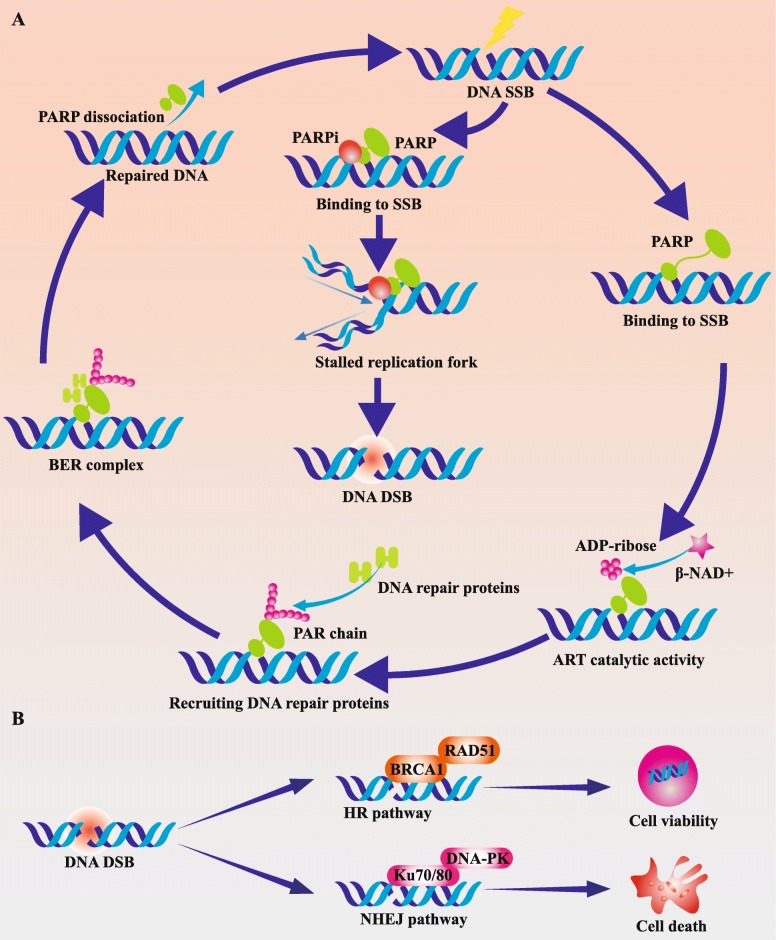
“Normal cells could detect and repair DNA damages by multiple pathways: (1) DNA singlestrand break (SSB) repair pathways including base excision repair (BER), nucleotide excision repair (NER), and mismatch repair (MMR) and (2) DNA double-strand break (DSB) repair pathways such as HR and nonhomologous end joining (NHEJ)…”
BackgroundInfluentialThe DNA-damage response in human biology and disease
Jackson, S. P., & Bartek, J. (2009) · Nature · doi:10.1038/nature08467 · Cited by 6,092 · cited 9×
“Normal cells could detect and repair DNA damages by multiple pathways: (1) DNA singlestrand break (SSB) repair pathways including base excision repair (BER), nucleotide excision repair (NER), and mismatch repair (MMR) and (2) DNA double-strand break (DSB) repair pathways such as HR and nonhomologous end joining (NHEJ)…”
BackgroundInfluentialPD-1 and Its Ligands in Tolerance and Immunity
Keir, M. E., Butte, M. J., Freeman, G. J., & Sharpe, A. H. (2008) · Annual Review of Immunology · doi:10.1146/annurev.immunol.26.021607.090331 · Cited by 5,378 · cited 1×
“As the main ligand of PD-1, PD-L1 is constitutively expressed on a wide variety of immune cells and non-immune cells [63, 64].”
BackgroundElements of cancer immunity and the cancer–immune set point
Chen, D. S., & Mellman, I. (2017) · Nature · doi:10.1038/nature21349 · Cited by 5,352 · cited 1×
“An effective anti-cancer immune response relies on the robust cascade reaction including release and presentation of cancer antigens, priming and activation of T cells, trafficking and infiltration of T cells, and recognizing and killing tumor cells [8].”
BackgroundIpilimumab plus Dacarbazine for Previously Untreated Metastatic Melanoma
Robert, C., Thomas, L., Bondarenko, I., O'Day, S., Weber, J., Garbe, C., Lebbe, C., Baurain, J.-F., Testori, A., Grob, J.-J., et al. (2011) · New England Journal of Medicine · doi:10.1056/nejmoa1104621 · Cited by 4,496 · cited 1×
“Since the first ICI was approved for metastatic melanoma patients in 2011, numerous ICIs have entered clinical practice [75, 76].”
BackgroundFirst-line atezolizumab plus chemotherapy in extensive-stage small-cell lung cancer
Horn, L., Mansfield, A. S., Szczęsna, A., Havel, L., Krzakowski, M., Hochmair, M. J., Huemer, F., Losonczy, G., Johnson, M. L., Nishio, M., et al. (2018) · New England Journal of Medicine · doi:10.1056/nejmoa1809064 · Cited by 3,586
Olaparib for Metastatic Breast Cancer in Patients with a Germline BRCA Mutation
Robson, M., Im, S.-A., Senkus, E., Xu, B., Domchek, S. M., Masuda, N., Delaloge, S., Li, W., Tung, N., Armstrong, A., et al. (2017) · New England Journal of Medicine · doi:10.1056/nejmoa1706450 · Cited by 3,294
Cited by
Sorted by citations
Combination strategies with PD-1/PD-L1 blockade: current advances and future directions
Yi, M., Zheng, X., Niu, M., Zhu, S., Ge, H., & Wu, K. (2022) · Molecular Cancer · doi:10.1186/s12943-021-01489-2 · Cited by 1,445
“Inspired by the results of preclinical studies, numerous clinical studies are ongoing to evaluate the efficacy of PARPi combined with α-PD-1/PD-L1 [219].”
BackgroundSelf-citationUnderstanding and overcoming resistance to PARP inhibitors in cancer therapy
Dias, M. P., Moser, S. C., Ganesan, S., & Jonkers, J. (2021) · Nature Reviews Clinical Oncology · doi:10.1038/s41571-021-00532-x · Cited by 544
Westin, S. N., Moore, K. N., Chon, H. S., Lee, J., Pepin, J. T., Sundborg, M., Shai, A., de la Garza, J., Nishio, S., Gold, M. A., et al. (2023) · Journal of Clinical Oncology · doi:10.1200/jco.23.02132 · Cited by 389
Tumor Immune Microenvironment during Epithelial–Mesenchymal Transition
Taki, M., Abiko, K., Ukita, M., Murakami, R., Yamanoi, K., Yamaguchi, K. D., Hamanishi, J., Baba, T., Matsumura, N., & Mandai, M. (2021) · Clinical Cancer Research · doi:10.1158/1078-0432.ccr-20-4459 · Cited by 368
“The FDA has approved several monoclonal antibodies targeting PD-1 (pembrolizumab, nivolumab, and cemiplimab) and PD-L1 (atezolizumab, avelumab, and durvalumab), which have been used as monotherapy or in combination with chemotherapies or other ICIs in several cancer types (27).”
BackgroundInfluentialHorvath, L., Thienpont, B., Zhao, L., Wolf, D. G. F., & Pircher, A. (2020) · Molecular Cancer · doi:10.1186/s12943-020-01260-z · Cited by 288
“As observed preclinically, PARPi induces genetic instability, increases TMB and neoantigen burden via DDR deficiency and may be involved in PD-L1 upregulation by cancer cells [97, 98].”
Background
Metadata
- Authors
- Li, A., Yi, M., Qin, S., Chu, Q., Luo, S., & Wu, K.
- Affiliations
- Zhengzhou University (CN)
- Tongji Hospital (CN)
- Corresponding author
- Luo, Suxia
- Wu, Kongming
- Venue
- Journal of Hematology & Oncology
- Published
- 2019-09-14
- Volume
- 12
- Issue
- 1
- Pages
- 98-98
- ISSN
- 1756-8722 (ISSN-L)
- PMC
- PMC6744711
- OpenAlex
- W2972535107
- Cited by
- 143
- References
- 130
- Citations by year
- 2026: 10 · 2025: 14 · 2024: 14 · 2023: 16 · 2022: 21 · 2021: 36 · 2020: 30 · 2019: 2
- FWCI
- 2.17
- Type
- journal article
- Language
- en
- Open access
- gold
- doi.org
- Locations
- Journal of Hematology & Oncology (publishedVersion, cc-by)
- PubMed Central (publishedVersion, cc-by)
- PubMed (publishedVersion)
- DOAJ (DOAJ: Directory of Open Access Journals) (submittedVersion, cc-by-sa)
- Funders
- National Natural Science Foundation of China (81874120, 81572608, 81672984)
- Wuhan Municipal Science and Technology Bureau (2017060201010170)
- Topics
- Health Sciences › Medicine › Oncology › Cancer Immunotherapy and Biomarkers
- Health Sciences › Medicine › Oncology › PARP inhibition in cancer therapy
- Life Sciences › Immunology and Microbiology › Immunology › Immunotherapy and Immune Responses
- Keywords
- immune checkpoint blockade, PARP inhibitors, combination therapy, cancer immunotherapy, tumor immune microenvironment, PD-1, CTLA-4, immunosuppression, tumor immunogenicity, T cell priming, cross-presentation, drug resistance, cancer-immunity cycle
- MeSH terms
- Poly(ADP-ribose) Polymerase Inhibitors, Antineoplastic Agents, Humans, Immunotherapy, Poly(ADP-ribose) Polymerases
About these checks
Registry, retraction, Cites and statistics results are computed, not judged, with one exception: a printed reference that no index lists is read once by a model before it counts as a citation error. Claims are extracted by a model and kept only when their quote appears verbatim in the text; each cited source is then checked, with a model’s help, for whether it says what the claim relies on. Those verdicts can be wrong — read the claim’s quote and the cited source before relying on one.
Statistics and arithmetic are recomputed, not judged.
Confidence bands are shown only for fields calibrated on our annotated test set. None is calibrated yet, so no band is shown.
What counts as a claim ›How we measure confidence ›How we check this ›
Are you an author, or do you see a problem with this page? Request a review
