

The DOI matches its Crossref record; 126 of the 126 references it cites were found in a registry or an index.
Tumor-intrinsic signaling pathways: key roles in the regulation of the immunosuppressive tumor microenvironment
Open accessAbstract
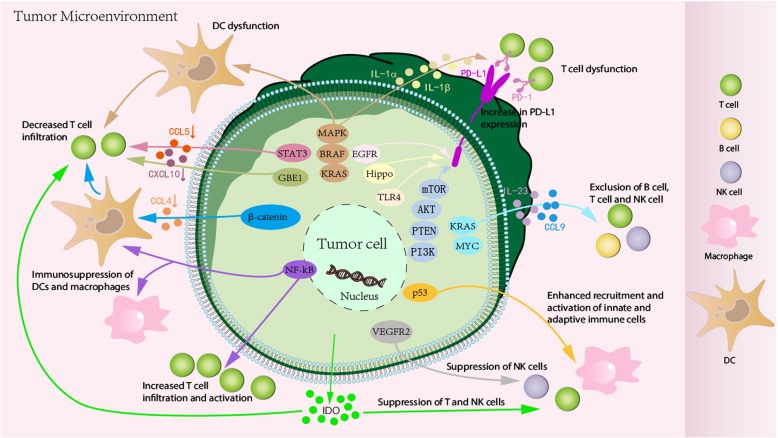
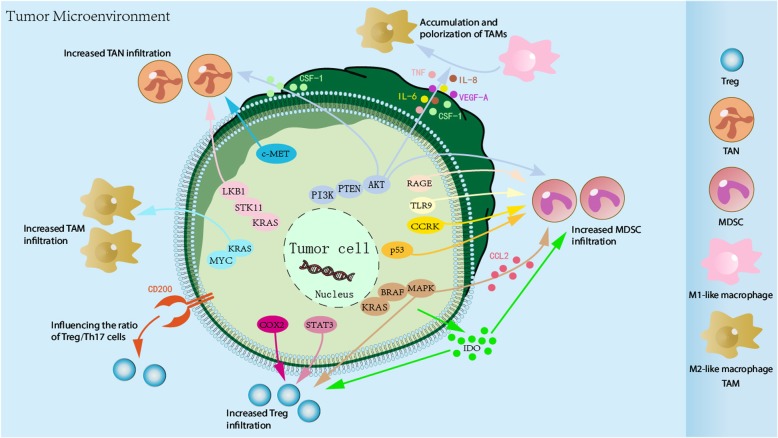
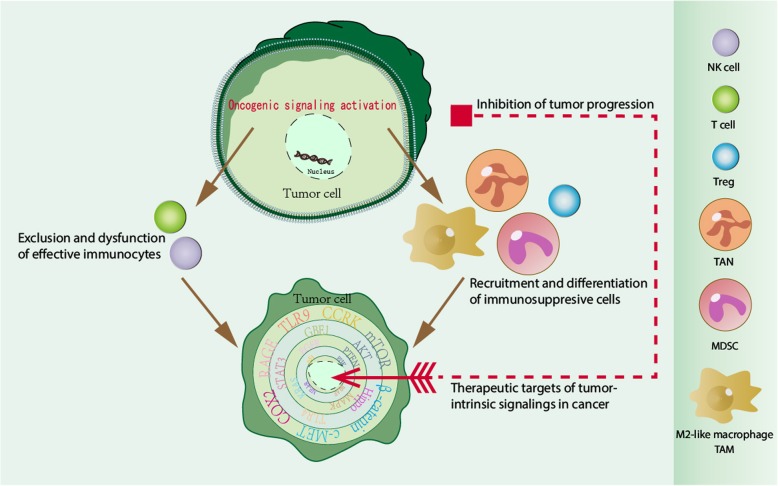
Immunotherapy is a currently popular treatment strategy for cancer patients. Although recent developments in cancer immunotherapy have had significant clinical impact, only a subset of patients exhibits clinical response. Therefore, understanding the molecular mechanisms of immunotherapy resistance is necessary. The mechanisms of immune escape appear to consist of two distinct tumor characteristics: a decrease in effective immunocyte infiltration and function and the accumulation of immunosuppressive cells in the tumor microenvironment. Several host-derived factors may also contribute to immune escape. Moreover, inter-patient heterogeneity predominantly results from differences in somatic mutations between cancers, which has led to the hypothesis that differential activation of specific tumor-intrinsic pathways may explain the phenomenon of immune exclusion in a subset of cancers. Increasing evidence has also shown that tumor-intrinsic signaling plays a key role in regulating the immunosuppressive tumor microenvironment and tumor immune escape. Therefore, understanding the mechanisms underlying immune avoidance mediated by tumor-intrinsic signaling may help identify new therapeutic targets for expanding the efficacy of cancer immunotherapies.
Overview
The claims and statistics of this paper haven’t been checked yet.
Run the check — free, no account needed. It reads the open-access text and checks the sources it cites.
Integrity signals
Registry
Cites
Statistics
Figures
Verification
Claims the paper makes
The claims and statistics of this paper haven’t been checked yet.
Run the check — free, no account needed. It reads the open-access text and checks the sources it cites.
Claims other papers make about this one
Each is checked against this paper’s own text: does it say what the citing paper says it does?
The source backs part of the claim, not all of it — or backs it for a different population, condition or comparison.
In the citing paper
“In the tumor microenvironment, immunosuppression and tumor evasion strategies cause an inability of the immune cells to detect and eliminate with subsequent exhaustion (47).”
From mRNA vaccine with unmodified uridine induces robust type I interferon-dependent anti-tumor immunity in a melanoma model (2022) · cites this paper as [47]
Experimental — accuracy not yet measured
Self-check
Percentages, sums and reported differences re-computed from the paper’s own numbers.
The self-check needs the paper’s full text.
Citations
Cites
PD-1 and PD-L1 Immune Checkpoint Blockade to Treat Breast Cancer
Hartkopf, A. D., Taran, F., Wallwiener, M., Walter, C. B., Krämer, B., Grischke, E., & Brucker, S. Y. (2016) · Breast Care · doi:10.1159/000453569 · Cited by 30,989
Improved Survival with Ipilimumab in Patients with Metastatic Melanoma
Hodi, F. S., O'Day, S. J., McDermott, D. F., Weber, R. W., Sosman, J. A., Haanen, J. B., Gonzalez, R., Robert, C., Schadendorf, D., Hassel, J. C., et al. (2010) · New England Journal of Medicine · doi:10.1056/nejmoa1003466 · Cited by 15,155
Safety, activity, and immune correlates of anti–PD-1 antibody in cancer
Topalian, S. L., Hodi, F. S., Brahmer, J. R., Gettinger, S. N., Smith, D. C., McDermott, D. F., Powderly, J. D., Carvajal, R. D., Sosman, J. A., Atkins, M. B., et al. (2012) · New England Journal of Medicine · doi:10.1056/nejmoa1200690 · Cited by 12,628
Neoantigens in cancer immunotherapy
Schumacher, T. N., & Schreiber, R. D. (2015) · Science · doi:10.1126/science.aaa4971 · Cited by 4,783
Innate and adaptive immune cells in the tumor microenvironment
Gajewski, T. F., Schreiber, H., & Fu, Y.-X. (2013) · Nature Immunology · doi:10.1038/ni.2703 · Cited by 4,148
The complexity of NF-κB signaling in inflammation and cancer
Hoesel, B., & Schmid, J. A. (2013) · Molecular Cancer · doi:10.1186/1476-4598-12-86 · Cited by 3,277
Melanoma-intrinsic β-catenin signalling prevents anti-tumour immunity
Spranger, S., Bao, R., & Gajewski, T. F. (2015) · Nature · doi:10.1038/nature14404 · Cited by 2,830
Improved Overall Survival in Melanoma with Combined Dabrafenib and Trametinib
Robert, C., Karaszewska, B., Schachter, J., Rutkowski, P. L., Mackiewicz, A. A., Stroyakovskiy, D., Lichinitser, M., Dummer, R., Grange, F., Mortier, L., et al. (2014) · New England Journal of Medicine · doi:10.1056/nejmoa1412690 · Cited by 2,763
Senescence and tumour clearance is triggered by p53 restoration in murine liver carcinomas
Xue, W., Zender, L., Miething, C., Dickins, R. A., Hernando, E., Krizhanovsky, V., Cordon-Cardo, C., & Lowe, S. W. (2007) · Nature · doi:10.1038/nature05529 · Cited by 2,473
IKKβ Links Inflammation and Tumorigenesis in a Mouse Model of Colitis-Associated Cancer
Greten, F. R., Eckmann, L., Greten, T. F., Park, J. M., Li, Z.-W., Egan, L. J., Kagnoff, M. F., & Karin, M. (2004) · Cell · doi:10.1016/j.cell.2004.07.013 · Cited by 2,433
Cited by
Sorted by citations
Roles of IFN-γ in tumor progression and regression: A review
Jorgovanovic, D., Song, M., Wang, L., & Zhang, Y. (2020) · Biomarker Research · doi:10.1186/s40364-020-00228-x · Cited by 1,234
Self-citationCancer vaccines as promising immuno-therapeutics: platforms and current progress
Liu, J., Fu, M., Wang, M., Wan, D., Wei, Y., & Wei, X. (2022) · Journal of Hematology & Oncology · doi:10.1186/s13045-022-01247-x · Cited by 762
Signaling pathways involved in colorectal cancer: pathogenesis and targeted therapy
Li, Q., Geng, S., Luo, H., Wang, W., Mo, Y.-Q., Luo, Q., Wang, L., Song, G.-B., Sheng, J.-P., & Xu, B. (2024) · Signal Transduction and Targeted Therapy · doi:10.1038/s41392-024-01953-7 · Cited by 546
Immunosenescence: a key player in cancer development
Lian, J., Yue, Y., Yu, W., & Zhang, Y. (2020) · Journal of Hematology & Oncology · doi:10.1186/s13045-020-00986-z · Cited by 510
Self-citationExosome-based immunotherapy: a promising approach for cancer treatment
Xu, Z., Zeng, S., Gong, Z., & Yan, Y. (2020) · Molecular Cancer · doi:10.1186/s12943-020-01278-3 · Cited by 482
Metadata
- Authors
- Yang, L., Li, A., Lei, Q., & Zhang, Y.
- Affiliations
- First Affiliated Hospital of Zhengzhou University (CN)
- Zhengzhou University (CN)
- Corresponding author
- Zhang, Yi
- Venue
- Journal of Hematology & Oncology
- Published
- 2019-11-27
- Volume
- 12
- Issue
- 1
- Pages
- 125-125
- ISSN
- 1756-8722 (ISSN-L)
- PMC
- PMC6880373
- OpenAlex
- W2990431514
- Cited by
- 215
- References
- 126
- Citations by year
- 2026: 27 · 2025: 40 · 2024: 29 · 2023: 31 · 2022: 39 · 2021: 28 · 2020: 20
- FWCI
- 2.07
- Type
- journal article
- Language
- en
- Open access
- gold
- doi.org
- Locations
- Journal of Hematology & Oncology (publishedVersion, cc-by)
- PubMed Central (publishedVersion, cc-by)
- PubMed (publishedVersion)
- DOAJ (DOAJ: Directory of Open Access Journals) (submittedVersion, cc-by-sa)
- Funders
- National Natural Science Foundation of China (U1804281, 81771781, 81602024)
- Topics
- Health Sciences › Medicine › Oncology › Cancer Immunotherapy and Biomarkers
- Life Sciences › Immunology and Microbiology › Immunology › Immunotherapy and Immune Responses
- Life Sciences › Immunology and Microbiology › Immunology › Immune cells in cancer
- Keywords
- immunosuppressive tumor microenvironment, tumor immune evasion, cancer immunotherapy resistance, immune exclusion, interpatient heterogeneity, somatic mutations, immune cell infiltration, therapeutic target
- MeSH terms
- Antineoplastic Agents, Humans, Immunosuppressive Agents, Immunotherapy, Neoplasms, Signal Transduction, Tumor Escape, Molecular Targeted Therapy, Tumor Microenvironment
About these checks
Registry, retraction, Cites and statistics results are computed, not judged, with one exception: a printed reference that no index lists is read once by a model before it counts as a citation error. Claims are extracted by a model and kept only when their quote appears verbatim in the text; each cited source is then checked, with a model’s help, for whether it says what the claim relies on. Those verdicts can be wrong — read the claim’s quote and the cited source before relying on one.
Statistics and arithmetic are recomputed, not judged.
Confidence bands are shown only for fields calibrated on our annotated test set. None is calibrated yet, so no band is shown.
What counts as a claim ›How we measure confidence ›How we check this ›
Are you an author, or do you see a problem with this page? Request a review
